Shared Laundry Room Chaos? 12 Dollar General Caddies Keep Supplies Sorted
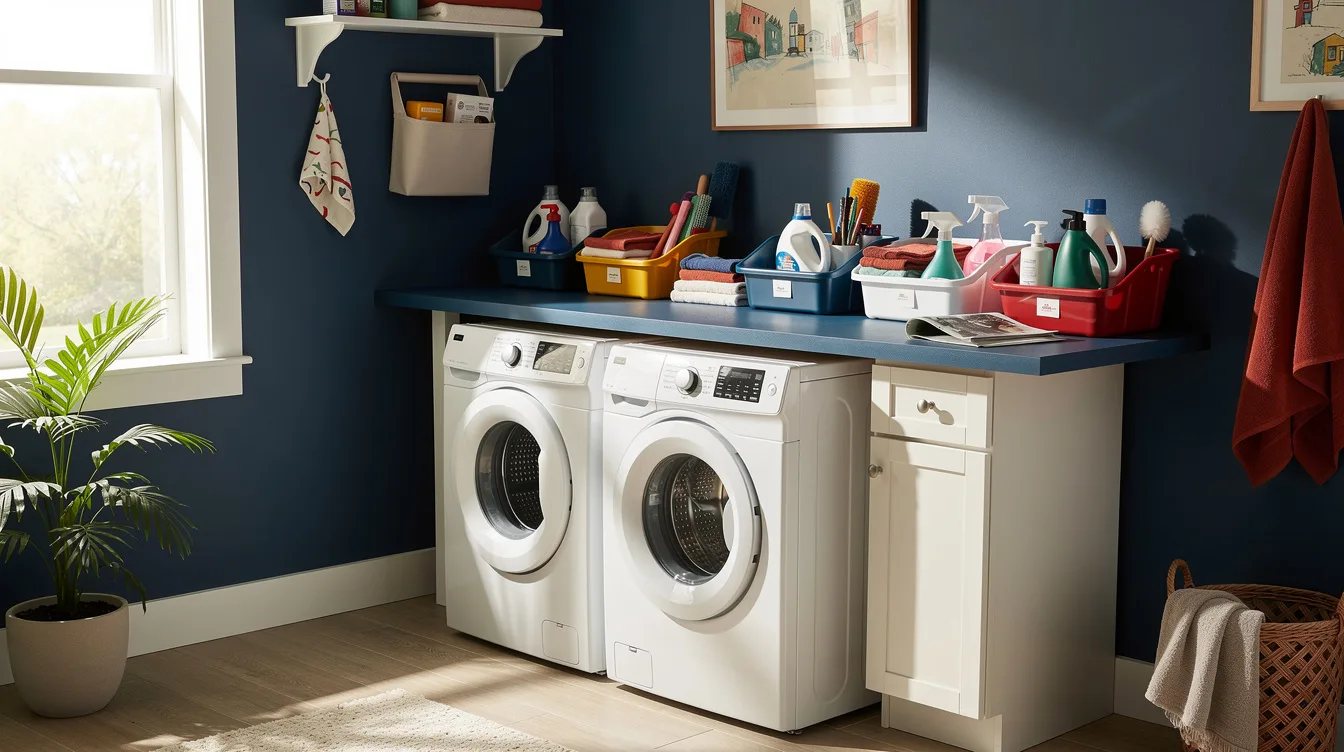
16 october 2026One shared laundry room serving four households can turn a single detergent bottle into a daily obstacle. The right caddy keeps supplies portable, separates wet tools from clean refills, and makes a narrow folding counter feel usable again.
Designers tend to favor simple systems that survive rushed wash days. These rules create a budget-friendly setup with clear ownership, washable materials, and enough flexibility for different laundry habits.
What you will find inside
- Assign a Color Before Supplies Arrive
- Pick a Ventilated Body That Dries Fast
- Separate Wet Tools From Clean Refills
- Give Every Bottle a Stable Slot
- Add a Wipeable Liner Underneath
- Hang Brushes Above the Floor
- Mark Ownership Without Making It Loud
- Reserve One Pocket for Shared Supplies
- Protect the Folding Counter With a Tray
- Build a Fast Restock Check
- Store the Caddy Where Air Can Move
- Set a Reset Routine Everyone Can Follow
Assign a Color Before Supplies Arrive
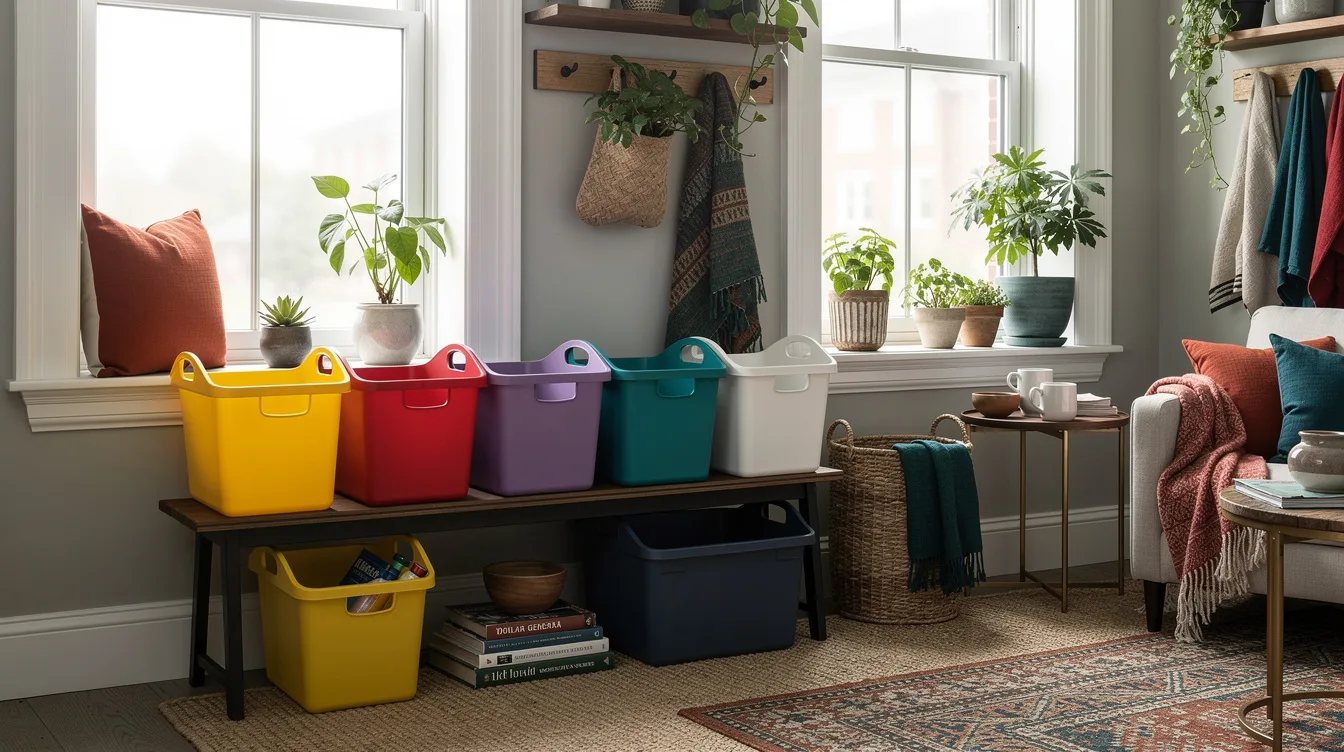
Give each household or roommate group one clear color, then repeat it on the caddy, detergent cap, and refill labels. Blue polypropylene is easy to spot beside white machines, while rust, green, or charcoal can mark separate users without covering the room in labels.
We prefer a color system that works from across the room. A colored handle or silicone band is enough, so the storage stays practical instead of looking like a wall of office supplies.
Pick a Ventilated Body That Dries Fast
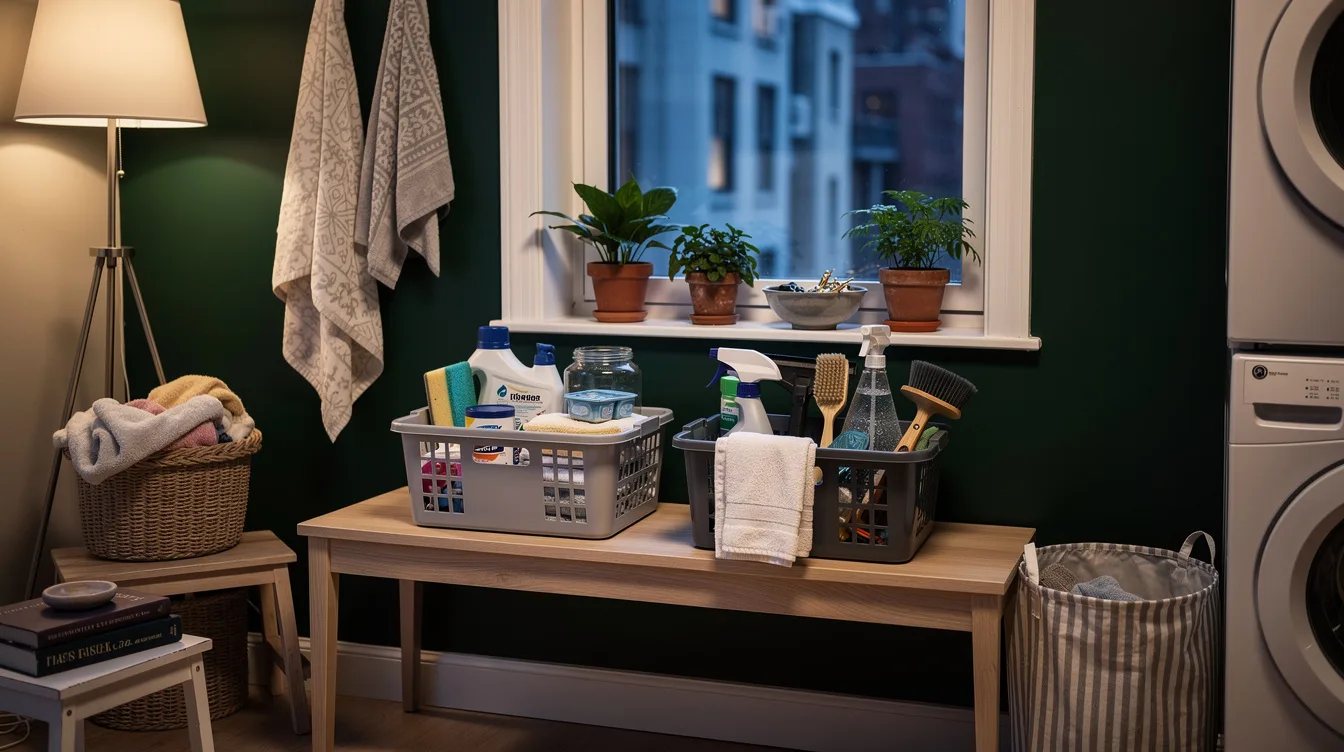
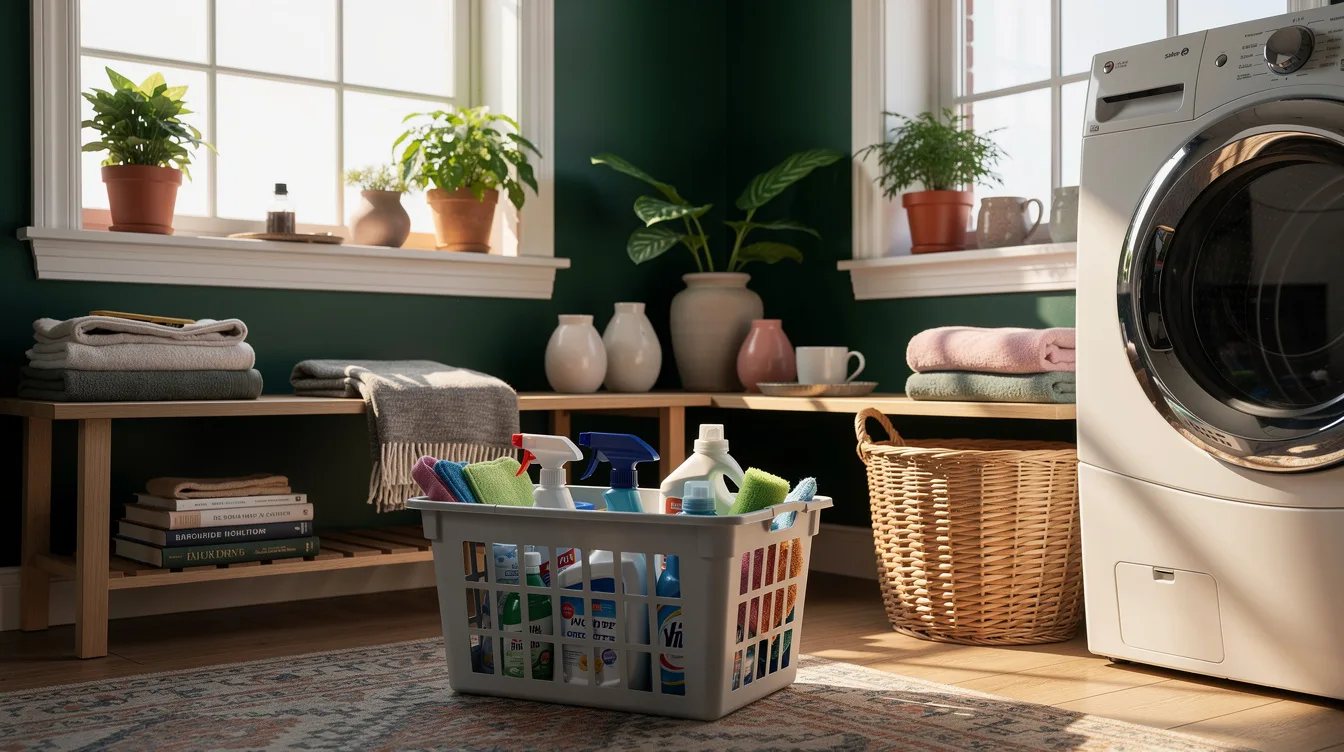
Choose a caddy with open sides, a solid base, and a handle that does not wobble under the weight of detergent. Perforated plastic lets damp cloths breathe after a spill and keeps residue from sitting in a dark corner.
Target, Walmart, and Amazon all carry basic utility baskets in this general shape, but the construction matters more than the retailer. Skip fabric bins for the laundry room because they absorb drips and hold onto detergent dust.

Separate Wet Tools From Clean Refills
Use one side of the caddy for items that touch water and another for sealed supplies. A small stainless steel scoop can sit with brushes or cloths, while unopened pods, stain remover, and dryer sheets stay in a dry compartment.
This division prevents a wet rag from landing beside paper packaging. It also makes a quick room reset easier because every object has a visible destination.
Give Every Bottle a Stable Slot
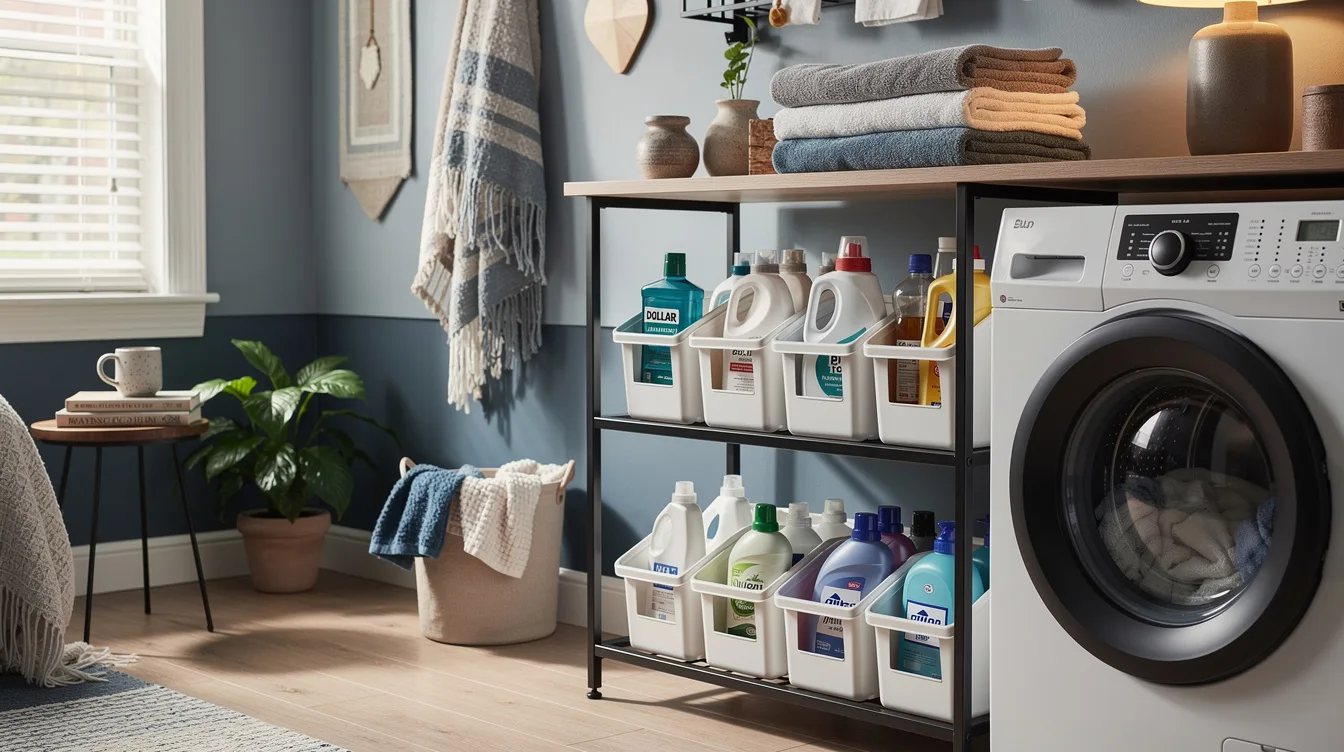
Keep the tallest bottle in the center and place shorter containers around it, so the caddy stays balanced when someone lifts it with one hand. A silicone bottle sleeve can stop a narrow spray bottle from tipping against the washer.
Measure the interior before buying a replacement caddy, using the bottle sizes already in the room. A deep basket that fits one large container is more useful than a shallow organizer packed with tiny pockets.
Add a Wipeable Liner Underneath
Line the base with a removable piece of rubber shelf liner to catch detergent drips and keep bottles from sliding. Cut it slightly smaller than the floor of the caddy so it can be lifted out without scraping the sides.
Wash the liner at the same time as the room’s cleaning cloths, then let both pieces dry fully. This small layer protects painted shelves, folding counters, and the bottom of the basket.
Hang Brushes Above the Floor
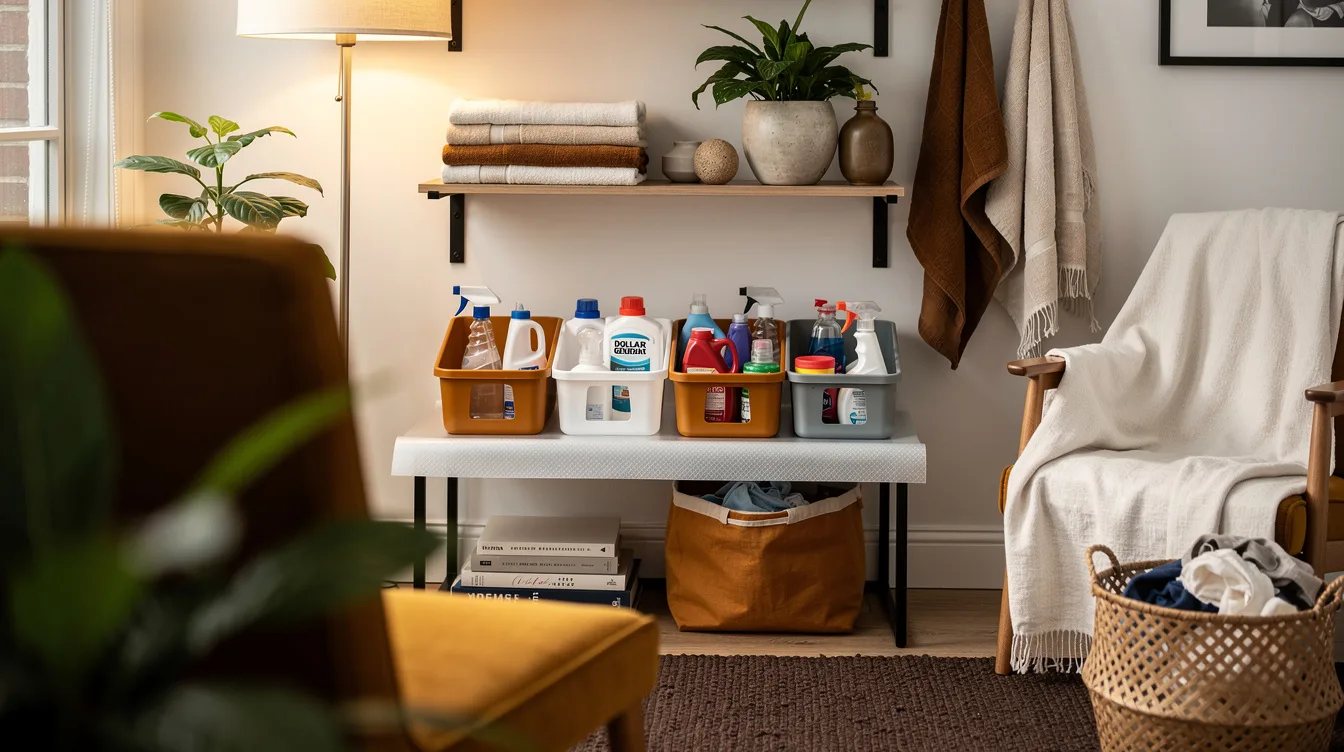
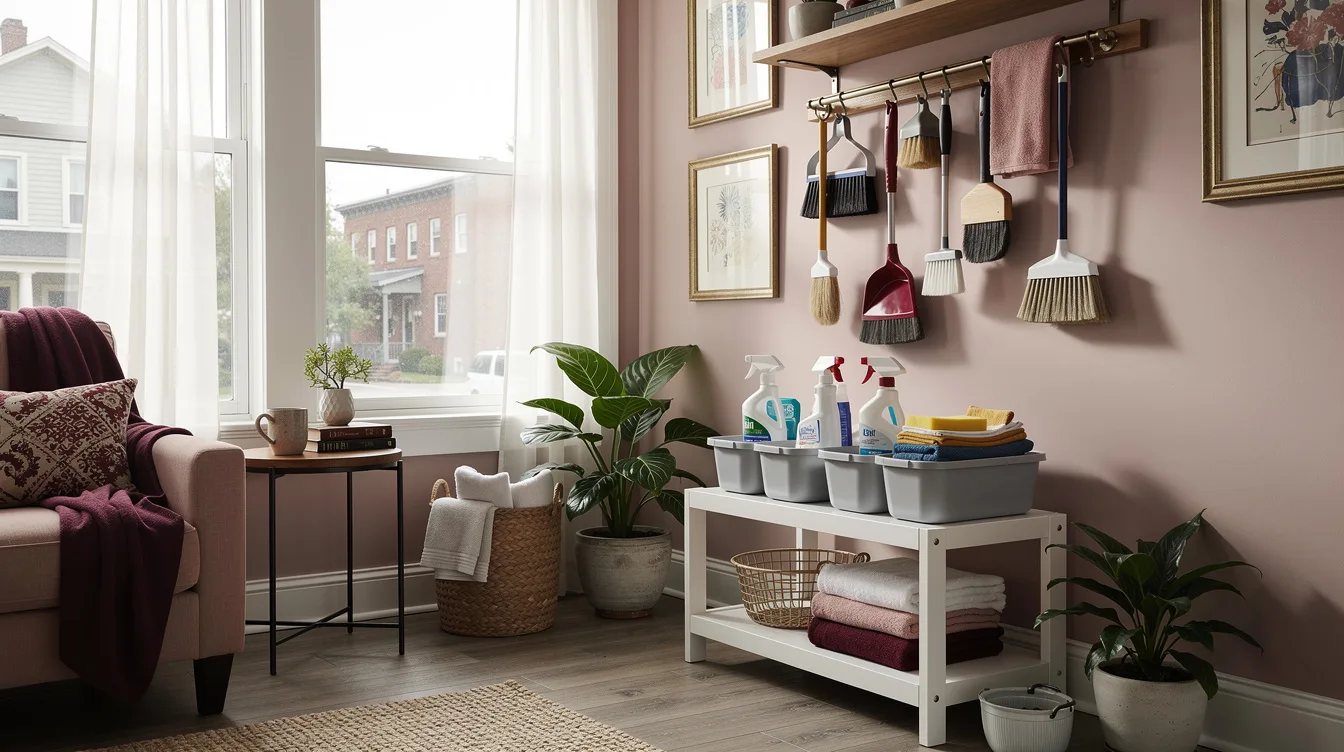
A narrow hook inside the caddy keeps a scrub brush upright instead of letting its wet bristles sit in residue. Powder-coated steel hooks are sturdy enough for a small brush and can be wiped clean when lint collects around the base.
Place the brush where it cannot catch on the handle during carrying. If the room has a wall rail, Lowe’s or Home Depot can supply a simple removable hook system that keeps tools off shared surfaces.
Mark Ownership Without Making It Loud
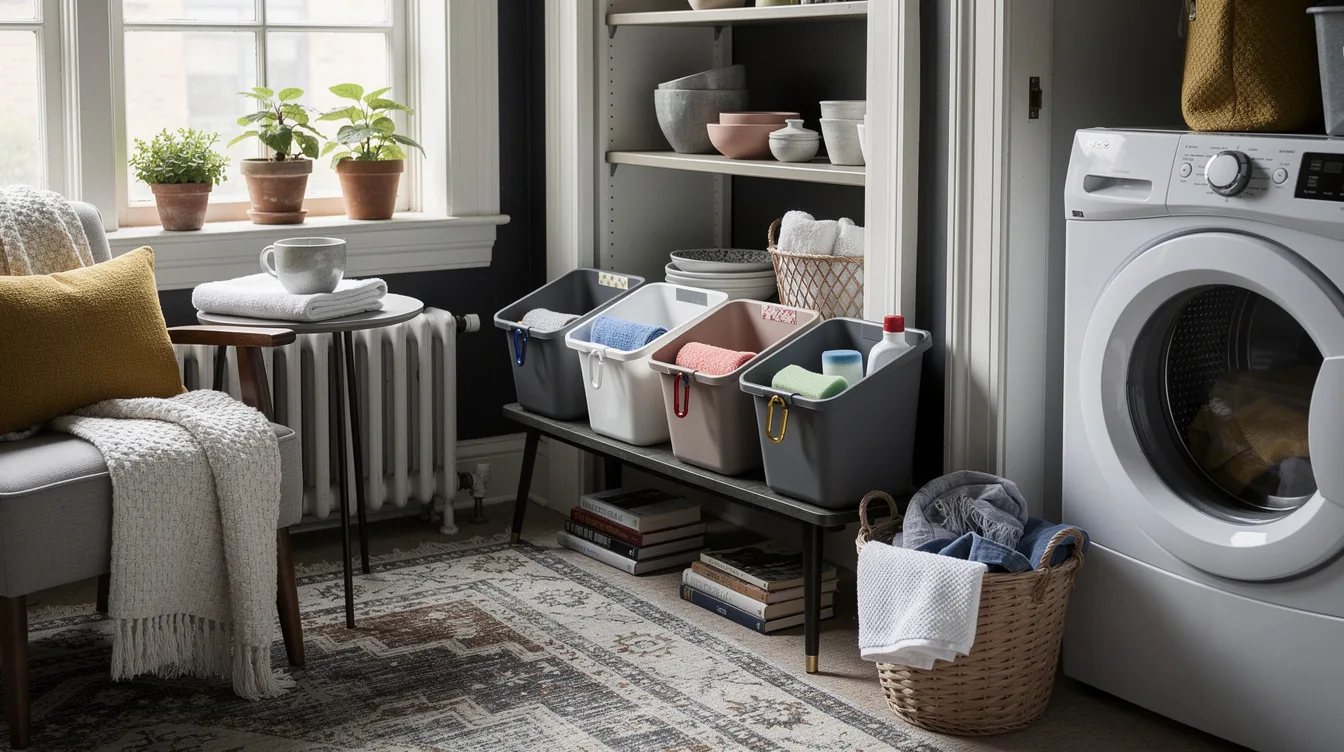
Use one small label on the handle rather than a large name tag on every bottle. A waterproof vinyl label survives splashes, wipes clean, and makes it obvious which caddy belongs to which apartment or household.
Keep the wording short, such as a unit number or household name. The best label can be read quickly by a neighbor and ignored once the room is tidy.
Reserve One Pocket for Shared Supplies
Leave one compartment open for items everyone uses, such as a lint roller, measuring cup, or stain brush. A clear acrylic cup makes that shared zone visible and stops communal tools from disappearing into private laundry bags.
Agree on the refill responsibility before the pocket becomes empty. Costco can be useful for larger household packs, but bulk buying only helps when the room has a clearly marked place to store it.
Protect the Folding Counter With a Tray
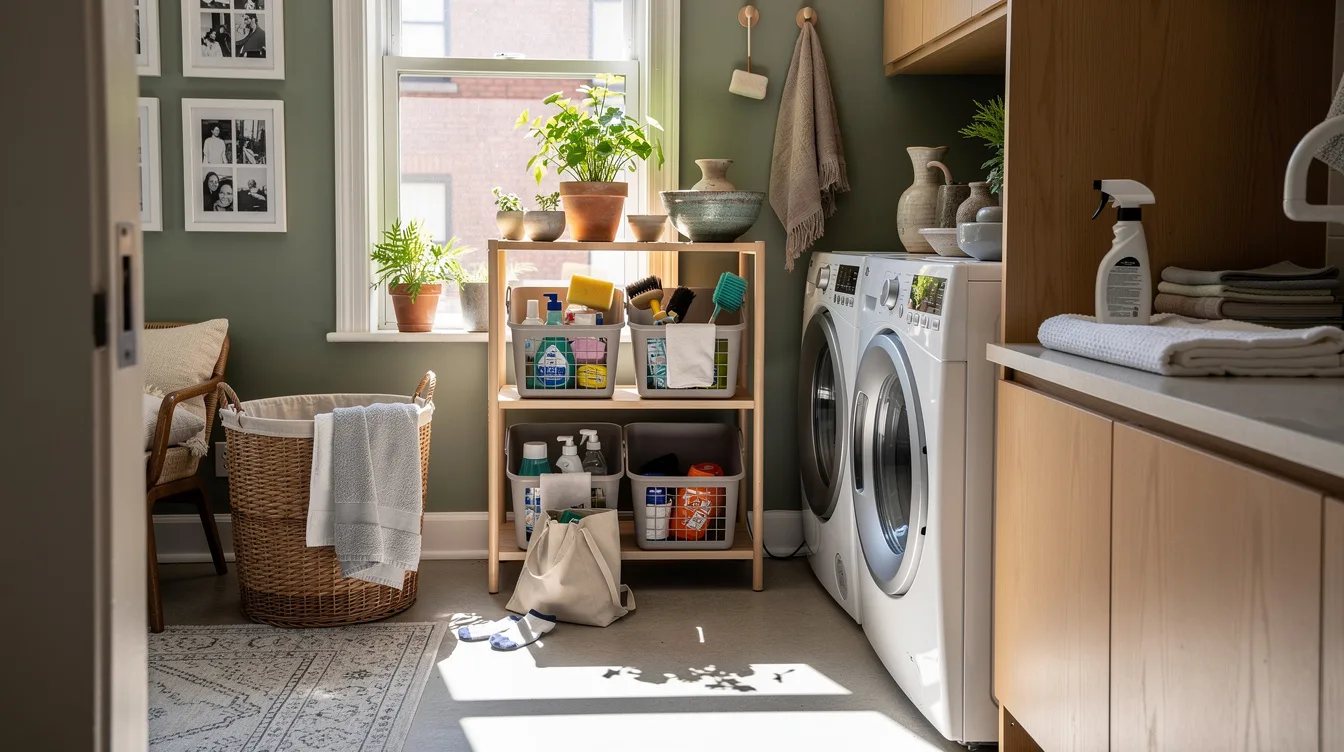
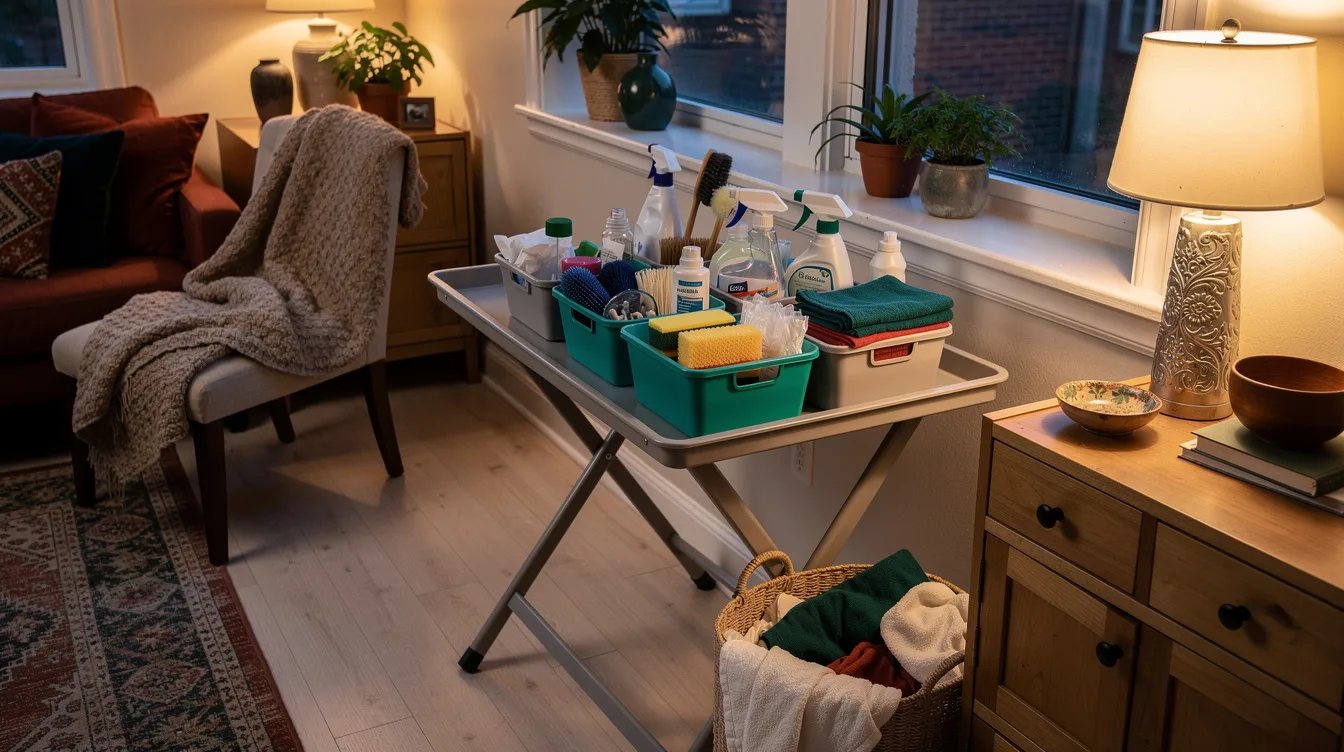
Place the caddy on a shallow tray whenever someone is sorting clothes or pretreating a stain. Enamel-coated metal handles drips better than unfinished wood and gives small bottles a defined footprint on a crowded counter.
Choose a tray with a low rim so clothing can slide past it without snagging. The caddy should move off the folding surface in one lift when another resident needs the space.
Build a Fast Restock Check
Add a short checklist to the underside of the handle: detergent, stain remover, dryer sheets, cloths, and brush. A laminated card handles wet fingers and turns restocking into a glance instead of a full inventory project.
We like checklists that show a minimum level rather than an exact count. When one backup item remains, the person using it knows the room needs attention before the next wash day.
Store the Caddy Where Air Can Move
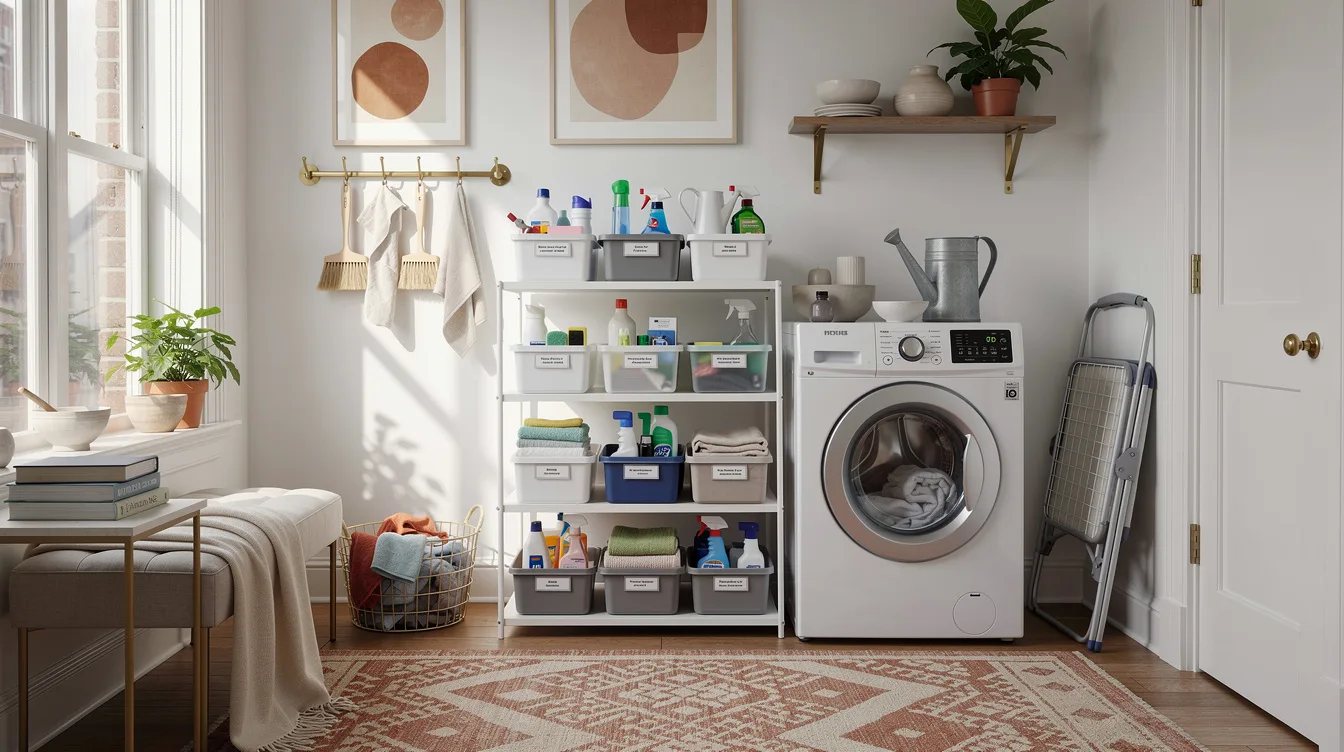
Give the filled caddy a shelf or corner with open space around it, rather than pushing it behind a machine. Bamboo shelving can work in a dry laundry room, provided the surface is sealed and the caddy never sits against a damp wall.
Leave the handle facing outward so the basket can be removed without moving other supplies. A clear path matters in a shared room because residents may be carrying a full hamper at the same time.
Set a Reset Routine Everyone Can Follow
End each laundry session by wiping the caddy base, returning the brush, and checking the shared pocket. A cotton cleaning cloth is enough for the final pass, and it should go into a designated hamper instead of back inside the basket.
Keep the routine short enough that people will actually use it. When the last item returns to its marked place, the next resident gets a clean starting point without needing to reorganize the whole room.
Keep reading
- The $5 Target Dollar Spot Kitchen Organizers People Keep Going Back For
- No Room for a Bulky Bench? These Wayfair Finds Keep Bedrooms Open
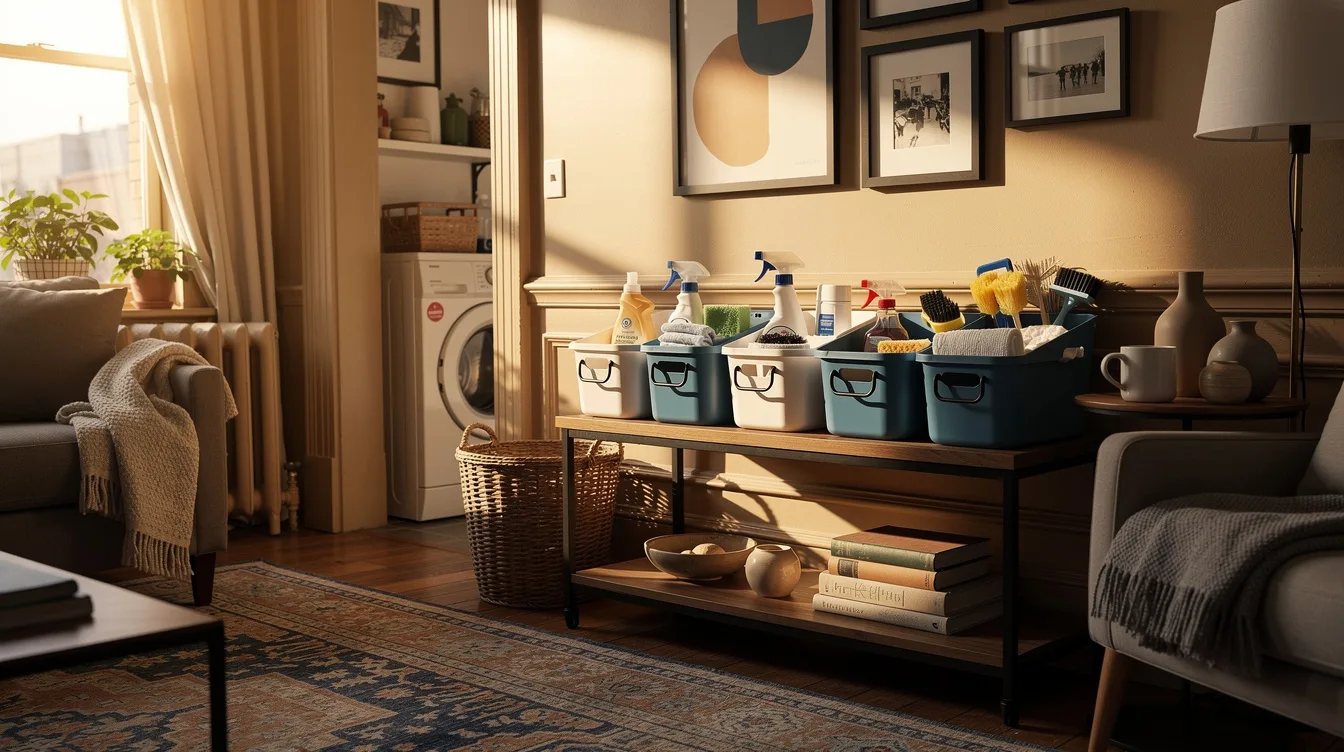
Start with the caddy body, the ownership mark, and one shared-supply pocket. Once those three decisions are settled, the room needs less reminding because every bottle, brush, and cloth already has a place to return.


