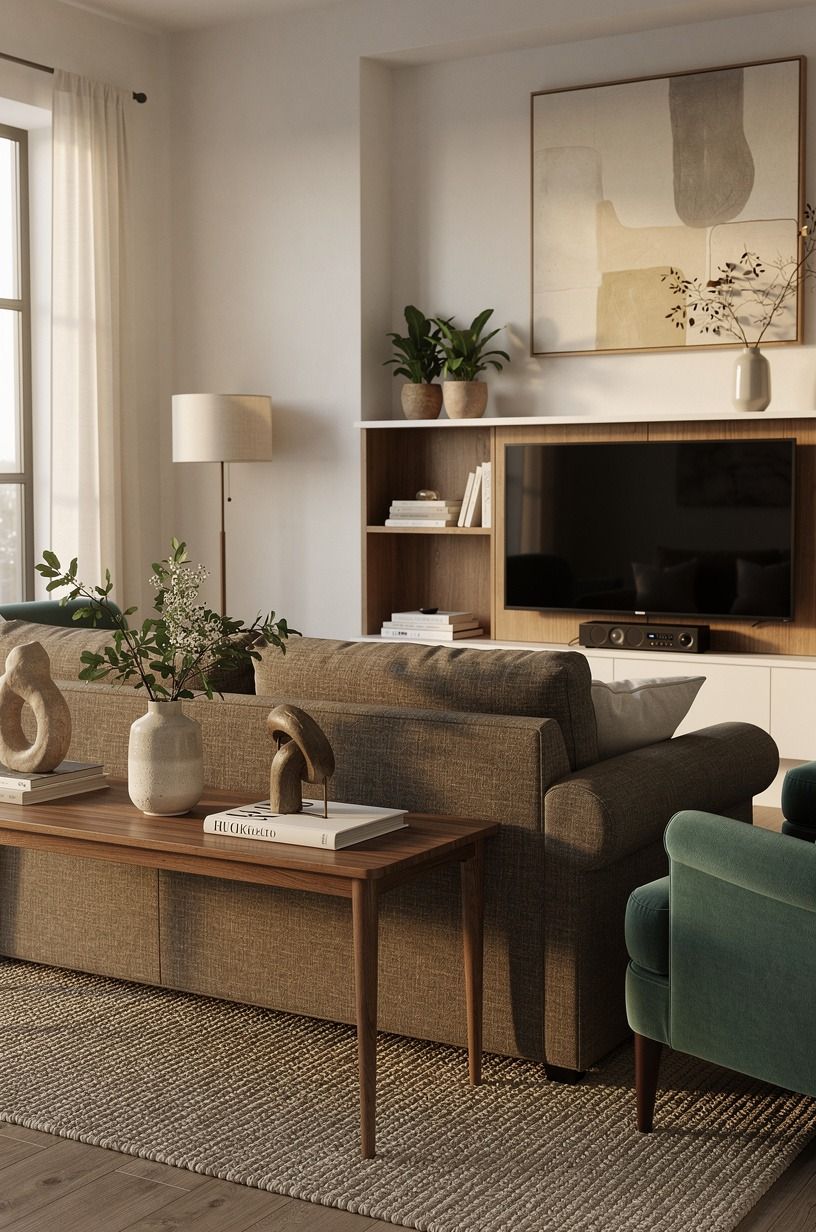
How to Design a Bedroom Media Wall for a Cosy, Hotel-Style Feel - 18 Ideas
30 september 2026A bedroom media wall can feel warm and hotel-like when you plan the bed, screen, lighting, and storage as one composition. I learned this after mounting a television too high and spending a week craning my neck. You’ll get a calmer result by working from the mattress outward. Small choices matter!
- Start with the bed and viewing line
- One strong panel for a small TV media wall
- What should you measure before building the TV panel wall?
- The Two-Wood Rule for your bedroom media wall
- A softer wall colour behind the screen
- Set the screen at your real lounging height
- Closed storage beneath the television
- The Three-Height Light Stack
- Frame the screen with vertical storage
- Fabric versus hard surfaces
- Float the cabinet for a lighter minimalist media wall
- How can artwork sit around the screen?
- A dark surround for a moody TV panel wall design
- Where the cables disappear
- Extend the rug beyond the bed
- The Three-Object Edit
- What changes between daylight and darkness?
- Finish with one warm hotel-style detail
1Start with the bed and viewing line
Measure your bed before choosing the media wall. A queen mattress is 60x80 inches, while a king mattress is 76x80 inches, so your screen and cabinetry need to relate to that width. Start with the viewing line, then mark the most comfortable position from where you normally recline.
I’d centre the television with the bed only when the room’s architecture allows it. If a window or door interrupts the wall, centre the composition on the usable section instead. A book-matched walnut panel can make that decision feel intentional, especially when its grain runs horizontally across the room.
You’ll get a more balanced and serene backdrop than a screen floating alone. Keep the bed, rug, and cabinet in mind from the beginning so the finished wall feels polished rather than pieced together. Compare the wall width with the Two-Wood Rule before choosing a finish.
2One strong panel for a small TV media wall
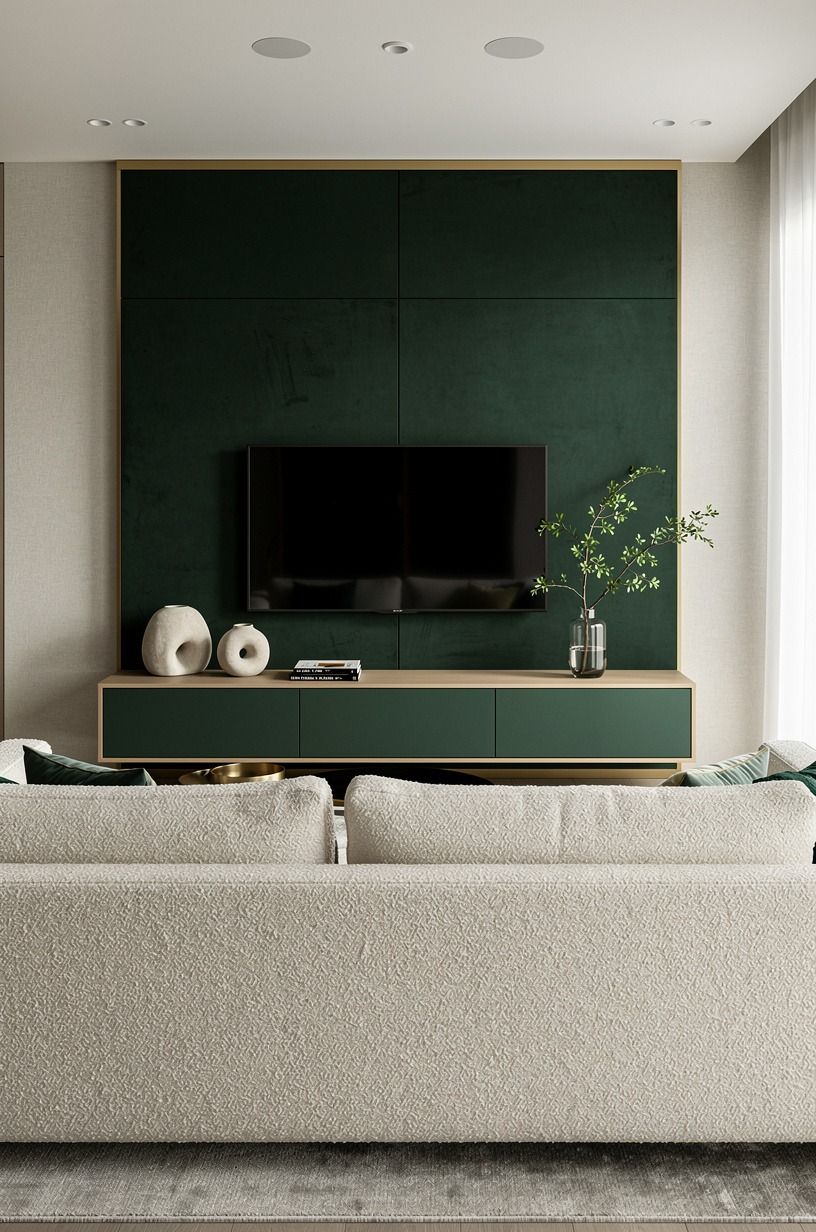
A small TV media wall needs one visual anchor, not a collection of unrelated pieces.
3What should you measure before building the TV panel wall?
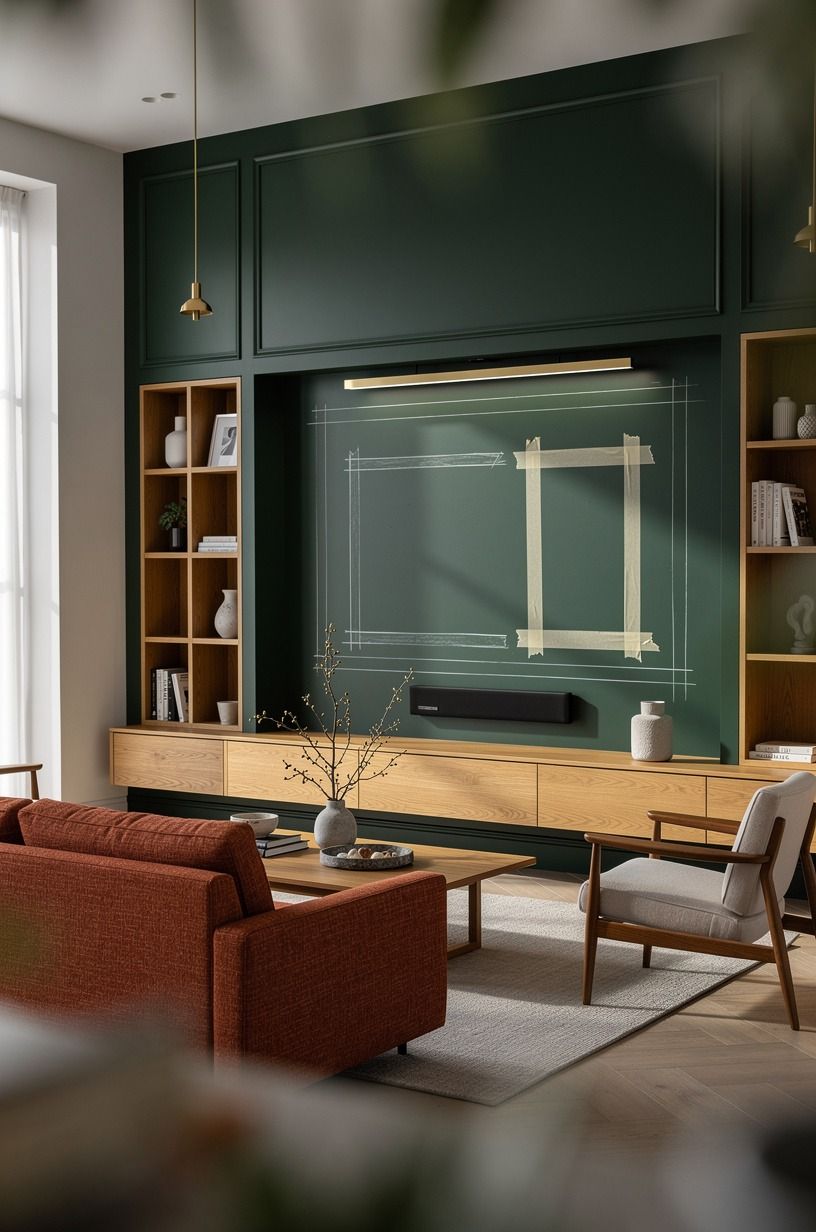
Measure the television, not just the advertised screen size. The bezel, stand, cables, and ventilation space all affect the finished layout. Leave room behind the screen for airflow, and check where your outlets sit before ordering any unlacquered brass trim.
You don’t want to discover that the power socket lands directly behind a mounting bracket. Mark the screen, cabinet, and cable route on the wall with removable tape first.
Check the length of your HDMI cable before closing anything up. That simple test can prevent a costly and frustrating mistake.
Your viewing distance matters too. Sit on the bed and look straight ahead.
Is the screen comfortable, or are you tilting your chin? I made that mistake once, and moving the bracket down by only a few inches changed the whole room.
Recheck the cable plan before drilling.
Don’t forget your night-time habits. If you watch from under the duvet, the screen should feel easy on your neck and eyes. A warm display setting will make the room feel more restful after dark, especially beside low lamps and soft bedding.
4The Two-Wood Rule for your bedroom media wall
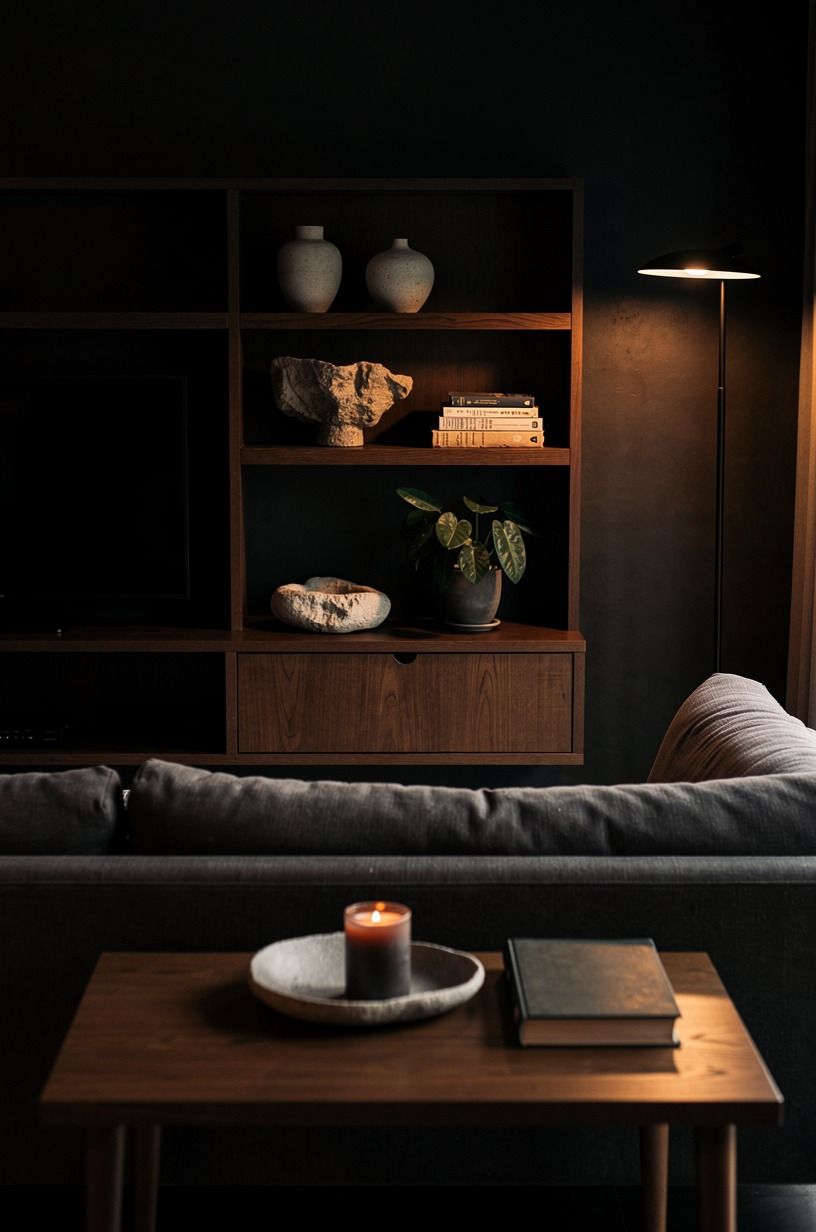
Choose one wood for the main structure and one smaller wood accent. That’s the Two-Wood Rule. A charcoal cabinet paired with a dusty rose deep-pile mohair velvet panel and a small brass accent can feel earthy and collected, while three competing wood tones usually look accidental.
Use the heavier tone around the screen and the lighter tone near the floor or bed. I’d skip orange-toned pine with glossy walnut because the contrast tends to look dated under bedroom lighting. Your better option is charcoal-stained wood with a dry, tactile finish.
If you already have wood flooring, bring a small sample to the wall before buying anything. Afternoon light can make the same finish look yellow, grey, or almost red. Test it beside your bedding, because your deep-pile mohair velvet headboard may change the colour more than you expect.
For another way to connect the room, compare the timber with the rug proportions before you commit. A beautiful finish still needs the right scale, and a warm wool rug can make the whole scheme feel more welcoming.
5A softer wall colour behind the screen
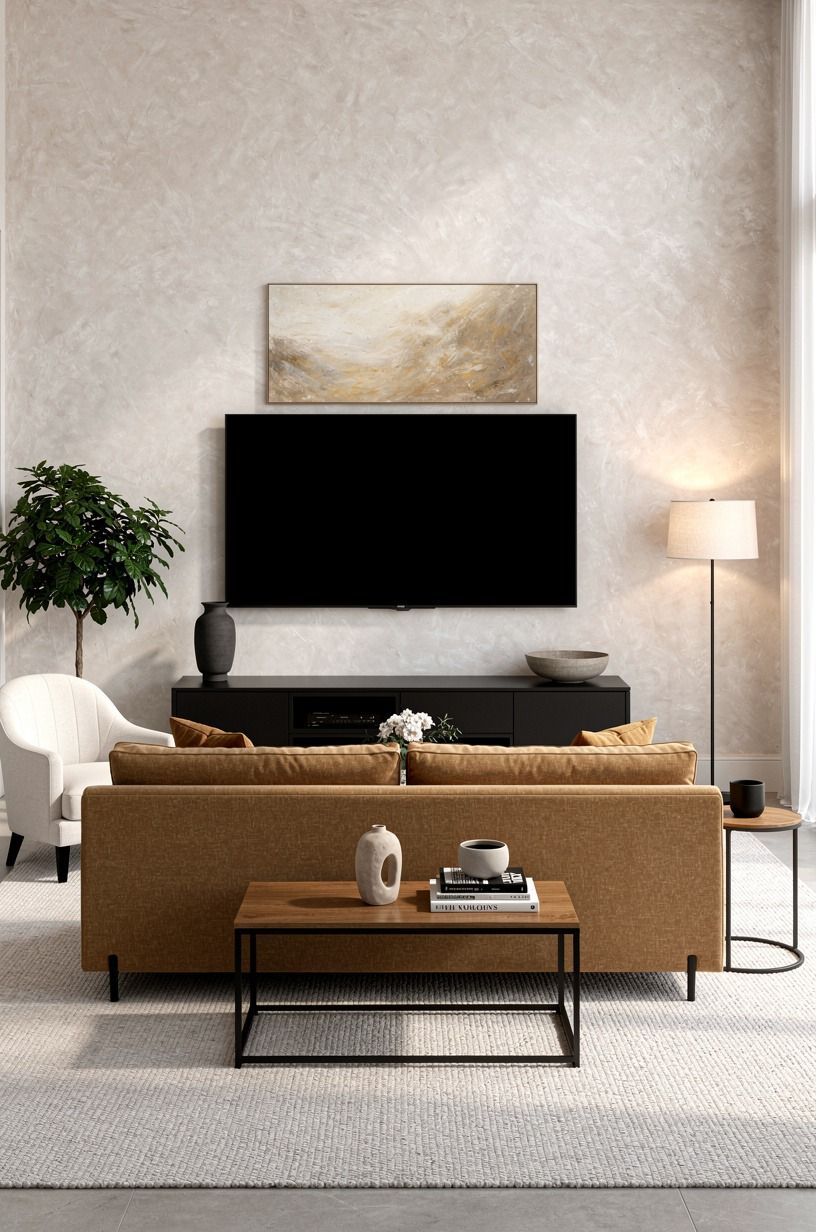
The wall behind a television should support the screen rather than compete with it.
6Set the screen at your real lounging height
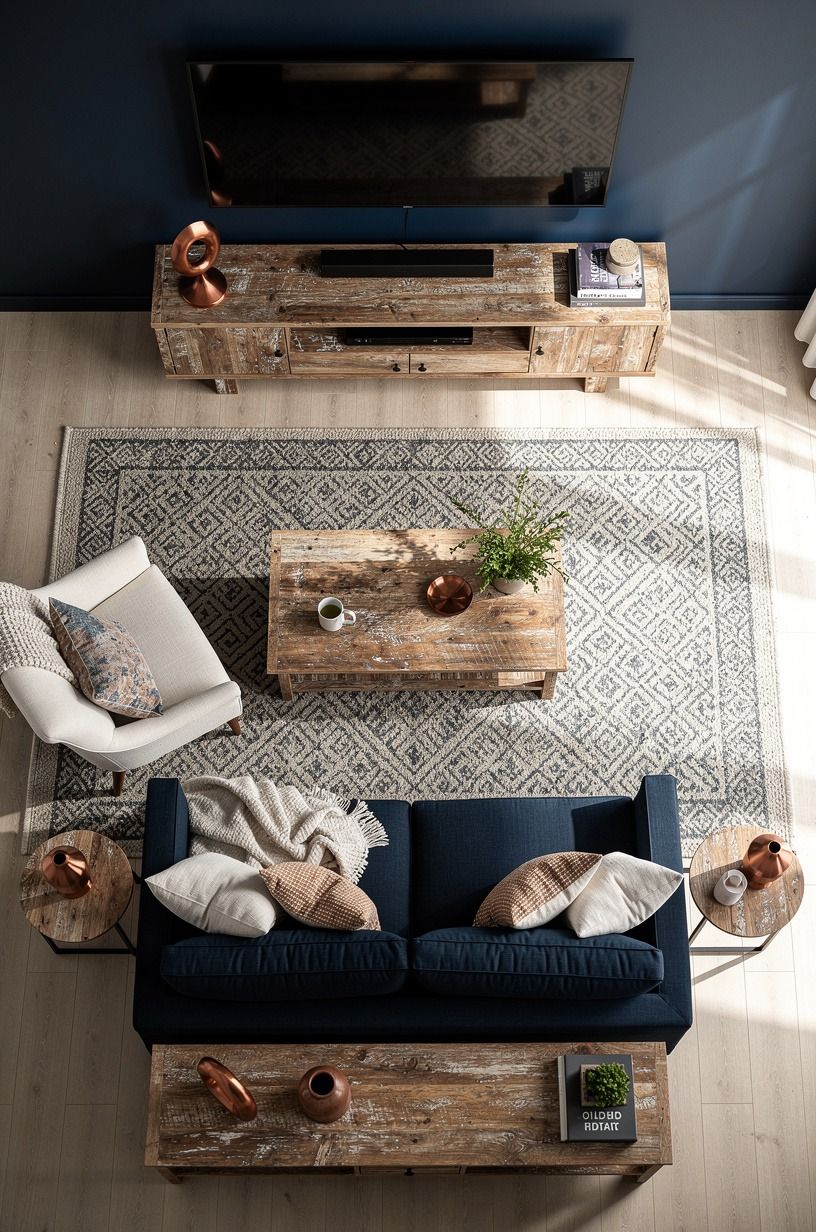
Mount the television from your actual viewing position, not from a standing person’s eye line. Sit on the bed, stack your pillows as you normally would, and ask someone to hold a paper rectangle where the screen will sit. You’ll know immediately whether the top edge feels too high.
A low-profile tilting wall mount can help when your bed sits close to the screen. I’d avoid placing the bottom of the television directly above eye-level artwork or a tall headboard. Your headboard, screen, and ceiling need a visual rhythm, not a pile-up of vertical objects.
If you’re adding a soundbar, measure that too. The space between the screen and soundbar should look deliberate, and your cables need a hidden route. This is where a shallow cable channel painted to match the wall can save the project.
It’s inexpensive, tidy, and far less annoying than seeing wires every morning. You’ll notice the difference whenever you settle into bed. For a calmer evening effect, pair the screen with the three-height light stack.
7Closed storage beneath the television
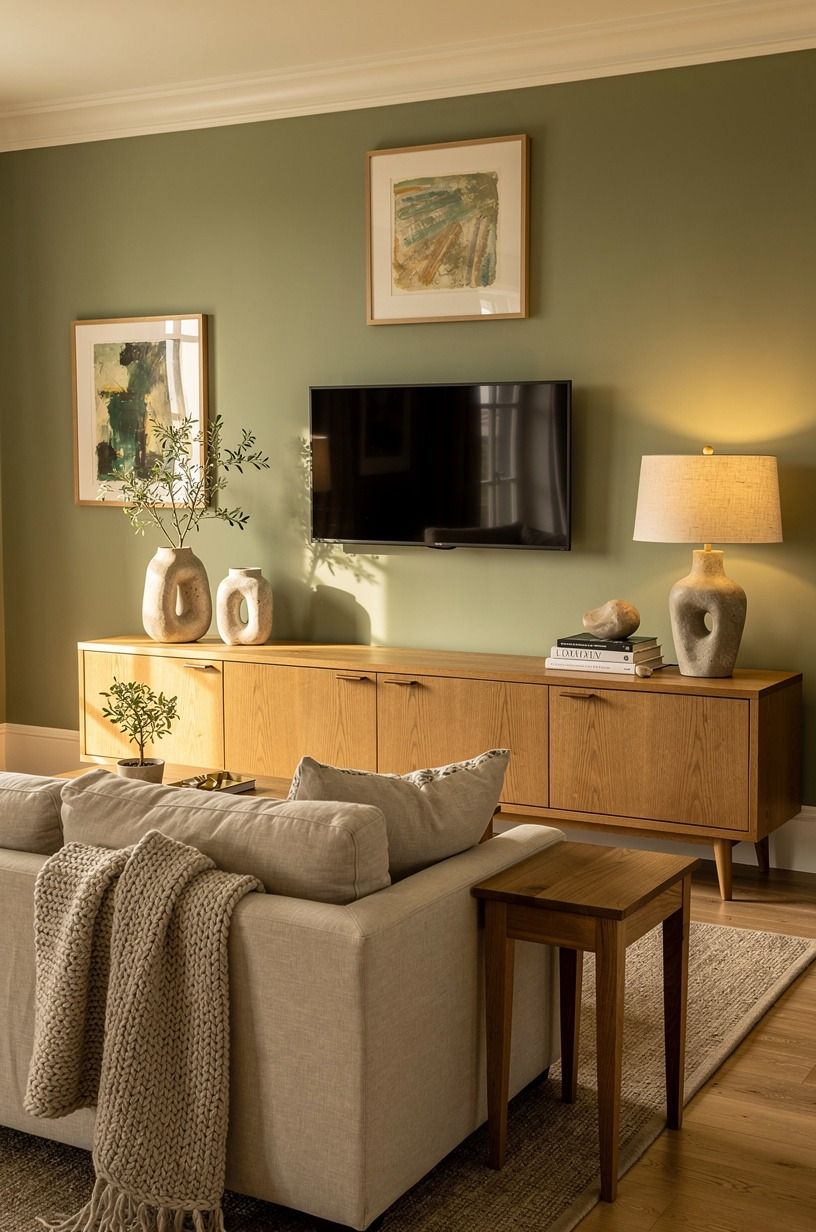
A bedroom media wall feels calmer when the objects you don’t use every hour disappear. Add a low cabinet beneath the screen for remotes, game controls, chargers, and spare bedding. IKEA TONSTAD units can give you a tailored look for less than custom joinery, especially when you replace the handles with aged bronze pulls.
Keep the cabinet lower than your mattress if possible. You’ll create a visual line that connects the media wall to the bed instead of making the television zone feel like a living-room console.
I’d skip open cube storage here. It collects dust, wires, and half-finished books directly below the screen.
Closed doors are worth the trade-off. If you need one open section, reserve it for a single woven basket or a small ceramic lamp.
For a lighter result, compare this approach with a floating cabinet. Both options keep the composition low, but they create different feelings beneath the television.
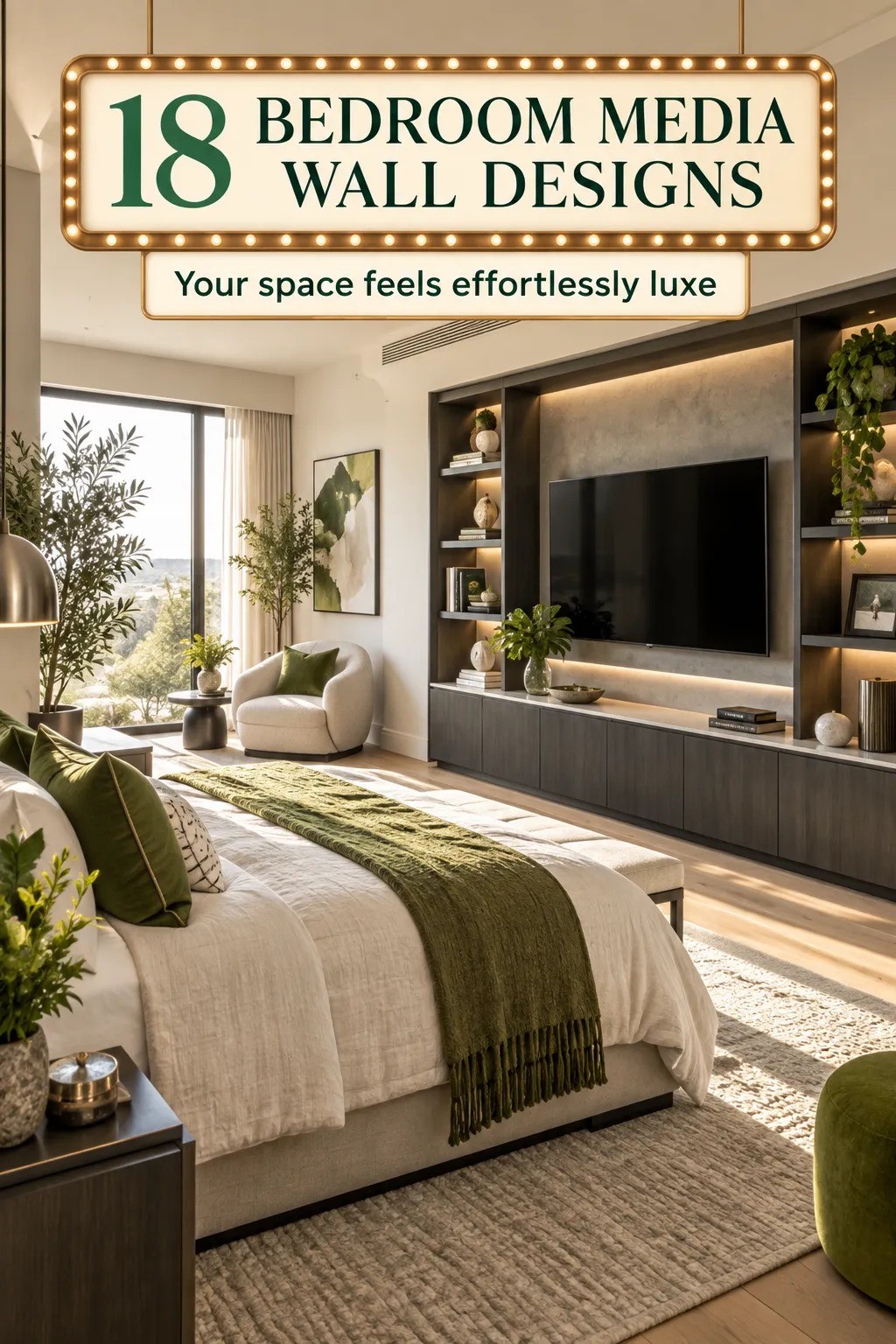
8The Three-Height Light Stack
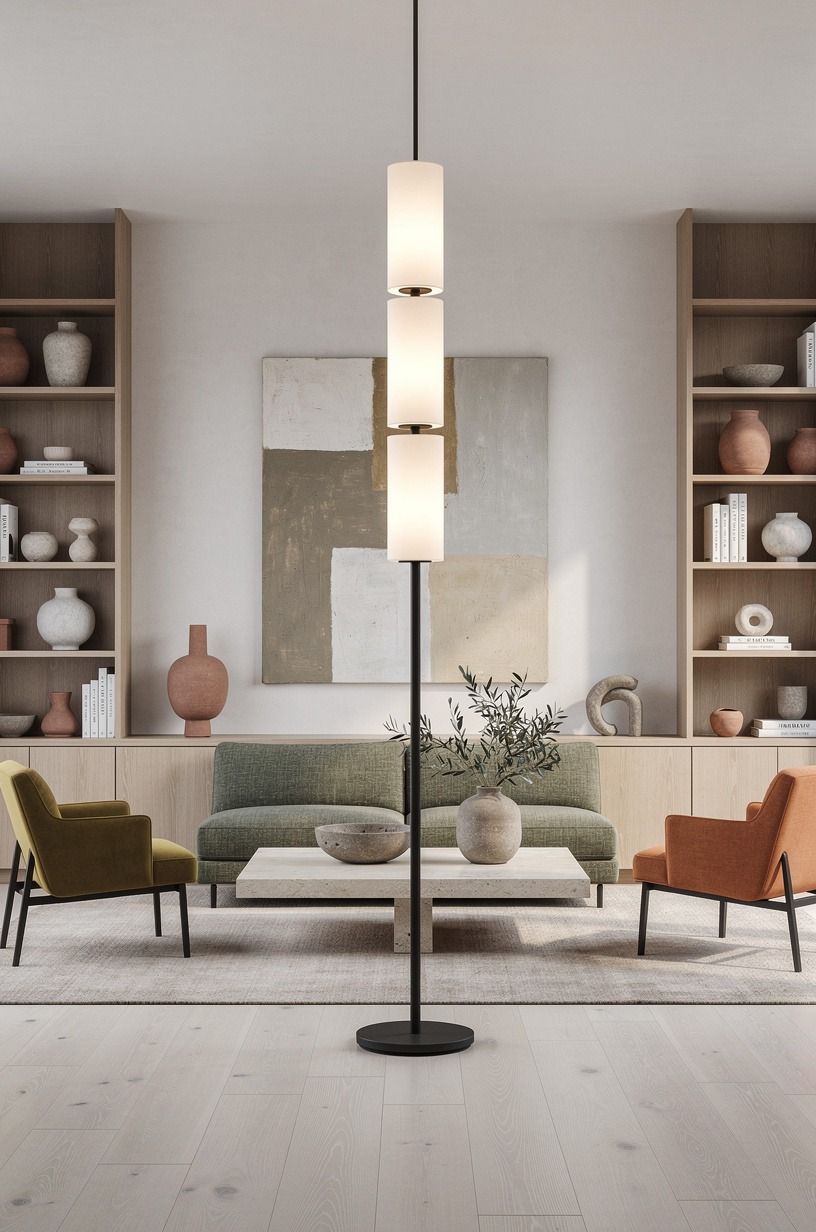
A bedroom media wall shouldn’t rely on one ceiling fixture.
9Frame the screen with vertical storage
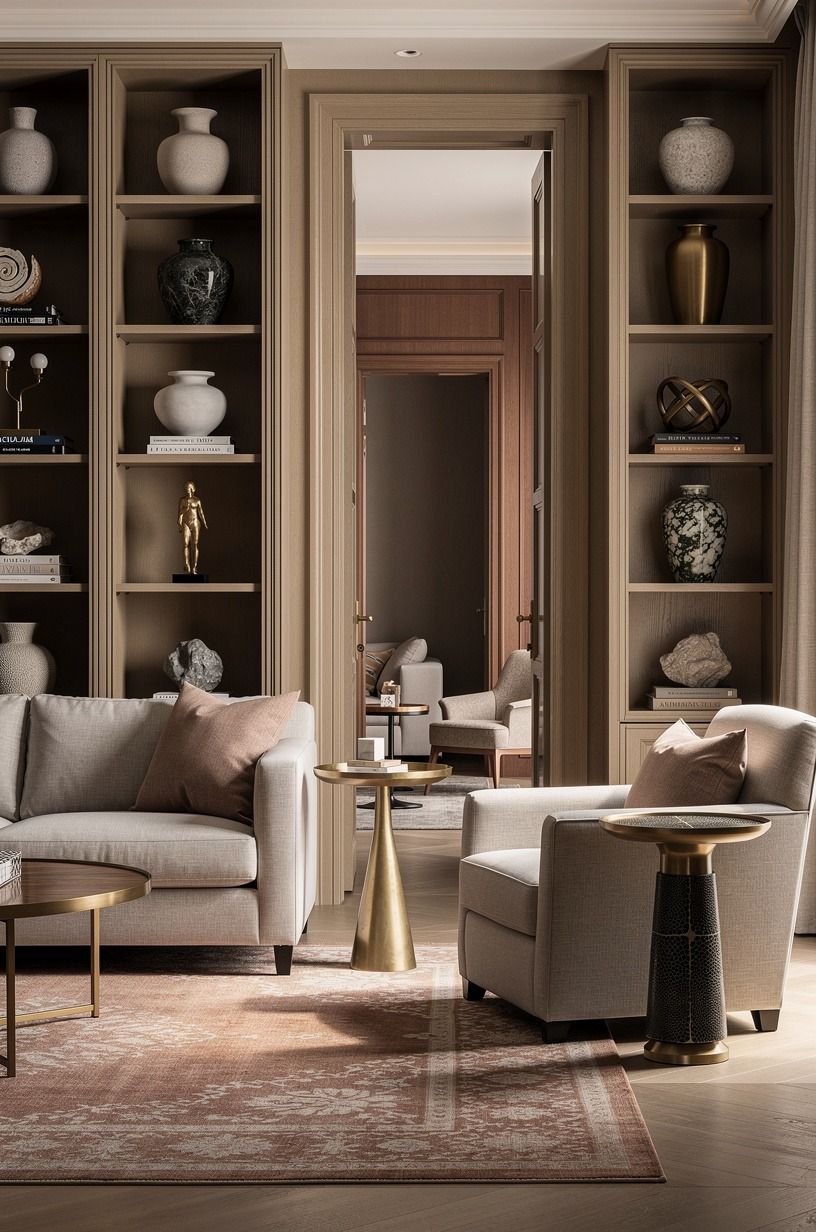
Vertical storage can make a bedroom media wall feel built-in without requiring a full renovation. Place narrow bookcases or closed towers on either side of the screen, leaving a little air between the units and the bed. Shagreen-fronted shelving has a strong texture, so it works best when the rest of your styling stays restrained.
Keep the tallest pieces symmetrical if your room is formal or hotel-like. If you prefer a more relaxed result, make one side slightly lighter with open shelves and keep the other side closed. Your eye will still read the wall as one composition.
I’d avoid filling every shelf. A few linen-bound books, one stone bowl, and a small framed photograph will feel more grown-up than a crowded display. You don’t need every object to be useful, but each object should earn its space through texture, memory, or scale.
If the wall is narrow, reduce the depth before reducing the walking space. A slim painted MDF tower may look more elegant than a bulky bookcase that makes the bed feel boxed in. Keep the lower zone open if the floating cabinet already provides storage.
10Fabric versus hard surfaces
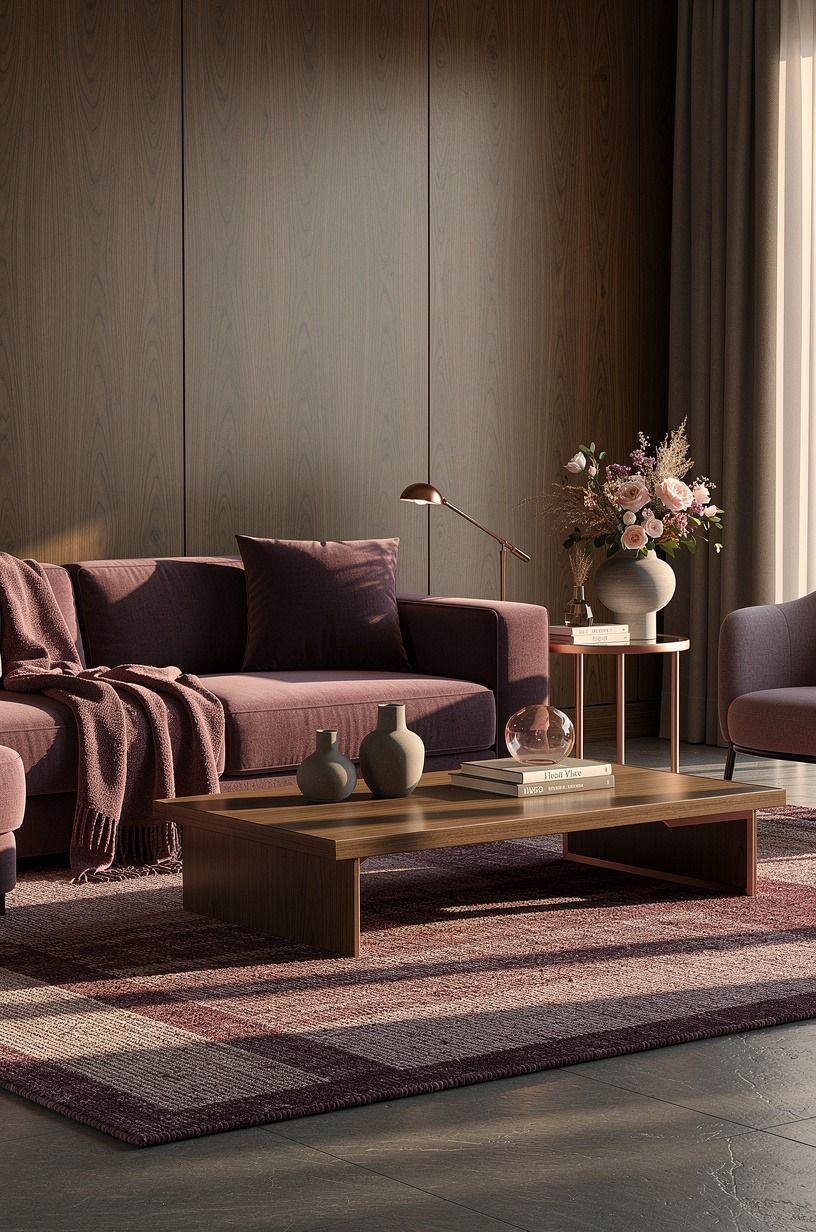
Wood, paint, and glass can make a media wall feel visually hard. Bring in fabric through the bed, curtains, or one upholstered side panel. A plum mohair velvet headboard can soften a book-matched walnut panel and make the whole wall feel more intimate at night.
Your fabric doesn’t need to match the wall exactly. Pair warm plaster paint with mushroom linen, or use a muted olive headboard against a deeper beige. I’d skip shiny polyester because it catches lamp glare and can make the room feel temporary.
If you’re on a small budget, start with full-length linen-look curtains. They add height, absorb sound, and soften the edges of the screen. You’ll notice the difference when the room gets quiet.
The television won’t feel like the only hard surface left in the space. For a more tactile scheme, borrow ideas from the three-object edit and repeat one fabric tone in a small accessory.
11Float the cabinet for a lighter minimalist media wall
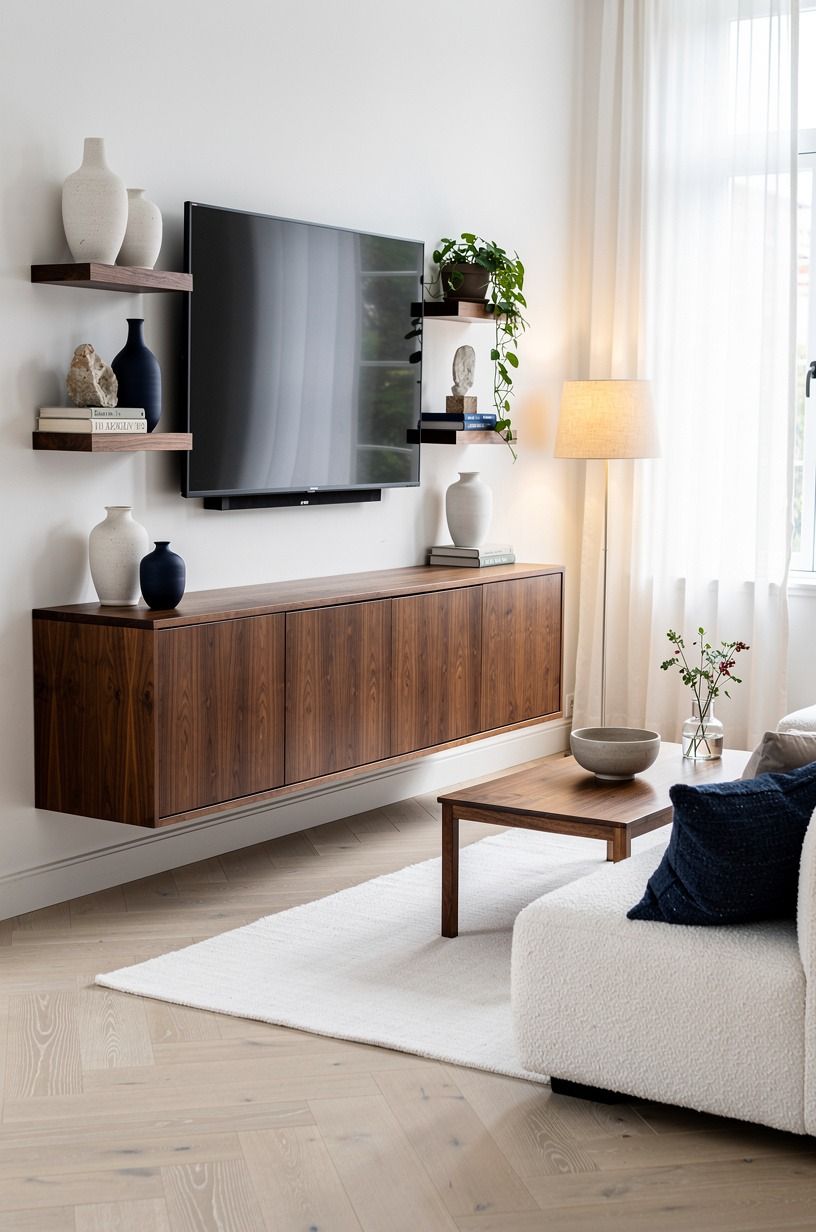
A floating cabinet creates a strip of shadow beneath the media wall, and that shadow makes the furniture feel lighter. Mount a simple navy cabinet with a walnut face beneath an organic bouclé panel, then run the cables through the wall or a painted channel behind it.
Your floor remains visible, which helps a compact bedroom feel more airy. I’d choose this approach when the room has limited walking space around the bed. A floor-standing cabinet can interrupt the route to the wardrobe, while a floating unit keeps the lower sightline open.
Be realistic about the wall structure. You’ll need secure fixings and enough support for the cabinet, television accessories, and anything stored inside. A French cleat can provide reassuring support when the wall construction allows it.
If you’re unsure, use a freestanding unit with recessed legs. You’ll keep the same visual effect without gambling on a weak fixing. The best minimalist details are often the ones nobody notices.
12How can artwork sit around the screen?
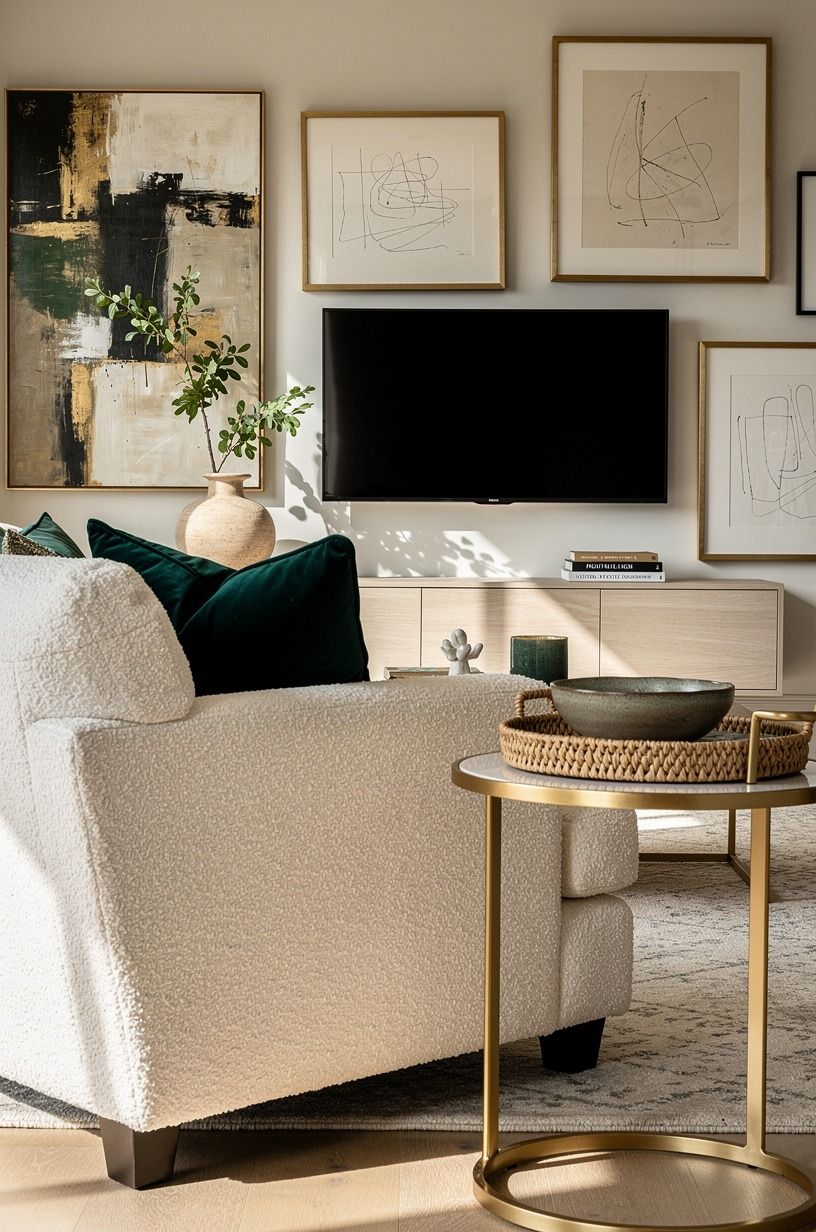
Artwork can stop your media wall from looking like an electronics display, but it needs breathing room.
13A dark surround for a moody TV panel wall design
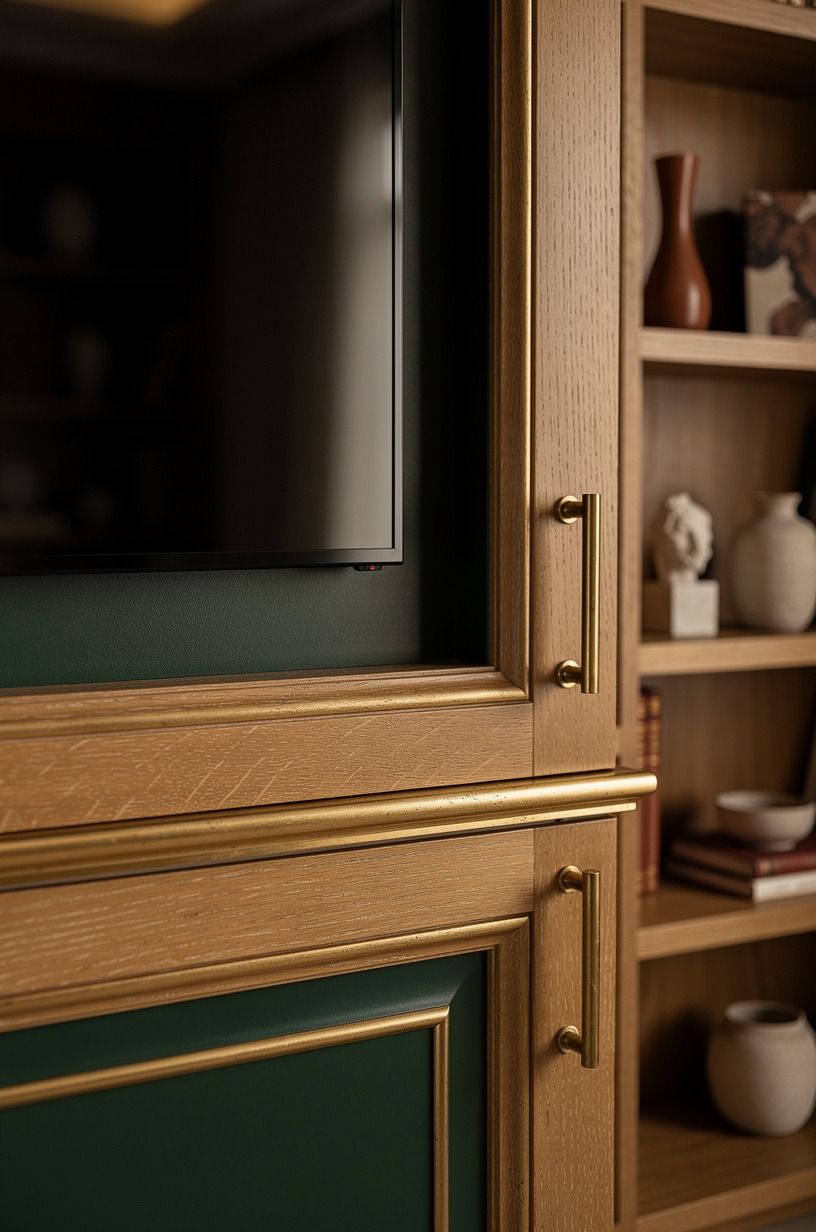
A dark painted surround can make the screen recede, especially in a room with low evening light. Try Benjamin Moore Essex Green HC-188 or another deep, softened green if you want a moody and earthy backdrop.
Use the dark shade across the entire wall, including the cabinet area. A partial painted rectangle tends to look like a temporary patch. I’d choose flat paint or a low-sheen finish because the goal is absorption rather than reflection.
But dark paint isn’t right for every bedroom. If your room faces north and receives little daylight, test a large sample first. You’ll want the wall to feel intimate, not heavy.
Add cream bedding, natural oak, warm lamps, and one unlacquered brass detail so the darker colour has somewhere to go. A dramatic wall needs gentle companions, or the room can lose its restful quality. For a softer alternative, compare it with the wall colour behind the screen.
14Where the cables disappear
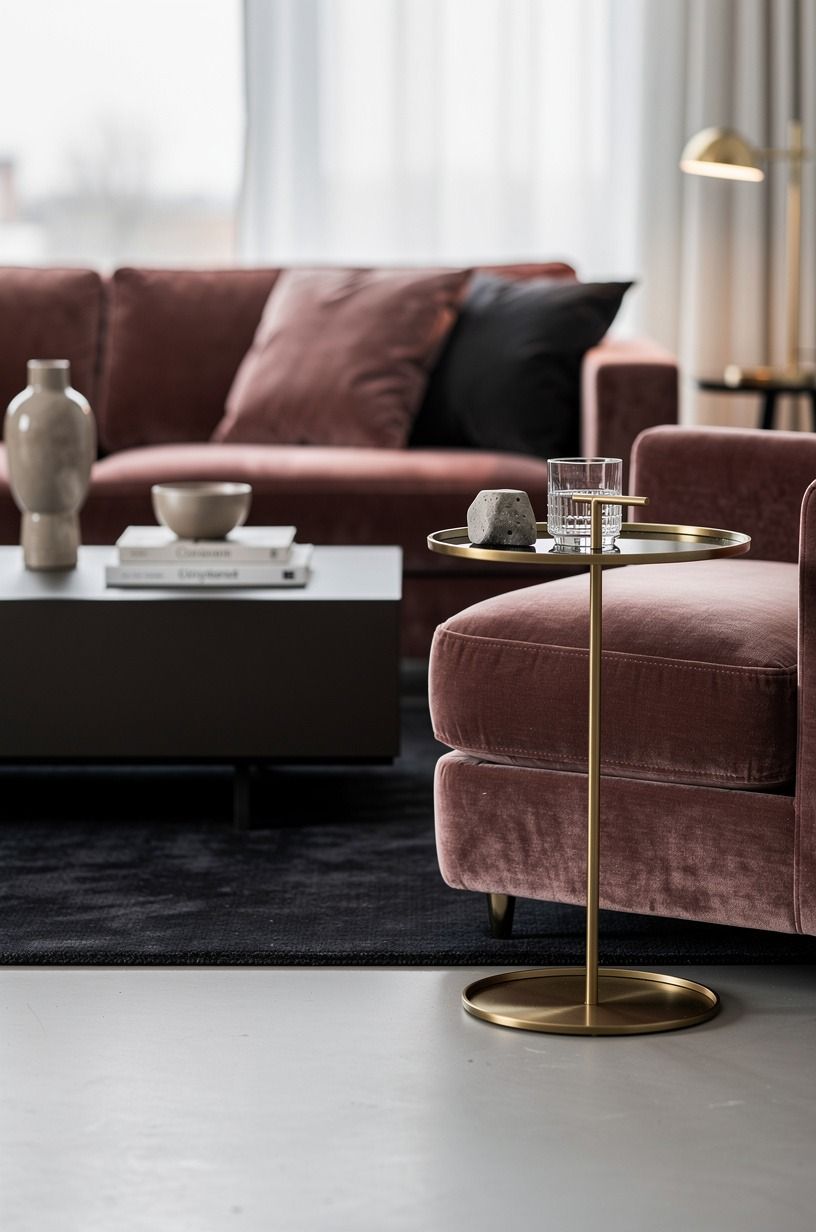
Cable planning is the least glamorous step, but it decides whether your media wall looks finished.
15Extend the rug beyond the bed
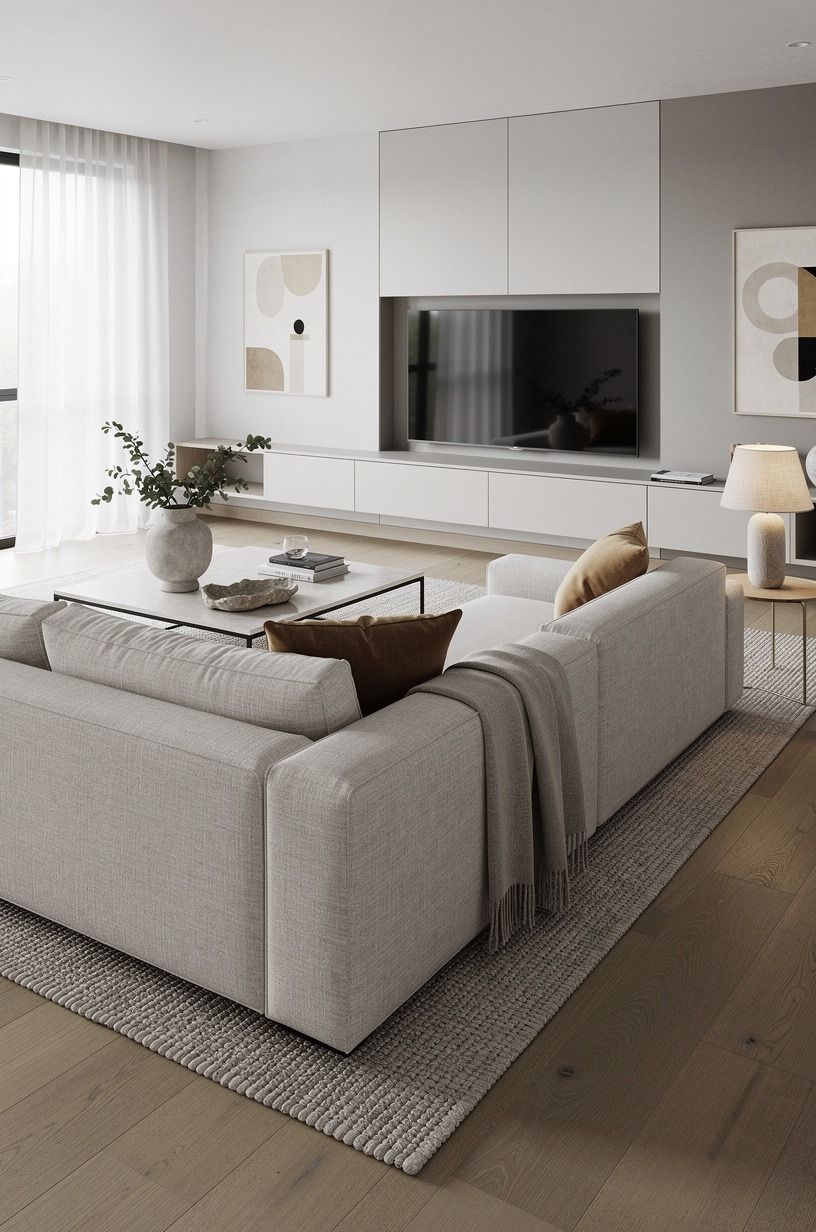
A rug helps connect the bed and media wall into one bedroom composition. For a queen or king bed, choose a size that extends 18 to 24 inches beyond the bed’s sides and foot. Wool rug texture absorbs sound and adds a soft, welcoming layer under your feet.
Place the rug so it reaches toward the cabinet without blocking drawers or doors. Your feet should land on something warm when you get out of bed, but the rug shouldn’t become a trip hazard around the media unit.
I’d skip a tiny rug floating in the middle of the room. It won’t create the hotel-style feeling you want, and it can make the furniture look disconnected.
If a large wool rug is outside your budget, use a flatwoven cotton rug under the lower two-thirds of the bed and layer a smaller sheepskin runner near your side. Keep its colour related to the Two-Wood Rule.
16The Three-Object Edit
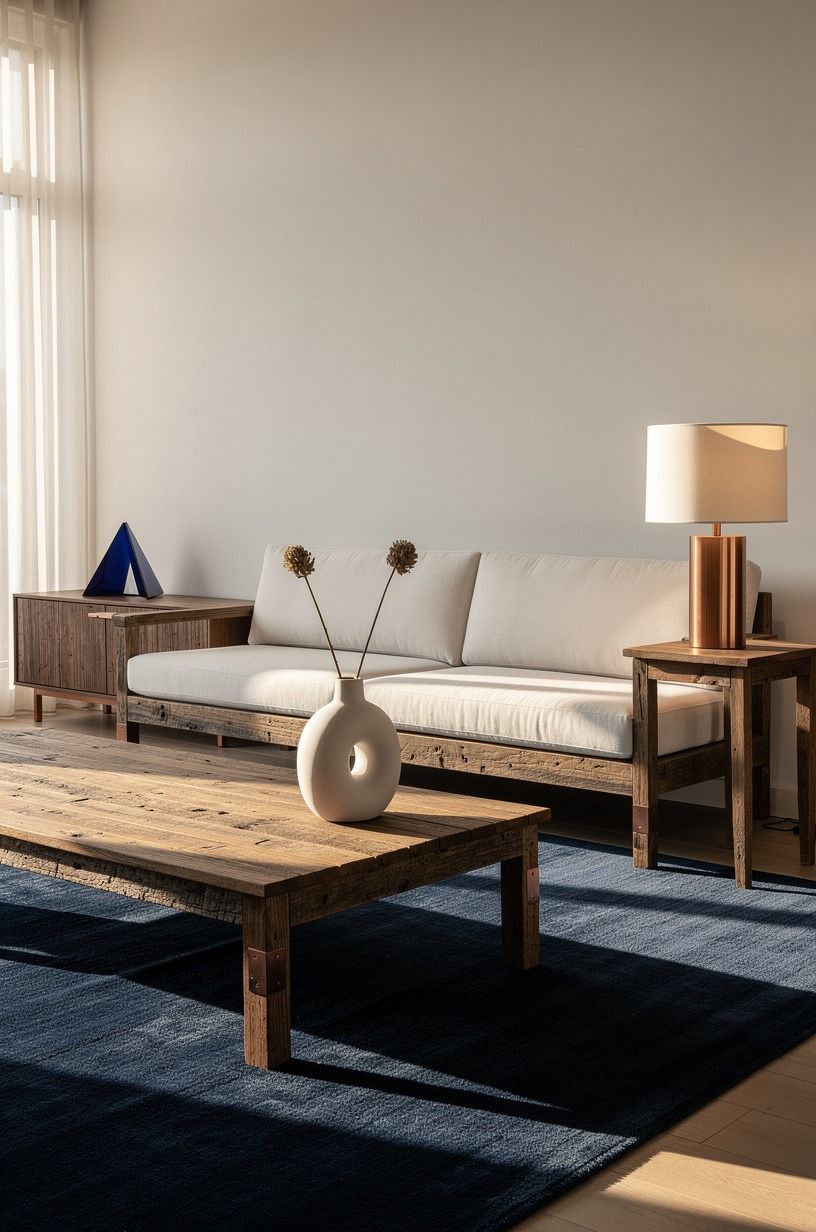
Your cabinet top needs three kinds of shape: one tall object, one low object, and one organic object.
17What changes between daylight and darkness?
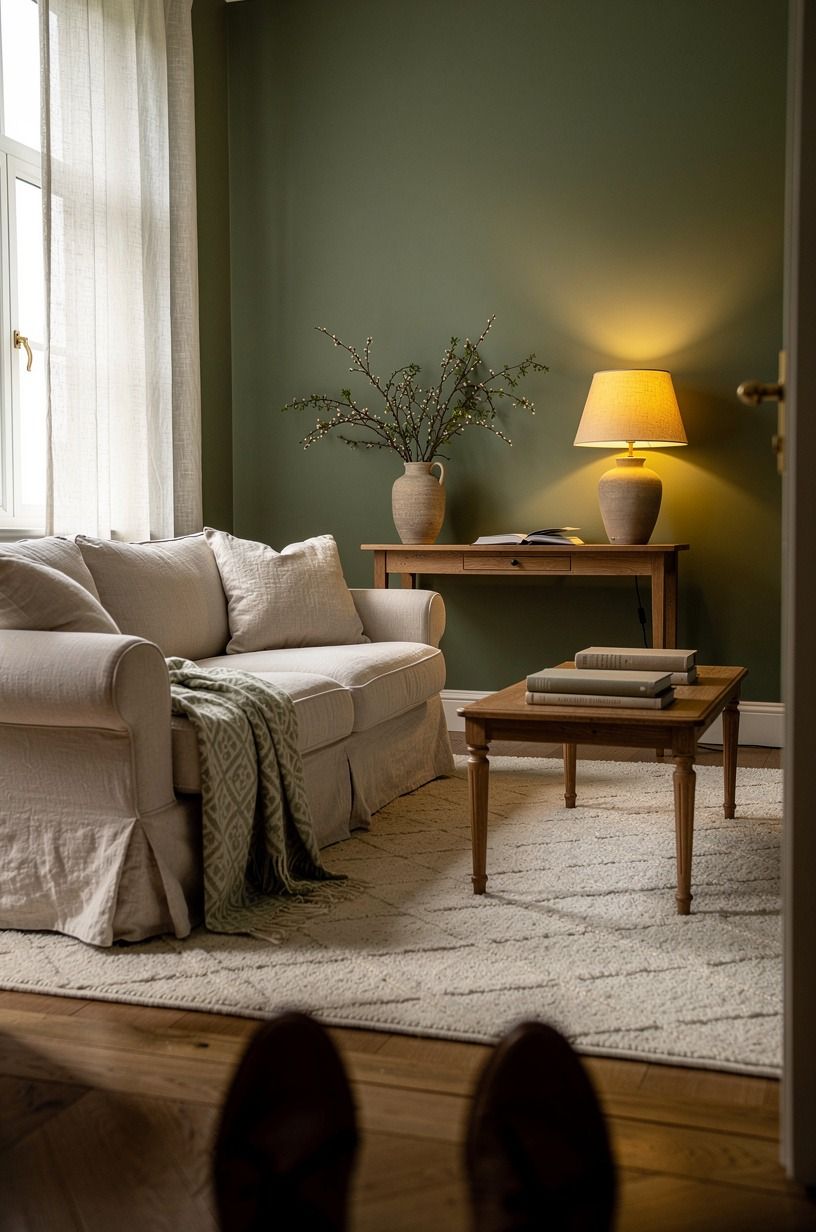
A media wall changes character through the day. Check it in morning light, afternoon shadow, and the evening lamp setting. Washed Belgian linen can look soft and warm at night but surprisingly pale beside daylight, so your samples need more than one quick glance.
Stand in the doorway and look for awkward gaps. Then sit on the bed and check reflections, screen height, and cable visibility. A 2700K lamp can make warm finishes feel reassuring, while a cooler bulb may make them appear flat.
Would you want to wake up facing this wall every morning? That’s the useful question. If the answer is no, remove one item before adding another.
A bedroom needs a peaceful visual pause, and your media wall should support sleep when the screen is off. Recheck the lighting stack after every major change. A blackout curtain can also alter the evening balance more than you expect.
18Finish with one warm hotel-style detail
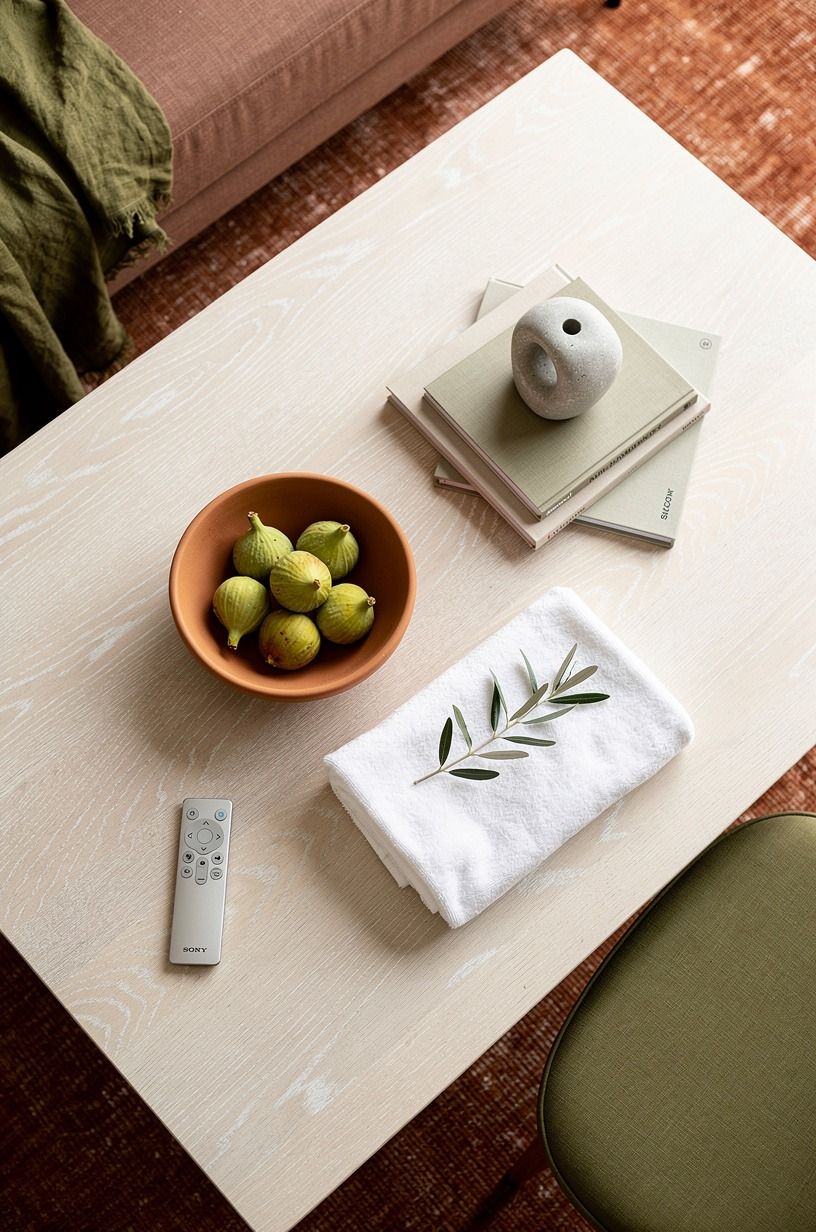
Choose one finishing detail that gives the wall a sense of hospitality.
What Things Cost for a Bedroom Media Wall
The media wall itself can be a small part of a wider bedroom refresh. Your total depends on whether you’re repainting, replacing the bed, adding a rug, or commissioning built-in cabinetry. These typical US ranges give you a useful frame before you choose finishes.
For the media wall alone, you can keep costs down with paint, a freestanding cabinet, and careful cable concealment. Your biggest visual improvement may come from moving the screen, adding warm lighting, and choosing one strong material.
Built-ins look polished, but they aren’t the only route to a refined result. Review the closed storage option before assuming custom joinery is necessary. A freestanding oak console may give you the same grounded effect with much less commitment.
My Honest Take on the Hotel-Style Media Wall
I’ve gone back and forth on bedroom televisions. Part of me still prefers a room with no screen at all, especially when the bed, curtains, and lamps already create a quiet retreat.
But a television can belong in the bedroom when you treat it as an architectural object instead of an afterthought. That distinction changes everything.
The mistake I see most often is starting with the television and building outward. The screen gets mounted first, then a shelf appears below it, then a few objects are added to make the wall look finished. Your eye reads the result as electronics with decoration around them.
I’d start with your sleep routine. Do you watch for twenty minutes before bed, or do you leave the screen running for hours? Do you need hidden storage, or would a slim panel and one shelf be enough?
Those answers should decide the wall’s height, lighting, and cabinet size.
A king bed needs a different sense of scale from a queen in a narrow room. Compare the screen with the bed and viewing line before you choose materials.
I also think people underestimate texture. Paint creates atmosphere, but fabric controls the room’s softness. A wool rug, linen curtains, and an upholstered headboard will do more for comfort than another decorative object.
Your hand should notice the room as much as your eye does. That tactile quality is what makes a space feel genuinely inviting rather than merely coordinated.
The best version isn’t the most expensive one. It’s the wall that lets you watch comfortably, switch everything off easily, and still enjoy the room when the screen is dark.
That’s why I’d spend first on placement, lighting, and cable control. They’re the details you’ll notice every night, even when nobody else sees them. If you’re unsure where to begin, return to the bed and viewing line and build outward from there.
What People Always Want to Know
What is the best Bedroom Media Wall Ideas for a Cosy, Hotel-Style Feel for a small living room?
A low IKEA BESTÅ cabinet with a painted panel works best for a small bedroom. You’ll keep storage closed, preserve floor space, and create a calm focal point. Choose a warm neutral wall, mount the television at your seated eye line, and skip bulky shelving.
Where can I buy Bedroom Media Wall Ideas for a Cosy, Hotel-Style Feel pieces on a budget?
Look at IKEA, Wayfair, and Target for cabinets, lamps, and textiles. You can also find solid wood pieces through Facebook Marketplace or a local thrift shop. Your best savings usually come from buying a used cabinet and repainting it rather than buying several small new items.
How much does a Bedroom Media Wall Ideas for a Cosy, Hotel-Style Feel makeover cost?
A small refresh can fit within the $200-$800 budget tier when you use paint, existing furniture, new bedding, and simple lighting. A mid-range bedroom update often reaches $1,500-$5,000 with a headboard, rug, drapes, and fixture. Your cabinet choice will shift the total.
Can I create a Bedroom Media Wall Ideas for a Cosy, Hotel-Style Feel on a budget?
Yes, and you can start without replacing the room. Paint the wall, move the television to a comfortable height, and hide the cables with a paintable channel.
Add one warm lamp and rearrange your existing textiles. Your room may feel calmer before you buy anything new.
Is a Bedroom Media Wall Ideas for a Cosy, Hotel-Style Feel worth it in a small space?
Yes, because a small room benefits from furniture that performs more than one job. A shallow cabinet can hide devices, while a single wall treatment creates visual order. Keep your media wall low, choose closed storage, and leave clear walking space around the bed.
Is Bedroom Media Wall Ideas for a Cosy, Hotel-Style Feel a good idea for a rental?
Yes. Use a freestanding cabinet, removable wallpaper or paint where permitted, tension-mounted curtains, and adhesive cable channels.
Your television can sit on a stable console instead of a wall bracket. Keep every change reversible, and check your lease before painting or drilling.
Where I’d Start First
If I had to pick one step, I’d start with the viewing height. A beautifully styled wall still fails when you’re craning your neck from bed.
Lower the screen, hide the cables, and let the warm lighting do the rest. You’ll feel the difference every night!