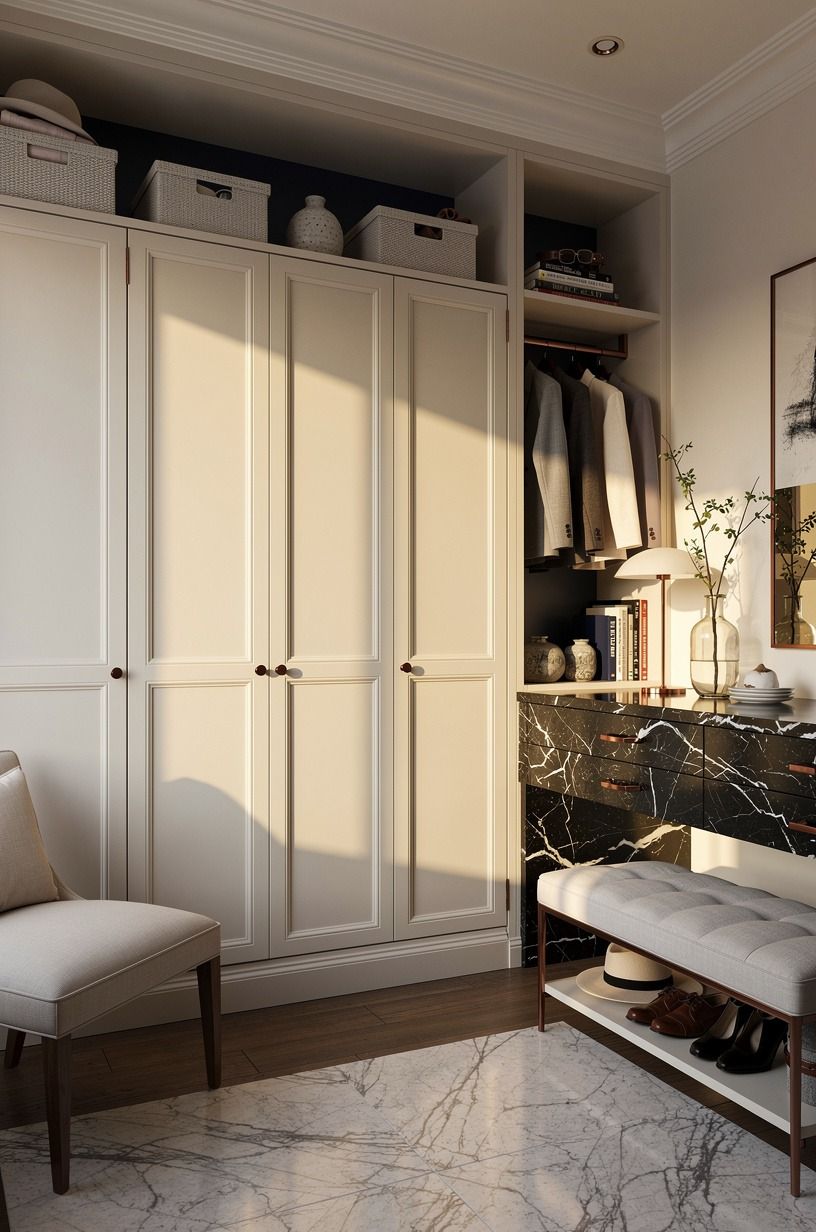
14 White & Beige Dressing Room Ideas for a Calm, Timeless Look That Feels Expensive
30 september 2026A calm white and beige dressing room starts with generous light, warm texture, and a layout that lets you move easily. I once made mine too white and glossy, then wondered why it felt cold. The fix wasn't more decor. It was cerused white oak, softer bulbs, and fewer competing finishes. If you're gathering ideas for a small dressing room, begin with the atmosphere you want to feel each morning.
- Layer warm whites instead of matching everything
- Could beige walls make the room feel warmer?
- Build the Two-Wood Rule
- Float a white dressing table near the light
- Why the Three-Height Light Stack works
- Hang double rods to clear the floor
- Frame the closet with soft linen curtains
- Open shelves or woven drawer fronts?
- Anchor the room with a narrow runner
- Add one earthy accent, not five
- Let daylight find the mirror
- Style a neutral dressing table with restraint
- Use less storage, with more purpose
- Finish the beige and white room with quiet hardware
1Layer warm whites instead of matching everything
Layering warm whites keeps your dressing room bright without making it sterile. Let Farrow & Ball All White No. 2005 stay on the trim, then bring in midnight blue, ivory, and copper through the cabinetry and accessories. A piece of Nero Marquina black marble gives the quiet palette a stronger anchor.
The mistake is matching every white exactly. I tried that once, and the room looked like a showroom after closing time.
Your clothes need contrast, even when the palette stays quiet. A copper basket, matte shelf, or folded ivory linen adds a soft shadow that makes the room feel more inviting.
Keep the ceiling and trim lighter if your closet is small. For a comfortable dressing room, the standard target is 6x8 feet, although a 4x4-foot space can still work when you keep the floor open. You don't need a large footprint to make the room feel airy!
A touch of warm ivory, a softly textured bouclé stool, and a slim Nero Marquina shelf can make the palette feel layered rather than flat. The result is serene, luminous, and quietly elegant.
2Could beige walls make the room feel warmer?
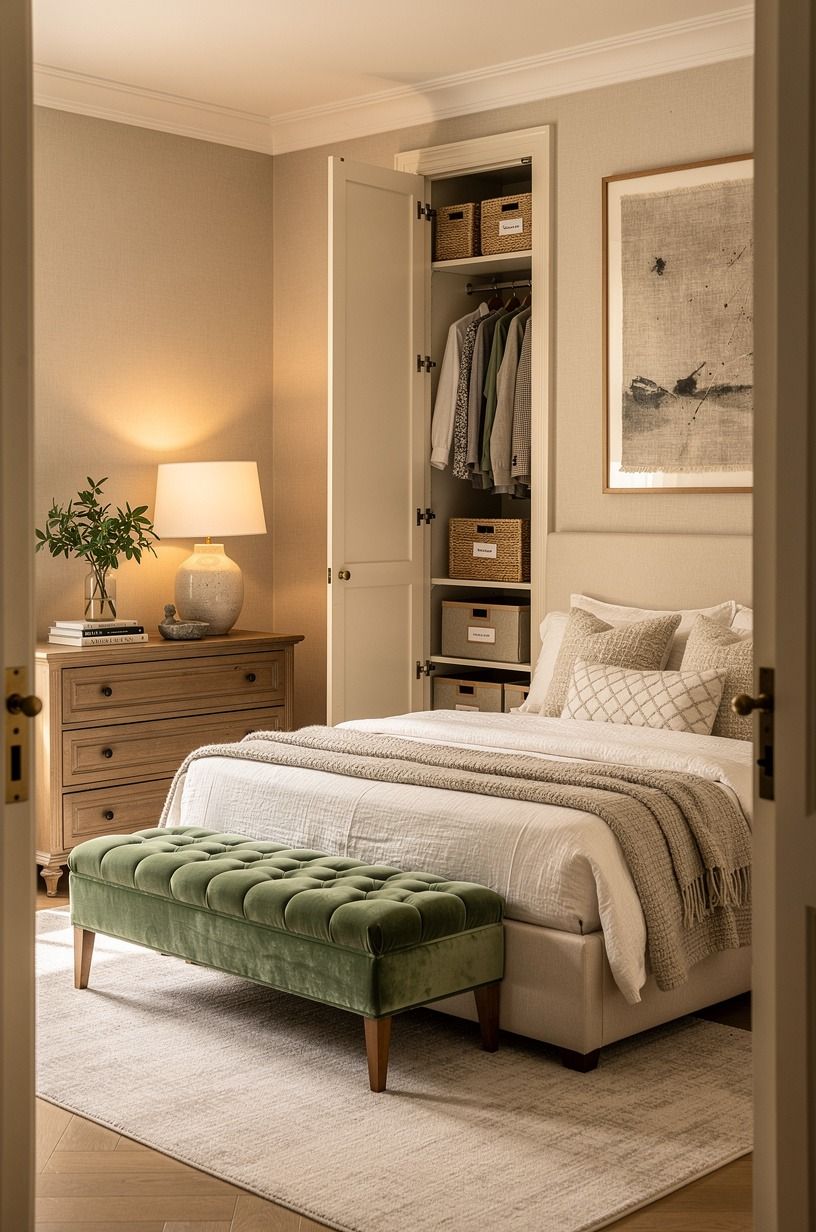
Beige walls can make a dressing room feel warmer, but a muted sage green creates a calmer contrast with cream clothing and natural wood. Benjamin Moore Saybrook Sage HC-114 is a beautiful starting point because it changes gently through the day.
In morning light, it feels fresh. Near evening, it settles into a softer green.
And if you're nervous about sage looking too cool, test it beside your flooring and wardrobe finish. A sample on a white card won't tell you enough. Your wall may look restrained beside bright shelving, then warmer beside deep-pile mohair velvet or natural wood.
I'd skip a flat gray here. It can make white clothes look blue and drain the warmth from a room with limited daylight. Your better move is a muted green with a low-sheen finish, especially if the walls have small imperfections.
The surface will still look polished, but it won't bounce glare around the closet.
For more color guidance, compare the room with these warm white paint colors and neutral bedroom paint ideas. A gentle sage green, a warm cream, and a muted natural wood tone can create an exceptionally soothing backdrop.
Paint samples deserve a full day of observation. Morning, afternoon, and lamplight reveal different undertones, and that little experiment can save you from an expensive repaint!
3Build the Two-Wood Rule
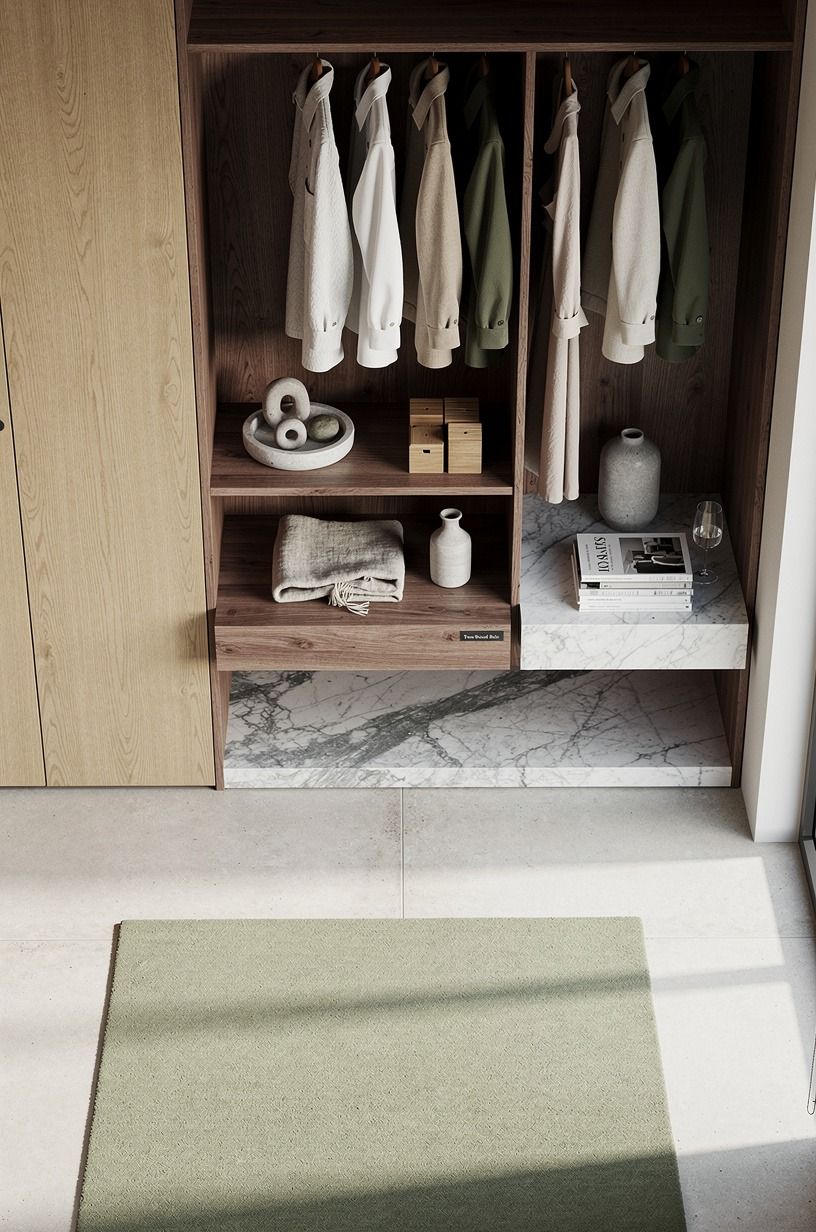
The Two-Wood Rule keeps a neutral dressing room from becoming visually sleepy. Choose one pale wood for the larger pieces, then add a darker wood in small, deliberate moments. Natural wood works beautifully with terracotta, stone, and olive, especially when a slab of Carrara marble with subtle grey veining adds a pale mineral note.
You don't need matching furniture. An IKEA KALLAX in a birch-effect finish can sit near a more substantial oak bench if the undertones agree. I prefer that collected look over a complete suite because your room will feel lived-in rather than ordered from one catalog.
Keep your second wood below eye level when the room is narrow. A darker bench or tray grounds the floor without shrinking the walls.
If you're arranging a beige dressing table, let the tabletop carry the richer finish and leave the surrounding storage pale. A small olive accessory or terracotta vessel can connect the materials.
A pale oak bedroom scheme can help you judge the balance. Use natural birch, light oak, or whitewashed ash as the dominant wood, then introduce walnut, smoked oak, or medium teak in smaller doses. Three wood tones usually create visual noise.
Two feel curated.
The most charming rooms have a little variation. A vintage wooden stool beside crisp cabinetry can give the dressing room a graceful, collected quality without making it feel cluttered.
4Float a white dressing table near the light
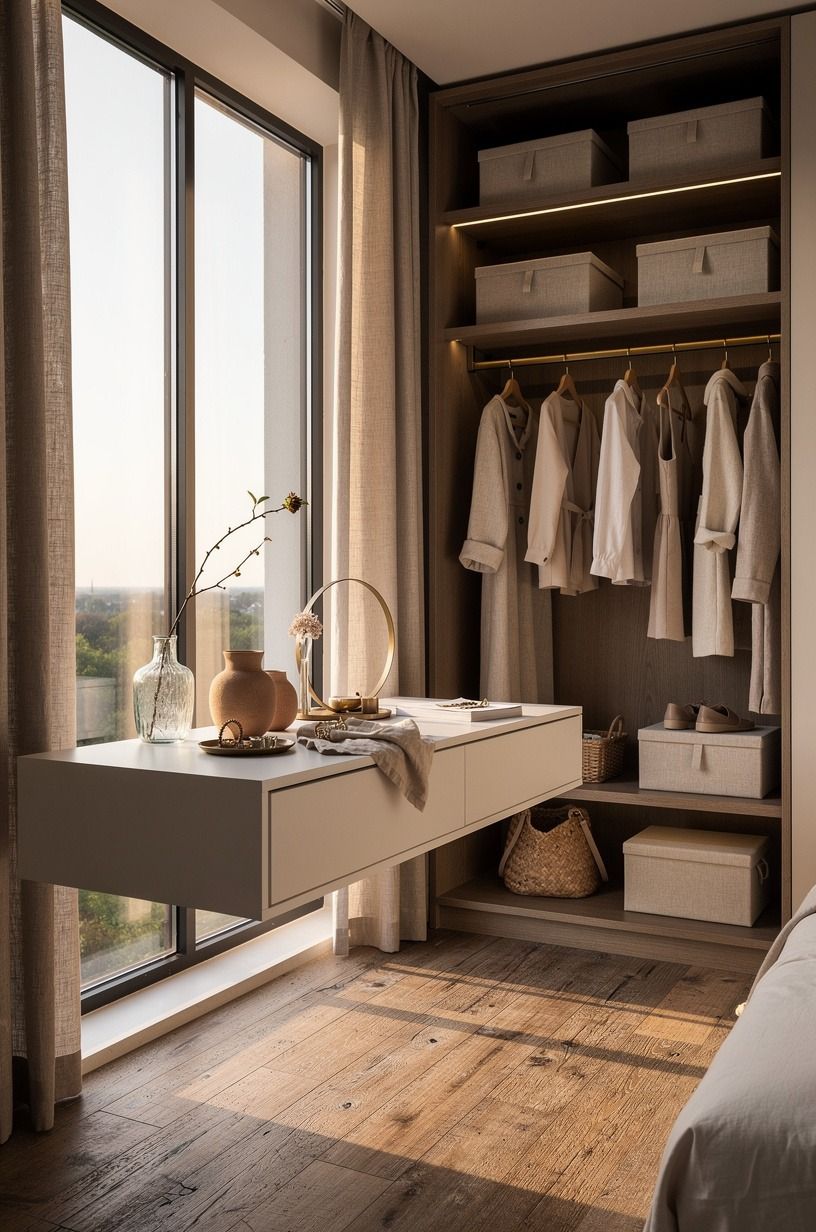
A light dressing table set against clay, linen, and aged brass can give you useful surface area without stealing floor space. Reclaimed weathered teak adds warmth beneath the pale finish and keeps the arrangement from feeling overly smooth.
5Why the Three-Height Light Stack works
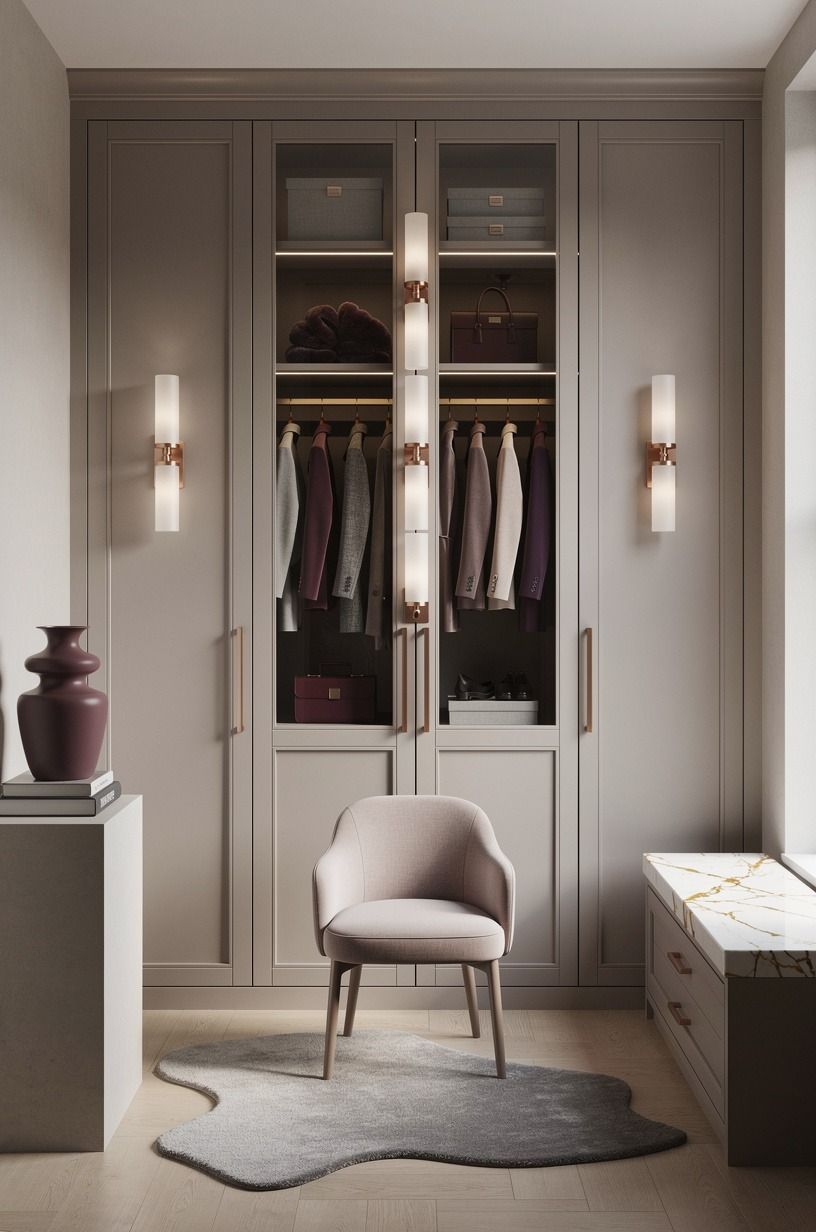
The Three-Height Light Stack uses ceiling light, eye-level light, and low accent light so your dressing room doesn't depend on one harsh bulb. This layered approach makes the room feel atmospheric at night and more flattering when you're getting dressed.
Begin with a diffused ceiling fixture that spreads light evenly. Add an eye-level opal glass sconce beside the mirror, then use a small ceramic table lamp or concealed LED strip near the floor. In a plum, grey, and rose-gold room, a vanity surface of Calacatta marble with gold veining gives the light something warm to catch.
Your mirror light matters most because it shows color and texture close to your face. Place two matching sconces beside the mirror when possible. If the room is narrow, a slim vertical light on one side can still create a gentle, useful glow.
This is one of the most effective bedroom lighting ideas for a compact space. It feels luxurious because the shadows are controlled, the ceiling disappears into a soft wash, and the room remains welcoming after sunset. No single overhead bulb can create that kind of depth!
Choose dimmable fixtures if your wiring allows it. Bright light helps with makeup and clothing, while a lower setting makes the dressing room feel intimate and restorative before bed.
6Hang double rods to clear the floor
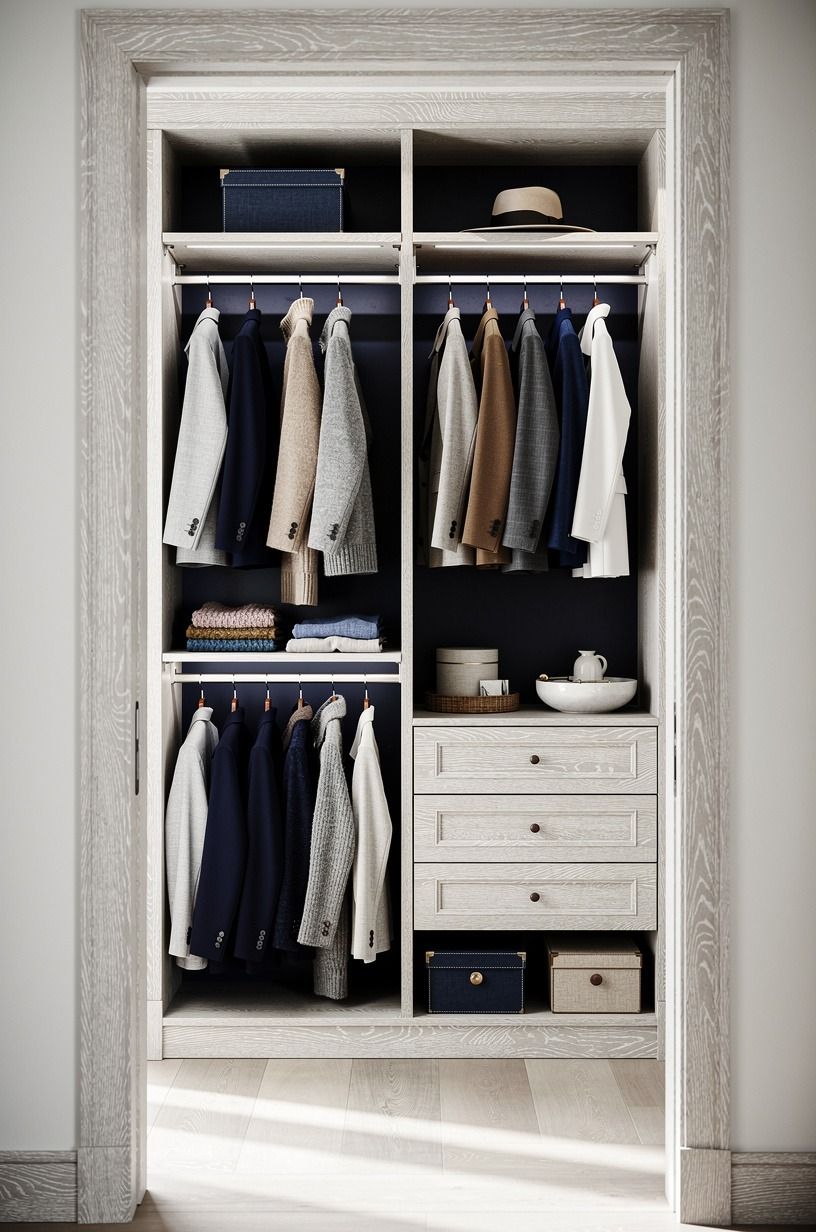
Double-hang rods make a small closet feel calmer because your clothing gets a clear home instead of spilling over a chair. Against navy and white, walnut accents add enough warmth to keep the space from feeling stark.
7Frame the closet with soft linen curtains
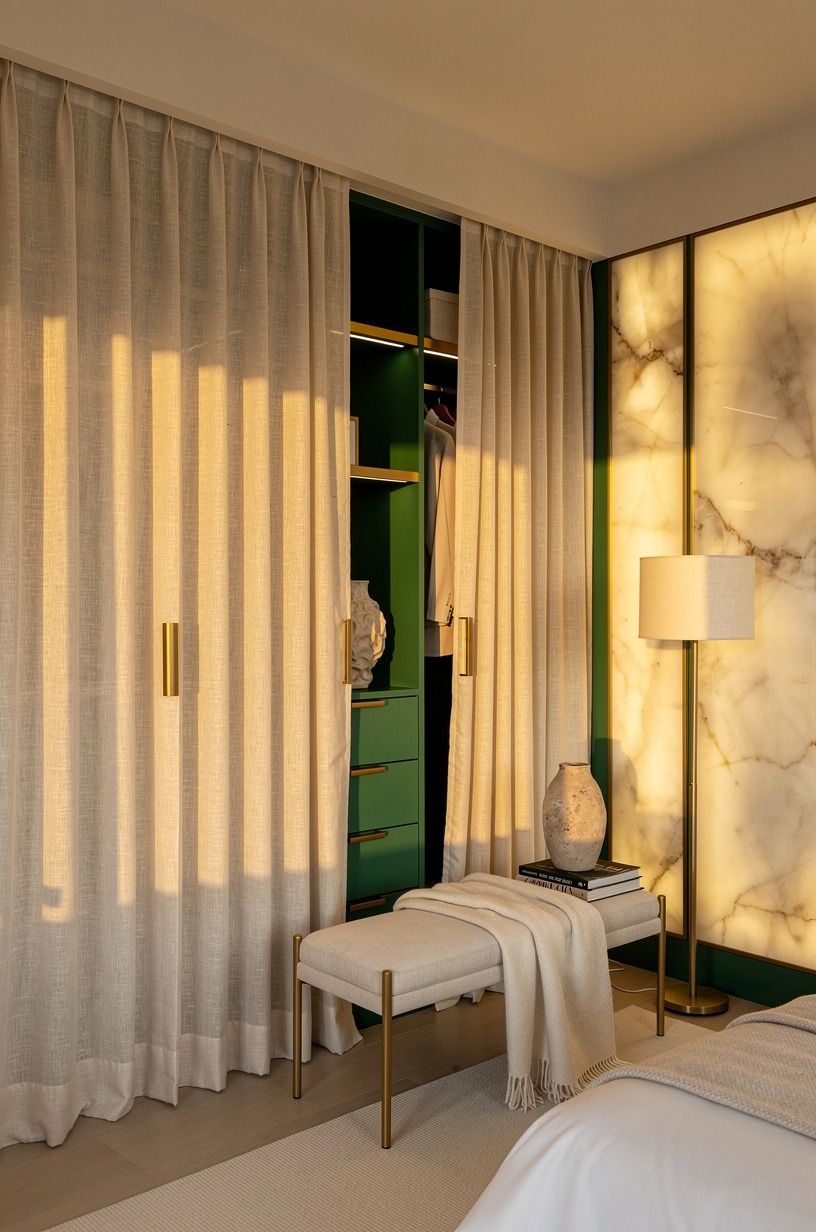
Curtains can make open storage feel finished without the cost of custom doors. In an emerald, gold, and cream scheme, choose substantial cream fabric and let a panel of backlit translucent onyx bring a soft glow near the storage.
Hang the track close to the ceiling. Your eye will read the fabric as part of the architecture, which gives a basic closet more presence.
I prefer curtains that just skim the floor. Too much puddling collects dust, especially near shoes, while a short hem looks accidental. If you're covering a small dressing area, keep the panels full enough to fold generously when open.
That soft fold adds texture without taking over the room.
A tension rod works well for renters, and removable hooks can support a lightweight track in the right situation. Don't use a busy print if your clothing already brings color.
Your dressing room will feel more serene with cream fabric, quiet gold hardware, and a softly illuminated stone detail. The fabric should soften the storage and keep the room feeling graceful.
Explore these linen curtain ideas if you want the closet to feel more architectural. A ceiling-mounted track, cotton voile, or washed linen panel can hide visual clutter while preserving easy access.
Curtains also add a subtle sense of ceremony. Opening them in the morning feels more pleasant than confronting a wall of mismatched boxes.
8Open shelves or woven drawer fronts?
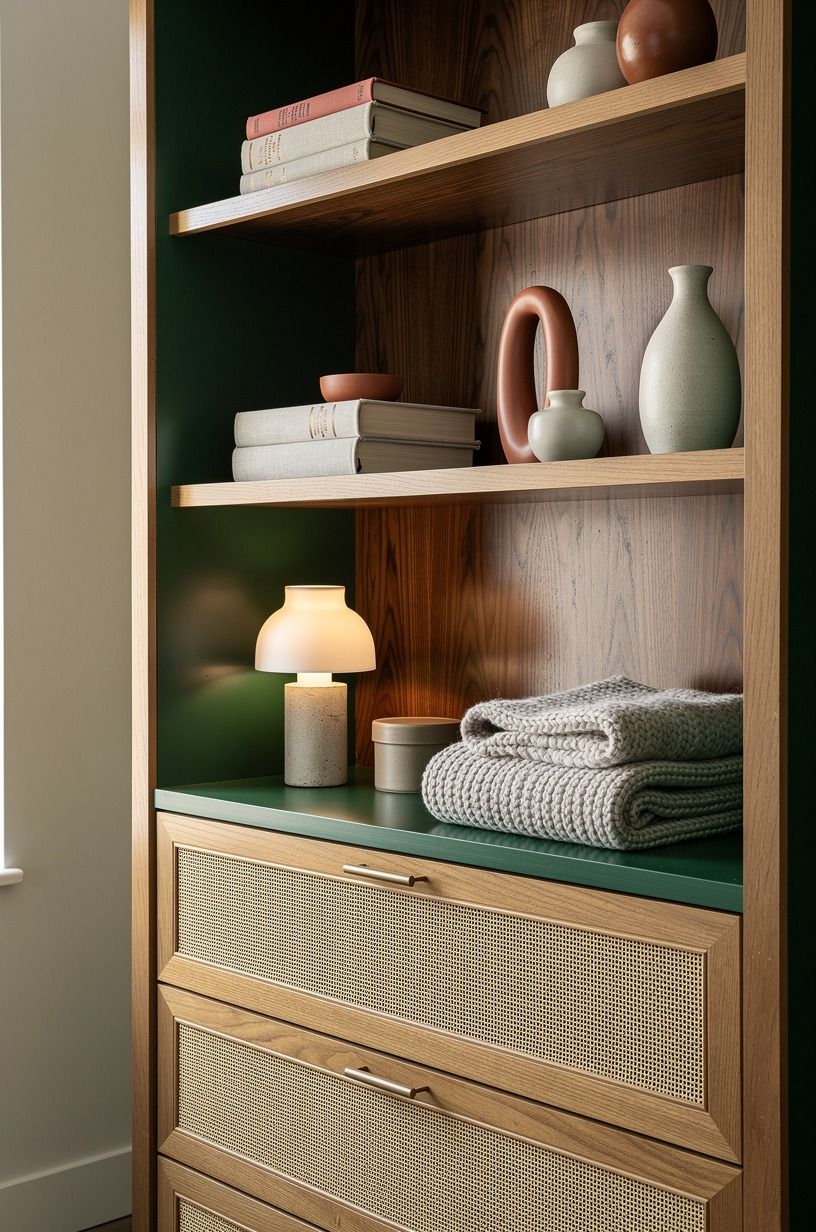
Open shelves are helpful until every folded shirt becomes part of the room's visual noise. Woven drawer fronts give you a warmer, more forgiving way to store accessories, folded clothing, and small seasonal pieces.
Choose natural oak for the framework, then bring in forest green, rust, and walnut through the storage details. A book-matched walnut drawer front introduces an earthy, tactile note beside smooth walls and painted cabinetry. It feels relaxed without becoming rustic.
Use open shelving for objects that deserve to be seen. Handbags, folded sweaters, and a small stack of hats can look elegant when grouped by color. Hide underwear, accessories, and laundry supplies behind walnut drawer fronts or inside linen storage boxes.
If you're comparing open shelving and closed storage, think about your habits. Open shelves reward regular editing.
Drawers are more forgiving when life gets busy. I prefer a combination because the room stays useful on an ordinary Tuesday.
One attractive shelf can hold a leather box, a ceramic bowl, and a folded cashmere scarf. That small arrangement feels personal, inviting, and finished without turning storage into a display wall.
9Anchor the room with a narrow runner
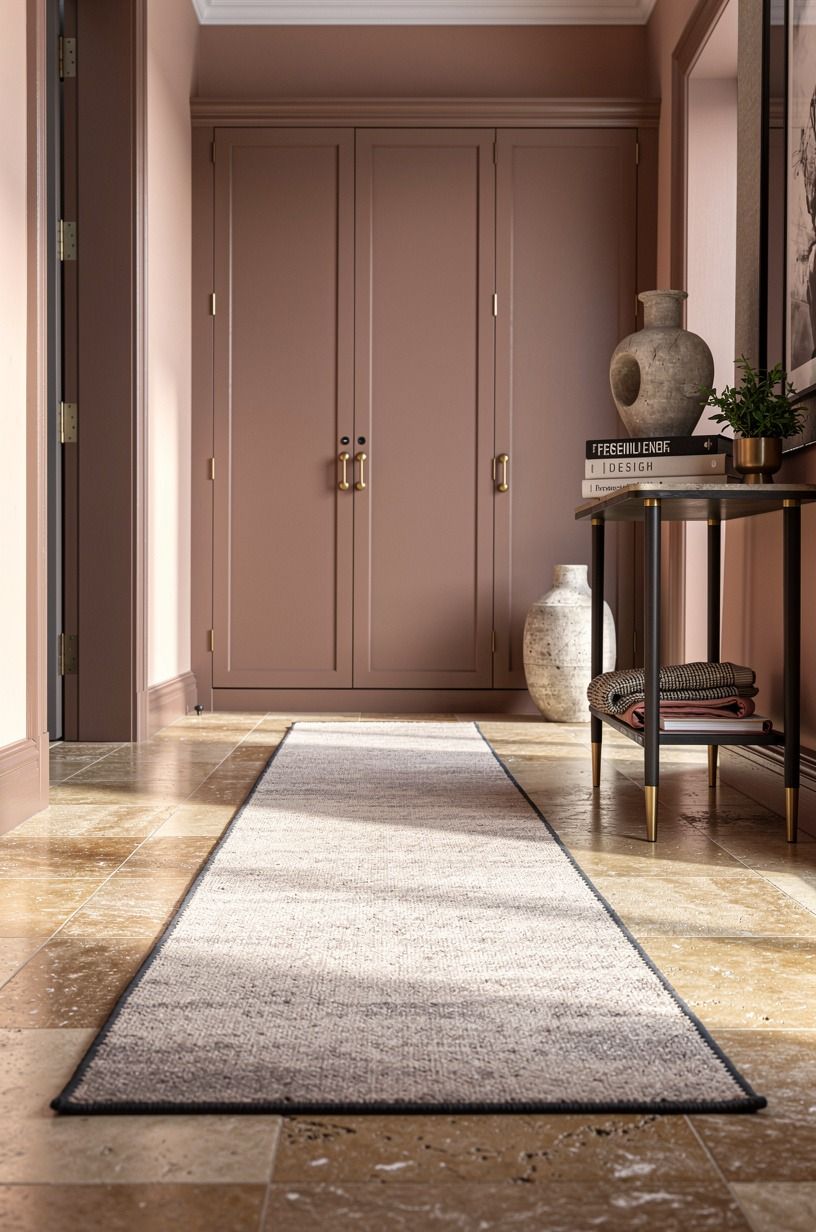
A runner makes a dressing room feel comfortable underfoot and gives the long layout a visual center. Dusty rose, charcoal, and brass create a grounded palette, while a strip of warm travertine adds natural variation near the dressing area.
10Add one earthy accent, not five
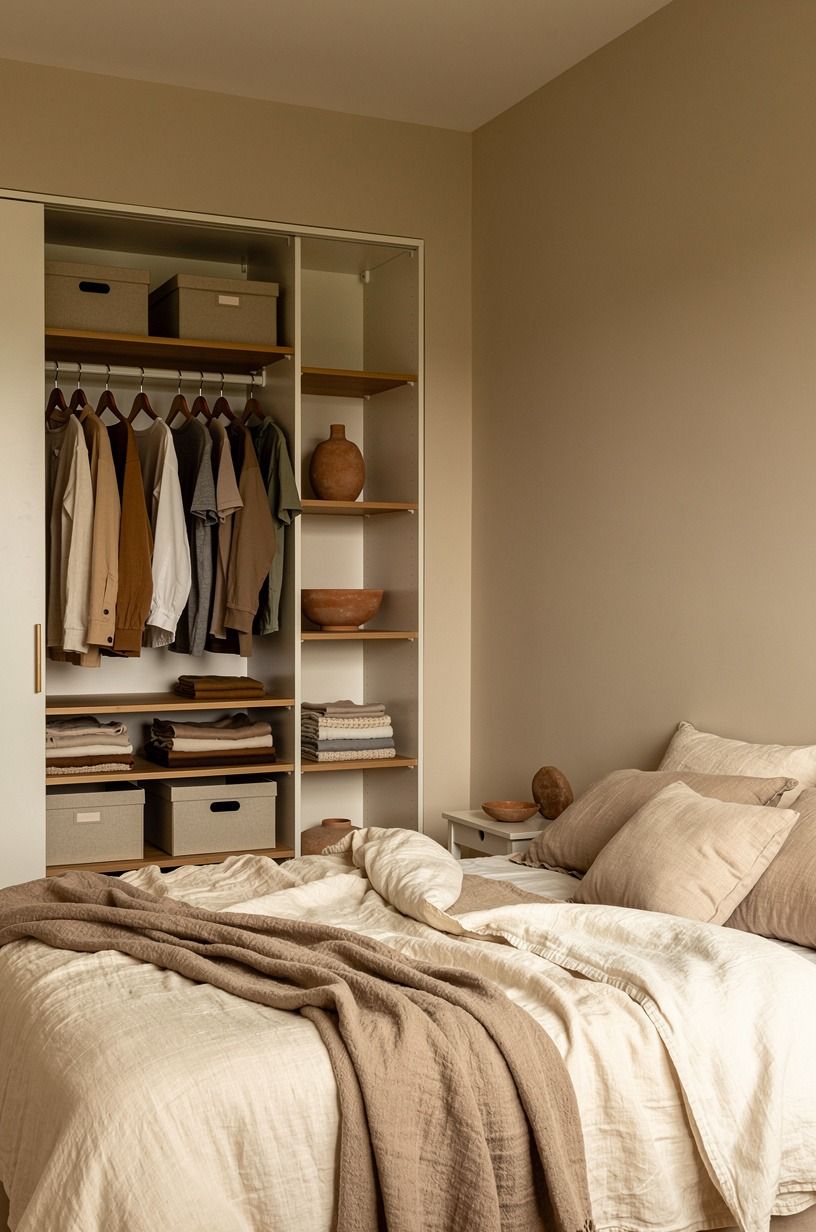
White and beige need an earthy accent to feel grounded. In this room, warm white and camel work with black accents and unlacquered brass developing patina.
Pick one accent family and repeat it twice. A camel leather handle can echo a stool, while a black box can relate to a slim frame or light fitting. This repetition makes the room feel intentional and keeps the neutral palette from becoming bland.
I love a camel leather stool in an otherwise pale room because it adds warmth without overwhelming the clothing. A black ceramic vessel, camel tray, or patinated brass lamp can create the same rich effect in a smaller dose.
The accent should feel discovered rather than announced. One memorable object has more charm than a collection of unrelated accessories. If you're planning a broader neutral home decor scheme, repeat the same earthy note in the nearby bedroom or hallway.
Keep metals quieter when the accent is strong. Unlacquered brass will feel more settled than bright chrome beside camel and black. The room will look collected, warm, and wonderfully livable.
11Let daylight find the mirror
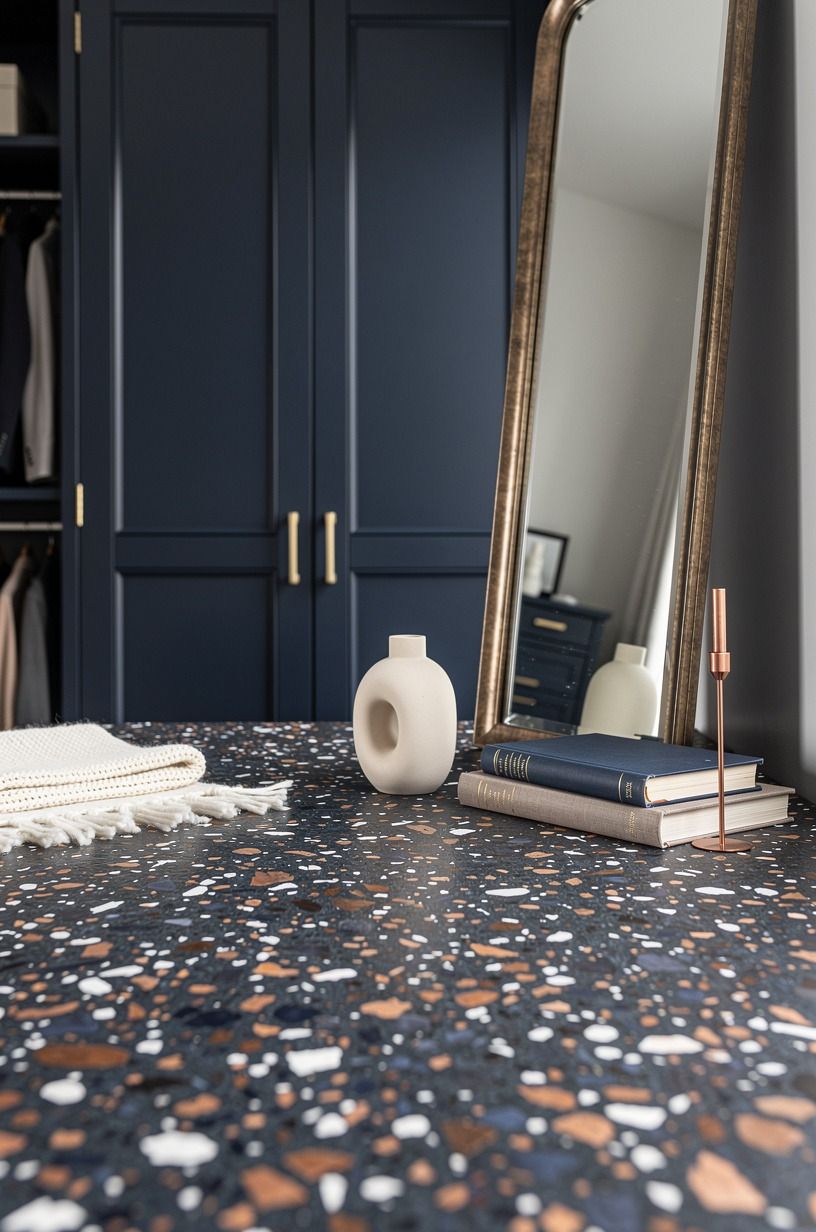
A full-length mirror should sit where natural light reaches your clothes, rather than in the darkest end of the closet. In a midnight blue, copper, and ivory room, a surface of oversized-chip terrazzo adds texture while keeping the vertical arrangement from feeling too formal.
If you have the room, lean the mirror safely against a wall, but secure it so it can't tip. In a rental, choose a lightweight framed mirror with approved hardware or use a door-mounted style. I prefer a fixed mirror because it doesn't drift across the floor, but safety should decide the installation.
Keep the area around it simple. A stool, one hook, and a small basket are enough.
Why crowd the place where you're checking proportions? Your mirror needs breathing room so you can see the full silhouette of an outfit. Soft daylight, pale walls, and a clear floor will do more than a decorative gallery wall here.
These dressing room mirror ideas can help you choose between an arched mirror, leaning mirror, and slim rectangular mirror. The shape should echo the room's architecture while adding a confident, elegant focal point.
If daylight is limited, angle the mirror toward the brightest source and use a warm sconce nearby. Even a small adjustment can make the room feel dramatically brighter!
12Style a neutral dressing table with restraint
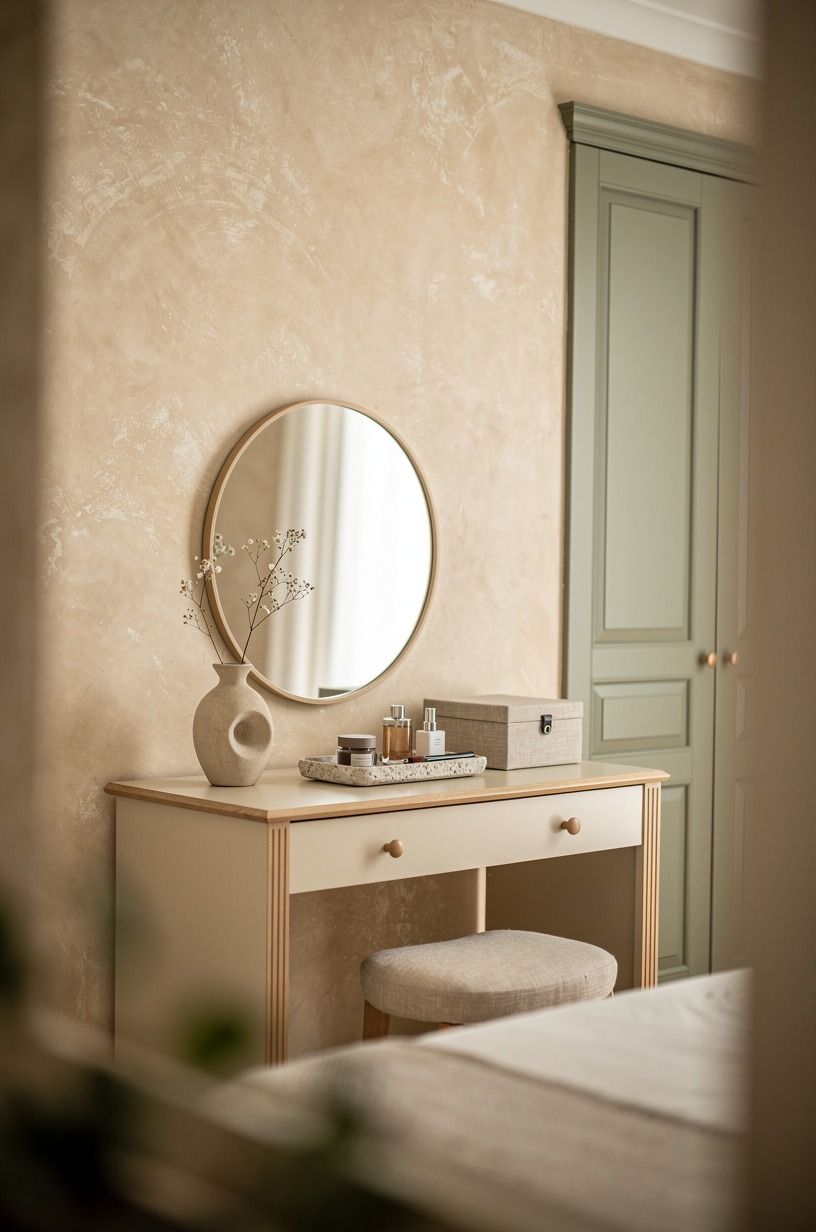
A neutral dressing table looks expensive when the surface has space around each object. In a sage green, warm cream, and natural wood room, a hand-applied Venetian plaster finish adds depth behind the table without competing with the contents.
I don't like a crowded vanity, even when every object is attractive. The clutter becomes the feature, and your morning routine gets slower. Keep daily products in a drawer, then leave only the pieces you touch often on display.
Choose one reflective element, such as a small mirror or a natural wood tray, to catch light. Add one tactile element, such as linen or plaster, to stop the arrangement feeling slick.
If you're styling a white dressing table, a warm cream ceramic vessel will create enough contrast without introducing another color family. Simple.
Effective.
A small vanity organization setup can include a lidded jewelry box, wooden dish, and linen-lined drawer. Keep the colors related, then allow one slightly unexpected object, such as a vintage perfume bottle or sculptural stone.
That tiny surprise gives the room personality. It should feel like your dressing table, not a staged showroom.
13Use less storage, with more purpose
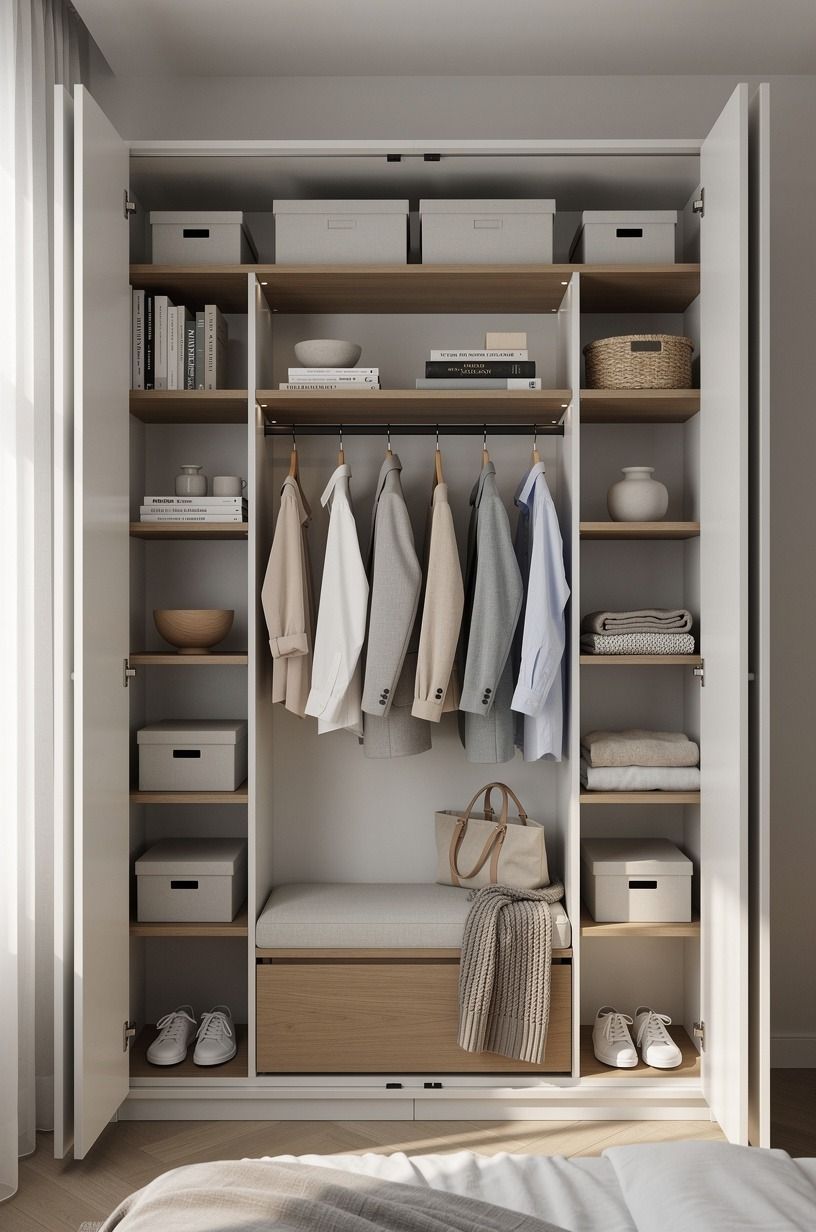
Instead of adding another cabinet, remove what your room doesn't need and give the remaining storage a clearer purpose. A compact IKEA HEMNES drawer unit can hold accessories, while open shelves stay reserved for folded knitwear and bags. Terracotta, stone, and olive accents can make the storage feel considered without adding extra pieces.
This approach works especially well in a 4x4-foot closet. You don't have enough room for every storage idea, so choose pieces that do more than one task.
A bench can hold shoes and provide a place to sit. A shelf can display bags while hiding bins underneath.
A small shagreen accent can add texture to one drawer or tray.
But don't force an island into a narrow walk-in. A center island generally needs 24 to 36 inches of width, and the circulation around it matters just as much.
If your layout can't offer that breathing room, choose a slim console instead. The open path will make your dressing room feel more luxurious than a crowded center ever could.
For more compact solutions, see these small-space storage ideas and walk-in-closet-layouts. A storage bench, shallow console, stackable drawer, or wall-mounted hook rail can each earn its place.
The most successful room has a clear answer for every category. Shoes belong low, bags stay visible, jewelry gets a drawer, and laundry has a discreet home. That order feels surprisingly liberating.
14Finish the beige and white room with quiet hardware
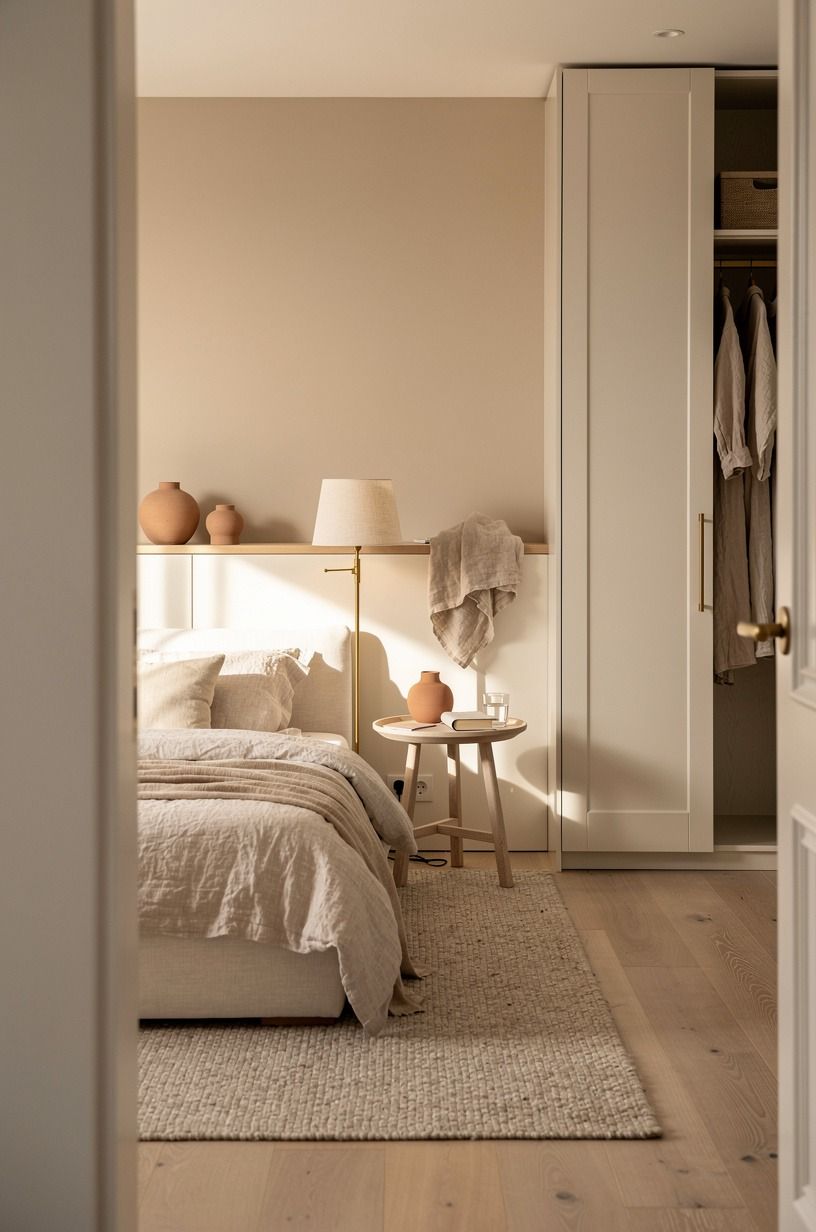
Hardware is small, but your hands touch it every day. Choose aged brass against clay and linen, then repeat the material on a drawer pull, hook, or slim rail. Washed Belgian linen keeps the finish relaxed and prevents the room from feeling too polished.
What the Dressing Room Budget Really Buys
A calm dressing room doesn't require a full custom build, but the budget changes the kind of storage you can choose. A few hundred dollars can cover rods, shelves, bins, and lighting, while a modular system gives you drawers and a more tailored arrangement. Custom millwork adds a polished look, but it also asks you to commit to the layout for years.
If you're deciding where to spend, put money into the parts you touch and see most often. Better drawer movement, useful lighting, and a durable rod will serve you longer than decorative containers.
I wouldn't begin with an island just because it looks impressive in a showroom. Your floor plan has to earn it.
These home decorating budget ideas can help you divide the project into manageable phases. Spend first on lighting, storage hardware, and the flooring surface. Add decorative baskets and special finishes once the room functions beautifully.
A budget refresh can still feel refined. Paint, a runner, better bulbs, and one attractive stool may change the emotional temperature of the room more than an expensive statement piece.
Why This Palette Still Feels Fresh
White and beige are having a strong moment because they give clothing, light, and texture room to speak. The palette feels timeless when you vary the surfaces: matte paint beside woven fabric, pale wood beside stone, and soft linen beside metal with a little age.
The danger is making everything the same temperature. Your dressing room needs a few cooler notes to keep the beige from becoming sleepy, and it needs shadows to keep the white from looking flat. That balance is why a calm room can feel expensive without relying on glossy finishes or excessive decoration.
I return to this palette because it works with change. Your wardrobe can become darker in winter, brighter in summer, or more colorful next year, and the room won't fight it. If you're styling for a rental, removable curtains, a tension rod, and portable lighting can give you the same feeling without permanent work.
A related beige bedroom palette can show how to combine warm white, mushroom beige, soft taupe, and pale wood without losing contrast. Add one darker anchor, such as walnut or bronze, and the room will feel grounded rather than washed out.
There is something genuinely comforting about a palette that lets your life change around it. It feels graceful, flexible, and quietly optimistic.
The Questions Worth Answering First
What is the best white and beige dressing room idea for a small closet?
Use a floating white dressing table with vertical storage and a full-length mirror. An open floor plan makes a 4x4-foot closet feel easier to use, while an IKEA KALLAX or compact modular piece can hold folded clothing without blocking your walkway.
Where can I buy white and beige dressing room pieces on a budget?
Look at IKEA, Wayfair, Target, Facebook Marketplace, and local thrift stores. Secondhand storage saves the most when you can repaint or replace hardware. Search for pale wood, cane, or matte white pieces, and check measurements before bringing anything home.
How much does a white and beige dressing room makeover cost?
A small refresh can run about $100 to $300 when you reuse storage and focus on paint, baskets, lighting, and hardware. A budget system costs less than custom work, while the typical US budget tier for rods, shelves, bins, and lighting is $150 to $800.
Can I create a white and beige dressing room on a budget?
Yes, and you can begin with free changes: edit your wardrobe, regroup clothing by color, and clear the floor. Add affordable baskets, warm lighting, and a beige textile next. Editing first keeps your money focused on the pieces you'll use every day.
Is a white and beige dressing room worth it in a small space?
Yes, because a pale palette reflects light and makes the floor plan easier to read. Clear circulation is the real benefit, so keep storage shallow, use a 14-inch shelf depth where possible, and avoid an island unless the room has enough space around it.
Is a white and beige dressing room a good idea for a rental?
Yes. Use removable hooks, a tension rod, peel-and-stick lighting, and freestanding storage. No-damage changes still add warmth, especially when you bring in linen curtains, woven baskets, and a portable mirror instead of drilling into every wall.
Where I'd Start First
I've learned that a dressing room doesn't feel expensive because every piece costs more. It feels expensive when the light is gentle, the floor stays open, and the materials have enough texture to reward a closer look. I'd skip the oversized island in most small closets.
It steals circulation and turns dressing into a shuffle between furniture.
Start with the walls, the rods, and the light you see in the mirror. Once those are right, a simple basket or oak stool can carry more style than a room full of accessories. Your space should feel calm when you enter it, rather than like another task waiting for you.
If you want one simple sequence, paint first, edit the wardrobe second, improve the lighting third, and add texture last. That order keeps the room practical while giving it a warm, collected finish. Your dressing room should make ordinary mornings feel a little more beautiful.