No Room for a Nightstand? 9 Space-Saving Ideas That Work
29 august 2026We learned the hard way that an 18-inch-deep bedside cabinet can steal the last comfortable strip of walkway beside a 54-inch bed. The useful question isn't whether a table is called small, it's how far it projects into the room.
Our best results came from moving storage upward, choosing a surface only as deep as the bedside essentials require, and leaving the floor visible whenever possible.
What you will find inside
- Mount an IKEA EKET Above the Baseboard
- Choose a Floating Nightstand With a Real Drawer
- Use Bamboo Storage Where Visual Clutter Builds Fast
- Keep a Narrow Table to an 8-to-12-Inch Depth
- Stack Storage Upward With a Mini Dresser
- Claim the Dead Corner With a Triangular Shelf
- Clamp a Bedside Shelf Directly to the Frame
- Slide a C-Table Under the Bed When Guests Leave
- Hang a Plug-In Sconce Instead of Buying a Lamp Base
- Build a Plywood Ledge for an Awkward Gap
- Use a Wall Rail for the Things That Usually Spill
- Match the Top Height to the Mattress
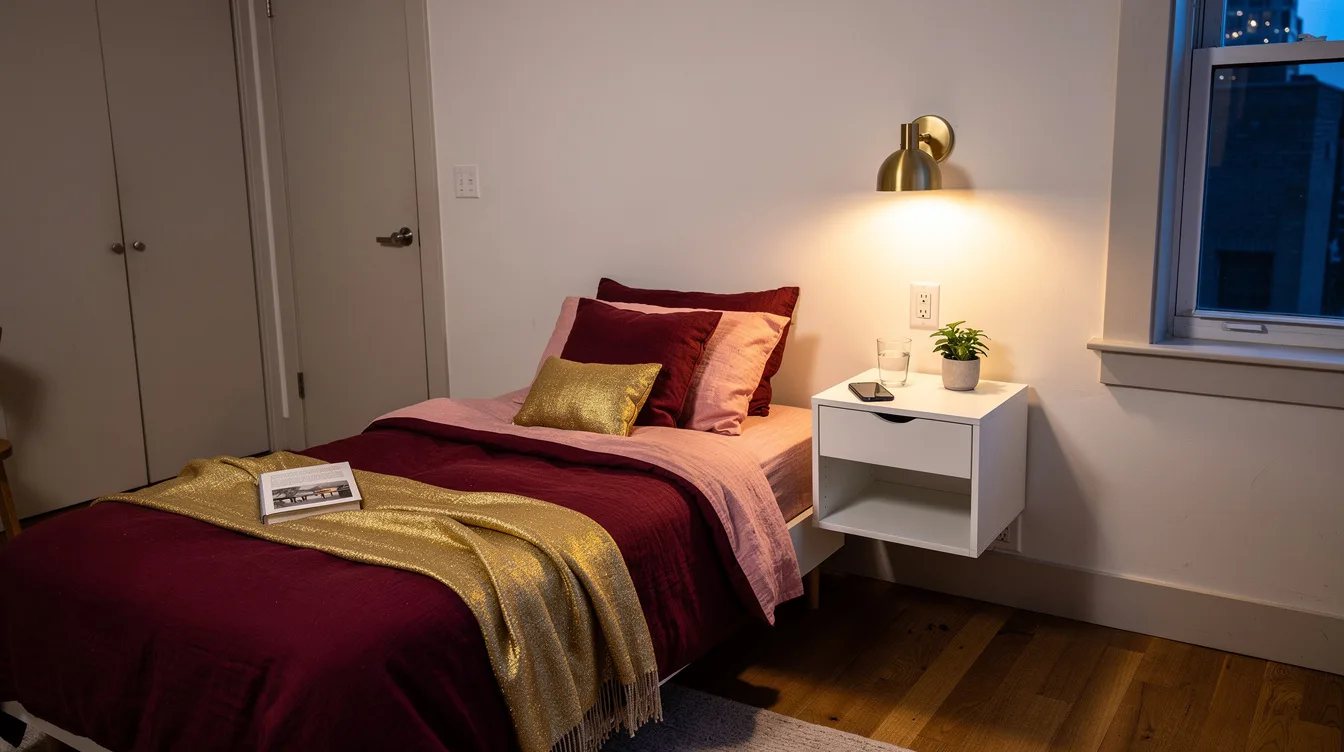
Mount an IKEA EKET Above the Baseboard
A IKEA EKET wall cabinet is the budget answer when a regular nightstand would block a door swing or make vacuuming miserable. At roughly 13.75 inches wide and just under 10 inches deep, it holds a phone, book, glasses, and a small water bottle without claiming floor space.
The cabinet typically costs about $23 before the required mounting rail. Follow the wall-mounting instructions closely, respect IKEA's roughly 11-pound shelf-load limit, and add a door when open storage starts looking noisy.
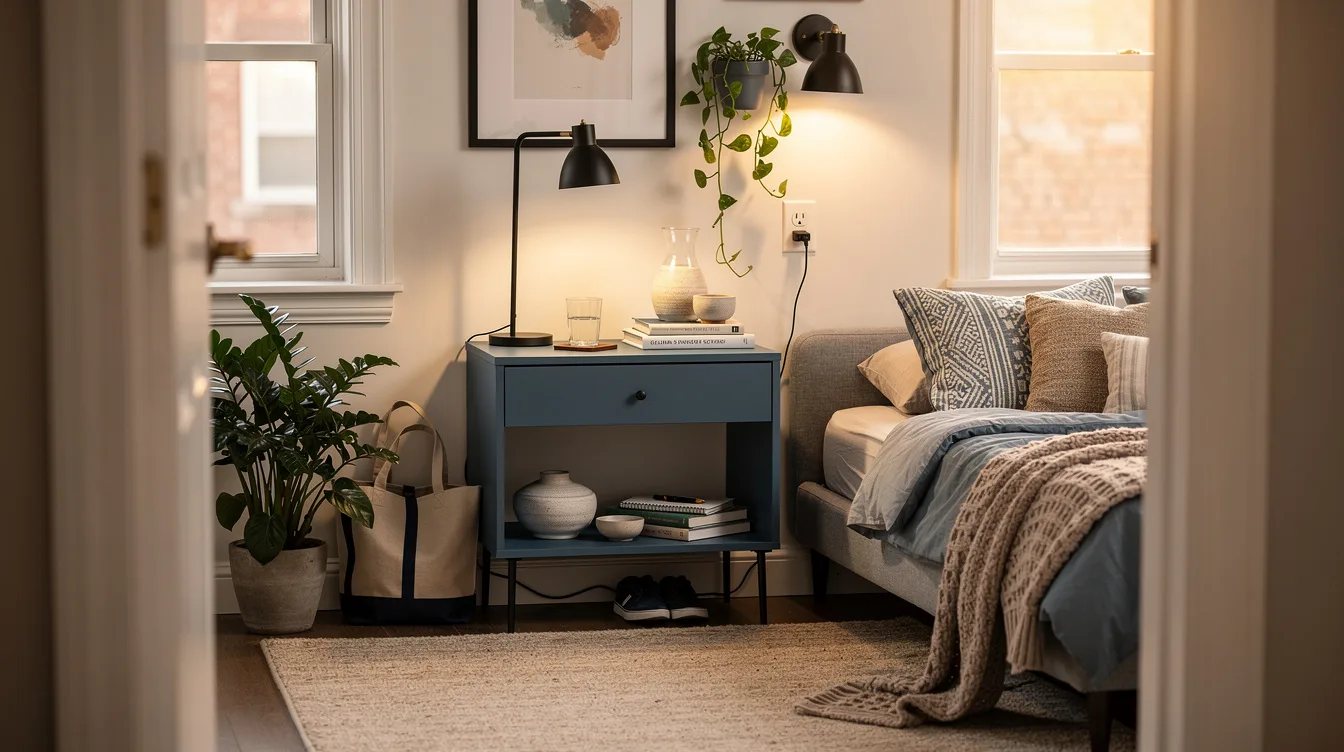
Choose a Floating Nightstand With a Real Drawer
A floating unit with a drawer gives the bed a built-in look while keeping socks, cords, and sleep masks out of sight. The Wayfair Davyen solid-wood floating nightstand, at about 20 inches wide, makes sense when you need more than a ledge but still want an open floor below.
Its typical price is around $134, which is easier to defend than a large cabinet that crowds the route to the closet. Keep the drawer shallow in purpose: bedtime items belong here, not paperwork.
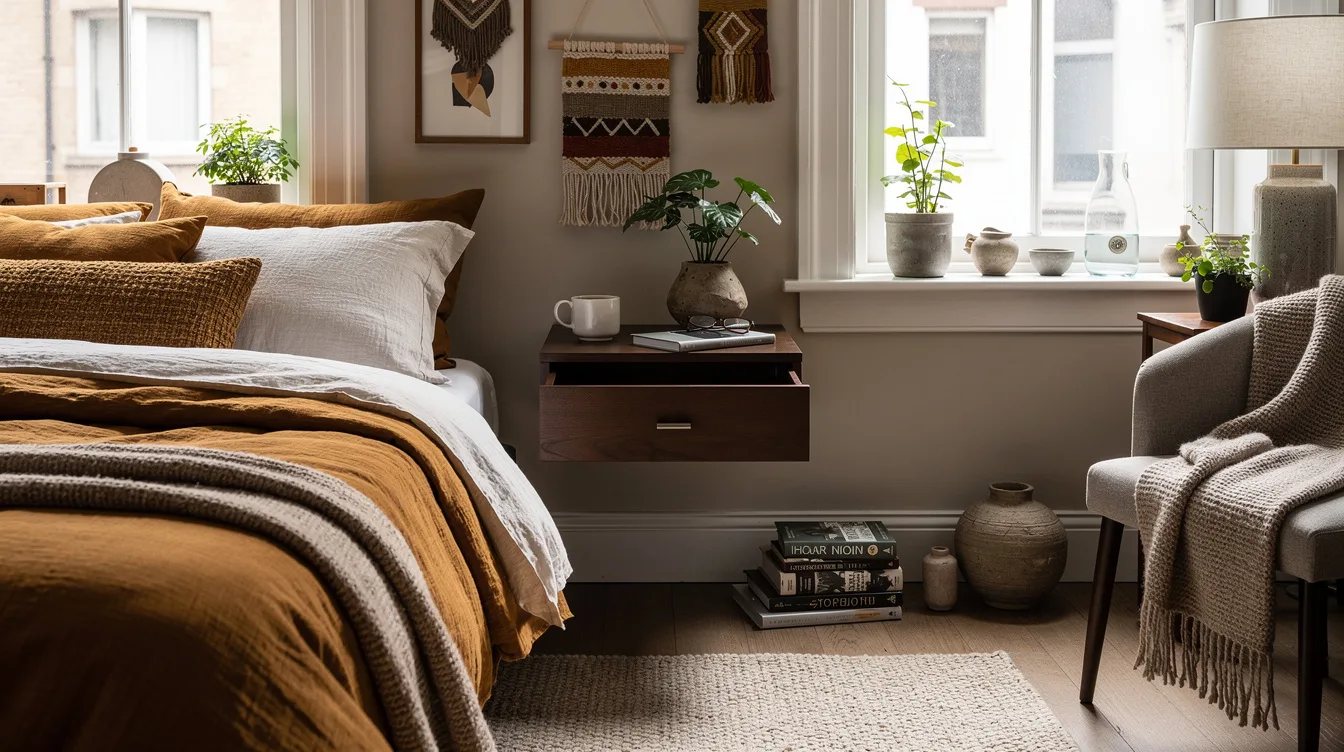
Use Bamboo Storage Where Visual Clutter Builds Fast
Concealed storage matters most in a tiny room because every charger and paperback is in your eyeline from the bed. A Wayfair Ebern Designs floating bamboo cabinet, typically around $79.99, gives a softer wood note and hides the loose stuff that makes a compact room feel overfilled.
Check the selected configuration before ordering because depth varies. A cabinet that reaches much beyond about 12 inches into a narrow passage has stopped solving the actual problem.
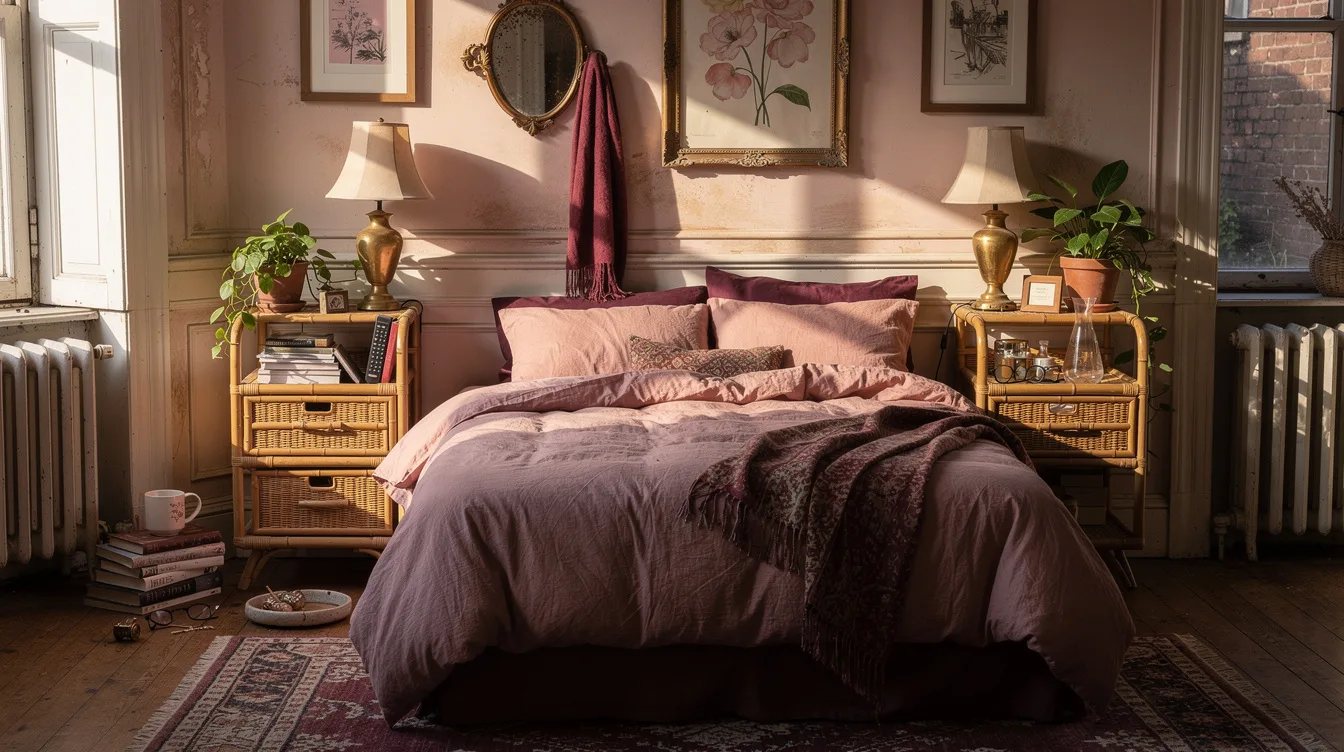
Keep a Narrow Table to an 8-to-12-Inch Depth
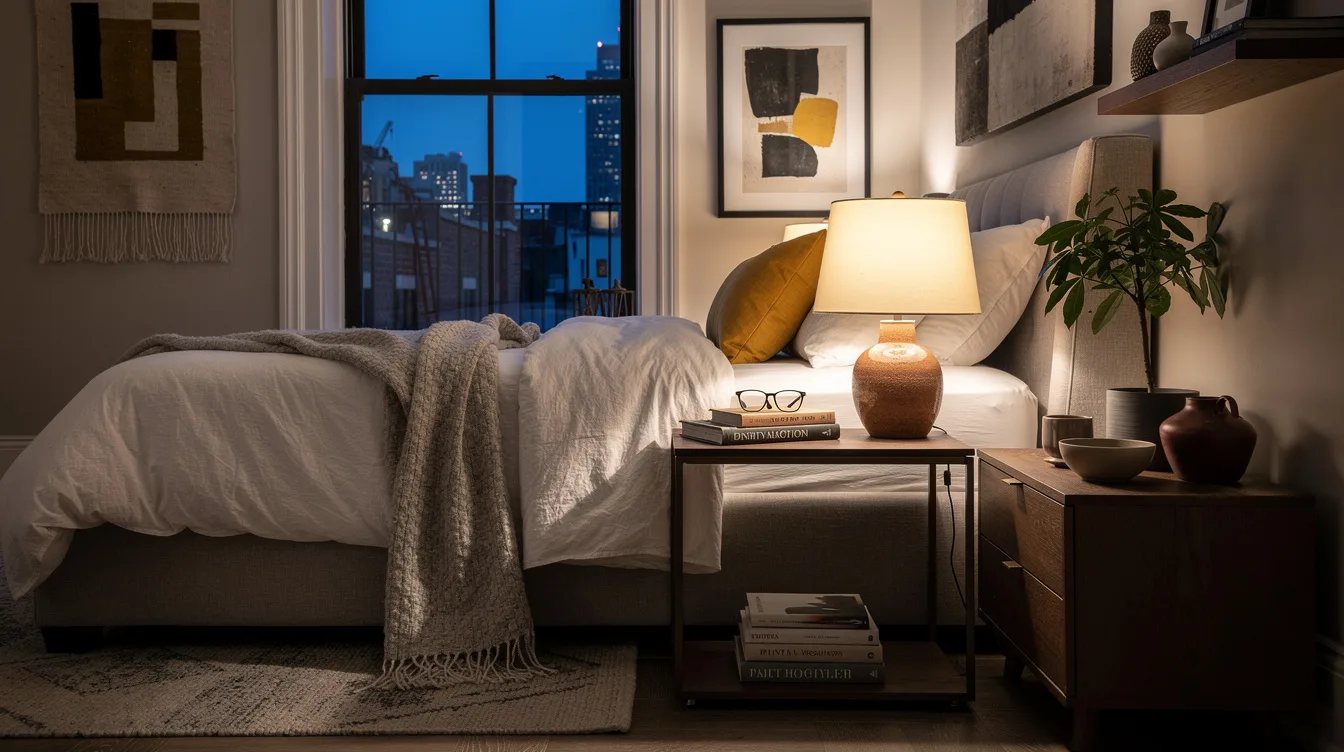
For renters or anyone avoiding wall work, an ultra-shallow bedside table is the smart compromise. A narrow metal-and-wood bedside table with an 8-to-12-inch depth keeps the lamp, phone, and water close while protecting the walking clearance.
Skip conventional “small” cabinets that are typically 18 to 22 inches deep. Their width may be modest, but their front edge is what catches a knee and makes a small bedroom feel poorly planned.
Stack Storage Upward With a Mini Dresser
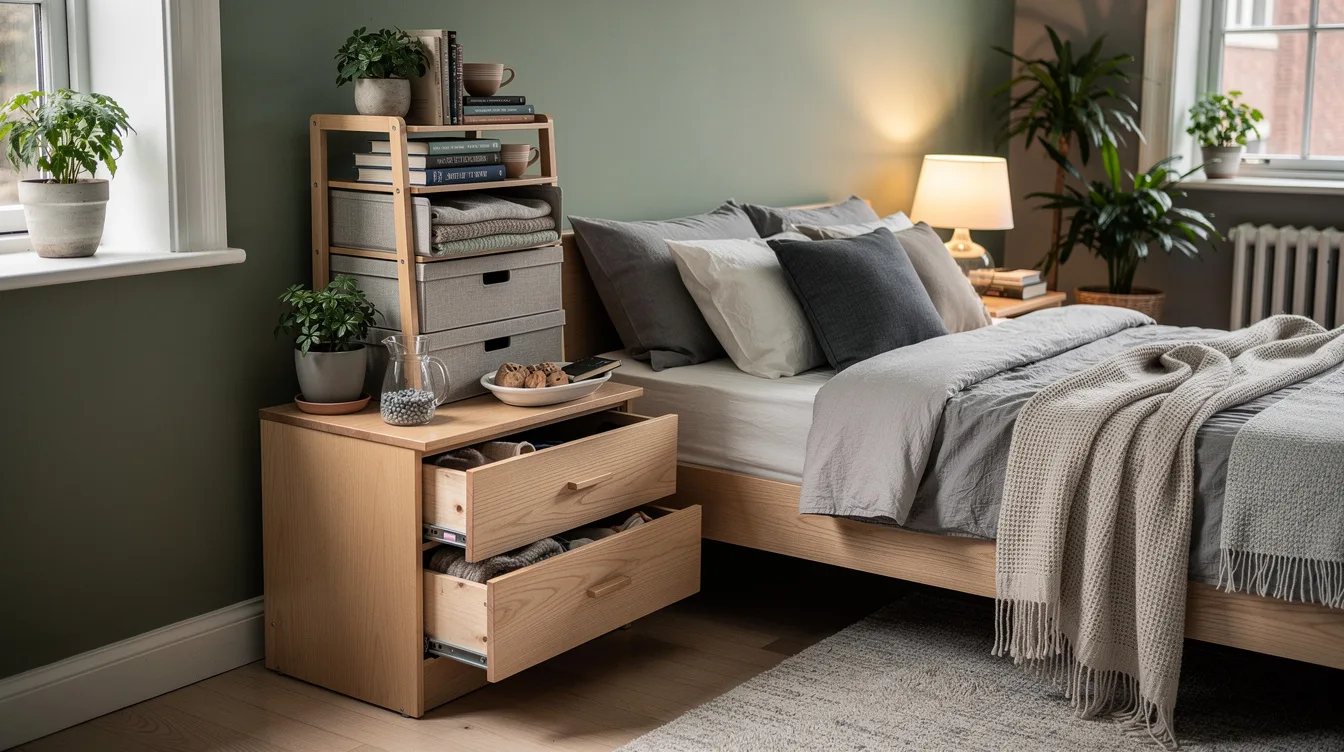
A vertical bedside piece earns its footprint when it replaces both a table and a small drawer unit. Look for a Yoobure-style fabric-drawer nightstand around 15 to 16 inches wide, 11 to 12 inches deep, and roughly 23 to 25 inches high.
That upright shape handles cables, reading glasses, medication, and extra linens without widening into the aisle. We prefer closed drawers over open cubbies in bedrooms that already have limited visual breathing room.
Claim the Dead Corner With a Triangular Shelf
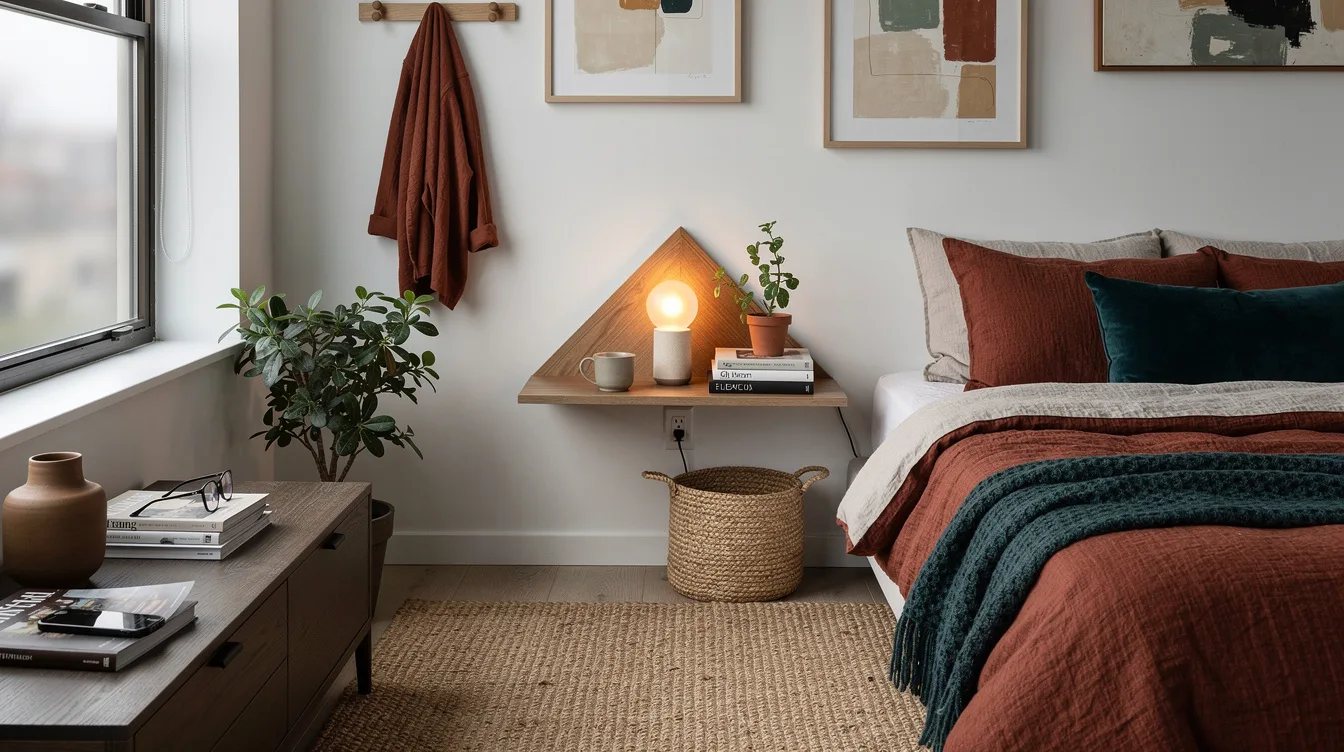
When the bed sits close to a corner, a square table wastes the most useful part of the layout. A solid-wood corner shelf uses roughly 10 to 15 inches along each wall and leaves the center of the room alone.
Mount it at mattress height, then style it with one small lamp and a catchall dish. A deep corner cabinet can work too, but a simple shelf feels lighter and is usually enough for the nightly routine.
Clamp a Bedside Shelf Directly to the Frame
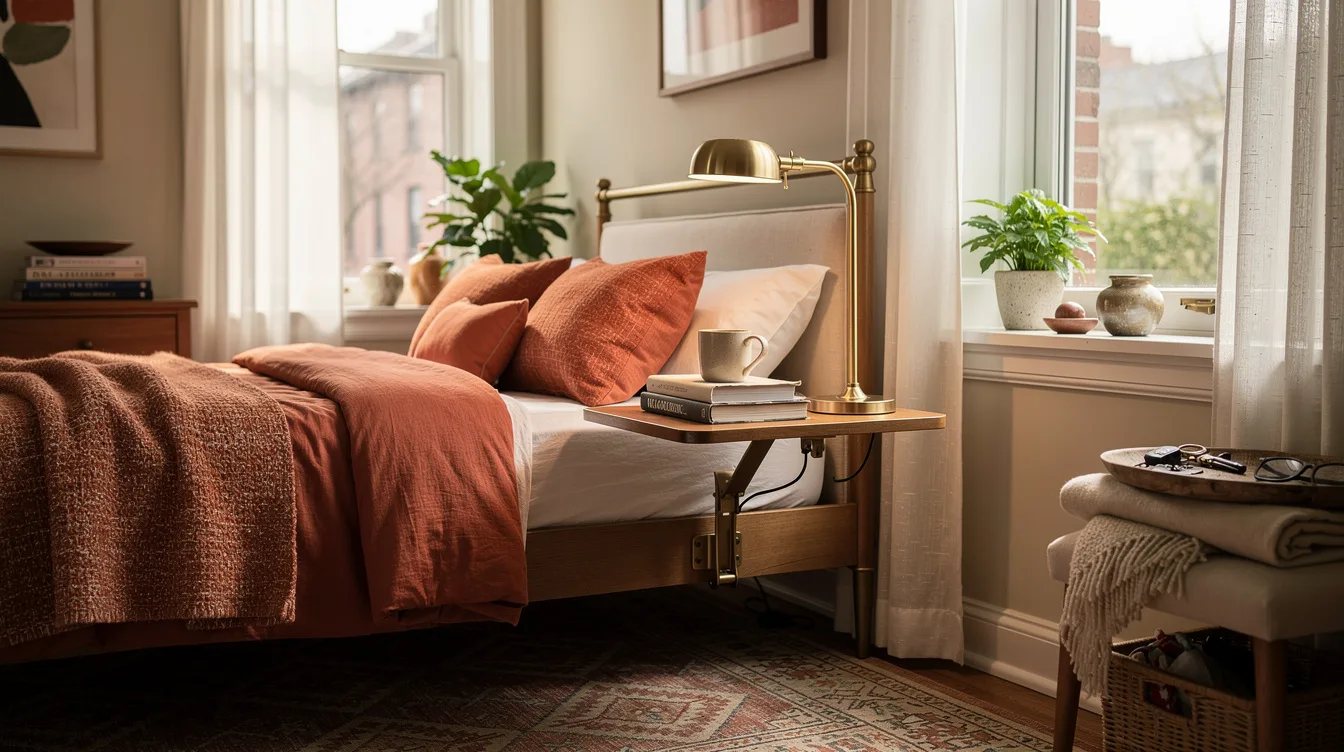
A clamp-on shelf is especially good beside platform beds, bunk beds, and beds pressed against a radiator wall. A steel clamp-on bedside shelf typically projects only about 8 to 12 inches, so it creates a landing spot without becoming another piece of furniture.
Measure the bed rail before buying, including its thickness and any upholstered padding. The shelf should sit securely at a reachable height, with a raised edge if a phone tends to migrate overnight.
Slide a C-Table Under the Bed When Guests Leave
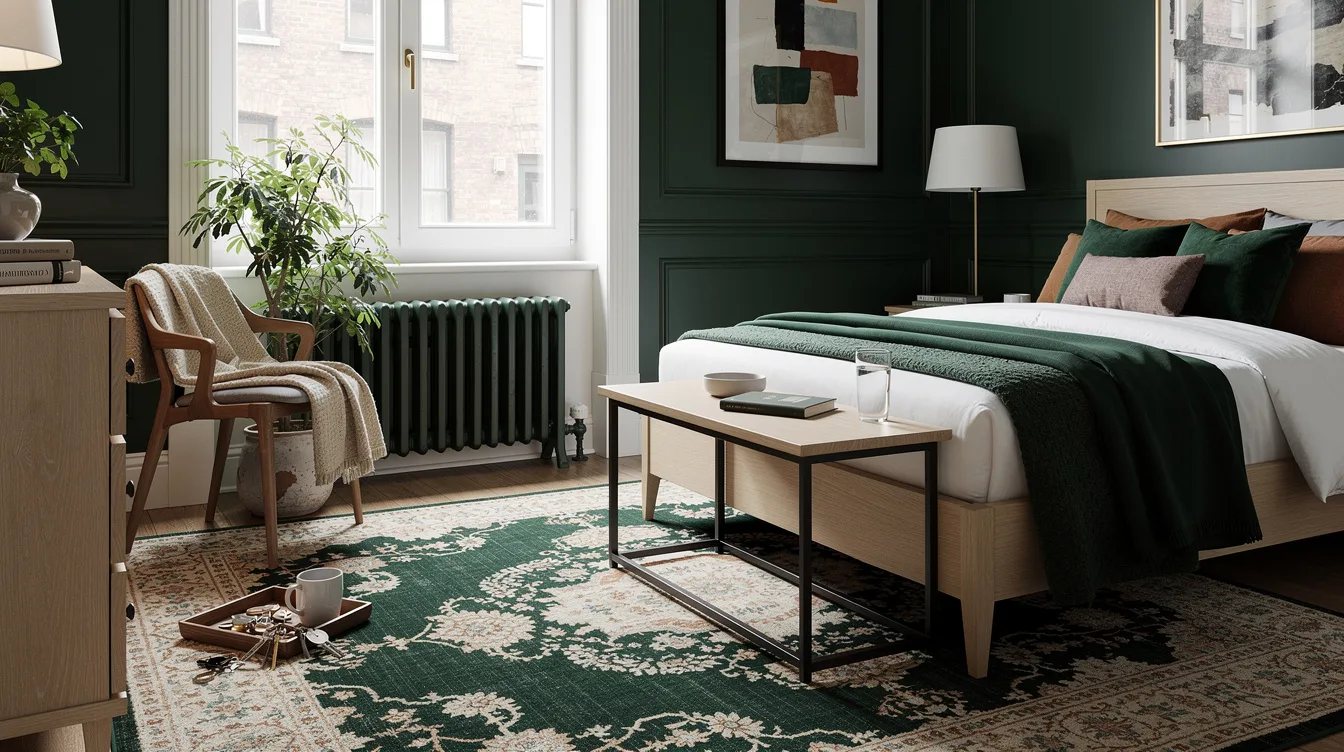
A rolling C-table gives a guest room flexibility that a fixed nightstand cannot. Choose a black metal C-table with a top roughly 16 to 20 inches wide and 10 to 14 inches deep, then roll its base under the bed when the room needs to function differently.
Walmart, Target, and Home Depot commonly carry versions in this format at accessible prices, though finishes and availability change. It is best for a lamp and a drink, not for anyone who expects substantial drawer storage.
Hang a Plug-In Sconce Instead of Buying a Lamp Base
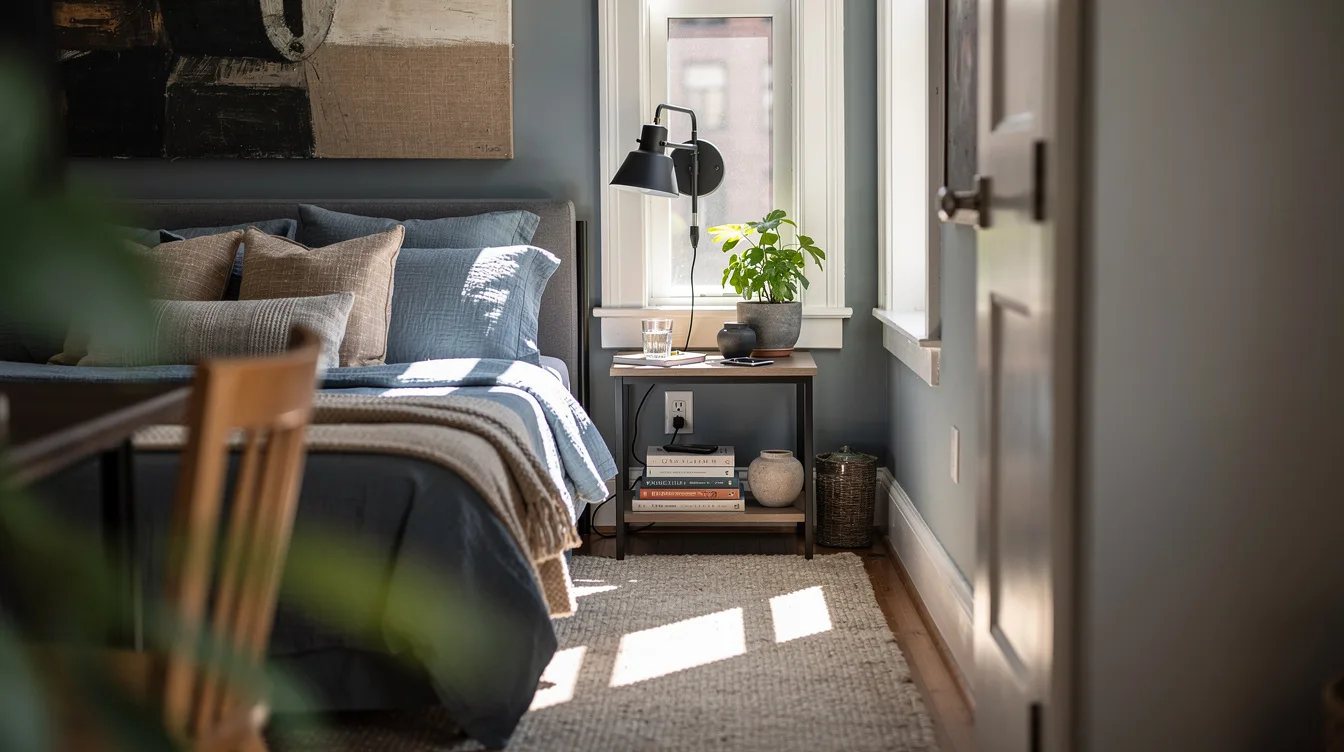
A table lamp can consume half the top of a shallow nightstand before the phone even arrives. A plug-in wall sconce from Target or Home Depot frees that surface and puts reading light exactly where it belongs.
Use cord covers so the wall doesn't look temporary, and choose a swing arm only if there is enough side clearance. A compact shaded sconce gives a softer bedtime glow than an exposed bulb, which can feel harsh at pillow level.
Build a Plywood Ledge for an Awkward Gap
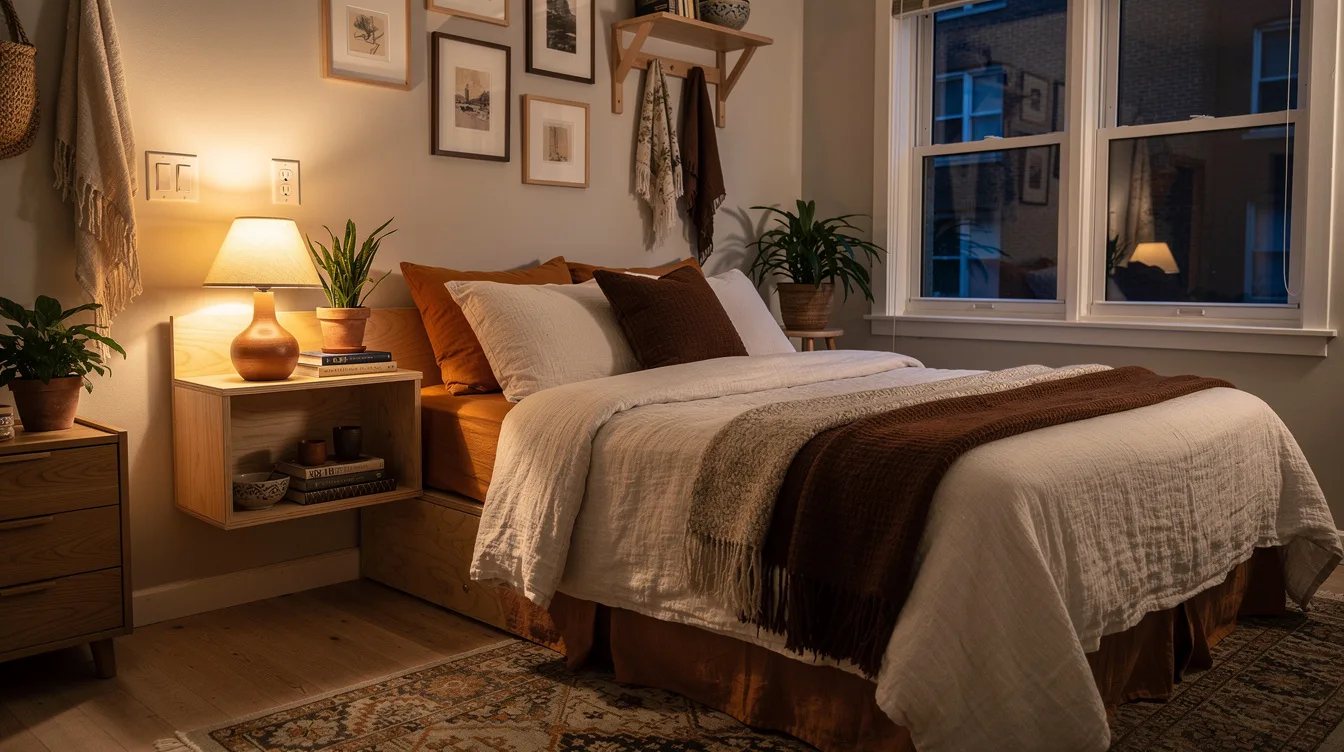
Some beds have a gap too narrow for retail furniture and too useful to ignore. A custom birch plywood ledge, cut about 8 inches deep and mounted on sturdy brackets, solves that odd measurement with more grace than forcing in a skinny cabinet.
Seal the plywood with a low-sheen clear finish if a water glass will live there. Keep the front edge clean and square, because decorative scallops or oversized brackets add visual fuss where the room needs calm.
Use a Wall Rail for the Things That Usually Spill
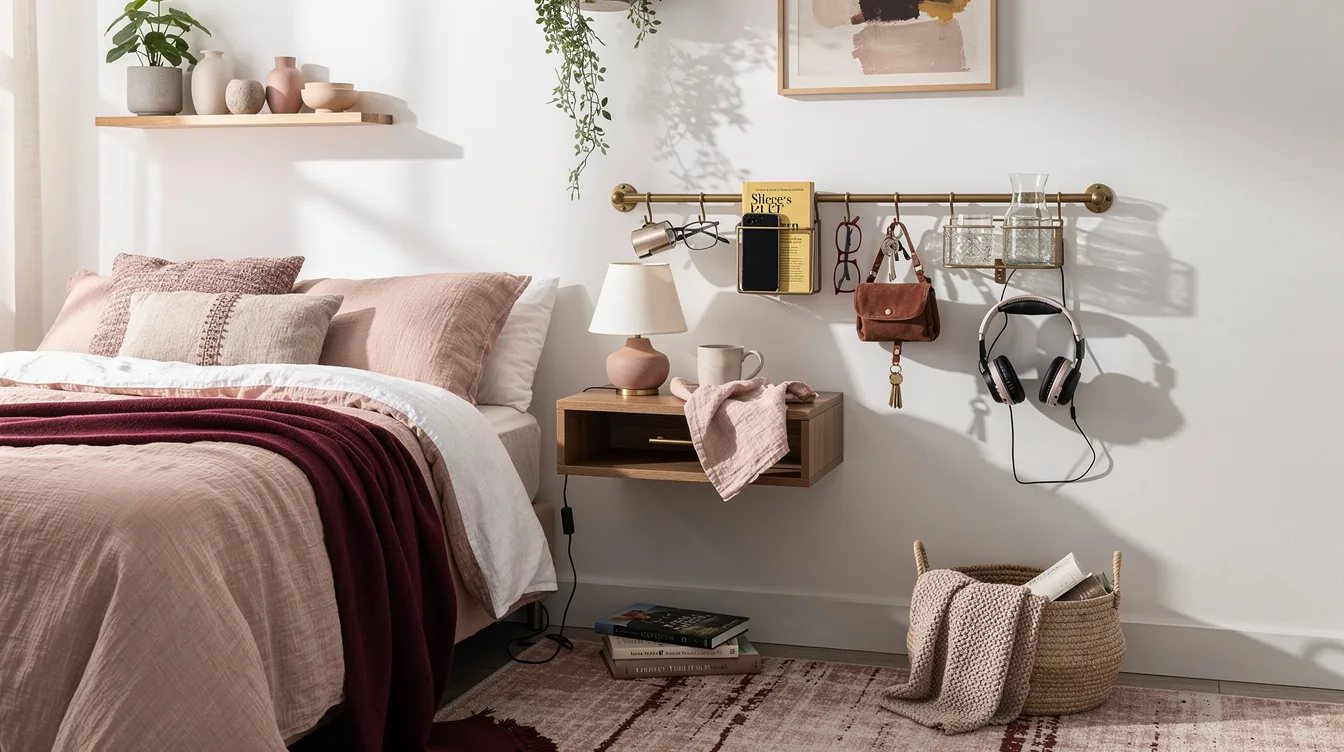
When the bedside surface keeps becoming a dumping ground, add vertical organization instead of enlarging the furniture. An IKEA SKÅDIS pegboard above a floating shelf can hold headphones, charging cables, a sleep mask, and a small reading light.
Leave some empty space on the board. Filling every hook turns a useful system into wall clutter, while a restrained setup makes the nightstand itself feel more intentional and easier to clean.
Match the Top Height to the Mattress
A small nightstand feels more expensive when its top aligns closely with the mattress rather than sitting awkwardly low. Measure from the floor to the top of your mattress, then choose or mount a walnut floating shelf at roughly that level.
This detail improves reach and makes even a basic shelf look integrated with the bed. In a cramped room, proper height matters more than ornate legs, oversized hardware, or extra decorative storage.
Keep reading
- 12 Best IKEA Room Divider Finds for Open Floor Plans Under $150
- 12 Small Living Room Furniture Finds That Double as Storage
- 12 Best New Costco Small-Space Home Essentials Designers Recommend
Start by measuring the walkway beside the bed, then set a hard maximum depth before shopping. A wall-mounted unit or an 8-to-12-inch-deep table will protect the space you actually need to move through every day.