I Turned My Basement Into a 1920s Speakeasy, The Prohibition Aesthetic Finally Landed
11 july 2026Here's the short answer first: turning a bare basement into a working 1920s speakeasy cost about $1,850 and took me most of one autumn (October to early November, on weekends and weeknights). I'm writing this because I almost gave up in week two, and the version that finally landed is the third one I tried. The room reads "Prohibition" the second you walk downstairs, but the bones of it are just paint, a couple of wall sconces, and a thrifted walnut back bar I dragged home in a hatchback. Not magic. Just a list.
I live in a 1962 split-level with a partially finished basement. Last fall I had a few real constraints: low ceiling (about 7 feet at the joists), one tiny egress window, and exactly zero historic detail to work with.
I wanted the room to feel 1927 without acting like a costume party. That meant no top hats on the bar, no cardboard "Jazz Age" posters, no old-timey font anywhere.
Real materials doing the work, the way the originals did. IKEA, Target, and a lot of patience cleared it.
This is what worked, what didn't, and what I'd skip if I started over. If you've got an unfinished basement and a hunch it could be more than a TV room, you'll want to read at least #4 and #11 before buying anything!
Here's what it looked like before
The basement was the usual half-finished deal. Painted concrete block on two walls, raw studs and pink insulation on the others, a drop ceiling with two missing tiles, and a carpet remnant that stopped three feet short of the wet bar the previous owner had plumbed in. The wet bar was the saddest part of the room: oak-look laminate cabinets from the early 2000s, a single pendant lamp with a ceiling-fan pull chain, and a tiled counter in beige that matched nothing in the house.
The lighting was the giveaway. One ceiling bulb on a pull chain. Shadows everywhere.
The room didn't feel moody, it felt unloved. The previous owners had used it as a playroom for two kids and a dog, and you could see every stage of that use if you looked. I looked.
I went slow.
I sketched the new layout on a legal pad for three nights before buying anything. That step saved me about $300 in returns, and I'm glad I did it.
- start with the ceiling, not the floor
- paint the walls the color of a smoky room
- raise the bar with a real wood top
- bracket the bar with sconces, not overheads
- add a pair of vintage-style mirrors behind the bar
- swap the standard doorknobs for unlacquered brass
- layer a deep, low-pile rug underfoot
- install a back bar with glass shelves
- bring in a pair of leather club chairs
- anchor the corner with a brass floor lamp
- what about the TV?
- stock the bar cart with a small set of glassware
- hang warm sconces on the side walls
- frame a single vintage poster at eye level
- skip the obvious "jazz" signage
- what would you actually pour?
- build a small "exit" moment at the door
1start with the ceiling, not the floor
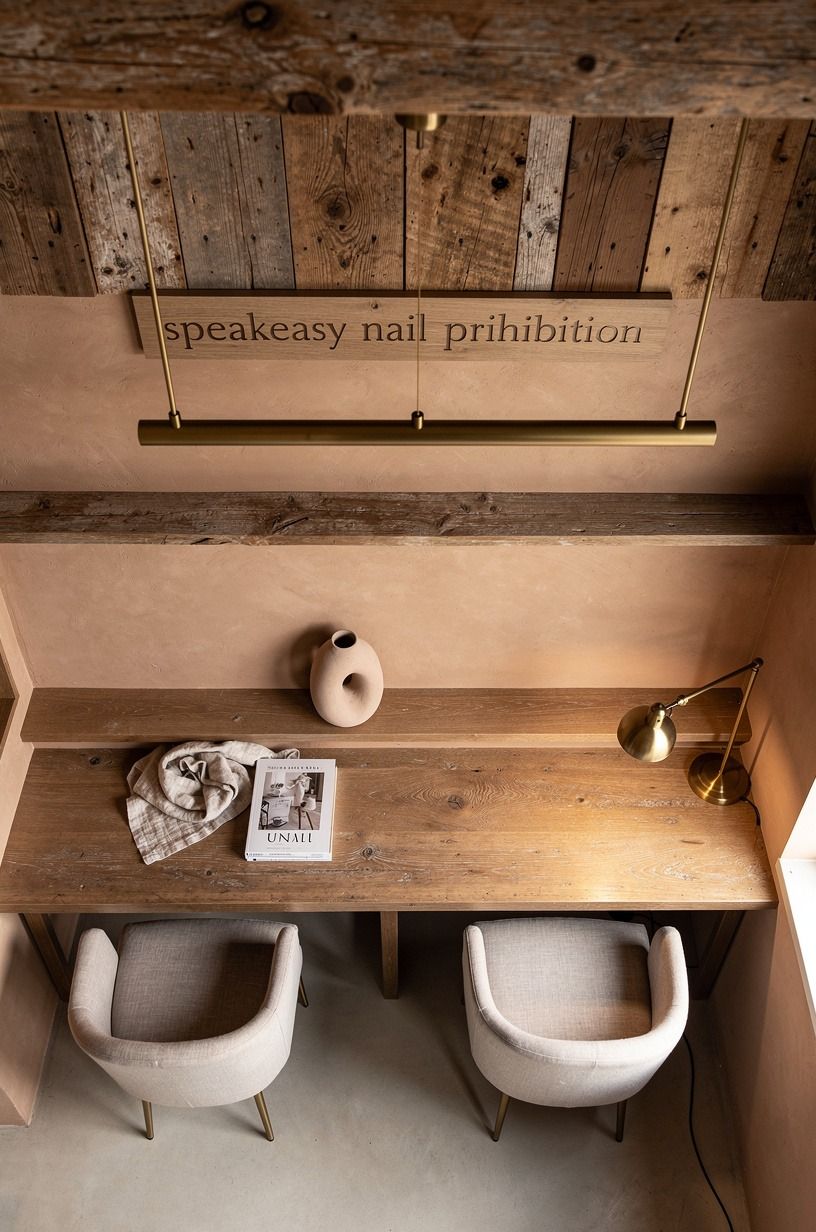
Everyone's instinct is to start with the big furniture, but in a basement the ceiling is what reads first. My old drop ceiling came down in an afternoon. I replaced the worst panels with reclaimed weathered teak planks in a clay-brown wash, then let linen-toned trim and aged brass hardware warm up the low grid instead of fighting it.
Cost: about $240 for planks and finish.
If you're renting, skip the demo and lay thin teak-look planks right on top of the existing tiles with construction adhesive. You lose about three inches of headroom and gain all the warmth.
2paint the walls the color of a smoky room
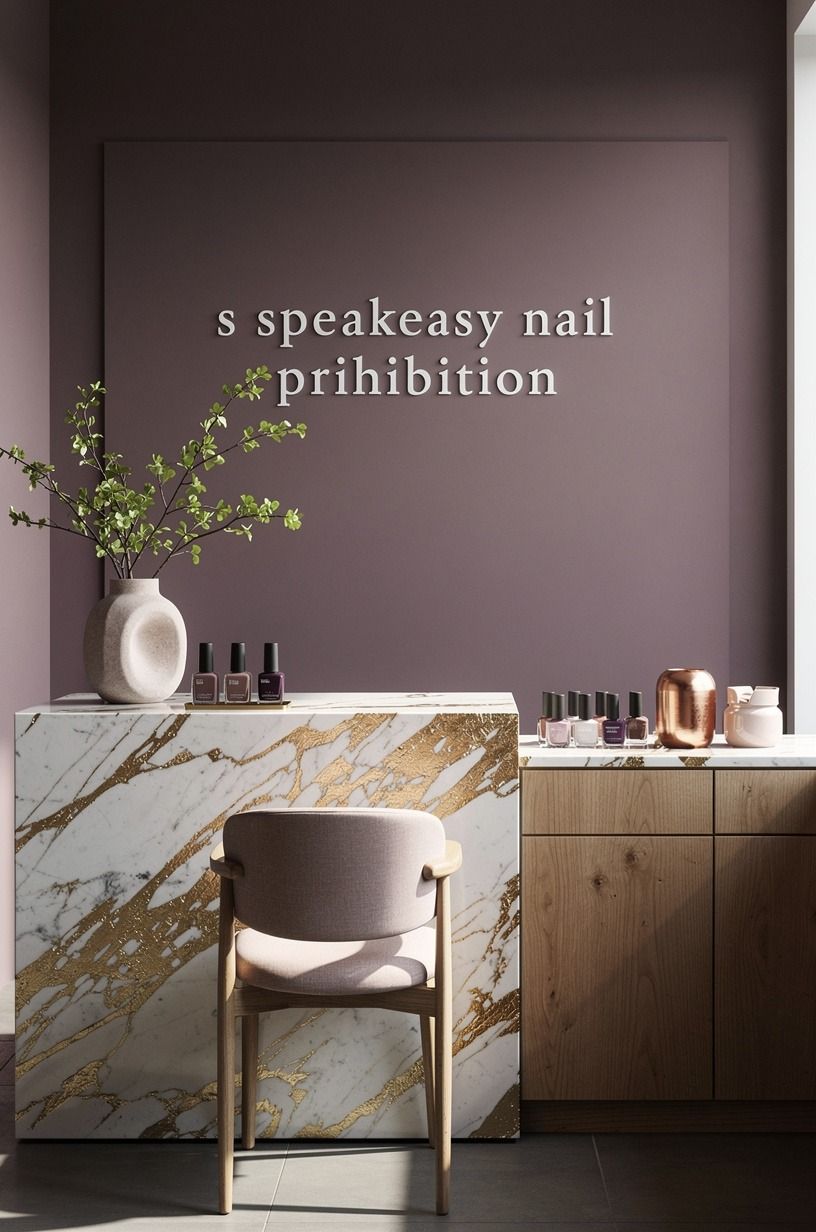
Here's a small edge of advice nobody hands you at the paint counter: speakeasy color is not black. Black walls in a basement just look like an unlit basement.
The original 1920s rooms were painted in deep, dusty neutrals (plum, tobacco grey, almost-black green, navy) and lit by amber-tinted bulbs that made everything glow. The paint did the depth, the lighting did the drama.
I used Farrow & Ball Brinjal in matte on the bar wall, a smoky grey close to Benjamin Moore Chelsea Gray on the side walls, and a small Calacatta marble slab with gold veining to pull the rose-gold metal into the palette. Matte is non-negotiable. Eggshell shows every roller mark in raking light.
3raise the bar with a real wood top
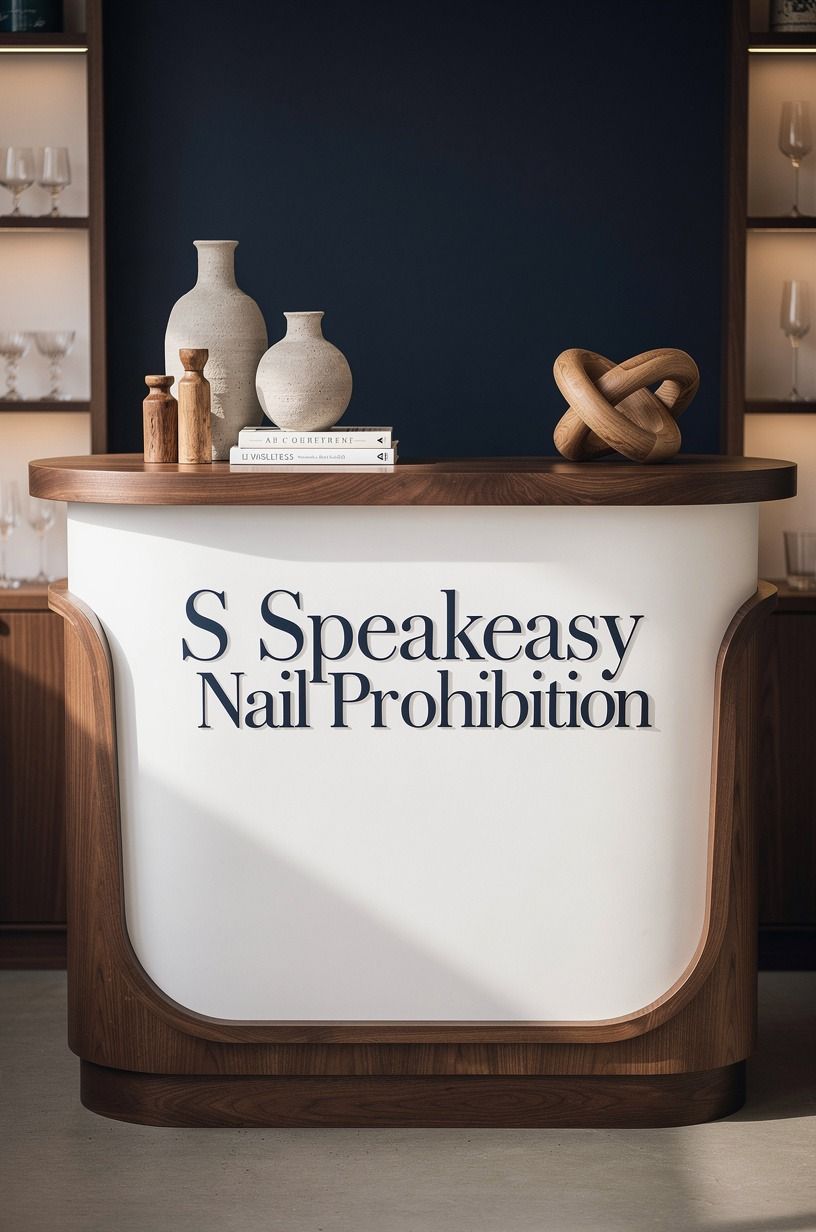
The laminate bar was the first thing to go. A cerused white oak top gave the navy-and-white bar enough grain to feel old without turning the whole thing orange. I kept the walnut note in the stools and trim, so the top could read lighter and cleaner than the old laminate.
4bracket the bar with sconces, not overheads
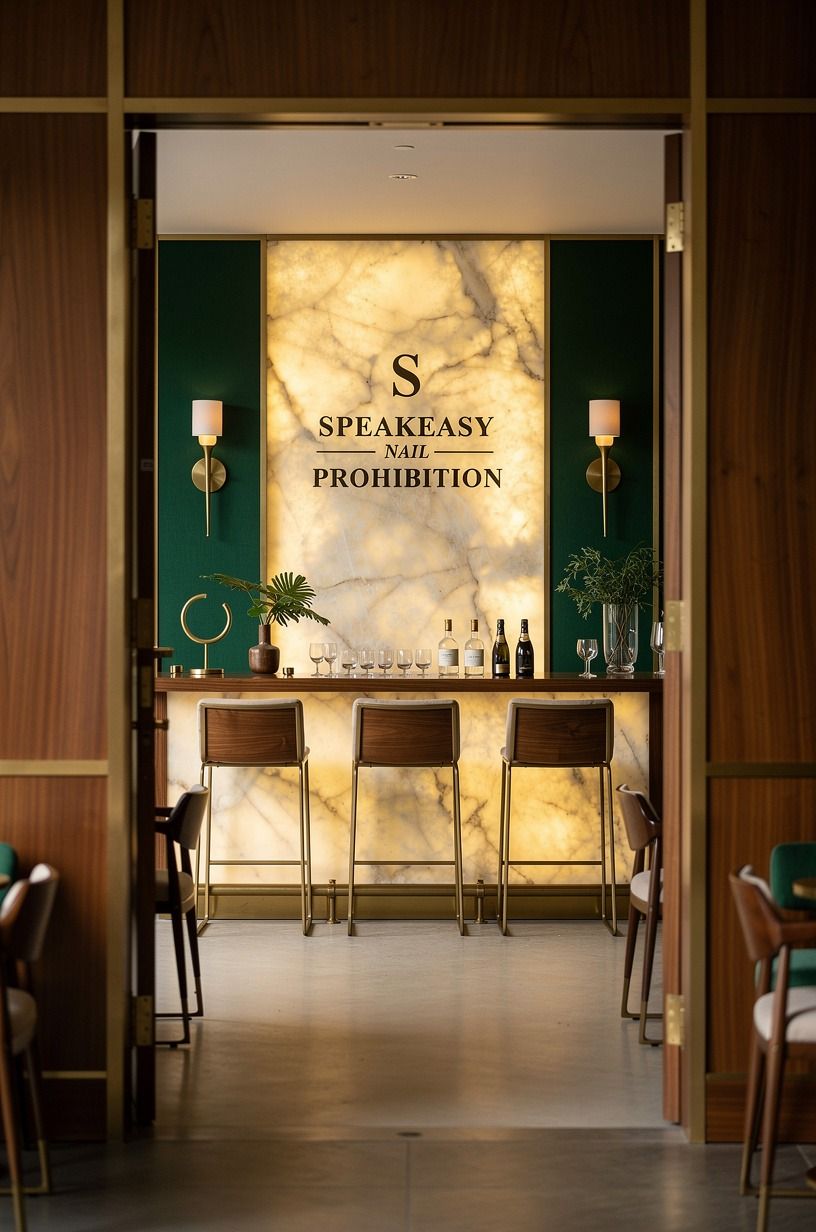
This is the move that unlocked the whole aesthetic for me. I removed the ceiling fixture over the bar and installed two backlit translucent onyx sconces with aged gold trim (about 25 inches apart, about 66 inches off the floor). The bulbs are 2700K, dimmable, and the warm cream wash on the emerald wall behind the bar is what makes the whole room feel like an evening, not a basement.
The right dimmer matters more than the right fixture. I started with a cheap slide dimmer from Lutron (Diva series, around $20), and it made the room feel twelve times better.
Buy one dimmer before you buy one more piece of furniture. I'm serious.
If you want to see how I lit a smaller wall the same way, my cozy breakfast nook lighting ideas covers the bulb temps and switch placement in more detail.
5add a pair of vintage-style mirrors behind the bar
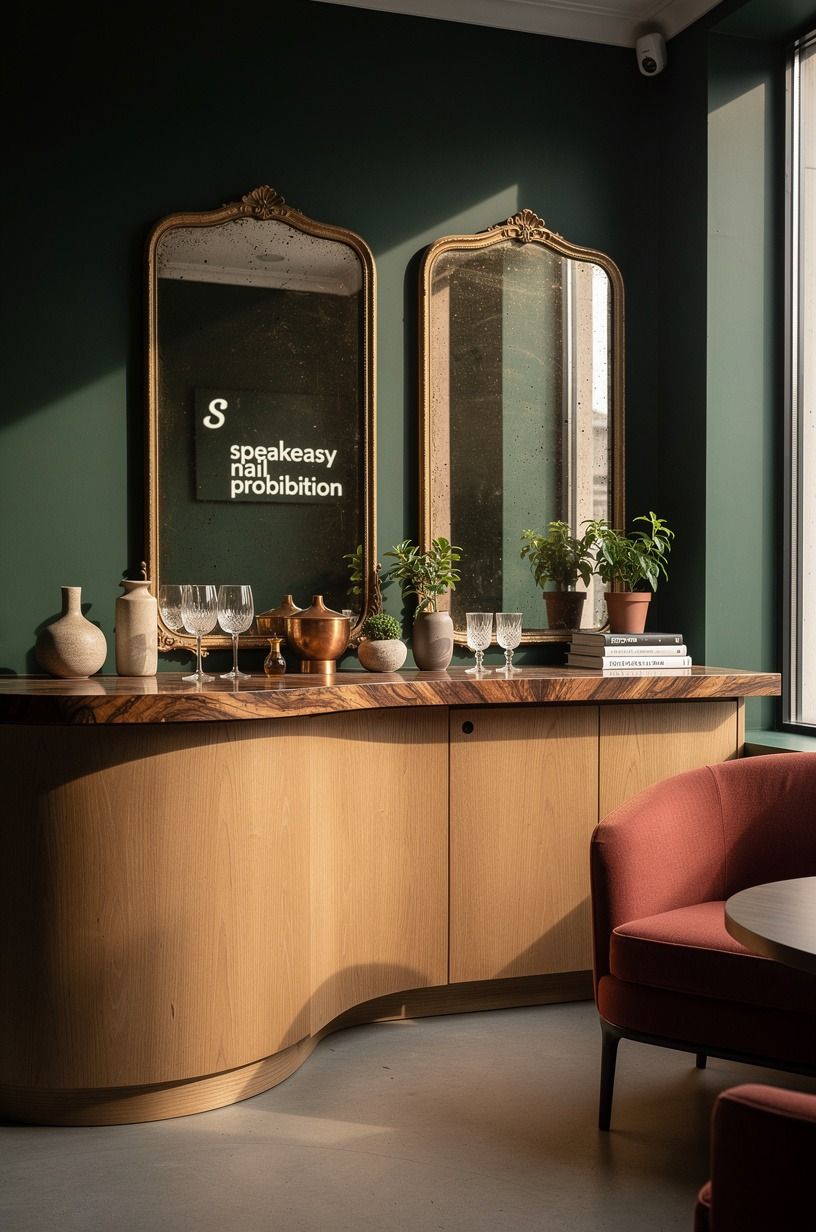
Two 28-inch round mirrors set into book-matched walnut panels above the sconces (flanking the bar, not centered over it). The walnut brings the forest-green wall, rust upholstery, and natural oak trim into one quieter read. Mirror doubles the light bouncing off the wall, and the warm reflection makes the back bar feel twice as deep as it is.
You don't need matched frames. Slightly different shapes and finishes read as a room that grew over time, not a catalog room.
One of mine has a thin bevel, the other is flat against the wall, and a guest has never once noticed that they don't match on purpose. For depth-on-a-budget move in tighter rooms, my small kitchen cabinet layout guide shows the same "double a small surface" pattern in a totally different room.
Hang the centers around 57 inches off the floor, the same eye-level rule used for art in a living room. Higher reads as a salon, lower reads as a powder room, this height reads as a bar. If you want the same eye-level math for a smaller room, my breakfast nook wall decor ideas breaks the rule down wall by wall.
6swap the standard doorknobs for unlacquered brass
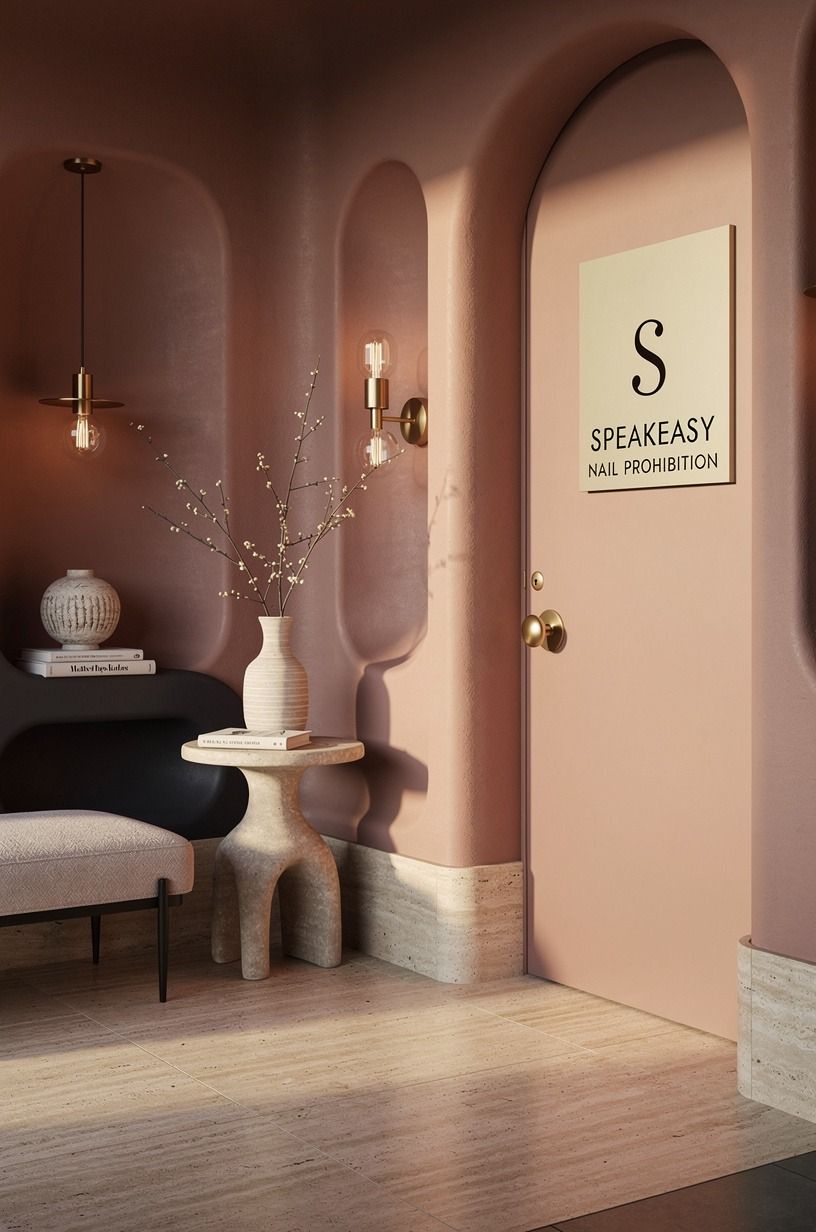
One detail that punches way above its weight: unlacquered brass cabinet hardware set against warm travertine on the bar cabinets. The dusty rose wall, charcoal trim, and brass pulls make the little run of doors feel intentional instead of leftover.
7layer a deep, low-pile rug underfoot
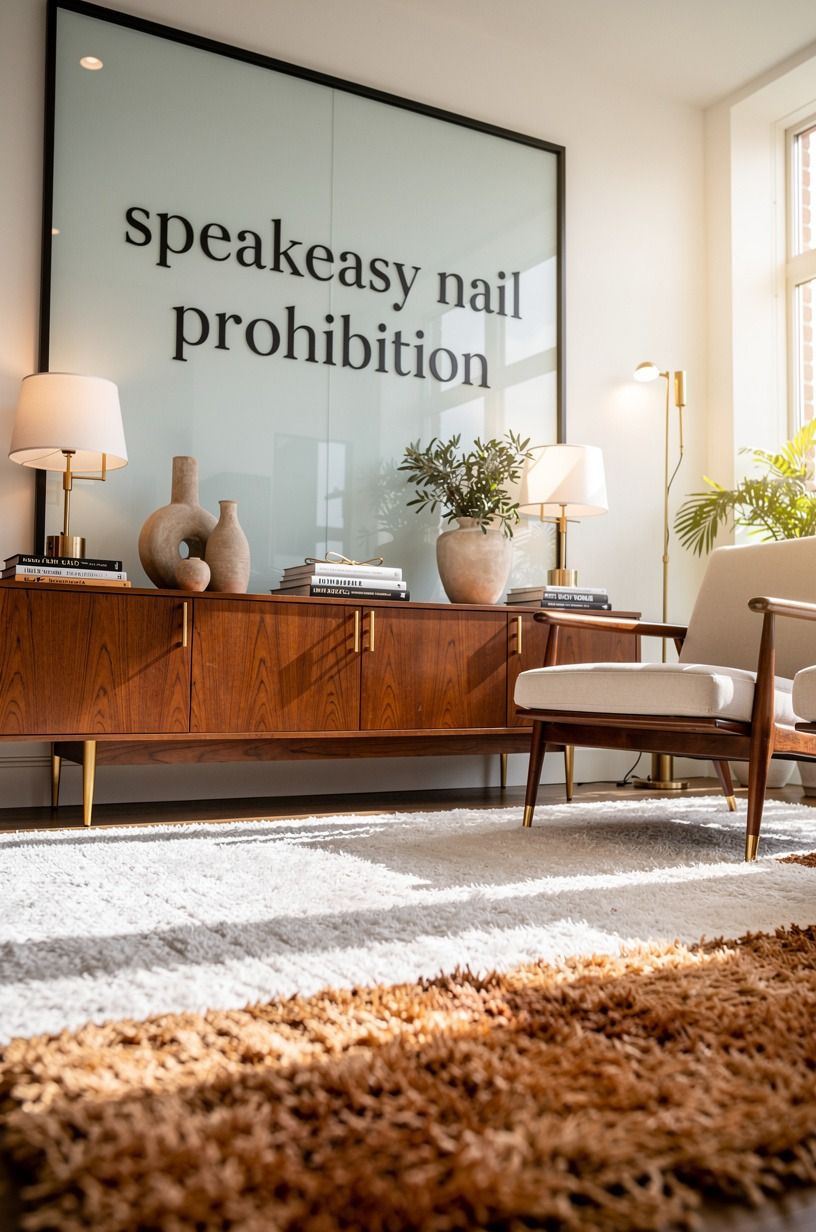
The concrete floor was the next problem. Basement concrete is cold underfoot and reflected every sound from the TV upstairs.
A 9x12 low-pile rug in warm white and camel with thin black accents went down for about $420 (overstock at a local rug dealer). The soft palette kept the floor from turning cave-dark, while the unlacquered brass foot rail along the bar picked up enough patina to make the new room feel less new.
If $420 is the wrong number for your budget, a flat-weave camel rug from World Market at $180 reads the same way. Lay a felt rug pad underneath, the kind with the rubberized backing. It keeps the rug from creeping when someone slides a barstool.
The barstool adds height without the visual weight of a chair; if you'd rather build out the seating around a similar rug, my modern breakfast nook ideas covers the same anchor-rug math for a different room, and the same low-pile logic is part of my dark vintage bedroom guide.
8install a back bar with glass shelves
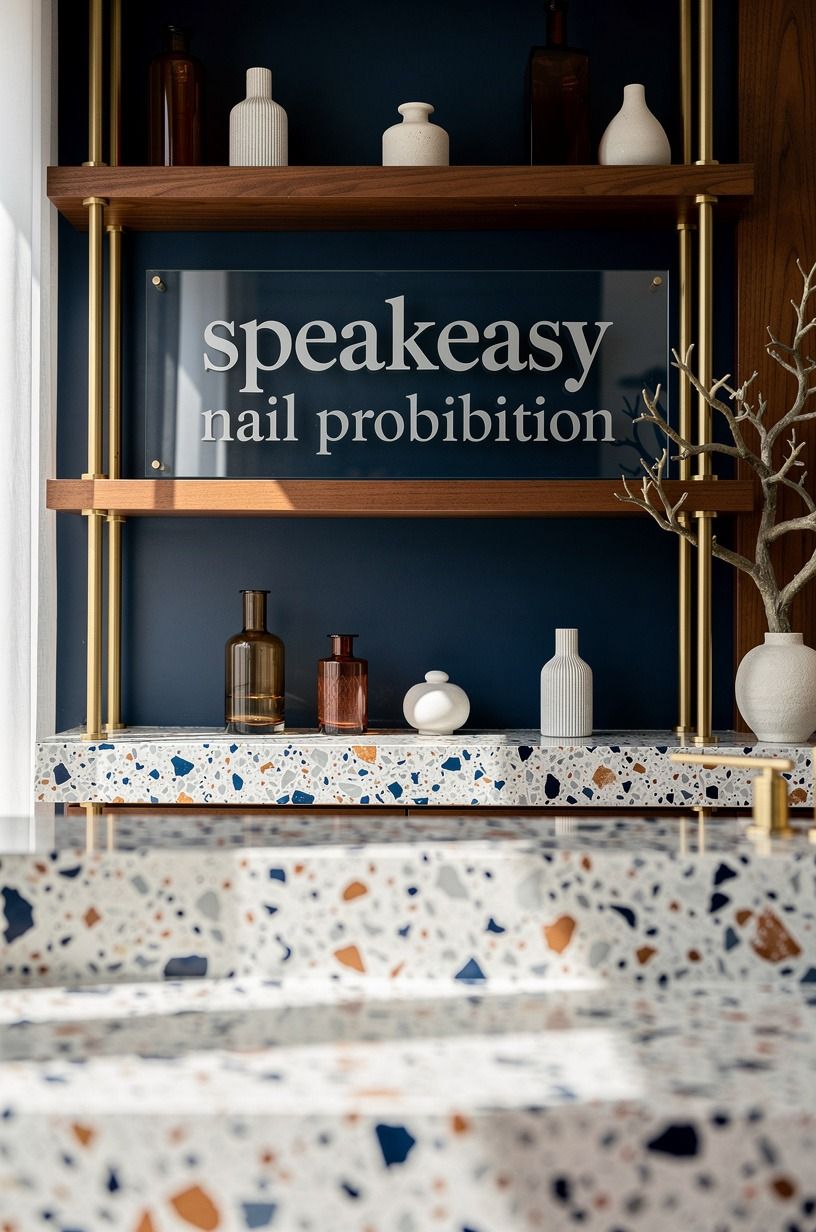
I built the back bar out of two IKEA KALLAX units painted midnight blue, with four panes of tempered glass shelves mounted on copper-toned standards between them and an oversized-chip terrazzo counter in ivory and copper tones (about $610 total). The KALLAX is the right scale, the glass mid-span is where the bottles go, and the terrazzo keeps the whole assembly from looking like a basement bookcase pretending to be a bar.
Styling the back bar matters as much as building it. Group bottles by color, not by brand. Whiskey and bourbon up front.
Gin and vodka on the middle shelf. Mixers and bitters on the top shelf, all tucked into small woven rattan baskets so the high shelf doesn't read like a stockpile. If you want a different take on filling the awkward gaps you can't decorate, my cabinet door styles guide shows how a few panel swaps can change a unit's whole read.
9bring in a pair of leather club chairs
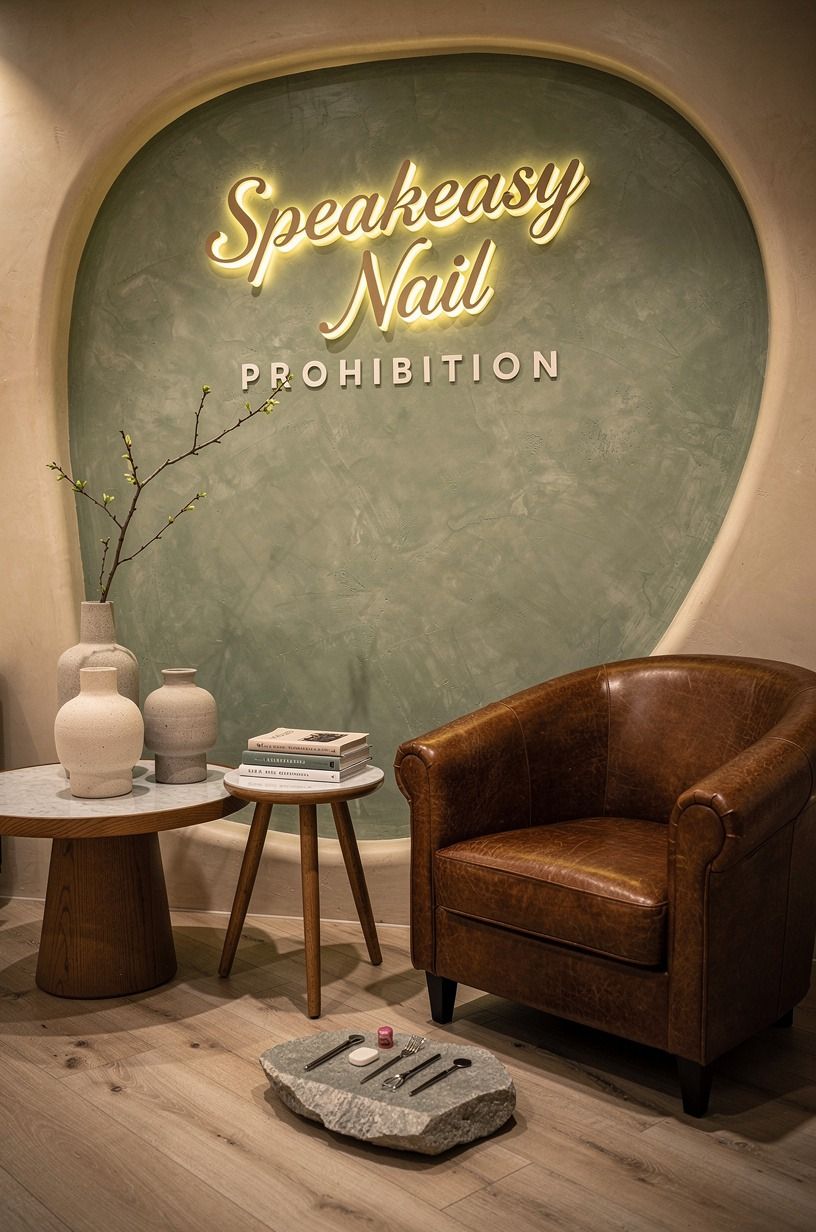
Two leather club chairs in a muted sage tone went into the corner opposite the bar. Mine are Article's Alcott (about $1,400 each on sale), and the hand-applied Venetian plaster behind them is what keeps the warm cream walls from going flat.
The chair matters more than the sofa here: this is the room where people have one drink and a long conversation, not where they watch a movie. A sofa invites lounging.
A pair of club chairs invites staying.
If $1,400 is the wrong price for the room you're building, IKEA's GRÖNLID in a cream leather-look is closer to $899 and holds up well in low light. Skip anything glossy or chrome-legged, it pulls the eye back to 2024. If you're building out the rest of the seating for movie nights or board games, my pillow inserts guide is where I sourced the lumbar inserts for the chair corners.
For a different way to use leather in a bedroom setting, my Saatva Adra leather bed frame review goes into detail on how that warm brown reads in different lights.
10anchor the corner with a brass floor lamp
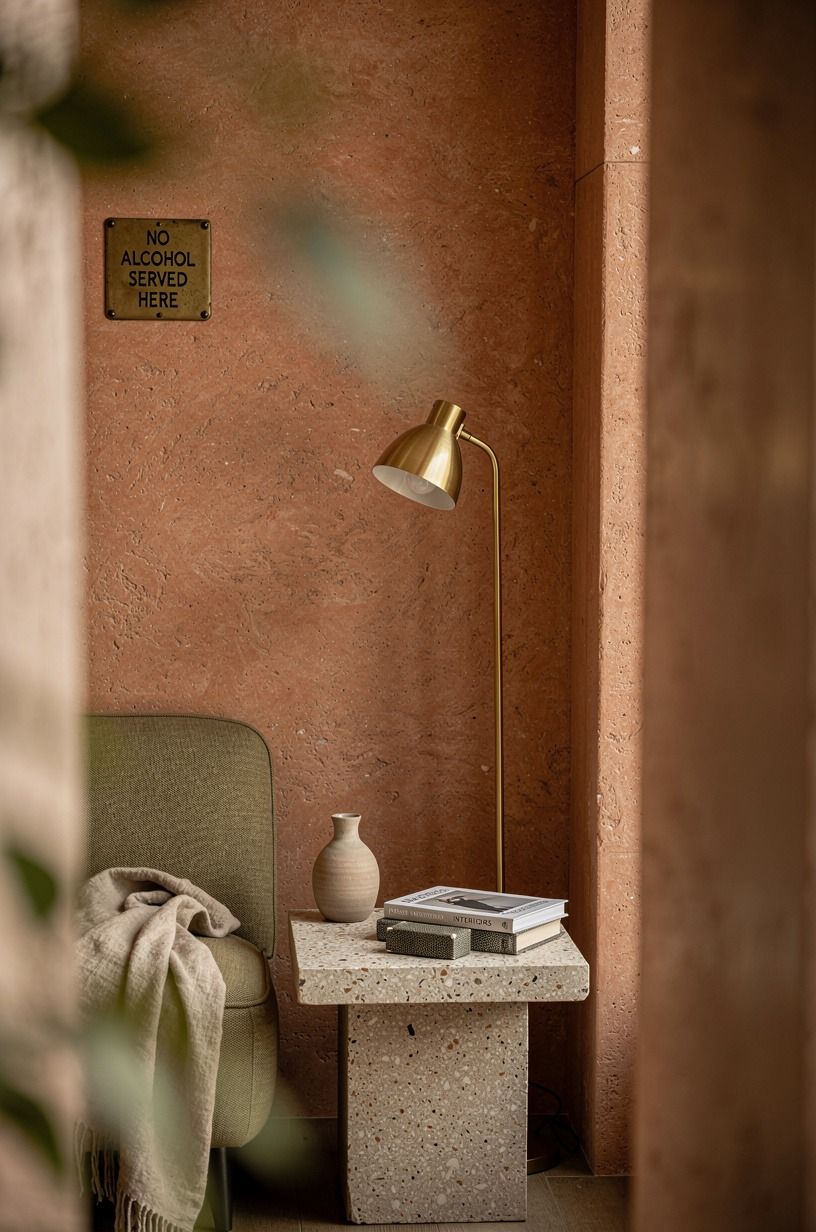
A 70-inch brass arc floor lamp in the deep corner next to the club chairs gave the room a second usable light source at shoulder height. I paired it with a small shagreen-accented side table, which sounds fussy until you see how well that texture sits with terracotta, stone, and olive.
Floor lamps matter more than any other light in a basement because they're at the scale of a person, not a ceiling. A Globe Electric fixture in matte brass ran me about $110.
The right bulb is the difference between "looks moody" and "looks dim". I used a 4W Edison-style LED (2200K, dimmable) and the filament pattern of the bulb does half the styling work in this room.
11what about the TV?
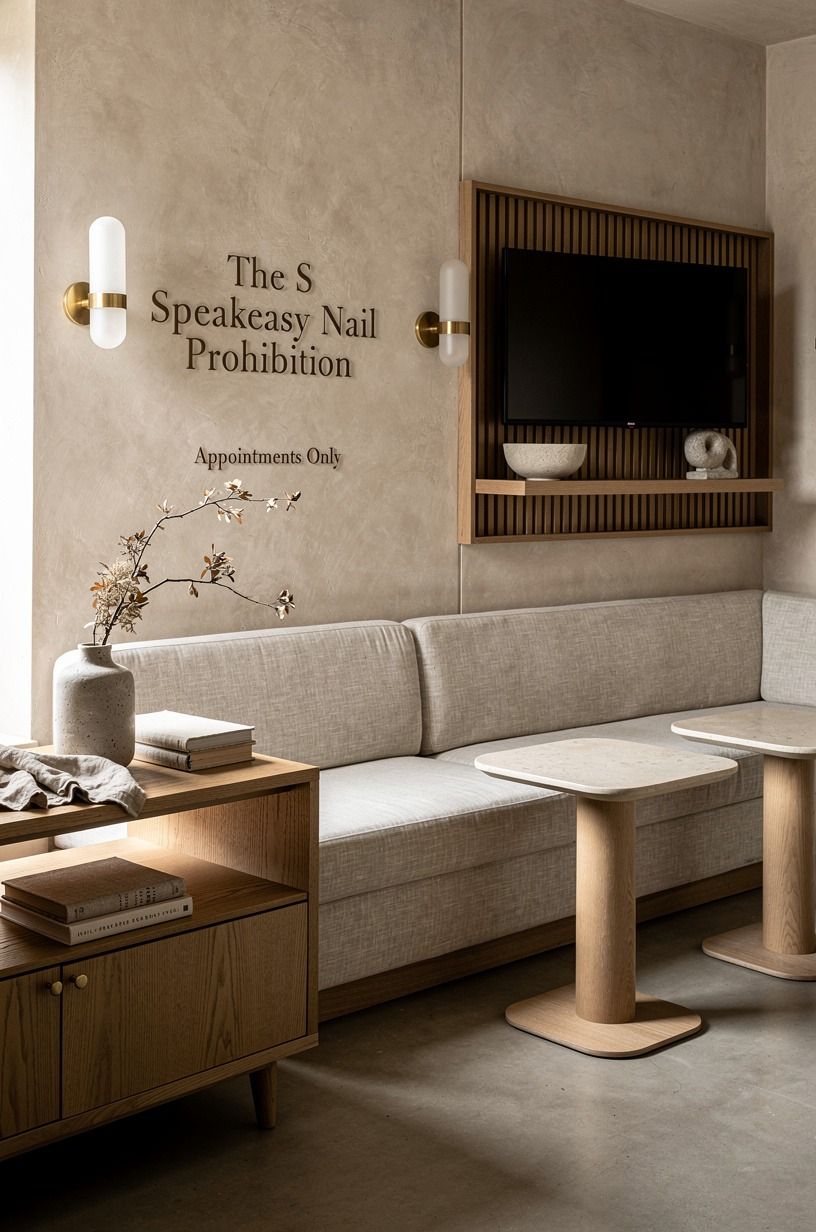
Here's a real confession: I kept a TV in this room. I hid it behind washed Belgian linen panels in a clay tone, then used aged brass rings so it read like drapery, not electronics.
12stock the bar cart with a small set of glassware
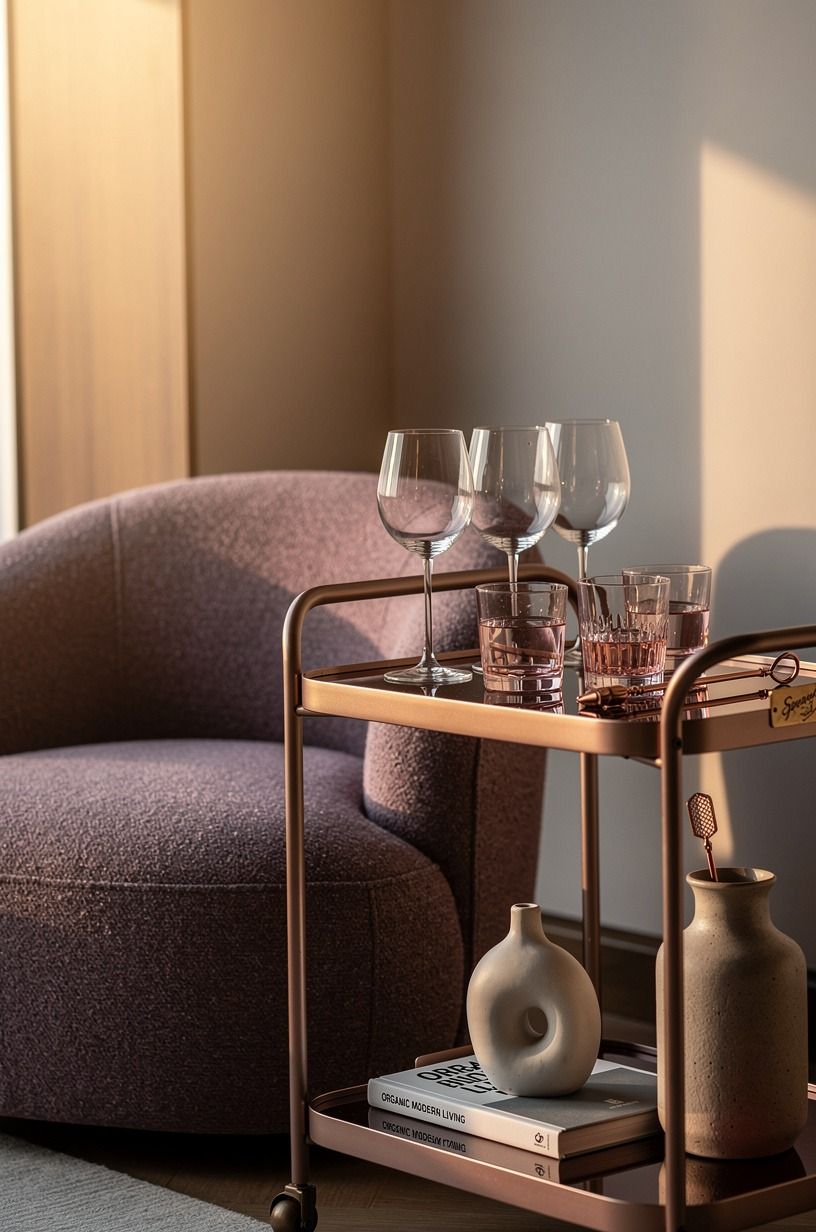
You don't need twelve kinds of glasses. A working speakeasy ran on about four: a rocks glass, a Nick & Nora, a coupe, and a small decanter.
Mine are Bormioli Rocco from a restaurant supply store (about $2 each). Set against plum paint, a grey cart, rose-gold rail, and one organic bouclé stool nearby, the glassware looks intentional without turning precious.
Display only what you actually use on the back bar. A stack of mismatched rocks glasses in the front corner reads more lived-in than a perfectly matched set.
For the same reason you keep one good decanter visible, my kitchen cabinet hardware ideas covers how small metal swaps change an entire room's read.
13hang warm sconces on the side walls
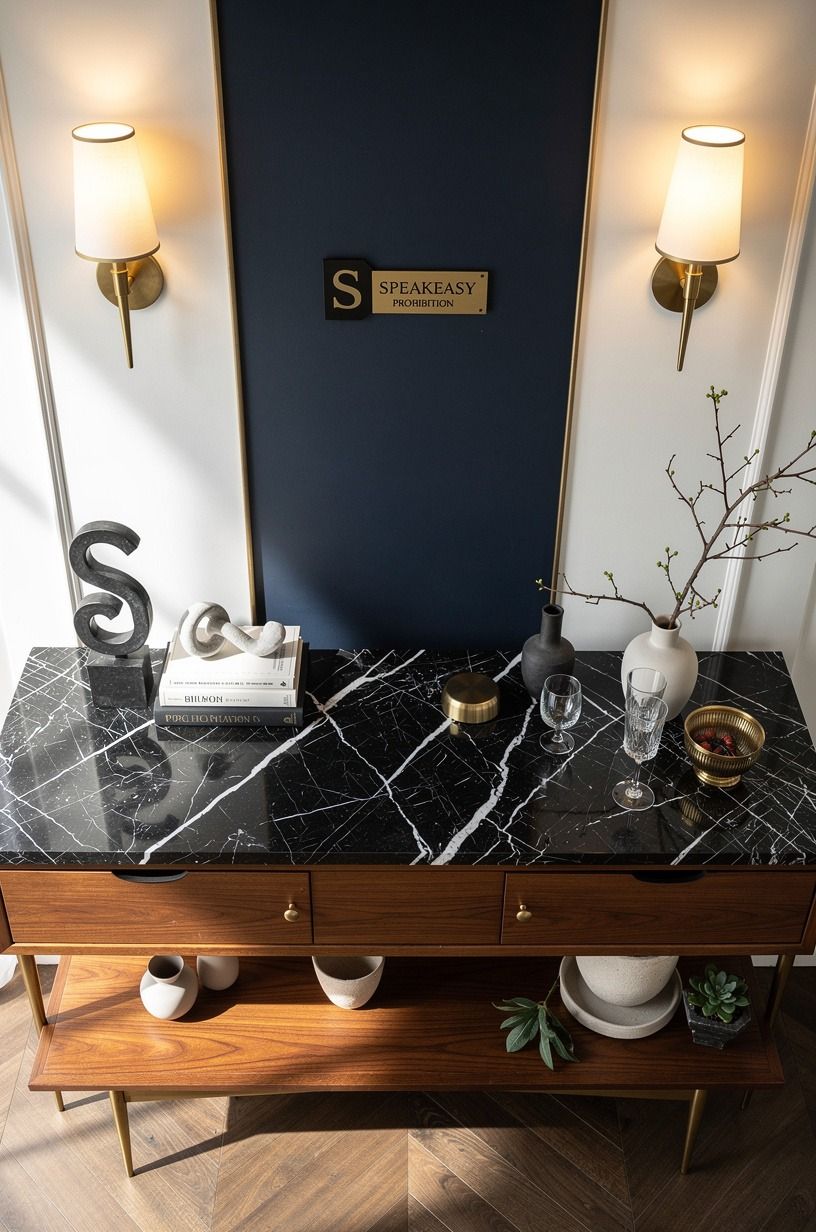
Beyond the two over the bar, I added two more unlacquered brass sconces about 8 feet apart on the long side wall, at the same 66-inch height. Against navy walls, white trim, walnut, and a strip of Nero Marquina marble with white veins, the side light reads sharp instead of gloomy.
14frame a single vintage poster at eye level
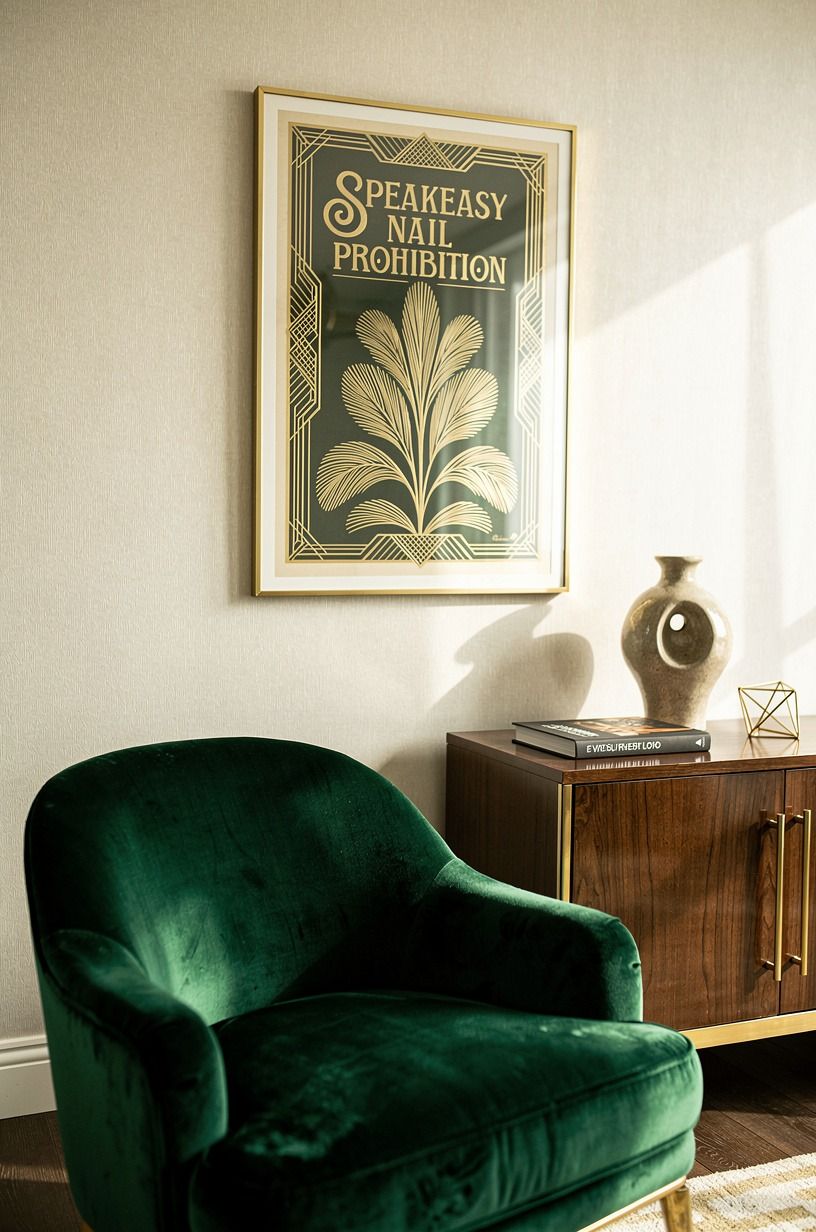
Above the deep-pile mohair velvet chairs, one 40x30 framed vintage poster in a thin aged-gold frame. Yes, you can find authentic-looking period pieces at antique malls for under $100.
Mine is a French absinthe poster from the 1920s, picked up in a shop in Beacon, NY for $85. I used Framebridge for about $130, and the emerald, cream, and gold around it keep the whole wall from getting muddy.
One large piece beats a gallery wall in this kind of room. The 1920s rooms I studied online had one focal print and a few secondary items, not nineteen small frames. Save the gallery wall for the upstairs hallway.
15skip the obvious "jazz" signage
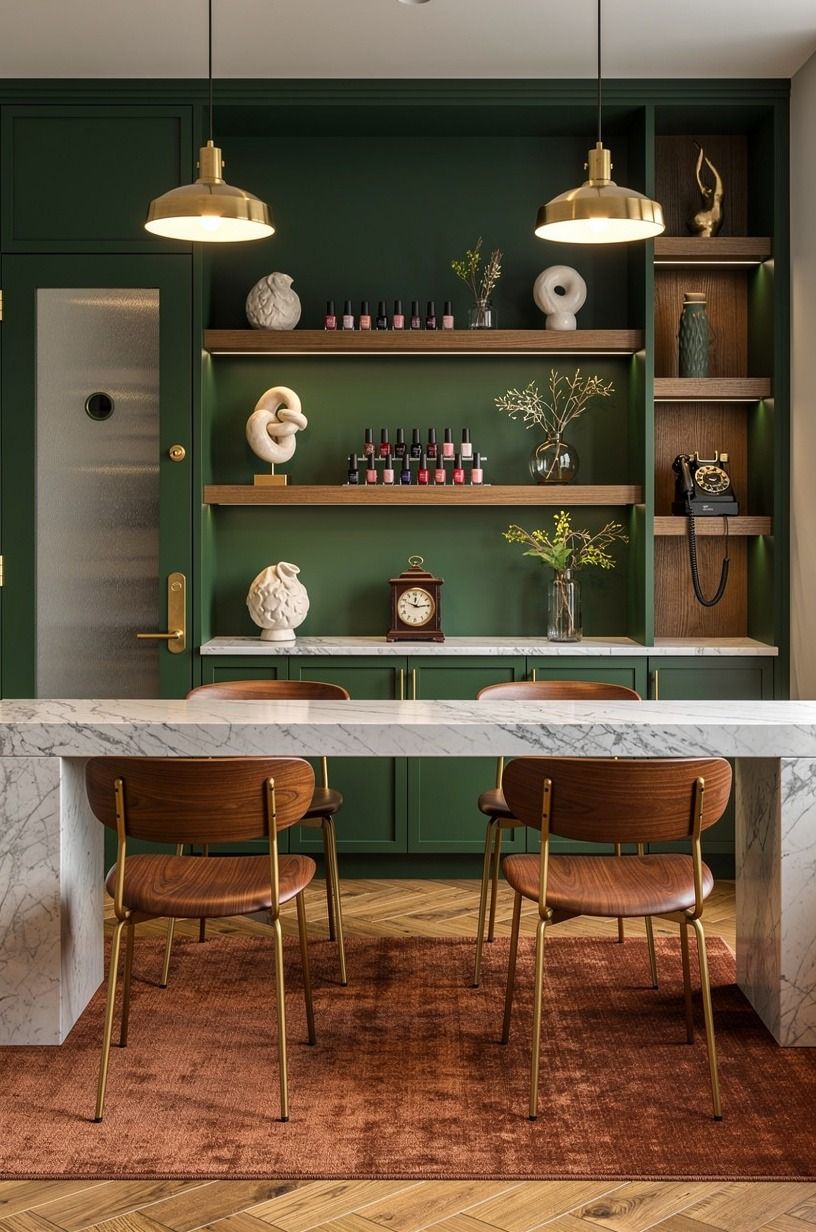
This is the rule I'd underline. Anything with the word "Speakeasy" or "Whiskey" or "Jazz" written on it as decor, skip.
The real speakeasies didn't label themselves; they hid. The look the aesthetic is reaching for is implied, not announced. A working speakeasy in 1927 had no signage by design.
So leave the signage out!
If you want a "bar" cue, do it with a small Carrara marble tray with subtle grey veining, a rust linen panel at the entry, or a natural oak half-door that swings without announcing itself. Subtle signals, not a billboard.
Buyers on Etsy sell reproduction 1920s swinging half-doors in pine for about $300, hinge hardware included, but if you want the look without the carpentry, a curtain rod and a heavy tobacco linen panel hung across the doorway reads as a "pass-through" for about $40. If you're working with a doorway you actually close, my hidden compartment guide has the hinge and mount details for the same kind of panel.
16what would you actually pour?
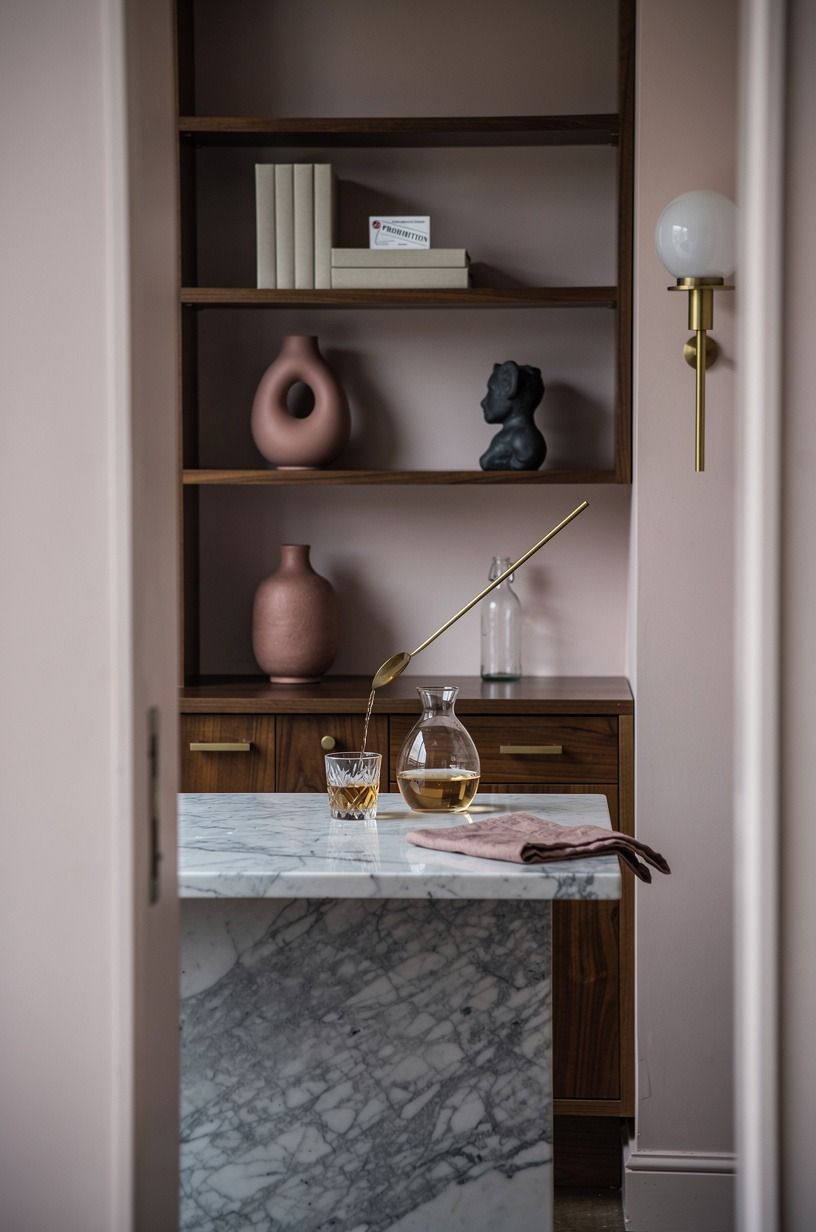
Last tonal move: the playlist and the glassware. A small Audioengine A1 speaker (about $250 a pair) on the Carrara marble back bar, paired with a Spotify queue made of actual 1920s recordings (Bessie Smith, Bix Beiderbecke, early Duke Ellington).
Modern jazz playlists feel wrong here; they read "smooth dinner" not "Prohibition". The dusty rose wall, charcoal trim, and brass rails make the sound corner feel designed instead of dropped in.
Worth every dollar.
For the room's "smell" cue, a single basil-and-tobacco candle on the bar (Flaming Beacon makes one) is a cheaper upgrade than any second piece of art. Smell finishes a room the way sound does. If you want a longer hit-list of small speaker choices for rooms like this, my outdoor kitchen lighting guide covers the same low-watt speaker math in a very different room.
17build a small "exit" moment at the door
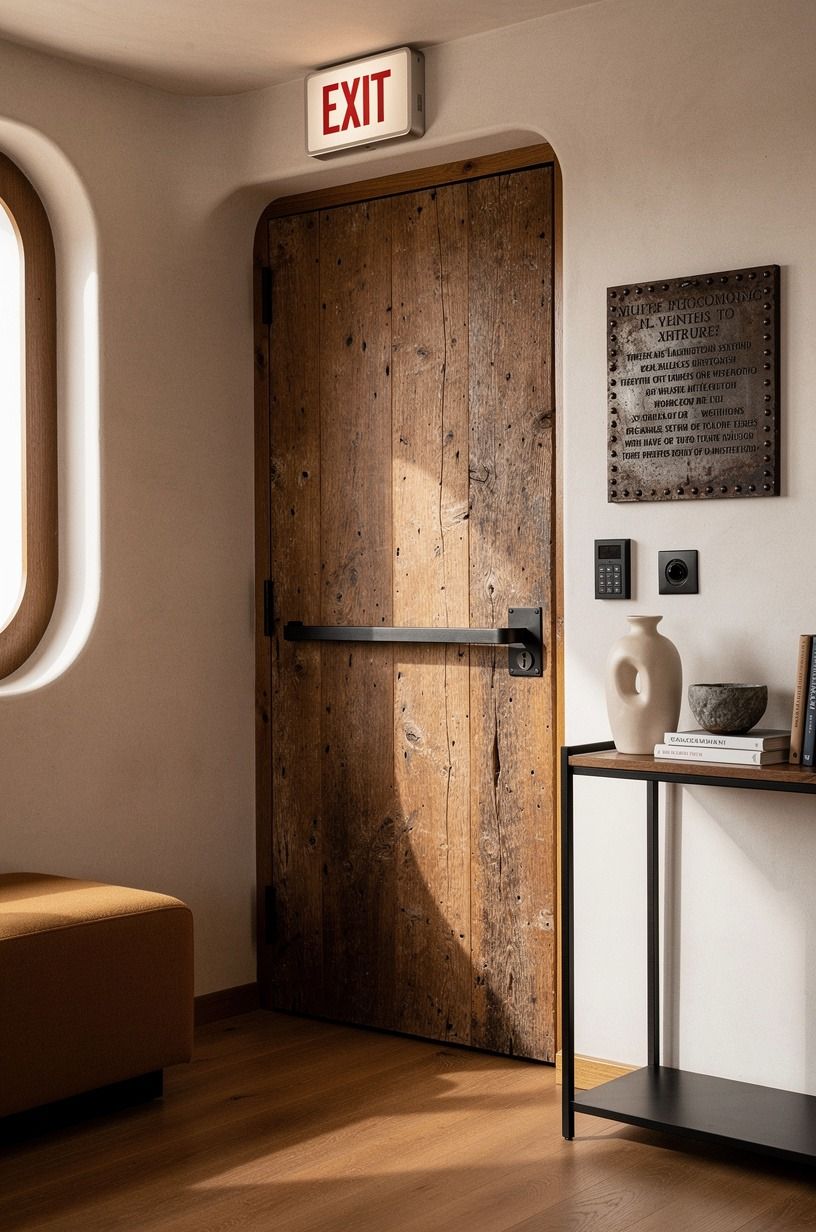
Last move: the door out of the room. I swapped the builder-grade slab for a reclaimed weathered teak door, then kept the wall warm white with camel trim and black hardware so the exit felt deliberate instead of leftover.
How much it cost
This is the part everyone asks about. Post-it note on the fridge, all in:
My room landed in the high end of "Mid". Line items:
Total: about $4,976. If I had skipped the club chair and the Audioengine pair, the room would have come in at about $2,400 and felt 80% as good. The chair was the single biggest splurge, and the single biggest reason people want to stay down there.
Materials we used that you may want to budget for separately: a low-pile 9x12 rug runs $400-$1,500 in this style, linen drapes (if you want a window covering) $120-$400 a pair, and paint for a room DIY'd runs about $200-$600 including primer and rollers. If you want the full table the rest of the site uses for room budgets, my backyard lighting cost guide has the same tier breakdown applied to outdoor materials, which often overlap with basement moody rooms. And one last heads up: this room only started to "land" once the lighting was right, so I'd put a bigger share of the budget into bulbs and dimmers than into art.
Why most speakeasy attempts land flat (and what fixes it)
Here's the editorial section, the one part of this article I want you to actually think about. A speakeasy room isn't nostalgia, it's a specific environment doing specific work. The original 1920s rooms were dark because gaslight was expensive and "low ceilings with warm bulbs" were a side effect of the era's lighting technology, not a style choice.
Most attempts at the aesthetic today miss this. They buy a neon "Cocktails" sign, hang a felt top hat on the wall, and call it Prohibition.
What they're really building is a costume. A working speakeasy was a place of shadows and grain, not signage and slogans.
It was a place where the warm bulb on the wall did more work than the bottles on the back bar, and where the wood reads old because the wood is old, not because it was distressed to look old.
There are three signals that your speakeasy read is in the right place: the room gets darker, not brighter, when you add detail to it; you want to lower your voice; and you stop noticing the TV on the wall. If the room gets louder the more you finish, you've built a man cave. If it gets quieter, you've built a speakeasy.
The other reason this aesthetic is sticking around is moody without being precious. A bar cart, a brass lamp, an old rug, and a few sconces survive trends.
The "live laugh love" sign doesn't. The aesthetic trades on restraint: one large piece of art instead of a gallery wall, four chairs instead of a sectional, brass developing patina instead of brass polished to a mirror.
None of that is going out of style in 2026, and most of the same restraint shows up in every darker room we cover, including my moody green office roundup.
One last honest note. I almost quit in week two because the room looked like a basement with black paint.
The "speakeasy" didn't show up until the fourth sconce went up and the right bulb went into it. Sconces aren't optional here.
They're the load-bearing piece of the whole scheme, and any speakeasy you see saved on Pinterest earned them first.
What People Always Want to Know
What is the best speakeasy decor piece for a small basement?
The unlacquered brass wall sconce is the load-bearing piece in any small speakeasy, basement or otherwise. One oversized 1920s back bar in a tiny room just looks like a prop.
Two warm sconces on the side wall, a small rug, and a single chair will read more like the era than any single big furniture move. I started here before I bought any furniture, and it's the move I'd repeat first.
Where can I buy speakeasy decor pieces on a budget?
IKEA and World Market carry the highest concentration of "speakeasy-adjacent" pieces under $200. For hardware and lighting, Etsy has small foundries that ship unlacquered brass cabinet pulls for about $8 each.
For the back bar, Facebook Marketplace and Craigslist are where most working speakeasy builds source their antique walnut pieces for one-tenth the retail cost. Skip Restoration Hardware and Pottery Barn for this aesthetic, the price-to-period-fit ratio is the worst in the category.
How much does a speakeasy decor makeover cost?
About $2,000 to $5,000 for a basement version with most of the work DIY'd. A small-room makeup (sconces + bar cart + rug + chair) can land closer to $600 to $1,500.
A full-wall custom back bar with stone floor and historic millwork can run $15,000 to $30,000. The basement I built came in at about $4,976 for everything, with one used pair of club chairs at the high end.
See the cost table above for line items. Most of the line items have run-able alternatives in my rug and pillow roundup when you want to bring the bench seating to the same standard, and the way the tier prices interact is similar to what's shown in my outdoor kitchen bar build.
Can I create a speakeasy aesthetic on a budget?
Yes, and a few moves do most of the work. Paint walls in a matte tobacco or deep green (about $100 for the room). Add two warm-dimmable sconces under $200 total.
Lay a wool-style flat-weave rug from World Market for $180. Style a small tray with a decanter, four glasses, and a candle. Spend under $600 and the room reads "speakeasy" the second the lights are down low.
Free upgrades matter too: declutter the walls, hide the TV, lower the ceiling light to a single dim bulb if possible. The aesthetic is mostly subtraction.
A layered "warm before art" ordering shows up in lots of small rooms on the site, including my no-frills backyard lighting roundup.
Is speakeasy decor worth it in a small basement?
Yes, and small basements are actually where the aesthetic works best. The original speakeasies were small rooms with low ceilings because they had to hide. A wide-open basement won't read as "speakeasy" no matter how much you spend.
A 12x16 or smaller version, with the right lighting, reads correctly because the proportions do half the work. Concentrate your budget on lighting and one focal piece of furniture, not on square footage.
Is speakeasy decor a good idea for a rental?
Yes, almost all of it is reversible and landlord-friendly. The big swappable items: paint (with permission, and use a flat that primes easily), plug-in wall sconces with adhesive cord covers, tension-rod drapes, area rugs, peel-and-stick vintage posters, and freestanding bar carts. The only "fixed" piece in my own build was the door swap, and that could have been a sheet of canvas tape-mounted across the original door if I hadn't owned the place.
If your lease won't allow paint, a single large fabric wall hanging in tobacco tone does 70% of what a paint job does for a few dollars. For more no-drill lighting move in tight rooms, my apartment nook decor ideas covers renter-safe lighting, anchors, and shelf swaps that survive a move-out.
Where I'd Start Tonight
If I had to pick one, I'd start with the lighting, not the bar. Two warm-dimmable sconces in unlacquered brass, paired with a real Lutron dimmer, will do more for the read of the room than anything else on this list. The wallpaper won't save it if the bulbs are wrong.