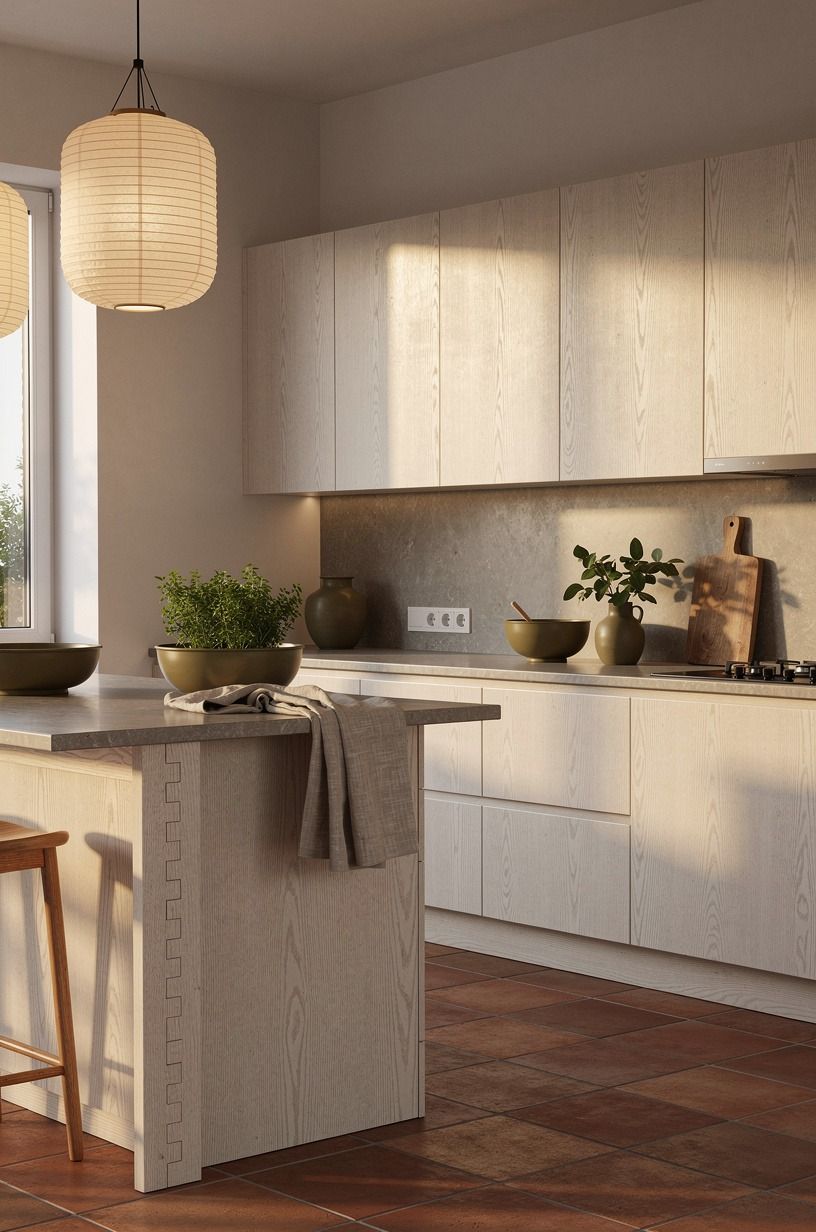
I Tried Japandi Kitchen Lighting, Soft Pendants Changed Everything
10 july 2026Japandi kitchen lighting changed my kitchen faster than paint did, and the shift lived in the low hundreds, not the thousands. I did this reset without replacing my cabinets, and that was the part I didn't expect to work. The room had good bones, but every evening it still felt flat, cold, and a little too awake. Once I started treating light as material instead of equipment, the whole kitchen softened.
Is a Japandi kitchen lighting reset actually worth it?
Yes. More than paint. More than a new faucet. The reason is simple: light is the thing your eye reads first, before shape, before color, before any styling choice you sweated over for a weekend.
If your kitchen still has the builder-grade flush mount from move-in day, no amount of styling will fix the mood at 7 p.m. I've watched friends redo cabinets and tile first, then realize the room still hums at noon. Light is the cheapest way to skip that mistake. If you're comparing this against a full remodel, the case is even stronger.
You can read more on how I think about budget kitchen cabinet makeover ideas before committing, because there's no point spending on boxes if the lighting is fighting you. Most of the kitchens I love in magazines aren't bigger or better furnished.
They're lit like evening, even at lunch.
What does a soft-pendant makeover cost, from cheap to mid?
A lighting-only reset lives in a different price bracket than a renovation. Here's how I'd break it down before you start clicking "add to cart."
Most of my own swap landed inside the budget tier, and I'm not embarrassed by that. The room looks like it cost more because the light is layered, not because the fixtures are pricey. For a fuller cost picture across cabinets, counters, and lighting, the kitchen cabinet color ideas roundup pairs well with this one.
What's the single highest-impact change for under $100?
One paper lantern over the sink, plus one 2700K bulb, plus one portable clay counter lamp. That combination will change how your kitchen feels from 6 p.m. onward for about the cost of dinner out.
I've recommended it to four friends this year and three of them texted me photos the same week. The whole move is that you're not adding brightness, you're adding softness.
The flush-mount above the island gets dimmed to nothing, the paper lantern does the work, and the small lamp catches the corners. Total: usually under $100 if you already own a lamp base. You don't need to be handy. You don't need an electrician.
You just need to flip the right switch at the right time. If you're working with a tight footprint, the small kitchen cabinet ideas guide explains how to keep the counters clear so the new glow actually lands somewhere.
- Map your dark spots before you buy any fixture
- Hang one paper lantern over the sink
- Pick a paper pendant over a glass shade every time
- Pair soft globes over a single oversized statement
- Tuck warm LED strips beneath the open oak shelves
- Wash the limewash backsplash with hidden, indirect light
- Frame the plaster range hood with narrow brass sconces
- Add a dimmable rail instead of bright cans over prep
- Let black pendant cords draw quiet vertical lines
- Why would I pick recessed pin lights over under-cabinet strips?
- Place a small clay lamp on the counter for evening hush
- Aim one narrow spotlight at the plaster niche
- Match the brass switch plates to the faucet, not the faucet to the plates
- Set evening dimmers before you buy another pendant
1Map your dark spots before you buy any fixture
First, I stopped shopping and watched the room. At 6 p.m., I stood in the doorway with only the old overhead on and noticed where the shadows got muddy: the sink corner, the stone counter edge, and the gap under the uppers. That simple map told me more than any product page could.
If you want light over a small kitchen island to feel intentional, you need to know where your room already collapses.
I sketched those dark spots on printer paper and marked the fixed measurements too: 36 in counters, 18 in backsplash space, and 42 to 48 in clearance around my island path. And suddenly the plan wasn't aesthetic fluff anymore. It's geometry.
I also compared that map with my saved modern kitchen cabinet ideas because the best rooms never rely on one source. They stack glow the way good outfits stack texture.
This step sounds obvious, but most of the bad lighting I've seen happened because someone skipped it and ordered a beautiful pendant anyway.
2Hang one paper lantern over the sink
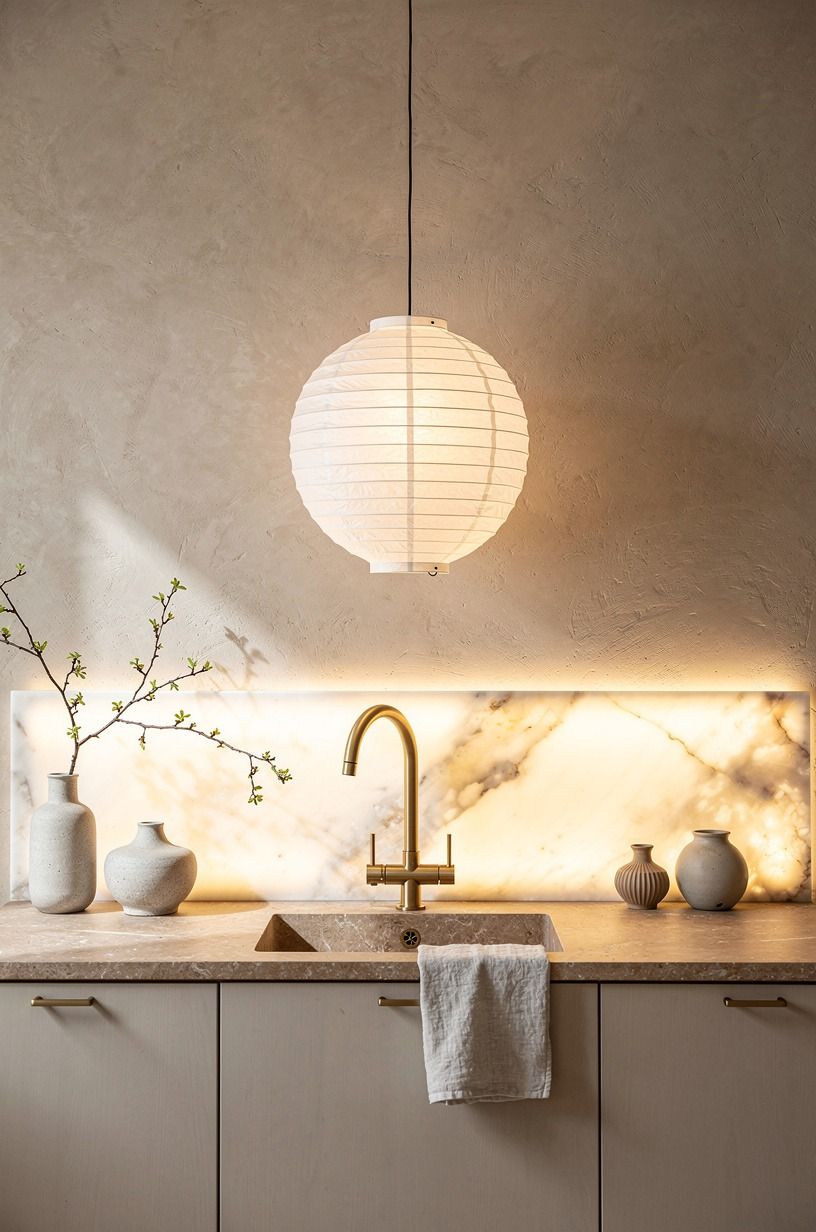
Then I gave the sink its own calm center. One soft paper lantern, hung right over the basin, did more for the room than the pair of metal pendants I almost bought for the same spot.
The globe sat inside a clay, linen, and aged brass palette, and that mattered because the sink already had enough visual jobs to do. You don't need sparkle there.
You need relief!
I kept the lantern slightly lower than I first planned so the glow landed on the faucet and front counter lip instead of drifting up into the ceiling. With Benjamin Moore White Dove OC-17 on the nearby trim, the paper looked creamy instead of stark.
If your sink wall is part of a wider reset, kitchen sink cabinet ideas helps you keep that softness going. It's the most peaceful dishwashing light I've had in years.
The part I almost missed: hang it 30 to 34 inches above the counter, not higher. Lower reads warmer.
3Pick a paper pendant over a glass shade every time
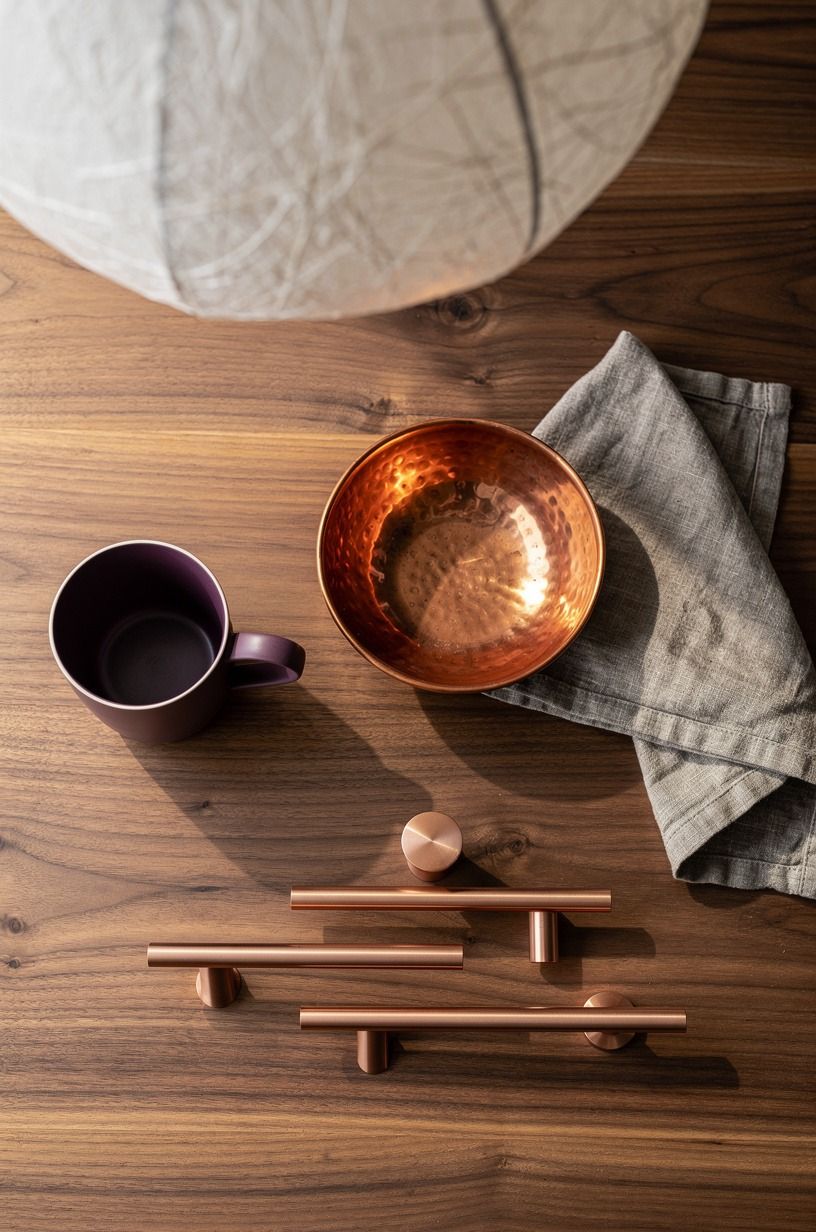
What surprised me most was how much a paper shade changed the emotional temperature of the room. On the counter, next to book-matched walnut and folded paper samples, the winning pendant didn't look dramatic at all. Installed, though, it took the edge off every hard surface in view.
That is the thing people miss with Japandi kitchen lighting. Softness is not weakness.
It's control.
I tested a woven shade first and sent it back because the pattern threw fussy little marks onto the backsplash. The paper pendant spread one even halo instead, which made the backdrop kitchen wall read smoother and more expensive.
I kept the hardware in unlacquered brass so the fixture still had weight. For the wider material logic, kitchen cabinet door styles explained is worth reading before you buy anything else.
If you're staring at a glass shade right now and wondering why the room feels like a waiting room, this is your sign to swap it.
4Pair soft globes over a single oversized statement
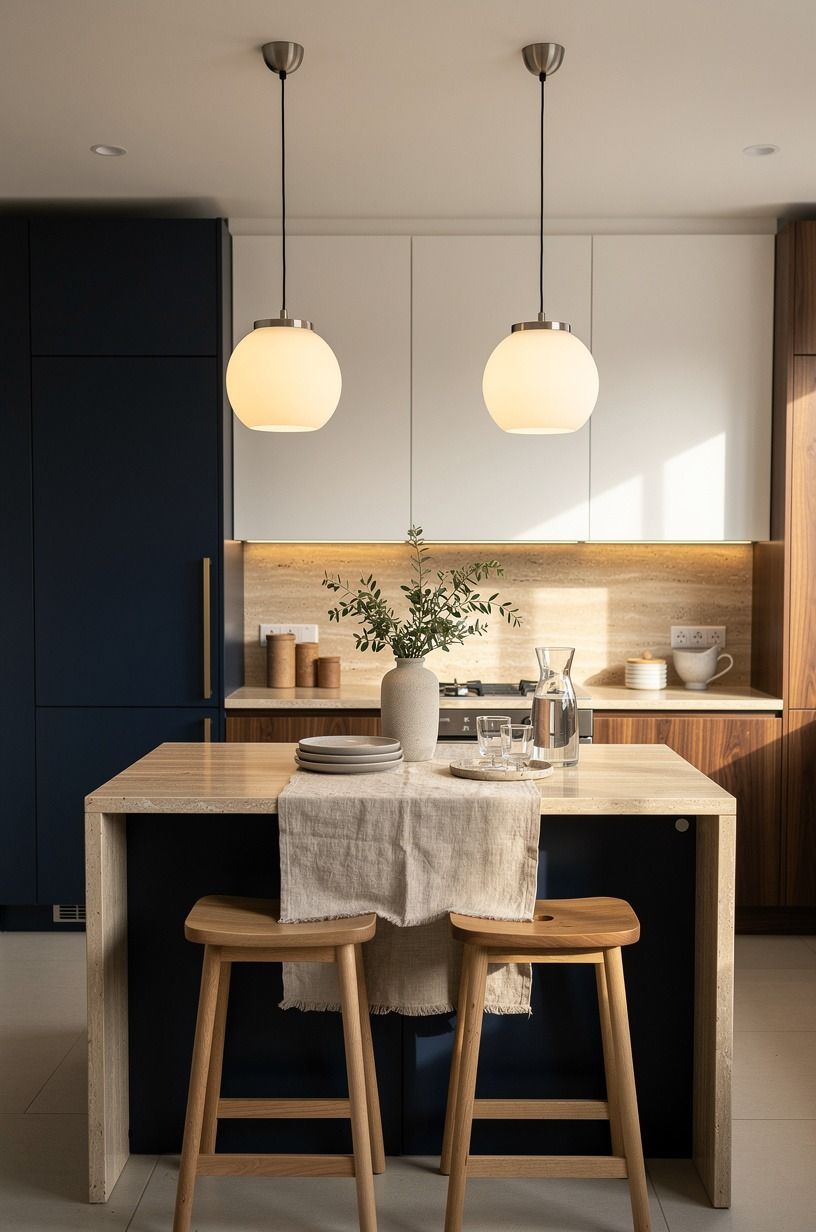
For my small island, one pendant looked accidental and three looked busy, so I landed on a pair of soft globes. Seen straight on, with navy cabinetry, walnut grain, and a quiet white ceiling, the symmetry made the island look custom.
That was the first moment I felt the room stop wobbling. If you have a compact prep zone, paired lights often behave better than a single oversized statement. Big single pendants read as restaurant lighting in a small kitchen, and you don't want your morning coffee to feel like brunch service.
I spaced them so each globe framed the working zone instead of the whole slab. Too wide, and your eye starts reading furniture showroom.
Too tight, and the island looks pinched. My stools were camel oak and black steel, which gave the scene just enough contrast without turning sharp.
I used small kitchen cabinet ideas as my spacing reality check, and I'm glad I did. The whole island finally felt held together!
The pair cost me about the same as one big pendant would have, which is the part I didn't expect.
5Tuck warm LED strips beneath the open oak shelves
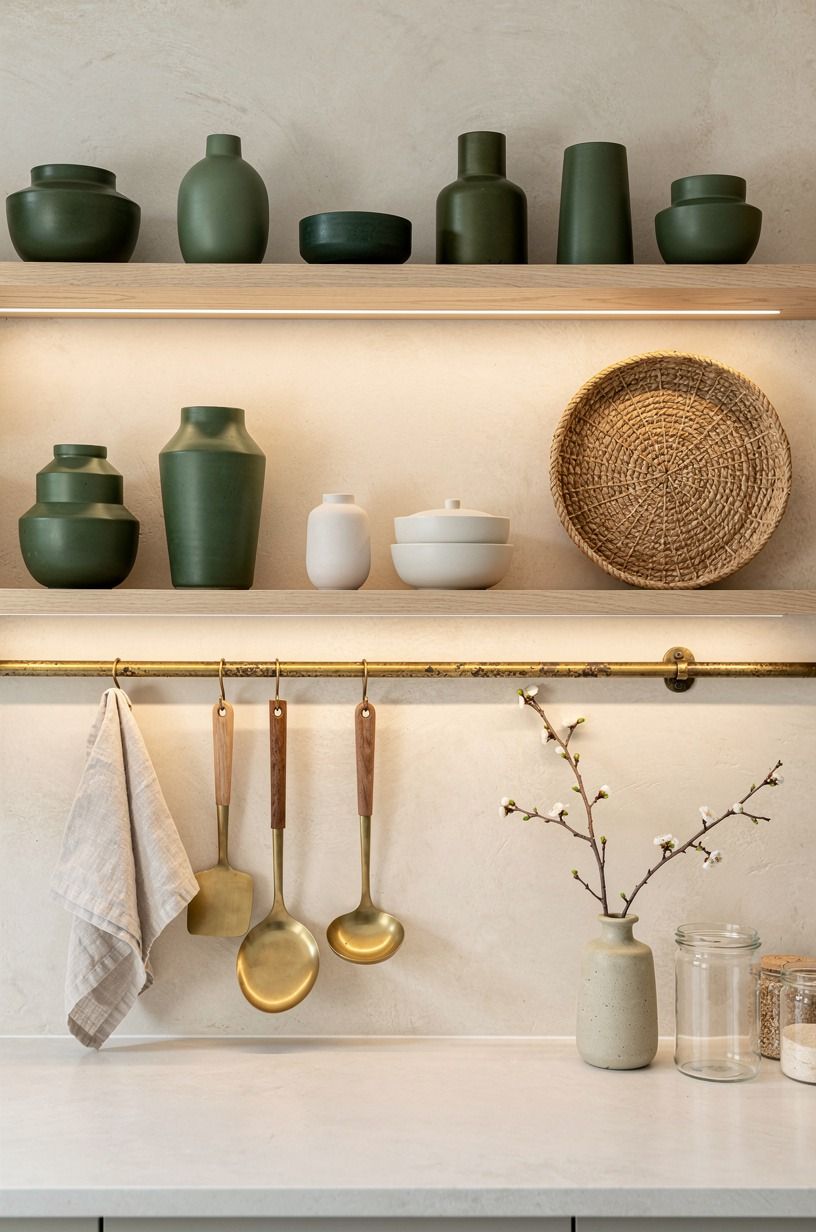
Under-shelf lighting is where this makeover stopped being pretty and started being useful. Once I tucked warm strips under my oak shelves, the wall stopped dropping into shadow after sunset. The bowls, cups, and everyday pieces looked easier to reach, but more important, the shelves quit floating as lonely planks.
You want that low stripe of light to make the wood feel anchored to the room.
I kept the temperature warm (2700K, not 3000K) and the strip hidden so all you saw was the wash on the wall and the underside of cerused white oak. No exposed dots.
No blue cast. If your upper storage is open, that hidden line matters more than another decorative object ever will.
I borrowed the restraint from open shelving kitchen ideas and the room got quieter overnight. Worth every penny.
If you're renting and can't hardwire, the plug-in LED strip version does 80% of the same job for under $25.
6Wash the limewash backsplash with hidden, indirect light
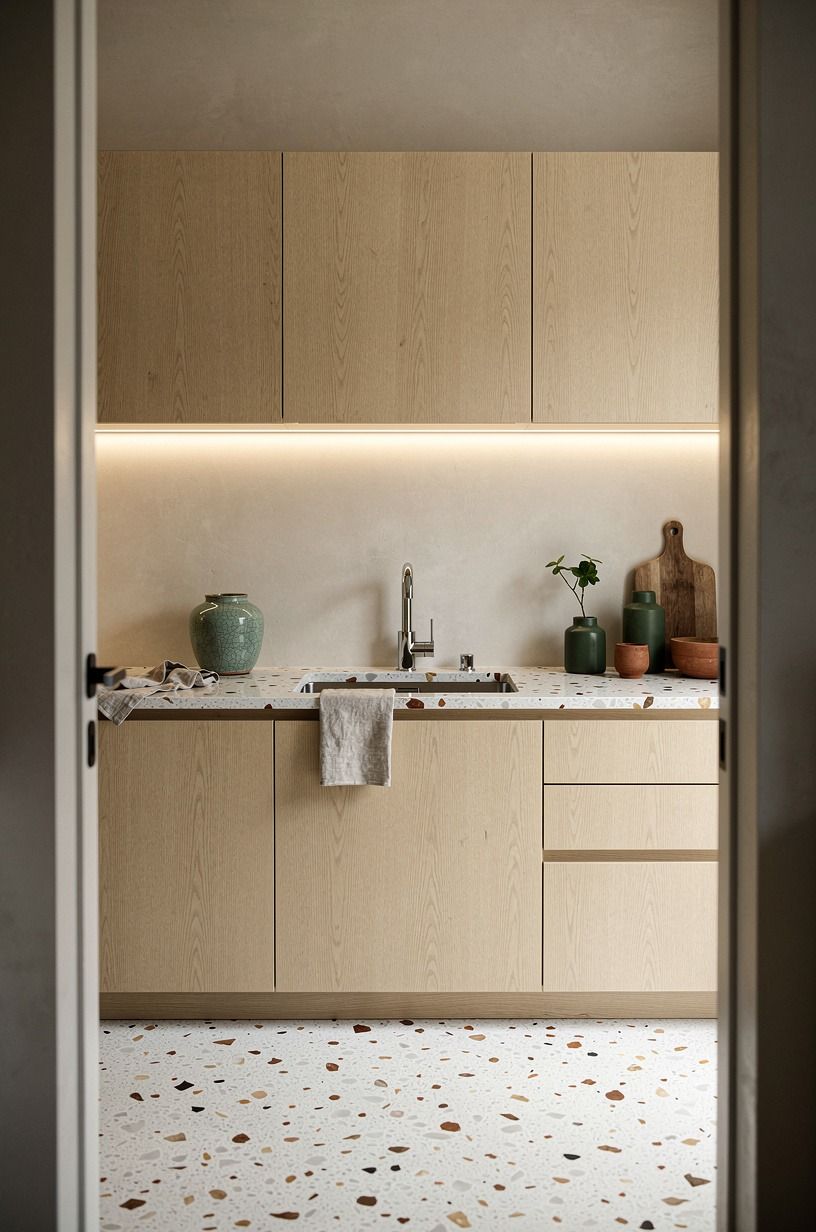
My limewash backsplash had soft movement already, but the old overhead fixture flattened it every night.
7Frame the plaster range hood with narrow brass sconces
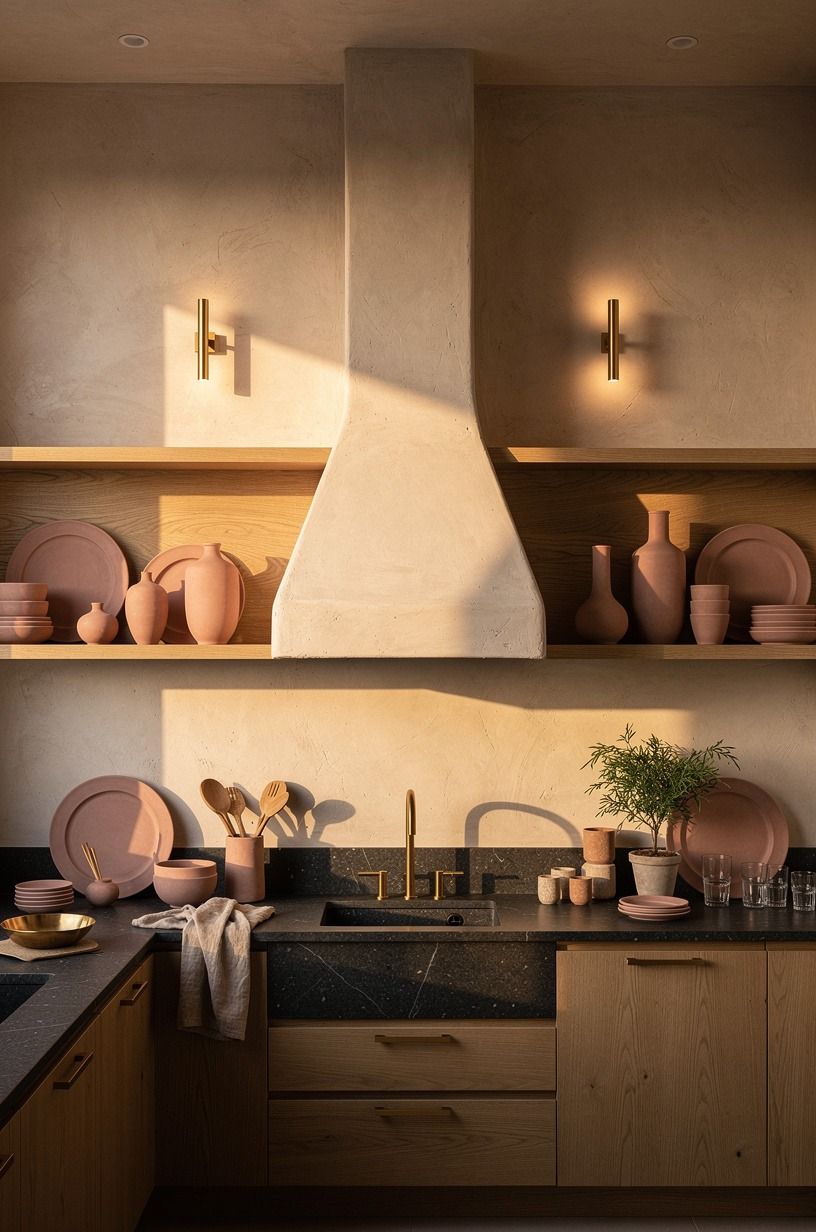
This was my boldest move, and it paid off because the sconces stayed narrow. On either side of the plaster hood, they drew two warm verticals that made the center mass feel deliberate instead of bulky.
The Venetian plaster, charcoal cooktop, and soft wall color suddenly looked composed. If your modern kitchen design range hood feels heavy, framing it with slim light can slim it down without tearing anything out. I went with Farrow & Ball Studio Green on the hood soffit to anchor the volume, and the warm sconce pair then picked up the green without competing with it.
I skipped chunky shades because the hood already owned enough volume. What it needed was punctuation. The pair I chose had unlacquered brass backs and narrow linen tubes, so the glow felt warm at the edge, not flashy in the middle.
I cross-checked the balance against oak kitchen cabinet ideas for a warm modern look because those kitchens understand restraint. And yes, this is one of the places where smaller looks richer.
The sconces sit about 30 inches above the cooktop and 8 inches off the hood wall. Closer in, and you'll feel the heat; further out, and you lose the punctuation. A Schoolhouse Electric-style small brass sconce runs $80 to $160 each and does most of the work.
8Add a dimmable rail instead of bright cans over prep
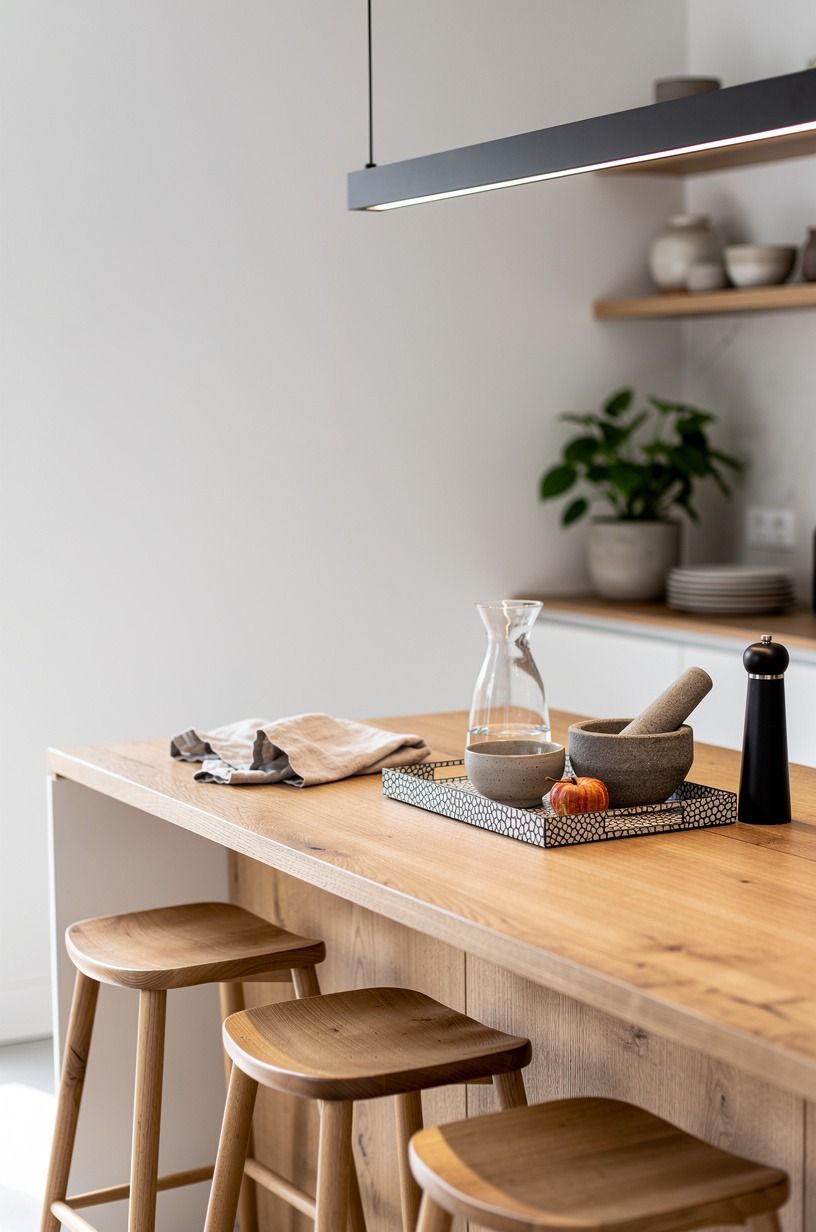
Over my prep run, I wanted clarity without the clinical feel of office lighting, so I added a dim rail. That slim line sits above the hardest-working part of the counter and disappears when it is off.
Turned low, it throws just enough light across the board, knife, and faucet without bleaching the room. You can't cook well in a cave, but you also can't relax under glare.
The prep zone sits off to one side in my kitchen, with camel stools and black accents nearby, so the rail had to guide the eye back into the room instead of creating a hot strip. That's why dimming mattered more than wattage.
I kept the counter beneath it pared back and used kitchen cabinet color ideas to decide what stayed. The difference was control, not brightness, and you'll feel that the first night you chop herbs.
If your prep zone runs under cabinets, under-cabinet lighting ideas is the cheaper cousin of this move and works just as well.
9Let black pendant cords draw quiet vertical lines
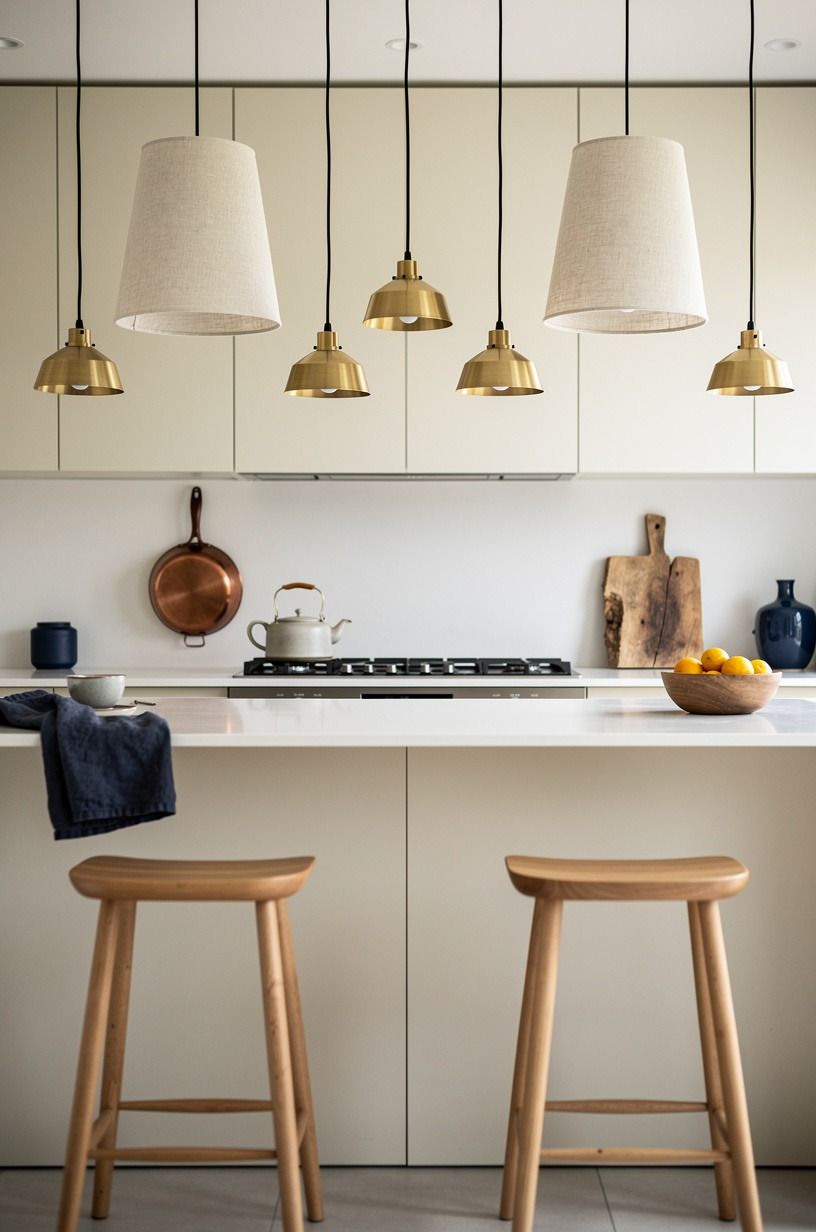
I nearly hid every cord because I thought visibility meant clutter. It doesn't, at least not here.
Black pendant cords above the island gave me the quiet vertical lines the room was missing, especially when you catch them from a low angle through the stools. They pulled the eye upward without asking for attention.
Who wants a ceiling full of busy chrome in a Japandi room?
The key was contrast with discipline. I used soft globes again, but the cords stayed black against a pale ceiling so the lines looked graphic and calm, not industrial. Too many fixtures try to disappear completely, and then the room loses structure.
If you're working with an open plan, open shelving kitchen ideas cover the visual bones those spaces need. But keep the drop lengths even, or the whole thing starts to look nervous.
I measured each cord to the same drop before I cut, and that's the part that made the pair look like a set. If your kitchen opens to a breakfast nook, the breakfast nook lighting ideas guide extends this same logic across the room.
10Why would I pick recessed pin lights over under-cabinet strips?
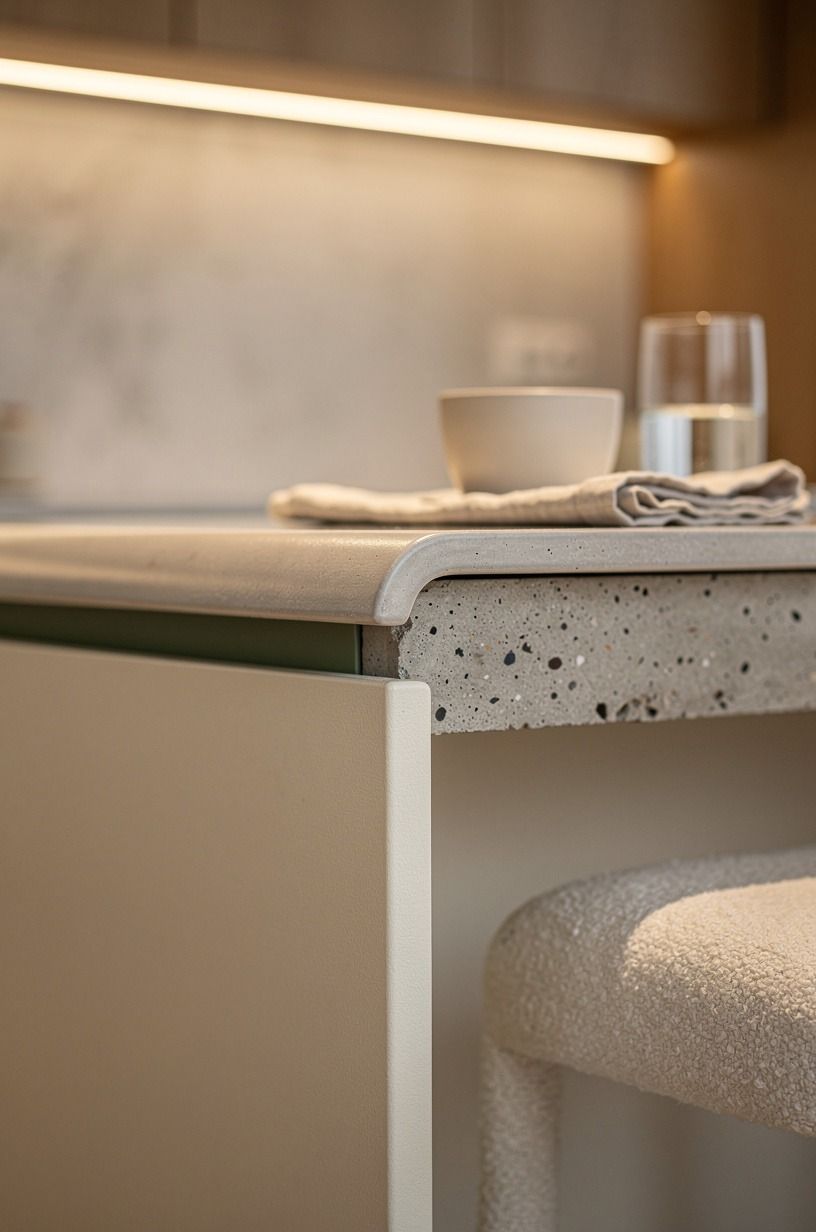
Because pin lights do what strips can't. Tiny recessed pin lights tucked into the underside of a curved cabinet corner throw a soft, almost invisible dot of warm glow exactly where you need it, instead of running a flat strip of light along a wall that may or may not have trim to hide behind.
They cost a bit more per fixture, but you usually need fewer of them. I used four across a 10-foot run, where I'd have needed 20 feet of strip.
That's the math that sold me.
If your kitchen has rounded corners, a plaster valance, or any architectural detail strips would clash with, pin lights are the cleaner answer. The look is more architectural than retail. The wiring is harder to hide, so this is a renovation move, not a renter move.
If you are renting, skip to kitchen cabinet storage ideas and save the pin lights for the next place. Solid pin lights with 2700K color temperature.
Anything cooler reads clinical.
11Place a small clay lamp on the counter for evening hush
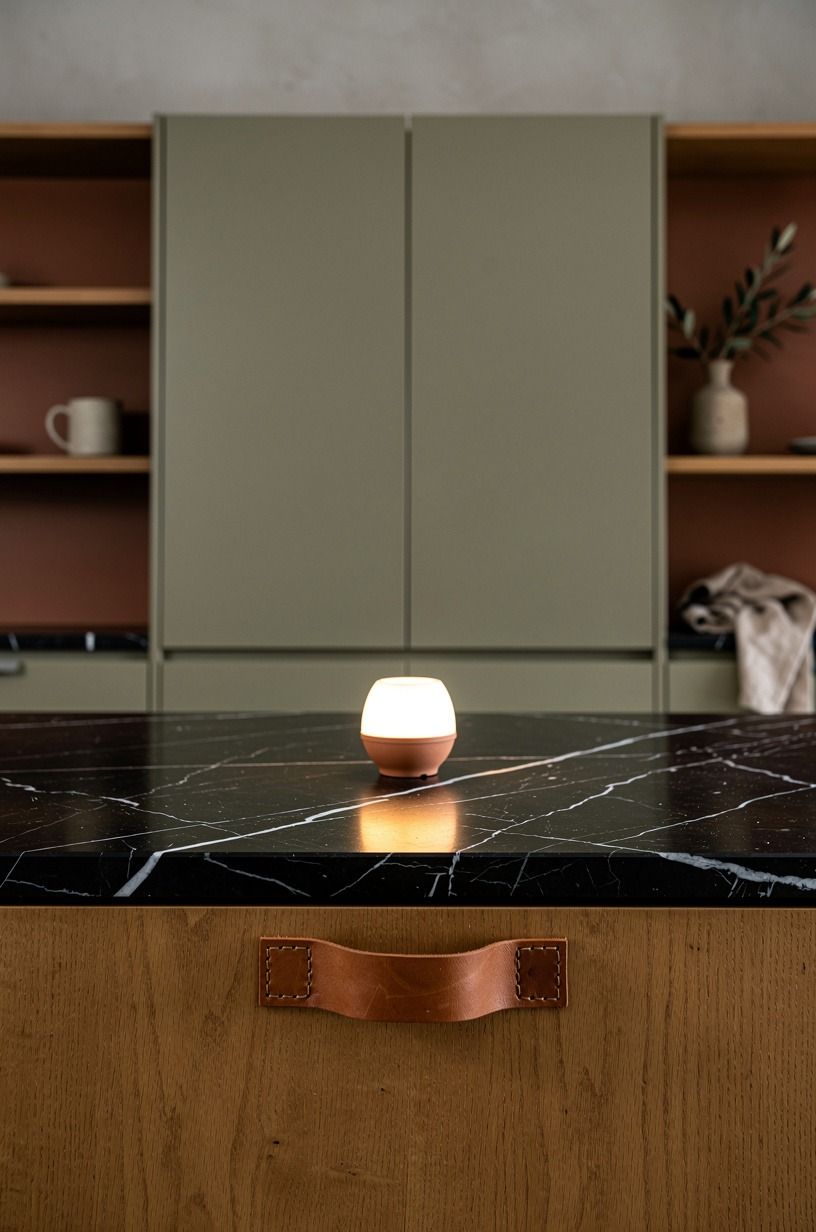
This is the only move here that felt decorative first, and I still wouldn't skip it. A small clay lamp on the counter changed the mood of cleanup more than I expected because it lowered the center of gravity of the whole room. Seen across Nero Marquina marble with white veining, that little pool of light made the stone look richer and the evening feel slower.
And I keep it near the far end of the counter, away from splash and chopping, where it can glow like a tiny hearth while the big fixtures dim down. That sounds dramatic, but the feeling is practical.
The room stops feeling like a workspace after dinner. Budget kitchen cabinet makeover ideas reminded me that one portable lamp can do what a pricey cabinet swap sometimes can't. It made tea cleanup feel kind of luxurious!
Lamp shade in raw linen. Bulb in 2700K. Base in unglazed terracotta. That's the whole recipe.
A ceramic lamp at 8 to 10 inches tall keeps the silhouette low so it doesn't fight with the pendants above.
12Aim one narrow spotlight at the plaster niche
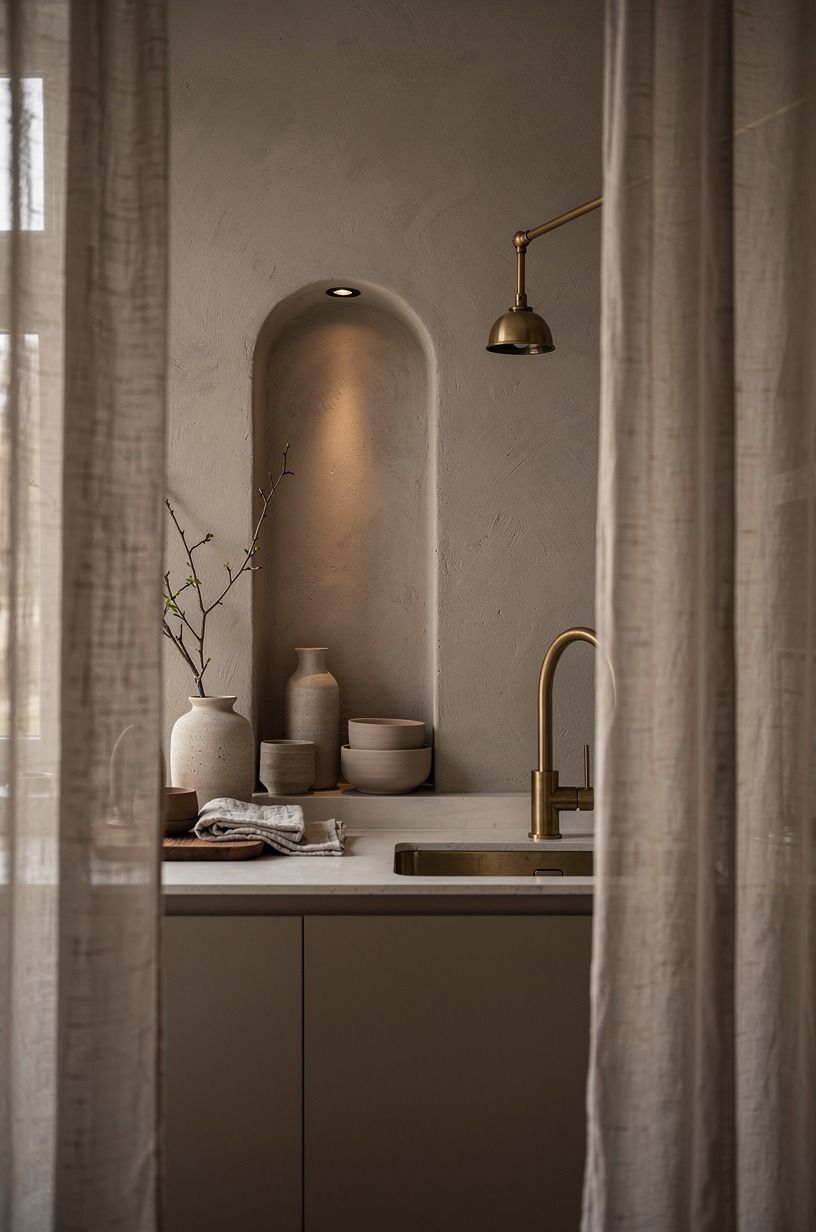
My plaster niche was invisible at night until I gave it one quiet spotlight. Not three.
Not a whole track. One beam aimed with care so the niche finally read as architecture instead of a dark pocket beside the counter.
If you have a small recess holding cups, ceramics, or one branch, lighting it can make the whole wall feel more resolved.
I kept the angle narrow and let the linen curtain nearby stay in shadow, which made the niche feel deeper than it was. That's the part that changed the room for me. You don't always need more light. You sometimes need a destination for the eye.
I kept the pottery in matte clay and the shelf in oak veneer, then checked the restraint against kitchen cabinet organization ideas. Less lit, more chosen.
The beam is 24 degrees, not 36. Narrow wins for niches.
Wide beams flatten the depth.
13Match the brass switch plates to the faucet, not the faucet to the plates
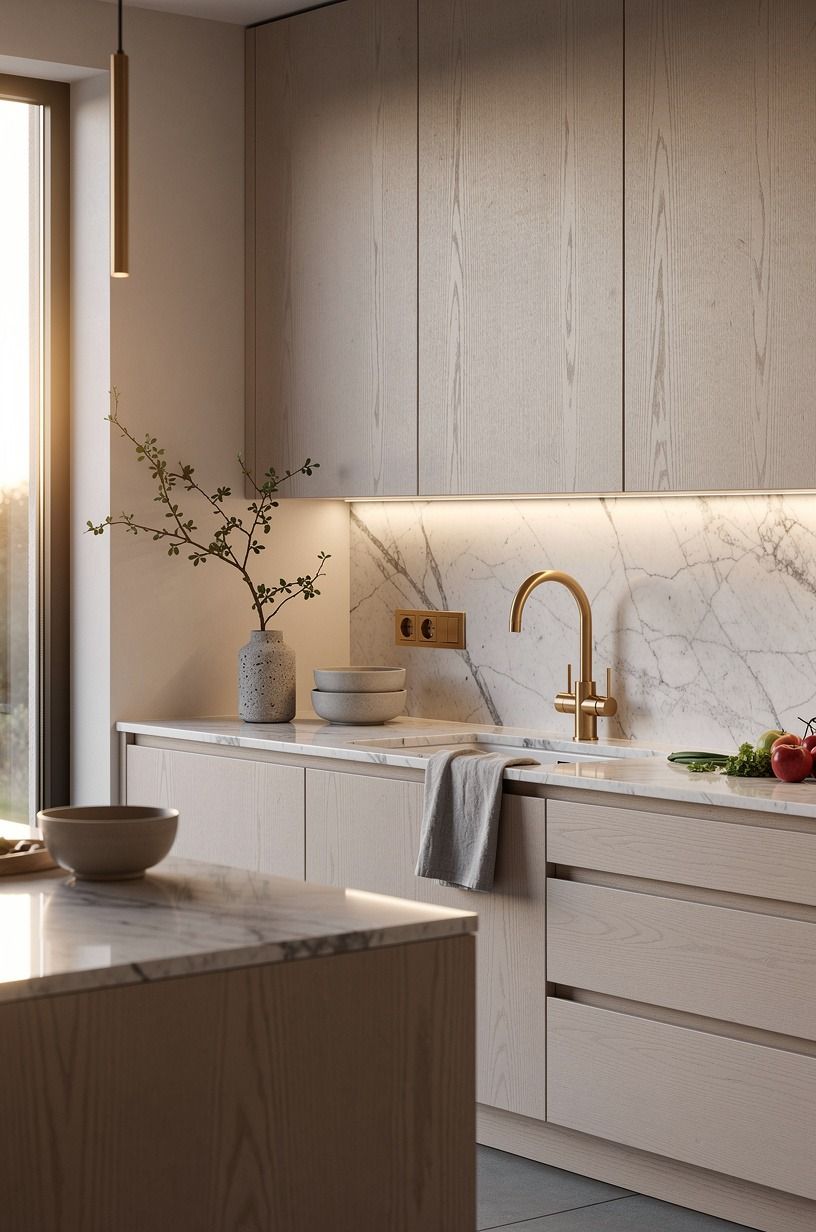
Once the big lighting moves were done, the switches started looking cheap. Matching the brass switch plates to the faucet fixed that in about ten minutes, and the result was bigger than it had any right to be.
In a kitchen with Carrara marble, subtle wood, and soft pendants, that little hardware echo stitched the room together. It is one of those details you feel before you consciously notice.
I didn't try to match finish for finish. Exact matching can look stiff.
I wanted the switches to pick up the same warm family as the faucet glow, not impersonate it. That's what kept the room from tipping into showroom territory. If you're weighing brass against nickel for hardware, kitchen cabinet hardware ideas lays out the trade-offs cleanly.
But skip bright polished brass if your lanterns are soft. The shine fights the paper.
Aged brass or unlacquered brass is the safer match for paper and linen.
14Set evening dimmers before you buy another pendant
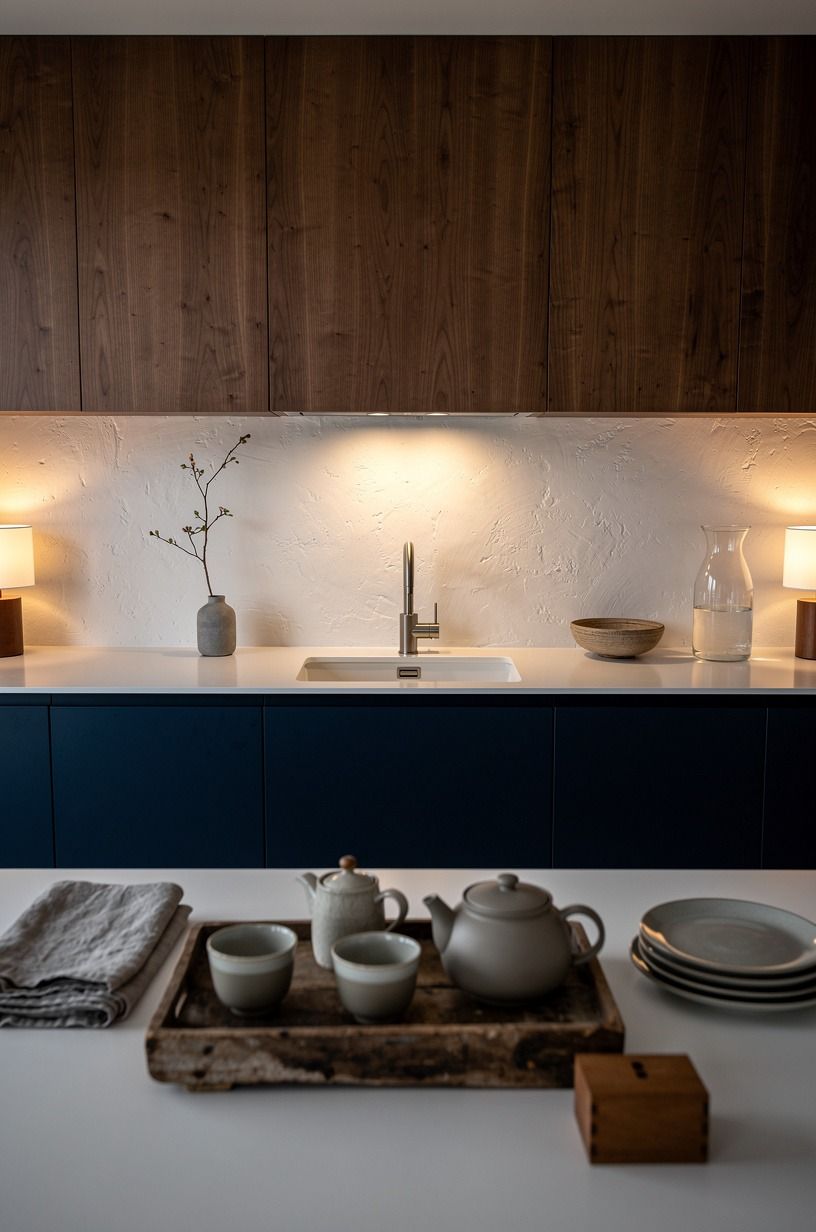
The final step was not a fixture at all.
How much does a Japandi lighting reset actually cost?
I kept the cabinet boxes, counters, and layout, so this stayed in cosmetic-refresh territory instead of remodel money. That was the point. A typical U.S. kitchen update can jump from a few hundred dollars to five figures fast, but lighting lets you change the room's behavior without touching the bones.
My own spend sat in the low hundreds because I mixed one better paper lantern, a pair of mid-priced globes, dimmers, and one portable lamp.
If you are comparing materials while you plan, quartz usually lands around $60 to $120 per sq ft, laminate around $10 to $40 per sq ft, zellige around $15 to $35 per sq ft, and repainted Shaker fronts around $150 to $400 per door. I didn't need any of that this time. But those numbers kept me from pretending a lighting problem was a cabinet problem.
The Three-Glow Rule (and why most kitchens fail it)
After I finished the practical swaps, I realized the room only worked because it had three kinds of light doing three different jobs. One source washed the room.
One source marked the task zones. One source sat low and made the kitchen feel inhabited after dinner.
Without that stack, the makeover would've slid right back into bright-flat-builder mode.
That is the rule I'd use again. Ceiling glow for structure, working glow for use, low glow for mood. If all three live in the same warm family, the kitchen stops feeling like separate purchases and starts feeling like one idea.
Most kitchens fail this rule because they have one source (overhead) doing all three jobs, badly. A kitchen with only one kind of light is a kitchen that only works at noon.
You're not at home at noon. You're at home at 7 p.m. with dishes in the sink and nowhere to sit.
Why warm light outperforms bright light after 7 p.m.
The biggest lesson here had nothing to do with shopping. It was about restraint.
I used to think a warm kitchen needed visible charm everywhere: the pretty pendant, the stool with personality, the vase moment, the shelf styling, the faucet finish, maybe one extra sconce just because the wall looked empty. That approach isn't wrong, exactly, but it asks every object to perform all night long.
My kitchen looked finished in daylight and restless after dark. The room had information, not atmosphere.
Once I started thinking about light as the thing that edits the room, my decisions got simpler. Paper did what glass couldn't.
Hidden strips did what extra decor couldn't. A dimmer did what another pendant couldn't. And the best part was how ordinary the materials were.
Paper lantern, aged brass, cerused oak, linen shade, clay lamp. None of them were loud on their own.
Together, they made the room feel slower, more settled, and honestly more expensive than the price tag suggested.
I also learned that the Japandi look falls apart the second every glow source does the same job. If your island pendants, prep rail, and under-shelf strips all blast at the same level, the room feels flattening no matter how nice the fixtures are. You need hierarchy.
You need one light that tells your eye where to rest first, another that helps your hands work, and another that makes you want to stay in the room after the dishes are done. That is why the little clay lamp mattered so much.
It gave the kitchen an evening voice.
And maybe that is the real point. The best kitchens are not just efficient. They know when the day is speeding up and when it should slow down.
If you light every moment like noon, you miss half the emotional life of the room. I don't think people talk about that enough.
A kitchen can be clean, minimal, and functional and still feel tender. Mine finally does.
The Questions I Get Asked Most
What is the best Japandi Kitchen Lighting Ideas: Soft Pendants & Paper-Lantern Glow for a small kitchen?
A single paper lantern over the sink or a pair of small globes over the island is usually the best start because you get softness without visual bulk. For a tight layout, I also like one IKEA portable lamp on the back counter. Small rooms benefit from edited light, not more fixtures.
Where can I buy Japandi Kitchen Lighting Ideas: Soft Pendants & Paper-Lantern Glow pieces on a budget?
I'd start with IKEA, Wayfair, and Target Threshold for lanterns, dimmable bulbs, and simple counter lamps, then check Facebook Marketplace for ceramic bases. Budget wins.
Paper shades. Secondhand clay lamps.
One better bulb. That mix keeps the spend low and the room warm.
How much does a Japandi Kitchen Lighting Ideas: Soft Pendants & Paper-Lantern Glow makeover cost?
About $100 to $300 gets you surprisingly far if the layout already works and you focus on one pendant, dimmers, and a portable lamp. The free move is editing. Turn off the harsh overhead, clear the counter, and test lamp placement before you buy another fixture.
Can I create a Japandi Kitchen Lighting Ideas: Soft Pendants & Paper-Lantern Glow on a budget?
Yes, and you can do a lot with cheap lighting edits. Warmer bulbs. A paper shade.
Plug-in under-shelf strips. One small lamp.
If you rent, those swaps are easier than replacing hardware, and they still change how your kitchen feels at night.
Is a Japandi Kitchen Lighting Ideas: Soft Pendants & Paper-Lantern Glow worth it in a small space?
Yes, it is worth it in a small kitchen because every glare problem shows faster when the room is compact. One calmer source over the sink and one low lamp on the counter can make the whole footprint feel more intentional.
Small spaces don't need less mood. They need better aim.
Is Japandi Kitchen Lighting Ideas: Soft Pendants & Paper-Lantern Glow a good idea for a rental?
Yes, if you stay reversible. Try plug-in sconces, removable under-shelf strips, dimmable bulbs, and a portable clay lamp instead of hardwiring everything.
Renters win with layers. No-drill paper lantern. Warm bulb swap.
Counter lamp. Those moves travel with you and still change the room.
The Sink Lantern First Rule
If I had to pick one, I'd start with the sink lantern. That single pool of warm paper light changes the faucet, the counter edge, and the entire evening mood at once. You can't layer warmth on top of a cold room.
Every other fixture you add will fight the overhead instead of building on the hush. Pin that move for later and let the rest of the kitchen catch up.