Cozy Japandi Kitchen Style Explained for Warm Minimalist Homes
06 july 2026What is a Japandi kitchen? It is a warm, pared-back kitchen that usually leans on pale wood, soft plaster, quiet storage, and just enough contrast to keep the room from going flat. I used to think it was just another name for an all-beige kitchen, and that mistake made one of my own remodel plans look expensive and weirdly cold. Once I stopped chasing emptiness and started chasing warmth, the whole style clicked. If you want your kitchen to feel calmer without losing utility, these 12 ideas are the ones worth stealing.
- Choose pale oak slab fronts
- Mix white plaster with warm wood
- Install a low fluted wood island
- Soften black hardware with linen shades
- Open rails instead of more upper cabinets
- Layer stone counters with handmade tile
- Hide appliances behind seamless wood panels
- Add a paper lantern over the island
- Style floating shelves with negative space
- Ground the room with a clay runner
- Choose matte faucets in soft graphite
- Display one wabi sabi vessel cluster
1Choose pale oak slab fronts
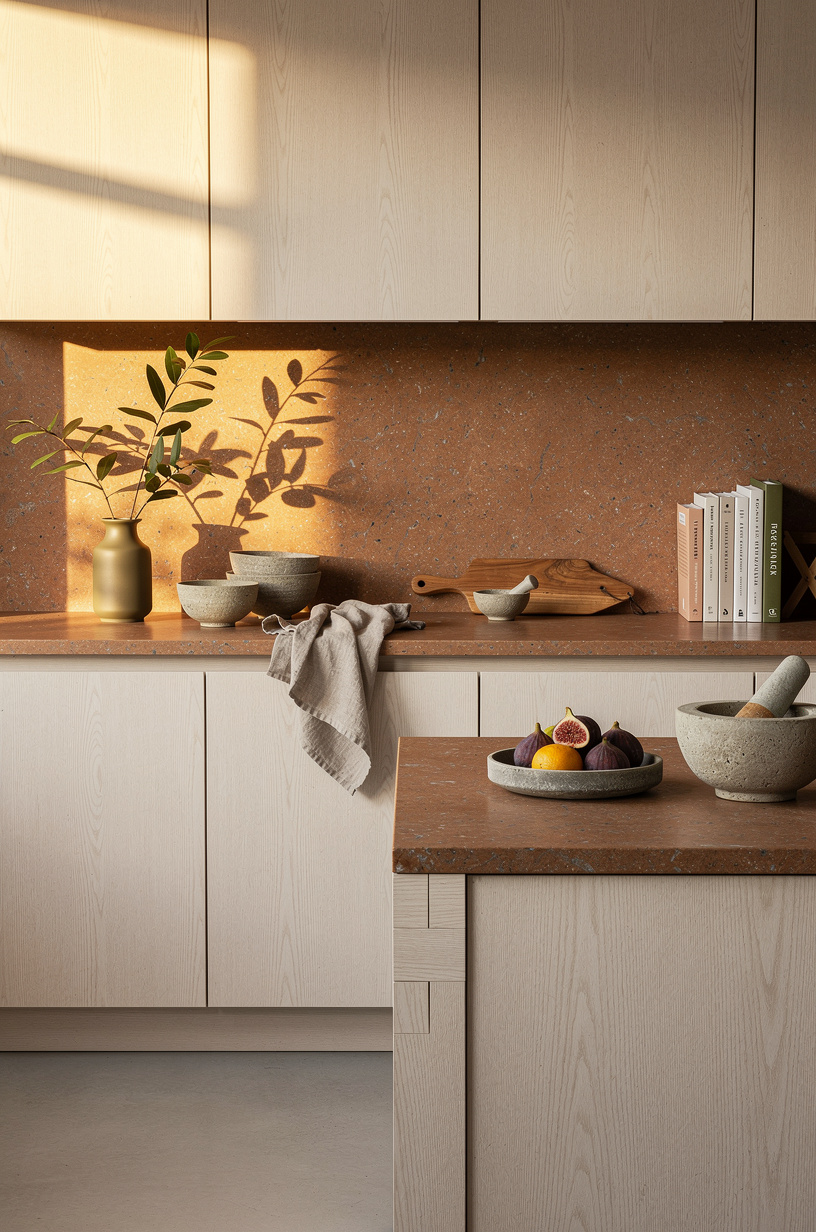
Start with pale oak slab fronts if you want the fastest read on japandi modern. The wide-angle kitchen in your mind should feel quiet before you notice a single accessory, and flat fronts in pale white oak do that better than fussy doors ever will. I like a 3/4-inch solid veneer look because the grain reads softly from across the room, especially when you leave the handles minimal.
You don't need the wood to go yellow, and you don't want it drifting gray either. Think IKEA VOXTORP oak effect levels of simplicity, then warmer. If your walls lean cool, pair those fronts with Benjamin Moore White Dove OC-17 so the room doesn't feel like a Scandinavian showroom that forgot dinner is supposed to happen there.
And here's the part people miss: slab fronts look best when you let the long lines stay long. Keep upper cabinets between 30 and 42 in tall, skip broken-up trim, and let the eye travel.
A japandi kitchen isn't bare for the sake of it. It's edited so your coffee mug, your cutting board, and your evening light all matter more. For a quieter-room take on the same idea, our collected minimalist bedroom roundup trades the oak for walnut and the same calm logic shows up.
2Mix white plaster with warm wood
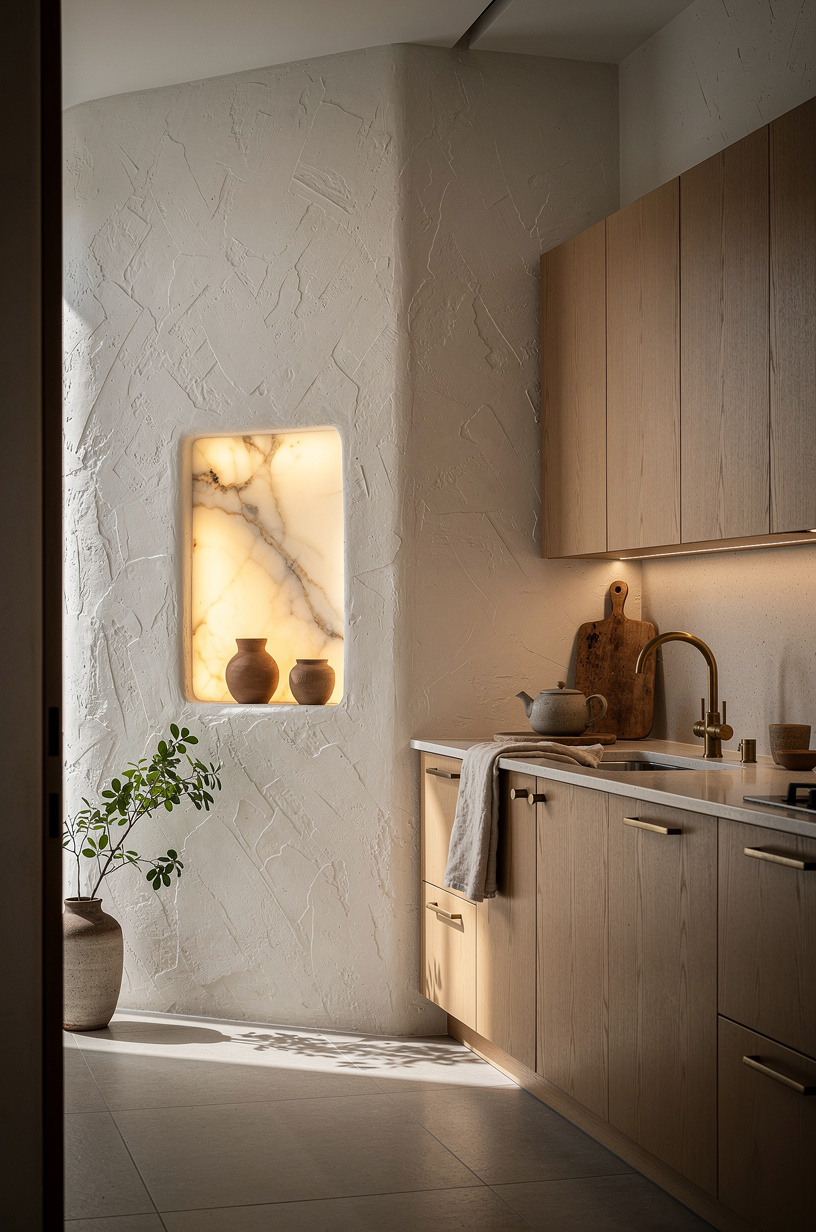
Hand-troweled plaster is what stops warm wood from reading too polished. In a scandinavian and japanese interior, you need one surface that feels touched, not factory-flat, and lime-style plaster gives you that soft drag of texture when raking light hits the wall. I learned this the hard way after sampling plain drywall paint beside oak fronts.
It looked clean, sure, but it had no pulse.
Keep the plaster chalky and a little cloudy rather than perfectly smooth. A shade close to Benjamin Moore White Dove OC-17 or Farrow & Ball Joa's White works because it doesn't fight the cabinetry. If you're renting, a mineral-look paint is the safer cheat, and it still gives your eye that handmade pause when you step into the room.
But mix matters more than perfection. Too much white and you get spa, not kitchen.
Too much wood and you get sauna. The warm-minimalist sweet spot is one textured white field, one oak note, and one deeper accent that keeps everything grounded. That's why even a small area of aged bronze or black steel can help the room feel finished.
For more on balancing two warm tones side by side, our warm minimalist bedroom roundup walks the same logic in a softer room.
3Install a low fluted wood island
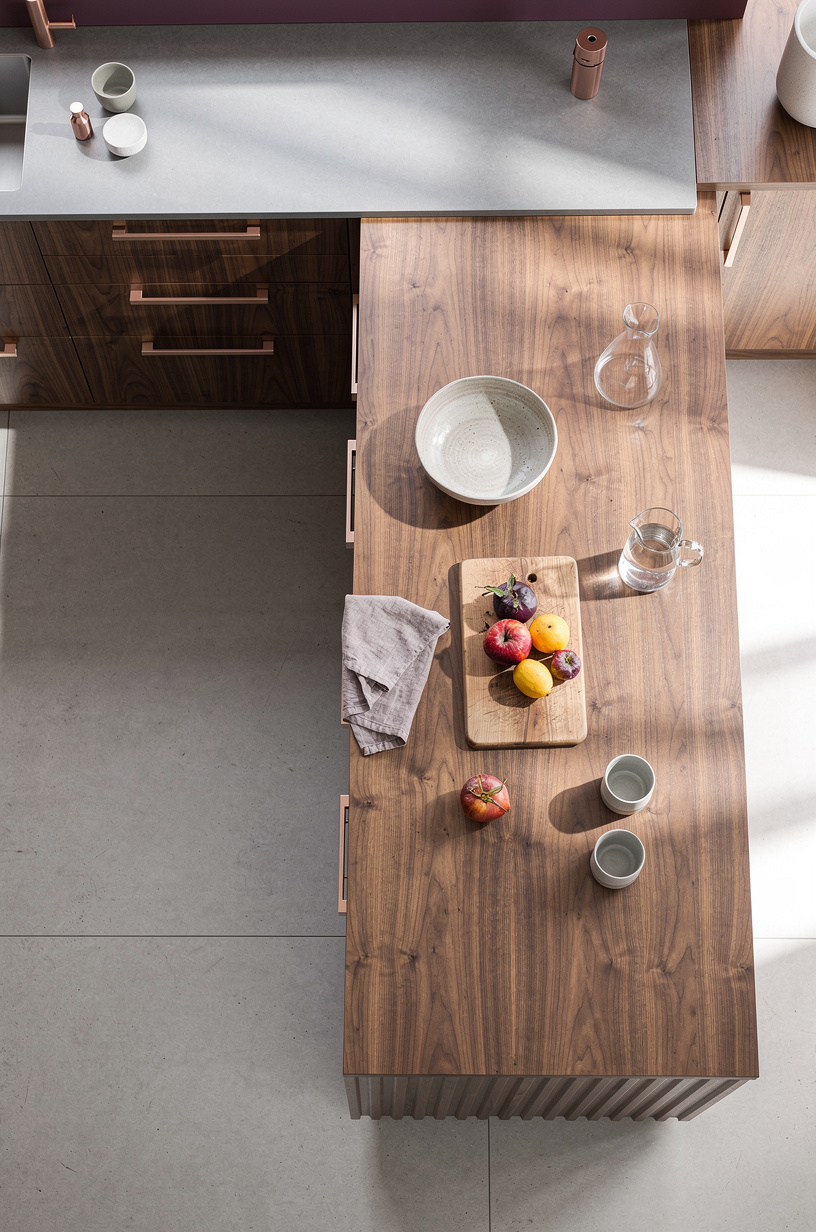
A low fluted wood island gives a japan minimalist interior design scheme some movement without breaking the calm. From above, the rhythm of the fluting makes the island feel like furniture instead of a box dropped in the middle of the room. I'd keep the profile gentle, not overly ribbed, because deep flutes can turn fussy fast.
This is where proportion counts. Standard counter height is 36 in, and I'd stay there for function, then make the visual weight feel lower by choosing a recessed plinth and a softly rounded edge. If you have room, keep 42 to 48 in of clearance all around so the kitchen still breathes when two people are moving at once.
You can warm it up further with walnut counter stools or a single West Elm Mid-Century stool in a natural finish. What you don't want is a waterfall island in icy white quartz with sharp black barstools. That combo isn't terrible, but it belongs to another trend cycle.
Japandi works because the island looks settled, almost quiet, even when the dishwasher is running and breakfast is a mess! For tight rooms, our galley kitchen cabinet guide covers how to make a long thin island feel intentional.
4Soften black hardware with linen shades
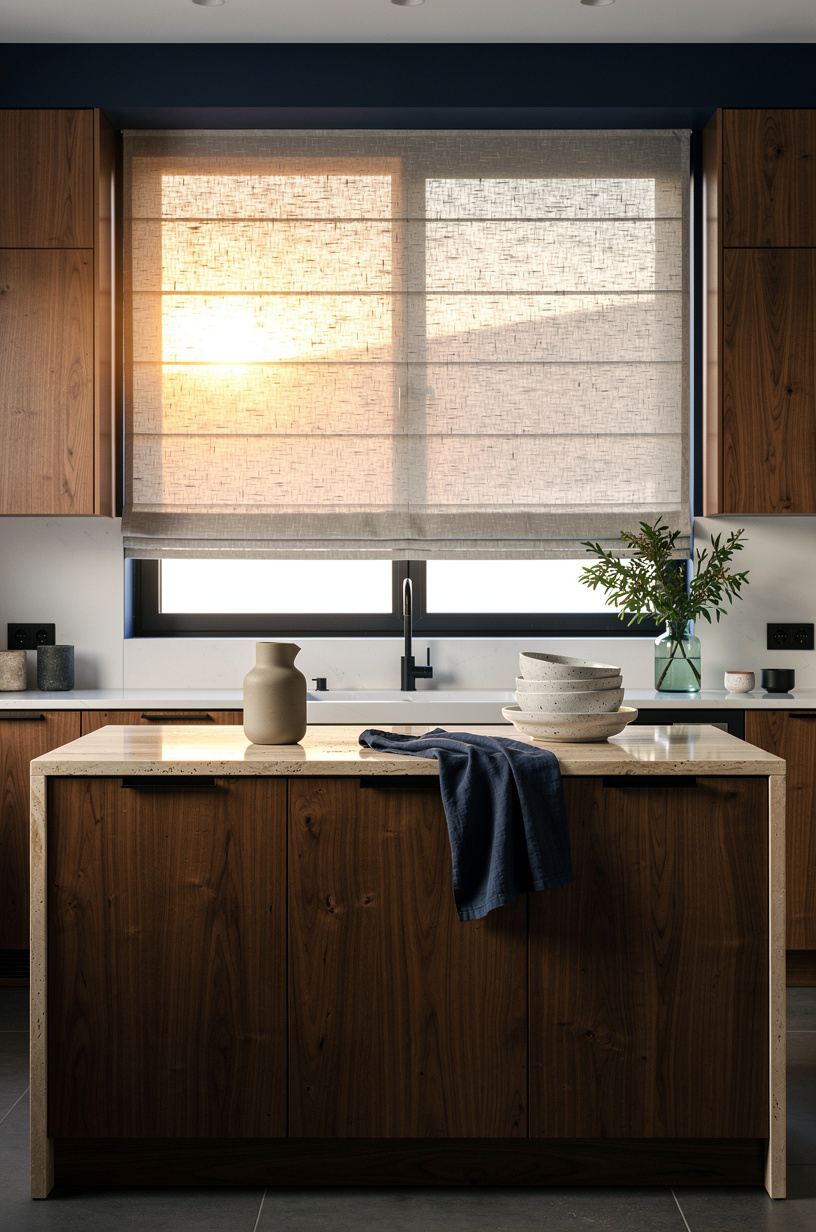
Black hardware can look severe in a wabi sabi interior kitchen unless you give it something soft to play against. That's why raw linen shades work. The slim black pulls stay crisp, but the filtered light turns the whole task zone gentler, especially once it lands on honed travertine and walnut.
I would not go with glossy roller shades here. They read office.
A relaxed Roman in Belgian flax linen gives you the right drag and slight wrinkle, and that wrinkle is useful because it keeps the black from feeling too precise. If your cabinets are dark, this move matters even more.
And yes, you can keep the contrast. Use narrow matte black hardware, then add a soft off-white textile and one warm counter object like a travertine fruit bowl or a ceramic tea canister.
Who wants a kitchen that only looks good at noon? By dusk, the linen should be doing half the emotional work for you.
5Open rails instead of more upper cabinets
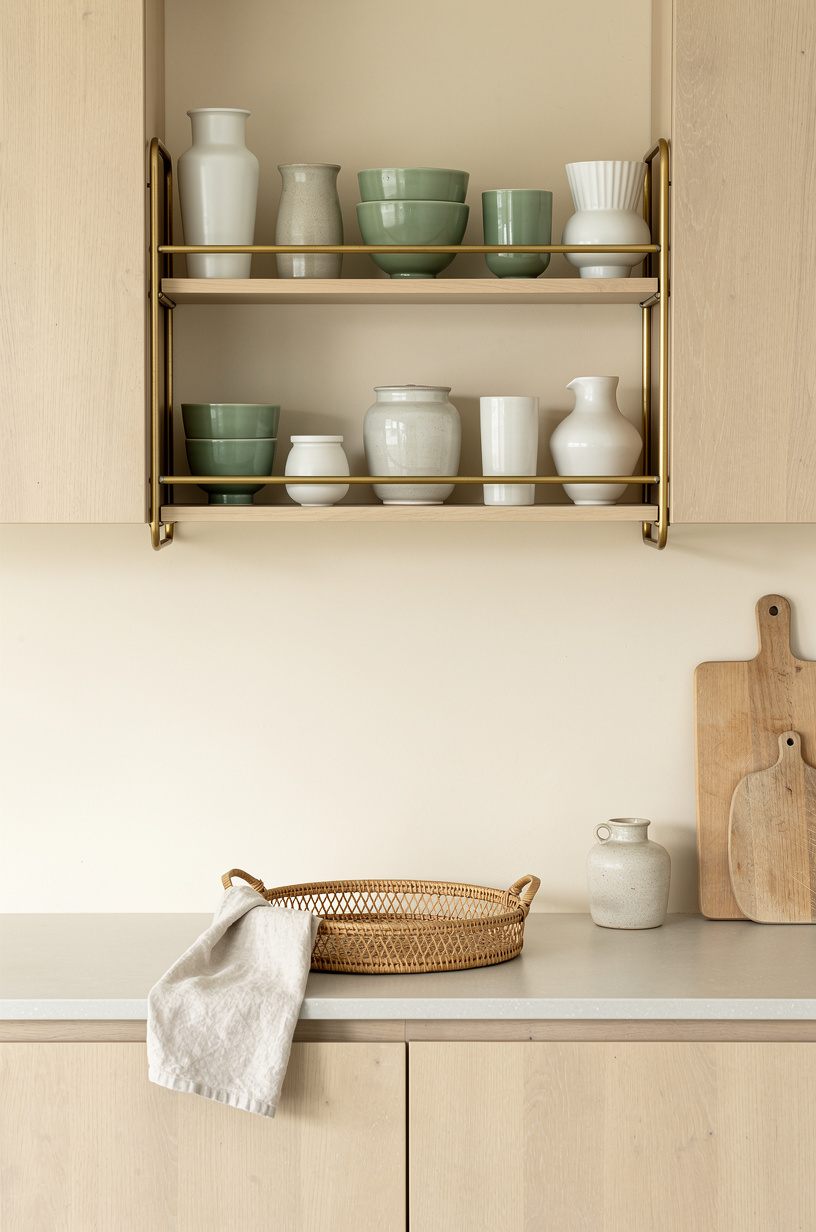
Open rails beat more upper cabinets in a small japandi kitchen, full stop.

6Layer stone counters with handmade tile
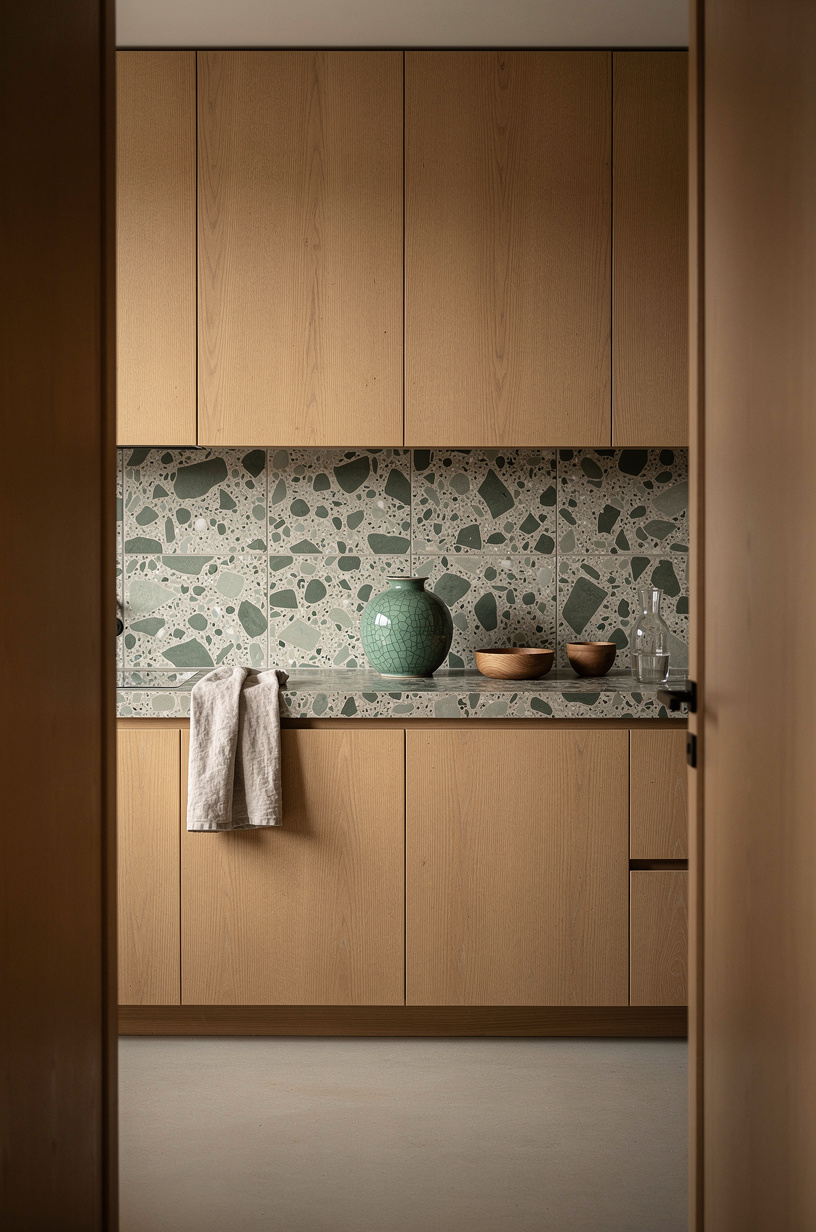
Stone plus handmade tile is where the room starts to feel expensive in the right way. You aren't chasing polish.
You're chasing depth. A counter in soft beige quartz or honed limestone-look quartz beside a backsplash with handmade irregularity gives you the kind of contrast that feels quiet from the doorway and rich up close.
If you want numbers before you commit, here are the typical ranges that matter most:
I would not force glossy white subway tile into this mix. It bounces too cold against pale oak. Handmade square tile, a soft vertical stack, or a muted zellige look works better because the slight variation keeps the kitchen from reading flat.
And if your budget is tight, spend on the surface you touch every day first. Your hand notices the counter edge more than Pinterest notices your grout line!
If you're storing ceramics around all that stone, our tall cabinet storage roundup keeps the rest of the room from getting dusty.
7Hide appliances behind seamless wood panels
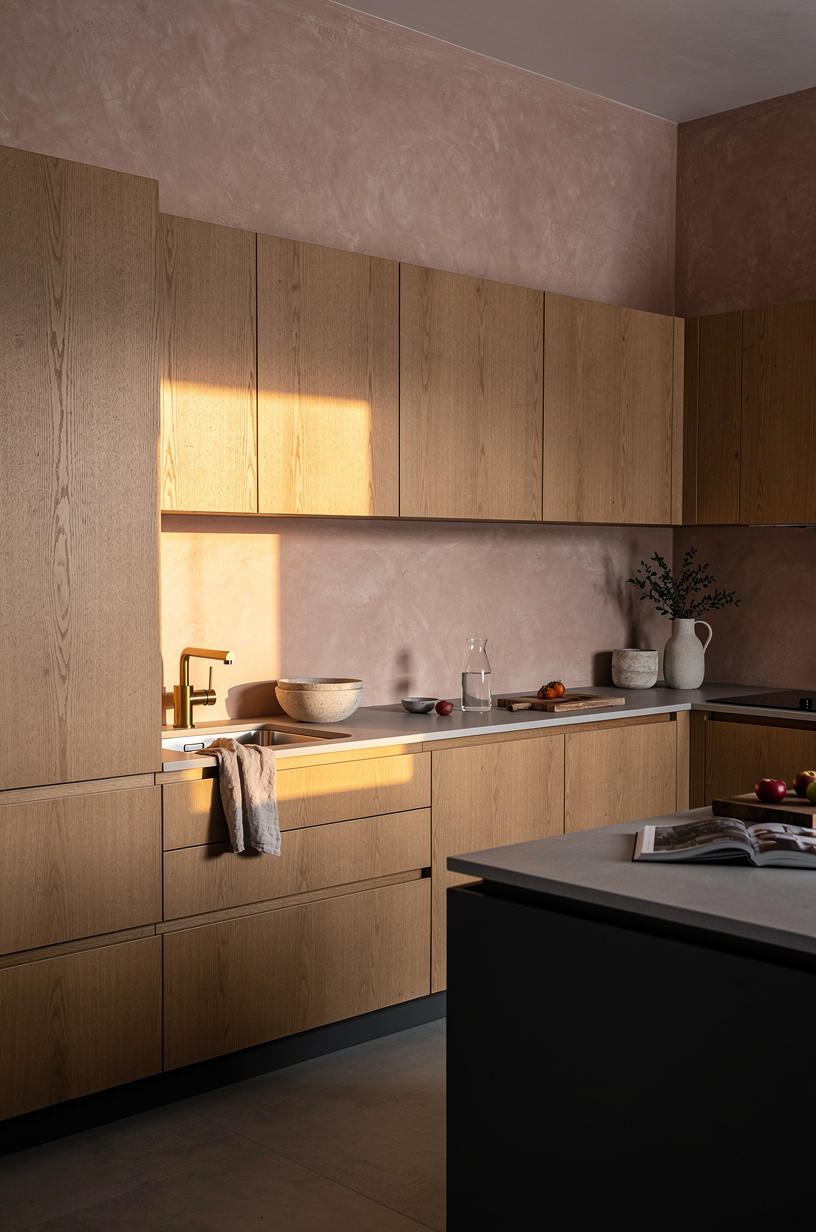
Seamless wood panels are the move that makes the whole room exhale. Once the fridge, dishwasher, and pantry read as one long oak plane, the kitchen stops shouting utility at you. That uninterrupted run is a huge part of why japandi modern kitchens feel calm in photos and even better in person.
This is also where cost jumps, so be honest with yourself about the level you want:
If you can't afford true panel-ready appliances, fake the feeling. Extend matching fronts across the pantry wall, use one cabinet color on everything, and tuck the microwave into a lower niche.
I'd rather see a modest IKEA pantry run done cleanly than one premium stainless fridge breaking the line for no reason. The warm-minimalist win isn't luxury for its own sake.
It's visual silence. If the microwave is the worst offender, our microwave cabinet hideaway guide shows how to lose it from sight entirely.
8Add a paper lantern over the island
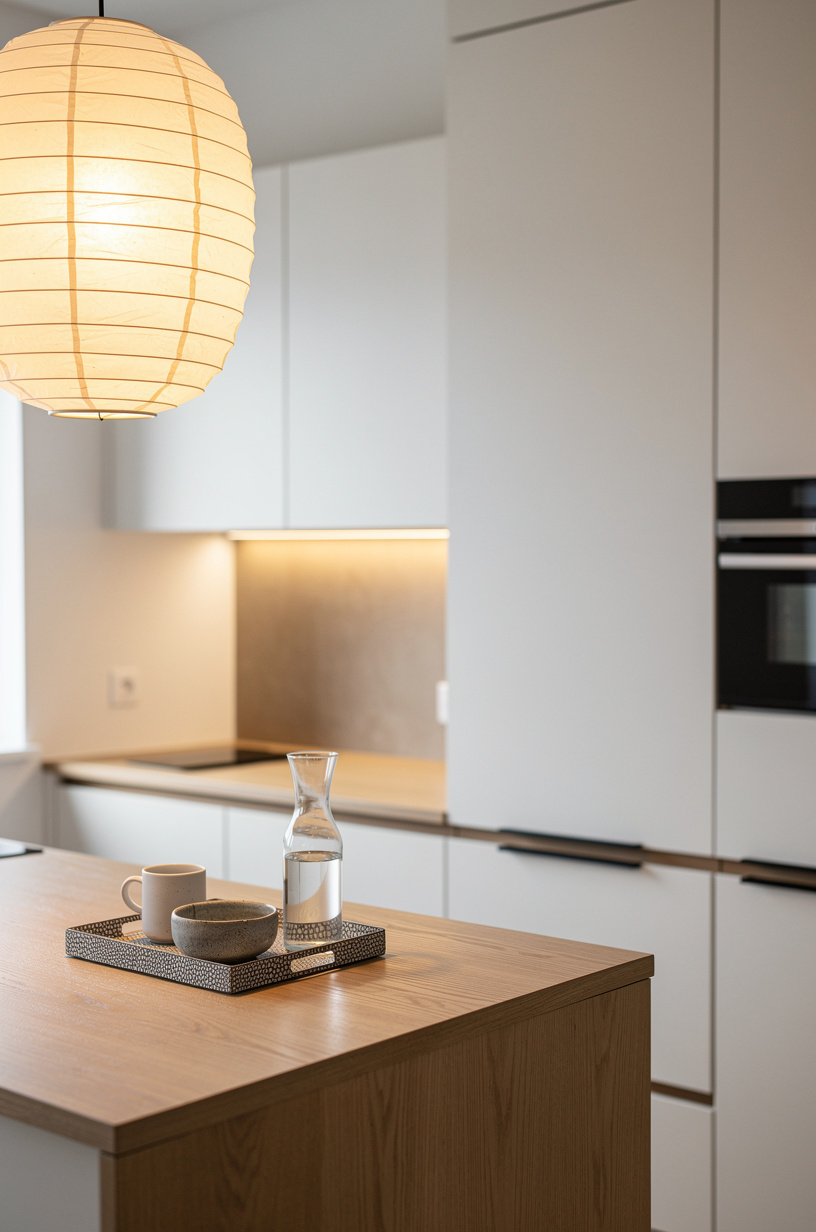
This is The Soft-Glow Rule, and it works every single time. A paper lantern over the island gives the room that floating, weightless center a scandinavian and japanese interior needs. Hard metal pendants can look handsome, but in a warm-minimalist kitchen they often slice the room up too sharply.
Pick a lantern with real scale. Tiny will not do it. Over a modest island, I like something in the 18 to 24 in range so it reads from the whole room instead of disappearing into the ceiling plane.
A shape inspired by Noguchi Akari is the obvious reference, and honestly, it's obvious because it works!
But don't let the lantern do all the work. Pair it with under-cabinet task light at a warm tone and one low lamp on a back counter if you have space. The paper gives you ambient glow, the hidden task light keeps prep practical, and the lamp makes the room feel inhabited after dinner.
That's the three-height stack I'd protect. For the upper-cabinet hardware underneath that lantern, our condo cabinet guide helps you cut visual weight where it matters.
9Style floating shelves with negative space
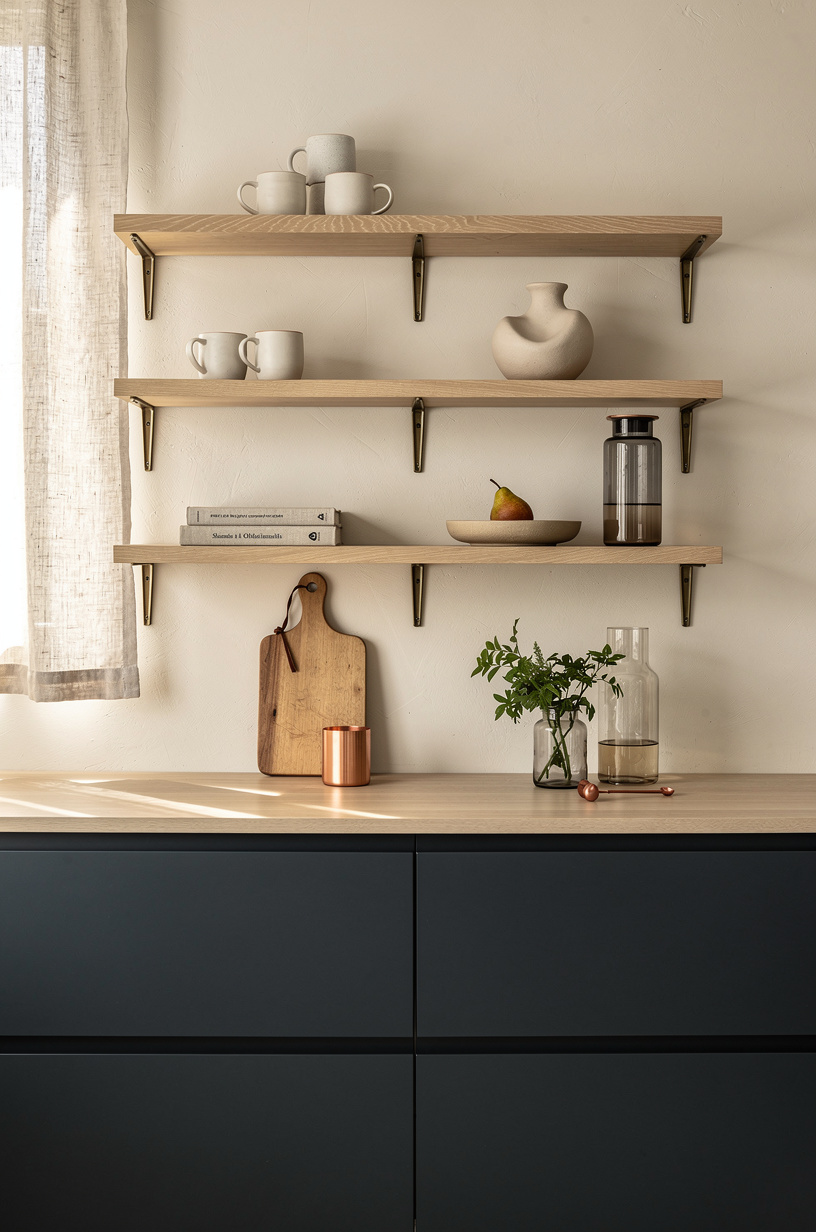
Negative space is the part of japandi people keep skipping, and then they wonder why the room feels like a store display. A floating shelf only works when the empty area around the objects is doing as much design labor as the objects themselves. From a low angle, that breathing room is what lets the shelf composition feel architectural.
I'd limit each span to a few pieces you really use. Hand-thrown pitcher.
Stack of sand-toned bowls. One smoked oak board.
Maybe a linen-covered recipe file if it's beautiful enough to earn the spot. Leave the middle open more than feels safe at first. Really.
This is The One-Third Empty Rule in my book. If every inch is filled, the shelves turn anxious.
If roughly a third stays open, the wall starts to feel calm and expensive. And if dust worries you, keep the open shelving short and near the tea zone so the pieces are in rotation instead of just posing.
For related thinking on letting rooms breathe, our minimalist bedrooms that feel calm apply the same one-third-empty logic to bigger walls.
10Ground the room with a clay runner
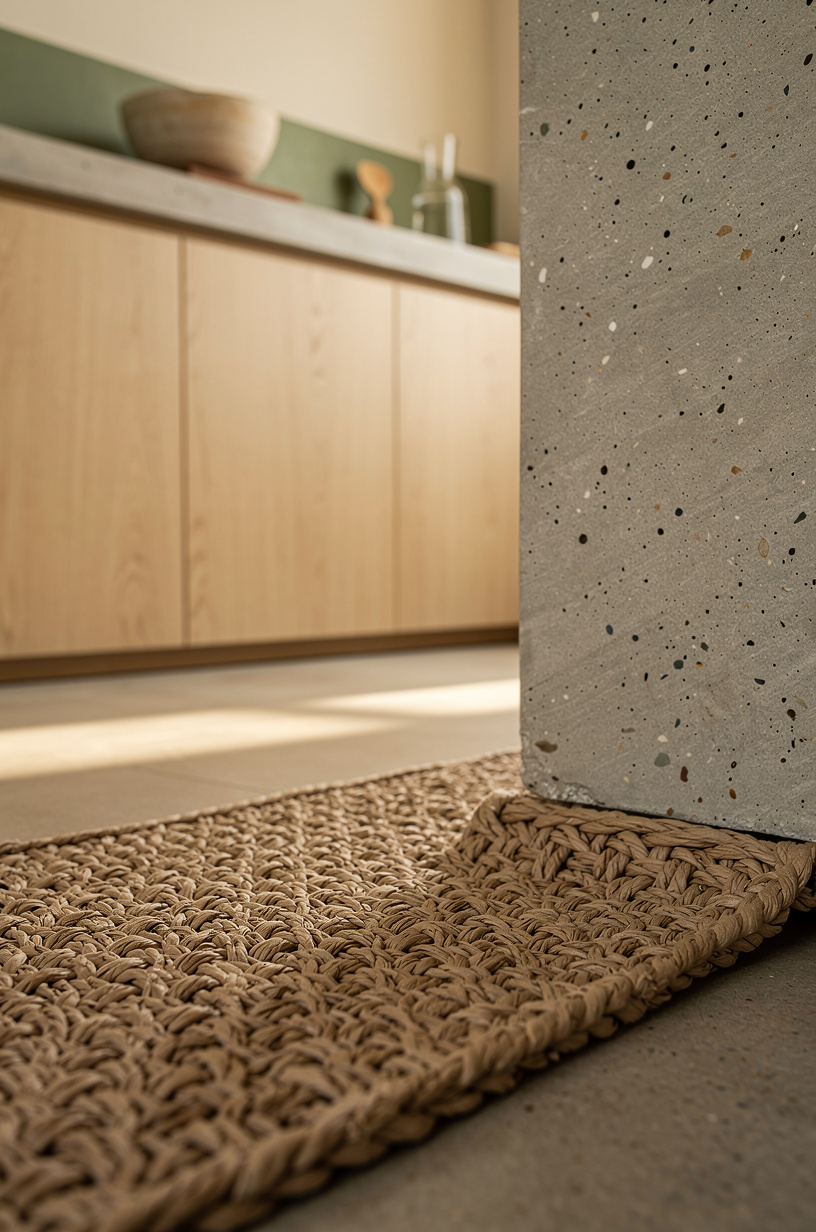
A clay runner sounds like a tiny move, but it changes how the whole floor plane reads.
11Choose matte faucets in soft graphite
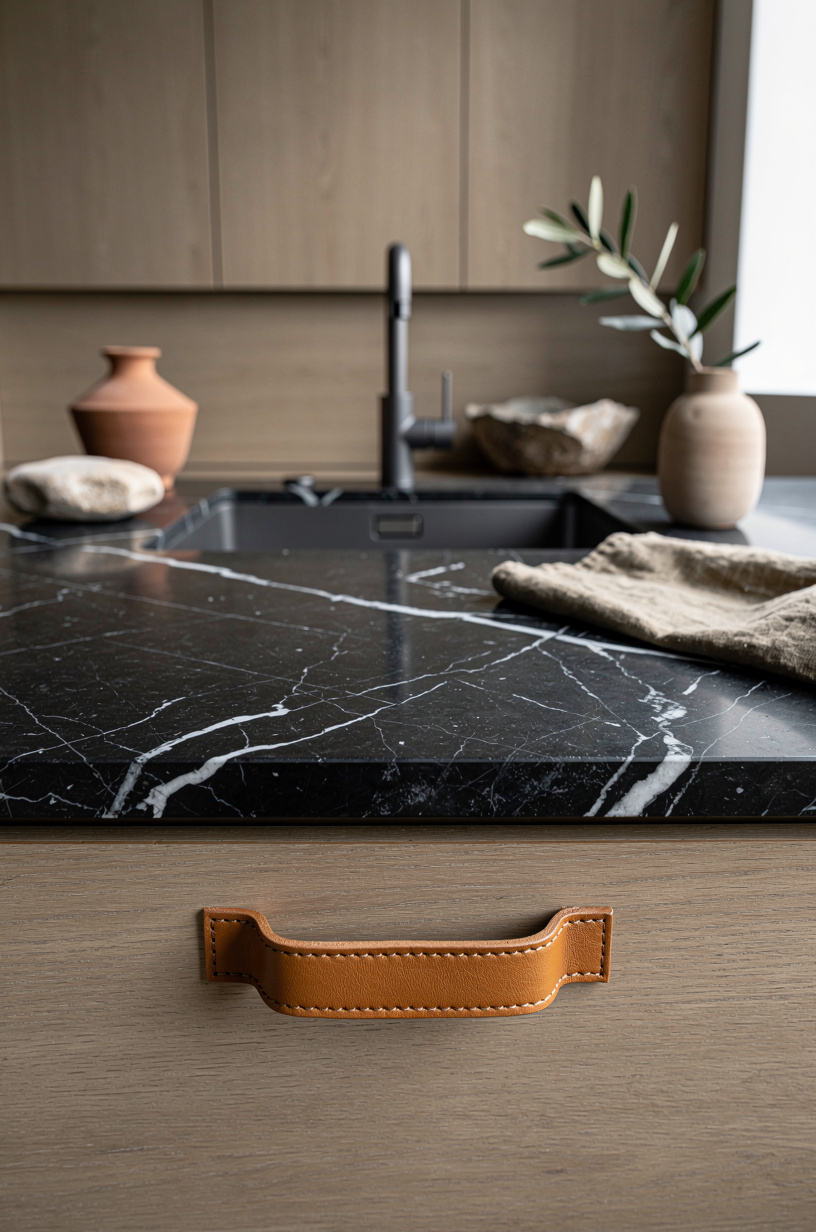
A matte graphite faucet is one of those details that looks minor until you see it against dark stone. Over Nero Marquina marble or even a charcoal laminate, the softer graphite finish reads calmer than bright chrome and less predictable than black. That's why it works so well in japan minimalist interior design spaces that want contrast without harshness.
I'd skip an overly industrial spring-coil faucet here unless your kitchen is more utility-driven than serene. A simpler silhouette from Rejuvenation or Kohler Purist feels more in line with the room. And if you have black hardware already, graphite keeps the finishes related without making them matchy.
You also get a practical win: water spots show less than on polished chrome. That's not glamorous, but it matters when you use the sink ten times before lunch. The best japandi choices always seem aesthetic at first, then you live with them and realize they were smart too.
For the sink cabinet below that faucet, our under-sink organization roundup keeps the calm going underneath.
12Display one wabi sabi vessel cluster
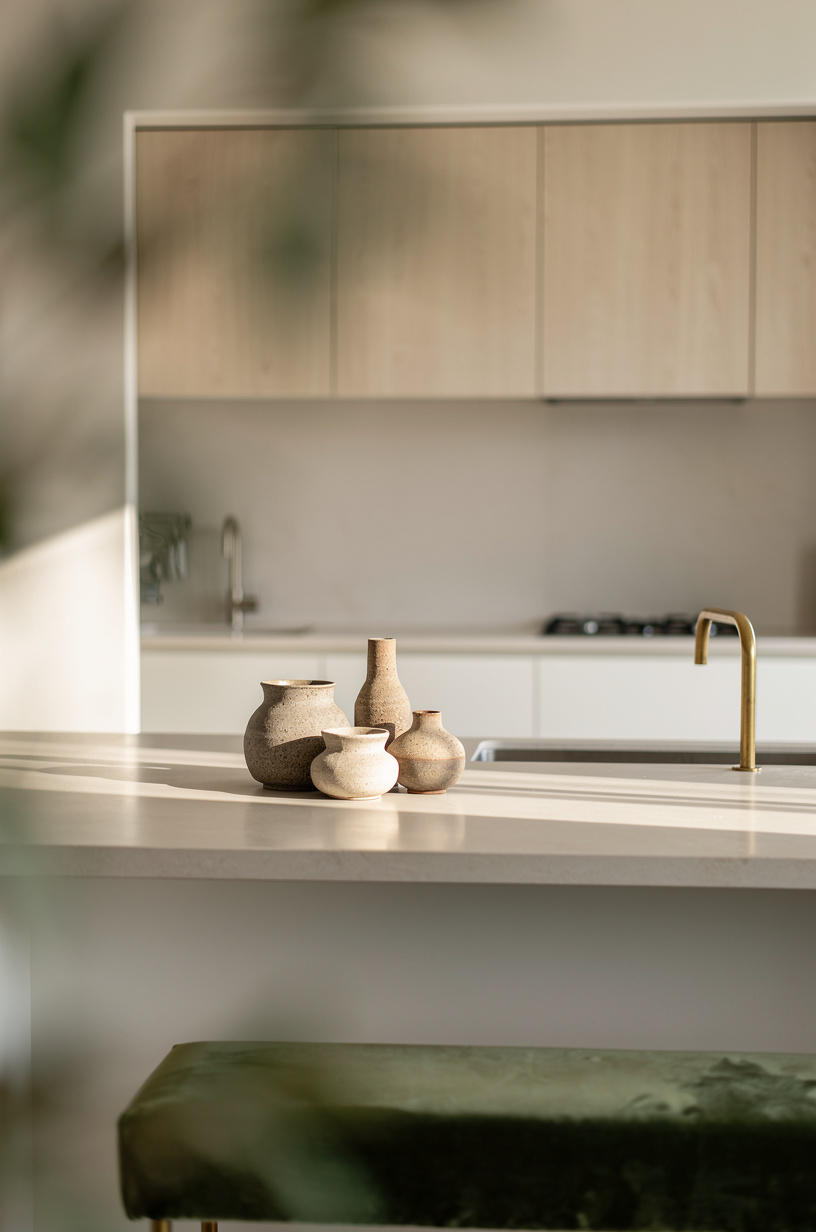
One wabi-sabi vessel cluster is enough. One. The whole point is restraint, and restraint gets more convincing when you stop at the moment that still feels a little unfinished.
Framed through foliage or a pass-through, a tight group of vessels can soften the island without turning it into a styling exercise.
I like three pieces at most: a weathered ceramic vase, a small smoke-glass bud vessel, and one unglazed clay bowl. Different heights, similar undertones, no flowers trying too hard. If your counters are busy, move the cluster to a shelf or a dining ledge so it isn't competing with the toaster and fruit.
But here's the deeper reason this works. Japandi isn't minimal because stuff is bad.
It's minimal because visual noise is tiring. When you give one cluster room to breathe, the whole kitchen feels slower, warmer, and more human. That's the mood people are really trying to name when they say they want the look.
For the calmer feel this same restraint brings to other rooms, our minimalist bedrooms that feel collected walk the same line.
How does Sherwin-Williams Evergreen Fog hold up in a japandi kitchen?
It works as a quiet accent on a pantry door or a back wall of open shelving, where the green reads almost gray in low light and warms up in afternoon sun. I'd skip it as a full kitchen color if your cabinets are already pale oak, since two soft fields can wash each other out.
Why does Japandi keep working when other kitchen trends date so fast?
I think it lasts because it isn't built around novelty. It's built around pressure points you feel every day: where your eye lands first, how bright the room is at 7 pm, whether clutter has a hiding place, whether a hard surface feels cold or calm when you touch it. I've messed this up before by buying the photogenic thing instead of the useful thing, and a kitchen will punish that mistake fast.
The better frame is to treat Japandi as a decision filter, not a shopping list. If a finish makes the room warmer, simpler to maintain, and easier to read from across the space, it's probably on-theme.
If it adds visual chatter, fake luxury, or a shape you'll be sick of by fall, skip it. That's why pale oak holds up, why Sherwin-Williams Evergreen Fog SW 9130 can work as a quiet accent, and why one paper lantern often does more than three fancy pendants ever could.
The style also gives you a rare luxury in a real family kitchen: permission to stop. You do not have to keep layering until the room proves you spent money.
You can let Farrow & Ball Studio Green No. 93 live on a pantry door, keep the counters mostly clear, and trust the empty space. Hard for some people, I know.
It was hard for me too.
And the honest money lesson? Spend where your body interacts with the room. Counter edge.
Faucet handle. Stool seat.
Shade fabric. Those are the things that make a kitchen feel warm in practice, not just in photos. I would happily save on decorative accessories to get a better Belgian flax linen shade or a counter material that does not look chalky by month three. For the same money logic applied to quieter rooms, our minimalist bedrooms that feel polished lay out the same trade-offs.
The Questions I Get Asked Most
What is the best Japandi kitchen move for a small space?
The best move for a small kitchen is pale slab cabinetry plus one warm light source over the work zone. Visual quiet makes a tight room feel larger, and I think IKEA VOXTORP fronts or a similar flat-front door give you the cleanest start without making the room feel sterile. Our small kitchen cabinet guide breaks down which layouts actually pay off under 80 sq ft.
Where can I buy Japandi pieces on a budget?
Start with IKEA, Target Threshold, and Wayfair for the basics, then check Facebook Marketplace for stools, pottery, and wood-framed lighting. Secondhand texture is often what saves the room from looking too new, and you can usually find better ceramics there than in a big-box aisle. For the bigger soft pieces, our minimalist bedrooms guide shows how warm textiles can do a lot of the heavy lifting.
How much does a Japandi kitchen makeover cost?
A cosmetic japandi-style refresh usually runs about $300 to $1,500, while a fuller refresh often lands around $3,000 to $12,000. The cheapest wins are paint, hardware, and lighting. The expensive jump happens when you change cabinets, counters, or major appliances.
Can I create a Japandi look on a budget?
Yes, and you do not need a full remodel to get there. Budget control comes from editing first.
Clear the counters. Swap one light.
Add a clay runner. Paint the walls a soft white like Benjamin Moore White Dove OC-17. Those moves cost less and shift the mood fast.
Is Japandi worth it in a small space?
Yes, it's especially worth it in a small kitchen because the style rewards restraint and smart circulation. Small rooms benefit from fewer visual breaks, so keep your island clearance clean, stay near that 42 to 48 in range if you can, and let storage do the hiding.
Is Japandi a good idea for a rental?
Yes, as long as you stick to reversible changes. Rental-safe warmth can come from peel-and-stick backsplash tile, a plug-in paper lantern, tension-rod linen cafe shades, and removable hardware you can swap back later. I'd also lean on ceramics and textiles before paint if your lease is strict.
Our minimalist bedrooms that feel warm apply the same reversible-first rule to a tighter room.
Where I'd Start First
If I had to pick one, I would start with pale oak slab fronts. They calm the whole room at once, and every other japandi move looks smarter beside them. Pin that idea for later and let the wood set the temperature before you spend on anything else.