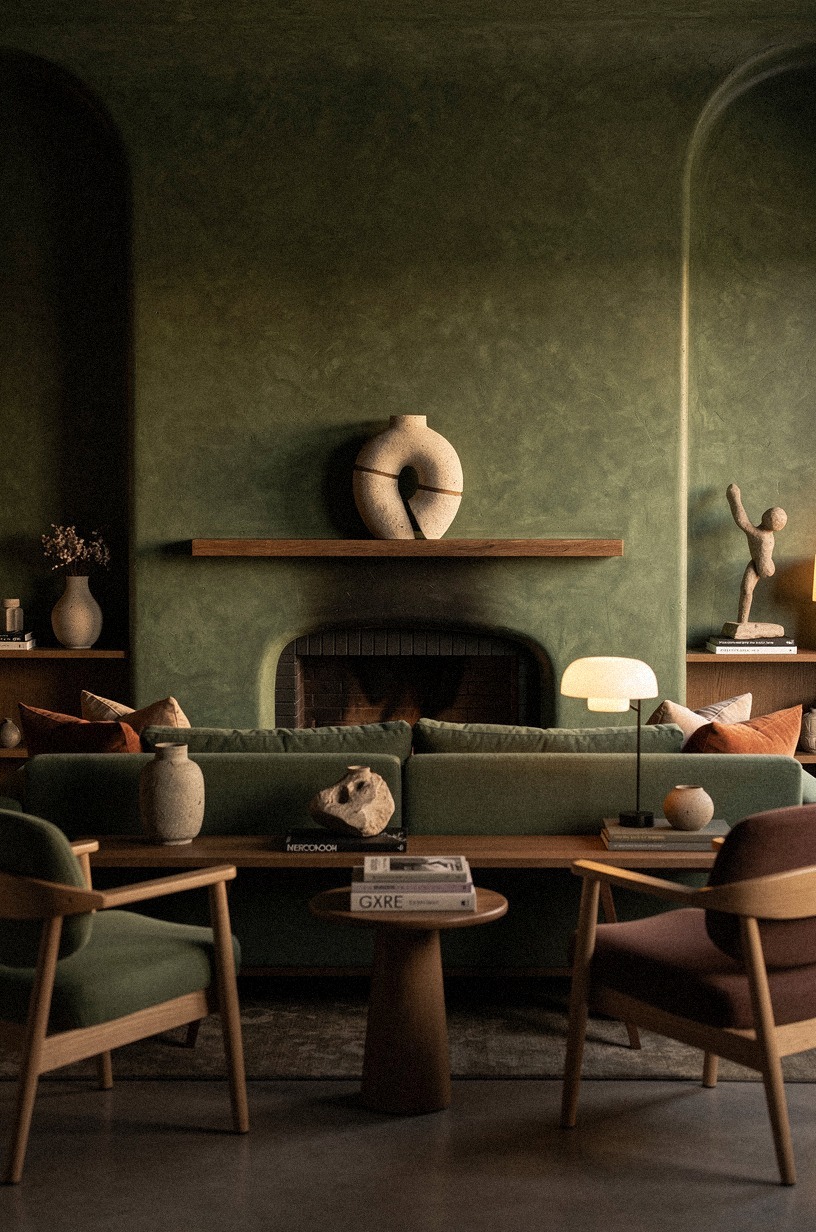
Easy DIY Fall Mantel Decor Ideas to Make This Weekend
26 june 2026I'll be honest. My first attempt at a fall mantel looked like a pumpkin display threw up on it. I'd bought four faux gourds in three different colors, stacked them off-center, draped a glittery leaf garland that shed orange glitter on the dog for a week, and called it cozy. It looked like a craft store had a small accident! I left it up for two days, took it all down, and started over with a much smaller list and a few rules I'll get to in a minute. That second version took ninety minutes and cost about $40, and it's the one friends keep asking me about.
Don’t overthink: Layer a fresh or faux garland in odd numbers.
The thing nobody tells you about a fall mantel is that the decorating part is maybe thirty percent of it. The other seventy percent is what the room needs from the wall it sits on: a place where the eye lands, a place that pulls the warmth of the room upward, a place that tells you it's October without making you feel like you're hosting a costume party in your own living room. And if your mantel reads "Halloween store" before it reads "living room," you've missed it.
These are 16 fall mantel decor ideas you can pull off in a weekend, most for under fifty bucks, and none of them require anything more dangerous than a hot glue gun and a pair of garden shears. I've grouped them so you can build one cohesive look rather than 16 random ideas that fight each other. Start with the bones, layer the softness, and finish with the small things that make it feel intentional.
And if you're new to styling a mantel from scratch, our spring mantels roundup walks through the inverse palette (cream, soft green, white stoneware) with the same asymmetric-cluster thinking.
- Start with a cleared mantel and a single hero piece
- Layer a fresh or faux garland in odd numbers
- Anchor the ends with paired taper candles in real holders
- Add a stack of two or three old hardcover books
- Style one asymmetric cluster, not three matching ones
- Add a Faux-Maple Garland and an IKEA VÄRMER Pair to anchor the palette
- Mix pumpkin finishes, not pumpkin colors
- Why does one oversized print beat a gallery wall above a mantel?
- Use a vintage window frame as the hero instead of a mirror
- Float a chunky wood bead garland on the mantel edge
- Layer two runners in different textures, in rust and forest green
- Build a low vase of real branches, not flowers
- Tuck dried wheat, pampas, or preserved oak into the existing cluster
- Skip the scented candles and let the room do the smelling
- Why does adding one non-fall piece make the whole mantel work?
- Light the whole thing at dusk and watch what happens
1Start with a cleared mantel and a single hero piece
Before you buy a single pumpkin, take everything off. Wipe the surface.
Stand back. Look at the proportions.
The single most common fall mantel mistake I see is overcrowding, and the second is starting with a hero piece that's too small for the wall it's hanging on. If your fireplace wall is taller than eight feet, your hero needs to be at least 18 inches tall or it'll look like it wandered in from a dollhouse.
If the wall is shorter, go the other way; a giant sign that swallows the whole mantel is just as bad.
Pick one piece to anchor the look before you add anything else. For a fall mantel, that hero is usually a round mirror, a large landscape print, a vintage window frame, or a single oversized botanical (real branches, not the silk eucalyptus from the craft aisle).
I lean toward branches because they're free, they change as the season progresses, and they forgive the kind of uneven styling that makes a mantel look lived-in instead of staged. And if your fireplace is more functional than decorative, our fire pit vs fireplace guide has good framing for how to think about the wall it sits on.
2Layer a fresh or faux garland in odd numbers
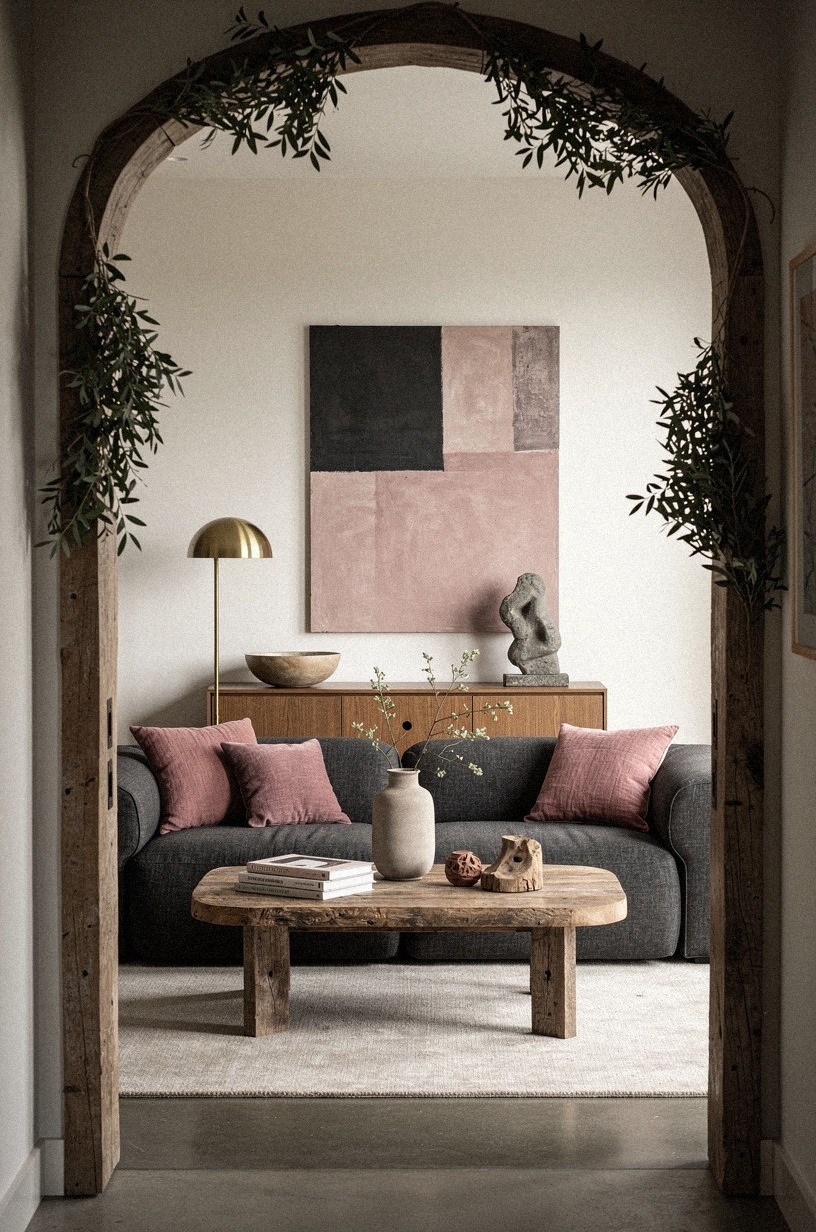
Garlands do most of the heavy lifting on a fall mantel, and the rule that holds every time is odd numbers, because three sprigs look like you meant it and four look like you're trying too hard. You want a garland that drapes past the edge of the mantel by six to ten inches on each side.
If it ends exactly at the corner, it looks like a ruler. If it drops a foot, it looks like a sad mustache.
You can build a serviceable garland from fresh eucalyptus for about $12 at Trader Joe's in October. String it with floral wire, fluff the strands so the front is full and the back tucks in, and you're done.
If you're going faux, skip the glittery leaf version with the built-in lights; get a plain faux garland in dusty rose and muted charcoal from Amazon or Michael's. You can fluff and re-fluff them for years.
But if you want a quick win, layer two: a thin greenery base plus a thicker leaf garland on top. The texture difference is what reads as "designer" rather than "decorated." And for the front door version of the same instinct, our spring wreaths guide goes deep on asymmetry.
3Anchor the ends with paired taper candles in real holders
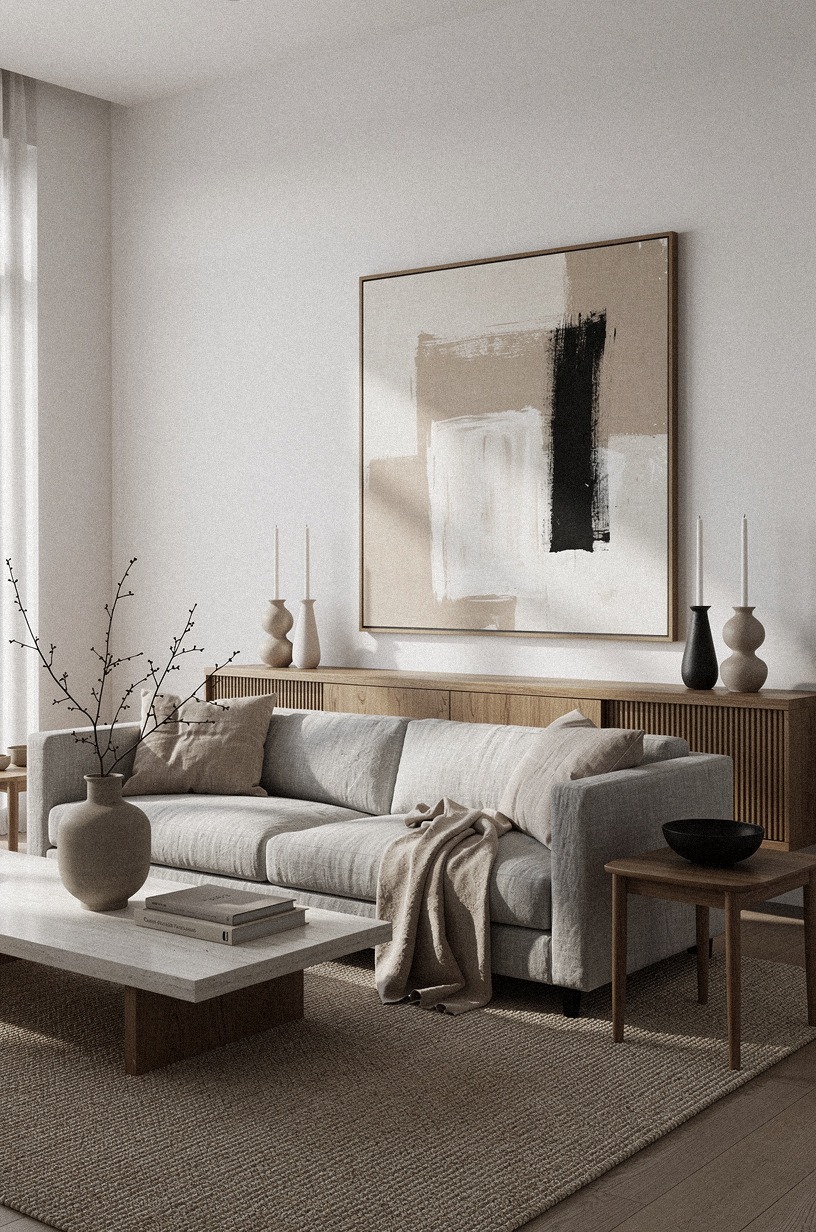
A pair of taper candles in brass or aged bronze candlesticks does more for a mantel than almost anything else you can put up there, and they cost very little. Target's Threshold line has decent ones for about $15 a pair.
I've also used IKEA's VÄRMER series in solid brass and gotten compliments for a year. The whole point is to use real taper candles (around 10 inches tall), not the chunky pillars, and to vary the candlestick heights so the pair reads as a vignette rather than two symmetrical sentries.
If you have a mantel that's longer than five feet, two pairs work better than one big pair, and you can stagger them across the length with the garland weaving between. Battery-operated tapers from Amazon now look real enough to fool most guests.
And they save you from the one time I forgot a lit candle, left for a Target run, and came home to a smoke alarm that didn't care about my decorating plans. But if you're styling the rest of the room around the mantel, our cozy living room backdrop guide walks through how warm light spreads outward from one focal point.
The same logic translates to how a pair of tapers pulls a whole wall into focus, which is why designers reach for them first.
4Add a stack of two or three old hardcover books

Books on a mantel get a bad rap because people overthink them.
5Style one asymmetric cluster, not three matching ones
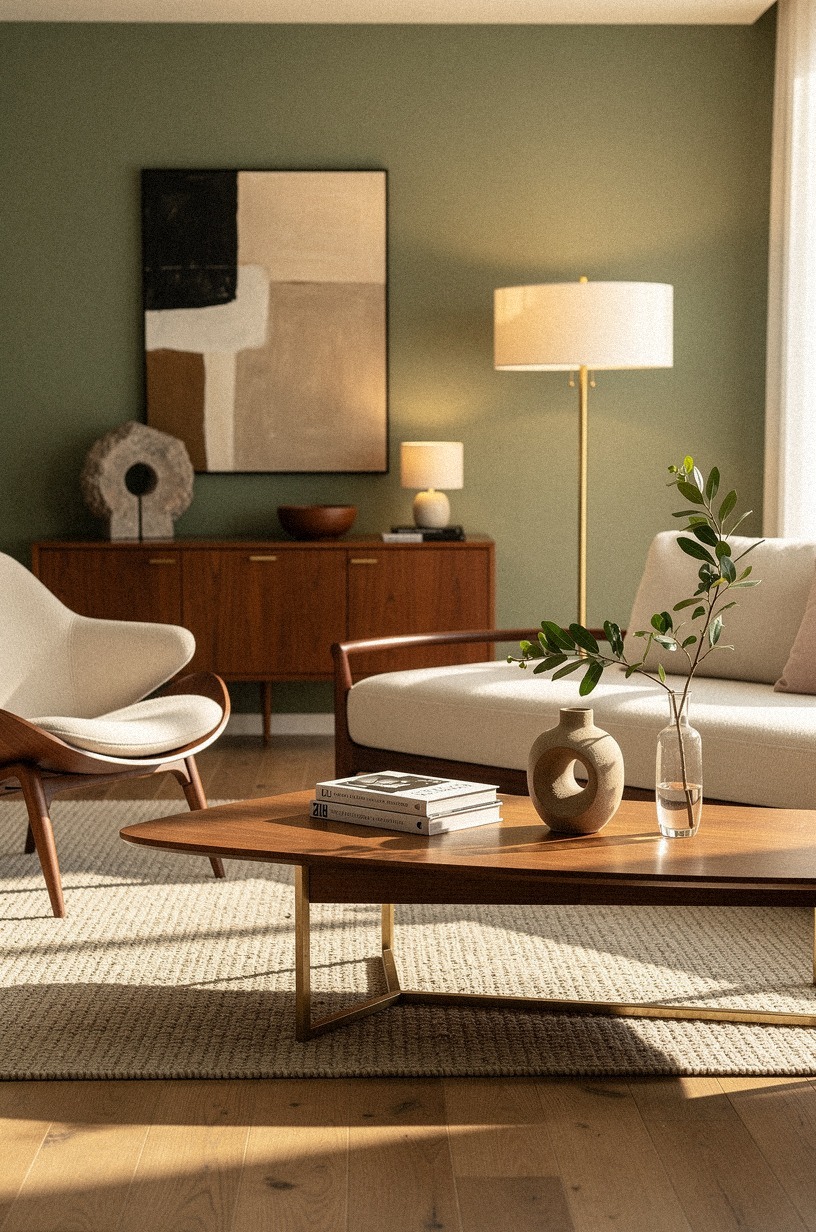
The asymmetry thing is the single move that separates "looks like a magazine" from "looks like a Pinterest wedding." Instead of three identical little vignettes spaced evenly across the mantel (the styling equivalent of a marching band), build one larger cluster on one side, leave the middle for the hero piece and garland, and put one smaller cluster on the opposite side to balance. The eye reads the whole composition as one shape rather than three separate piles.
For fall, a classic asymmetric cluster is a small cream pumpkin, a brass candlestick, a stack of two books, and a sprig of preserved oak leaves tucked in at the base. That's it.
Four items, varying heights, varying materials, all in the same warm palette. I've rebuilt this cluster for the last four autumns with different objects and it always looks like the same family.
And that's the kind of repeatable move you want, because it means next October you don't start from zero. If you love the "cluster on a tray" approach, our bar tray styling guide goes even deeper on the asymmetric-but-contained thinking.
6Add a Faux-Maple Garland and an IKEA VÄRMER Pair to anchor the palette
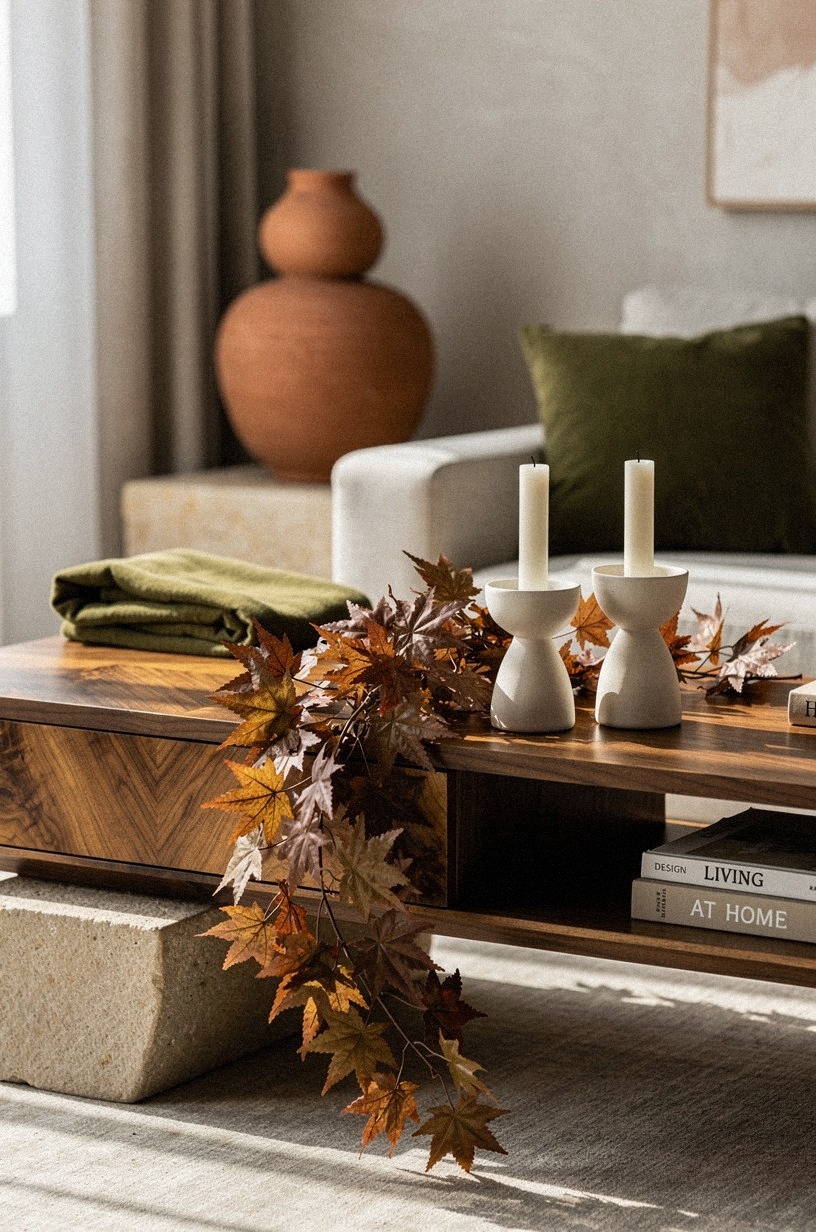
A faux maple garland in terracotta, stone, and olive layered across the mantel, paired with an IKEA VÄRMER candlestick pair in solid brass at each end, is the cheapest way to lock in the whole palette. The brass develops a soft patina over the season.
The terracotta leaves pick up the wall paint, the stone-toned maple ties back to any ceramic pumpkins you're clustering, and the olive plays off the greenery you already have in the room. Together, they turn ten small decisions into one intentional look.
7Mix pumpkin finishes, not pumpkin colors
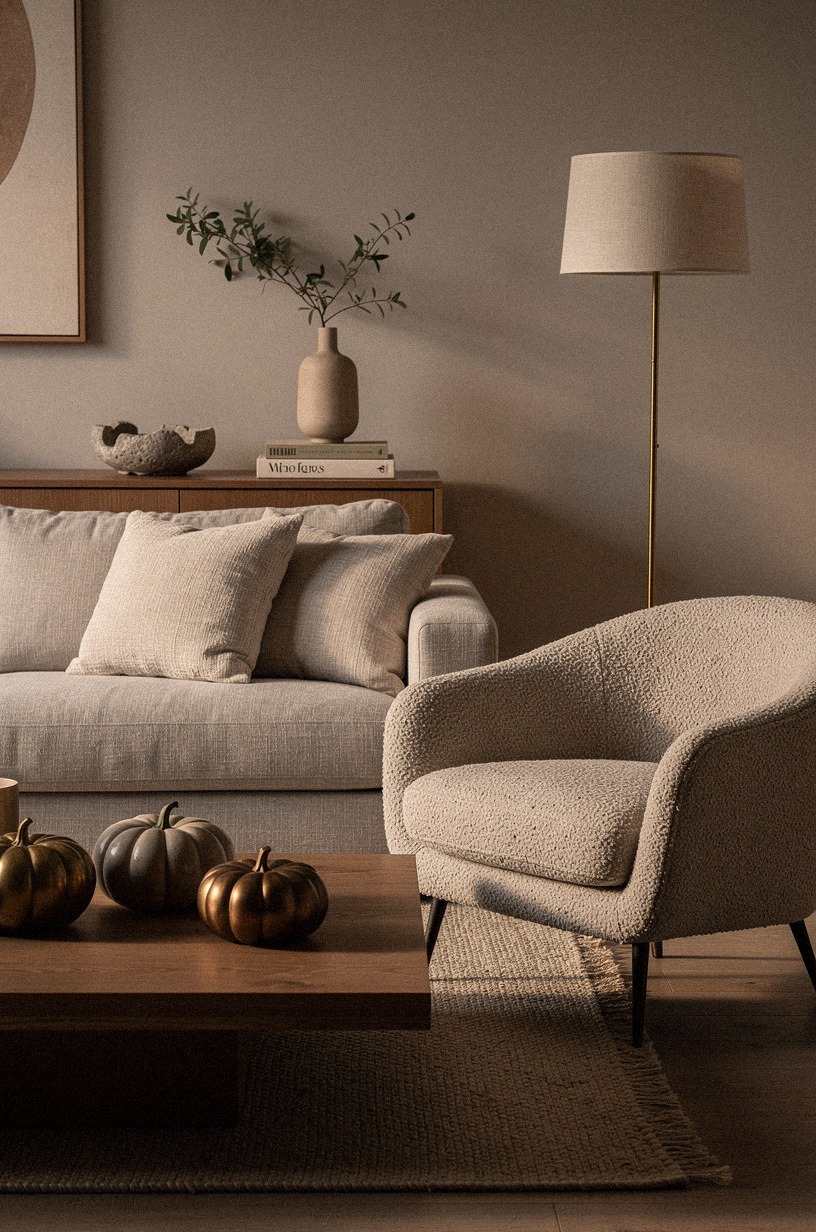
The thing about fall pumpkins is that color is the least interesting thing about them. The interesting part is finish.
A matte cream heirloom pumpkin, a glossy white ceramic pumpkin, a velvet pumpkin in soft clay, and a small striped gourd in soft orange will always look more sophisticated than four orange plastic pumpkins of different sizes, even if the second set costs more. The finishes catch the light differently, and that's what makes the cluster read as "thought about" rather than "bought in a bag."
Velvet pumpkins in particular have gotten silly expensive in the last few years, but you can make your own from a $3 styrofoam pumpkin, a half-yard of bouclé or nubby velvet from JOANN, and a hot glue gun. Wrap the fabric around the pumpkin, tuck the seam underneath, and glue a twig stem in place.
Takes fifteen minutes. Looks like a $40 Etsy piece.
And if you're already a regular at our 15 cozy DIY backyard projects you can build on a budget, this is the same instinct. Different room, same handmade-over-store-bought move.
8Why does one oversized print beat a gallery wall above a mantel?
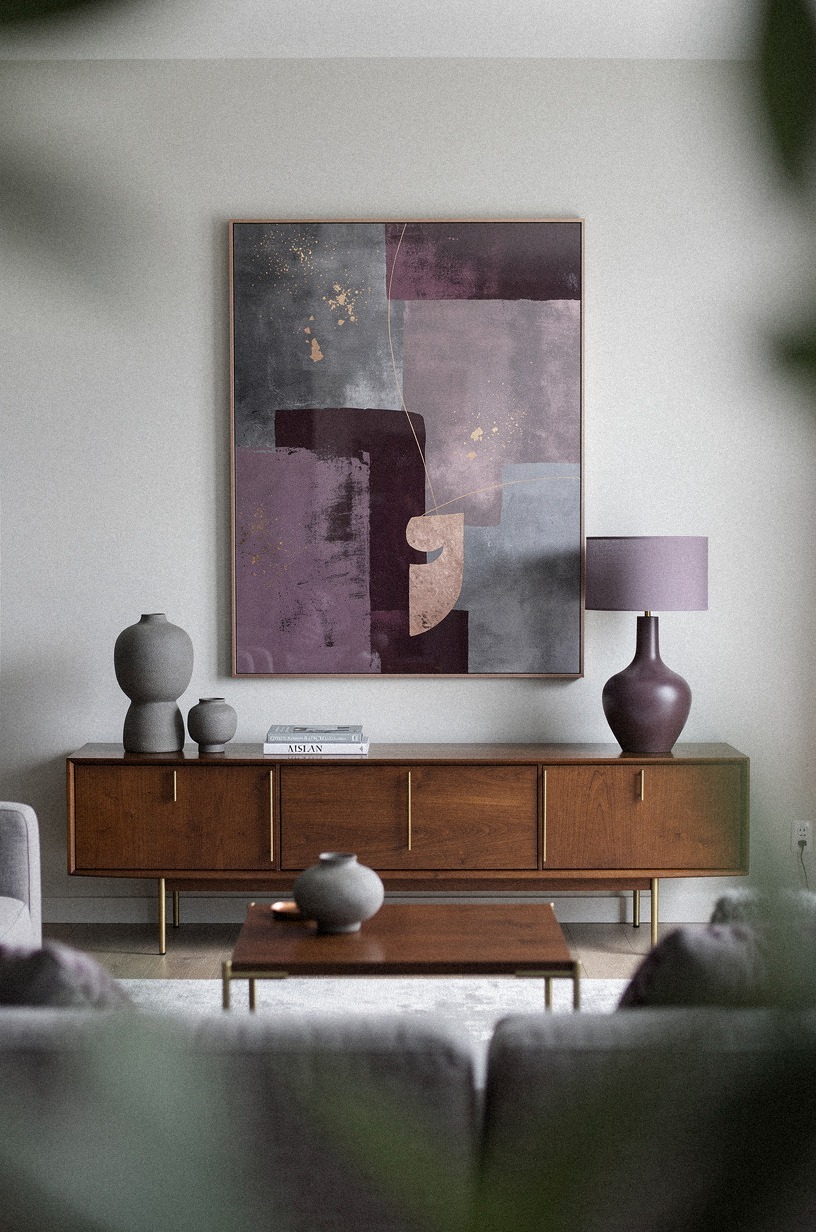
A fall mantel is one of the rare places where one oversized piece beats a gallery wall almost every time.
9Use a vintage window frame as the hero instead of a mirror
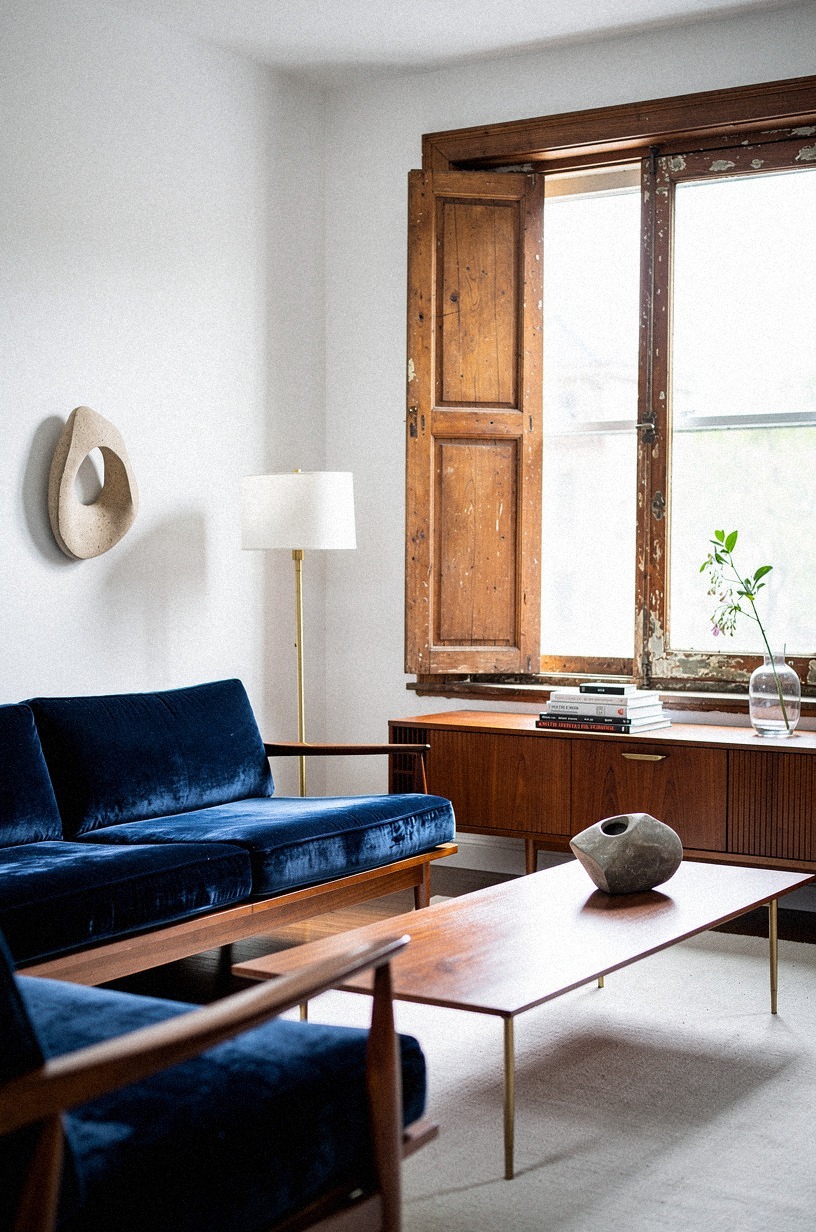
This is the move I wish I'd done years ago. A single six-pane vintage window frame, hung flat against the wall above the mantel, makes a great fall hero because you can tuck things behind the panes. Slide a sprig of dried wheat behind the top row, a small postcard of a persimmon behind another pane, a clipping of a leaf between two others.
The window becomes a mood board, and it changes every week if you let it.
You can find these at salvage yards for about $25 to $60 depending on condition. Etsy has reproductions in the $80 to $150 range if you'd rather skip the rusty nails.
Paint or stain to taste; I leave mine raw and let the old walnut do the work. But if your room is very modern, an oversized round mirror works in the same role but doesn't let you tuck things behind it.
Tradeoff: personality versus reflection. And if you're working on a tighter budget, our small bedroom DIY roundup has the same salvage-yard instinct for less.
10Float a chunky wood bead garland on the mantel edge
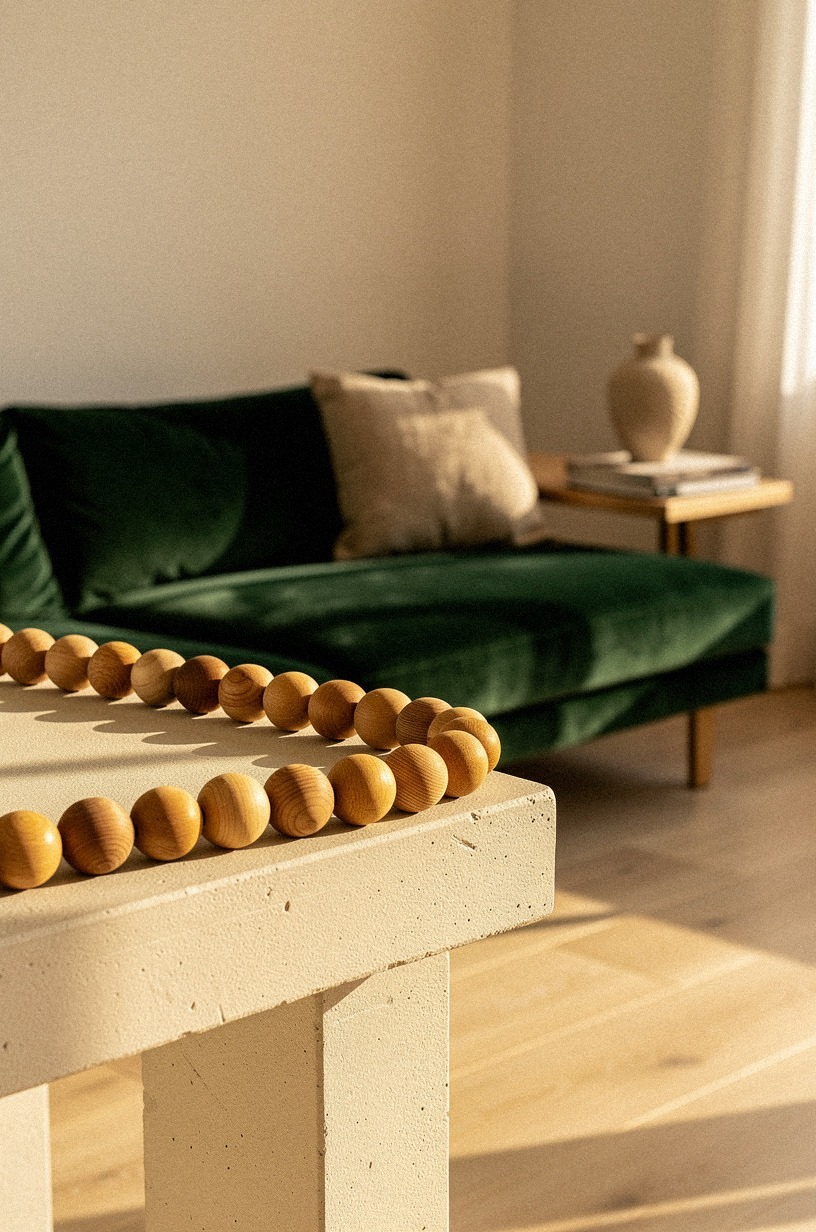
A wood bead garland is one of those fall things that reads as expensive and costs almost nothing. A strand of chunky unfinished wooden beads, about 36 inches long, draped in a U-shape along the front of the mantel or pooled next to a stack of books, adds the kind of texture that makes a room feel like it's been collected over time rather than bought in one afternoon. The beads catch the warm light at sunset and they look like jewelry for the mantel.
You can make your own with a $6 bag of unfinished wood beads from JOANN or Michaels and a length of thin leather cord. Drill slightly larger holes if the beads don't string easily, then tie off the ends with a knot you tuck under. If you'd rather buy, Amazon has dozens of versions; look for the ones with varied bead sizes (about half an inch mixed with three-quarter inch) rather than uniform spheres.
The variation is what makes it look handmade. If your bead run is shorter than 30 inches, double it back on itself in a loose S-shape rather than stretching it across the full length; the curve reads as a styling move.
11Layer two runners in different textures, in rust and forest green
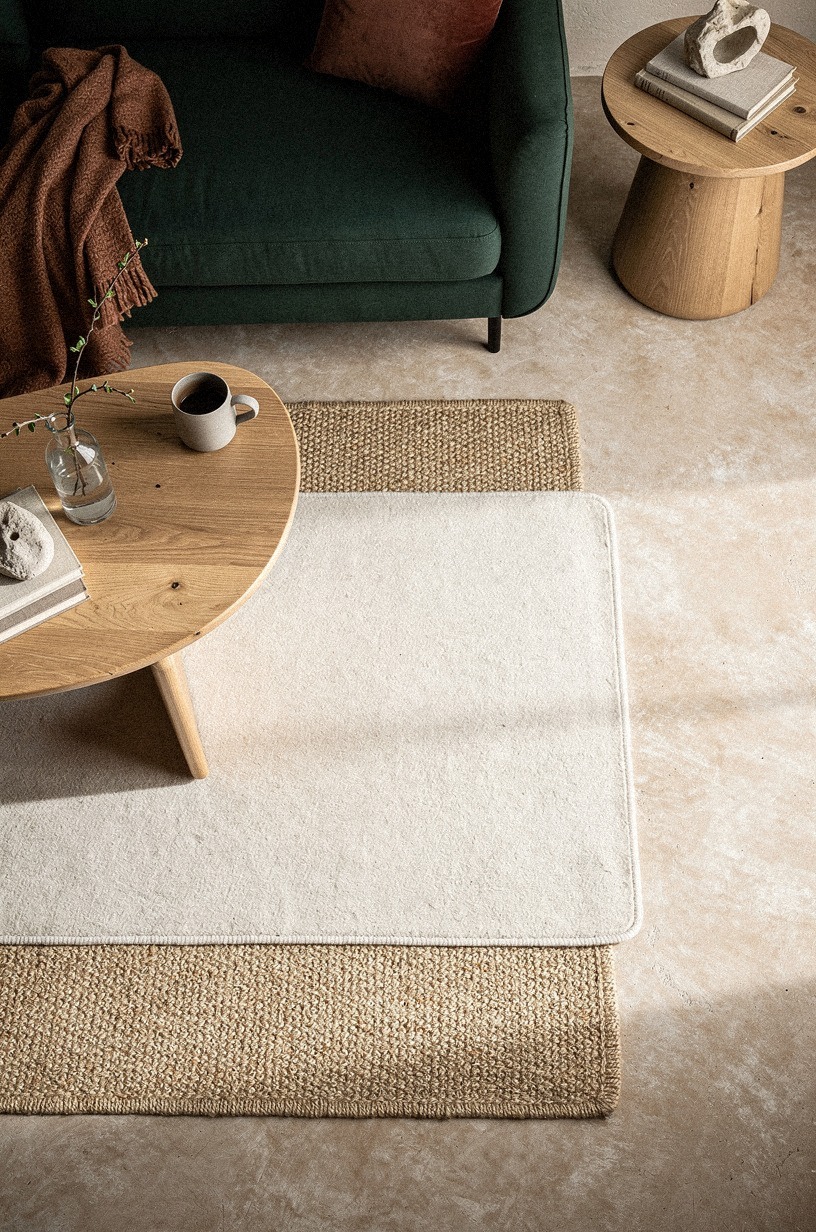
If a single runner feels too clean or too thin, layer two: a rust-toned linen runner as the base, with a slightly shorter forest green runner on top, letting the natural oak of the mantel show through at the ends. The trick is to keep both runners muted enough that they read as a tonal backdrop rather than two competing patterns.
12Build a low vase of real branches, not flowers
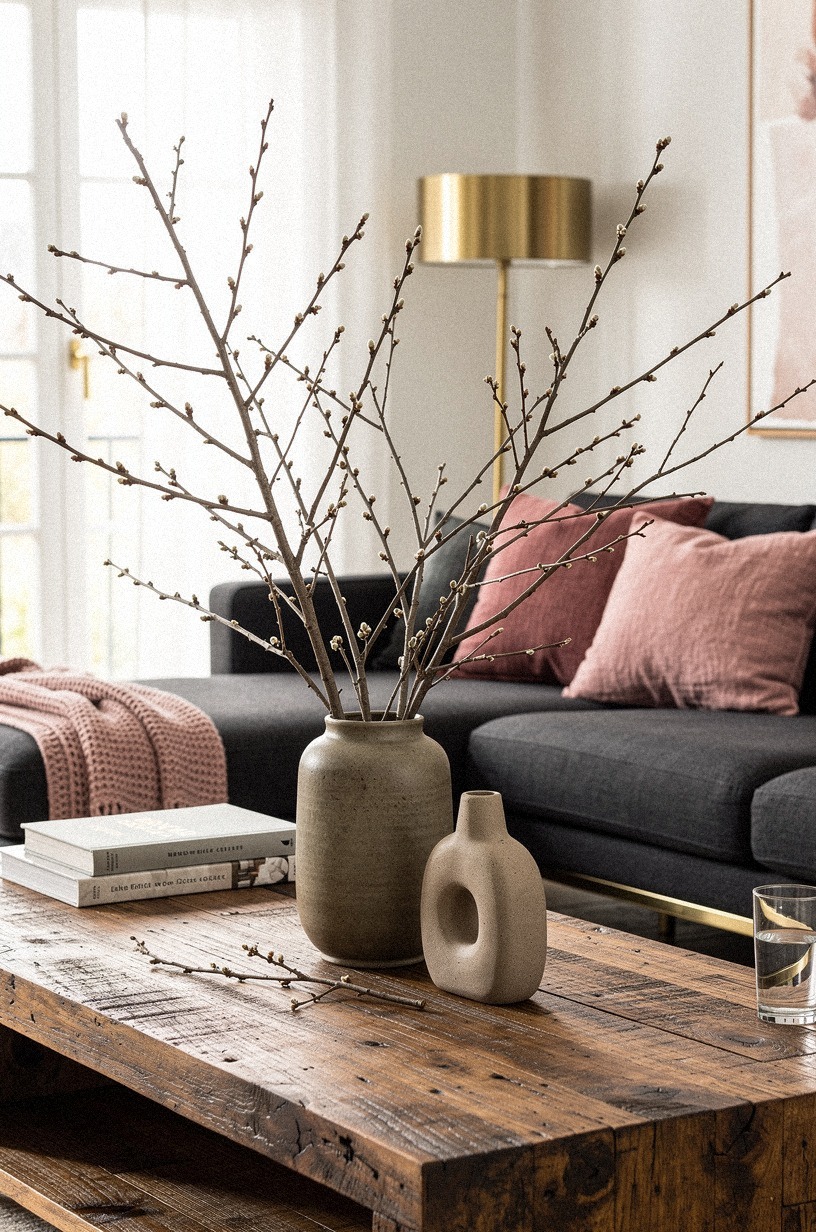
The highest-impact, lowest-cost fall move I know is a tall ceramic vase of real branches placed on one side of the mantel. We're talking oak, persimmon, magnolia, or even curly willow.
You can forage these from your own yard if you have any tree at all, or grab a bunch from a farmer's market for $8 to $12. And unlike cut flowers, branches last the whole season without water.
The vase should be about 10 to 14 inches tall and either dusty rose ceramic, charcoal stoneware, or aged brass. Cut the branches so the tallest is about two feet above the mantel, then layer shorter stems in front so the silhouette looks like a small grove rather than a single spray.
No water needed for most of these; they'll dry in place and last the whole season. And if you've been wanting to try this on a fireplace hearth, our fire pit vs fireplace guide covers the same styling logic in outdoor form.
The branches version is the move when you want height without buying a giant piece of wall art.
13Tuck dried wheat, pampas, or preserved oak into the existing cluster
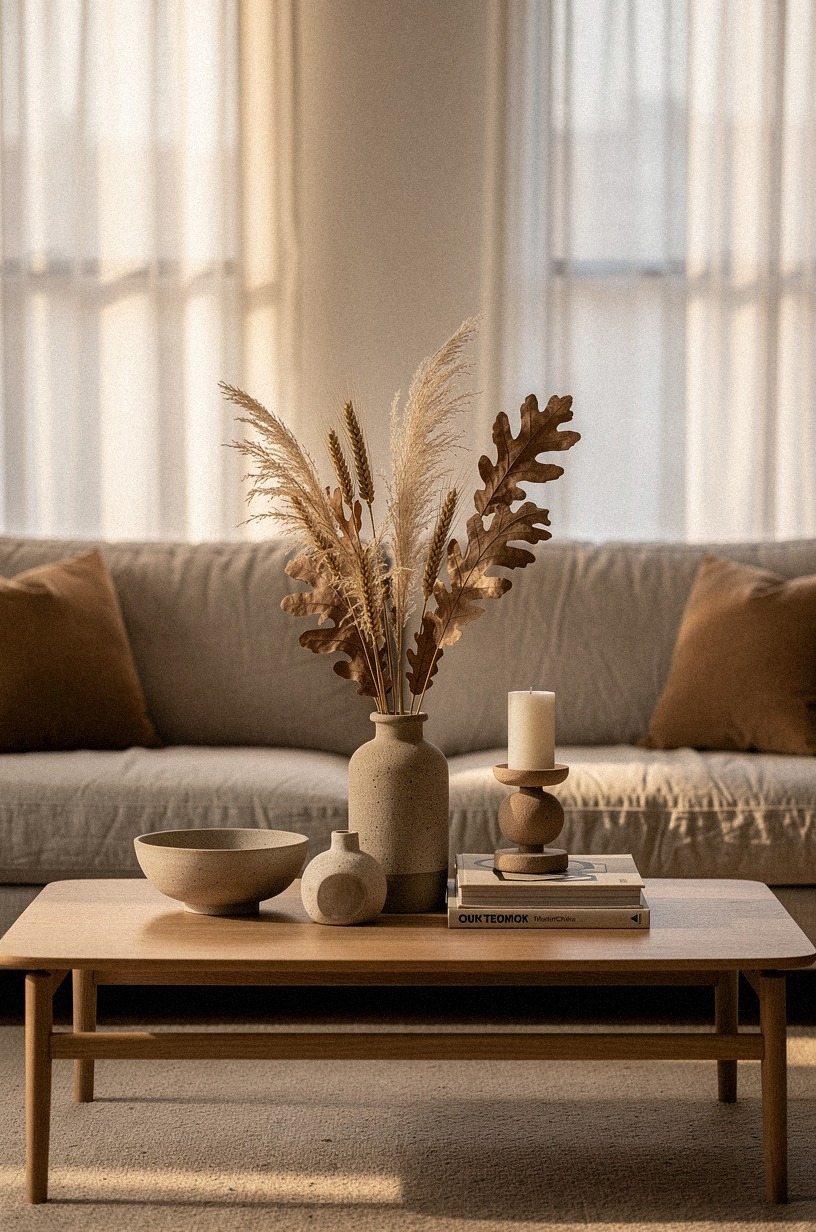
This is the layer that goes in last and does the most work. A few stalks of dried wheat, pampas grass, or preserved oak leaves tucked into the base of your asymmetric cluster (the one from idea 5) adds the kind of soft movement that makes a mantel look like it's been styled rather than arranged.
Pampas is everywhere right now, and honestly? It works.
It sheds a little, so give it one good shake outside before you bring it in.
If you're using real wheat, harvest or buy it in late August, tie it in bundles of five or seven, and let it dry upright in a vase for two weeks before styling. You can spray it lightly with matte clear sealant if you want to slow the shedding.
Preserved oak leaves are easier: buy a bunch from a craft store, leave them in the bag with a damp paper towel overnight to soften, then arrange. If you want to take the wheat-and-pampas idea to the back porch instead, our fall backyard roundup has the outdoor version of the same dried-grass moment.
14Skip the scented candles and let the room do the smelling
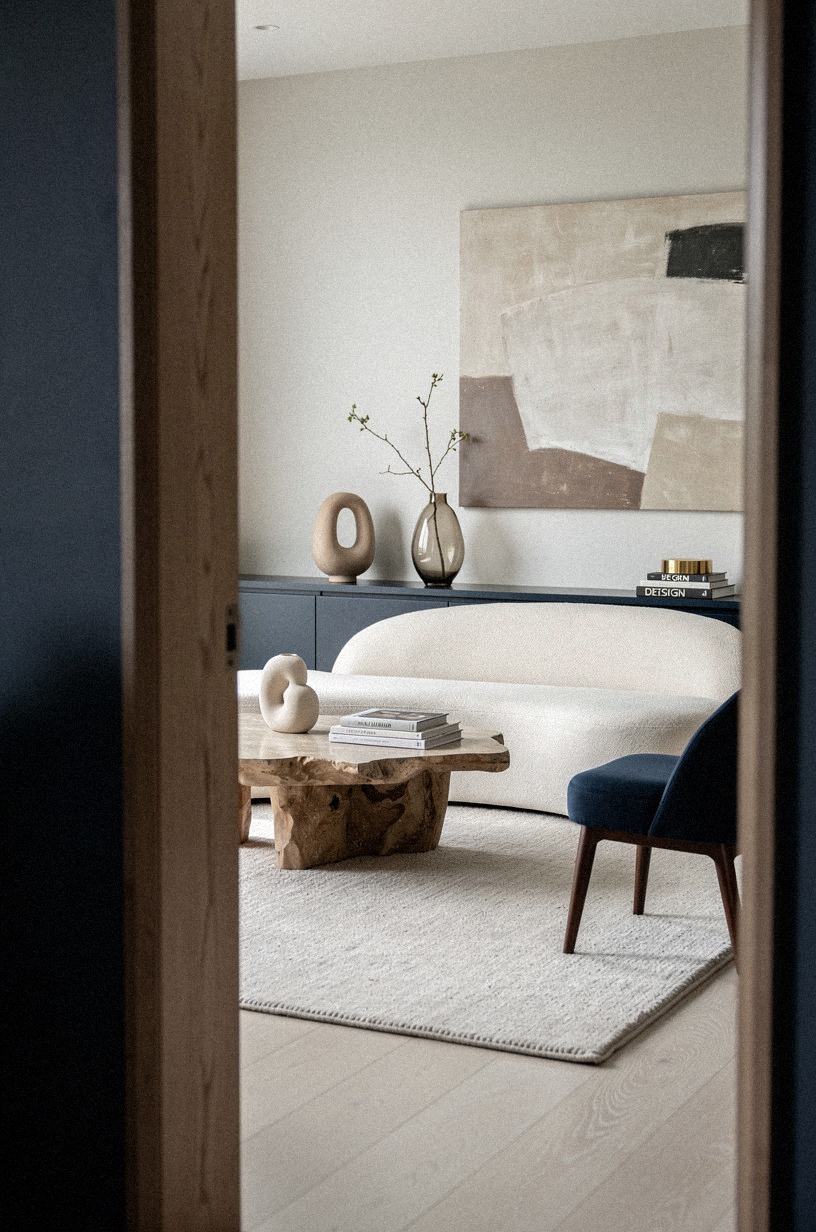
This is a real opinion, and I know it's a hot take: most "fall scented" candles smell like a candle store. The maple-pumpkin-pecan trifecta is everywhere in October, and after a week of burning one, your living room smells less like autumn and more like a Yankee Candle outlet. The honest truth is that the smell of fall is the smell of a real apple cut open, a real cinnamon stick in a pot of water on the stove, or a real wood fire.
None of those need a candle.
If you want a candle on the mantel for the warm flicker, use an unscented one or something subtle (beeswax, plain cedar). The visual is doing the work; the nose is being lied to.
This is the kind of small call that separates a styled room from a perfumed one, and you'll be surprised how much calmer the air feels when the candle isn't fighting your dinner. The same logic applies to the rest of the room.
A real cinnamon stick simmering in a pot of water on the stove does more for "fall mood" than three candles burning in a row, and it costs about a dollar for a pack.
15Why does adding one non-fall piece make the whole mantel work?
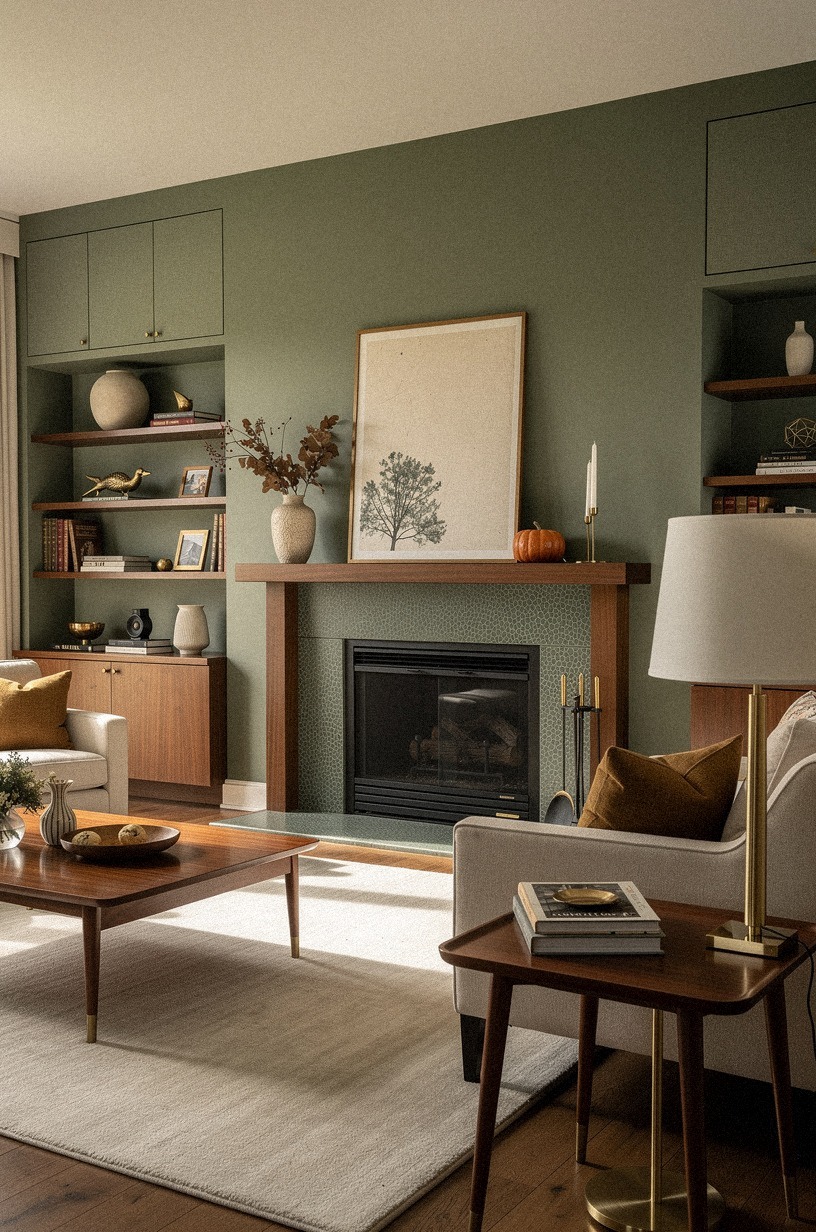
This is the move that keeps a fall mantel from looking like a seasonal display in a Crate & Barrel window.
16Light the whole thing at dusk and watch what happens
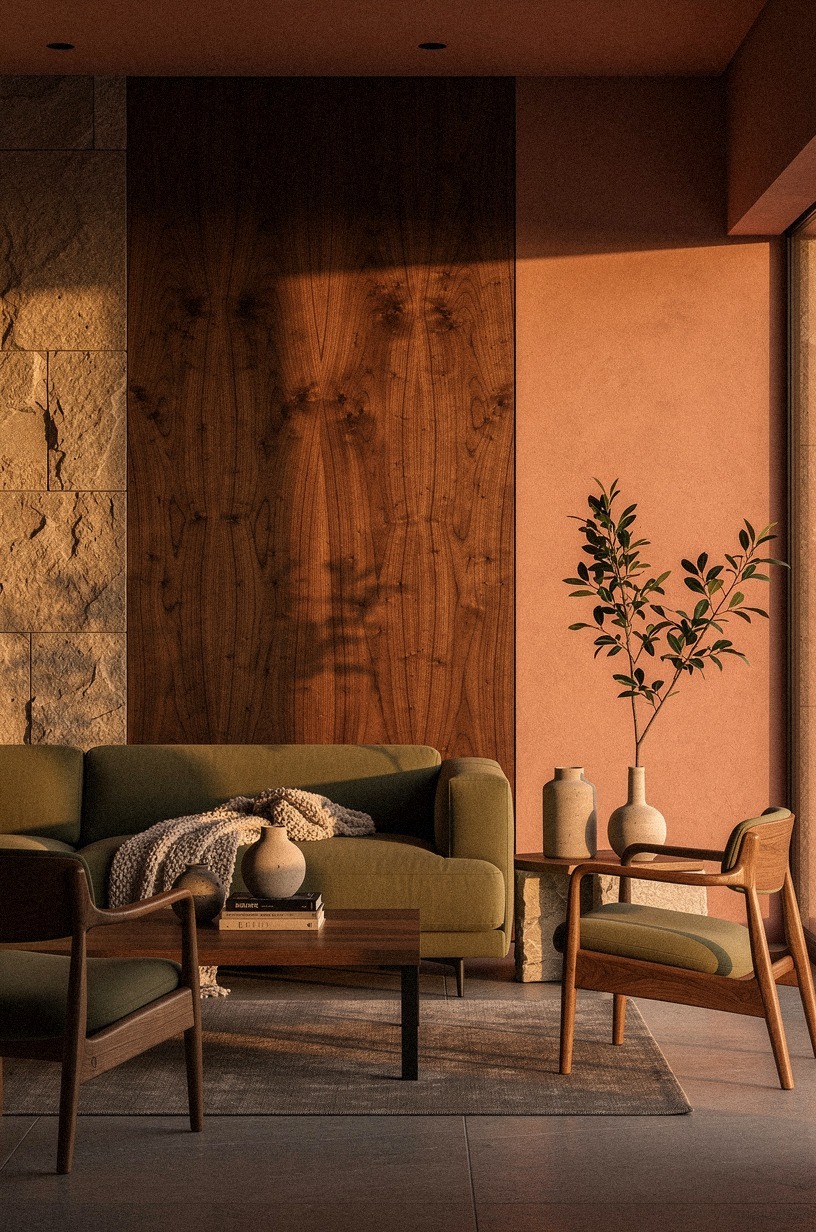
The last idea isn't really a decor move; it's a check. After you've styled everything, wait until sunset, then turn off the overhead light and turn on every lamp in the room.
Look at the mantel from where you usually sit on the couch. If it looks warm and a little glowy and a little too bright in exactly one or two spots, you've nailed it!
If it disappears, you need more ambient light from the floor or the side tables. If it looks flat, you need a candle.
The way a fall mantel reads at dusk is what it's there for. Daylight is forgiving; the mantel can be fine in the afternoon and dull by 7pm.
Most people style in daylight and forget the room is actually used after dark. Walk the room from the couch, the doorway, the kitchen entrance.
Adjust until every angle has one warm focal point. And that's the whole job.
If your room needs more warm light at floor level to make the mantel glow, our cozy backyard roundup covers the same ambient-vs-overhead thinking for outdoor spaces.
What a Fall Mantel Costs (And Where to Spend)
If you've been nodding along and wondering what all this adds up to, here's the honest breakdown for a full fall mantel including the hero, the garland, the cluster, and the lighting. The thing to know is that the big-ticket items (the mirror, the candlesticks, the books, the vase) are mostly things you already own or buy once and reuse every fall. The seasonal stuff (garland, pumpkins, dried wheat) is what you replace.
That mid-tier is what most of us are actually doing: a few new pieces, a couple of existing ones, and a Saturday to put it together. The high tier is real if you're renovating a fireplace surround at the same time, and the budget tier is real if you're starting from a blank mantel in a rental.
Either way, the look scales. Most of the visual return comes from how the proportions sit on the wall and how the materials catch the warm light, not from how much you spent on any one piece.
Why I Keep Coming Back to the Same Mantel Every Fall
I've styled a lot of fall mantels for friends and for our home, and the version I keep returning to is the one that looks like it took a long time and didn't. A pair of brass candlesticks from a flea market in 2018.
A six-pane window frame I scored for $20 at a salvage yard in Vermont. A faux maple garland I fluff every October and store in a felt bag the rest of the year.
A small velvet pumpkin my mother-in-law made from a scrap of mohair she had left over from a coat.
What I learned the hard way is that the room is doing most of the work. If your living room has good bones, warm walls, soft lighting, and a fireplace that draws the eye, your fall mantel is mostly a question of what to take away rather than what to add.
The mistake I made on my first attempt was trying to make the mantel carry the season by itself. It can't.
The whole room has to be a quiet accomplice. And when you walk in and the room reads "fall" before you can name anything specific, you've gotten it right.
And the version you build this weekend doesn't have to be the final version. I redo mine twice every October, once early in the month with the bright oranges and gourds, once closer to Halloween with the moodier palette and the dried wheat.
That's not indecision; that's how a real room breathes. The whole point of styling a mantel is that it's something you live with for a season and then you let go of. The fewer rules you follow about it looking "right," the more right it looks.
For a totally different season's version of the same logic, our spring mantels roundup walks through the inverse palette (cream, soft green, white stoneware) with the same asymmetric-cluster thinking. And if you want to take the same hand-built instinct to a piece of furniture, our painted nightstand roundup is built on the same "I made this, you can tell, and it looks better for it" energy.
The Questions Worth Answering First
What is the best DIY fall mantel decor for a small living room?
A small living room is actually an advantage for a fall mantel. Less mantel to fill means you can lean into one strong cluster instead of spreading the styling thin.
Skip the garland if the mantel is under 36 inches, and go with a pair of brass candlesticks, a small asymmetric cluster of cream pumpkins, and a single hero piece above (round mirror or vintage window frame). That's enough. IKEA VÄRMER candlesticks plus a $12 Trader Joe's eucalyptus bunch will get you 80 percent of the look for under $50.
Where can I buy fall mantel decor pieces on a budget?
Three real places that consistently deliver without the markup: IKEA for brass candlesticks, glass vases, and the basic bones; Target's Threshold line for faux stems, vases, and budget velvet pumpkins; TJ Maxx and HomeGoods for the unexpected one-off piece (brass tray, vintage-style bookends, unusual taper holders) at 30 to 60 percent off retail. For second-hand, Facebook Marketplace is the most underrated source for vintage window frames, old mirrors, and brass anything in October because people are cleaning out for the holidays!
How much does a DIY fall mantel makeover cost?
If you're starting from a blank mantel and need everything, a complete fall mantel (hero, garland, candlesticks, books, dried botanicals, velvet pumpkin) runs about $100 to $300 depending on what you already own and how much you DIY. The hero piece (mirror or window frame) is the biggest line item at $25 to $150.
Everything else adds up to roughly $75 to $150. Free moves that work: clipping real oak branches from your yard, borrowing two candlesticks from your dining table, or stacking books you already own.
Can I create a fall mantel on a real budget?
Yes, and the rule is to spend on the things that photograph well and skip on the things that don't. The three things worth spending on are a pair of real brass candlesticks (around $25 to $40, you'll use them every fall), a hero piece (one good mirror or vintage window frame), and good faux stems (Target, $12). Everything else can be free: real branches from your yard, books you own, thrifted hardcover novels, a candle you already have, dried wheat from a farmer's market in early fall.
Total realistic budget: $40 to $80 if you already own the basics.
Is a fall mantel worth it in a small space?
Worth it. A small living room benefits from a fall mantel more than a large one does, because the focal point it creates pulls the eye to the warmest corner of the room and gives the whole space a center of gravity.
Skip the garland if your mantel is narrow; it eats up the styling surface. Go with the cluster + candlesticks + hero piece formula and you'll spend less and get more visual return than someone trying to fill a 10-foot mantel.
Is a fall mantel a good idea for a rental?
It's the perfect rental project, because none of it touches the wall in any permanent way. No-damage moves: use a freestanding mantel mirror with a wall-protective felt pad on the back, lean rather than hang if your landlord is strict, and use 3M Command strips rated for the weight of the hero piece only on paint you don't mind touching up at move-out.
Everything else (candlesticks, books, pumpkins, branches) is just objects on a surface. Take it all down in 10 minutes when you move.
The velvet pumpkin investment is the one thing you might want to keep!
Where I'd Start Tonight
If I had to pick one, I'd start with the asymmetric cluster: one cream pumpkin, one brass candlestick, two old books. The rest follows. Pin this with our spring mantel guide.