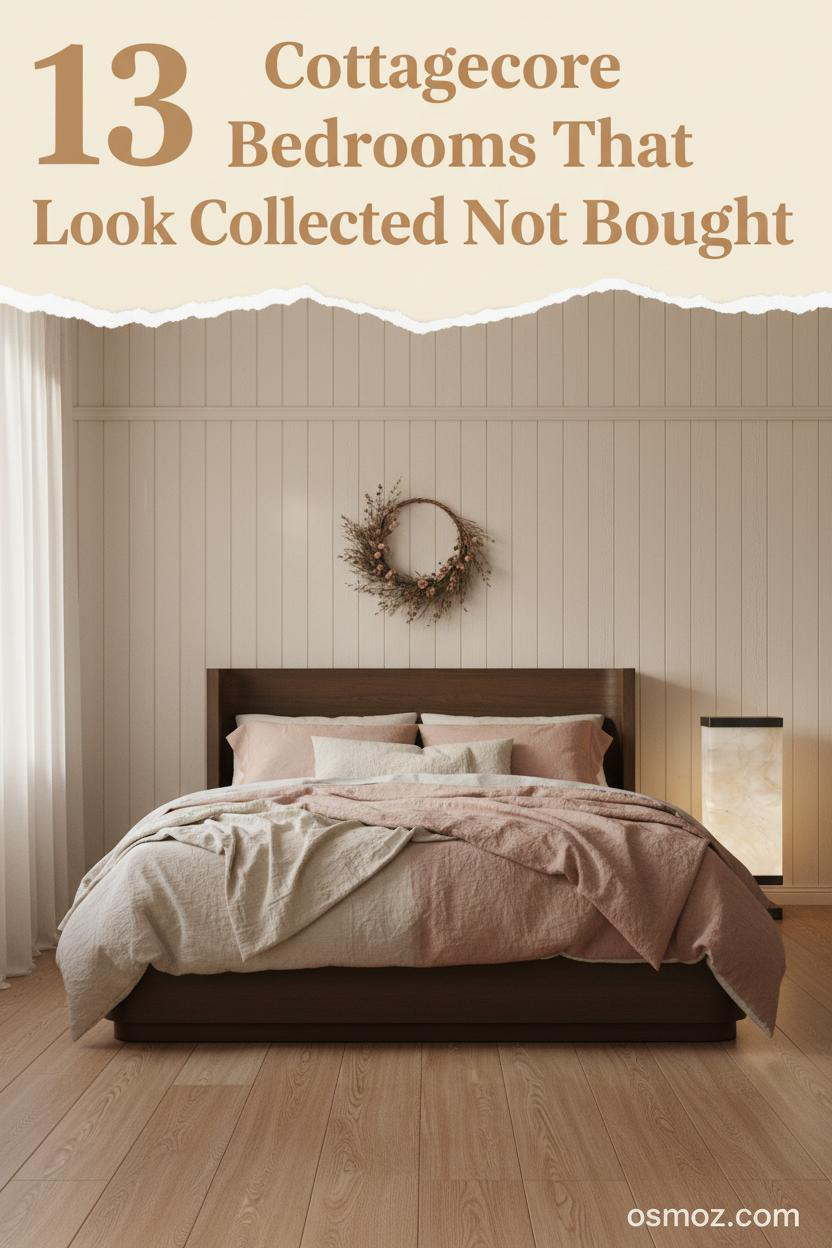
13+ Cottagecore Bedrooms That Feel Collected Rather Than Decorated
24 may 2026The first thing you notice in the best cottage core bedroom isn't the florals or the dried botanicals. It's the feeling that nothing was bought all at once. These rooms look lived-in because they were designed that way.
Below are 13 of the most convincing examples I've found, pulling from vintage bedroom ideas that lean into texture, age, and quiet character rather than catalog perfection.
The Board-and-Batten Wall That Anchors the Whole Room
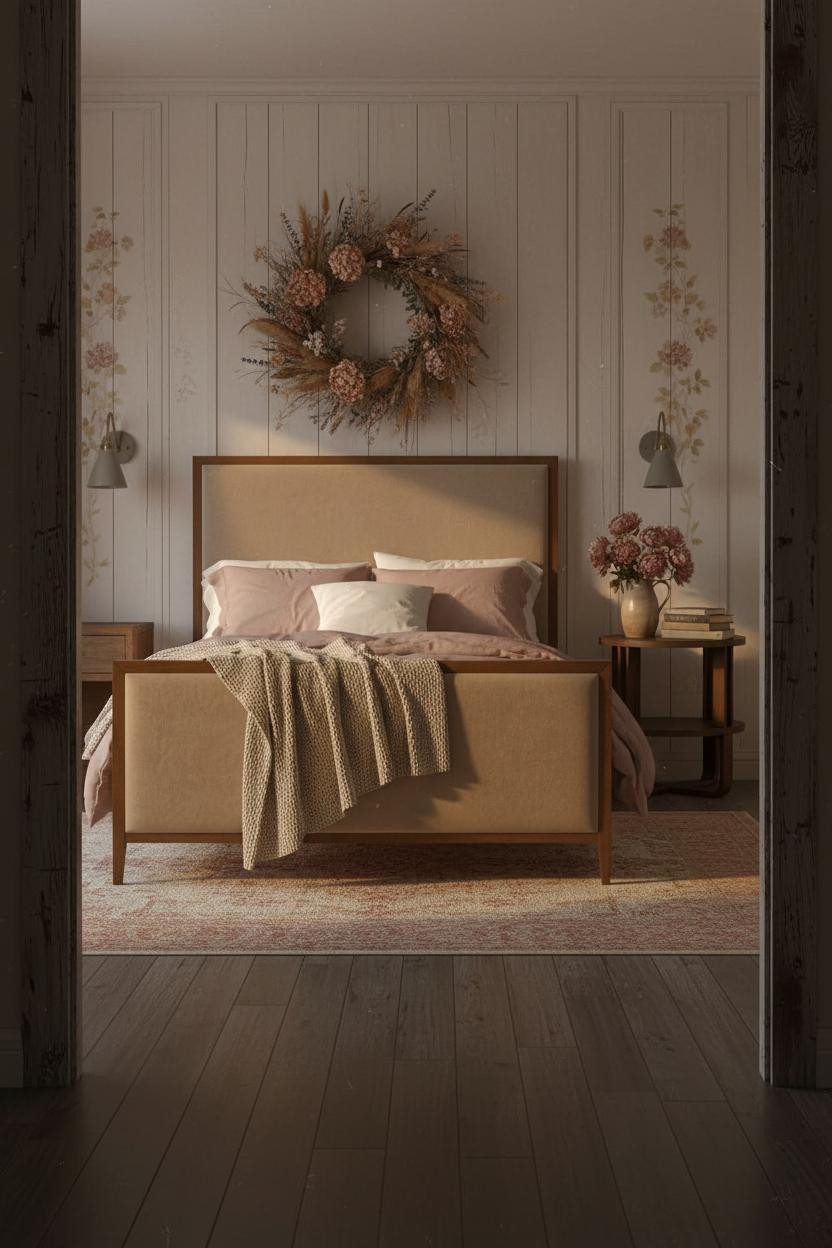

This one earns its place. Not because it's maximalist, but because every element feels like it was found rather than ordered.
The chalky antique white board-and-batten gives the wall its structure, each plank catching light differently so the surface never reads flat. That slight variation is what keeps it from looking like a catalog backdrop.
What to borrow: Hang a dried botanical wreath above the headboard instead of art. It's softer, it doesn't require frames, and it ages better than anything you'd print.
Sage Wainscoting With a Rose-Clay Wall Above It
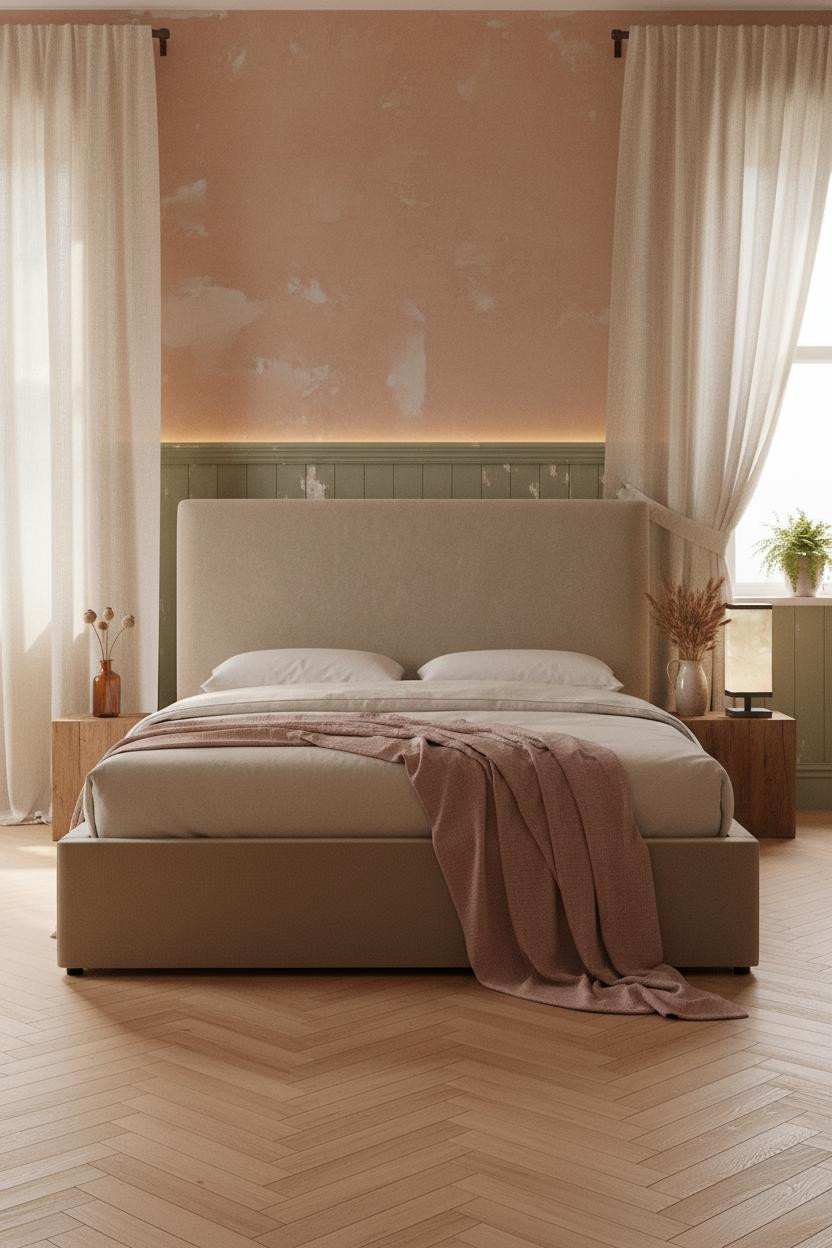

The color split here is what I keep coming back to. Two tones, same room, and it somehow feels completely cohesive.
Why the palette works: The sage green chair rail paneling grounds the lower half while the warm rose-clay plaster above it breathes, so the room feels layered without reading busy.
The easy win: A single dried wheat stem in a ceramic pitcher on the nightstand costs almost nothing and ties the warm and cool tones together instantly.
Cream Tongue-and-Groove With Brass Sconces and a Kilim Runner
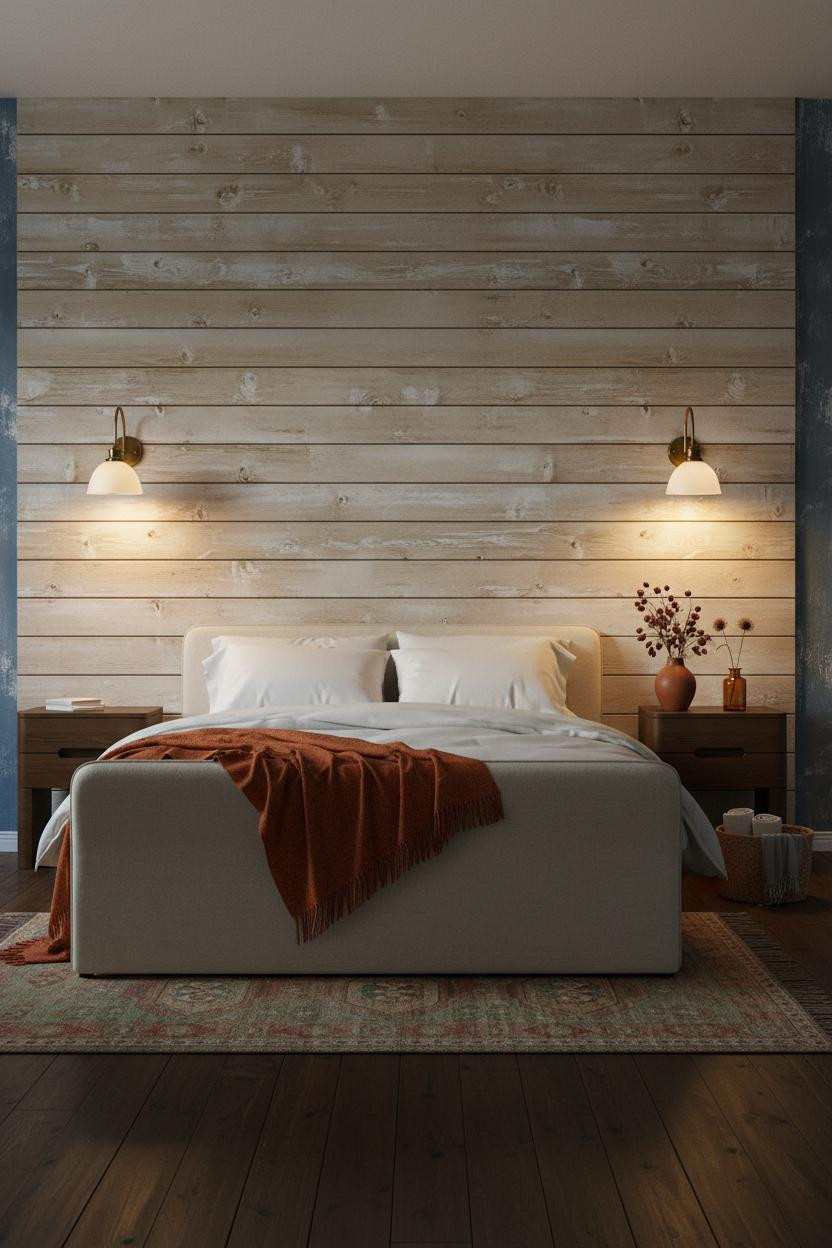

Fair warning. This one reads closer to German farmhouse than English cottage, but I think that makes it more interesting, not less.
What gives it presence: The weathered cream tongue-and-groove paneling behind the bed shows faint ghost-white layers underneath, and that visible history is exactly what keeps the room from feeling like a renovation.
Pair aged brass sconces flanking the headboard wall. The warm metal against the painted wood is the contrast that makes the whole scheme feel collected rather than assembled.
Exposed Stone and Reclaimed Wood in a Provençal Layout
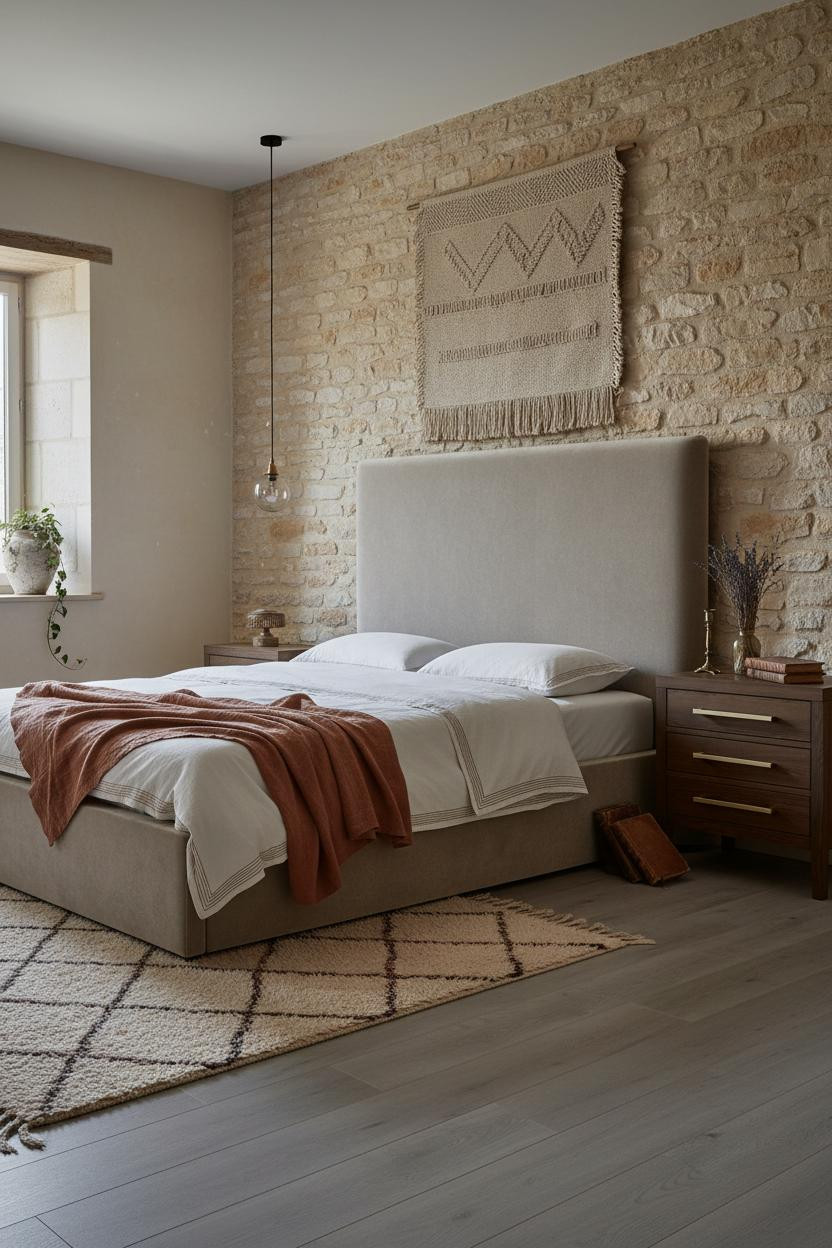
This is the kind of room that makes you want to slow down just looking at it.
Why it feels balanced: Reclaimed silvered-grey plank flooring offsets the heaviness of hand-hewn stone walls, in a way that feels geological rather than designed. Neither material competes.
Steal this move: Add a Moroccan diamond-pattern rug in cream and faded rose beneath the bed. The geometric softness against rough stone is the tension that makes the room interesting.
Moss Green Wainscoting That Feels Like an Irish Cottage
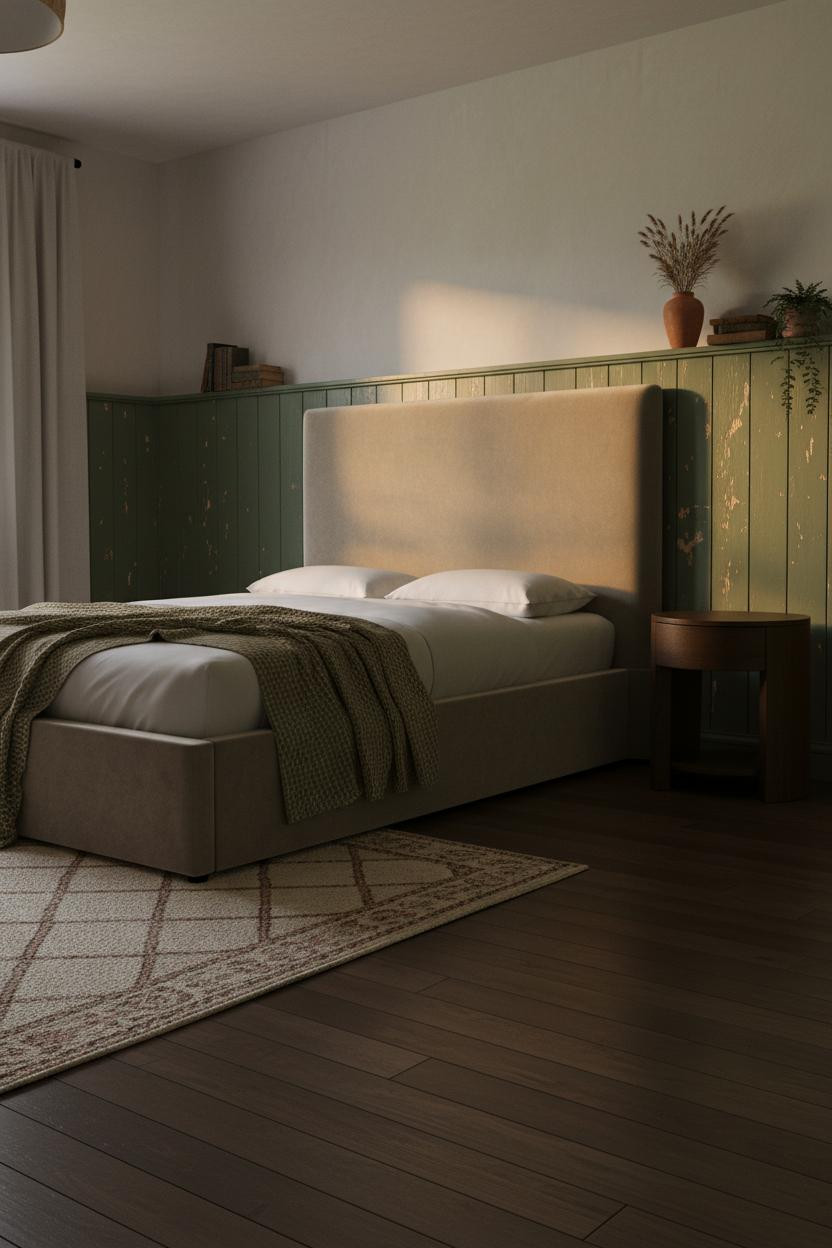
I honestly wasn't sure about the dark floor and the moss green together. But it works, and the reason is simple.
Design logic: The hand-painted moss green wainscoting absorbs the lamp warmth differently than the cream limewash plaster above it, so the wall naturally separates into two moods without needing a contrasting paint color.
Pro move: Layer an olive waffle-weave blanket at the foot of the bed. The green echo between blanket and wainscoting ties the whole palette together without looking matchy.
A Full Limestone Wall That Does All the Heavy Lifting
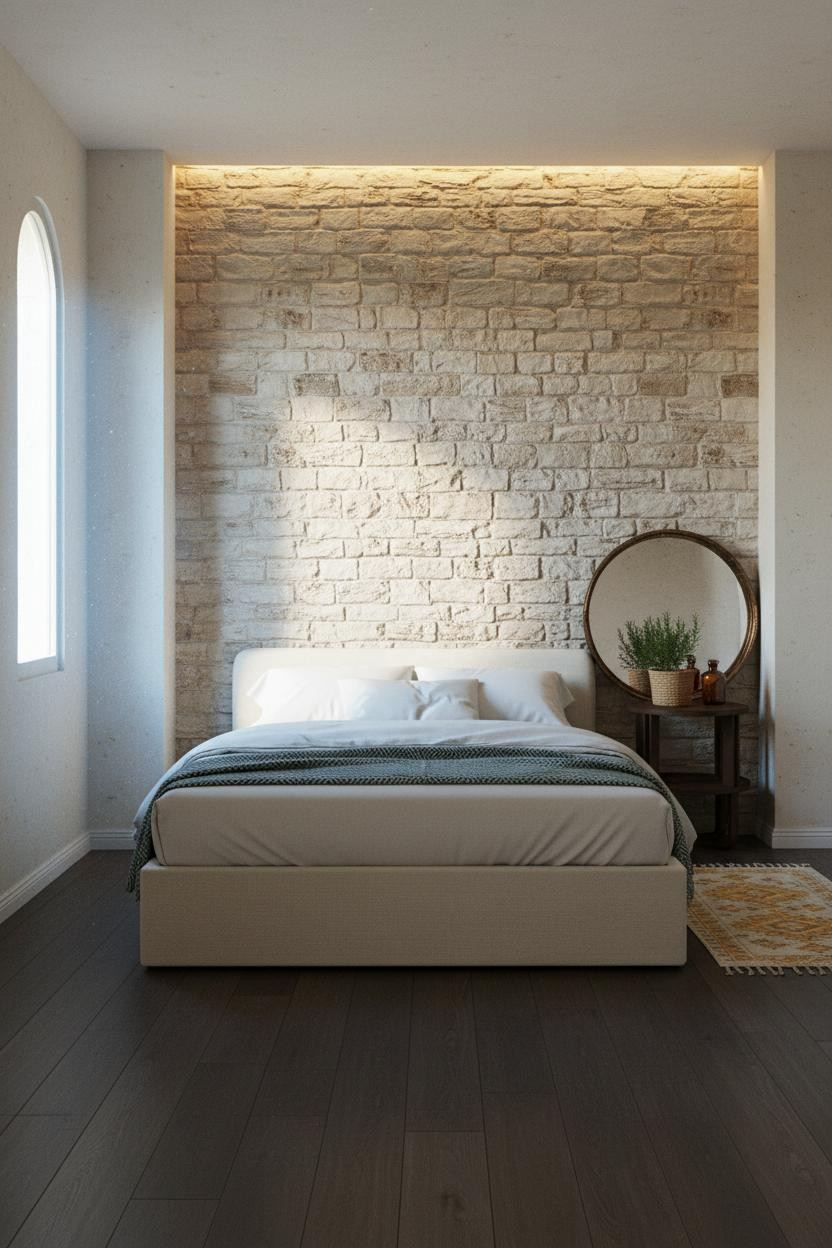
Most bedrooms have a feature wall. This one has a geological event.
The real strength: Each pale limestone block is slightly different in texture, which means morning raking light hits every surface differently and the wall changes throughout the day. You get built-in visual interest without any decor.
Avoid this mistake: Don't hang anything on a stone wall like this. Let it breathe. Lean a large round antique bronze mirror against the adjacent wall instead and let the reflection carry the light.
A Built-In Bookshelf Wall That Earns Every Inch
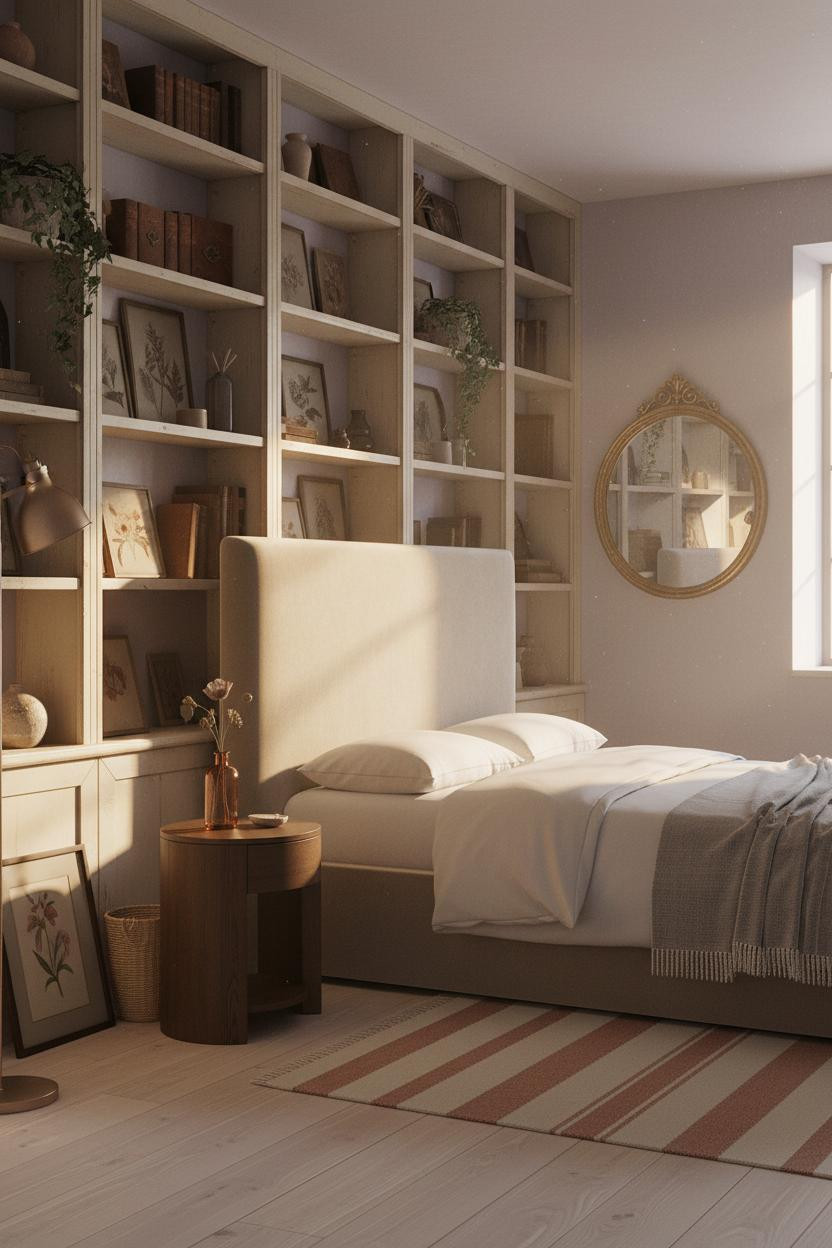
This is the cottagecore bedroom idea I'd actually build. Not the easiest, but worth it.
What makes this one different: Painting the floor-to-ceiling built-in shelving in aged cream with visible brushwork makes it look like a piece of furniture, not a renovation, while the faded lavender-grey walls behind it recede so the shelves feel like they've always been there.
Fill shelves with leather-bound journals, botanical specimens, and trailing ivy. Nothing too precious. The disorder is the point.
Hand-Painted Indigo Tiles Set Into the Headboard Wall
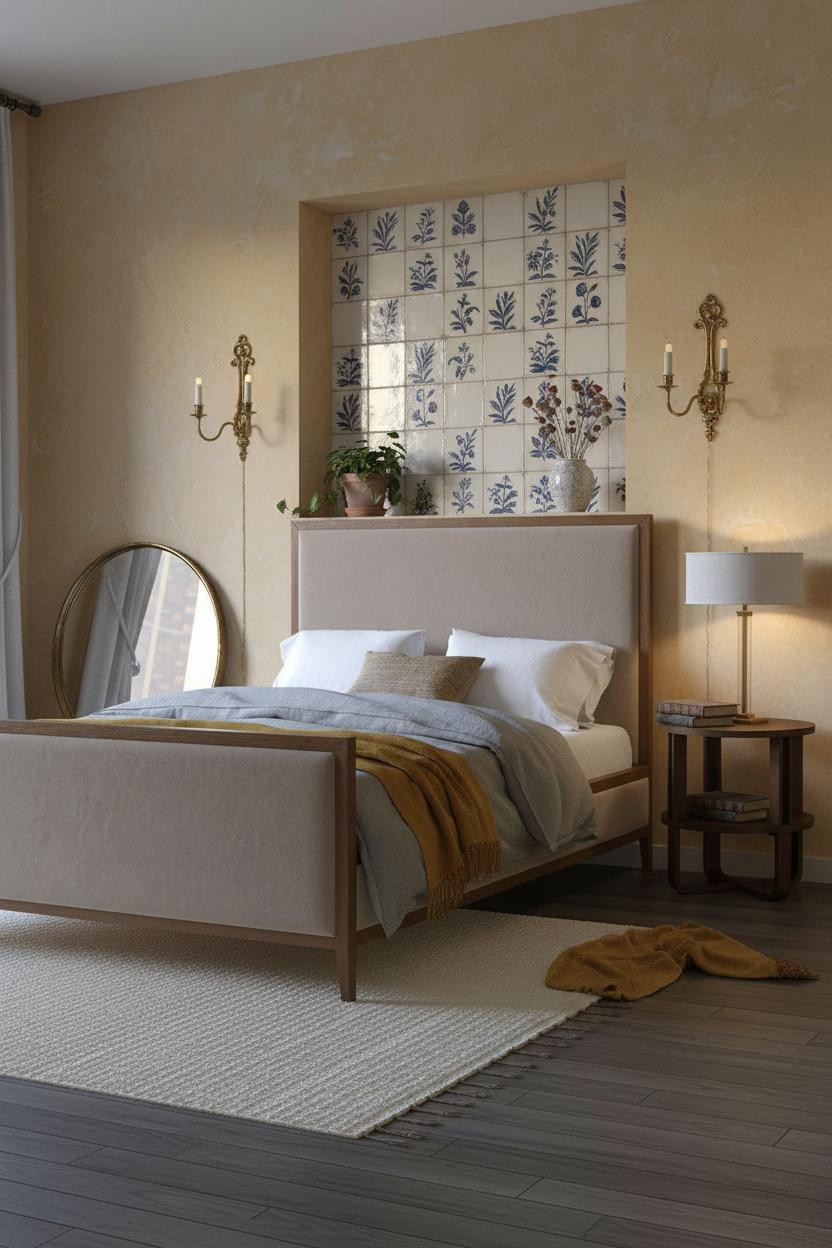
This one is divisive. And I think that's exactly right.
Why it holds together: The hand-painted faded indigo ceramic tile alcove recessed into the wall has hairline crazing across every surface, and that age patina keeps the blue from reading cold against the warm honey ochre walls flanking it.
The smarter choice: Layer a chunky cream wool rug underfoot. The softness at ground level balances the hardness of the tile above, which helps keep the room from feeling too much like a Portuguese kitchen.
An Arched Window That Changes the Whole Room
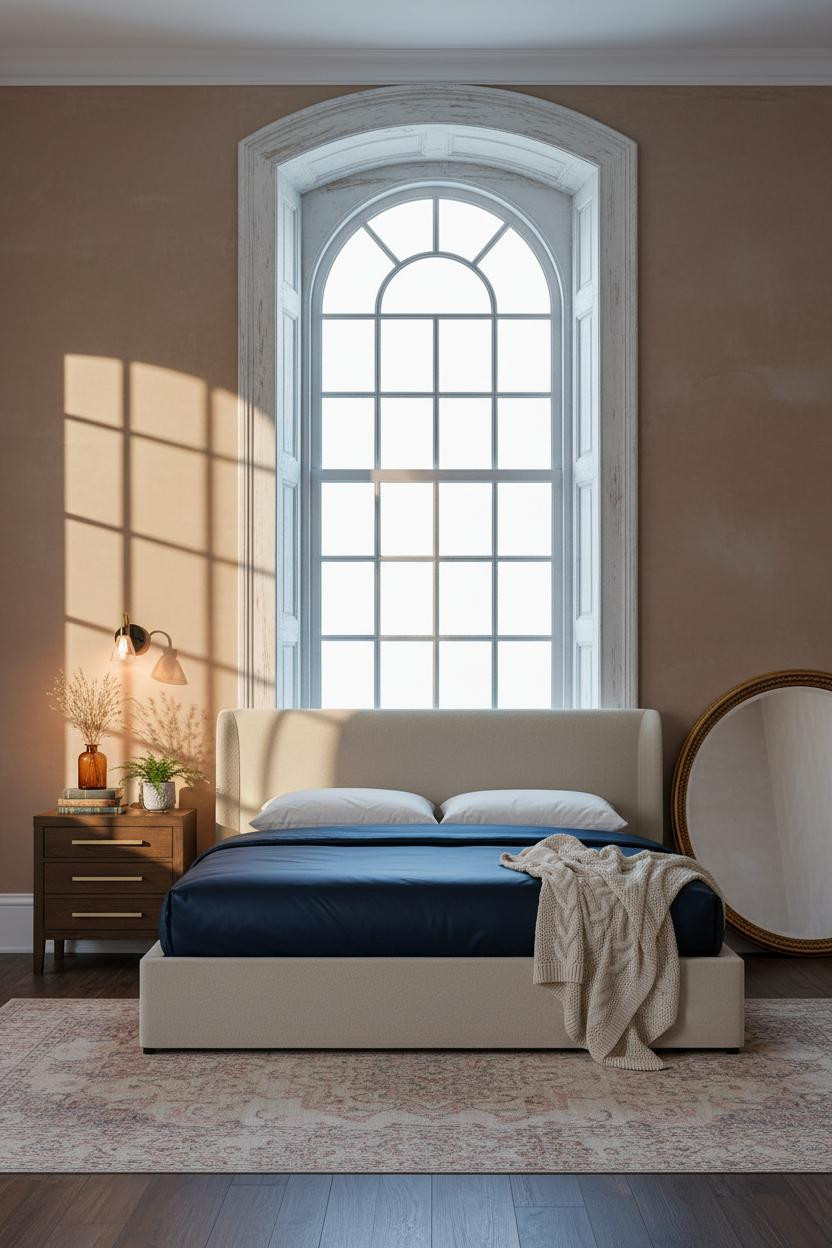

Having an eight-foot arched window in a bedroom changes how you actually experience the light, not just how the room photographs.
The whitewashed oak trim on the arch catches pale gold at the edges while the divided panes cast crisp geometric shadow bars across the warm mushroom plaster wall opposite. The room feels calm and cohesive because the architecture does the decorating.
Where to start: If you can't change the windows (most of us can't), lean a large round gilded mirror against the right wall so it bounces the arch's light back into the room.
Wooden Ceiling Beams in a Tuscan-Inspired Layout
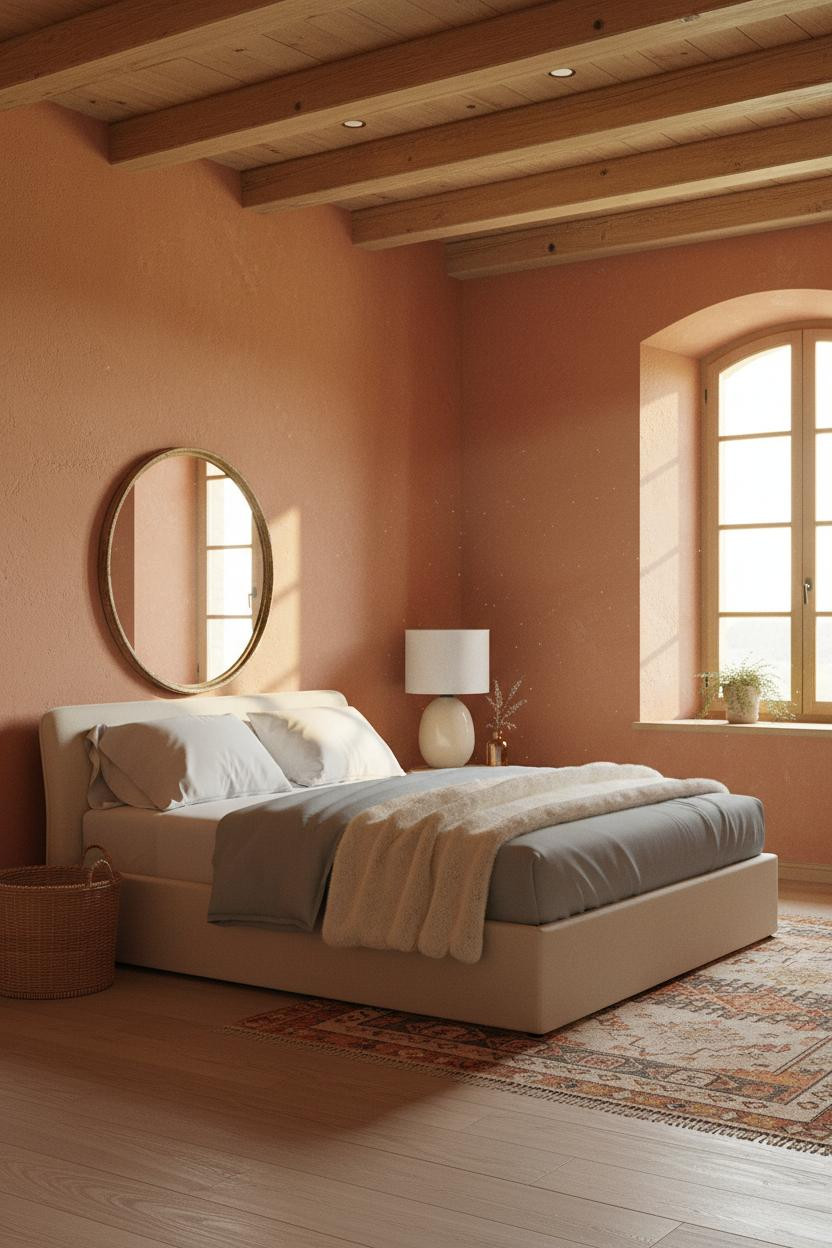

Boldest move on this list. But the rooms that commit to it fully never look trendy because they're borrowing from something centuries old.
Exposed honey-toned timber ceiling beams throw soft linear shadows down across the terracotta-washed plaster below, so the warmth builds from the ceiling down rather than from the floor up. It's a different kind of cozy than most cottagecore bedrooms attempt.
Don't ruin it with overhead recessed lighting directly under the beams. A single floor lamp beside the bed keeps the amber warmth low and the beams doing the architectural work above.
A Sage Bay Window That Feels Like a Morning Ritual
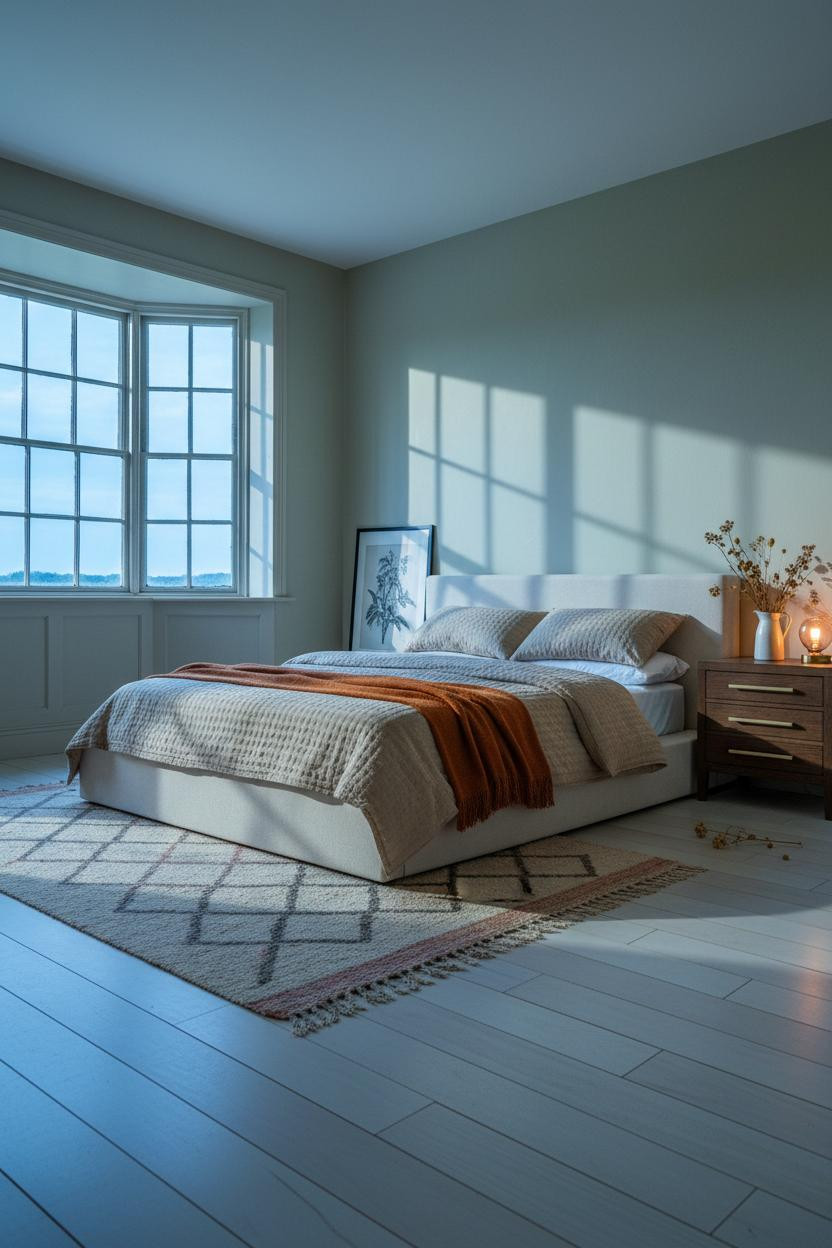
A deep bay window with a painted wooden sill is honestly one of the best architectural features a cottagecore bedroom can have.
What carries the look: The muted sage-green walls absorb the cool morning window light without going grey, so the room stays warm and reads intimate even in early blue-hour light.
The finishing layer: A burnt orange mohair throw draped asymmetrically over the footboard. It anchors the bed and cuts through the cool tones just enough to keep things interesting.
A Botanical Arch Niche That Frames the Entire Bed
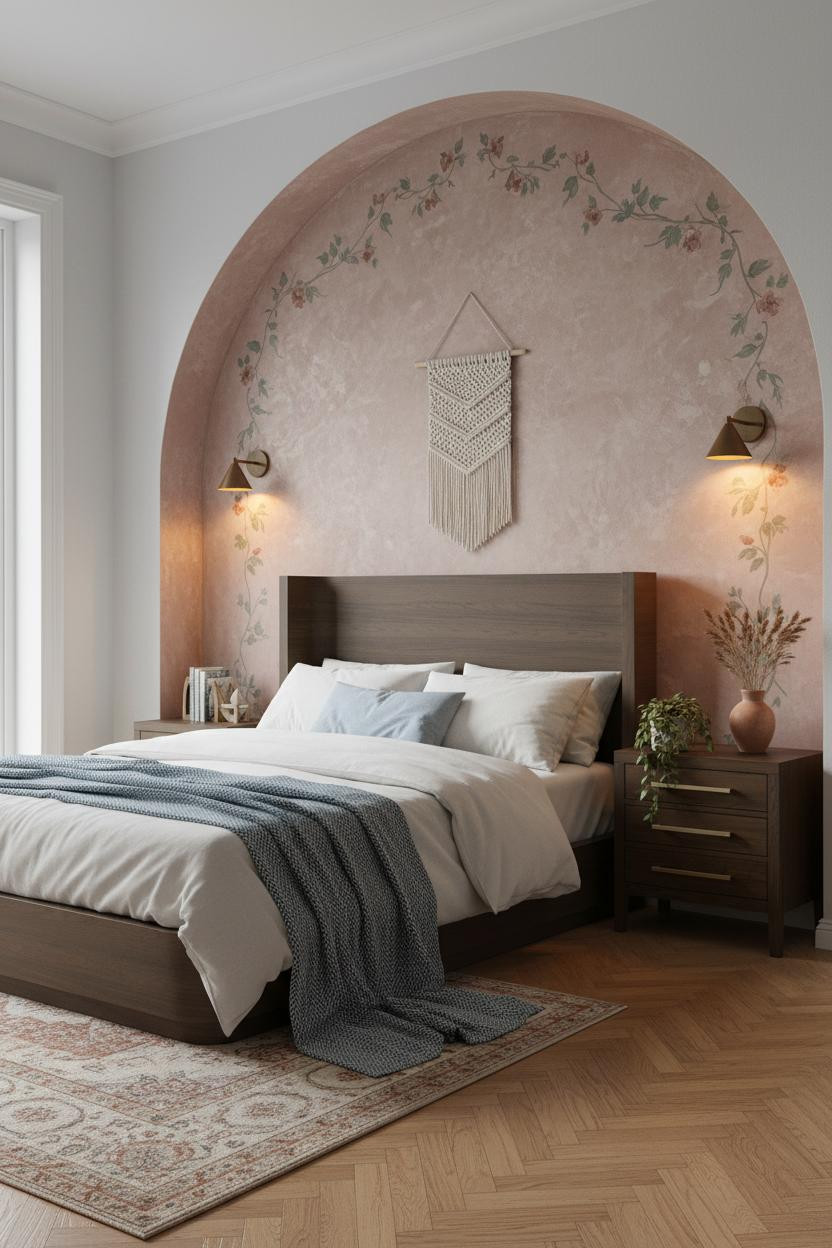
I keep saving versions of this arch idea and I think it's because it solves the headboard problem differently than anything else on this list.
Why it looks custom: Hand-painted trailing botanical vines in sage and dusty rose curve along the arch's plaster edges, so the painted detail and the architecture work as one piece rather than decoration applied over a flat wall.
Worth copying: Paired sconces flanking the arch cast warm amber light across the curved plaster surface. The way the glow follows the arch line is what makes the room feel lived-in and intimate rather than staged.
Cream Shiplap With Sage Accents and Golden Hour Light
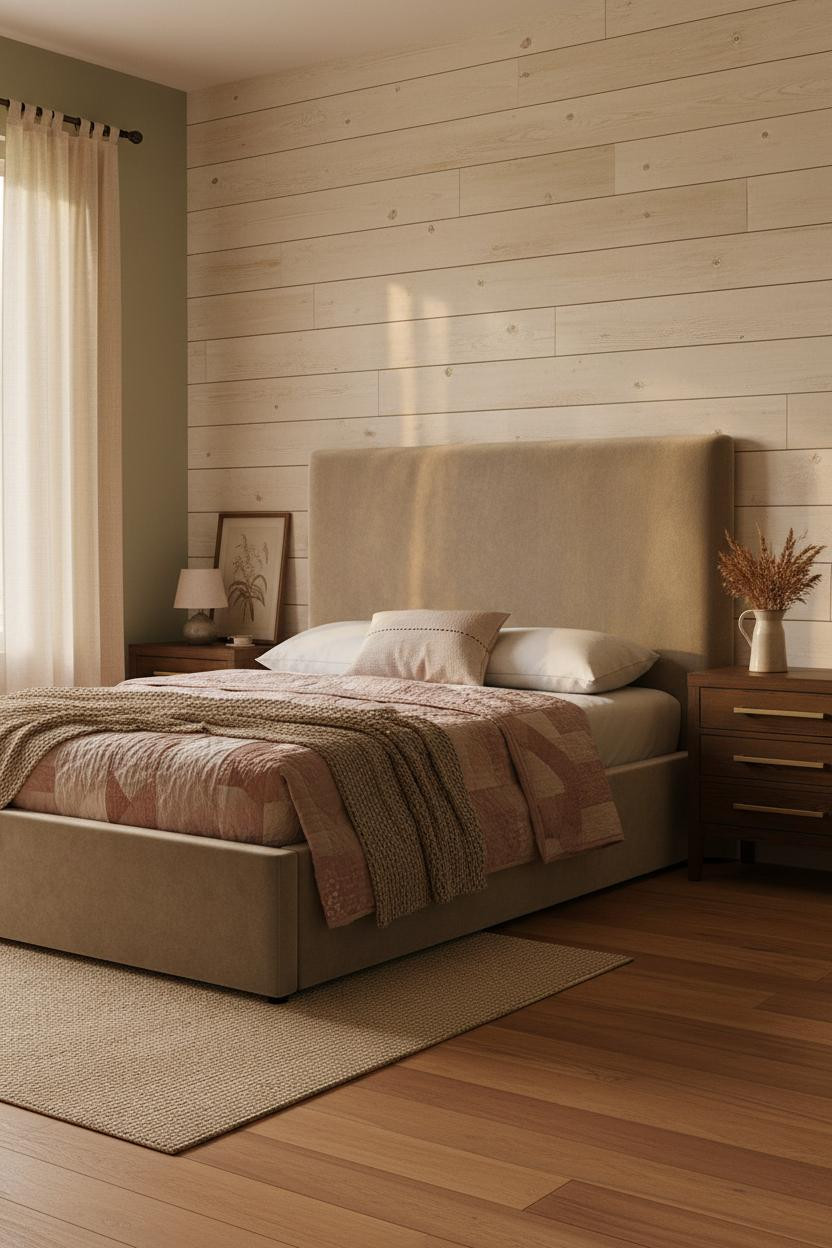
Nothing fancy. That's the whole point of this one.
What softens the room: Each plank of cream shiplap is slightly varied in tone, so golden hour light raking across it hits at different angles and the wall reads warm and layered rather than flat and painted. The sage flanking walls keep the cream from going too beige.
Hang floor-to-ceiling linen curtains from a wrought-iron rod. The vertical weight grounds a shiplap wall that might otherwise feel too horizontal, and the soft drape adds just enough texture to keep things from looking too farmhouse-catalog.
 Our #1 Pick
Saatva Classic Mattress
America's best-selling online luxury innerspring. 365-night trial, lifetime warranty, free white glove delivery.
Shop Saatva Classic
Our #1 Pick
Saatva Classic Mattress
America's best-selling online luxury innerspring. 365-night trial, lifetime warranty, free white glove delivery.
Shop Saatva Classic
The Foundation Of Every Beautiful Bedroom
All 13 of these rooms have one thing in common beyond the dried botanicals and the aged plaster. They feel good to be in. And that starts with the bed itself, not just how it looks.
The Saatva Classic is what I'd put under all of it. The dual-coil support system holds up the way a proper mattress should, the Euro pillow top has a softness that doesn't collapse after a year, and the breathable organic cotton cover doesn't trap heat the way cheaper materials do. It's the kind of mattress that makes the whole room feel more intentional.

The rooms people keep returning to are the ones where the comfort matches the atmosphere. Good design ages well because it's made well. Start with the bed. The rest figures itself out.