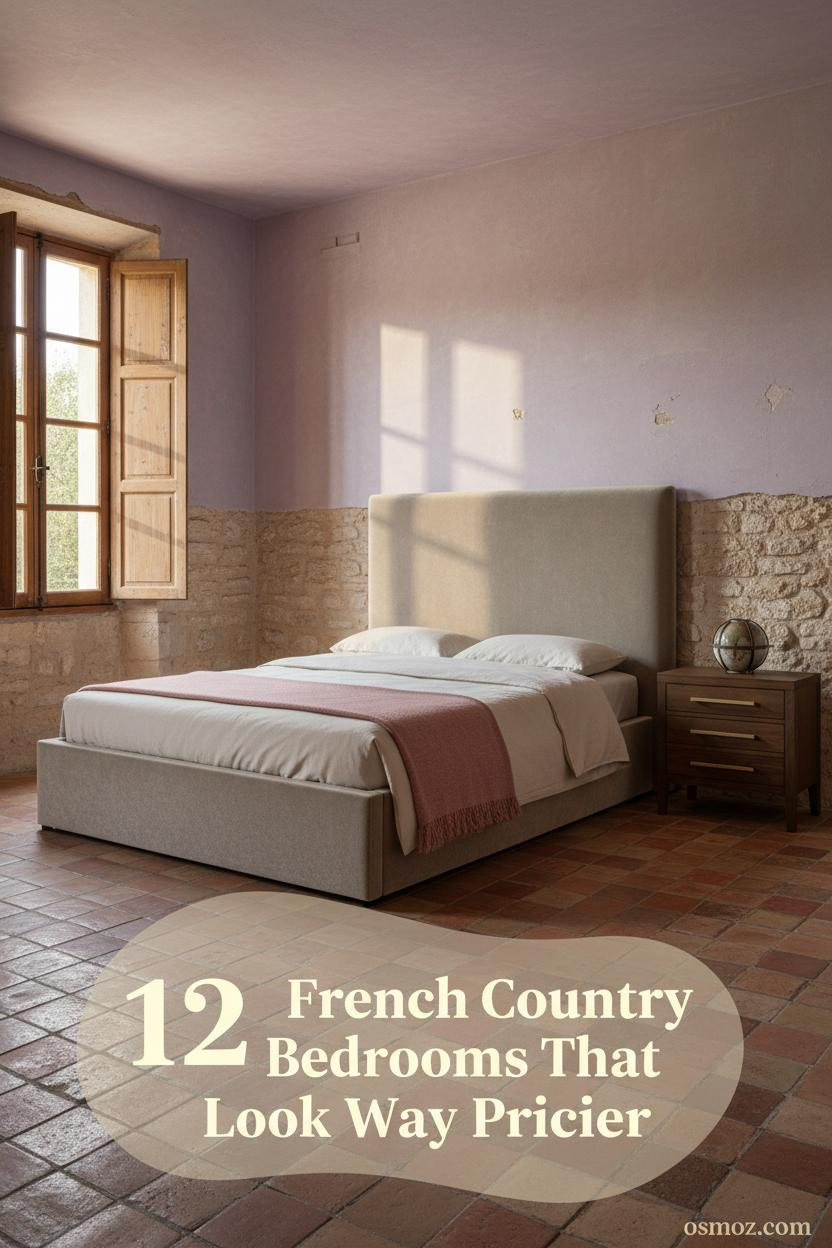
12+ French Countryside Bedrooms That Feel Collected, Not Decorated
23 may 2026The first time I saw a real French countryside bedroom, I understood why people save these rooms to mood boards for years. Nothing looks placed. Everything looks found.
These 12 rooms lean into that. Raw plaster, stone that's been there for centuries, linen that's been washed too many times to count. That's the whole point.
Wainscoting That Looks Like It Was Always There
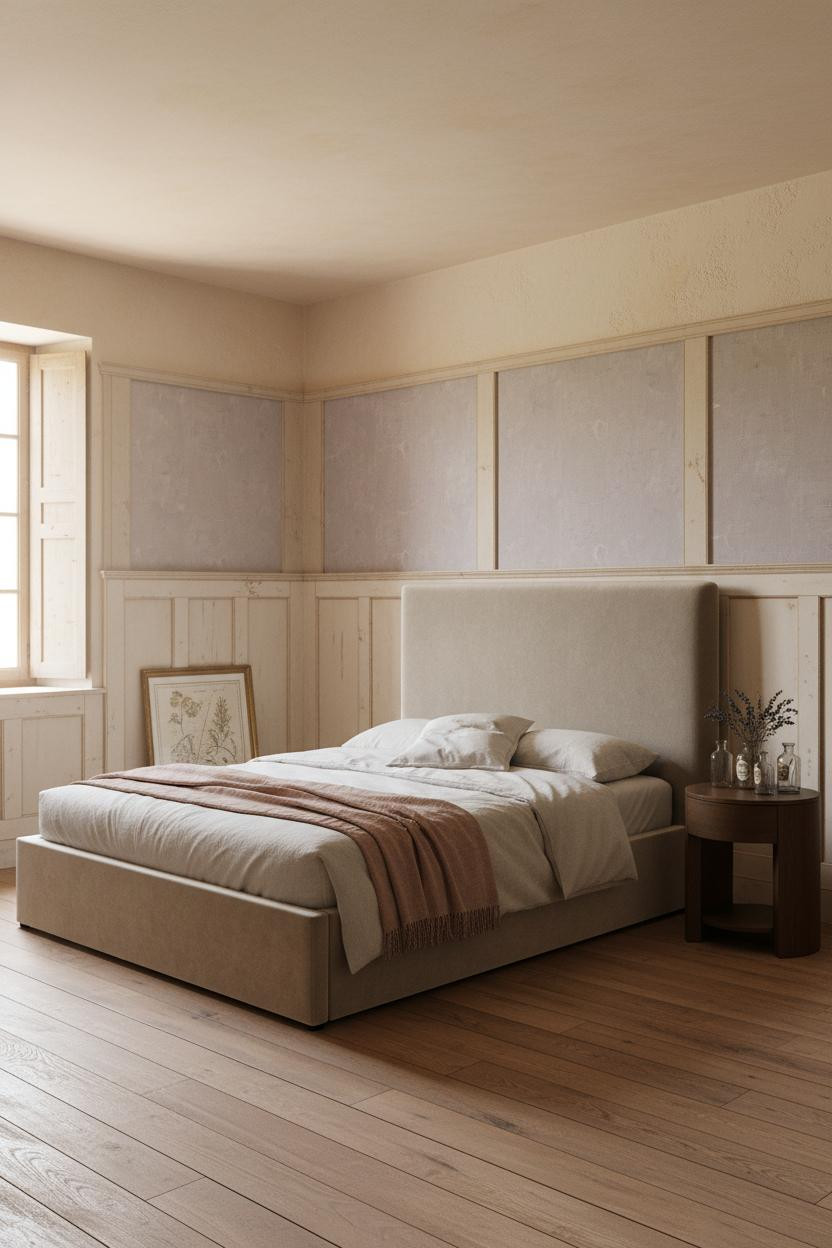


I keep coming back to this one. The proportions feel inherited, not installed.
Why it holds together: Half-height cream-painted wainscoting with visible crackle and a faded dusty lavender wall above creates a layered surface that reads old in the best way. The two finishes don't match, and that's exactly why it works.
Steal this move: Layer a wool throw in rose-taupe across the footboard and add dried lavender stems to the nightstand. Simple, but the room instantly feels like it has a history.
Exposed Plaster Walls Done the French Way
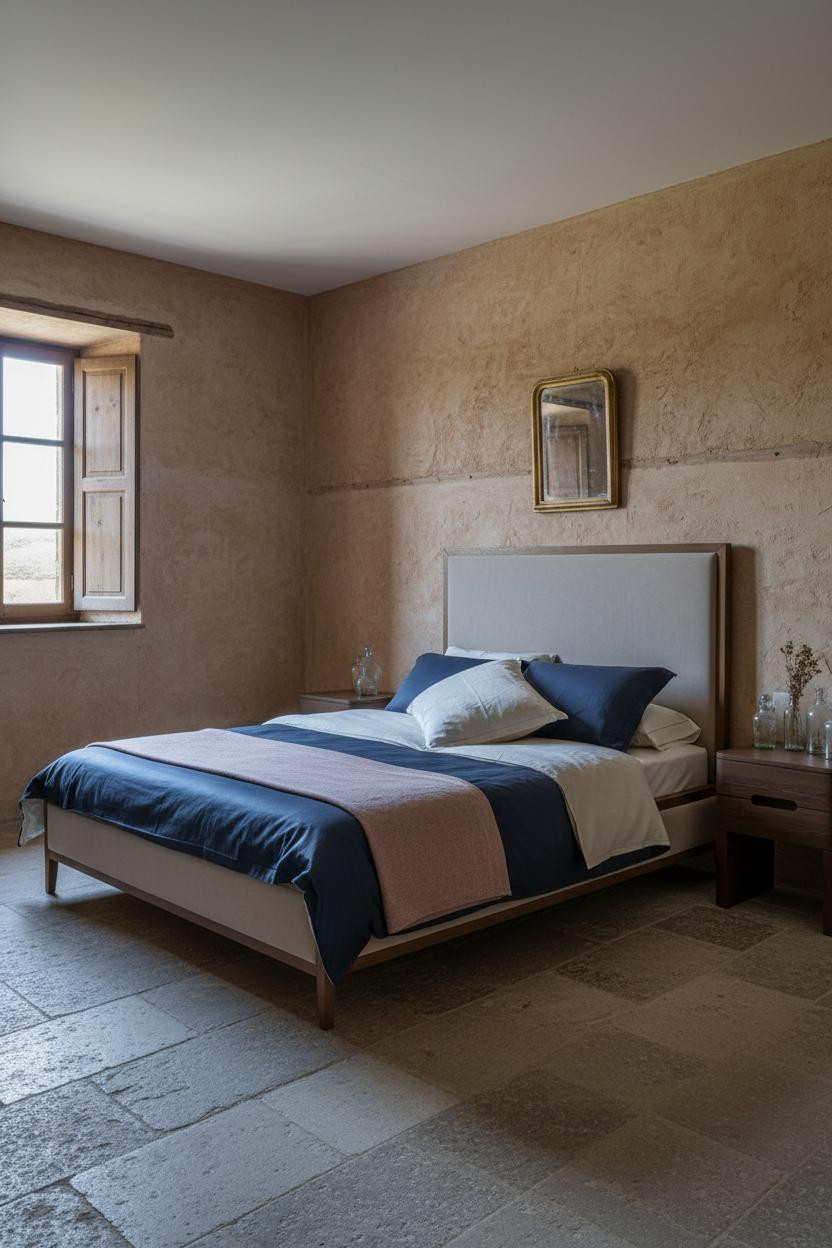


Bold choice. Most people would smooth this wall out and paint it white.
But the rooms that feel genuinely old never got that treatment. The rough mushroom-toned plaster here, with its centuries of irregular hand-applied layers, is what makes the gilt mirror and navy bedding feel collected rather than styled.
The smarter choice: Let the wall be the feature. Keep everything else quieter. A dusty rose linen throw folded at the foot does more than a patterned duvet ever could.
The Stone Archway That Earns Every Compliment
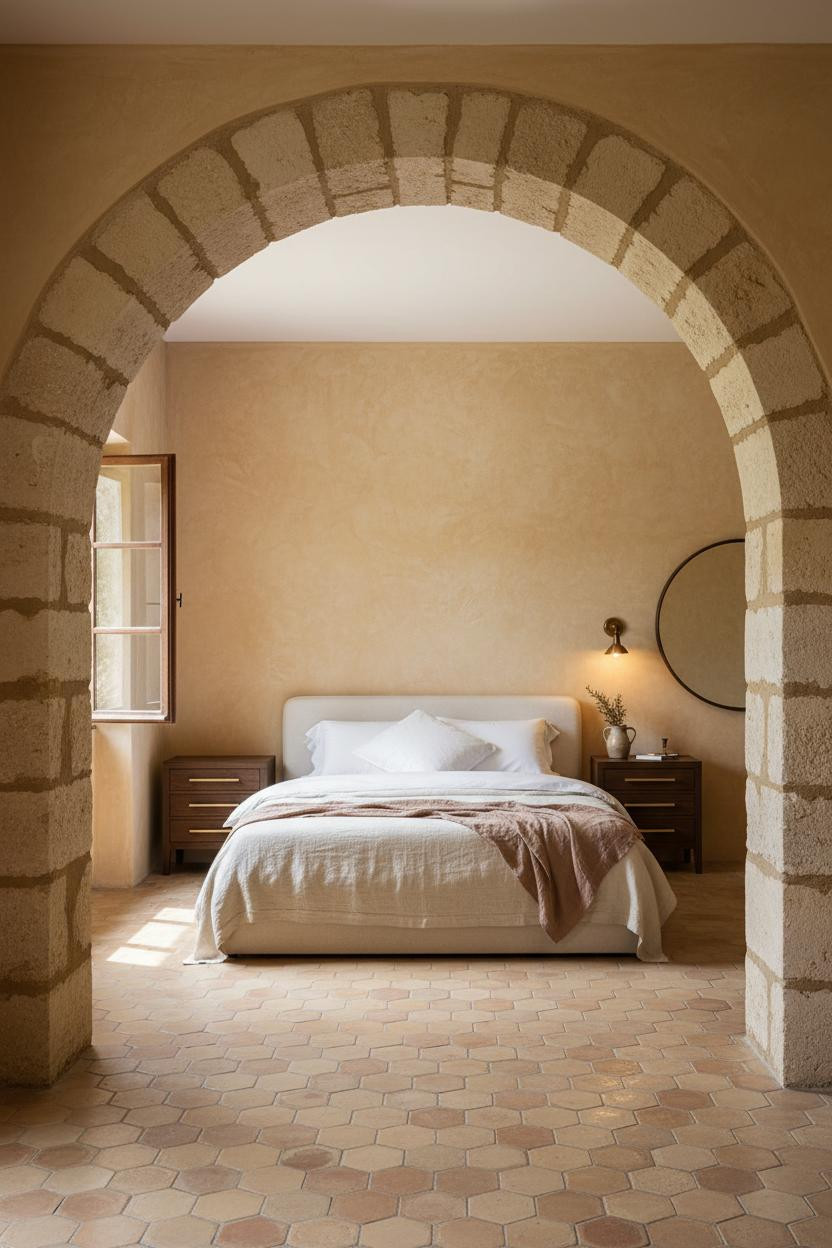


This is the kind of room that makes you want to sit very still and not change anything.
What gives it presence: A floor-to-ceiling rounded limestone archway with irregular coursework and worn mortar frames the bed like an architectural portrait. Every stone face catches raking light differently, and that variation is what makes it impossible to replicate with a faux finish.
Lean an oxidised iron mirror against the jamb and leave the nightstand spare. A small ceramic jug with a dried rosemary sprig is honestly enough.
A Stone Chimney Breast That Owns the Room
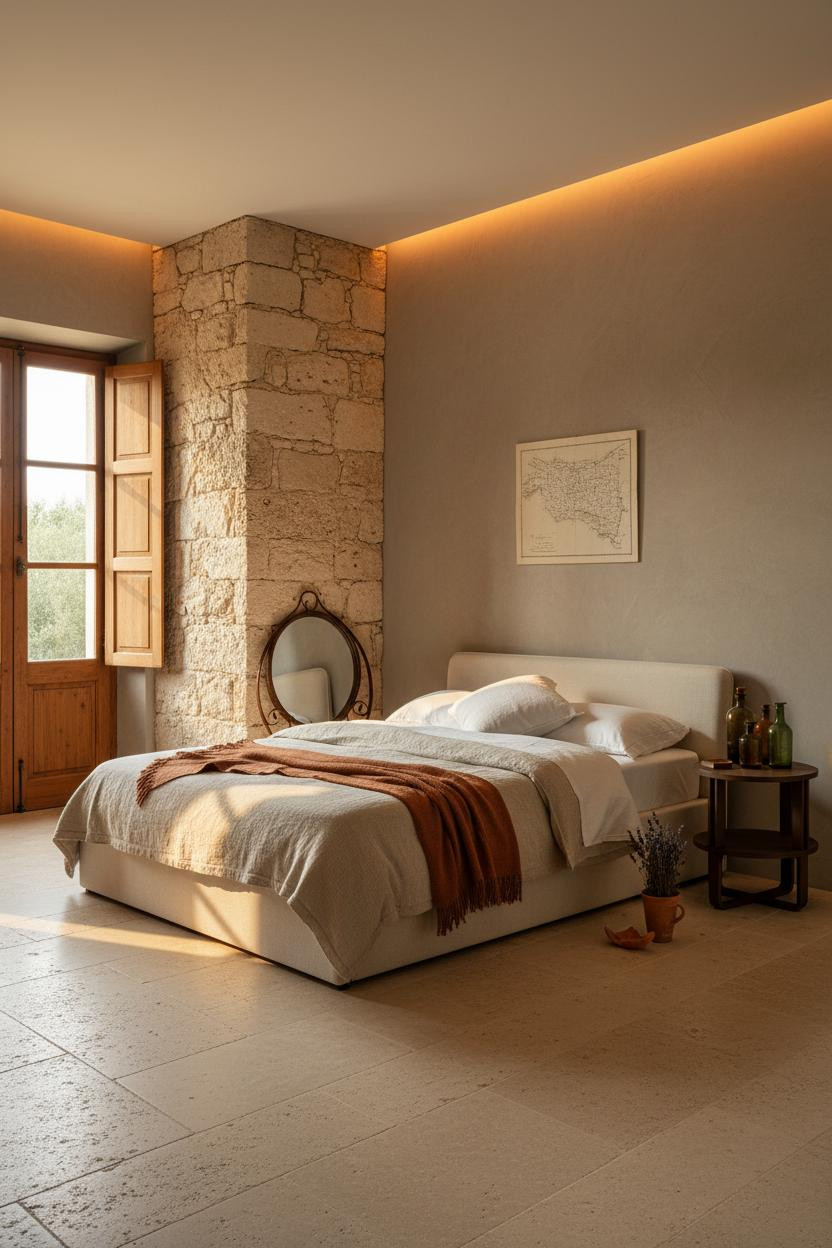

Nothing competes with raw pale limestone stacked floor to ceiling in the corner. Nothing should try.
Why it feels expensive: The dry-set coursework and deep mortar shadow lines catch early morning light in a way that makes the whole room feel geological. Stone like this is the reason the rest of the room can stay quiet and still look complete.
Avoid this mistake: Don't style the chimney ledge heavily. A burnt sienna throw off the mattress edge and a lavender bundle on the floor beside the nightstand is plenty. The stone does the work.
When the Fireplace Is Actually the Headboard
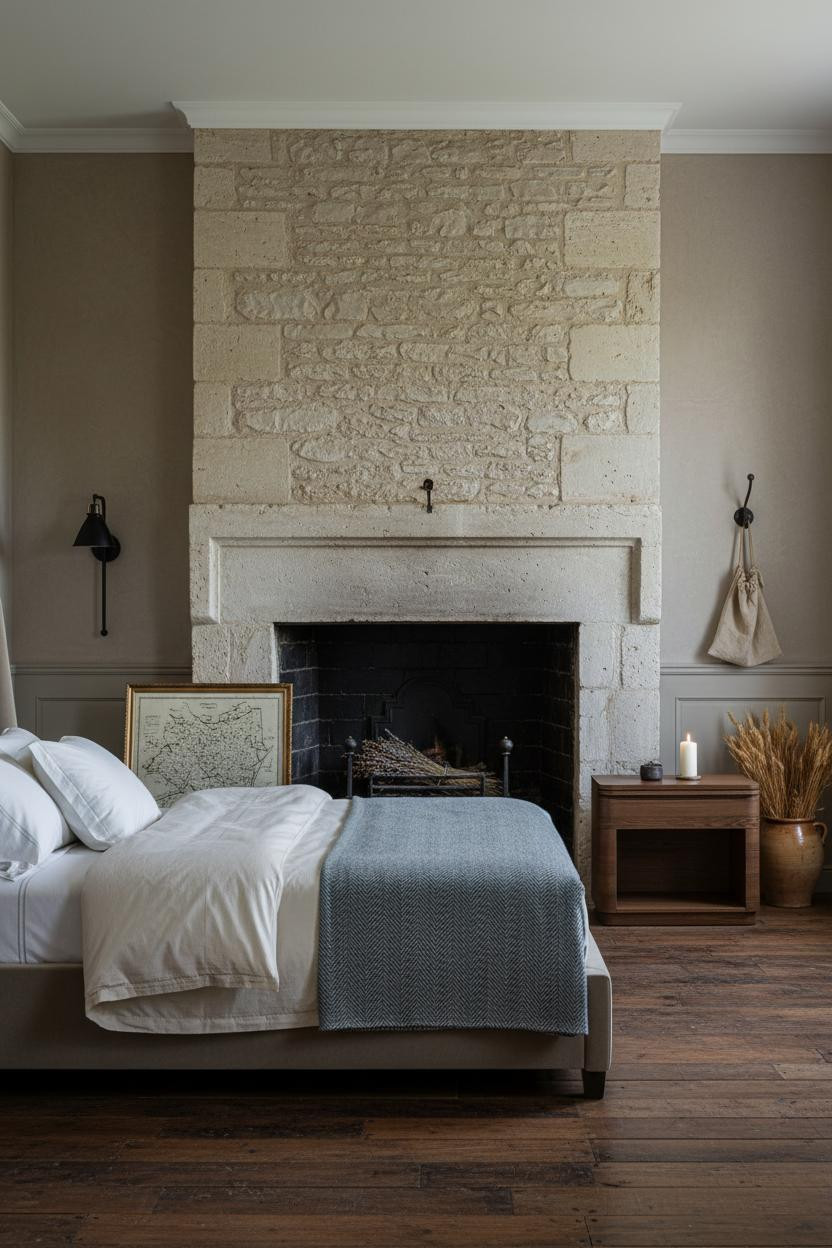


Fair warning. This one is divisive. A full-height rough-cut fieldstone fireplace on the bedroom wall is a commitment.
But when the cold hearth holds dried lavender bundles and the iron grate catches diffused morning light, the room feels lived-in and intimate in a way no painted wall could manage. The irregular limestone blocks create shadow depth that shifts through the day.
What to borrow: Prop a faded botanical map in a cracked gilt frame against the stone base at floor level. It's a quiet nod to old Provençal interiors, and it costs almost nothing.
A Stone Alcove That Makes the Bed Feel Like a Destination
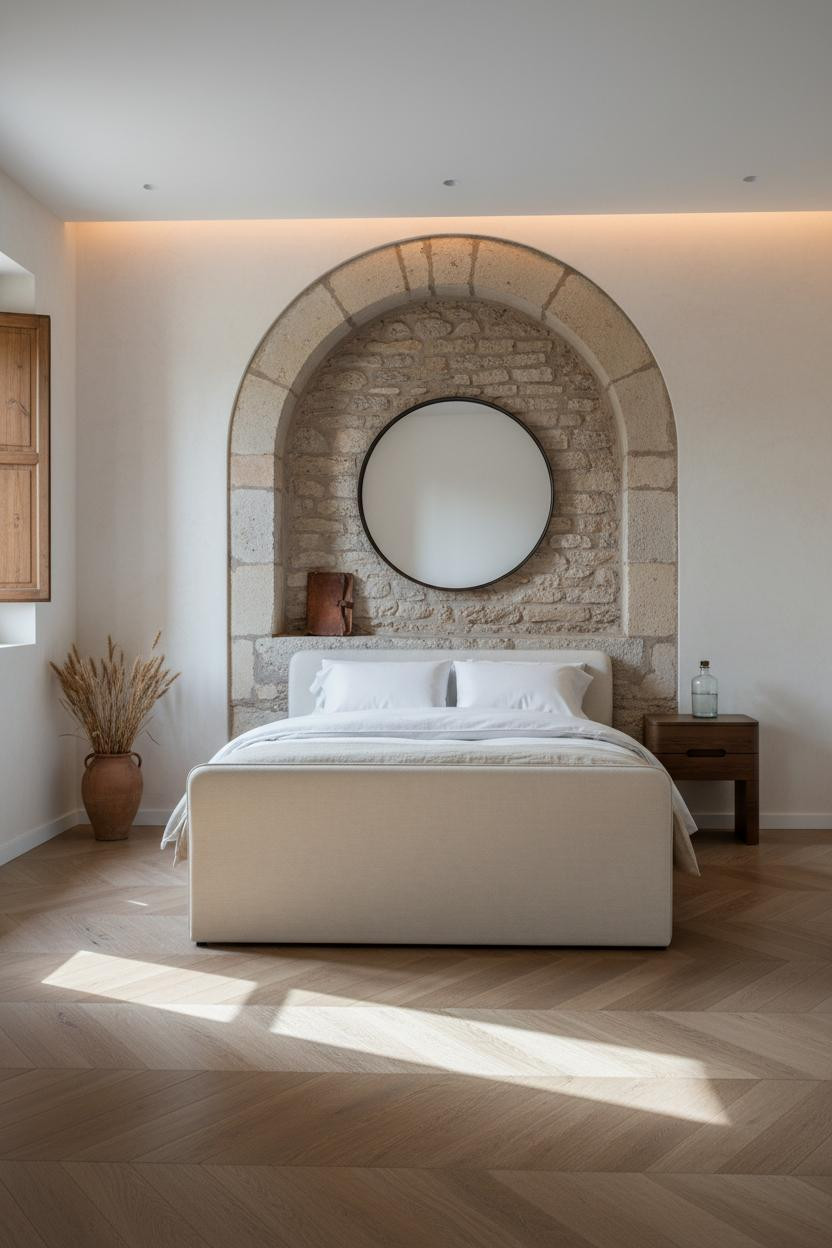
I almost scrolled past this. Glad I didn't.
What creates the mood: A floor-to-ceiling arched stone alcove in pale grey and amber limestone, set against chalk-white plaster walls, gives the bed an architectural frame that feels centuries old. The herringbone parquet in warm amber oak picks up the stone tones from below, which helps balance the cool chalk above. Mount an iron-framed round mirror within the arch to pull light into the deepest part of the alcove.
Stone Wainscoting With Lavender Plaster Above
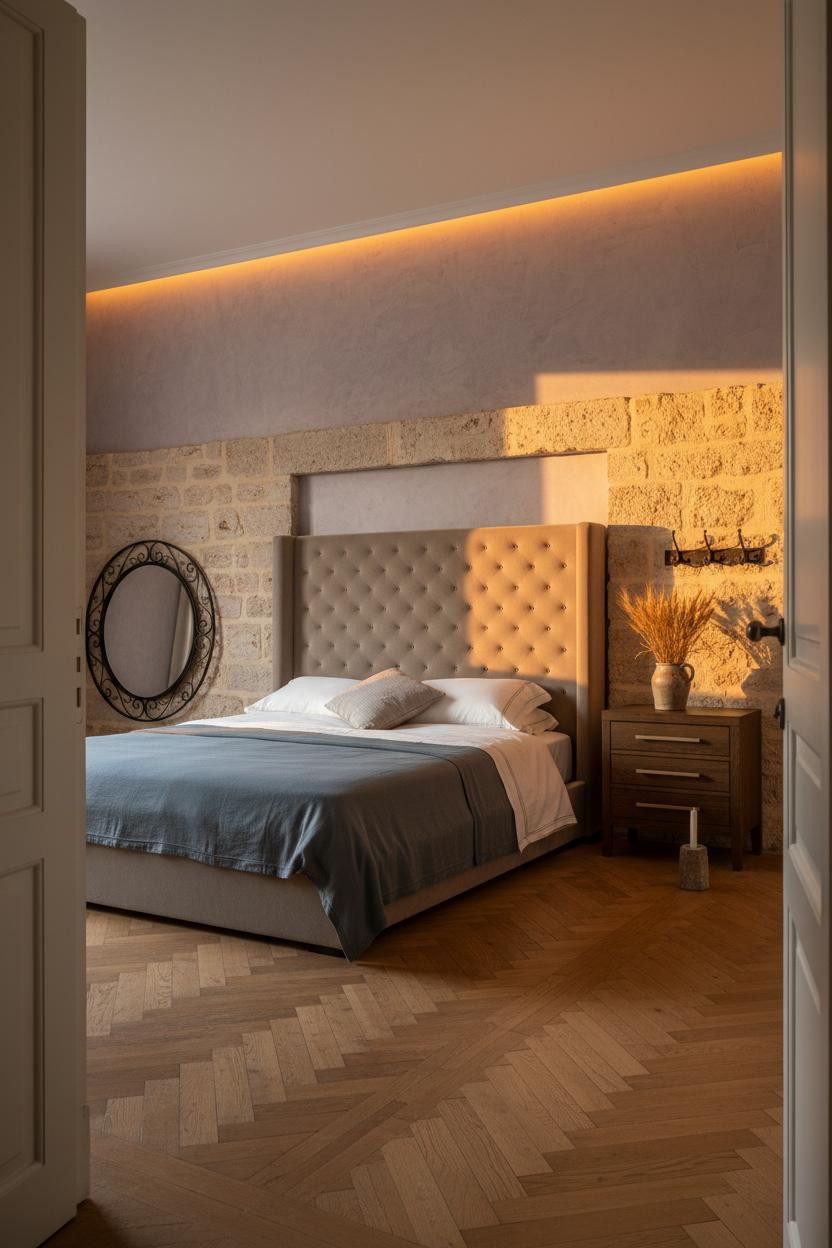

This combination shouldn't feel as quiet as it does. Two strong textures sharing a wall, and the room still feels calm and cohesive.
Why the materials matter: Rough-hewn limestone wainscoting at half height meets a faded lavender-grey limewash plaster cleanly at the rail line. The contrast is textural rather than tonal, which keeps it from feeling like two rooms fighting each other.
The easy win: Add a slate jersey duvet and a single cream percale layer. Warm sunset light raking across the stone does the rest.
Blue-Grey Limewash Above Stone, Morning Light Doing All the Work
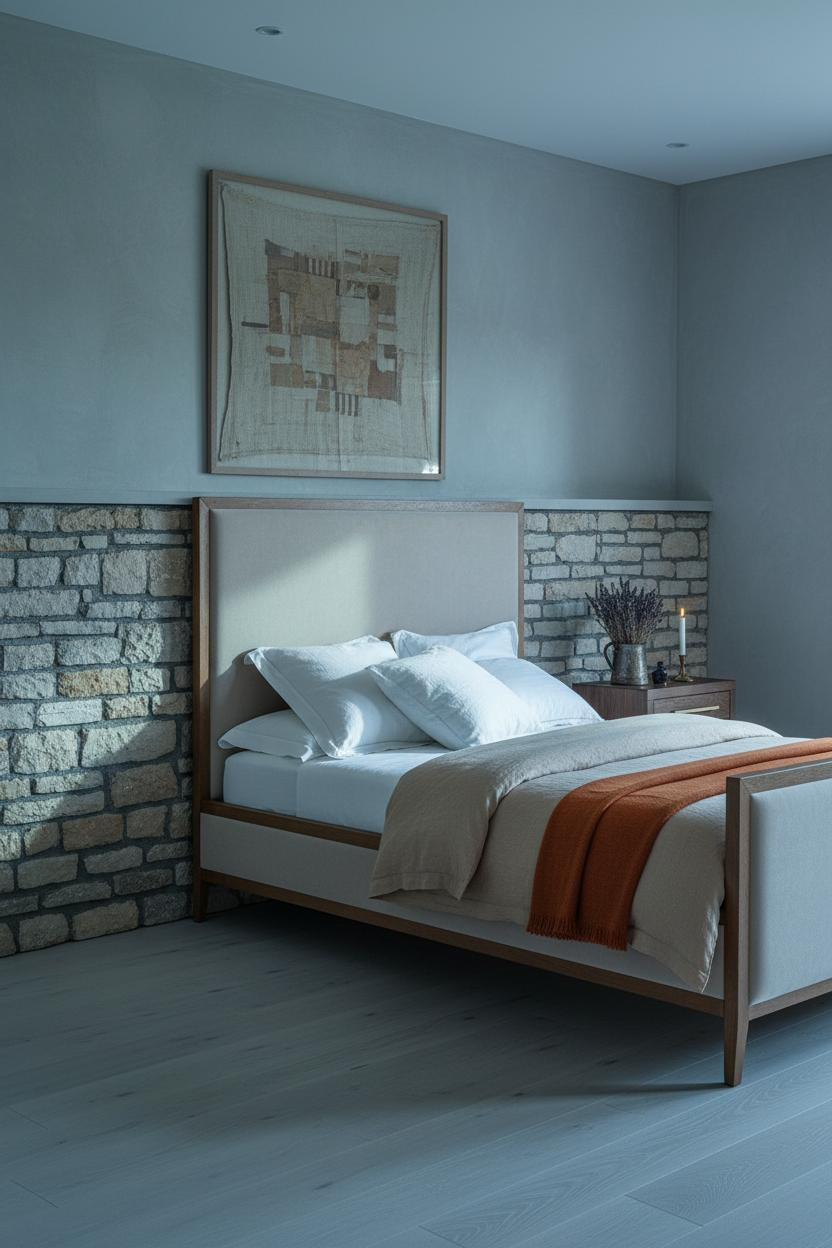
This is the cooler, quieter version of the Provence palette. And I think I prefer it.
The muted blue-grey limewash above the stone wainscoting catches north light differently than warm plaster does. Crisper. More mineral. The pale bleached oak floor keeps it from going cold, which is the move.
In a room like this, the finishing layer is a burnt orange mohair throw at the foot of the bed. It does more to warm the palette than repainting ever could.
Board-and-Batten Wainscoting With Honey Limewash Above
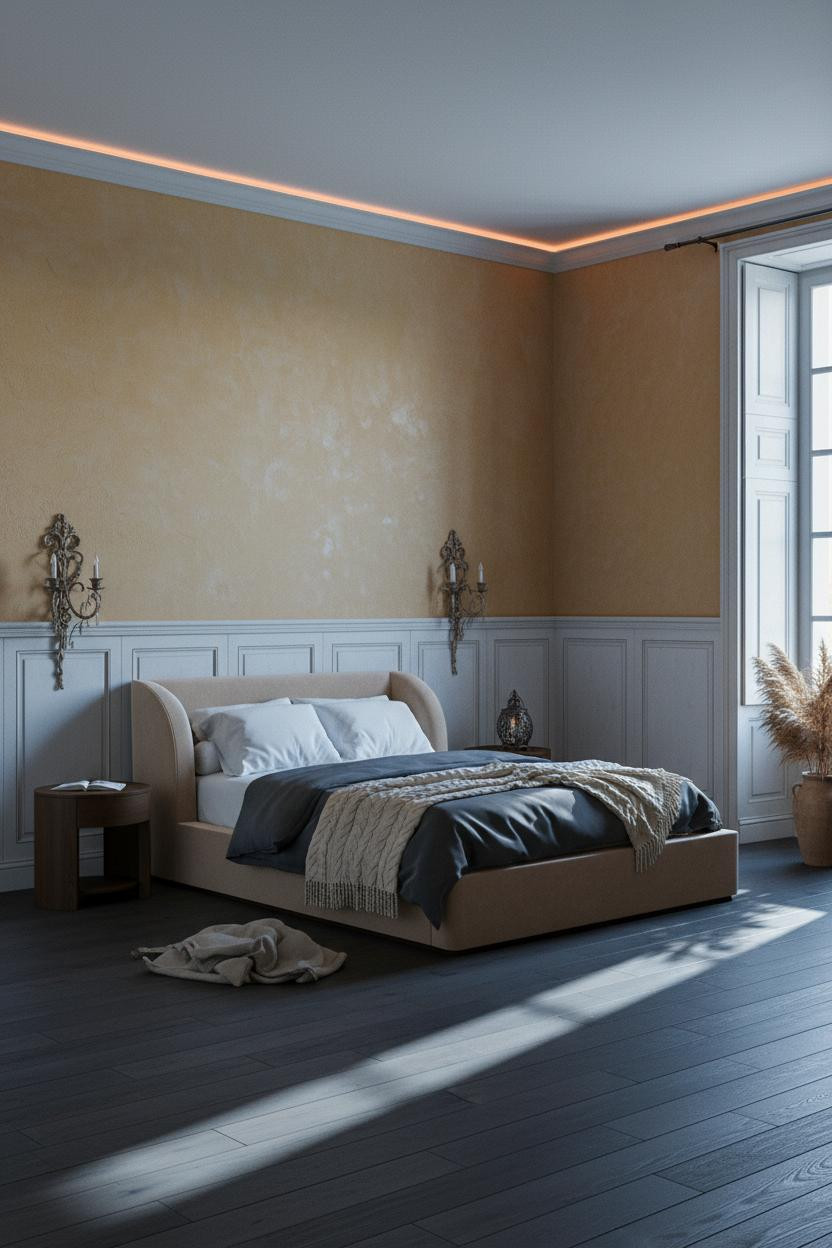

This one is warmer than it looks in photos.
Why it feels balanced: Full-height board-and-batten wainscoting in antique white gives the lower wall a vertical rhythm, while honey limewash plaster above it keeps the room from reading too formal. The dark stained narrow-plank oak floor grounds both without weighing the room down.
Pro move: Pair iron wall sconces flanking the bed with a cable knit cream throw. The metal and the soft texture together pull the room into that collected-over-time feeling that's hard to fake.
Aged Shutters and Dusty Rose Plaster
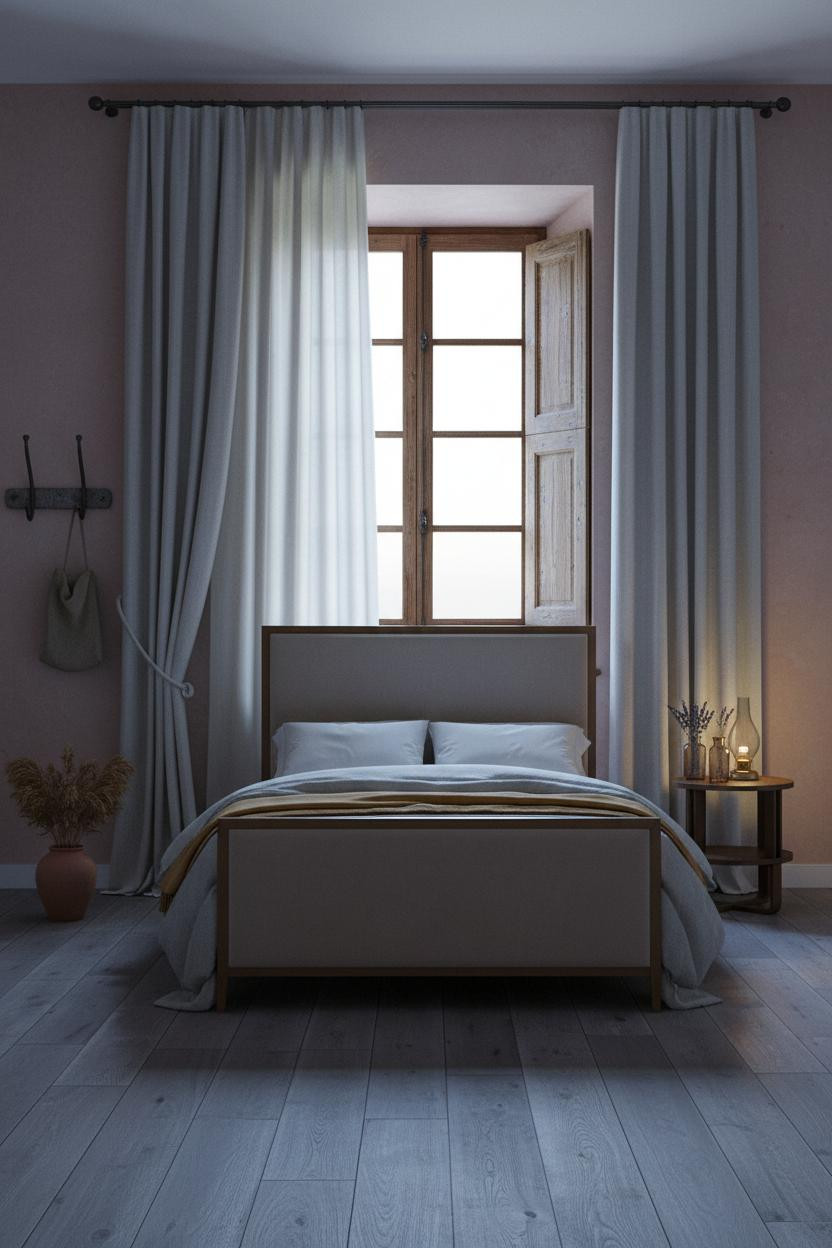
The window is the room here. Everything else just responds to it.
What carries the look: Full-height wooden shutters with original iron hardware and decades of weathered grain project diagonal light stripes across dusty rose limewash plaster, and the pattern shifts through the morning. It's the kind of thing you can't manufacture. (Admittedly, you also can't install it in an apartment. But you can steal the palette.)
Where to start: Floor-to-ceiling stone-washed grey linen curtains pooling at the base. A mustard wool blanket at the foot. That combination gets you most of the way there.
The Terracotta Floor and Stone Arch Combination
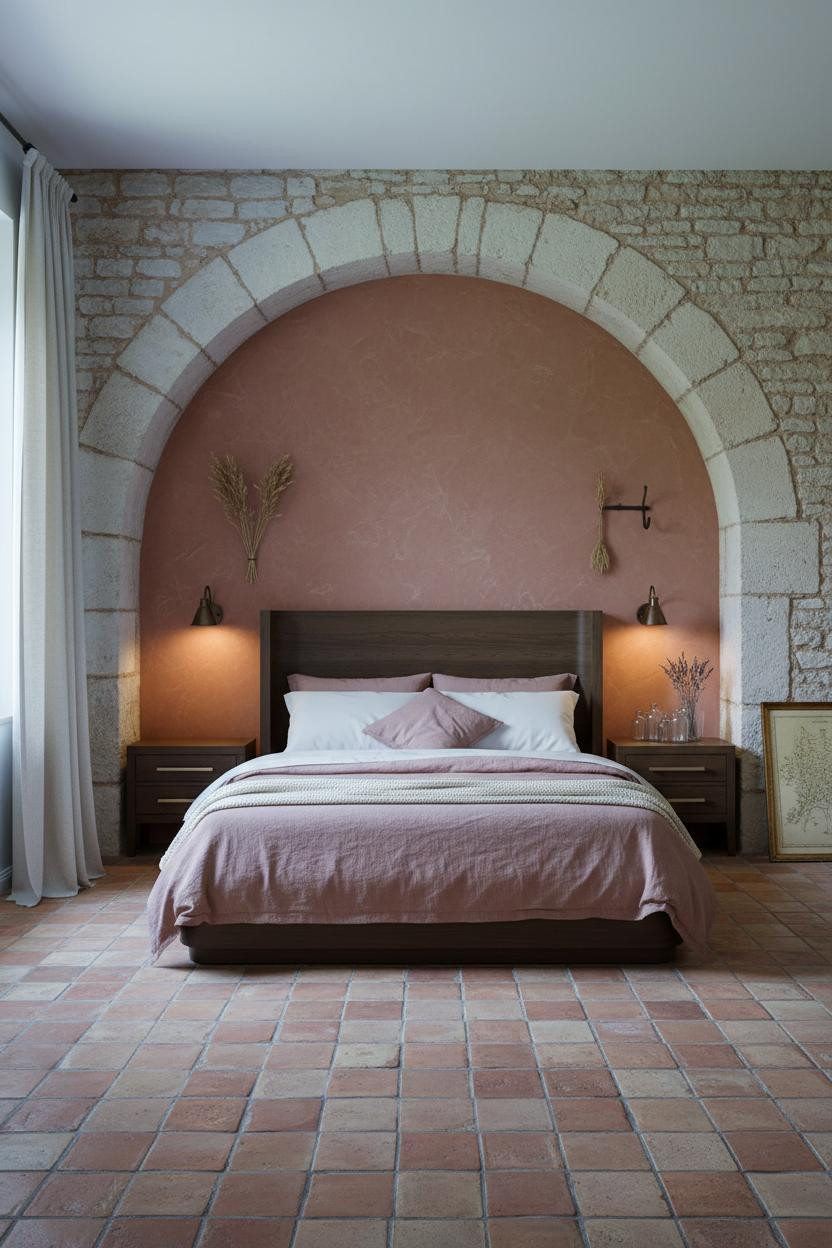

Two of the most distinctly Provençal materials in one room. It should feel like too much.
Why it doesn't: The handmade terracotta clay tiles worn smooth at the foot path and the full-width arched limestone niche share the same warm honey tones, so the room reads as one material family, not two competing ones. Warm plaster walls tie them together while still letting both surfaces breathe.
The detail to keep: Cream linen curtains pooling on the tile floor. That soft hem line is what softens a room full of hard surfaces.
Whitewashed Beams and Sage Plaster in an Afternoon Light
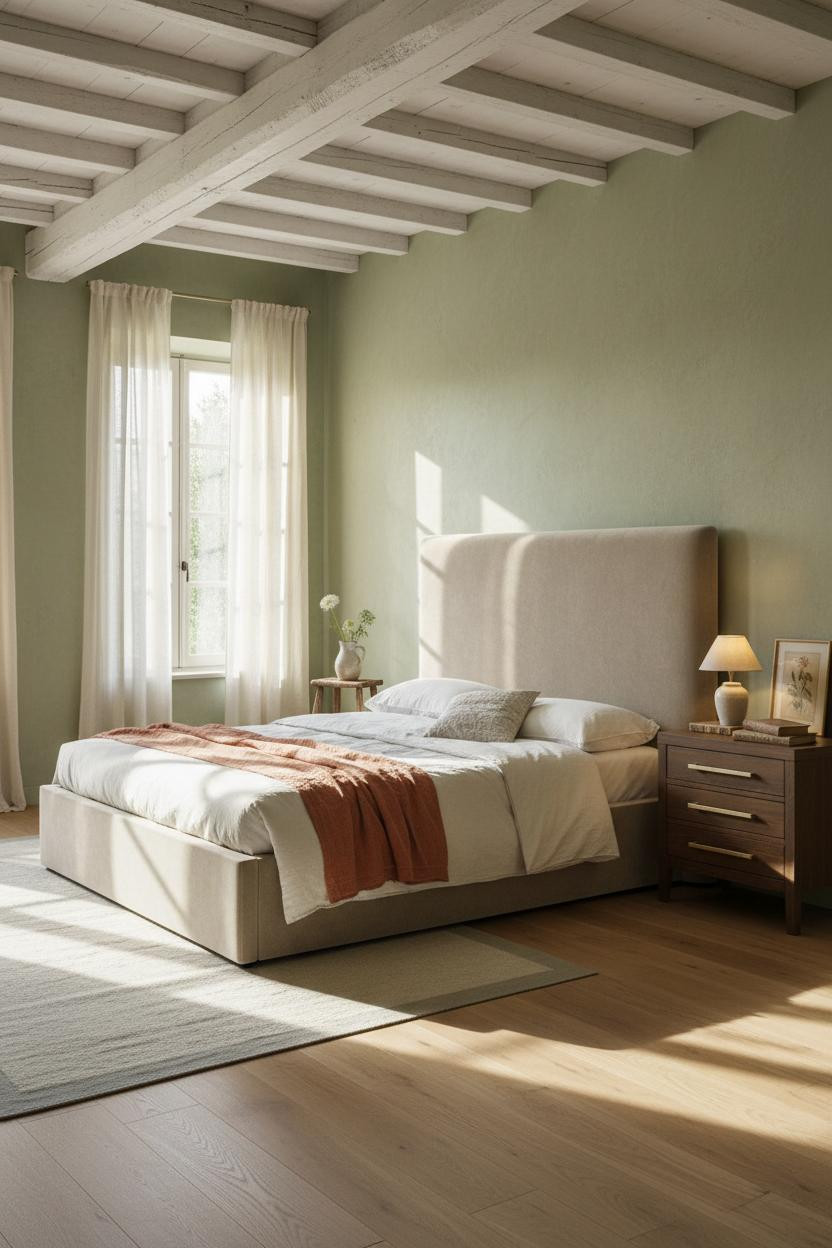
This is the most approachable version of the French countryside bedroom aesthetic. And honestly, the most liveable.
What makes this one different: Whitewashed ceiling beams with rough-hewn texture span the full width overhead, anchoring soft sage limewash plaster walls without making the room feel heavy. The light oak floor runner in cream and soft grey pulls the whole palette together without trying too hard.
One smart swap: Stack a few antique books with worn spines on the nightstand instead of a lamp. A ceramic pitcher with a single stem wildflower on a weathered wooden stool. Nothing too precious. That's the whole trick.
 Our #1 Pick
Saatva Classic Mattress
America's best-selling online luxury innerspring. 365-night trial, lifetime warranty, free white glove delivery.
Shop Saatva Classic
Our #1 Pick
Saatva Classic Mattress
America's best-selling online luxury innerspring. 365-night trial, lifetime warranty, free white glove delivery.
Shop Saatva Classic
The Foundation Of Every Beautiful Bedroom
Every room in this collection earns its character from the walls and floors. But the part that determines whether you actually want to be in the room is the bed itself. Specifically, what's under the linen.
The Saatva Classic is what I'd put in every one of these rooms. Dual-coil support that holds without going firm, a breathable organic cotton cover that doesn't trap summer heat, and a Euro pillow top that feels genuinely considered rather than just padded. It's the kind of mattress that stays right years in, long after the walls get repainted and the throws get replaced.
The rooms worth saving are the ones where comfort was never an afterthought.

Good design ages well because it's made well. And these rooms prove that the most enduring interiors are built on materials that were never trying to impress anyone in the first place.