10+ Western Bedrooms That Feel Moody Without Going Dark
06 may 2026The first thing you notice in the best Western bedroom ideas is that they don't try too hard. Raw stone, worn wood, a little amber light. That's it.
But getting that mood right without tipping into full cowboy cosplay takes some restraint. These ten rooms show exactly where that line is.
The Limestone Fireplace That Anchors Everything
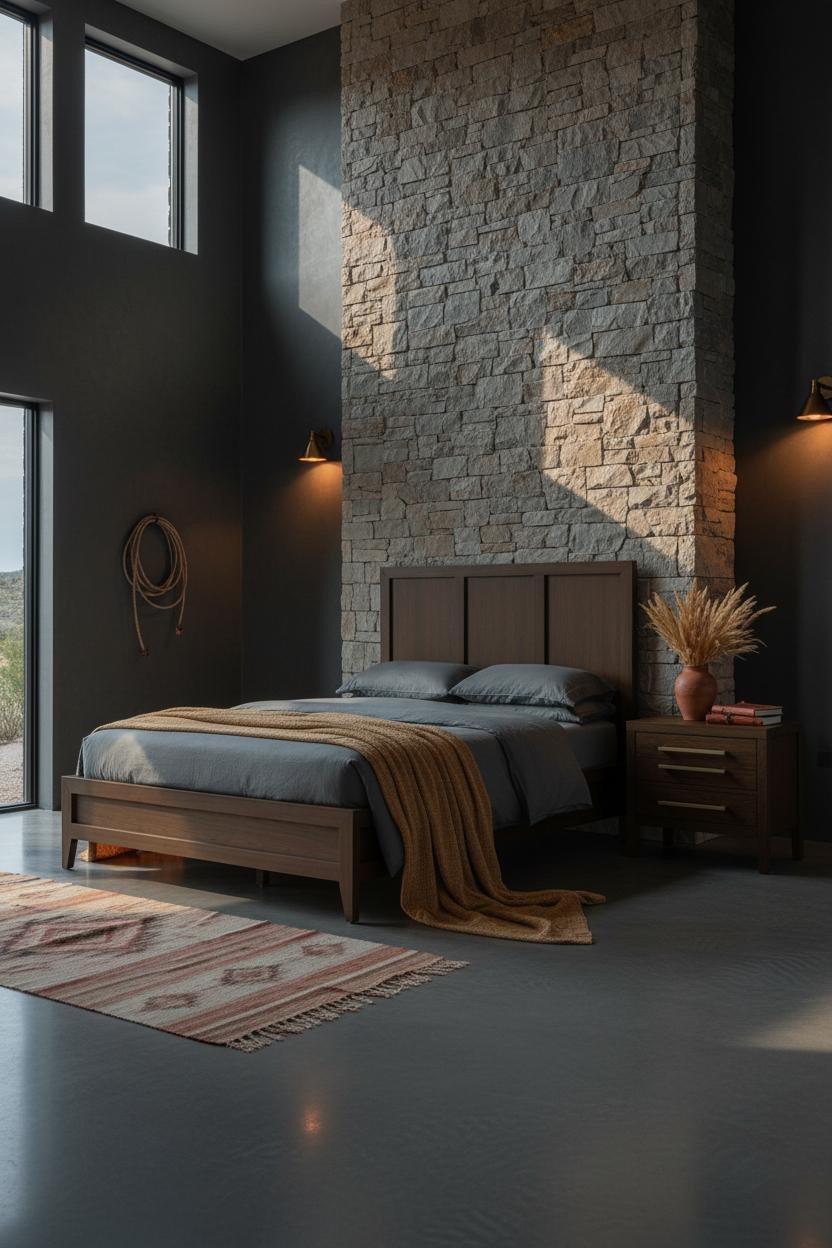
I keep coming back to this one. There's a stillness here that most Western bedrooms miss completely.
Why it holds together: The stacked limestone fireplace does the heavy lifting so nothing else has to compete. Every other surface steps back.
Steal this move: Keep bedding in slate and stone tones. The mustard wool blanket works because it's the only warm note in an otherwise cool palette.
Slate Stone Wall Done Right
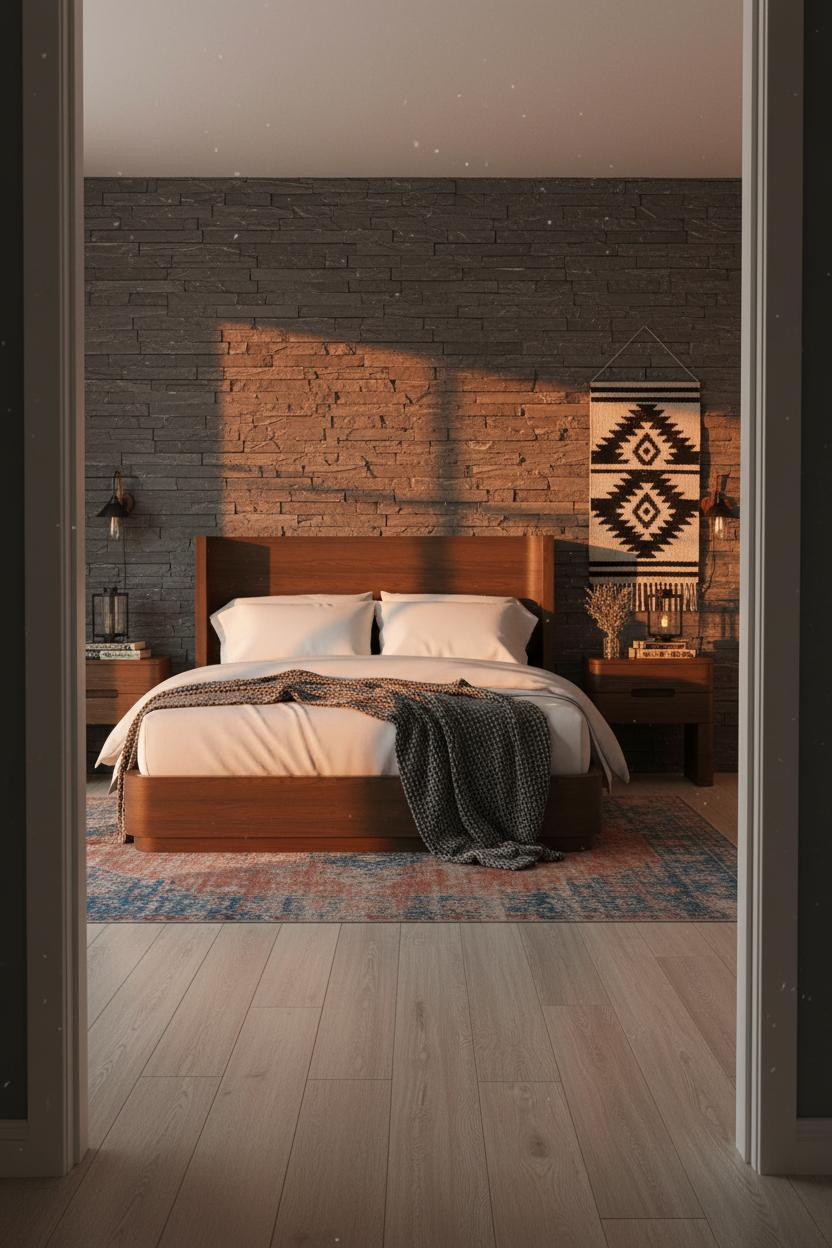
Fair warning. Once you go full-width stone, flat paint on a headboard wall looks like a mistake.
But that's the point. The hand-laid slate-grey stone creates a surface that raking afternoon light turns into something almost geological, and that texture does what no wallpaper can.
The easy win: Pair ivory percale with a charcoal cashmere throw. The contrast keeps the stone from reading cold.
Reclaimed Wood That Makes You Stop Scrolling
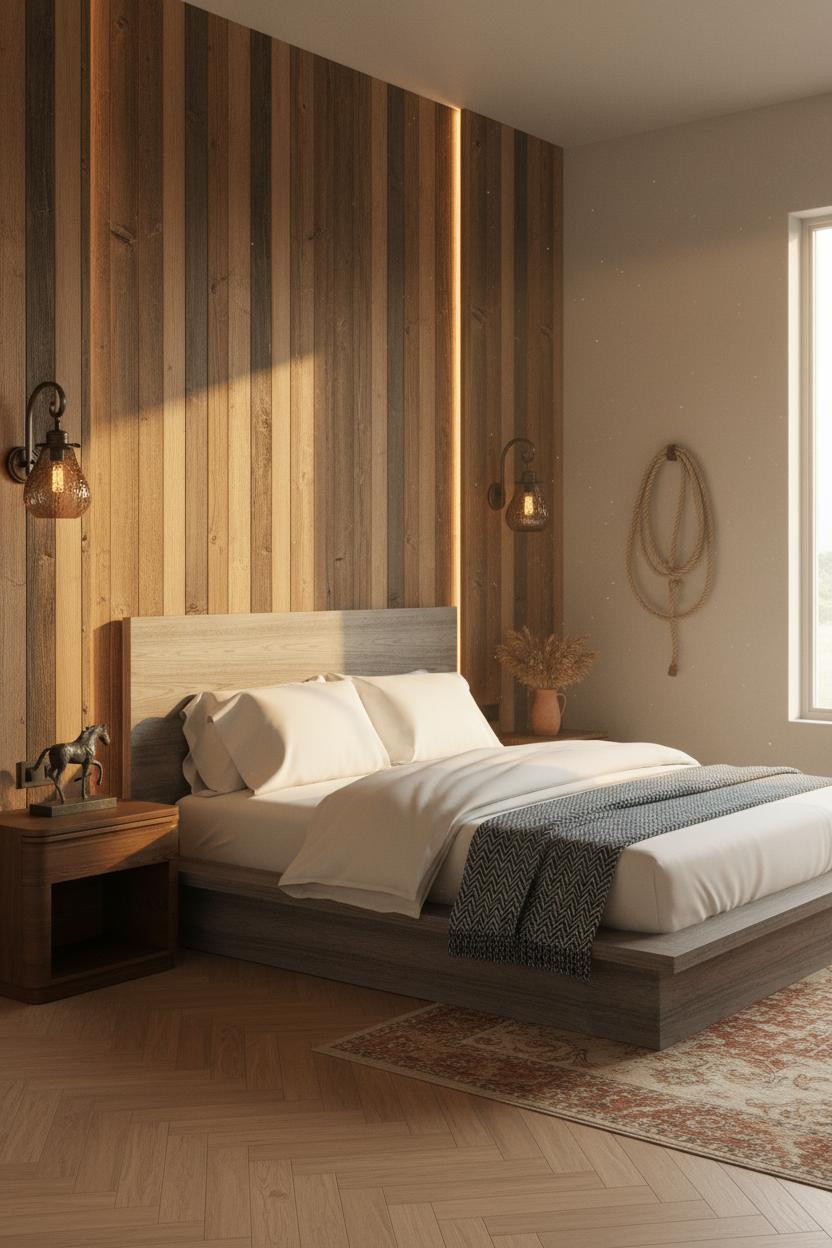
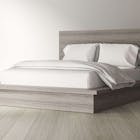
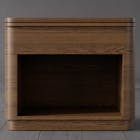
Floor-to-ceiling vertical reclaimed wood planks behind the bed create a rhythm that a painted headboard wall could never replicate. The alternating honey and ash tones in each rough-sawn board mean the wall changes depending on the light. Morning gold. Afternoon grey. Two different rooms.
The part to get right: Mount the Calan Nightstand at true bedside height. Too low and the whole scale falls apart.
Steel Frame Windows That Add Architectural Grit
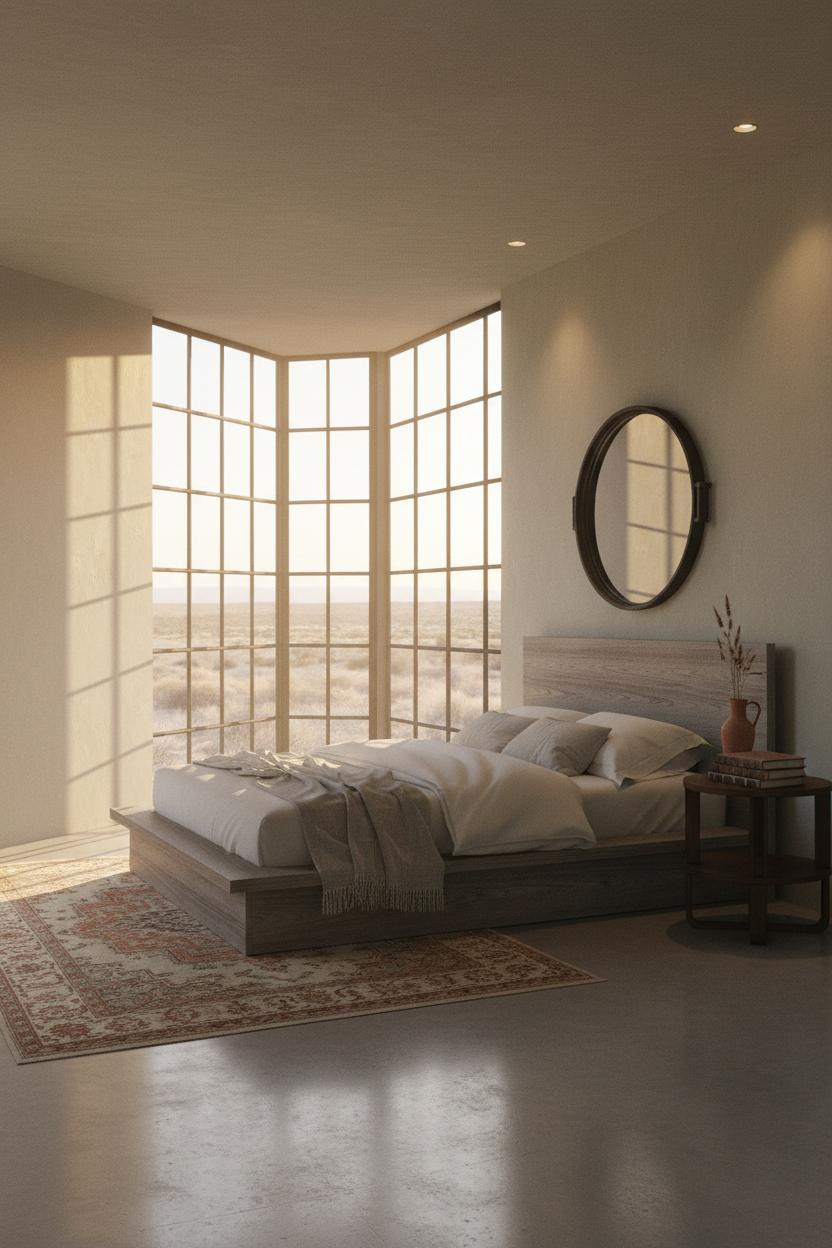

This is the kind of room that makes you want to move slower in the morning.
What creates the mood: The Crittall-style black steel panes throw sharp geometric shadow lines across the raw plaster skim coat, and that industrial grid against the soft sage-buff walls is honestly what makes the whole thing feel Western without a single piece of leather in sight.
One smart swap: Replace standard windows with steel-frame panes and you've done more for the room's character than any accessory could.
The Stone Fireplace Room I'd Move Into Tomorrow
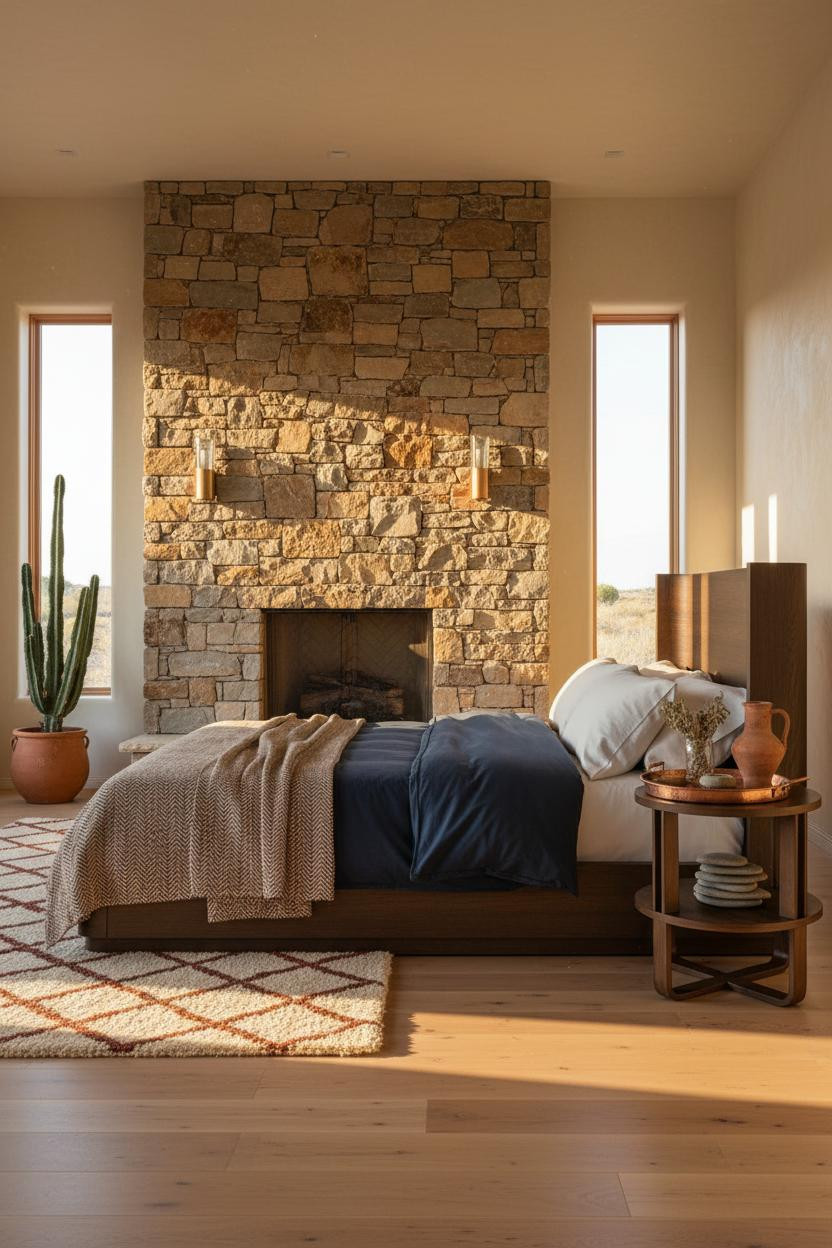
This one surprised me. The proportions are generous without tipping into grand, and the room feels grounded in a way that most western bedroom designs never quite achieve.
Why the materials matter: Stacked limestone in warm honey and ash tones radiates mass even before a fire is lit, and that perceived warmth is what makes cream walls and navy sateen bedding feel cozy rather than cold.
Pro move: Layer a camel herringbone throw across the foot. It ties the stone tones back into the bedding without anything matching exactly.
Sandstone Wall, Desert Dawn Light
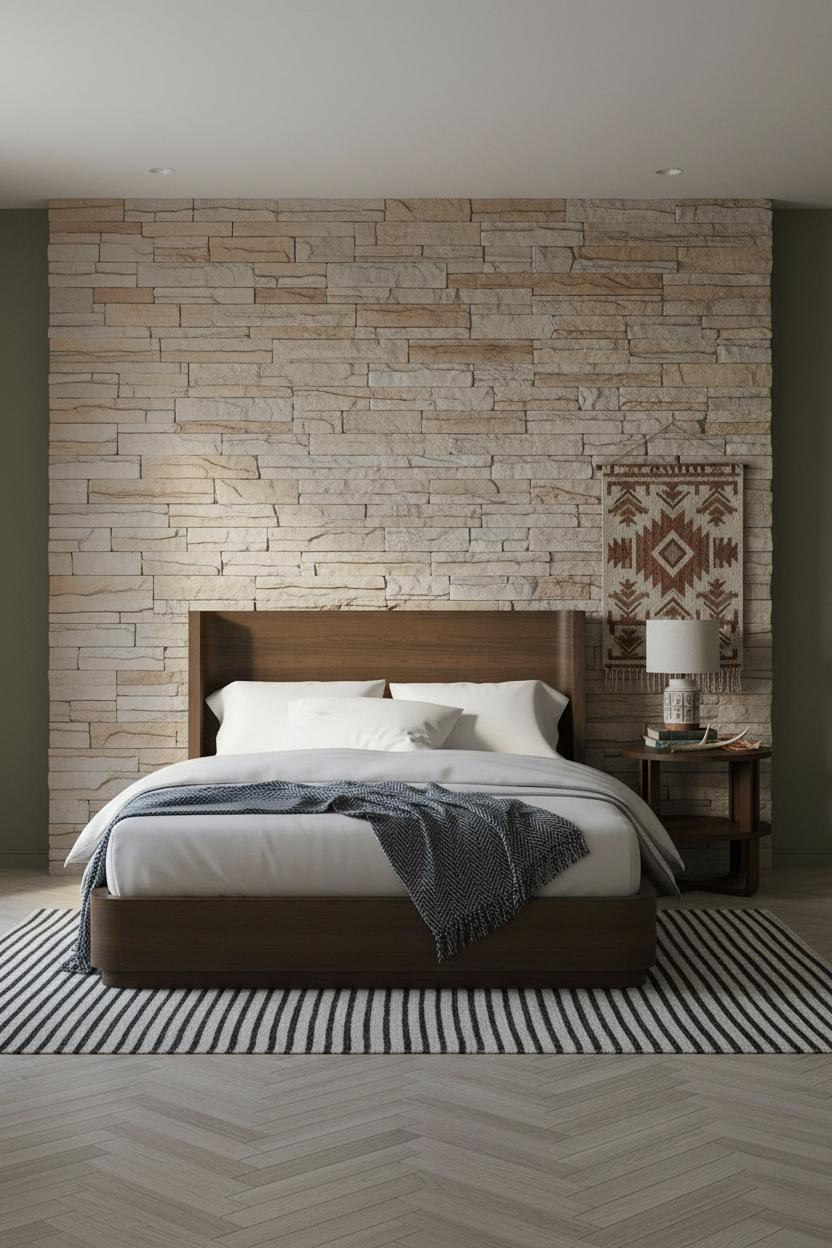
Nothing fancy. That's the point.
What carries the look: Floor-to-ceiling stacked sandstone slabs in buff and ash tones do something cool morning light amplifies: every irregular edge casts its own small shadow, and the wall becomes texture you actually feel. Dusty olive walls flanking it keep the palette from going too warm. The smarter choice on the textile side is a graphic flat-weave rug, not a busy pattern.
Clay Plaster Alcove, Ranch Morning
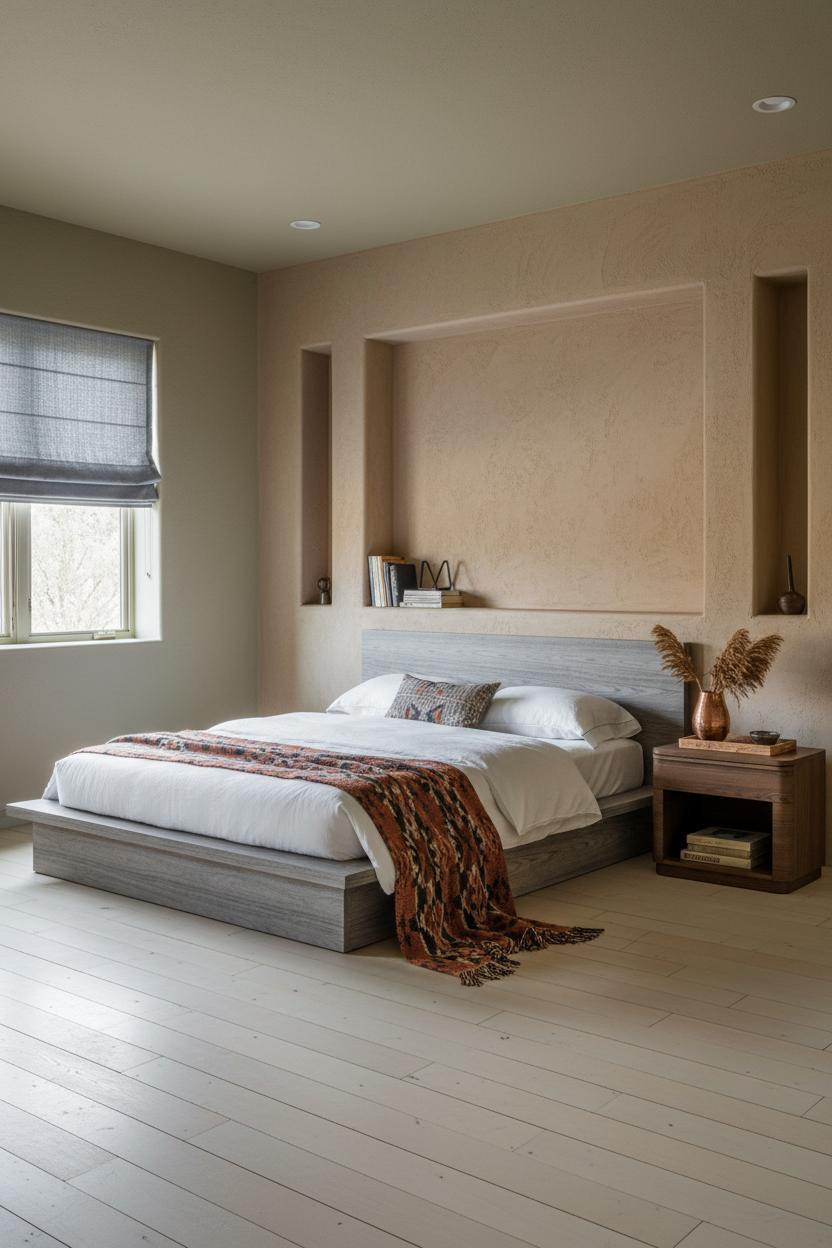
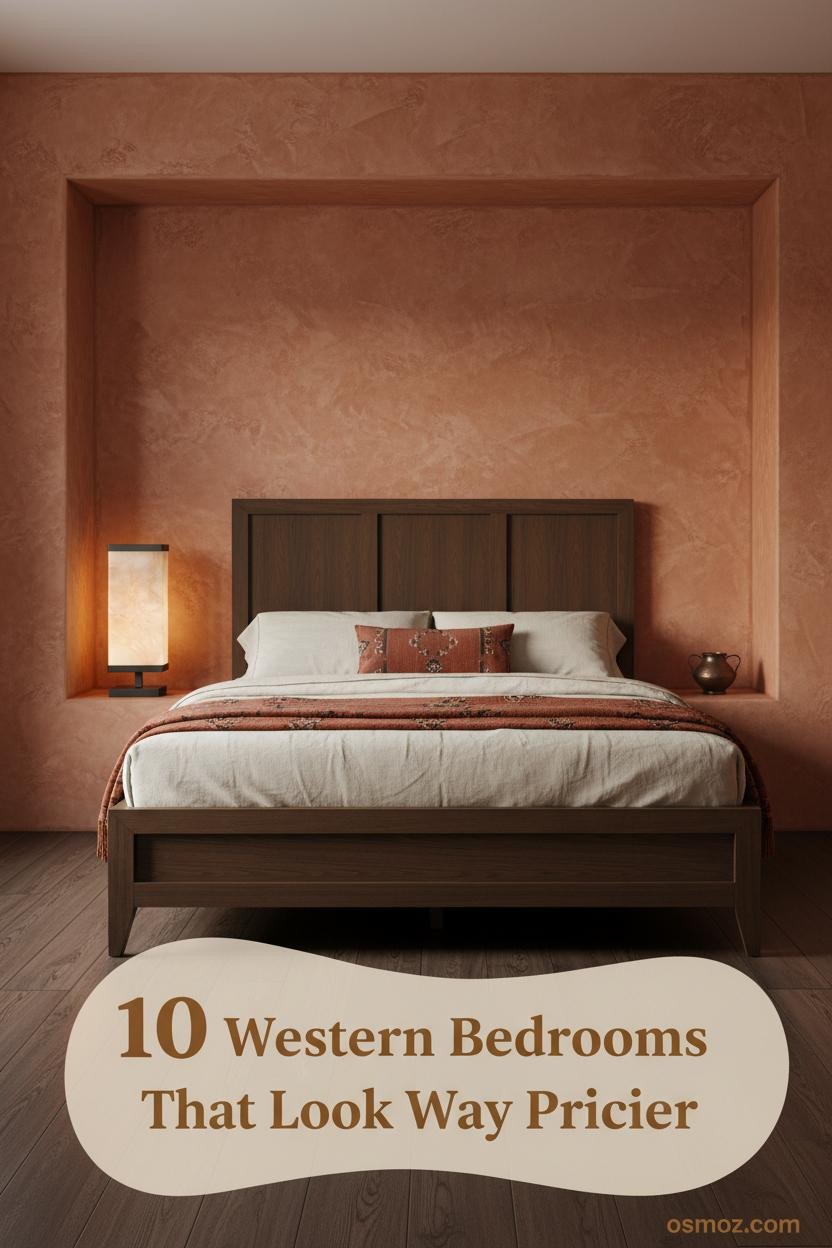
A recessed hand-troweled clay plaster alcove behind the bed is a different kind of feature wall. No stone, no wood, just warm buff adobe plaster with deep vertical shadow reveals at each edge, and somehow that's enough.
Why it feels intentional: The shadow depth at the reveal edges gives the wall architectural weight that flat plaster can't replicate, while still feeling soft. Pair it with ivory linen percale and a rust geometric throw. Nothing too precious.
Charcoal Shiplap That Works Without Feeling Trendy
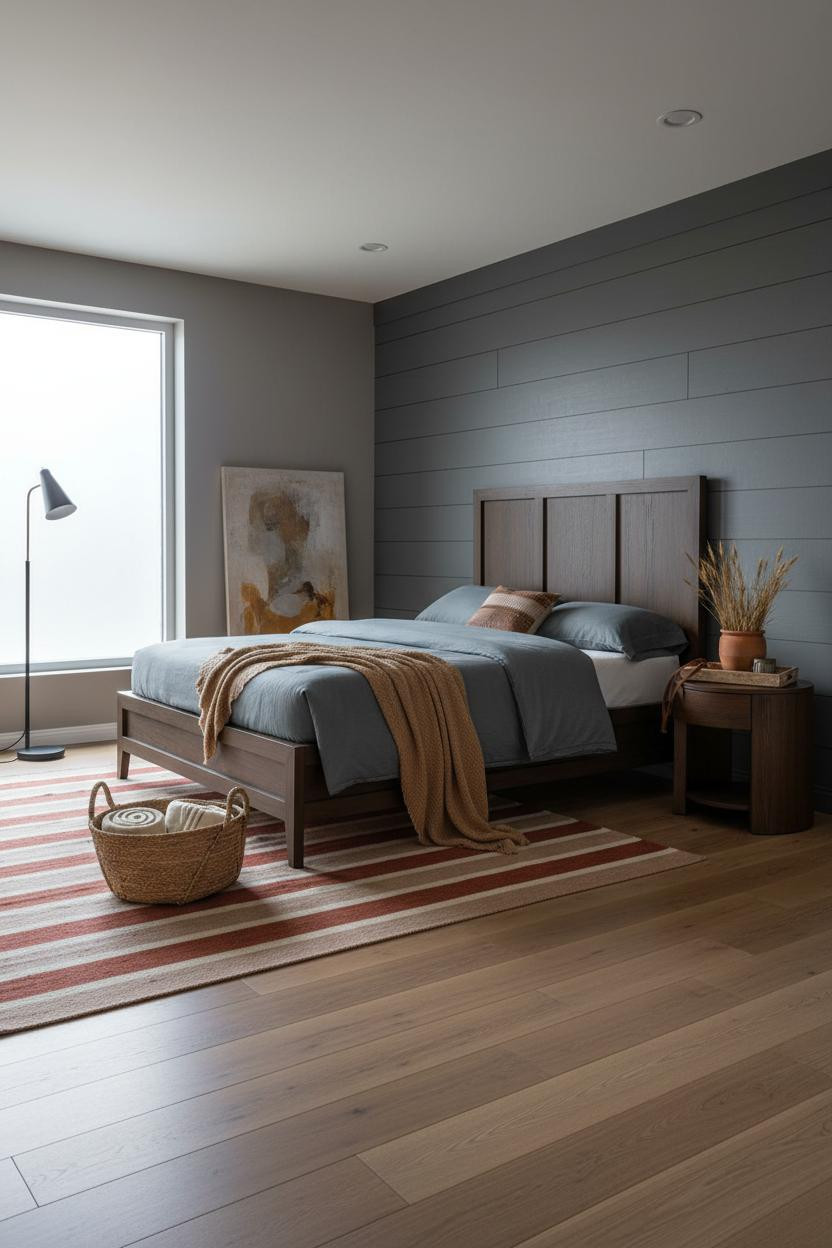
Admittedly, shiplap has been done to death. But charcoal-painted horizontal shiplap paired with mushroom-grey walls and bleached oak floors is a different conversation entirely.
What gives it depth: Each plank edge throws a thin shadow line in diffused light, so the matte surface reads as texture without any contrast paint trick.
Lean an oversized canvas in ochre and raw umber against the wall. Skip hanging it. The casual lean is exactly what keeps this from feeling too finished.
Sage Board-and-Batten, Noon Sun
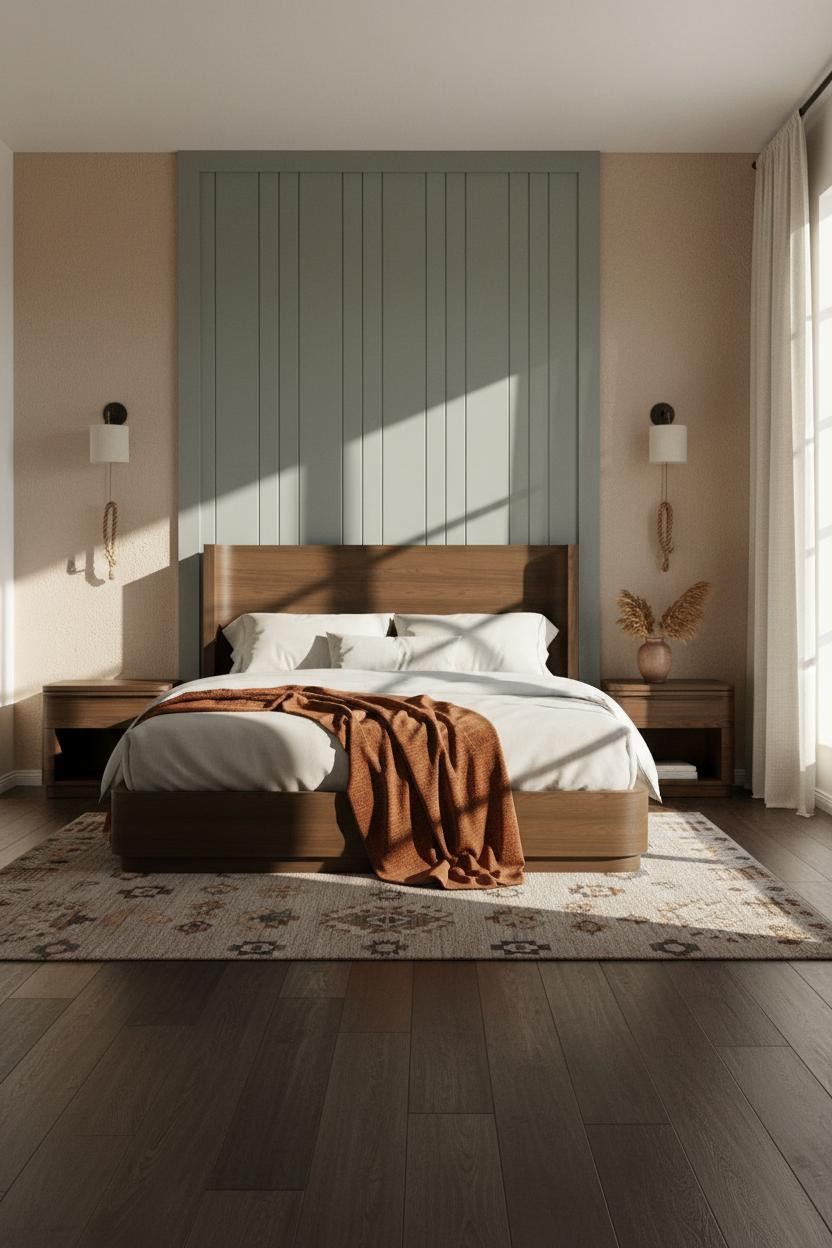
This is the lighter side of western chic bedroom design, and I think it doesn't get enough credit. Full-height weathered sage board-and-batten paneling absorbs noon light in a way that makes the color shift from muted green to almost grey depending on where you're standing. The room feels calm and cohesive in a way that brighter walls never manage.
Worth copying: Hang floor-to-ceiling cream linen curtains. The scale makes the paneling feel intentional, not just decorative.
Exposed Beams, Terracotta Walls, Dusk Quiet
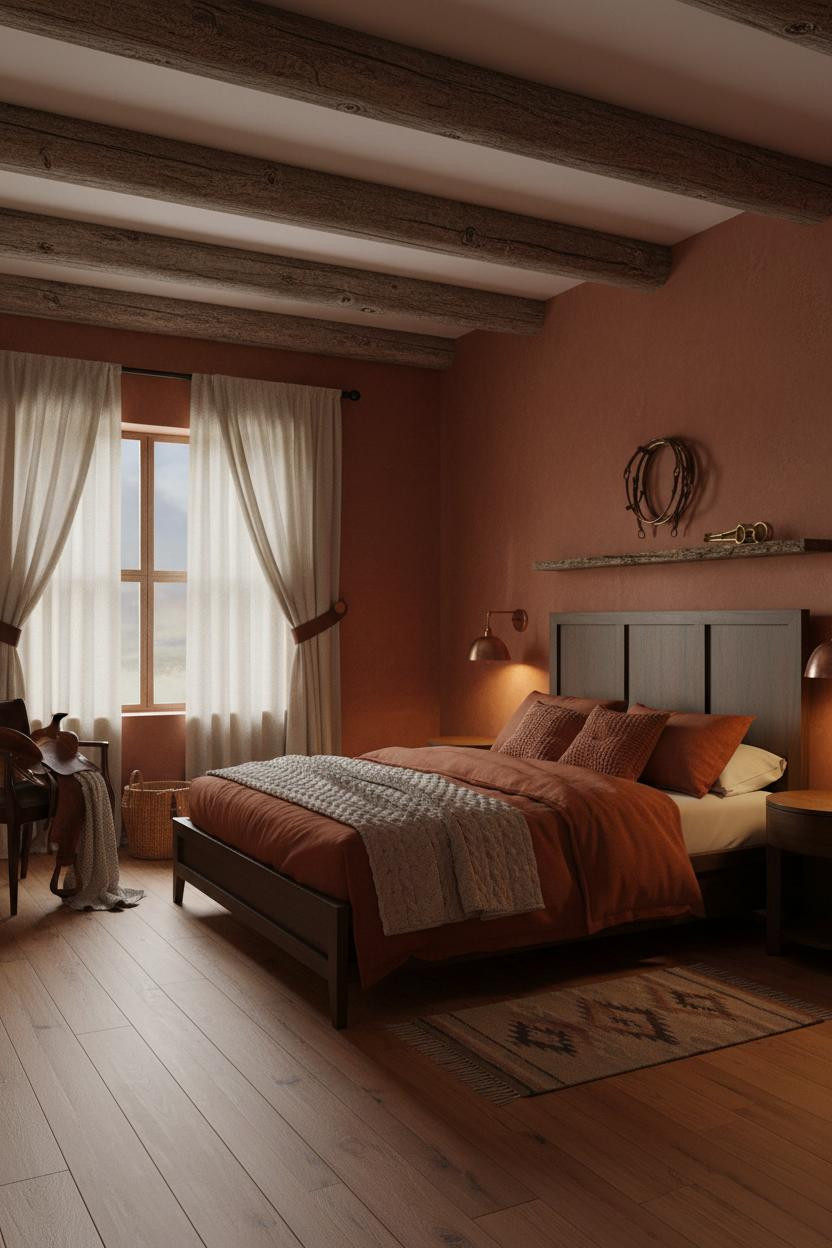
This is the moody one. And honestly, the one I'd pick.
But it only works because of proportion. Hand-hewn wood beams spanning the full ceiling width carry enough visual mass to balance deep terracotta plaster walls without the room feeling like a cave.
What not to do: Don't add more rustic accessories than you think you need. A clean nightstand, rust linen bedding, one leather piece in the corner. Stop there.
The detail to keep: A hammered copper sconce above the nightstand. The warm amber pool it casts against terracotta plaster is what makes the dusk mood land.
 Our #1 Pick
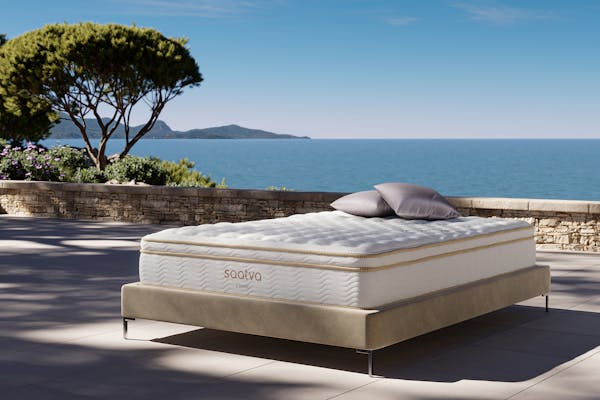
Saatva Classic Mattress
America's best-selling online luxury innerspring. 365-night trial, lifetime warranty, free white glove delivery.
Shop Saatva Classic
Our #1 Pick
Saatva Classic Mattress
America's best-selling online luxury innerspring. 365-night trial, lifetime warranty, free white glove delivery.
Shop Saatva Classic
Why Luxury Bedrooms Always Feel Better
All of these rooms get one thing right: the surfaces are real, the textures earn their place, and nothing looks accidental. But the wall treatment only takes you so far.
The part people underestimate is the bed itself. The Saatva Classic runs a dual-coil system that holds up the way a well-built room holds up: quietly, without drama, for years. The breathable organic cotton cover means the warm amber palette you built around you doesn't trap heat while you sleep. And the Euro pillow top is the kind of soft that still has structure underneath it.
Start with the bed. The rest figures itself out.

The rooms worth saving always have something in common: every material was chosen because it earned its place, not because it was easy. Pick one surface, do it right, and let everything else follow.