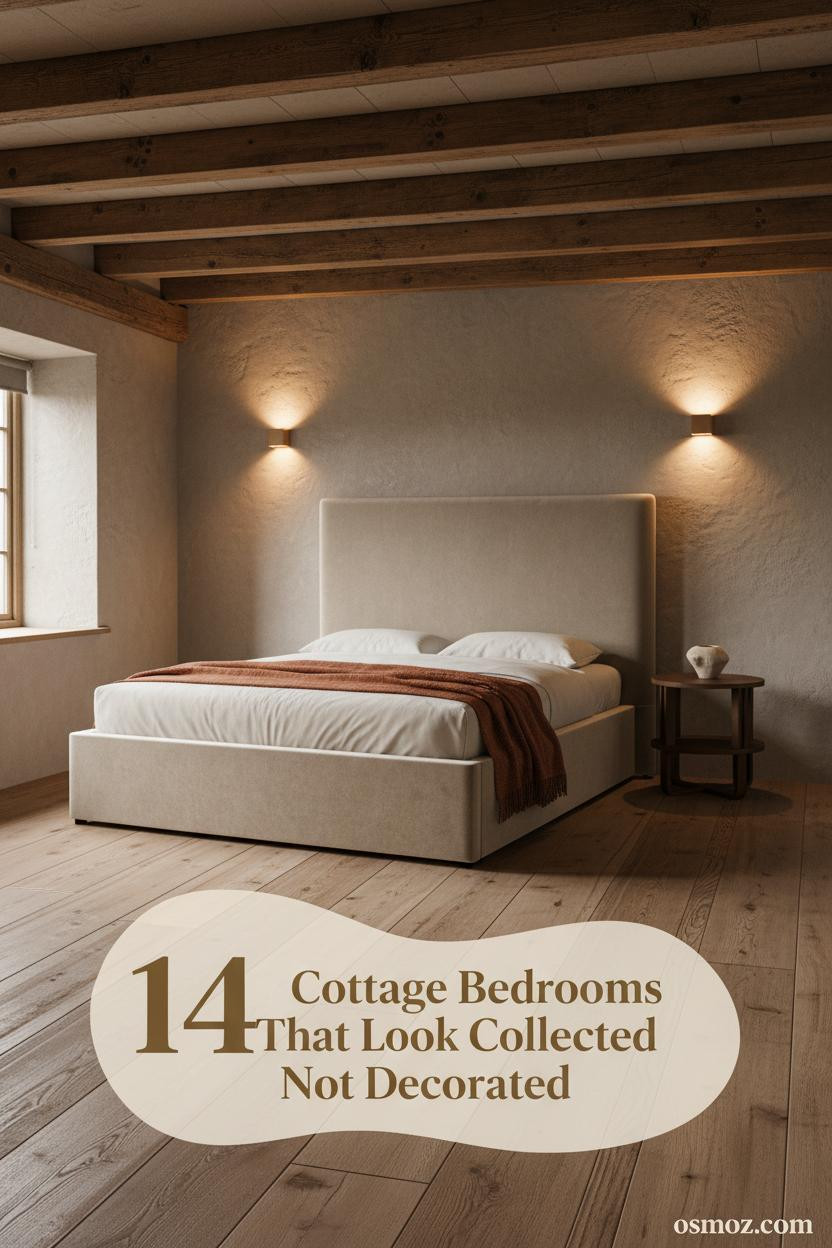
14+ Rustic Cottage Bedrooms That Feel Collected Rather Than Decorated
24 april 2026The first time I stumbled into a proper rustic cottage bedroom, I didn't want to leave. Not because it was perfect. Because it felt like it had been lived in for decades and nobody had tried to fix it.
That's the whole idea here. Fourteen rooms that feel collected rather than decorated, each one rooted in a specific place and a specific material. Stone walls, hand-hewn beams, lime plaster that still shows the trowel marks. Real things.
The Driftwood Wall That Changes Everything
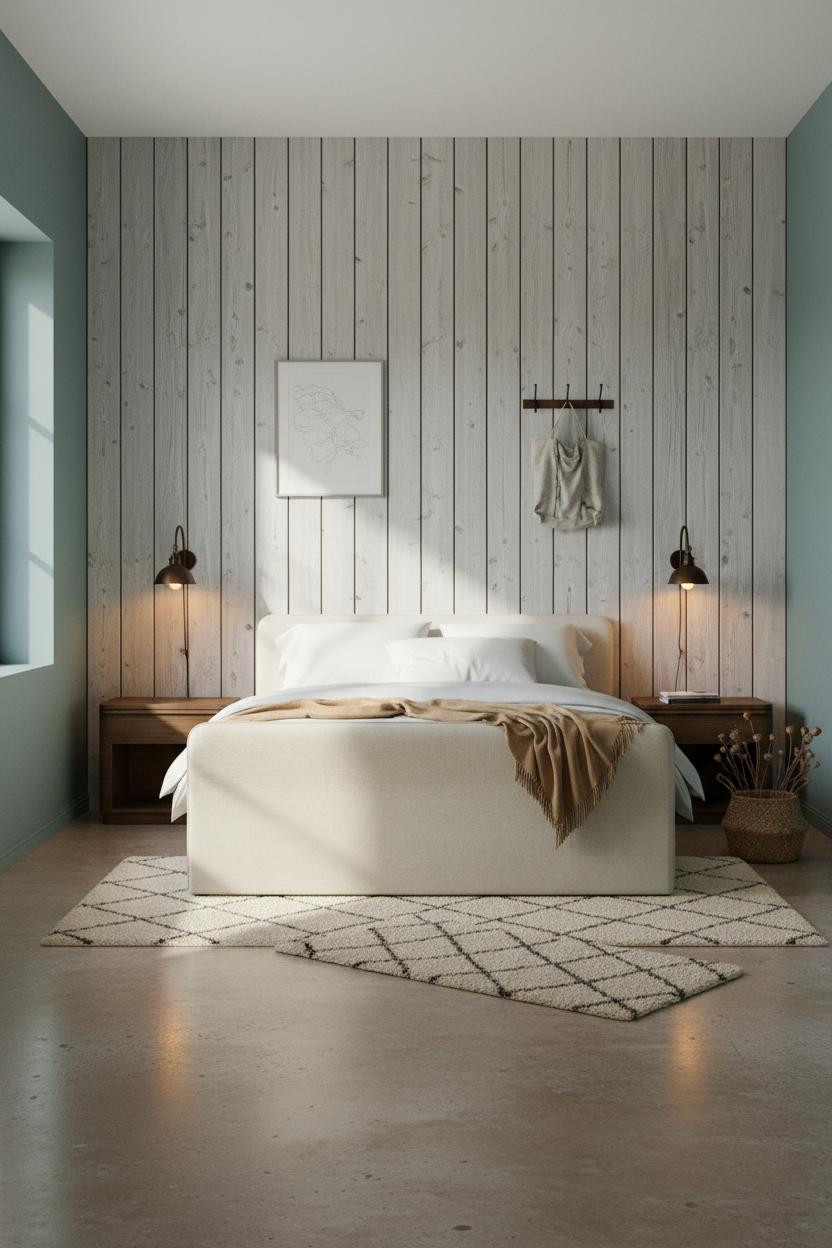


I keep coming back to this one. There's something about a coastal room that commits fully to its materials.
What carries the look: Full-height pale driftwood slatted timber behind the bed creates a rhythm of thin shadows that changes as the light moves. It's architectural without feeling designed.
Steal this move: Pair it with a dusty blue-green wall on either side and a cream wool rug underfoot. The contrast between warm timber and cool plaster is what makes the room feel mineral and alive.
Why An Aged Walnut Mantelpiece Anchors the Whole Room
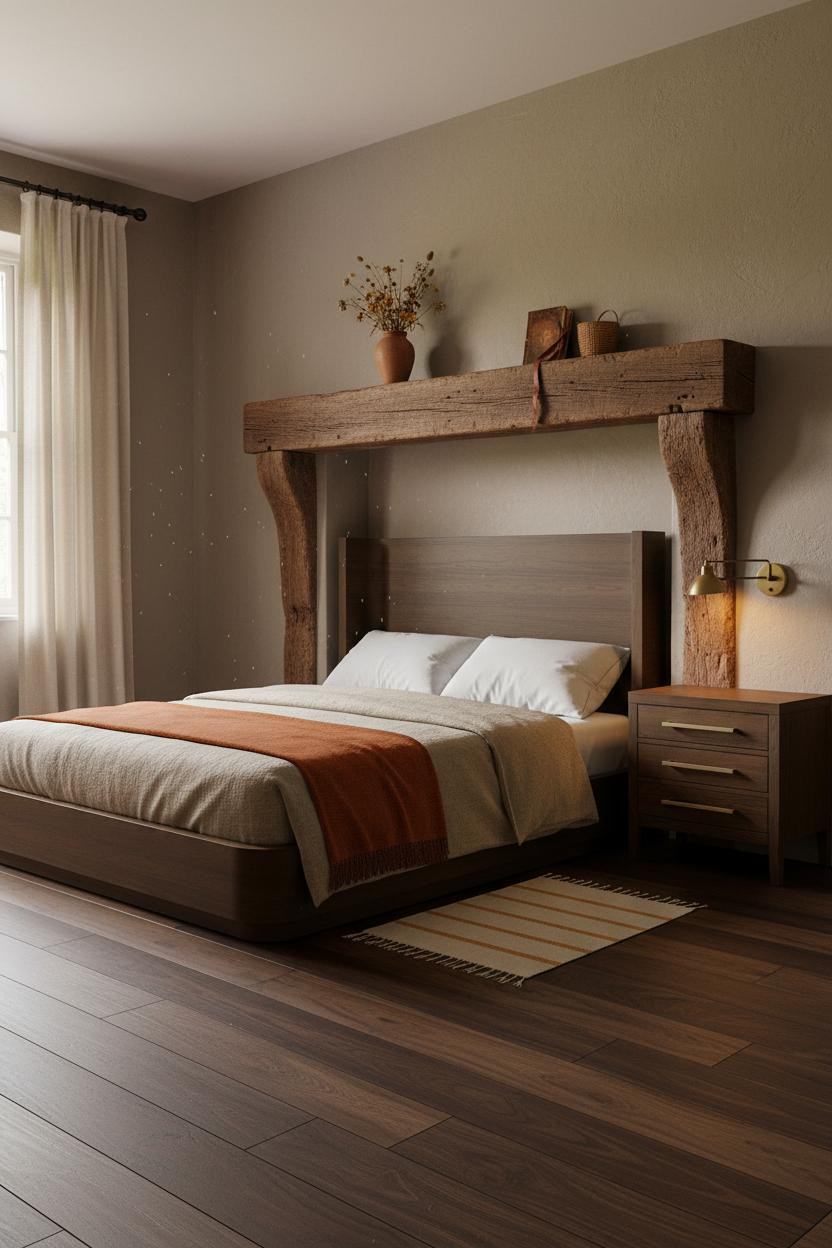


This is the move most people miss. A fireplace in a bedroom should anchor the room, not just exist in it.
The aged walnut mantelpiece with hand-carved corbels does that job. Deep shadow pockets beneath each bracket make the whole wall read as an architectural feature, which means everything else can stay simple.
The part to get right: Keep the walls warm but muted (camel-grey lime plaster works well here) so the timber reads dark and deliberate against them. Don't clutter the shelf.
Scottish Stone Walls That Actually Work in a Bedroom
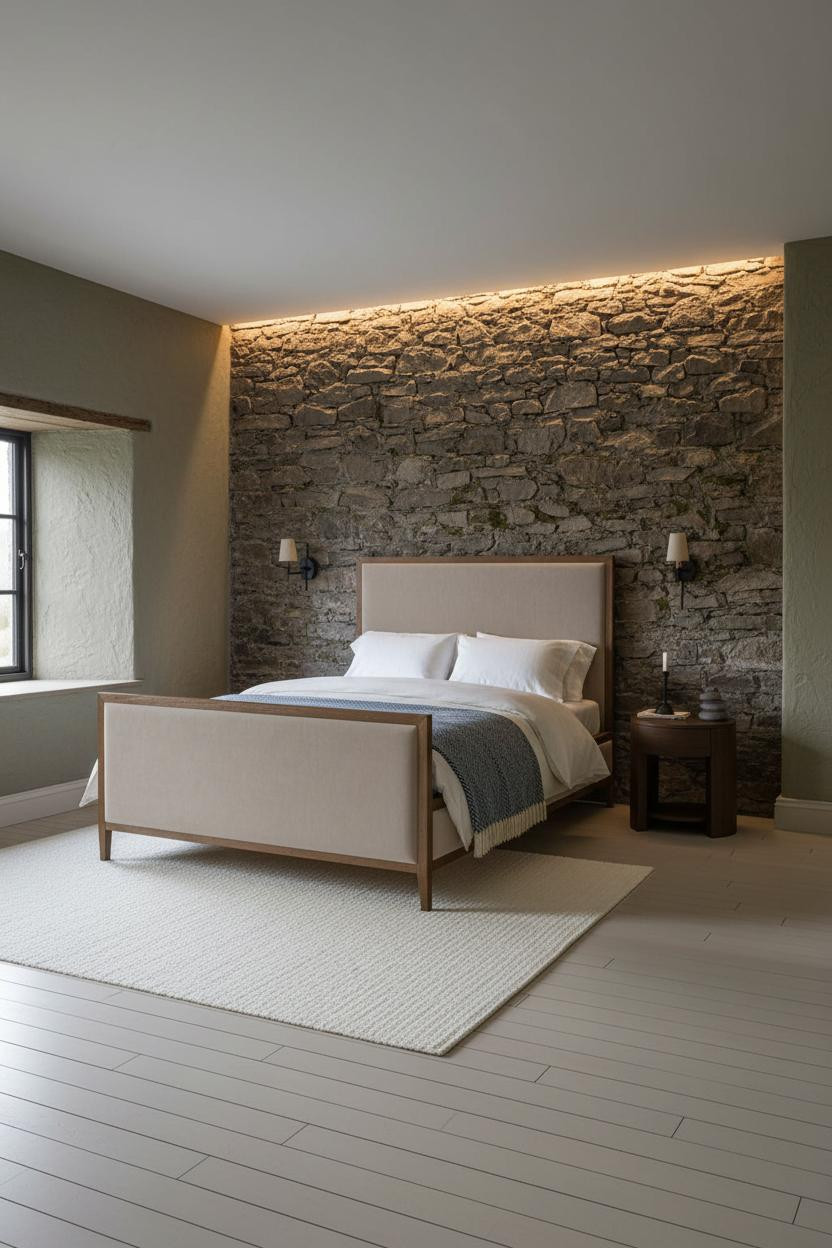

Fair warning. A full-height dry-stone rubble wall is not subtle, and it shouldn't be.
Why it holds together: Grey-brown fieldstone set in thick lime mortar reads like geology made domestic. The irregular surface catches raking light in a way no painted wall ever could, which is why the room feels ancient and calm rather than cold.
What to borrow: Soft olive-grey plaster on the flanking walls stops the stone from overwhelming. Keep bedding pale and the rug chunky cream wool. The contrast does the rest.
The Welsh Detail I'd Steal for Almost Any Cottage Room
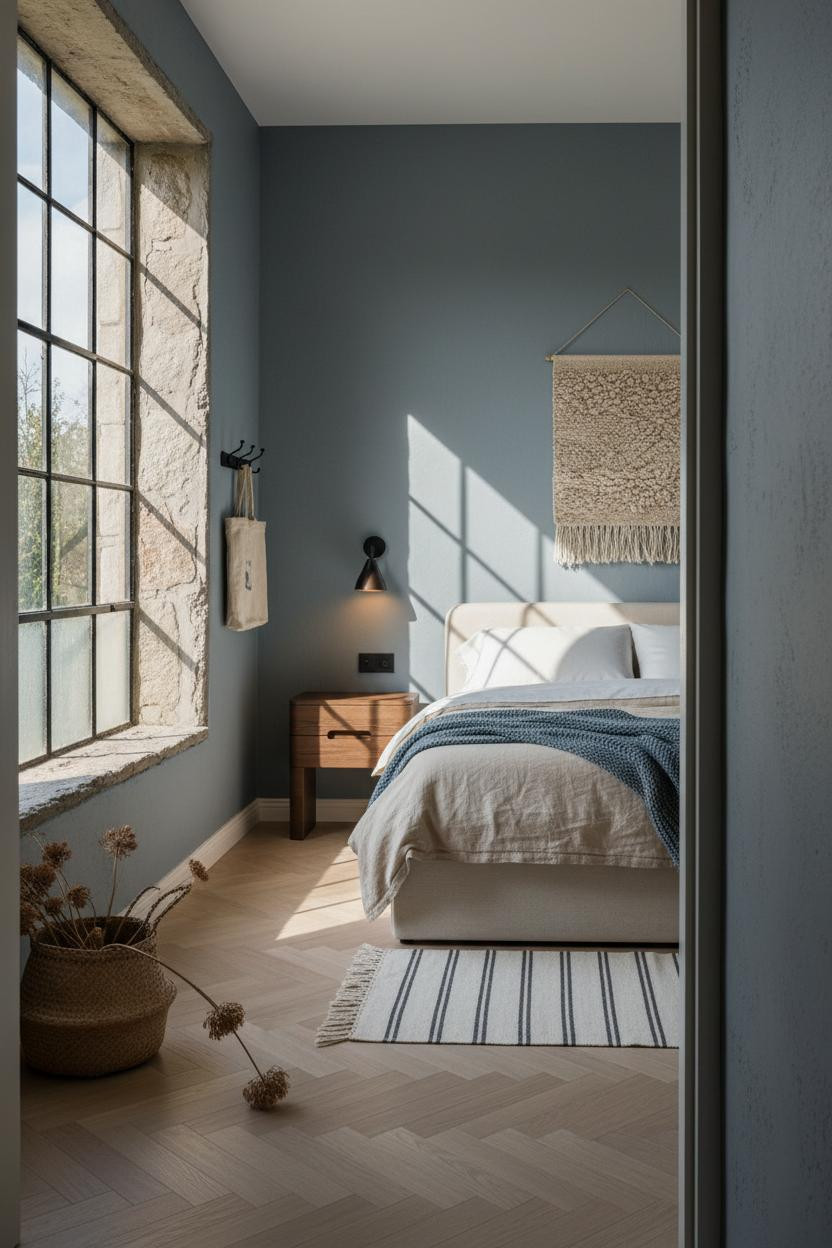
I honestly wasn't sure the black steel Crittall-style window would work in a bedroom this small. But it does, completely.
Design logic: The grid shadow cast by the glazing bars across muted slate-blue lime plaster creates a graphic geometry that makes the whole room feel intentional in a way that furniture alone can't.
The easy win: Lay a flat-weave cream and charcoal striped linen runner at the foot and hang an undyed wool wall hanging opposite the window. Nothing too matchy. The room lands somewhere between handmade and architectural.
French Farmhouse Beams Done Right
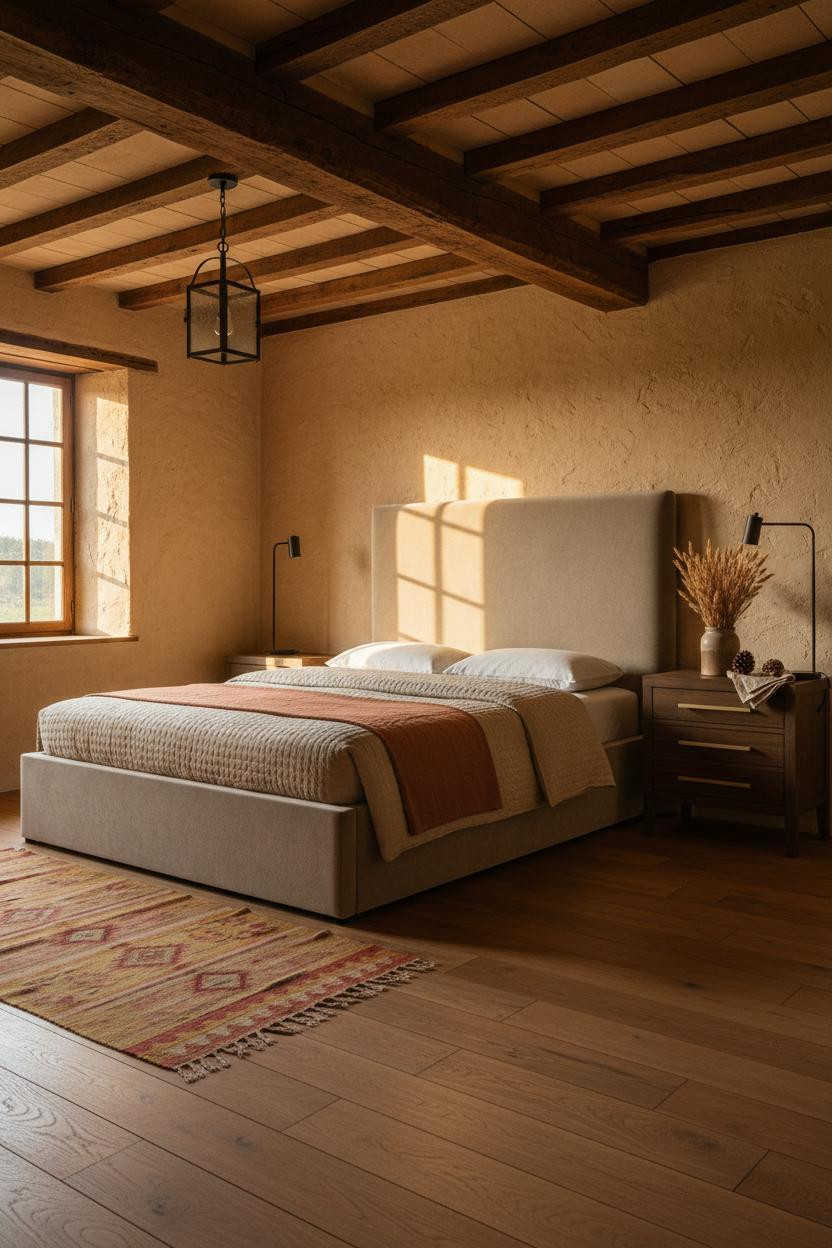

This is the kind of room that makes you want to slow down.
Why it feels rooted: A low hand-hewn timber beam ceiling darkened by decades of age throws strong horizontal lines across everything below. It's a ceiling that compresses and warms the room at the same time, which is exactly what a country cottage bedroom should do.
Use a faded kilim runner in ochre and soft red at the foot of the bed. Just enough pattern to keep things interesting while the honey lime-plaster walls stay quiet behind it.
How a Tuscan Alcove Makes a Bed Feel Like an Event
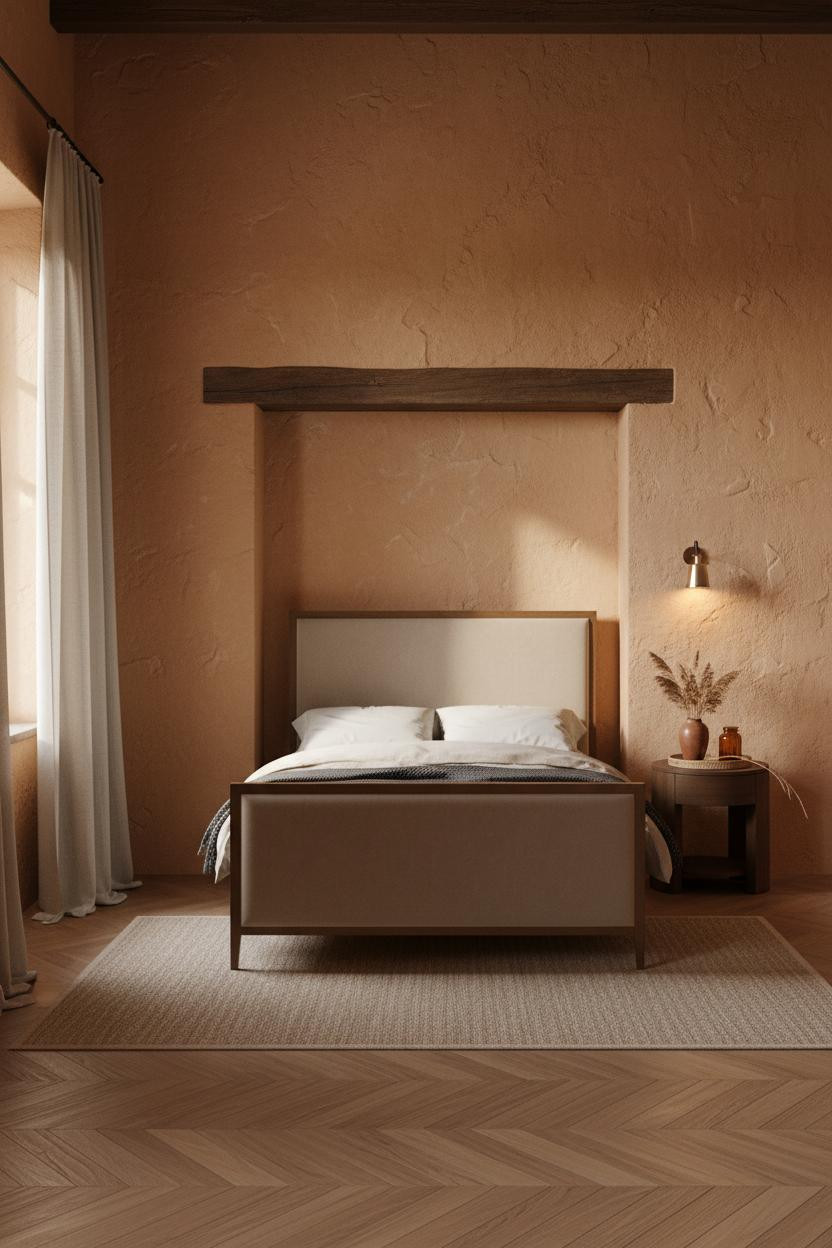
Structural surprise. Most people think recessing the bed costs too much or requires old walls.
But this Tuscan version proves otherwise. A lime-washed plaster surround with an aged oak lintel and visible micro-crazing in the plaster creates depth that reads instantly even in a small space. The deep shadow inside the niche makes the bed look deliberate, not just placed.
The smarter choice: Frame it with floor-to-ceiling undyed linen curtains on a wrought-iron rod and warm ochre-terracotta walls outside the recess. The contrast in depth anchors the whole room without adding a single extra piece of furniture.
Irish Farmhouse Wainscoting: The Underrated Move
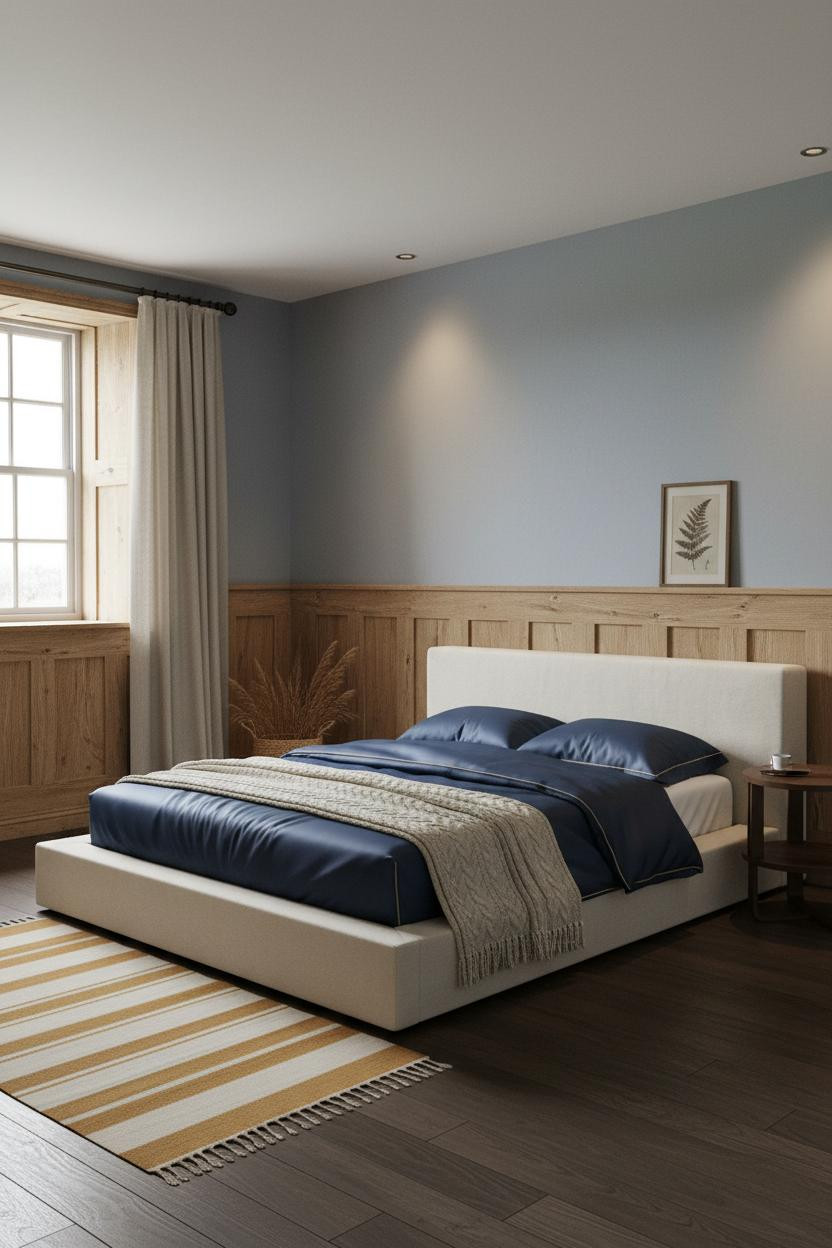

Nothing fancy. That's the point.
What gives it presence: Low half-height aged natural oak wainscoting running the full width of the room creates horizontal grounding that makes the ceiling feel higher, while the honest grain variation and decades of gentle wear makes the room feel genuinely lived in rather than styled. Above the rail, dusty blue-grey hand-troweled plaster keeps things from tipping too dark.
Avoid this mistake: Don't paint the wainscoting white in a room like this. The natural oak grain is what carries the period character. Paint it and you lose everything that made it worth doing.
The Portuguese Arched Alcove I Keep Thinking About
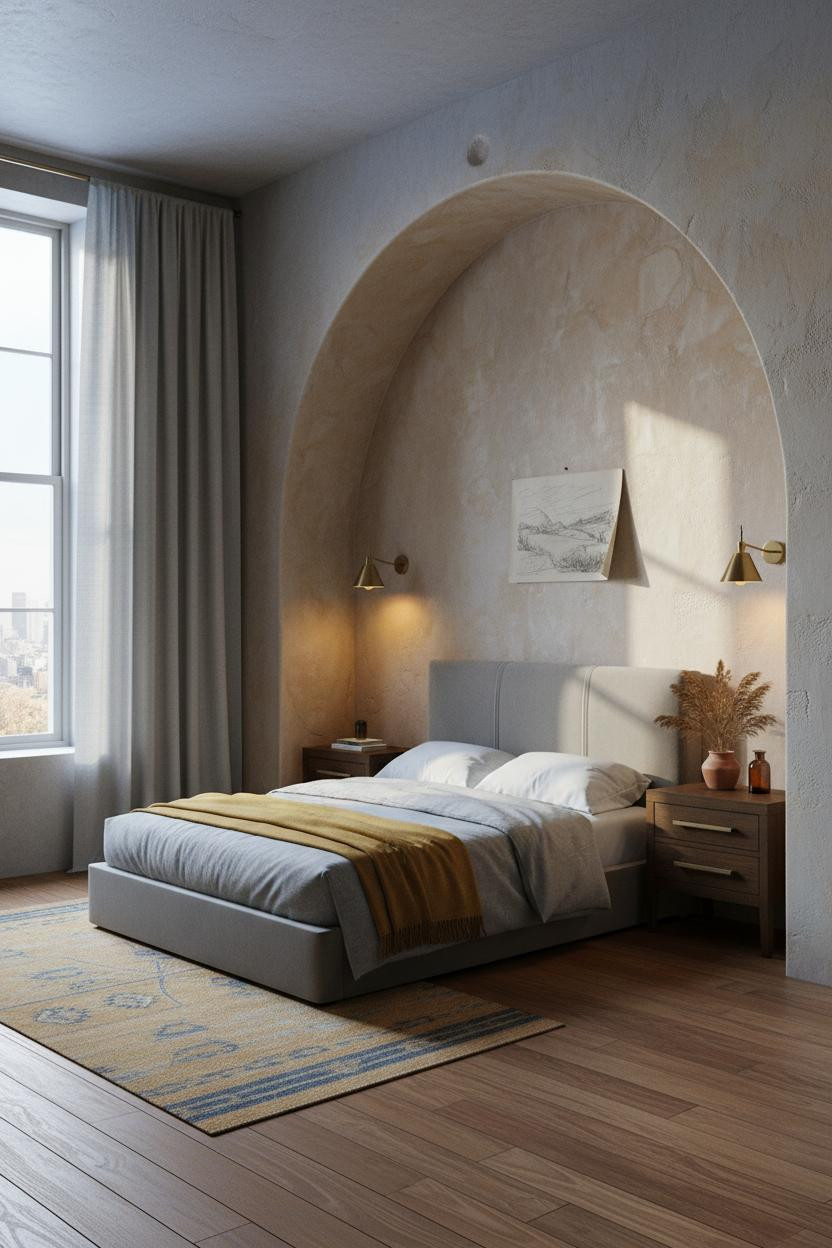

I almost scrolled past this. Really glad I didn't.
The full-height arched niche frames the bed like a portal. Thick lime-washed plaster walls with edges softened by decades of reapplication catch raked morning light on every undulation, which means the shadow inside the arch changes through the day. The room feels different at 7am than it does at noon. That's rare.
Pro move: Keep the wall outside the arch in aged stone-grey matte plaster. The contrast in depth between niche and flat wall is what makes the composition read. Don't tile or panel the niche surround.
Swedish Manor Green: Bolder Than You Think
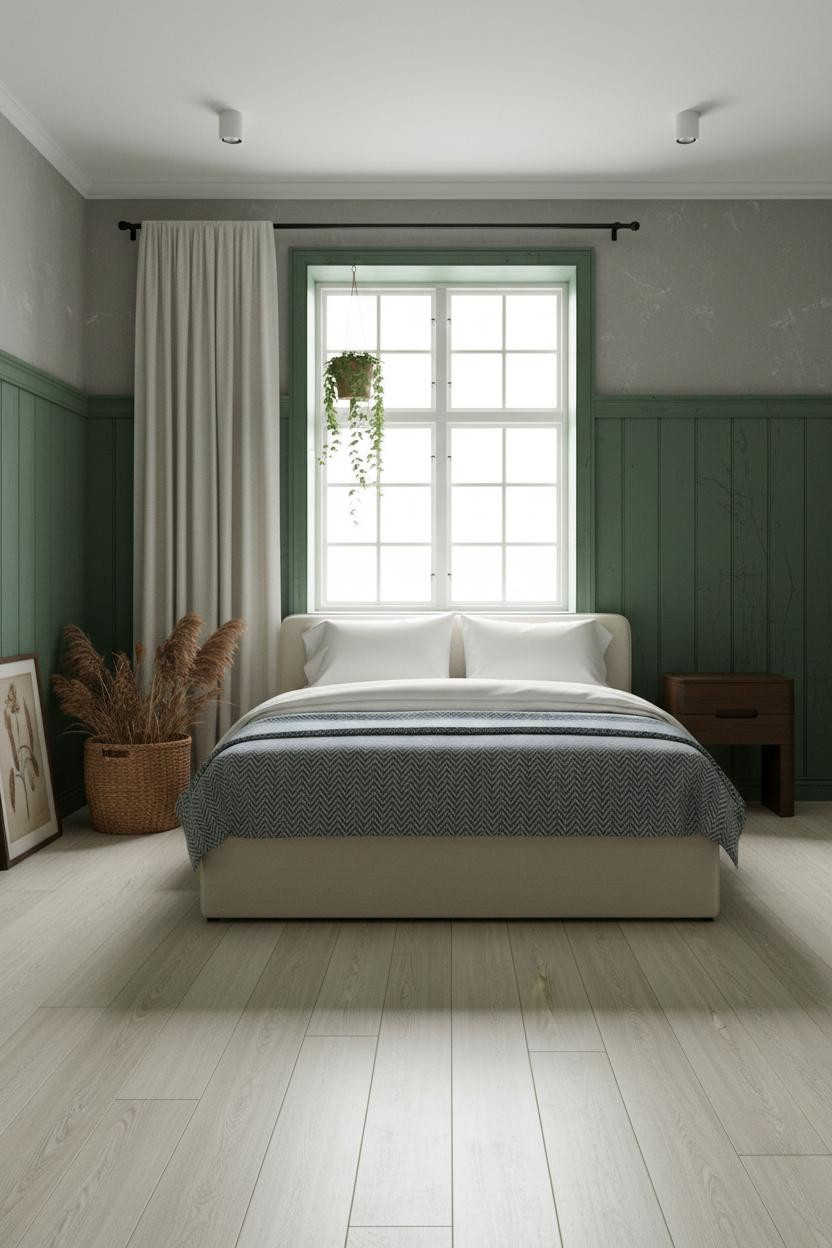
This one is divisive. But the people who commit to it never go back.
Why it looks custom: Full-height aged forest green board-and-batten with fine surface crazing and visible brushstroke history reads as authentically old, not as a paint project. Each batten shadow is crisp in winter morning light, giving the wall vertical rhythm that flat color simply can't replicate.
Where to start: Pair it with pale birch flooring and soft sage-grey plaster on the flanking walls. And use cream percale with a steel-blue herringbone throw at the foot. Just enough contrast to let the green breathe.
Stone Fireplaces Belong in Bedrooms More Than You Think
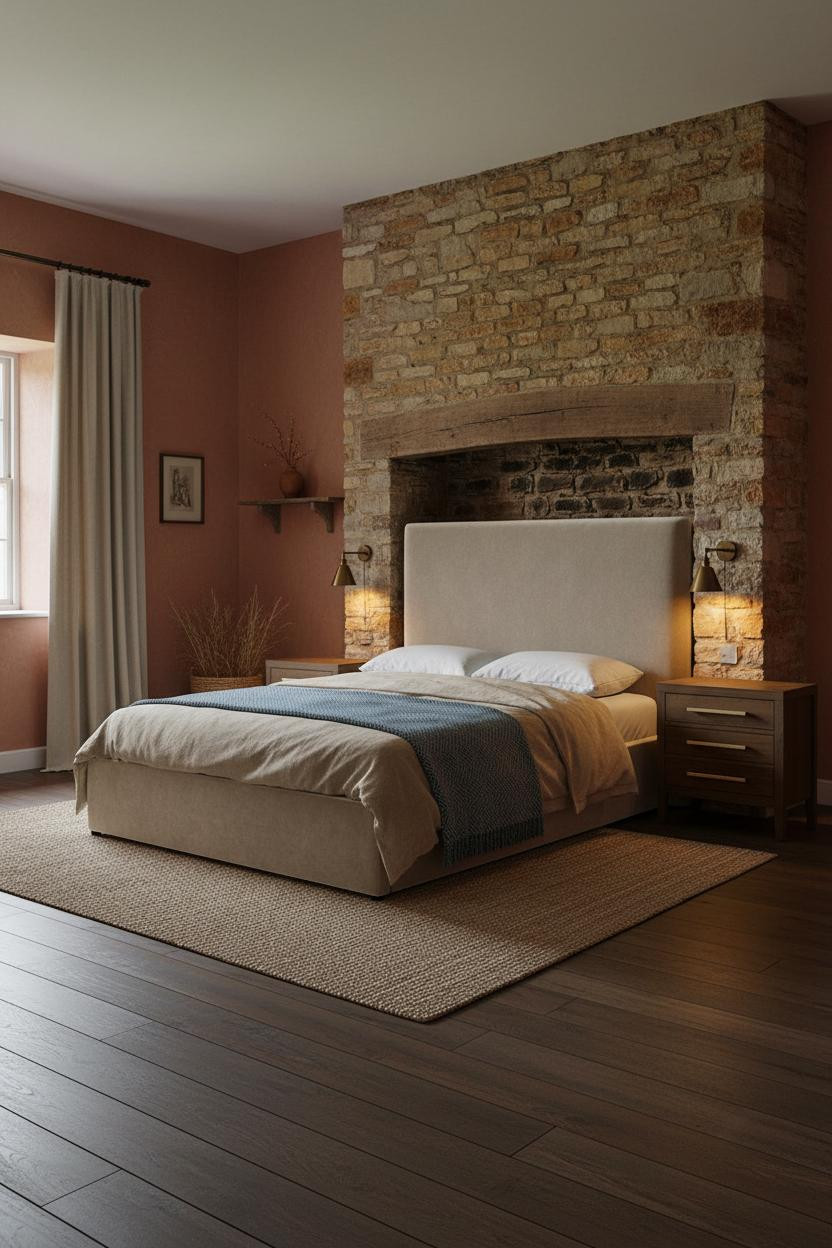
Having a stone chimney breast centered behind the bed changes how you actually use the room. It gives you a focal point that isn't the television.
The rough-hewn sandstone chimney breast in honey and amber tones catches north-light in a way that makes each course read independently. Pair it with warm muted terracotta plaster on the flanking walls and the room feels warm without being heavy.
What not to do: Don't hang anything on the chimney breast above the fireplace. The stone is the art. A framed print up there competes and loses every time.
Moss Green and Cream Shiplap: The Combination That Works
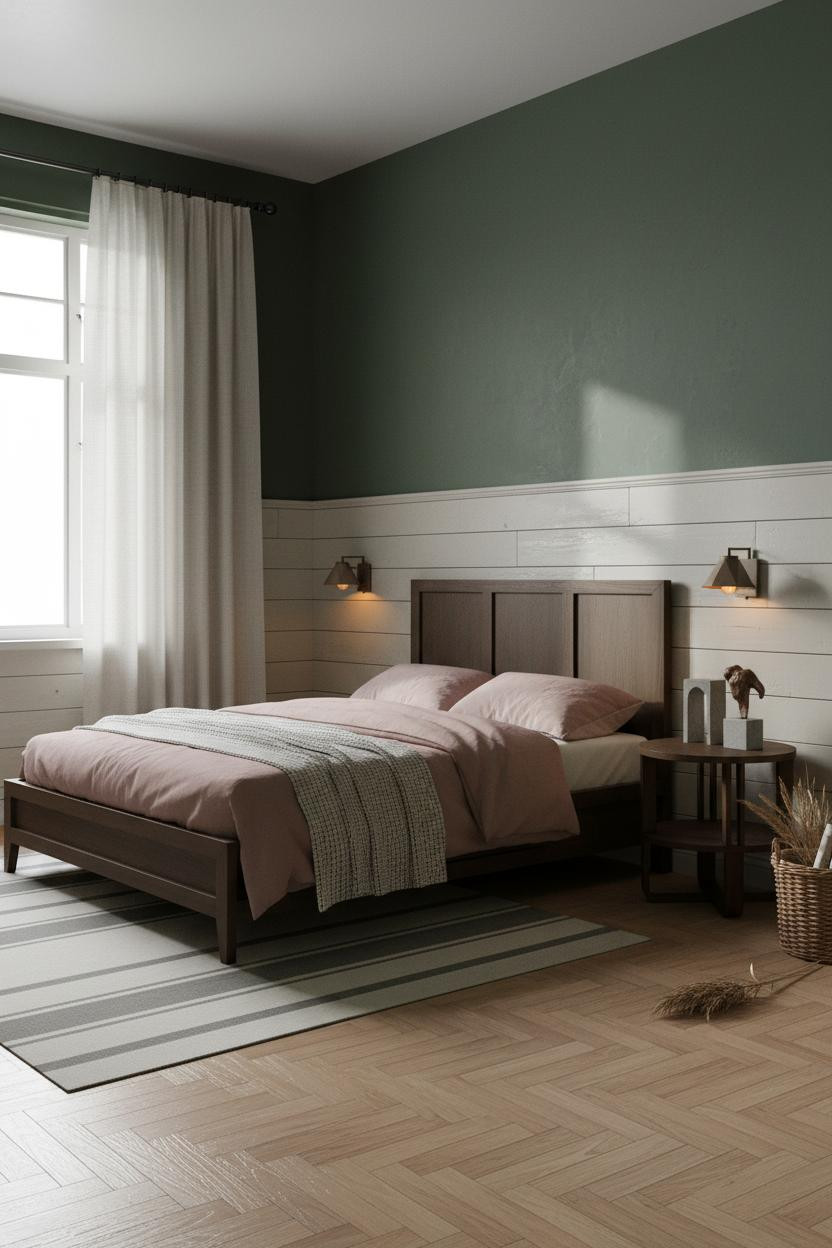

This room feels collected and intimate, like it happened over time rather than in a weekend.
The real strength: Aged cream shiplap wainscoting with chipped paint edges and visible nail holes creates a graphic horizontal division against the moss green upper walls. The contrast in tone and texture means neither surface has to work too hard. Admittedly, it's a bolder color combination than it looks in photos.
One smart swap: Use dusty pink linen bedding rather than white. Against moss green, soft pink reads warmer and more European than crisp white ever would.
Alpine Stone Walls With the Right Lighting Ratio
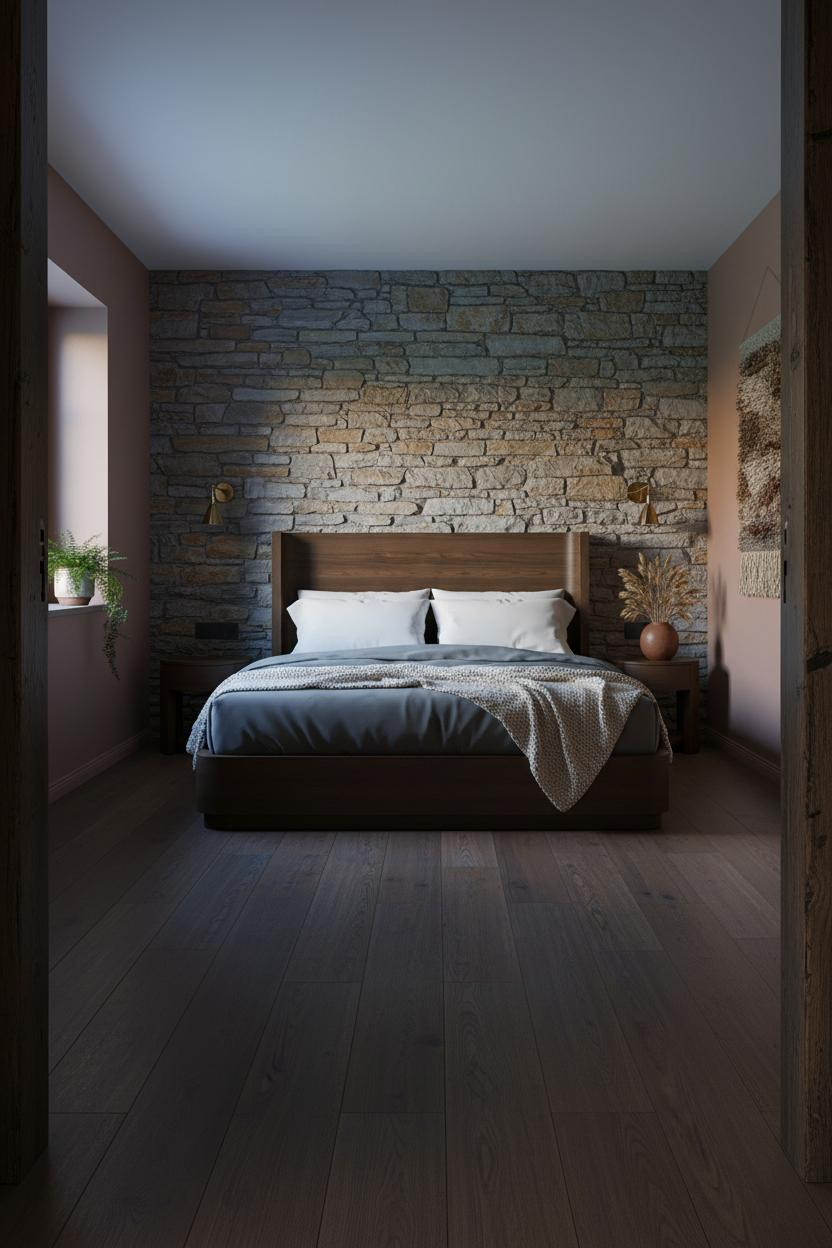
The reason this works instead of feeling like a wine cellar is the lighting ratio.
Warm sconces flanking the bed wash amber directly across the rough-hewn fieldstone in mottled grey and ochre, which pulls the warm tones out of the stone while cool morning daylight from the casement adds silver to the floor planks. Two light temperatures. One grounded, one open. That balance is what keeps the room feeling alive rather than heavy.
With a wall this textural, the practical move is skipping the rug entirely. Bare dark-stained plank flooring keeps the focus on the stone and stops the room from becoming too layered.
English Country Board-and-Batten Done Without the Fuss
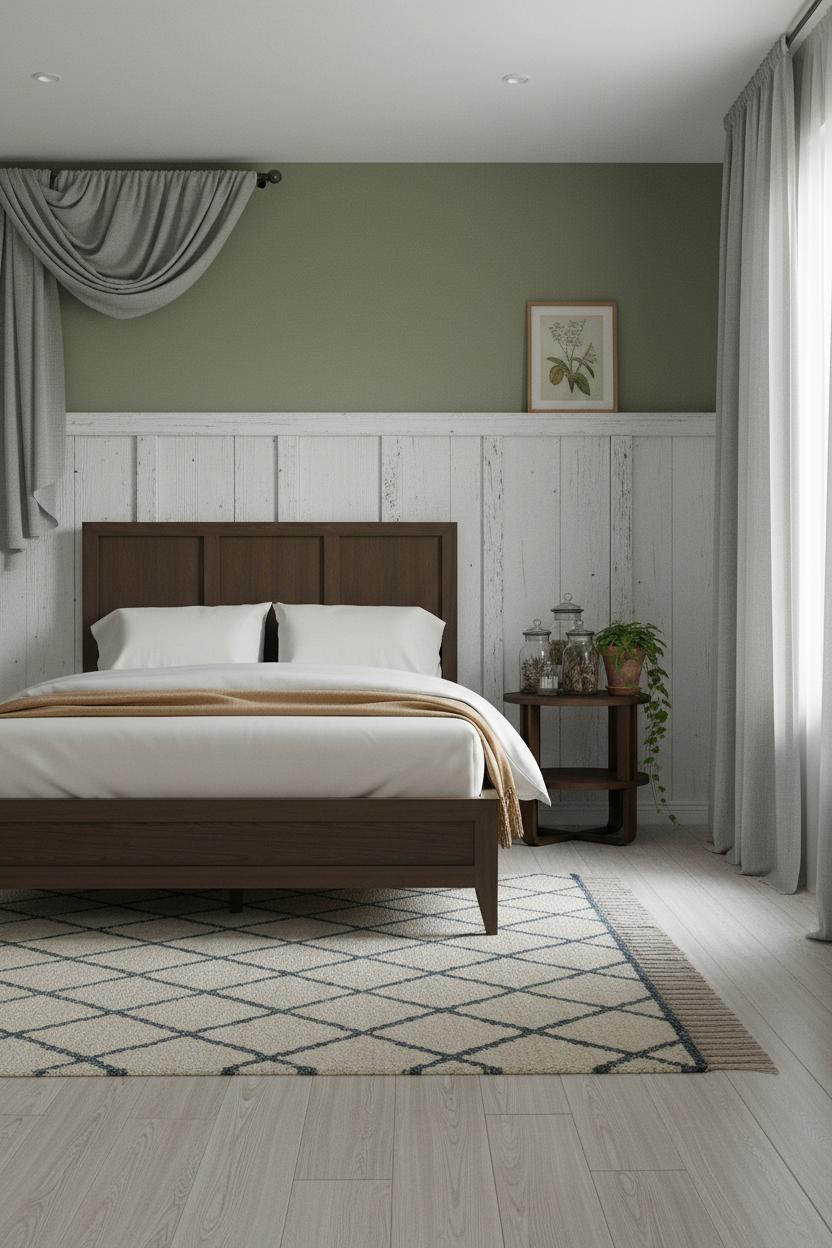
Simple idea. Aged white board-and-batten below, moss green above. The hairline cracks and worn edges where decades of country life have softened every corner are the whole point.
What softens the room: Pale bleached oak wide-plank flooring with a Moroccan diamond-pattern wool rug in cream and faded indigo at the foot keeps the lower half of the room grounded while the green upper walls pull the eye up. The room feels tucked away, in a way that feels genuinely restful.
The finishing layer: Vintage glass apothecary jars with dried herbs on a floating wooden ledge, a botanical print leaning rather than hung. Nothing too precious.
Why Provençal Farmhouse Bedrooms Age Better Than Most
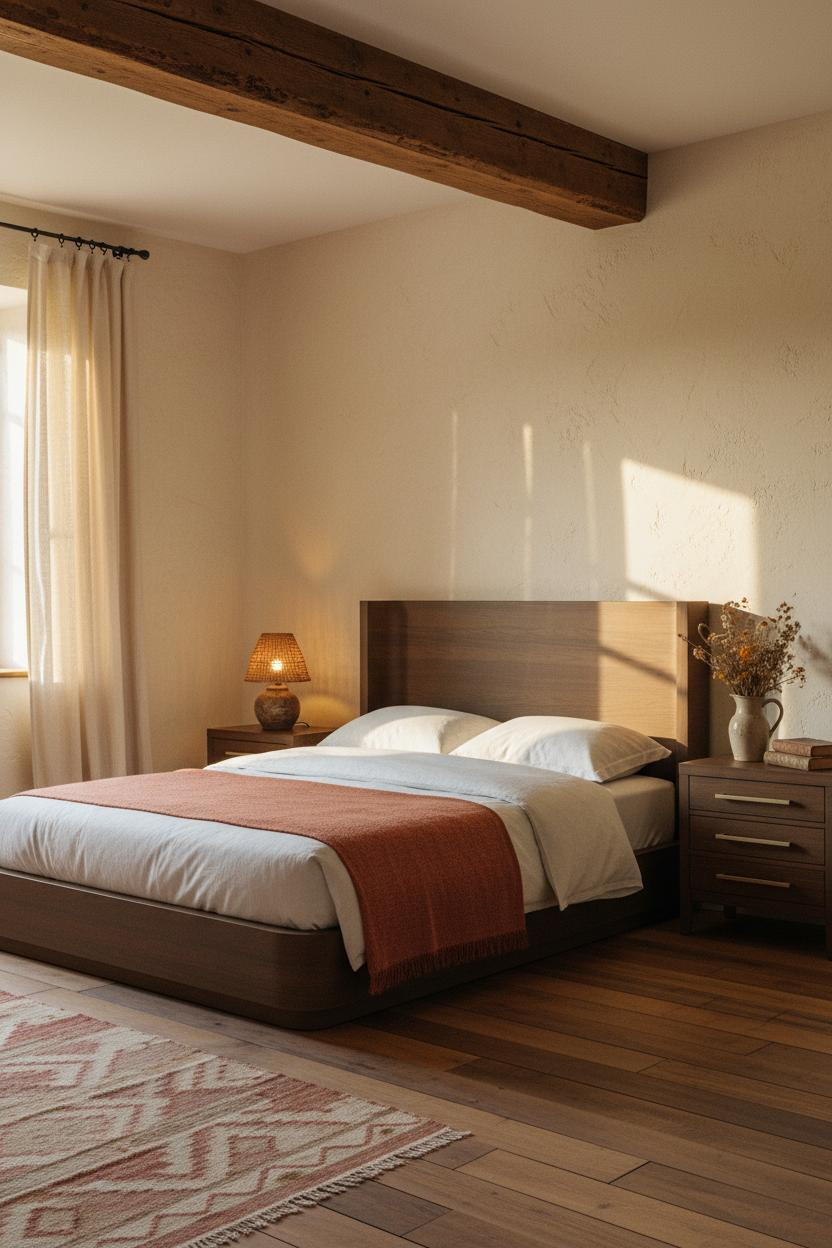
The rooms that photograph well at twenty years old all share one thing: they were built around materials, not trends.
Why the materials matter: Rough-hewn exposed beams darkened by decades of age, warm cream lime plaster with deliberate color variation and micro-cracks, and wide-plank reclaimed flooring in honey and dark walnut tones. Each surface has a history that synthetic versions simply can't approximate, which is why the room feels intimate and unhurried rather than styled.
Worth copying: A rust-terracotta handwoven wool throw at the foot of the bed pulls the warmth from both the reclaimed flooring and the beam above. It's a small move that ties the whole vertical palette together.
 Our #1 Pick
Saatva Classic Mattress
America's best-selling online luxury innerspring. 365-night trial, lifetime warranty, free white glove delivery.
Shop Saatva Classic
Our #1 Pick
Saatva Classic Mattress
America's best-selling online luxury innerspring. 365-night trial, lifetime warranty, free white glove delivery.
Shop Saatva Classic
The Foundation Of Every Beautiful Bedroom
Walls get repainted. Linen gets swapped out. The textile you've had since university finally gets replaced. But the mattress stays, and it matters more than most of us admit.
The Saatva Classic is the one I'd put under all of these rooms. Dual-coil support that holds its shape over years, a breathable organic cotton cover that doesn't trap heat, and a Euro pillow top that's soft without losing structure. It feels like the good hotel kind. Not the business hotel kind.
And honestly, a room this considered deserves a bed that matches it.

The fourteen rooms here prove that a cosy cottage bedroom doesn't come from accumulation. It comes from choosing materials with age and texture and then leaving them alone. Stone that catches light. Timber that darkens over time. Plaster that shows the hand that applied it. Good design ages well because it's made well.