12+ Modern Kids Bedrooms That Feel Collected, Not Chaotic
24 april 2026The first thing you notice in the best modern kids bedroom designs isn't the color or the furniture. It's that the room feels like it actually belongs to someone.
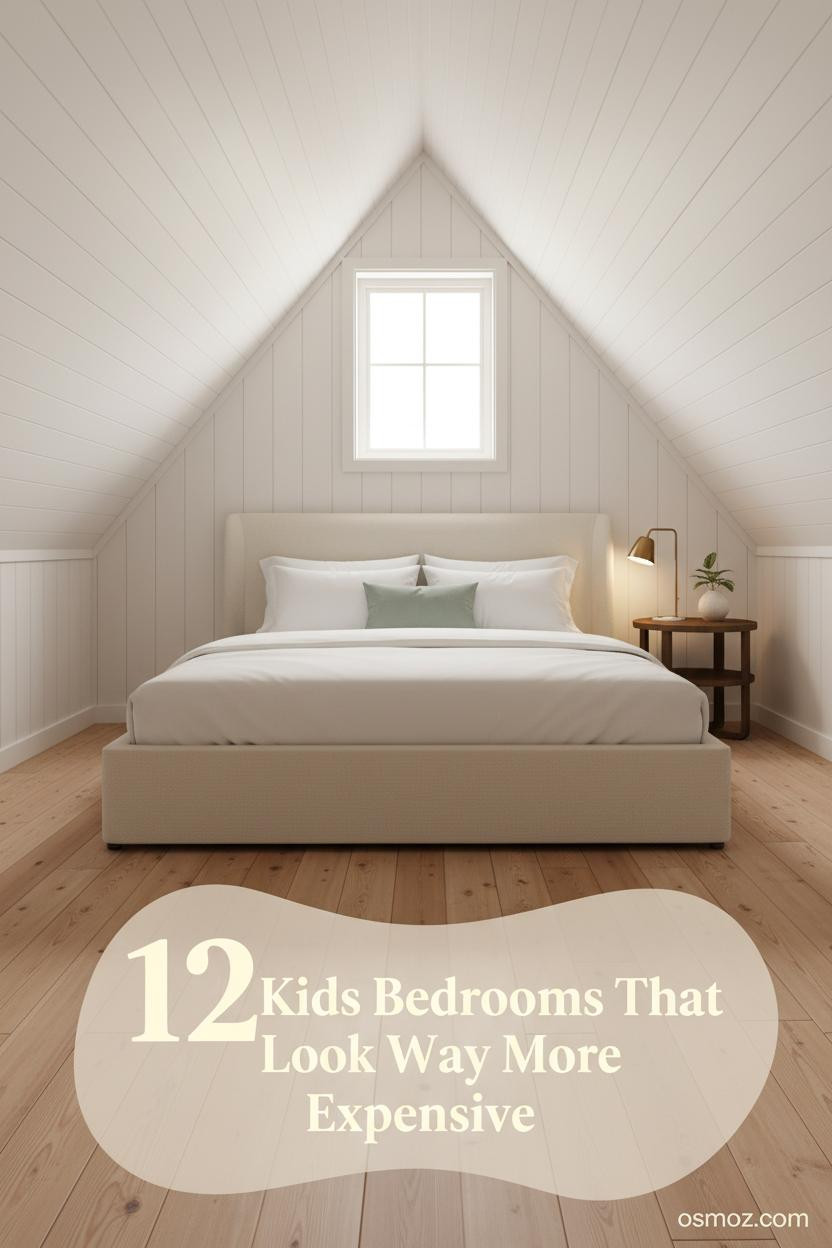
These twelve attic rooms prove that pitched ceilings and sloped walls aren't limitations. They're the whole point.
The Attic Room That Gets Natural Light Just Right
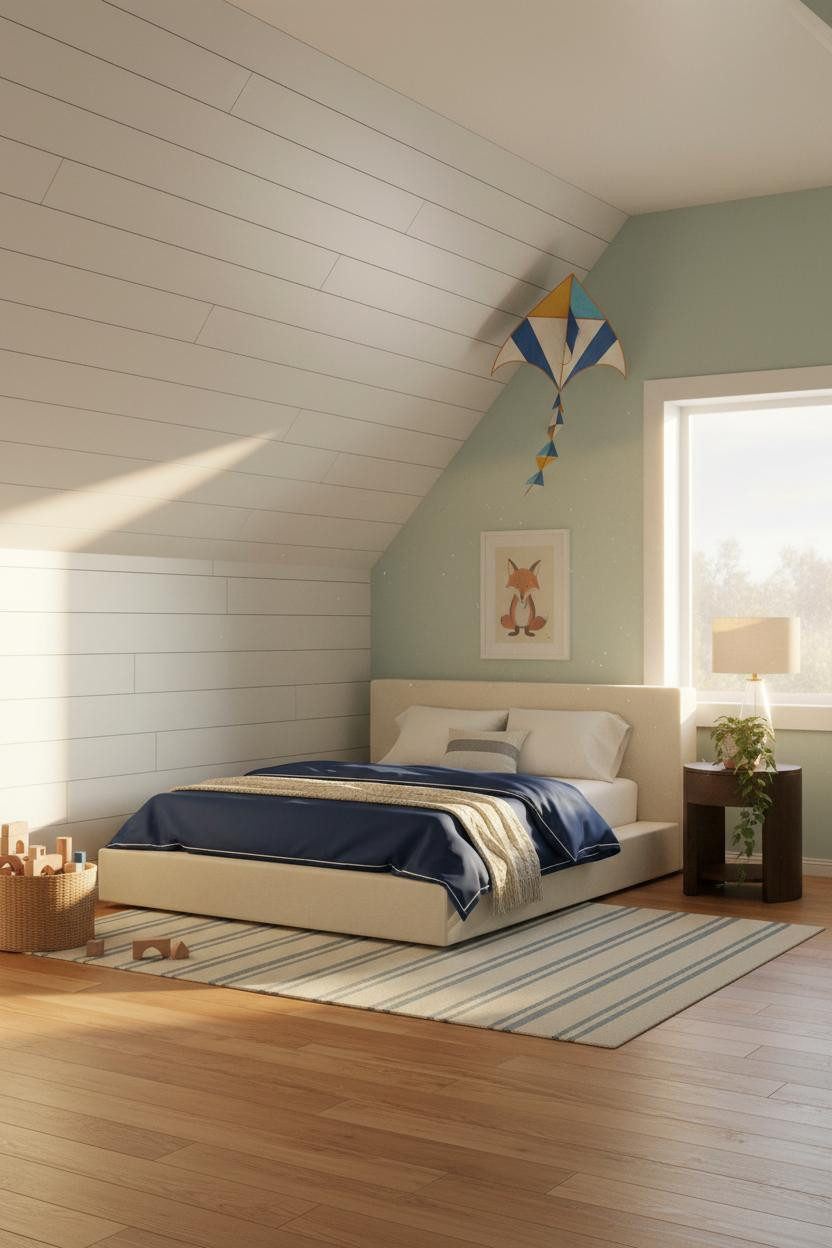
I keep coming back to this one. There's something about how the light pools across the floor that makes the whole room feel earned.
Why it works: The white-painted shiplap wall does two things at once. It emphasizes the sloped geometry and bounces the afternoon sun deeper into the room, keeping the mint walls from reading too cool.
Steal this move: Anchor the bed zone with a cream and pale blue flat-weave rug. It ties the mint and navy without trying too hard.
Built-In Shelving That Actually Earns Its Place
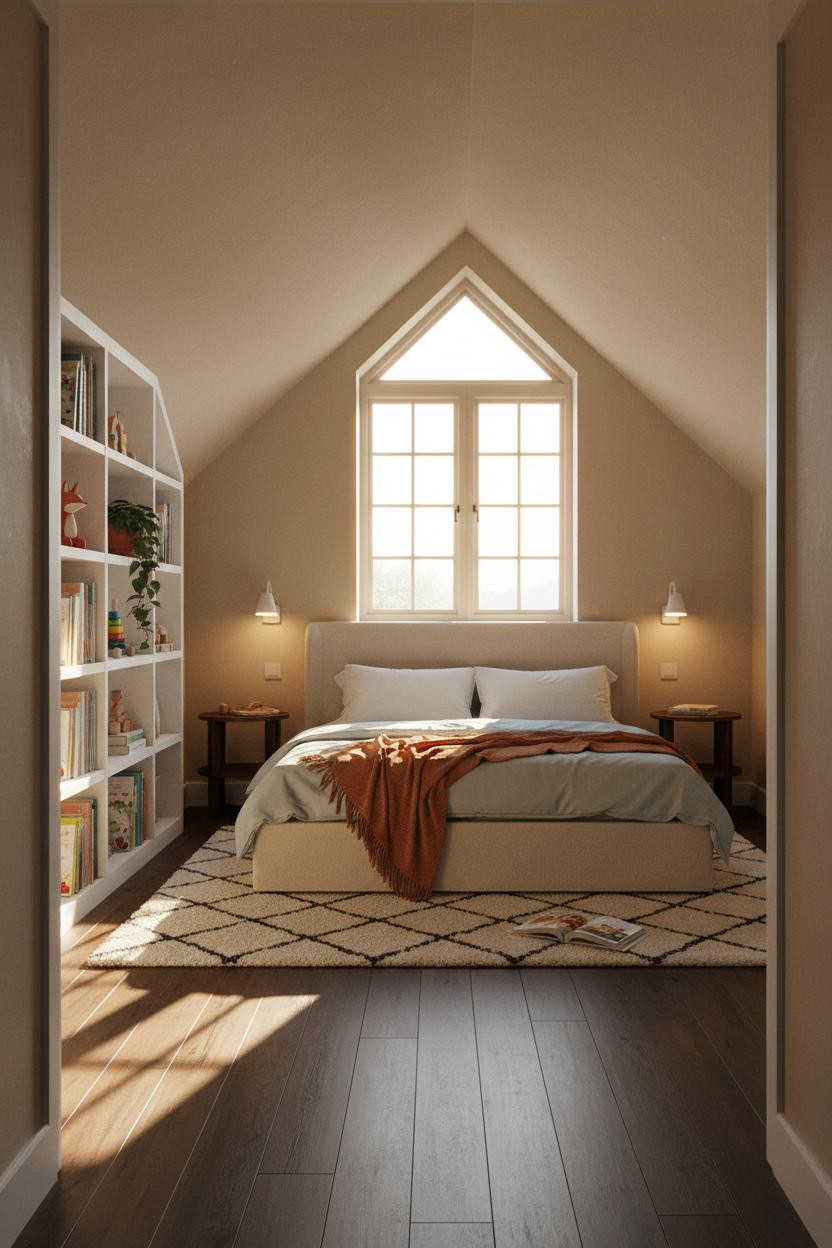

Nothing fancy here. That's the point.
But the white-painted MDF shelving that steps with the roofline is honestly one of the smarter storage moves I've seen in an attic room.
What makes it work: The stepped shelf geometry follows the knee wall angle instead of fighting it, so the storage feels like it grew there rather than got pushed in.
The practical move: Keep the top shelves for display only. Picture books and wooden toys at arm height, ceramics and plants up high. The room stays readable.
A Pine Ceiling That Changes The Whole Energy
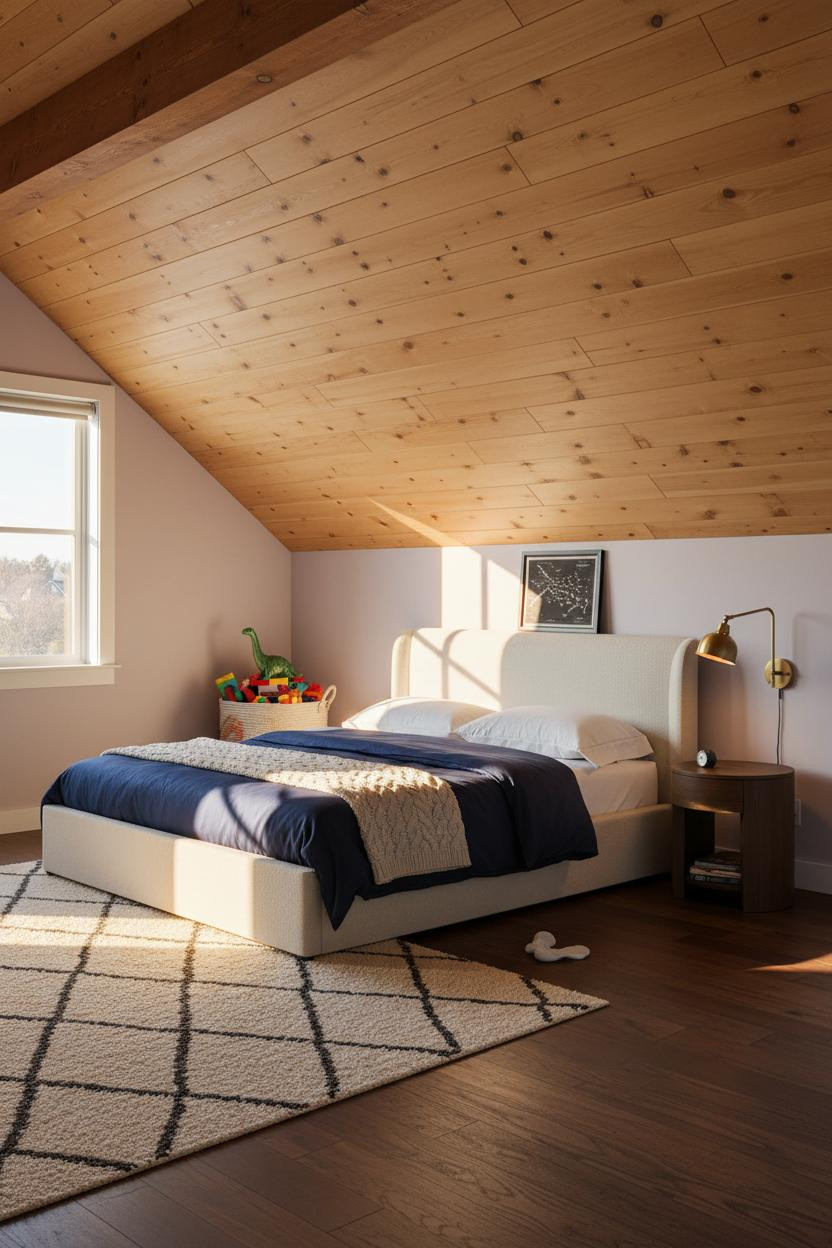
This is the kind of room that makes a kid never want to leave. Wide-plank pine overhead, lavender on the back wall. It shouldn't feel grown-up and playful at the same time, but it does.
In the design label: the natural pine board ceiling adds warmth that paint simply can't, and the honey grain glows amber wherever the dormer light rakes across it, making the whole ceiling feel alive.
Avoid this mistake: Don't pair a warm wood ceiling with cool-white walls. The pale lavender accent wall bridges the gap. That's what keeps it from feeling like a ski cabin.
Japandi Attic With Exposed Collar Ties
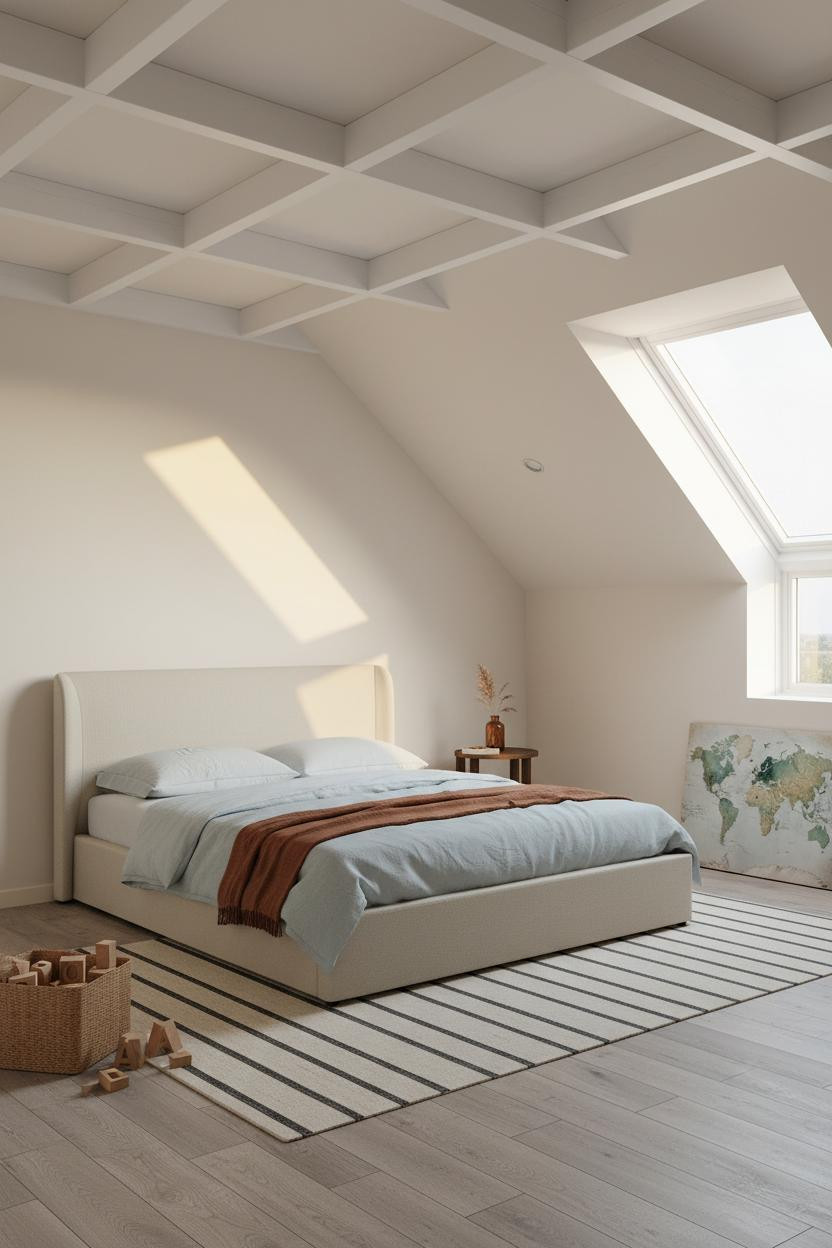
Japandi in a kids room is a commitment. But this one pulls it off because nothing is trying too hard.
Design logic: White-painted timber collar ties running in a clean ladder rhythm overhead create geometric interest while still keeping the ceiling feeling open. The washed grey-brown reclaimed plank flooring grounds all that cream and air above it.
What to borrow: Lay a cream and charcoal striped flat-weave rug under the bed. It adds pattern in a way that feels collected rather than busy.
The Dormer Recess That Frames The Whole Bed
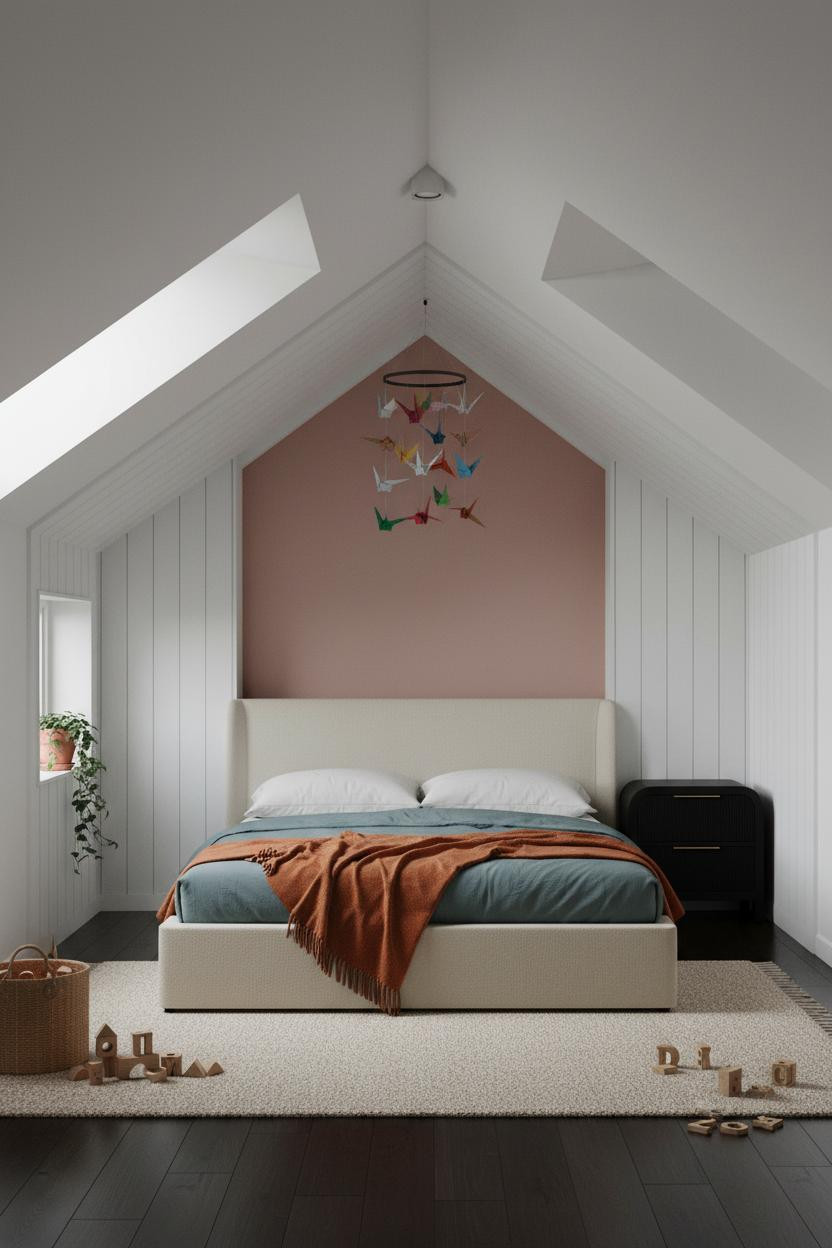
I almost scrolled past this. Glad I didn't.
The gable dormer recess punches so deep into the roofline that the bed feels genuinely sheltered, like a room within the room. And the white board-and-batten paneling inside that recess keeps the geometry crisp without making it cold. The dusty rose accent wall flanking the nook does the warming instead.
Timber Collar Ties With A Terracotta Wall
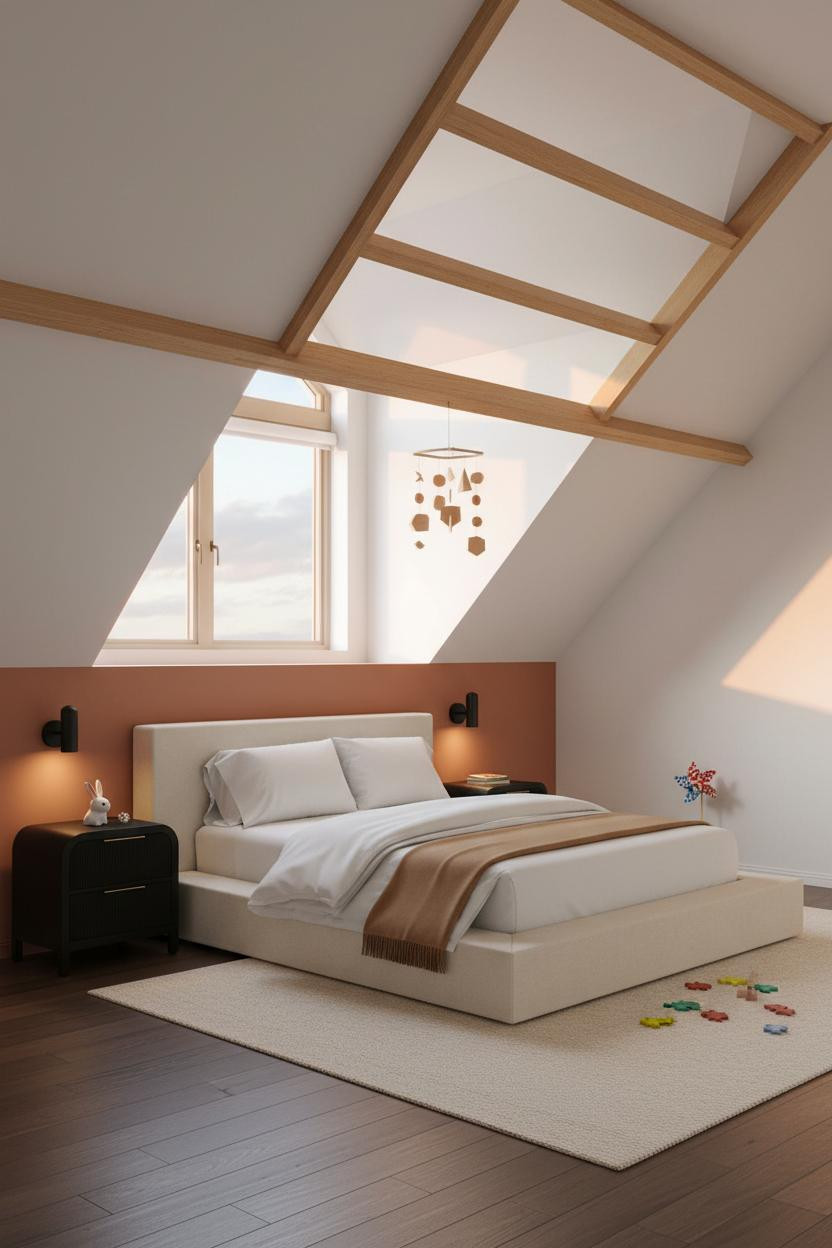
Terracotta plus warm timber is a combination that feels like it belongs in a Tuscan farmhouse. In an attic kids room, somehow, it works even better.
Why the materials matter: The honey-toned timber collar ties against crisp white plaster walls create a geometric overhead pattern that earns its place without adding visual weight down low, where the kids actually live.
Swap paired wall sconces for a single floor lamp if the ceiling height is low. One warm source is enough here.
Butter Yellow Walls With Tongue-And-Groove Ceiling
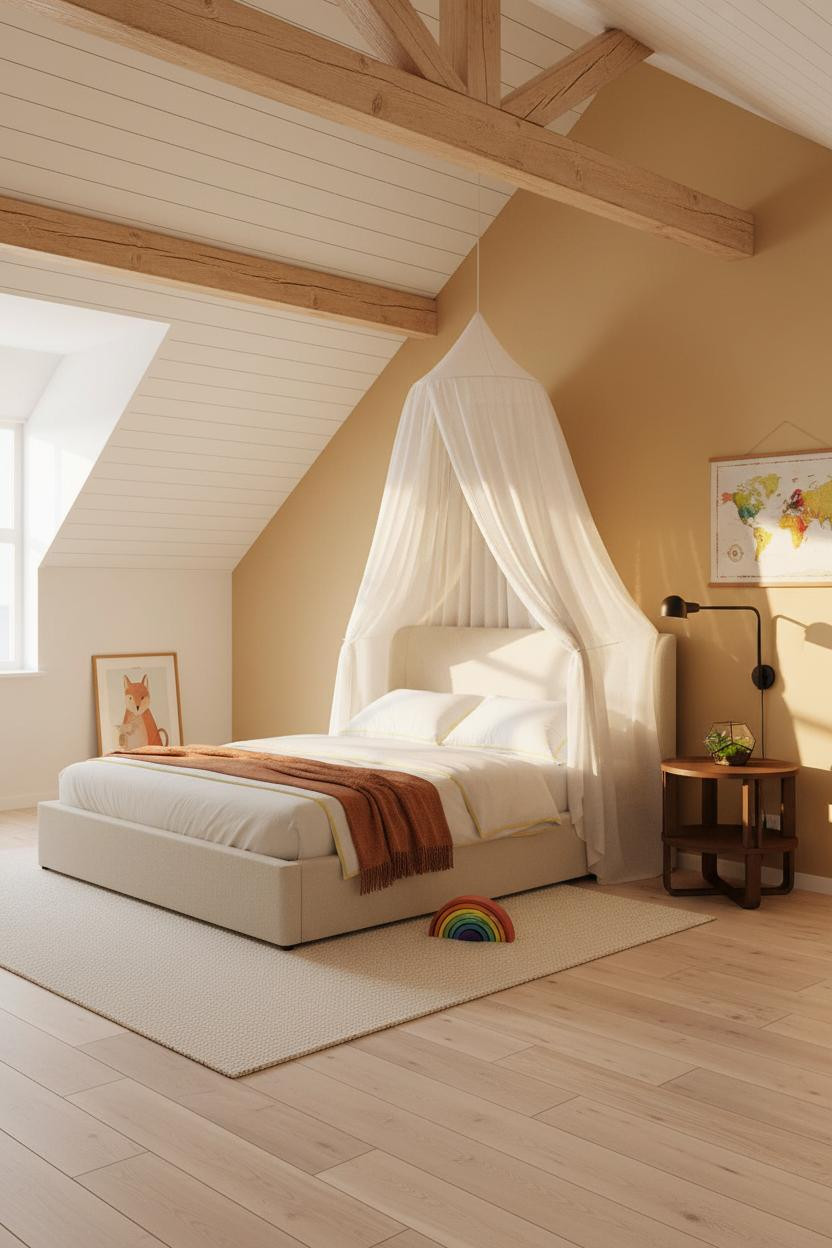
This one is genuinely joyful. The butter yellow accent wall reads warm without tipping into aggressive, and the narrow tongue-and-groove ceiling boards overhead make the tent-like pitch feel intentional rather than awkward.
What carries the look: Two exposed natural timber ridge beams cutting diagonally overhead catch the raking light and throw crisp shadows down the walls, giving the room a structure that feels architectural, not accidental.
Pro move: Use pale yellow piping on an ivory linen duvet. The color echo between bedding and wall is quiet but it holds the room together.
Pine Trusses Over A Peach Accent Wall
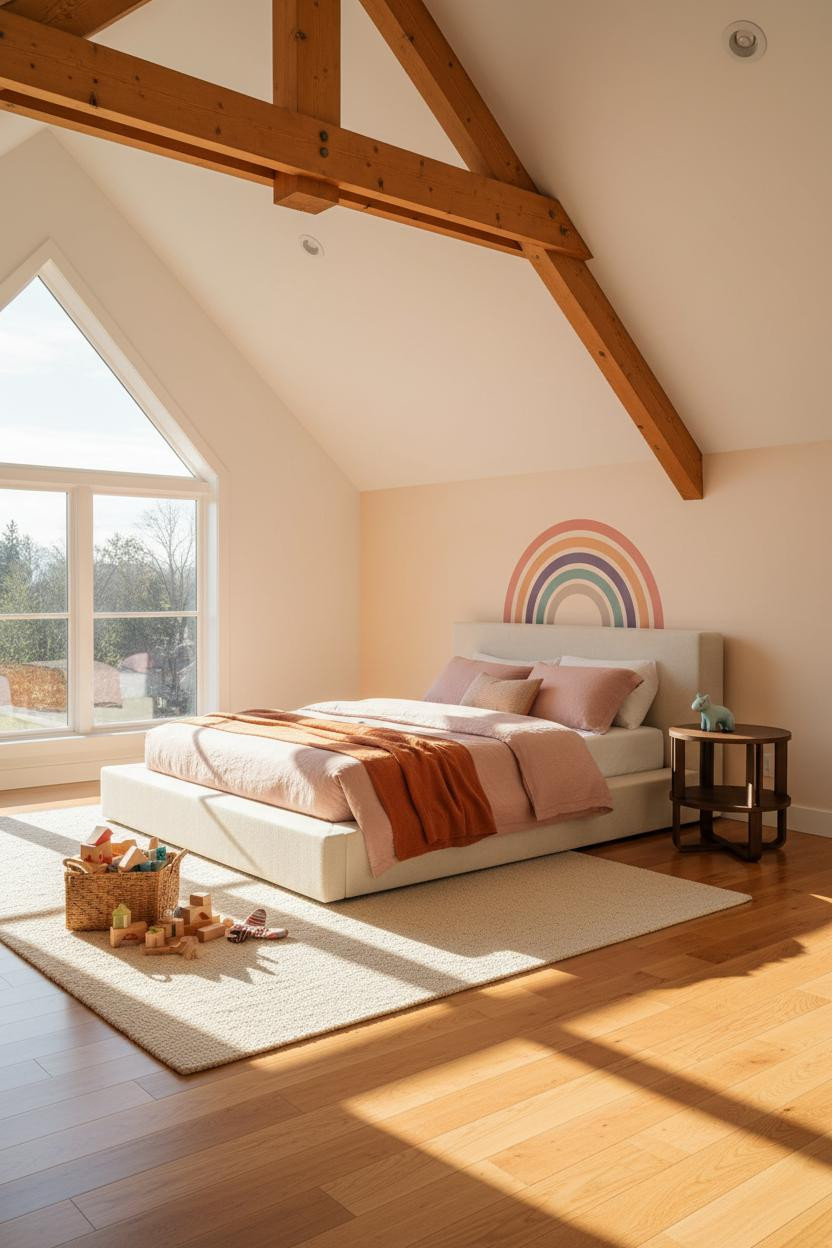
The triangular gable window casts trapezoid light shapes across the maple floor, and the room feels like a geometry lesson you'd actually want to be in.
Why it feels balanced: Pale peach is warm enough to feel soft but light enough to let the raw honey pine trusses read clearly against it, so the structure overhead stays the star rather than competing with the wall color.
The easy win: A rainbow-arc wall decal above the bed works with this palette, not against it. Keep bedding simple so the ceiling does the talking.
Powder Blue Scandi Nook With Paneled Dormer
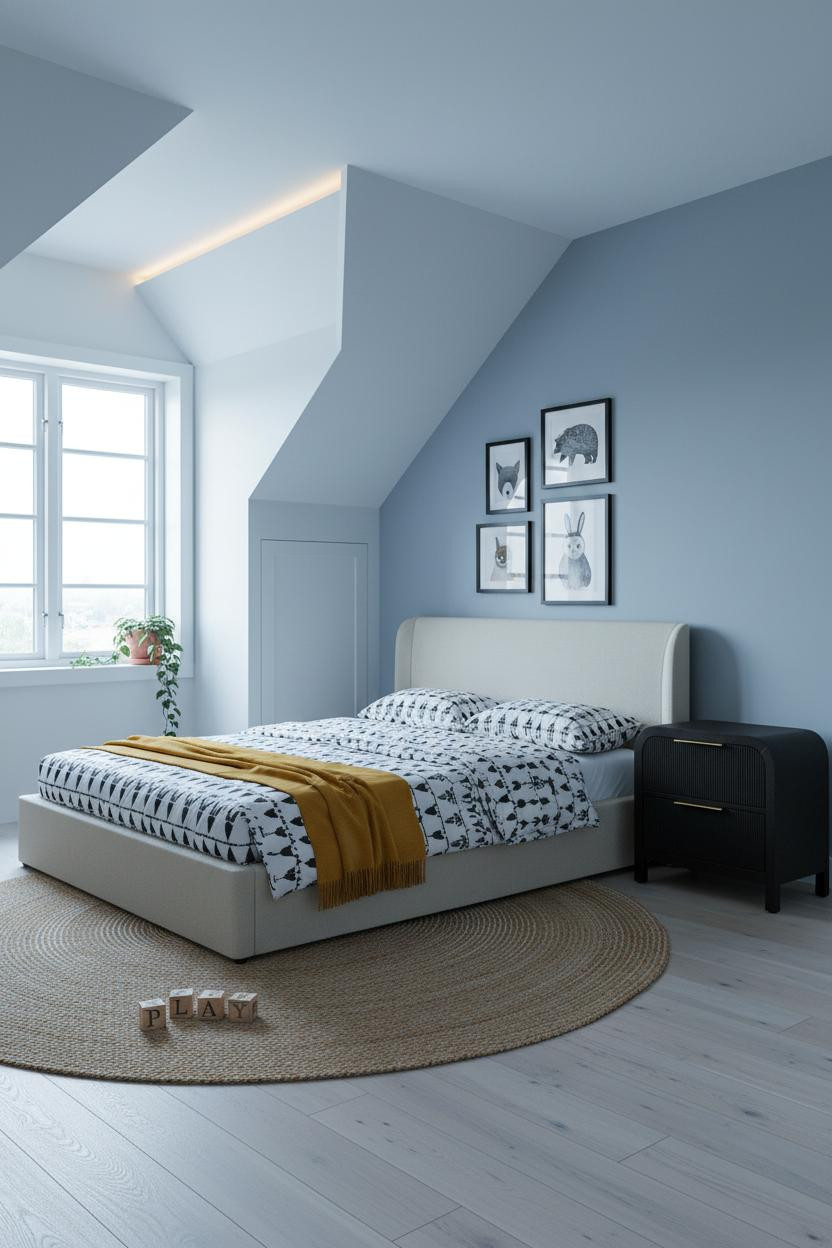
Fair warning. Powder blue walls read differently depending on what's beside them. In this room the full-height white MDF dormer paneling flanking the bed nook is what keeps it from feeling cold or clinical. The room feels organized and calm in a way that actually suits a child.
What sharpens the room: The paneled alcove creates a storybook alcove effect while still feeling contemporary, especially when paired with a graphic black-and-white duvet and a mustard blanket at the foot for contrast.
The Arched Alcove That Becomes The Room
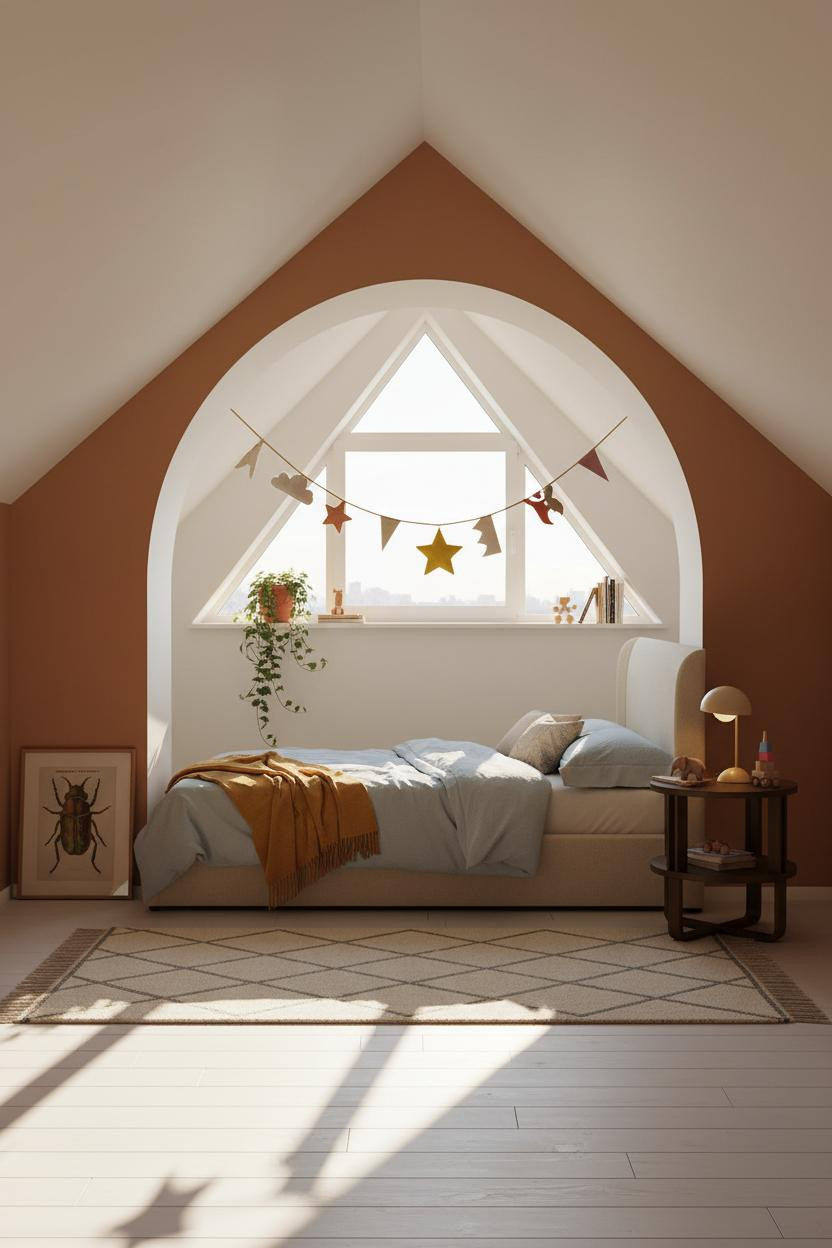
This is the most ambitious room in this list. And honestly, the most memorable.
A bold smooth plaster arch cut into the knee wall frames the sleeping zone from floor to ceiling, the curves catching crisp warm light while the interior sits in gentle shadow. It creates a cave-like shelter that makes the bed feel genuinely special to a child, not just placed there.
Where to start: The honey terracotta walls flanking the arch do the warming work. Keep bedding pale so the architecture stays the focus, not the textiles.
Avoid this mistake: Don't fill the arch ledge. One terracotta pot with trailing ivy is enough. Overdecorating the nook kills the sheltered feeling.
Sage Green Scandi With Herringbone Parquet
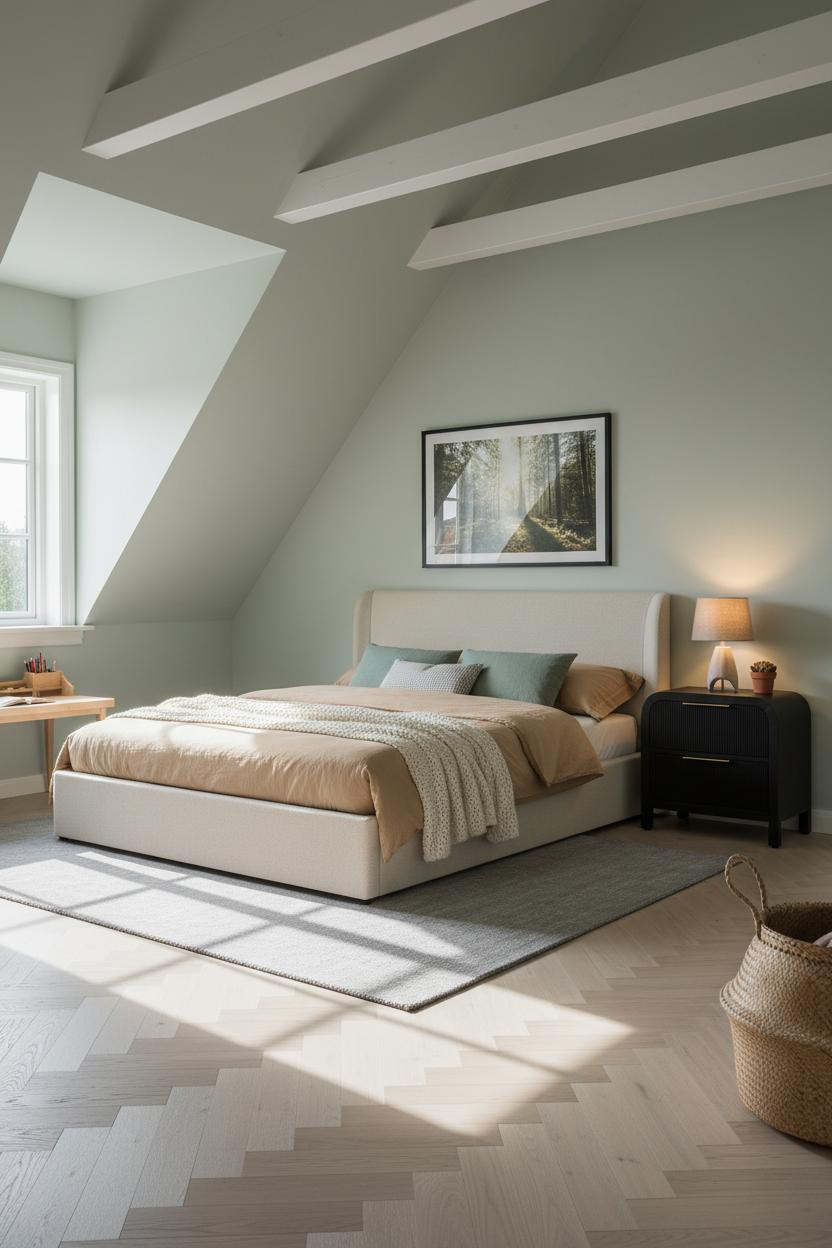
This room feels calm and cohesive in a way that takes effort to pull off. The sage green walls and white-painted beam ceiling are obvious partners, but it's the floor that actually holds it together.
The real strength: Light herringbone parquet flooring adds a layer of visual rhythm down low that makes the room feel collected rather than decorated. It pays off especially when the rest of the space stays simple.
One smart swap: Trade a standard area rug for a soft grey flat-weave here. It lets the parquet pattern breathe while still defining the bed zone.
Sage And Oak With A Reading Corner That Works
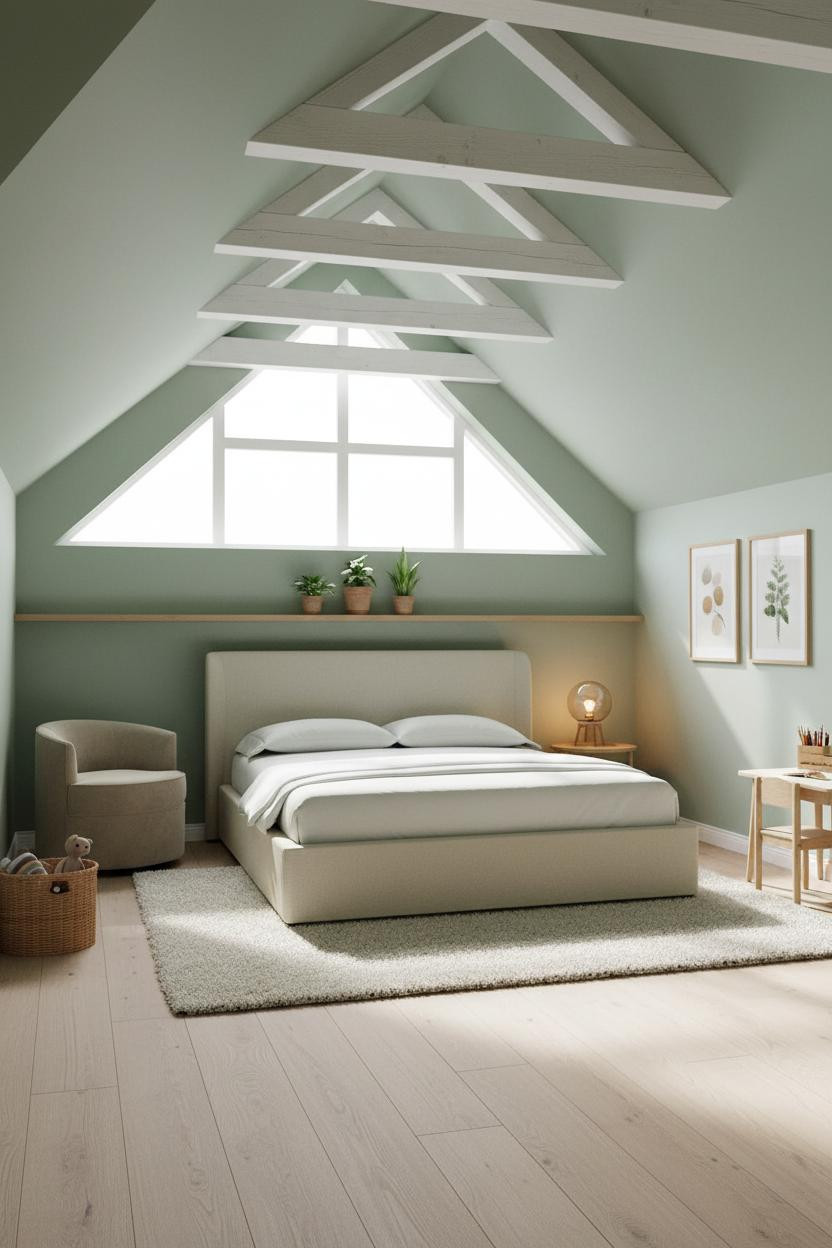

Having a proper reading corner changes how a child actually uses their room. Not just for sleeping. For choosing to be there.
What gives it presence: The exposed white-painted wood beams frame the gable window like a crown, making the swivel chair in that corner feel like a destination rather than an afterthought. The natural oak floor keeps the sage walls from feeling heavy.
The smarter choice: Float the chair by the window, not against the wall. Kids gravitate toward light. Give them a reason to sit in the best spot in the room.
 Our #1 Pick
Saatva Classic Mattress
America's best-selling online luxury innerspring. 365-night trial, lifetime warranty, free white glove delivery.
Shop Saatva Classic
Our #1 Pick
Saatva Classic Mattress
America's best-selling online luxury innerspring. 365-night trial, lifetime warranty, free white glove delivery.
Shop Saatva Classic
Why Luxury Bedrooms Always Feel Better
Walls get repainted. Rugs get swapped out. The ceiling pitch stays. And so does the mattress. Every room in this list earns its feeling from the ground up, which means the bed itself can't be an afterthought.
The Saatva Classic is the starting point worth getting right. Dual-coil support that holds up through years of use, breathable organic cotton that doesn't trap heat, and a Euro pillow top that's genuinely soft without losing its structure over time. It's the kind of mattress a child graduates from reluctantly.
Good design ages well because it's made well.

The rooms that end up saved on Pinterest aren't the most decorated ones. They're the ones where every choice looks like it was made on purpose. Start with the architecture you have, work with the light you get, and invest in the bed first. The rest figures itself out.