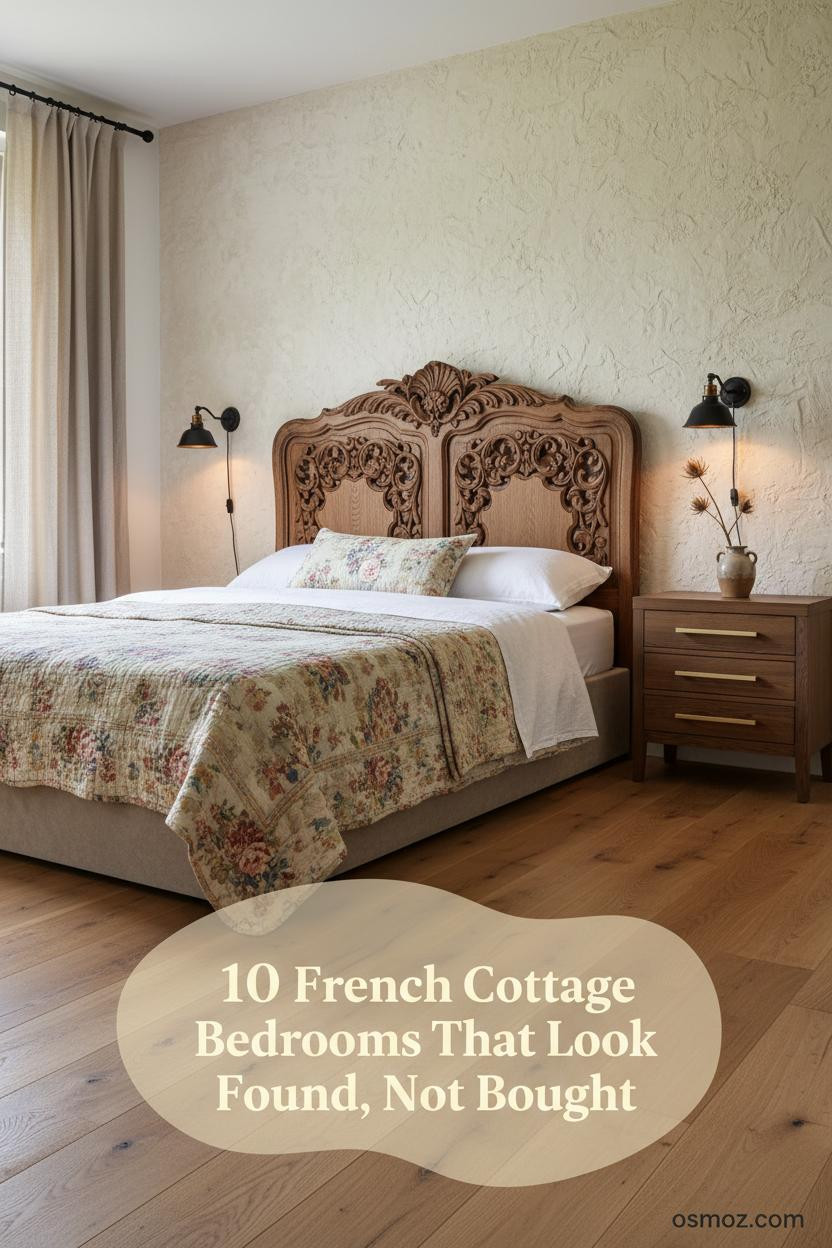
10+ French Cottage Bedrooms That Feel Collected Rather Than Decorated
19 april 2026The best French Cottage Bedroom doesn't look like it was designed. It looks like it was lived in, slowly, over decades. That's the whole point.
These ten rooms lean into that idea. Worn oak, faded linen, lime-washed plaster walls that hold light in the softest way. Nothing too precious. Nothing too new.
The Provençal Room That Gets Mornings Right
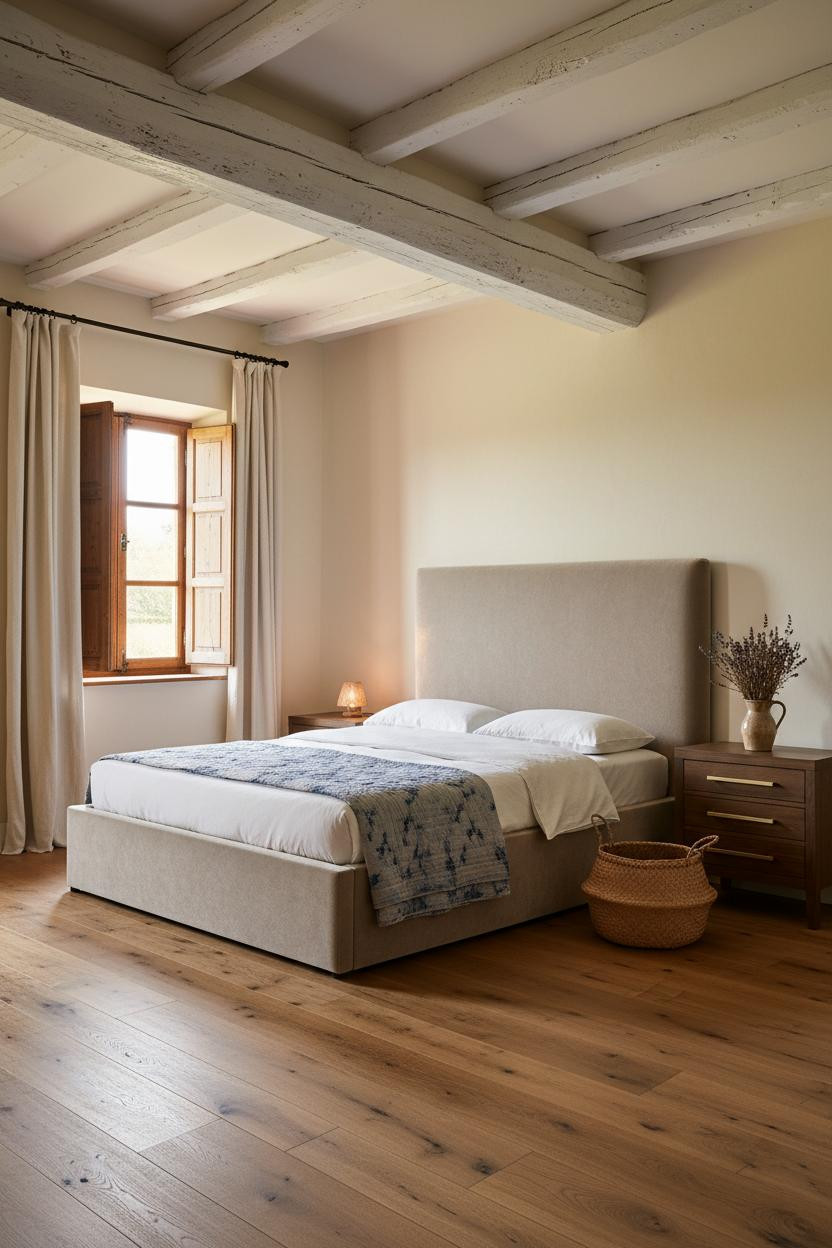


I keep coming back to this one. There's a stillness here that most designed rooms miss entirely.
It's the hand-hewn whitewashed beams doing most of the work. That distressed timber surface carries decades of age patina, and the lime-washed plaster walls beneath reflect morning light in a way that feels warm without being heavy.
Steal this move: Pair aged oak floors with cream bedding and one antique textile at the foot. The contrast between old wood and soft linen is enough. You don't need more layers than that.
Why Faded Linen Always Wins In A French Room
Some fabrics age out. Washed linen doesn't.
What gives it depth: The slight unevenness of a natural weave catches light differently than cotton, which is why the room feels lived-in rather than staged. And that quality is nearly impossible to fake with anything newer.
The easy win: Swap your duvet cover for stonewashed linen in ivory or oat. One change, and the whole room shifts toward that French countryside softness.
The Headboard Detail That Changes Everything
Honestly, the headboard is underrated in French cottage interiors.
Why it looks custom: A carved or cane-panel headboard in aged oak adds architectural presence that a simple upholstered frame can't replicate. The material tells you this piece has history, even if it doesn't.
What to borrow: Look for headboards with visible joinery or hand-finishing. The imperfection is the point.
Dark Walls That Still Feel Soft
Deep color in a French cottage bedroom is a commitment. But it pays off.
Why the palette works: A deep slate or charcoal wall reads warmer when it's paired with raw plaster texture rather than smooth paint. The roughness breaks up the depth in a way that feels collected rather than dramatic.
Avoid this mistake: Don't use cool-toned white trim against a warm dark wall. The contrast gets harsh fast. Stay within the same temperature family.
I Didn't Expect A Low Bed To Work This Well
Low bed frames feel counterintuitive in a room with high ceilings. But this is one of those cases where the proportions somehow land.
Design logic: Keeping the bed low draws attention upward to the ceiling beams and plaster crown, which is exactly where you want the eye to go in a room built around architectural character.
Stack European-size pillows in front of standard shams. One extra layer. The bed reads fuller without adding actual height.
The Nightstand That Earns Its Place
A nightstand in a French cottage bedroom shouldn't look bought. It should look found.
What makes this one different: Turned legs and a warm walnut finish reference antique French provincial furniture while still being functional enough for daily use. That balance between old-feeling and livable is harder to get right than it looks.
Pro move: Add a ceramic carafe and a single dried stem. Nothing else. The restraint reads more expensive than a full styled tray.
Romantic Without Trying Too Hard
French country bedrooms romantic in the heavy, canopy-and-ruffle sense? Not for me. But this version I understand.
What creates the mood: It's the layering of ivory cotton over a faded antique quilt, with a soft amber bedside lamp providing the only warm light source in the room. The effect is intimate in a way that feels accidental.
The finishing layer: A loose linen throw draped at the foot. Not folded. Not styled. Just left there, like someone actually uses it.
This Flooring Choice Is Doing A Lot Of Work
Wide-plank floors. Not the trendy kind. The kind with knots and color variation and age.
In a vintage cottage bedroom, the floor is often the most honest thing in the room. Reclaimed oak planks with visible grain carry more visual warmth than any rug could, while still giving the space somewhere grounded to land. And the warmth moves upward, which means the whole room feels it.
Where to start: If you can't change the floors, layer a natural jute or faded wool rug in warm oat tones. It approximates that same worn-wood quality without the renovation.
When The Window Treatment Is The Room
I almost scrolled past this one. Glad I didn't.
Why it holds together: Floor-to-ceiling natural linen panels hung from a simple iron rod do what most window treatments can't: they make the ceiling feel taller and the light feel softer at the same time. The raw hem at the bottom is intentional, not a mistake.
What not to do: Don't hem them short. Pooling slightly on the floor or grazing it is part of the look. A neat tailored hem reads too formal for French cottage style.
The Provençal Detail Worth Copying At Any Budget
The dried lavender stem in the ceramic pitcher. That's it. That's the Provençal detail.
Why it lands: It's a small move, but it shifts the room from generic cottage to something with a specific place and a specific light. Just enough texture to keep things interesting, while still feeling completely unfussy.
The smarter choice: Skip the fresh flowers. Dried botanicals last longer and age more gracefully into the room's overall worn-in quality. And they don't need water on the Madeleine Nightstand.
 Our #1 Pick
Saatva Classic Mattress
America's best-selling online luxury innerspring. 365-night trial, lifetime warranty, free white glove delivery.
Shop Saatva Classic
Our #1 Pick
Saatva Classic Mattress
America's best-selling online luxury innerspring. 365-night trial, lifetime warranty, free white glove delivery.
Shop Saatva Classic
The Foundation Of Every Beautiful Bedroom
Walls get repainted. Linen gets swapped out. But a beautiful French cottage bedroom still needs something to sleep on that earns the room around it.
The Saatva Classic fits that idea. Dual-coil support that holds up over years, an organic cotton cover that breathes through warm nights, and a Euro pillow top that feels genuinely soft without losing structure underneath. It doesn't fight the room. It completes it.
And honestly, that's the whole edit. Get the bed right first. The rest figures itself out.

The rooms people save aren't the most decorated ones. They're the ones that feel like someone actually lived there, chose things slowly, and stopped before it got to be too much. That's the French cottage edit at its best.