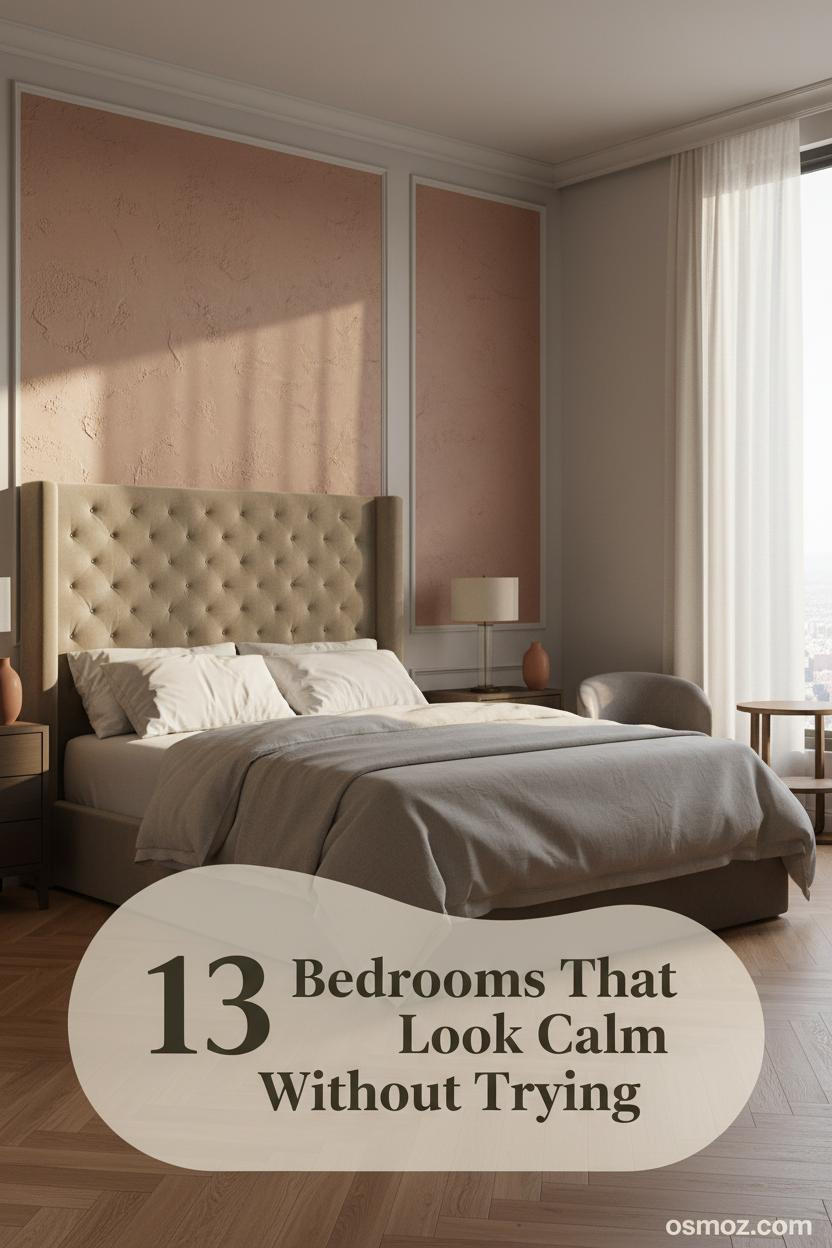
13+ Neutral Earthy Bedrooms That Feel Calm Without Being Boring
13 april 2026The best neutral earthy bedroom doesn't announce itself. It just makes you slow down the moment you walk in.
These 13 rooms do that. Warm without being heavy, calm without being cold. Here's what actually makes them work.
The Terracotta Wall That Earns Its Drama
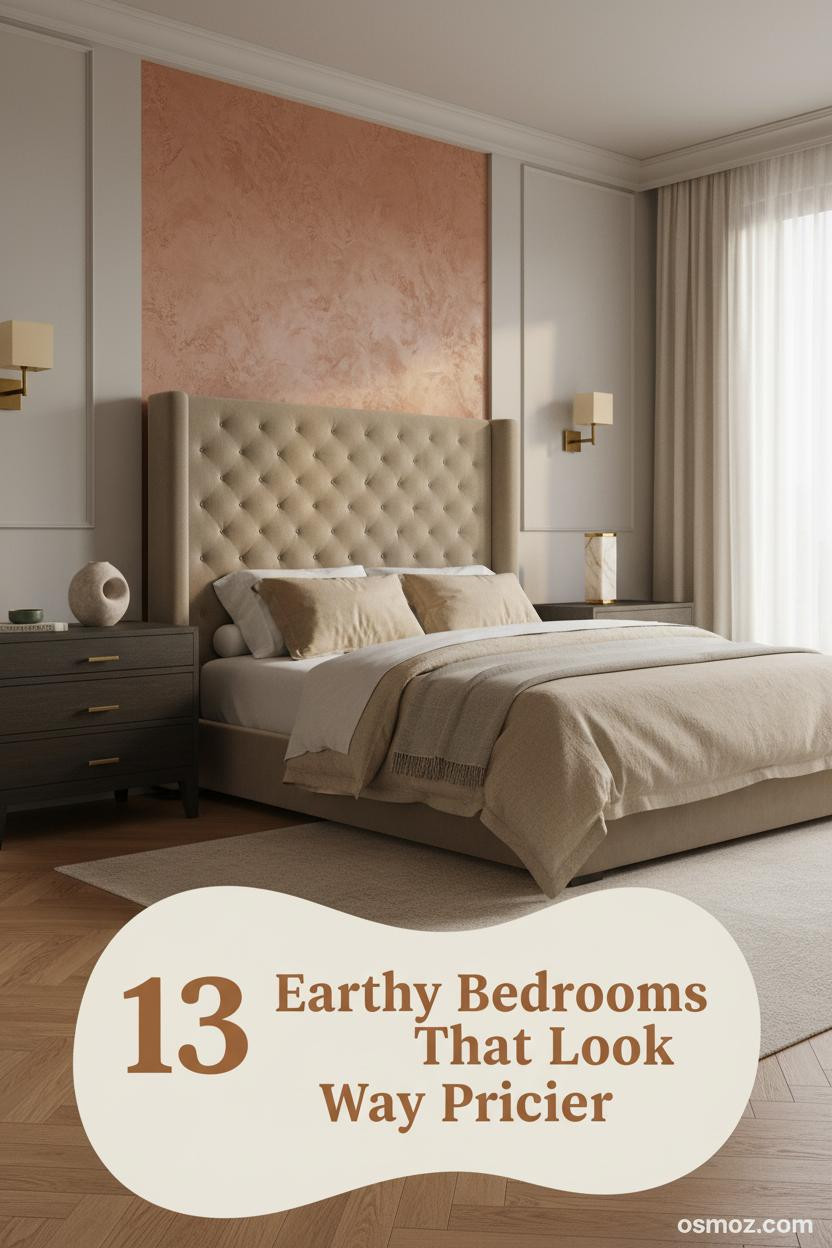


This is the room people say they want but are afraid to actually do.
Why it holds together: The exposed brick in terracotta-sand reads warm without tipping into rustic, because the flanking greige walls pull it back toward something more modern.
The part to get right: Keep the bedding in oat and stone tones. One saturated brick wall is enough. Let everything else exhale.
A Gallery Wall That Actually Feels Intentional
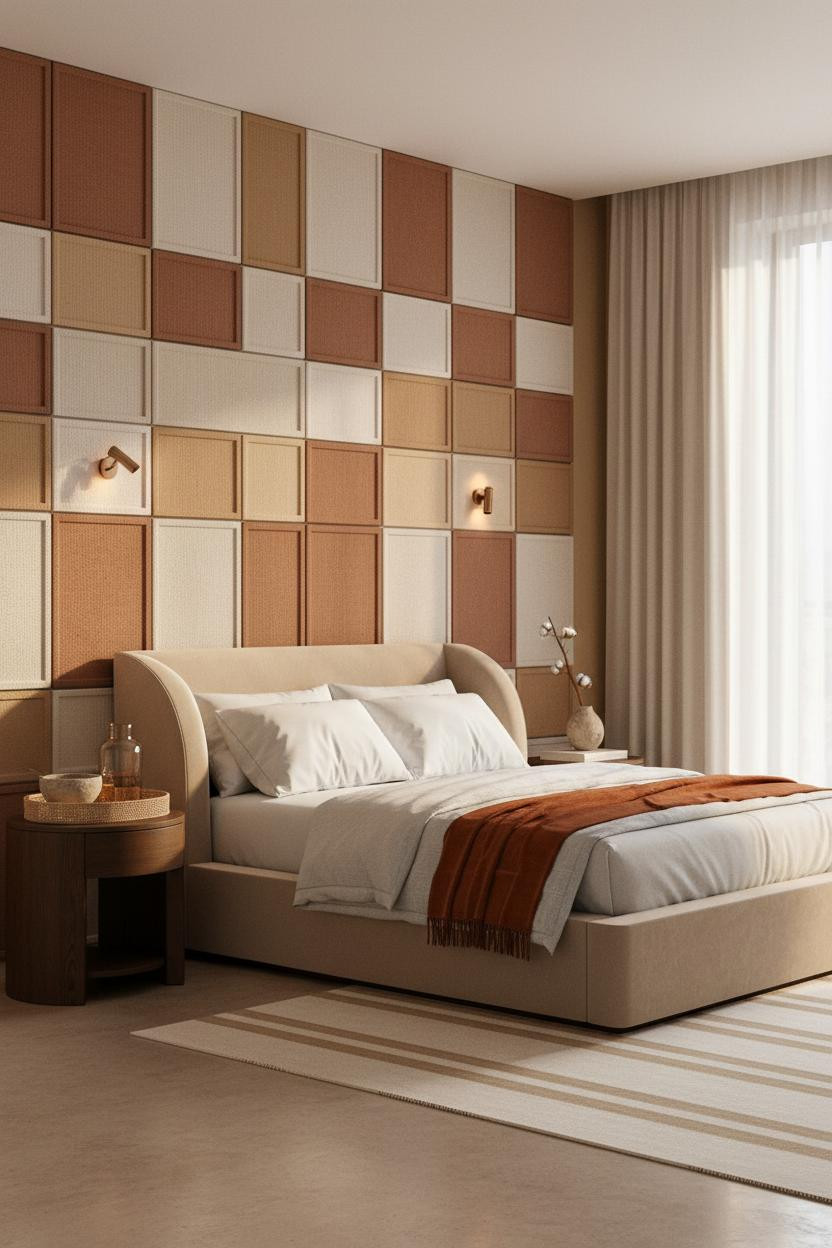

Most gallery walls feel like a mood board. This one feels like a wall.
What makes it work: Framing everything in raw linen-wrapped fabric panels keeps the color graduated rather than random. Terracotta into sand into ivory. The sequence is the design.
Steal this move: Mount them edge to edge with no gaps. The wall reads as one surface, not a collection of separate decisions.
When the Window Is the Whole Design
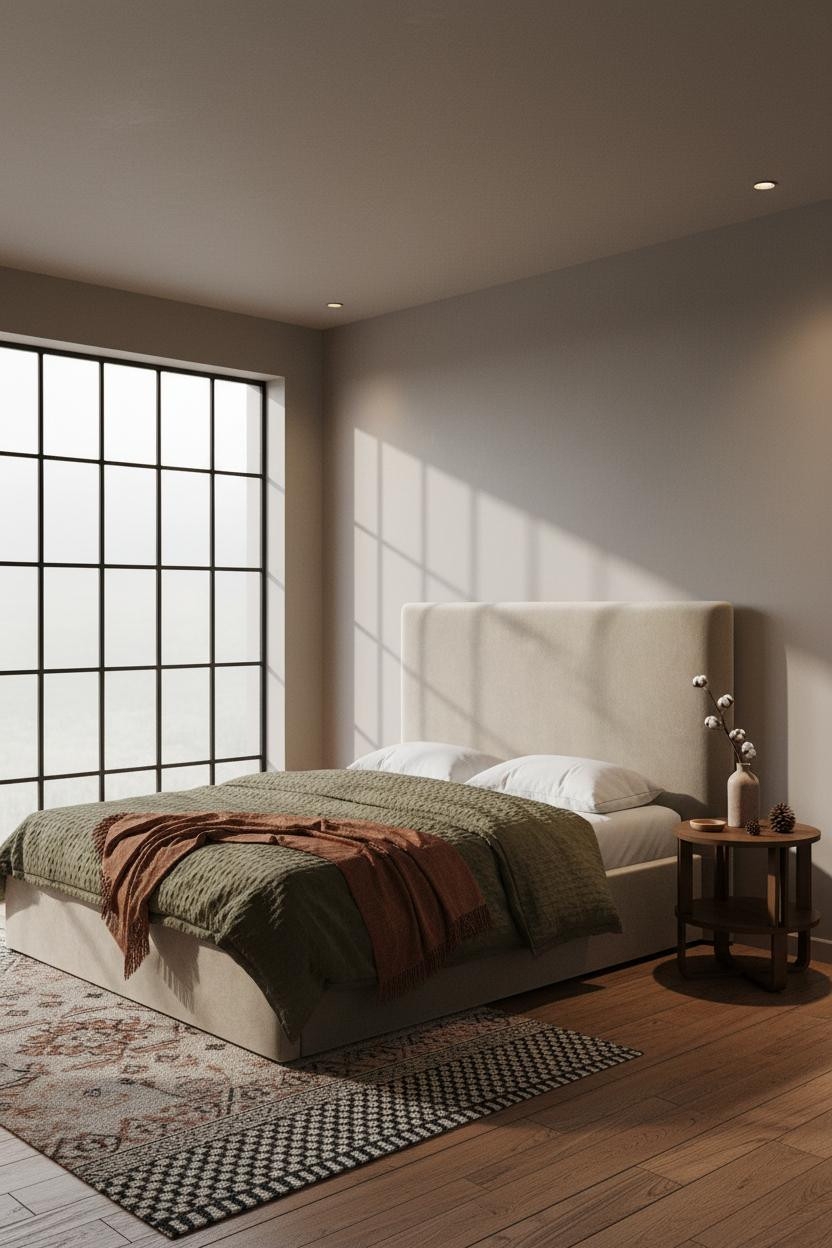


Bold choice. Not every earthy room needs a statement wall material.
But this one proves that slim black Crittall-style steel frames can anchor a warm palette just as hard as any plaster treatment. The grid throws thin shadow lines across warm greige walls and the contrast is immediate.
One smart swap: Pair black architectural frames with a kilim runner in terracotta and cream underfoot. The warm and cool elements balance each other without effort.
Avoid this mistake: Don't hang heavy drapes over a window wall like this. Let the steel grid breathe.
The Built-In That Changes the Whole Equation
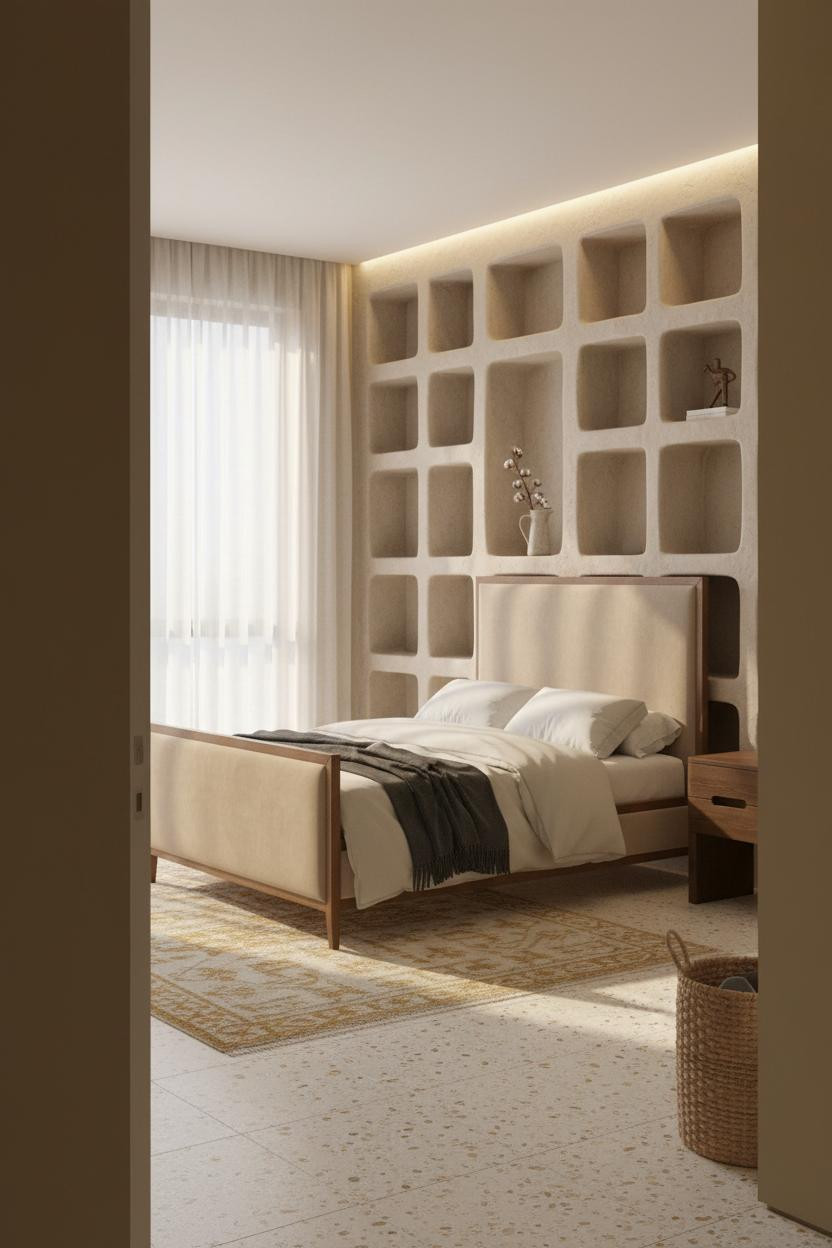

I keep coming back to this one. The shelf wall behind the bed changes how the whole room feels.
Why does it work? Because matte plaster open niches in varying depths give the wall organic rhythm. Each recess catches its own shadow, and the result is textural depth that no amount of art could replicate. The room feels collected rather than decorated.
The smarter choice: Fill niches with ceramics and one small sculpture. Not books. The quieter the objects, the harder the wall works.
Sand-Toned Wainscoting That Feels Older Than It Is
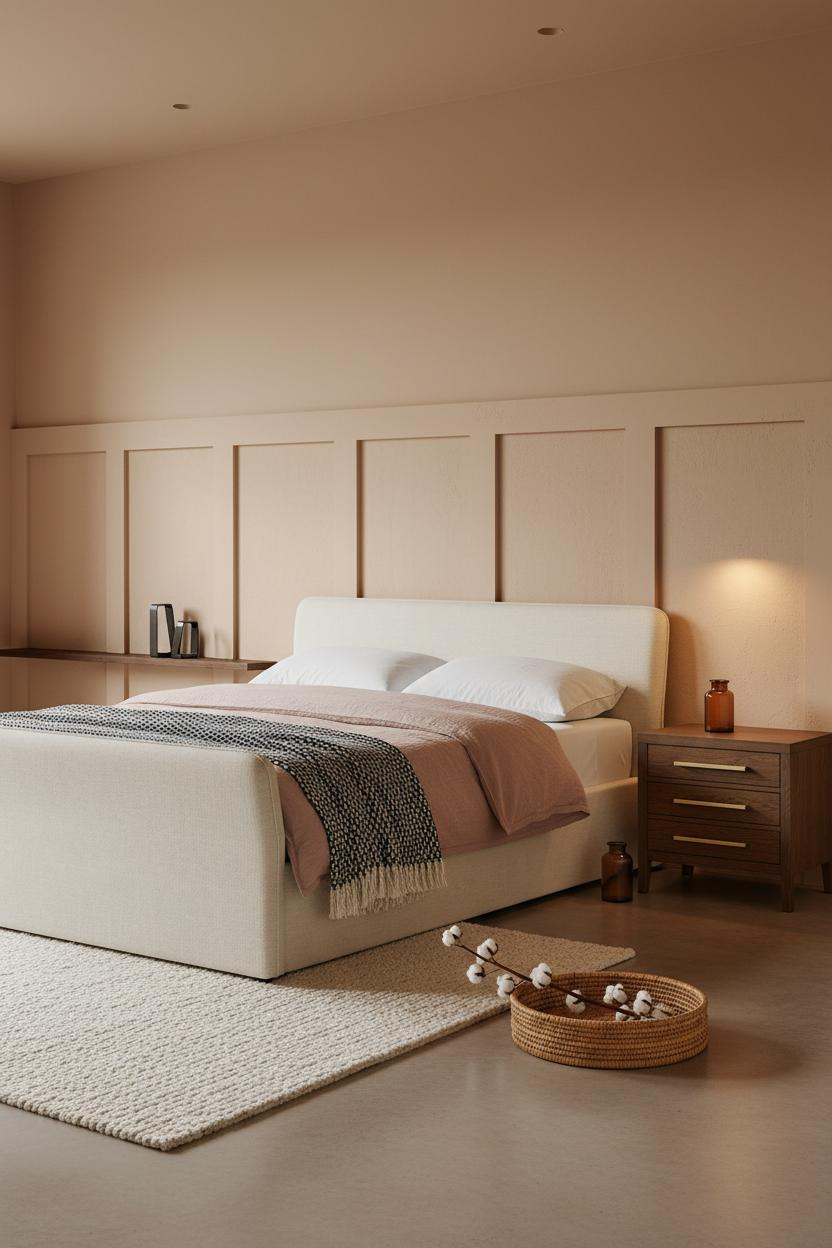


Nothing fancy. That's genuinely the point.
The design logic: Half-height warm sand plaster panels below a clay upper wall split the room horizontally, which makes standard ceiling heights feel taller than they are. And the thin panel edges catch just enough light to create vertical rhythm without noise.
Use a chunky wool cream rug over polished concrete here. Soft underfoot, hard surface. That contrast is what keeps the room from feeling too spare.
The Coffered Ceiling Nobody Talks About Enough
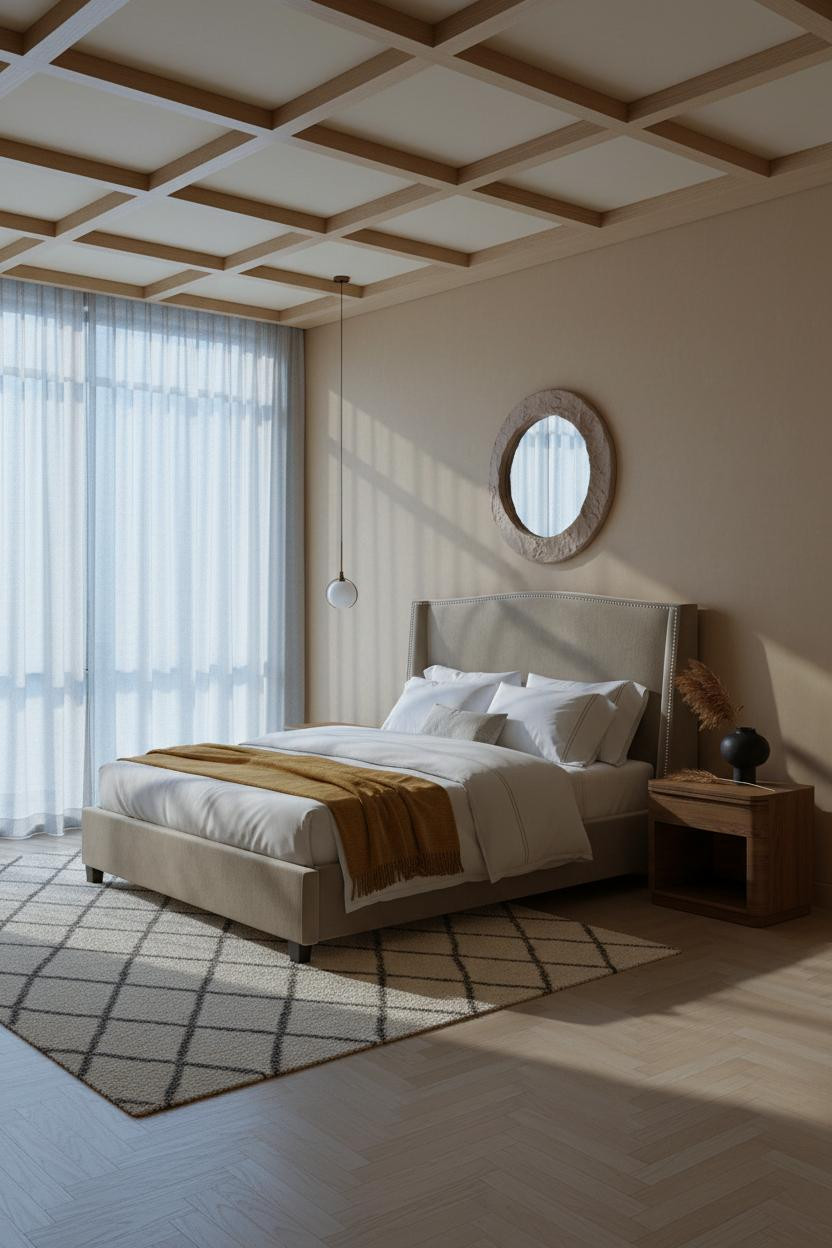

I almost scrolled past this. Glad I didn't.
The cream plaster coffered ceiling with natural oak trim edging each square is doing most of the work here. It pulls the eye upward across a camel wall in a way that feels architectural rather than decorative, while still keeping the whole room grounded and warm.
Worth copying: Pair a coffered ceiling with a pale birch herringbone floor and the vertical and horizontal grain rhythms echo each other. The room feels designed, not just furnished.
Why the Arched Niche Is Having Its Moment
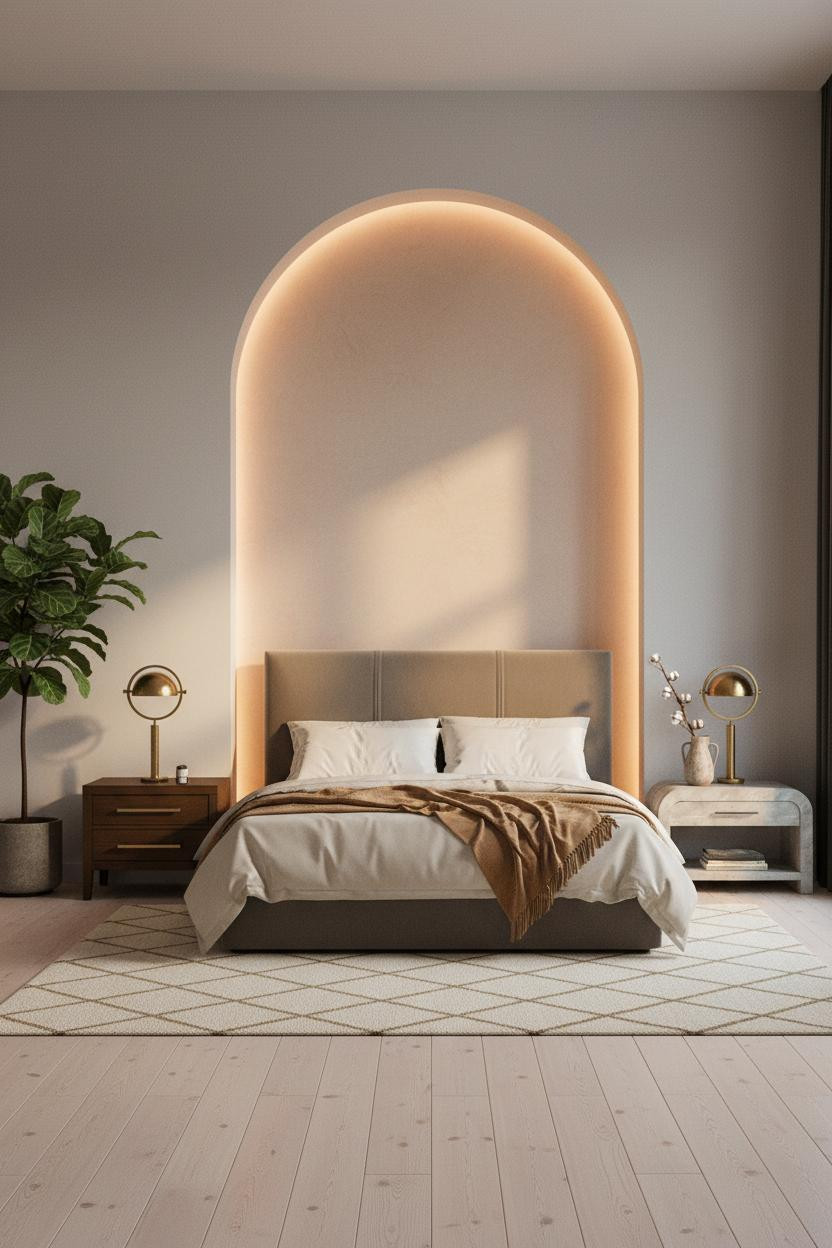

Because it frames the bed without adding any furniture. That's the whole trick.
What gives it presence: A floor-to-ceiling arch carved into sand-toned lime plaster creates a sculptural void behind the bed. The backlit interior makes the curved edges glow. It's a small architectural move with an outsized payoff.
The easy win: Back-light the arch recess from above rather than placing a sconce inside it. The glow pools down the plaster curve and the room feels warm and intimate.
I Was Skeptical About the Slatted Wood Wall
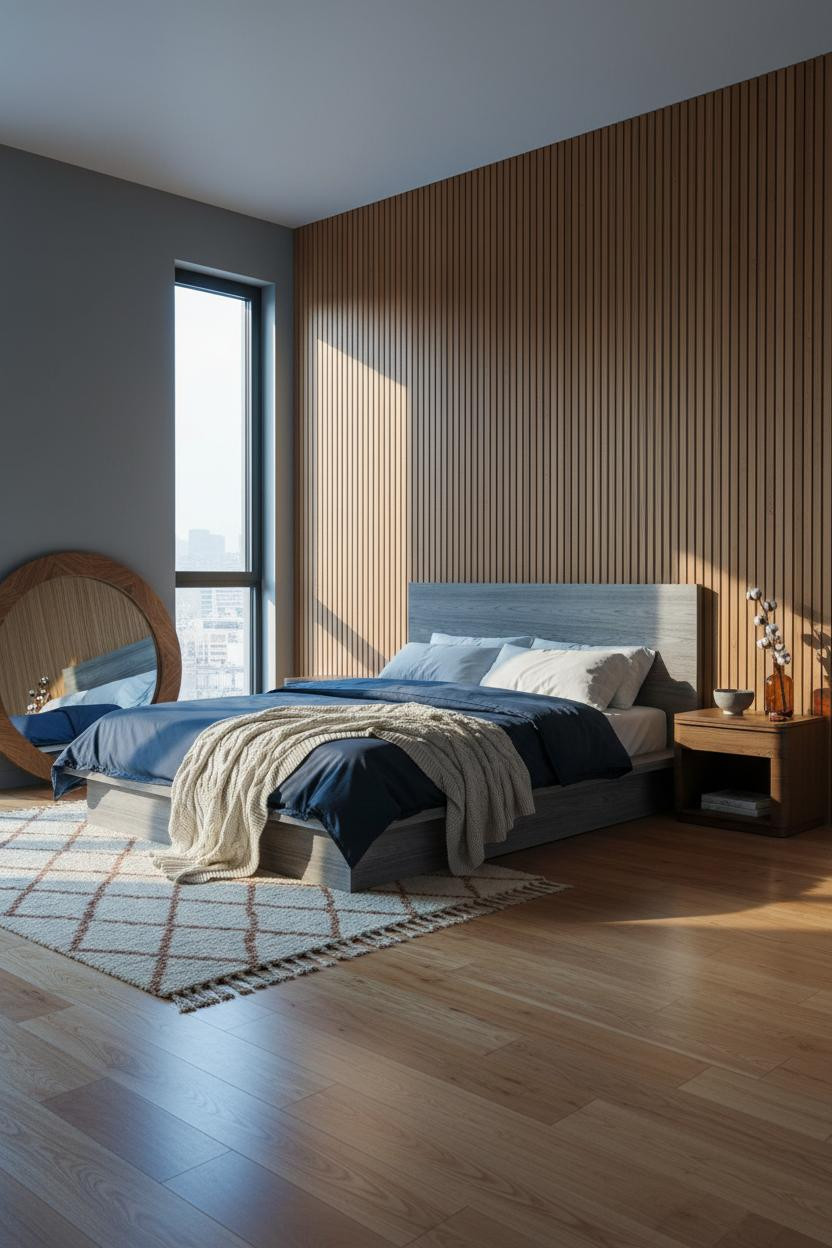

Honestly I thought vertical slat walls had peaked. But this one changed my mind.
Why the materials matter: The honey-brown vertical slatted wood works here because the surrounding walls are stone grey, not white. The cool matte finish keeps the warm wood from reading as rustic. Just enough tension to feel modern.
What not to do: Don't match the floor to the slat wall. The warm maple wide-plank flooring here is a shade lighter than the slats, and that slight contrast is what keeps both surfaces readable.
Sage Shiplap Done Right
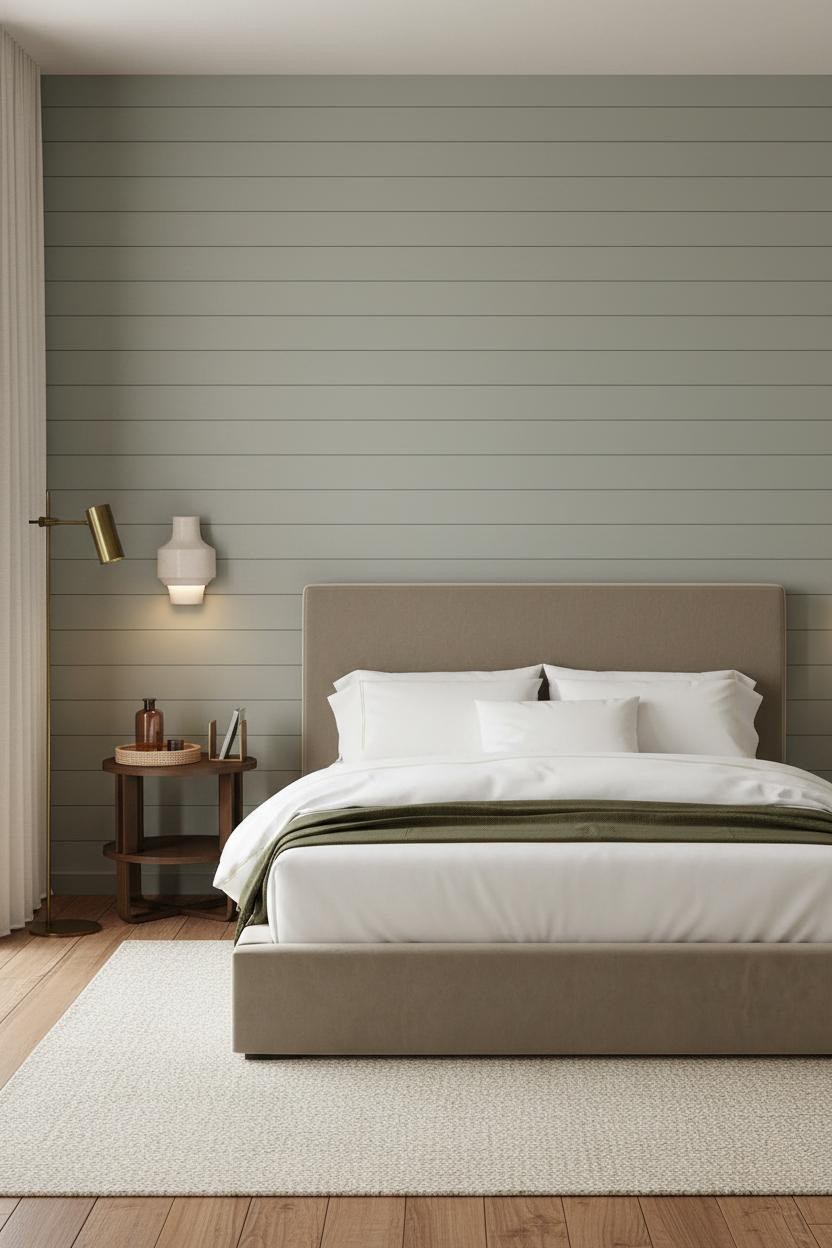

This one is divisive. Shiplap gets a bad reputation from overuse, but sage-grey changes the conversation.
The reason it feels calm here instead of coastal is the wall color. Sage-grey shiplap sits closer to stone than mint, so it reads as part of the earthy family rather than a weekend cabin. Each groove catches just a hairline of shadow, and the horizontal rhythm grounds the whole room without weight.
Pair it with reclaimed amber-brown flooring below and a deep olive throw at the foot of the bed. Two greens, one earthy. The whole palette holds.
The Herringbone Wood Wall That Somehow Stays Quiet
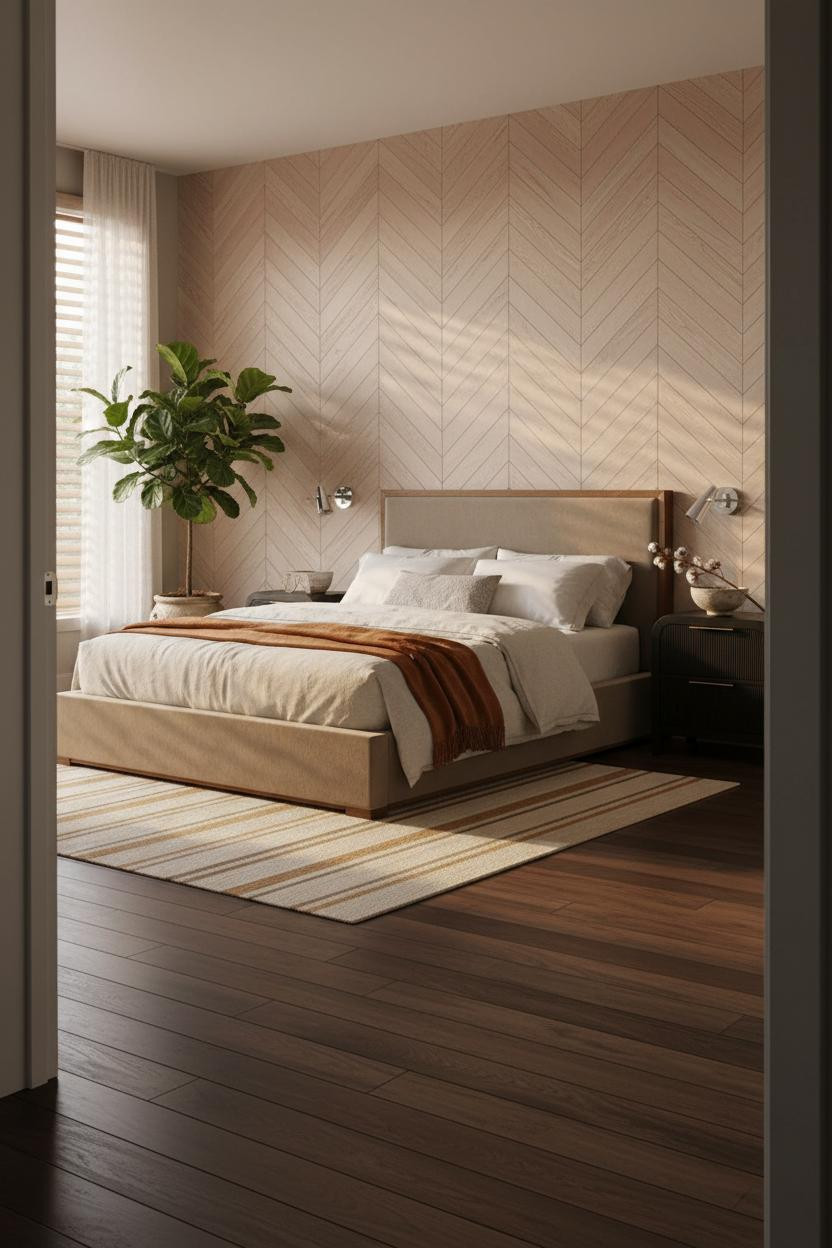


It shouldn't stay calm. Herringbone is a busy pattern. But in pale ash, it does.
What creates the mood: The fine grain of pale ash herringbone panels catches raking light at the plank edges while the surface itself recedes into soft texture. It's geometric without being loud, in a way that feels genuinely intentional.
Pro move: Run dark stained walnut flooring below it. The contrast in tone between floor and wall makes both surfaces read cleaner than if they matched.
Board-and-Batten in Mushroom Plaster Is Better Than White
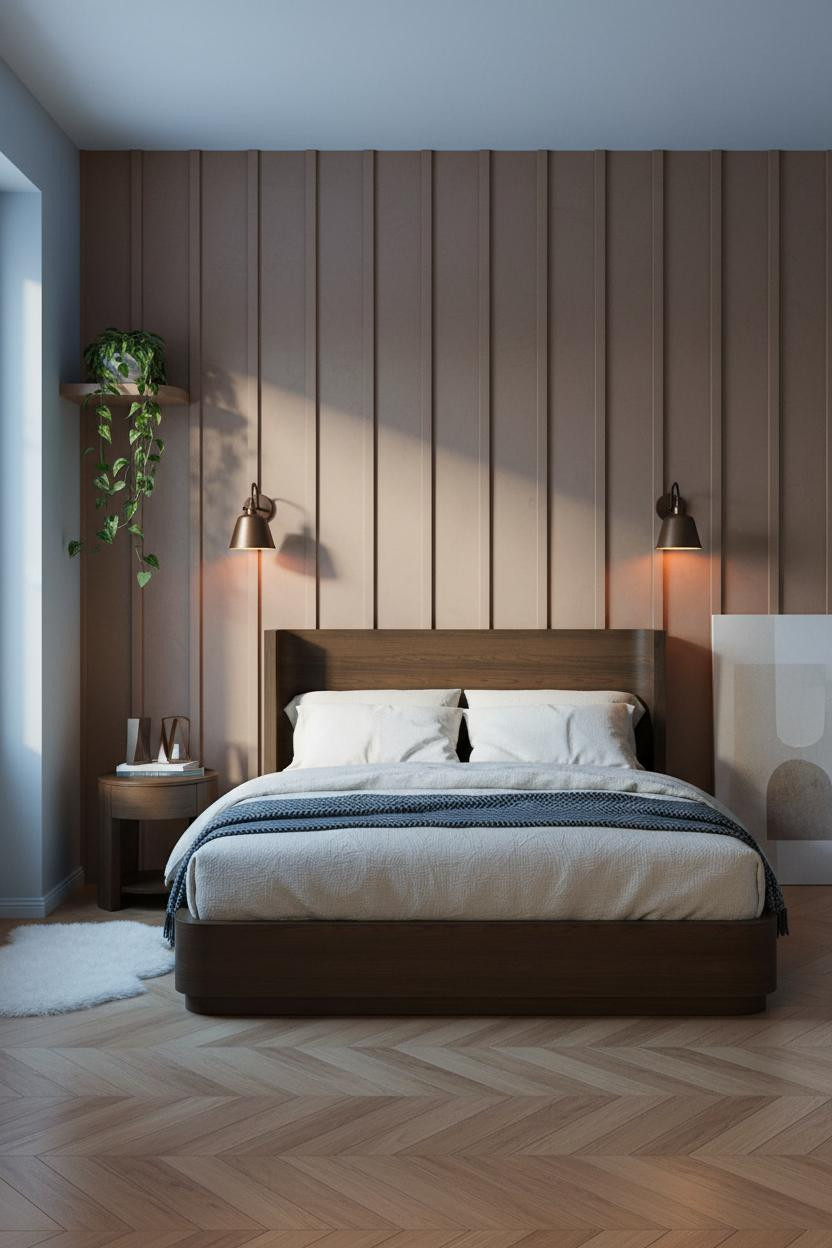

I've seen board-and-batten in white dozens of times. Mushroom plaster is a different room entirely.
Why it feels expensive: The warm mushroom plaster vertical battens cast thin shadow stripes in morning light, which makes the wall look like a custom millwork installation rather than a paint finish. And against honey herringbone parquet flooring, the tones echo each other across the room without matching exactly.
Where to start: Add the batten treatment floor to ceiling only. Half-height batten in this color reads as dated. Full wall is where it earns its keep.
Clay Plaster With Trowel Marks. Don't Smooth It Out.
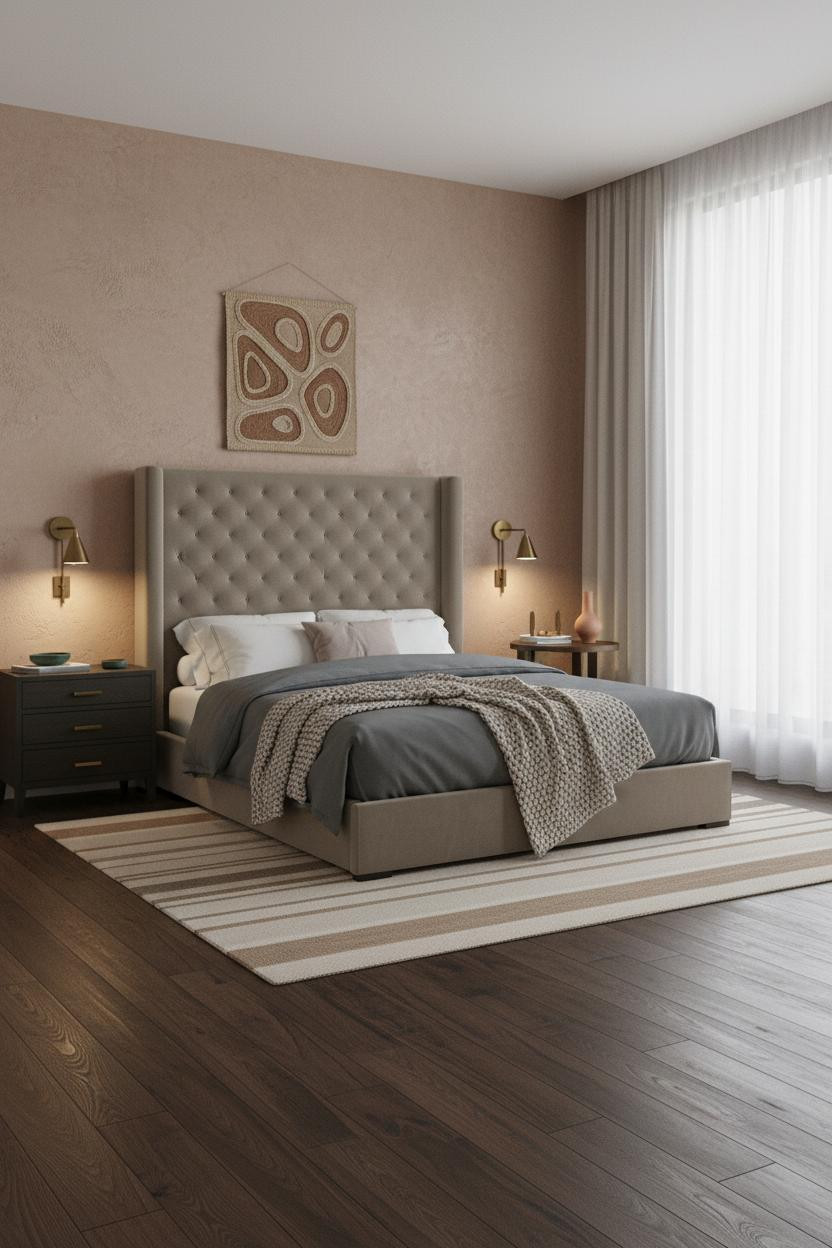

The slight imperfection in the plaster is the whole point. A perfectly smooth version of this wall would be half as interesting.
The real strength: Matte clay plaster with visible trowel marks catches overcast daylight in a way that flat paint never can. Every pass of the trowel creates a micro-shadow, and the wall ends up with a depth that changes depending on where you're standing. The room feels lived-in and intimate.
What cheapens the look: Mixing it with shiny fixtures. Keep hardware in brushed brass or matte black. Anything polished fights the rawness of the wall finish.
Natural Oak Paneling When You Want Warmth Without Color
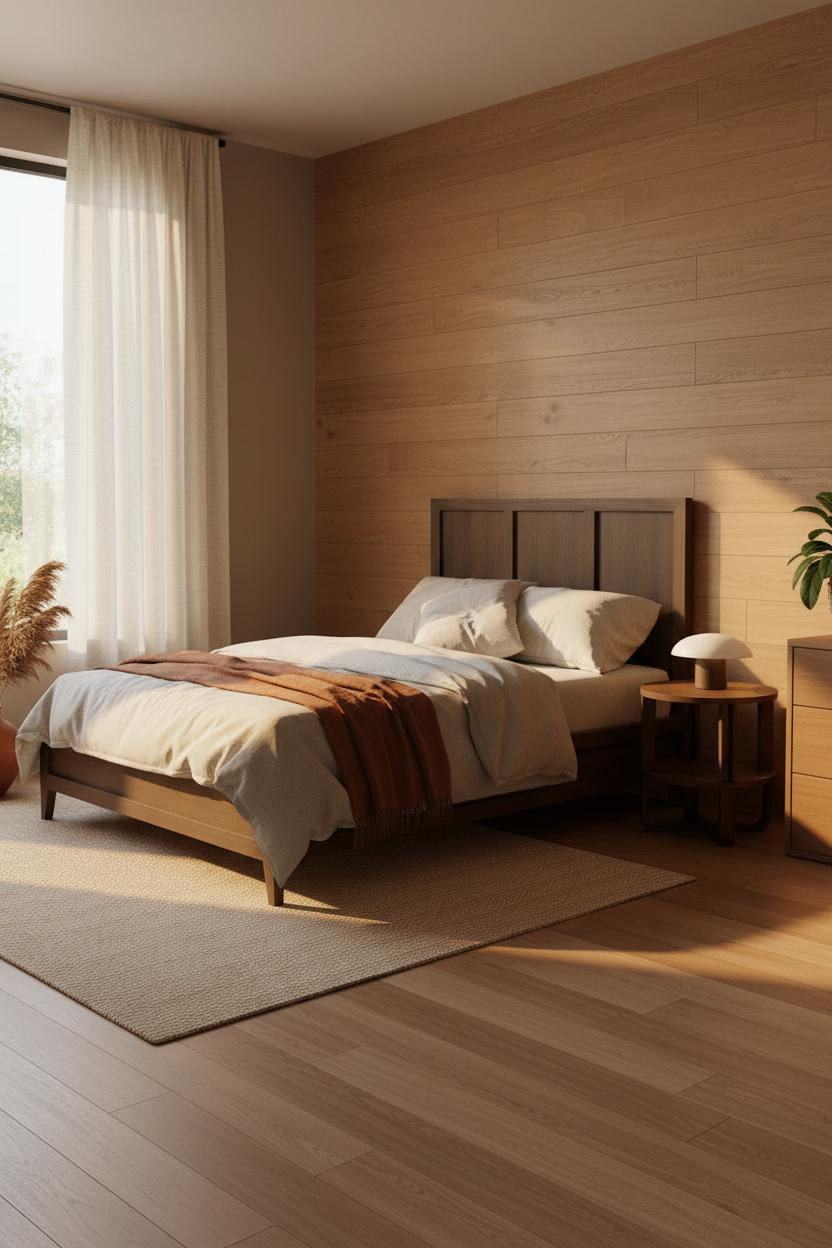
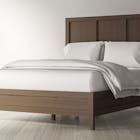
This is the earthy bedroom for people who think earthy means too saturated. No ochre. No terracotta. Just wood grain and good light.
The floor-to-ceiling natural oak paneling brings all the warmth without introducing a single named color. Late afternoon light rakes across the horizontal grain and the amber tones shift with the hour, which keeps the room feeling alive. Warm taupe walls on the remaining three sides let the panel wall stay the single focus.
The finishing layer: Hang floor-to-ceiling cream linen curtains on the window wall opposite. The vertical weight of the fabric echoes the oak panel grain and the room feels taller than it is.
 Our #1 Pick
Saatva Classic Mattress
America's best-selling online luxury innerspring. 365-night trial, lifetime warranty, free white glove delivery.
Shop Saatva Classic
Our #1 Pick
Saatva Classic Mattress
America's best-selling online luxury innerspring. 365-night trial, lifetime warranty, free white glove delivery.
Shop Saatva Classic
The Foundation Of Every Beautiful Bedroom
All 13 of these rooms get the walls right. But the piece that determines whether the room actually feels good to be in is the bed itself. And that starts with what's underneath the linen.
The Saatva Classic is what I'd put in every one of these rooms. Dual-coil support means the structure holds without feeling rigid, the Euro pillow top is soft in a way that still has substance, and the cotton cover breathes through the night. It doesn't fight the room. It completes it.
Walls get repainted. Linen gets swapped out. The mattress stays.

The rooms people save are the ones where nothing looks accidental. But the ones people actually want to sleep in? Those are the ones where nothing feels cheap underfoot, overhead, or underneath the duvet. Start with the bed. The rest figures itself out.