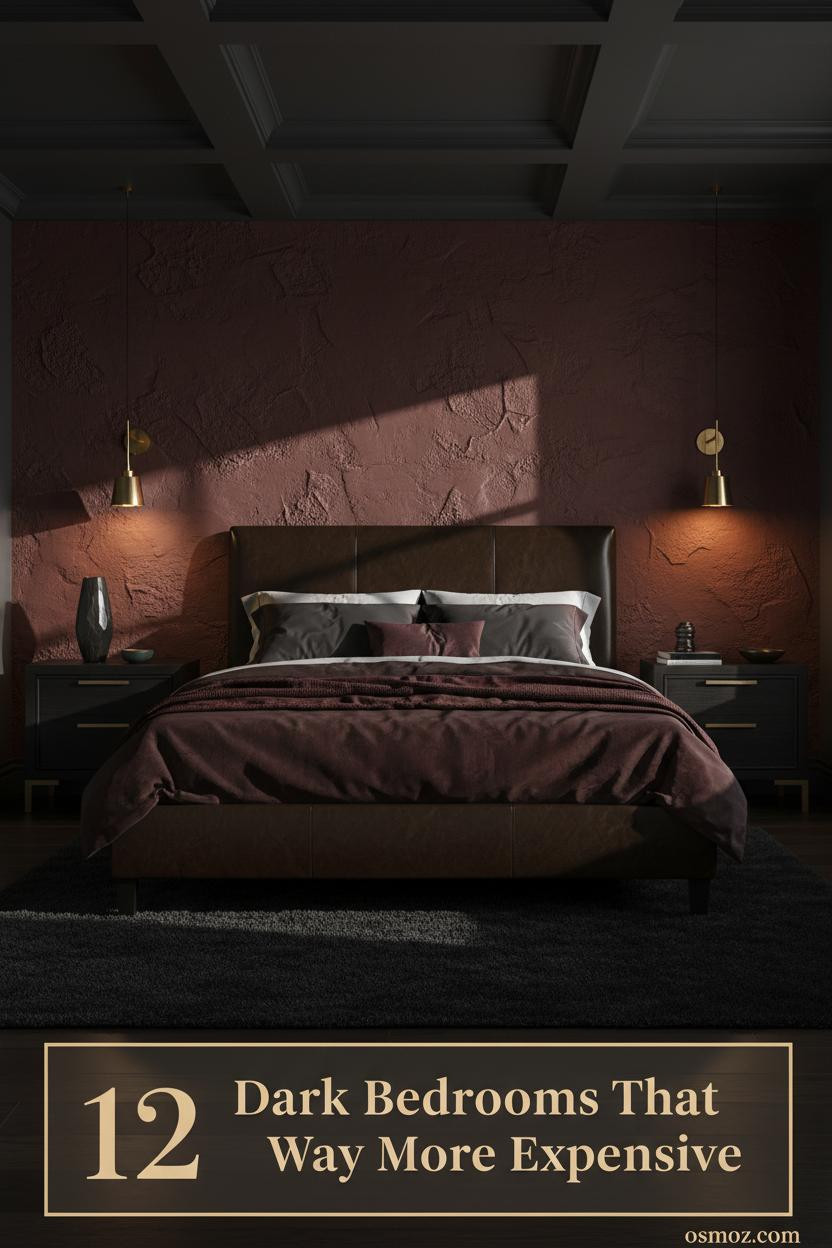
12+ Dark Romantic Bedrooms That Feel Like a Secret You Keep to Yourself
09 april 2026The first time I saw a dark romantic bedroom done right, I didn't want to leave. Not the overdone Gothic version. The real kind, where shadow and warmth split the difference and the room just holds you.
These twelve rooms get it exactly right. Each one leans into darkness without losing comfort, which is honestly harder than it looks.
The Blackened Oak Wall That Changes Everything
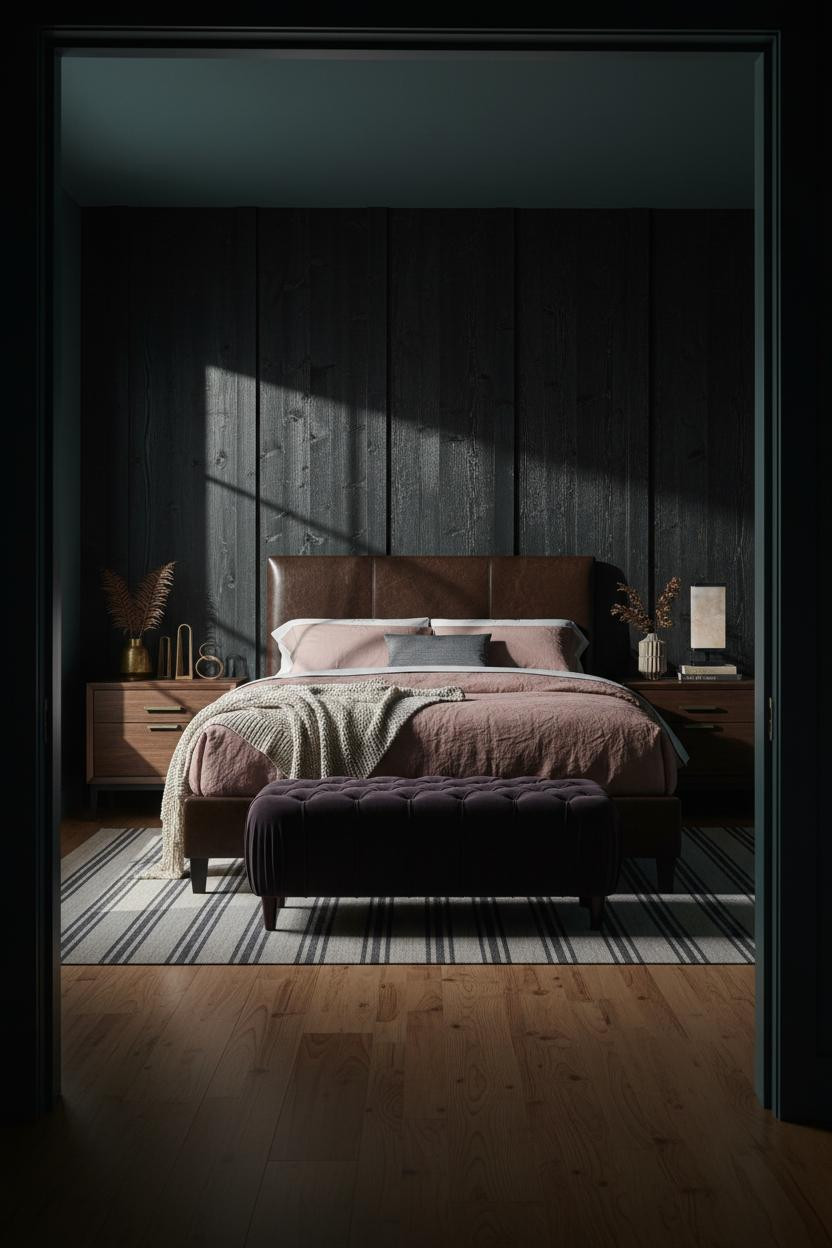

I keep coming back to this one. There's something almost geological about it.
The blackened oak board-and-batten wall absorbs light rather than bouncing it, which is what makes the room feel contained instead of just dark. Each vertical batten throws a razor-thin shadow stripe, and the effect is depth that flat paint simply can't replicate.
Steal this move: Pair raw blackened timber with deep teal plaster on the flanking walls. The contrast keeps the room from reading as one flat shadow.
Fluted Ebony Panels Behind the Bed
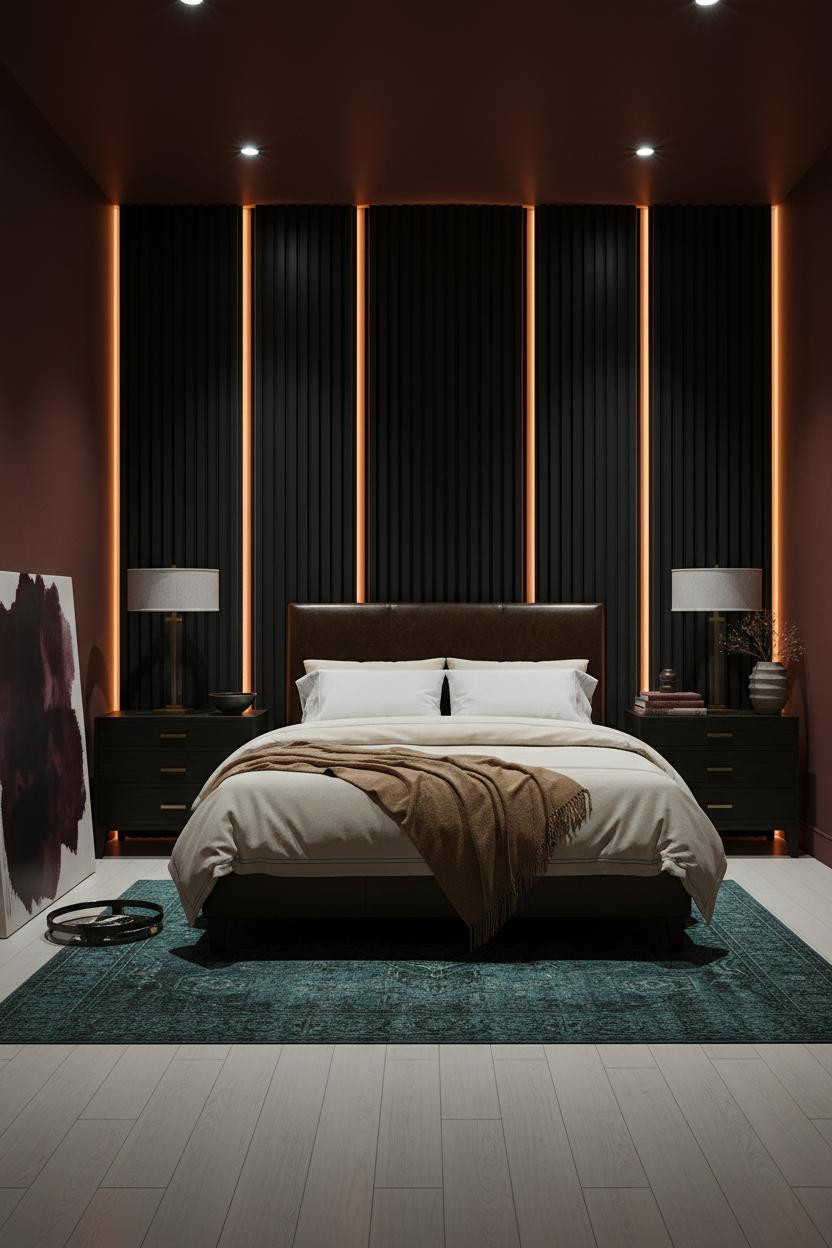

Bold choice. Not everyone will go here. But the rooms that do feel genuinely theatrical.
Floor-to-ceiling fluted timber panels in ebony lacquer work because each shallow ridge catches warm edge-light while the panel depths dissolve into near-black, giving the wall graphic rhythm without needing anything hung on it.
Why it looks custom: Backlight the panels at a warm tone and the geometry does the rest. The oxblood plaster flanking walls deepen the effect considerably.
Avoid this mistake: Don't go cool-toned with your lighting here. Warm amber only, or the ebony lacquer reads flat and cheap.
Exposed Brick Softened by Amber Light
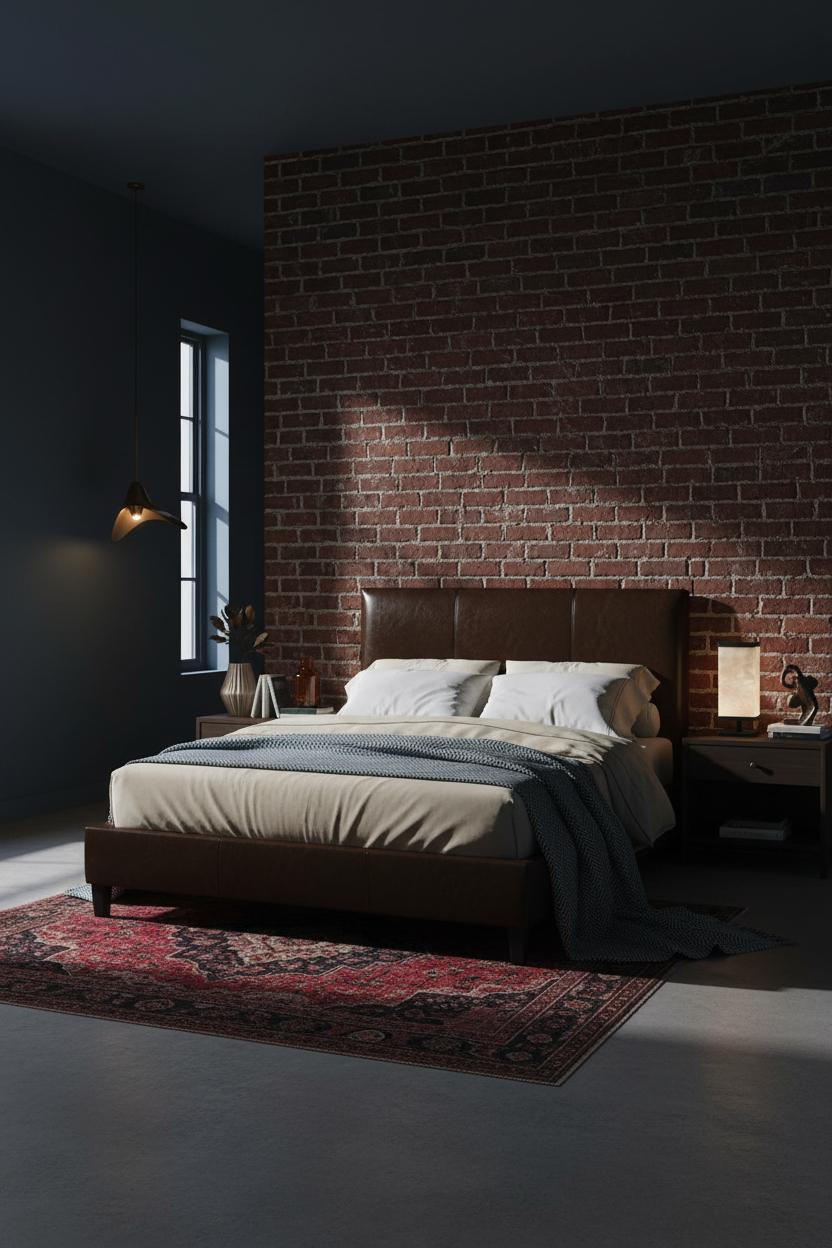
This is the kind of room that makes you want to stay in bed past noon. The age of that brick is doing real work.
What gives it depth: Oxblood-stained exposed brick catches raking light on every raised edge while the grout lines sink into shadow, so the wall reads as texture and color at the same time. Pair it with slate-blue plaster and the room feels collected rather than decorated.
The easy win: A blackened brass pendant in a reading corner adds a second light source that keeps the room from going flat after dark.
Rough Limestone and Ember Warmth
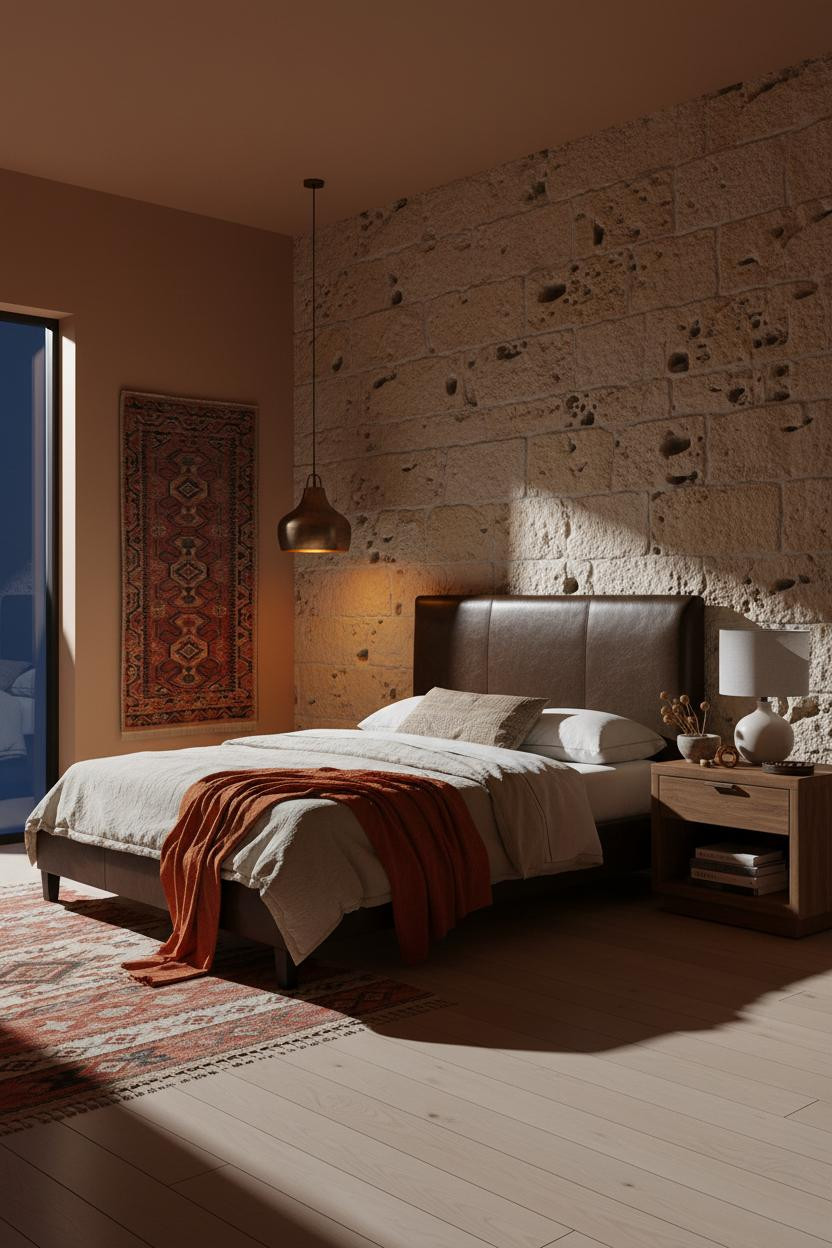
Shadow-thick and ember-warm. Ancient, honestly.
In a room this textured, the smarter choice is letting the rough-hewn limestone wall carry all the visual weight. The pitted surface drinks amber light on every raised block face while the mortar joints carve horizontal shadow lines, so you get movement without a single piece of art. Warm sandy terracotta on the flanking walls keeps the room from feeling like a cave.
Worth copying: Layer a burnt orange mohair throw at the foot of the bed. It echoes the stone's warm tones while still feeling soft against all that raw texture.
The Deep Teal Niche That Pulls You In
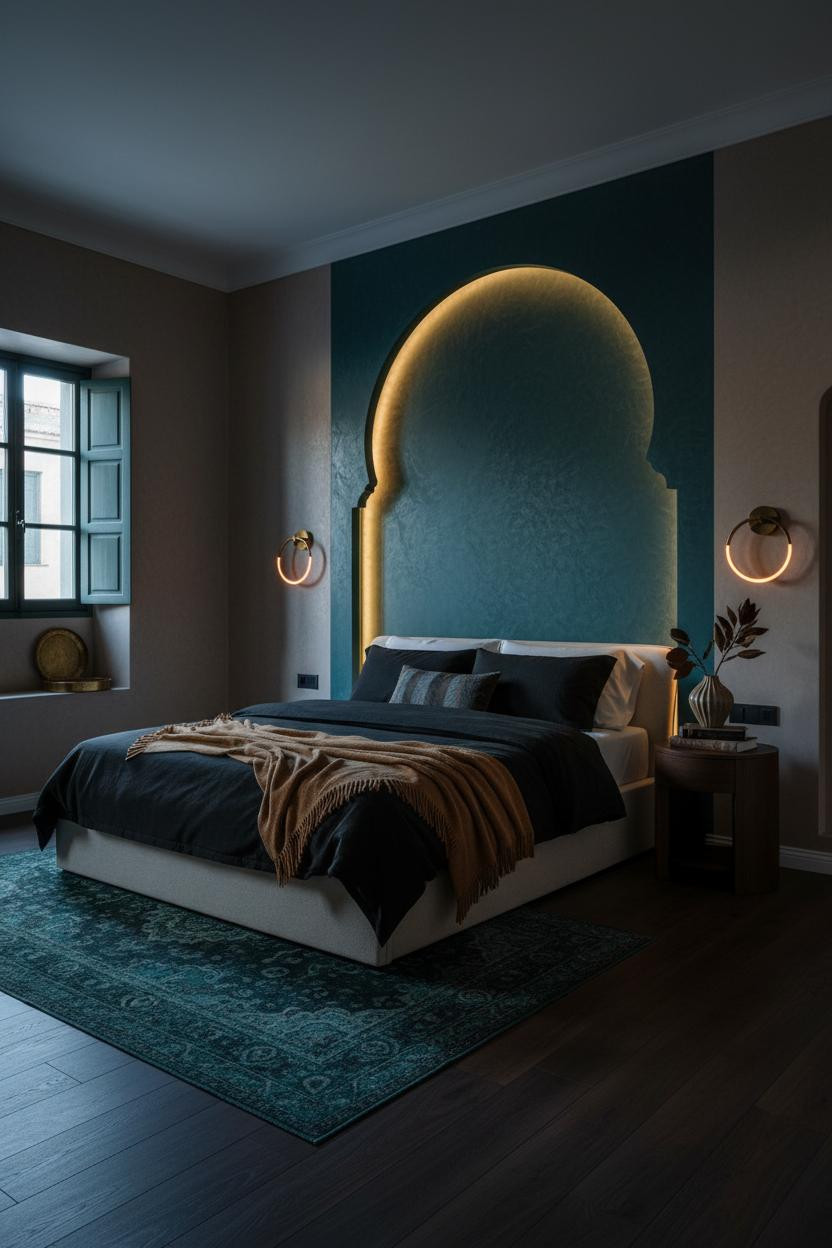

I almost scrolled past this. Glad I didn't.
A recessed ceiling niche finished in deep teal lacquered plaster creates a room-within-a-room effect that changes how the whole space reads. The hand-troweled texture makes every brushstroke visible in the raking sconce light, which is why it feels so alive while still feeling calm and cohesive.
Pro move: Use aged brass ring sconces inside the niche rather than overhead spots. The amber arcs carve geometry into that teal surface in a way that no ceiling fixture can match.
Herringbone Timber That Earns Its Drama
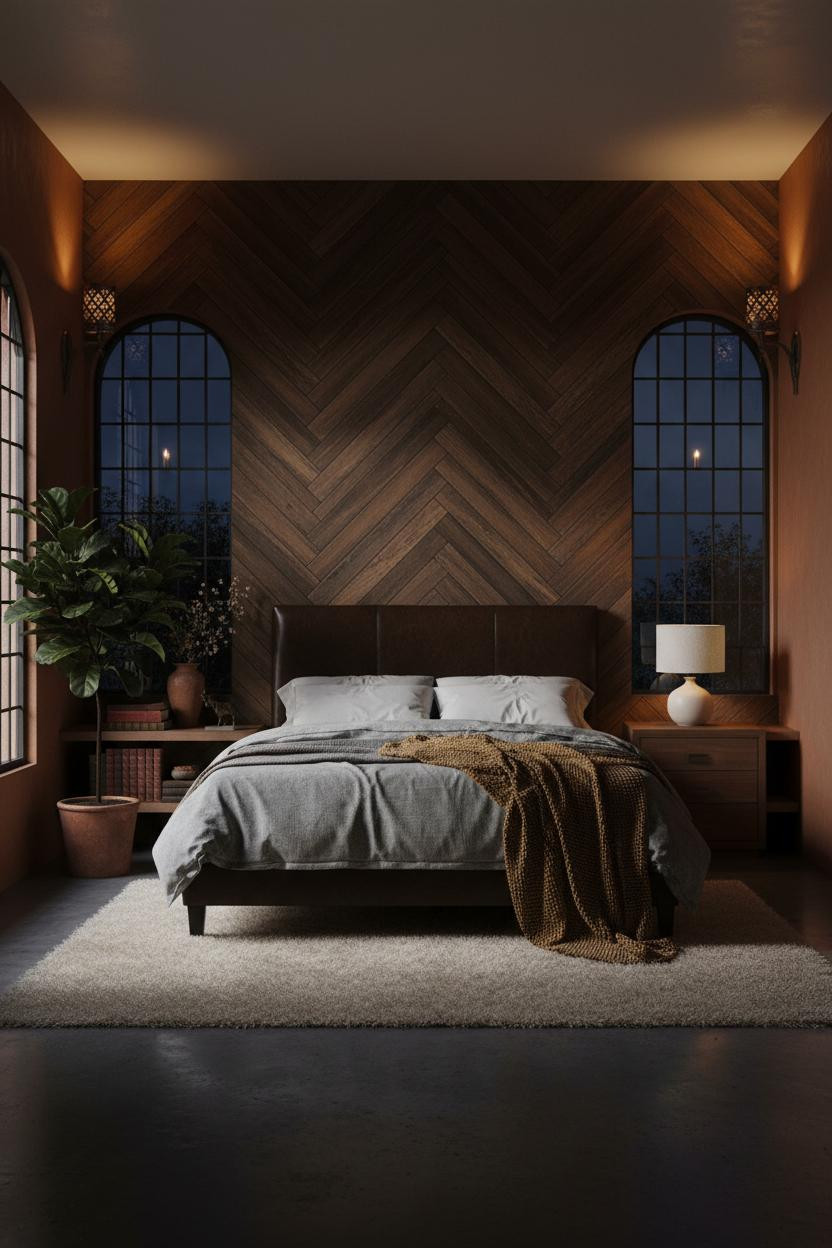
This one is divisive. But I think it's the most interesting wall treatment in the entire roundup.
Why it holds together: Espresso-stained herringbone timber throws geometric shadows upward into the ceiling as the chevron pattern catches warm lamp glow, which makes the wall feel monumental without requiring any additional decoration. Rust-toned clay on the flanking walls gives the room just enough warmth to stop it from going full cave.
Ground it with a chunky cream wool rug on a charcoal concrete floor. The pale pile pulls the eye down and balances all that dark grain above.
When a Coffered Ceiling Does the Heavy Lifting
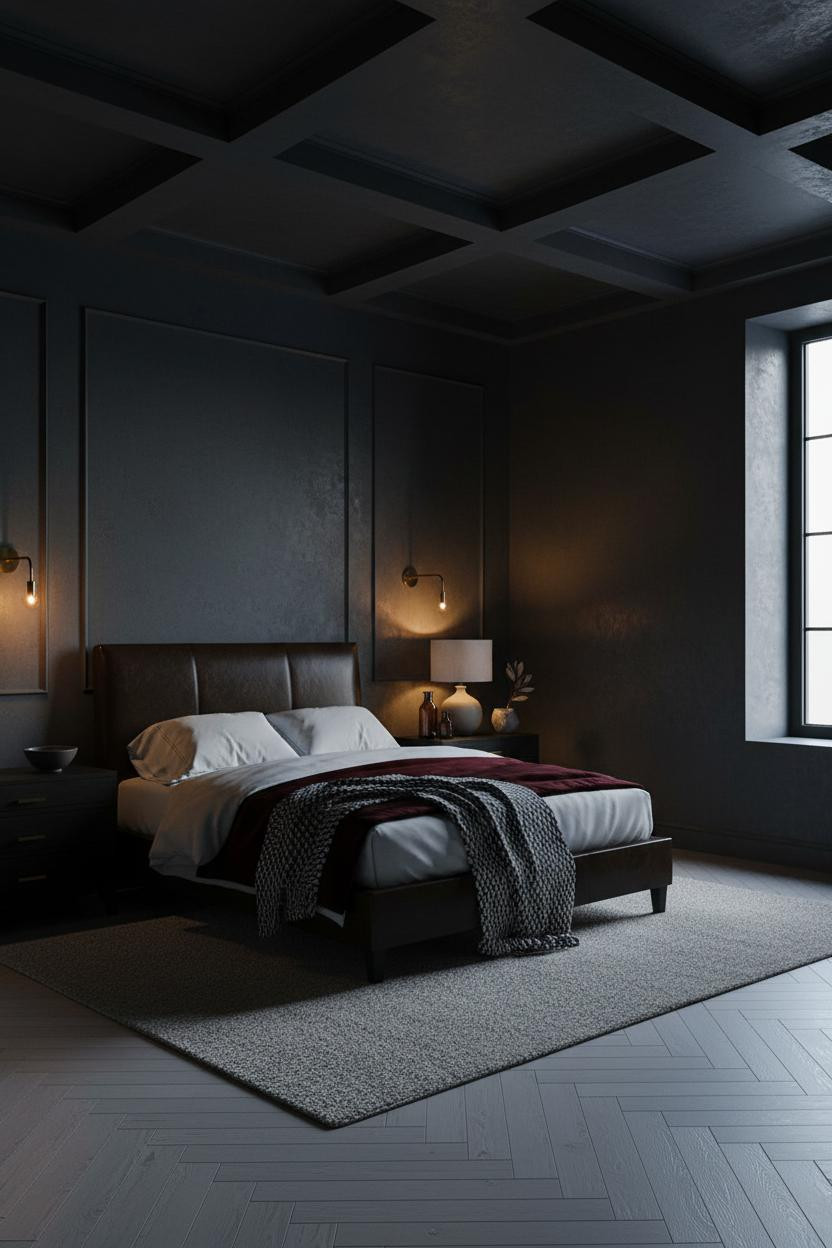
Most people forget the ceiling exists. This room reminds you it's half the room.
The real strength: Charcoal-lacquered coffered beams stamp hard shadows across the rough matte plaster walls below, extending the geometry from above into the room's vertical surfaces. The grid reads as intentional architectural detail, not decoration — and that's why it feels expensive.
Where to start: Lacquer the beams before painting the walls. The deep charcoal shade has to be decided first, or the wall color will fight it. Get the ceiling right and the rest figures itself out.
Indigo Paneled Walls That Feel Like Nightfall
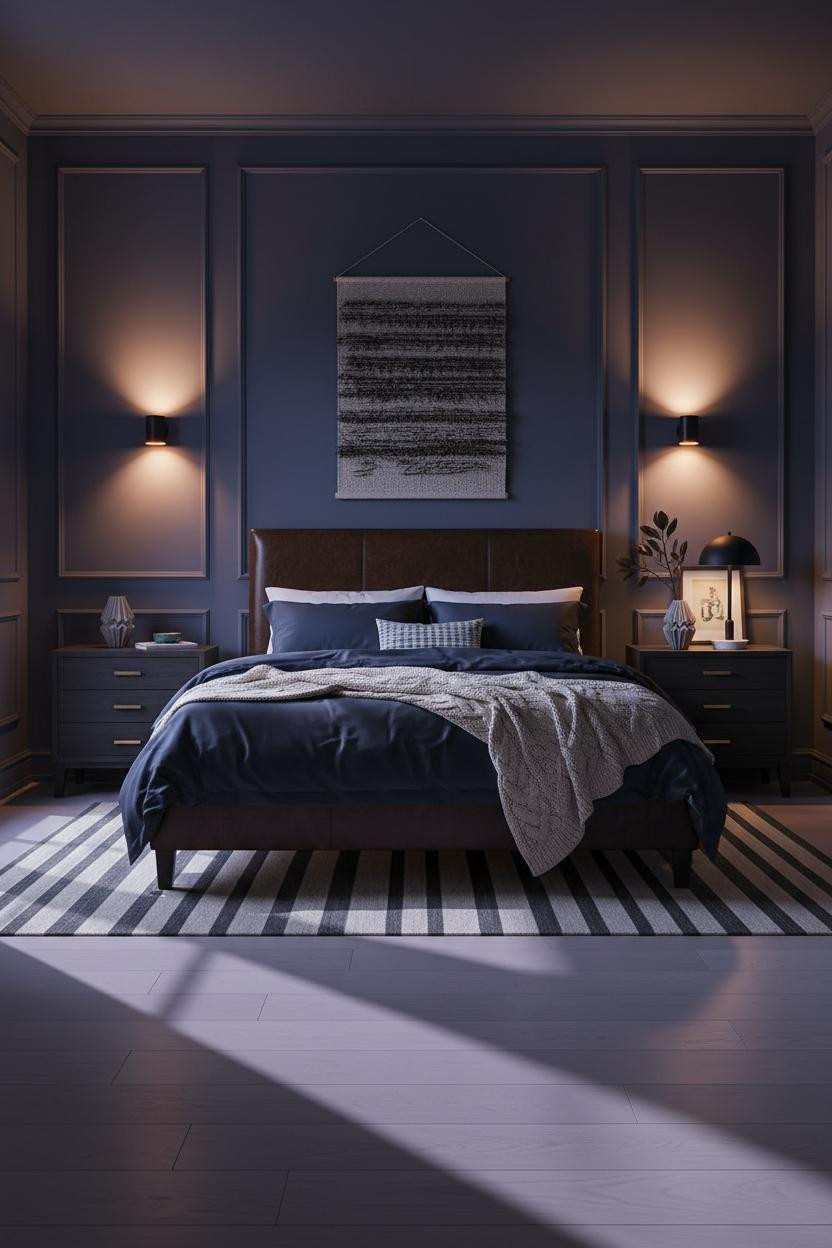
This room feels ink-deep and somehow tender at the same time. A combination I wasn't expecting.
The reason it feels quiet rather than cold is that matte indigo plaster absorbs light at the panel edges while the raised molding catches warm sconce glow from below, so the wall reads as graphic architecture without ever going stark. Floor-to-ceiling rectangular panel molding does the structural work that furniture alone can't. And paired with a linen woven wall hanging above the headboard, the room lands in that rare place: warm without being heavy.
The Burgundy Arch That Feels Centuries Old
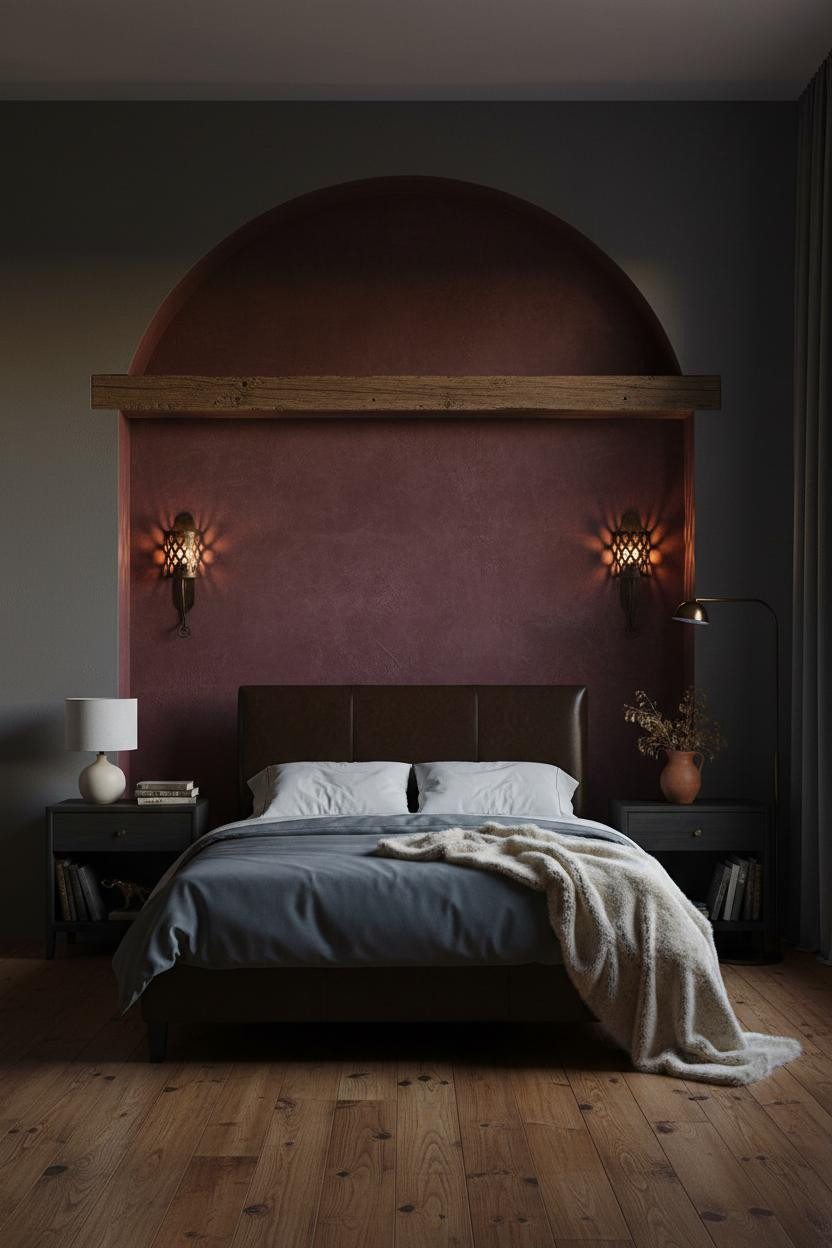
It shouldn't work this well. An arched alcove in a bedroom sounds like a hotel renovation project gone wrong. But it doesn't.
Why the materials matter: Aged burgundy matte plaster with visible trowel strokes inside a curved arch makes the wall surface feel ancient in a way that smooth finish never could. Each arc of the trowel catches amber light differently, so the surface shifts as the light changes through the day.
What to borrow: Run a raw timber beam across the arch at eight feet. It creates a strong horizontal that anchors the curved geometry and stops the alcove from floating. Wrought-iron sconces flanking the niche complete the look without overcomplicating it.
Forest Green Walls and a Rain-Quiet Morning
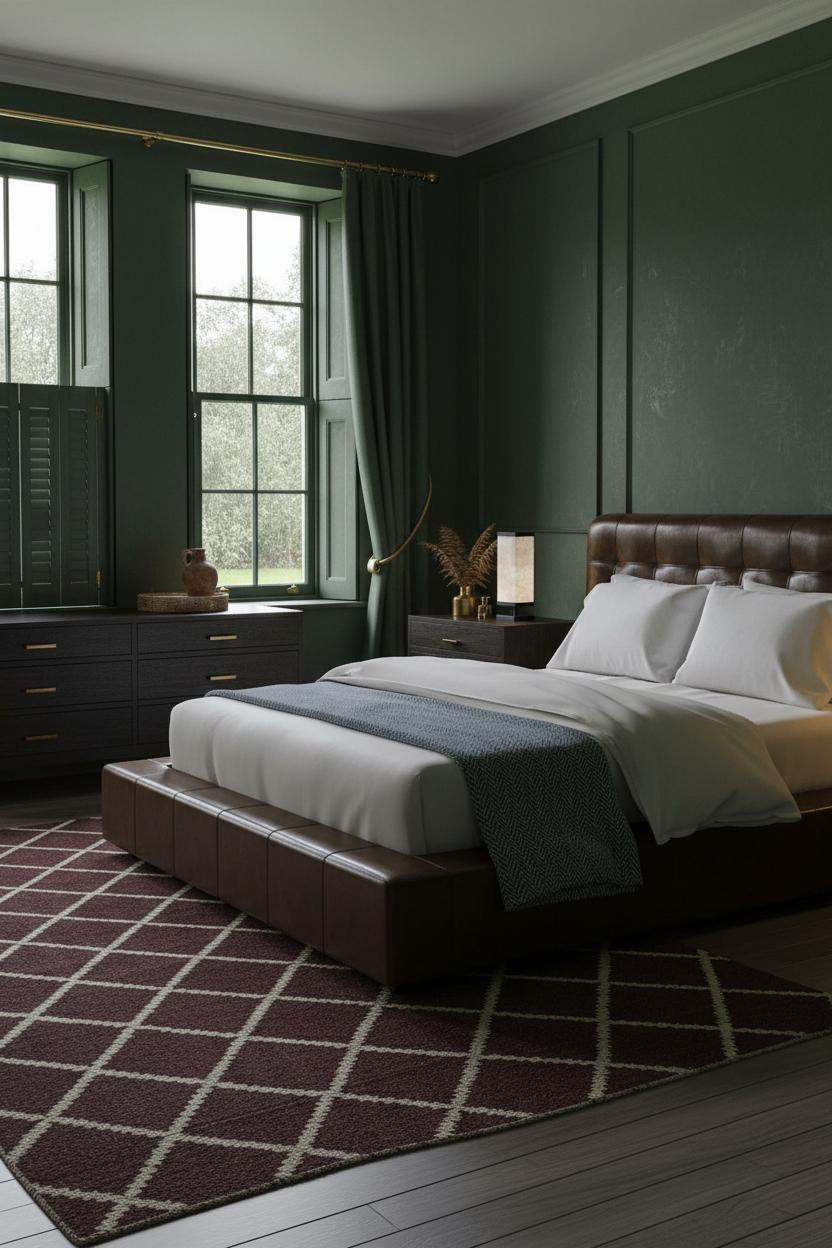

Fair warning. Once you paint a room this shade of green, every other option will feel underdressed.
What makes this one different is the interplay between the deep forest green matte plaster and the pale silver-blue light filtering through the sash windows. The overcast morning light rakes hard shadows across the floor planks, and the green walls absorb it all in a way that keeps the room feeling fern-dark and lived-in rather than dim. I find this combination honestly harder to leave than any of the darker schemes in this list.
One smart swap: Replace standard curtains with floor-to-ceiling linen panels in the same deep green. The tone-on-tone effect makes the window wall feel like a statement while still feeling natural.
Deep Plum Velvet and the Weight of Late Afternoon
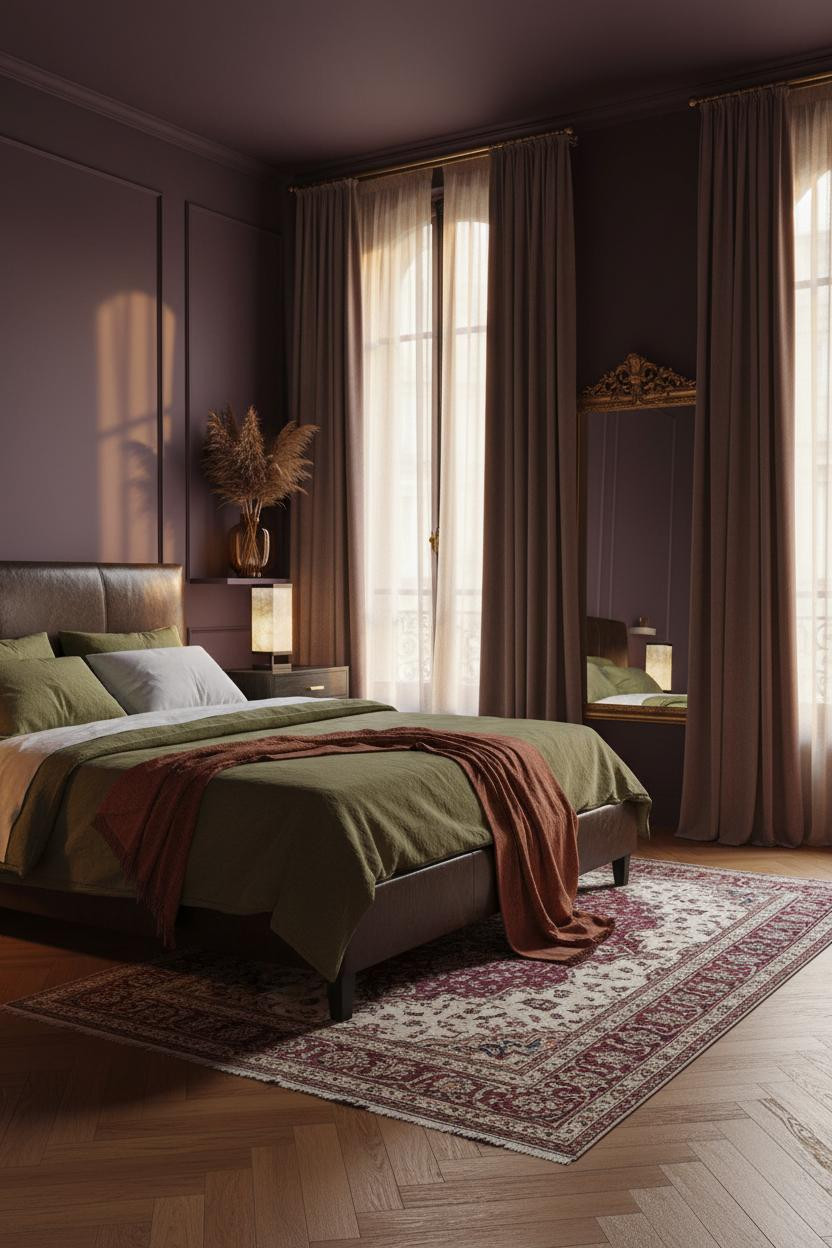
This is the room that convinced me velvet curtains belong in bedrooms, not just dining rooms.
What creates the mood: Floor-to-ceiling deep plum velvet curtains pool onto herringbone parquet and dominate the far wall in a way that art never could, because the folds shift with every change in light. The brass ring hardware catching the dying afternoon glow is a small detail that makes the whole thing feel considered rather than accidental.
Don't ruin it with overhead lighting. A single warm brass lamp beside the bed keeps the velvet shadows intact. Add overhead fixtures and the whole mood collapses.
Raw Clay Plaster and Shadow-Wrapped Glow
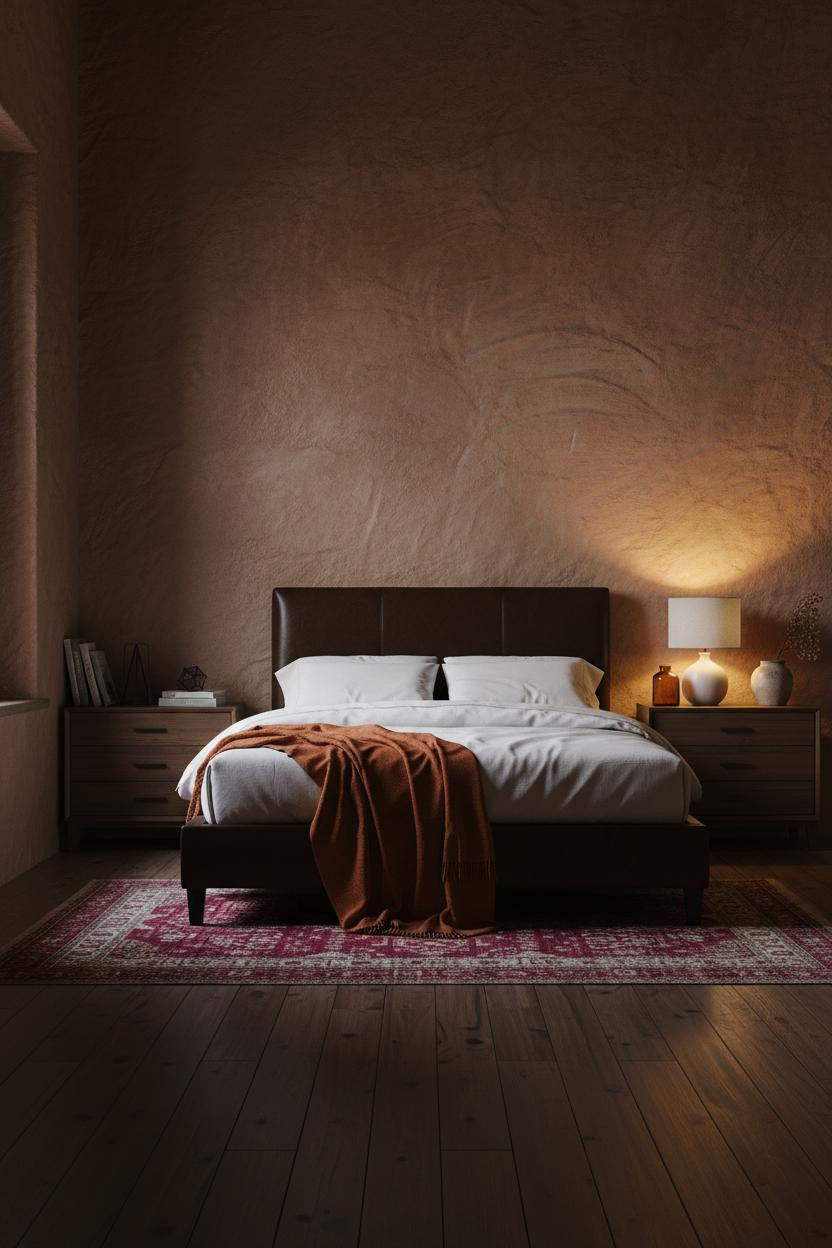
Nothing fancy. That's the entire point.
A full-height hand-troweled clay plaster wall in deep warm clay is alive in a way that smooth finish walls simply aren't. Each arc of the trowel catches amber light at a slightly different angle, so the surface has genuine movement without anything hung on it. The room feels warm without being heavy, which is the balance most dark bedrooms never quite reach.
The finishing layer: A burnt orange mohair throw slipping off the foot of the bed echoes the clay tones in the plaster. One material choice, but it ties the whole room together without looking matchy.
 Our #1 Pick
Saatva Classic Mattress
America's best-selling online luxury innerspring. 365-night trial, lifetime warranty, free white glove delivery.
Shop Saatva Classic
Our #1 Pick
Saatva Classic Mattress
America's best-selling online luxury innerspring. 365-night trial, lifetime warranty, free white glove delivery.
Shop Saatva Classic
The Foundation Of Every Beautiful Bedroom
Walls get repainted. Velvet curtains get swapped out. The plaster trends shift. But the mattress stays, and a dark romantic bedroom deserves one that holds up to how seriously the rest of the room takes itself.
The Saatva Classic is where I'd put the budget before anything else. The dual-coil support system means the structure doesn't break down the way single-layer innersprings do, and the organic cotton cover breathes through the night rather than trapping heat under all those velvet layers. The Euro pillow top is soft without going slack.
Admittedly, no amount of moody plaster fixes a bad mattress. Start with the bed. The rest figures itself out.

The rooms worth saving aren't the ones with the most dramatic wall treatment. They're the ones where every choice, from the clay plaster to the mattress underneath the mohair throw, was actually thought through. Good design ages well because it's made well.