How to Create a Home Gym You'll Actually Want to Use - 19 Ideas
11 july 2026A home gym you'll want to use usually starts with an 8x10 ft floor zone, one clear mirror wall, and equipment that lives like furniture instead of garage overflow. I learned that after setting up a spare-room gym that had the right gear and the wrong feeling. The weights were fine. The room was not. Once I treated it like a real room with storage, light, and rhythm, I stopped skipping it.
Before You Start, The Three-Zone Rule
Before you buy one more plate, give your room three jobs: a lift zone, a stretch zone, and a landing zone near the door. That sounds fussy, but it keeps your home gym layout from turning into one big apology for the equipment. If you only have a small spare room, the same circulation logic in small bedroom layouts that make the room feel bigger helps you preserve a path you'll keep using.
The cost side matters too, because you can build a usable setup in phases instead of panic-buying everything in one weekend. I would rather see you get the floor, mirror, and lighting right first than blow the whole budget on one machine.
A few numbers keep you honest while you plan. Rubber flooring usually runs $2-$8/sq ft, a gym mirror lands around $100-$400, adjustable dumbbells usually cost $200-$700, and most machines need roughly 6x6 ft of breathing room. Leave that room.
You'll feel it every session.
- Start with a rubber floor that looks intentional
- Anchor the room with a mirrored weight wall
- Build a dumbbell station into one corner
- Hang resistance bands on a wood peg rail
- What does warm lighting really change in a home gym?
- Paint one wall a deep gym-club color
- Install a ballet barre beneath tall mirrors
- The Furniture First Bench Rule for Stretching
- Pair the treadmill with matching Farrow & Ball sconces
- Mount yoga mats on vertical wall hooks
- Create a hydration shelf near the doorway
- Use woven baskets for small training gear
- Rower vs treadmill: which one deserves the window
- Bring in plants to soften heavy equipment
- Why black racks calm a loud gym?
- Place a round rug under the stretching spot
- Line the ceiling with warm recessed lights
- Style towels on open locker-style shelves
- Finish with one oversized motivational print
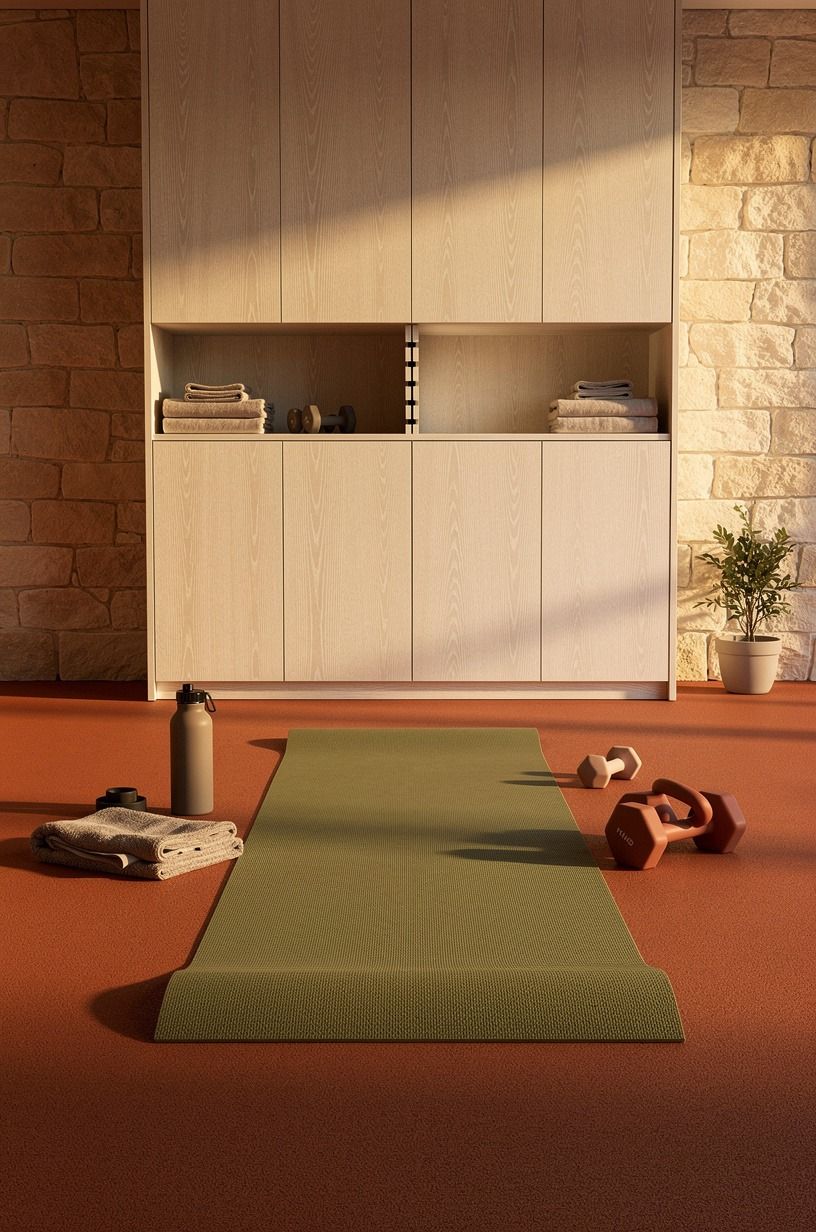
1Start with a rubber floor that looks intentional
Start at ground level, because your feet decide whether the room feels serious or temporary. A terracotta rubber floor warms the whole gym faster than black interlocking tiles ever will, and it gives the room a finished color story right away. In the photo, the balance comes from symmetry, open floor, and that warm clay tone sitting beside pale wood instead of industrial gray.
You'll want one clear workout field, not scraps of mat scattered around the room. An 8x10 ft zone usually handles a bench, mat, and free movement without making the room feel choked, and the softer color keeps plates and kettlebells from looking harsher than they are.
I'd skip puzzle-edge mats if this room is visible from the hall. They read like temporary flooring even when the gear is expensive.
And let the storage earn its keep. A base cabinet in cerused white oak with an exposed dovetail keeps bands, towels, and chargers out of sight so the floor can stay open. If you're planning a gym inside a small extra room, studio apartment layouts that make small spaces work can help you protect that same clear center.
2Anchor the room with a mirrored weight wall
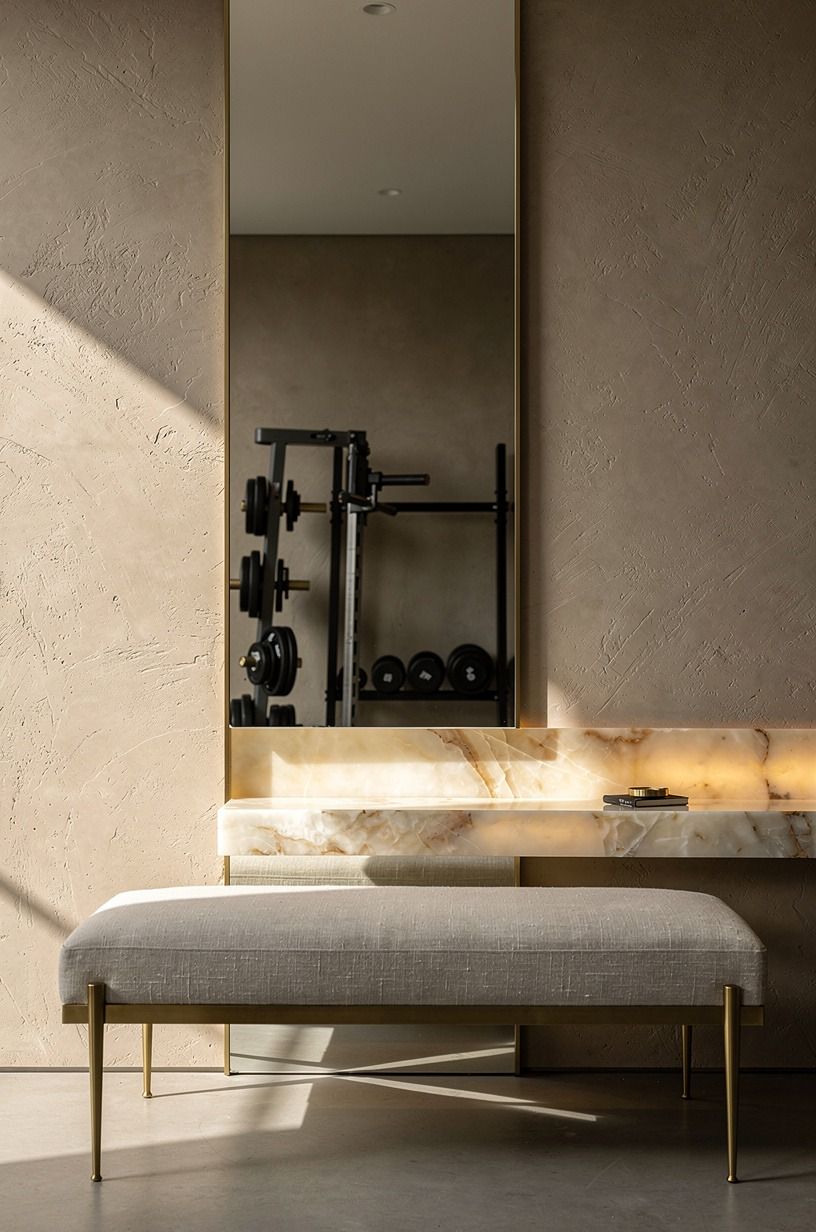
A mirrored wall does more than check your form.
3Build a dumbbell station into one corner
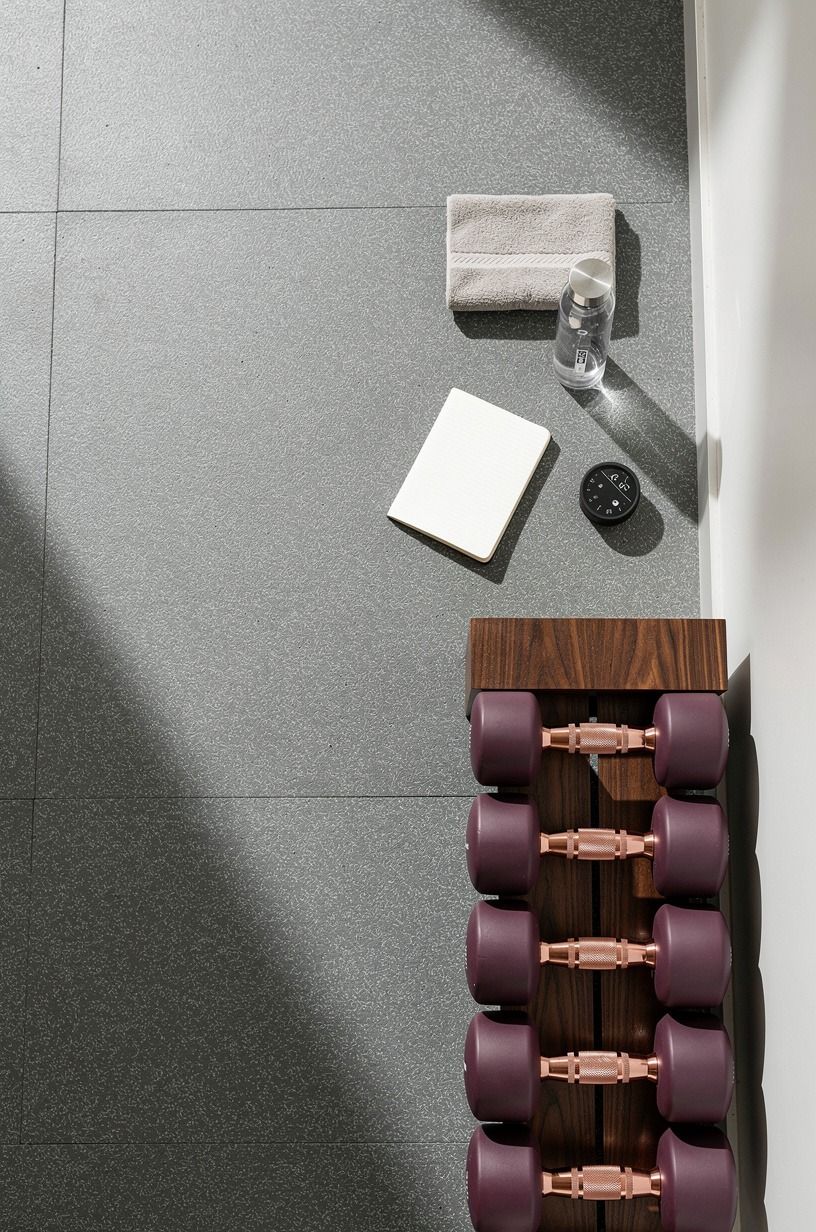
Your dumbbells need a home that feels tucked in, not abandoned mid-room. That's the first sign a home gym is real. I've watched well-meaning setups turn into a corner of orphaned plates and a single bench pushed against the wall where nothing has a job.
Pick one corner and let it earn the weight. A two-shelf iron stand with adjustable pairs from 5 to 50 lb keeps the gradient visible so you don't grab the wrong plate mid-set.
Park the rack against a perpendicular wall, not flat out in the open, and leave about three feet in front of it. That's the working zone. You want to feel the rack's silhouette without bumping it.
Set a low rubber mat under the stand too. It's quiet underfoot, it's kind to your neighbors if you're on a lower floor, and it stops plates from denting any wood you'd rather keep.
4Hang resistance bands on a wood peg rail
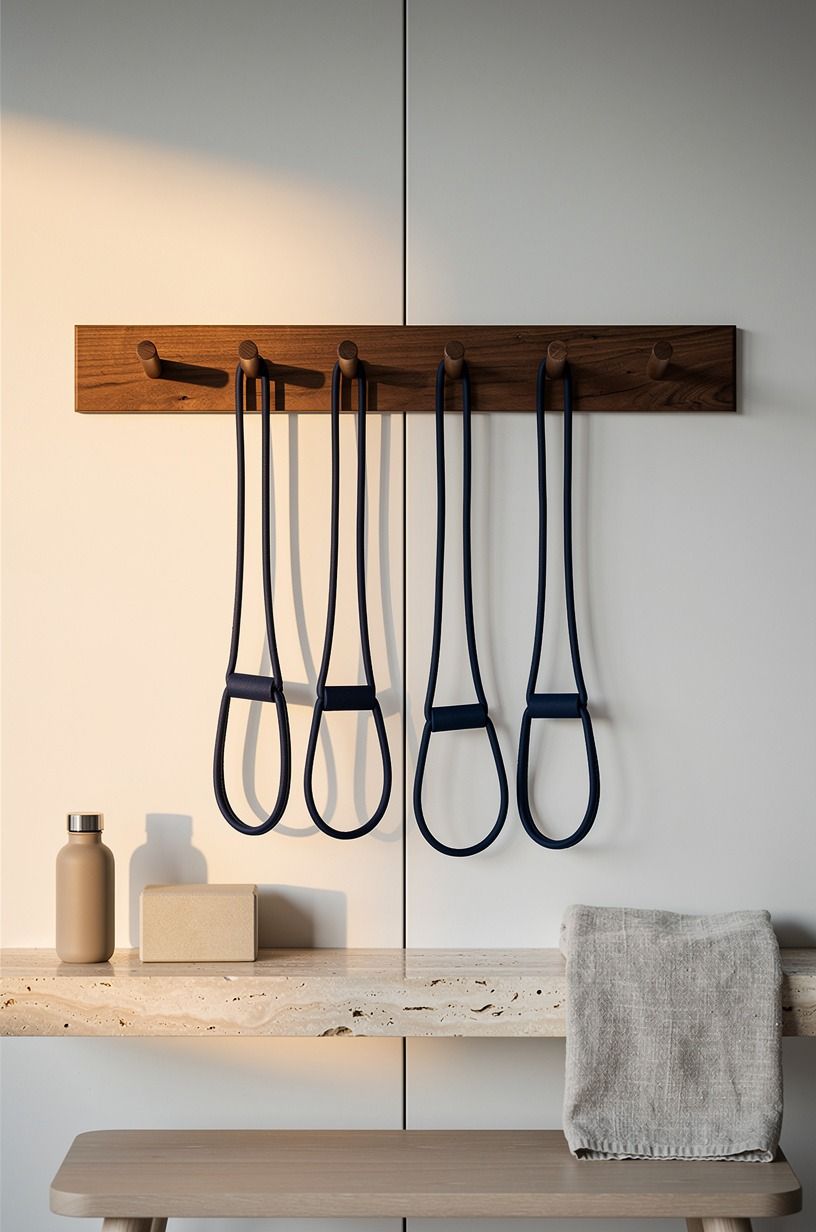
Bands are useful, but loose bands look like laundry if you leave them in a basket.
5What does warm lighting really change in a home gym?
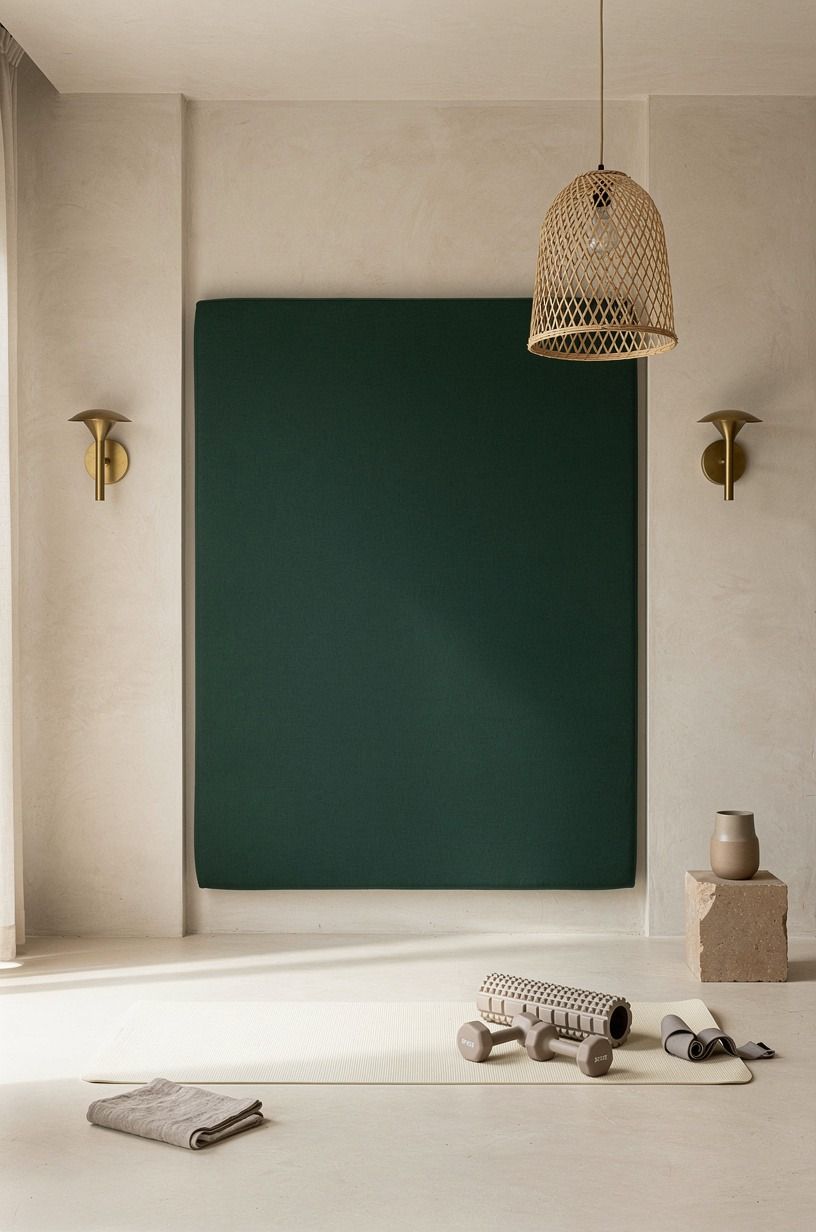
Overhead glare kills mood faster than bad gear, and you'll feel the difference in the first five minutes. A single cool-white ceiling fixture makes a gym feel like a clinic. You'll reach for sunglasses and you won't know why.
I'm a big believer in layering. Start with one warm recessed line at 2700K-3000K so you've got steady coverage for real work.
Then add one or two matte black sconces on the side wall for the cool-down stretch and the breathwork moments. You'd be surprised how a softer side-glow makes a plank feel less like a punishment.
Avoid anything labeled "daylight" or anything above 4000K. It grinds down the calmest room and it makes the mirror throw every flaw back at you.
6Paint one wall a deep gym-club color
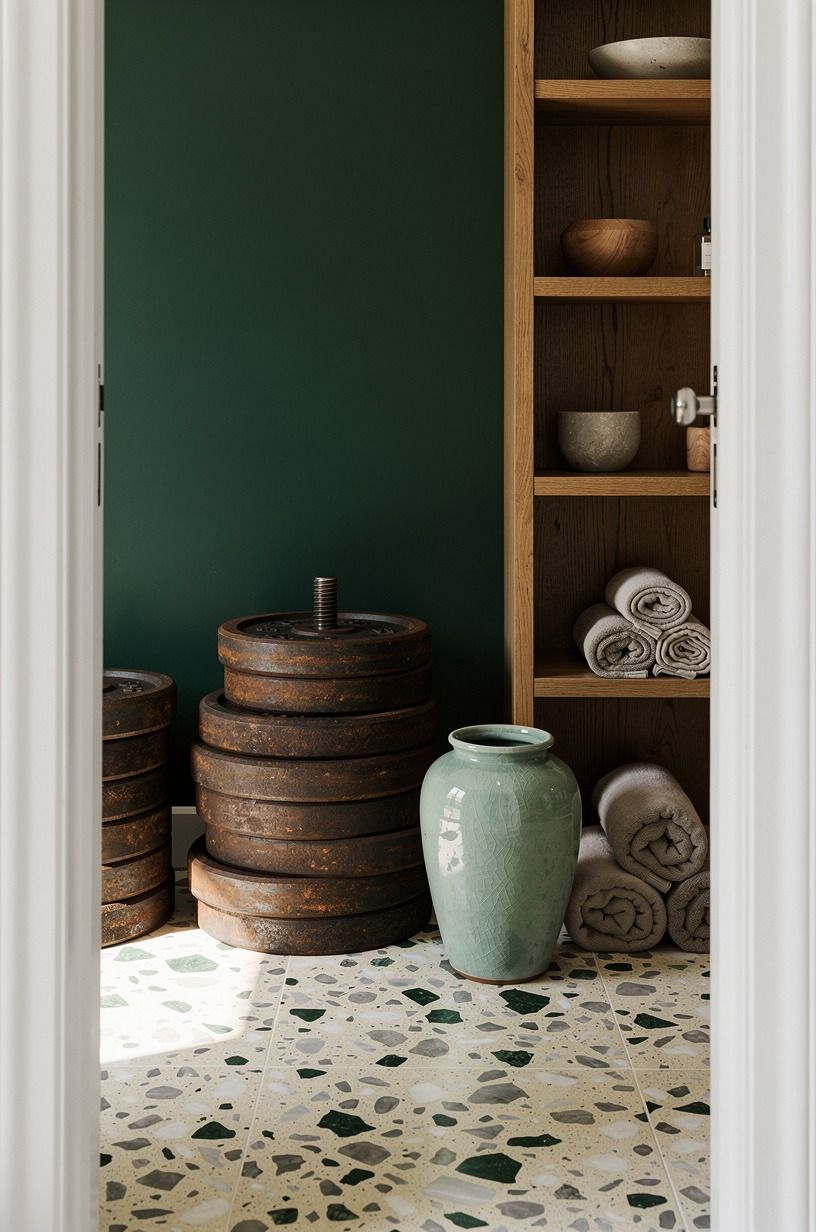
One deep wall can give your gym instant backbone, especially if the rest of the room is oak, cream, or plaster.
7Install a ballet barre beneath tall mirrors
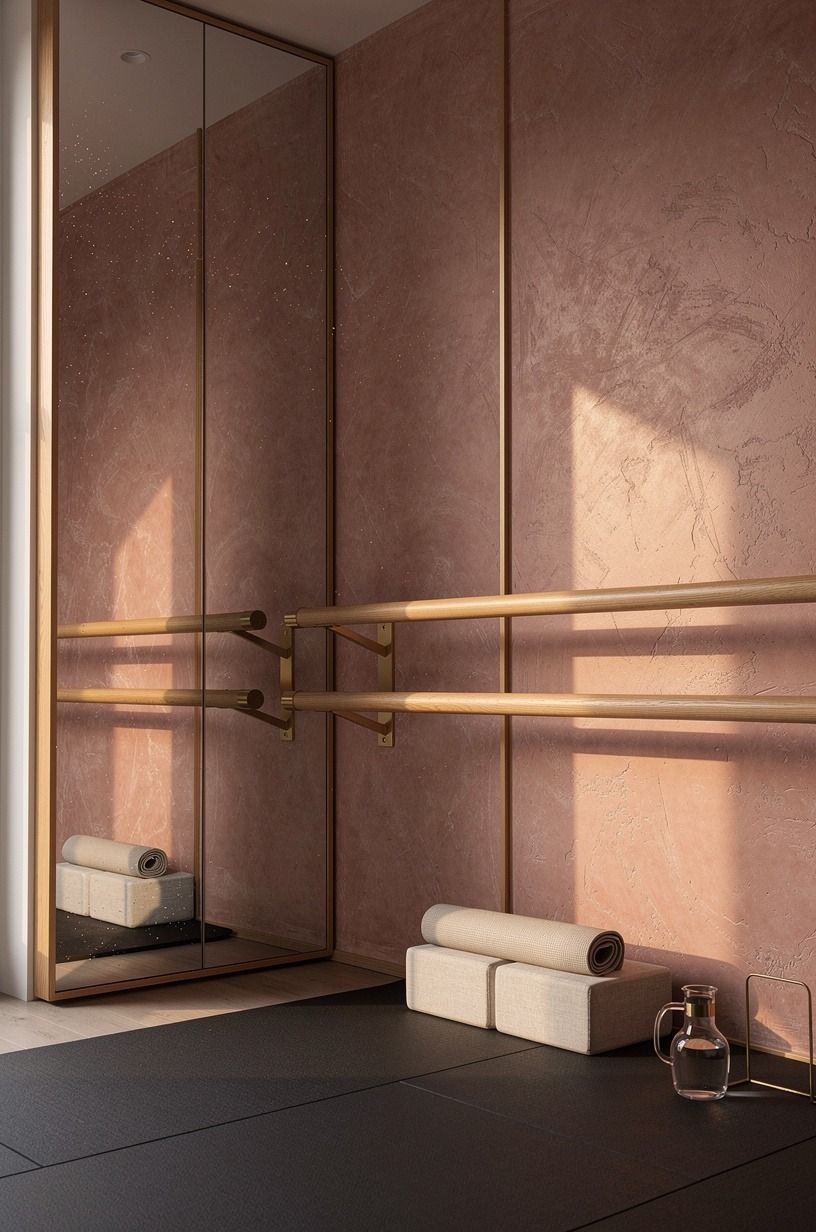
A barre beneath tall mirrors turns one side of the gym into a stretch and mobility lane instead of a random blank wall. I've seen home gyms treated like basements just because one wall went unused. That's a waste of prime square footage, and you don't need a full yoga studio to fix it.
Mount the barre at 36-42 inches off the floor (your wrist height when you stand sideways). Below a single tall mirror panel, it becomes a stretch-and-balance track for hip openers, calves, and slow warmups. Skip the wood-look plastic versions and use a real white oak barre with brushed steel brackets.
It feels grounded under hand, doesn't flex, and it doesn't shout "studio." You can do the same warm-up move, see your alignment, and never leave the room.
8The Furniture First Bench Rule for Stretching
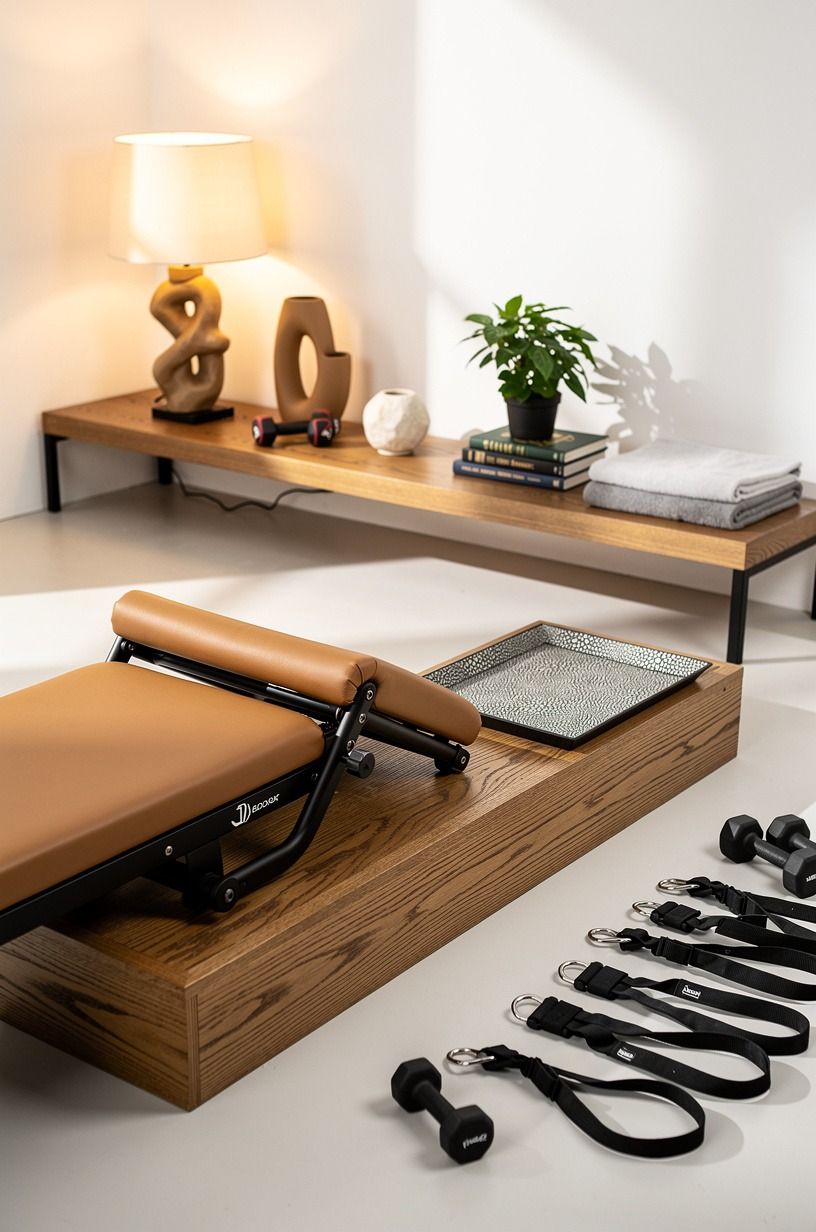
A slim bench gives your home gym design a pause point, and that matters more than people think.
9Pair the treadmill with matching Farrow & Ball sconces
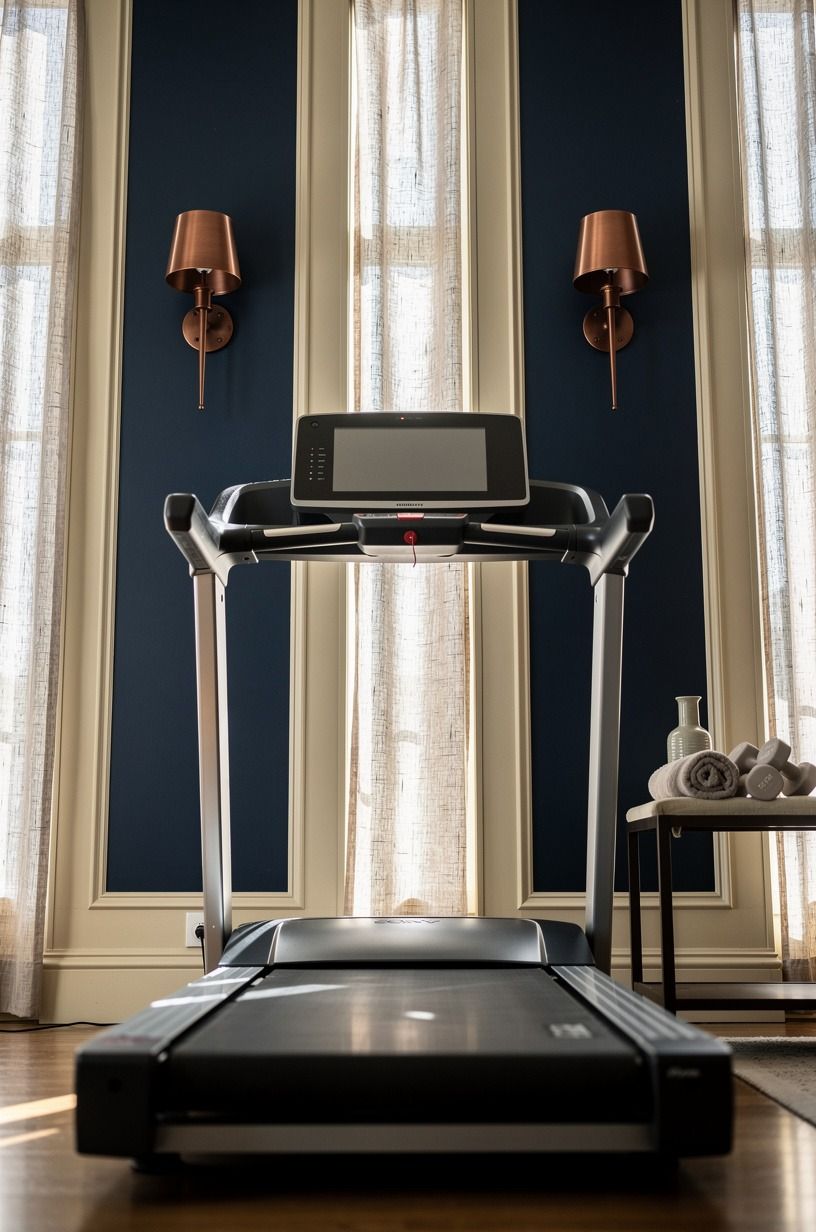
Treadmills get ugly fast when they sit alone against a blank wall. Frame yours with matching sconces so the machine looks integrated, then let the lighting soften the hard silhouette. The low camera angle in the photo proves why symmetry matters here.
The treadmill stops feeling like a spare appliance and starts feeling designed into the wall.
I'd paint the wall behind it Farrow & Ball Inchyra Blue or Benjamin Moore Midnight Oil 2131-10. A midnight backdrop helps too.
Against a deeper color, the machine disappears a little, which is good. You want the room to feel calmer than the equipment.
Matching unlacquered brass sconces add enough warmth to stop the setup from feeling all plastic and screen.
But don't over-style the treadmill wall. One pair of lights, one centered machine, one clean shelf if you need it.
More than that, and you are decorating around guilt. For another lesson in making tech-heavy gear feel intentional, gaming bedroom setups that make the space work is oddly useful.
10Mount yoga mats on vertical wall hooks
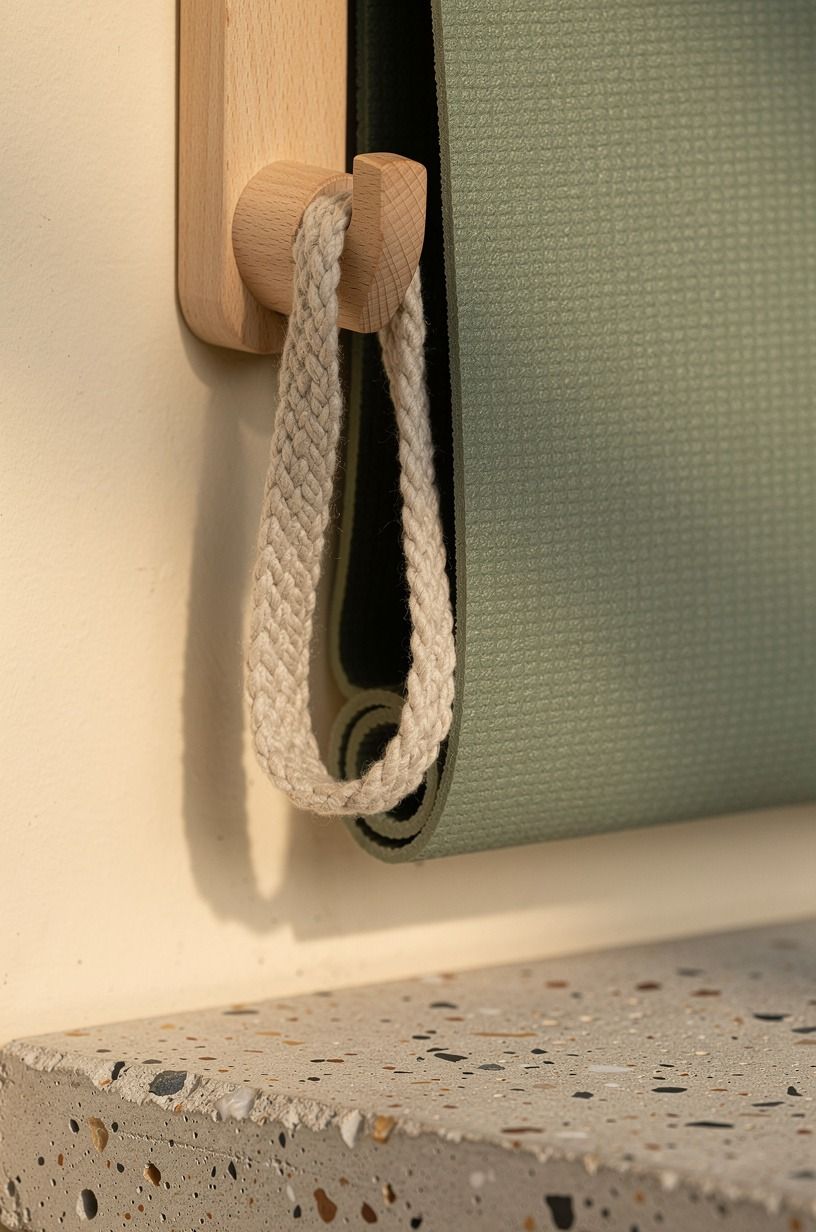
Mats belong on the wall when you want the room to stay clean between sessions.
11Create a hydration shelf near the doorway
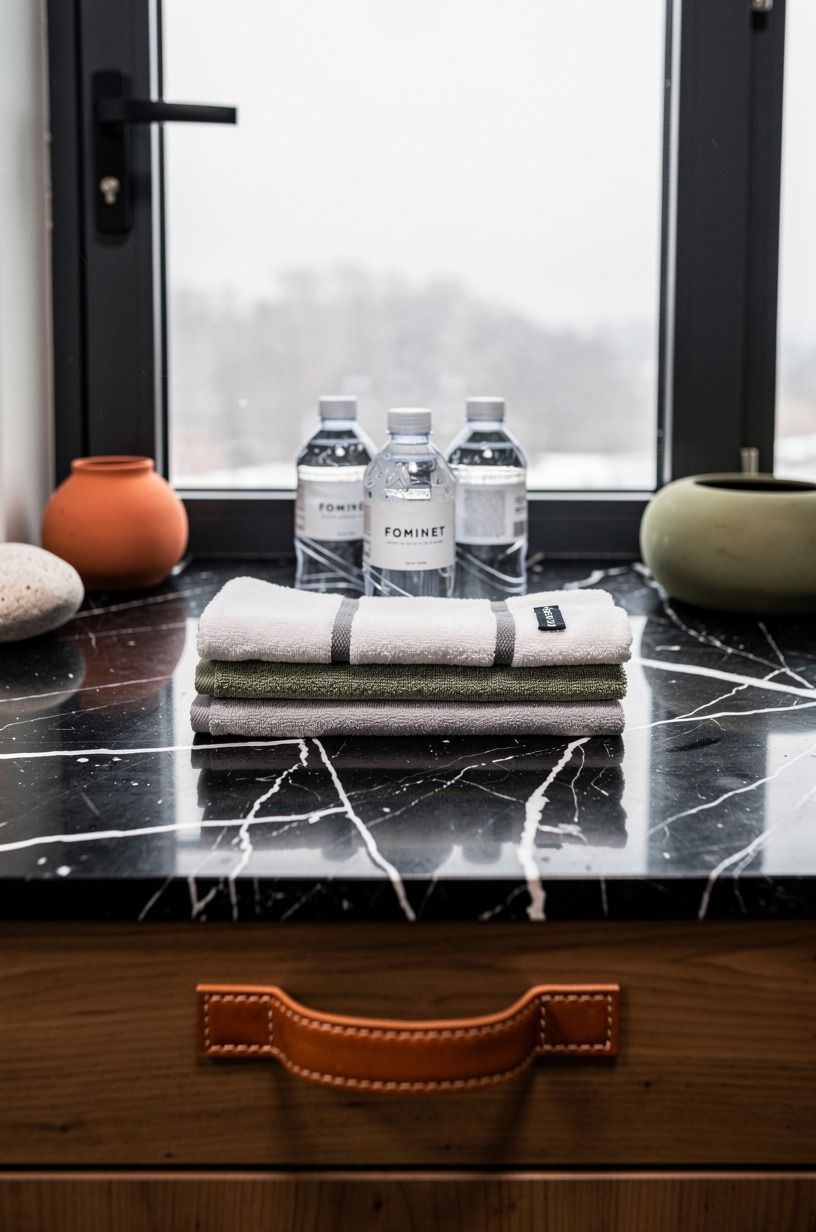
Put your water station near the entrance, not beside the heaviest equipment. That single decision cuts a lot of small annoyances in your workout.
You won't drip across the mat chasing the bottle. You won't skip the refill because the kitchen feels three rooms away.
I'd go for one slim shelf at waist height with a small tray for electrolytes, two bottles, and a stack of clean towels. Something in reclaimed walnut reads warmer than a metal rack, and it doubles as a drop zone for keys when the gym is also a flex room.
A small bowl at the back keeps things honest. If you've got a guest-room-as-gym situation, studio apartment layouts that make small spaces work will give you the same doorway discipline.
12Use woven baskets for small training gear
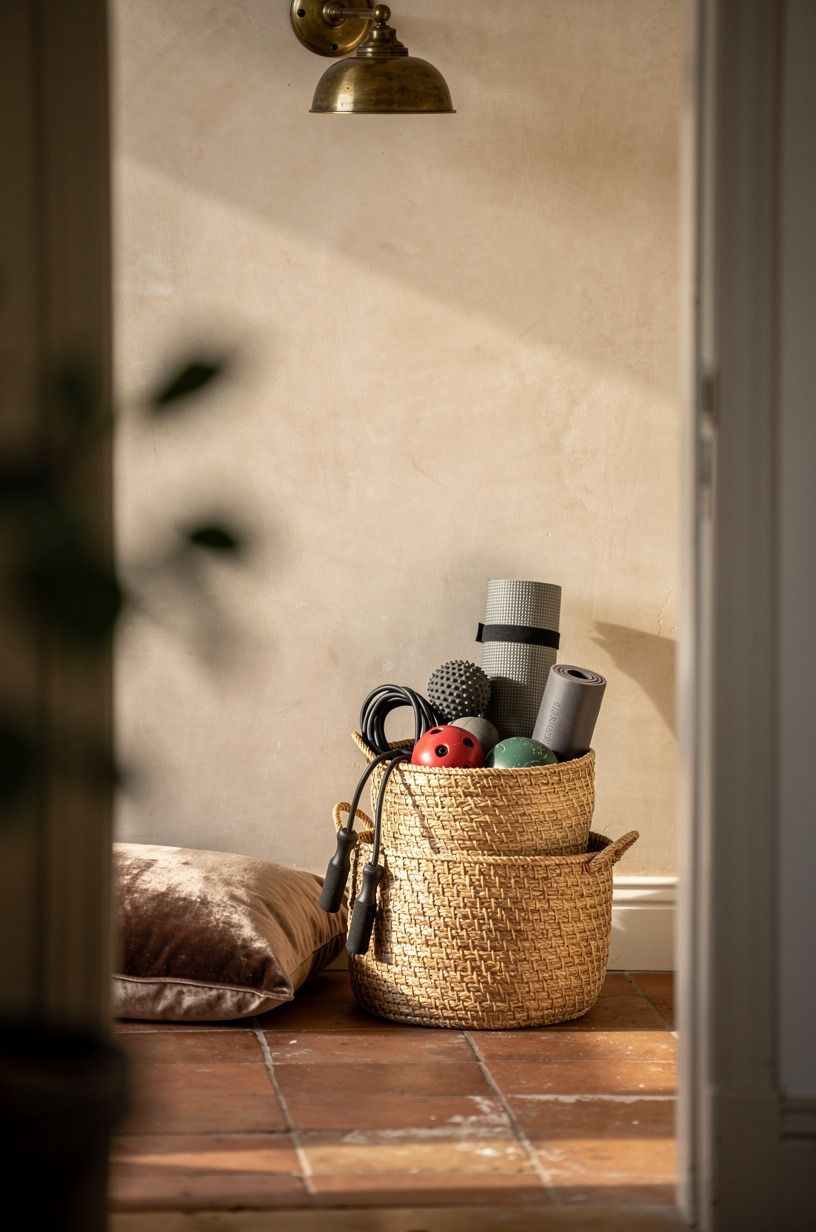
Small training gear multiplies when you are not looking.
13Rower vs treadmill: which one deserves the window
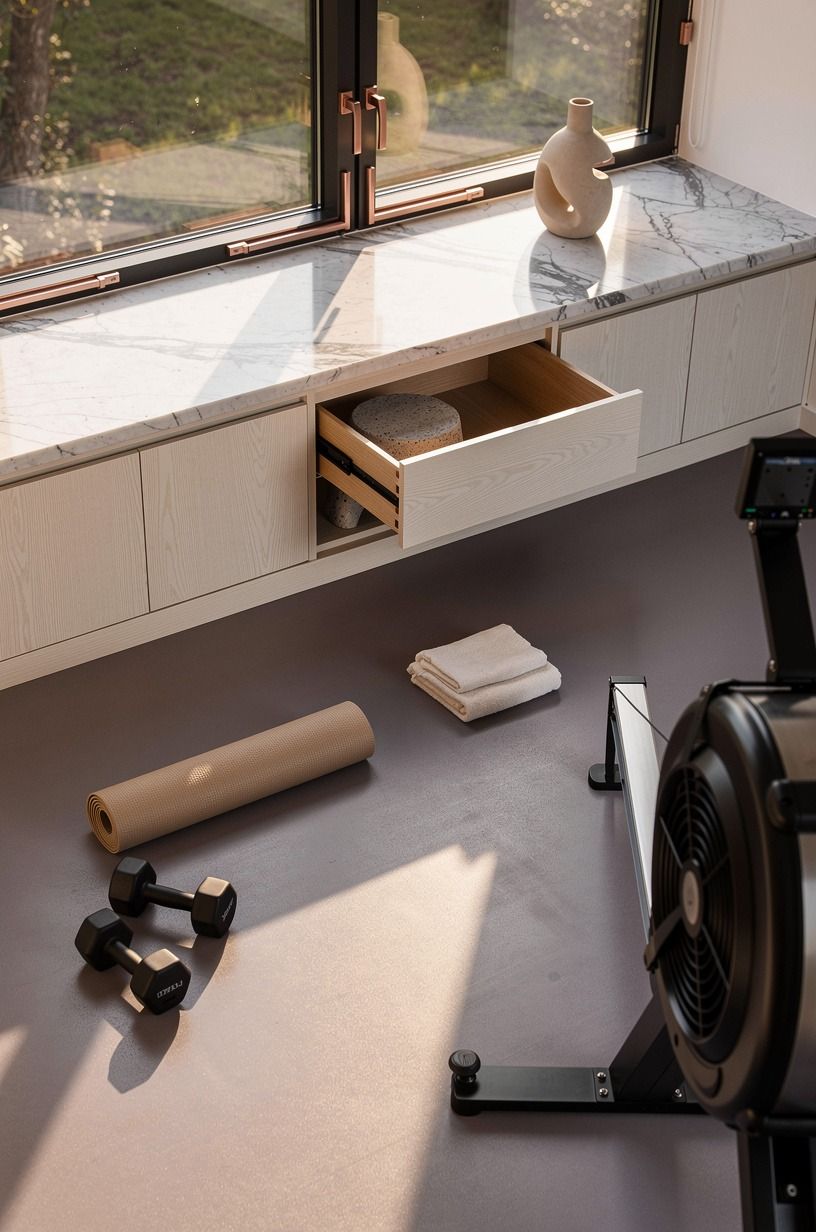
A rower wants side light and breathing room. Put it near the window so the long shape feels intentional, then leave the rest of the floor open enough that the machine reads as part of the architecture. In the wide diagonal photo, the rower works because it is pushed to one side and the plum-gray floor still has room to breathe.
Machines this long need a clean edge. Give the rower its own line against the wall or window and keep roughly 6x6 ft around the movement path so the room never feels pinched.
I also like the contrast between a darker floor and a softer window wall. It makes the machine feel lighter.
I would never center a rower unless the room were huge. Off to one edge is better, every time. If your extra room is narrow and multifunctional, small studio apartment ideas that make the space work can help you keep that long-side placement from fighting the rest of the layout.
14Bring in plants to soften heavy equipment
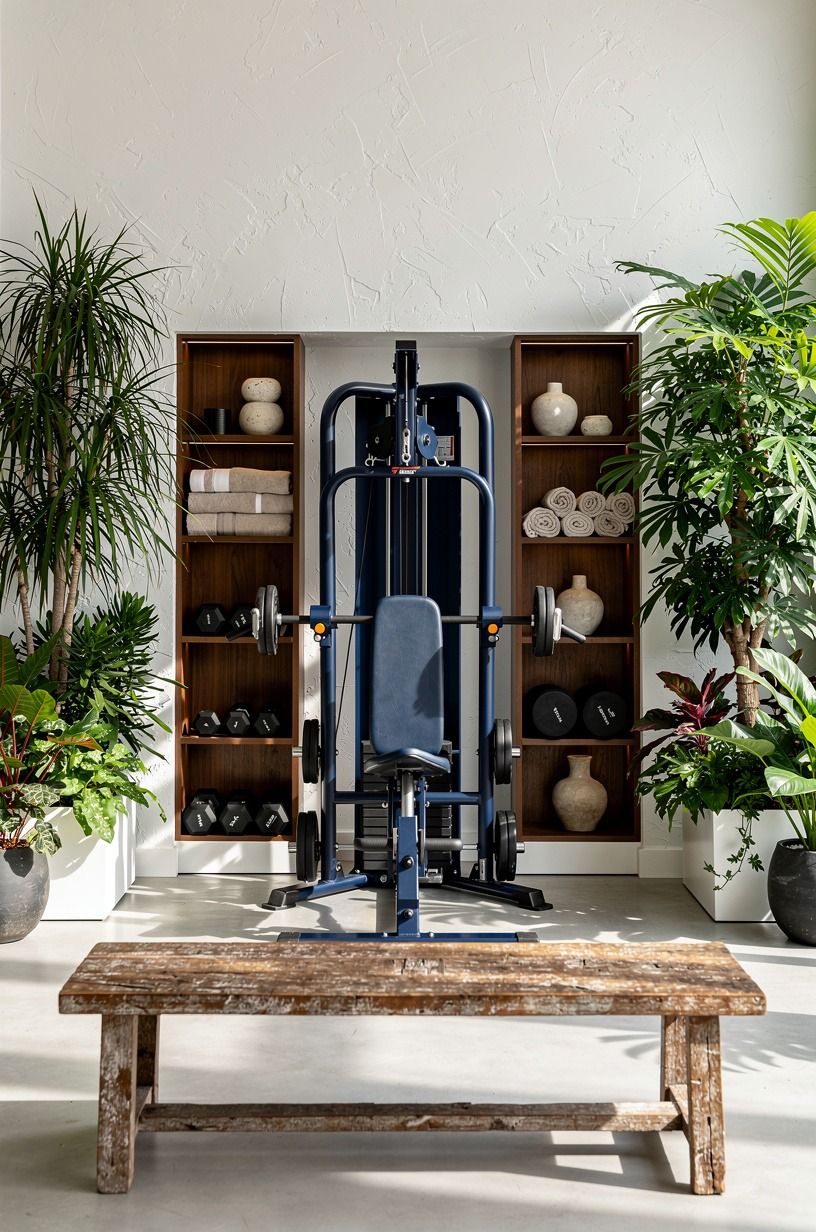
Heavy equipment needs something alive nearby or the room can start feeling stern. A plant at the edge of a navy weight station, or a pair of taller greens flanking a rack, softens the steel without turning the gym into a greenhouse. The first-person view in the photo gets the ratio right: equipment first, plants second.
Stick to sturdy shapes. I like upright rubber plants or a trimmed olive over trailing vines in a workout room, because the cleaner silhouette plays better with racks and benches. If your station is dark, the green breaks up the mass and gives you a calmer entrance sightline.
But keep the pots simple. One clay finish, one dark finish, or one pale stone look.
No rainbow planters. The room needs a quiet assist, not a side quest.
For more proof that one living note can warm a strict palette, Japandi bedrooms that stay calm without trying too hard is worth your time.
15Why black racks calm a loud gym?
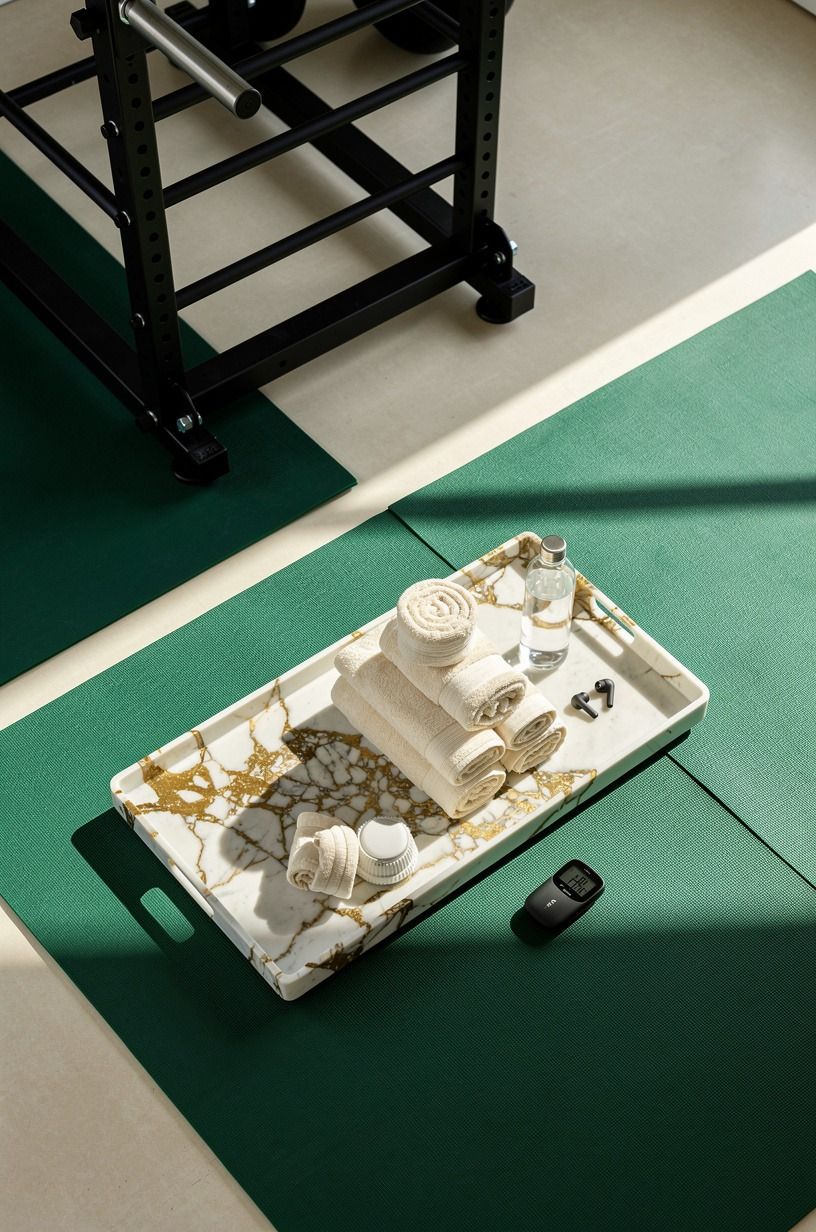
Matching racks do something underrated: they let your eye stop scanning for differences. In the overhead flat-lay photo, the compact black storage feels calm because every line belongs to the same family. That's why black works here.
It recedes. It does not beg for attention.
If you mix three finishes and two styles of rack, your gear may fit, but the room gets visually noisy fast. I'd choose one matte black rack system and keep adding inside that language. It makes plates, kettlebells, and accessories look like a set instead of leftovers.
And black plays nicely with oak, cream, terracotta, and plaster, so you have room to warm everything around it. That contrast is exactly why black and oak bedrooms that feel collected rather than decorated works so well. The darker line lets the softer materials shine.
16Place a round rug under the stretching spot
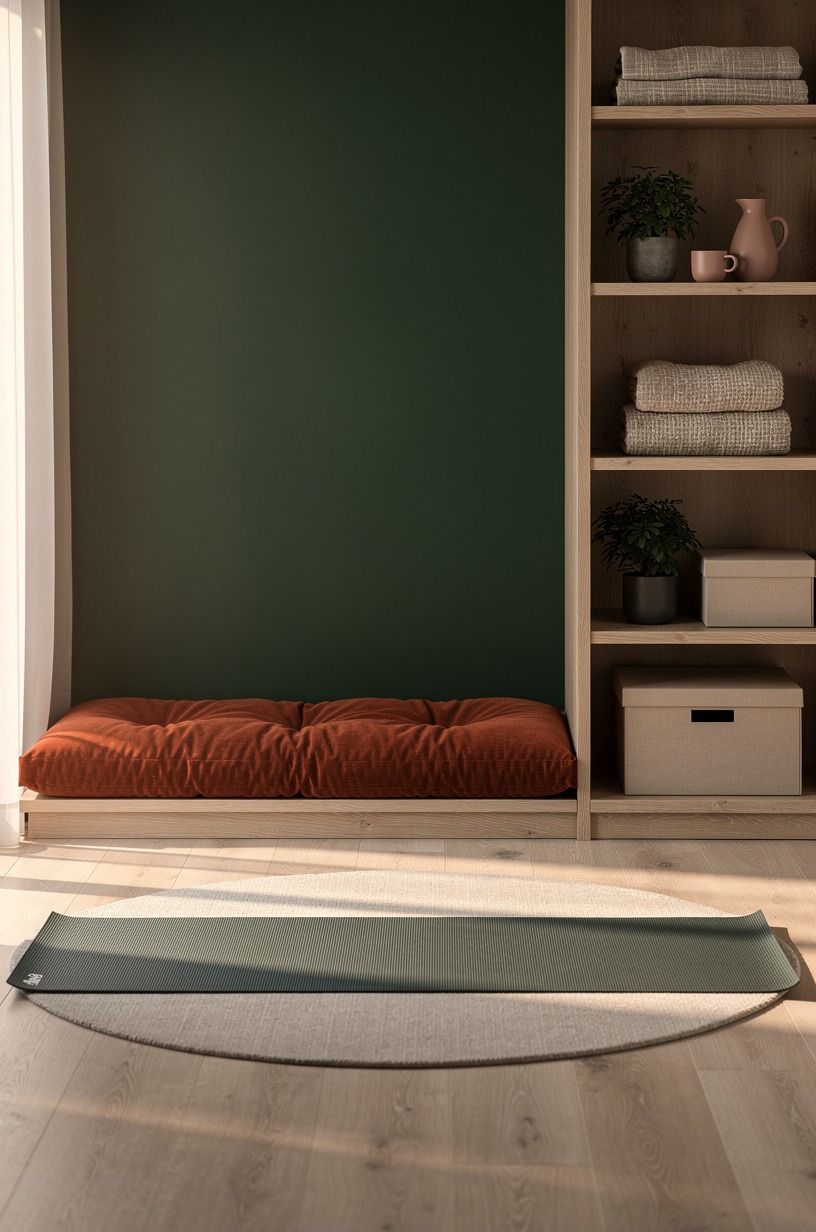
A round rug under the stretching zone tells your body where the softer work happens. That's the part most home gyms skip, and they end up rolling their mat out on cold rubber tile every single time. You've got to give your body a cue.
I'd go 7-8 feet across, in undyed wool with a low pile, so the rug stays grounded and breathes during a hard stretch session. Skip anything shiny, synthetic, or busy-patterned.
A round shape beats a rectangle here because it softens the boxy equipment footprint without needing another corner. You're not centering the room on the rug, you're inviting your stretch routine to a place that feels different from the lifting zone.
17Line the ceiling with warm recessed lights
Ceiling lights are worth planning because they decide whether the room feels sharp or inviting after dark. A line of warm recessed fixtures keeps the light even, leaves the walls cleaner, and gives the workout zone a steady glow instead of a spotlight effect. In the photo, the open wall space stays relaxed because the ceiling rhythm is doing the work.
Warm is the keyword. Stay warm, keep the spacing even, and let the lights track the room rather than the machine.
I think recessed fixtures beat one decorative overhead in a true gym, because you need calm coverage more than a statement. Your shoulders, floor, and mirror wall all read better under consistent light.
But don't turn the ceiling into a runway. Fewer fixtures with better placement win. If you want a room that still feels finished after dusk, minimal luxury bedrooms that feel polished but never cold makes the same point with less equipment.
18Style towels on open locker-style shelves
Open shelves can work in a gym if they look edited enough to feel like furniture. Roll towels, leave a little air, and let the shelf sit off to one side instead of front and center. In the doorway view from the photo, the locker-style shelves behave because they are pushed to the edge with breathing room still visible around them.
I'd keep the towels tonal. 600gsm Turkish cotton in cream, clay, or charcoal looks richer than a stack of random colors from three different sets. Add one tray for smaller items and one basket below, then stop.
You want the shelving to feel helpful, not like a linen closet wandered into the gym.
And please resist the urge to fill every cubby. Empty space is doing half the styling. If you like the disciplined shelf look, bedside tables that tie the whole room together shows how a few contained objects beat fully packed storage every time.
19Finish with one oversized motivational print
One oversized print is enough to close the room.
Why The Hotel-Gym Rule Beats Buying More Equipment
Here's the shift most people miss. The rooms you return to are not always the rooms with the most gear.
They are the rooms that remove friction. I've seen tiny home gyms with one treadmill, adjustable dumbbells, and a mat get used four times as often as bigger setups packed with machines. Why? Because the room tells you what to do the moment you step inside.
Shoes go here. Bottle goes there.
Mirror wall ahead. Stretch zone to the side. Decision fatigue drops, and the workout starts before your brain has time to negotiate.
I call that the Hotel-Gym Rule. A decent hotel gym never gives you the whole catalog. It gives you enough, then lays it out so cleanly that you move without second-guessing anything.
That's the feeling worth copying at home. You do not need twelve categories of equipment.
You need one clear path, one floor finish that feels good underfoot, and one visual tone that makes the room feel ready when you are tired (which is when design matters most).
Budget fits into this, too. The smartest money usually goes to the surfaces and habits you touch every day: flooring, mirrors, lighting, storage, and one or two pieces of equipment you will use weekly.
The expensive mistake is buying the fantasy machine before the room can support the routine. I've done that. It looked ambitious for two weeks, then became a hanger for a hoodie.
Once I fixed the light, cleared the entry, and gave the dumbbells a proper station, the room changed from storage to ritual.
And that's the real point. A home gym inspiration board is easy.
A room that quietly pulls you back in on a dark Tuesday is harder. But it's buildable.
Start with structure, add warmth, then add gear only when the room has earned it.
The Questions Worth Answering First
What's the smartest starting pair for a small home gym?
The best starting pair is a mirrored weight wall plus one compact dumbbell corner, because you get function and visual depth at the same time. If your room is tight, study small bedroom ideas that make every inch feel intentional before you add a second machine.
Where can I source the basics without blowing the budget?
I would start with IKEA, Target, Wayfair, and Facebook Marketplace for benches, baskets, hooks, and storage pieces. The best savings usually come from buying the furniture-like pieces secondhand, then spending new money on flooring or mats. You can borrow warm, edited sourcing logic from modern earthy bedrooms that feel collected rather than decorated.
How much should I plan to spend?
A cosmetic makeover usually lands around $300 to $1,200, while a more built-out version with flooring, lighting, and better equipment often moves into the $2,000 to $8,000 range. The free part is layout. Move the gear, clear the doorway, and define the floor zones before you spend more.
Yes, you can land in the budget tier with paint, baskets, and a smart mirror placement.
Can I build a great gym on a budget?
Yes, and you can do a lot with low-cost structure. Paint one wall dark.
Hang the bands. Mount the mats.
Use baskets you already own. Add one warmer lamp or sconce.
That sequence gives you more return than buying another gadget first.
Is a home gym worth it in a small space?
Yes, and a small space can help because tight rooms force better editing. You keep the gear list short, the path clear, and the habits simpler.
A smaller room also makes one mirror wall and one strong color move feel more dramatic. That is good news for your budget.
Will the setup survive a rental?
Yes, if you stick to reversible upgrades like freestanding racks, plug-in sconces, removable hooks, rolled flooring, and a bench you can move later. I would avoid built-ins unless you know you are staying. For more renter-minded small-space thinking, studio apartment ideas that make small feel intentional is a useful next read.
Start With the Floor, The One-Step Rule
If I had to pick one step, I'd start with the terracotta rubber floor. It fixes the tone under every single move after it, and you can't make a gym feel inviting when the ground still feels temporary. Pin that floor idea for later and build the room up from there.