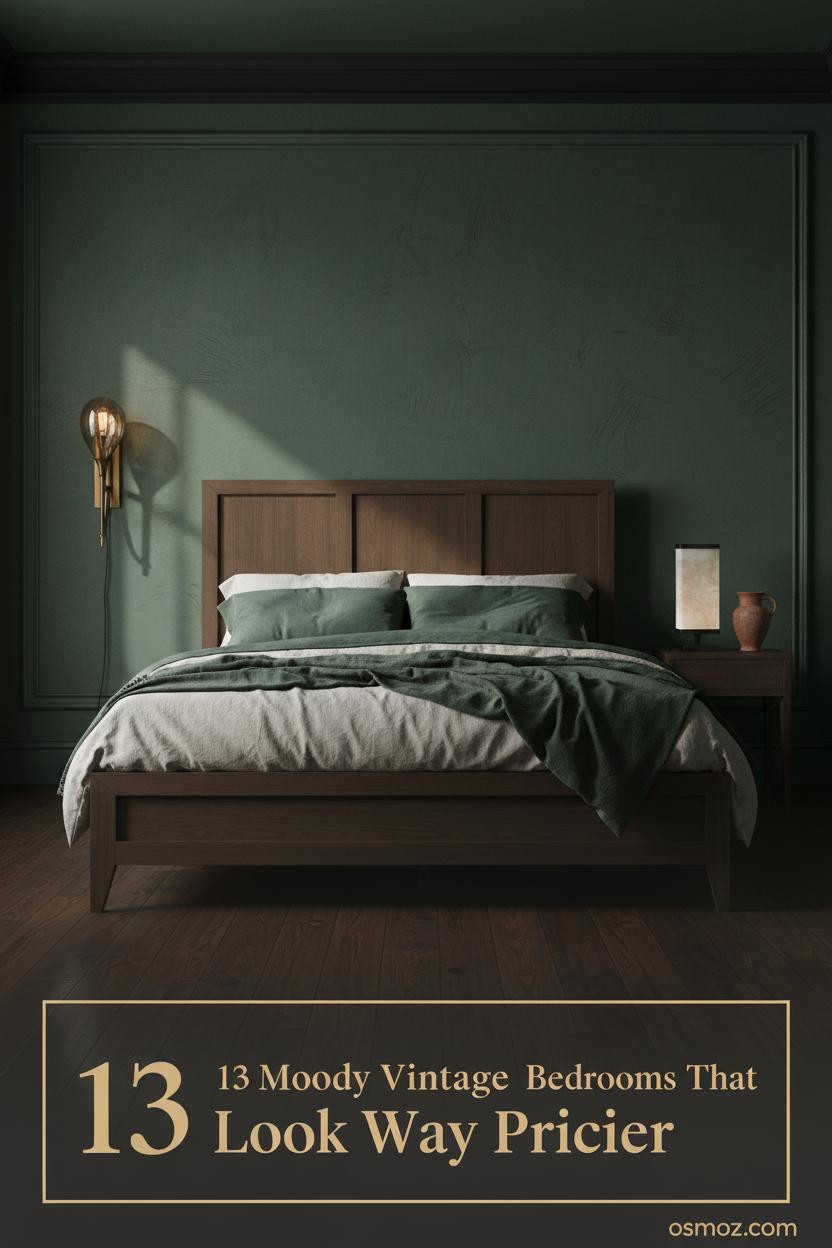
13+ Moody Vintage Bedrooms That Feel Collected Rather Than Decorated
22 march 2026The first thing I notice in the best moody vintage bedroom isn't the dark walls or the antique objects. It's the feeling that nothing was bought all at once.
These are rooms that look gathered over years. And honestly, that's exactly what makes them worth saving.
The Plaster Alcove That Makes Everything Else Make Sense
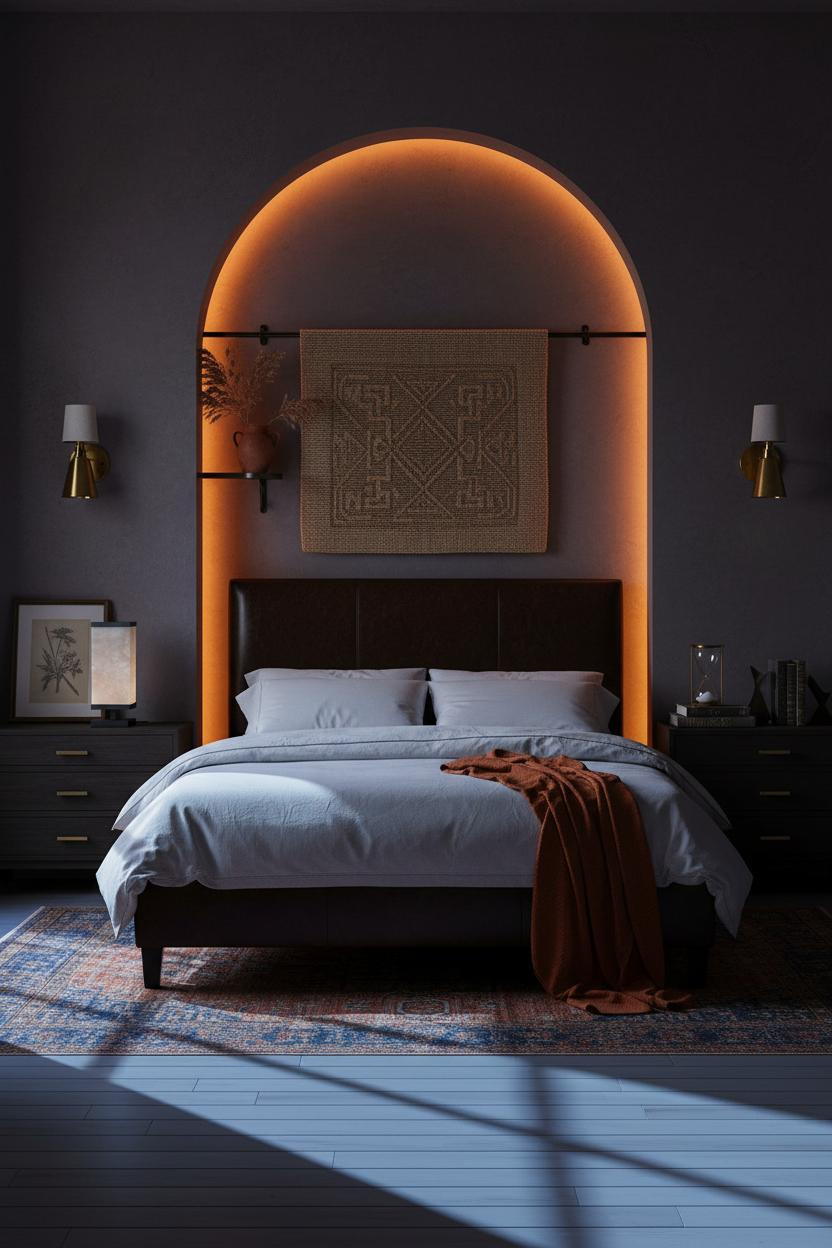

I keep coming back to this one. The arched plaster alcove does something no shelf or art arrangement can replicate.
Why it holds together: Recessed depth in matte plaster swallows shadow so the warm lamp light traces the arch edge as a thin seam, which makes the whole wall feel architectural without adding a single piece of furniture.
Steal this move: Pair brass sconces with a single terracotta vessel and dried stems inside the niche. That's enough. Don't fill every inch.
Wainscoting That Actually Earns Its Place
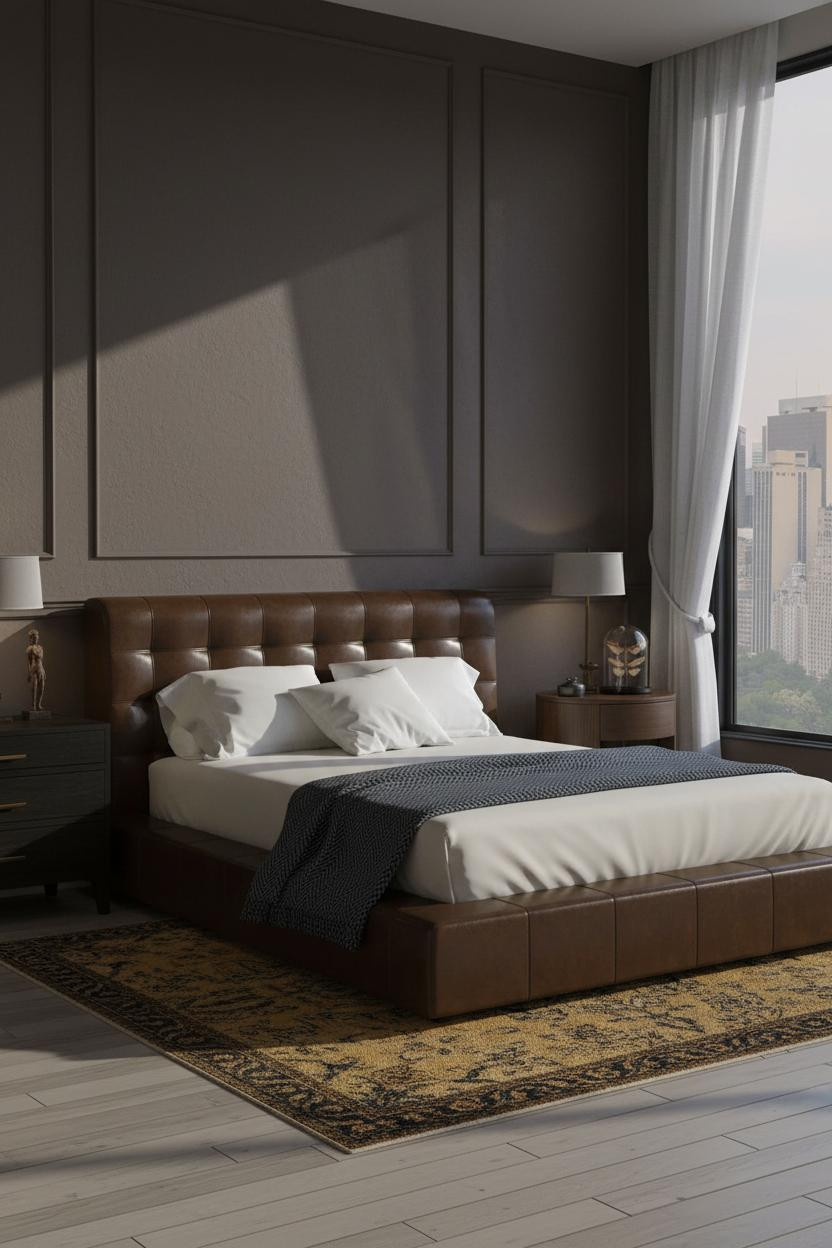

This one is divisive. Half-height wainscoting in aged charcoal doesn't whisper. It commits.
But that's exactly why it works. The beveled charcoal panels catch raking light from a north-facing window and make the plaster above look richer by contrast, not heavier.
The smarter choice: Paint the wainscoting a full shade darker than the wall above, not the same color. The line between them is what gives the room its spine.
When Iron and Glass Do All the Work
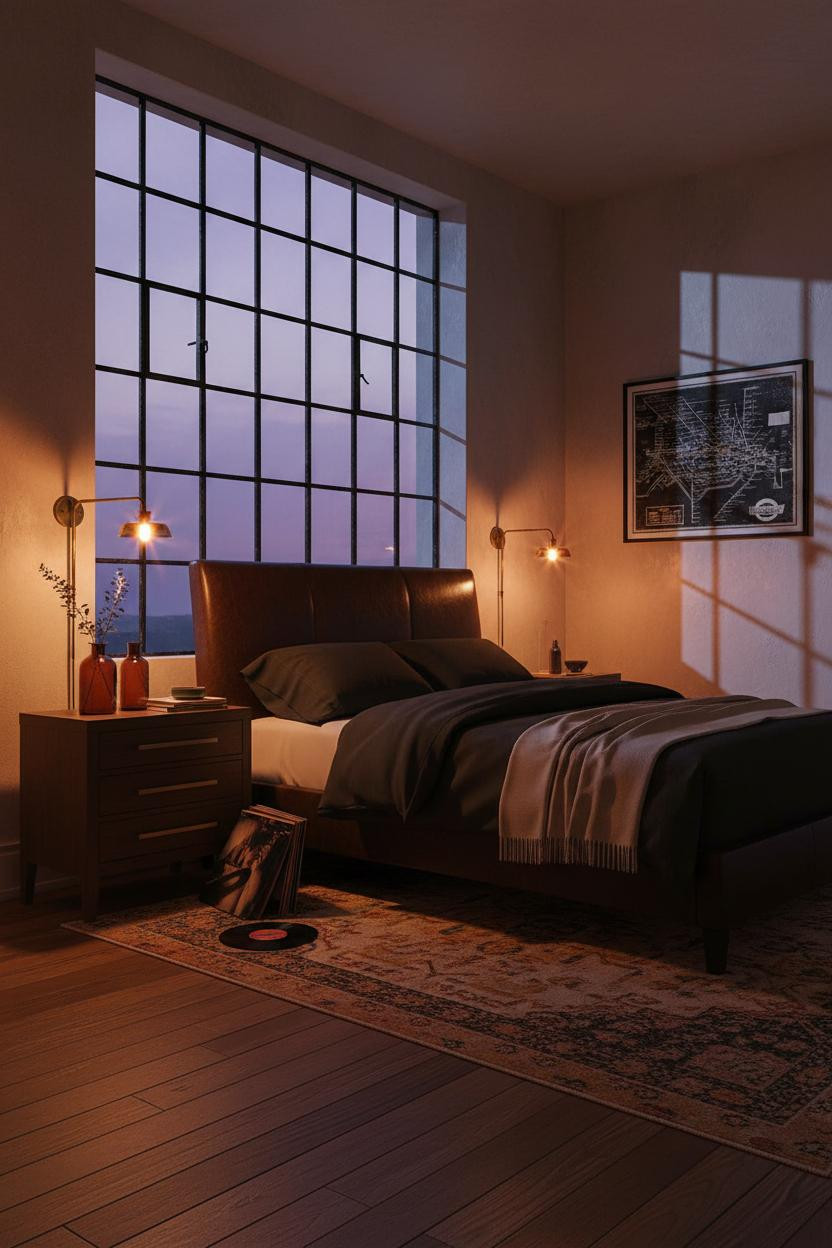
It might seem risky to lean into a full Crittall-style steel window wall, but the rooms that do it never feel cold.
What creates the mood: The aged black iron grid throws geometric shadow lines across rust-ochre plaster, so the architecture itself becomes pattern, in a way that feels entirely intentional.
The easy win: Stack a vintage map flat beside the window as a graphic counterpart to the grid. The contrast between old cartography and industrial steel is quietly strange. I like it.
Clay-Ochre Walls and a Crown Moulding You Can Actually Feel
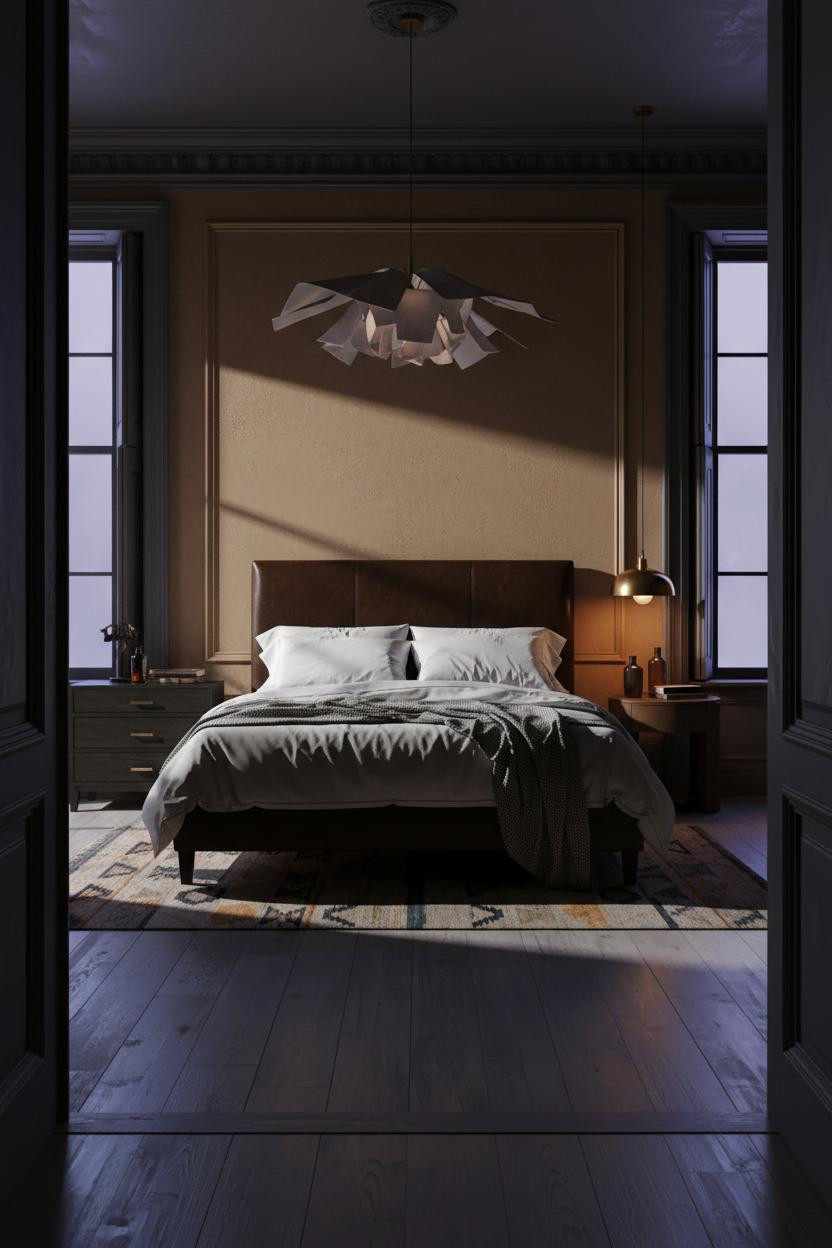
Baroque without the fuss. Not obvious. But the payoff is real.
And what makes it land isn't the pendant or the books stacked bedside. It's the matte iron-black crown moulding running as a wide horizontal band, its deep relief casting shadow ridges down the clay-ochre plaster below.
Why it feels intentional: The moulding grounds the warm wall color in something structural, which keeps the room from feeling too soft or too decorator-perfect.
Avoid this mistake: Don't match the moulding to the wall. The contrast between iron-black trim and warm plaster is the whole point.
A Mushroom Plaster Wall With Something to Say
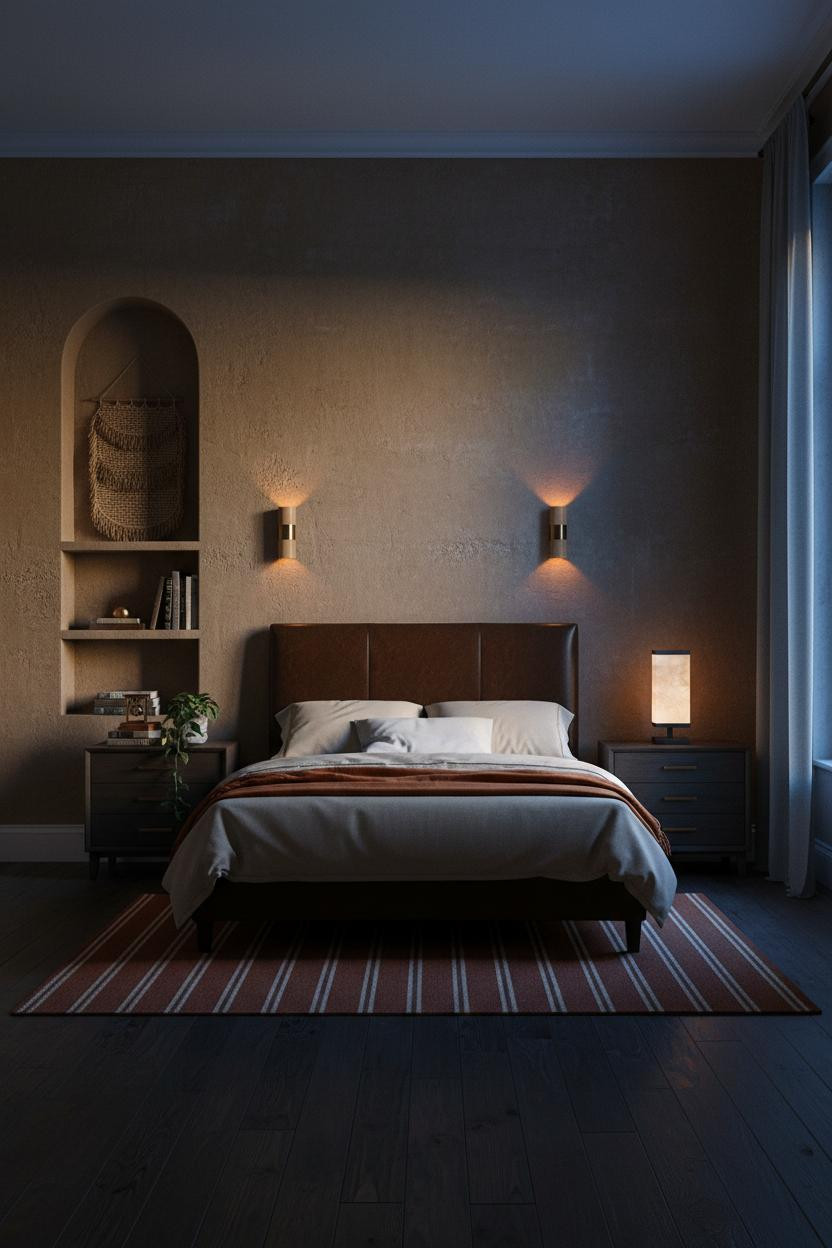
I almost scrolled past this. Glad I didn't.
The real strength: Raw umber-mushroom plaster with an arched niche recessed into it means the wall has shadow pockets built in, so lamplight traces the arch edge rather than flattening everything evenly.
Tuck a woven wall hanging inside the niche and a trailing pothos on the shelf below. The room feels literary without a single book in sight.
The Aged Walnut Shelving Room I Keep Recommending
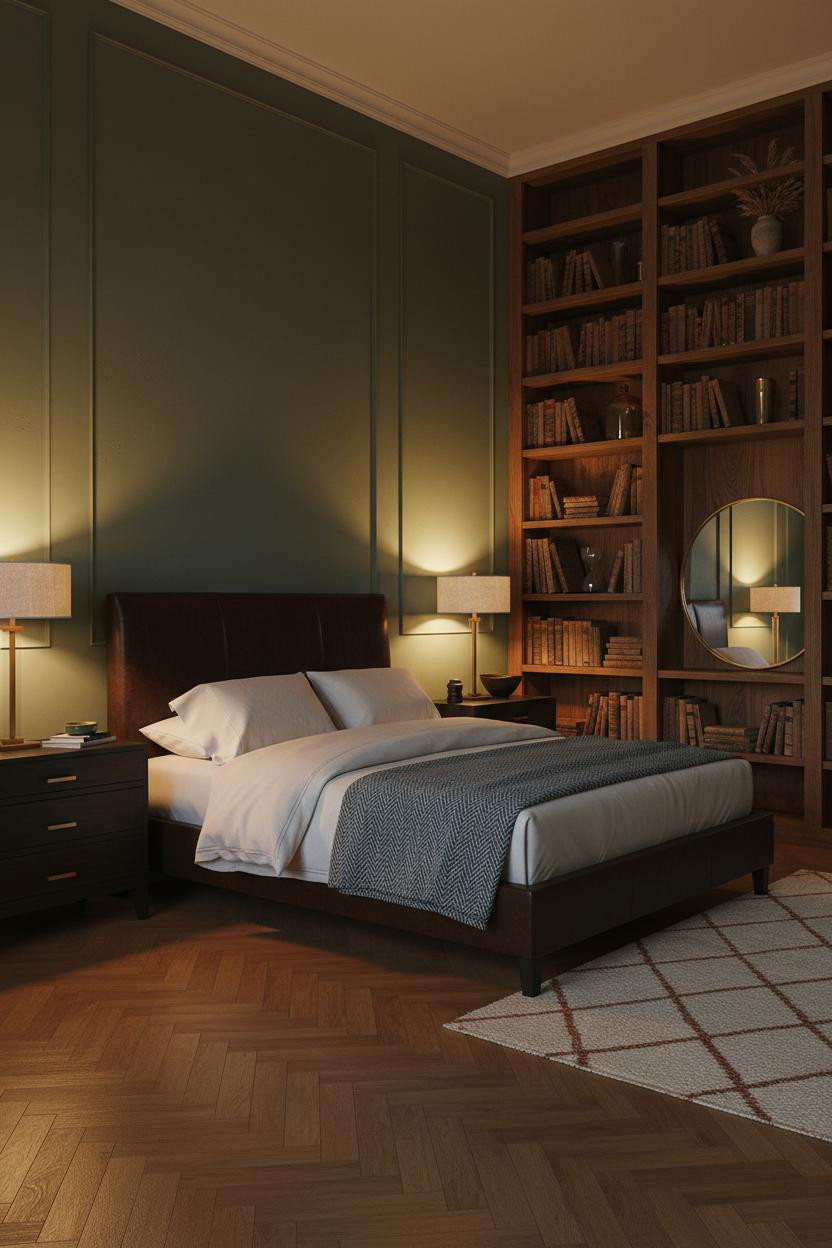
This is the kind of room that makes you want to cancel your weekend plans and stay in.
Why the materials matter: Floor-to-ceiling aged walnut shelving on deep sage plaster means every brass object and leather spine catches warm backlit glow, while the sage keeps the wood from reading too heavy.
Pro move: Lean a round mirror against the shelving at floor level. It reflects amber lamplight back into the room without requiring a single wall hook.
Dark Academia Without the Costume
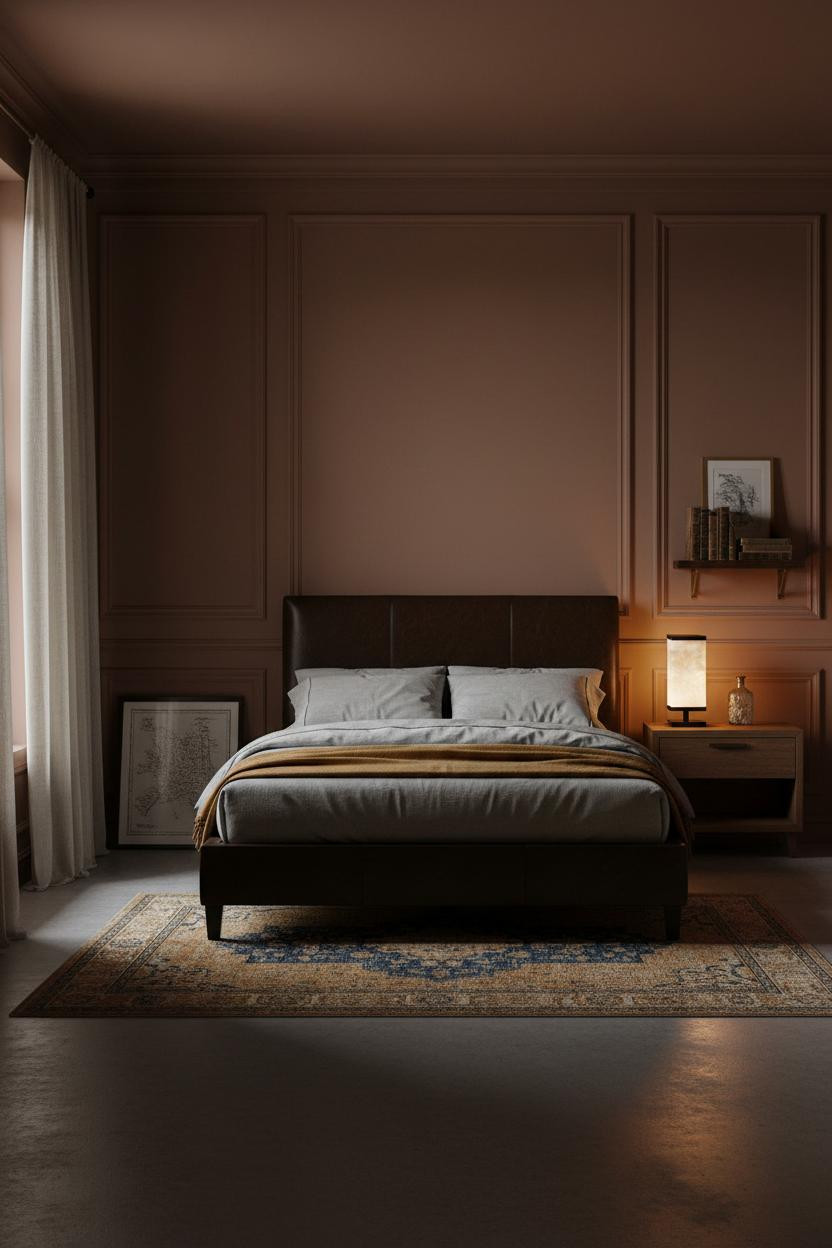
The charcoal-burgundy carved wainscoting running chair-rail height across three walls gives this room the library gravity that people usually try to fake with wallpaper.
Why it looks custom: Carved vertical panels catch the brass lamp's amber pool along raised edges while recessed grooves stay dark, so the texture reads dense and tactile even in low light.
Let cream linen curtains pool at floor length. The terracotta-rust plaster above the wainscoting stays warm, and the floor-length linen softens what might otherwise feel too stiff. Admittedly, this one takes commitment.
What Happens When You Go Slate Grey Floor to Ceiling
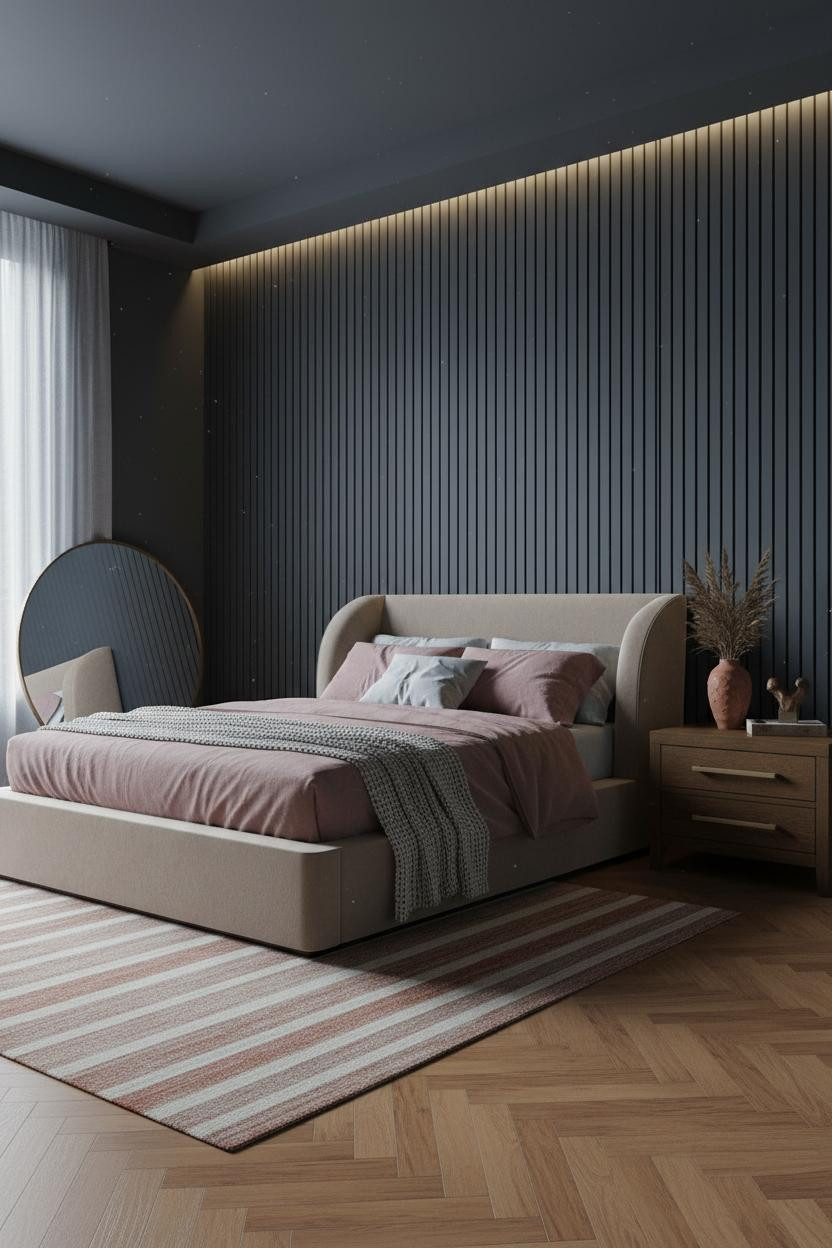

Nothing fancy. That's the point.
What gives it presence: Vertical slatted slate-grey paneling floor to ceiling means each narrow plank casts a thin downward shadow stripe, giving the wall rhythmic geometry that paint simply cannot match. The herringbone parquet in warm amber below keeps the whole scheme from going cold.
The finishing layer: Dusty pink linen bedding against slate grey is a combination that sounds wrong and feels right. Don't second-guess it.
The Dado Rail Room That Looks Twice as Old as It Is
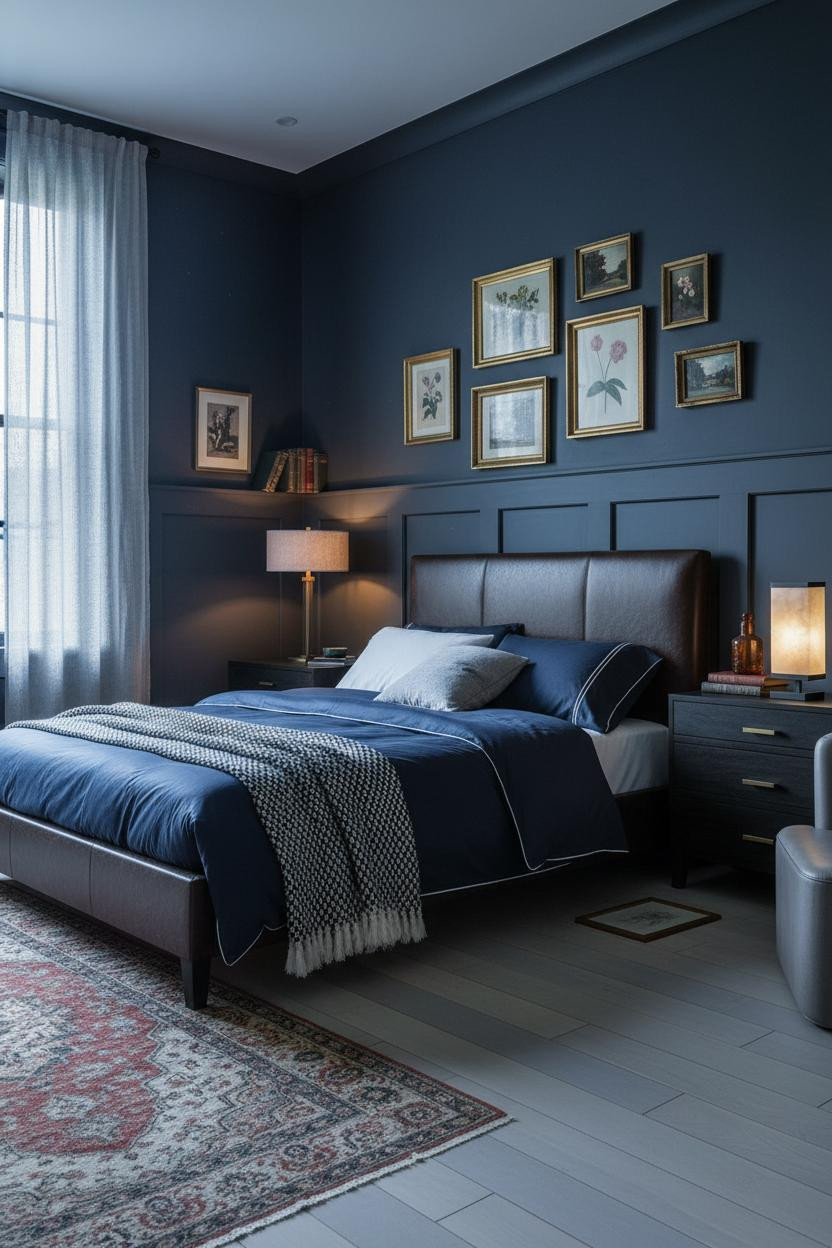
This is the kind of room that makes you feel you've inherited it rather than decorated it.
What carries the look: A deep charcoal dado rail with a carved profile throws thin geometric shadow lines across deep indigo plaster, and clustering slightly mismatched gilt-framed prints above it adds that unhurried, collected quality that takes most rooms a decade to develop.
Where to start: Paint the dado rail dark before you hang anything. The shadow line it creates does more work than every frame above it combined.
Exposed Brick Behind the Bed Is Never the Wrong Answer
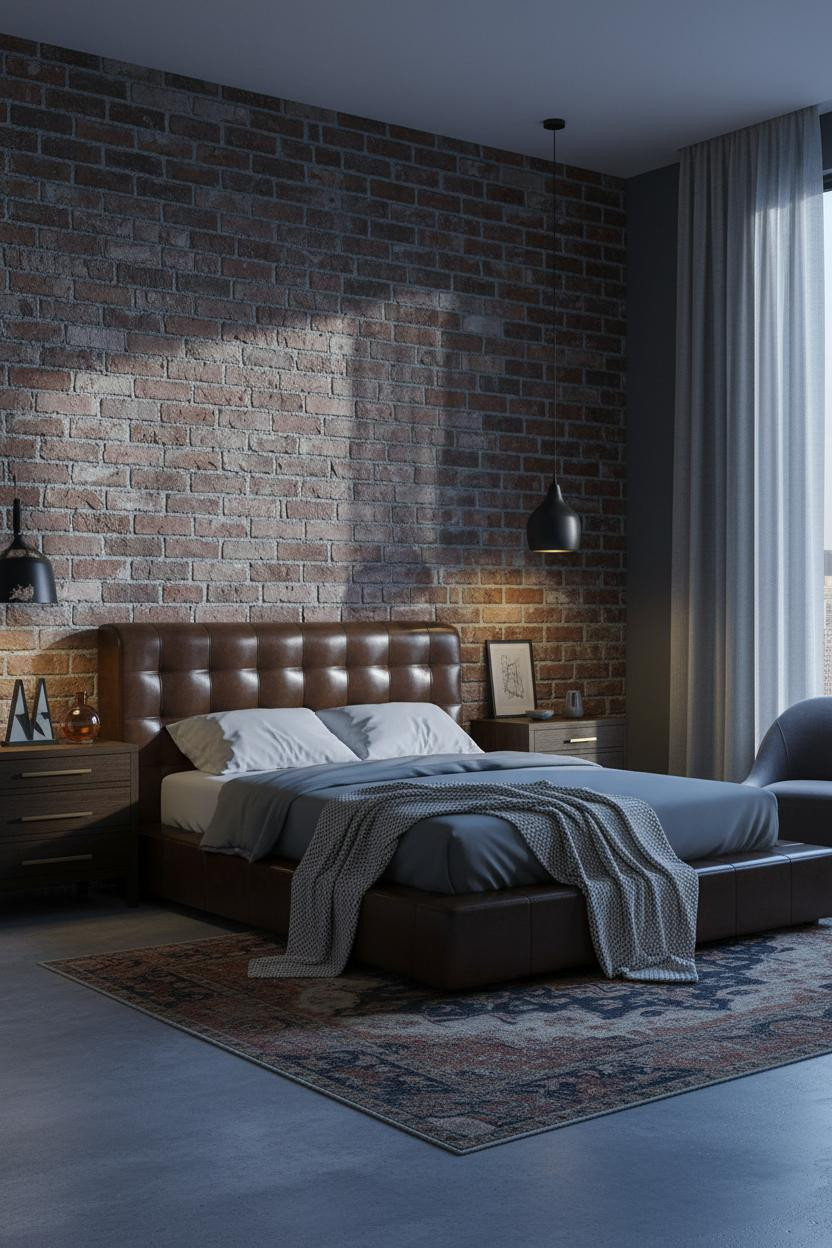
Fair warning. Raw brick behind the bed is a big ask for renters. But if you can do it, the room feels lived-in and intimate in a way no paint color can replicate.
Why it lands: Red-brown clay brick with unevenly mortared pale grey joints absorbs low light and throws textured shadow patterns across the rest of the room, which makes the charcoal-slate flanking walls feel warmer by comparison.
Floor-to-ceiling aged linen curtains pooling at the floor are the right call here. Skip anything with a pattern. The brick is already doing the talking.
Burgundy Walls and a Picture Rail Full of Stories
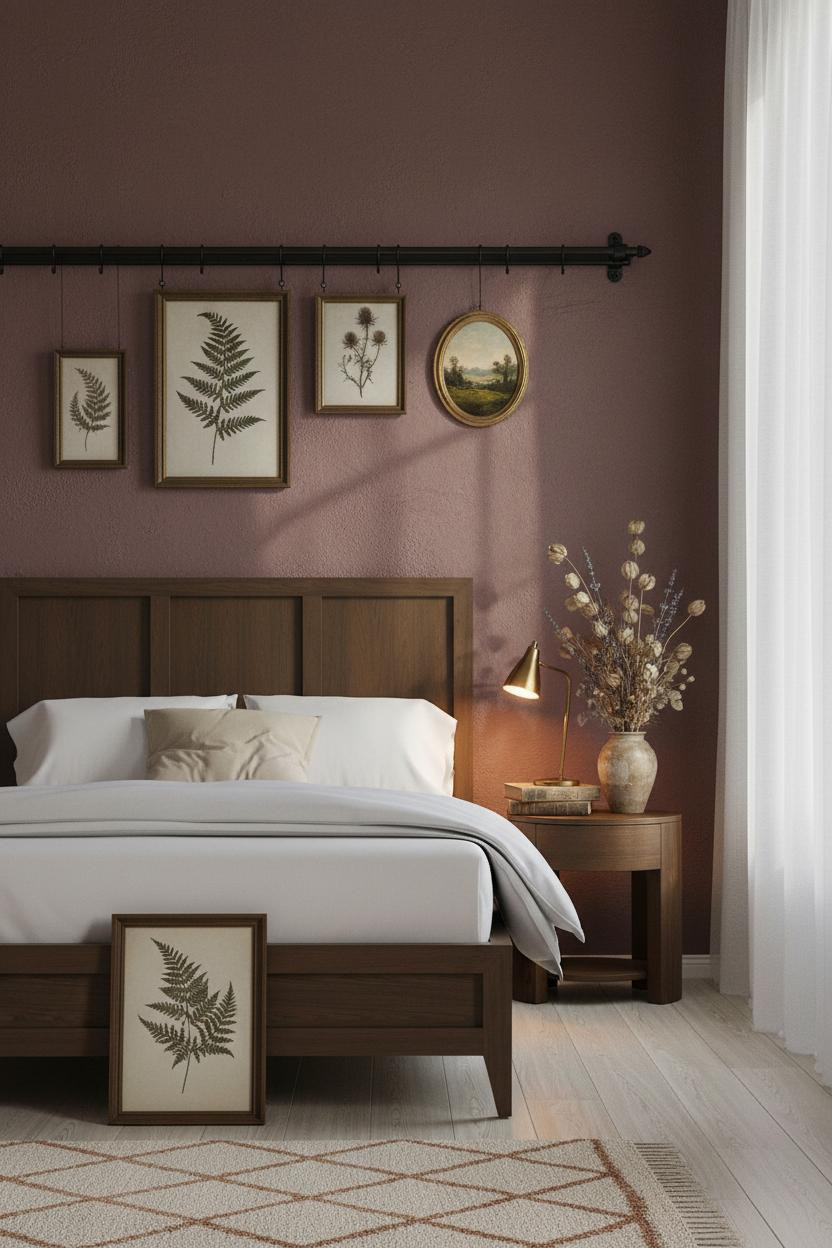
I think this is the most underrated approach in the whole dark cottagecore category. And it's also the most copied wrong.
What makes this one different: The matte black picture rail with mismatched frames hung at slightly different heights means the burgundy plaster beneath reads as backdrop rather than statement, which is the whole difference between a room that feels collected and one that feels themed.
What not to do: Don't align the frames. The slight variation in height is what makes them look like they arrived over years, not on a Saturday afternoon.
The Built-In Bookshelf Wall That Justifies the Dark Plum Paint
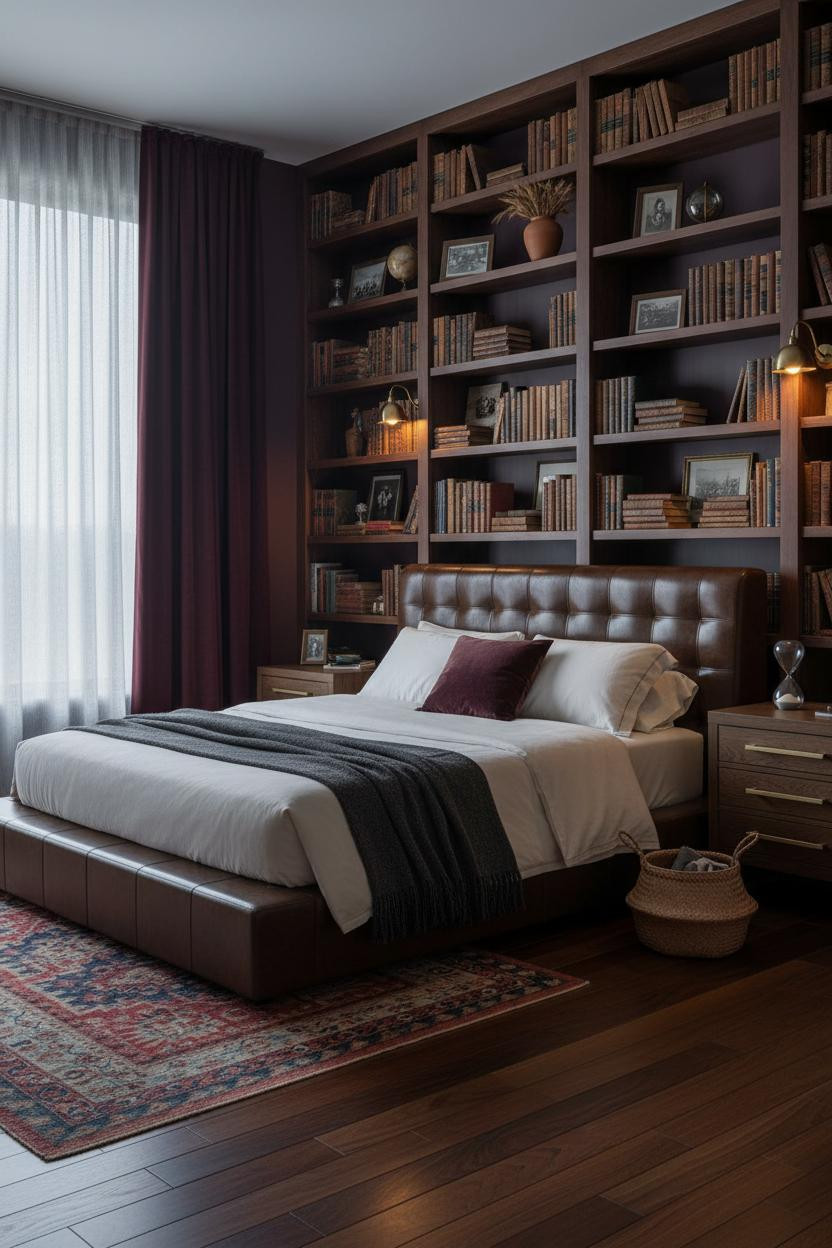
This is the room for people who actually read in bed and want their space to prove it.
The architecture of it: Floor-to-ceiling dark walnut built-in shelving dense with leather-bound volumes absorbs muted overcast light in a way that makes the deep plum walls feel deliberate rather than dramatic. The room feels calm and cohesive, not heavy.
Worth copying: Hang midnight burgundy velvet curtains floor-length on the opposite wall. They pull the plum across the room without adding another piece of furniture.
The Room With the Fireplace That Anchors Everything
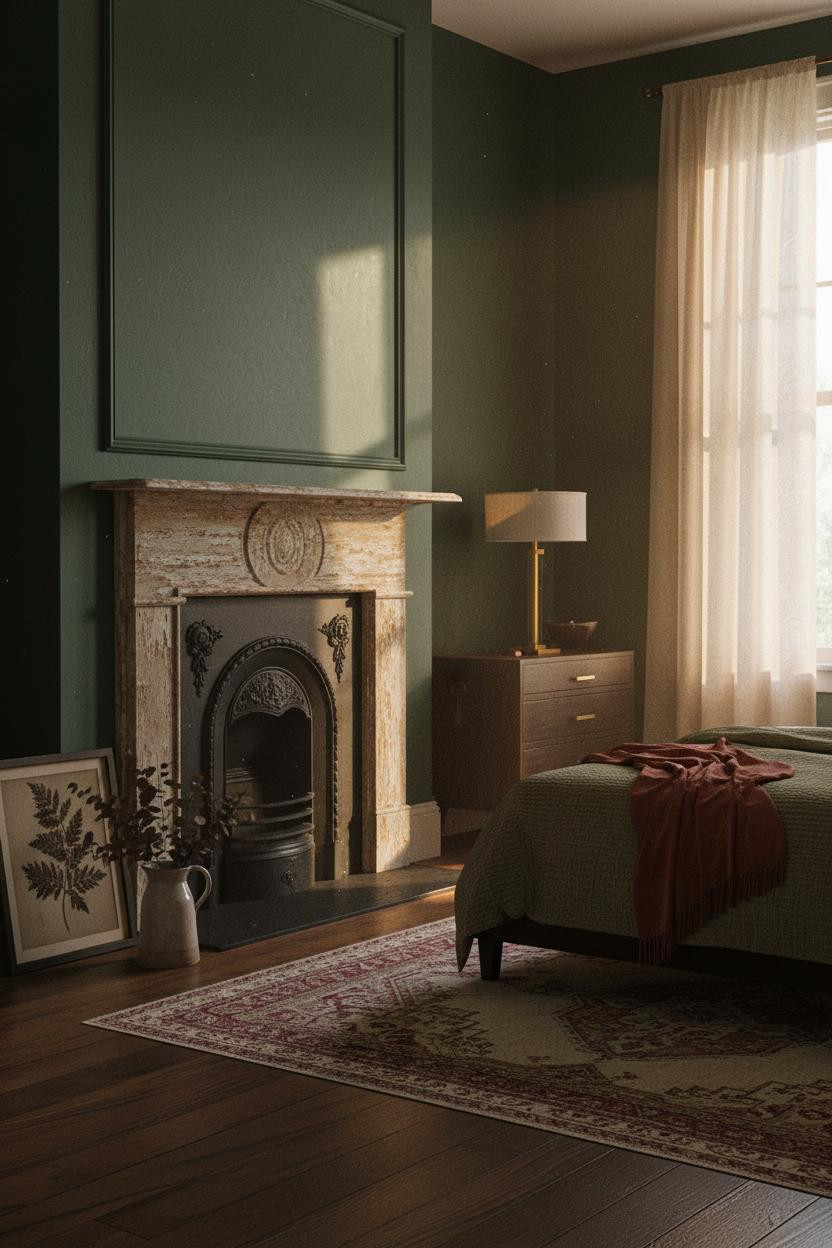
Having an original cast-iron fireplace changes how you actually use the room. Suddenly there's a reason to sit in the corner, a reason for the lamp to be low, a reason the whole arrangement makes sense.
The ornate black-painted surround recessed into deep forest green plaster is the kind of detail that makes people ask if the house is listed. It somehow grounds everything: the wide-plank dark oak floor, the faded burgundy Turkish rug, the olive waffle-weave bedding. All of it settles into place around that fireplace.
The key piece: Let the mantelpiece stay sparse. A ceramic pitcher with dried eucalyptus and one framed botanical leaning at the baseboard nearby. Nothing too precious, nothing too arranged.
 Our #1 Pick
Saatva Classic Mattress
America's best-selling online luxury innerspring. 365-night trial, lifetime warranty, free white glove delivery.
Shop Saatva Classic
Our #1 Pick
Saatva Classic Mattress
America's best-selling online luxury innerspring. 365-night trial, lifetime warranty, free white glove delivery.
Shop Saatva Classic
Why Luxury Bedrooms Always Feel Better
Walls get repainted. Linen gets swapped. The objects on the nightstand rotate every few months. But the mattress stays, and it determines how the whole room actually feels to live in.
The Saatva Classic is the one I'd put under all of this. Dual-coil support that holds its shape over years, a breathable organic cotton cover that doesn't trap heat, and a Euro pillow top that's soft without going slack. It's the kind of bed you notice the first night and stop noticing after that, which is exactly right.

The rooms people actually live in well are the ones where nothing was bought to impress. Start with the bed. The rest figures itself out.