17+ Concrete Patio Ideas That Actually Look Expensive
26 february 2026I'll be honest: concrete doesn't exactly scream "luxury" at first glance. But the 17 patios here prove that poured cement can look as intentional and high-end as any natural stone setup, often for half the cost.
From warm honey-toned finishes with radiant heating to charcoal stamped patterns that mimic slate, these concrete patio ideas show you exactly how material choice, texture, and layout turn a basic backyard into something neighbors stop to photograph. No natural stone required.
1. Honey-Gold Stained Concrete With Radiant Heat Grid Lines
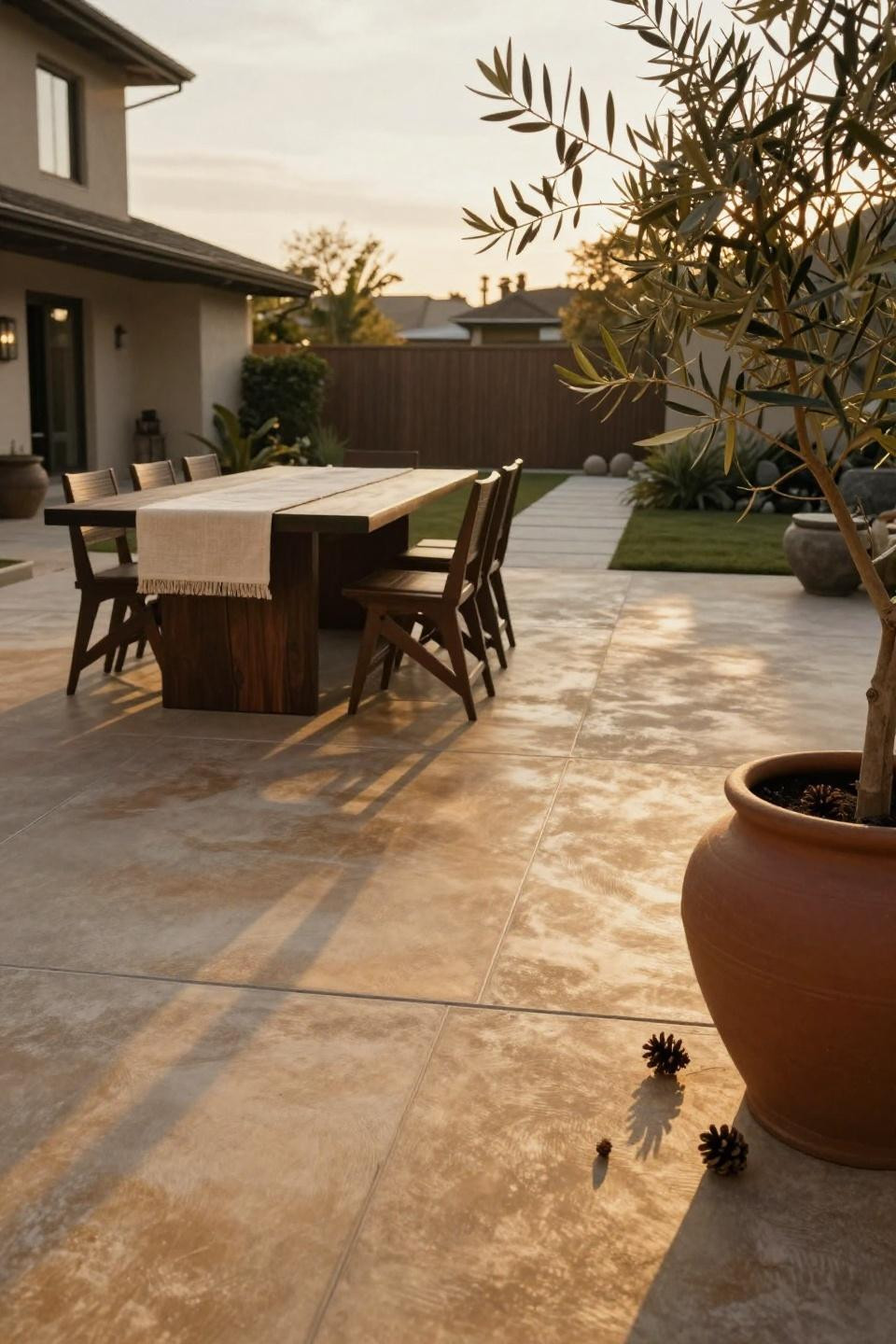
That warm amber glow isn't just afternoon light. Stained concrete in honey-gold tones adds instant richness, while those subtle grid lines hint at integrated radiant heating underneath, turning this into a three-season entertaining zone. The polished finish catches light like high-gloss hardwood.
2. Charcoal Ashlar-Stamped Pattern With Moss Undertones
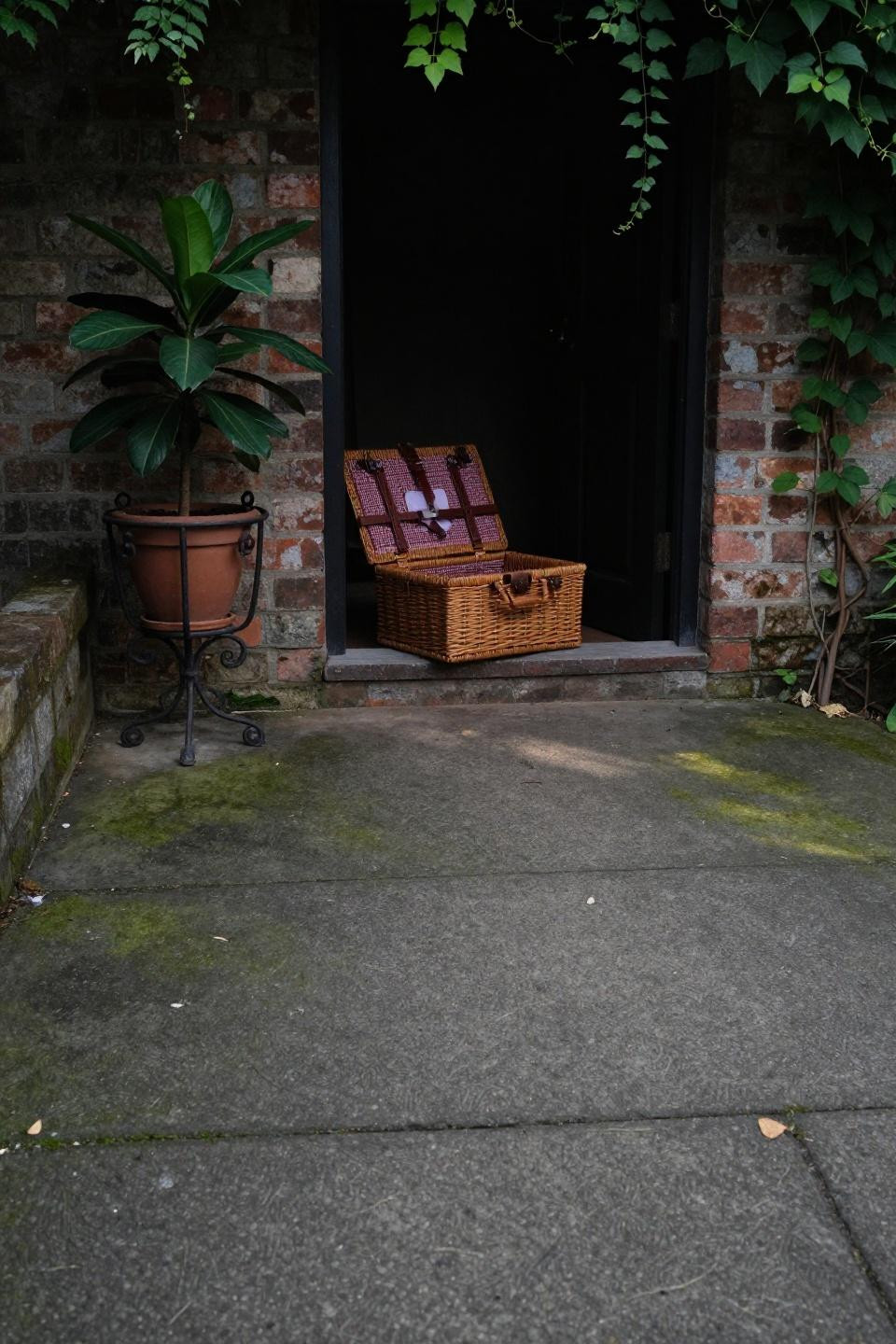
Ashlar stamping creates that irregular flagstone look without the per-square-foot pain of real stone. This charcoal version runs about $8-12/sq ft installed, compared to $25+ for actual slate pavers, and the soft moss undertones keep it from feeling too industrial.
3. Dove Grey Trowel-Finish With Fire Pit Ring
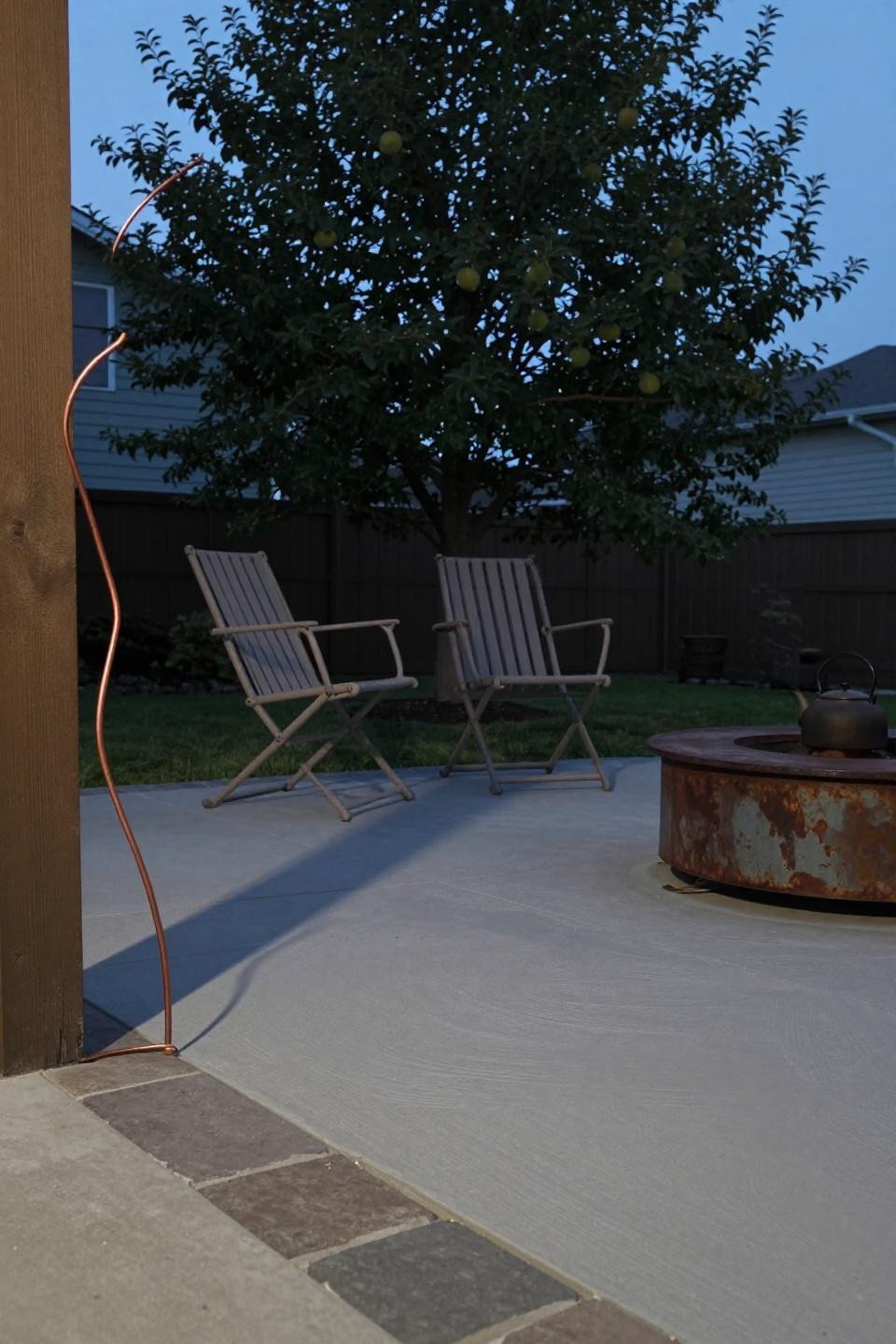
Hand-troweled concrete costs less than stamped but gives you that artisan irregularity. That weathered steel fire ring anchors the corner without needing a built-in surround, keeping this firmly in budget territory while still looking considered.
4. Fresh Broom-Finish With Visible Layout Stakes
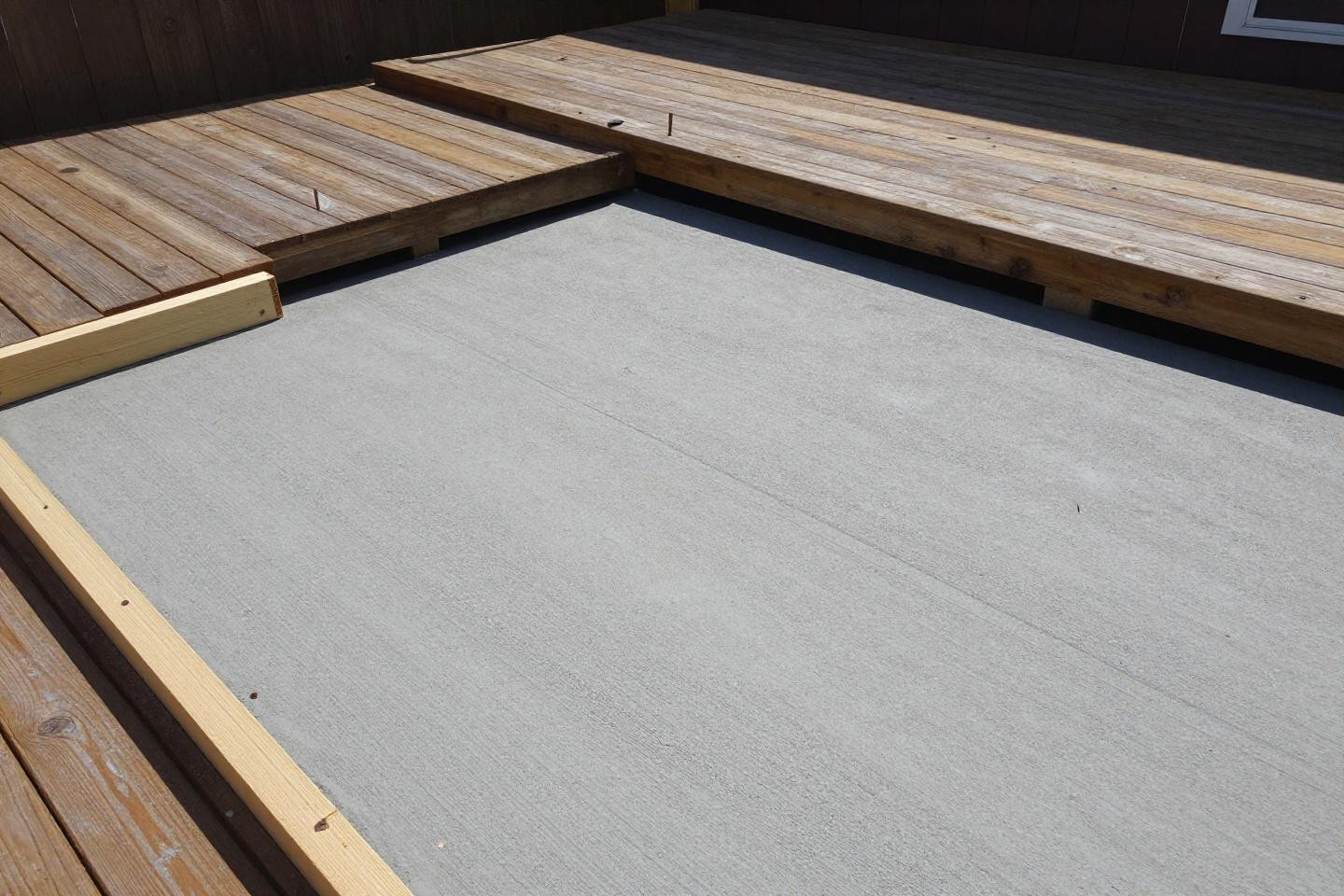
This is what honest DIY looks like mid-process. Broom finish is the most beginner-friendly texture (literally dragging a push broom across wet concrete), and those 2x6 pressure-treated borders cost about $4 each at Home Depot. You're looking at maybe $600 in materials for a 12x16 slab.
5. Fractured-Edge Charcoal With Exposed Granite Aggregate
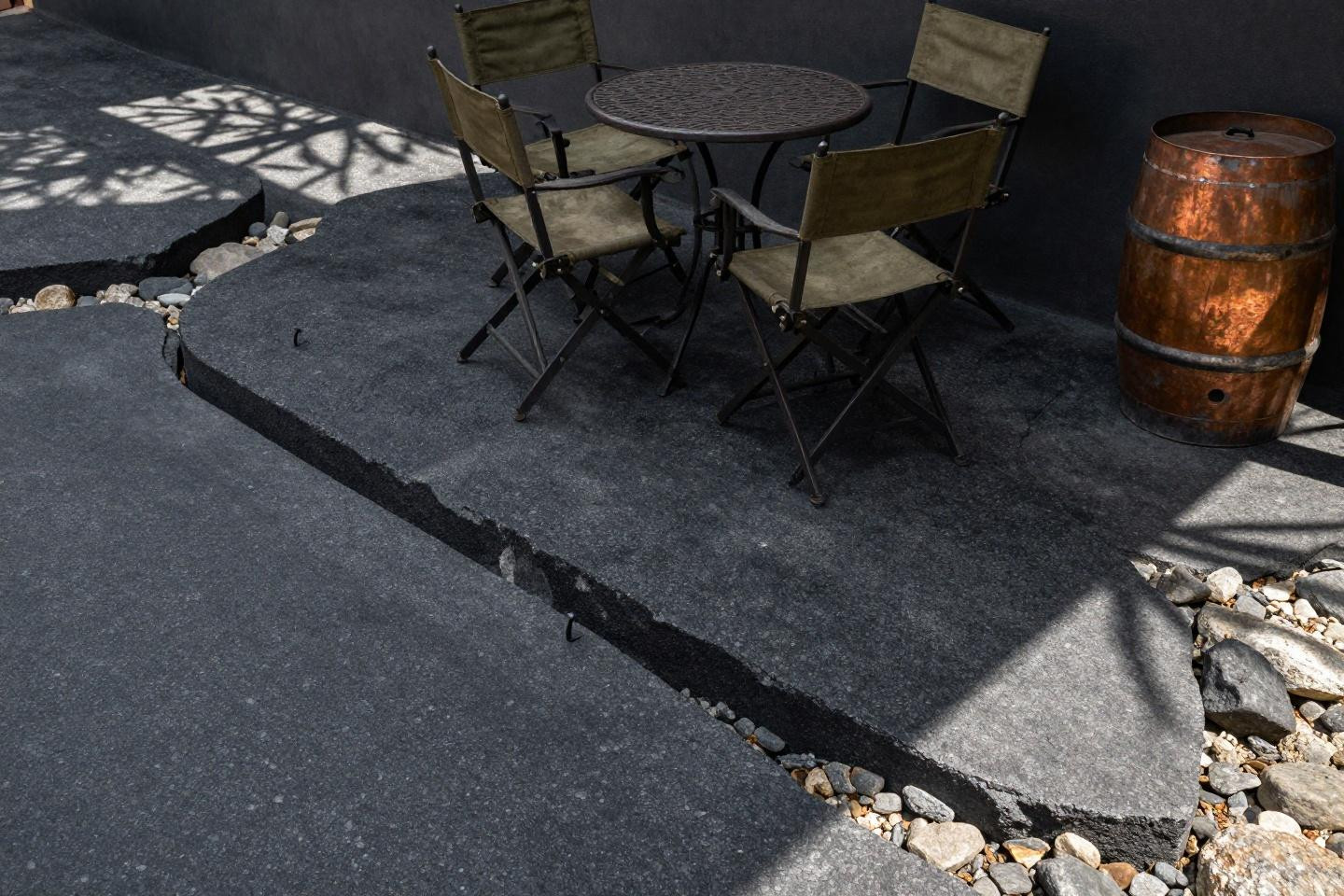
Those irregular edges aren't accidental. Scoring concrete in organic patterns before it fully cures, then breaking along those lines, gives you sculptural stepping stones that flow into native landscaping. The exposed granite flecks catch light like terrazzo.
6. Warm Sand Exposed-Aggregate With Radiant Heat Scoring
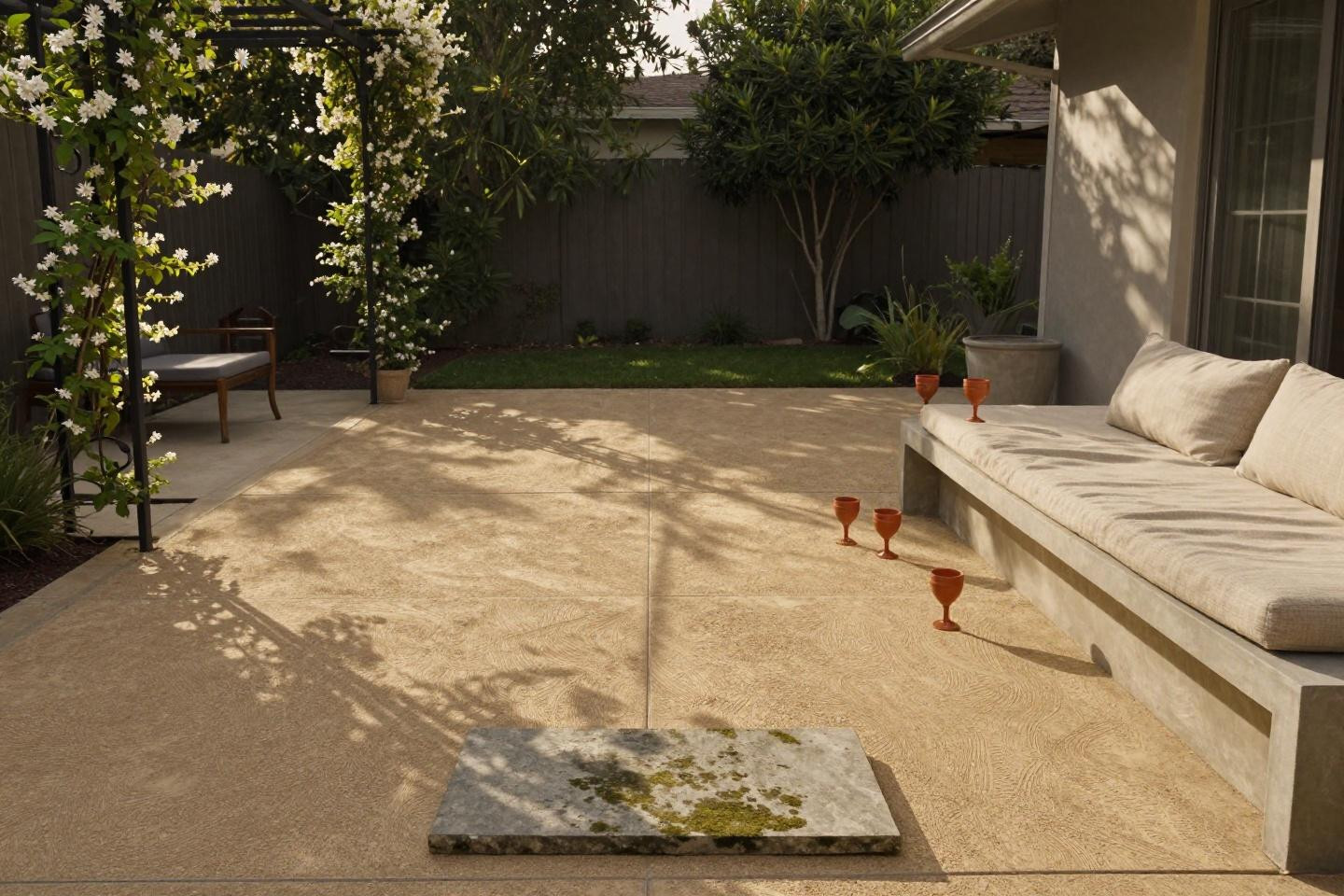
Exposed aggregate means washing away the top cement layer while it's still green, revealing the stone underneath. This warm sand mix uses local river rock for that natural palette, and those faint scoring lines mark radiant heat tube placement, making this usable into October in most climates.
7. Budget-Friendly Broom-Finish In Grey-Tan
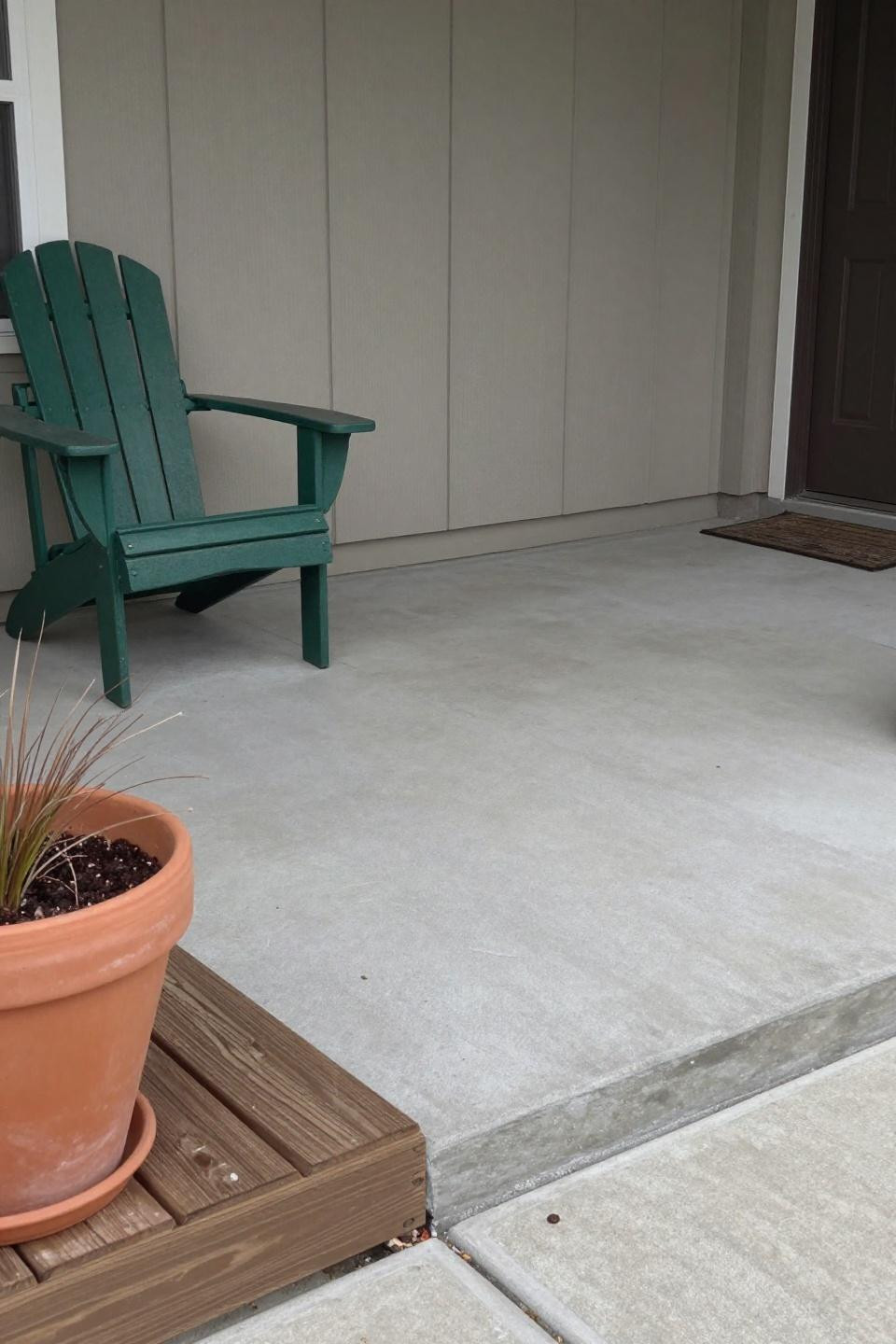
Sometimes the basic option is the right option. Standard broom-finish in warm grey-tan costs about $4-6/sq ft installed, needs zero special skills, and ages gracefully. That small spalling chip near the planter is normal after 5+ years and adds character rather than looking like damage.
8. Luxury Sunburst Pattern With Integrated Water Feature
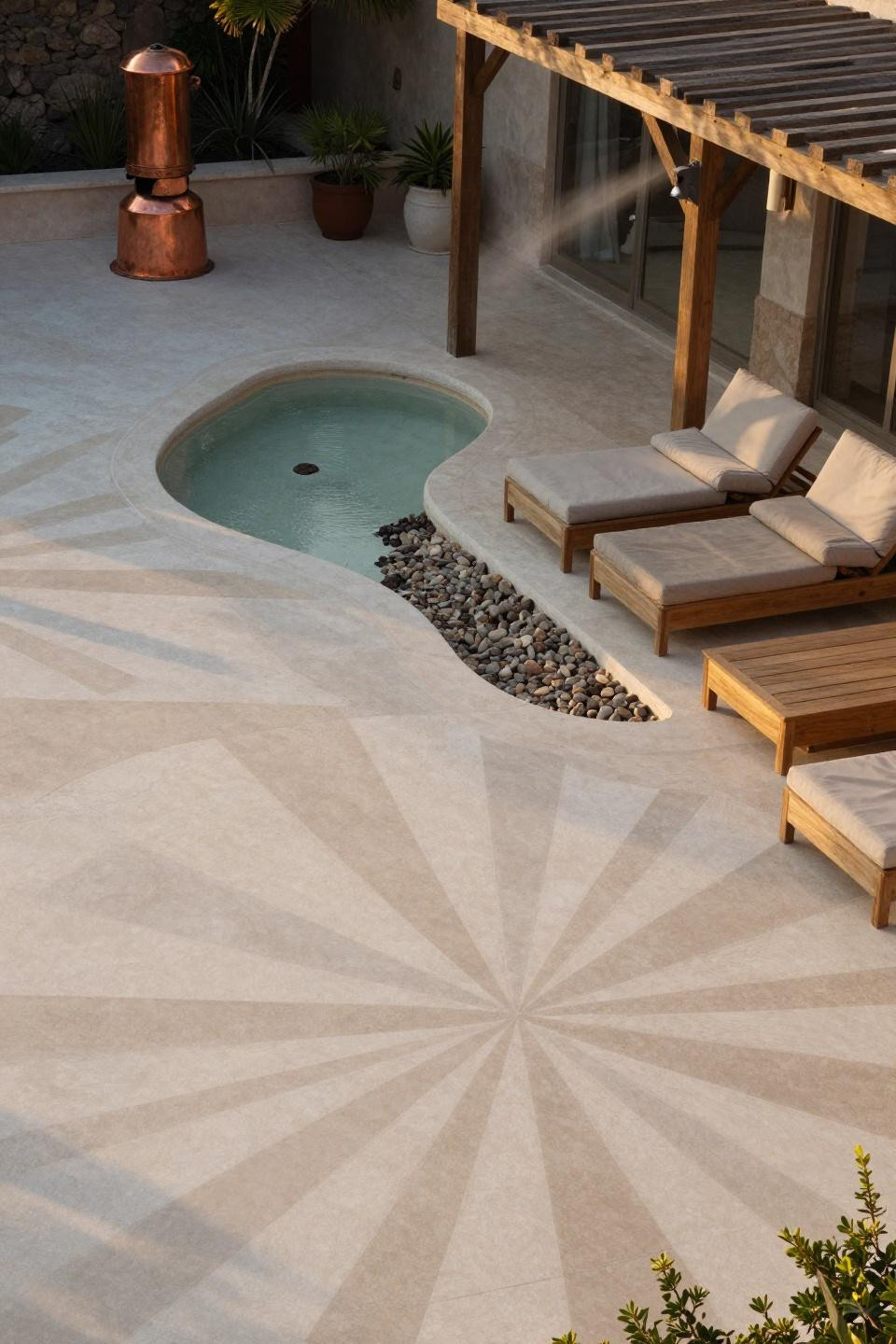
Custom scoring patterns like this geometric sunburst are where concrete becomes art. Honestly, I'd budget $15-20/sq ft for this level of detail work, plus another $3-5K for that recycled stone water feature. But you're creating something genuinely one-of-a-kind.
9. Charcoal Micro-Patio With Hand-Trowel Swirls
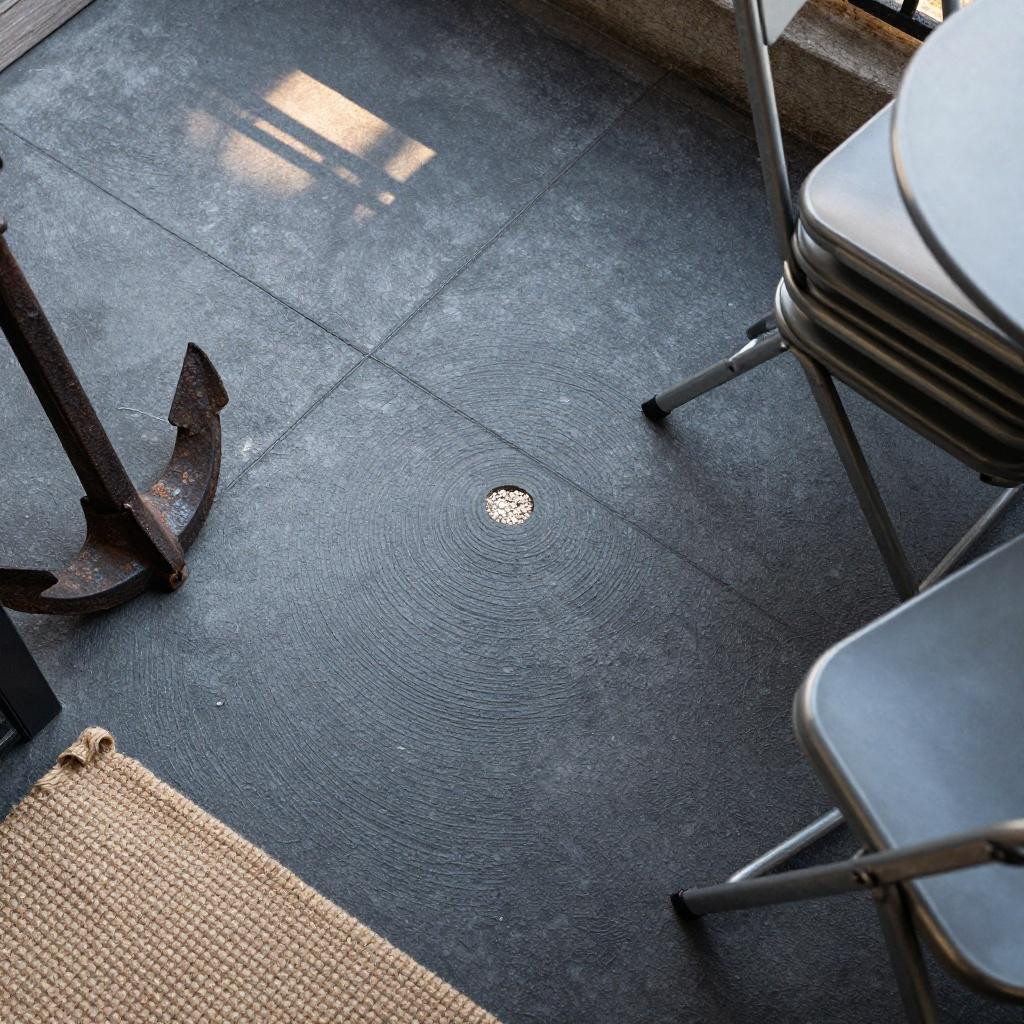
Urban balconies need different thinking. This charcoal exposed-aggregate slab is probably 4x6 feet max, poured directly over existing concrete with a bonding agent. Those visible trowel swirls add movement to a tiny footprint that would feel static with uniform texture.
10. Polished Charcoal With White Quartz Starfield Effect
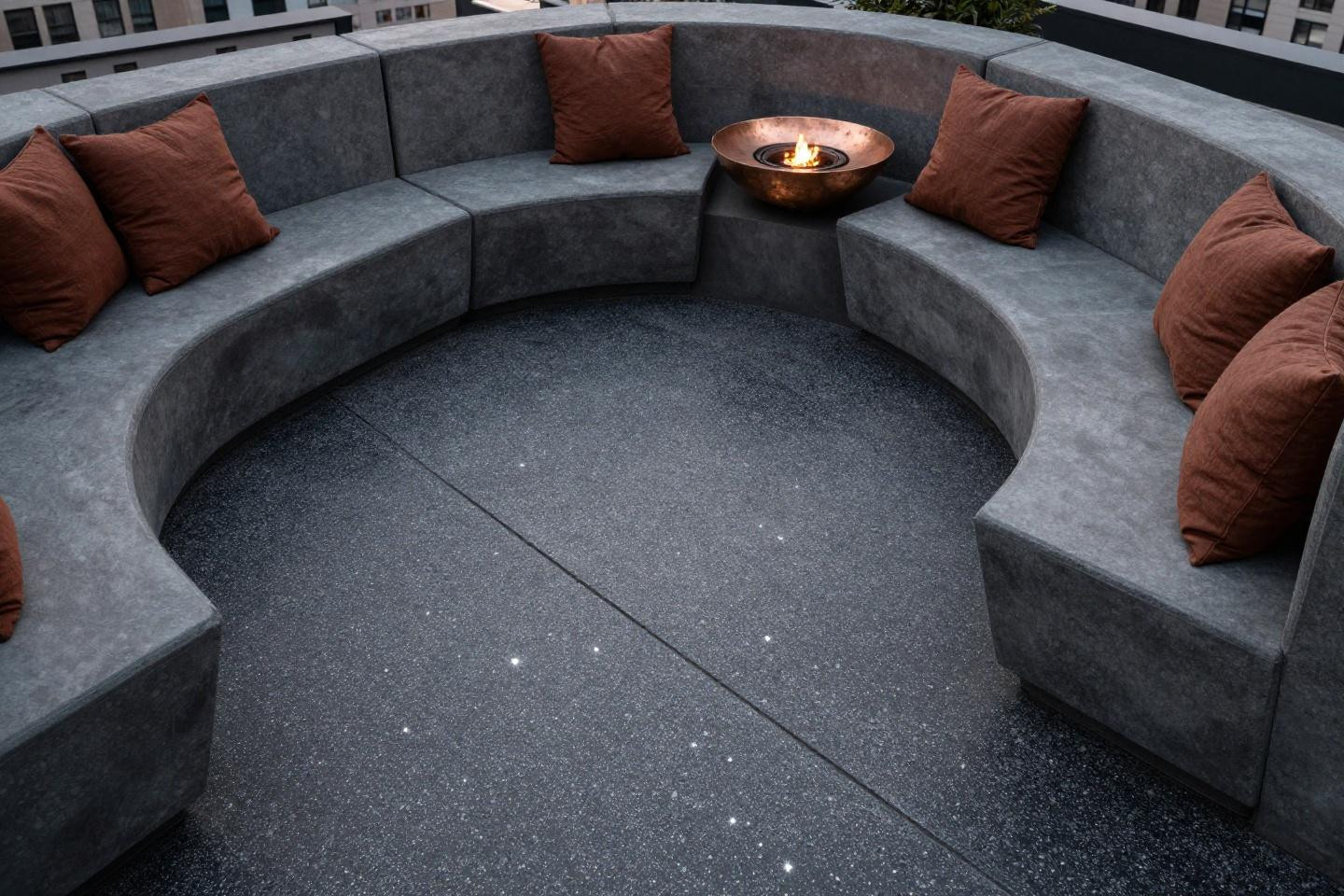
Polished concrete with white quartz aggregate creates this subtle sparkle effect that photographs incredibly at night. The process involves diamond-grinding the surface after it cures, then sealing with high-gloss urethane. Plan on $12-18/sq ft, but the maintenance is basically just hosing it down twice a year.
11. Bold Ashlar Slate Stamp In Charcoal And Cream
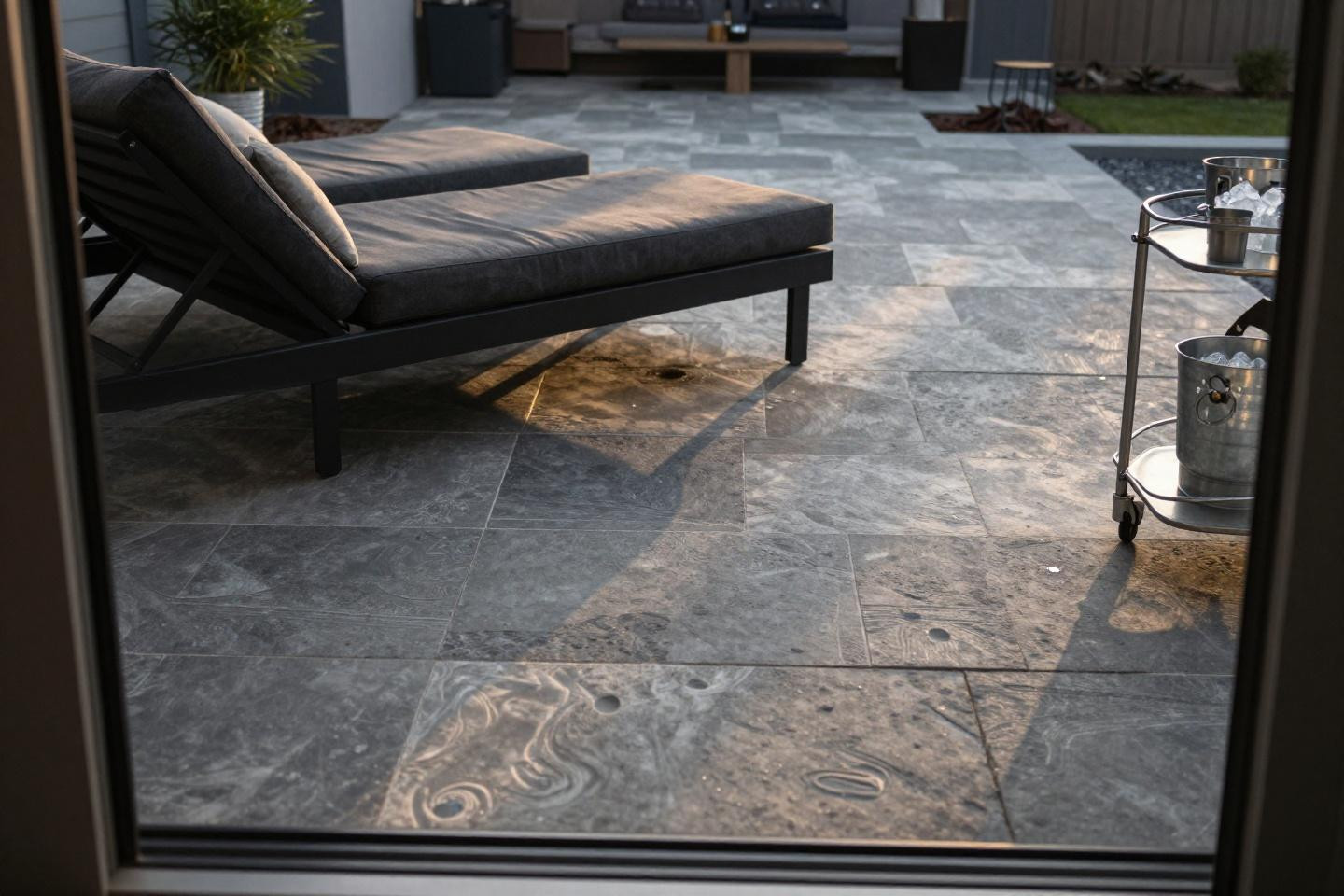
Two-tone stamped concrete uses separate color hardeners before stamping, creating depth that single-color versions can't match. This charcoal-and-cream combo mimics natural limestone variation. That water ring near the daybed leg is why you reseal every 2-3 years (about $200 DIY for a large patio).
12. Organic Serpentine Edge With Integrated Bench
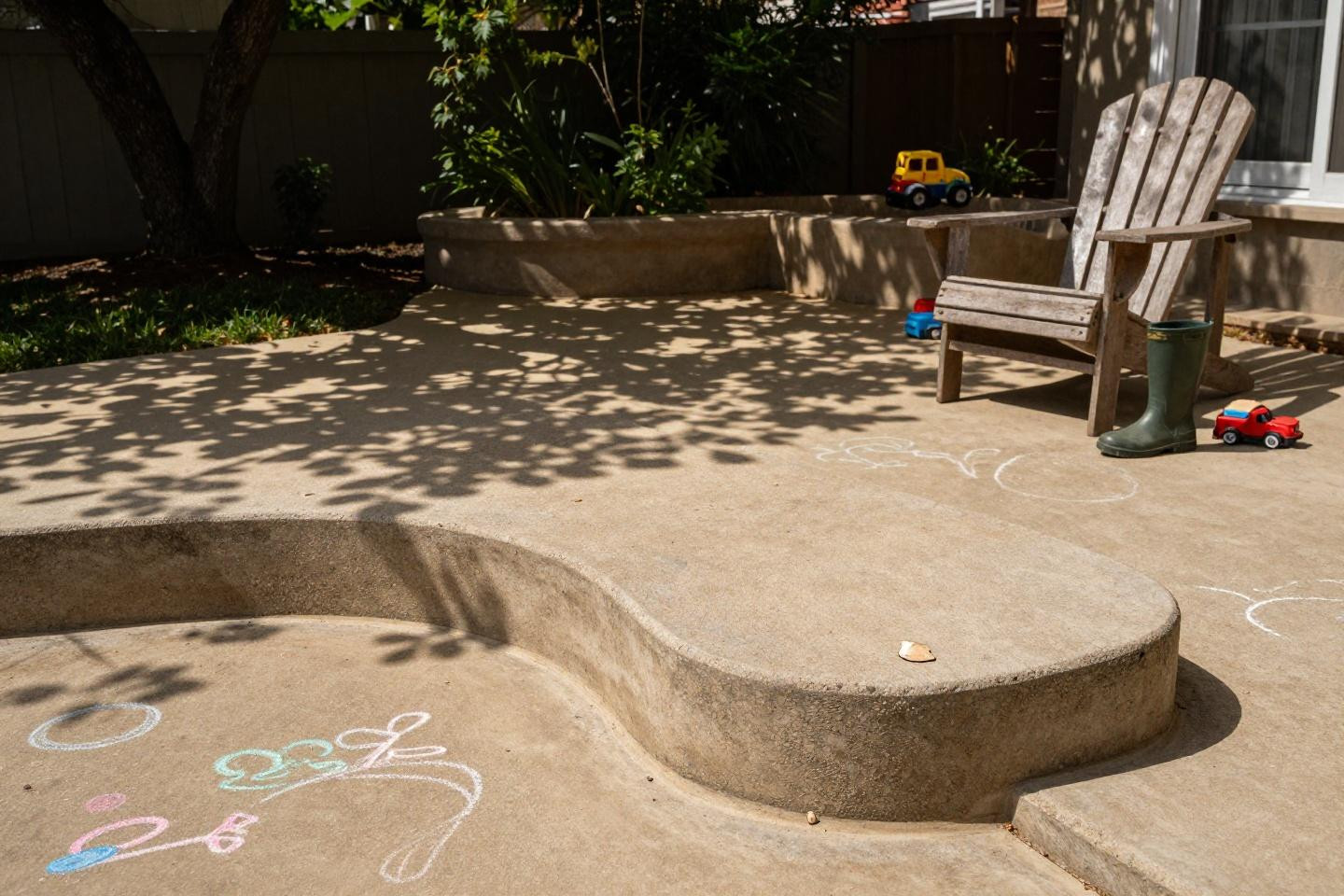
Free-form edges cost more in labor (your contractor is hand-forming curves rather than running straight screed boards), but they make concrete feel less like a parking lot. That integrated bench platform is poured monolithic, meaning one continuous pour without cold joints that might crack later.
13. Dove Grey Broom-Finish Meeting Stucco Foundation
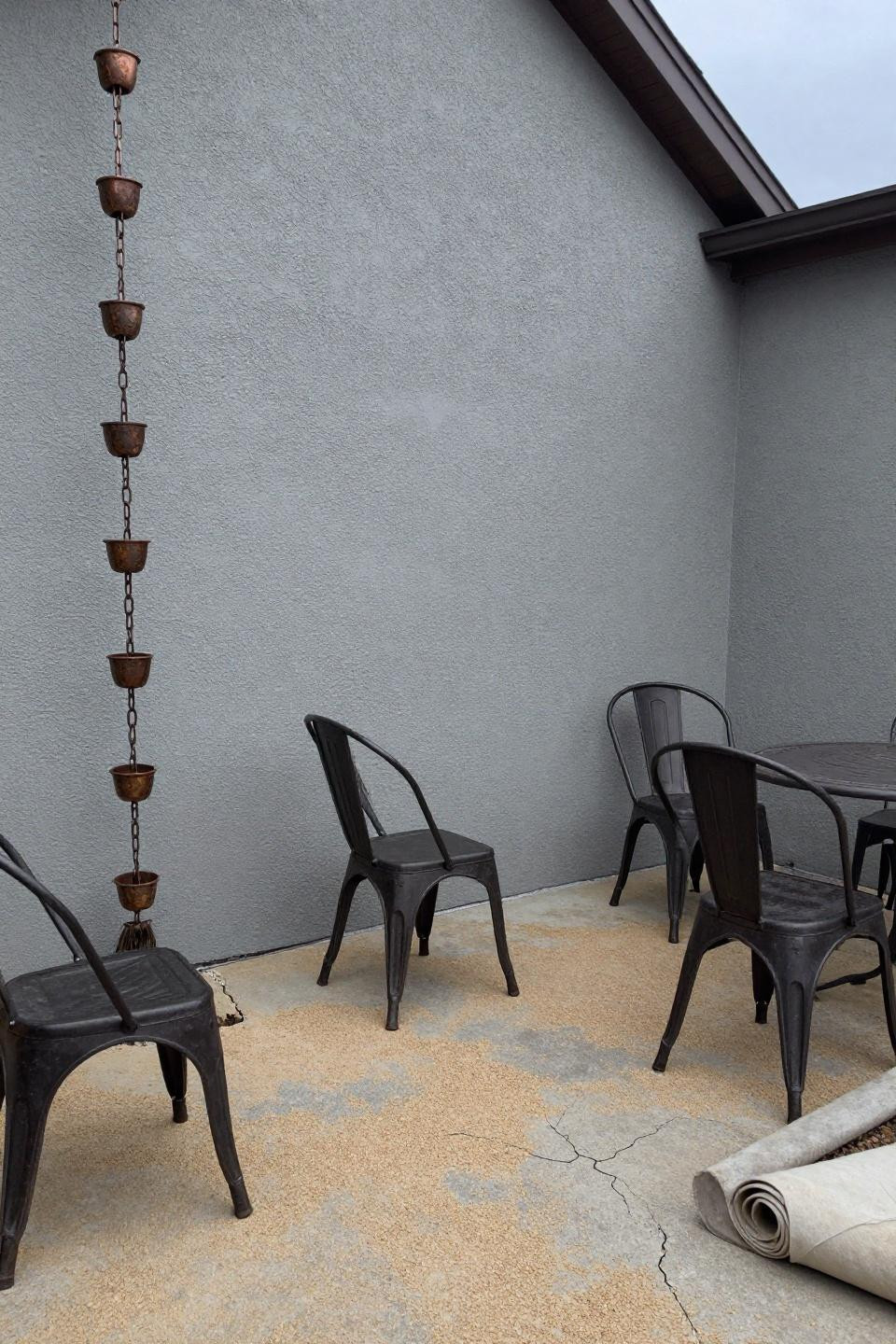
Side yards get ignored, but a simple broom-finish slab transforms them into usable space. That copper rain chain catches runoff without needing gutters, and the organic hairline crack branching near the planter is typical settlement that doesn't affect structural integrity.
14. Polished Grey With Linear Scoring And Outdoor Kitchen
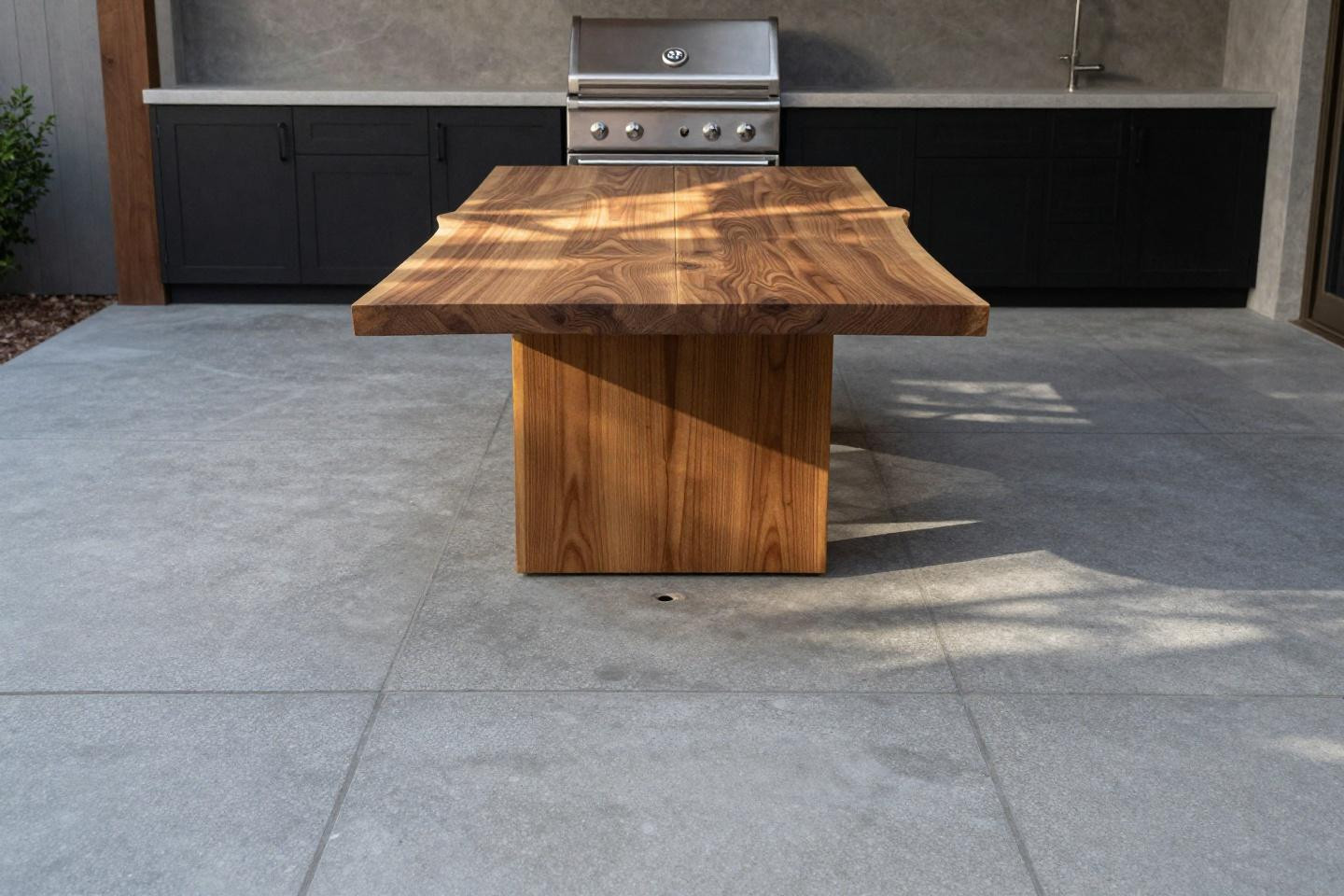
Linear scoring every 2-3 feet creates expansion joints that prevent random cracking while adding geometric interest. This polished grey finish with terrazzo sparkle pairs perfectly with black-stained cedar cabinetry, the cool-warm contrast keeping it from feeling too industrial.
15. Multi-Level Grey-Blue With Integrated Seating Ledges
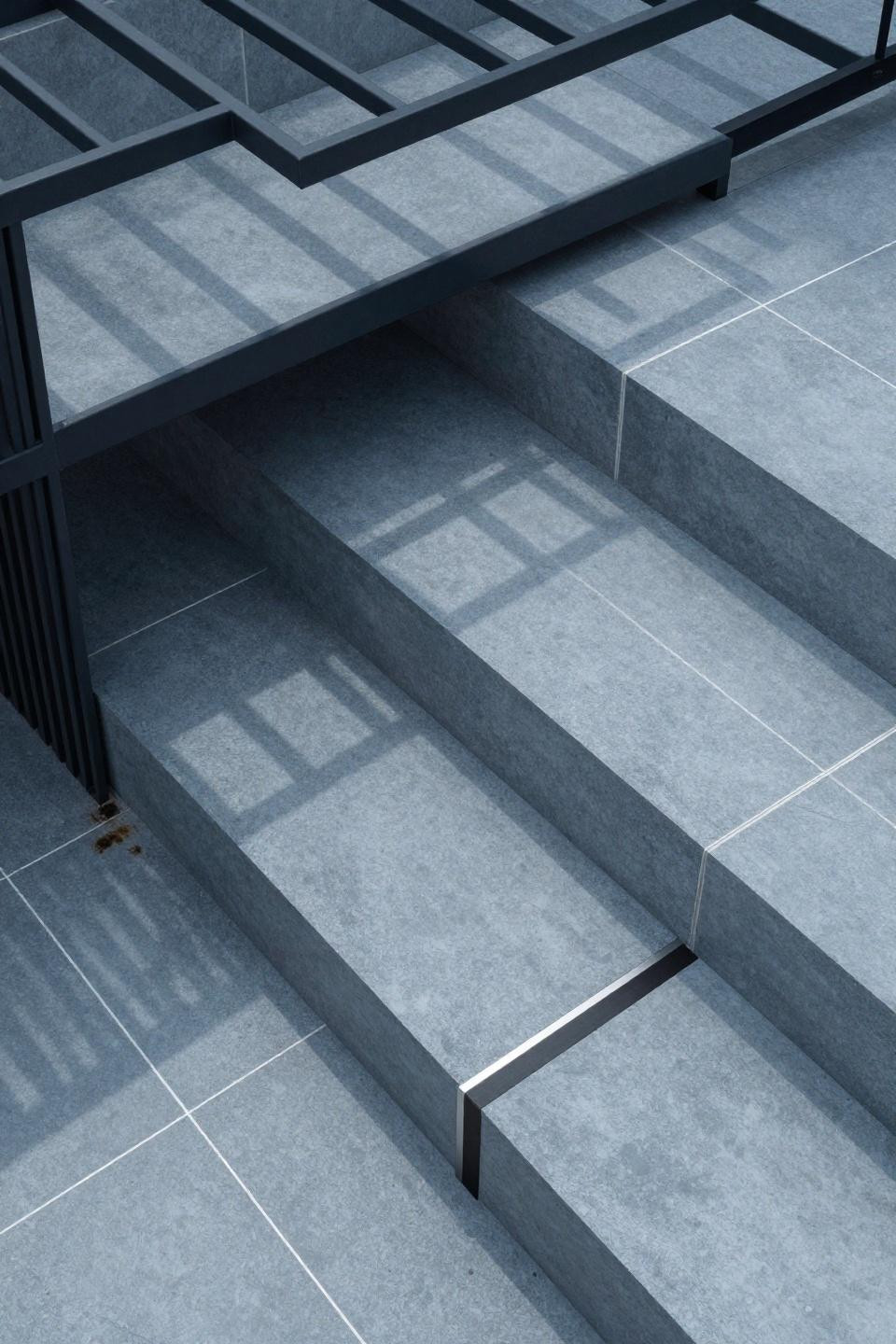
Stepped levels work on sloped lots where a single-plane patio would require massive excavation. These integrated seating ledges are formed as part of the pour, eliminating the need for separate furniture in high-traffic zones. That moisture stain near the downspout is why proper grading matters.
16. Rustic Free-Form Taupe With Cedar Pergola Shadows
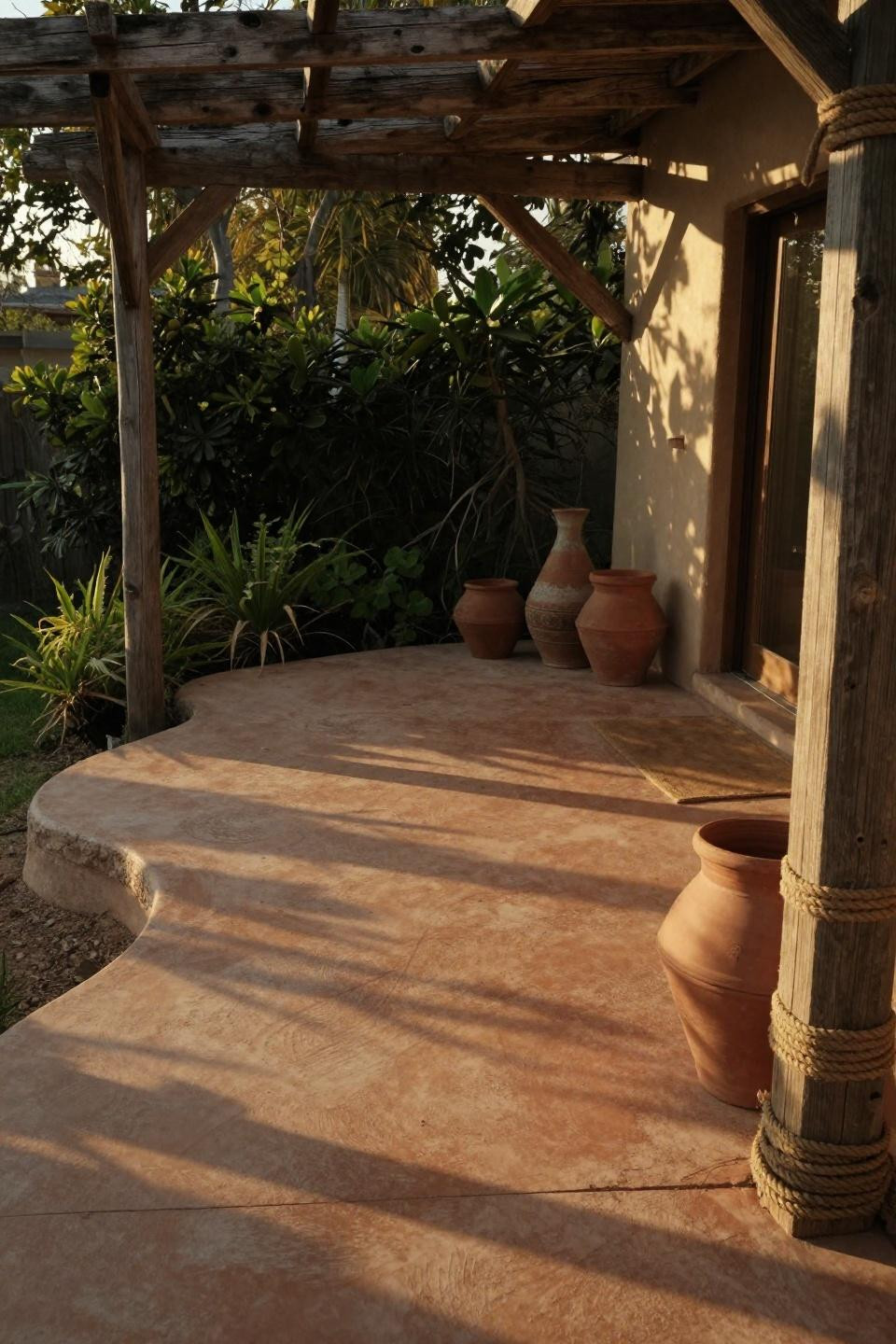
Warm taupe with ochre undertones feels organic rather than industrial. Those bold linear shadows from the reclaimed cedar pergola create all-day visual interest even when the space is empty, and that hairline crack curving near the planter is actually adding to the aged, garden-integrated look.
17. Geometric Linear Slate Stamp With Steel Fire Table
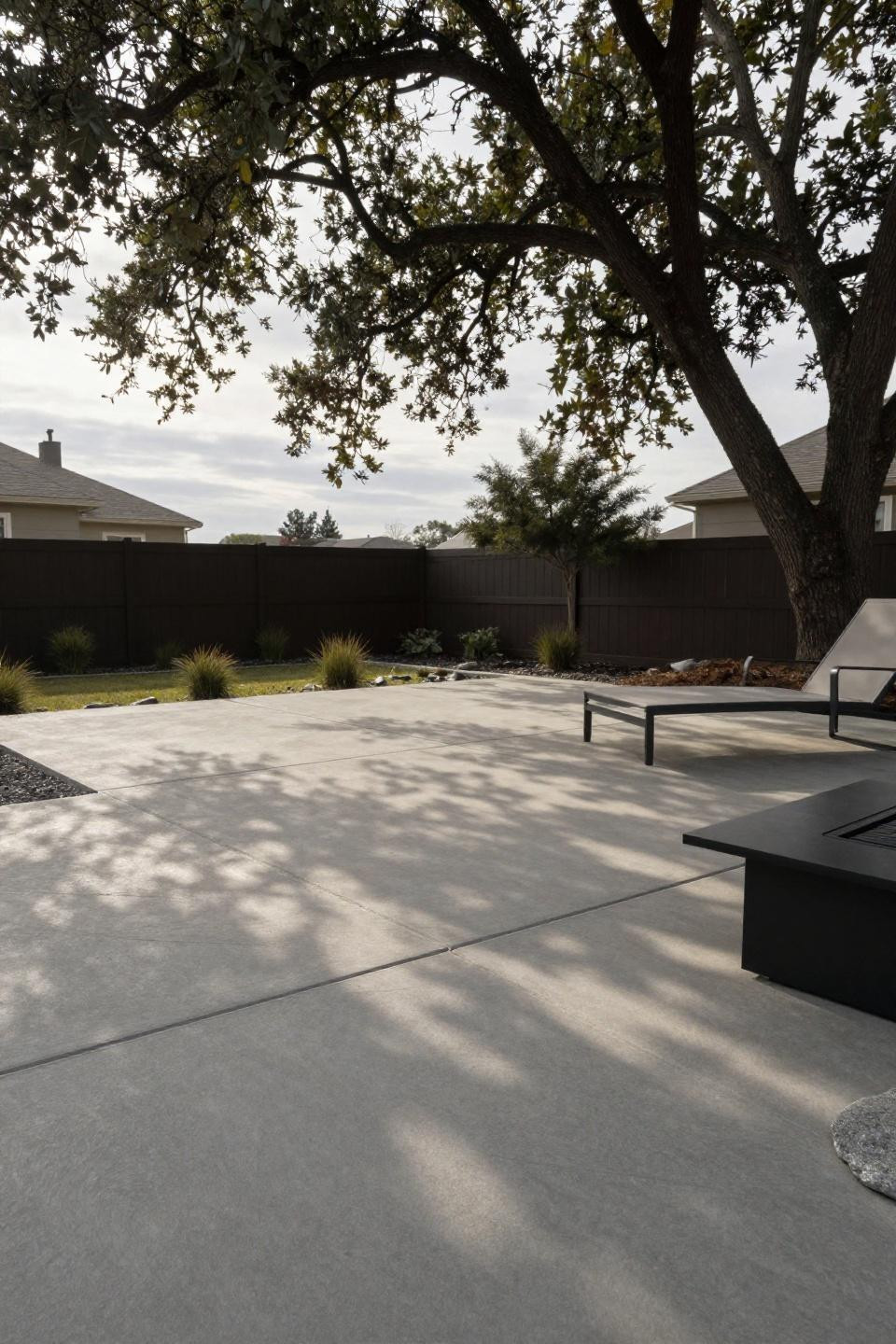
Linear slate stamping runs about $10-14/sq ft and reads way more contemporary than random flagstone patterns. That subtle sheen on the sealed surface reveals texture depth that matte finishes hide, and the single proud aggregate stone near the chair leg is typical with exposed finishes—honestly, I like the irregularity.
Why Concrete Still Wins For Most Backyards
Here's what nobody tells you about concrete patios: they're genuinely lower-maintenance than pavers or natural stone. No weeds growing between joints, no individual pieces shifting over time, and repairs are usually just surface resealing every few years rather than full replacement.
Whether you go for budget-friendly broom-finish or invest in custom stamping with radiant heat, you're creating something that'll outlast most other hardscaping options while looking exactly how you want it to look. That flexibility is worth everything.