What Size Rug for a Queen Bed and Exactly Where to Put It, Without Guesswork
24 november 2026For a queen bed, choose a rug large enough for the furniture to overlap it, then center the bed on the rug's long edge. I learned this after buying one that looked generous in the store and skimmed the nightstands at home. Your rug needs a landing zone, not just a pretty pattern. Here's the clear way to place it.
- Start With the Floating Bed Rule
- Measure the Furniture Footprint Before You Shop
- Try the Two-Thirds Landing Zone
- Float a Full-Room Rug Under the Bed
- Choose Runners When the Bedside Gap Is Tight
- Use the Nightstand Overlap Test
- Anchor the Room With Warm Wool
- Skip Beige Over Beige and Layer Contrast
- Let a Patterned Rug Lead the Palette
- Turn a Small Rug Sideways Instead of Forcing It
- Frame the Bed With the Soft Border Method
- Pair Pigeon With Natural Fiber Texture
- Build the Three-Source Light Stack Above the Rug
- Keep the Footboard From Fighting the Pile
- Style the Rental With a Reversible Layout
- Compare the Queen Bed Rug Size Guide by Budget
- Ask Which Placement Survives Real Life?
- Finish the Queen Bed Rug Plan With One Strong Edge
1Start With the Floating Bed Rule
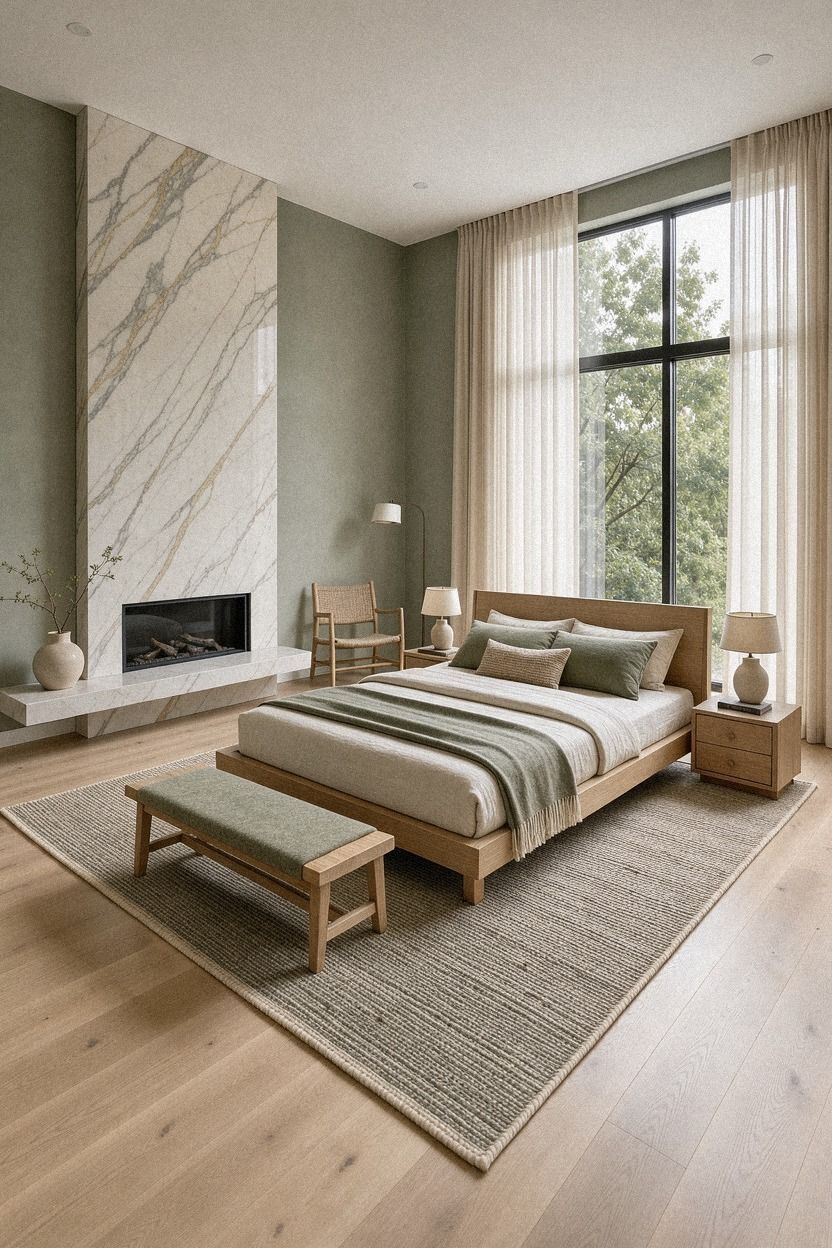
Your bed should appear to sit on the rug, not hover beside it. Center the rug beneath the bed so its visible sides extend beyond the mattress and sit beside the nightstands.
If you can see a generous border on both sides, your room will feel calmer and more grounded. If the rug only peeks out at the foot, you'll get a postage-stamp effect.
I prefer a rug that begins beneath the upper half of the bed and continues toward the footboard. Your feet should land on texture when you get up, and the rug should still read as a deliberate shape from the doorway. A bench with a Calacatta marble top and gold veining at the foot makes the placement easier to judge because its legs show whether the rug has enough reach.
2Measure the Furniture Footprint Before You Shop
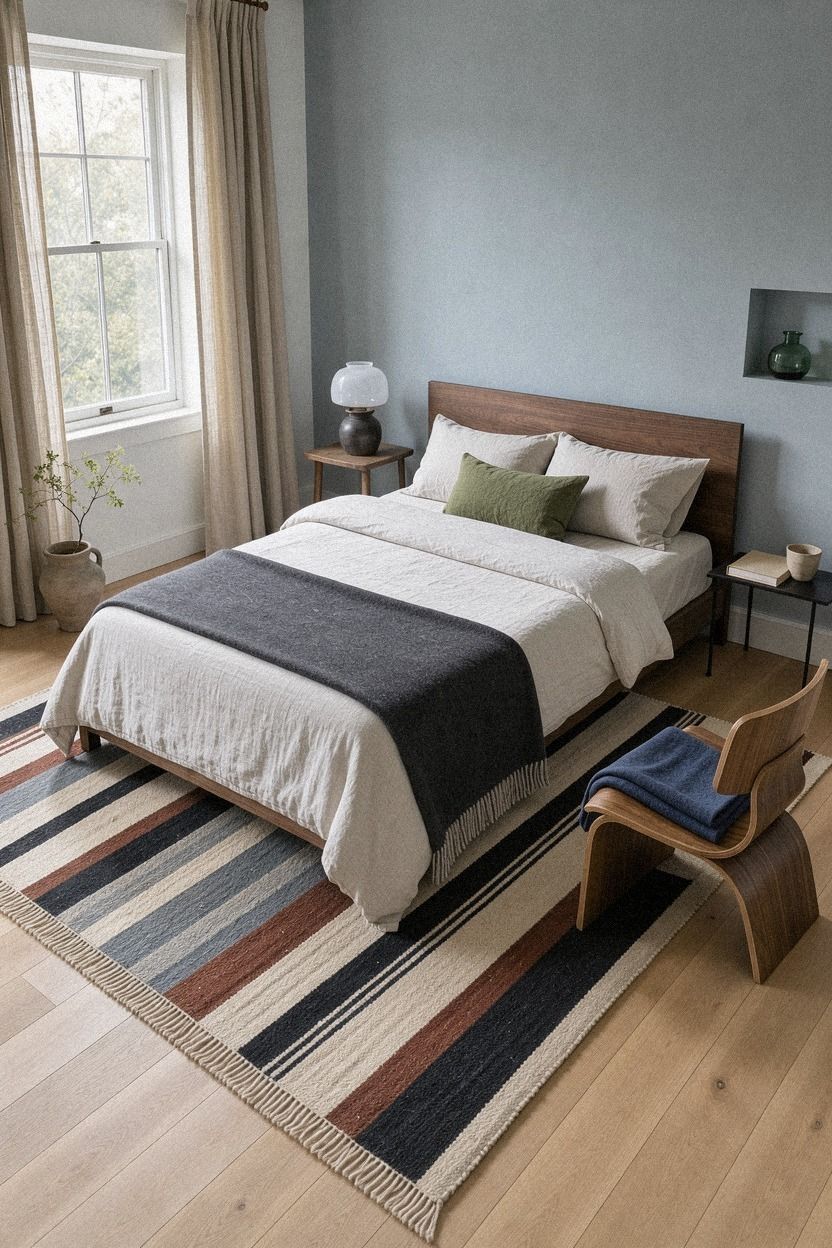
Before you browse patterns, measure the bed, nightstands, bench, and any dresser that might overlap the rug.
3Try the Two-Thirds Landing Zone
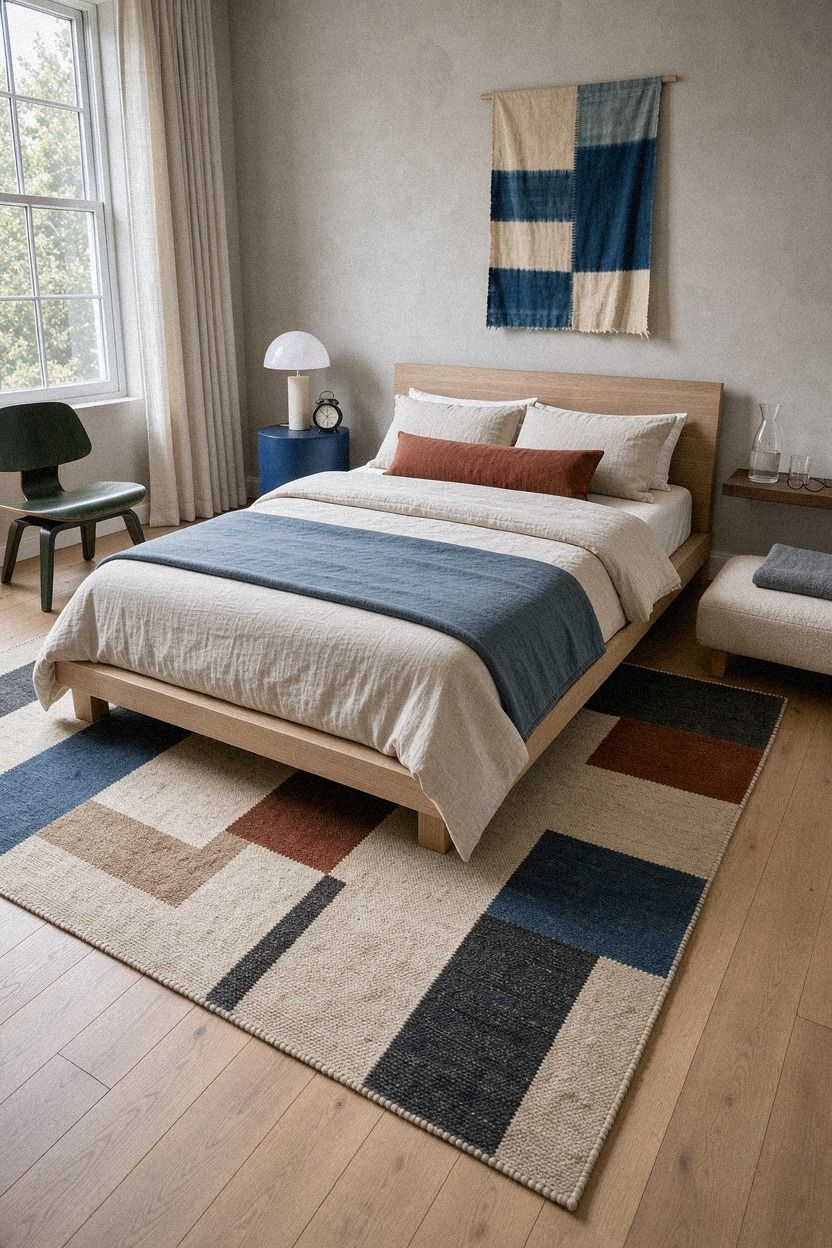
The two-thirds landing zone puts the rug under the lower portion of the bed while leaving the headboard area on the floor. It gives your room a soft foreground and keeps the sleeping zone visually anchored. You’ll want the rug to extend beyond the sides of the bed, with enough surface showing at the foot for your first step.
I like this placement because it works with a queen bed even when the room isn't wide. Your nightstands can stay on the floor or overlap the rug slightly, depending on the bed base.
A low wood bed paired with a backlit translucent onyx bedside surface makes the layered edge feel relaxed rather than crowded. For another sensory design idea, read why your brain remembers scents from 30 years ago.
4Float a Full-Room Rug Under the Bed
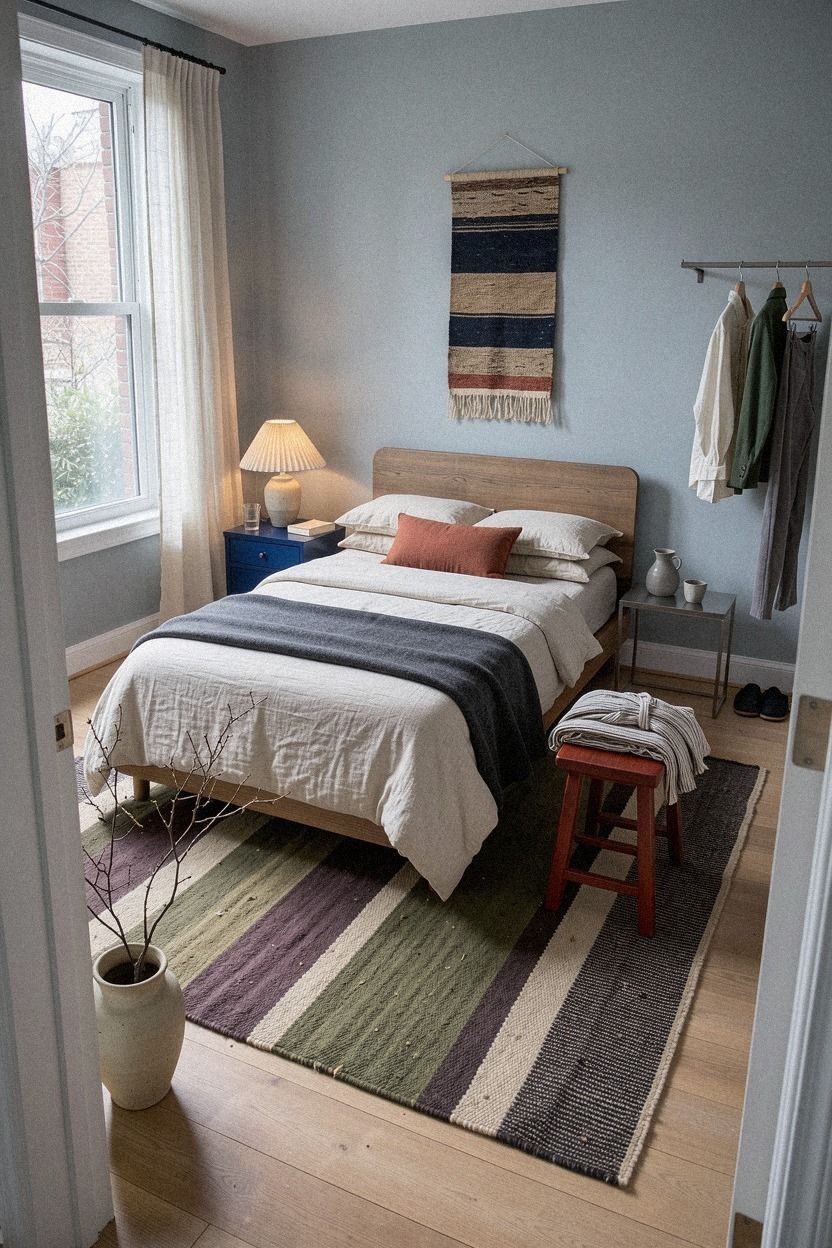
If your bedroom has enough open floor, float the rug under the bed with visible flooring around every side. This creates a quiet island of texture and makes the bed feel more substantial. You’ll need to check the door swing and closet clearance first, because a generous rug is only useful when your room can live around it.
I’d choose this layout over a tiny center rug every time. A hand-knotted wool rug has enough visual weight to connect the bed, dresser, and reading chair, while a small rug leaves each piece looking stranded. Your room won't need much extra decoration here.
Add a book-matched walnut bench only if the rug still leaves a clear walking path.
5Choose Runners When the Bedside Gap Is Tight
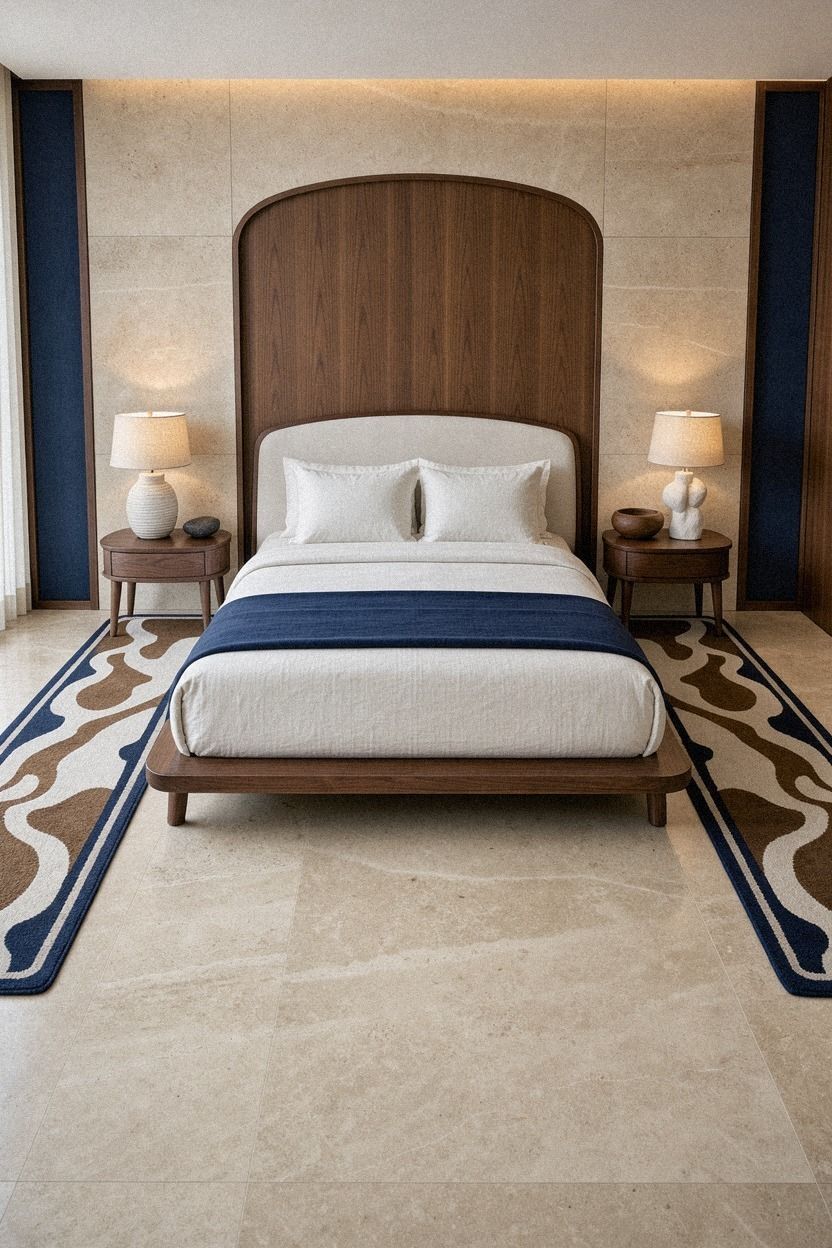
Runners can solve a narrow-bedroom problem when a large rug would catch on doors or crowd the walkway. Place one beside each side of the bed, aligned with the mattress and pulled slightly below the nightstand. Your feet get a soft landing, and the room still gains symmetry without forcing a full rug under heavy furniture.
The key is to make the pair feel intentional. I’d skip two unrelated patterns because they’ll make your bed look boxed in.
Choose matching flat-weave cotton runners or two versions from the same collection, then repeat one color in your bedding. A wall color inspired by warm travertine can help the runners bring warmth without making the room feel busy.
6Use the Nightstand Overlap Test
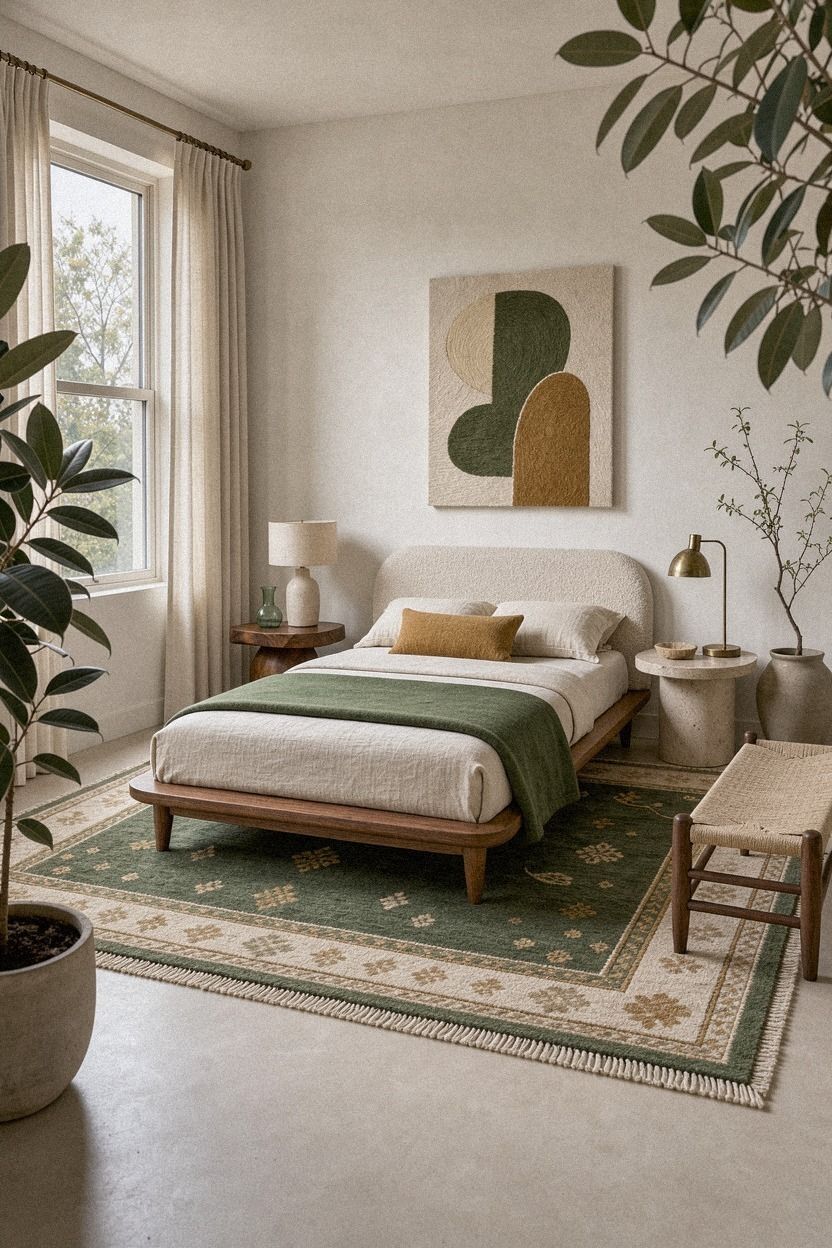
Your nightstands tell you whether the rug is correctly placed. If the rug stops directly in front of them, the bed may look disconnected from the room.
Let the rug reach under the lower portion of each nightstand when possible, or keep both nightstands fully on the floor. Halfway overlap is the awkward middle.
And if you’re unsure, move the rug toward the foot of the bed by a small amount and look again from the doorway. Your eye should read one broad rectangle, not several competing scraps.
I like blocky storage with unlacquered brass pulls near a bedroom wall because its profile makes the rug edge easy to assess. For a calmer bedtime routine alongside your layout, see what a 3-minute hybrid meditation achieves.
7Anchor the Room With Warm Wool
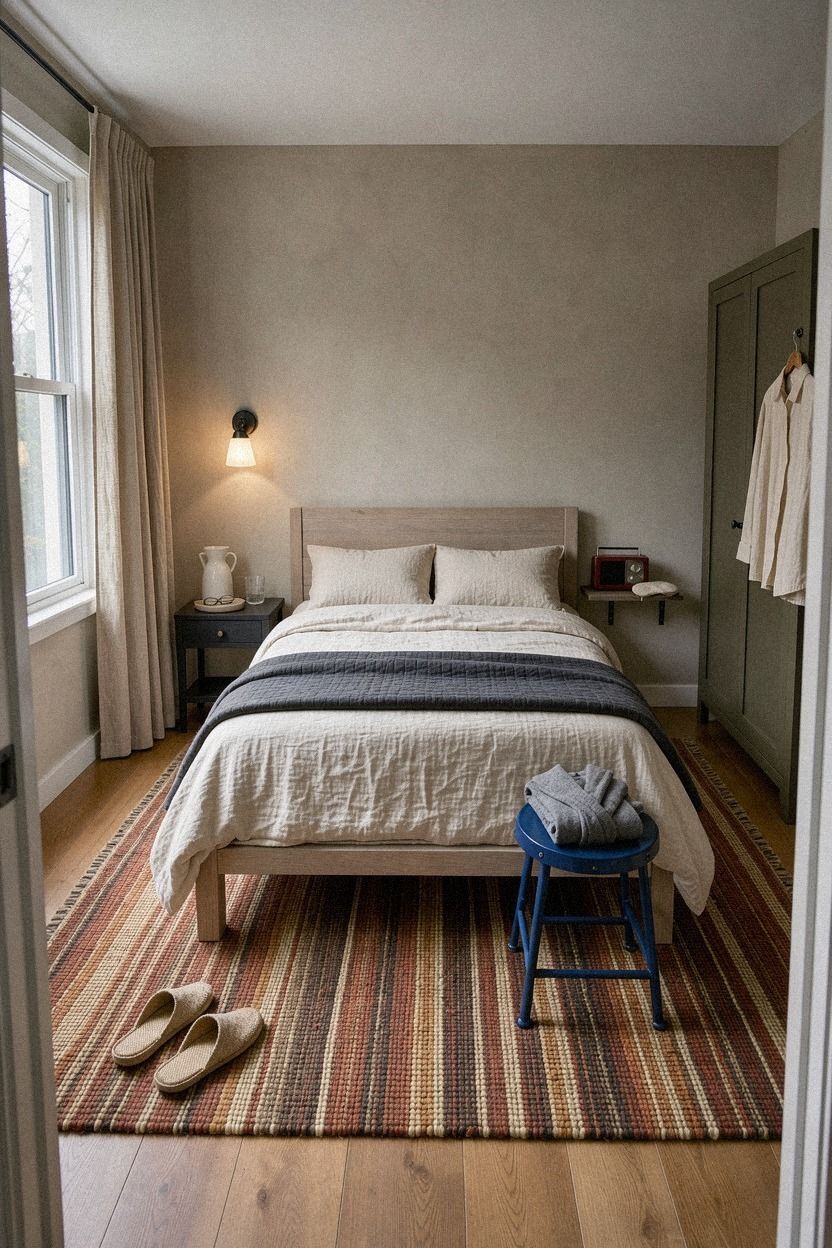
Wool works especially well beneath a bed because it feels soft without looking flimsy. A low-pile wool rug gives you warmth underfoot, absorbs some sound, and holds its shape when the bed stays in place for years. Your room will feel more settled when the rug has texture you can see from across the space.
I’d choose a warm ivory or muted brown wool over a cold gray synthetic pile. The gray can make your bedding look blue in morning light, while natural wool has a quieter variation.
A slab of oversized-chip terrazzo on a bedside table can echo the rug without matching it. And yes, this is one of those changes you’ll notice the second you walk in!
8Skip Beige Over Beige and Layer Contrast
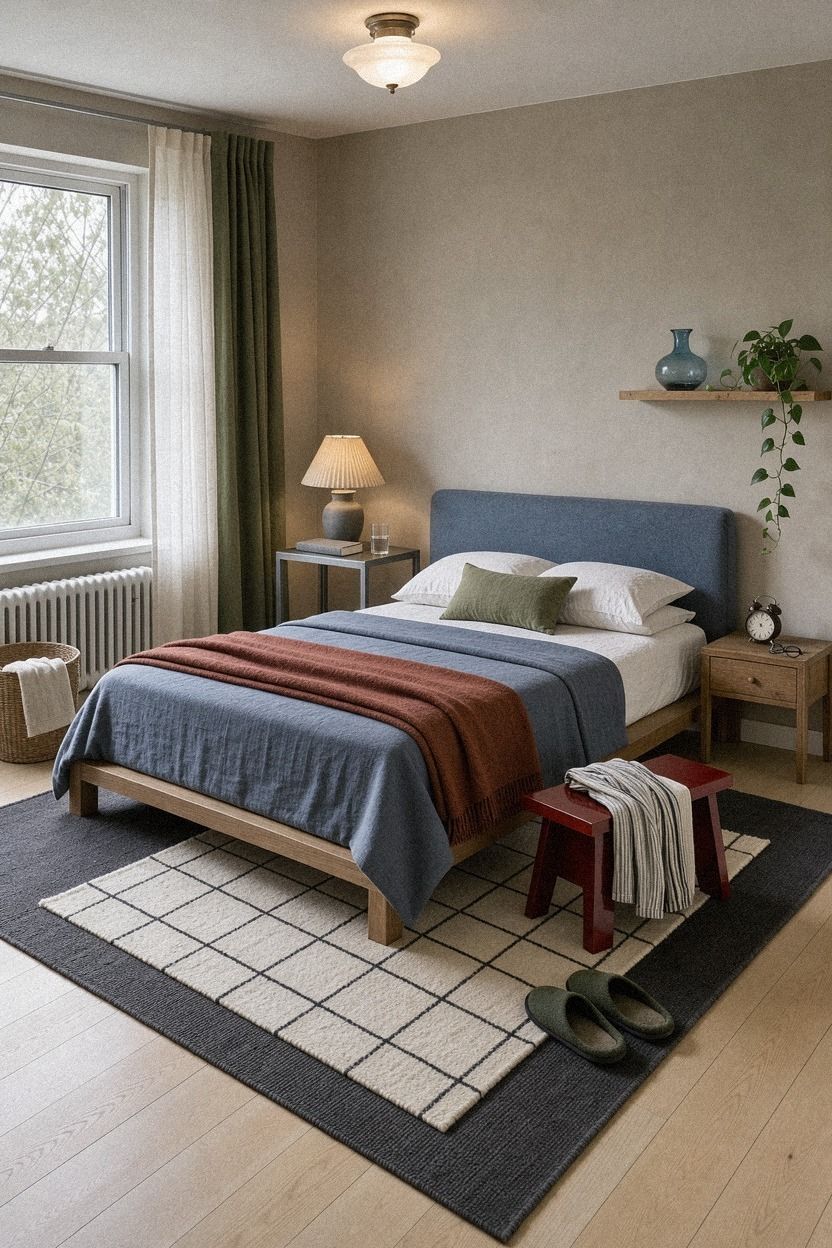
A dusty rose rug with charcoal bedding can work, but only when the textures are clearly different. Your rug needs a visible edge, or it will disappear beneath the bed. Pair a nubby surface with smooth sheets, a faded pattern with solid linen, or a warm neutral with a darker wood bed.
I made this mistake in a guest room. The rug, curtains, and bedding were all pale, and the room looked flat even though every item was expensive.
I’d rather see dusty rose behind a faded charcoal rug than another matching cream surface. Your eye needs one deeper note to understand where the bed ends and the rug begins.
If you like strong color stories, why people keep wearing YSL Black Opium offers an unexpected lesson in contrast.
9Let a Patterned Rug Lead the Palette
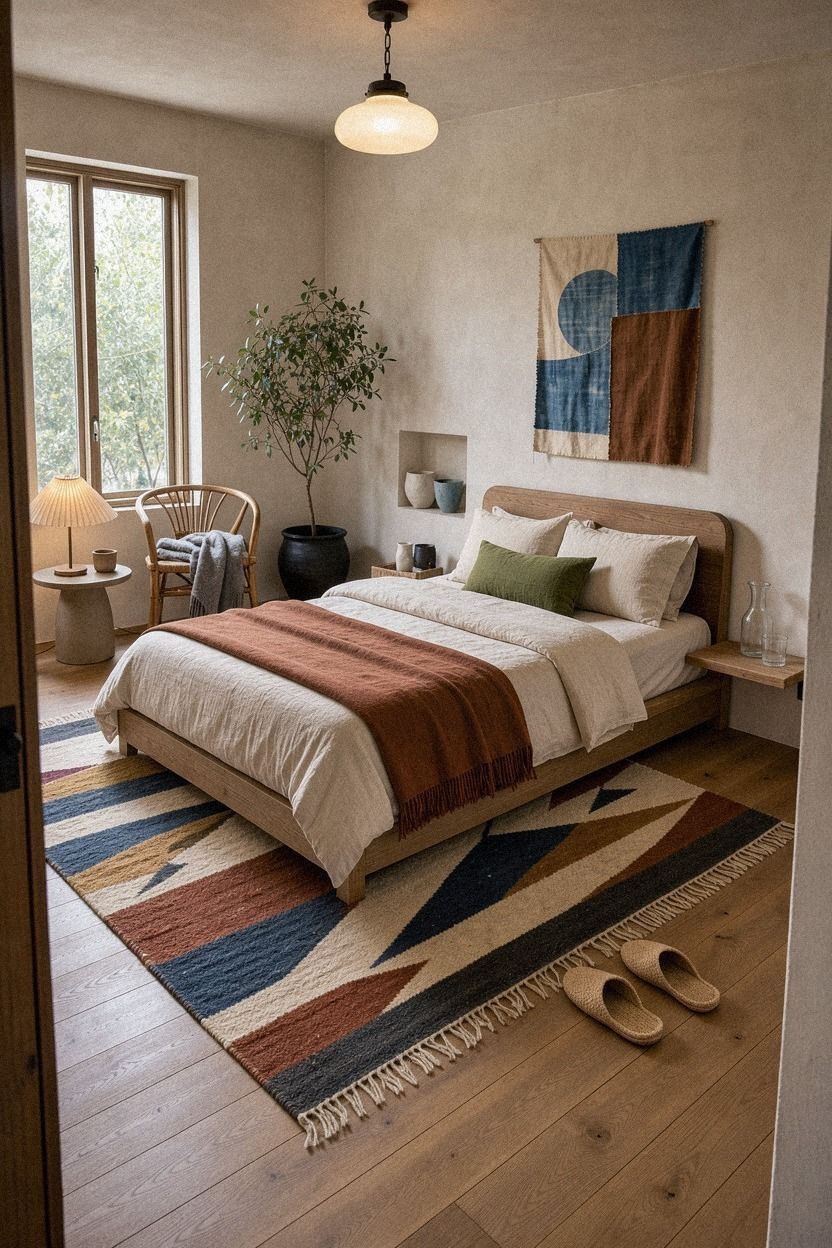
A patterned rug can decide the entire bedroom palette before you buy a single pillow.
10Turn a Small Rug Sideways Instead of Forcing It
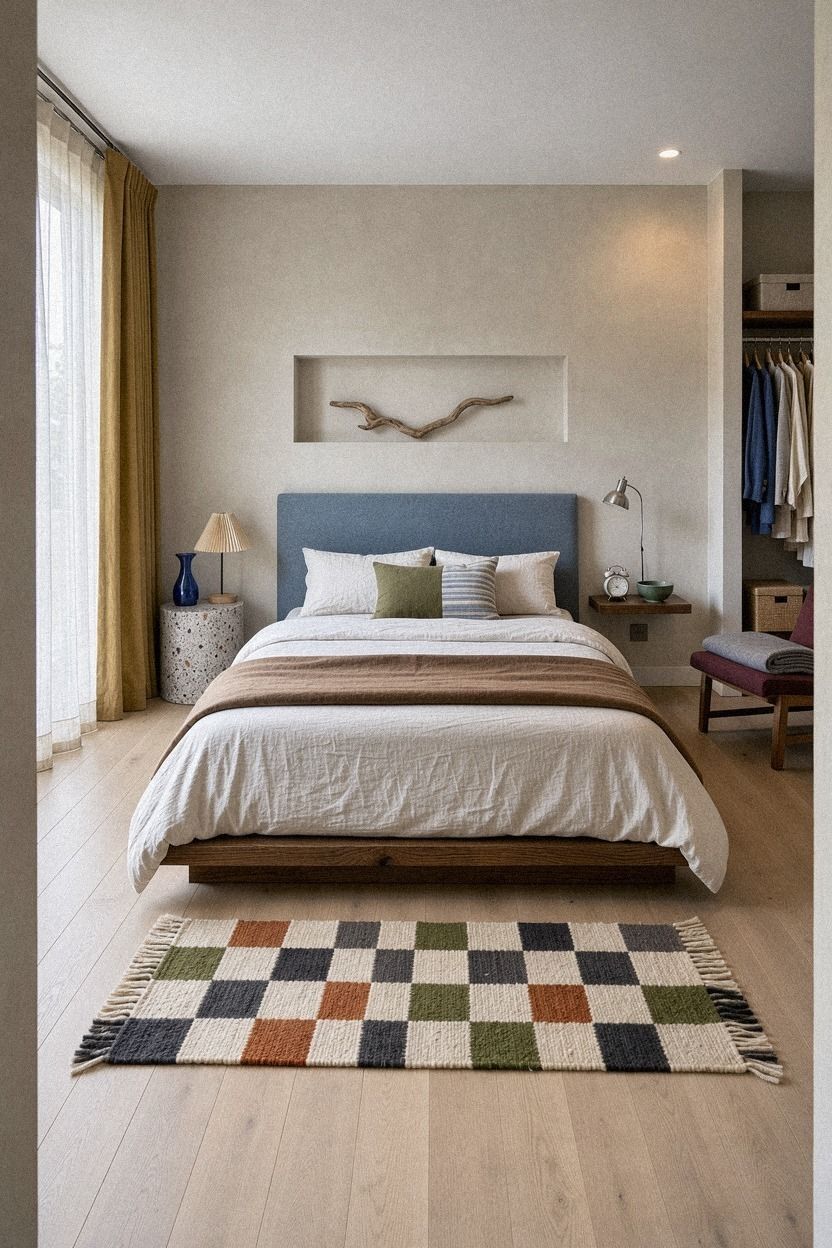
When your rug is too short to run from both sides of the bed to the foot, turn it sideways and place it under the lower third of the bed. The long edge should run across the room, giving you a wider visual landing. Your rug will look intentional instead of like a rectangle that ran out of space.
This approach works best with a low bed and simple nightstands. I’d skip it with a tall footboard because it can swallow the rug's visible surface.
A shagreen bedside box can repeat the rug's texture and make the sideways placement feel designed. The floor should still show around the rug, and your walking route should remain clear.
11Frame the Bed With the Soft Border Method
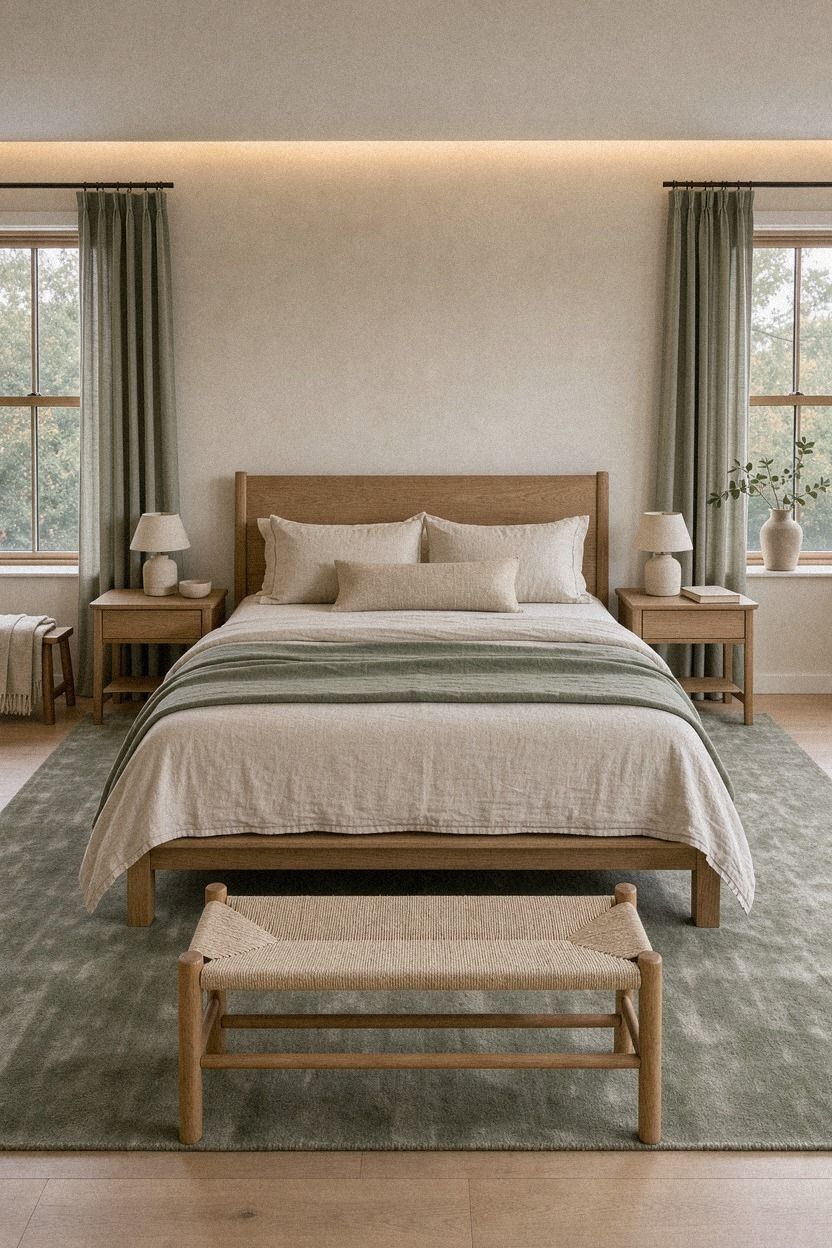
The soft border method leaves a consistent margin of flooring around the rug, then repeats that margin near the foot of the bed. It gives your room an architectural outline without adding another hard-edged piece. You’ll want to check the border from the doorway and from the side of the bed, since both views matter.
I prefer this to pushing the rug against a wall. A rug that touches every boundary can make a bedroom feel smaller, while a visible floor frame adds breathing room.
Use a low-profile rug with washed Belgian linen bedding if your room needs a little softness, but avoid a thick loop near a swinging door. Your toes should meet the rug, not a raised ridge, in the middle of the night.
12Pair Pigeon With Natural Fiber Texture
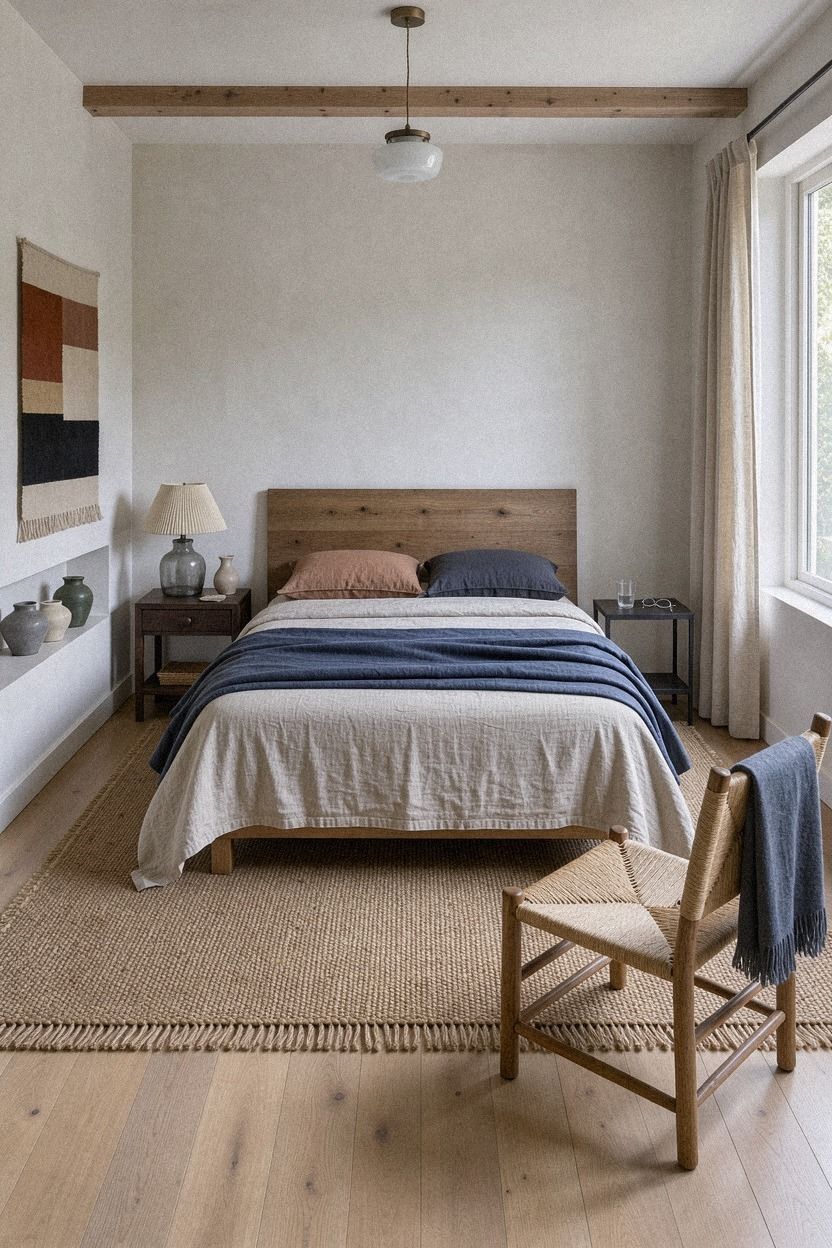
A muted terracotta wall with stone and olive accents can keep a bedroom from going flat. Against that palette, an organic-texture rug can bring warmth without making the room look themed. Your bed linens can stay simple because the wall and floor already have movement.
I’d use an organic bouclé rug only when your feet can handle a firmer texture. It’s earthy and durable, but it isn’t the softest choice beside a bed.
Layer a smaller washable cotton piece over the area where you step down if you need comfort. Your room gets the natural texture, while your morning routine gets a gentler surface. For a related look at daily habits and comfort, see what happens when you stop salty snacks before bed.
13Build the Three-Source Light Stack Above the Rug
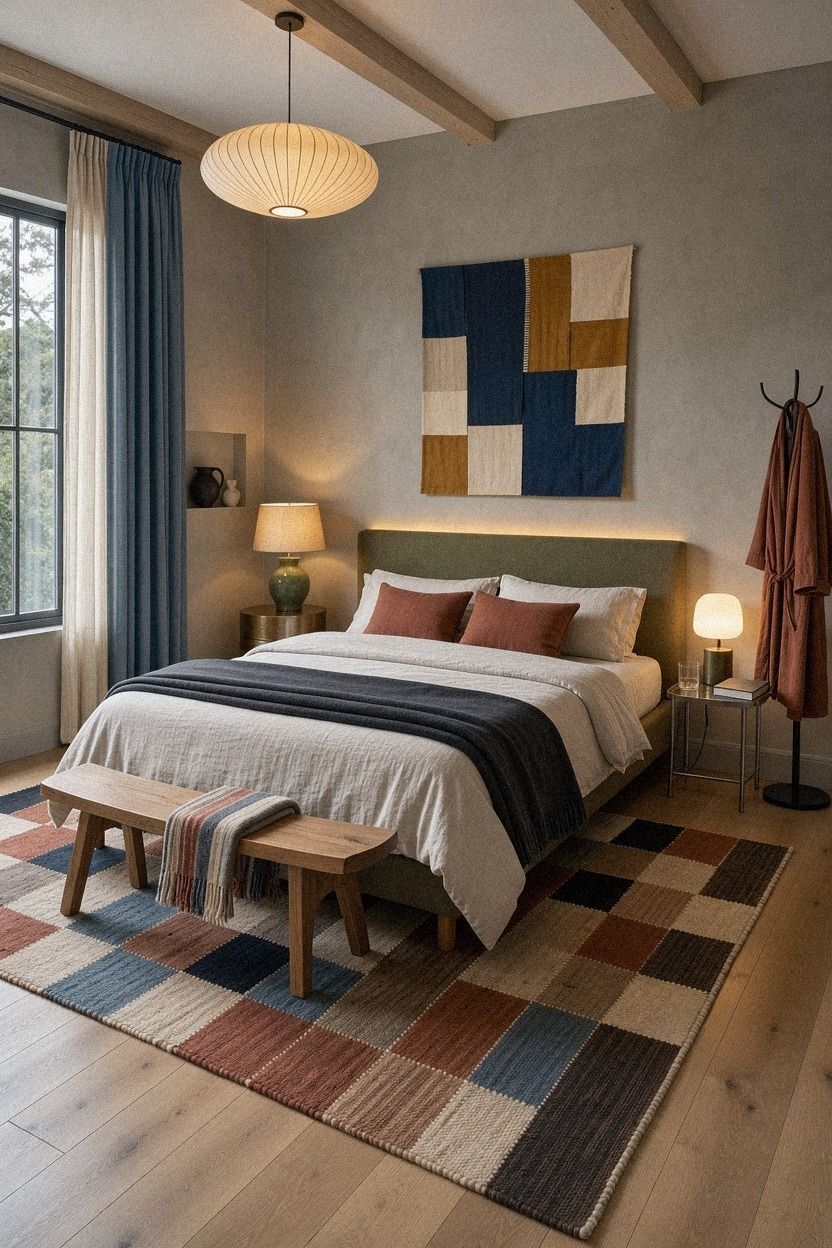
A rug placement looks different under ceiling light, task light, and ambient light, so check your room with all three. The brief's useful rule is three sources per room: ceiling, task, and ambient. Your rug may look warm in daylight and muddy at night if you only test it under one bulb.
I’d place a reading lamp near the bed, a small ambient lamp on the dresser, and keep the ceiling fixture dimmable. A Nero Marquina black marble lamp base will ground warm light, while polished chrome can look sharper and cooler.
And if your rug has a subtle pattern, side light will reveal more texture than a ceiling fixture. For a simple shower and morning reset, see what 30 seconds of cold can achieve.
14Keep the Footboard From Fighting the Pile
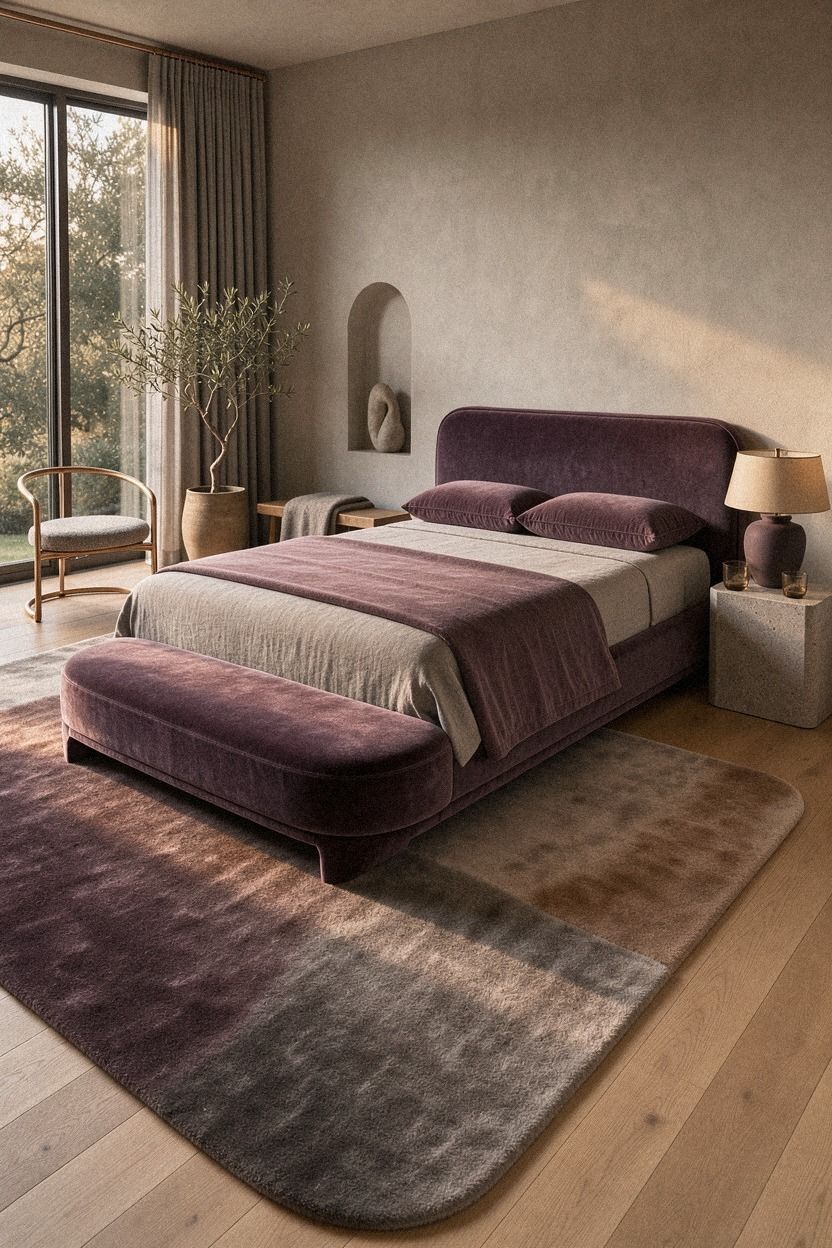
A footboard can hide too much of the rug, especially when the rug has a thick pile or a strong border. Your solution is to check the rug's visible field before you commit. If only the fringe shows, slide the rug farther under the bed or choose a flatter weave with a clearer central pattern.
I’d pair a substantial bed with a low-pile Persian-style rug and a deep-pile mohair velvet bench, not a thick shag. The bed should feel anchored, but your feet shouldn't catch the edge when you walk around it.
A clean, quiet frame can handle a patterned floor. Why let the footboard compete with the rug when you can give each one a clear job?
15Style the Rental With a Reversible Layout
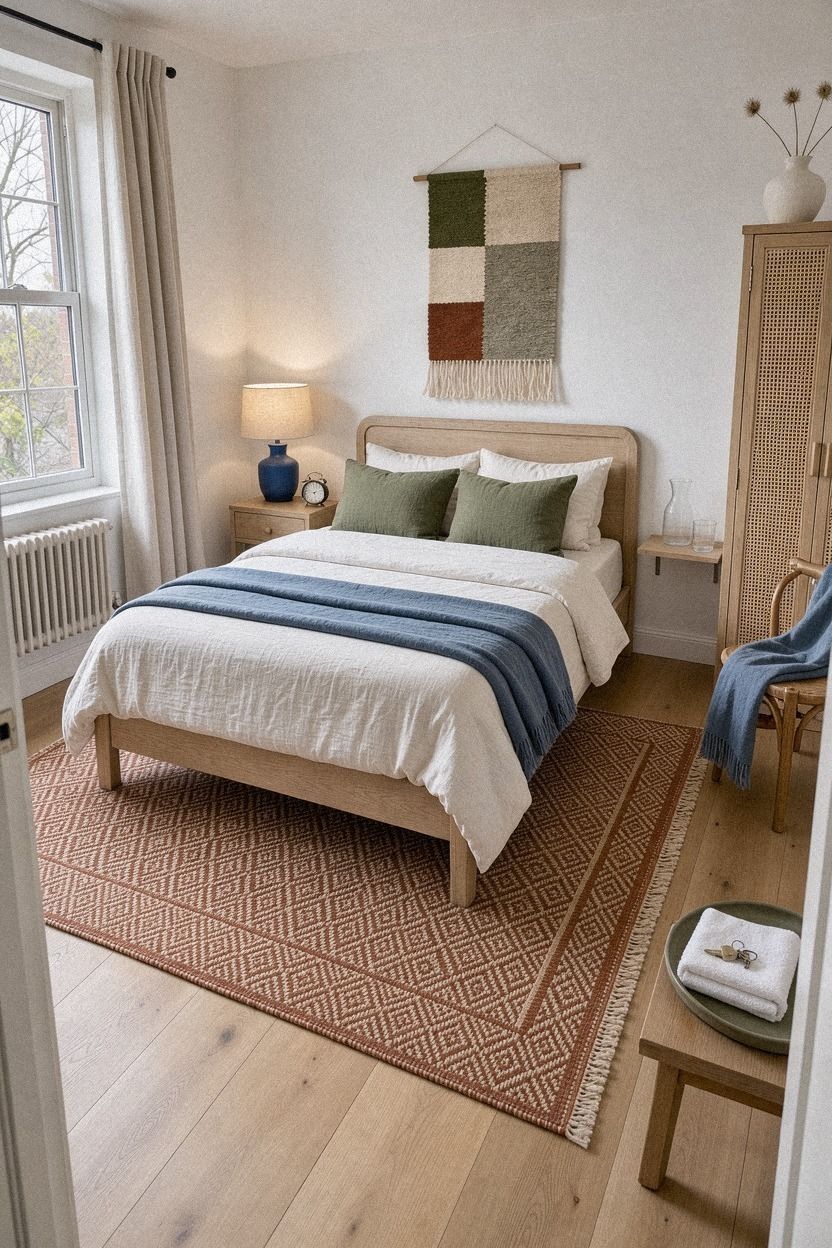
Renters can still get a convincing rug layout without moving electrical outlets or changing the floor. Use a rug pad that won't leave residue, keep heavy furniture on broad protective cups, and test the full arrangement before unpacking every accessory. Your landlord doesn't need to know your bedroom gained a new point of view.
I’d keep the palette reversible: soft white, navy, natural walnut, and soft charcoal. Those colors can move with your next apartment.
A Carrara marble bedside tray can add a light, durable surface, while removable wall hooks can hold art with its center around 57 to 60 inches from the floor. If you want another renter-friendly habit, learn why powder settles into fine lines after 50, a reminder that small adjustments often matter more than large ones.
16Compare the Queen Bed Rug Size Guide by Budget
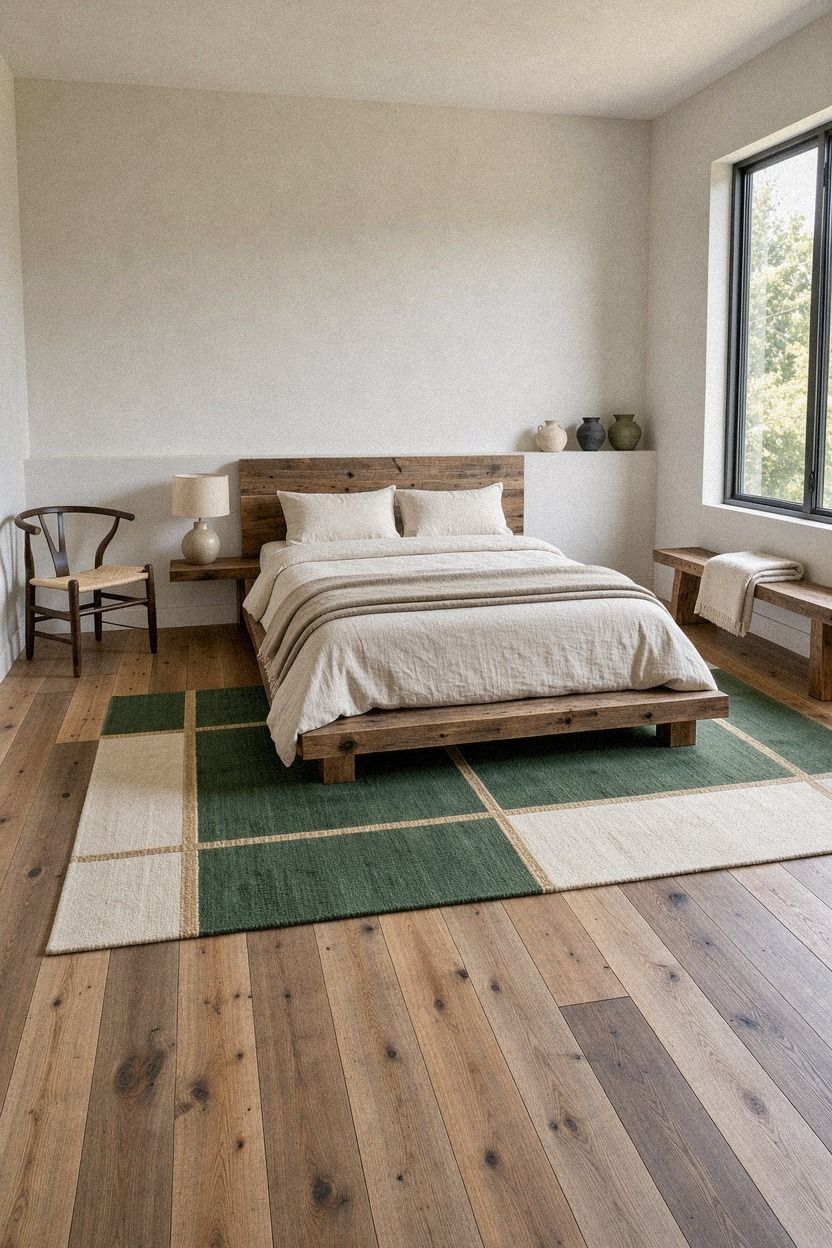
Your rug is only one part of the room budget. If the floor is the main change, spend enough on a surface that feels good and lies flat. If you’re also buying lighting, art, and storage, a simpler rug may leave room for the pieces that make your bedroom function better.
I’d choose the mid-range direction only if your rug, lighting, and accent furniture need to arrive together. Otherwise, start with the rug and live with it.
Your eye will tell you whether the room needs more. For a different perspective on premium choices and personal value, read why some women stop wearing YSL Black Opium.
17Ask Which Placement Survives Real Life?
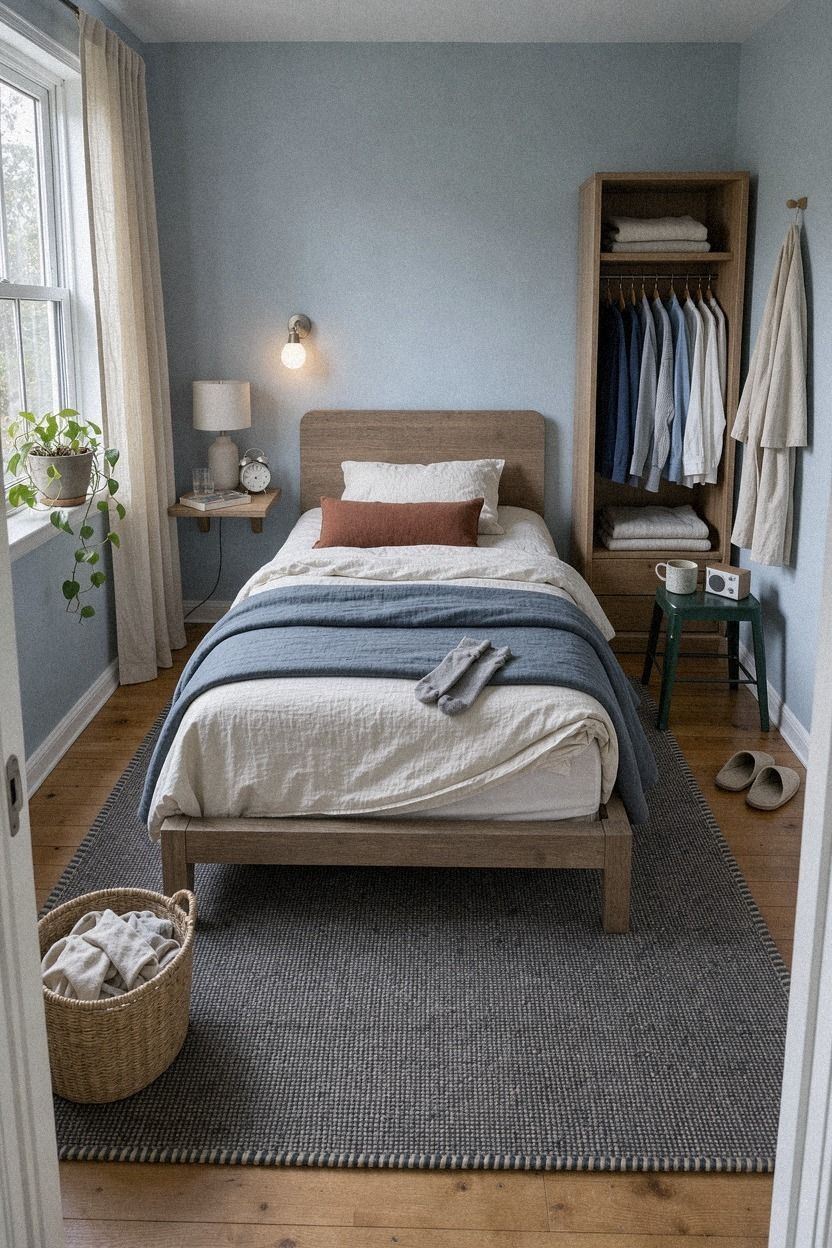
A pretty layout has to survive laundry baskets, open drawers, pets, and your half-awake walk to the closet. Ask where your feet actually travel.
Your best placement might leave a little more exposed floor near the dresser and a little more rug beside the bed. Design should follow your habits, not punish them.
I’d choose a washable cotton flatweave if your bedroom sees muddy shoes, children, or frequent furniture changes. It won't have the depth of wool, but you'll be able to live with it more easily.
And if you move the bed often, a lighter rug will save your back. Your room should feel warm at bedtime and practical in the morning.
That balance matters!
18Finish the Queen Bed Rug Plan With One Strong Edge
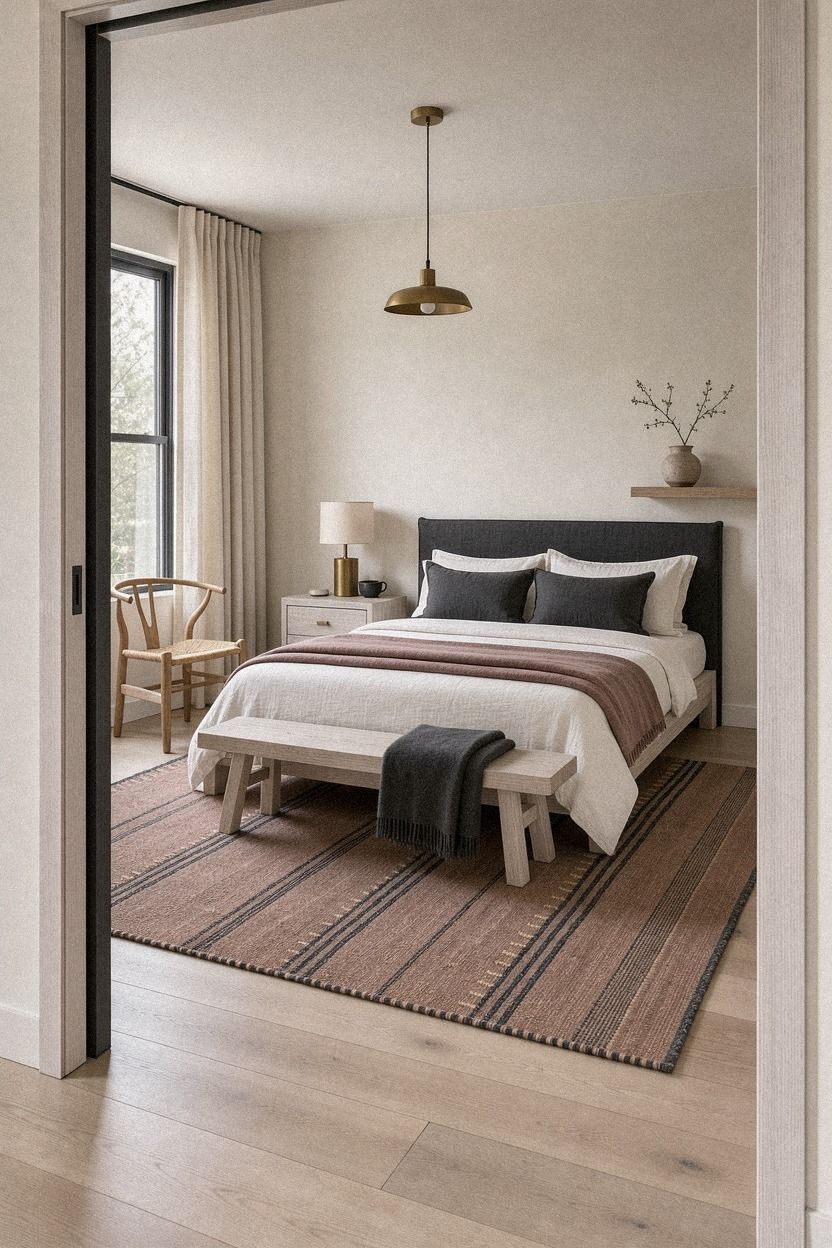
A rug needs one clear relationship with the bed: it can frame the lower half, stretch broadly beneath the furniture, or run as paired runners beside it.
The Rug Rule I’d Keep
I’ve bought rugs because the pattern caught me from across a showroom, then spent weeks shifting the bed to make the proportions work. The lesson was annoyingly simple: the rug has to serve the furniture footprint first. A queen bed doesn't need a rug that fills every inch of the bedroom, but it does need a visible connection between the bed, nightstands, and the floor beneath them.
I’d start by taping the outline and living with it for a day. Walk around it in the morning.
Open the closet. Pull out a drawer.
Sit on the edge of the bed and look toward the doorway. You’ll notice problems faster when the room is being used, not when everything is perfectly arranged.
The most reliable choice is a rug that extends beyond the sides of the bed and gives your feet a comfortable landing near the foot. I prefer wool or a low-pile natural blend because it feels substantial without becoming a trip hazard. A thick shag can look inviting, but it often hides the furniture line you need to see.
And I don't think the rug must match the bedding. Benjamin Moore White Dove OC-17, Farrow & Ball Pigeon, and Sherwin-Williams Agreeable Gray can all support different rug directions when the undertones are checked in your room's light.
That is where your own floor, windows, and wood finishes matter more than a trend forecast. A rug can be warm, modern, rustic, or refined, but it should make your daily path feel easier.
A Few Things Worth Answering
What is the best rug size for a queen bed in a small room?
Choose a rug that extends beyond both sides of the bed and reaches far enough toward the foot for a comfortable landing. A low-pile wool rug or paired runners will keep your room open while giving you warmth where you need it.
Where can I buy queen-bed rug pieces on a budget?
Look at IKEA, Wayfair, Target, Facebook Marketplace, and local thrift shops. There are no affiliate links here, and purchases aren't required. The site is supported by display advertising, so compare fibers, measurements, and return policies before you buy.
How much does a queen-bed rug makeover cost?
A room refresh can range from about $200-$800 for paint, textiles, art, and organization. A mid-range update with accent furniture, lighting, and a rug typically falls between $1,500-$5,000. Your existing furniture can keep the cost much lower.
Can I create this look on a budget?
Yes, and you can start with what you own. Tape the layout first, rotate the bed if needed, borrow a lamp, and shop secondhand for a flatweave rug. A Target Threshold throw can add texture while you save for a larger floor piece.
Is a queen-bed rug worth it in a small space?
Yes, because the rug can visually connect the bed and nightstands instead of breaking the floor into scattered pieces. Keep the pile low, protect the door swing, and choose a placement that leaves your main walking route open.
Is this a good idea for a rental?
Yes. Use a removable rug pad, protective furniture cups, tension-based window treatments, and peel-and-stick art solutions. Your layout can feel finished without permanent changes, and you can take the rug with you when the lease ends.
Where I’d Start First
If I had to pick one, I'd start with the two-thirds landing zone. It gives your feet a soft arrival, keeps the room open, and works when a full-room rug would crowd the doors. Pin this placement for later and test it with painter's tape before you shop.