No-Fuss Built-In Dog Bed Designs That Make Every Dog Owner Jealous
24 november 2026Built-in dog bed ideas can make an awkward corner feel intentional without turning your home into a kennel. I learned that after wedging a giant cushion under a console and watching it slide across the floor every night. You’ll get better results with a measured nook, washable fabric, and one finish that connects to your room. It’s simpler than it looks!
- ✓ Frame the alcove with the Three-Height Rule
- ✓ Layer the Two-Wood Rule for dog bed furniture
- ✓ Float the Hidden Drawer Bed
- Frame the alcove with the Three-Height Rule
- Layer the Two-Wood Rule for dog bed furniture
- Float the Hidden Drawer Bed
- Paint the nook with a soft contrast
- Build a window seat that works for two
- Swap a cabinet door for a quiet retreat
- Anchor the crate under a stair
- Hang the Three-Source Light Stack
- Mix washable textiles and set a real budget
- Ask: can your dog bed look custom without custom work?
- Choose a rental-safe built-in dog bed
1Frame the alcove with the Three-Height Rule
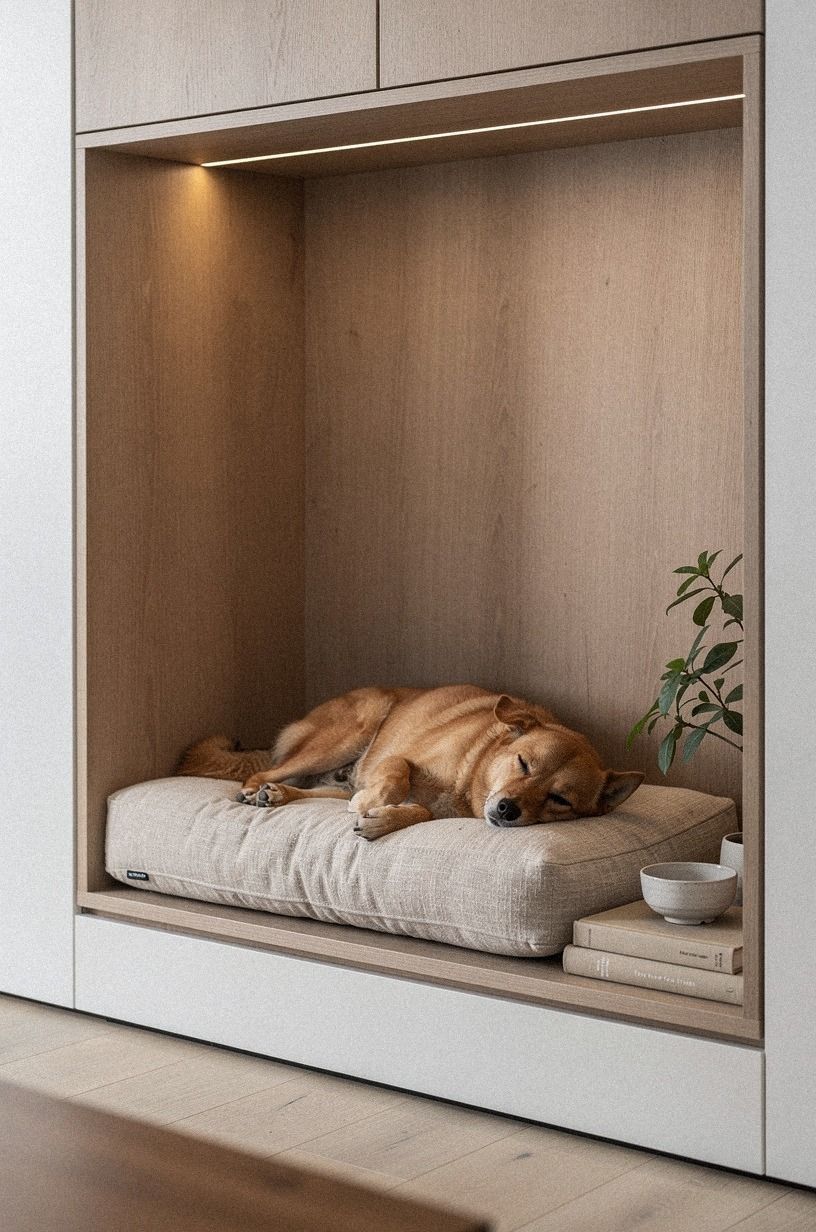
A shallow alcove becomes a proper built in dog bed living room feature when you give it three visible heights: a low sleeping cushion, a middle shelf, and one taller framed detail. Your dog gets a tucked-away spot, while your eye reads the wall as furniture instead of leftover space. I’d skip a single floating shelf because it often looks thin and unfinished.
Use a 4-inch cushion in midnight-blue linen, a shelf for leashes, and a narrow copper rail above warm travertine. Your dog can step in easily, and you’ll still have room for a basket or framed print above. The stone adds a warm, earthy note when evening light hits it.
Keep the opening wide enough for your dog to turn around without scraping a shoulder. You don’t need a deep cabinet. A comfortable rectangle with a soft edge works better than a narrow tunnel, especially if your dog is older or nervous around enclosed spaces.
For the wall, Benjamin Moore White Dove OC-17 keeps the nook bright without making it feel sterile. If your room already has darker furniture, you can echo the tone with a refined living time capsule. Your dog bed should feel connected to the room, not imported from another house.
2Layer the Two-Wood Rule for dog bed furniture
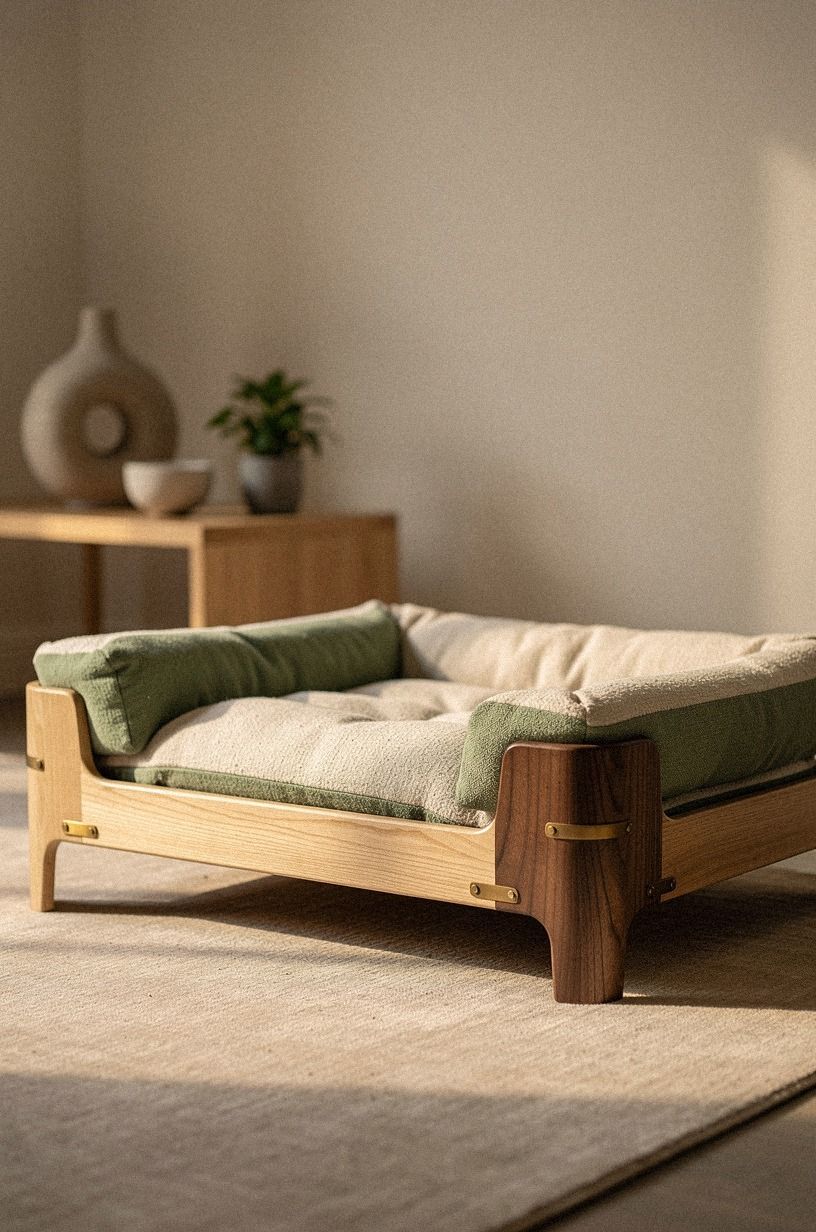
The Two-Wood Rule is my favorite way to make dog bed furniture feel collected. Choose natural wood for the structure and warm cream for the quieter trim.
Your eye gets enough contrast to notice the craftsmanship, but it won’t read as a busy patchwork wall. I’ve tried matching every wood tone before, and the result looked flat by daylight.
Pair natural wood on the cabinet face with warm cream trim along the side. The wood gives you a grounded surface, while the lighter tone keeps the dog’s corner from feeling heavy. You’ll want the cushion in a muted sage green, but choose a removable cover because real dogs don’t respect a design plan.
Add a shallow drawer beneath the sleeping platform for brushes, treats, and the leash you’re always searching for. Your drawer doesn’t need fancy hardware. A recessed pull in unlacquered brass will develop a softer patina and won’t catch your dog’s collar as he climbs out.
The mistake is making the bed too precious to use. Your dog should be able to enter without a command, and you should be able to pull the cover off in under a minute. If you’re styling the rest of the room with sensory details, these dessert-inspired fragrance notes offer an unexpected color cue for warm caramel and cream textiles.
3Float the Hidden Drawer Bed
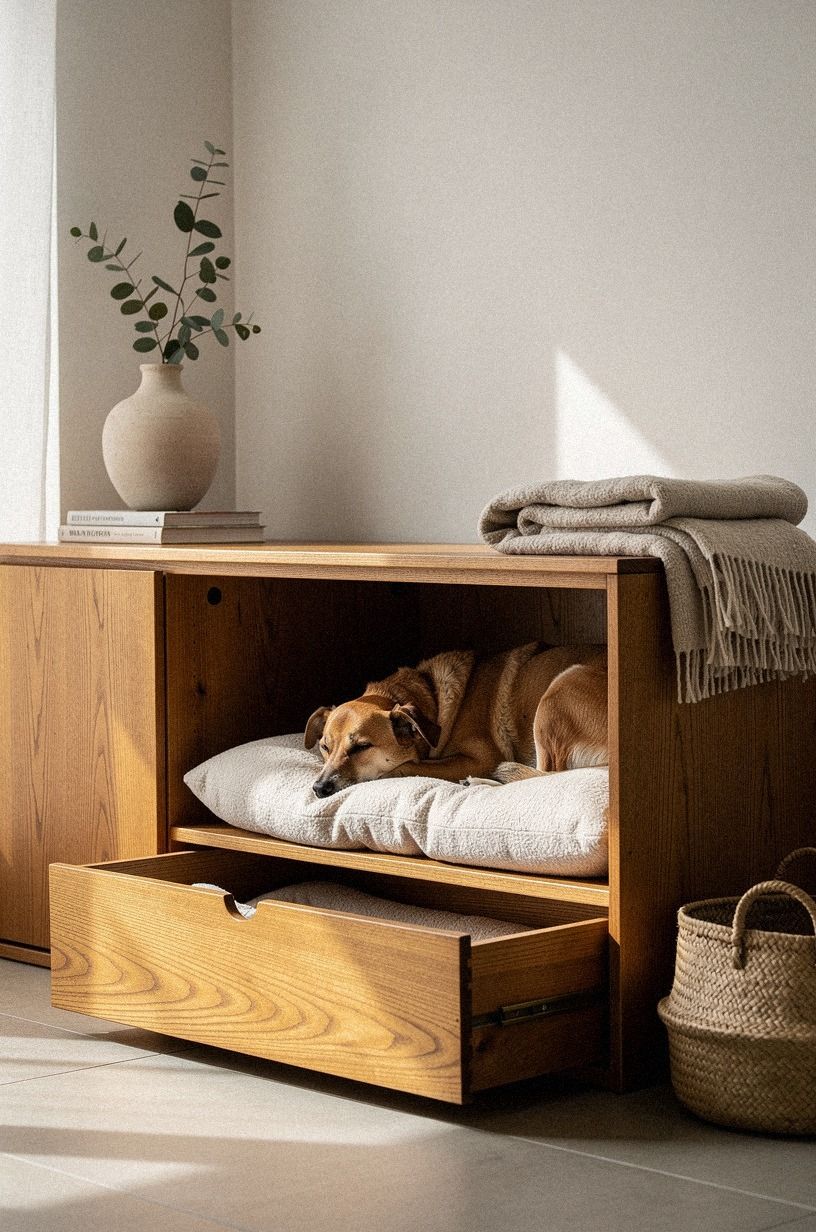
A floating drawer bed gives you a hidden dog bed that disappears when the room needs to look tidy. The platform sits above the floor, leaving a clean shadow line underneath, and your dog gets a den-like sleeping surface without a bulky crate. This is the option I’d choose for a narrow apartment hallway or a small living room.
Build the drawer face with an oversized-chip terrazzo front, then repeat its terracotta, stone, and olive tones through the nook. That earthy combination can look calm in morning light and slightly smoky after sunset. You’ll get more depth than plain white, but your dog’s space won’t dominate the room.
Install full-extension runners rated for the weight of the cushion and the occasional dog who lands with enthusiasm. Don’t make the drawer too tight. Your cover needs air around it, and you’ll want to remove the whole cushion when it needs washing.
A little breathing room also helps prevent the warm, stale smell that develops in closed furniture.
If you’re worried about the room feeling crowded, use a low profile and keep the top surface clear. One olive stoneware bowl is enough.
Your dog’s bed doesn’t need a row of accessories, and you’ll appreciate the quiet when the rest of the room is busy. A sensory reference such as three pulse points that make a detail last can even inspire how you repeat small details across the space.
4Paint the nook with a soft contrast
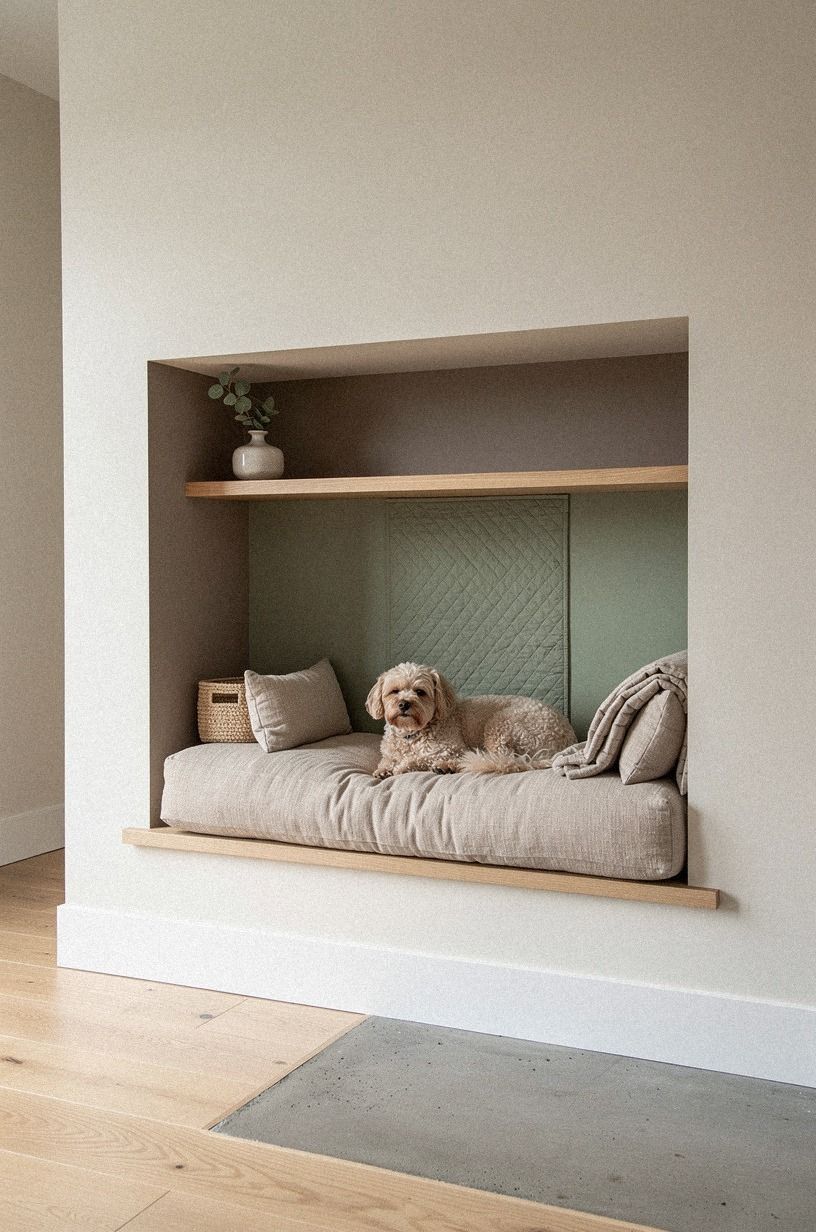
A painted nook works when you want a built in dog bed bedroom idea without committing to cabinetry. Paint the back wall in a clay tone, then let a linen-colored cushion and trim keep the edge gentle. Your dog’s spot becomes a quiet visual pause instead of another piece of furniture competing for attention.
I like hand-applied Venetian plaster in a soft clay shade around the bed with a linen-toned interior. The first is restrained, while the second brings a little warmth. I’d avoid a bright white interior because fur, dust, and nose marks will show immediately.
Use washable linen for the cushion cover if your dog likes to dig before settling. It has enough weight to stay planted, and you’ll feel the difference when you pull it from the wash. A thin anti-slip pad beneath the insert keeps the whole nest from inching across the floor.
Your lighting matters here. If the nook is dark, you’ll stop using it for anything except storage.
Add a small, warm aged brass wall light above the platform, but keep cords completely out of reach. And if your bedroom needs a calmer palette, the sunscreen swap dermatologists make after 50 has a surprisingly useful pale-blue and cream color direction.
5Build a window seat that works for two
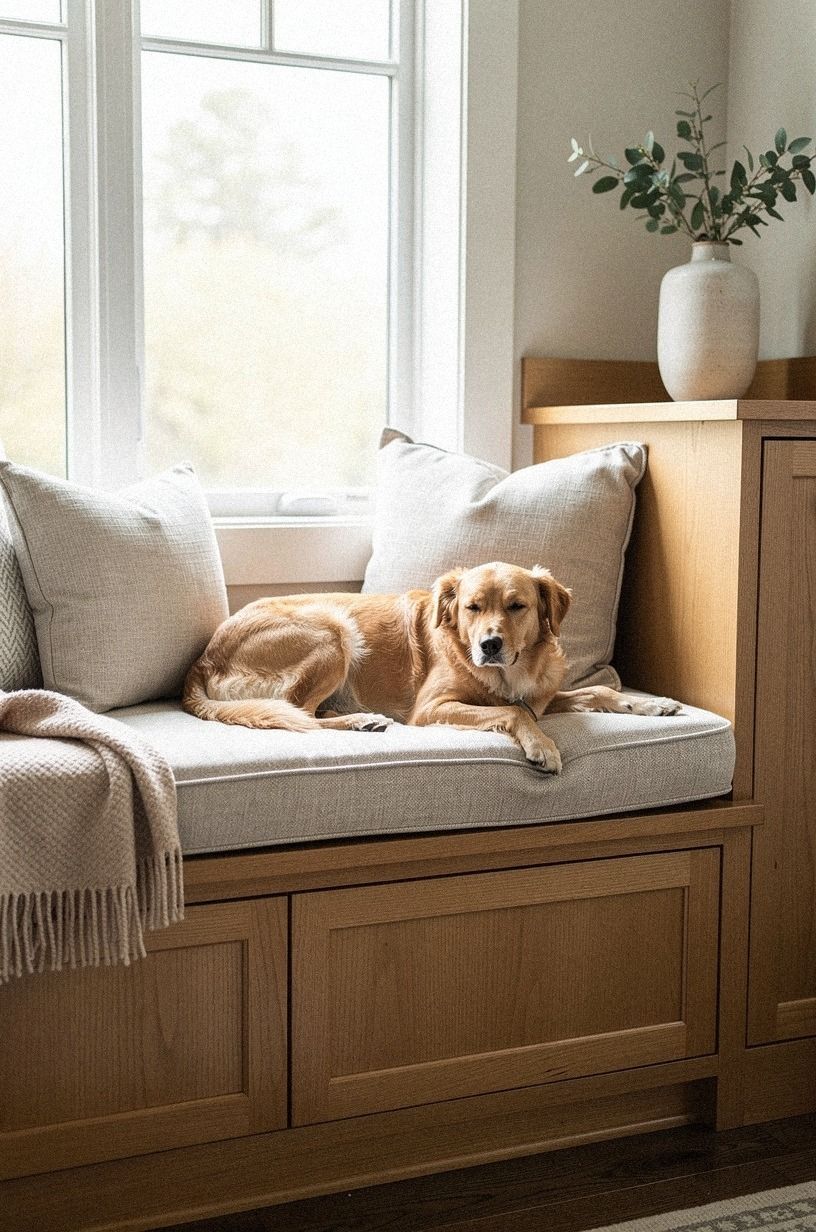
A window seat can serve both your dog and your reading habit when the platform is deep enough for a cushion and your knees.

6Swap a cabinet door for a quiet retreat
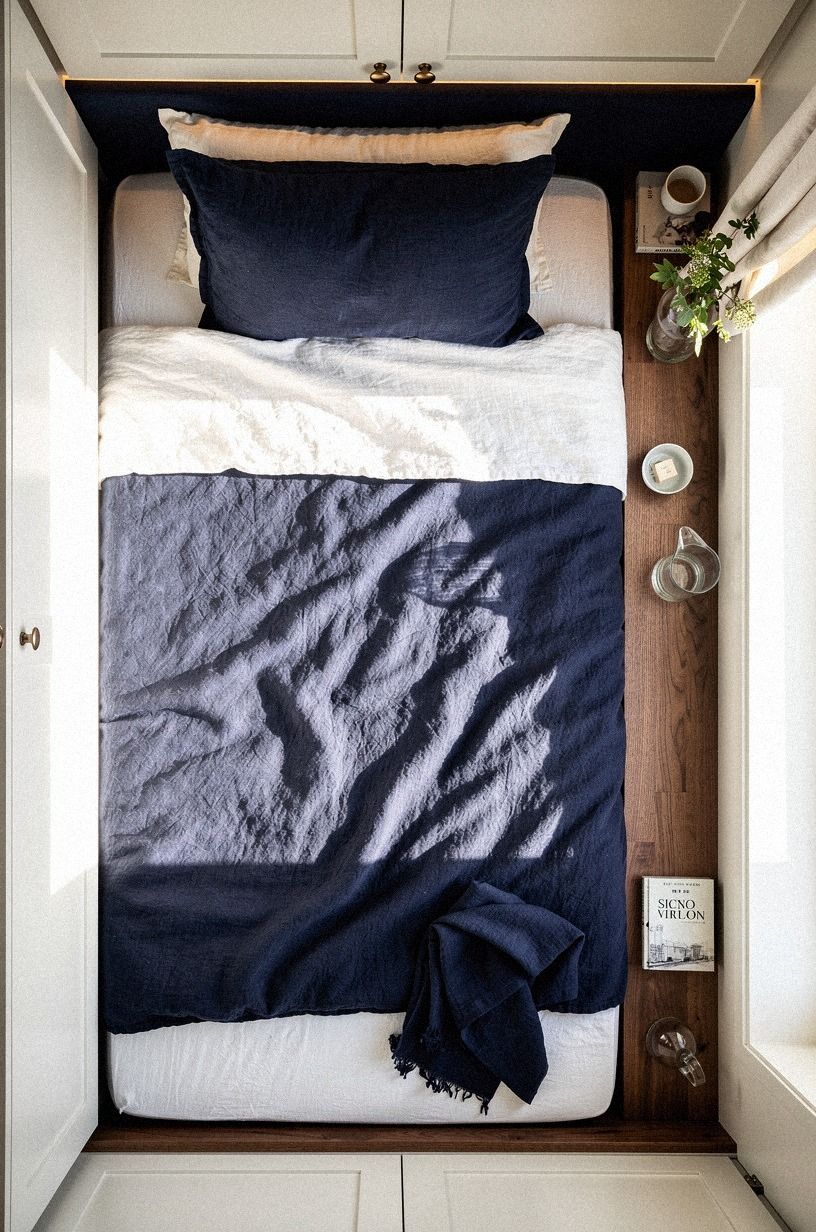
A base cabinet can become a dog nook with one careful change: remove the door, soften the opening, and line the interior with a washable cushion. This dog bed furniture approach works especially well in a mudroom, kitchen, or laundry zone where your dog already wants to be near you. You won’t need a dramatic renovation.
Choose a cabinet box with a walnut face, then use a deep navy finish around the opening with white inside. That combination gives the nook structure without making it feel dark. I’d skip unfinished MDF because damp towels and muddy paws will make it swell.
Your dog needs airflow, so don’t close the cabinet with a solid door while he’s inside. If you want the option to hide the bed, use a removable washed Belgian linen panel mounted on lightweight hinges. It filters the view without trapping heat, and you can lift it away when your dog wants an open entrance.
Place a washable mat just outside the cabinet. You’ll catch grit before it travels into the room, and your dog will have a clear transition from floor to bed. If your entryway feels more chaotic than calm, this garden smoker built for layered flavor may sound unrelated, but its tiered organization is a good prompt for arranging treats, towels, and leads.
7Anchor the crate under a stair
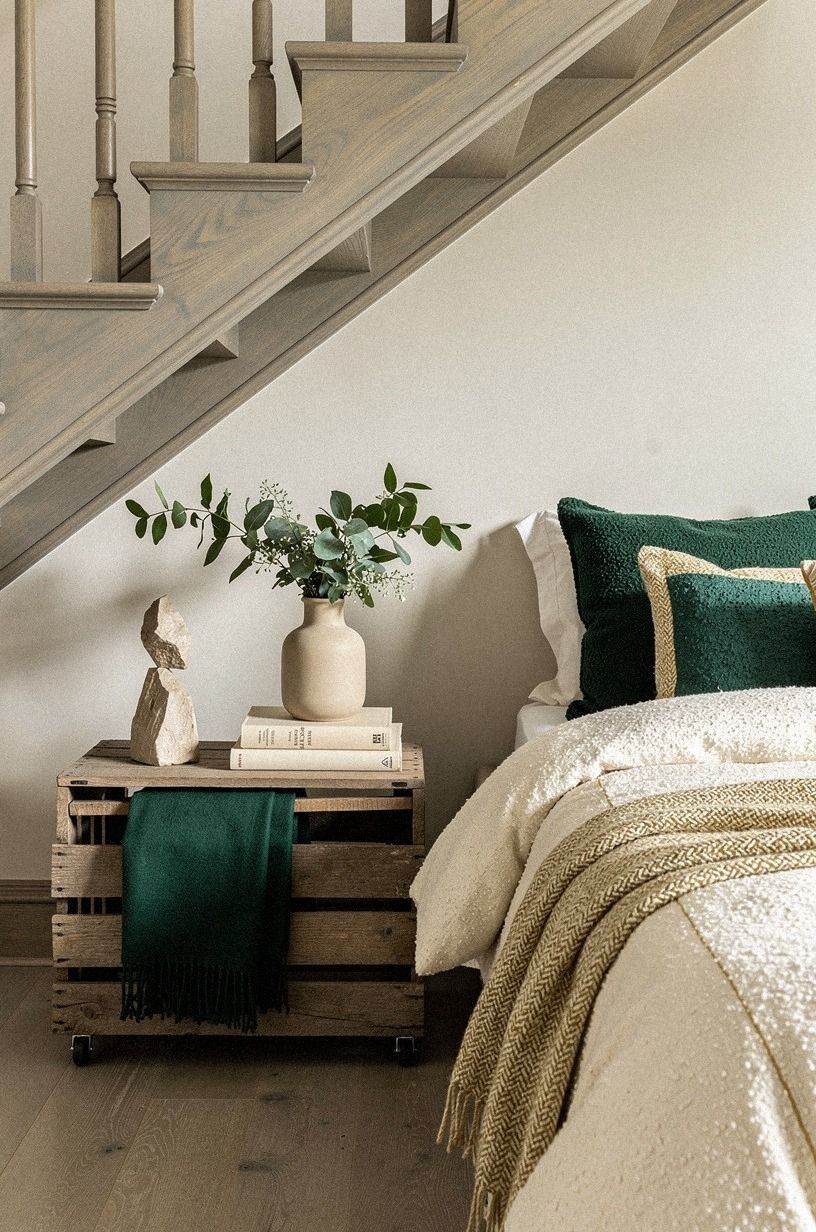
The space under stairs is often too shallow for human furniture and just right for a hidden dog bed.
8Hang the Three-Source Light Stack
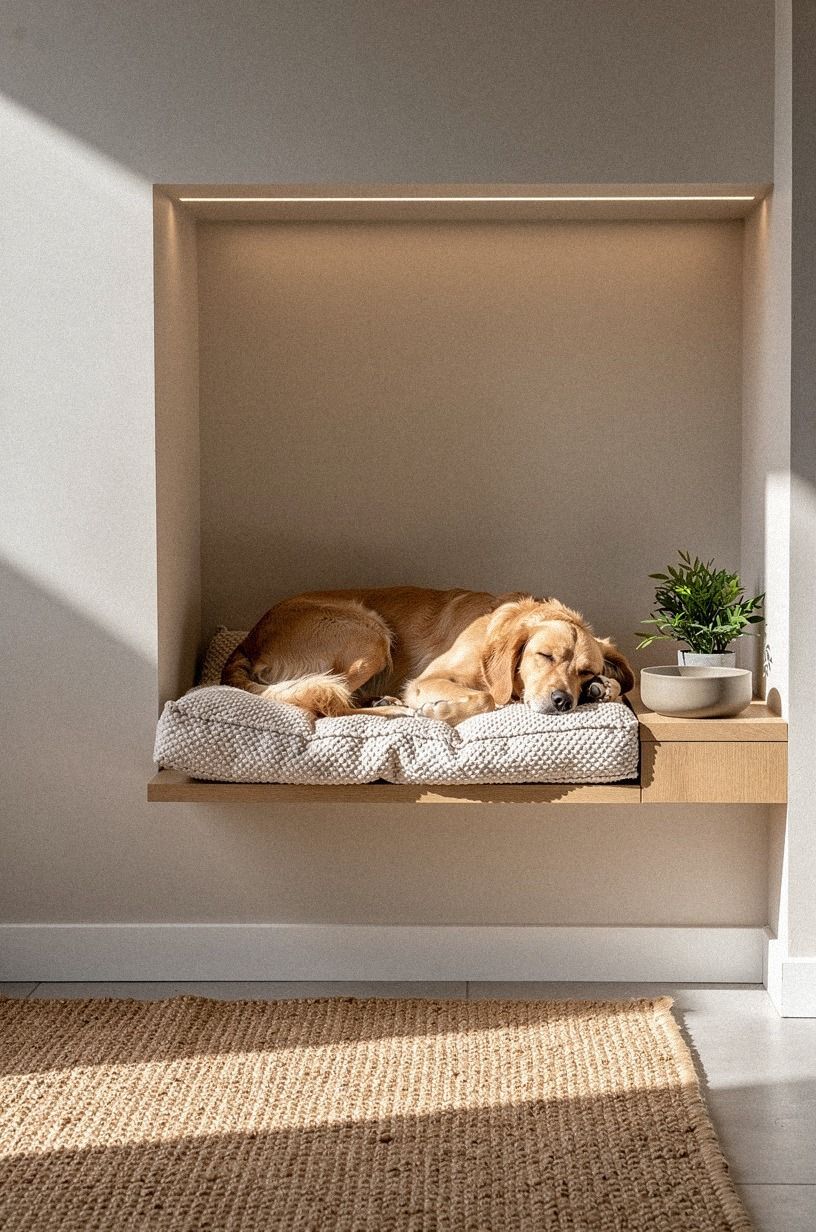
The Three-Source Light Stack makes a dog nook feel finished after sunset. Use one overhead source, one task source, and one low ambient source, then let your dog’s bed sit in the softest pool of light. Three sources per room gives you more control than one bright fixture, and your eyes won’t have to adjust from glare to shadow.
Choose a small Nero Marquina black marble ledge beneath the bed area, a dimmable ceiling fixture for cleaning, and a low lamp across the room. Your dog will have a calm corner, while you’ll still be able to find a lost toy under the sofa. I wouldn’t put a lamp inside the nook because curious noses and loose cords are a poor combination.
Keep the surrounding palette consistent with forest green, rust, and natural oak. Nero Marquina black marble with white veins adds a grounded contrast, especially beside natural oak and rust-colored blankets. You’ll get a calm, layered finish rather than a blue-white beam that makes the space feel like a waiting room.
If you’re hanging art nearby, place its center about 57-60 inches from the floor. Your dog’s bed can sit below it without making the composition feel low. For a palette with more evening depth, the fragrance notes that make a perfume smell expensive can guide your choices toward amber, smoke, and soft green.
9Mix washable textiles and set a real budget
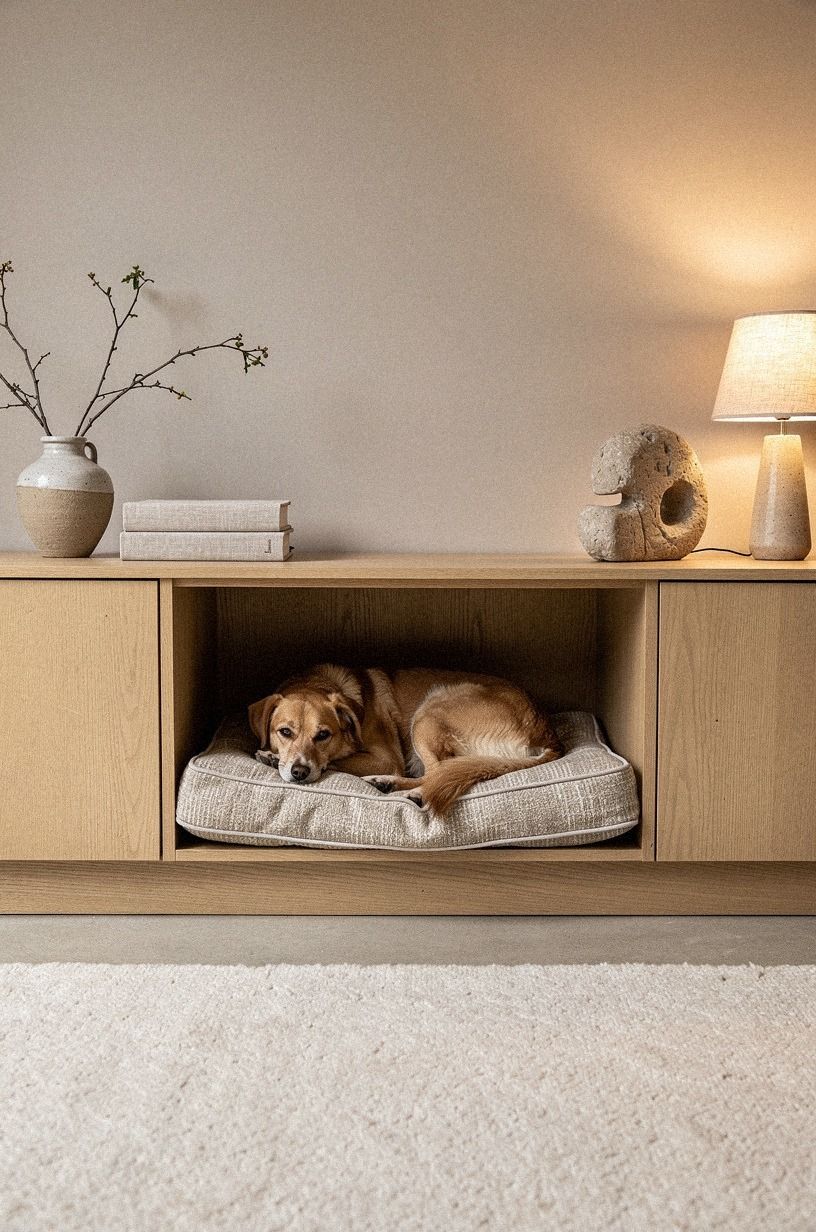
Textiles decide whether your built in dog bed living room looks inviting or merely practical. Start with one washable base, one textured bolster, and one small blanket you can move when guests arrive. Your dog gets comfort, and you won’t have to treat every muddy paw print like a design emergency.
Use dusty rose for the machine-washable main cushion, then add a removable bolster in deep-pile mohair velvet with a charcoal accent. I’d keep the velvet on a piece you can remove easily, even though its texture feels luxurious. That way, you’ll spend less time brushing fabric than enjoying the room.
The typical room-budget figures below are broad US reference points, not a promise that your dog nook will cost the same. A simple paint-and-textile refresh can stay near the lower tier, while custom millwork belongs in the high tier.
Your dog bed doesn’t need the high tier to feel considered. A charcoal rug can soften the floor, while a small brass detail connects the textiles to the surrounding furniture. If you’re comparing warm materials, the facial puffiness story about salty snacks is an odd but useful reminder that small daily choices can change the whole impression.
10Ask: can your dog bed look custom without custom work?
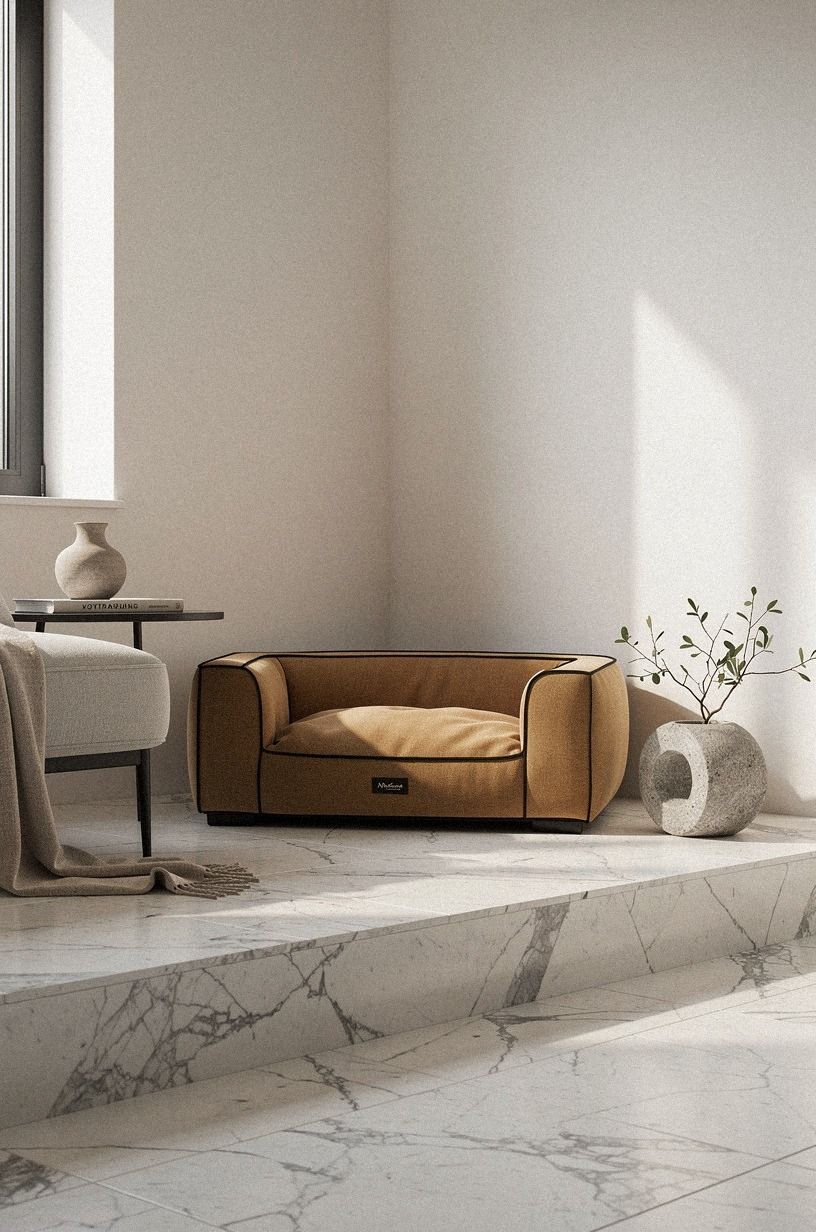
Yes, if you repeat the proportions of furniture you already own.
11Choose a rental-safe built-in dog bed
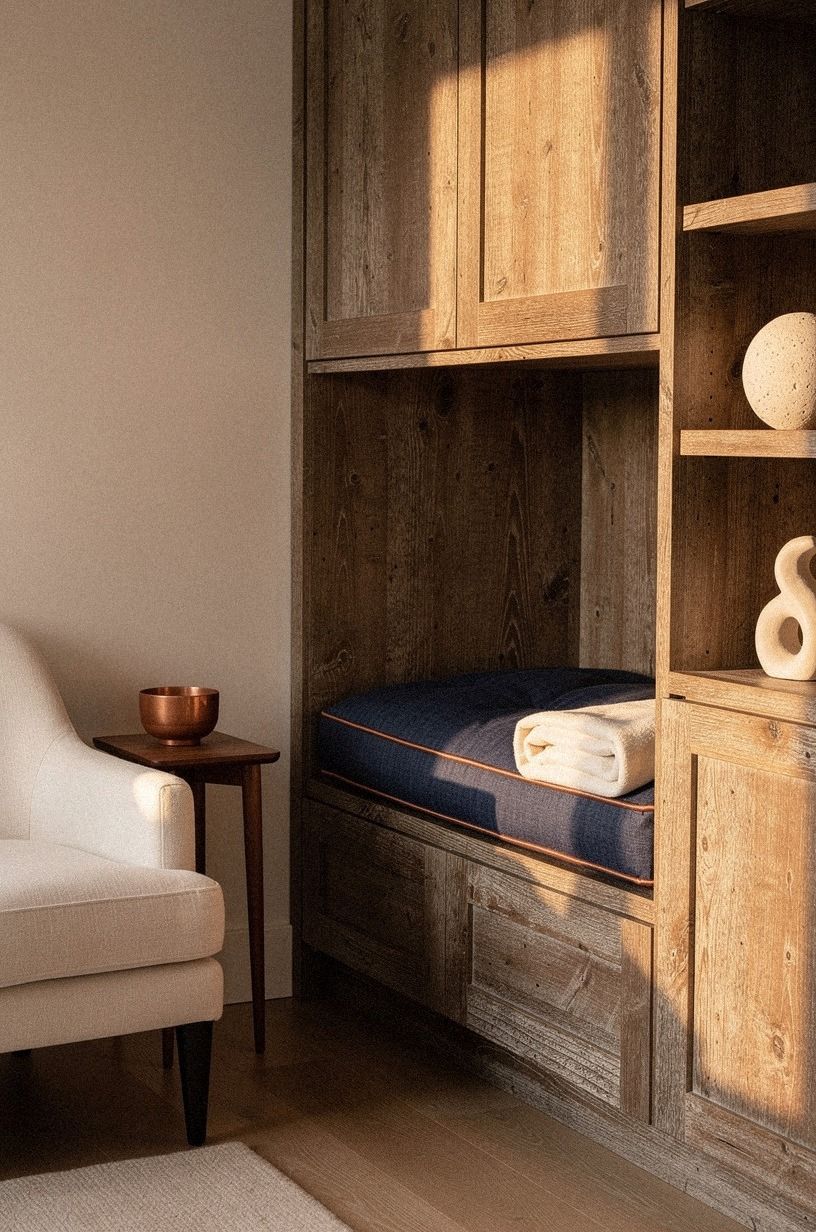
A rental-safe built in dog bed can come from a tension shelf, a freestanding bench, and one removable wall panel. You’ll create the look of a fitted nook without drilling through tile or permanently changing cabinetry. Your landlord sees a reversible setup, while your dog gets a consistent place to settle.
Choose a freestanding reclaimed weathered teak bench with enough clearance for the cushion, then paint the removable backing midnight blue. Add a copper hook or rail nearby, and keep the cushion or trim ivory. Test any removable finish in a small hidden area before committing.
Some finishes release cleanly, while others leave a sticky shadow.
A tension rod can hold an ivory linen curtain across the opening, but keep it high and loose enough for your dog to push through. You don’t want fabric wrapped around paws. I’d skip heavy drapery here and choose washed Belgian linen, which moves easily and dries quickly.
Your final layer should be a low basket for toys and a washable mat by the entrance. That’s enough to make the area feel warm and complete.
If you want a broader visual reference for restrained color, the medieval skyline above a river shows how varied textures can feel unified without matching every surface. And yes, your dog will probably still sleep on the rug sometimes!
Why I’d Build the Bed Around the Dog
I’ve designed plenty of rooms around a sofa, a lamp, or a view, but dogs expose bad planning quickly. If the cushion is too narrow, your dog abandons it. If the fabric traps heat, he moves to the cold floor.
If the opening is fussy, you’ll find toys, blankets, and a temporary bed scattered everywhere by the end of the week.
The strongest built-in dog bed ideas start with behavior, not a picture. Watch where your dog already settles.
Does he want the window, the hallway, or the spot beside your desk? That answer matters more than whether you prefer Farrow & Ball Pigeon or Sherwin-Williams Evergreen Fog. You’re building a useful habit into the room, not staging a photograph.
I also think built-ins should show restraint. A dog bed doesn’t need a miniature gallery wall, six baskets, and a custom brass plaque.
One durable cushion, one useful storage space, and one material that repeats elsewhere will carry more authority. My own first attempt had too many accessories, and my dog pushed them aside before taking a nap. Fair criticism.
The best detail is often the one you feel rather than notice: the edge of warm travertine under your hand, the quiet slide of a drawer, the cool floor outside a warm cushion. When you’re choosing finishes, ask whether they’ll improve daily life after the novelty fades. Your dog will answer with his paws.
If the bed stays empty, the design failed, no matter how refined it looks.
That’s why I’d spend money on the insert and the washable cover before decorative trim. A firm cushion protects older joints, while a removable cover saves your patience. You can repaint a wall later.
You can’t make a cheap, lumpy bed comfortable by styling a blanket over it, and your dog won’t pretend otherwise.
What People Always Want to Know
What is the best Built-In Dog Bed Ideas That Will Make Every Dog Owner Jealous for a small bed?
The best small-bed option is a low cabinet nook or an adapted IKEA KALLAX birch-effect unit because it uses vertical space without crowding your floor. Choose a firm insert, a washable cover, and an opening your dog can enter without twisting. You’ll gain storage, too.
Where can I buy Built-In Dog Bed Ideas That Will Make Every Dog Owner Jealous pieces on a budget?
Look at IKEA, Wayfair, and Target for benches, cushions, and storage units, then check Facebook Marketplace or a local thrift shop for solid wood pieces. You can often repaint a dated cabinet in Benjamin Moore White Dove and make it feel lighter without buying new furniture.
How much does a Built-In Dog Bed Ideas That Will Make Every Dog Owner Jealous makeover cost?
A small makeover can run about $100 to $300 when you reuse furniture and spend on paint, a cushion, and washable fabric. Custom millwork costs more. Your free upgrades include measuring carefully, editing accessories, and moving an existing lamp or basket.
Can I create a Built-In Dog Bed Ideas That Will Make Every Dog Owner Jealous on a budget?
Yes, and you can start with three low-cost moves: repurpose a bench, paint the nook, and sew or buy one removable cover. Performance cotton is a sensible first purchase. You’ll get a cleaner bed without paying for cabinetry, wiring, or permanent construction.
Is a Built-In Dog Bed Ideas That Will Make Every Dog Owner Jealous worth it in a small space?
Yes, because a small room benefits from furniture that performs two jobs. A window seat can hold your dog and a person, while a cabinet nook can hide supplies. Keep the bed low, repeat one finish, and leave a clear path around it.
Is a Built-In Dog Bed Ideas That Will Make Every Dog Owner Jealous a good idea for a rental?
Yes, if you use a freestanding bench, tension rod, removable wallpaper, and a lightweight panel. Avoid permanent adhesive until you test it. Your dog can keep a familiar retreat, and you can take the whole setup with you when the lease ends.
Where I’d Start First
If I had to pick one, I’d start with the window-seat dog bed. Your dog gets daylight and a lookout, while the room gains seating and hidden storage instead of one more object. Choose a washable cotton cover, Pin the idea for later, and measure the wall before buying anything.