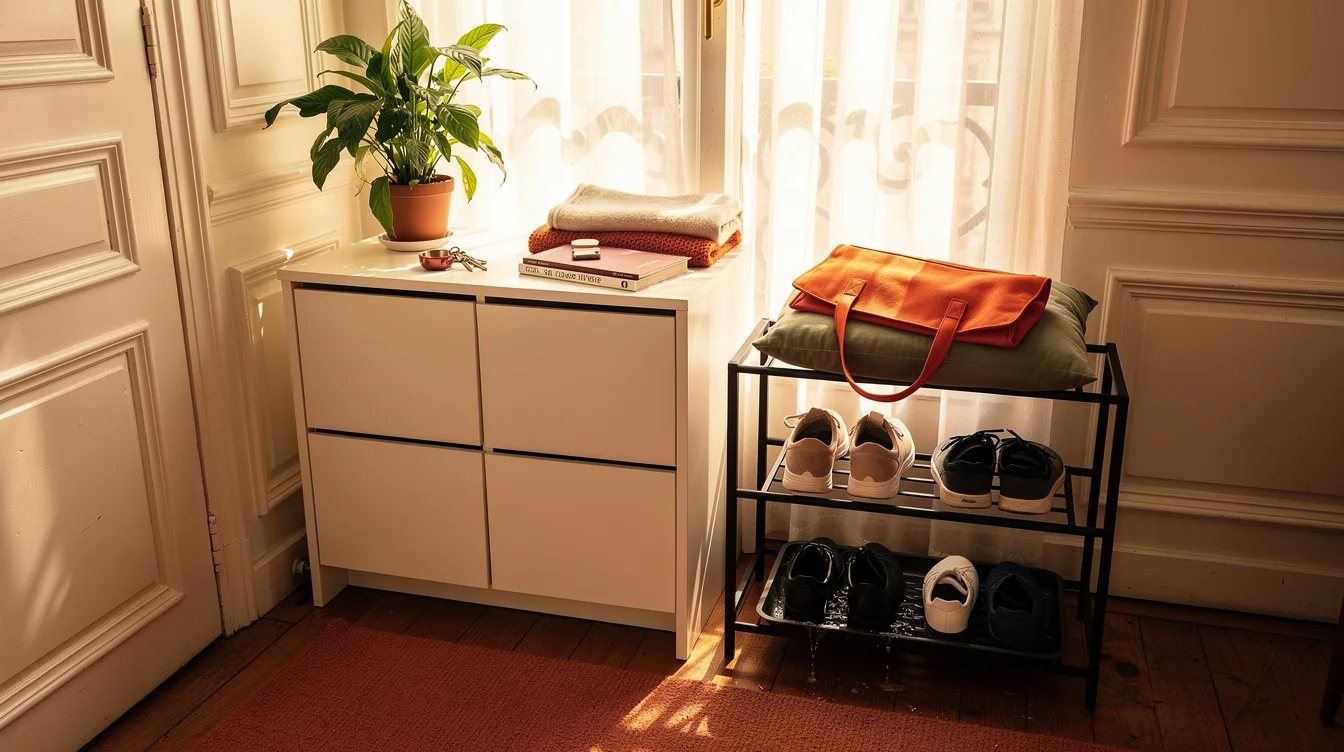
Your Rental Entryway Is Eating Space: 13 IKEA HEMNES and MACKAPÄR Mistakes
19 november 2026A rental entryway can lose its breathing room to a cabinet only about 9 inches deep, especially when doors, trim, and wet shoes compete for the same passage. IKEA’s HEMNES and MACKAPÄR systems solve different problems, and the wrong choice can make a small hall harder to use.
These renter-focused fixes compare their footprints, materials, storage limits, seating, and anchoring requirements for a practical 2026 setup.
What you will find inside
- Misreading the Hallway’s Real Depth
- Expecting a No-Drill Rack to Do Everything
- Treat Wall Anchoring as Optional
- Crowd the Wall With a Full-Height Rack
- Ignore the Cabinet Door Projection
- Choose Seating Without Measuring the Sit-Down Zone
- Assign One Piece to Every Entryway Task
- Buy Capacity Before Counting the Shoes
- Confuse a Shallow Cabinet With a Light Material
- Use the Top as a Permanent Drop Zone
- Treat Cross-Border Prices as Local Guarantees
- Skip the Slimmer Alternative
- Start With the Smallest Useful System
Misreading the Hallway’s Real Depth
A shallow cabinet can protect a rental hallway from feeling pinched, but every inch still matters once doors, trim, and passing feet enter the picture. The HEMNES four-compartment shoe cabinet is about 42 inches wide, 9 inches deep, and 40 inches high, while the MACKAPÄR sliding-door cabinet reaches about 14 inches deep.
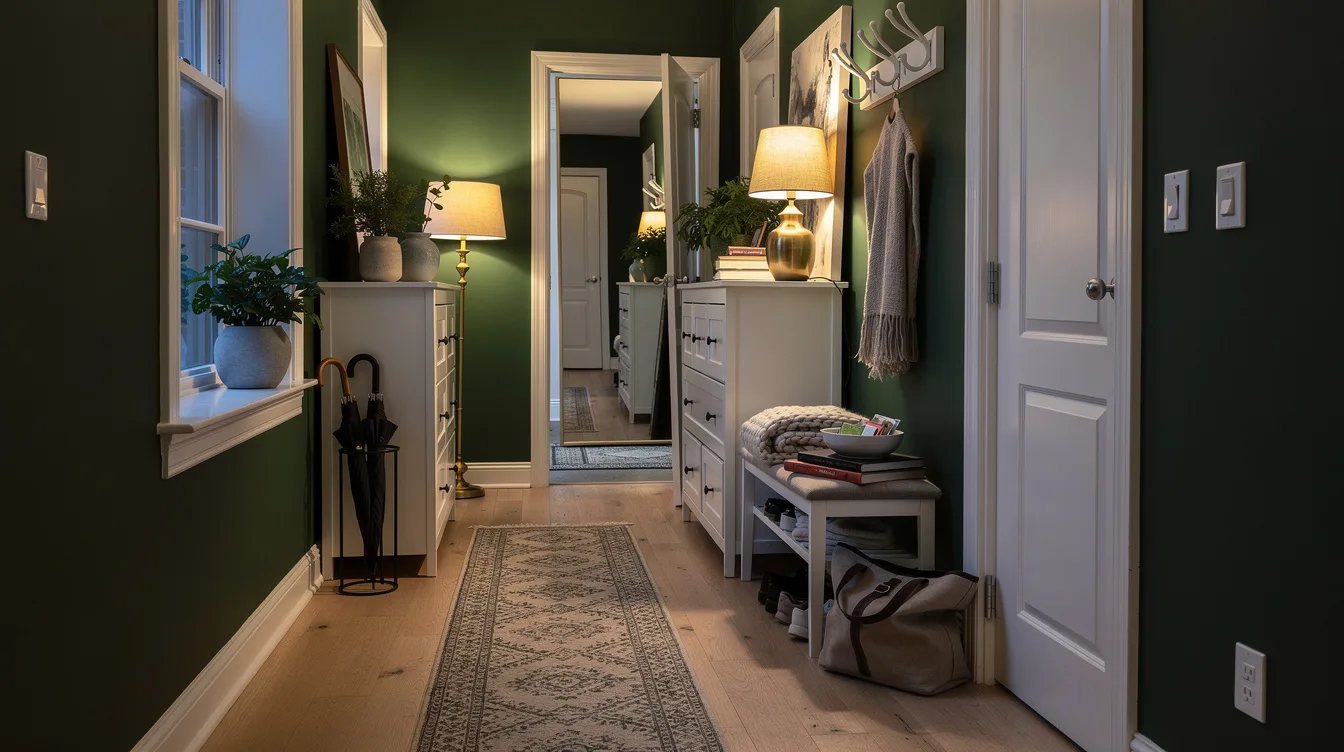
In a hallway about 37 inches wide, that difference leaves roughly 28 inches of passage with HEMNES and about 23 inches with MACKAPÄR before accounting for baseboards. Measure the clear walking route, not the empty wall, and choose the piece that leaves room for daily movement.
Expecting a No-Drill Rack to Do Everything
The MACKAPÄR low shoe rack is the sensible starting point when drilling is off the table. It is about 31 inches wide, 13 inches deep, and 16 inches high, with an open powder-coated steel frame that keeps footwear visible and easy to reach.
That footprint handles the landing zone, not every coat, bag, and umbrella in the home. Add a BAGGMUCK tray beside it for wet shoes, remembering that the tray is about 14 inches deep and may extend slightly farther than the rack.
Treat Wall Anchoring as Optional
The HEMNES shoe cabinet uses two front legs, but those legs do not make the unit freestanding. IKEA requires wall fixing, so the cabinet belongs on the rental plan only after the landlord or property manager approves the attachment method.
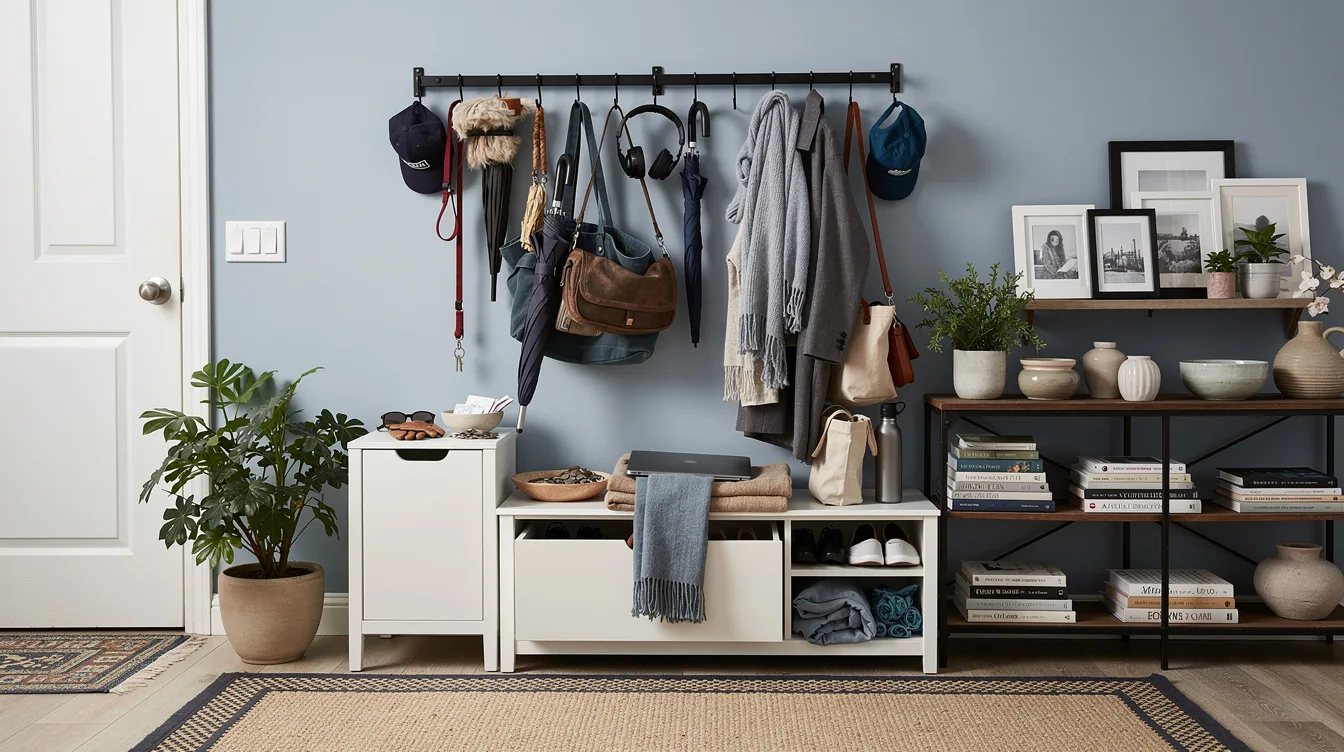
The same caution applies to the roughly 79-inch-tall MACKAPÄR coat and shoe rack. Its ten hooks and shoe shelves make it useful in a small entry, yet the tall steel frame also requires wall anchoring, making permission part of the purchase.
Crowd the Wall With a Full-Height Rack
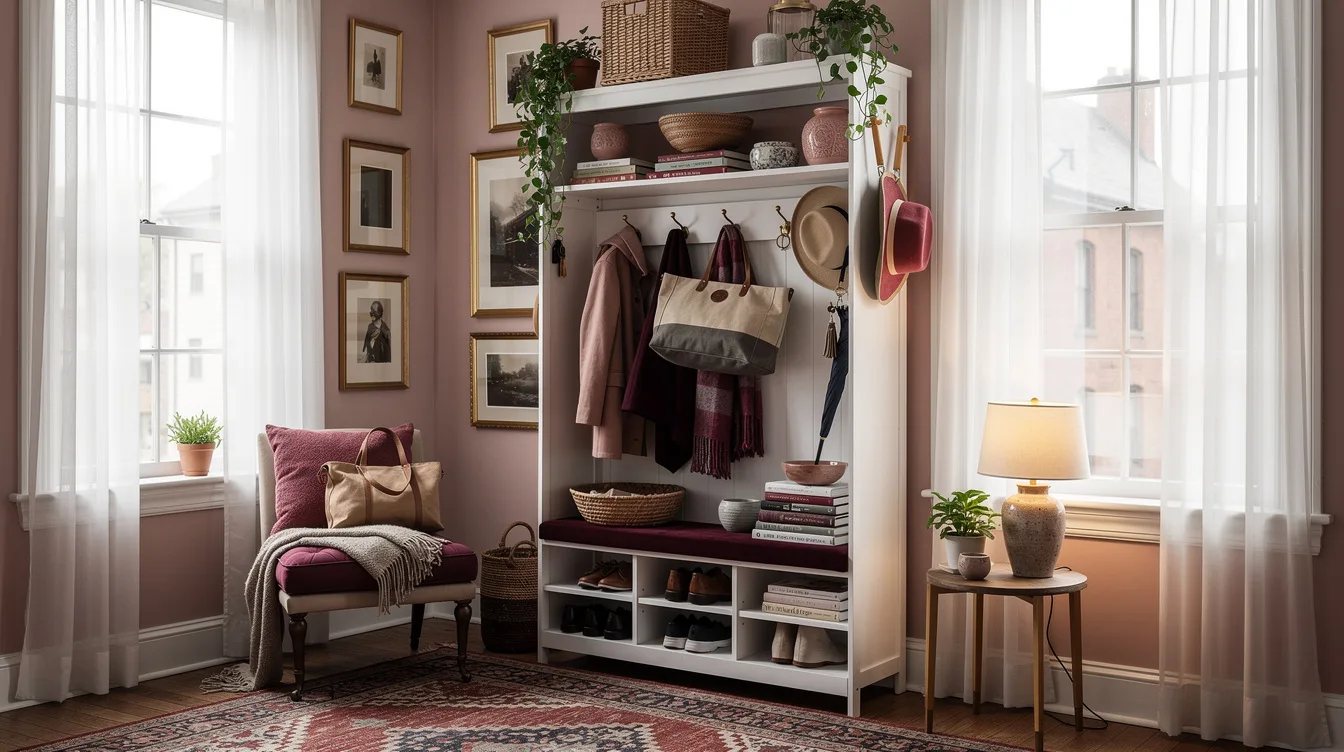
A full-height organizer can make a narrow entryway feel visually heavy before it becomes physically inconvenient. The MACKAPÄR coat and shoe rack is about 31 inches wide, 13 inches deep, and 79 inches high, so it needs a clear wall with enough room above the door trim.
Use it where coats genuinely need to live near the entrance, rather than placing it on the first available wall. In a low-ceiling rental or a hall with prominent molding, a low rack plus separate hooks can keep the sightline calmer.
Ignore the Cabinet Door Projection
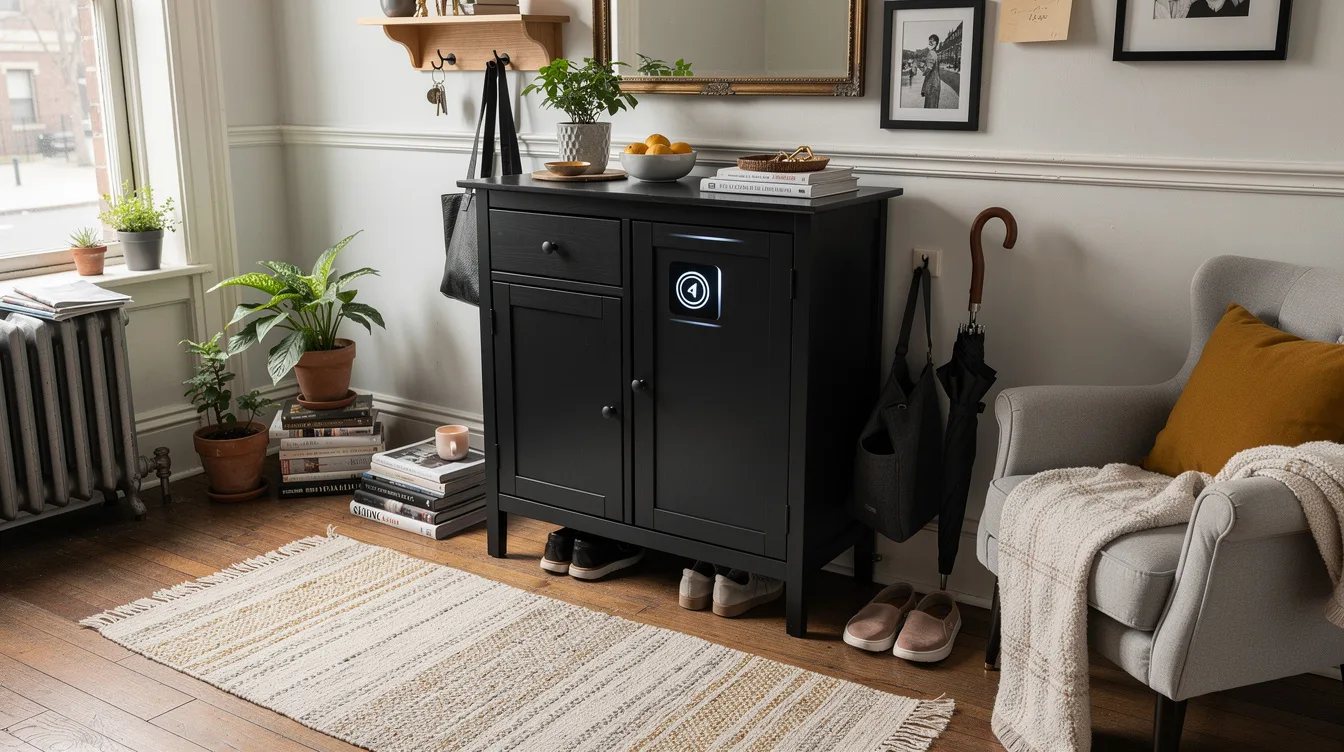
Closed storage still needs open space. The MACKAPÄR sliding-door cabinet is about 31 inches wide, 14 inches deep, and 40 inches high, and its shelves can sit flat or at an angle for roughly 16 pairs of shoes.
The HEMNES compartments tilt open in a different direction, so the cabinet’s shallow depth does not tell the whole story. Open each compartment on the floor plan with the door and trim included, then keep the walking route clear when the cabinet is in use.
Choose Seating Without Measuring the Sit-Down Zone
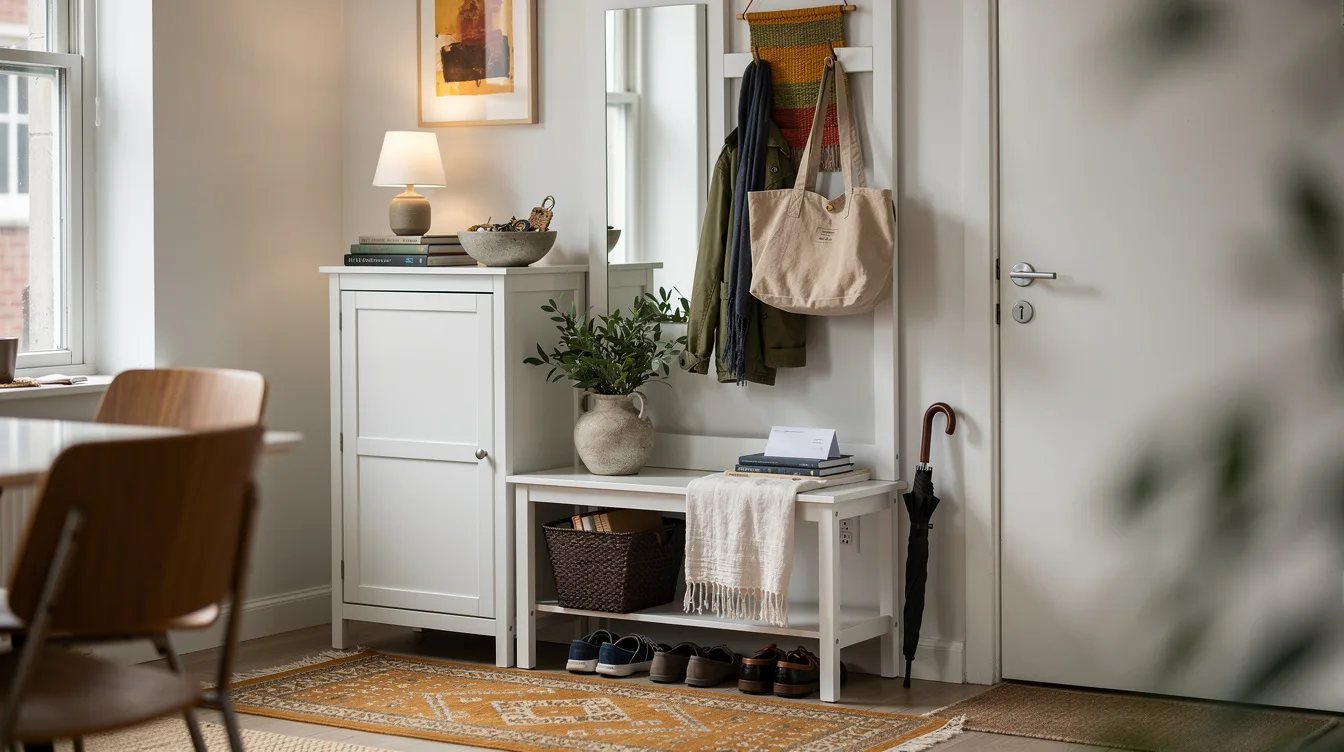
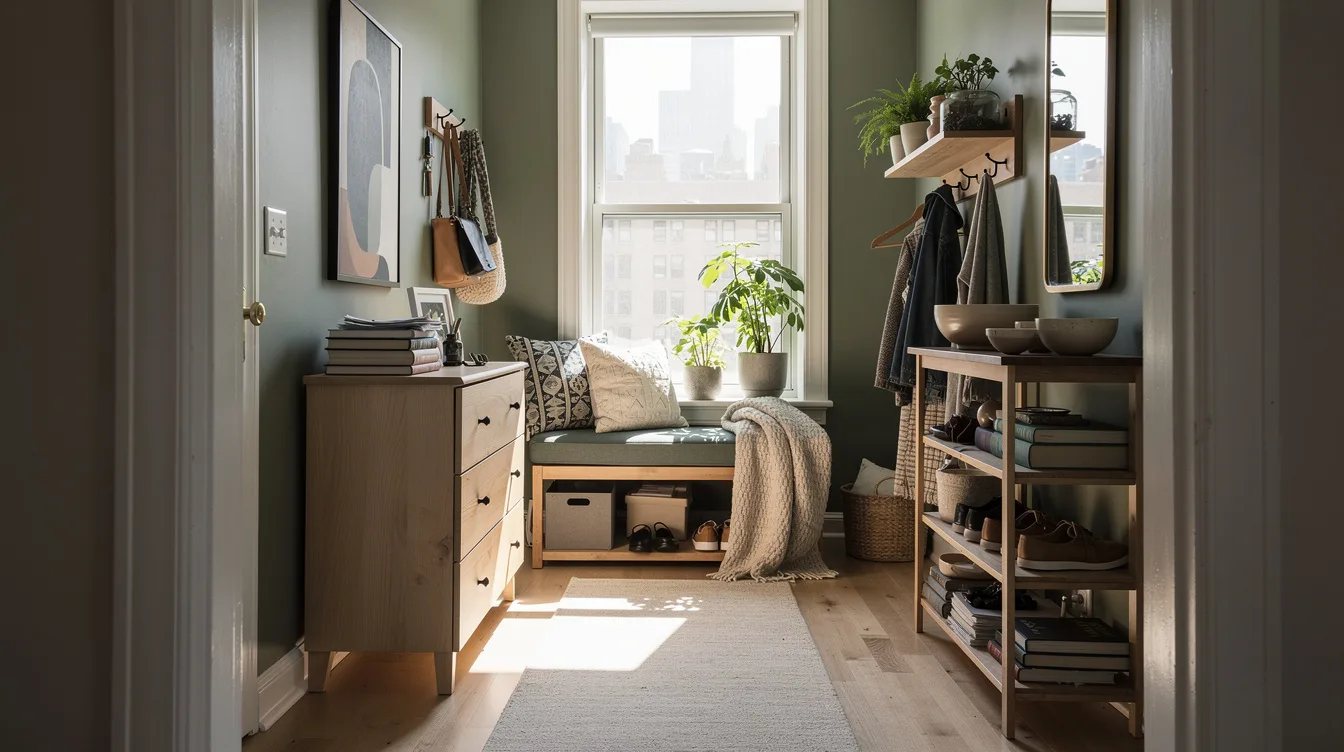
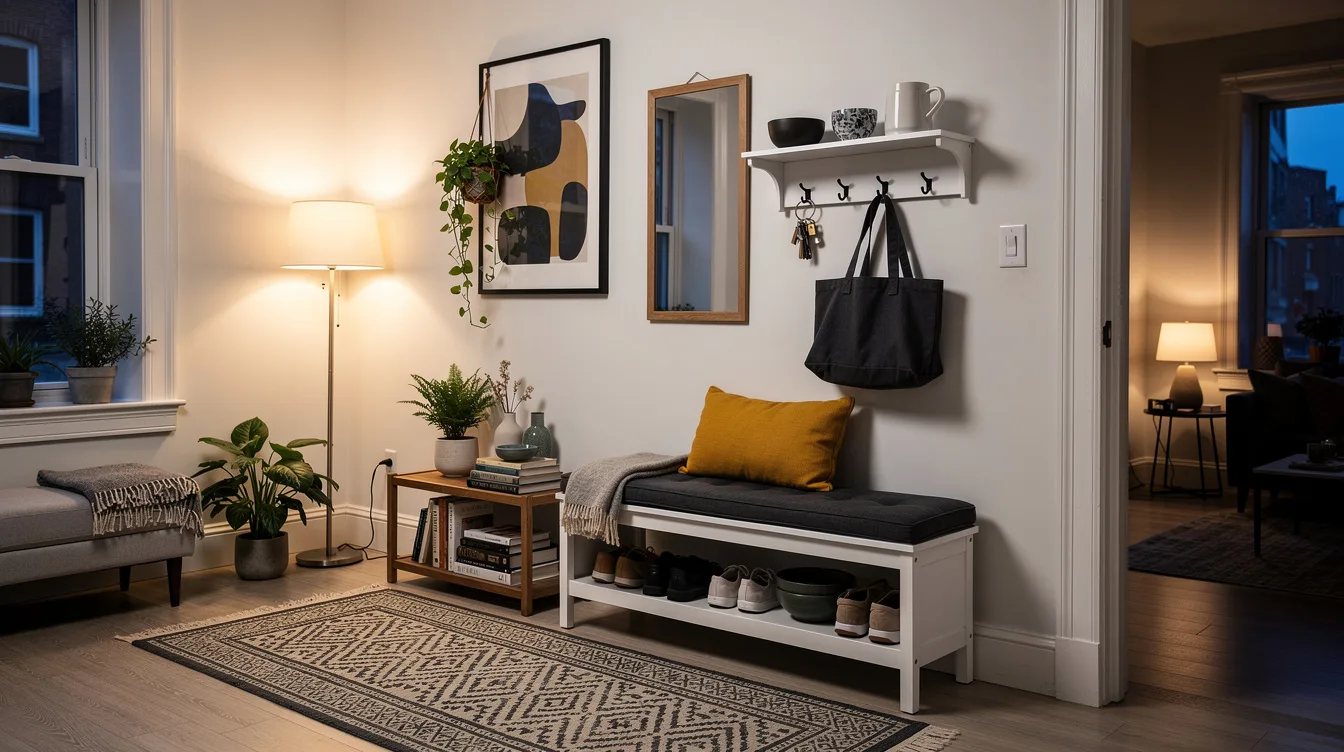
A shoe bench works only when the renter can actually sit down without blocking the door. The MACKAPÄR sliding-door bench is about 39 inches wide, 15 inches deep, and 20 inches high, with ventilated mesh doors and adjustable shelves below the seat.
For a shorter wall, the HEMNES open shoe bench is about 33 inches wide, 13 inches deep, and 26 inches high. Its painted solid birch and powder-coated steel tubes give it a lighter, more open profile, while MACKAPÄR is the stronger choice for hidden footwear and a lower seat.
Assign One Piece to Every Entryway Task
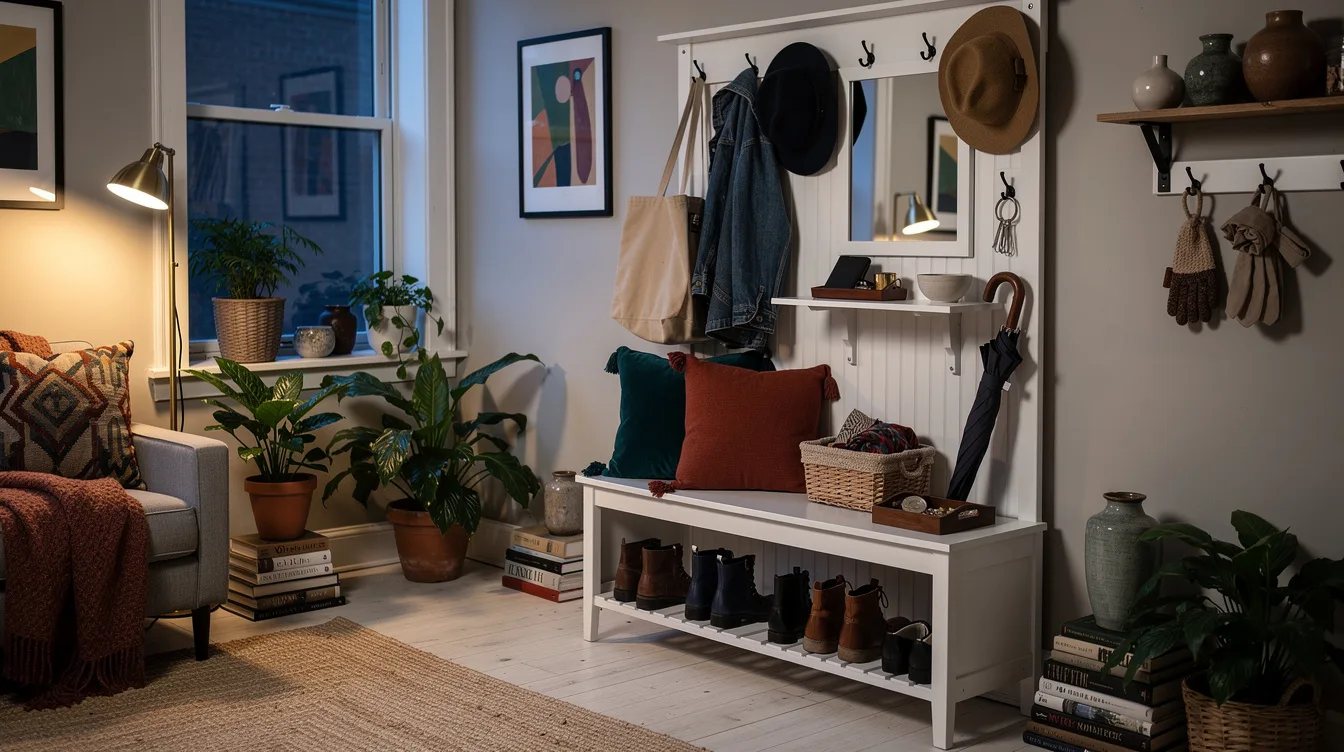
Renters often ask one cabinet to hold shoes, coats, keys, bags, and cleaning supplies, then blame the furniture when the doorway becomes crowded. The MACKAPÄR bench handles seating and shoe storage well, but it does not replace a dedicated coat solution or a small landing surface.
Give each need a defined place: shoes below, coats above, keys on a compact tray, and wet footwear on a washable mat. This division keeps the furniture useful without forcing a narrow cabinet to become a catchall.
Buy Capacity Before Counting the Shoes
The HEMNES four-compartment cabinet holds about eight pairs, which suits a compact household with a controlled seasonal rotation. Its shallow profile is valuable, but the storage limit is real once boots, wide sneakers, and winter footwear enter the picture.
The MACKAPÄR cabinet holds about 16 pairs, making its extra depth worthwhile for a larger shoe collection. Count the pairs that actually live by the door, then add only modest allowance for guests and seasonal changes.
Confuse a Shallow Cabinet With a Light Material
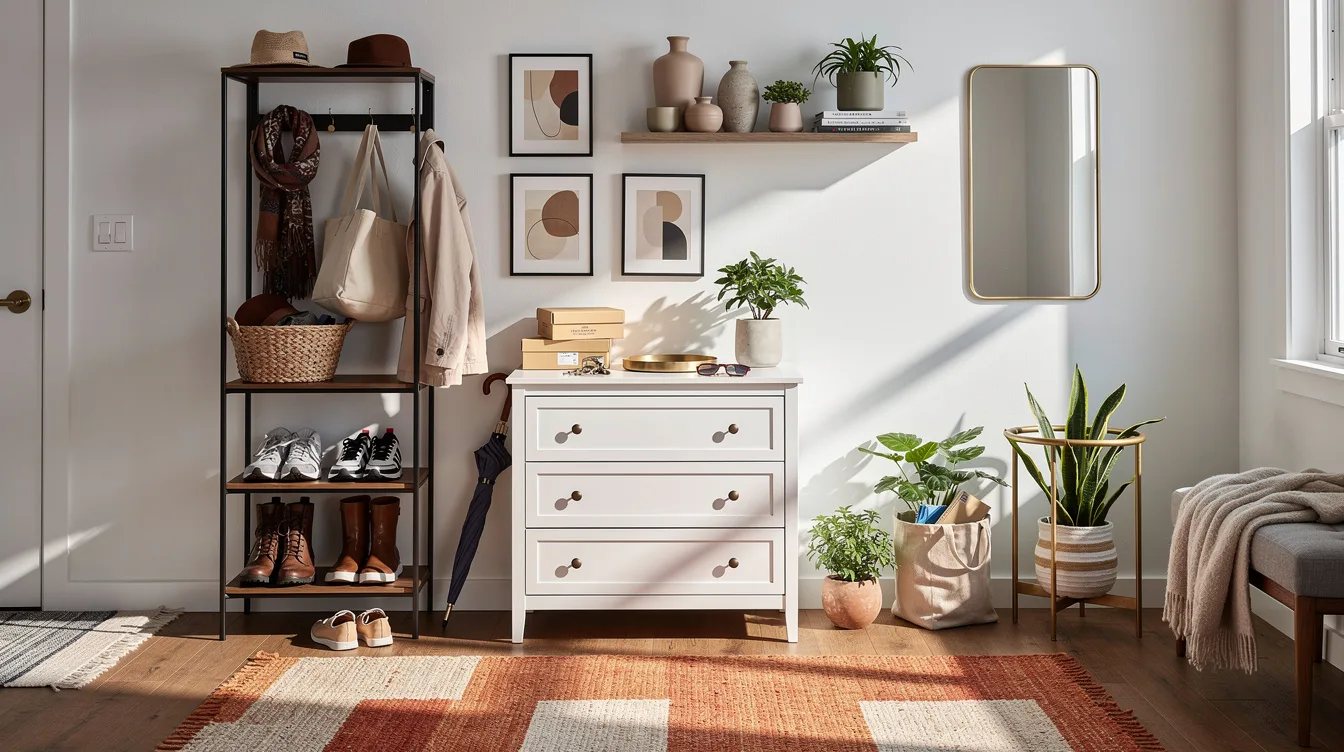
Depth affects circulation, while material affects how the piece reads in the room. The white HEMNES cabinet uses particleboard and fiberboard, while the black-brown version uses solid pine for its main structure, so the two finishes can create different visual weight.
MACKAPÄR brings a more utilitarian steel language through its powder-coated frames and mesh doors. Choose the finish that works with the rental’s existing hardware, flooring, and wall color, because a mismatched industrial note is harder to soften in a small entry.
Use the Top as a Permanent Drop Zone
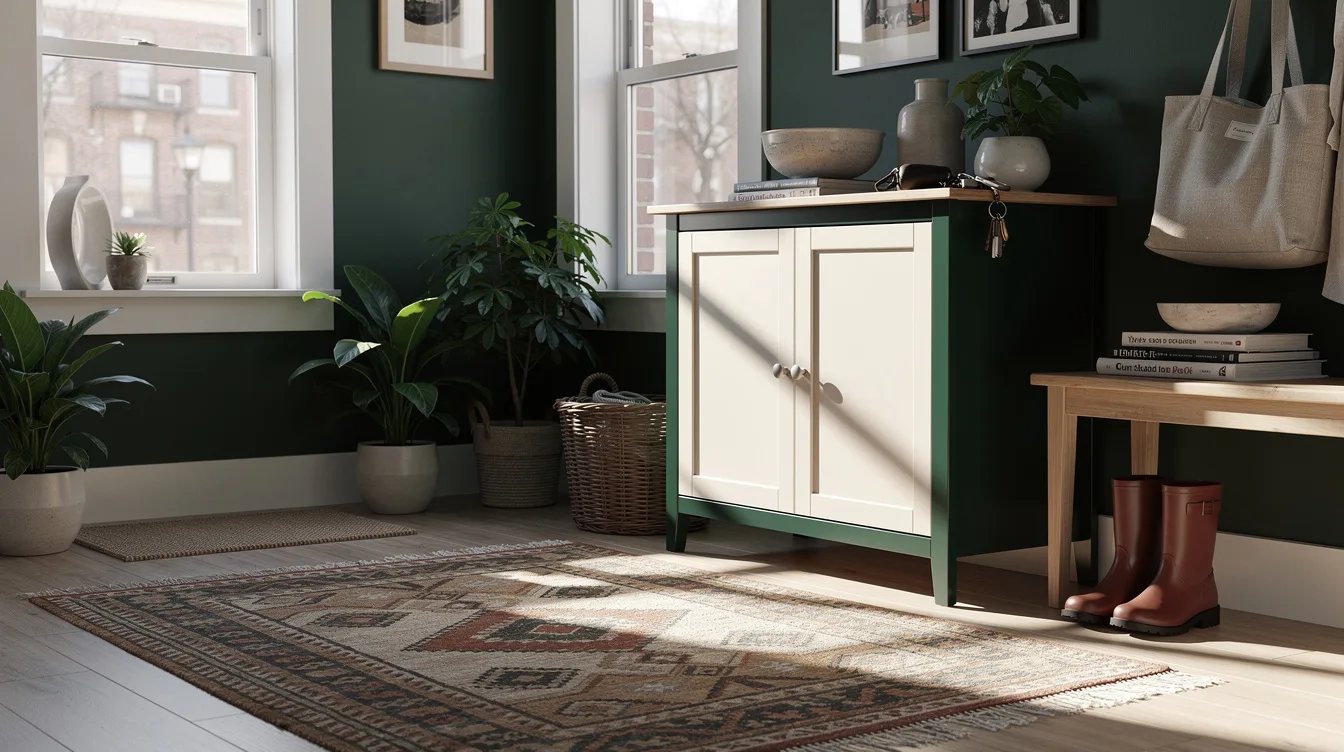
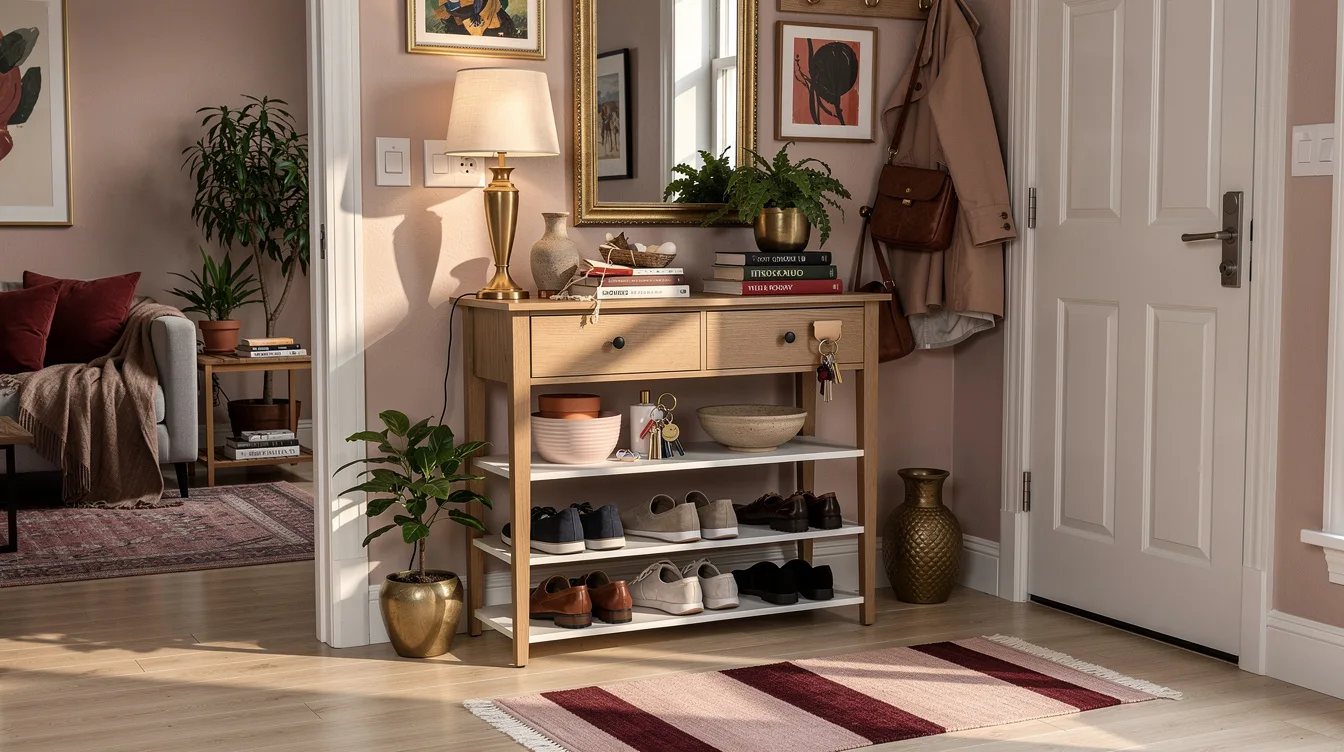
A narrow cabinet top should support arrival, not collect every object that enters the home. The HEMNES four-compartment cabinet gives you about 9 inches of depth, enough for a small key dish and perhaps one compact lamp or decorative object.
Keep the surface intentionally limited so the entry remains easy to clean and visually open. A single tray, a wall-mounted mirror, and a hook for the daily bag are more useful than a deep basket that spills into the passage.
Treat Cross-Border Prices as Local Guarantees
IKEA France listings and nearby European benchmarks can establish a relative price ladder, but they do not promise the same stock, delivery cost, or dollar price for an American shopper. The MACKAPÄR low shoe rack sits in the entry-level category, while benches and enclosed cabinets require a larger budget.
For a 2026 rental plan, compare the current local listing at checkout and keep the furniture choice separate from the currency conversion. A product that looks inexpensive on a foreign page can lose that advantage after shipping, availability, or exchange-rate changes.
Skip the Slimmer Alternative
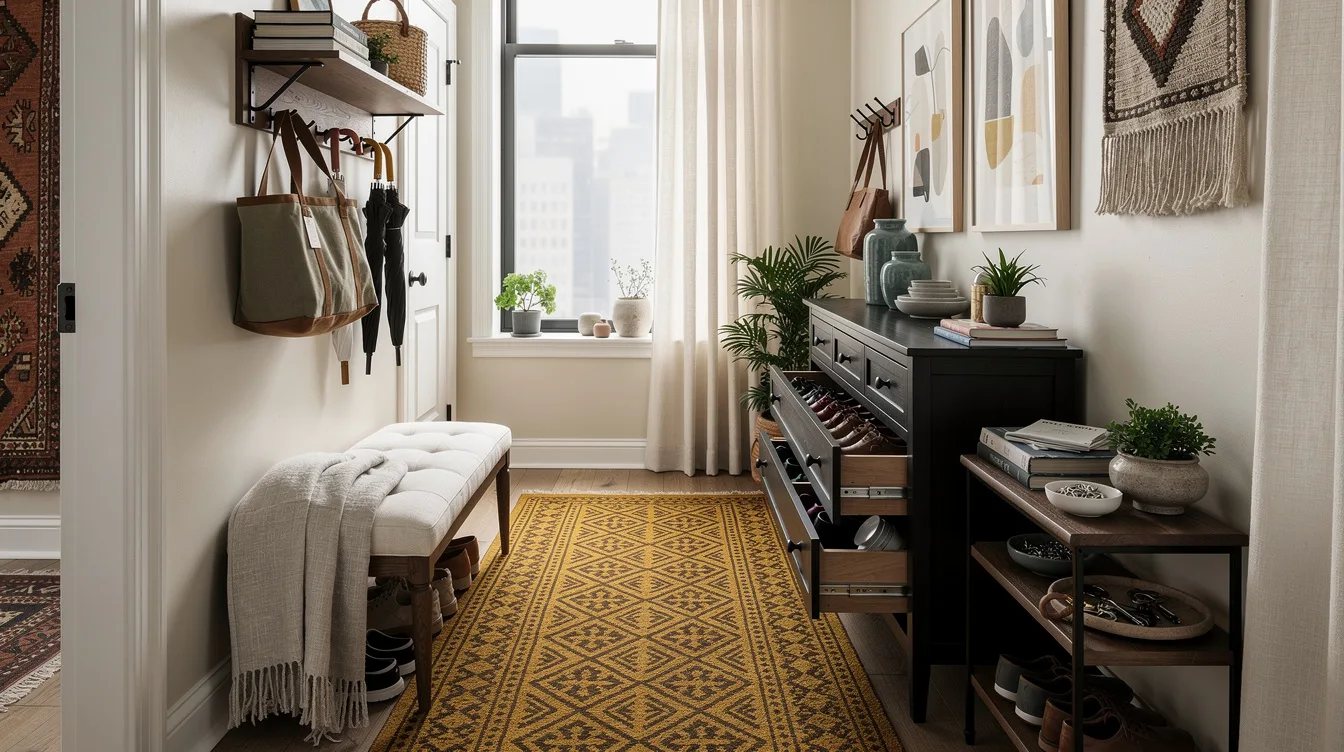
If the HEMNES four-compartment cabinet is unavailable, IKEA France lists the GULLABERG four-compartment cabinet at about 41 inches wide, 9 inches deep, and 42 inches high. That similar shallow footprint makes it a practical comparison for renters who need closed shoe storage along a tight wall.
GULLABERG still needs to be evaluated for anchoring, door clearance, and local availability before it replaces HEMNES. Use the alternative because it fits the measured entry, not because a familiar product name feels safer.
Start With the Smallest Useful System
The strongest rental entryway usually begins with one clearly defined problem: wet shoes, missing seating, or coats with nowhere to land. Choose the MACKAPÄR low shoe rack for a no-drill shoe station, the bench for a sit-down entry, or HEMNES when a genuinely narrow wall can accept approved anchoring.
Build outward only after the first piece has survived the daily routine. Measure the clear passage, confirm the wall-fixing plan, and count the footwear before ordering anything larger.
Keep reading
- Awkward L-Shaped Closet Eating Your Space? Wayfair Systems Help
- Narrow Hallway Eating Your Entry Space? 14 Lowe's Benches Under 36 Inches
- Tiny Balcony Eating Your Floor Space? 14 IKEA Foldable Finds
Measure the walking route first, settle the anchoring question second, then buy only the storage your shoes and coats actually require. That order keeps the entryway reversible, usable, and easier to live with.


