No-Fuss Living Room Rule for a Sofa in Front of a Bay Window
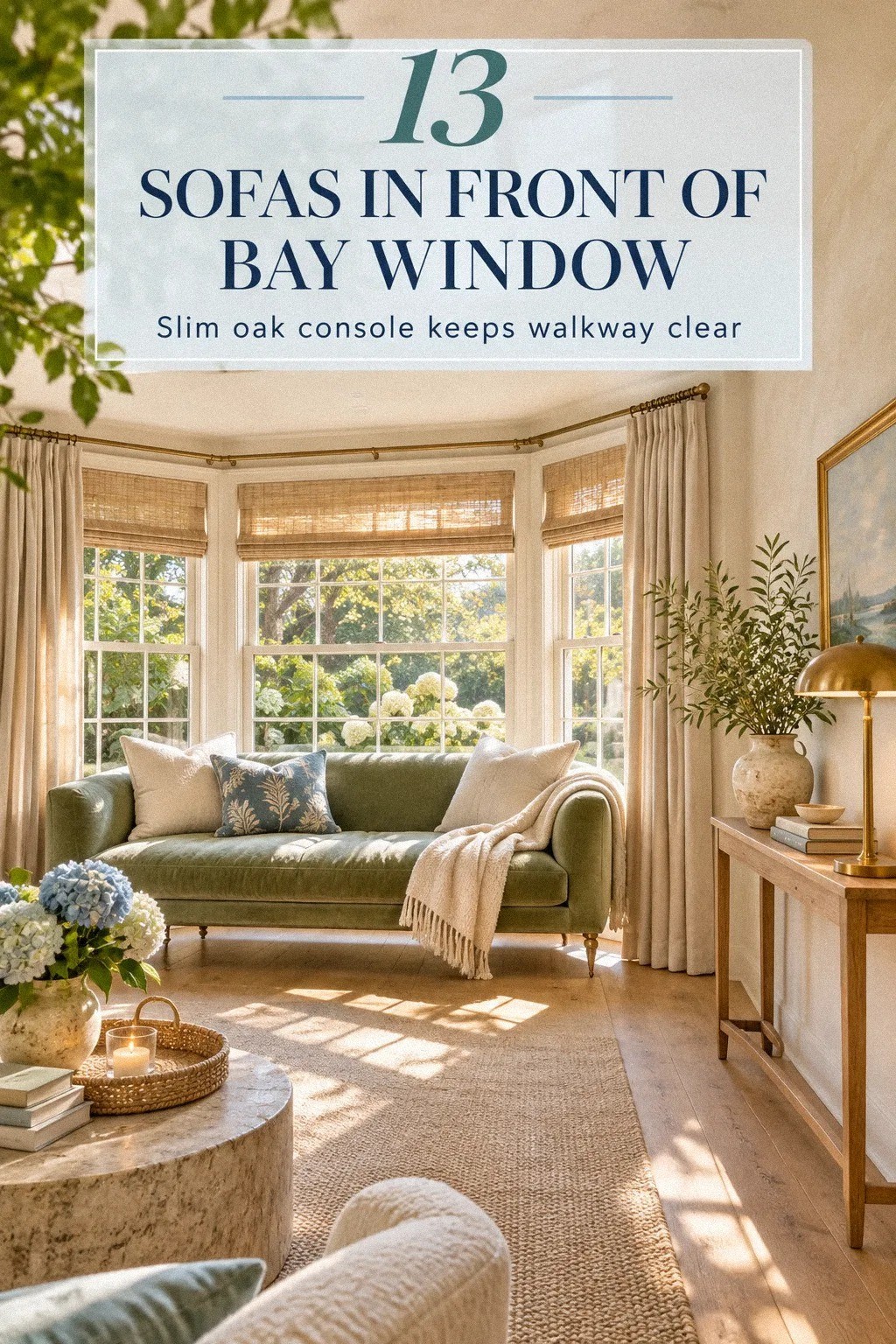
14 november 2026Yes, a sofa can go in front of a bay window if you leave breathing room for light, curtains, and circulation. I learned that after pushing a couch too close to the glass and turning the whole room into a furniture bottleneck. The fix was simple: measure first, float the sofa, then build a warm, inviting room around it.
- Float the Bay Window Sofa With an Air Gap
- Measure the Couch in Front of the Bay Window First
- Layer the Two-Wood Rule for a Warmer Bay Window Living Room
- Anchor the Sofa With a Full-Size Rug
- Can You Keep the View With a Couch in Front of a Bay Window?
- Swap Heavy Curtains for Soft Linen Panels
- Build the Three-Height Light Stack
- Paint the Bay Frame, Not the Glass
- Choose Sofa Depth Over Drama
- Use a Round Table Instead of a Boxy One
- Frame the Bay Window With One Tall Plant
- Mix Warm Wood Over Cold Metal
- Face the Room Instead of the Window
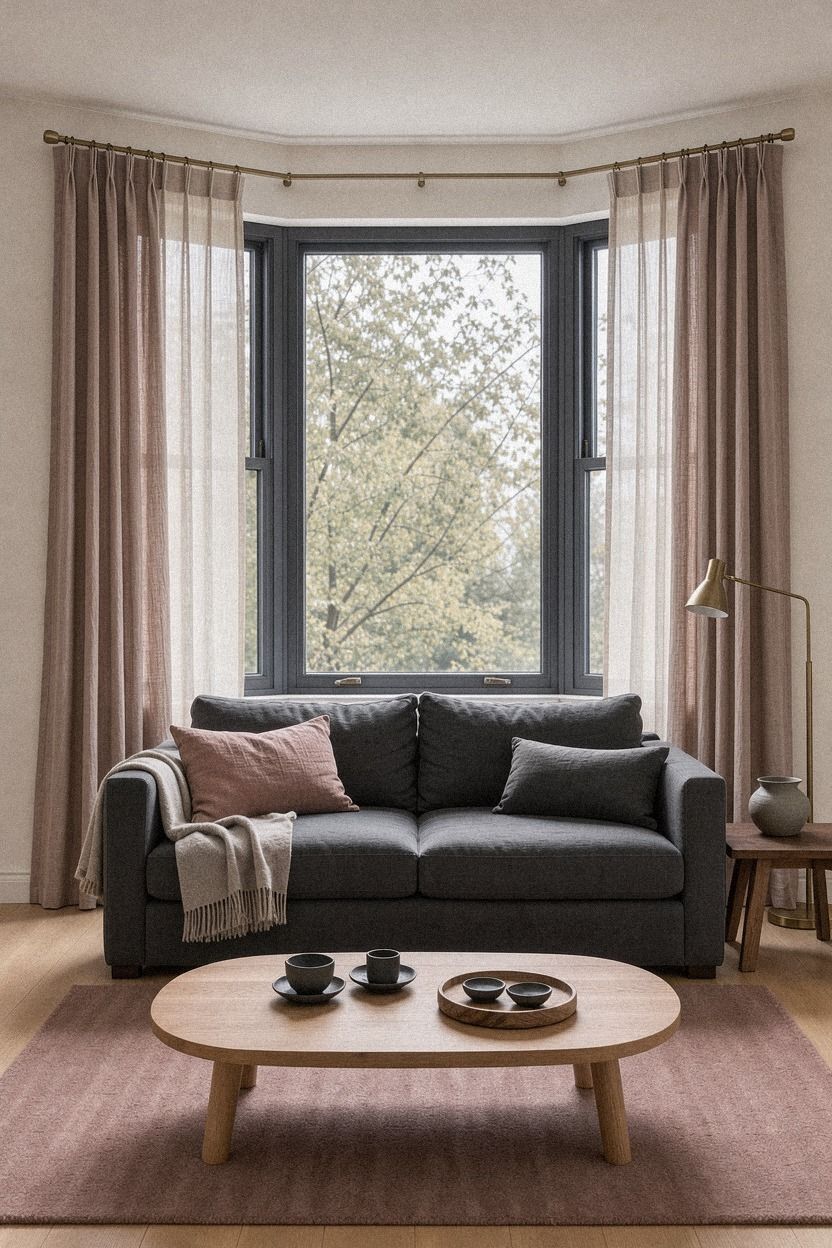
1Float the Bay Window Sofa With an Air Gap
The easiest layout is a sofa floating several inches in front of the bay window instead of being pressed against the trim. Your eye will still read the window as the room’s luminous focal point, while the sofa creates a comfortable landing zone. A 35 to 40 inch deep washed Belgian linen sofa in dusty rose or charcoal usually gives you enough seating without swallowing the projection.
Leave space behind the sofa for curtains, radiator heat, or a narrow console. You don’t need a huge gap.
You need one that lets your hand reach the window covering and keeps the cushions from rubbing the wall. I’d skip a deep sectional here because it blocks more glass than you’ll expect.
A low sofa in washed Belgian linen works well because its clean back keeps the bay feeling open. Brass details can warm the charcoal palette, while dusty rose upholstery makes the room feel softer. If you’re working with a smaller room, choose a sofa with exposed legs and a slim arm.
Your floor will show through, and that visual gap makes the furniture feel lighter, airier, and less imposing.
But don’t float the sofa so far that you lose the conversation zone. Your coffee table should stay close enough for a mug, with 16 to 18 inches between the sofa edge and table. That distance feels relaxed without making you lean forward.
The gap also gives you a little flexibility. You’ll be able to shift the sofa when you clean, adjust the curtains, or discover that the afternoon sun is stronger than expected. A thoughtful layout should feel practical, graceful, and easy to live with.
2Measure the Couch in Front of the Bay Window First
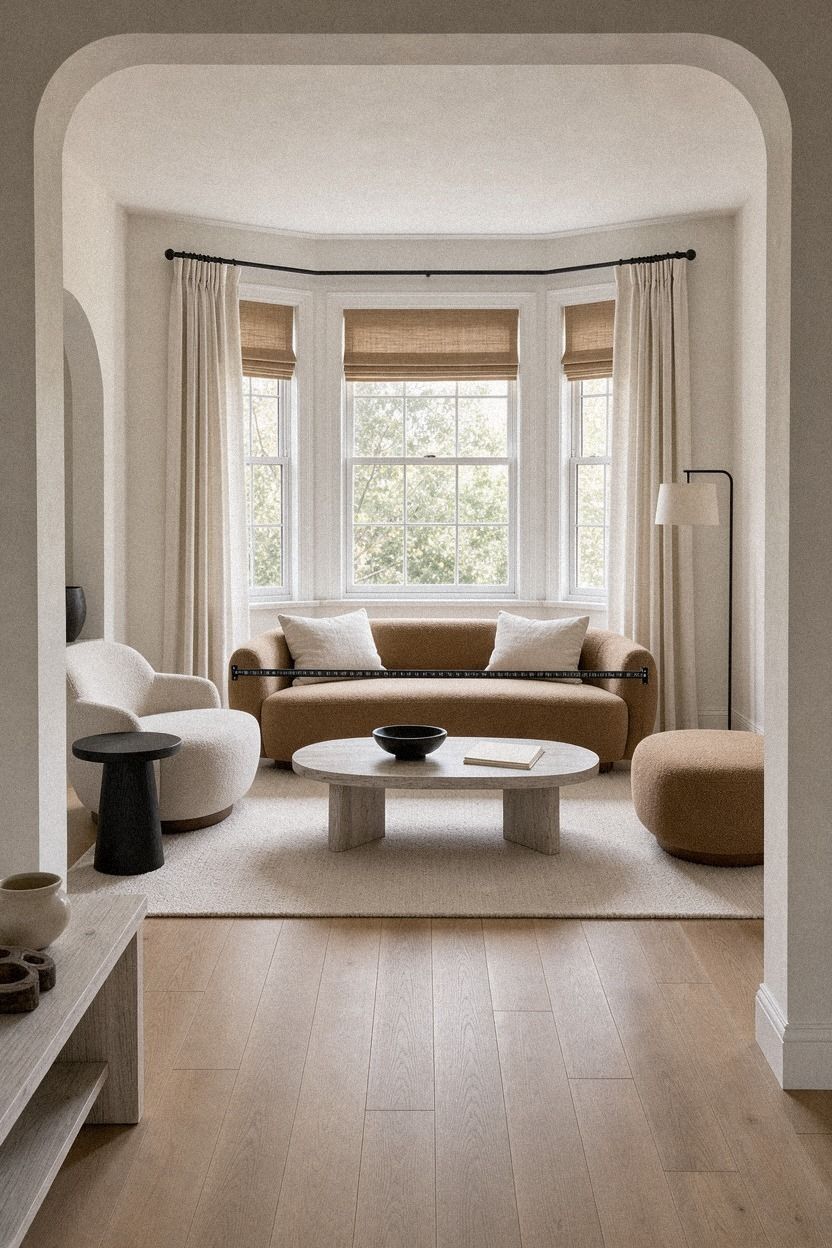
Before you shop, measure the window projection, the wall returns, and the walking path into your room.
3Layer the Two-Wood Rule for a Warmer Bay Window Living Room
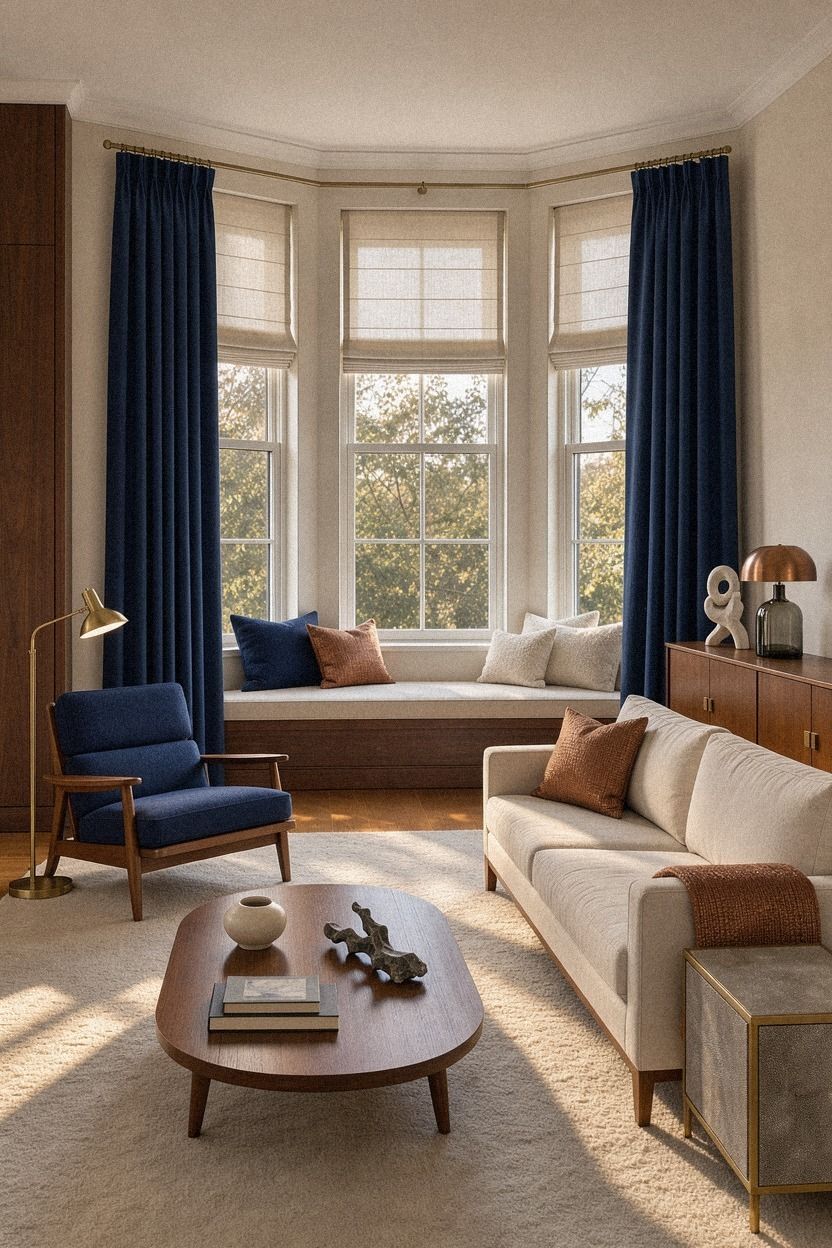
The Two-Wood Rule keeps your sofa arrangement from feeling like a showroom. Use one wood tone for the larger piece, such as an oak coffee table, and a second wood tone for a smaller accent, such as a dark frame. Your bay window will look collected instead of overly matched.
I like a midnight-blue sofa with ivory upholstery, copper lighting, and one shagreen accent because the texture stays visible in afternoon light. You don’t need three finishes competing beside the glass. Two are enough to create contrast, and you’ll avoid the pale, flat look that can happen when every surface is the same blond wood.
Keep one wood warm and one slightly deeper when you use them. A dark wood coffee table can ground a light sofa, while a small shagreen stool keeps your reading lamp from looking lost. If you’re renting, a secondhand table with a good surface can do the job for far less money.
The result feels layered, handsome, and quietly personal. For another perspective on making a shared space feel welcoming, see this guide to creating an inviting family space. The useful principle is simple: let the room support real connection instead of merely looking finished.
4Anchor the Sofa With a Full-Size Rug
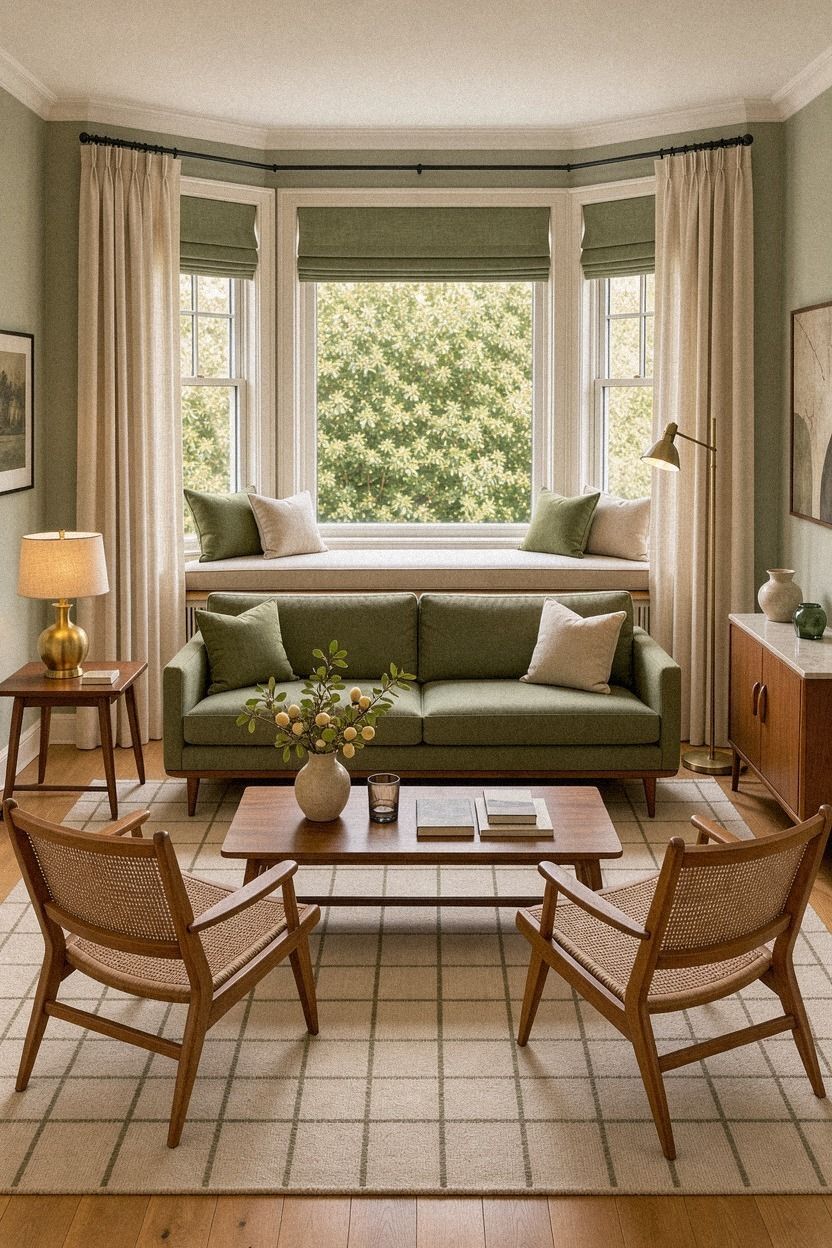
A rug should connect the sofa, coffee table, and at least the front legs of your chairs.
5Can You Keep the View With a Couch in Front of a Bay Window?
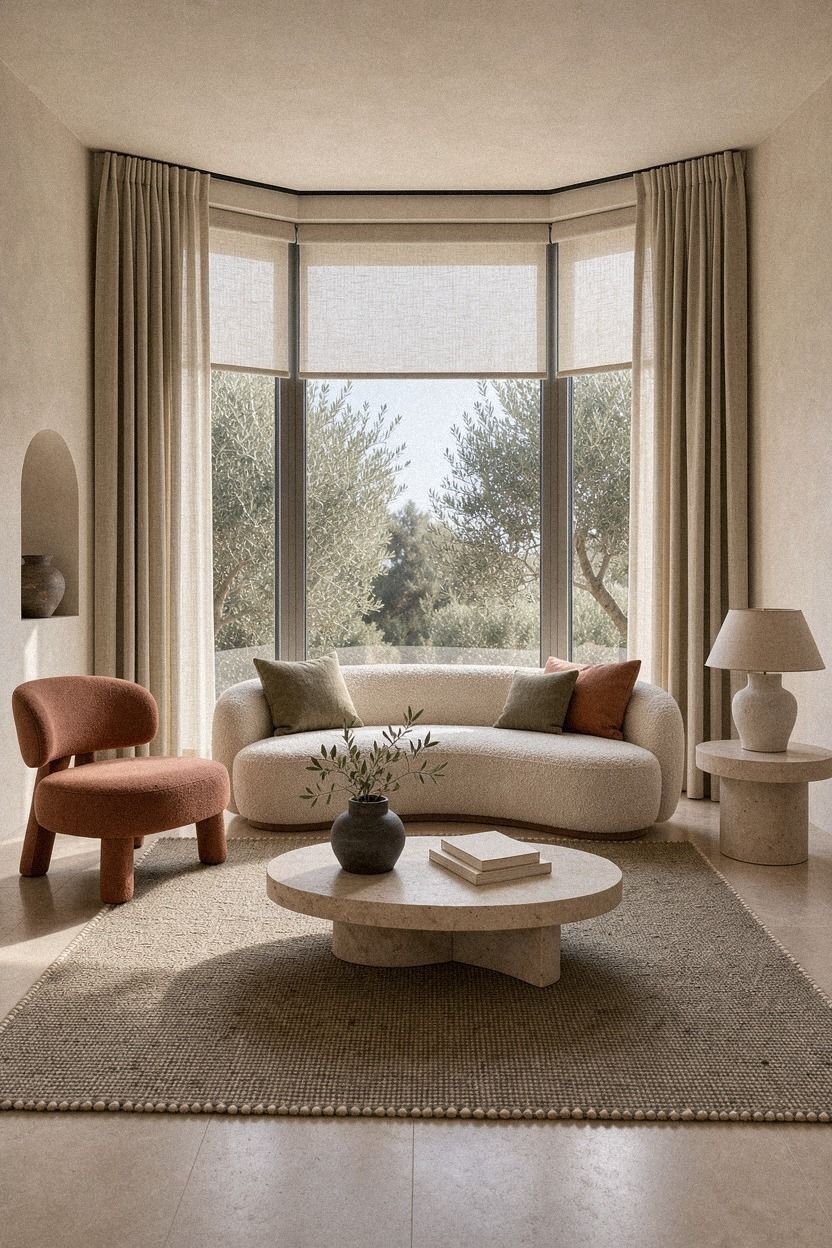
Yes, you can keep the view if your sofa stays low and your window treatments move easily. A low-back track-arm sofa in organic bouclé preserves more glass than a tall, pillow-heavy style, and it gives your eye a clean line toward the outdoors. What’s the point of having a bay window if your furniture turns it into a wall?
Use curtains outside the window frame when possible. Mounting a rod wider than the bay lets the panels stack beside the glass instead of covering it. Your room will feel brighter during the day, and you won’t have to wrestle fabric around the sofa every morning.
I’d skip stiff Roman shades behind a sofa unless the window shape demands them. They can look neat, but the cords, folds, and furniture clearance become fussy fast. Soft Belgian flax linen drapes are more forgiving, especially when sunlight hits their uneven weave.
Keep the sill useful, too. A ceramic bowl, a narrow plant, or one stack of books gives the bay a lived-in touch. Don’t crowd it with six accessories.
Your view should still win.
If the window is unusually bright, think about privacy before choosing upholstery. This practical guide about afternoon smudging may seem unrelated, but its timing principle applies here: notice when a daily problem actually appears, then solve that specific moment instead of overcomplicating the entire room.
6Swap Heavy Curtains for Soft Linen Panels
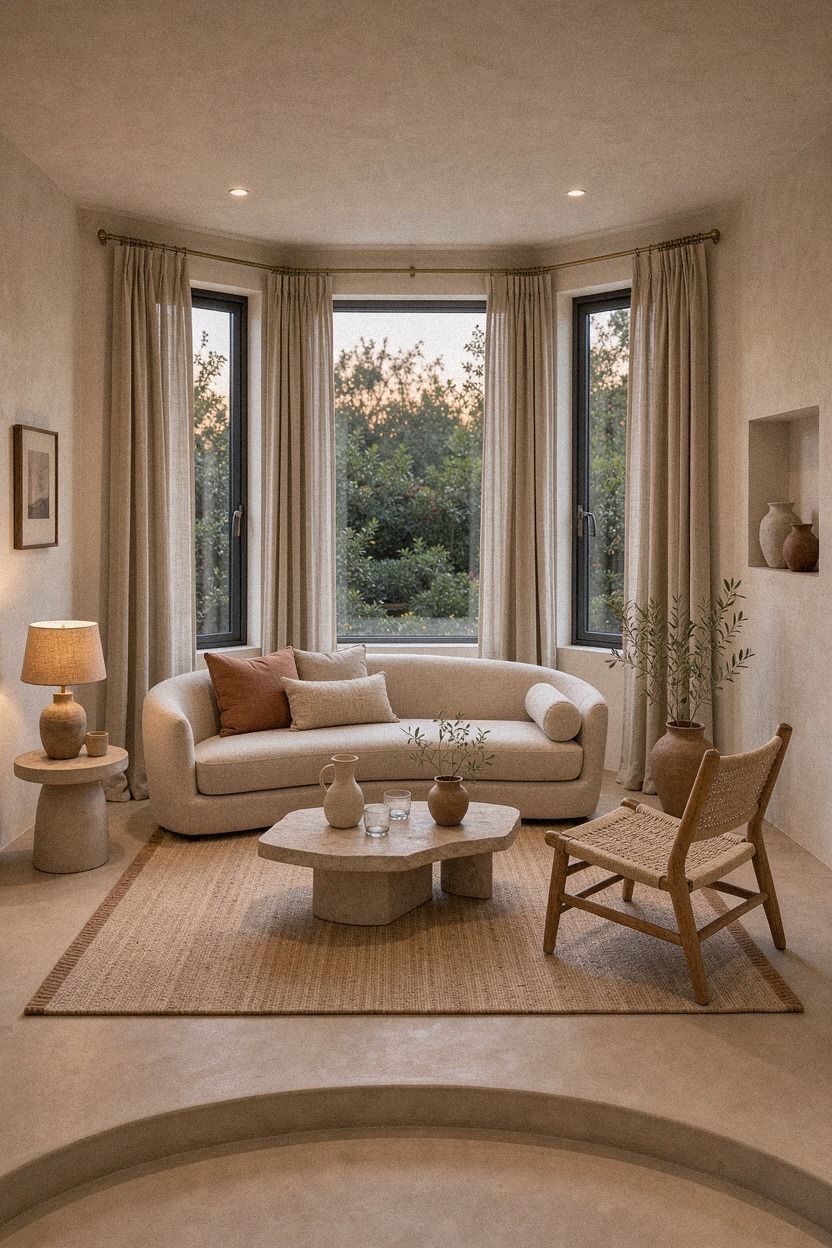
Heavy velvet curtains can make a bay window feel enclosed, especially in a small living room. Swap them for washed linen in clay, warm white, or pale mushroom. Your sofa will feel more relaxed, and daylight will filter through rather than stopping at the fabric.
Choose panels with enough fullness to create soft folds. Flat, skimpy curtains look temporary, while too much fabric piles behind the sofa and steals the walkway.
I made that mistake with an inexpensive cotton pair. The panels looked fine online, but they bunched like tablecloths once installed.
If you need privacy, layer linen with a discreet shade. A Target Threshold curtain panel can work as the outer layer if its color is quiet and its hem reaches the floor. Your room doesn’t need a luxury label to feel refined.
It needs the fabric to hang correctly.
Keep the hardware simple. A slim black rod can sharpen a soft room, while unlacquered brass developing patina adds a warmer, more decorative note. You’ll want the rod to feel intentional without becoming the loudest thing above the sofa.
For a small home with several rooms to organize, you might also like this guide to creating an inviting family space. The useful lesson is the same: leave room for movement, and your daily routine won’t feel cramped.
7Build the Three-Height Light Stack
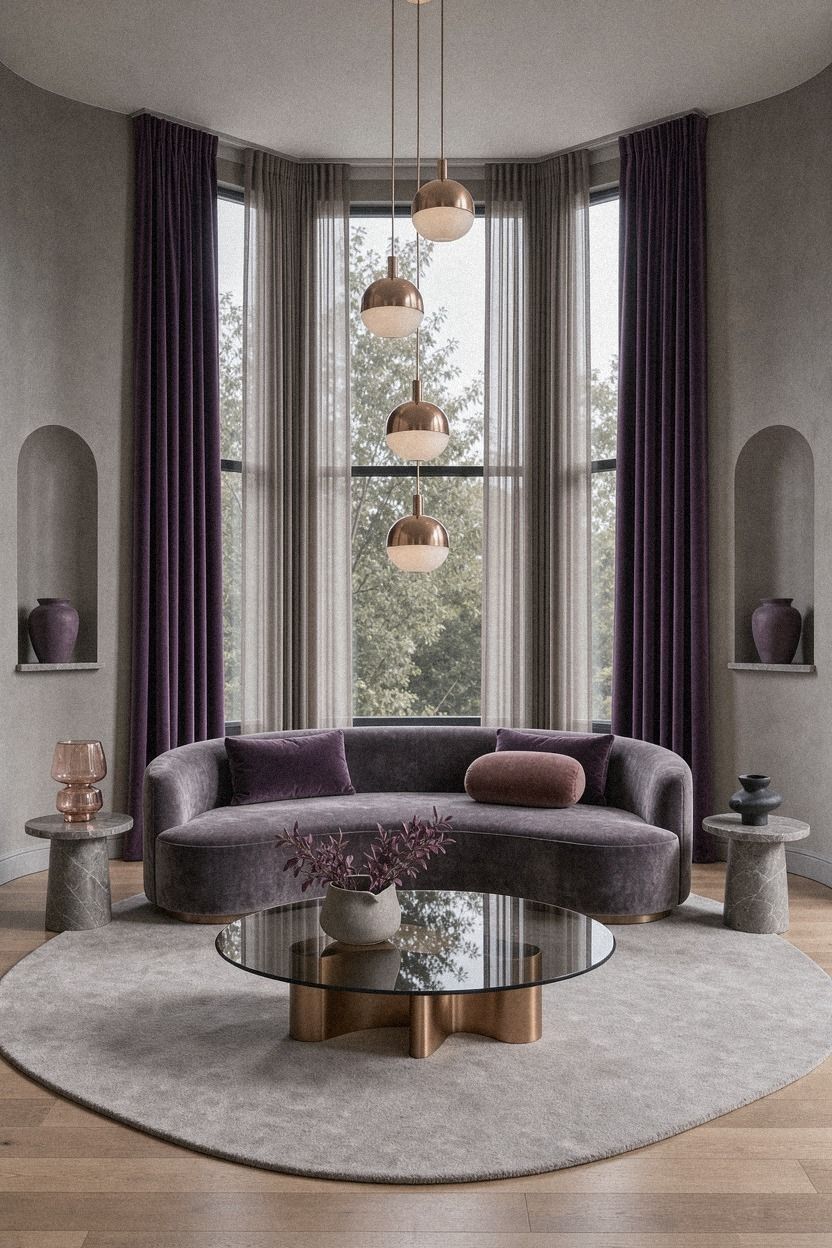
The Three-Height Light Stack gives your sofa in front of a bay window a softer evening mood.
8Paint the Bay Frame, Not the Glass
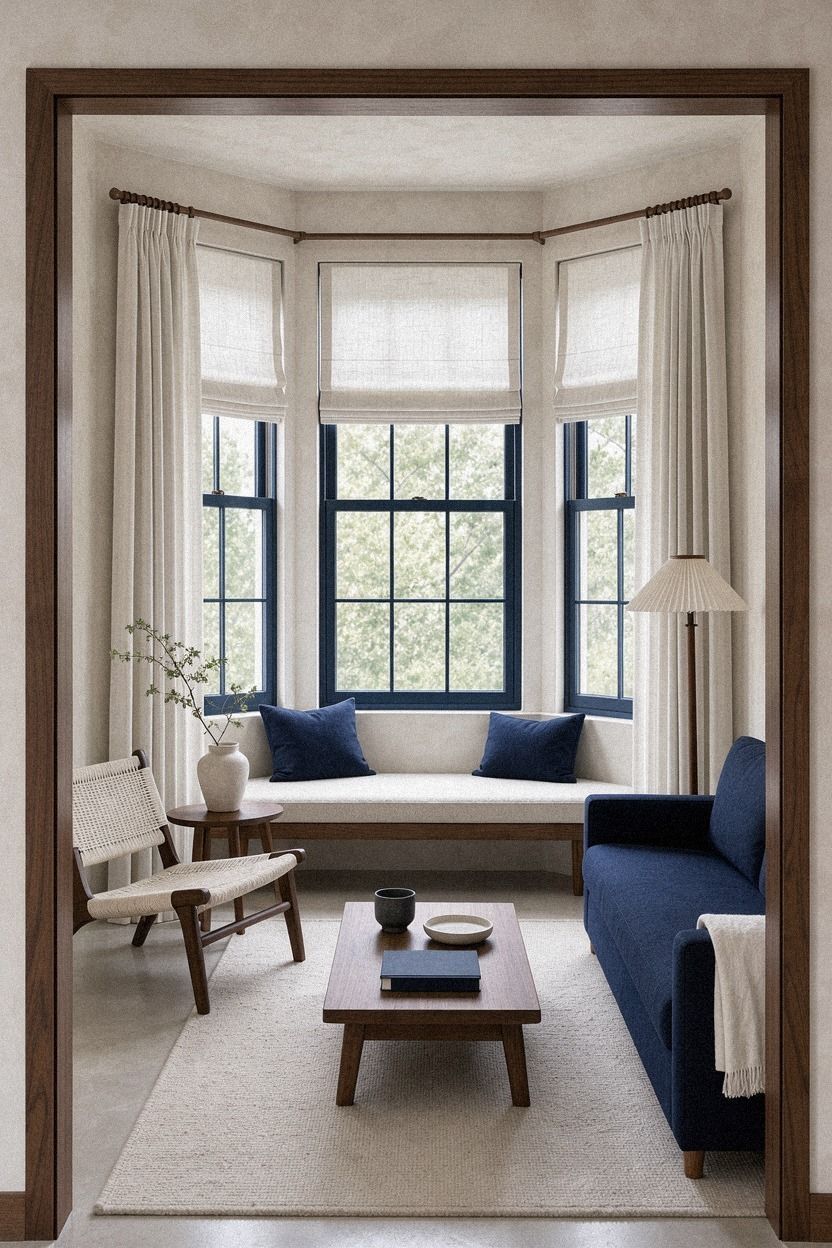
Paint can make the bay feel intentional without changing the layout. Use a hand-applied Venetian plaster in a deep navy if you want a rich surface that works with walnut, white, and warm light. Your sofa will look grounded, and the window won’t feel like an isolated architectural oddity.
For a moodier room, Farrow & Ball Hague Blue No.30 can frame the bay beautifully. It absorbs some glare, which helps if your window gets strong afternoon sun.
I’d avoid using a dark color on every surface in a small room, though. Paint the bay wall and one connecting wall instead.
If your sofa is light, a darker frame gives it contrast. If your sofa is navy or charcoal, use a warm white such as Benjamin Moore White Dove OC-17 to keep the palette balanced.
Add walnut through a console or coffee table. You don’t need a dozen colors.
Navy, white, and one wood tone can carry the whole space.
A small sample board matters here. Your plaster or paint will look different against the glass, the rug, and the sofa fabric.
Test it in morning and evening light before you commit. The final effect should feel rich and deliberate, not dramatic simply for its own sake.
A room with a strong architectural feature can do much of the visual work. This guide to a dramatic limestone bay is a useful reminder to respect the setting before adding more decoration.
9Choose Sofa Depth Over Drama
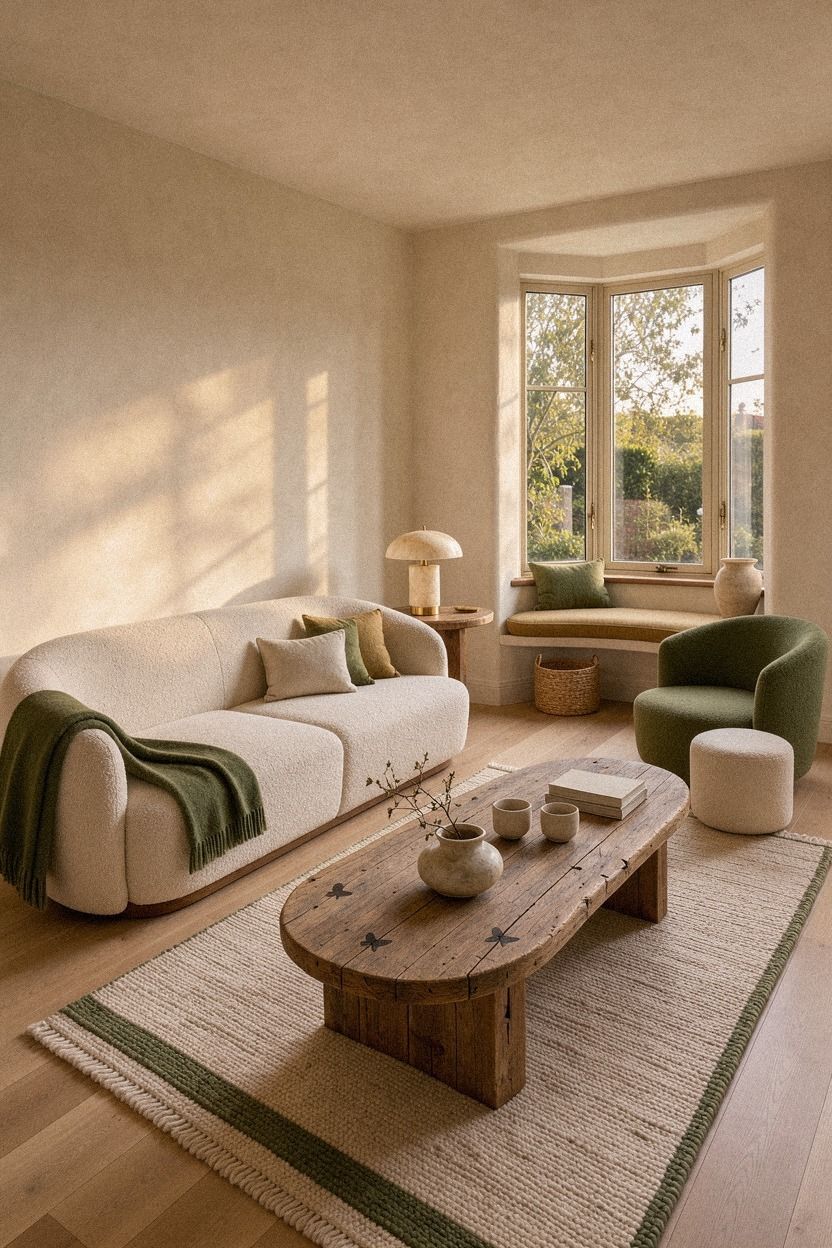
A dramatic sofa can look wonderful in a large room, but your bay window needs breathing room. Choose a seat depth that lets you sit upright without pushing the back of the sofa deep into the glass zone. A 35 to 40 inch sofa depth gives most people comfort while keeping circulation workable.
The IKEA KALLAX isn’t a sofa, but its shallow proportions make it a useful comparison for planning. Furniture that doesn’t project too far can make a room feel airy. If you want a deeper seat, choose a piece with a lower profile and slimmer arms so the total footprint stays controlled.
I’d skip oversized rolled arms. They consume seating width without giving you more useful room, and they often look bulky in a bay. A square-arm sofa in cream fabric with restrained gold details gives you more sitting space while keeping the palette light.
Your body should decide the final choice. Sit on the sofa with your feet planted. If you’re sliding forward to reach the floor, the seat is too deep for your room or your posture.
Comfort matters more than a dramatic silhouette.
If you’re comparing furniture dimensions, this guide to layering gentle details offers a surprisingly useful principle: establish the largest element first, then build smaller choices around it.
10Use a Round Table Instead of a Boxy One
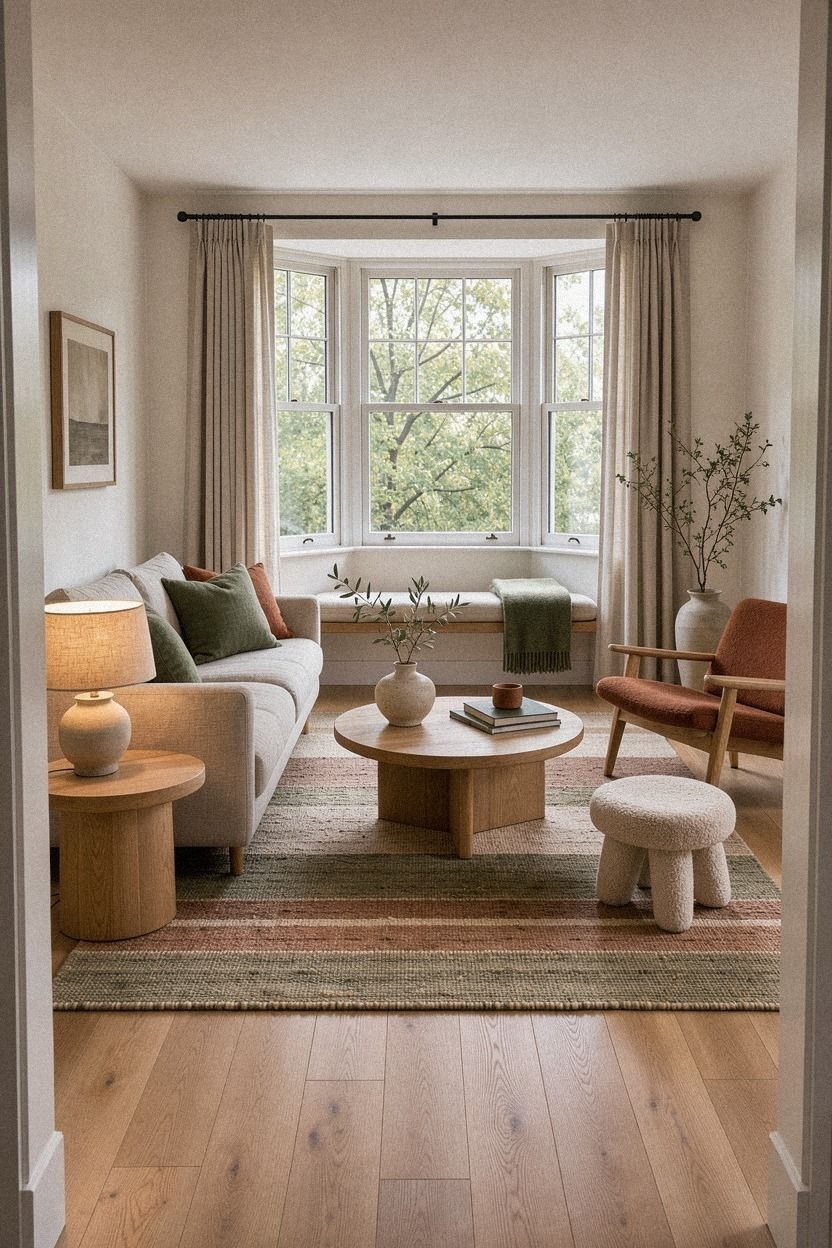
A round coffee table softens the hard angles of a bay window and gives your walking path fewer corners to catch.
11Frame the Bay Window With One Tall Plant
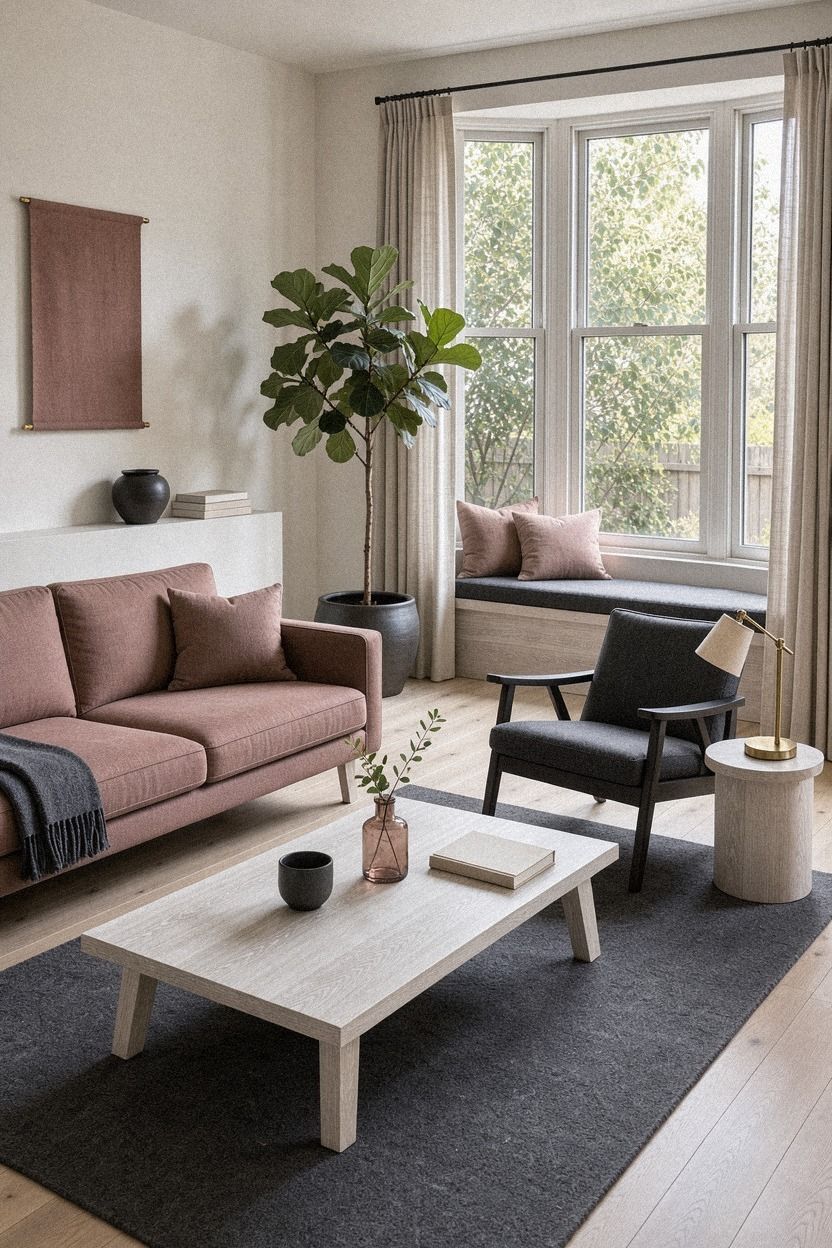
One tall plant can make the sofa arrangement feel connected to the window instead of parked in front of it. Place a fiddle-leaf fig or olive tree at one outer corner, not directly in the center. Your eye will travel from the sofa to the greenery and then outward.
Choose a plant that tolerates the light your bay provides. A bright window can be useful, but direct afternoon sun may scorch delicate leaves. I’d rather see one healthy olive tree in a terracotta pot than five struggling plants crowding the sill.
If you have pets or children, use a heavy planter with a stable base. You don’t want the plant tipping when someone brushes past the sofa. Your safest placement is usually beside the window return, where it gets light without narrowing the main walkway.
And leave the opposite side quiet. A single tall shape creates rhythm; matching plants on both sides can make the bay feel staged. A small stool or woven basket is enough on the other end.
If you’re choosing plants around ordinary household routines, this hand-care guide makes a similar point about small habits: a manageable ritual lasts longer than an elaborate one.
12Mix Warm Wood Over Cold Metal
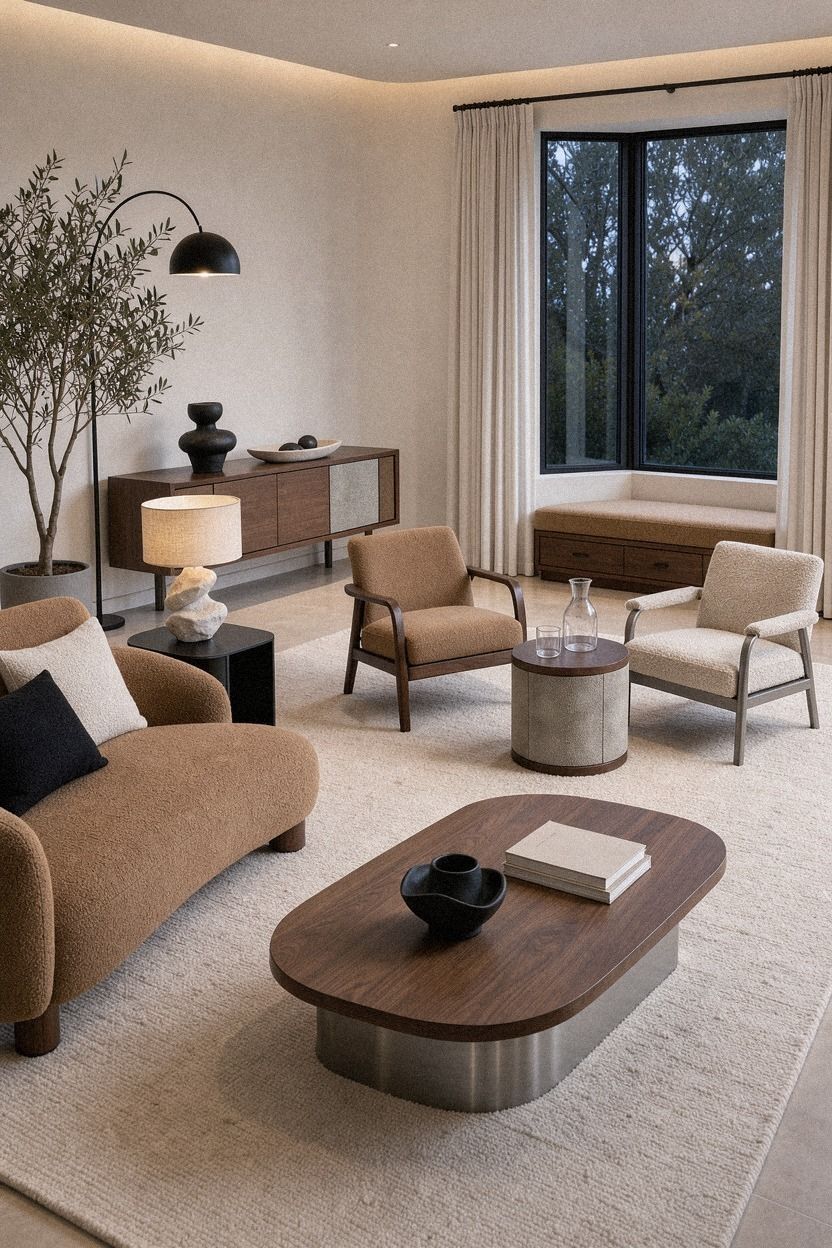
Warm wood usually makes a sofa in front of a bay window feel more welcoming than a full set of metal furniture. Pair a shagreen accent with woven baskets, linen, and one black metal detail. Your room will feel relaxed without losing structure.
Black metal still has a place, especially in lighting. It can sharpen the warm white, camel, and black palette without making the bay feel stark. I’d skip polished chrome beside a cool gray sofa because it can make the window wall feel stark and commercial.
A camel chair can soften one side of the sofa, while a dark accent stool gives you a useful place for a book or drink. You don’t need every piece to match. Your materials should relate through texture, not identical color.
Warm materials also make budget pieces look more considered. A vintage frame, a woven shade, or a shagreen side table can add character without filling every surface. If you’re looking for another perspective on compatible layers, this family-space guide reinforces the same idea: a few compatible elements can create a generous atmosphere.
13Face the Room Instead of the Window
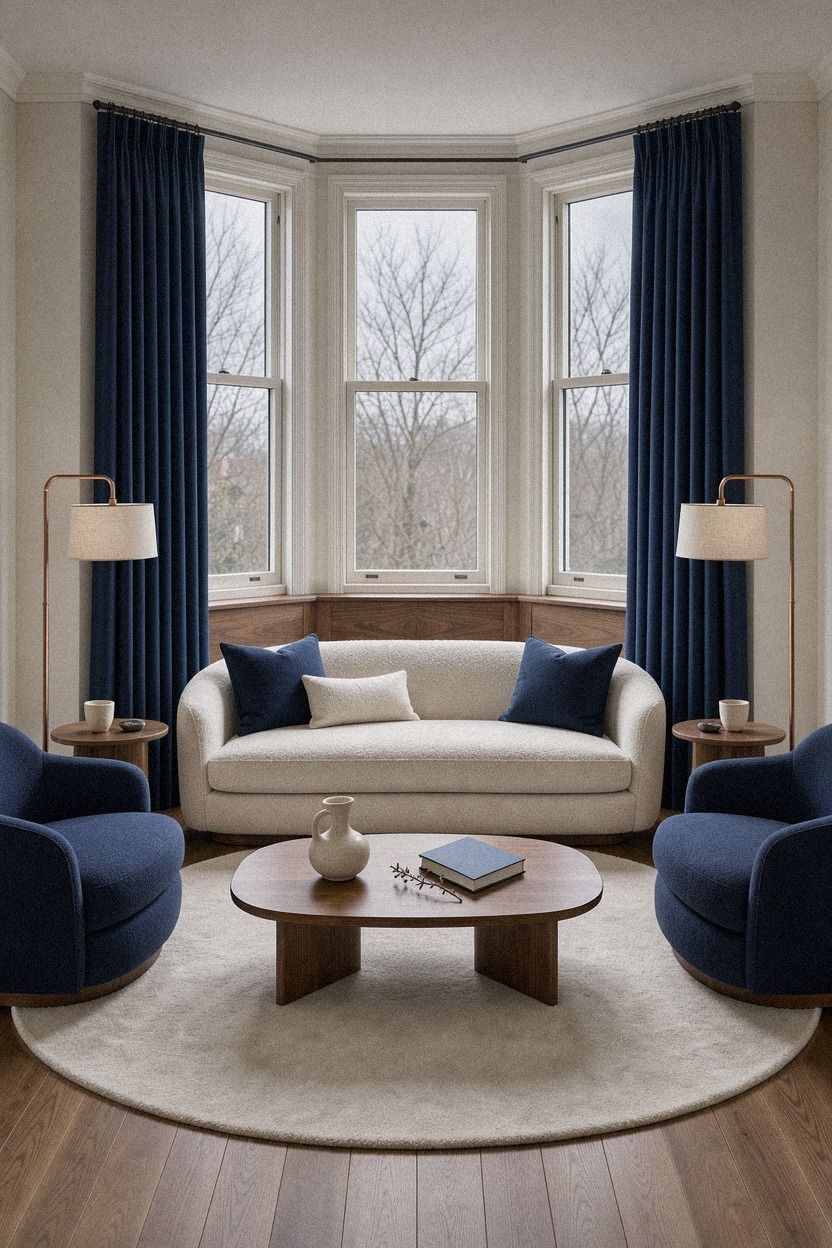
The sofa doesn’t need to face the bay to benefit from it.
The Honest Cost of Making This Layout Work
Most bay-window sofa arrangements don’t need construction. The biggest expense is usually the seating, followed by the rug and window treatments. If you already own a sofa, your first improvements can be free: pull it forward, clear the sill, test the walking path, and move the lamp.
Here are typical US ranges for the room pieces that make the layout feel finished:
For individual materials, a washed Belgian linen sofa commonly runs $1,200-$4,000, a wool rug in a 9-by-12 size runs $600-$2,500, an oak coffee table runs $300-$1,200, and a pair of linen drapes runs $120-$400. Your room doesn’t need the high tier to feel considered.
I’d put money into the sofa and rug before decorative accessories. You’ll touch both every day, and cheap versions show wear quickly. A secondhand solid-oak coffee table can save money without making the rest of the room look unfinished.
If you’re weighing this layout against a larger renovation, this guide to a dramatic limestone bay offers a useful reminder: the setting can do much of the visual work. Your furniture only needs to frame it well.
Why This Bay Window Rule Still Works in 2026
The bay window is having a moment because people want rooms with daylight, texture, and a place to sit that isn’t aimed at a screen. A sofa in front of the glass creates a softer rhythm. Your room can feel warm, modern, and quietly luxurious without looking like a furniture showroom.
The rule is simple because it respects real life. Leave an air gap, keep circulation open, use a rug large enough to connect the pieces, and choose lighting that still works after sunset. I’ve tried more complicated layouts, and they usually collapse once someone brings in a basket of laundry.
The best rooms aren’t built from one trend. They’re built from decisions that make your daily habits easier.
A sage mohair velvet pillow can add softness, but it won’t rescue a sofa that blocks the door. A beautiful lamp can glow warmly, but it won’t fix a coffee table that’s too tall.
So measure, tape the floor, and live with the outline for a day. Your body will tell you what the floor plan is trying to say. That’s the useful part.
For a calmer way to think about ordering large and small choices, this guide to layering gentle details offers a helpful parallel. Start with the structure, then add only what makes the room more comfortable.
My Rule for Choosing the Sofa
I’ve placed sofas in front of bay windows in rooms with radiators, pets, narrow doors, and one particularly determined toddler. The arrangement can work in all of them, but only when the sofa supports the window instead of competing with it.
My first mistake was treating the bay like leftover space. It isn’t leftover space.
It’s the room’s natural light source, and your layout has to respect that.
I’d choose a low-profile sofa before I’d choose a dramatic one. That decision keeps more glass visible, lets daylight reach the rug, and makes the room feel less crowded when the curtains are open. A deep sectional may offer more lounging space, but it often steals the very feature that makes the room special.
Your next decision should be practical. Can you open the window?
Can you walk behind or around the sofa? Can you sit comfortably without knocking the table?
If the answer is no, your furniture is asking too much from the room.
For me, the most successful version includes one warm wood table, one large rug, linen panels, and a single plant. Not ten accessories. Not a matching furniture set.
Just enough texture for the light to land on.
I also like leaving one imperfect detail, such as a vintage frame or a slightly uneven ceramic lamp. It keeps your living room from feeling staged. And honestly, that small bit of mess is often what makes the space feel welcoming.
For a final reminder about using small amounts thoughtfully, this eye-cream guide captures the same decorating instinct. Add what the room needs, then stop before the composition loses its calm.
The Questions Worth Answering First
What is the best sofa for a small living room with a bay window?
A low-profile sofa with a 35 to 40 inch depth is usually the best fit. Choose slim arms, exposed legs, and durable washed Belgian linen so your room stays open and your seating holds up. IKEA, Article, and secondhand furniture can all work if your measurements are right.
Where can I buy bay window sofa pieces on a budget?
IKEA, Wayfair, and Target offer useful starting points, while Facebook Marketplace and local thrift shops can lower the cost. Look for solid wood tables, washable covers, and linen-look curtains. You don’t need a complete matching set, and you shouldn’t buy pieces before measuring your room.
How much does a bay window sofa makeover cost?
A simple refresh can cost about $300-$1,200 for pillows, throws, a rug, art, and paint. Your cost can be lower if you reuse the sofa and move existing furniture. A full mid-range update with a new sofa and quality rug often reaches $2,500-$8,000.
Can I create this layout on a budget?
Yes, and you can begin without buying anything. Pull your sofa forward, move the lamp beside it, clear the sill, and test the traffic path.
Then add one cotton throw, a secondhand table, or a small rug when your budget allows. Those changes can make the room feel warmer quickly.
Is a sofa in front of a bay window worth it in a small space?
Yes, if the sofa stays shallow enough for light and movement. A small room can benefit because the bay gives you a natural seating zone. Keep the coffee table 16 to 18 inches from the sofa and use a round shape so your path stays easy.
Is this a good idea for a rental?
Yes, especially if you use no-damage swaps. Try removable shades, a tension rod, peel-and-stick wall color samples, and a freestanding woven basket instead of built-ins. Your landlord won’t need to approve a layout change, and you can take the useful pieces with you.
Should the sofa touch the bay window wall?
Usually, no. Leave enough space for curtains, airflow, and window access.
A small gap can be enough, but your sofa shouldn’t press into the trim or block a radiator. Float it, test the route, and adjust after you’ve lived with the arrangement.
What color works best with a bay window sofa?
Warm neutrals, muted greens, and deep blue can all work. Benjamin Moore White Dove OC-17 is gentle, while Farrow & Ball Hague Blue No.30 creates more drama. Your choice should respond to the daylight and the sofa fabric, not just the current paint trend.
If you’re building a calm home routine room by room, this guide to layering gentle details may give you another way to think about order. Start with the large pieces, then add smaller layers only where your room needs them.
You can also read this guide to a simple eye-cream rule for a reminder that small amounts often work better than excess. The same applies to decorating your bay: one plant, one lamp, and one useful table may be enough.
For a rental-friendly maintenance routine, this hand-care guide offers a small habit that fits the same practical mindset. Your living room should support ordinary life, not demand constant styling.
Where I’d Start First
If I had to pick one, I’d start with floating the sofa 6 to 10 inches forward. It frees the curtains, keeps the glass visible, and makes the whole room feel less jammed. Pin this layout for later and measure your rug before buying anything else.
If the room still feels awkward, don’t purchase another accessory yet. Walk the path, adjust the table, and test the curtains at different times of day. This guide to creating an inviting family space is a useful final reminder that the most successful space is the one people can comfortably share.


