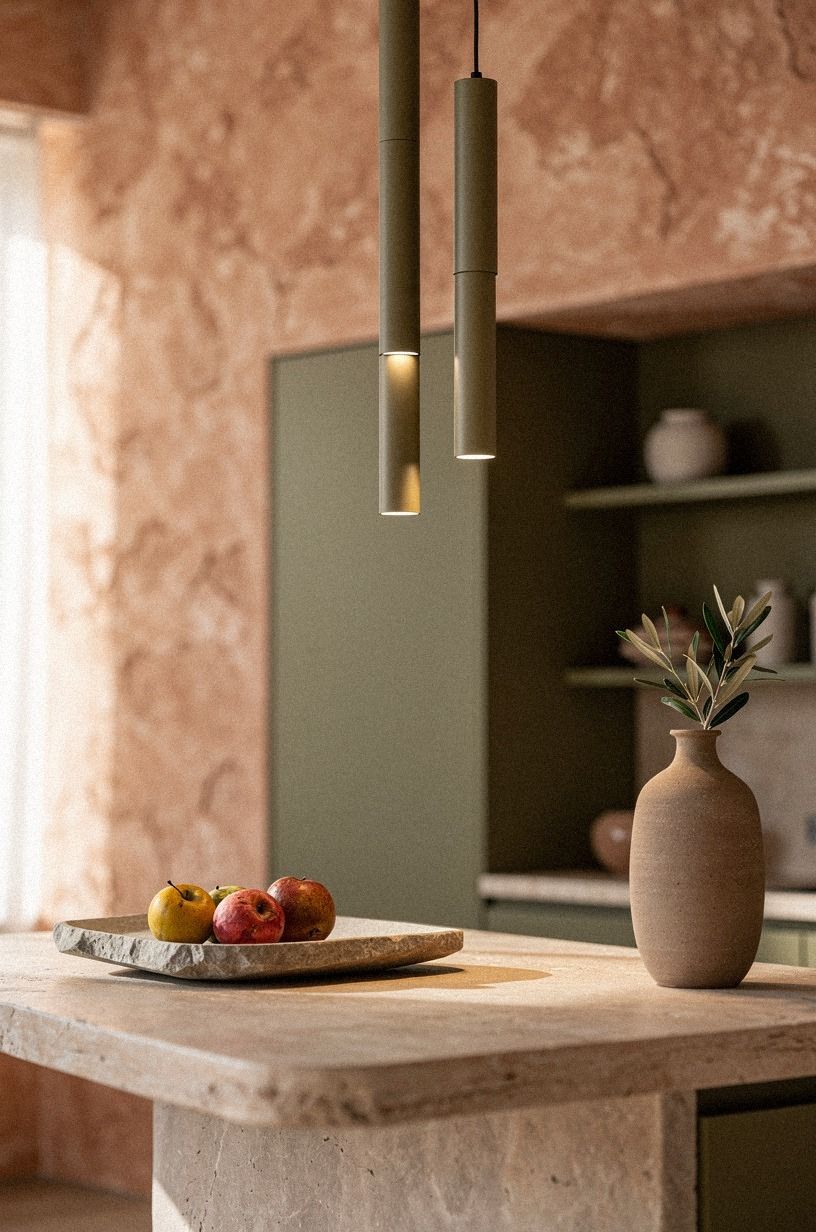
12 Cottage Kitchen Lighting Techniques for a Warm, Golden Glow After Dark
14 november 2026Cottage kitchen lighting ideas for a warm, golden glow usually cost less than a cabinet renovation, but placement matters more than price. I've made the mistake of relying on one bright ceiling fixture, and the room felt flat by dinner. Layered light fixes that. Your kitchen should glow where you work, gather, and linger.
Don’t overthink: Which Pendant Works Over the Sink?.
- Layer the Three-Height Light Stack
- Which Pendant Works Over the Sink?
- The Cottage Lantern Corner
- Swap Cool Bulbs for Amber Temperatures
- Float the Open Shelf With Hidden Light
- Why Frame the Window With Gentle Sconces?
- Anchor the Island With a Linen Shade
- Mix Farmhouse Metals, but Keep One in Charge
- Paint the Ceiling a Warm Reflective White
- The Small Lamp Test
- When Should the Wall Behind the Glow Go Moody?
- Cosmetic Refresh or Full Remodel?
1Layer the Three-Height Light Stack
The three-height light stack uses ceiling, eye-level, and low light so your kitchen doesn't look like a workspace after sunset. Keep the ceiling fixture practical, then add a pendant over the island and a small lamp near a breakfast nook or open shelf. You'll get a softer room because your eye moves between several pools of light instead of staring at one glare source.
For a cottage look, let terracotta, stone, and olive carry the palette rather than polished chrome. Hand-applied Venetian plaster gives the walls a softly irregular surface, while warm white bulbs keep the colors inviting. If your counter is the standard 36 inches high, keep the lower glow near seating height so it feels intentional, not accidental.
Don't put every light on the same switch. Separate controls let you cook brightly and dine gently.
I like one switch for the ceiling fixture, one for the pendant, and a plug-in dimmer for the lamp. That arrangement usually costs about $40 to $150 in controls, compared with thousands for a broader renovation.
For a related approach to keeping nearby metal surfaces bright, see this guide to two kitchen ingredients for salon-style shine.
Typical cost by tier, US averages:
2Which Pendant Works Over the Sink?
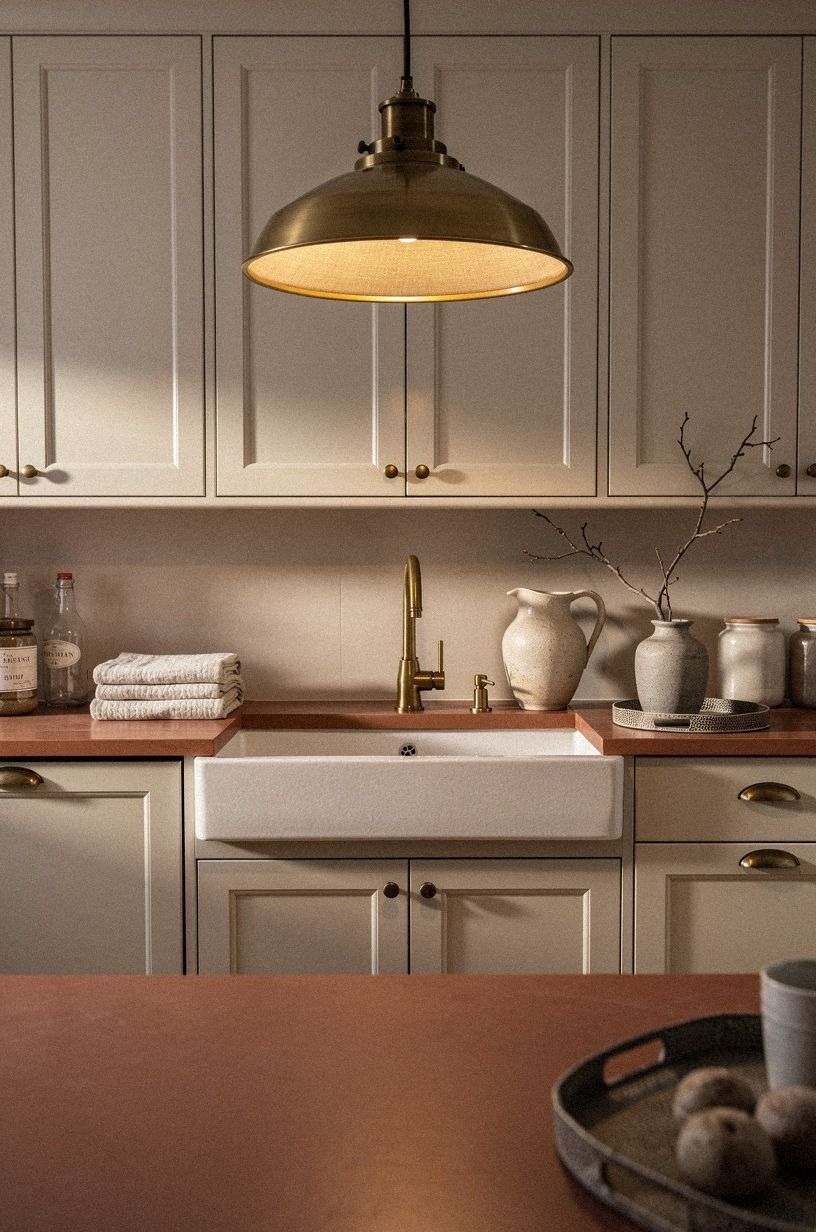
A sink pendant can make daily chores feel less utilitarian, especially if the fixture has a linen shade that spreads light across the basin. Hang it where you can see the shape from the doorway, but keep the size modest so your sightline stays open. You'll want enough brightness for washing dishes, not a spotlight that reflects off every wet plate.
I prefer one small pendant to a matching pair in a narrow cottage kitchen. Two fixtures can crowd the window and compete with open shelving.
Choose aged brass if you want a finish that will mellow over time, and consider a small shagreen accent for texture. A basic fixture costs $80 to $220, while a handmade ceramic or vintage pendant may reach $450.
Stand at the sink before you commit. Your eye should clear the bottom of the shade when you look toward the window, and the fixture should sit roughly 30 to 36 inches above the counter. If you're comparing finishes, this article about a wind-shaped Croatian beach is an unexpected reminder that natural variation often looks better than perfect matching.
3The Cottage Lantern Corner
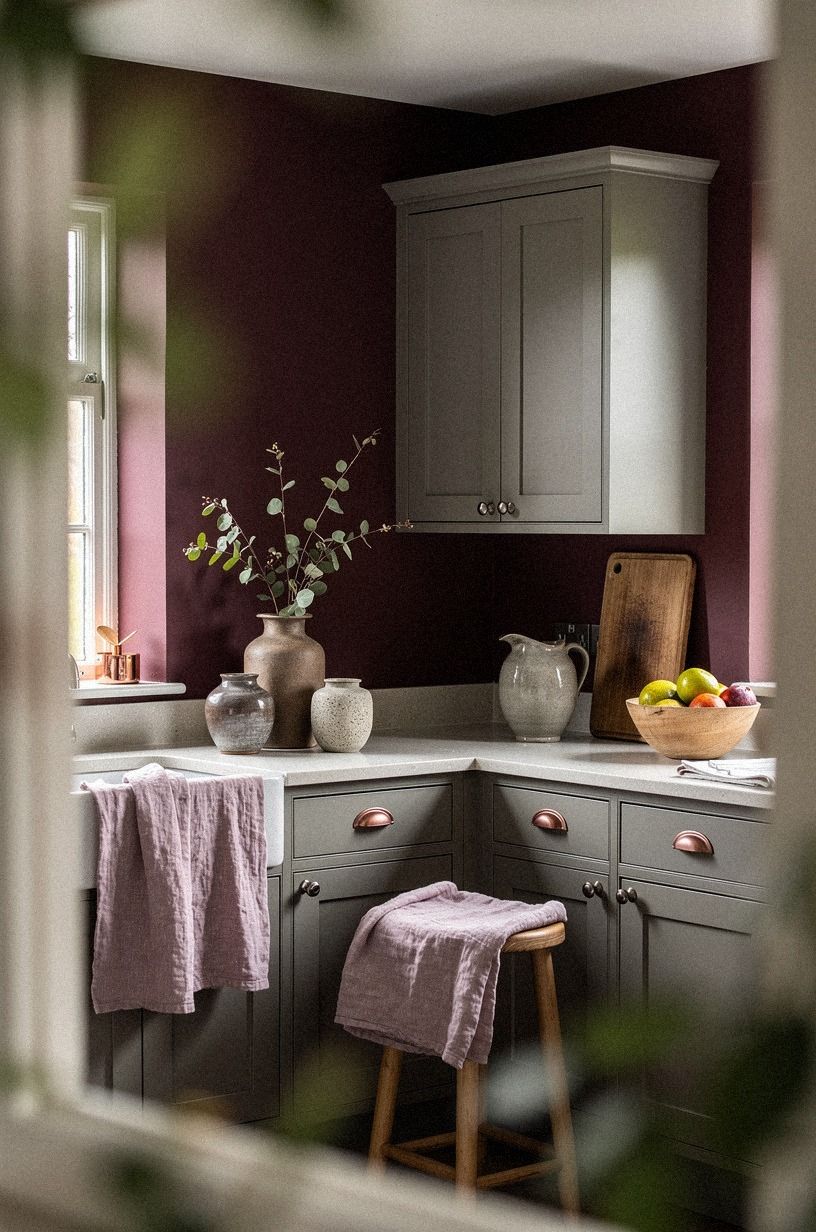
A lantern fixture gives a cottage kitchen an architectural focal point without requiring a full renovation. You can place one above a breakfast table, beside a pantry door, or in the corner where your kitchen meets the dining room. The best location is usually the spot that feels visually empty after dark.
Look for washed Belgian linen, a muted plum tone, and a restrained rose-gold detail. Those materials and colors make the fixture feel established without turning your kitchen into a themed farmhouse showroom.
I would avoid an oversized lantern if your room is under 100 square feet. A 12- to 16-inch fixture often feels more convincing than a grand 24-inch model.
Your budget can stay modest. Vintage-inspired lanterns start near $120, while salvaged or hand-finished versions commonly cost $300 to $700.
If you buy secondhand, check the socket, wiring, and canopy before you fall in love with the patina. A replacement socket may cost $20, but professional rewiring can add $100 or more.
I like a lantern with a rose-gold canopy and washed Belgian linen when the cabinets are pale. If your kitchen already has dark wood, choose a lighter frame so the corner doesn't disappear. For another idea involving warm domestic atmosphere, you can browse this sandalwood perfume concept using kitchen ingredients.
4Swap Cool Bulbs for Amber Temperatures
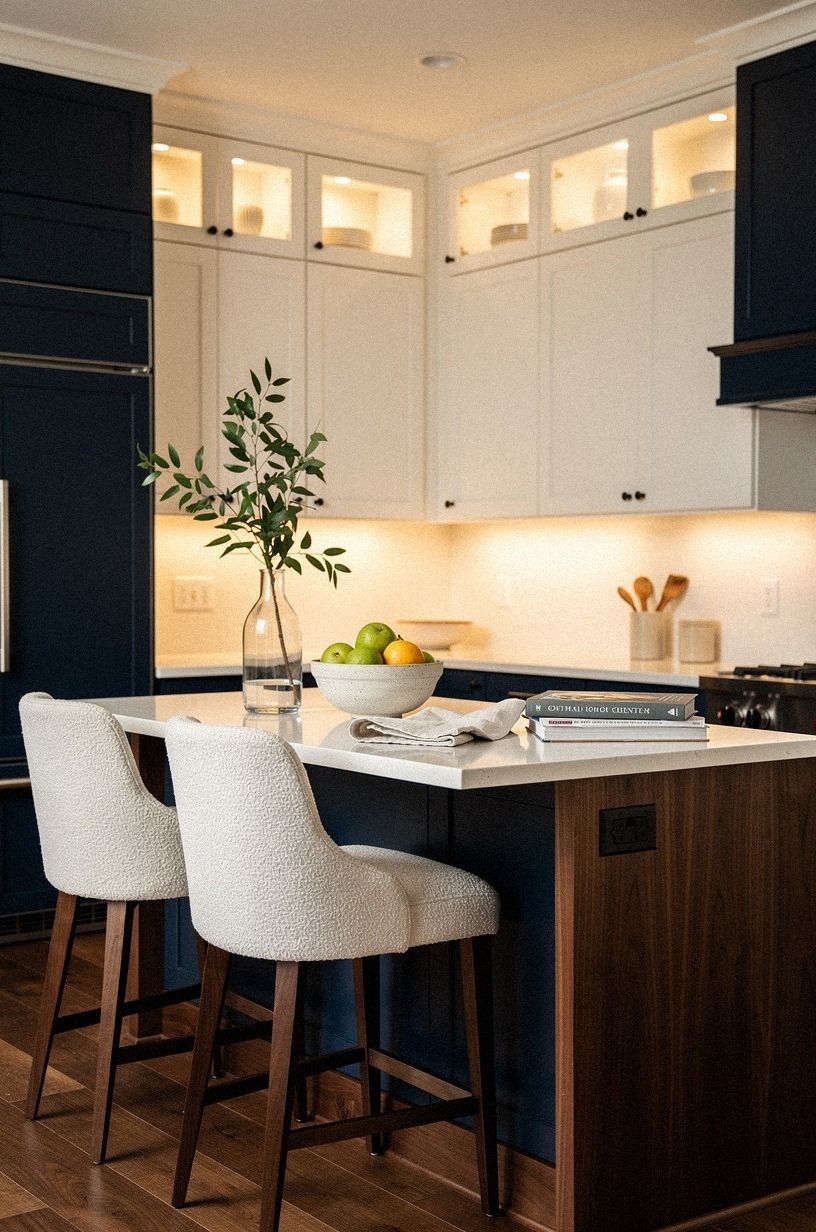
The fastest change is often the bulb, not the fixture. Swap icy bulbs for 2700K warm white bulbs so your warm white LED bulb gives off a gentle amber cast instead of a blue office glow. Navy surfaces will read richer, white areas will stay welcoming, and walnut will look less gray in the evening.
Don't mix several bulb colors in the same sightline. That's where cottage kitchens lose their calm.
Pick one warm family for pendants, sconces, and lamps, then use brighter task lighting only under the cabinets where you need to see clearly. I once used a cool bulb above a warm dining pendant, and the two zones looked like they belonged to different houses.
For work surfaces, I usually prefer 3000K task lighting because it keeps food preparation clear without looking clinical. A dimmable LED filament bulb costs about $8 to $18, while a complete set of four may cost $35 to $70.
You can test this without buying anything new. Turn off every fixture except one, then walk through the room from the hall.
If your warm white light makes the counters look muddy, adjust the shade or surface before replacing every bulb. A small test saves your budget and your patience!
5Float the Open Shelf With Hidden Light
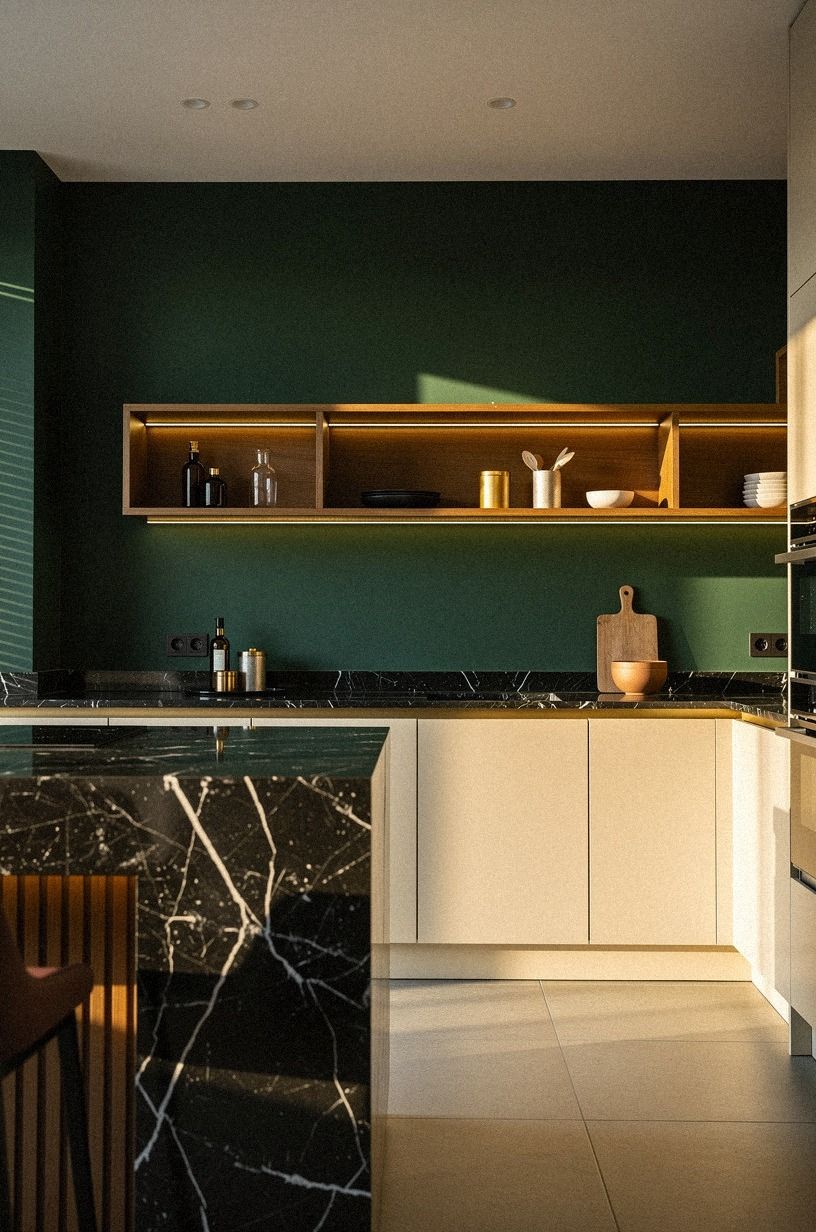
Open shelves need a little illumination because their lower edges can disappear into shadow. A slim under-shelf LED strip creates a quiet line of light beneath crockery, cookbooks, or a row of everyday glasses.
You won't need much brightness. Against Nero Marquina black marble with white veining, the purpose is to give the shelf a soft edge, not to turn it into a display case.
Choose a strip with a 2700K color temperature, a concealed channel, and a dimmer if your budget allows. Basic plug-in kits cost $25 to $60, while professionally installed systems usually run $150 to $400 per shelf.
I would spend more on a clean diffuser than on extra brightness. You see the result every evening, and exposed dots make even beautiful shelving look unfinished.
Your shelf depth also matters. If the board is less than 10 inches deep, position the strip toward the front third so the light reaches the backsplash without shining into your eyes.
If you're cleaning the shelf often, leave enough room to remove the diffuser. For a related sensory detail, this sandalwood and kitchen-ingredient guide may help you think about atmosphere beyond the fixture itself.
6Why Frame the Window With Gentle Sconces?
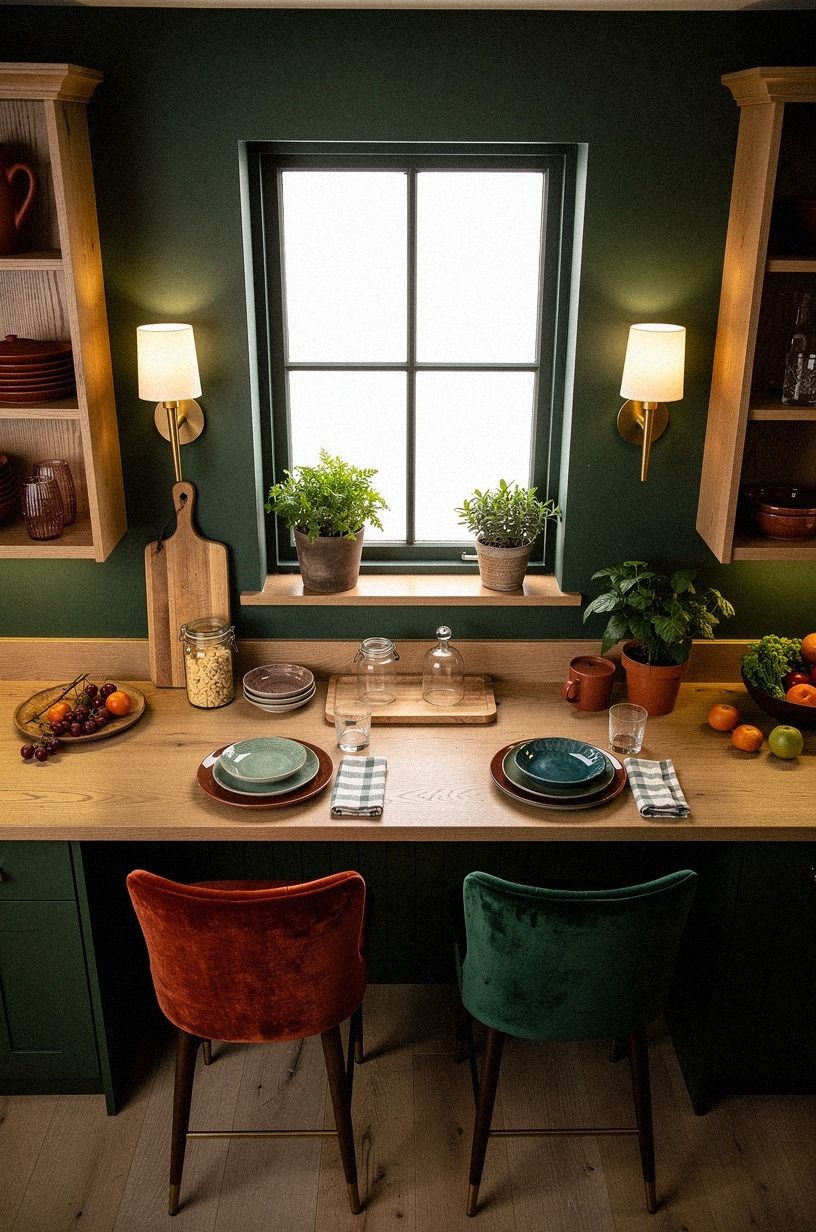
A pair of sconces can frame a kitchen window without stealing the view. Pick shaded sconces against forest green paint, with rust accents and natural oak nearby, then place them on the wall beside the window if the trim allows it. At night, the light creates a warm border around the glass, so the window still feels like part of the room instead of a black rectangle.
I'd skip exposed filament bulbs here. They look charming in a photograph, but the direct sparkle can be harsh when you're seated nearby.
A soft shade with deep-pile mohair velvet on a nearby seat gives you the softer, more intimate effect. If you're working with a rental, removable picture lights can create a similar wash with less commitment.
A pair of hardwired sconces may cost $300 to $900 before labor. Plug-in versions usually fall between $80 and $250 each, which makes them a better choice if you rent or don't want to open the wall.
Your window wall doesn't need to be symmetrical down to the inch. Cottage rooms look better when the arrangement responds to the architecture.
If your kitchen has a narrow ledge, use one small ceramic lamp rather than forcing two sconces into a cramped wall. The lamp's low pool of light will make the glass glow after sunset. For another natural-material reference, explore this piece on a Croatian beach shaped by wind.
7Anchor the Island With a Linen Shade
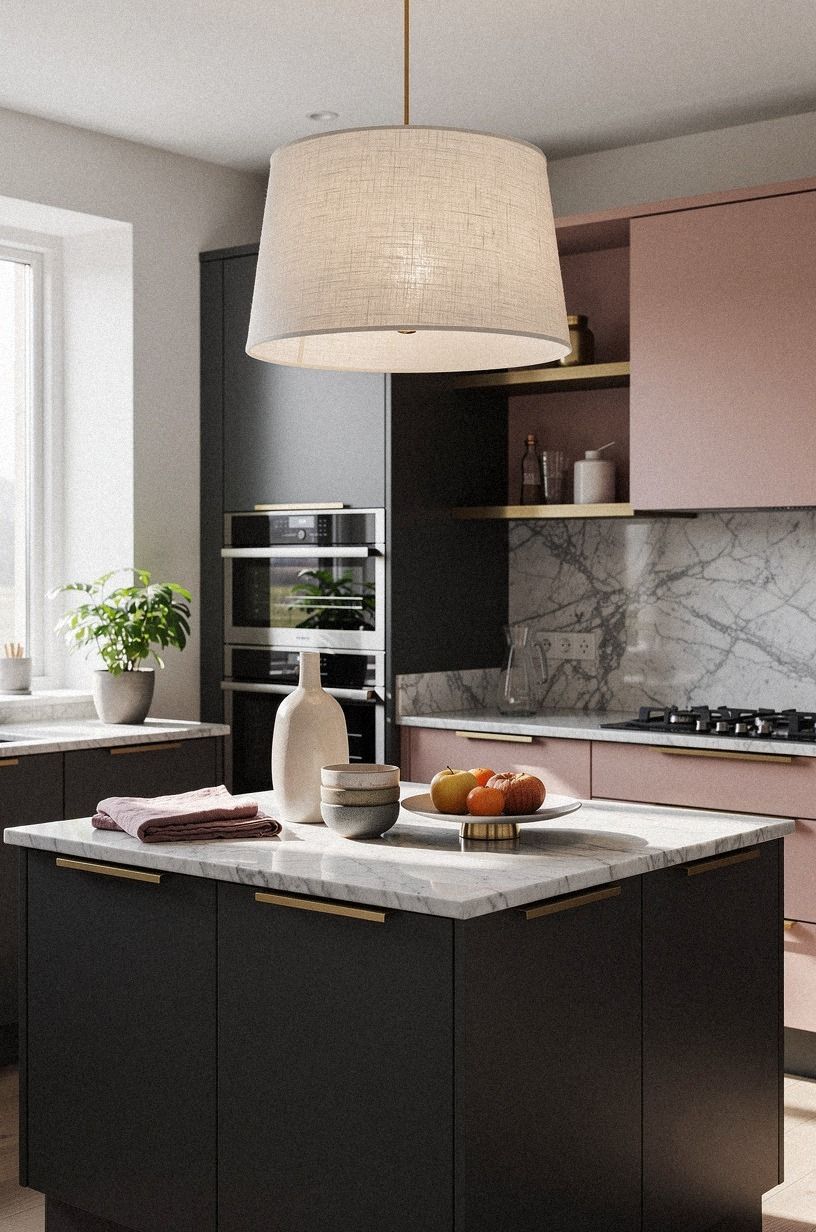
A linen pendant over the island brings texture into a room filled with hard surfaces.
8Mix Farmhouse Metals, but Keep One in Charge
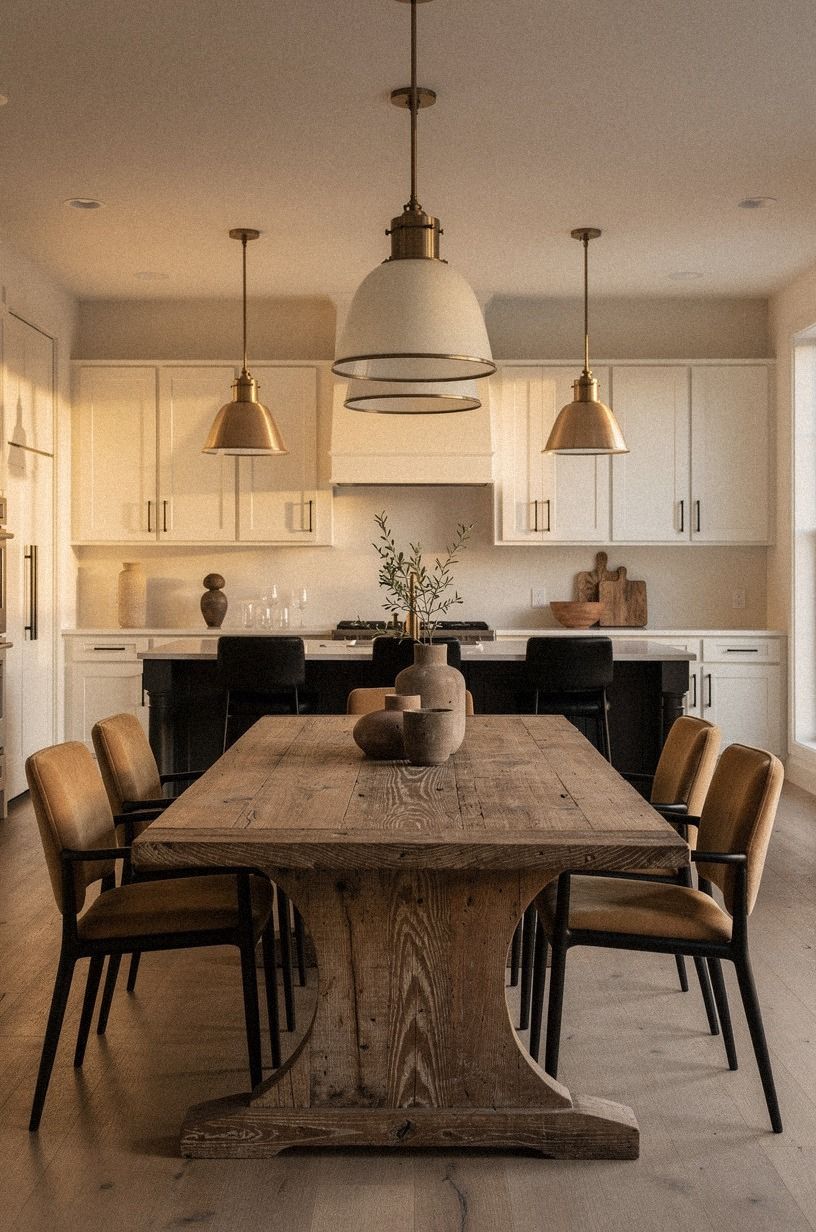
Lighting farmhouse style doesn't require every finish to match. Pair warm white cabinetry with a camel-toned detail and a dark iron lantern, then repeat black in a smaller detail so the mix feels connected. A touch of reclaimed weathered teak can add warmth without making the room look decorated in a single afternoon.
The rule I use is one strong metal, one supporting metal, and no more. Polished nickel beside brass can turn fussy quickly, especially with ornate cabinet pulls. I'd choose aged brass and iron instead because their surfaces absorb warm light rather than throwing it back at you.
If you're updating hardware too, keep the profile simple and let the finish provide the interest.
A small kitchen can handle mixed metals because the room has fewer competing surfaces. You don't need a large island or dramatic ceiling height. Place the darker finish near the ceiling and the warmer finish at eye level, then let the matte black sconce repeat the range or faucet tone.
Expect to spend $12 to $30 per cabinet pull, $150 to $500 for a lantern, and $100 to $350 for a wall light. That makes metal a relatively affordable way to change the room's mood.
I wouldn't replace sound hardware merely to create a perfect match. Natural variation usually feels more cottage-like.
You can also consider how wind creates variation on a Croatian beach before choosing a deliberately mixed palette.
9Paint the Ceiling a Warm Reflective White
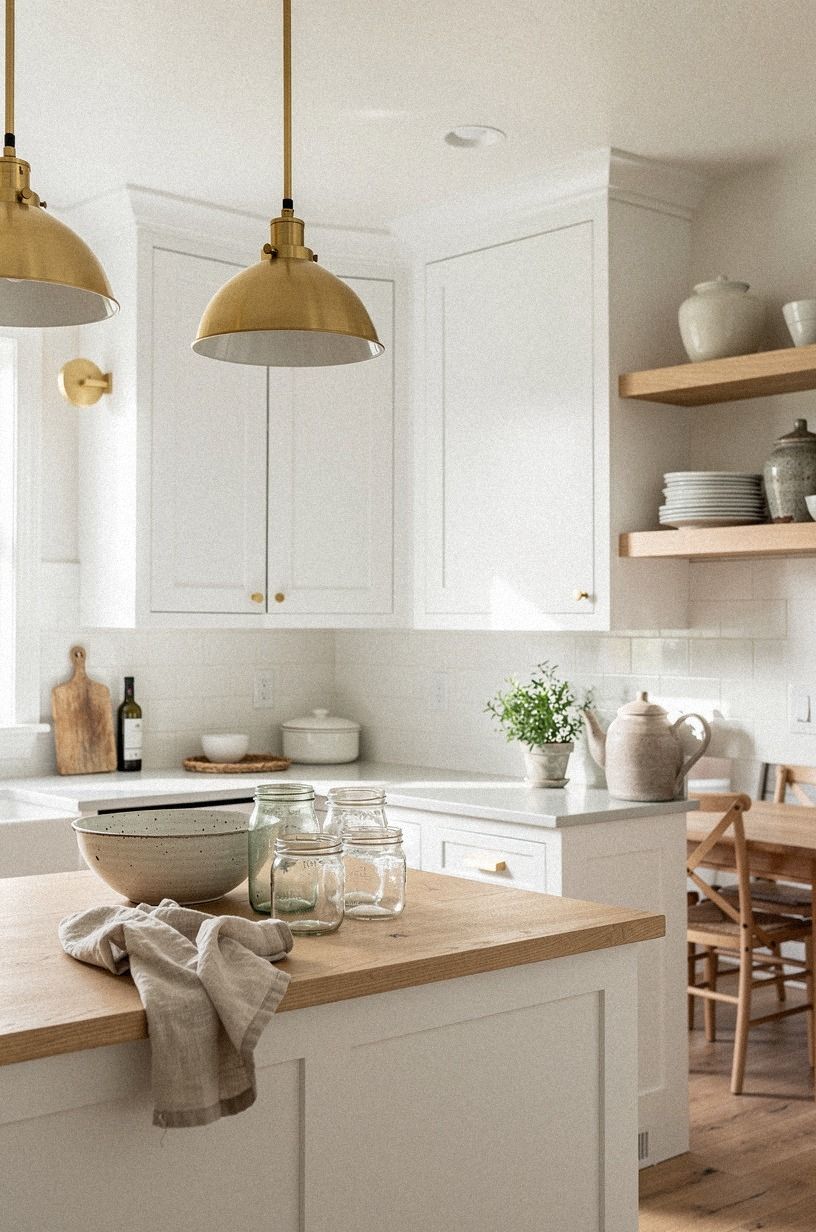
A ceiling can either scatter your light or swallow it.
10The Small Lamp Test
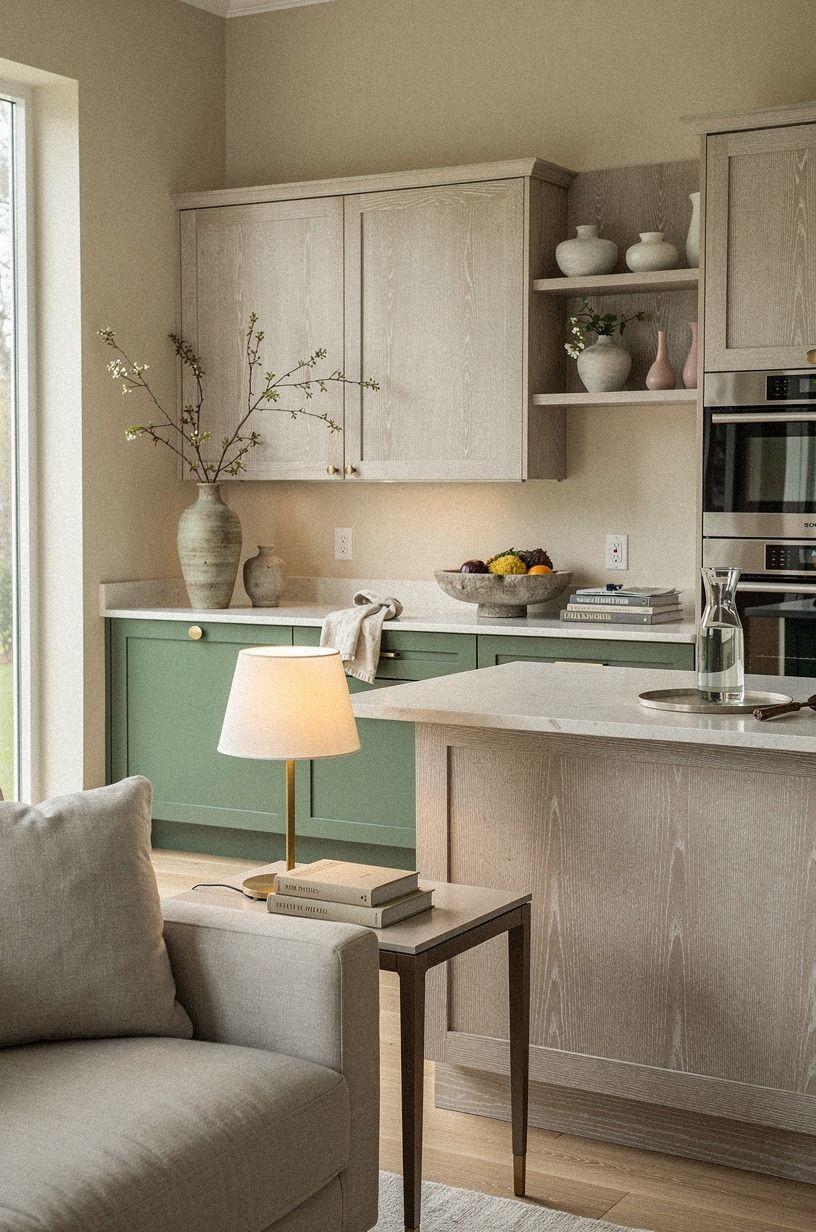
A little lamp is the detail most kitchens skip, and it's one of my favorite additions. Put a ceramic table lamp on a deep counter, a sideboard, or a protected shelf near the dining area.
You don't need a large base. You need a low, dependable pool of light that makes a sage green and warm cream kitchen feel open after dark.
Choose a warm cream shade, cerused white oak base, or natural wood detail if you want more texture. A small lamp costs $35 to $180, and a dimmable warm LED bulb adds another $8 to $15. I would rather buy one attractive lamp than scatter three cheap lights across the room.
Your eye needs somewhere to rest.
Safety comes first. Keep the lamp away from the sink, cooktop, steam, and splash zones.
Use a grounded outlet, secure the cord along the back edge, and make sure the shade cannot touch curtains or paper. If you rent, this is one of the easiest changes you can make without asking permission.
Try the lamp for one week before you change anything else. If you still feel the room is dim, add task lighting.
If you already feel comfortable, you may not need a brighter ceiling fixture. For another atmosphere-led idea, see this article about sandalwood made from kitchen ingredients.
11When Should the Wall Behind the Glow Go Moody?
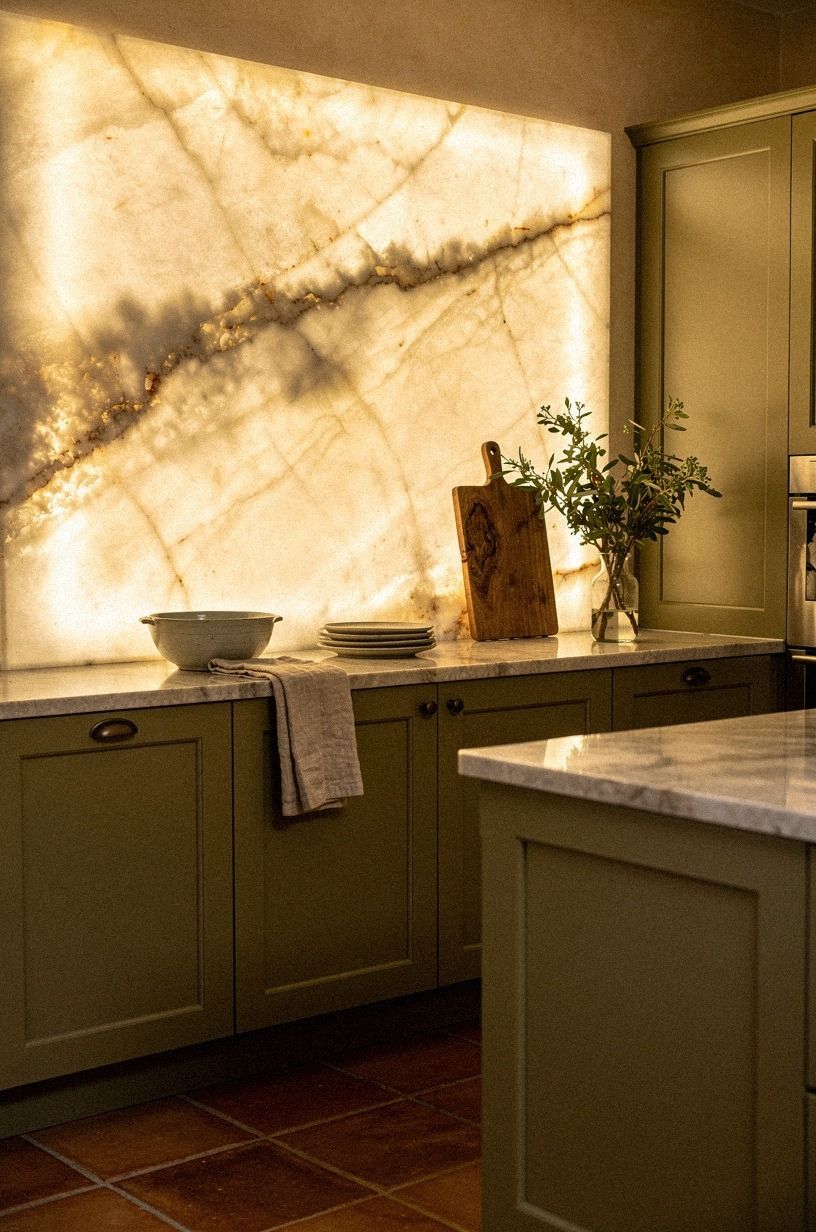
A darker wall can make warm lighting look richer, but the color needs the right undertone. Farrow & Ball Red Earth brings in a grounded terracotta note. Sherwin-Williams Ripe Olive SW 6209 can go deeper, so use it where you want the pendants and sconces to appear brighter against the wall.
Don't paint every surface dark just because the sample looks dramatic. A single wall behind open shelving or the dining area gives you contrast without turning the kitchen into a cave. Your light fixtures will read as shapes, not just sources, and the room gains depth once the sun goes down.
I went back and forth on dark paint in a small kitchen, but the best version had a light ceiling and pale counters. Backlit translucent onyx kept the room from feeling flat, while stone surfaces balanced the terracotta. If you're choosing between terracotta and olive, terracotta is the warmer call beside pale counters because it makes the evening light feel intentional.
A sample pot costs $10 to $25, while painting one accent wall professionally may cost $300 to $800. I would test the color behind the actual fixture, not on a distant hallway wall.
Your bulb temperature, counter tone, and evening shadows will change the result. For a broader natural-color reference, you can read about a beach shaped by shifting wind.
12Cosmetic Refresh or Full Remodel?
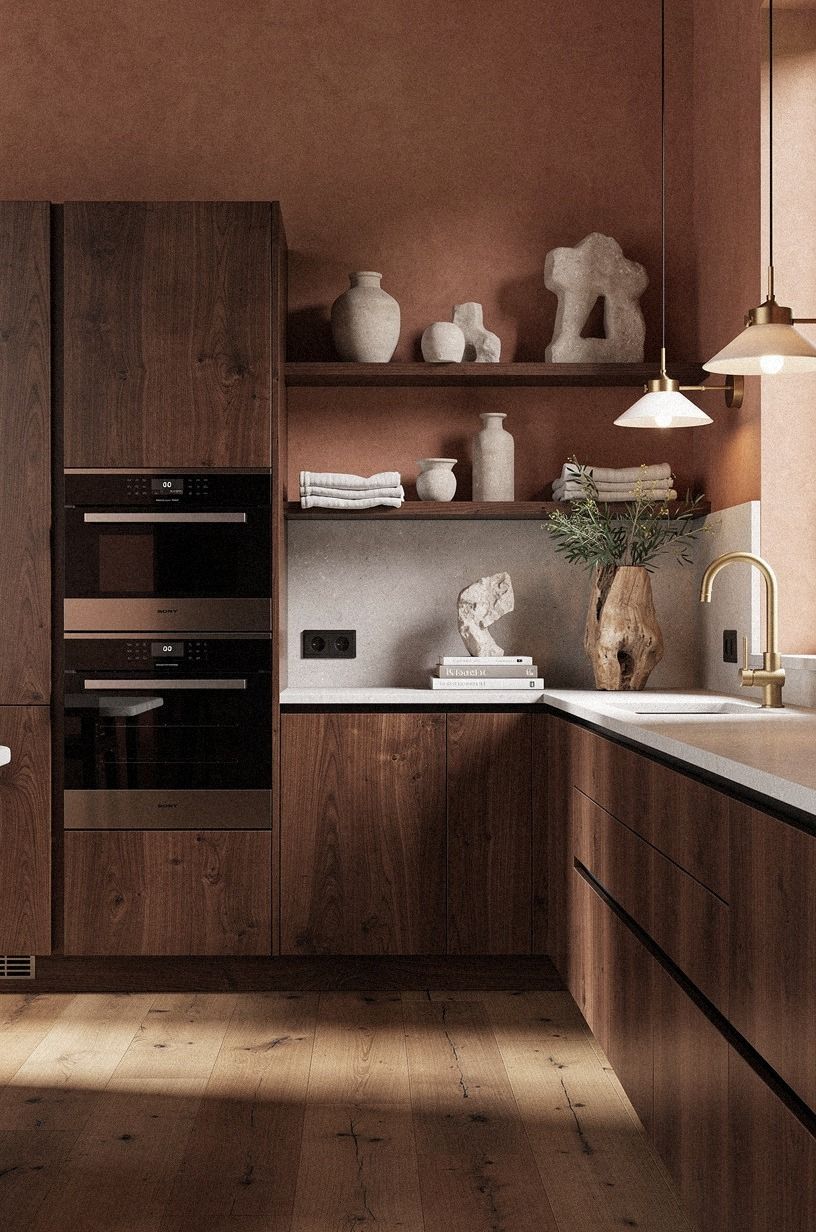
Lighting can be a cosmetic layer, but it often appears inside a larger kitchen budget. Before you plan a remodel, decide whether your problem is brightness, placement, finish, or electrical capacity. You may need a new fixture, not new cabinets.
For a cosmetic refresh, change bulbs, add a lamp, paint the ceiling, and install plug-in shelf lighting. That usually costs $150 to $1,500, depending on what you already own. A mid-level update with a new pendant, sconces, hardware, and professional installation may cost $2,000 to $7,000.
A full remodel is different. New cabinets, counters, appliances, flooring, and rewiring can push a project beyond $25,000.
I wouldn't choose that route merely because your kitchen feels cold after sunset. Your first step should be a night-time audit.
Turn on each light separately, stand in the doorway, and note where the shadows collect.
If the counters are dark, improve the under-cabinet layer first. If the room feels cold from the doorway, add a low lamp or change the bulb temperature.
If the island is hard to work at, fix the pendant placement and keep the beam focused where you prep. This kitchen-ingredient cleaning reference may also help you decide whether a high-maintenance finish is worth the expense.
What I’d Keep and What I’d Skip in a Cottage Kitchen
I keep returning to the same conclusion: warm kitchen lighting works because it gives every surface a different job after dark. The ceiling fixture handles movement and cleanup.
A pendant marks the island or table. A lamp makes the room feel available even when nobody is cooking.
That hierarchy matters more than whether your fixture came from a high-end showroom.
I’ve also learned that cottage style can become cluttered fast. Open shelves, patterned curtains, brass hardware, and lanterns all bring character, but they don’t need equal volume.
If your kitchen already has strong wood grain, I’d skip an ornate fixture and choose a quiet linen shade instead. If your cabinets are plain, a lantern can carry more of the visual weight.
Your budget should follow the problem. If the counters are dark, improve the under-cabinet layer first.
If the room feels cold from the doorway, add a low lamp or change the bulb temperature. If the island is hard to work at, fix the pendant placement and keep the beam focused where you prep.
I also like to check the room from the adjacent hallway. A cottage kitchen should connect visually to the rest of your home, so the color temperature needs to feel compatible with nearby rooms.
If your entryway or dining area uses warm lamps, repeat that warmth in the kitchen rather than creating a separate lighting world. This sandalwood atmosphere guide is a useful reminder that mood comes from small sensory decisions working together.
The best cottage kitchen at night isn't the brightest one. It's the one where you can see the cutting board, find your mug, and still want to sit down after dinner. That's a small distinction, but it changes how your room gets used.
The Questions Worth Answering First
What is the best cottage kitchen lighting for a small kitchen?
A single linen pendant over the work zone and a small ceramic lamp nearby are strong choices because they add layers without crowding the ceiling. Keep the fixture narrow, use 2700K bulbs, and let one low light source make the room feel more inviting after dark. If your shelves are deep, add a slim LED strip beneath them.
Where can I buy cottage kitchen lighting pieces on a budget?
IKEA, Wayfair, and Target are useful starting points, while Facebook Marketplace and local thrift shops can turn up older brass or glass fixtures. Check the wiring and shade condition before buying.
You don't need affiliate links or a premium label to find a charming fixture. For inspiration beyond standard lighting, this article about kitchen ingredients and salon-style shine may help you think about the finish surrounding your purchase.
How much does a cottage kitchen lighting makeover cost?
A small lighting refresh can fit inside the budget tier of $150 to $1,500 when paint, bulbs, a lamp, and minor hardware are included. You may spend less if you reuse your fixtures, change bulbs, add a lamp, and improve the placement of one existing pendant. A larger electrical update costs more because labor becomes the main expense.
Can I create this look on a budget?
Yes, and you can start with three low-cost moves: warm bulbs, a lamp on a safe counter corner, and removable light beneath one shelf. Your room will feel softer before you replace anything.
I’d spend on placement first, then upgrade the fixture you see most often. This wind-shaped beach reference is another reminder that variation can make a space feel more natural.
Is warm cottage lighting worth it in a small space?
Yes. A small kitchen benefits because layered light makes the boundaries feel less harsh and gives each zone a purpose.
Keep the center open, use one pendant over the work area, and place a low lamp at the edge so your eye travels through the room. I would rather see three gentle zones than one powerful fixture.
Is cottage kitchen lighting a good idea for a rental?
Yes. Choose plug-in sconces, removable under-shelf lighting, tension-mounted shades, and lamps instead of hardwired fixtures.
You’ll avoid damage while still creating a warm glow. Keep cords secured along cabinet edges, and ask your landlord before changing any ceiling fixture or electrical connection.
If you want a low-commitment mood change, compare your options with this sandalwood kitchen-ingredient idea.
Where I’d Start First
If I had to pick one, I’d start with a warm pendant over the main work zone. It gives your kitchen useful light and a visible focal point without a cabinet renovation. Pin this cottage kitchen lighting guide for later, then test the bulb temperature before buying anything else.


