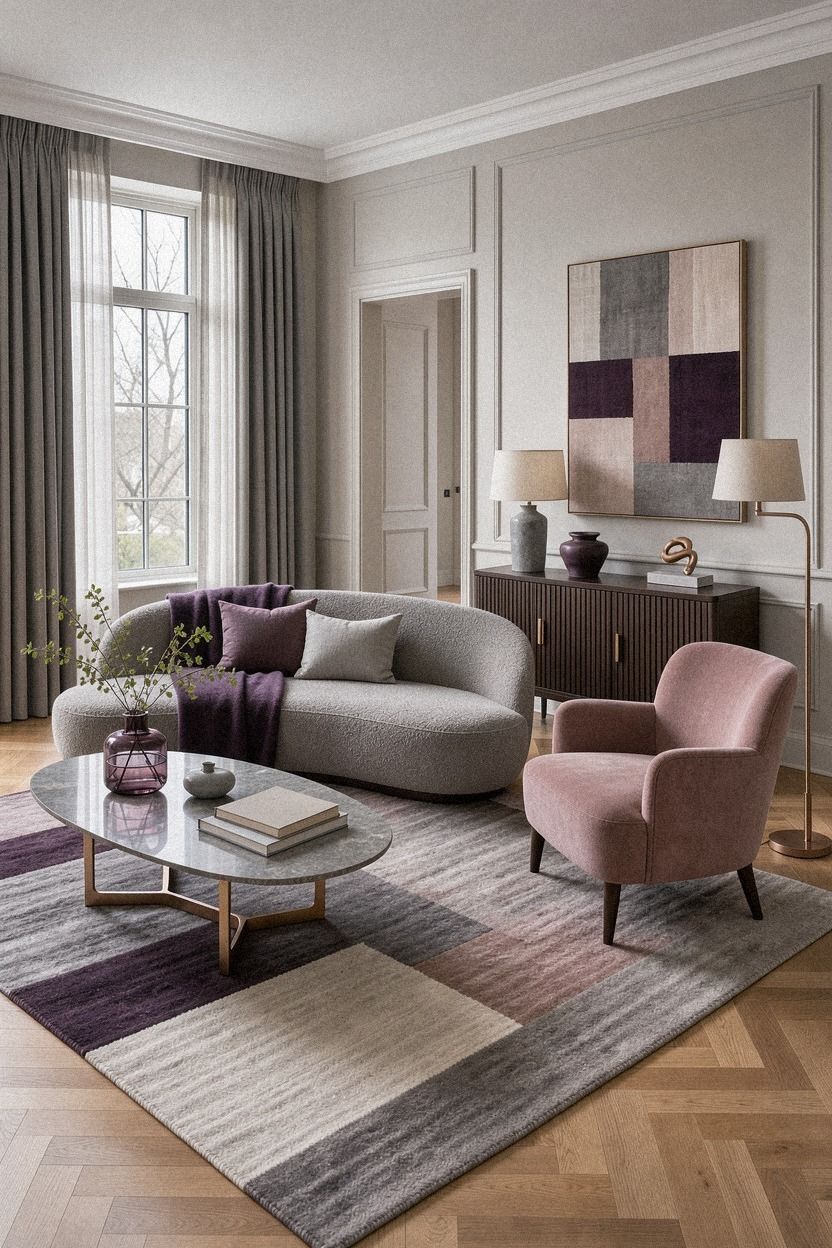
Low-Fuss Rectangle Coffee Table Styling That Actually Fills the Space
14 november 2026Rectangle coffee table styling works best when the table is about two-thirds of your sofa length and leaves 16 to 18 inches for movement. I learned that after buying one that looked fine in the store and awkward at home. Your room doesn’t need more objects. It needs better proportion, warmer materials, and a little breathing room.
- Float the table at the two-thirds mark
- Build the Three-Height Stack
- Layer along the long axis
- Choose warm wood over matching everything
- Anchor the furniture with the rug
- Keep the center open
- Pair the rectangle with one soft curve
- Follow the One-Heavy-One-Light rule
- Stack books by footprint
- Let sofa depth set the height
- Paint the backdrop before styling
- Frame the arrangement with low light
- Add a tray for real-life clutter
- Repeat one material, then stop
- Shop the shape before the label
- Price the room by the layer
- Is a warm neutral better than a dark table?
- Finish with one living detail
1Float the table at the two-thirds mark
Start by measuring your sofa, then choose a table close to two-thirds of its length. That proportion gives your seating area enough visual weight without making the room feel pinched. If your sofa is 90 inches long, you’ll want a coffee table that feels substantial while leaving clear paths around it.
Your eye notices the gap before it notices the tabletop.
I prefer an organic bouclé accent in plum, gray, and rose gold because its soft texture keeps a large rectangle from looking heavy. A dark table can work, but I’d skip a glossy espresso finish if your room already has a black television and heavy curtains. You’ll end up with one dark block after another.
Before you buy, compare the footprint with this living room layout guide. The most valuable measurement is the one that lets everyone walk, sit, and reach the table comfortably.
2Build the Three-Height Stack
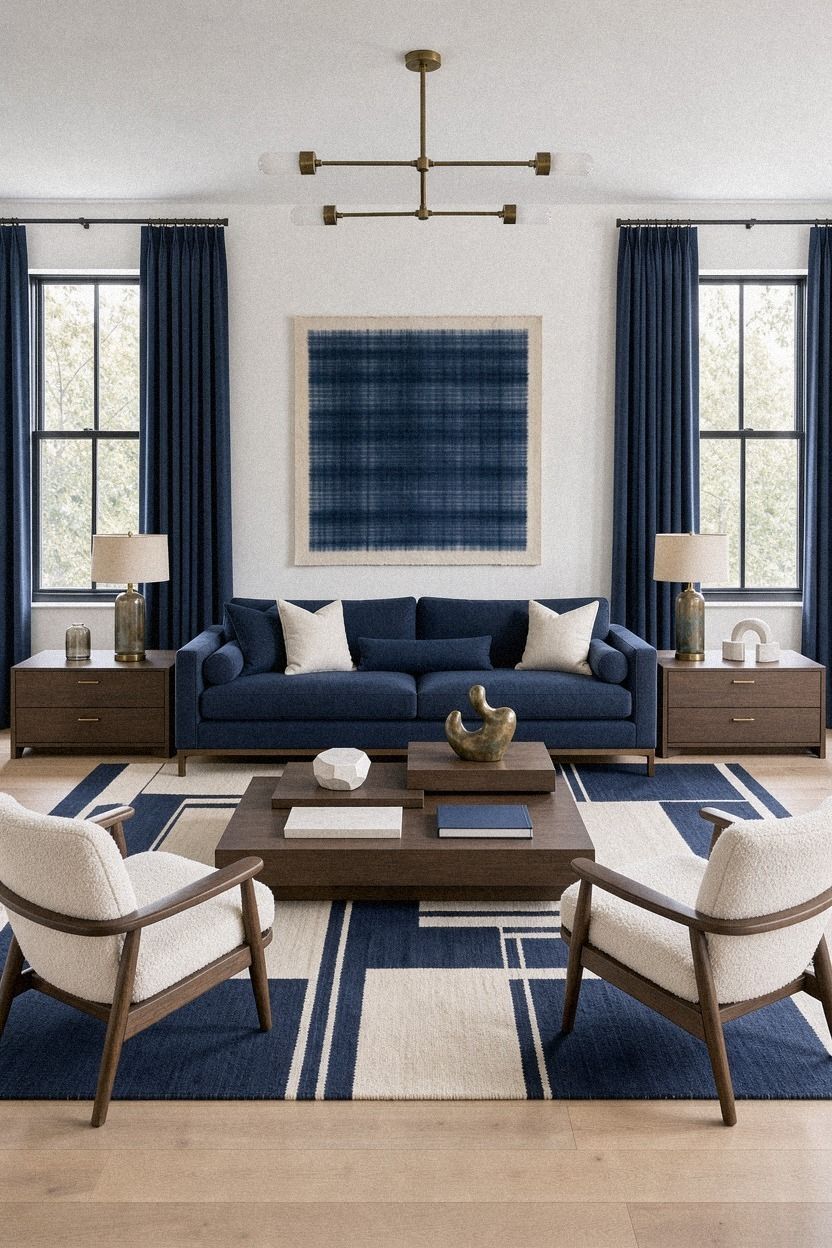
The Three-Height Stack keeps your rectangle from becoming a flat display. Your first layer should sit low, such as a tray or a stack of books. Your second layer can rise to a small vase, and the third should stay modest, perhaps a branch or a slim candleholder.
I’ve found that three clear levels look more collected than ten tiny accessories.
Use an unlacquered brass tray developing a soft patina for the low layer if your room needs warmth and subtle variation. Add a medium-height ceramic vessel, then a narrow branch that leans slightly toward the sofa.
And don’t center every item. A grouping shifted toward one end gives your table a relaxed, inviting rhythm.
You’re styling a surface for daily life, so leave enough room for your coffee mug. This small living room storage plan can help if the tabletop keeps becoming a landing place for everything else.
3Layer along the long axis
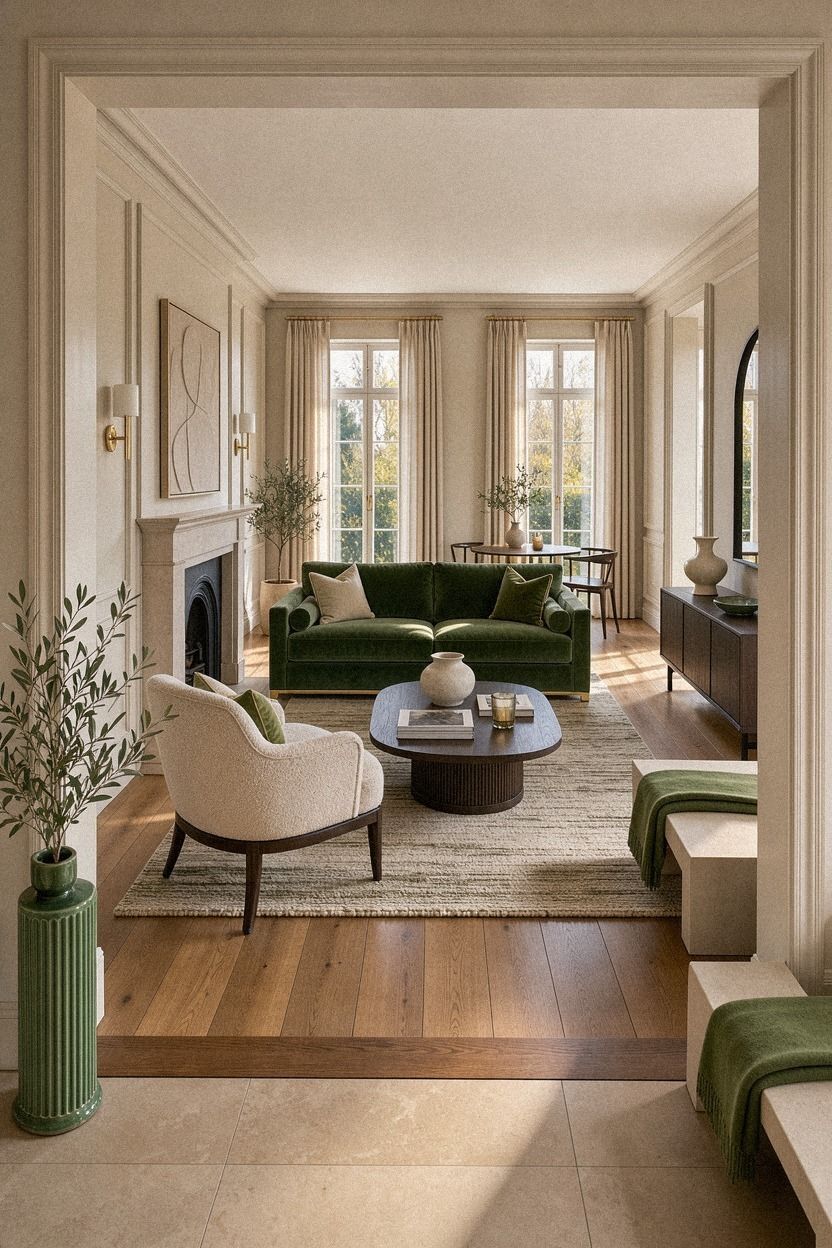
A rectangle already points in one direction, so your styling should respect that shape.
4Choose warm wood over matching everything
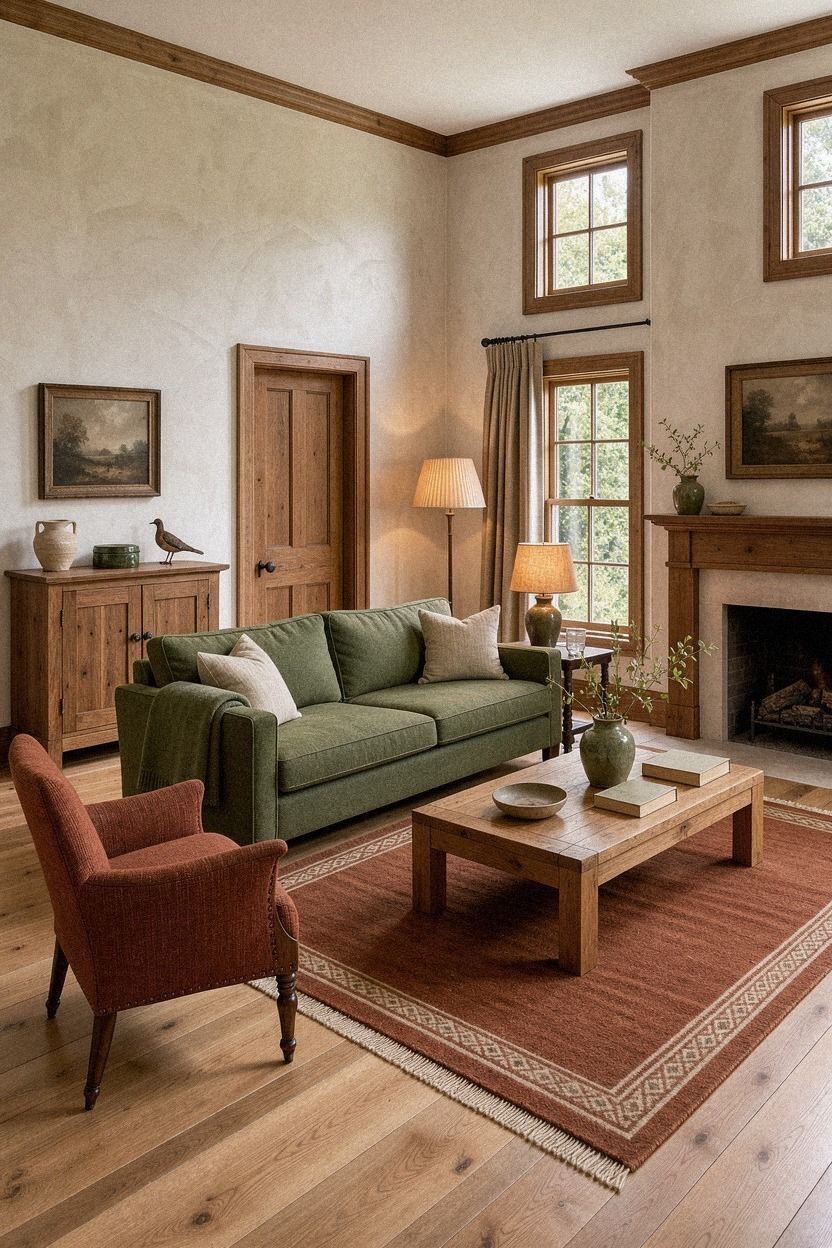
Matching the coffee table to your media console sounds safe, but it can make your room look like a showroom package. A warm natural oak table beside a wall finished in hand-applied Venetian plaster, a woven chair, or a stone lamp creates more depth.
Natural oak, warm rust, and Venetian plaster each bring a different mood. Oak feels grounded and organic.
Rust adds energy without becoming loud. Venetian plaster gives the background a quiet, mineral texture that works beautifully in a relaxed room.
The best value usually comes from coordinating undertones instead of matching finishes exactly. If your floor is golden, choose a table with warmth.
If the floor is gray, a neutral oak or smoked finish may sit more naturally beside it. This warm neutral living room guide is useful when the room already contains several wood tones.
5Anchor the furniture with the rug
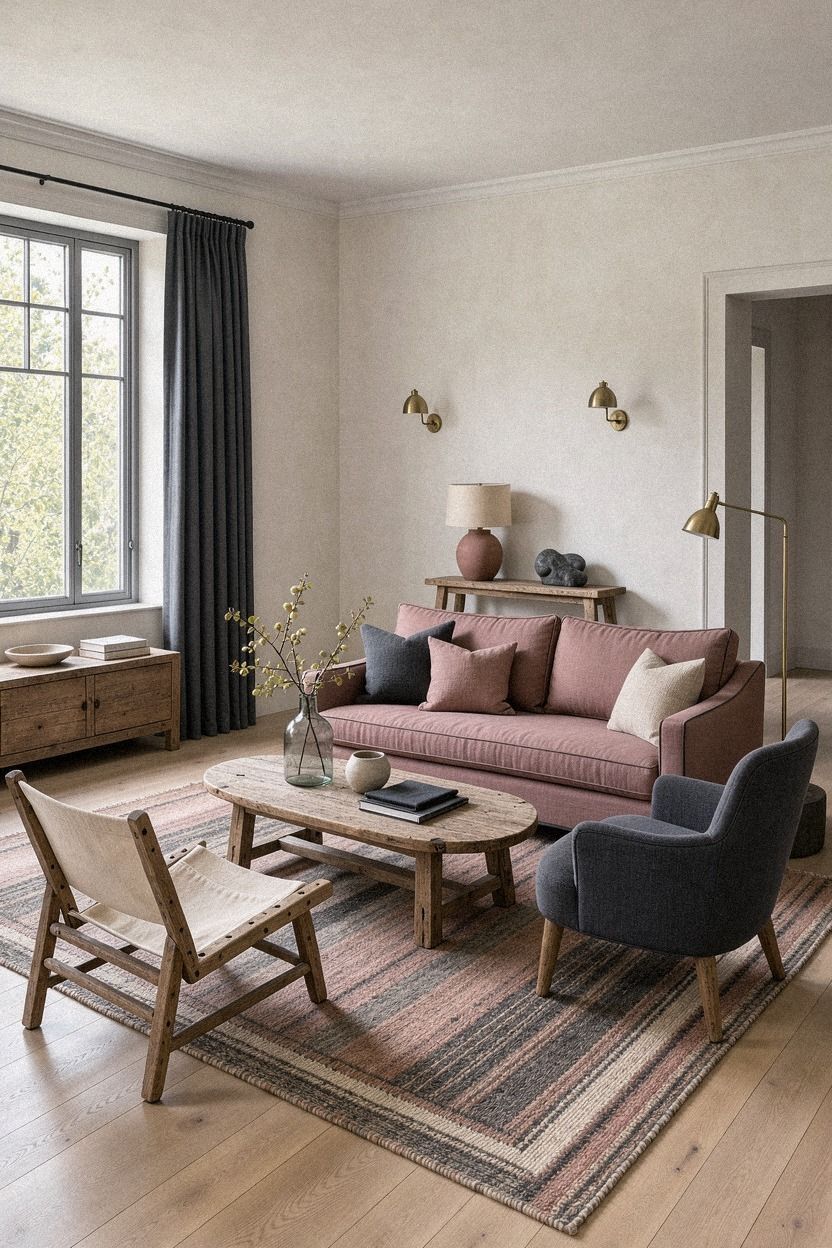
Your coffee table can’t fill the space properly if the rug is too small. Let the front legs of your sofa and chairs sit on the rug, then position the rectangle inside that shared footprint. An 8-by-10 or 9-by-12 rug usually gives your seating group enough visual ground, depending on your room.
I’d pair a reclaimed weathered teak table with a low-pile rug rather than a shag style here. The table stays stable, chair legs move easily, and the surface still feels soft underfoot. If your rug stops just under the table, your room may look like separate islands instead of one conversation area.
The rug is often a better investment than another decorative object because it changes the whole room. For more guidance, compare the proportions in this living room rug placement guide.
6Keep the center open
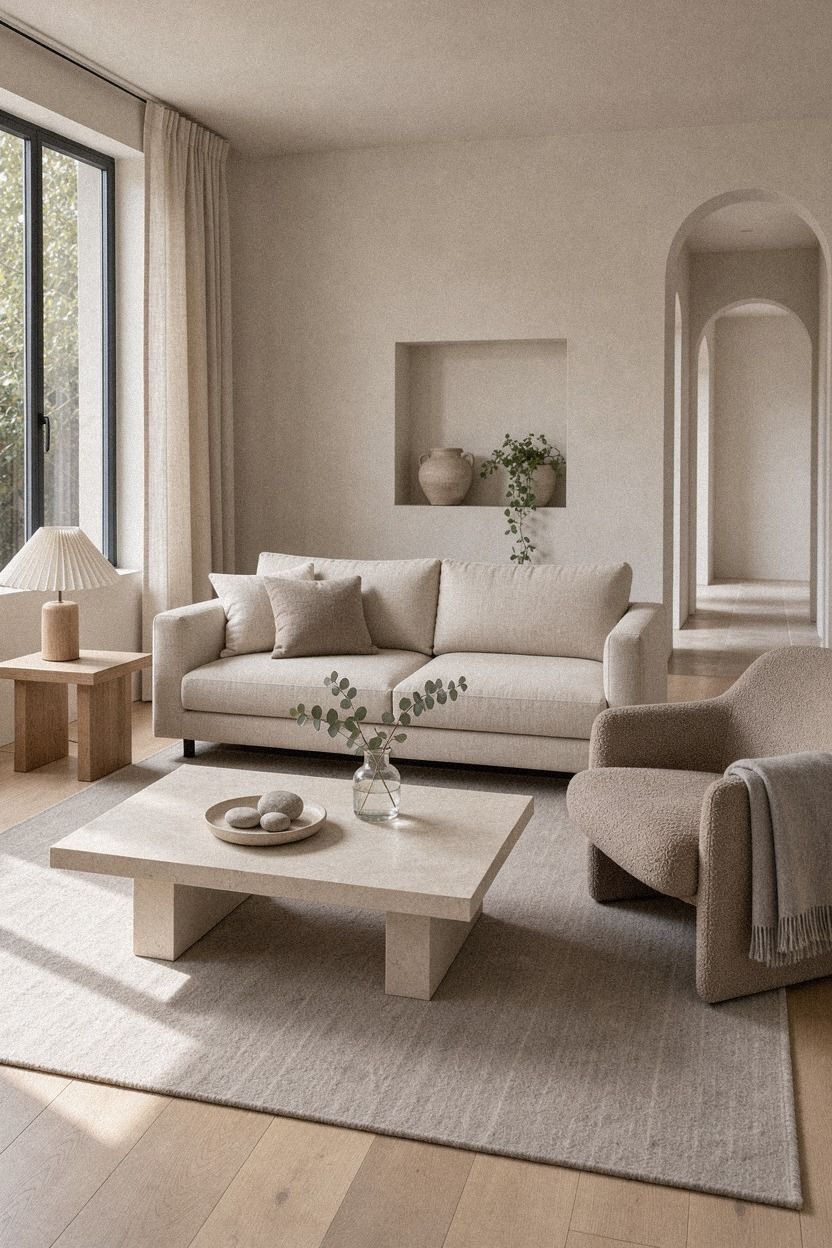
A good rectangle coffee table needs one quiet patch.
7Pair the rectangle with one soft curve
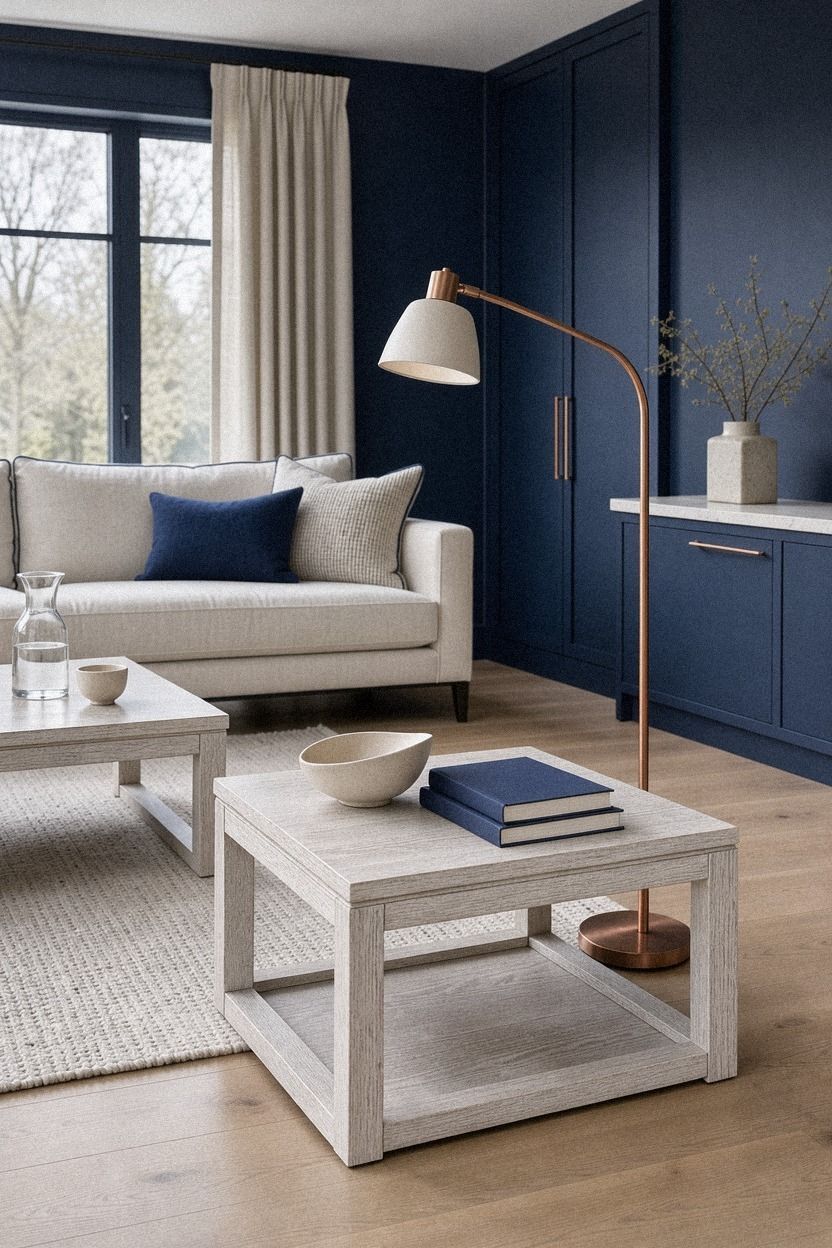
Rectangular tables can make a room feel crisp, but too many straight lines turn crisp into stiff. Add one curved object, such as a round bowl, a circular stone coaster, or a bulbous vase. Your table keeps its useful footprint while the small curve makes the arrangement feel gentler.
I’d use a round bowl with shagreen accents instead of a shiny metal bowl if your room already has chrome or glass. The uneven texture gives your eye something to rest on. You can also bring in a round ottoman, but don’t add curves everywhere.
One soft interruption is enough. A single round bowl near the corner will make the whole rectangle feel more welcoming without stealing space from your books. See this mixing shapes in a living room guide for a calm way to balance hard and soft forms.
8Follow the One-Heavy-One-Light rule
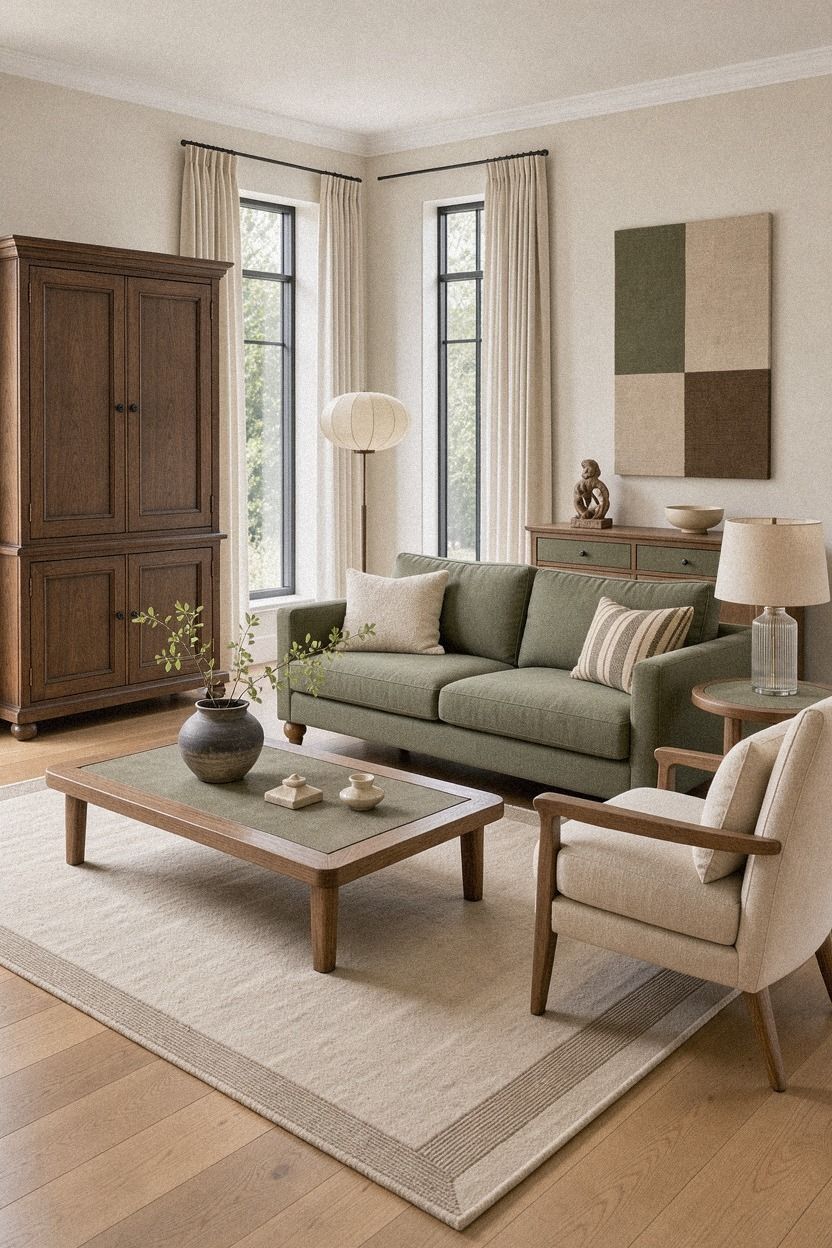
The One-Heavy-One-Light Rule stops your tabletop from becoming visually lopsided. Pair one substantial item, like a thick tray or a stone bowl, with one lighter item, such as a glass vase or a slim brass candlestick. Your eye gets contrast, and your table avoids the dullness of matching weight.
Choose a book-matched walnut tray or bowl for the heavier accent if your room needs depth. I’d skip two heavy ceramic vessels together, even if their colors are lovely. They’ll make one end feel crowded while the other end disappears.
Place the heavy object near the sofa side and the lighter object toward the open walkway. That simple contrast keeps the arrangement balanced from every seat. This living room balance guide explains why asymmetry can still feel wonderfully stable.
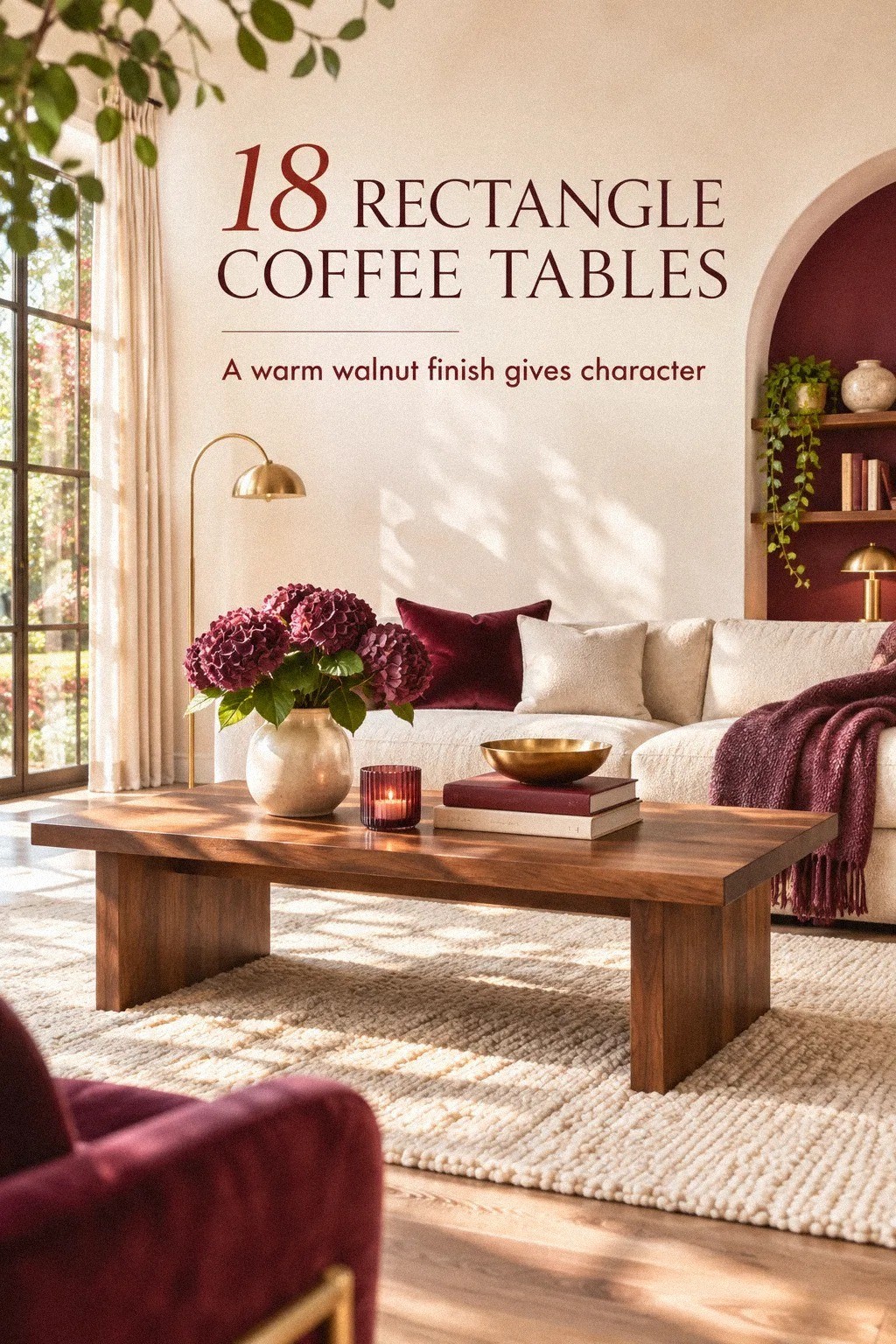
9Stack books by footprint
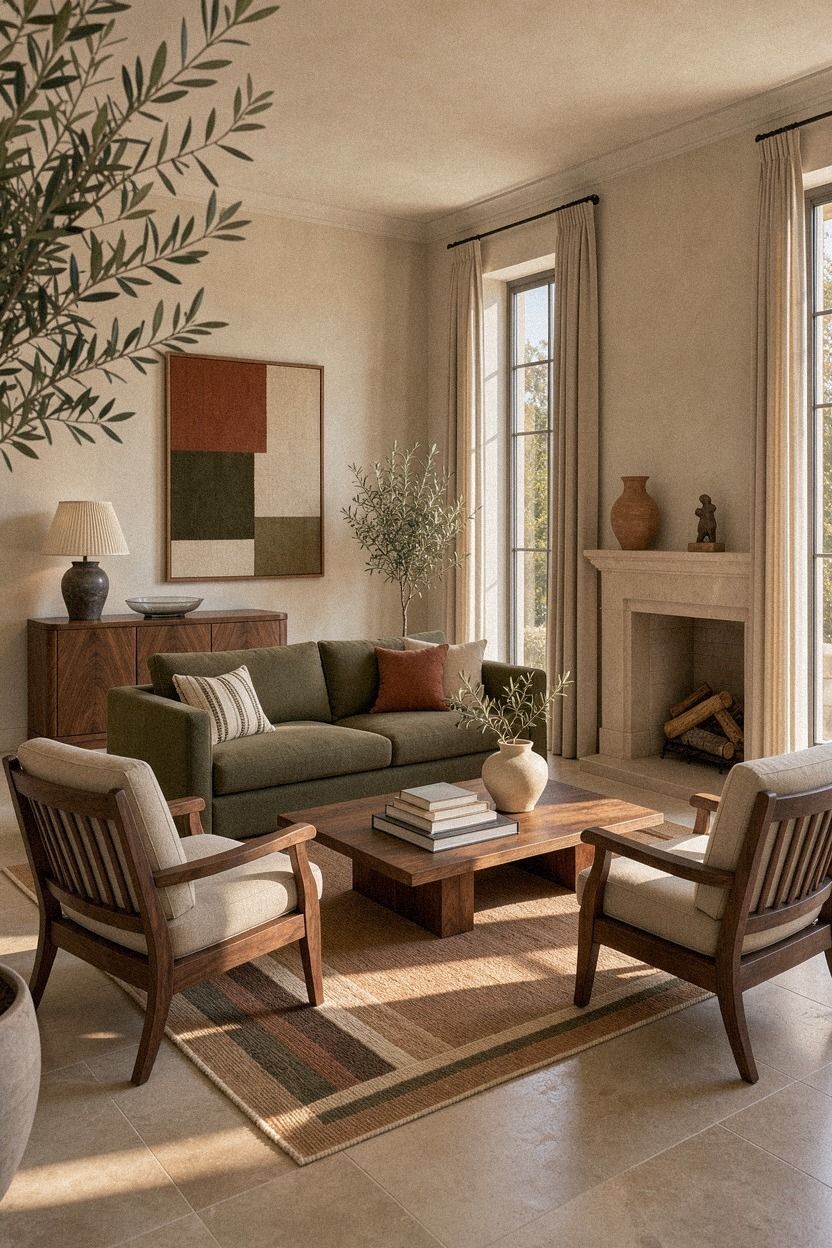
Books work best when their sizes step down gradually.
10Let sofa depth set the height
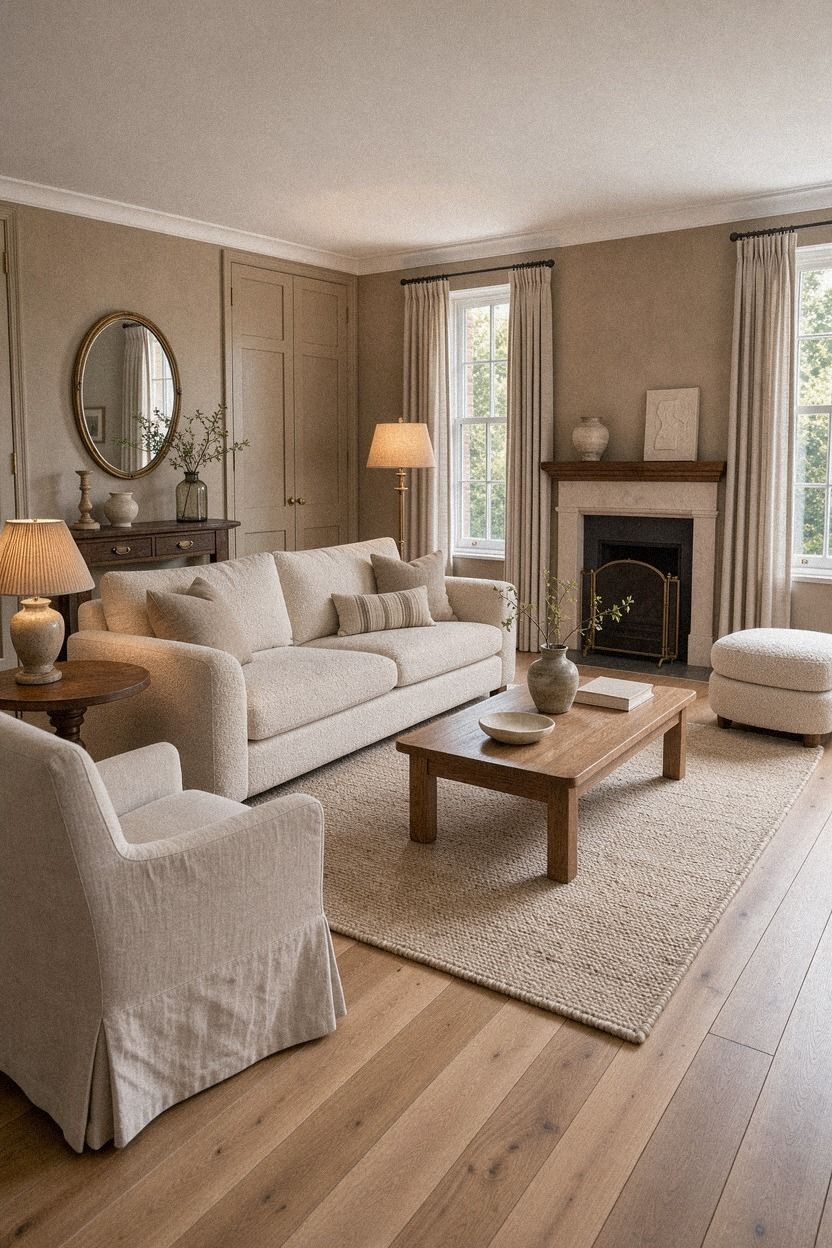
Your table should usually sit 16 to 18 inches tall, close enough to reach but low enough to preserve the room’s horizontal line. Sofa depth matters, too. Most sofas fall around 35 to 40 inches deep, so a table that is too tall can make the seating feel boxed in.
I’d choose a 16-inch table beside an organic bouclé sofa for a low contemporary room and avoid a tall pedestal beside deep cushions. Your arm should reach the surface without leaning forward. Measure from the floor to the top of your seat cushion, then compare that number with the table.
You’ll catch awkward proportions before delivery day, and your back will appreciate the extra minute of measuring. This sofa and coffee table height guide is worth checking before you commit to a purchase.
11Paint the backdrop before styling
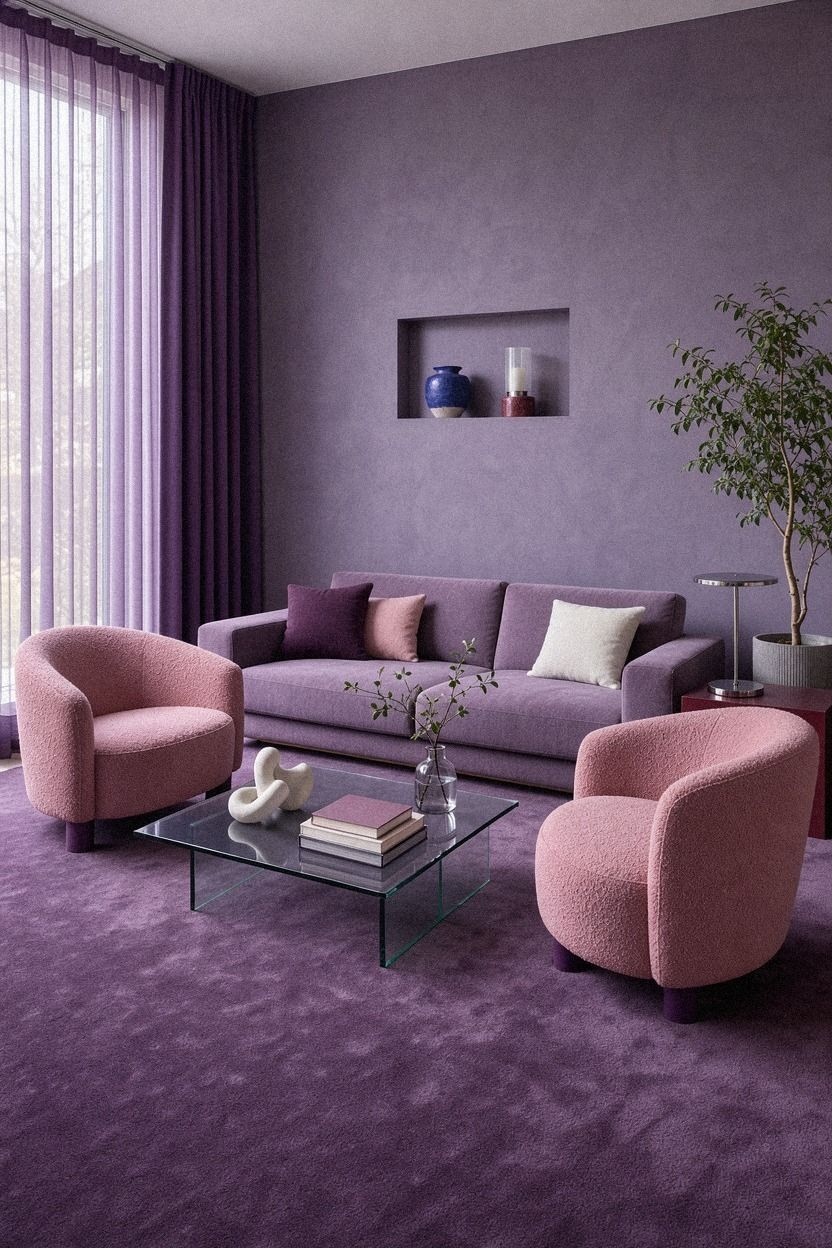
The wall behind your table affects how full the whole arrangement feels. A pale, chalky color can make dark wood stand out, while a deeper shade can make a light table feel more dramatic and architectural.
I like Farrow & Ball Brinjal, Benjamin Moore Shadow 2117-30, and Sherwin-Williams Repose Gray SW 7015 for rooms that need plum depth, soft gray, and a calm backdrop for rose-gold accents. Test every sample beside the sofa, rug, and table finish. Paint can look completely different beside cool gray upholstery than it does on a white card.
A small paint update may offer more value than replacing the table. If you’re choosing among plums and grays, compare these green living room paint ideas in the actual light your room receives.
12Frame the arrangement with low light
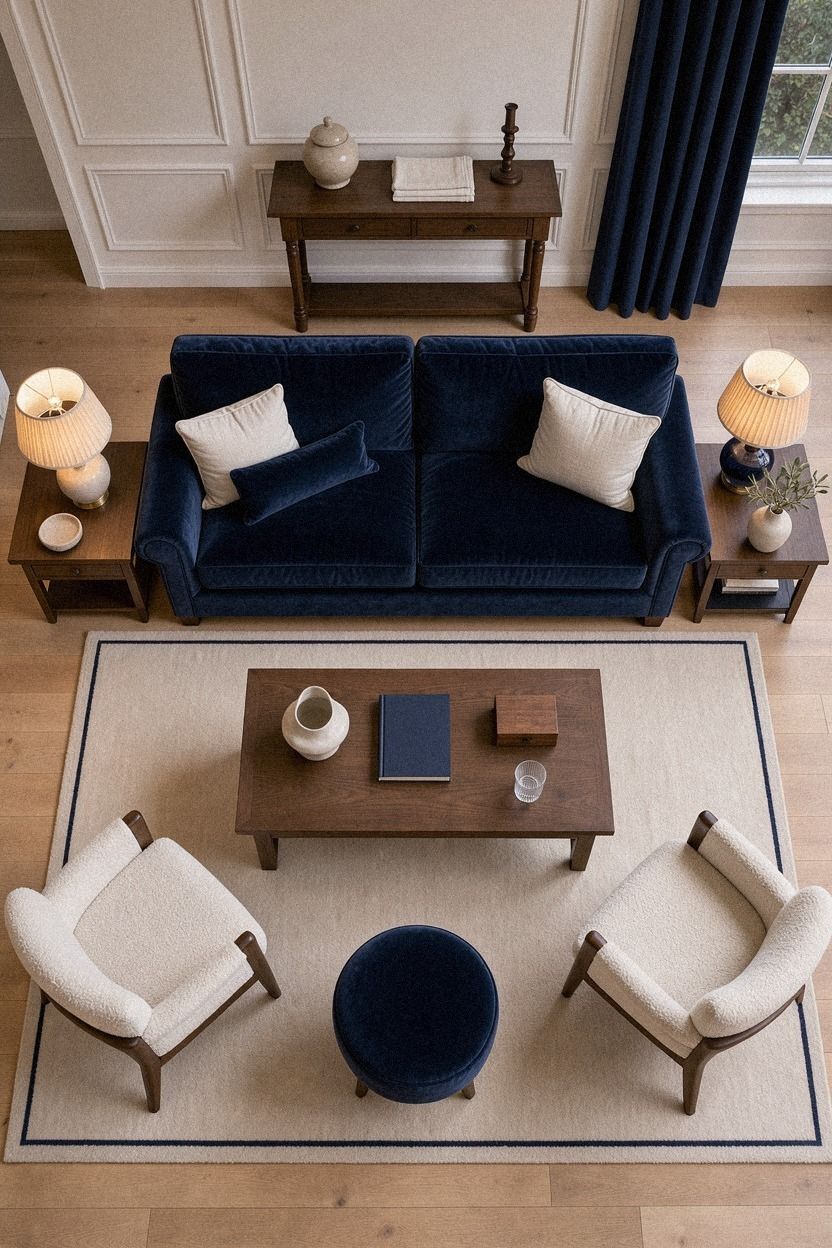
Your rectangle will feel more connected to the room when a nearby lamp creates a pool of light across the tabletop.
13Add a tray for real-life clutter
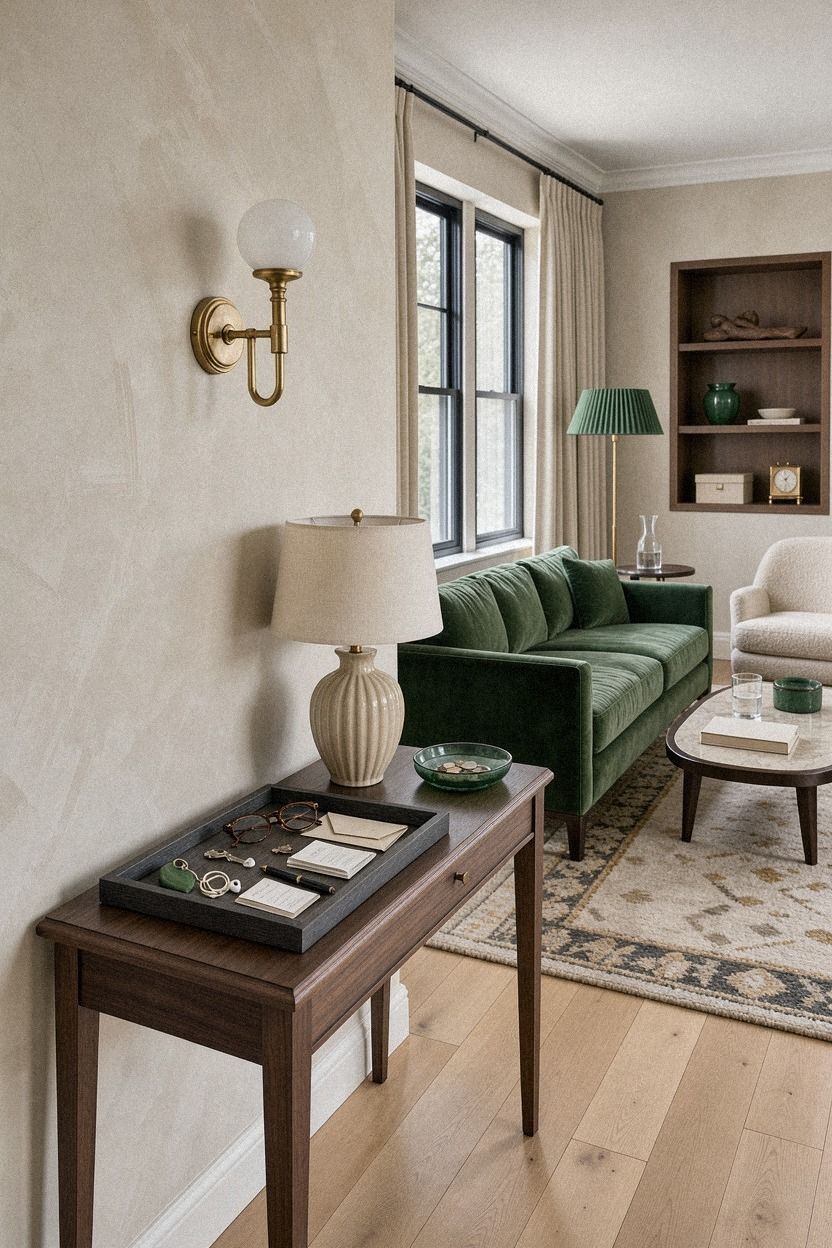
A tray gives loose items a boundary. Remotes, coasters, matches, and a small candle can live together without spreading across the full rectangle. Your table stays useful, and you can lift the whole group when you need more space.
Choose a slim gold tray against a cream surface with hand-applied Venetian plaster for an earthy room, or use a slim wood tray if your table has a strong grain. I’d avoid mirrored trays because fingerprints and reflections make them fussy.
A tray doesn’t mean you need to fill it completely. One remote, two coasters, and a small bowl may be all your routine requires.
When guests arrive, you’ll clear the surface in one motion instead of collecting six separate objects. See this simple living room organization guide for more practical fixes.
14Repeat one material, then stop
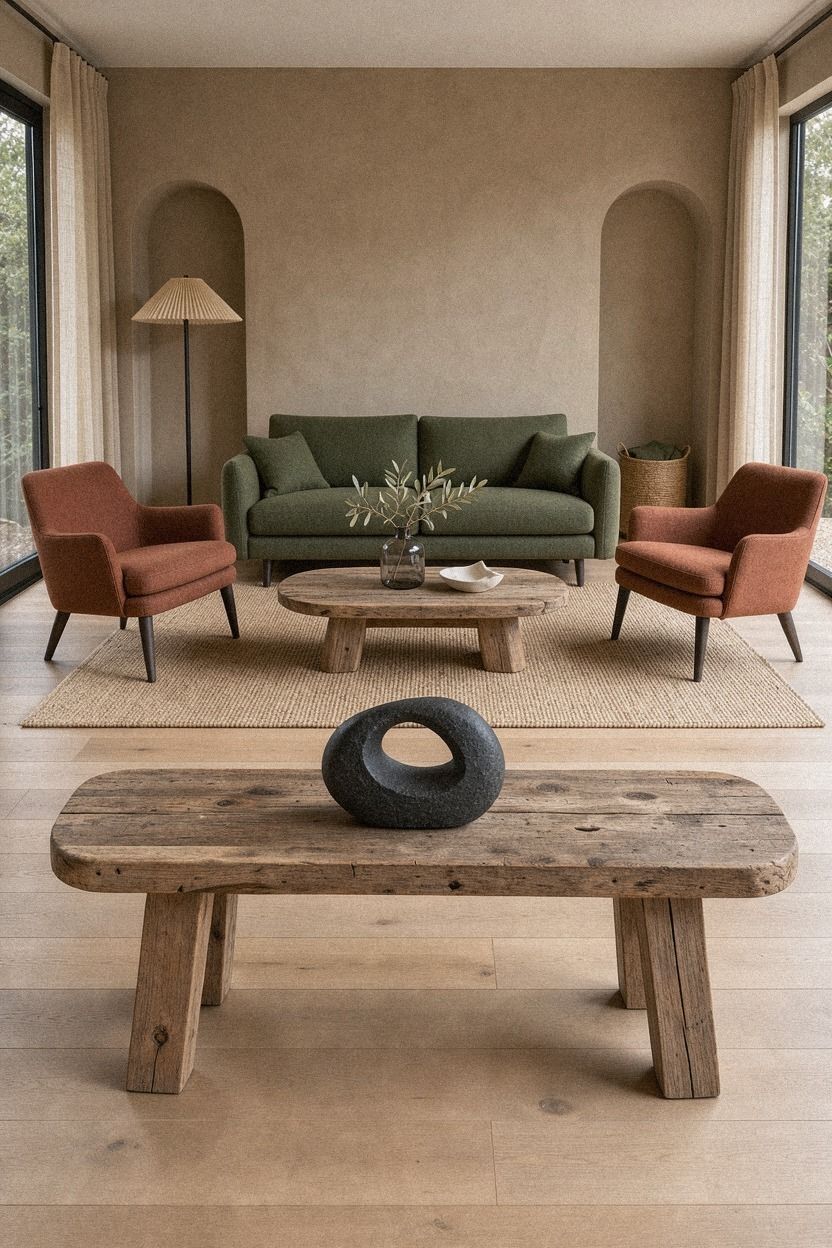
Material repetition makes a room feel connected, but repetition needs a limit. If your table has oak, repeat oak once in a frame or bowl.
If your lamp has brass, repeat brass in one small object. Your room will feel harmonious without looking coordinated by a spreadsheet.
Try a reclaimed weathered teak accent on one nearby tray or bowl if the table arrangement needs warmth. I’d skip repeating the same finish four times because the room loses tension. One material echo is enough to make your eye travel from sofa to tabletop to wall.
If you’re editing a busy room, remove one accessory after adding the repeat. Sometimes the missing object is what lets the useful one show. This layered living room materials guide offers a helpful starting point.
15Shop the shape before the label
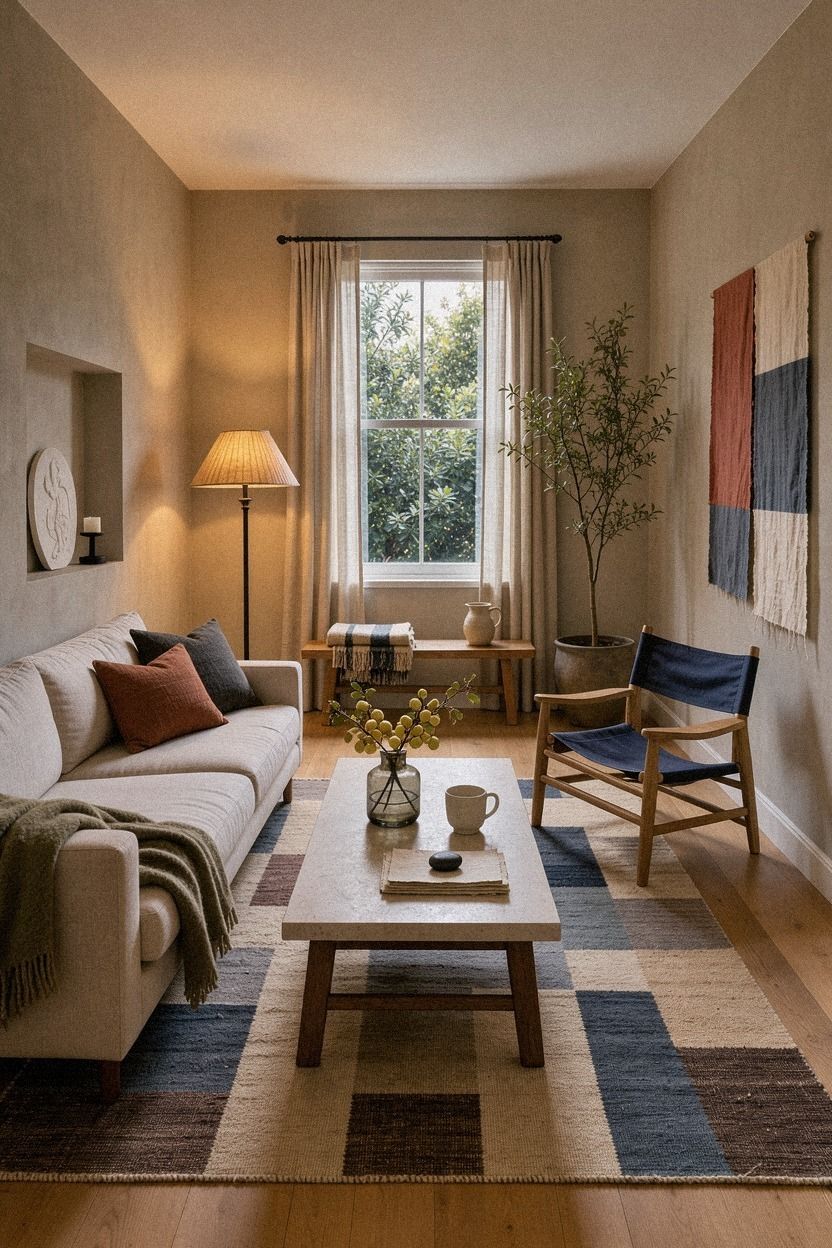
Start your search with dimensions and construction, then consider the brand.
16Price the room by the layer
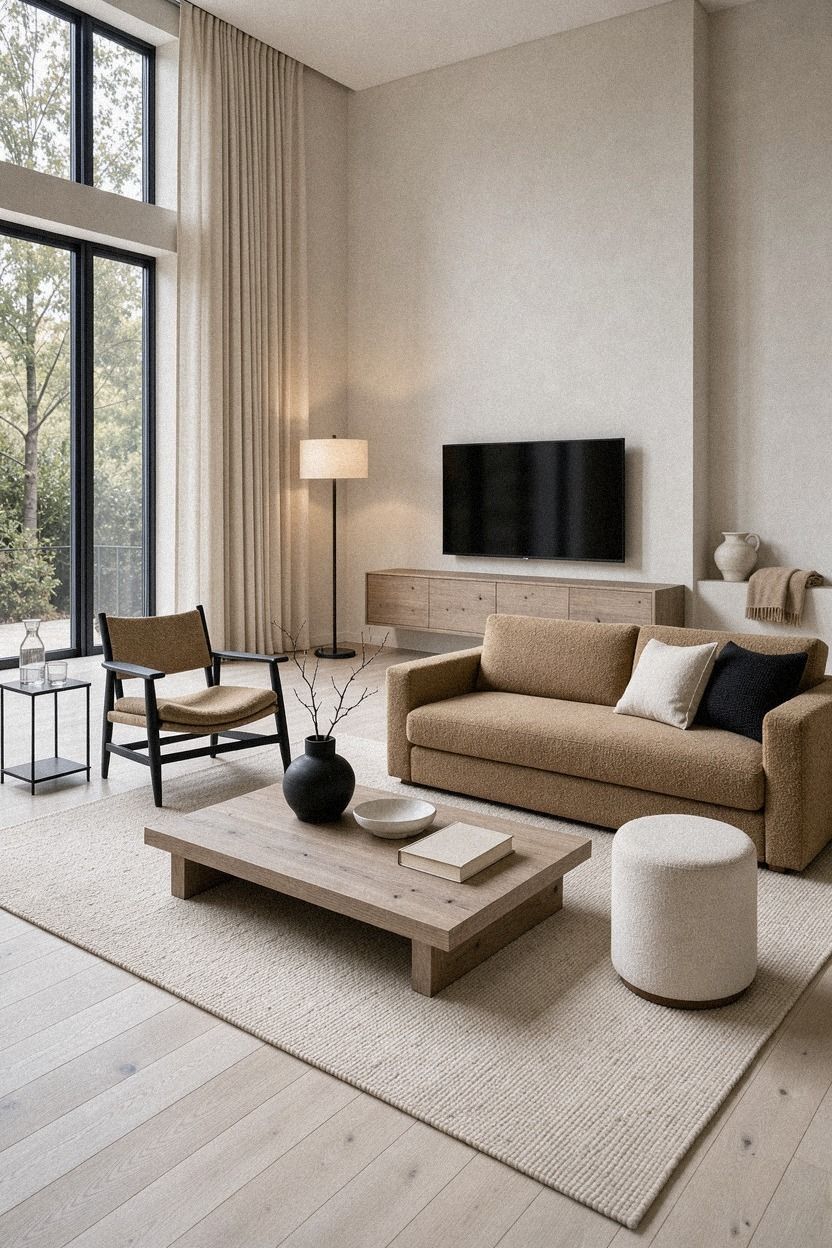
Your coffee table doesn’t need to trigger a full-room purchase. Start with the table, then decide whether the rug, pillows, lighting, or art needs help.
A budget refresh can stay focused, while a larger room project may include seating and millwork. These typical US ranges give you a useful frame.
I’d spend first on the rug and table proportions because your eye reads those across the whole room. Cerused white oak can wait if your sofa is still comfortable. You’ll get more impact from an 8-by-10 rug, a better light source, and fewer objects than from a pile of small purchases.
A focused budget usually gives you better value than a dramatic shopping spree. This living room decorating budget guide can help you decide what is worth the cost now and what can wait.
17Is a warm neutral better than a dark table?
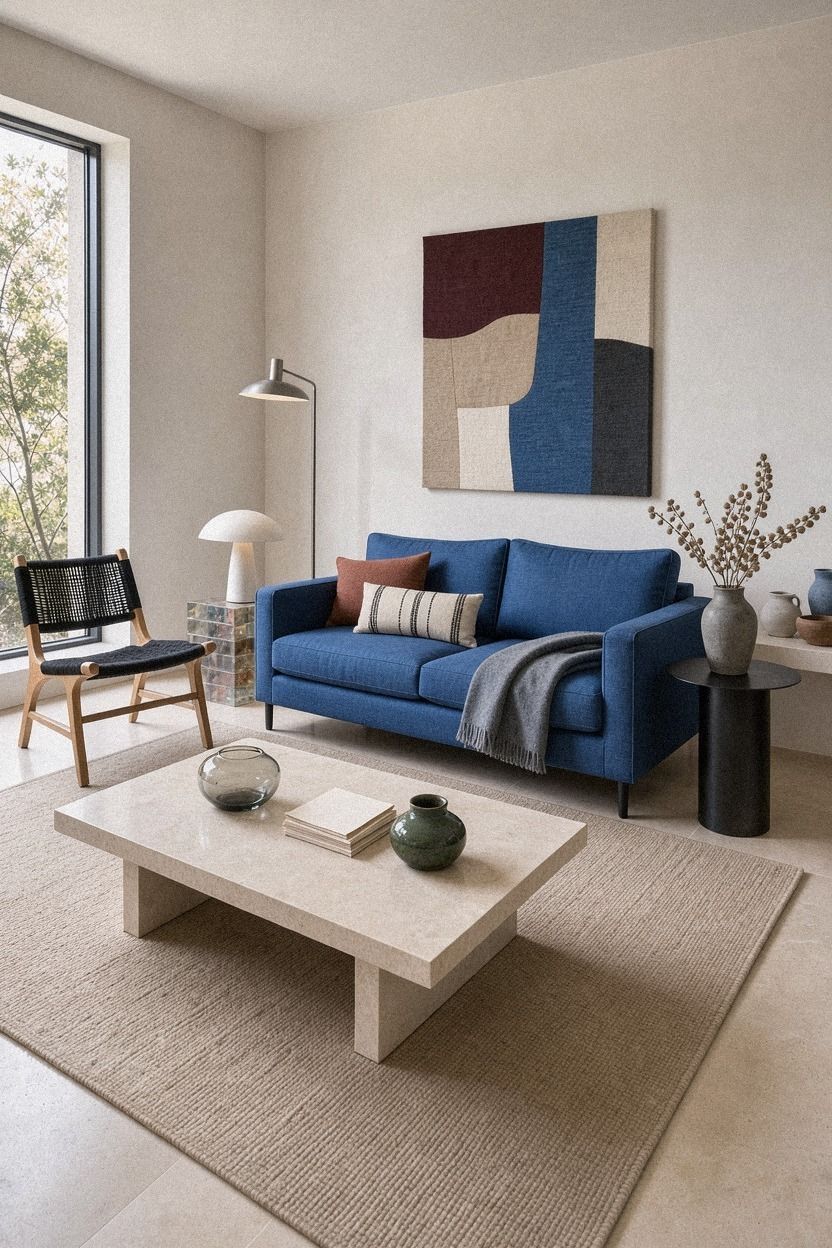
A warm neutral table usually gives you more flexibility, especially if your sofa, rug, or television is already dark. A plum or gray wall can support both pale oak and walnut, but your room’s natural light should guide the final choice. Sample the finish beside the rug, not against a white wall.
I’d choose dark walnut only when your room has enough pale texture to balance it, such as ivory walls, a light wool rug, or pale shagreen accents. Otherwise, the table may become a visual hole. You don’t need to follow a color forecast if the room tells you something else.
Paint chips, wood samples, and your actual sofa will give you a better answer than a trend board. If you’re comparing undertones, use this warm versus dark wood guide.
18Finish with one living detail
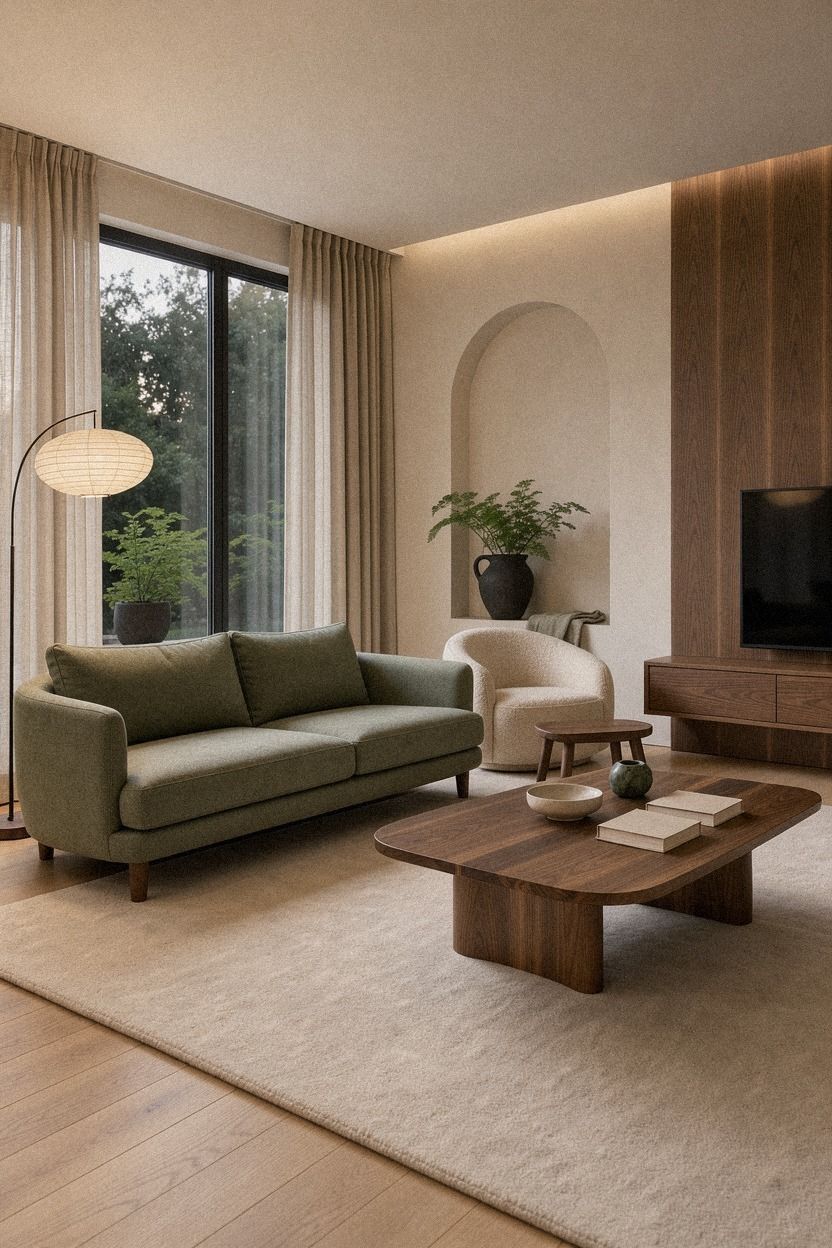
A table feels finished when it includes one detail that belongs to your life.
The Rule I’d Keep After Styling
I’ve styled enough living rooms to know that the table rarely causes the problem by itself. The trouble usually starts with proportion.
A sofa is too deep, the rug is too small, and then someone adds a larger table to compensate. The room gets crowded, so more accessories arrive to make it feel finished. That cycle doesn’t help you.
It gives you more things to move when you want to vacuum.
The rectangle works because it follows the shape of conversation. It bridges the sofa and chairs, gives everyone a landing place, and creates a long visual line across the room.
But the table should never be the loudest object. I’d rather see a plain oak surface with one useful tray than a dramatic marble slab buried beneath décor.
Your best arrangement will probably look slightly unfinished at first. That’s a good sign. You need room for a book, a drink, and the ordinary mess that proves the space is yours!
The Questions Worth Answering First
What is the best rectangle coffee table styling for a small living room?
The best choice is a low table around two-thirds of your sofa length, such as an IKEA KALLAX birch-effect option with open storage. Keep the center mostly clear, use an 8-by-10 rug, and choose one tray. That gives you more usable floor space without making your room feel bare.
Where can I buy rectangle coffee table pieces on a budget?
Look at IKEA, Wayfair, and Target Threshold, then check Facebook Marketplace or a local thrift store for solid wood. Your best finds may need only new hardware or a light sanding.
I’d compare measurements first because the right footprint matters more than the label. That small step can protect your budget.
How much does a rectangle coffee table makeover cost?
A small refresh can cost about $100 to $300 if you already own the table, rug, and books. Free changes include removing clutter, shifting the table, and regrouping what you own.
Your largest expense will usually be the rug or lighting, not the tray. Start with the change that solves the most visible problem.
Can I create rectangle coffee table styling on a budget?
Yes, and you can start without buying anything! Move the table to the two-thirds mark, stack books by size, and use a bowl from another room.
A secondhand tray or Target Threshold woven basket can add texture for less. You’ll see the proportion change before you spend, which makes the next purchase much easier to judge.
Is rectangle coffee table styling worth it in a small space?
Yes, because a rectangle can connect seating more efficiently than several small pieces. Keep 16 to 18 inches around the table where possible, and choose furniture with open legs.
Your room will feel less blocked, especially when the rug extends beneath the front legs of the seating. The improvement is usually worth the cost when circulation is the main issue.
Is rectangle coffee table styling a good idea for a rental?
Yes! Use a freestanding table, removable felt pads, a tension rod for nearby curtains, and peel-and-stick art only where your lease allows it.
You don’t need to paint to create warmth. Add removable linen drapes, a woven tray, and portable lamps instead.
These changes offer strong visual value without permanent work.
Where I’d Start First
If I had to pick one, I’d start with the two-thirds proportion. A table that fits your sofa fixes more than another vase ever will because it gives every object a believable place. Measure the table, clear the center, and live with the arrangement for a day before buying anything.
That simple test protects your budget and usually reveals what the room actually needs. Save this rectangle coffee table styling guide before your next furniture search!


