12 Ways to Style a Throw on a Sofa That Do Not Look Messy
11 november 2026The cleanest way to style a throw on a sofa is to give it one deliberate job: soften an edge, add color, or invite someone to sit. I learned that after leaving blankets in a heap for months. A crisp fold, a visible corner, and the right texture can make your sofa feel warm instead of cluttered.
- Fold the Throw Into a Clean Seat-Edge Stack
- Try the Folded Corner Rule
- Drape It Over One Arm, Then Stop
- How Do You Build the Two-Height Cascade?
- Anchor the Throw Beneath a Pillow
- Match Texture, Not Exact Color
- Float a Blanket Behind the Back Cushion
- When Space Is Tight, Use the Seat-Edge Anchor
- Hang a Throw Over a Narrow Sofa Arm
- What Belongs in the Three-Source Rule?
- Swap a Floor Pile for a Basket Fold
- Frame the Sofa With a Calm Color Pair
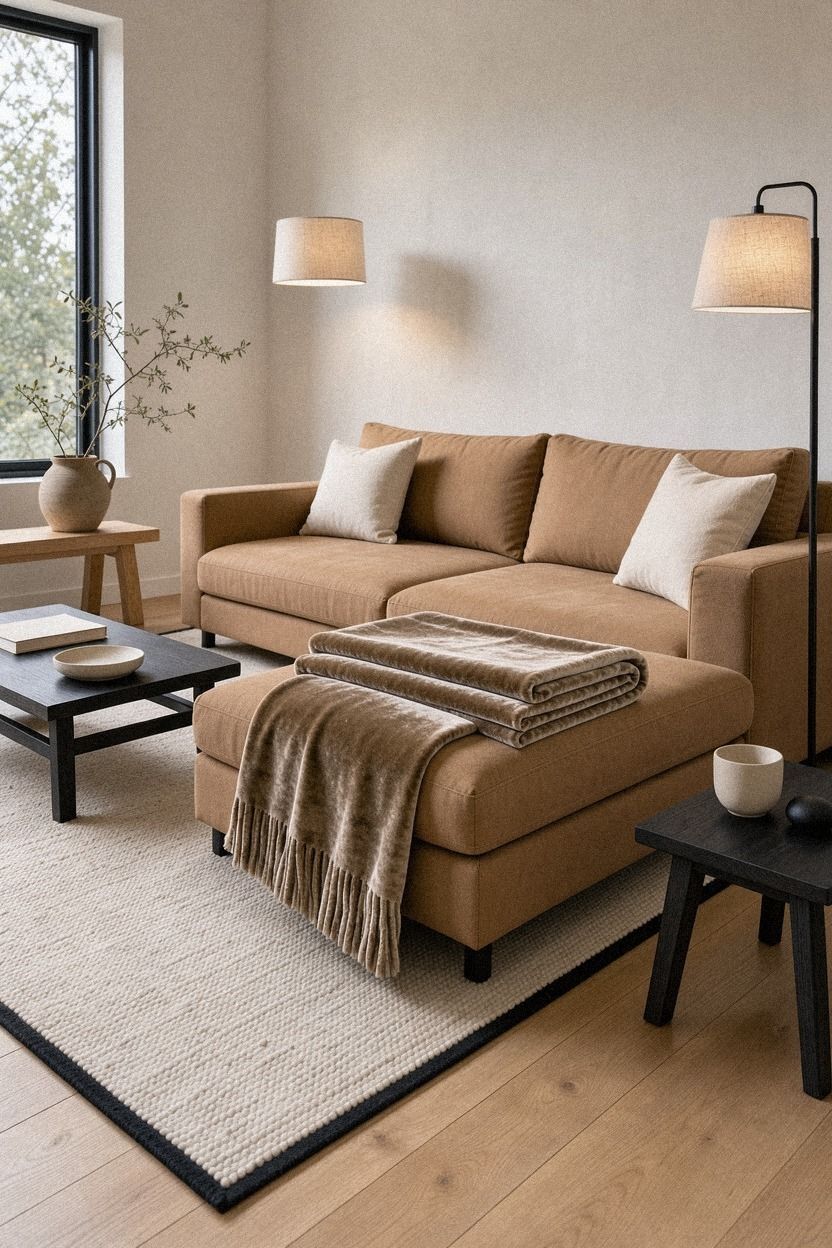
1Fold the Throw Into a Clean Seat-Edge Stack
Fold your throw lengthwise into a narrow strip, then drape it over the sofa’s outer seat edge. You’ll get softness without covering the cushions, and your room will still look airy when nobody’s sitting there. I prefer this approach with a warm-white sofa and deep-pile mohair velvet, especially when camel and black accents already give the room contrast.
Keep the folded width close to 12 inches, or let it span roughly one-third of the seat. That proportion works especially well when your sofa depth sits between 35 and 40 inches. Anything wider can swallow the cushion, while anything thinner can look accidental.
That proportion matters!
Don’t use a throw that feels flat or papery here. Deep-pile mohair velvet should fall with some weight, while its soft surface adds warmth against a pale sofa. Keep the black accents elsewhere in the room so the stack feels deliberate rather than overly coordinated.
That small fold earns its keep! For a related arrangement, compare it with the pillow anchor method and the texture-first approach.
Both keep the sofa usable while adding a little visual warmth. For a more sculptural version, see the two-height cascade.
Typical room-refresh budget by tier:
A throw alone can be an affordable change, but the value depends on whether it solves a real problem. If it keeps slipping, disappears into the sofa, or makes the seat feel crowded, the cheapest option may not be worth the cost.
2Try the Folded Corner Rule
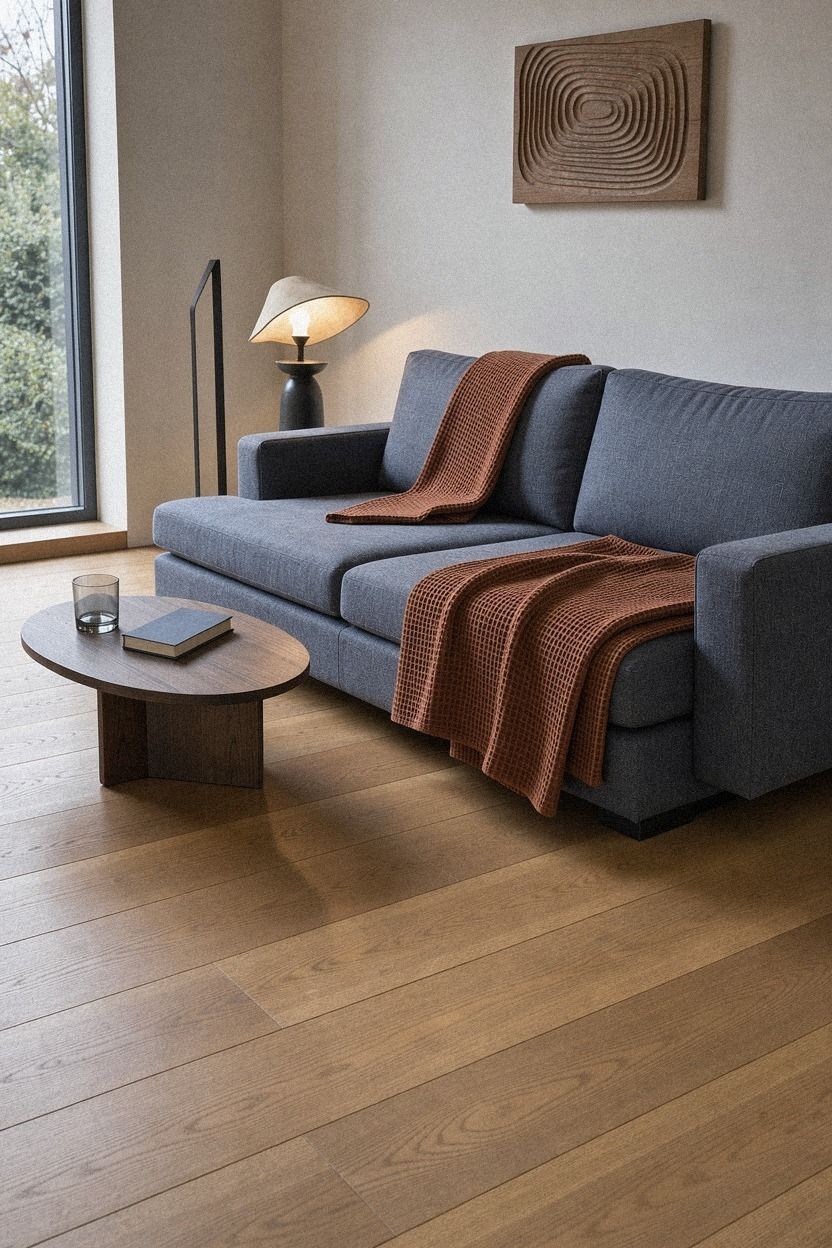
The Folded Corner Rule is simple. Fold your throw into a loose rectangle, place it over one back corner, and let only one corner fall toward the floor. Your sofa will look relaxed, but the blanket won’t spread across every cushion like it’s claiming territory.
I use this method with a midnight blue throw when the room has ivory upholstery, copper accents, and a wall finished in hand-applied Venetian plaster. The deep blue gives the pale surfaces enough contrast, while the plaster adds quiet variation without needing another pattern. If your room already has several strong finishes, keep the throw’s fold simple.
Place the upper fold about 6 inches below the top of the sofa. That small gap matters because your eye can still read the sofa’s shape. You’ll want the drop to stop several inches above the floor, especially if your coffee table sits close to the seating.
But skip this arrangement if your sofa is very low and deep. Your throw may slide forward each time you sit down. In that case, your best fix is a tucked fold behind the seat cushion, where it can stay put without looking stiff.
If you’re comparing options before you buy, look at the one-arm drape for a looser finish or the small-sofa anchor when every inch matters. The right choice is about your sofa’s shape, not a styling rule printed on a tag. For storage, compare it with the basket fold.
3Drape It Over One Arm, Then Stop
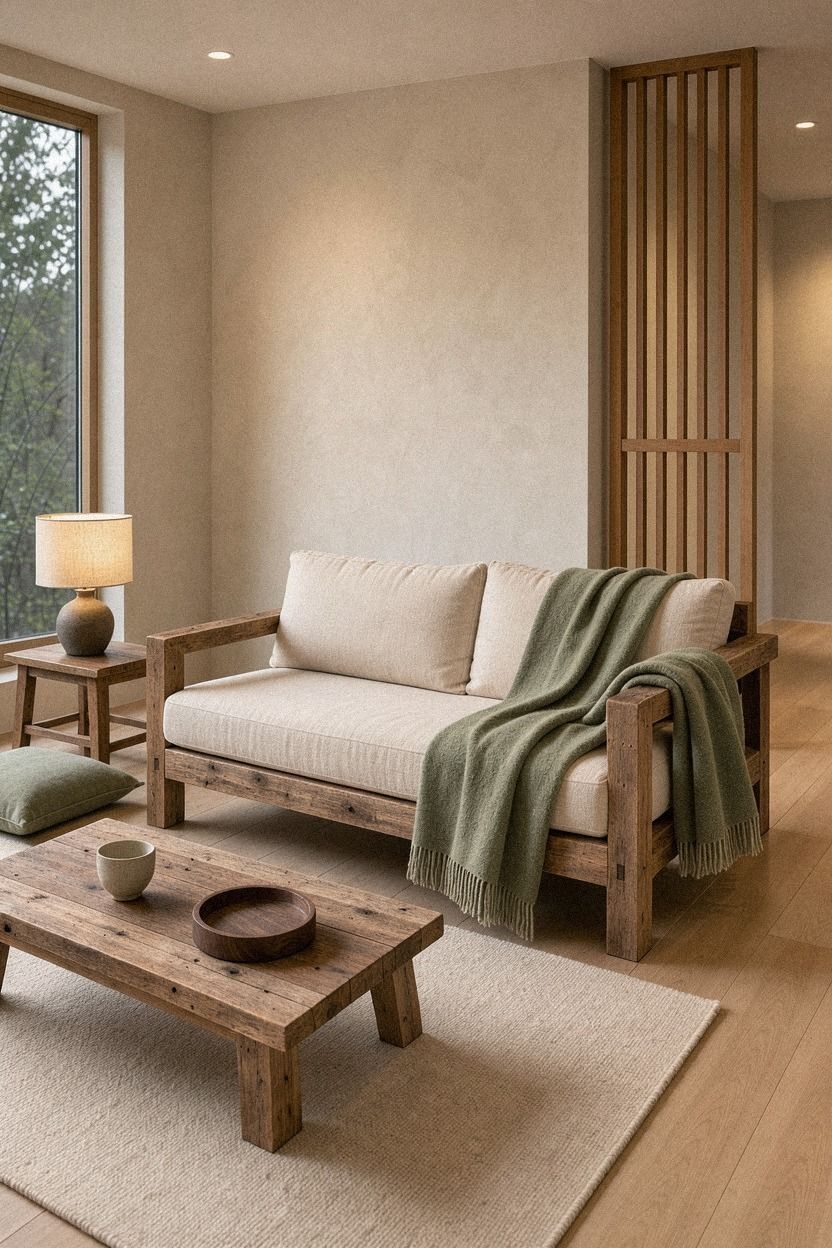
Drape your throw over one armrest and let the ends fall at slightly different lengths. This is one of the easiest ways to style a throw blanket on a sofa because the arm creates a natural stopping point. You won’t need a complicated fold or a pile of decorative cushions.
Choose a sage green throw against warm cream upholstery, then repeat the room’s natural character with reclaimed weathered teak on a table, stool, or nearby shelf. The aged wood keeps the green from feeling too polished. A thin fleece blanket would collapse into a limp strip, so choose a textile with enough body to hold a soft bend.
Keep one end around 8 inches longer than the other. That uneven finish looks lived-in, but it still shows that you made a choice. Your throw shouldn’t touch the floor, particularly if you have pets or a narrow walkway beside the sofa.
And if your room has a bouclé chair, repeat only the texture, not the exact color. Matching every soft item can make your living room feel staged. Warm cream beside sage green feels more composed than a complete matching set.
For a narrow arm, compare this relaxed line with the symmetrical arm arrangement. You may spend less on the throw itself when the drape is doing enough visual work on its own. The Three-Source Rule can add structure without another fold.
4How Do You Build the Two-Height Cascade?
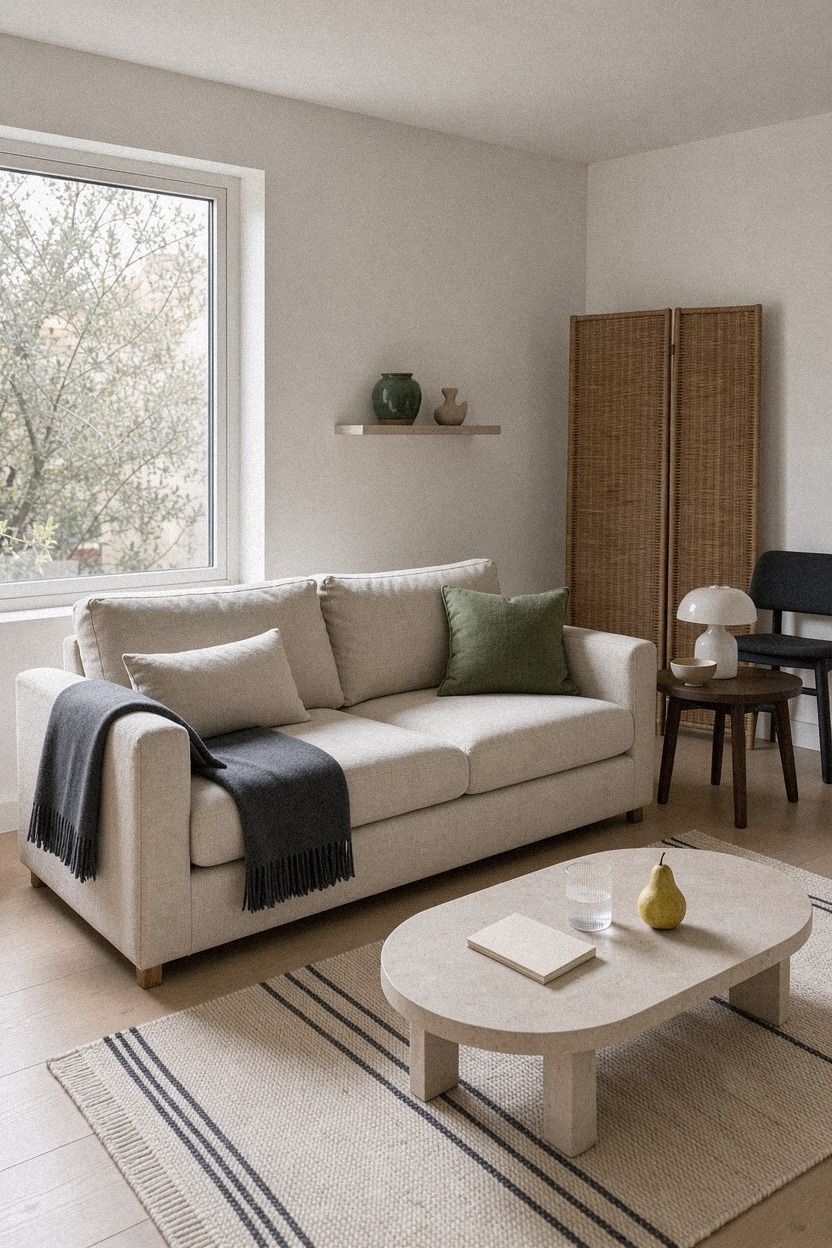
The Two-Height Cascade gives your throw two clear levels. Fold it lengthwise, place the middle over the sofa arm, and let one end finish near the seat while the other falls lower along the outside. The uneven lengths create movement without turning the blanket into a pile.
Use washed Belgian linen for this arrangement because its relaxed folds suit a palette of terracotta, stone, and olive. Let one of those colors appear in a pillow or small accessory, then keep the rest of the sofa quiet. The cascade should feel like one considered detail.
Aim for a shorter drop of about 10 inches and a longer drop that ends several inches above the floor. If both sides land at the same height, the arrangement loses its purpose. If the longer side puddles, fold it once more rather than dragging it away from the sofa.
This method works best when the arm is broad enough to support the fold. On a narrow arm, use the one-arm drape or the narrow-arm arrangement. For extra security, compare it with the pillow anchor.
5Anchor the Throw Beneath a Pillow
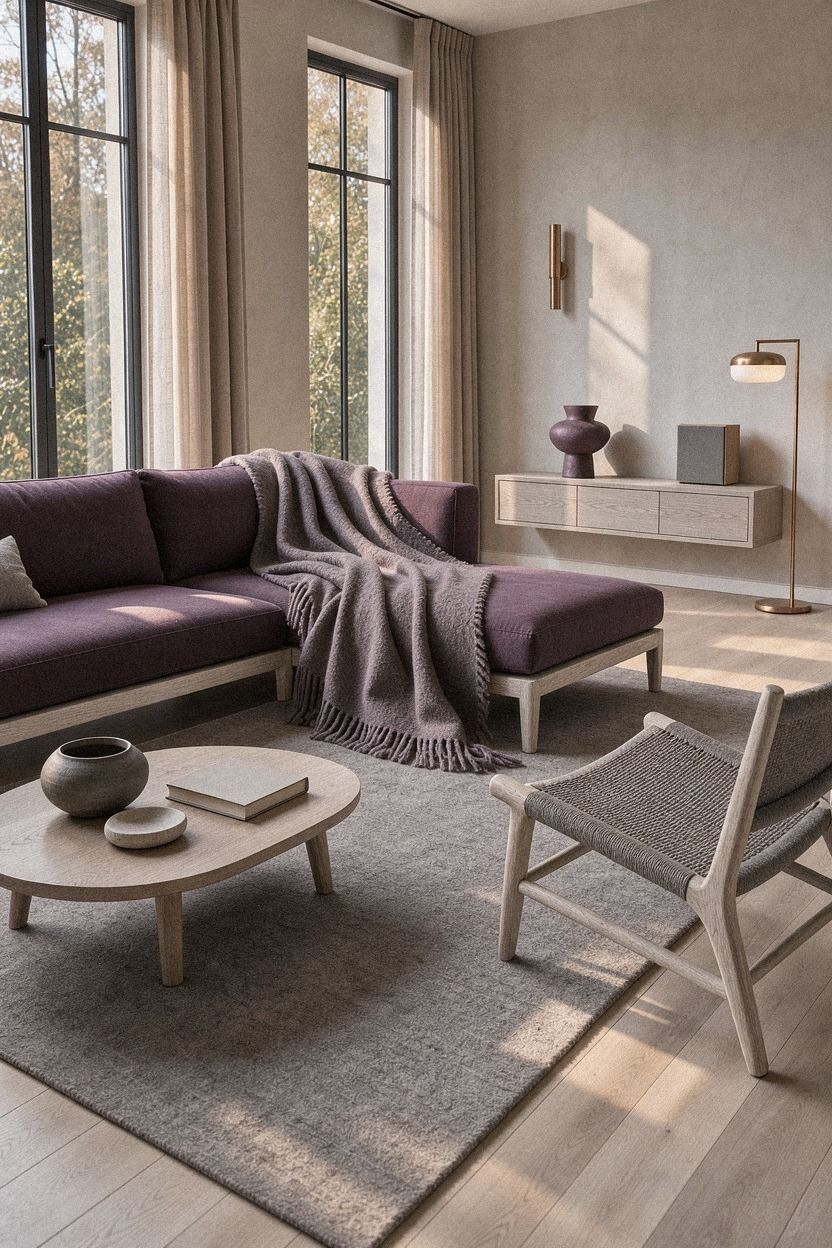
Anchor your throw beneath one lumbar pillow so it can’t slide every time you stand up. Start with the blanket over the back cushion, tuck a small section behind the pillow, and leave the lower half loose. You’ll get a relaxed look with much less daily rearranging.
Use this method when your sofa sits near cerused white oak furniture or trim. A clay-colored throw, a linen pillow, and small aged brass details will give the arrangement warmth without making it feel heavy. The pillow acts like a gentle brake while the surrounding materials keep the corner grounded.
Your pillow should sit slightly in front of the blanket, not bury it completely. Let at least 10 inches of fabric show beneath the cushion so the throw reads as part of the arrangement. If the whole blanket disappears, you’ve solved the slipping problem but lost the visual softness.
But don’t anchor every throw in your room this way. One controlled sofa corner is enough.
Your occasional chair can have a simple arm drape, while the main sofa gets the more secure layered arrangement. The hidden blanket band gives you a flatter alternative.
This is a useful place to invest in one substantial pillow instead of several inexpensive ones. The folded corner rule gives you a softer option when you want less structure.
6Match Texture, Not Exact Color
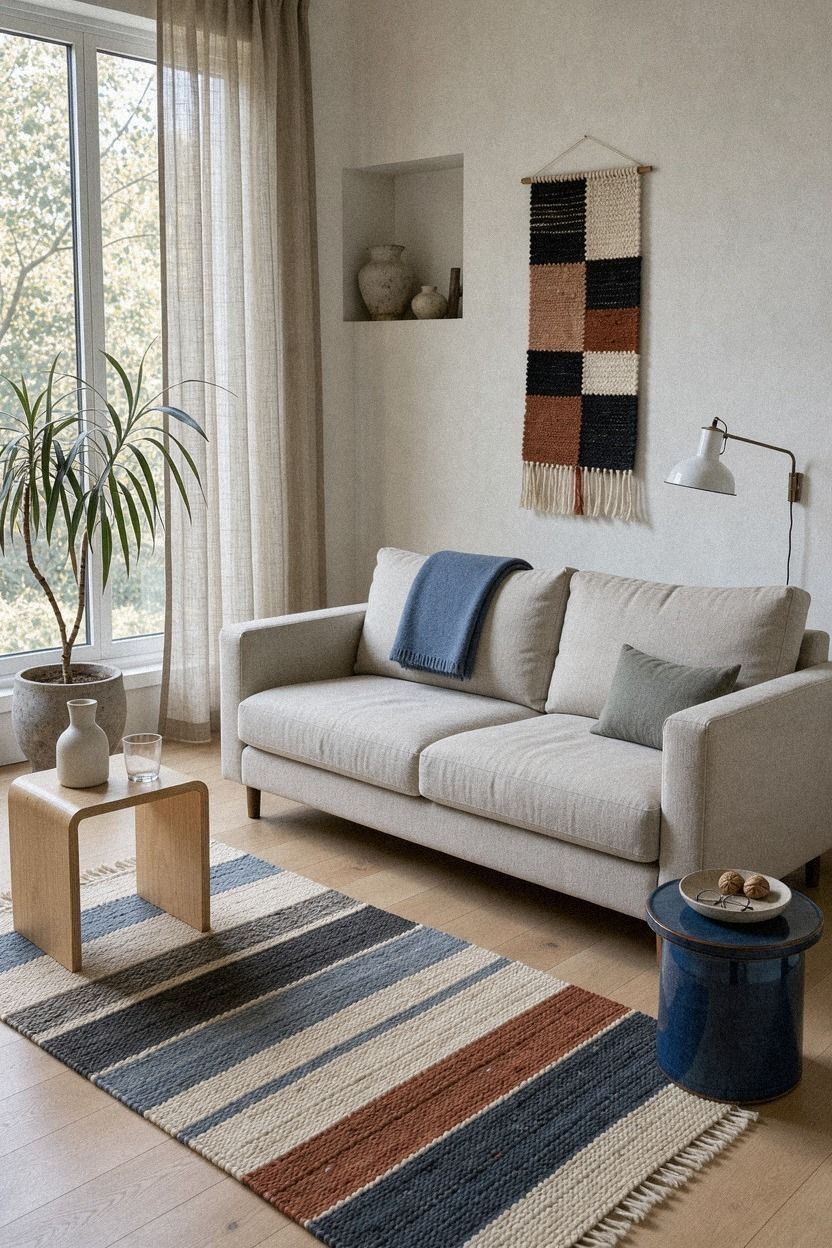
Layer texture over matching color when your sofa already has a strong shape. A soft gray sofa can take a plum throw with gray support tones, while small rose gold details keep the palette from becoming dull. Let a piece of cerused white oak bring a pale, tactile note nearby.
The color connection keeps your room calm, while the texture gives it a gentle, organic quality. You’ll want enough contrast to see the blanket from across the room. A throw that matches your sofa exactly can disappear, especially in low evening light.
I’d skip the matching pillow-and-throw set. It often looks purchased as a single bundle, and your room loses the collected feeling that makes it inviting. Instead, choose one material with a soft sheen and one with visible fibers.
And keep your palette narrow. Plum, gray, and rose gold can look refined, while five barely different beige tones may make your sofa zone feel muddy. If your room needs a quieter backdrop, Benjamin Moore Revere Pewter HC-172 gives pale wood and gray textiles enough contrast without making them look stark.
If you’re deciding where to spend, texture usually gives better value than another decorative color. Pair this method with the calm color frame, the hidden blanket band, or the basket fold for a more layered result.
7Float a Blanket Behind the Back Cushion
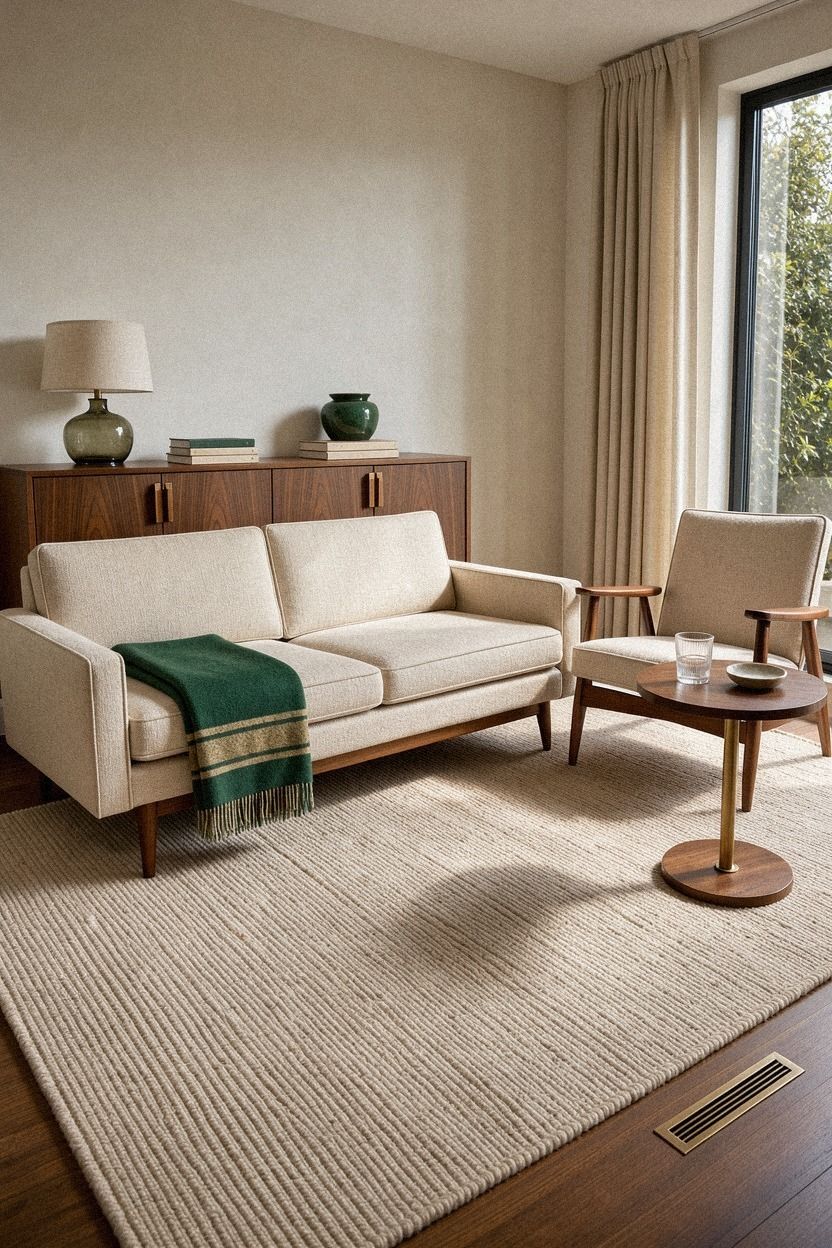
Float your throw behind the back cushion instead of laying it on top. Push the folded blanket down just far enough that the upper edge peeks above the sofa, then let the lower portion disappear behind the seat. Your sofa will gain color without losing its clean silhouette.
This works particularly well with a generous-cushion sofa and white upholstery. Your throw needs to be thin enough to avoid changing the cushion angle. A navy throw can create a strong horizontal band, while walnut and small shagreen accents add depth without introducing another loud pattern.
Keep the exposed section between 5 and 8 inches. That strip acts almost like a horizontal band of color, especially when the navy sits against white upholstery. Your living room will feel moodier, but the arrangement won’t become visually heavy.
I wouldn’t use this method with a very deep sofa where you need every inch of seat support. If your back cushion already pushes you forward, the hidden blanket will make the seat feel tighter. Try the arm drape instead, and your room will stay comfortable.
The method costs nothing if you already own a thin throw, which makes it a strong budget test. If you like the effect, you can later compare it with the two-height cascade or the Three-Source Rule.
8When Space Is Tight, Use the Seat-Edge Anchor
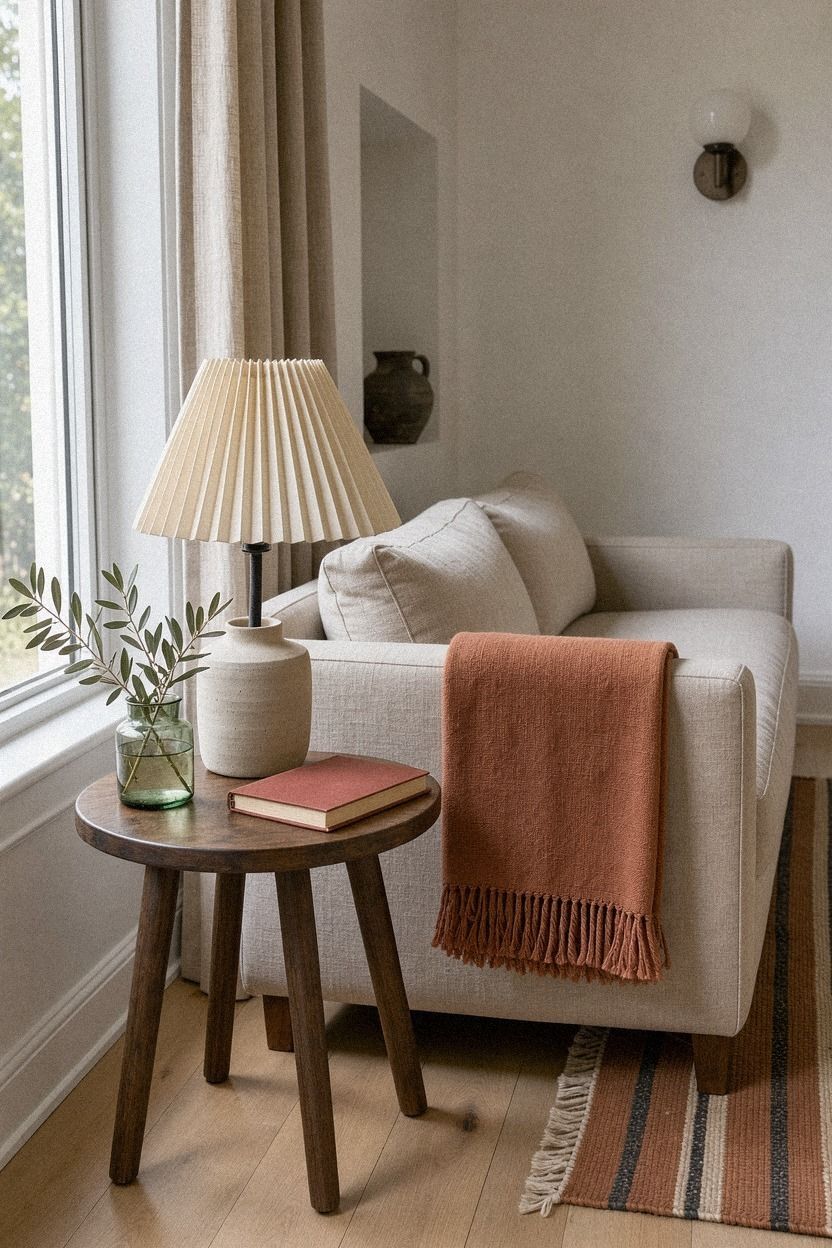
Use the Seat-Edge Anchor when your sofa is compact and every inch matters. Fold your throw into a narrow rectangle, place it across one rear corner of the seat, and tuck only the bottom edge between the cushion and the frame. Your blanket stays accessible without taking over the sitting space.
This is a strong option beside book-matched walnut because the rich wood gives the arrangement a clear visual anchor. Add emerald, gold, and cream through the throw, pillow, or nearby accessories.
Your small living room doesn’t need more decoration. It needs soft texture in a location where you’ll use it.
Choose a throw that reaches from the back cushion to just beyond the front edge of the seat. You’ll have enough coverage for your legs, but the fabric won’t puddle near the floor. A 9-by-12 wool rug can already create a large visual field, so the blanket should remain compact.
And don’t tuck the entire side. Your hand should be able to pull the throw free in one motion.
If you have to undo three folds before sitting down, the styling is working against your life. Make the fold easy to undo!
This is often the best value for a small room because one well-placed textile does several jobs. If you prefer a more decorative finish, compare it with the seat-edge stack, the pillow anchor, or the calm color pair.
9Hang a Throw Over a Narrow Sofa Arm
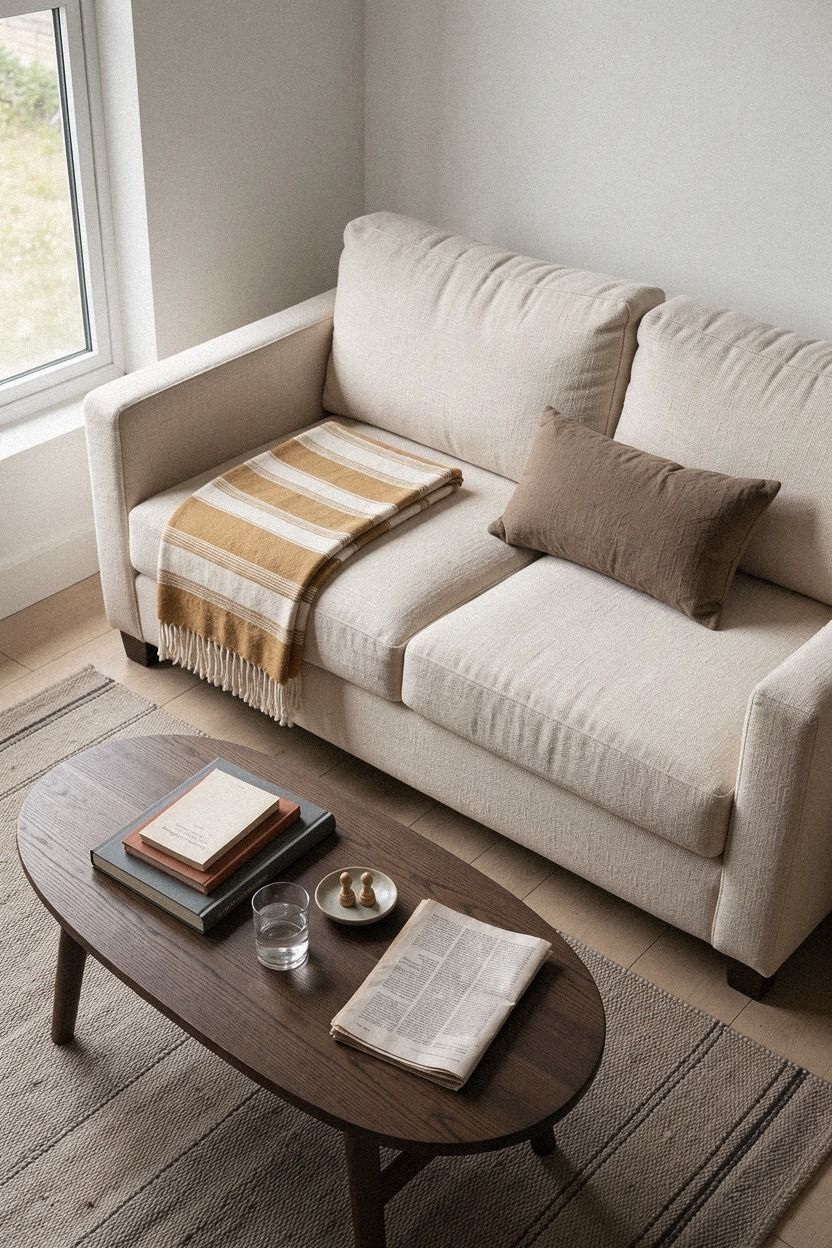
Hang your throw over a narrow sofa arm when you want a vertical stripe rather than a broad horizontal layer. Fold the blanket once, center it over the arm, and let both sides fall evenly. Your sofa will look composed, and the blanket will remain easy to grab.
This style needs a fabric with a little structure, such as organic bouclé. A forest green throw can bring depth, while rust and natural oak keep the palette warm.
Very soft fleece can look limp when both sides hang straight. Your goal is a gentle line, not a curtain effect.
Keep the lower edges within a few inches of each other. If one side is much longer, your eye may read the throw as misplaced.
I prefer forest green or muted rust when the room includes natural oak. A little structure goes a long way!
But skip a symmetrical arm drape if your sofa already has matching end tables and identical lamps. The whole wall may start to feel too formal. Break the pattern with one relaxed pillow or a stack of books, then let your blanket remain the only soft vertical detail.
If you’re shopping for a new throw, check the price against its weight and weave rather than its label. A sturdy cotton jacquard can offer more everyday value than a delicate fabric that needs constant arranging. For softer contrast, compare this with the texture-first method.
10What Belongs in the Three-Source Rule?
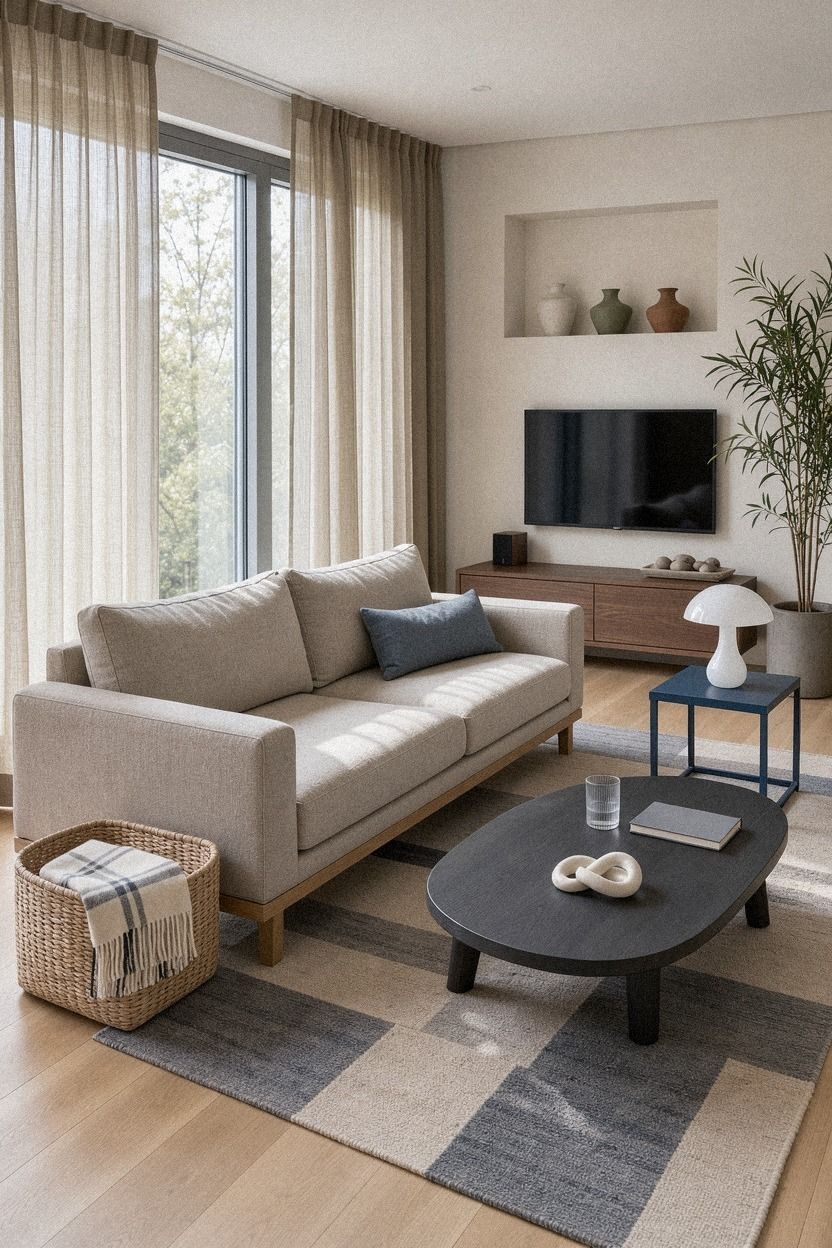
Mix your throw with the Three-Source Rule: one soft textile, one natural material, and one darker accent. A dusty rose throw can provide the soft color, while charcoal grounds the arrangement and unlacquered brass adds a warmer note.
Let the brass age naturally instead of polishing every trace of patina away. That small change keeps the arrangement from feeling too new. If your sofa is already dark, use dusty rose in a pillow or throw and let charcoal appear in a smaller object.
The rule works because each source has a job. The textile adds comfort, the darker accent gives the sofa definition, and the brass brings light without requiring another bright color. Keep each element visible, but don’t repeat all three in every accessory.
Use this method when the room feels scattered rather than empty. If the sofa already has several patterns, simplify the textile and let the brass carry the detail. The basket fold can keep the rest of the room practical.
11Swap a Floor Pile for a Basket Fold
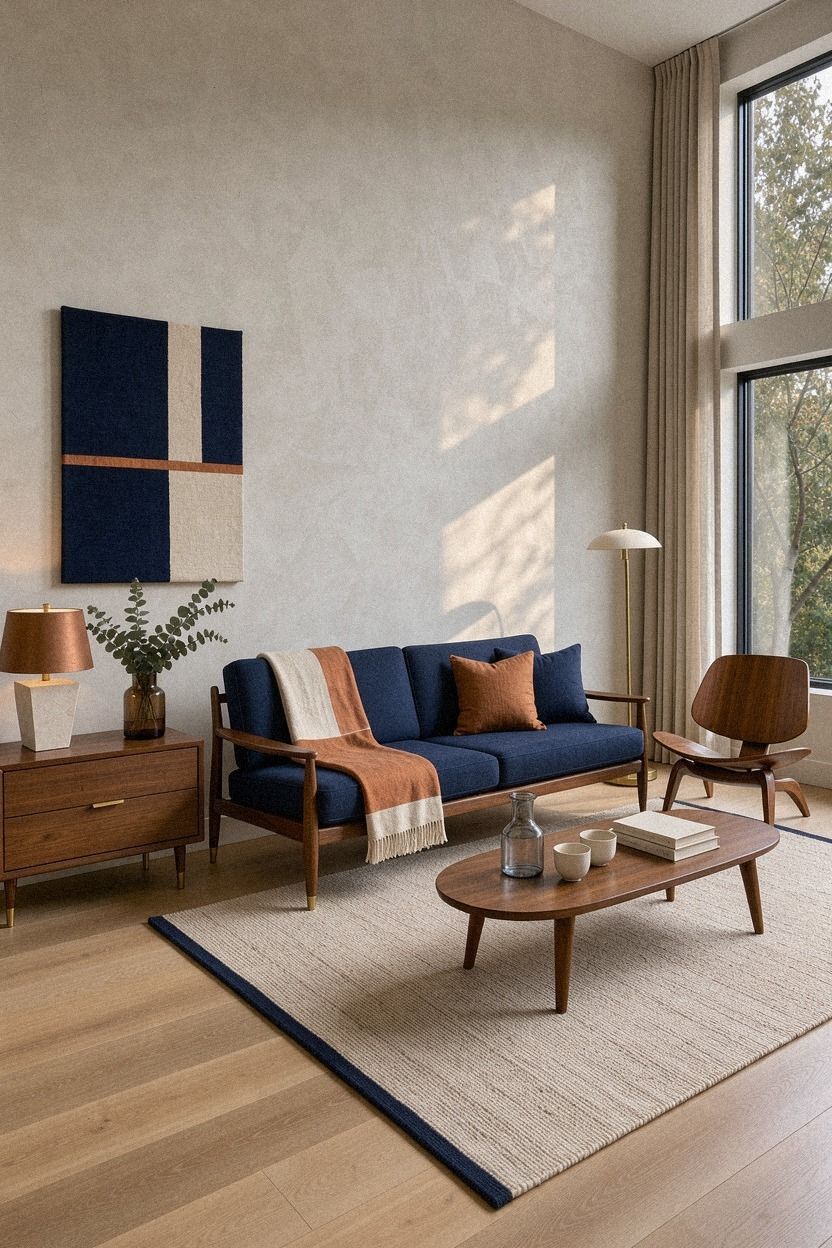
Swap a floor pile for a basket fold if your sofa has no clear arm or your pets keep dragging the blanket away. Fold your throw into thirds and place it inside a low basket beside the sofa, with one corner visible. Your room will look tidy, but the blanket will still feel available.
Choose a soft warm-white or camel throw with enough body to hold its fold. Deep-pile mohair velvet adds richness, while black accents elsewhere in the room give the light textile definition. The basket should support the arrangement rather than compete with the blanket.
I’d avoid a tall basket beside a low sofa. The scale can feel awkward, and your blanket will disappear below the rim. A shallow vessel creates a calmer line, especially when your sofa sits on an 8-by-10 rug with its front legs resting on the rug.
And remember that the basket is part of the styling. Keep it to one or two throws, not every blanket in the house. If the container is stuffed, your room will still look messy even when the sofa is clear.
If you’re trying to improve the room without replacing furniture, this is a sensible place to spend. Compare the basket fold with the compact seat anchor or the one-arm drape before you buy anything new.
12Frame the Sofa With a Calm Color Pair
Frame your sofa with a calm color pair by using one throw on the seat and one related shade in the room behind it. A wall finished in midnight blue hand-applied Venetian plaster can support an ivory throw, while a copper accent adds a small point of contrast.
Your colors don’t need to match. They need to share a temperature.
Midnight blue, copper, and ivory can feel inviting together, while icy gray beside orange beige may look accidental. Test your throw in morning and evening light before you commit.
Keep one color dominant and let the other appear only once or twice. I’d choose the throw as the supporting shade, not the loudest one, because the sofa should remain comfortable to look at for years. Your room will feel more sophisticated when the blanket doesn’t demand attention.
The texture pairing can keep this palette from feeling flat. If you’re working with a limited budget, changing the throw may be enough to refresh the entire seating area without repainting the room.
Why I Prefer a Throw That Looks Used
I’ve changed my mind about perfectly arranged throws. When I first styled sofas, I folded every blanket into a sharp rectangle and tucked each corner until the fabric looked untouched. The rooms felt clean, but nobody wanted to sit down.
The sofa felt like a display, not part of a home.
Now I look for a controlled kind of looseness. The blanket should show a bend where a hand might pull it closer.
The fold can be slightly uneven. One corner may rest lower than the other, as long as the shape has a clear beginning and end.
That small imperfection tells your eye the room is being used.
My strongest preference is for natural fibers with visible texture, such as Belgian flax linen, merino wool, or cotton with a raised weave. They crease in a way that looks honest. I’d skip shiny polyester unless your room is intentionally glamorous, because it catches light in a hard line and can make a relaxed sofa feel theatrical.
The other lesson is scale. A throw can’t rescue a room where the rug is too small or the coffee table blocks the walkway.
Your sofa should have enough breathing space, and your textiles should support that structure. If your rug reaches only the coffee table, the blanket may feel like another isolated object.
When the front legs of the seating sit on the rug, your throw has a calmer visual base.
And I don’t think every sofa needs a blanket. If your upholstery is already patterned, your pillows are generous, and your room has strong art, leaving the seat clear may be the better decision. More softness isn’t always more comfort.
Sometimes the confident move is letting your favorite material have room to show.
For a controlled lived-in look, start with the seat-edge stack, then test the narrow-arm drape if the sofa still feels too formal. You can also revisit the calm color pair when the furniture is right but the room feels flat.
The Questions I Get Asked Most
What is the best way to style a throw on a sofa in a small living room?
The folded seat-edge stack is the best choice for most small rooms because it uses little visual and physical space. Try one textured cotton throw near the sofa, then keep a second blanket folded away. You’ll get warmth without blocking your walkway or crowding the seating area.
Where can I buy pieces for styling a throw on a sofa on a budget?
Look at IKEA, Target, Wayfair, Facebook Marketplace, or a local thrift shop for natural-fiber blankets. You don’t need a matching set. A used linen throw with good texture can look more inviting than a new blanket with a shiny finish.
How much does a throw-on-sofa makeover cost?
A small living room refresh can fit within a $300-$1,200 budget when it includes pillows, throws, a rug, art, and paint. Your styling can also cost nothing if you regroup blankets you already own and change their placement.
Can I create this look on a budget?
Yes, and your first steps can be free. Fold one throw over a sofa arm, move a pillow beneath its edge, and place a second blanket in a basket. If you buy one item, choose a textured cotton throw rather than several thin accessories.
Is styling a throw on a sofa worth it in a small space?
Yes, because a throw adds softness without using much floor area. Keep it on one arm or one seat corner, and your room will feel warmer without becoming crowded.
If your sofa depth is already 35 to 40 inches, avoid thick layers that reduce sitting space. It’s worth it when the arrangement improves how you use the room.
Is this a good idea for a rental?
Yes. Throws, baskets, pillows, and removable textiles give your rental personality without wall damage. Pair a muted blanket with warm ivory upholstery or an existing wall color, and test the arrangement before spending on permanent changes.
Where I’d Start First
If I had to pick one, I’d start with the folded seat-edge stack. It keeps the sofa usable, shows the throw’s texture, and won’t slide onto the floor. Pin this arrangement for later, then try the folded corner rule if you want a slightly softer finish.
Start there! The best arrangement is the one that looks intentional for five minutes and still works when someone actually sits down.


