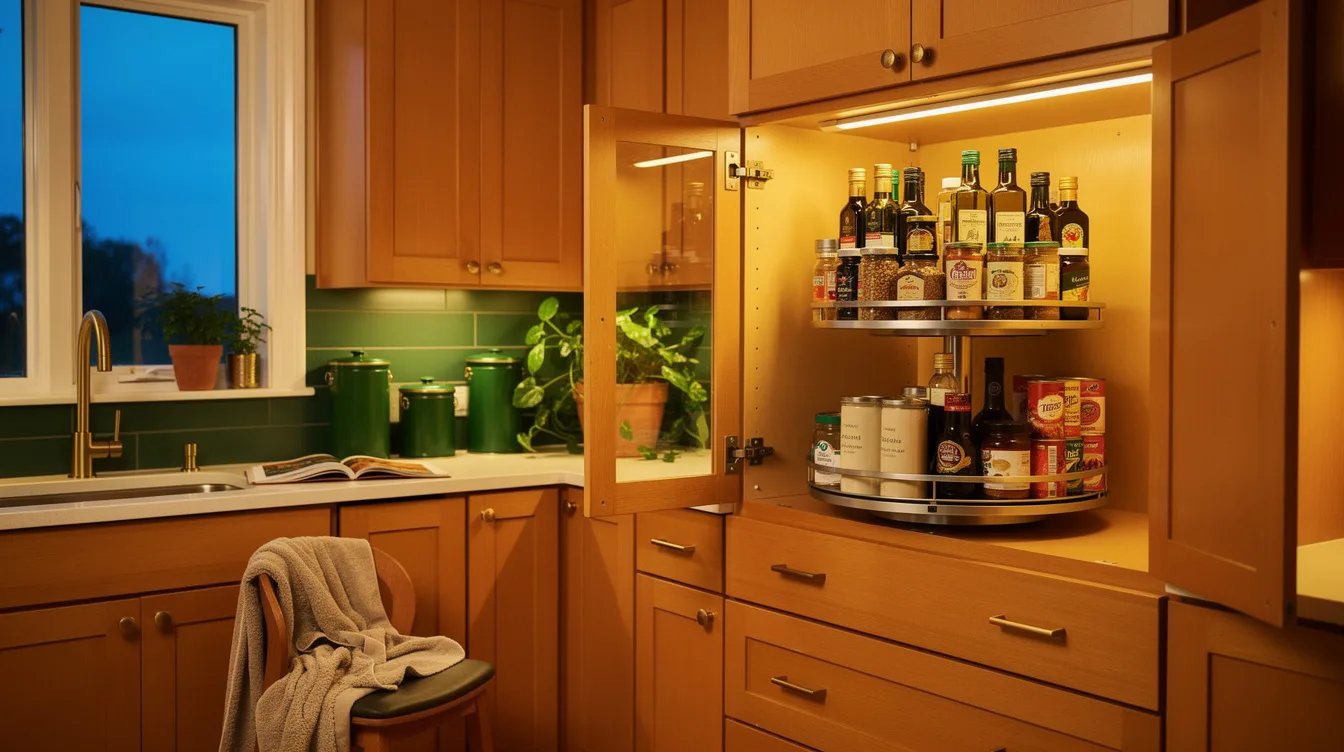
Deep Corner Cabinet Eating Your Pantry? 13 Target Lazy Susans
05 november 2026Deep corner cabinets can swallow a bottle of oil in seconds, then force you to unload half the shelf to find it. A Target lazy Susan under $70 can solve that awkward reach, but only when the tray fits the opening and has a clear path to rotate.
The smartest setup uses the cabinet's depth without turning the front into a crowded wall of containers. These ideas cover measuring, loading, and dividing the space so the back corner finally earns its footprint.
What you will find inside
- Measure the Cabinet Opening First
- Choose a Two-Tier Turntable
- Reserve the Front Ring for Daily Items
- Add Bins for Small Packets
- Store Tall Bottles Around the Edge
- Create a Baking Supply Station
- Use a Low Tray for Cleaning Supplies
- Separate Backups From Open Containers
- Build a Coffee Corner
- Contain Heavy Cans on a Firm Base
- Use Labels That Face the Door
- Leave a Clear Rotation Lane
- Finish With a Monthly Reset
Measure the Cabinet Opening First
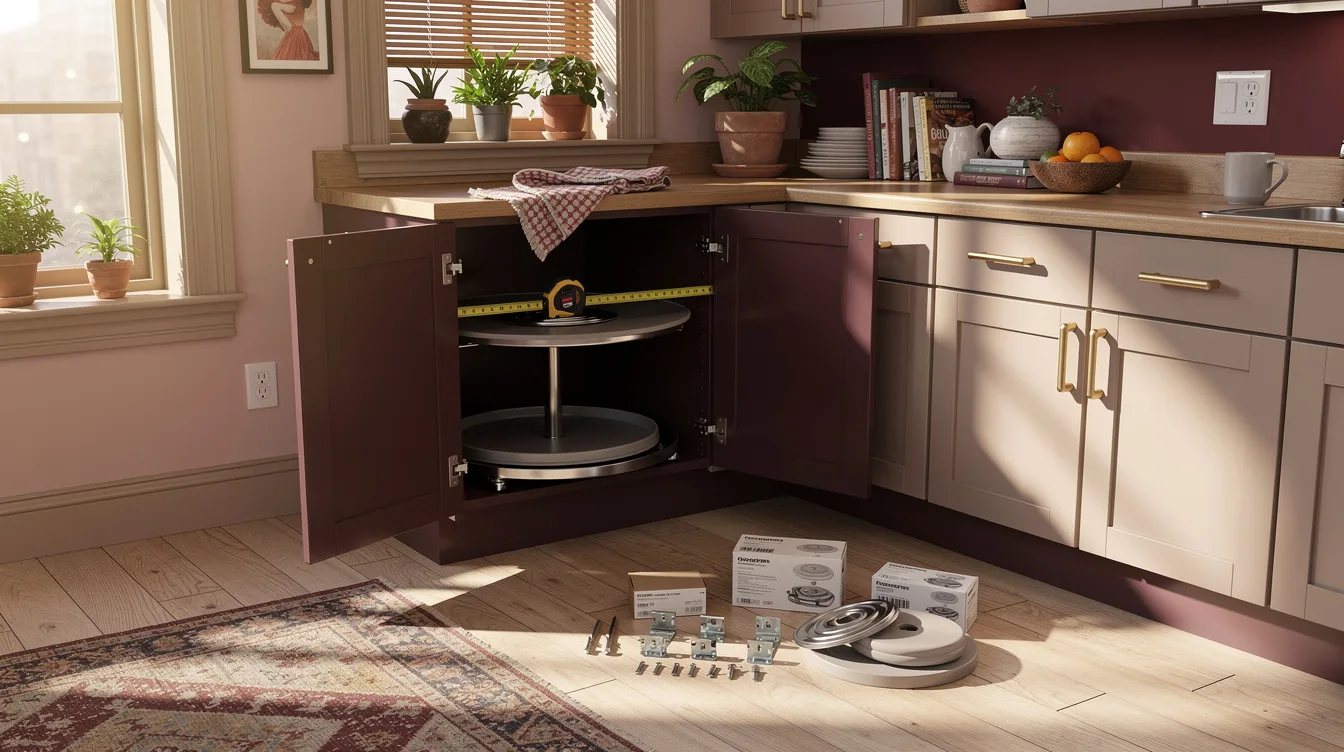
Start with a steel tape measure across the usable cabinet opening, then check the height beneath the shelf. A Target lazy Susan only helps when its tray clears the frame, hinges, and door swing.
Write down the smallest measurement, not the widest point. Deep corner cabinets often have generous space at the back but a narrow front opening, so clearance matters more than the total cavity.
Keep the purchase below $70 by comparing tray size, material, and hardware together. A cheaper turntable that cannot rotate fully is wasted money.
Choose a Two-Tier Turntable
A two-tier wood lazy Susan makes the most of vertical cabinet space while keeping both levels visible. Use the lower tray for heavy cans and the upper tray for lighter packets, jars, or backup spices.
We prefer this layout when the cabinet has enough vertical clearance for a hand to reach the rear edge. Leave room between tiers for the tallest item you plan to store, rather than filling every inch.
For a budget under $70, skip decorative details that do not improve rotation. Smooth edges and a stable base deserve priority.
Reserve the Front Ring for Daily Items
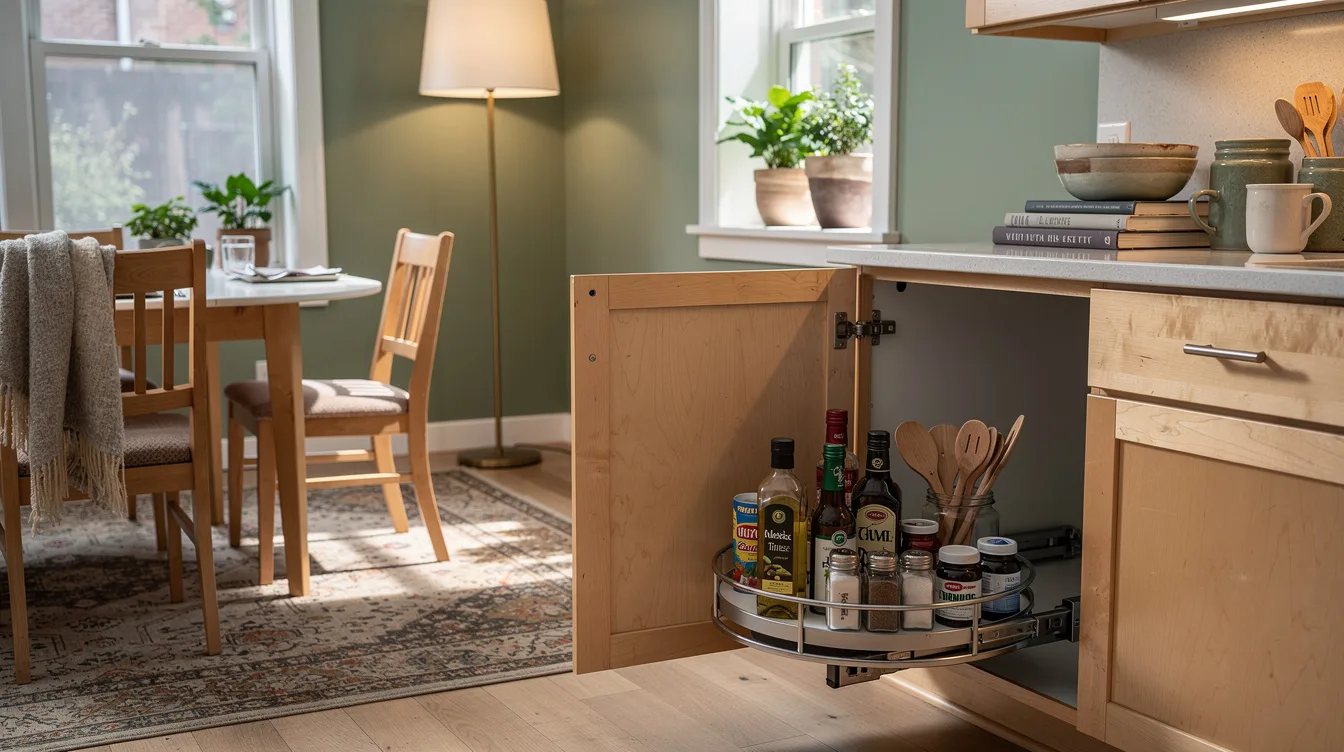
Use the front half of a bamboo turntable for items used every day, such as olive oil, kosher salt, coffee syrups, or cooking spray. The cabinet becomes easier to live with when the first rotation brings forward something useful.
Keep rarely used serving pieces toward the back. This simple division prevents the lazy Susan from becoming a crowded carousel that needs constant rearranging.
Add Bins for Small Packets
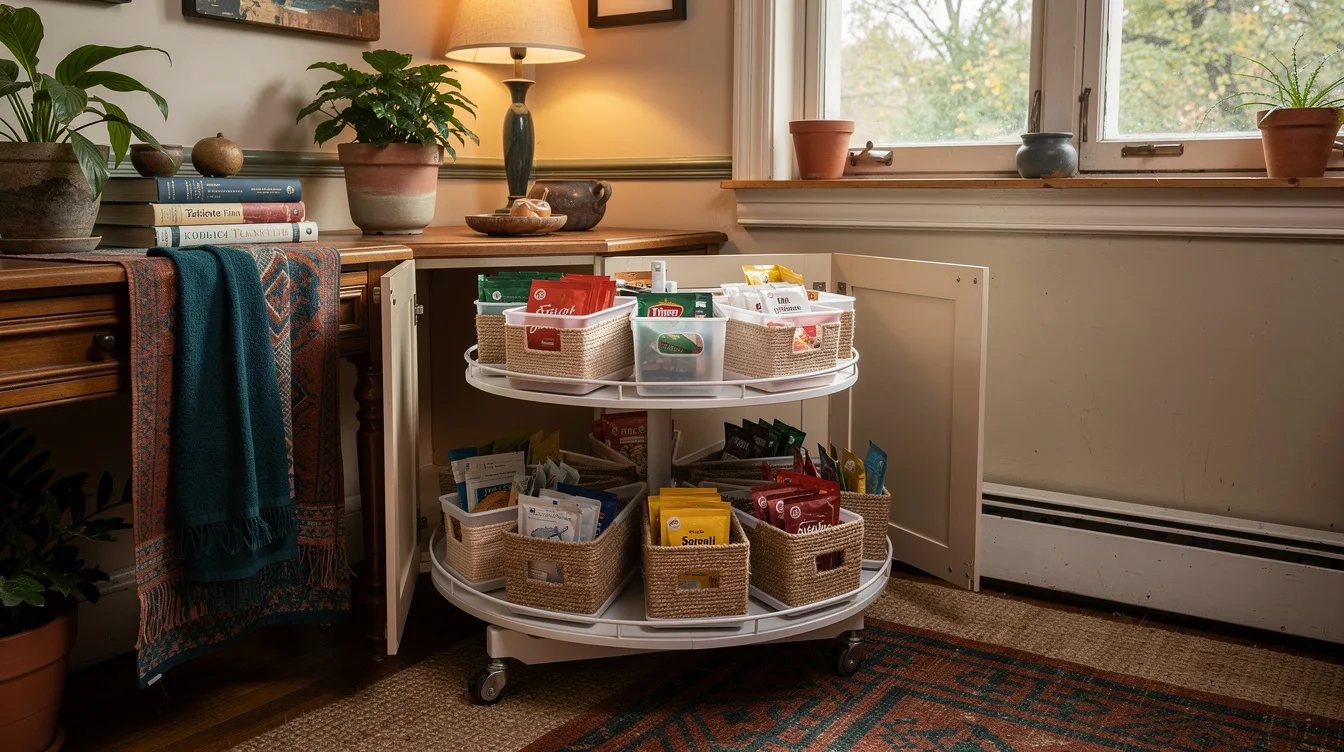
Small seasoning packets and loose tea bags disappear quickly inside a deep corner. A shallow acrylic bin on the lazy Susan keeps them upright and stops them from sliding behind larger containers.
Choose an open bin with low sides so you can lift it out without scraping the shelf above. One bin for sweeteners and one for savory packets is enough for most kitchens.
Clear material costs more than basic plastic, so compare the entire setup against the $70 limit before adding accessories.
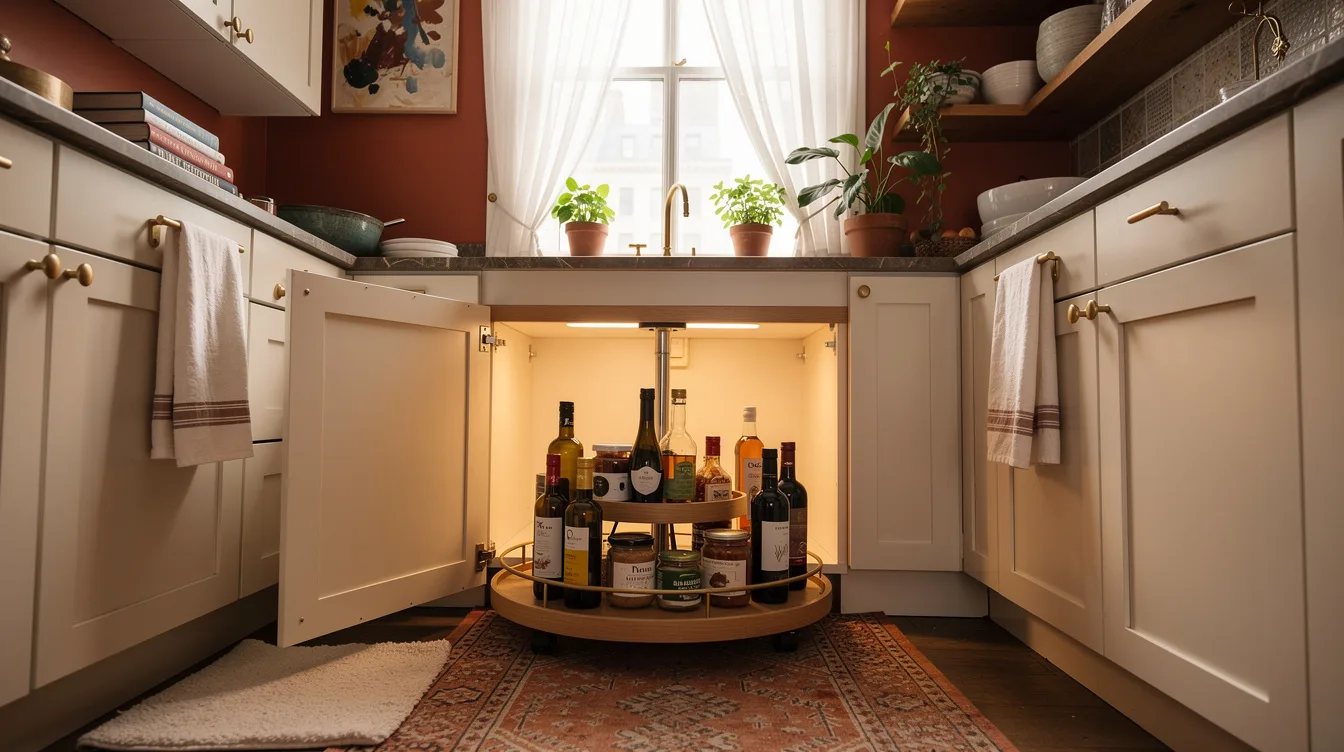
Store Tall Bottles Around the Edge
Place tall bottles along the outer edge of a plastic lazy Susan, where their labels stay visible during rotation. This works well for vinegar, oils, dressings, and refill bottles that are awkward to reach in a fixed corner.
Keep the center open for shorter containers. A crowded center adds weight and can make the tray feel difficult to turn, especially when the cabinet shelf is uneven.
Put the tallest bottle in place before loading the rest. Door hardware can steal more clearance than expected.
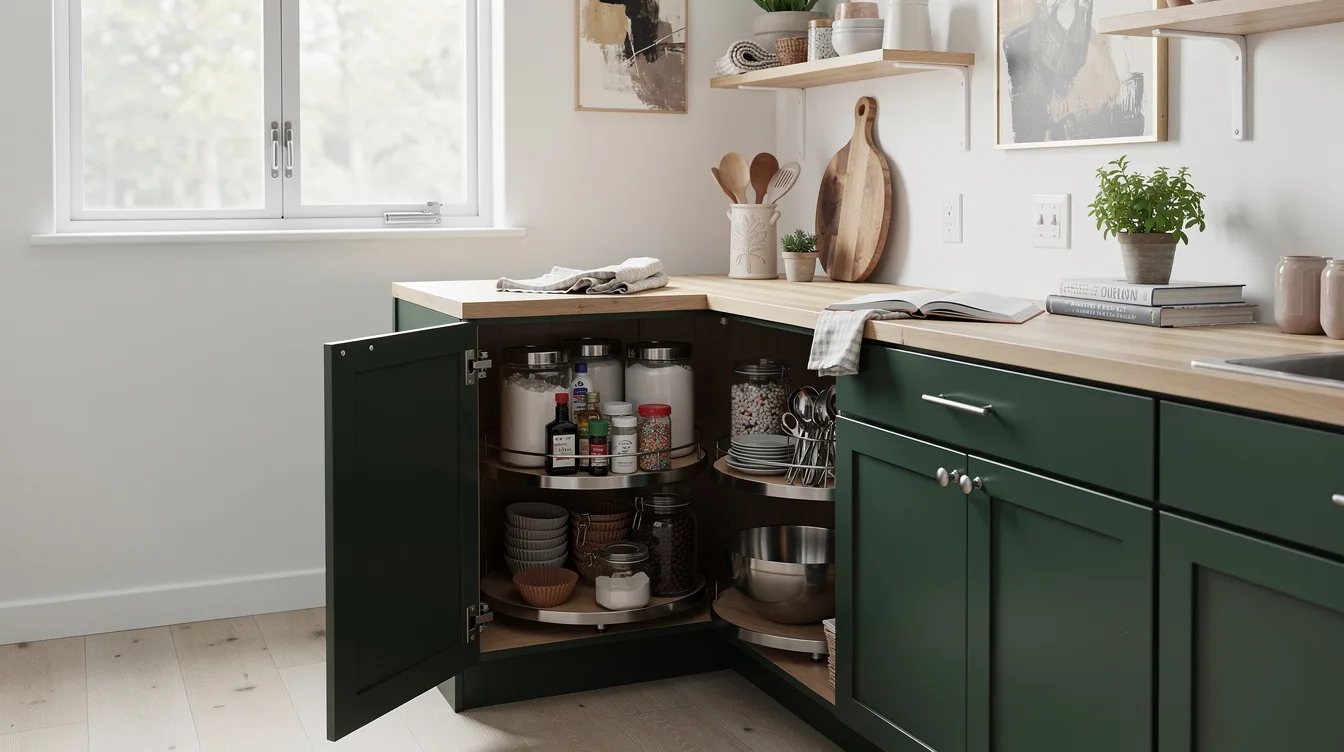
Create a Baking Supply Station
Turn one section of the corner cabinet into a baking station with a metal lazy Susan for vanilla, baking powder, cocoa, sprinkles, and food coloring. Grouping these small supplies together cuts down on repeated searching.
Use a rimmed tray if the cabinet floor is slick. Metal is especially practical for containers that may leave a little powder or sugar behind.
Keep opened flour and sugar in sealed containers elsewhere if the tray cannot support their weight comfortably. Rotation should remain smooth when the cabinet is full.
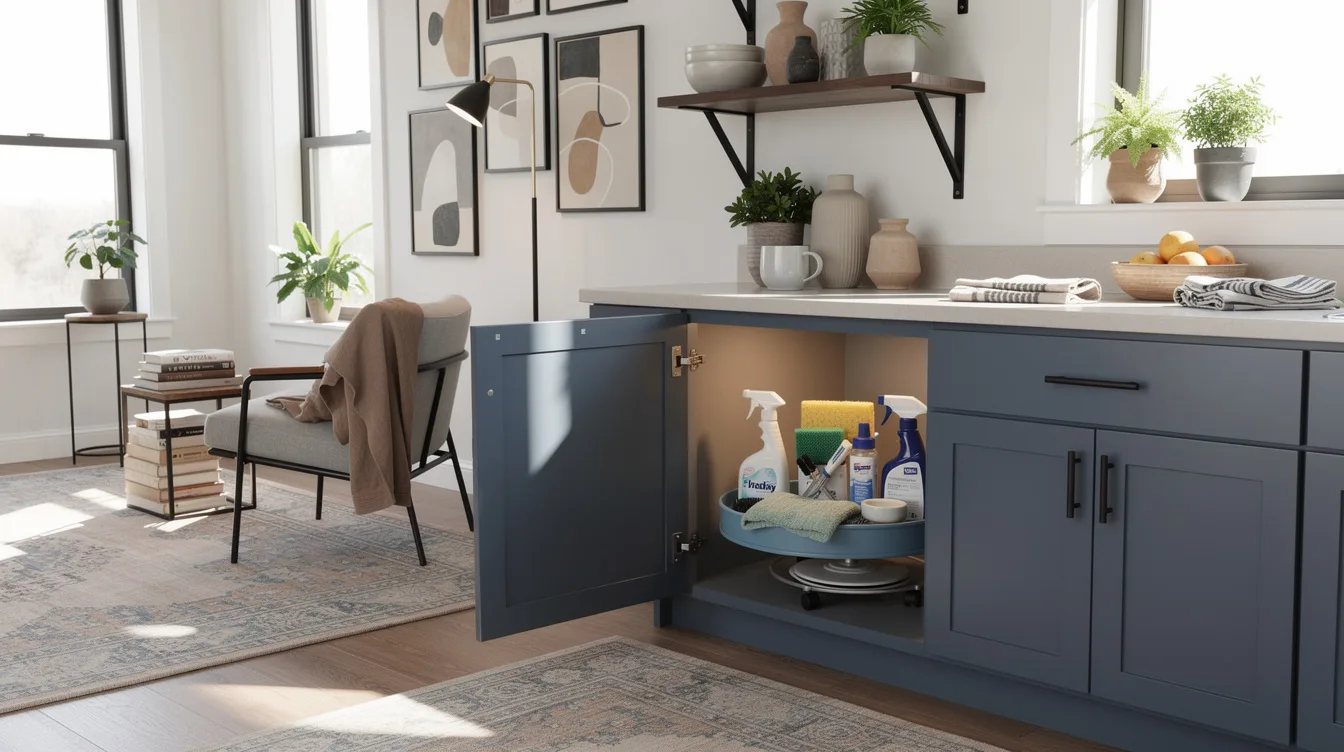
Use a Low Tray for Cleaning Supplies
A low-profile wire turntable can organize sprays, sponges, dishwasher tablets, and extra gloves beneath a sink or inside a utility corner. The open construction lets you spot leaks quickly and wipe the cabinet floor without unloading everything.
Place liquid bottles in a shallow waterproof tray before setting them on the turntable. That extra layer protects the cabinet from drips and keeps labels facing outward.
Never store chemicals beside food, pet supplies, or anything that touches dishes. The best storage idea still needs a clear safety boundary.
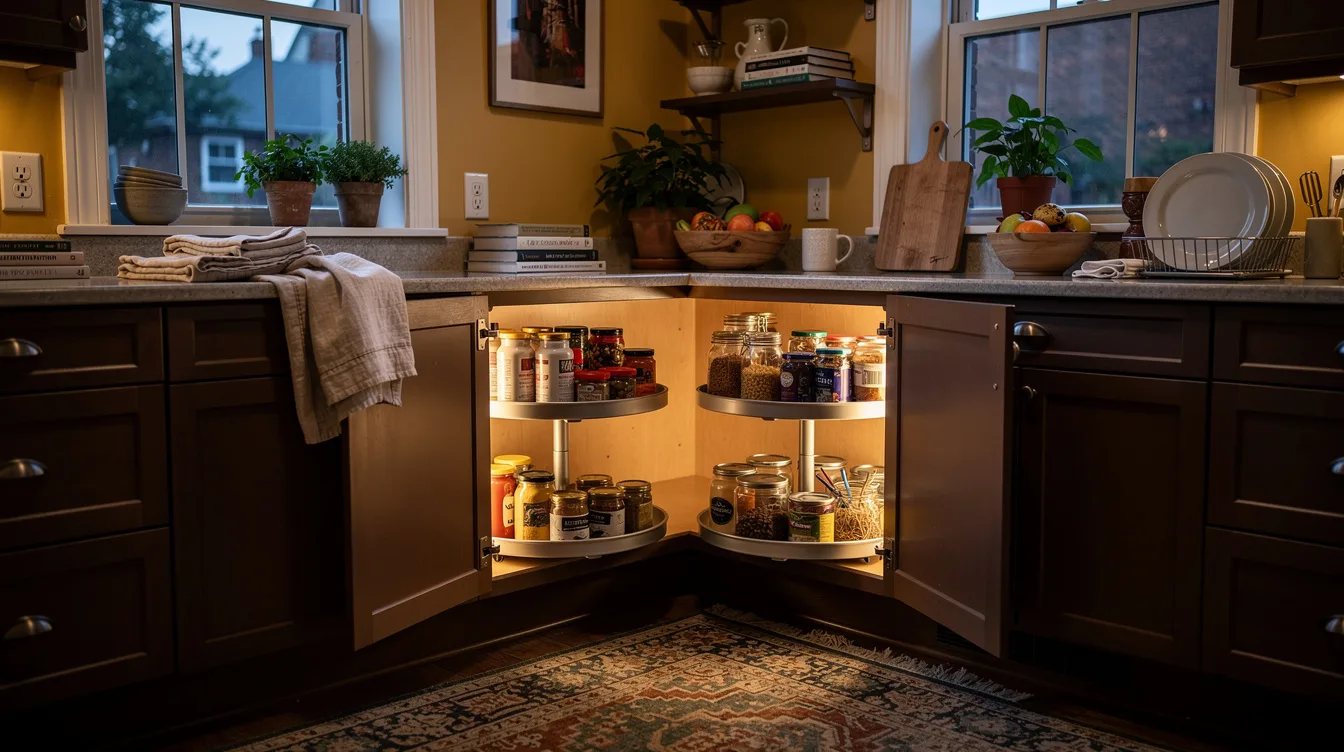
Separate Backups From Open Containers
Use the rear half of a glass lazy Susan for unopened backups and the front half for containers already in use. This gives the cabinet a simple first-in, first-out rhythm.
Glass looks polished and wipes clean easily, but it adds weight. Check that the base rotates without wobbling before loading jars or bottles.
For a lower-cost setup, use glass only for the visible front section and a lighter tray for backup items behind it.
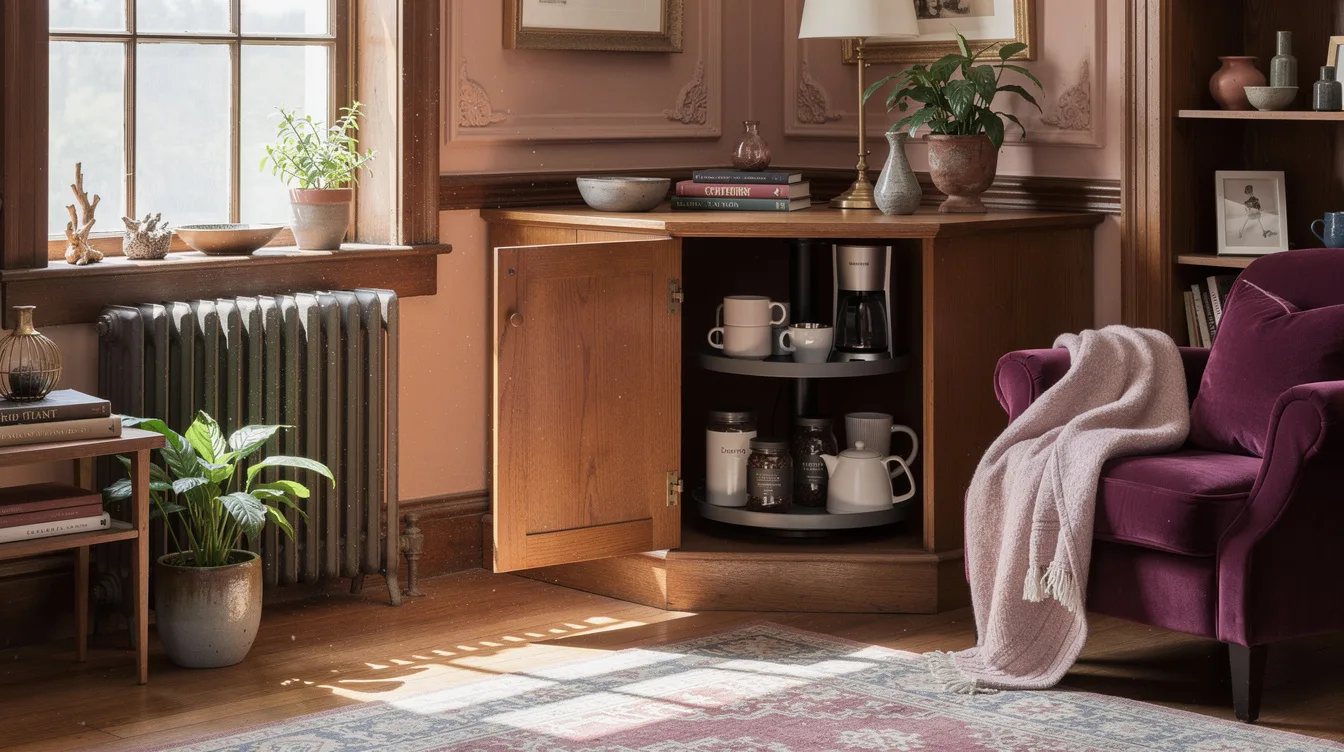
Build a Coffee Corner
A compact ceramic canister set can anchor a coffee station inside a deep cabinet, with beans, filters, sweeteners, and stirrers arranged around a lazy Susan. Rotate the tray toward the opening when making a morning drink, then return it after restocking.
Keep mugs on a separate shelf unless the cabinet has generous vertical clearance. Tall cups can catch on the shelf above and stop the tray from turning.
Choose containers with flat bases. Round jars can roll when the turntable starts moving.
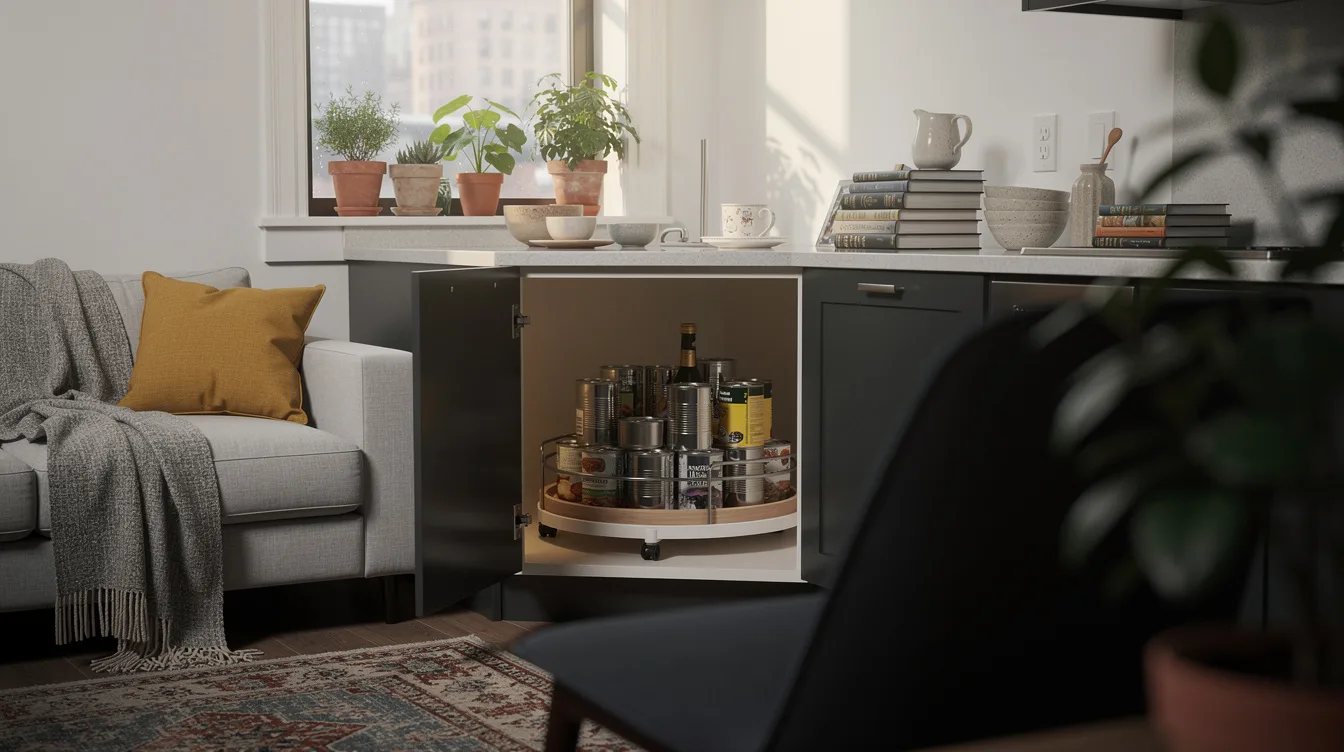
Contain Heavy Cans on a Firm Base
For canned food, choose a lazy Susan with a firm rubber base or non-slip liner. The added grip keeps cans from drifting as the tray turns and protects the cabinet shelf from hard impacts.
Load the heaviest cans around the center rather than the outer rim. A balanced circle rotates more easily and puts less strain on the hardware.
Count the cans before shopping, then compare the listed weight capacity with your planned load. Under $70 is a useful ceiling, but stability is the real value.
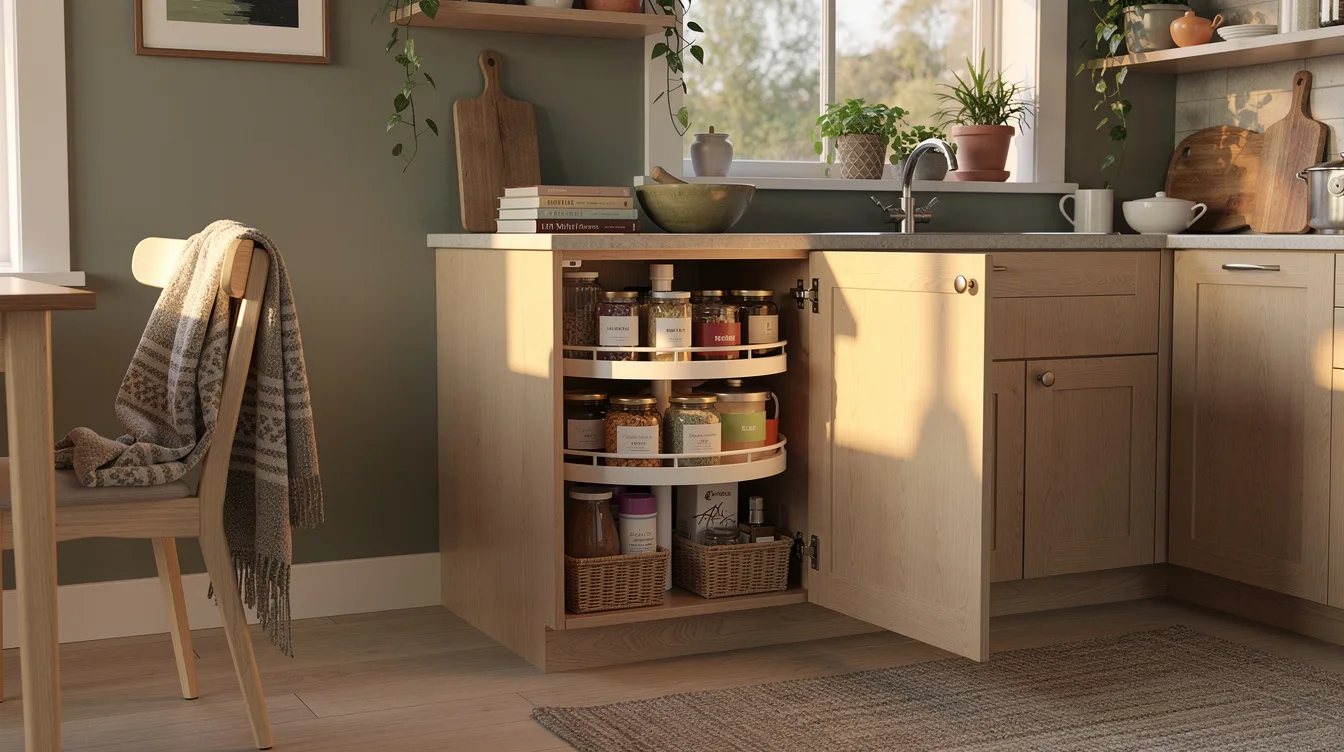
Use Labels That Face the Door
Labels make a deep corner cabinet feel intentional, especially when a white turntable holds several matching containers. Face every label toward the opening so one rotation reveals the whole category.
Use removable labels for baking supplies, snacks, and pantry backups that change often. Permanent labels make sense only for categories that will stay in the same place.
Keep lettering large enough to read from standing height. Tiny labels add visual noise and defeat the purpose of easy access.
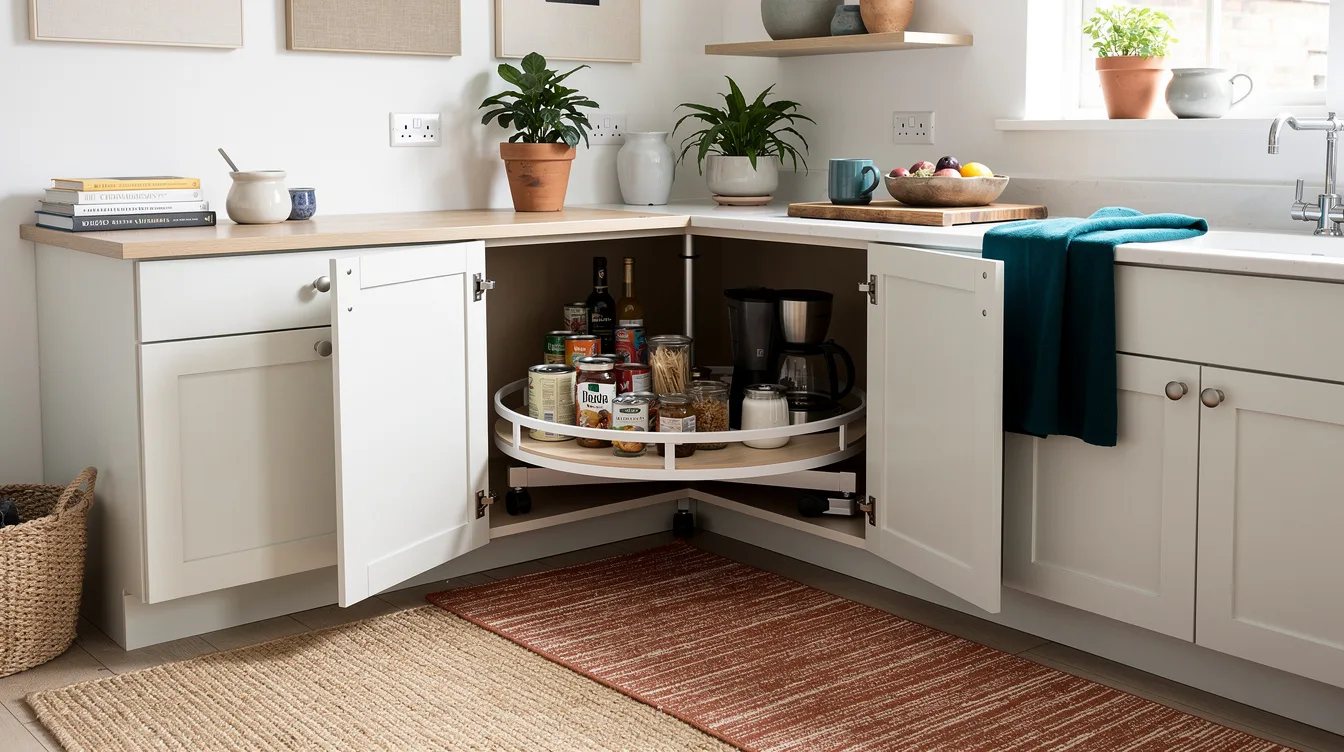
Leave a Clear Rotation Lane
A lazy Susan needs a clear rotation lane around its full circumference. Remove shelf liners that bunch up, loose bags that catch on the edge, and containers that lean into the cabinet wall.
A felt liner can soften noise, but it must lie completely flat. Trim it to the shelf shape and test the empty tray before returning the contents.
When the tray stops at one point, look for a hinge, shelf pin, or uneven liner before replacing the organizer. The obstruction is usually easier to fix than the product is to replace.
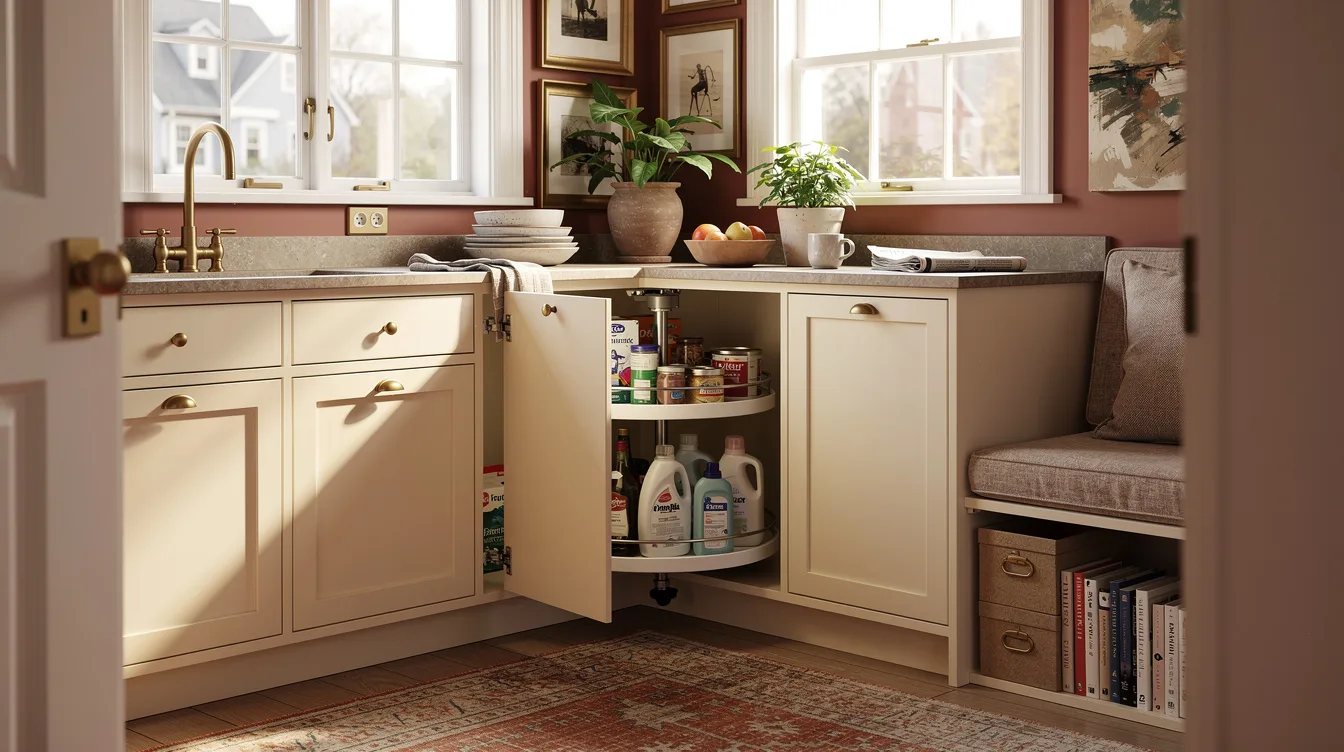
Finish With a Monthly Reset
Once a month, rotate the Target lazy Susan and check expiration dates, sticky lids, and duplicate purchases. Deep corners stay useful when the contents receive a quick reset before they become forgotten clutter.
Keep the categories broad enough to maintain. Pantry basics, baking supplies, coffee items, and cleaning backups are easier to manage than a separate tray for every ingredient.
Take a quick photo after organizing if the cabinet is shared. A visible reference helps everyone return items to the same place.
Keep reading
- Blind Corner Cabinet Eating Your Cookware? 12 Home Depot Pull-Outs
- Corner Cabinet Eating Your Pans? Try This Home Depot Renter Fix
- 13 Target Kitchen Organizers for Awkward Corner Cabinets Under $200
Measure the opening, test the empty rotation, and spend the remaining budget on stability rather than decoration. Once the tray turns freely, load daily-use items at the front and keep backups behind them.