Coat Closet Eating Your Gift-Wrapping Space? 14 Smart Fixes
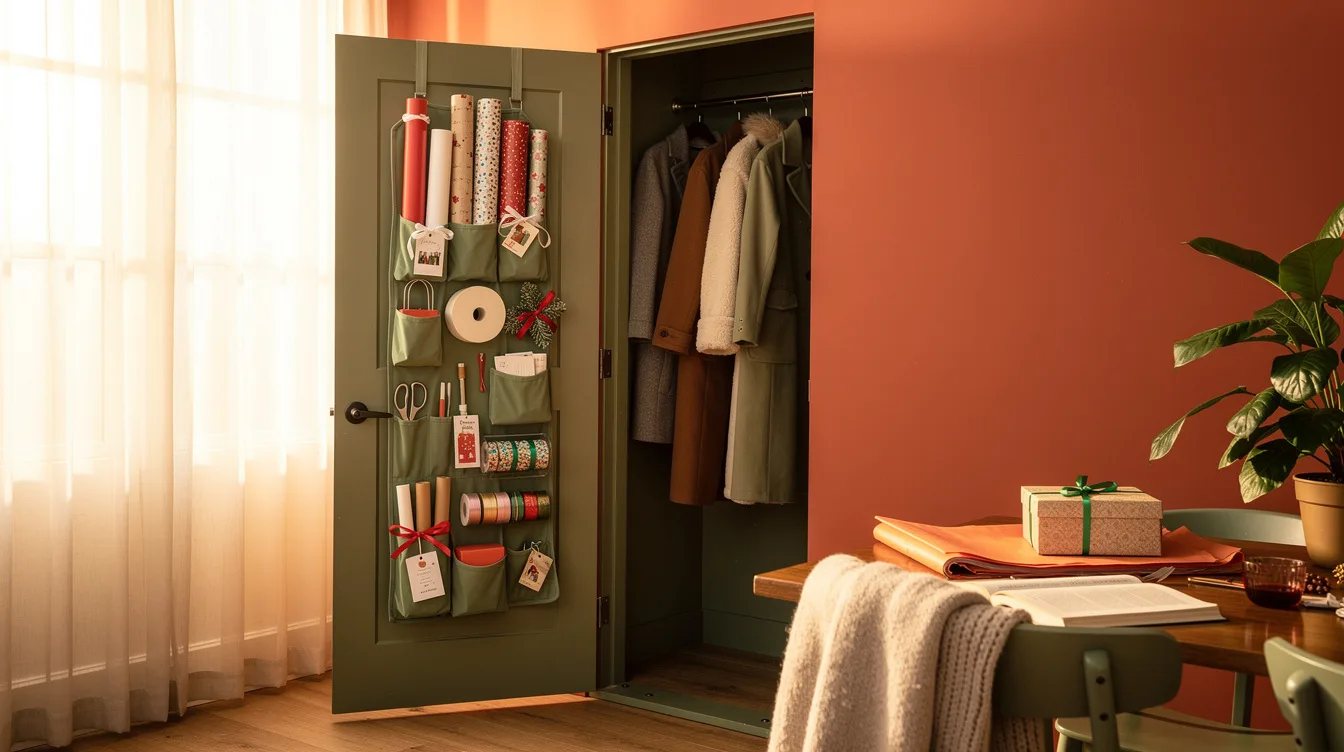
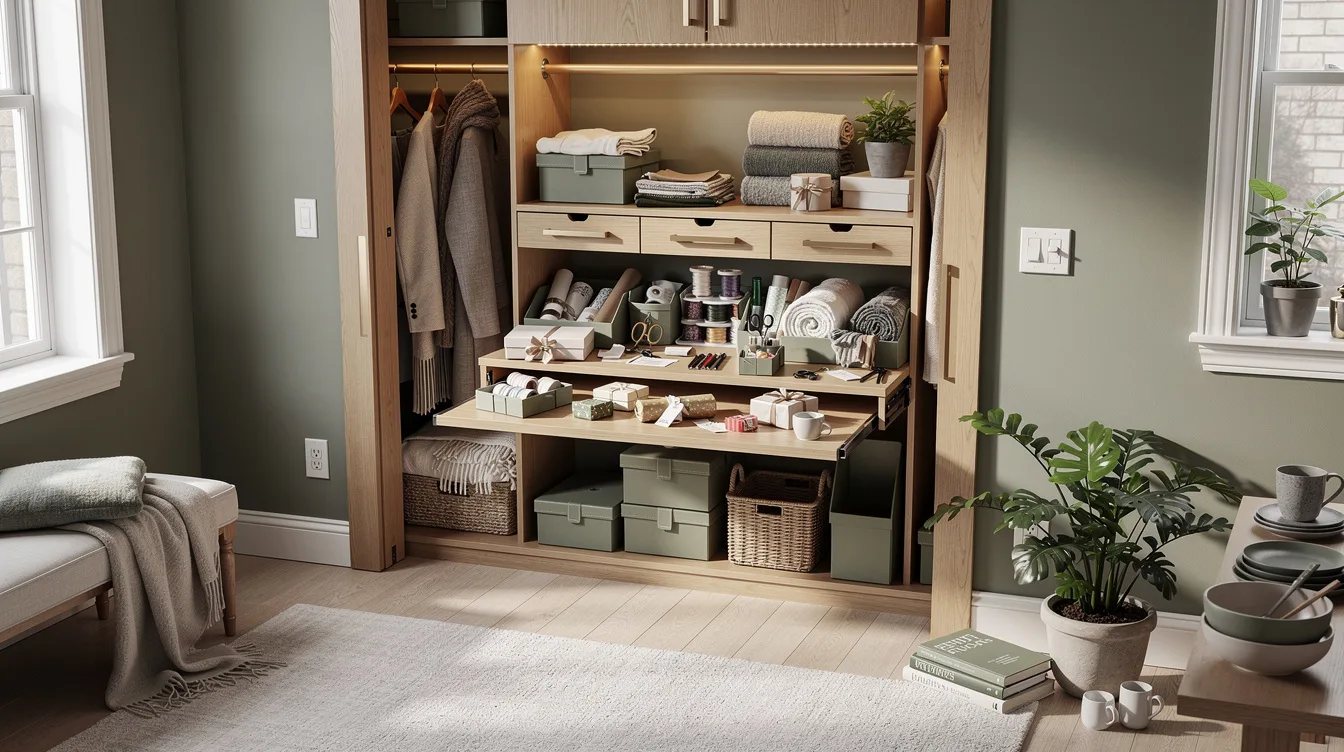
02 november 2026The best Christmas gift-wrapping station inside a coat closet uses the door for storage and a nearby table for the actual work. That distinction matters when a rack about 5 1/4 inches deep must share clearance with winter coats.
Designers favor a compact system that keeps paper, ribbon, scissors, tape, and tags together without turning the closet into a permanent craft room. These are the common setup mistakes that make a small station feel crowded, slow, and difficult to maintain.
What you will find inside
- Build the Station on the Door
- Measure the Closing Clearance
- Keep the Worktable Outside
- Choose One Organizer Type
- Store Long Rolls Upright
- Use Both Sides of Soft Storage
- Separate Ribbon From Tape
- Place Cutting Tools at Hand
- Label Seasonal Supplies
- Limit the Fabric Organizer Load
- Protect Paper From Coat Moisture
- Reserve a Shelf for Bulky Bows
- Check the Door Hardware
- Edit the Supply Collection
Build the Station on the Door
The biggest mistake is treating the entire coat closet like a craft room. A door-mounted organizer keeps wrapping paper, ribbon, scissors, tape, and tags together while the actual wrapping happens on a nearby table.
For 2026 shopping, a practical soft organizer typically costs about $30 to $45, while a permanent metal door system runs roughly $160 to $200. That price difference buys adjustability, but both formats solve the same storage problem when the door remains easy to close.

Measure the Closing Clearance
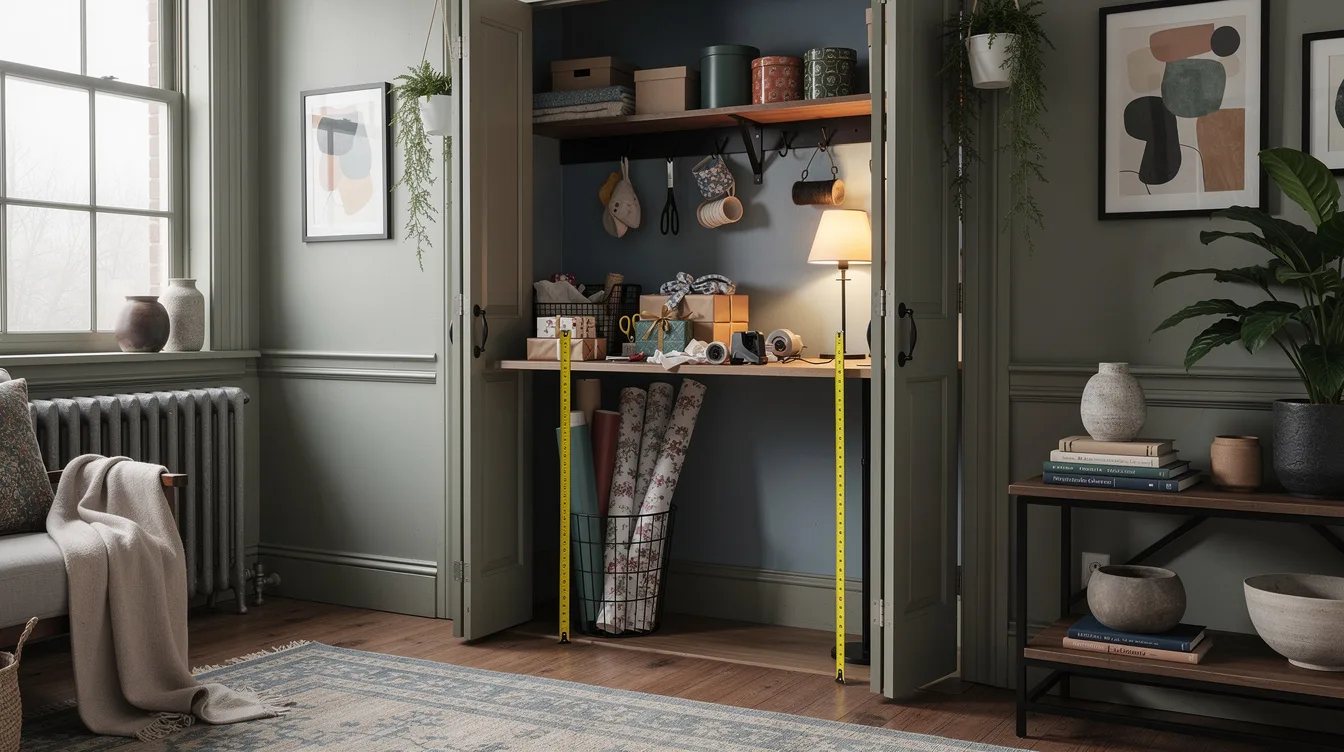
A rack can fit the door and still ruin the closet. Measure the door thickness, door height, and the gap between the closed door and the nearest coats or shelf before ordering a metal gift-wrap rack.
An organizer around 5 1/4 inches deep can press into bulky winter jackets, especially when rolls and baskets are full. Leave enough room for the door to close without bending paper or crushing ribbon.
Keep the Worktable Outside
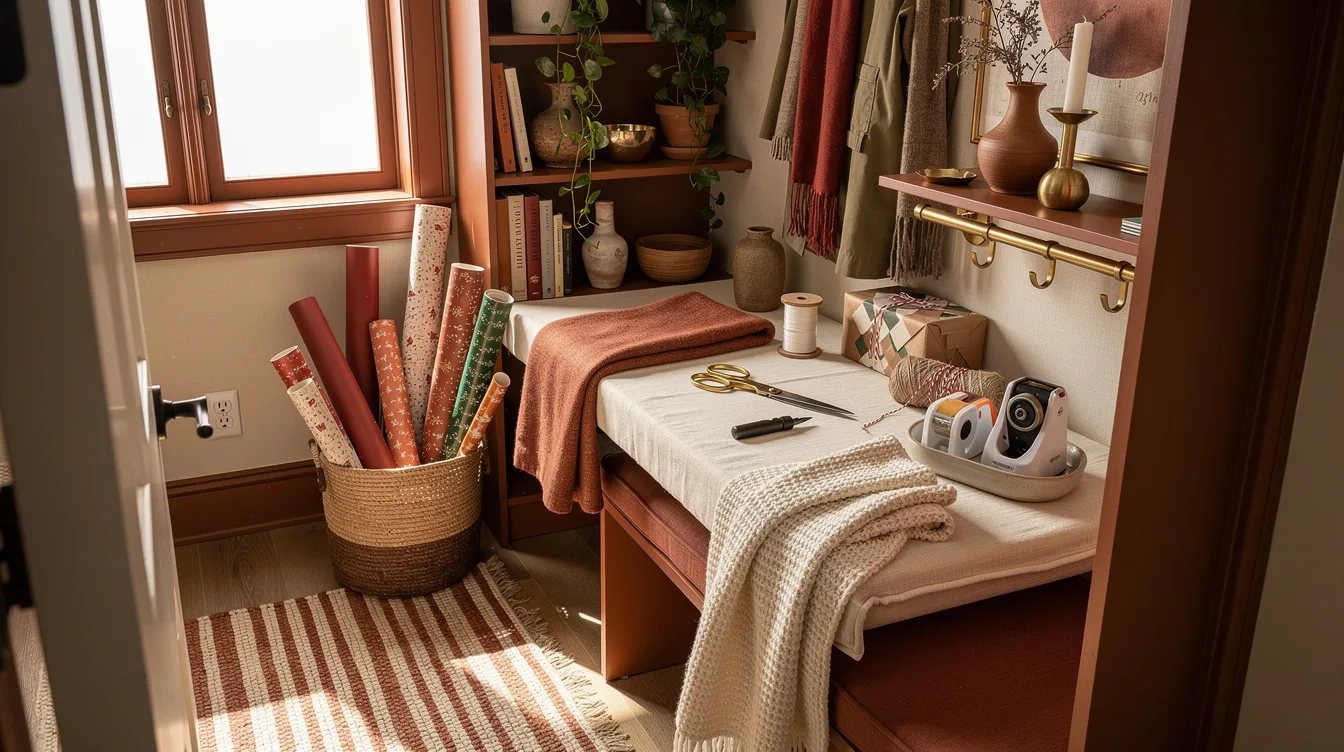
Wrapping gifts inside a narrow coat closet sounds efficient until the first box hits the wall. The better arrangement uses the closet for storage and a nearby table for cutting, folding, taping, and stacking finished packages.
A dining table gives you a stable surface without sacrificing hanging space. Carry the soft organizer to the table when needed, or keep the door open while supplies move back and forth in small batches.
Choose One Organizer Type
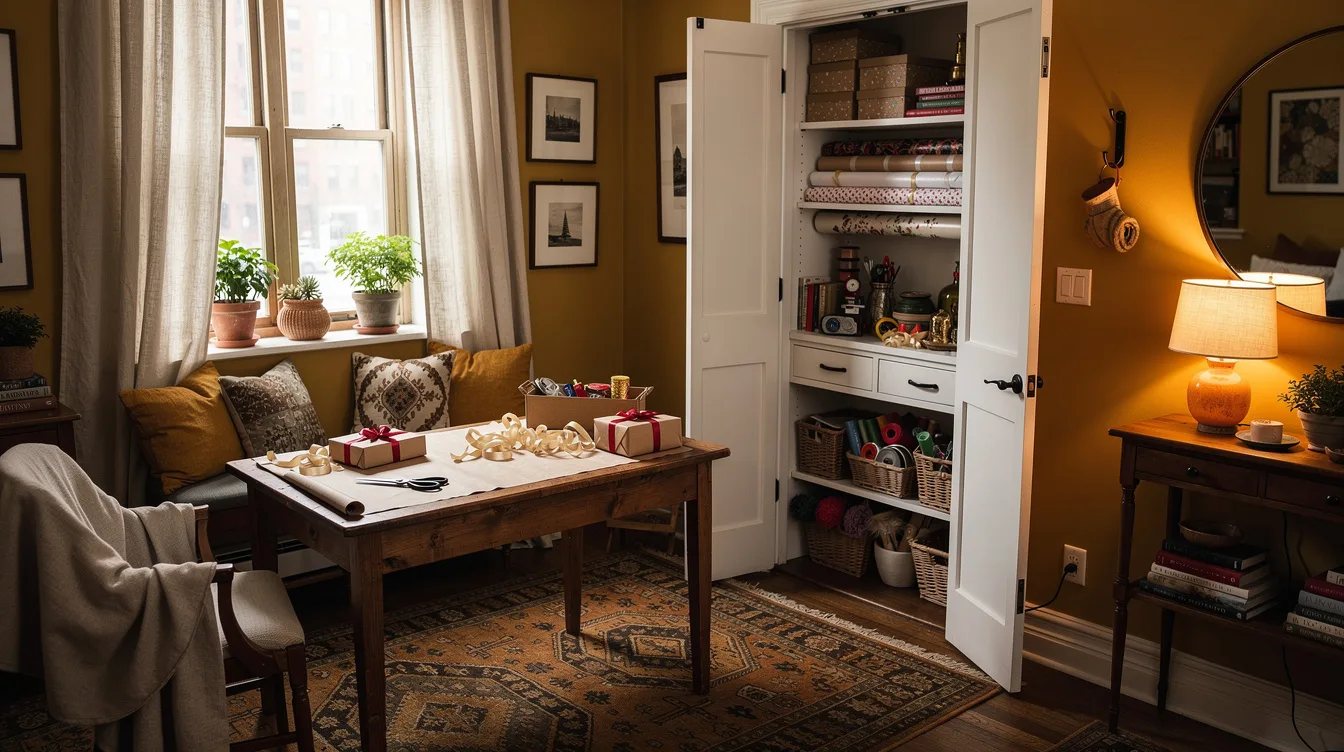
Mixing a rigid rack with several loose bins creates the visual clutter the station was supposed to prevent. Choose either a permanent door system or a removable fabric organizer, then assign every supply a defined section.
A fabric organizer is the sensible choice when the closet still needs to function primarily as coat storage. It can hang at one end of the rod and move to the table during a wrapping session.
Store Long Rolls Upright
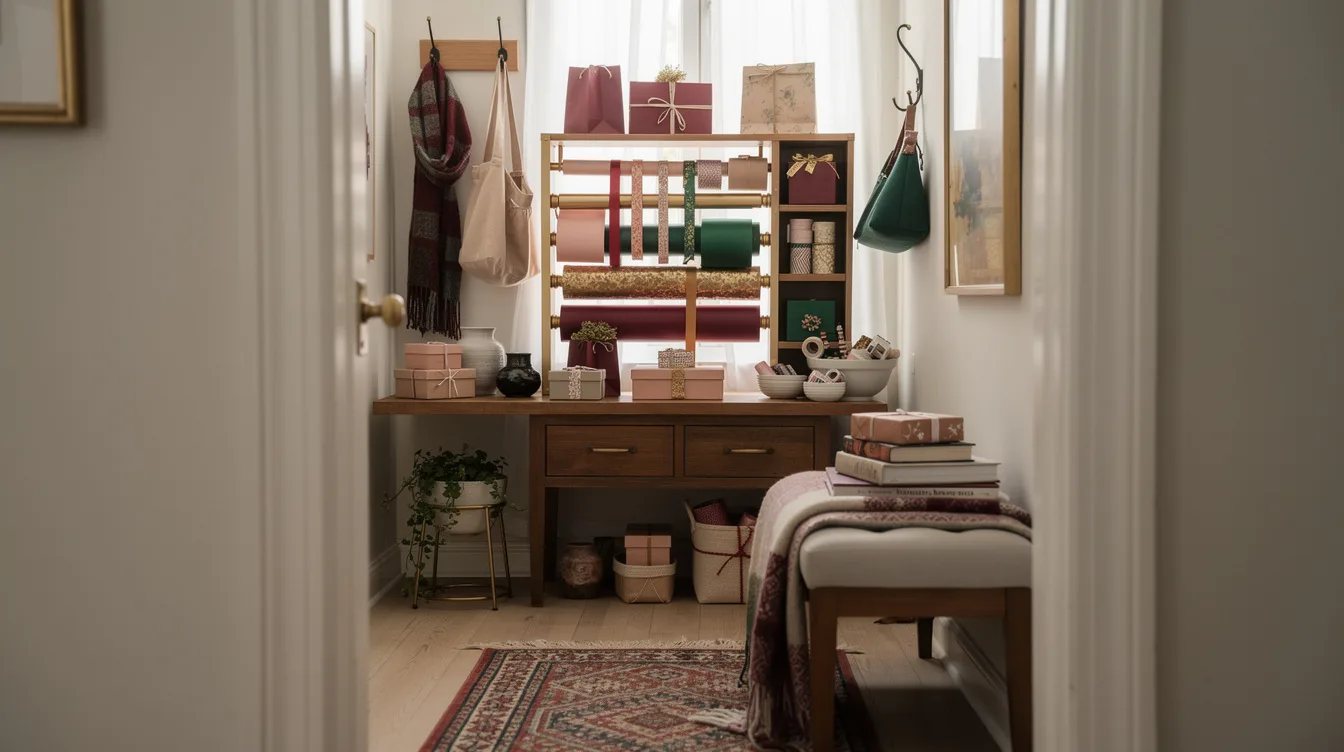
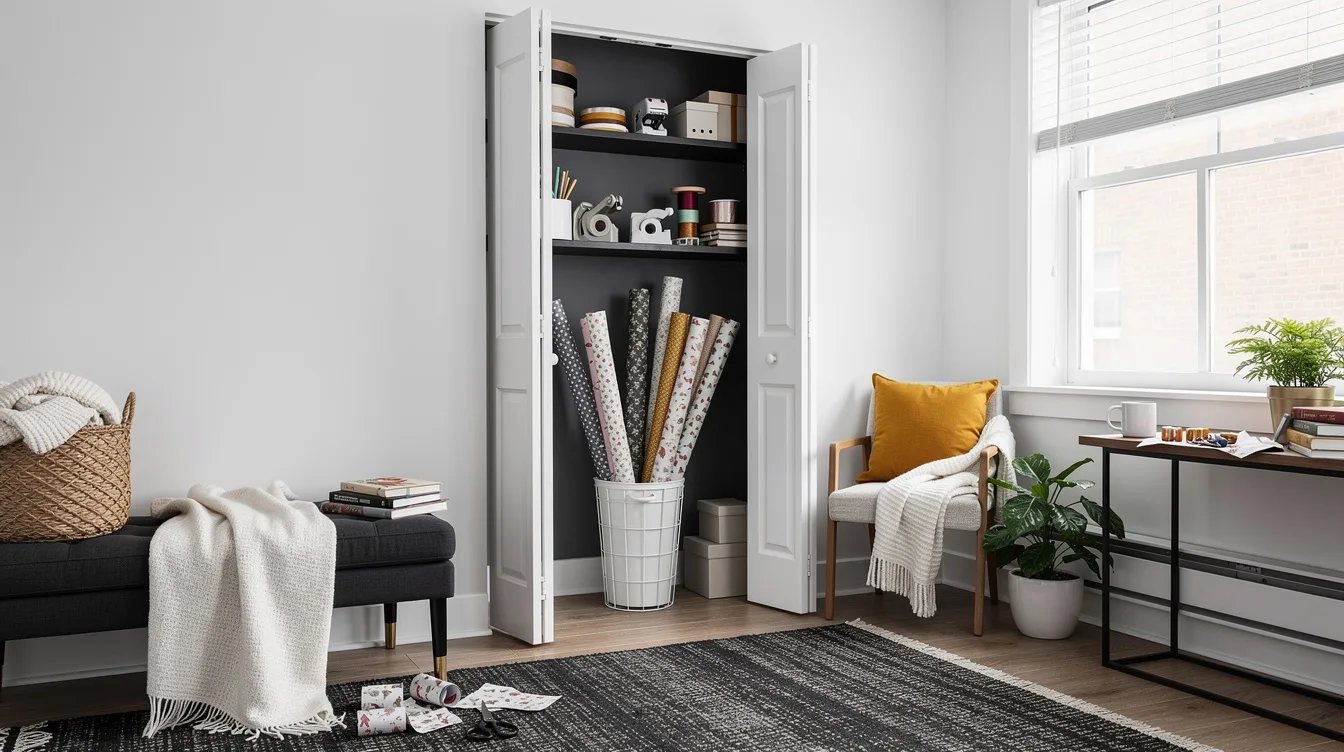
Long rolls lying across a closet shelf waste valuable space and make the paper impossible to browse. Keep them upright in the lower section of the station, where the edges stay visible and the next pattern is easy to pull out.
A wrapping-paper roll organizer designed for rolls up to 30 inches long works well for common holiday paper. Check the roll length before buying because oversized paper may need a separate vertical container.
Use Both Sides of Soft Storage
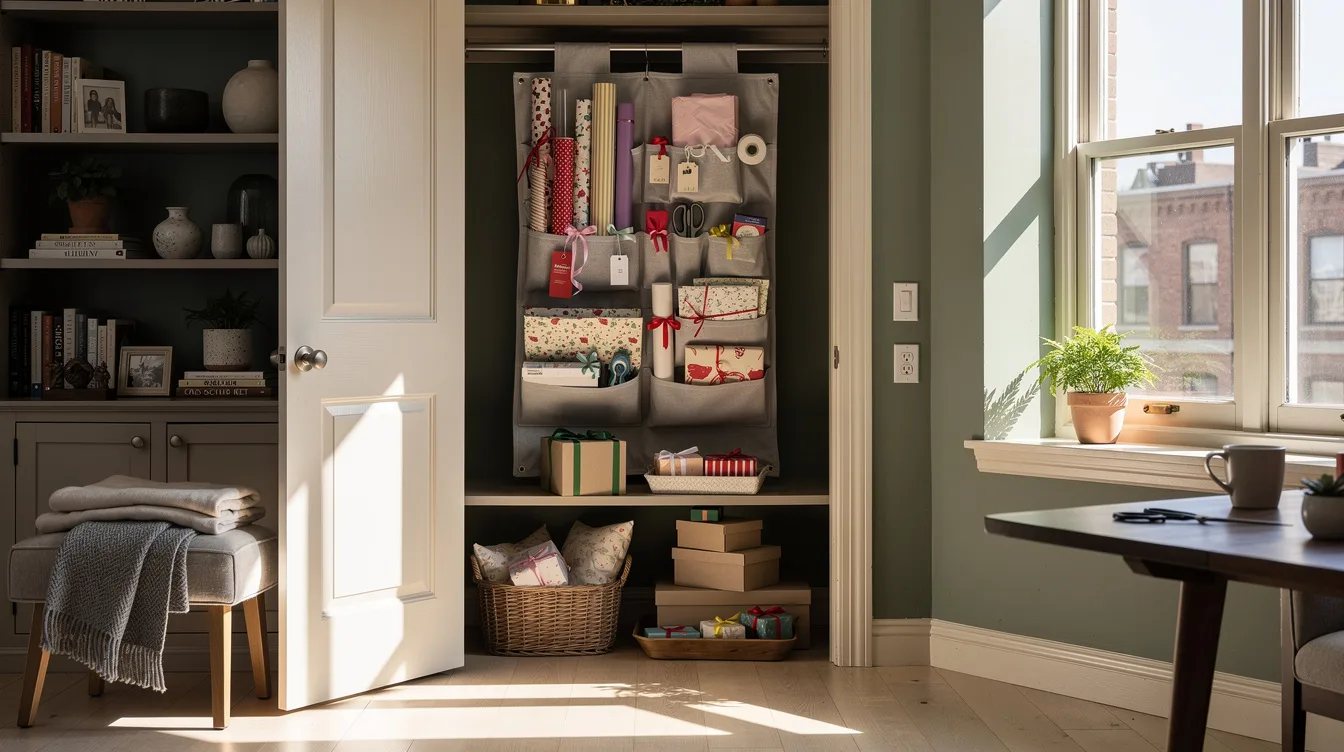
A two-sided hanging organizer earns its footprint only when both faces remain accessible. Keep the front for paper rolls and frequently used tools, then reserve the rear pockets for gift bags, flat paper, and tissue.
The clear vinyl pocket format makes small supplies visible without opening every compartment. Hang it at the end of the coat rail rather than compressing it between heavy coats.
Separate Ribbon From Tape
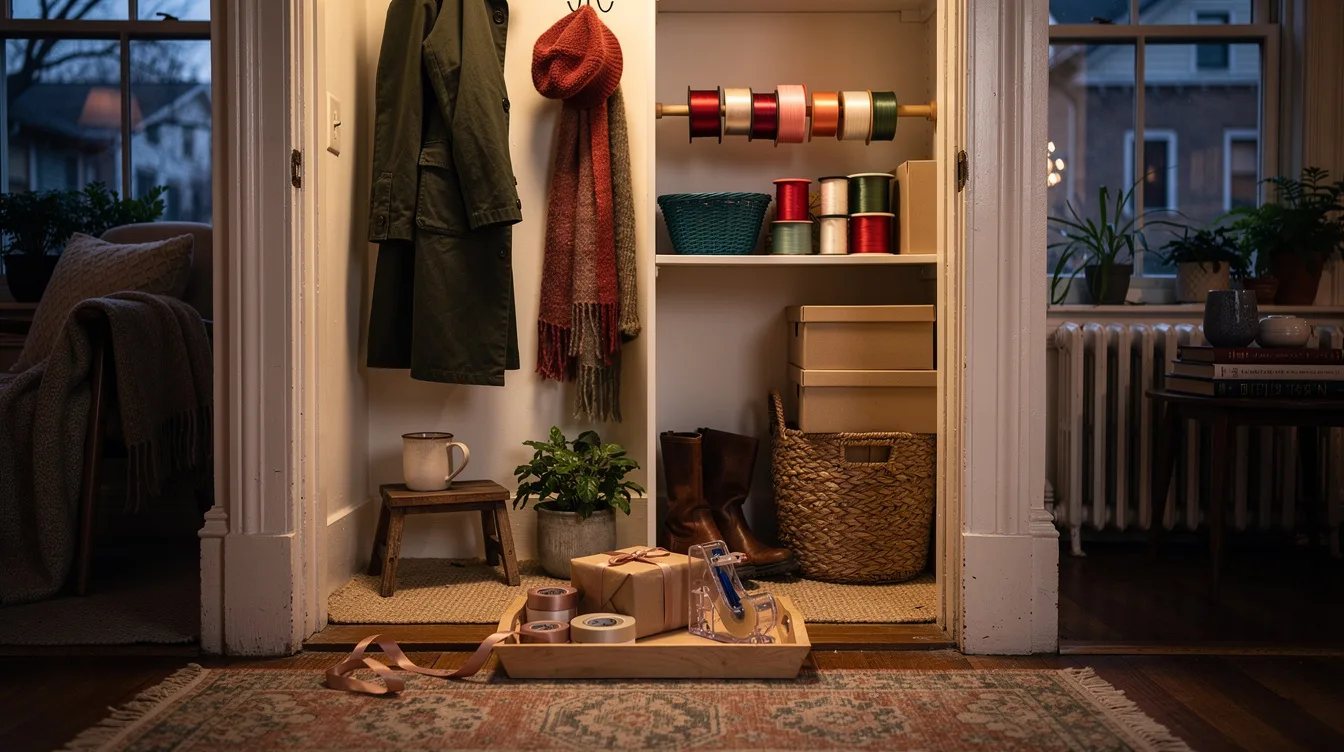
Ribbon becomes tangled when spools, tape, and scissors share one open bin. Give each ribbon spool its own pocket, and place tape beside the cutting tools so the basic wrapping sequence stays simple.
A wooden dowel can hold several spools in a dedicated section of the rack, provided the organizer is designed for that weight. Keep loose curling ribbon in a lidded box instead of allowing it to spill across the door.
Place Cutting Tools at Hand
Scissors buried below paper rolls turn every package into a search project. Store them in a shallow upper pocket with a tape dispenser and a small ruler, away from children and pets.
A stainless-steel scissors pair is more useful than a novelty holiday version because it handles thick paper and ribbon cleanly. Add a second pair only if more than one person regularly wraps at the same time.
Label Seasonal Supplies
Even a tidy station becomes frustrating when every pocket looks identical. Use labels such as paper, ribbon, tags, bags, and tissue so anyone can return supplies without asking where they belong.
Paper labels are enough for a small station, while removable adhesive tabs work better when the contents change each season. Keep gift tags and pens together because separating them creates an unnecessary extra step.
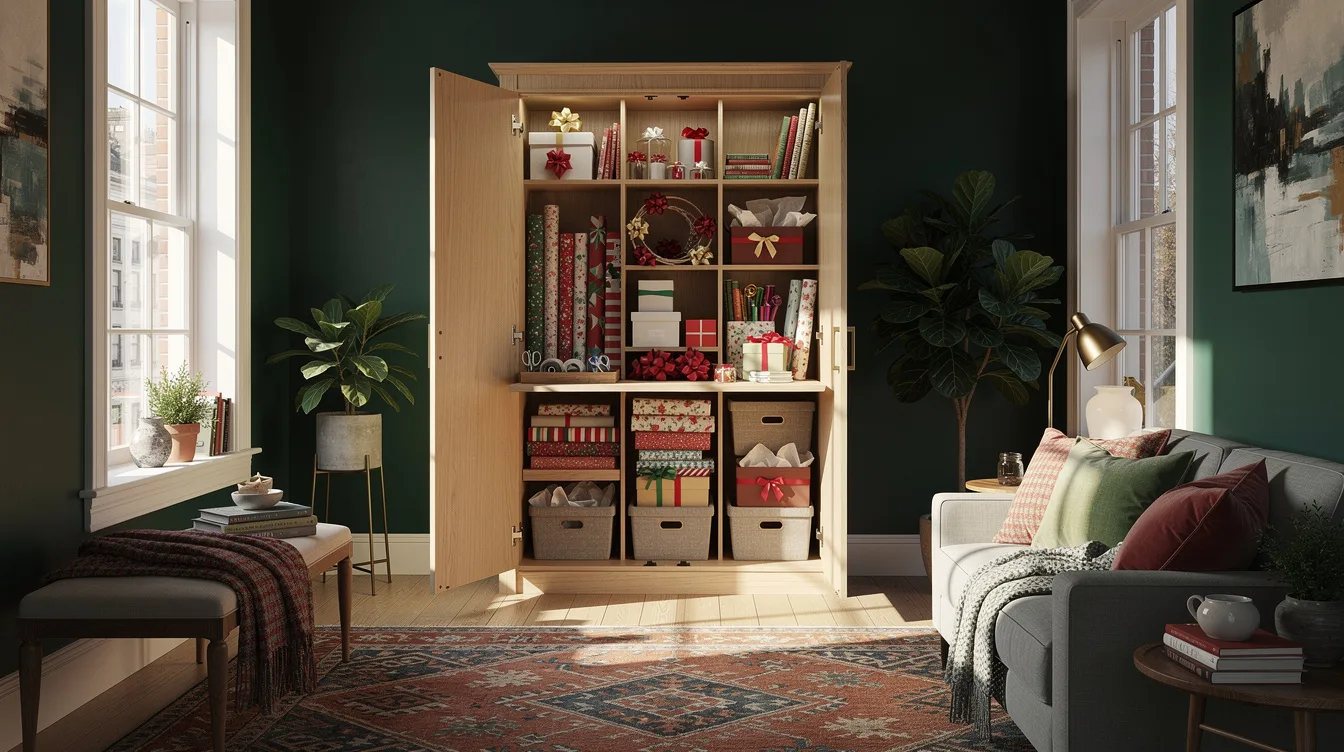
Limit the Fabric Organizer Load
Soft storage collapses when it carries every spare bow, oversized bag, and unopened paper pack in the house. Keep only the current holiday supplies in the door station and move bulky extras to a separate closet-shelf box.
A canvas storage box protects overflow without making the door heavy. This division also keeps a hanging organizer from sagging into the coats or pulling against its hanger.

Protect Paper From Coat Moisture
Holiday paper should not share an unprotected pocket with wet scarves, muddy shoes, or damp outerwear. Keep the wrapping station high and use a closed container for delicate tissue, tags, and specialty paper.
A polypropylene bin handles occasional closet moisture better than a cardboard box. Leave space around the paper so the edges stay flat instead of leaning against a crowded wall of coats.
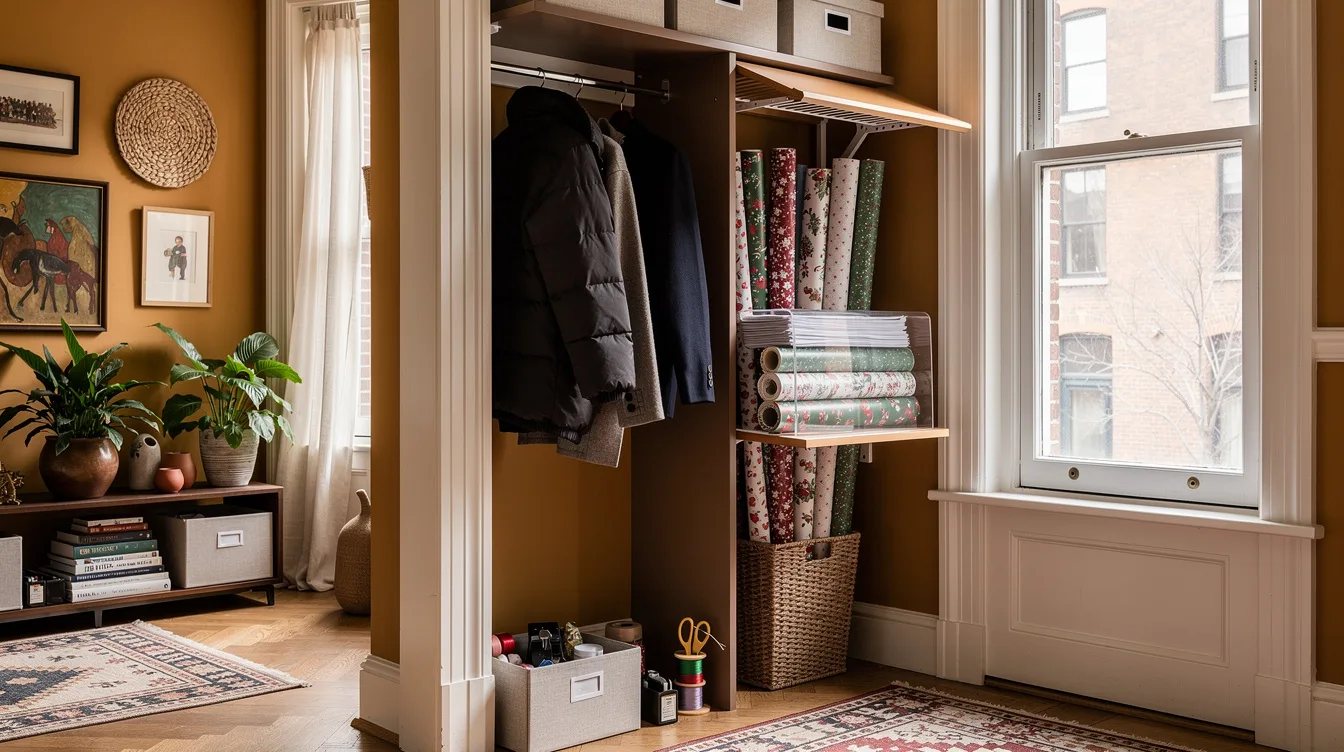
Reserve a Shelf for Bulky Bows
Bows consume more room than their small weight suggests, so forcing them into narrow pockets makes them lose their shape. Reserve a separate shelf box for large bows, spare gift bags, and padded mailers.
A clear lidded bin lets you see the contents while keeping dust away from satin and velvet. Choose a low box that slides out easily instead of stacking it behind coats that are used every day.
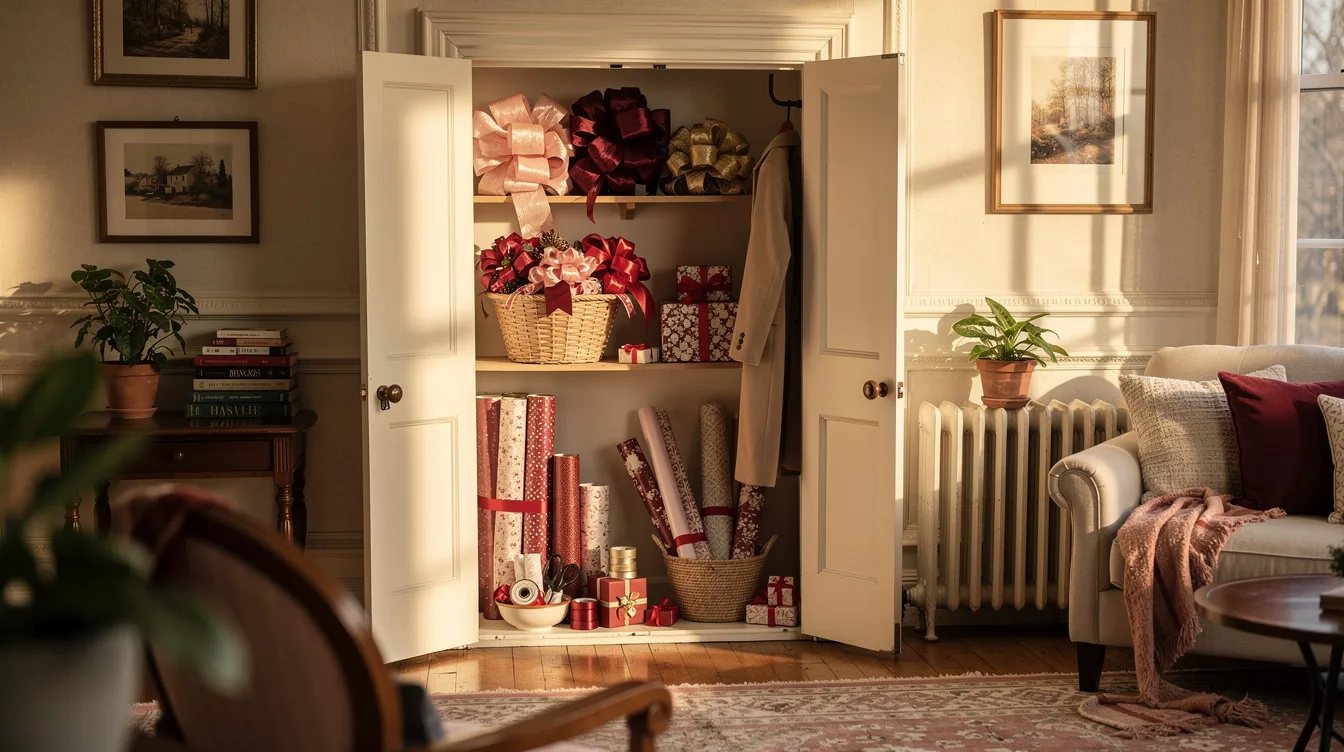
Check the Door Hardware
Over-door hooks are convenient, but they can interfere with hinges, trim, or a door that already carries a mirror. Test the hardware before filling the organizer, and confirm that the door still opens fully.
Steel over-door hooks are a strong option for removable storage, but the top channel must match the door thickness. A poor fit creates rattling, uneven weight, and scratches along the top edge.
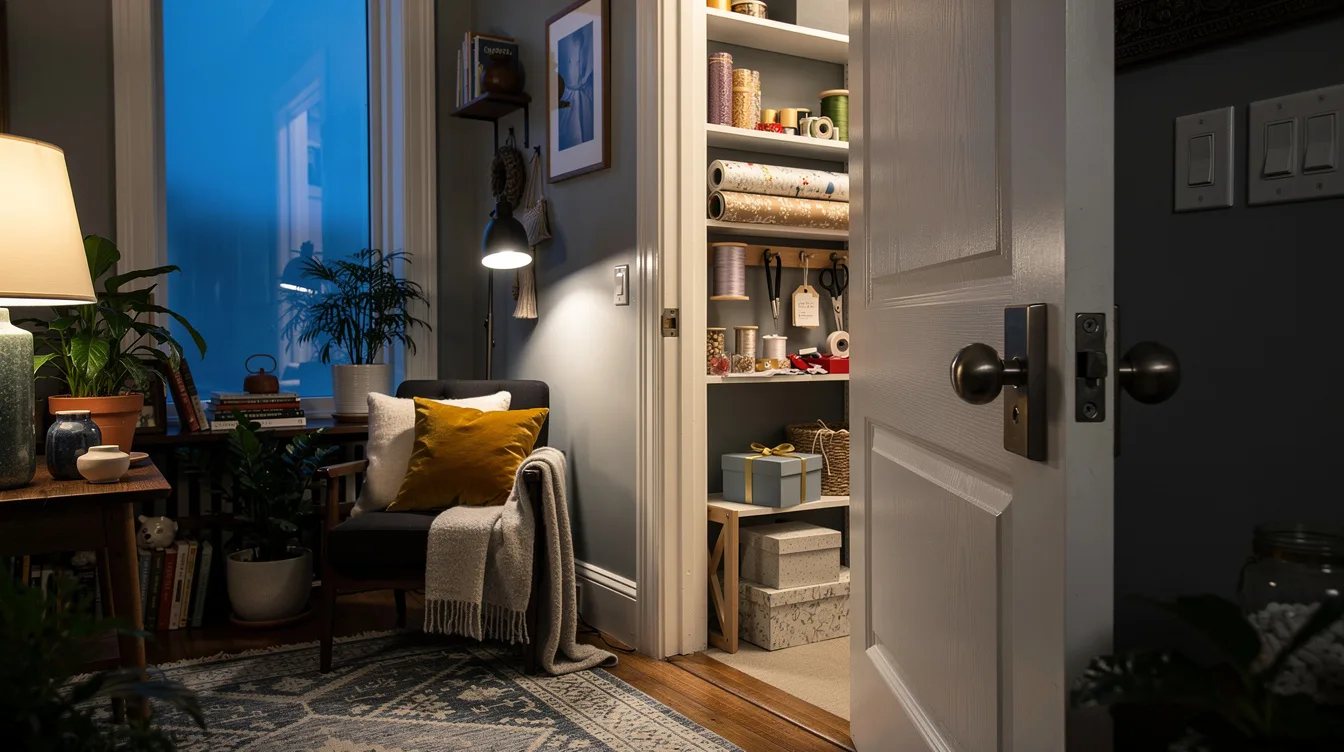
Edit the Supply Collection
A gift-wrapping station fails when it becomes a holding zone for every craft item in the home. Keep the supplies that support holiday wrapping and remove dried markers, empty tape rolls, damaged bags, and paper scraps.
A label maker can help maintain the edit, but the real improvement comes from limiting the inventory. When each category fits its assigned space, the door stays light and the nearby table clears quickly.
Keep reading
- Small Counter Cookie Station? 12 Christmas Fixes Under $65
- Hanger-Eating Closet? 12 ClosetMaid Fixes Starting at $22
- Your Reach-In Closet Is Wasting Space: 13 Container Store Elfa Kits
Start by measuring the closed door against the nearest coats, then choose the organizer that fits the space and the amount of paper you truly use. A clear door, a nearby table, and one labeled home for every supply will carry the station through the entire holiday season.


