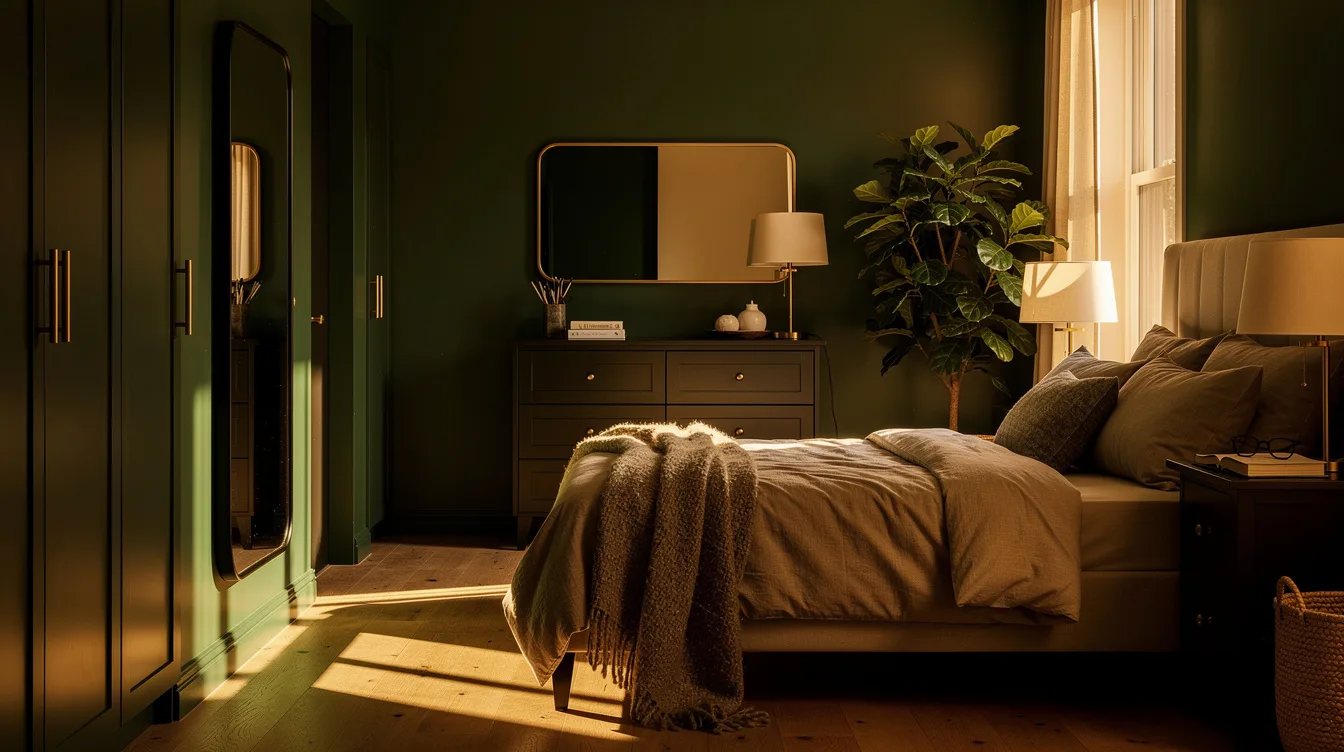
No Room to Turn Around? 14 Bedroom Mirror Ideas for Narrow Rooms
26 october 2026A narrow bedroom can lose its only clear walkway to one oversized floor mirror. A Target door mirror about 13.5 inches wide, or an IKEA LINDBYN about 16 by 51 inches, gives you a useful reflection without crowding the path between bed and wardrobe.
The best placement depends on what the mirror must do: outfit checks belong beside the closet or on the door, while grooming reflection belongs horizontally above a dresser.
What you will find inside
- Keep a Full-Length Mirror Beside the Wardrobe
- Reserve the Door for a Slim Framed Mirror
- Turn the Dresser Wall Into a Grooming Station
- Match Mirror Width to the Furniture Below
- Protect the Walkway With a Wall-Mounted Frame
- Choose Vertical Glass for Outfit Checks
- Rotate Wide Glass Above the Dresser
- Keep the Bed Out of the Reflection
- Use Rounded Corners Near Tight Passages
- Check the Door Swing Before Drilling
- Pick a Light Frame for a Dark Wall
- Let the Mirror Repeat Existing Metal
- Use Two Small Mirrors Only When the Wall Allows
- Measure the Reflection Before You Buy
Keep a Full-Length Mirror Beside the Wardrobe
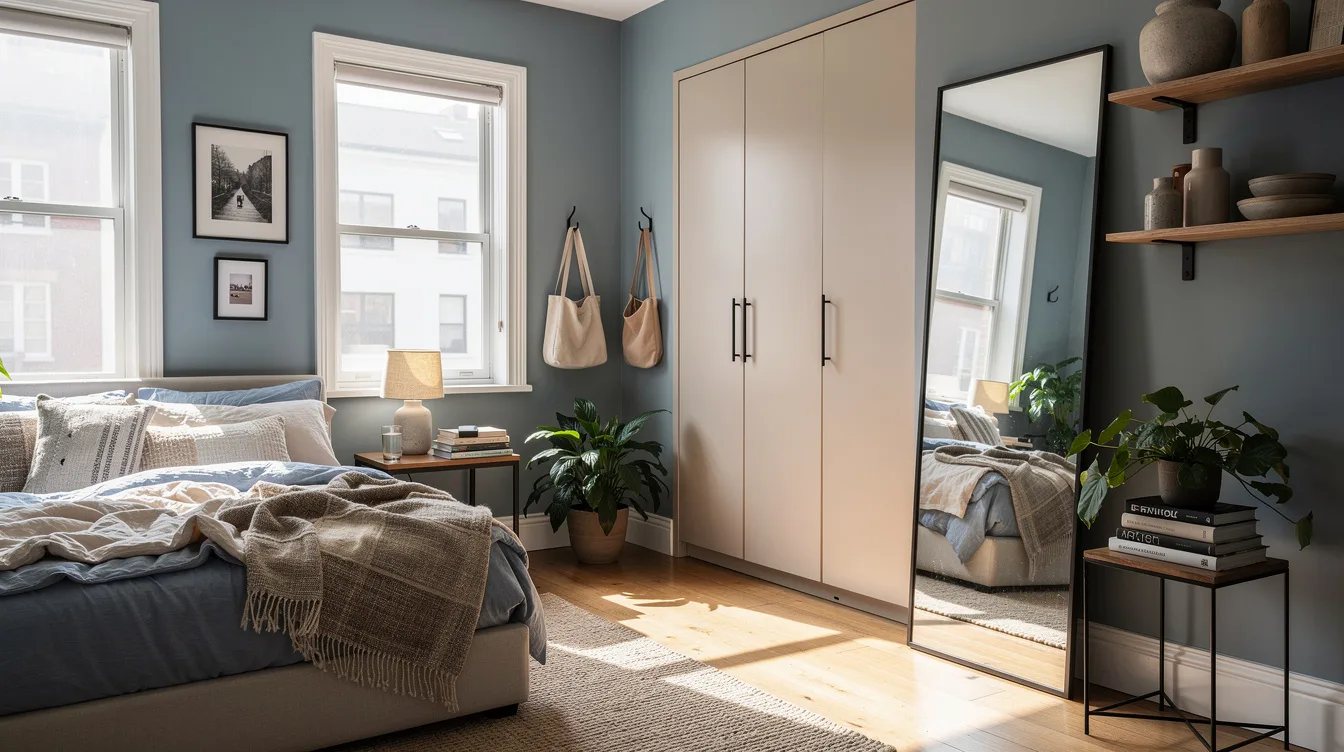
The strongest placement for outfit checks is a slim wall strip beside the wardrobe or bedroom entrance. An IKEA LINDBYN mirror, about 16 by 51 inches with an anodized aluminum frame, gives you full-length reflection while keeping the floor clear.
Its retail snapshot is about $80, which makes it a practical middle-ground choice for a narrow room. Position it where you can step back without standing behind the door, then keep the adjacent walkway free of baskets and chairs.
Reserve the Door for a Slim Framed Mirror
When the bed, wardrobe, and window already consume the walls, use the room-facing side of the bedroom door. The Target Room Essentials framed door mirror is about 13.5 inches wide and 49.5 inches tall, with a listed snapshot around $7.
Check the handle, frame, and closing path before mounting it. A mirror that catches the door jamb every morning becomes a nuisance, so confirm whether the chosen model uses direct mounting or an over-the-door system.
Turn the Dresser Wall Into a Grooming Station
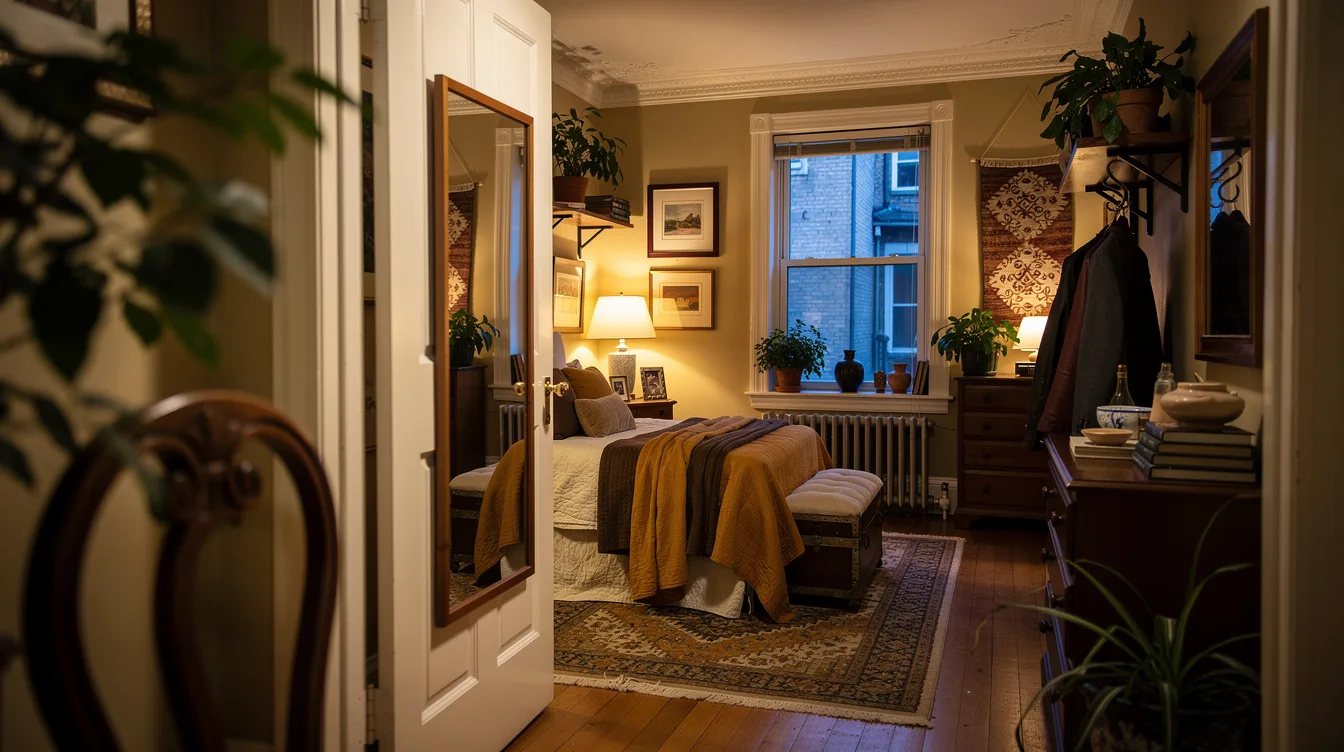
A horizontal mirror above the dresser adds a useful reflection without bringing another piece of furniture into the passage. The IKEA NISSEDAL mirror, about 26 by 59 inches, can hang vertically or horizontally and uses a fiberboard frame with a plastic-foil finish.
Its retail snapshot is about $100. Leave roughly 6 to 8 inches between the dresser top and the lower edge of the glass, adjusting that gap for the furniture height and the reflection you want.
Match Mirror Width to the Furniture Below
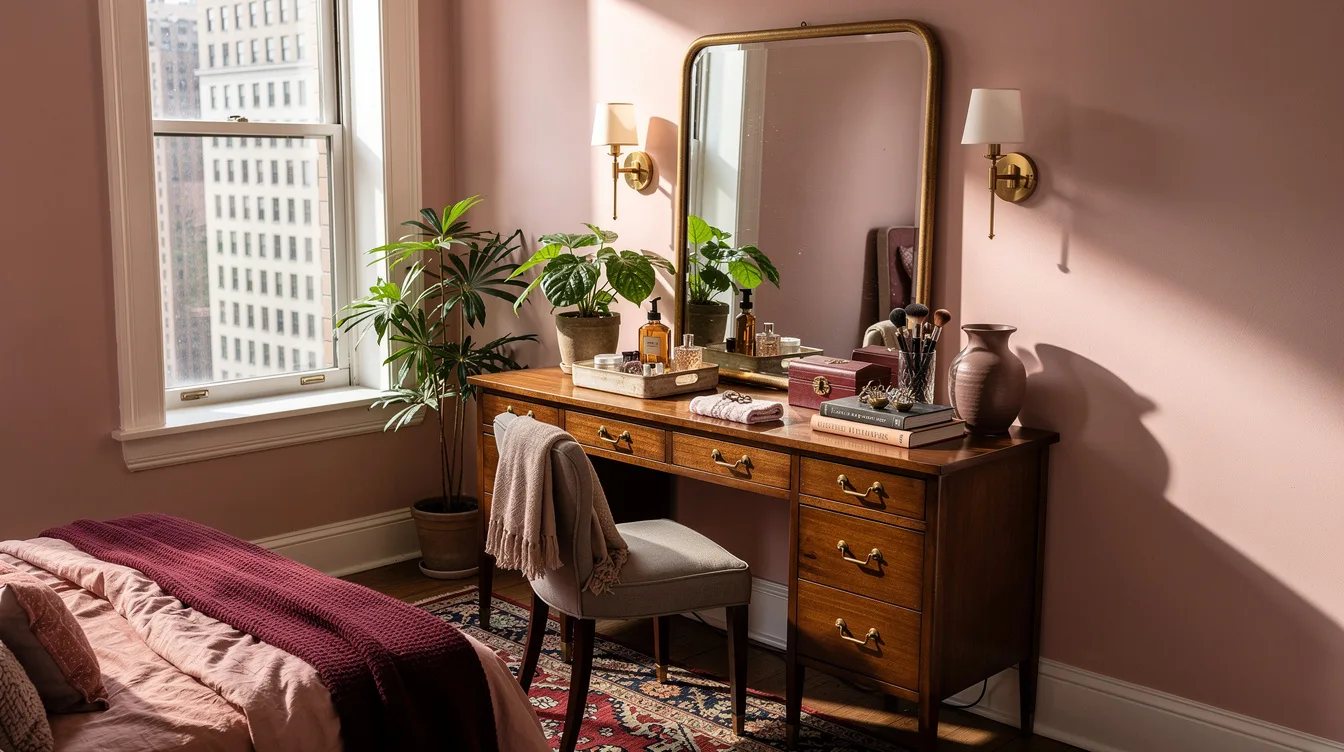
A long mirror needs visual support from the dresser beneath it, especially in a narrow bedroom where every horizontal line is noticeable. Pair a roughly 59-inch-wide mirror with a dresser around 72 to 80 inches wide so the glass feels anchored rather than oversized.
Use black NISSEDAL when the room already has dark hardware or a black bed frame. The frame does not need to match every finish, but it should repeat one established detail instead of introducing a random new color.
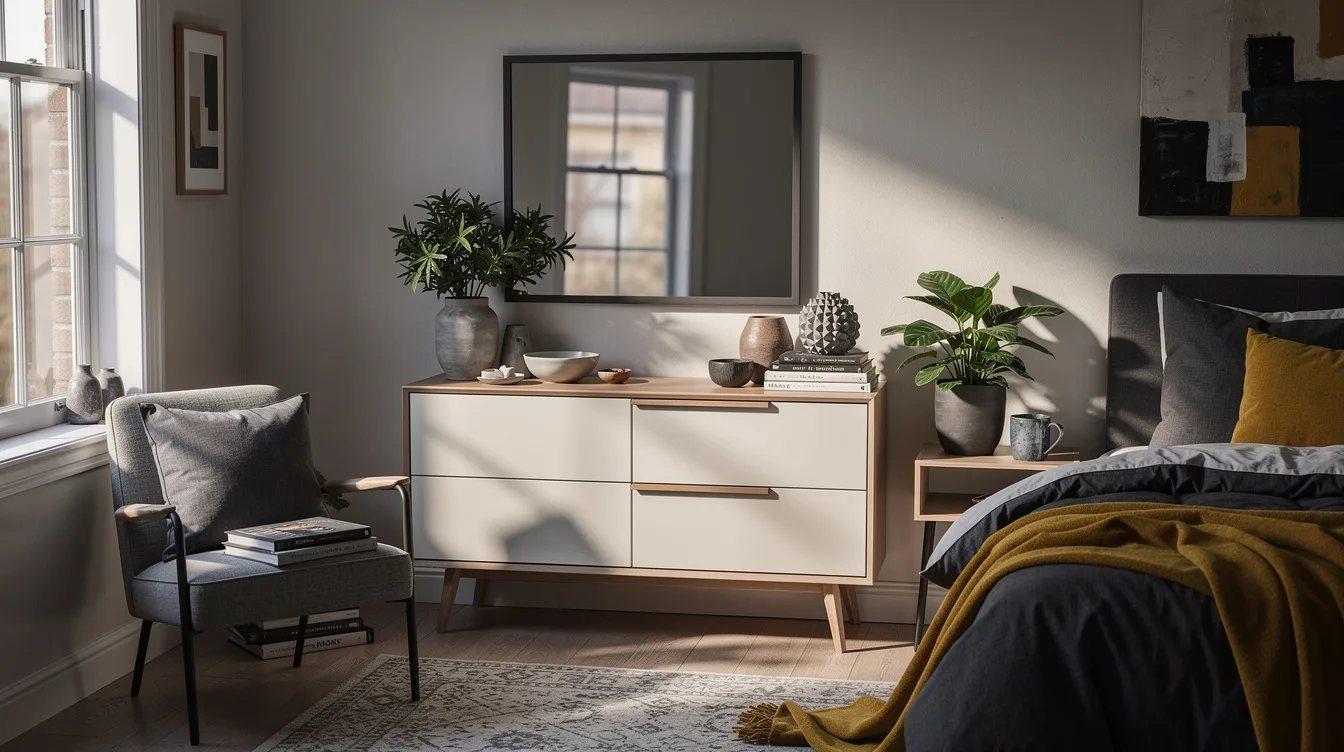
Protect the Walkway With a Wall-Mounted Frame
Floor space matters more than a decorative silhouette in a tight bedroom, so wall mounting should be the default. A narrow metal frame beside the wardrobe gives you a useful reflection while leaving the strip between the bed and closet open.
The slim anodized aluminum frame on IKEA LINDBYN keeps the profile visually light. Mount it close enough to the wardrobe to read as one outfit zone, but leave room for the closet door and your shoulder to pass comfortably.
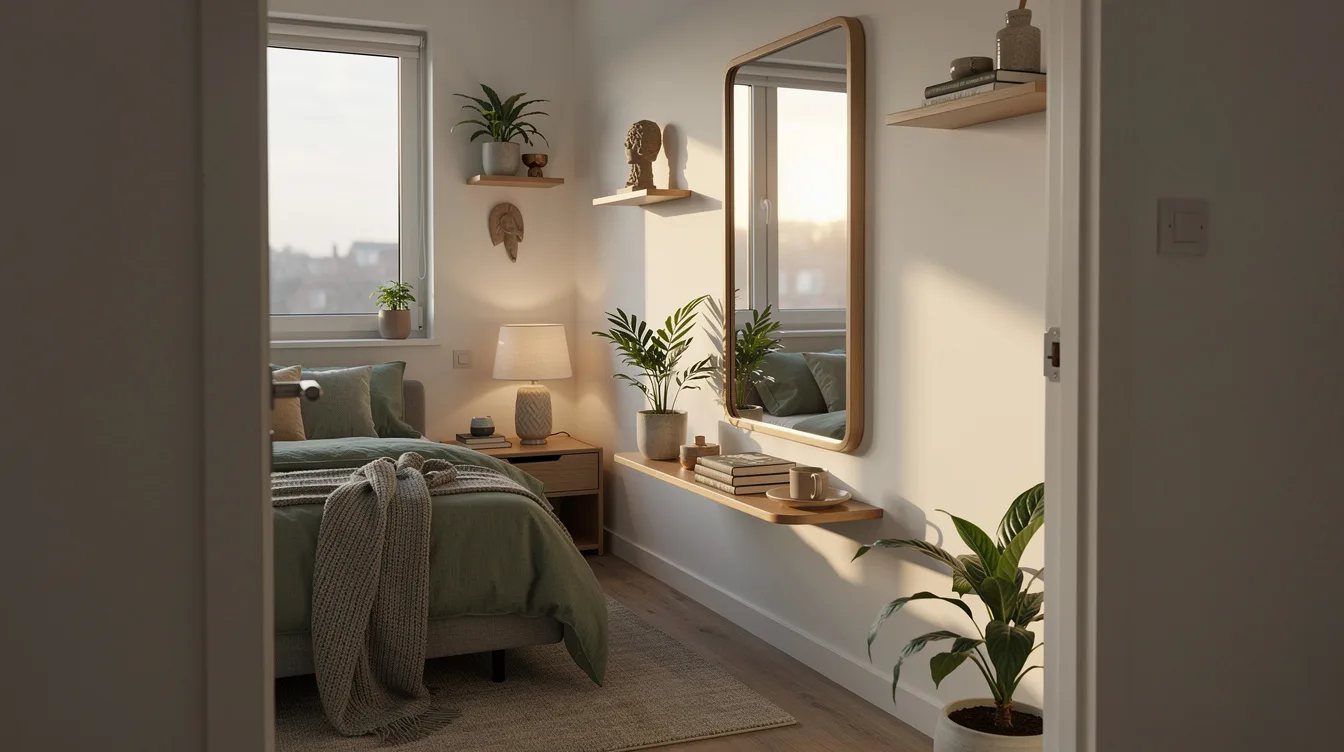
Choose Vertical Glass for Outfit Checks
Use a vertical mirror when the main job is checking clothing from head to toe. A tall, narrow rectangle works especially well beside a closet because it follows the wall height instead of projecting into the walkway.
The roughly 16-inch-wide LINDBYN is a strong fit for this job, though its view is slimmer than a mirror around 24 to 26 inches wide. Keep the glass centered at a usable standing height and make sure the bottom edge does not compete with a baseboard or shoe rack.
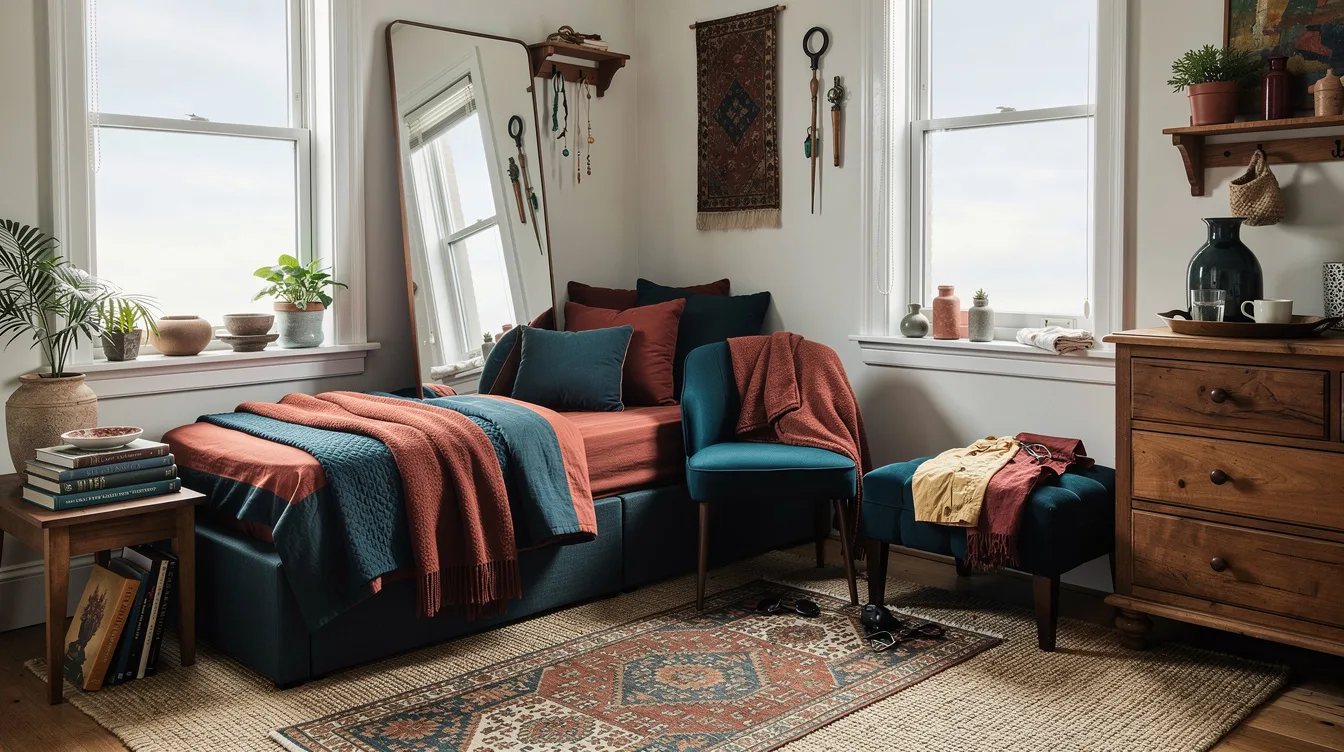
Rotate Wide Glass Above the Dresser
Turn a rectangular mirror horizontally when the dresser wall is the room's most stable visual anchor. This orientation spreads reflection across the furniture and makes a narrow wall feel more deliberate without adding another footprint.
IKEA NISSEDAL glass works for this arrangement because the product is designed for either orientation. Before drilling, center the mirror over the dresser and check that the reflected view shows the room you want to see rather than a cluttered corner.
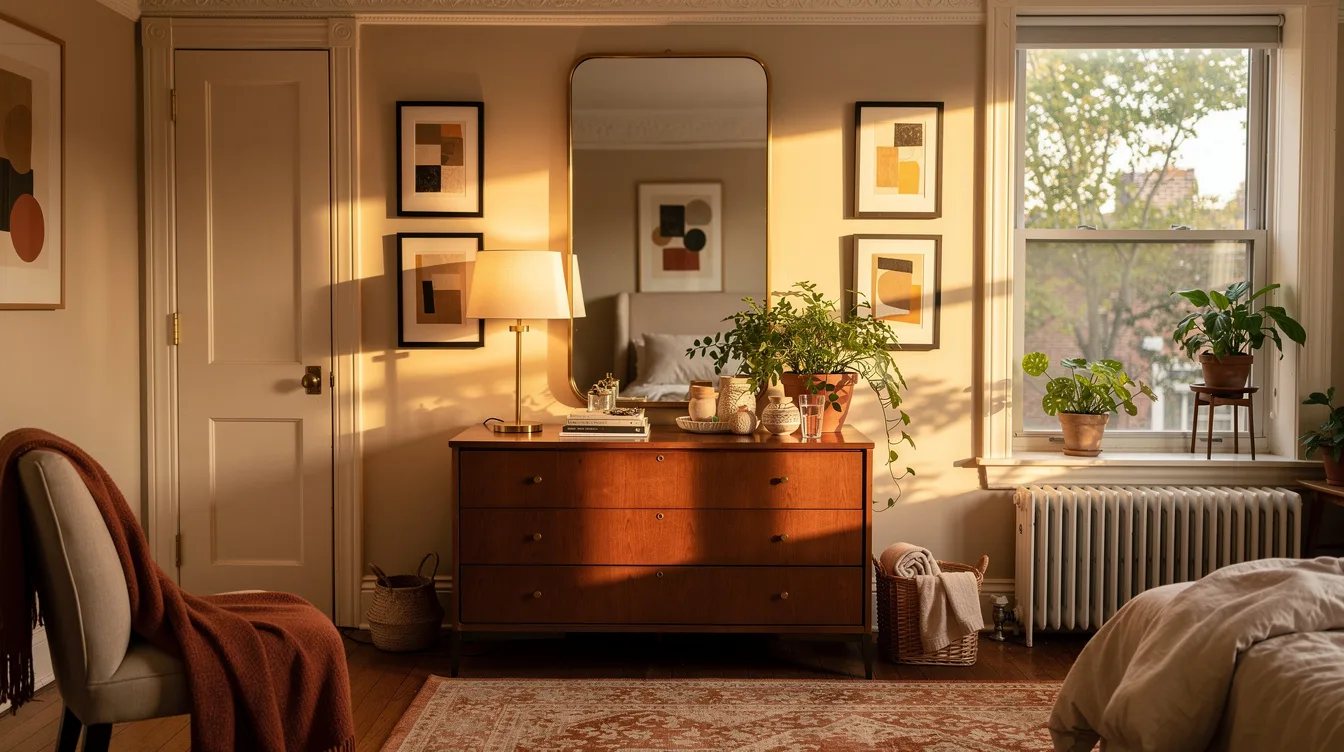
Keep the Bed Out of the Reflection
A mirror beside the wardrobe should reflect the open passage, a window, or a clean section of wall whenever possible. Pointing it directly at an unmade bed makes the room feel busier and gives the narrow layout nowhere to rest visually.
Use a slim framed door mirror when the only useful angle is from the door. The inexpensive Target option is easier to relocate than a large floor mirror, so test the reflection with removable tape before committing to hardware.
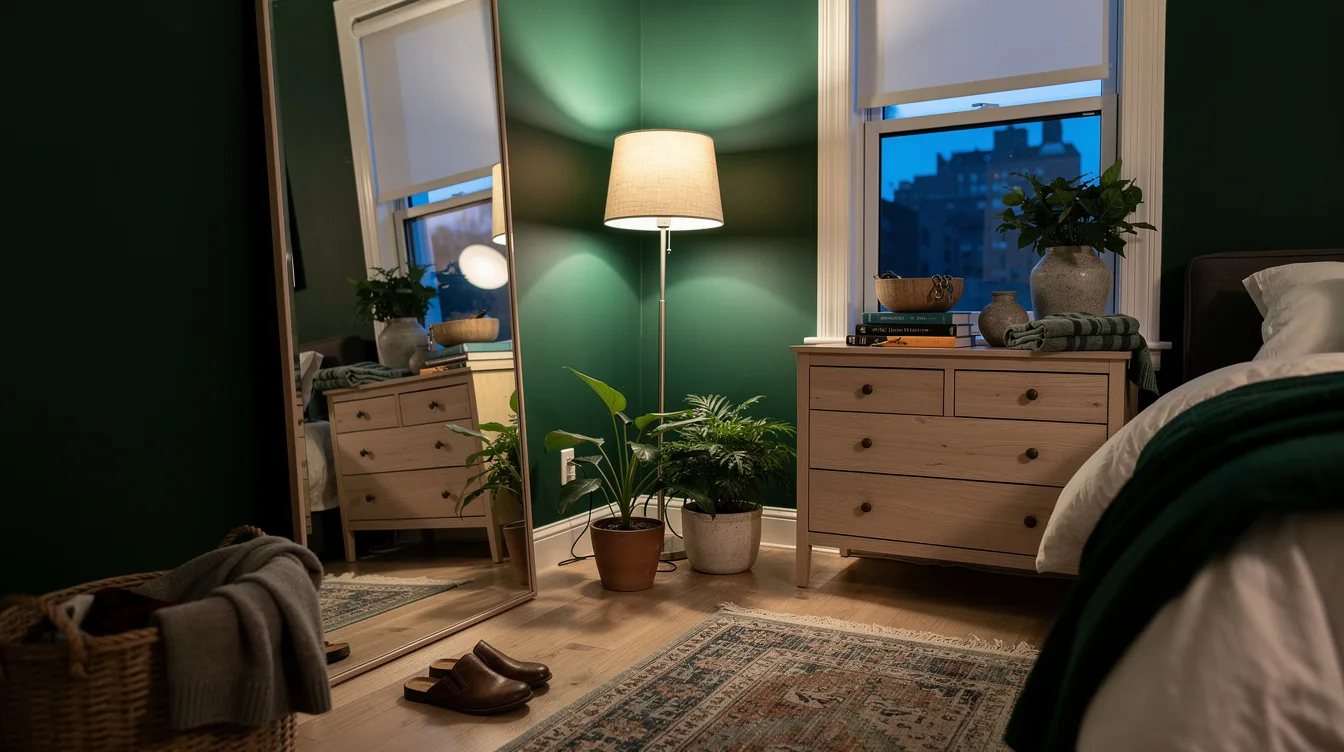
Use Rounded Corners Near Tight Passages
Rounded corners soften a mirror placed near a doorway or closet return, where sharp edges can feel intrusive. The curved outline on LINDBYN adds a small architectural break without demanding extra floor space.
Keep the surrounding wall simple so the shape remains legible. A plain aluminum frame works better here than a bulky carved frame, which can make the narrow passage feel crowded even when the mirror itself is wall mounted.
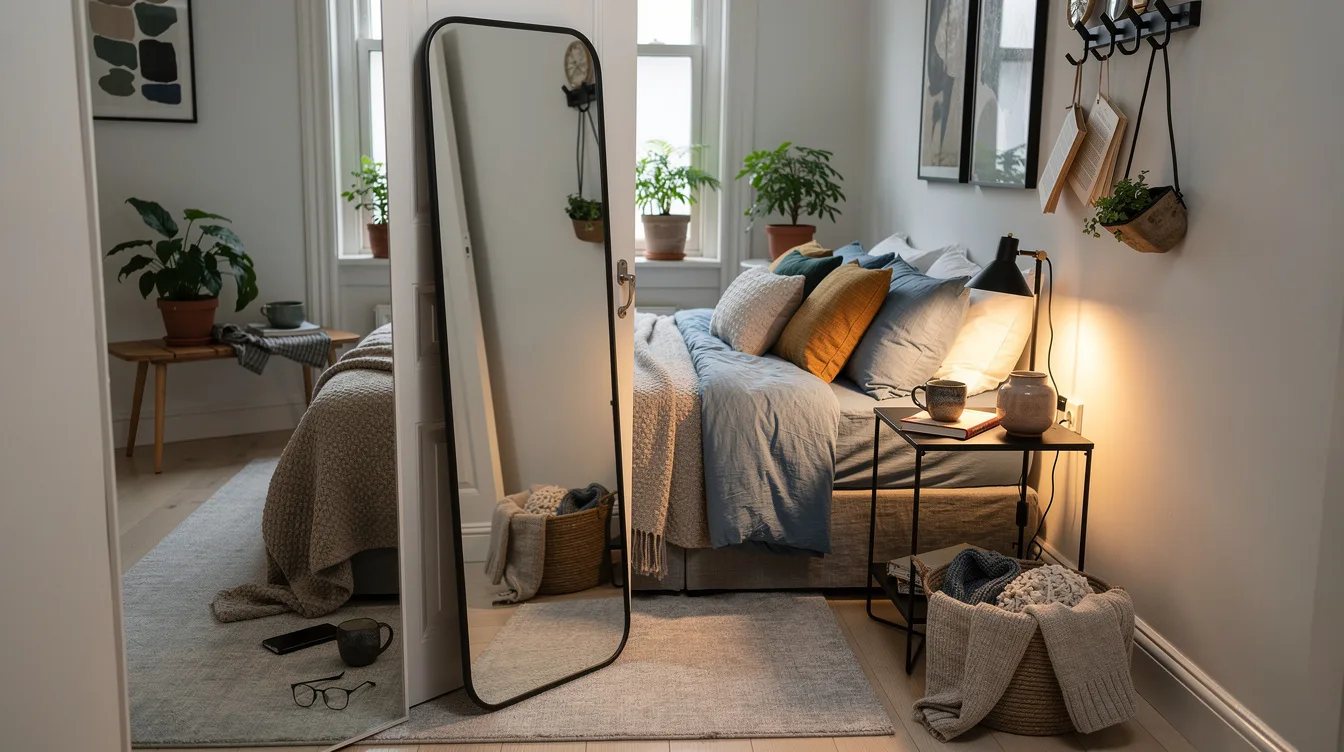
Check the Door Swing Before Drilling
Hold the mirror in place while opening and closing the door through its full path. This simple test catches clashes with the handle, casing, wardrobe door, and any wall-mounted lighting before a hole is made.
A Target door mirror is only about 0.4 inches deep in the listed dimensions, but the mounting method still matters. Do not assume over-door brackets come with every model, since framed door mirrors and over-the-door designs are sold as distinct options.
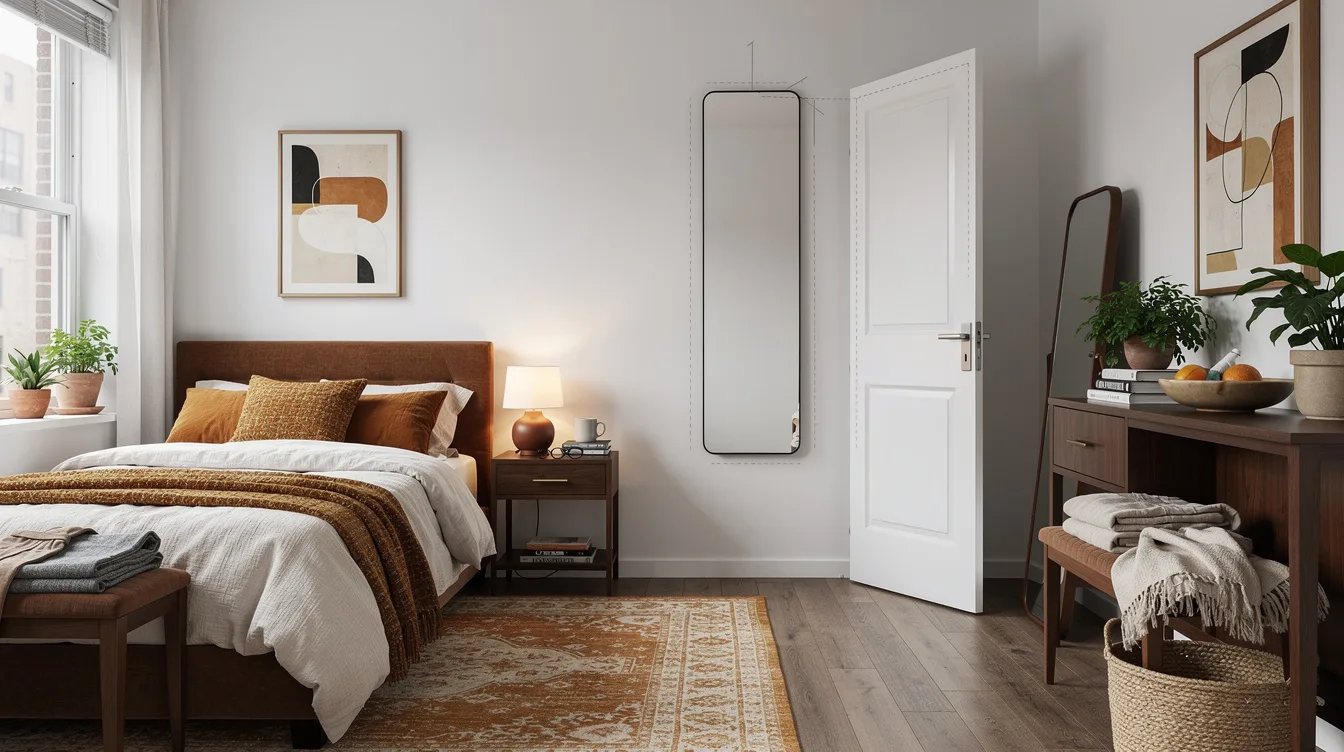
Pick a Light Frame for a Dark Wall
On a deep paint color, a narrow light-toned frame keeps the mirror from reading as a heavy black rectangle. Use the glass to bring brightness into the passage while allowing the surrounding wall to remain the room's strongest color.
The white Target frame is a budget-friendly choice at about $7 in the supplied retail snapshot. Keep nearby accessories restrained, since a door mirror already occupies a tall visual field and does not need a crowded border of hooks or artwork.
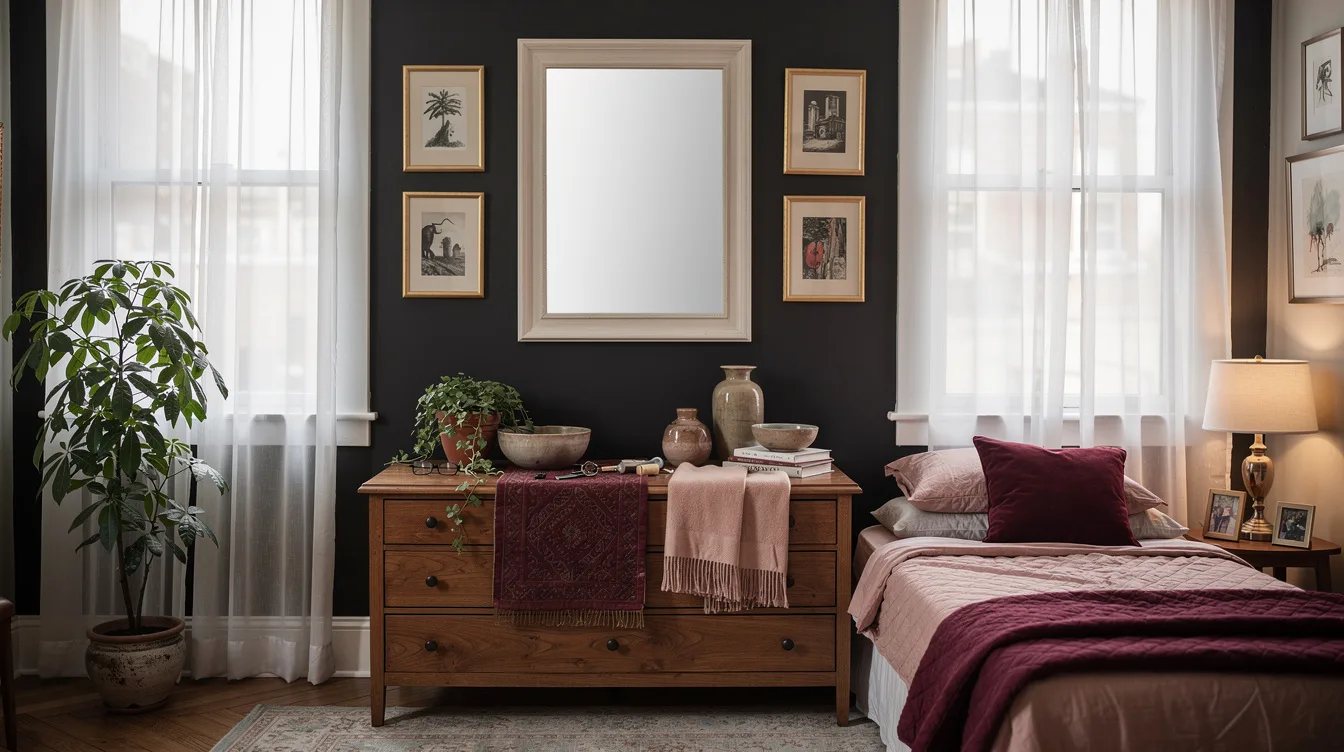
Let the Mirror Repeat Existing Metal
Choose the frame finish after looking at the room's practical hardware: closet pulls, sconces, curtain rods, and door handles. Repeating one of those finishes makes the placement feel intentional even when the mirror sits in an awkward wall strip.
Black metal suits a room with dark lighting hardware, while an aluminum frame is quieter beside pale wood. The goal is a clear connection between the mirror and the room, not a collection of perfectly matched finishes.
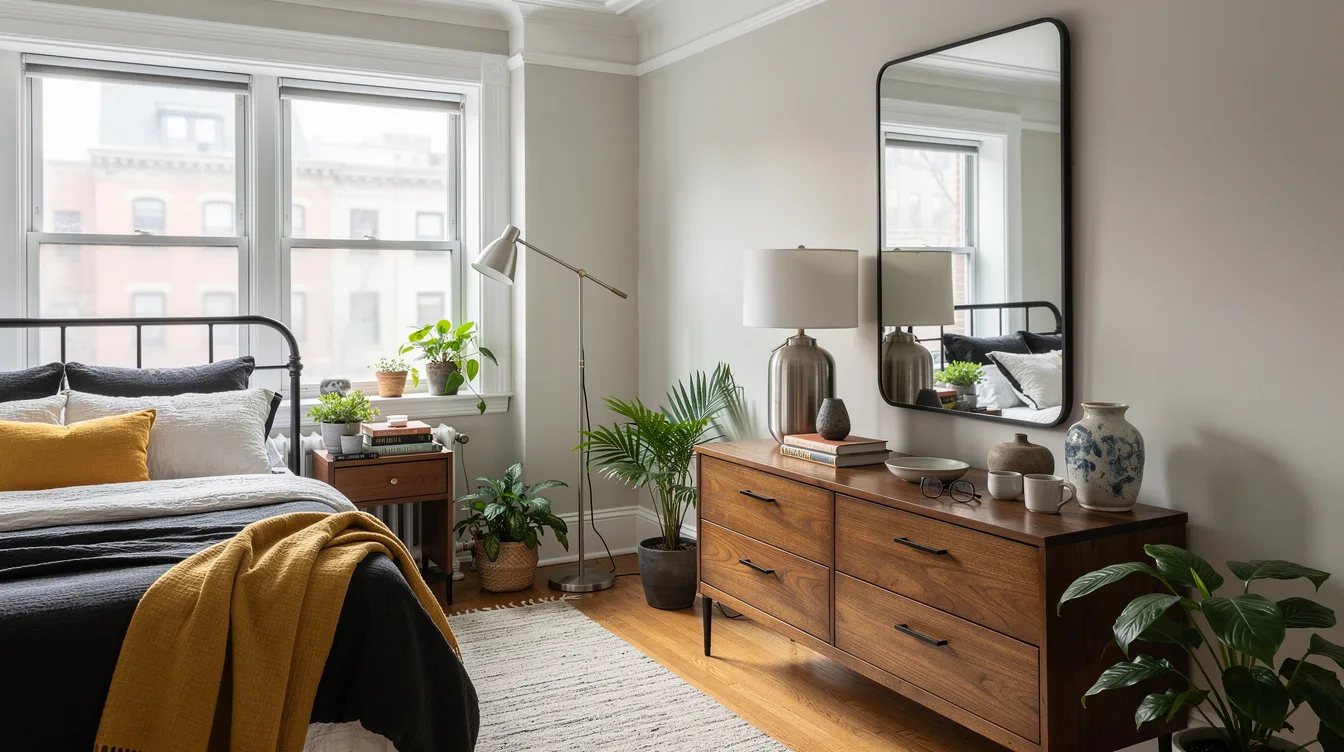
Use Two Small Mirrors Only When the Wall Allows
Two narrow mirrors can work beside a wide dresser when one long mirror would overwhelm the furniture or block a wall outlet. Keep the pair aligned across the dresser and leave enough space between them for the wall to show.
This arrangement needs more measuring than a single rectangular mirror, so map the frames with paper first. Skip the pair if the bed-to-dresser passage is already tight, because visual repetition will not compensate for poor circulation.
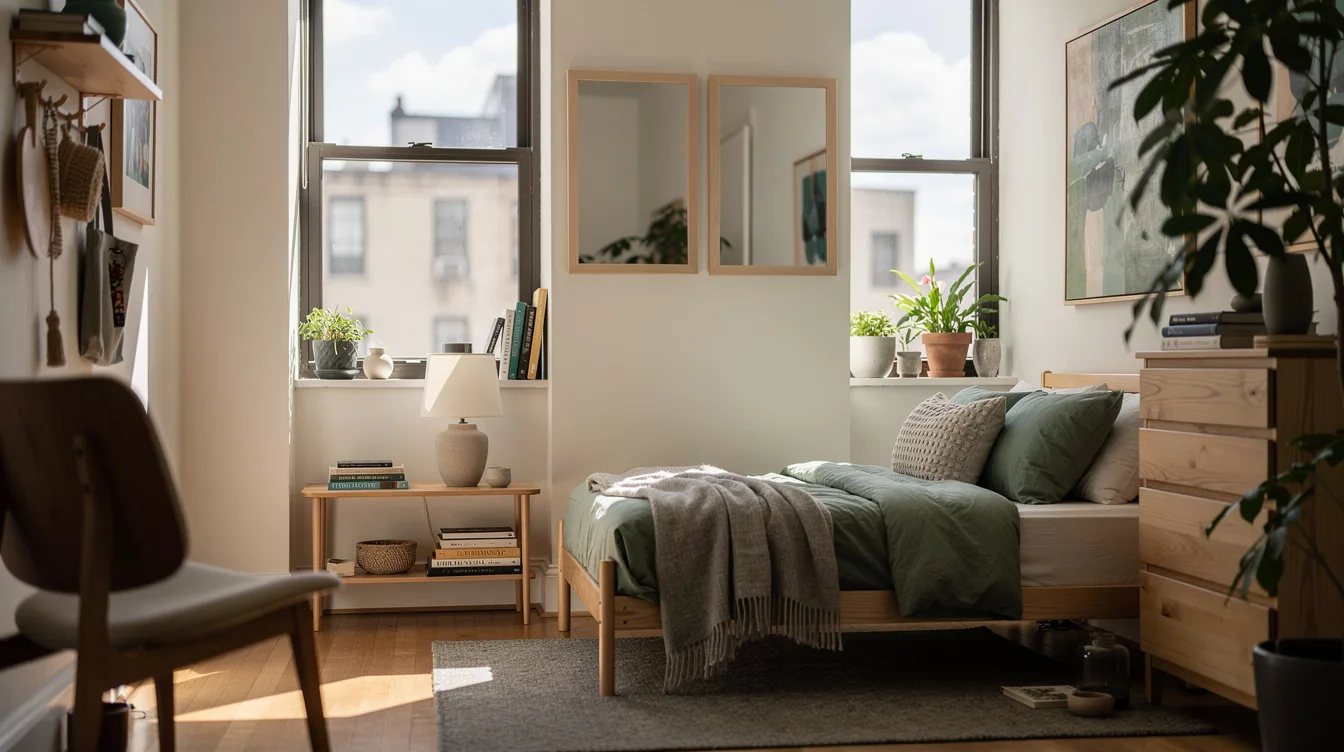
Measure the Reflection Before You Buy
Measure the wall strip, the door swing, and the standing position before choosing a frame. A mirror that technically fits may still show only a shoulder or half a doorway if the viewing distance is too short.
For a larger statement, a Target metal floor mirror costs around $140 in the supplied retail snapshot, but it needs a clear footprint. In most narrow bedrooms, a wall-mounted option around $7 to $110 protects more floor area and solves the practical problem faster.
Keep reading
- No Floor Space for a Tree? 12 Tiny Living Room Ideas That Work
- Narrow Living Room Feeling Cramped? Try These 13 West Elm-Inspired Tables
- 12 Best Hotel Lobby Lighting Ideas to Make Your Living Room Glow
Start by taping the mirror's outline beside the wardrobe, then test the door swing and the standing view before buying hardware. Protect the walkway first, and let the frame finish follow the room's existing metal.


