Narrow Shelf Christmas Village? 12 Walmart Finds Start at $2.96
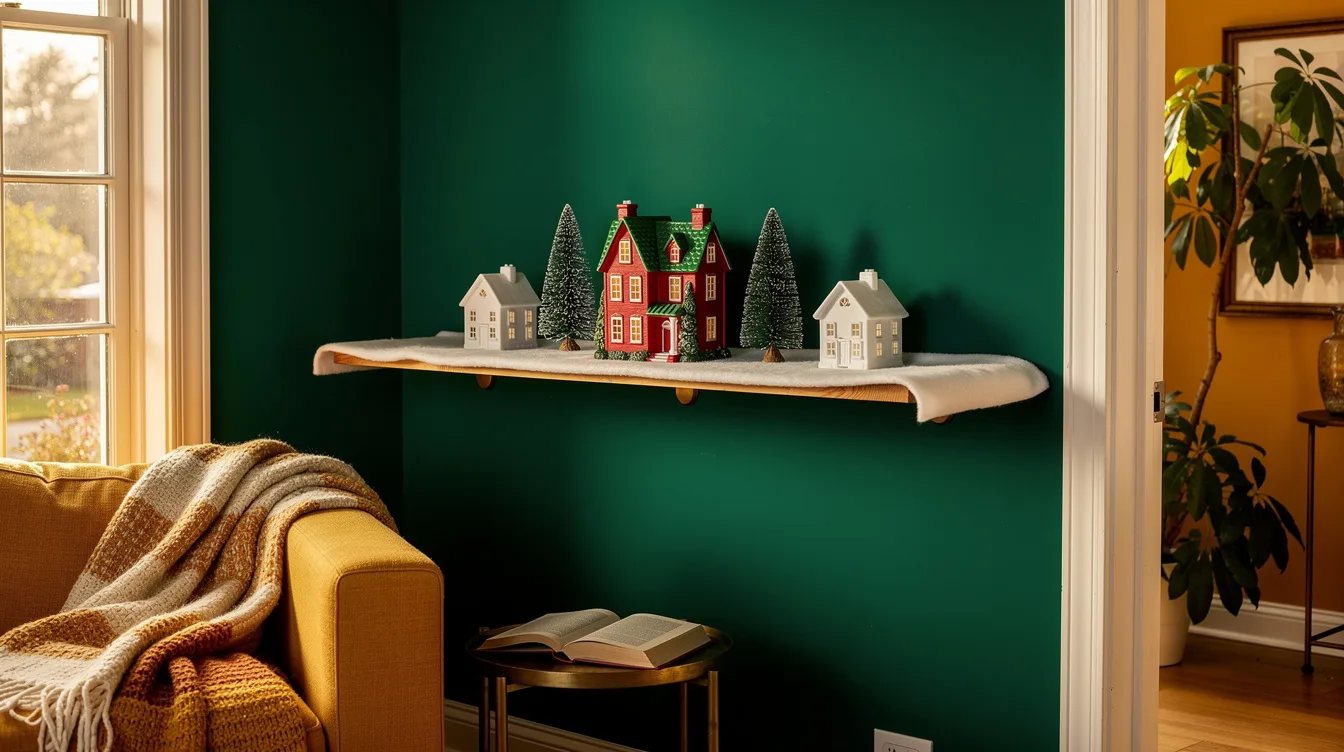
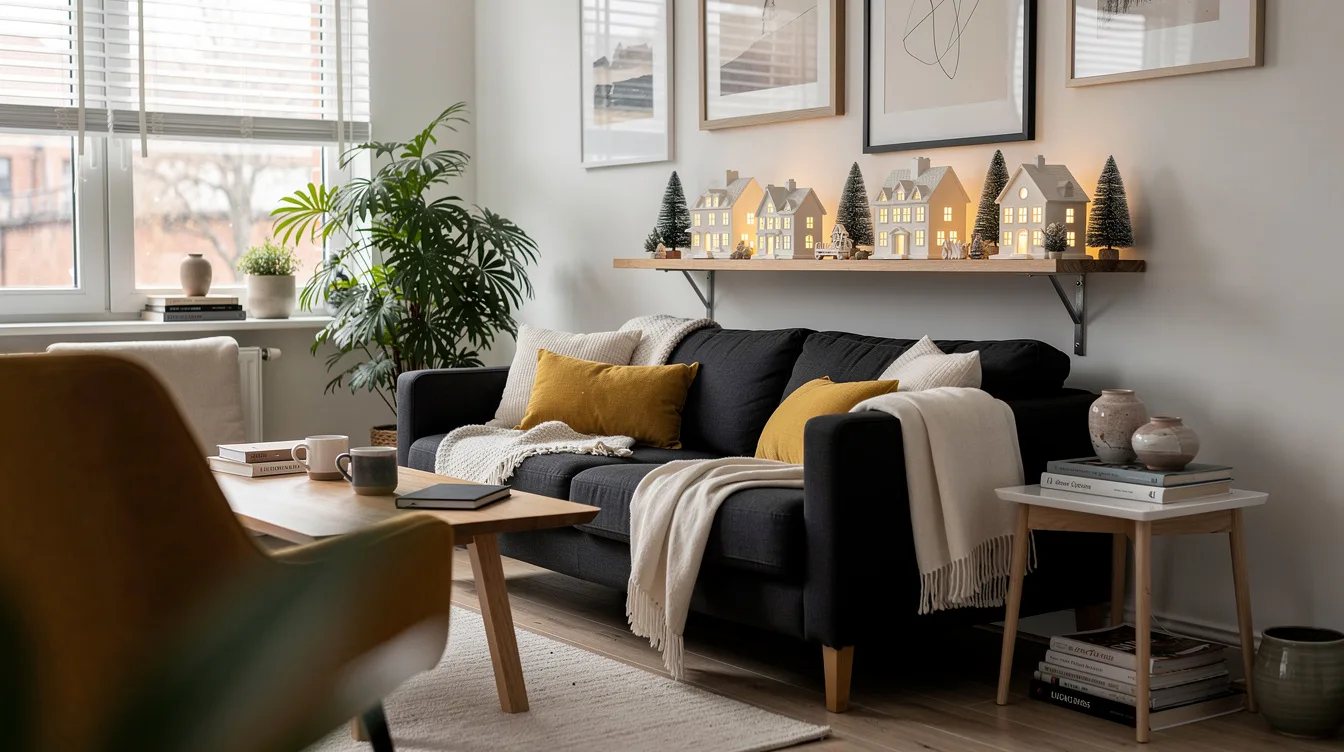
26 october 2026The usual Christmas village mistake happens before the first house is placed: a narrow shelf gets treated like a deep tabletop. On a 24-inch shelf with about 5 to 6 inches of depth, three small houses and a flat snow base will usually read better than roads, bridges, and a train.
Walmart’s Holiday Time collection offers a practical starting point for Christmas 2026, including 4-inch porcelain houses listed at $2.96 each and a larger light-up ceramic house listed at $15.62. The winning formula is restraint, careful measuring, and one clear focal point.
What you will find inside
- Start With a Single-Row Plan
- Measure the Shelf Before Shopping
- Build Around Three Mini Houses
- Keep the Snow Base Rigid
- Choose One Light-Up Focal House
- Offset the Main Building
- Create a Tiny Church Lane
- Repeat Slim Trees in Pairs
- Leave the Front Edge Open
- Use One Color Story
- Hide Cords Behind the Scene
- Edit Every Extra Accessory
Start With a Single-Row Plan
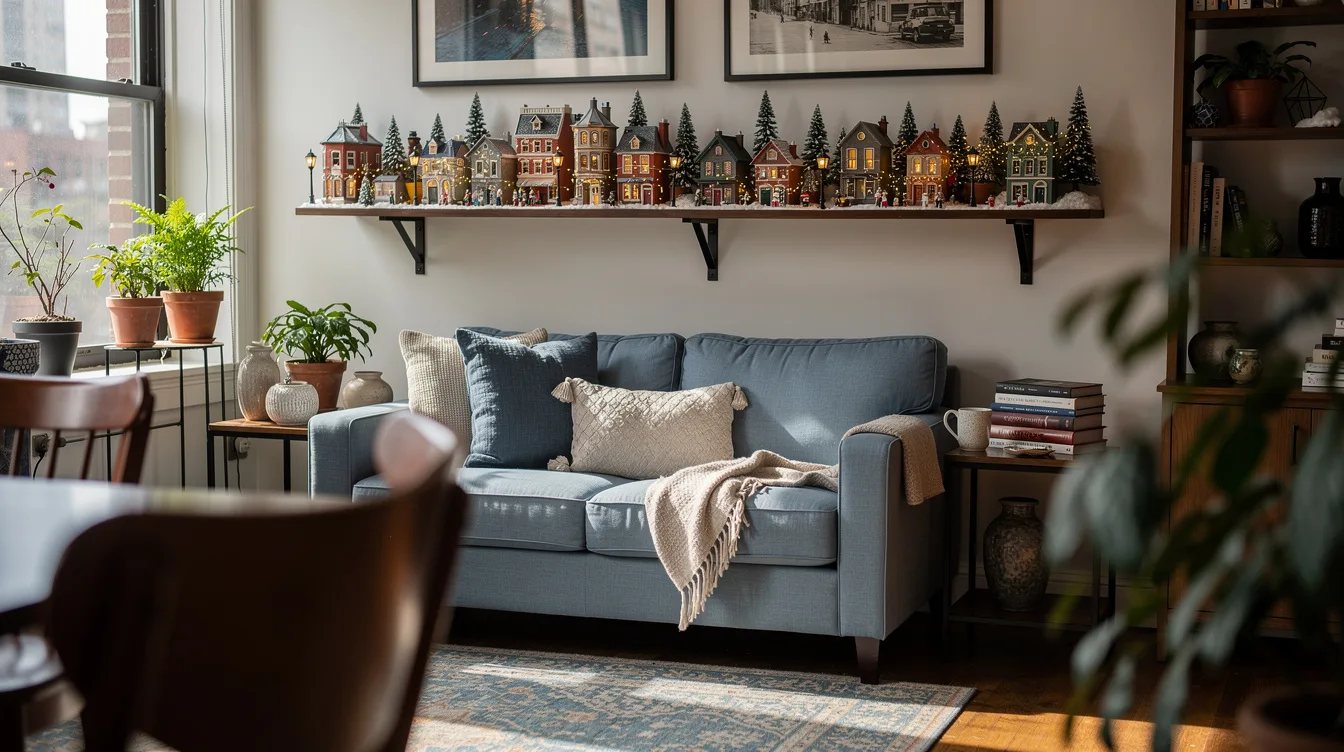
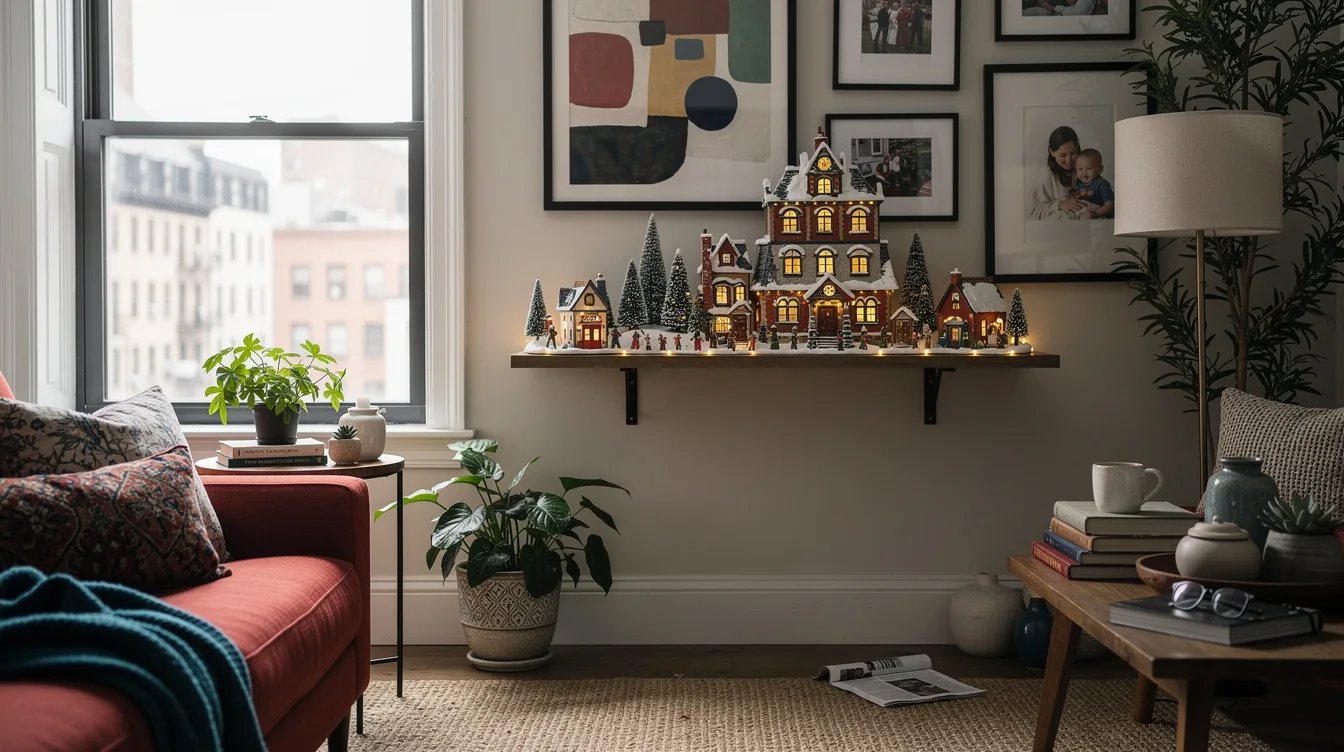
A narrow shelf needs a horizontal composition, so begin with three small houses, a few slim trees, and a flat snow-covered base. The strongest Walmart setup leaves the deep roads, bridges, and train behind because those pieces quickly consume the space you need for balance.
Use Holiday Time buildings as the planning anchors, then measure around them. A single row gives every piece breathing room and keeps the display readable from across the room.
Measure the Shelf Before Shopping
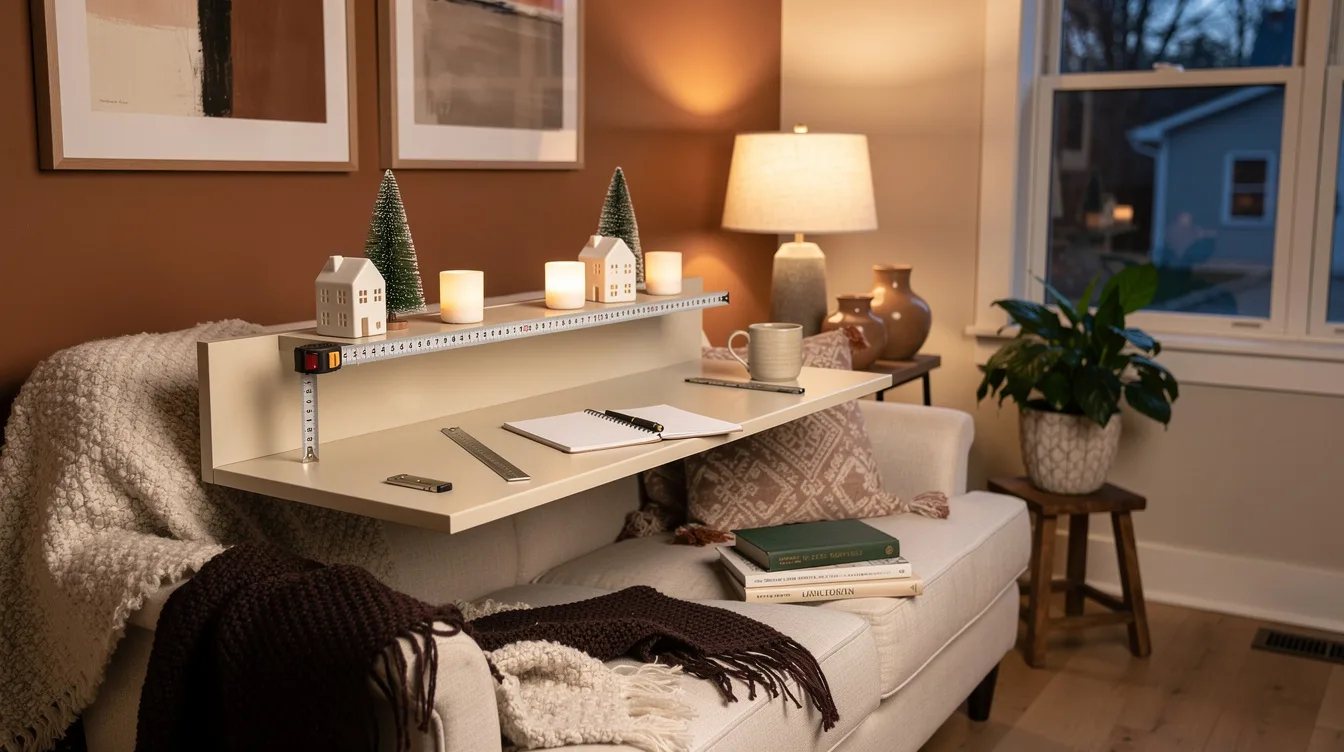
Write down the usable width and front-to-back depth before adding anything to your cart. A 24-inch shelf with about 5 to 6 inches of depth can handle a compact village, while a 30- to 36-inch shelf with about 6 to 8 inches of depth gives a larger focal house more room.
Check each product’s footprint, especially when the listing gives only height and width. A display that fits on paper can still fail when a house projects past the shelf edge.
Build Around Three Mini Houses
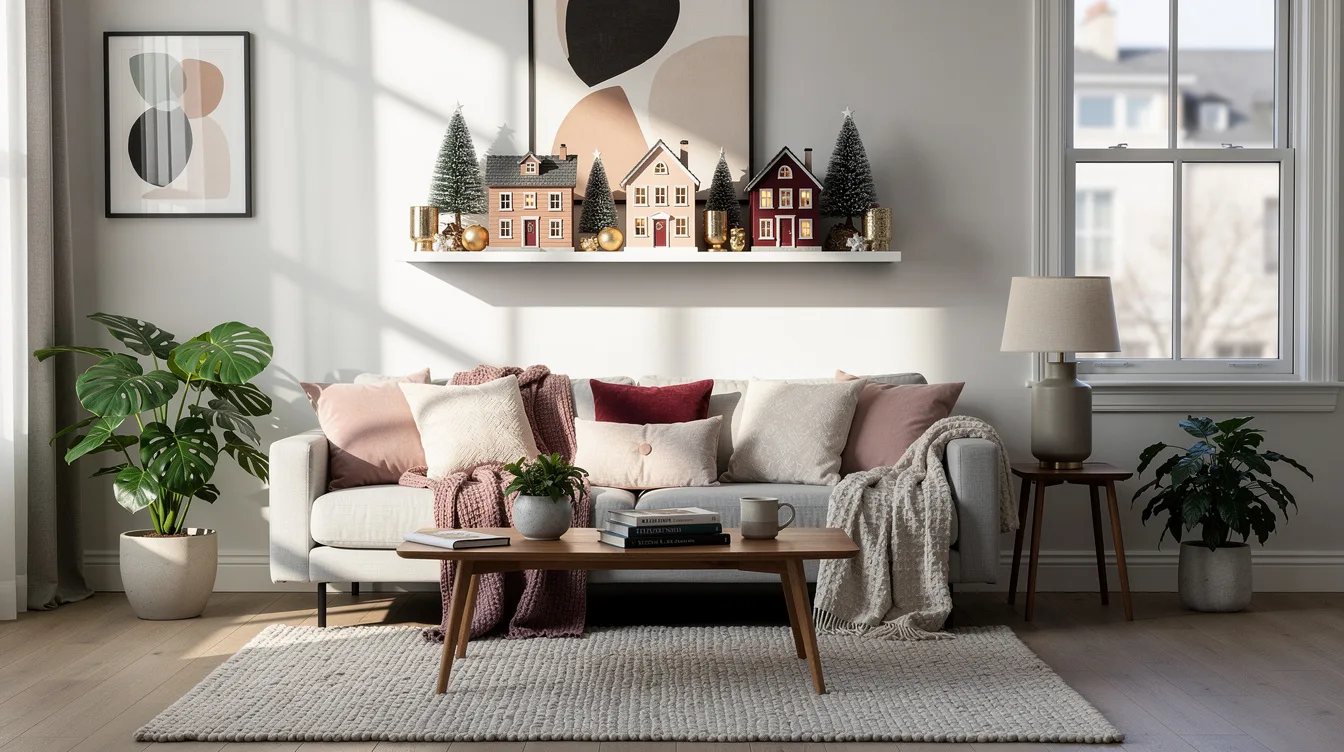
For the lowest-cost arrangement, use three Holiday Time porcelain mini houses listed at 4 inches tall and $2.96 each. The buildings total $8.88 before tax and shipping, leaving room in a roughly $15 to $25 overall allowance for a thin base and a few accessories.
Space the houses across the shelf instead of lining them shoulder to shoulder. Two slim trees between the buildings create pauses without adding bulky scenery.
Keep the Snow Base Rigid
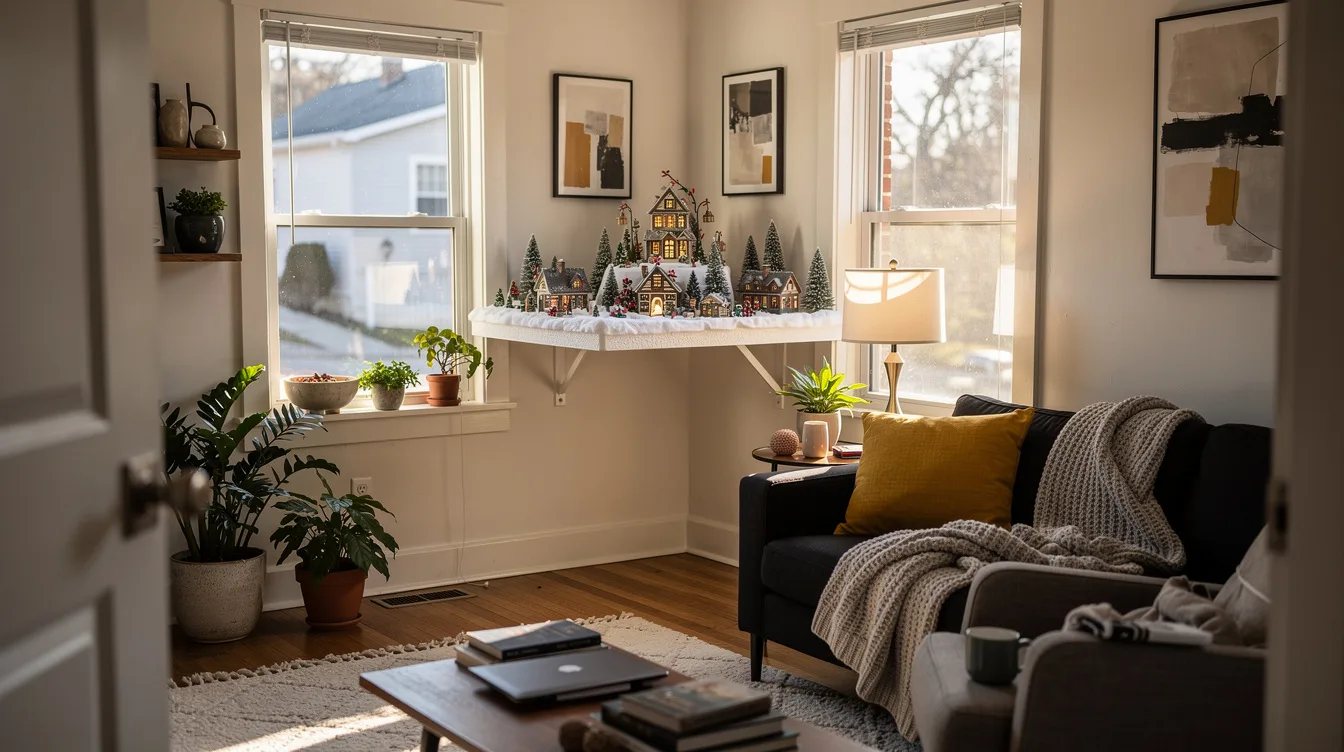
Lay white felt or fleece over a thin rigid board instead of piling loose artificial snow across the shelf. The fabric creates a clean winter surface, while the board keeps the houses stable when someone brushes against the display.
Bring the material around each building’s base and trim the front edge neatly. A shallow white layer looks intentional; a thick mound swallows small windows and makes the shelf feel crowded.
Choose One Light-Up Focal House
When the shelf needs more presence, use one Holiday Time light-up ceramic house as the visual anchor. Walmart lists this red, green, and white house at $15.62, with verified dimensions of 8 inches wide by 7 inches tall.
Its front-to-back depth is unverified, so confirm that measurement before buying. The house works best slightly off-center, with trees at one end and open snow at the other.
Offset the Main Building
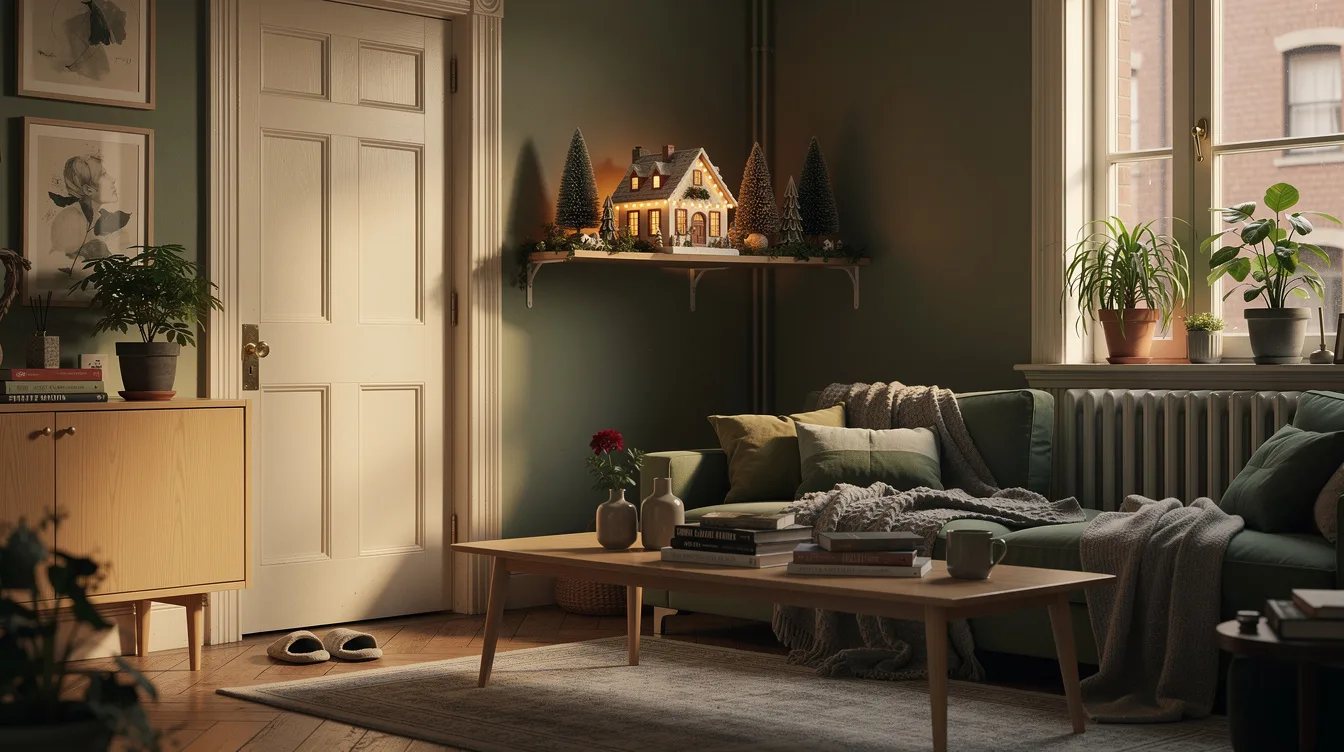
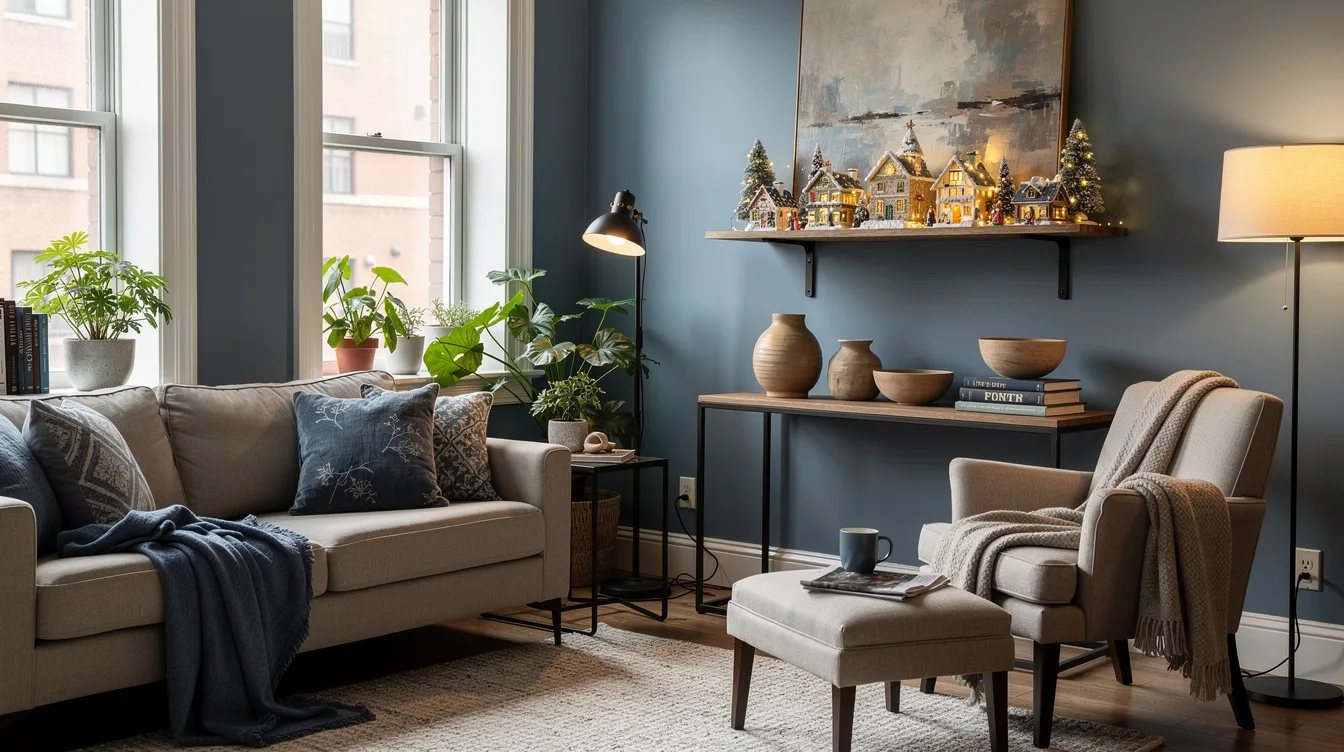
Place a large house about one-third of the way across the shelf rather than directly in the center. This simple shift gives the eye a destination while preserving a longer stretch of quiet snow beside it.
Use the Holiday Time ceramic house for this arrangement and borrow its red-and-green palette for the accessories. Skip oversized garland around the base because it competes with the building’s small façade details.
Create a Tiny Church Lane
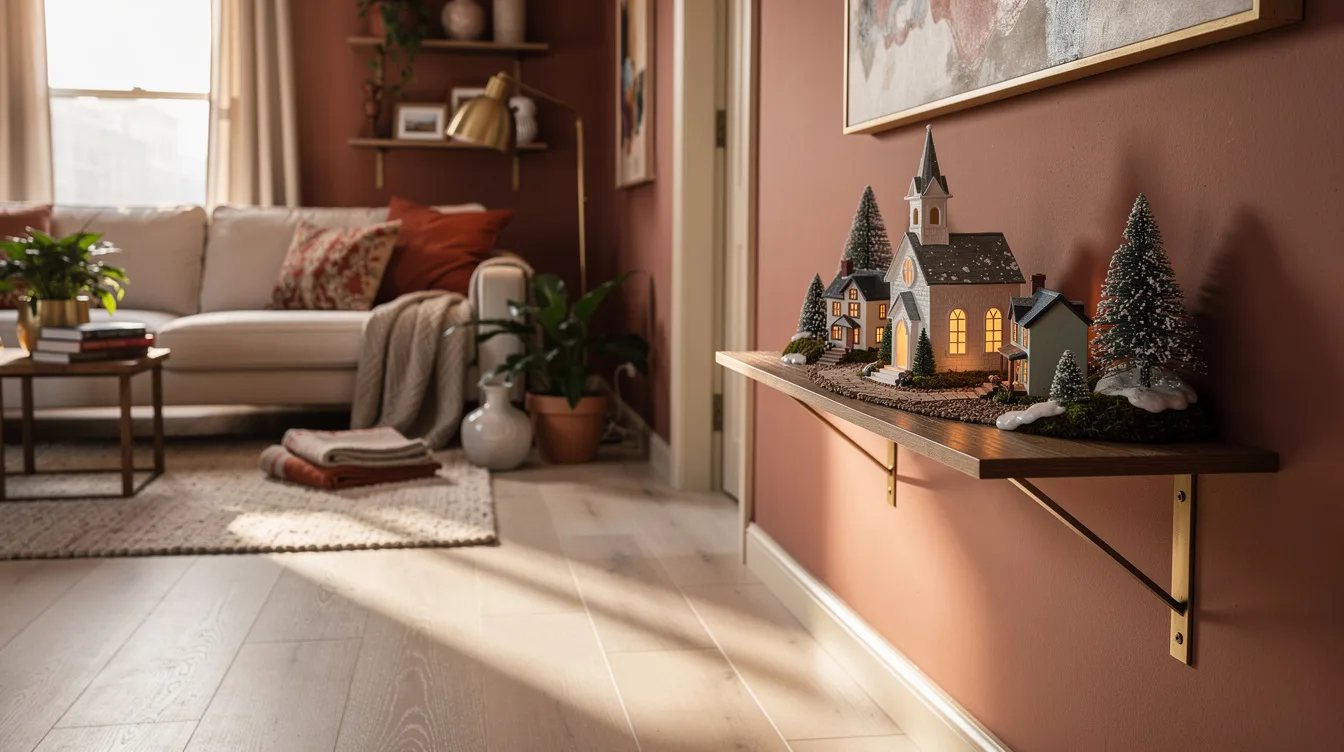
For a storybook arrangement, place the Holiday Time mini church at one end of a 24- to 30-inch shelf, then follow it with two white mini houses. The church’s blue roof, steeple, brick accents, and garland details give the short lane a clear visual beginning.
The two mini houses total $5.92 at the listed price, while the church price was not verified, so budget that piece separately. Keep the lane shallow and let the steeple provide height instead of adding a tall backdrop.
Repeat Slim Trees in Pairs
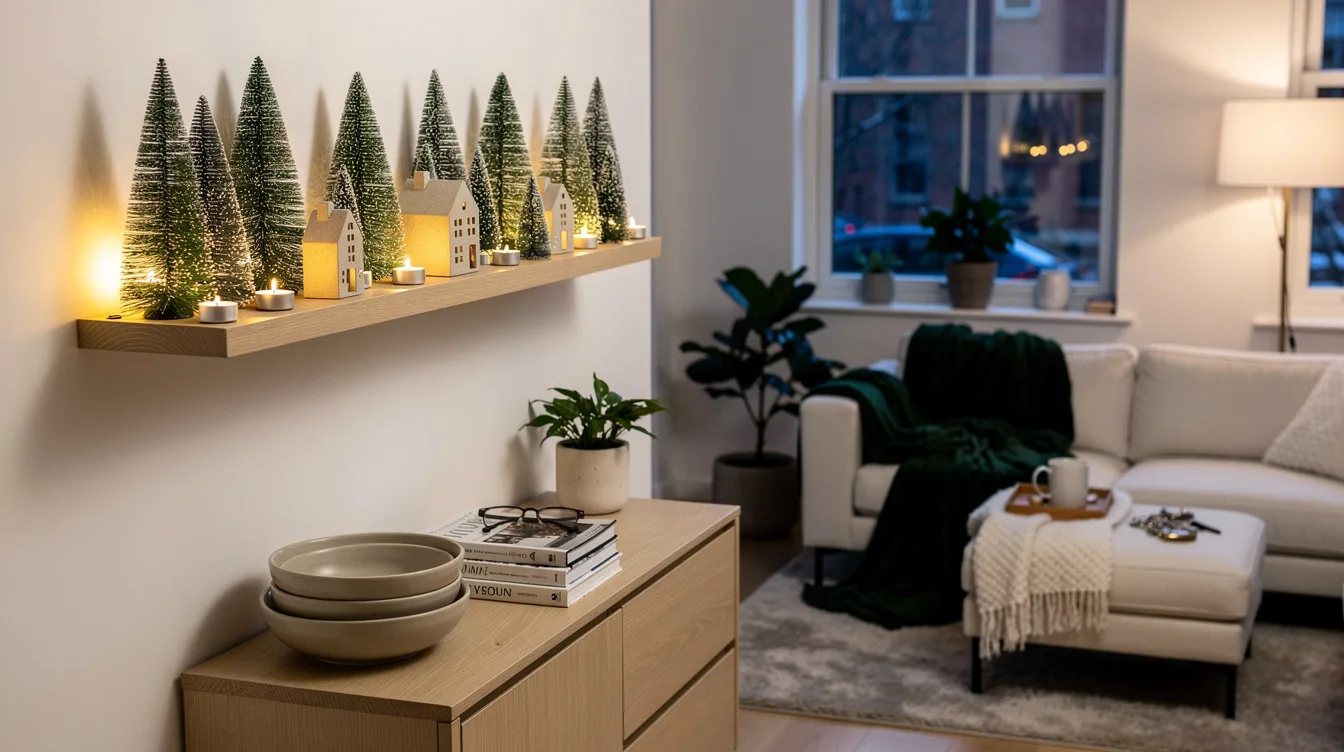
Use small bottle-brush trees in pairs or loose groups, keeping their height below the main house whenever possible. White bottle-brush trees reinforce the snow palette and take up far less depth than full-size artificial evergreens.
Vary the spacing rather than creating a rigid marching line. One tree close to a house and another with a little more distance makes the village feel arranged instead of stamped into place.
Leave the Front Edge Open
Protect a narrow strip of visible white space along the front edge of the shelf. That margin helps the display read as a complete scene and keeps small buildings from appearing ready to fall forward.
A thin white felt runner can define the edge without adding height. Avoid placing houses, fences, or heavy ornaments in this front strip, where they make the shelf look deeper than it is.
Use One Color Story
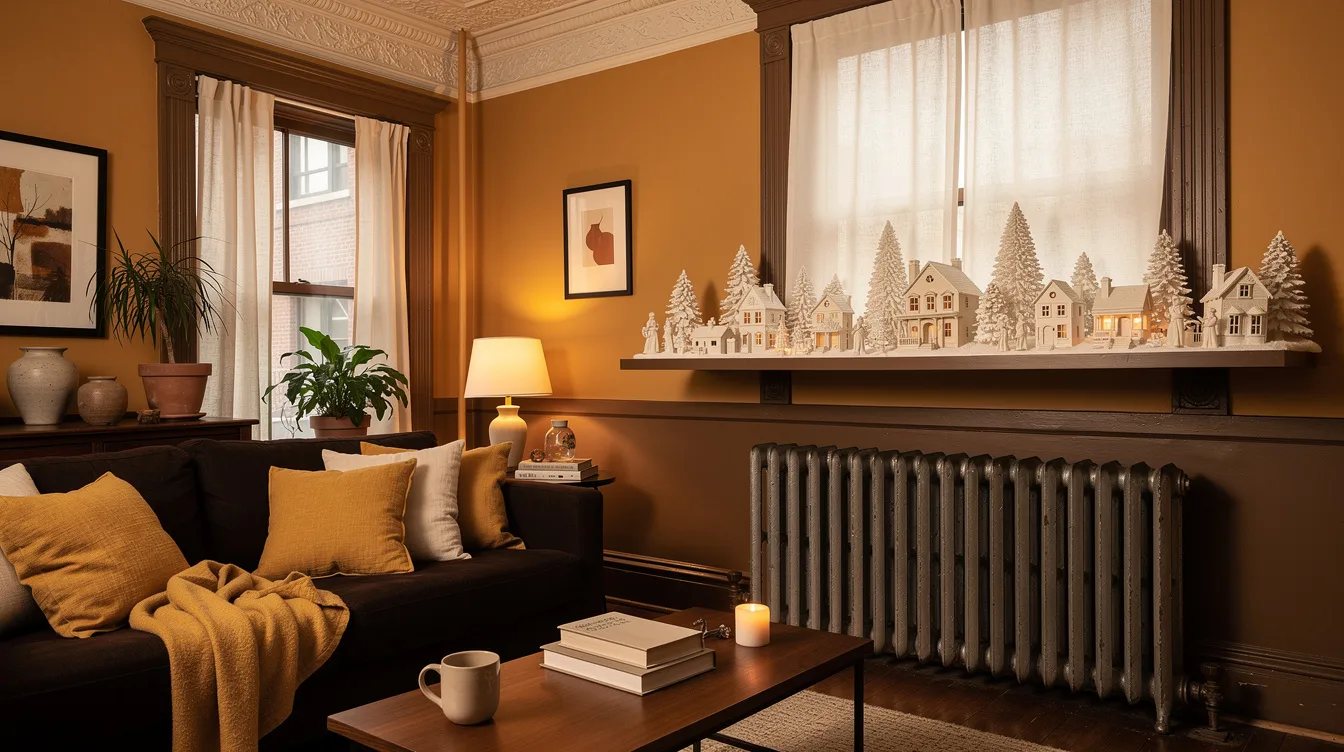
Choose either a white miniature village or a traditional red-and-green focal point before adding accessories. Holiday Time porcelain houses suit a quiet white arrangement, while the light-up ceramic house already supplies enough red and green to guide the rest of the display.
Repeat one accent color in the trees, ribbon, or tiny signs. Mixing several unrelated palettes makes a narrow scene feel busy long before it becomes physically full.
Hide Cords Behind the Scene
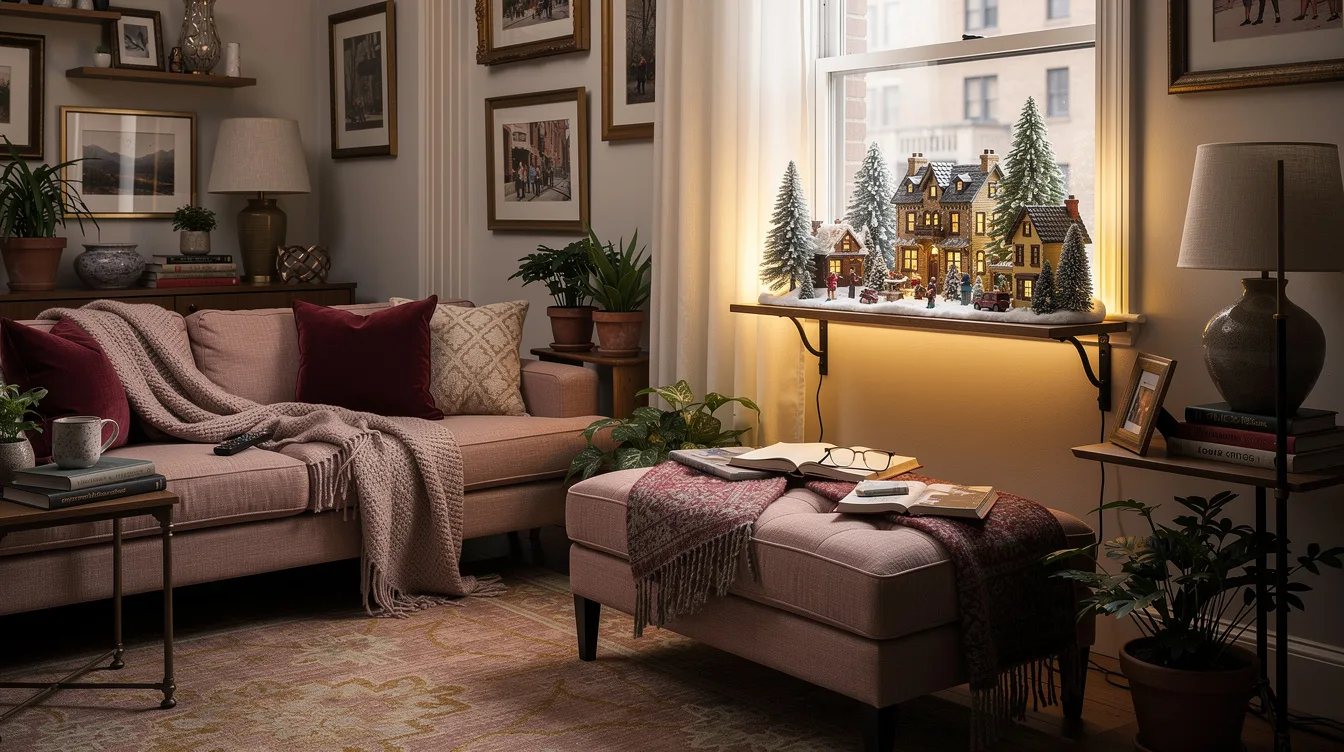
Route the light cord behind the buildings and along the back edge, then secure it with small removable clips. The Holiday Time light-up ceramic house should glow as part of the village, not reveal a tangle of wiring across the snow.
Leave enough slack to move the house for cleaning and check that the cord does not pull against the shelf edge. A tidy back line matters because narrow displays are often viewed from an angle.
Edit Every Extra Accessory
Add an accessory only when it explains the scene or improves the scale. A single wooden sled, a small fence section, or one low evergreen can provide context without competing with the houses.
Skip roads, bridges, train tracks, and large trees unless the shelf has unusual depth. The display should feel like a small winter lane, not a full tabletop village compressed into a strip.
Keep reading
- Target Small-Sofa Christmas Finds Start at $16.99 and Look Custom
- Christmas Decor Worth the Trip? These 12 Costco Finds Start at $9.99
- Dollar Tree Christmas Table Looking Bare? These 12 Finds Start at $1
Measure the shelf, mark a single row with painter’s tape, and place the largest building first. Then add only the trees and snow that preserve an open front edge, because the empty space is what makes the village feel deliberate.