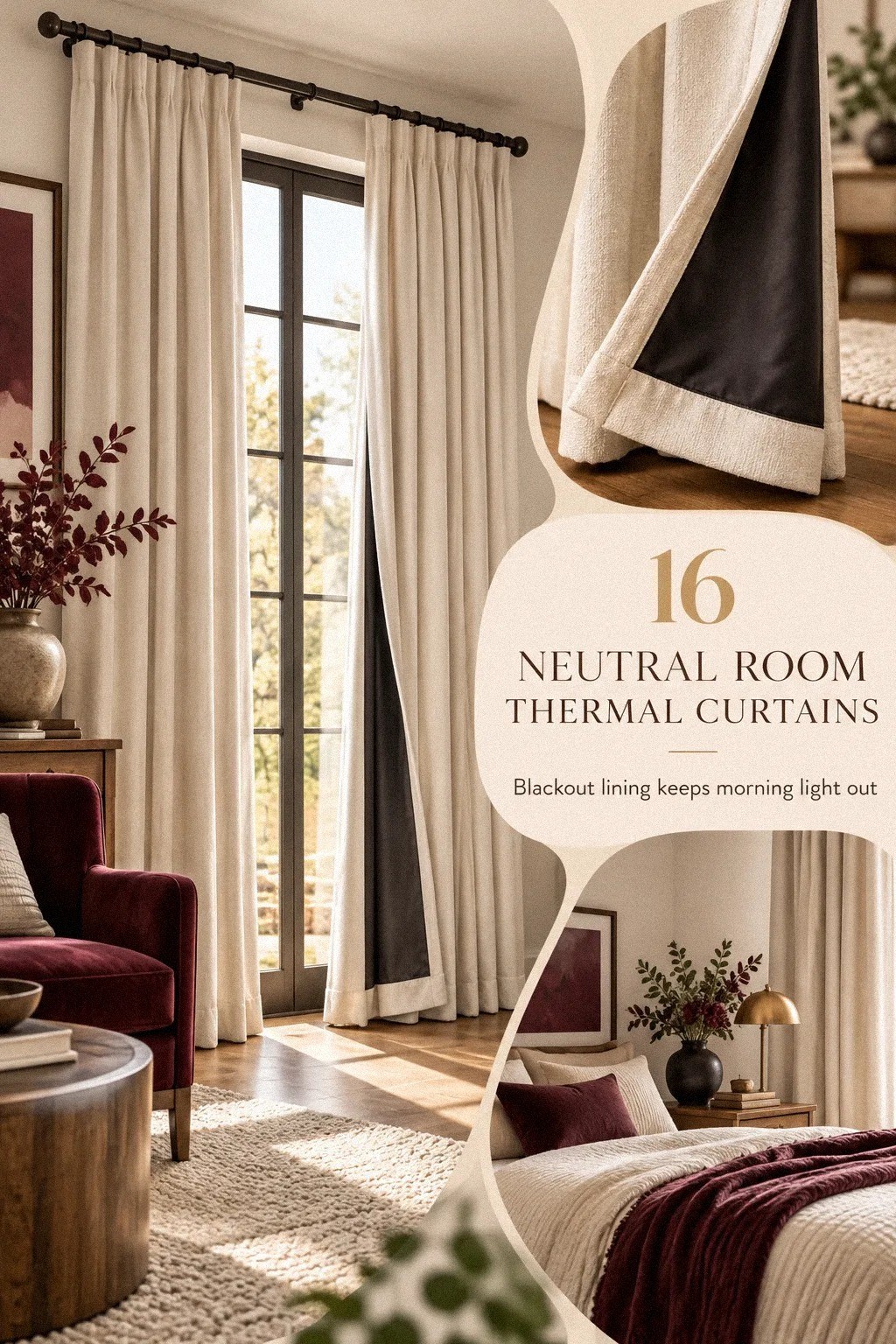
16 Thermal Curtain Colours That Work in a Neutral Room Without Looking Flat
20 october 2026What colour thermal curtains work in a neutral room? Cream, mushroom, muted sage, and warm terracotta give the best depth without making the room feel busy. I once chose icy white for a beige sitting room, and it looked like a rental staging setup. Your curtains need warmth, texture, and enough contrast to hold the room together.
- Layer cream thermal curtains over warm white walls
- Paint the trim and choose mushroom beige panels
- Choose beige thermal curtains over stark white
Editor's note: Start with the wall undertone, then check the strongest piece of furniture in the room. Use the cream approach, terracotta approach, charcoal approach, or blue-gray approach as your starting point.
- Layer cream thermal curtains over warm white walls
- Paint the trim and choose mushroom beige panels
- Choose beige thermal curtains over stark white
- Should teal thermal curtains work with pale wood?
- Hang striped thermal curtains for quiet movement
- Warm the room with terracotta curtains
- Frame the window with muted sage
- Mix olive panels with natural linen
- Build contrast with soft charcoal
- Use The Two-Wood Rule with tobacco curtains
- Float oat-colored curtains beside built-ins
- Try warm gray with The Three-Height Light Stack
- Choose cream over icy white for a small room
- Paint around deep green and choose flax panels
- Layer warm white over patterned upholstery
- Hang muted blue-gray for a peaceful finish
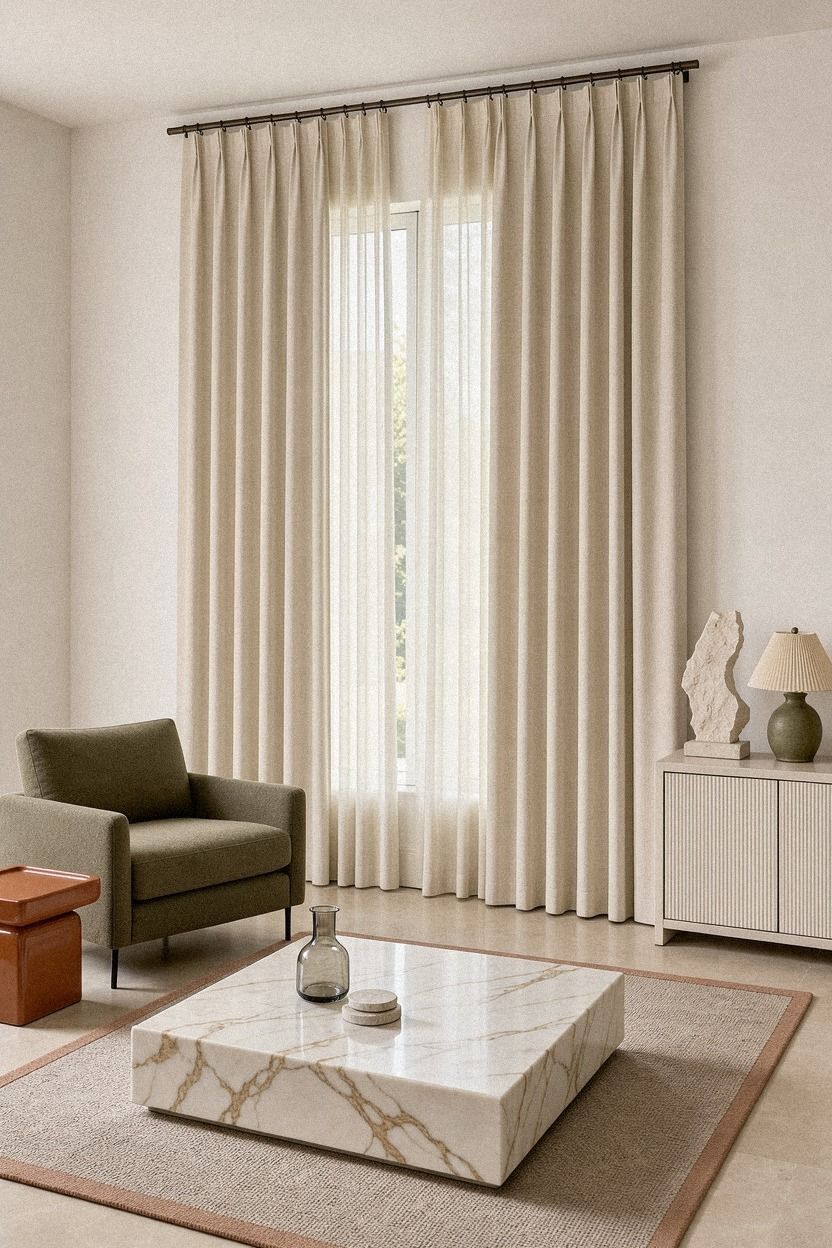
1Layer cream thermal curtains over warm white walls
Cream thermal curtains are the safest starting point when your room already has beige, ivory, or pale taupe walls. Choose a fabric with visible slubs, and let any Calacatta marble with gold veining nearby provide a little movement. You’ll get a soft edge around the window instead of a flat block of pale fabric.
If your walls are Benjamin Moore White Dove OC-17, cream curtains will look warmer without turning yellow. Hang the rod 4 to 6 inches above the opening and let the panels fall to the floor. You’ll notice the room feels taller immediately.
I’d skip smooth polyester here because it catches light like office blinds. Your better choice is a thermal-lined linen blend with a slightly rumpled face, especially if you’re trying to make a small room feel more lived-in. For more ideas, compare this with oat-colored curtains.
2Paint the trim and choose mushroom beige panels
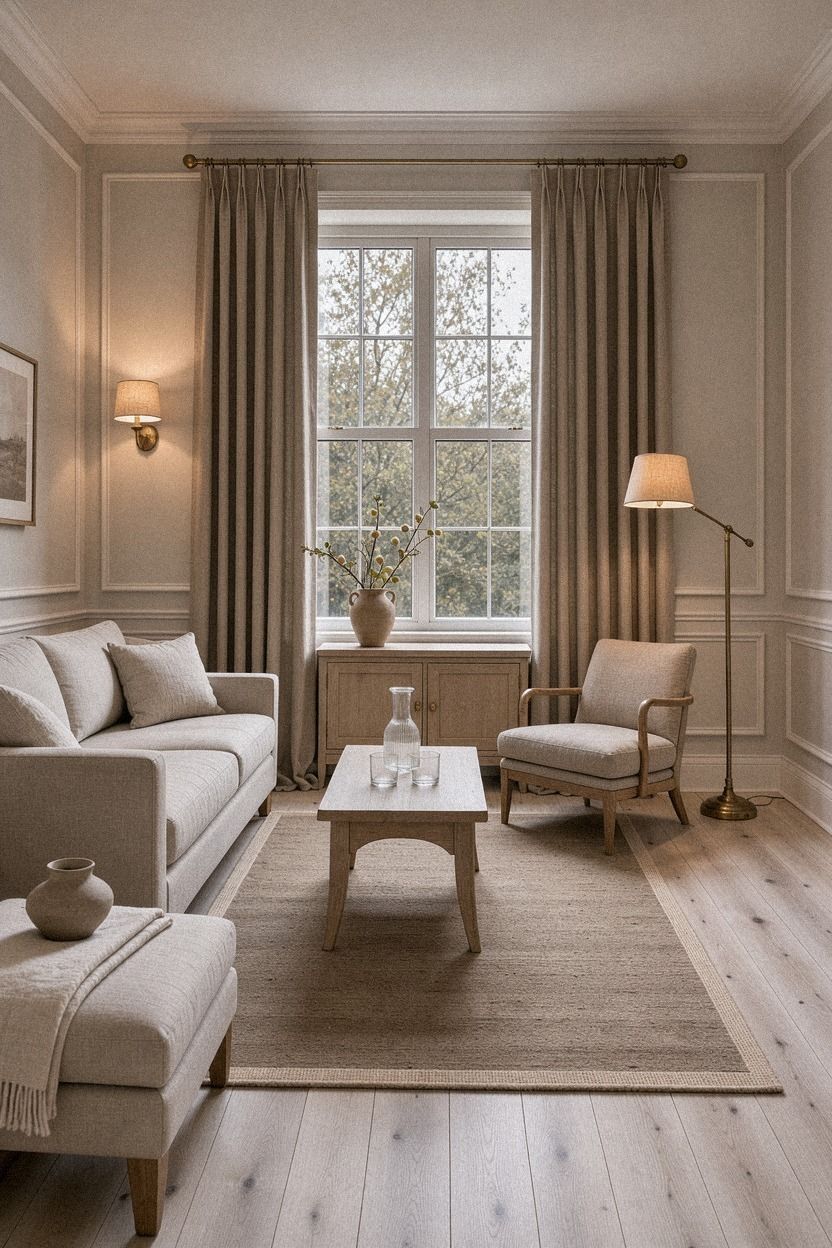
Mushroom beige thermal curtains work when your neutral room has gray undertones and needs a little earthiness. Pair them with Farrow & Ball Pigeon No.25 on a nearby cerused white-oak built-in or cabinet, and your palette will feel calm rather than washed out.
The shade has enough brown in it to soften cool daylight, but it won’t fight your existing sofa or rug. Try IKEA HILJA panels with a thermal lining if you’re keeping costs sensible.
You don’t need custom fabric to create a polished wall of colour. Your key move is fullness: use wide panels and let the fabric gather generously at the sides.
I made the mistake of buying narrow curtains once, and the window looked skimpy even though the fabric itself was lovely. If you prefer a lighter palette, see cream curtains over warm white walls.
3Choose beige thermal curtains over stark white
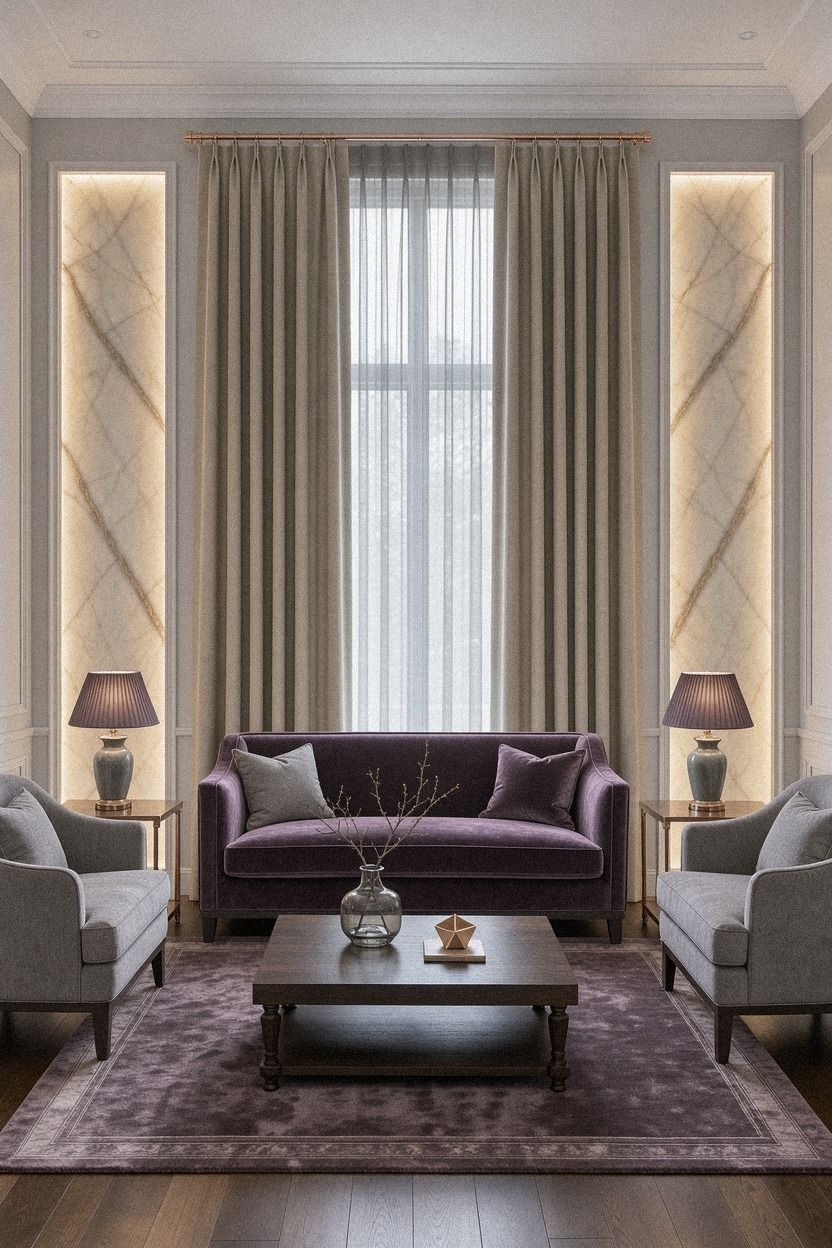
Beige thermal curtains are better than stark white when your room has plum upholstery, grey surfaces, or rose-gold accents. White can look crisp, but it often makes warm furniture appear muddy by comparison. A soft sand shade gives you a more harmonious backdrop.
Look for a weave that sits comfortably beside backlit translucent onyx if you want extra insulation and a richer surface. You’ll want to keep the rest of your window treatment simple, because heavy texture can become visually loud.
Target Threshold panels are a useful budget direction, but check the lining before you buy. If your room is already dark, choose a lighter beige so your space doesn’t feel sleepy. This is also a useful alternative to the cream choice for small rooms.
4Should teal thermal curtains work with pale wood?
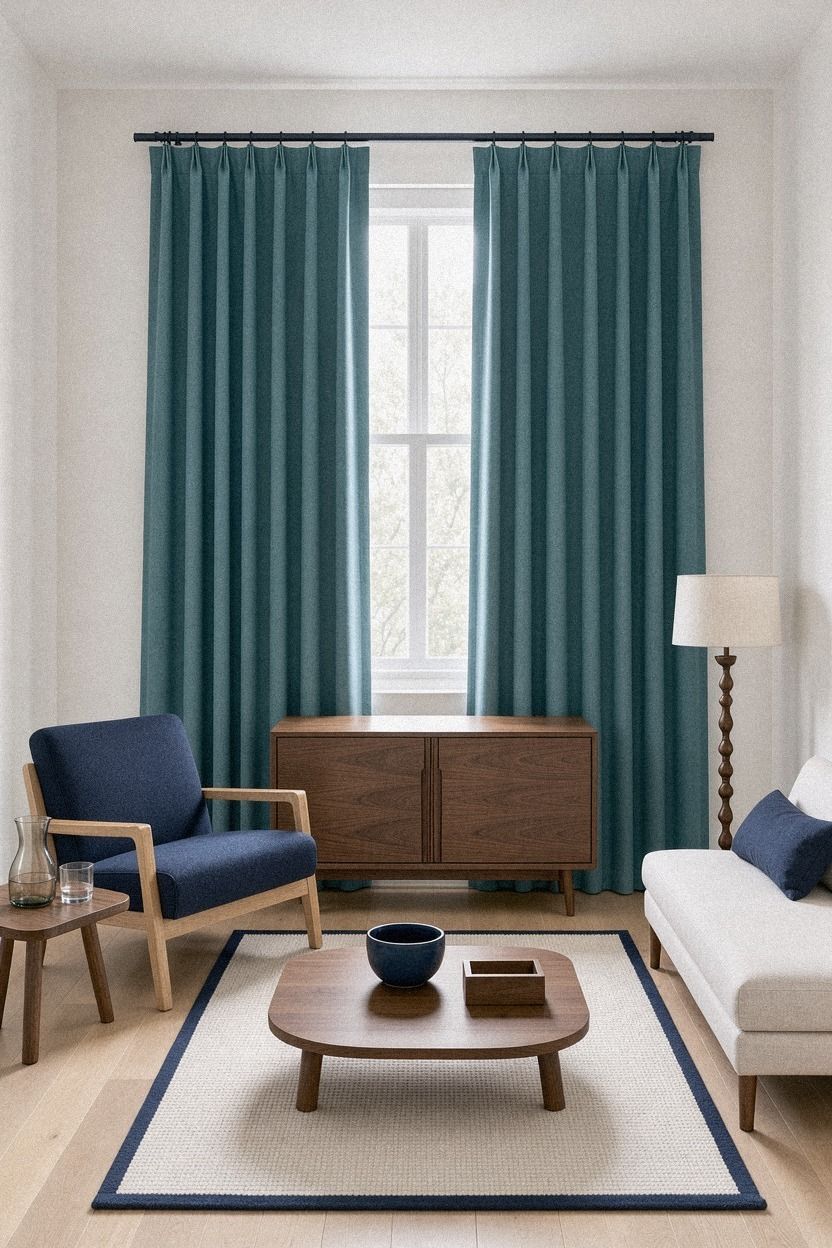
Teal thermal curtains can make a neutral room feel bold and slightly dramatic, especially when the furniture is white and book-matched walnut.
5Hang striped thermal curtains for quiet movement
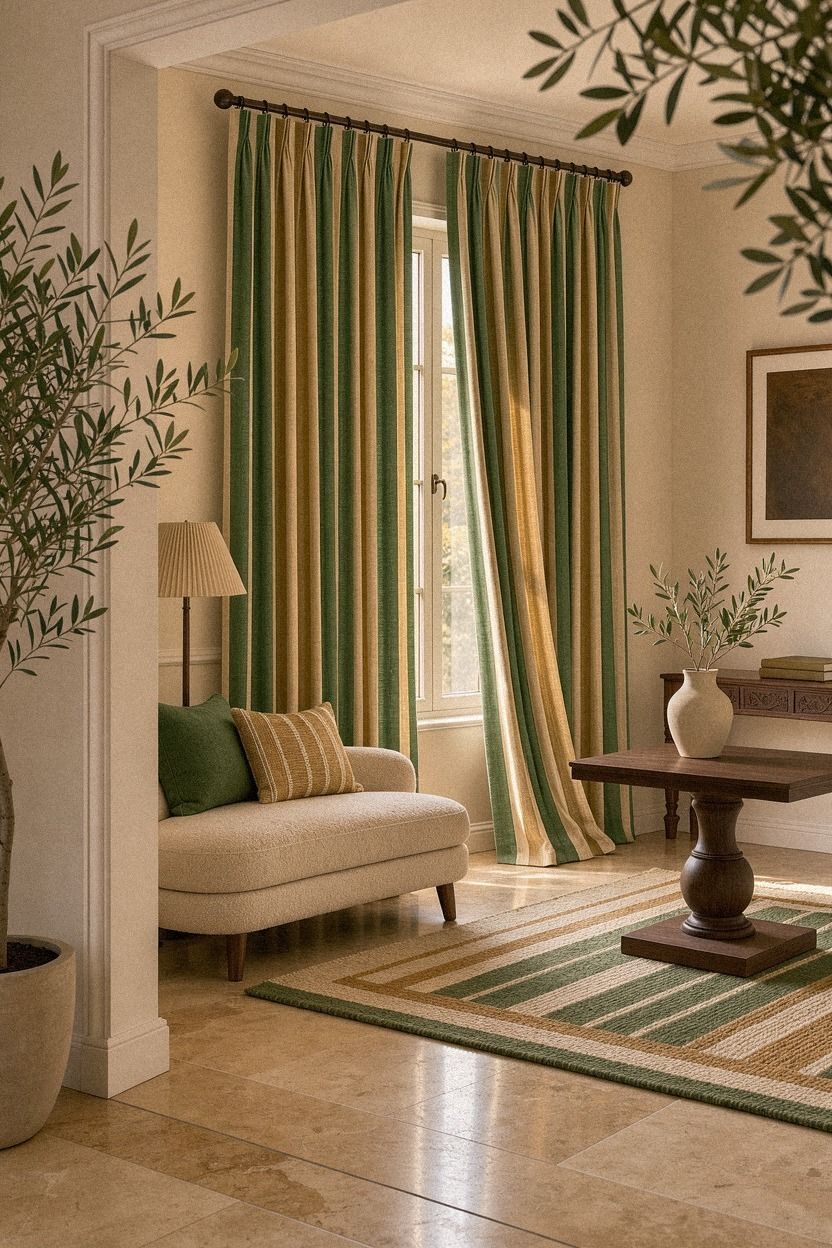
Striped thermal curtains are useful when your neutral room has too many solid surfaces. Choose narrow vertical stripes in emerald and cream, not high-contrast black and white. The pattern will pull the eye upward without introducing a loud print.
Pair the panels with a warm travertine surface nearby, while keeping the lining substantial enough for better light control. Your rod should stay simple, perhaps aged bronze or matte black, so the stripes remain the main detail.
If you’re styling a rental, a tension rod can work for a lighter panel. It won’t look as tailored as a proper rod, but your room will still feel softer and more finished. Stripes are especially helpful beside the built-in-friendly oat option.
6Warm the room with terracotta curtains
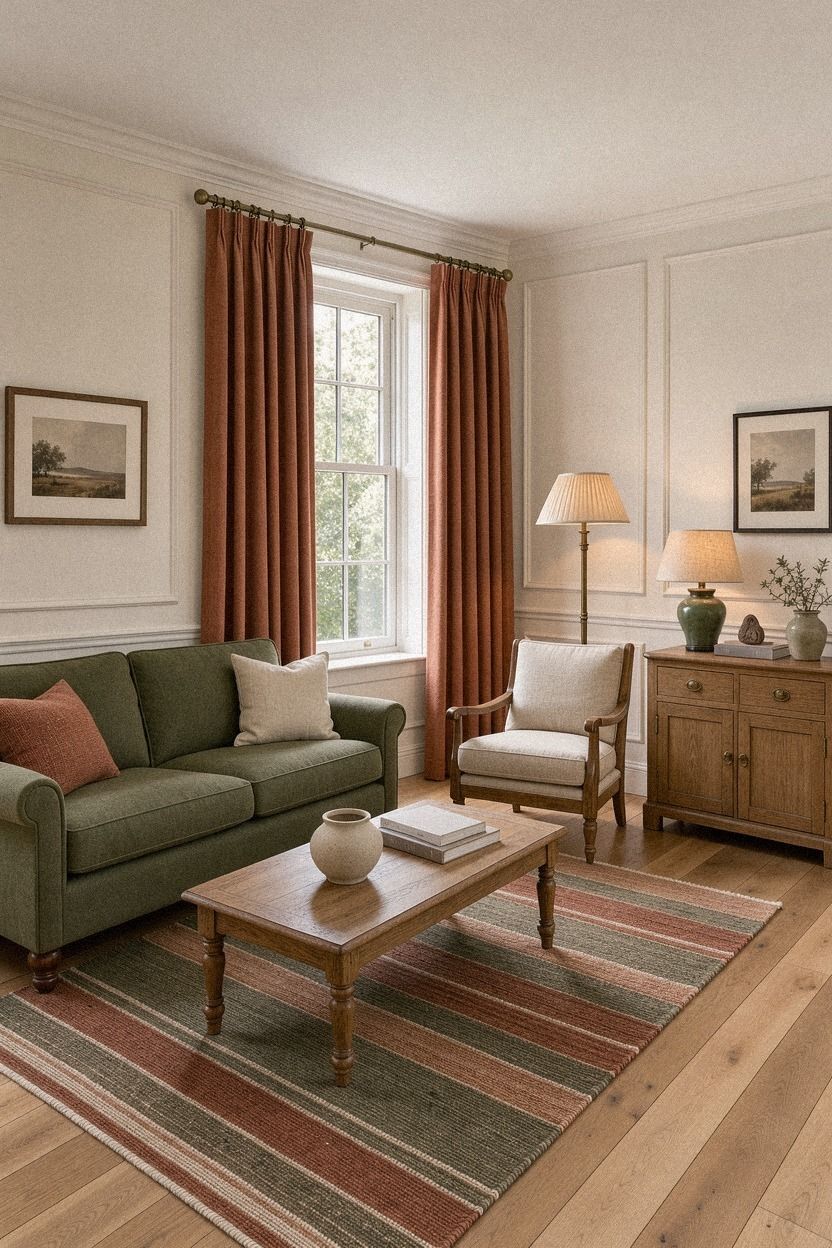
Terracotta thermal curtains bring an earthy, welcoming note to rooms with forest-green walls, natural-oak flooring, and rust accents. The colour works because it echoes clay, brick, and autumn leaves without requiring a full palette change.
I’d pick a faded terracotta with a washed surface rather than bright orange. Your room will feel warm, not themed. Pair the panels with unlacquered brass developing a soft patina on a lamp base or picture frame.
The aged metal gives terracotta a little edge, while cream upholstery keeps everything comfortable. If you’re worried the colour will feel too strong, hang it only on the window wall and keep the other textiles quiet.
You’ll see the difference at sunset, when the fabric turns softly coppery. It’s a lovely moment!
7Frame the window with muted sage
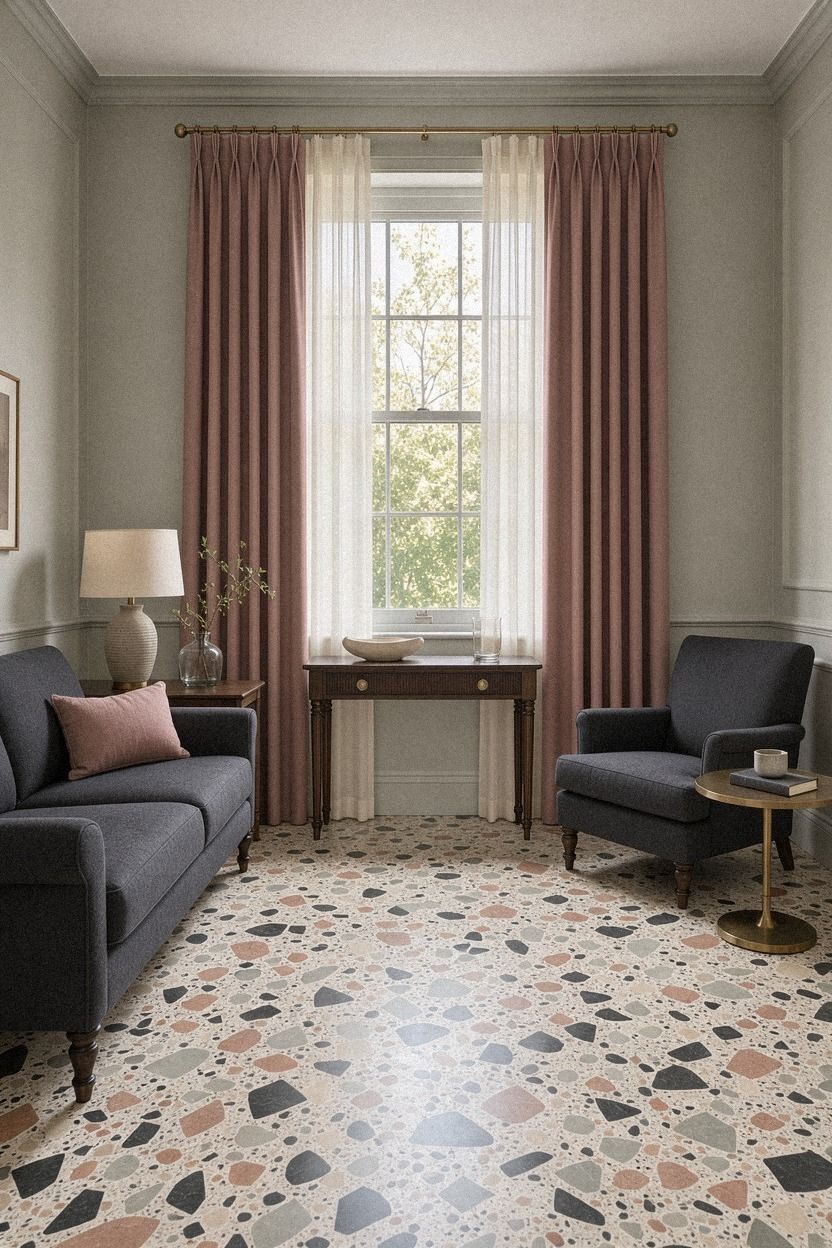
Muted sage thermal curtains are a gentle way to add colour when your neutral room feels too beige.
8Mix olive panels with natural linen
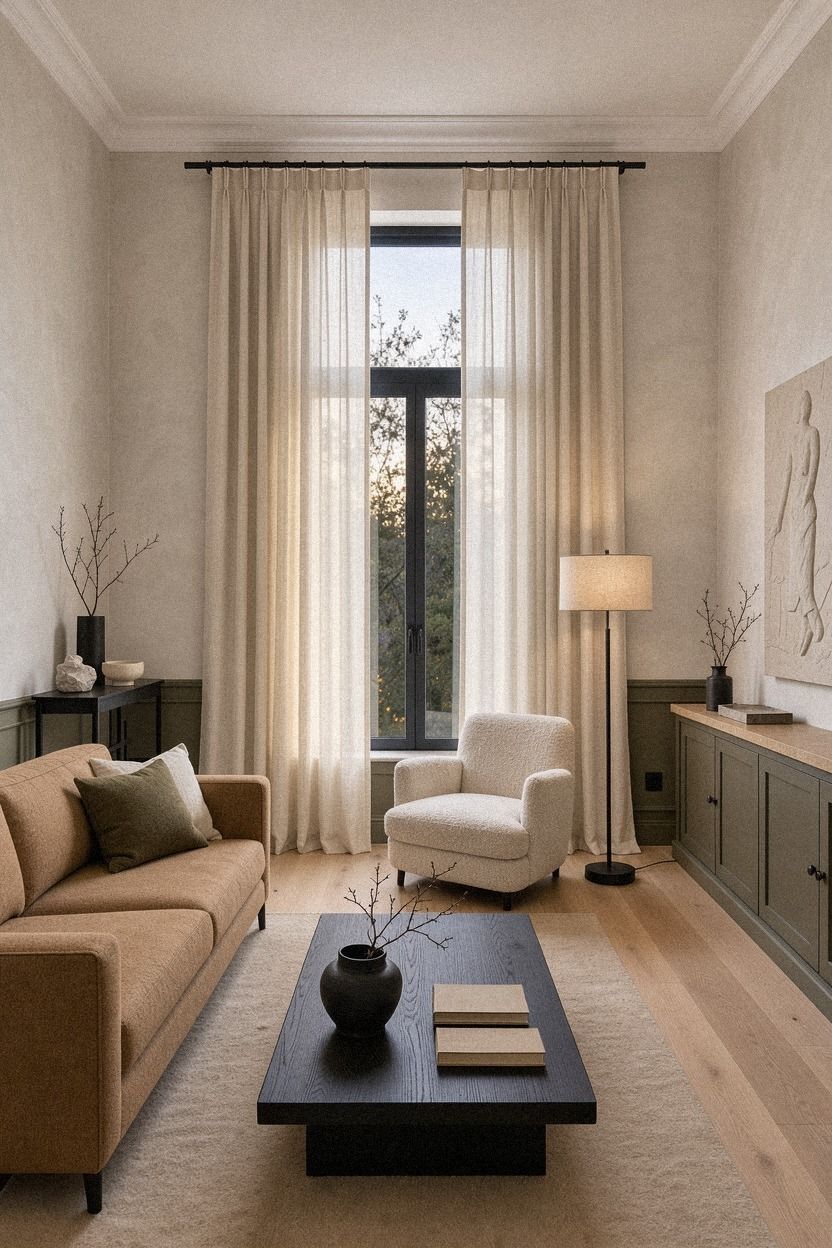
Olive thermal curtains are deeper than sage and more forgiving than charcoal. They’re a smart option if your neutral room has warm-white upholstery, camel accents, or black details.
The colour feels rustic in daylight and almost moody at night, which gives your space more range than pale curtains can offer. Use hand-applied Venetian plaster on a nearby wall, but don’t match every surface exactly.
Your olive panels should be the anchor, not part of a coordinated set. A camel leather chair adds a warm counterpoint if you’re furnishing a reading corner.
I’d skip cool blue accessories here because they make olive look dull. Your better choice is aged brass, tobacco leather, or a small rust-colored object. If you like stronger outlines, soft charcoal creates more contrast.
9Build contrast with soft charcoal
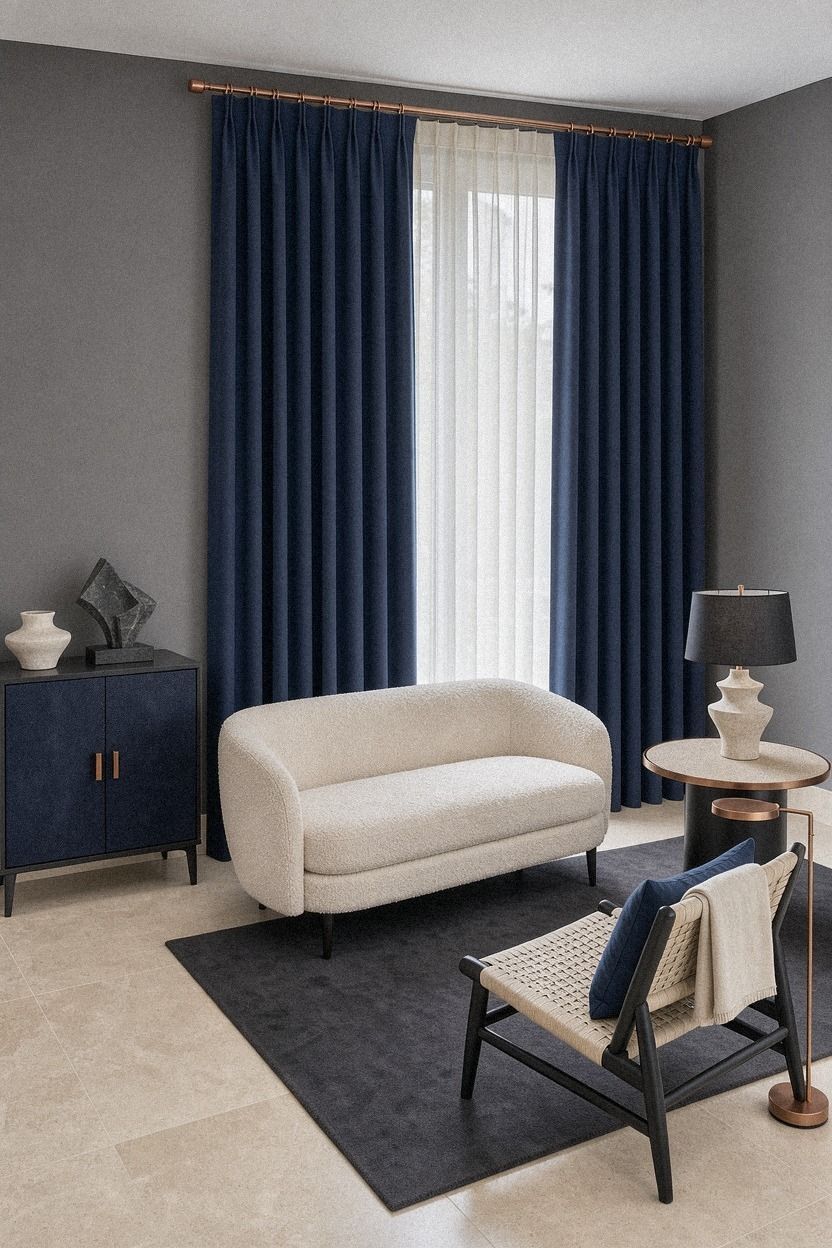
Soft charcoal thermal curtains can give a neutral room a sophisticated outline without the severity of black. They’re especially effective around ivory upholstery, midnight-blue accents, and copper details.
You’ll create contrast at the edges of the room, which helps the windows feel architectural instead of unfinished. Choose a fabric that works with shagreen accents if you want the charcoal to catch light differently throughout the day.
A flat black panel won’t give you that depth. Your rod should be slim and matte so the curtains look intentional rather than industrial.
I’d use charcoal only when your room gets enough daylight, because a dim room may need cream or mushroom panels to stay bright. For a warmer contrast, consider the tobacco option.
10Use The Two-Wood Rule with tobacco curtains
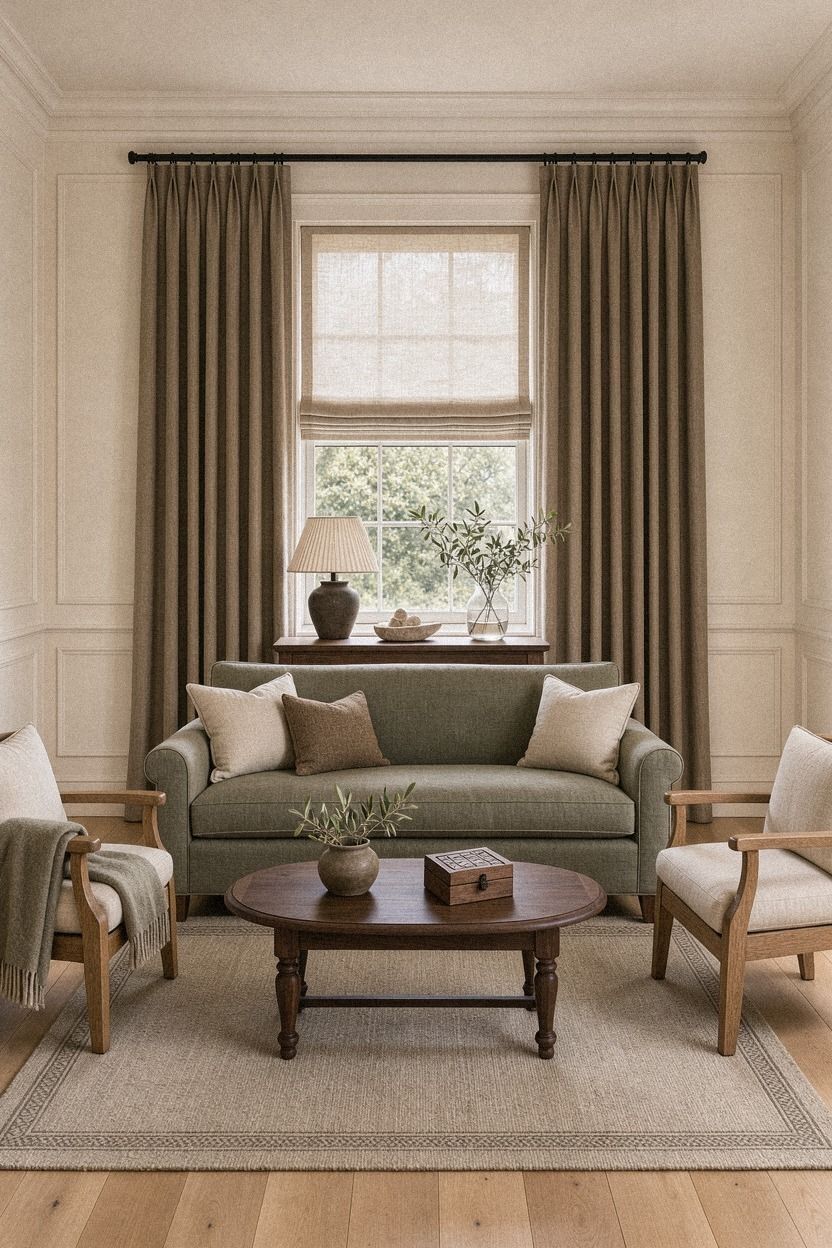
Tobacco-colored thermal curtains look rich beside sage green, warm cream, and natural wood, which is why I call this the Two-Wood Rule. Pair warm cream walls with natural wood shelving, then let the curtains bridge the gap.
Your room will feel layered because the fabric connects the warm furniture without copying either finish. Try IKEA TONSTAD oak-effect storage with a darker wood side table.
The curtain fabric should resemble washed Belgian linen, because shine can make tobacco brown look dated. If you’re working with a neutral rug, add one small rust or caramel note so your eye has somewhere to land.
This colour can also replace terracotta when you want a quieter result. The difference is subtle, but it matters!
11Float oat-colored curtains beside built-ins
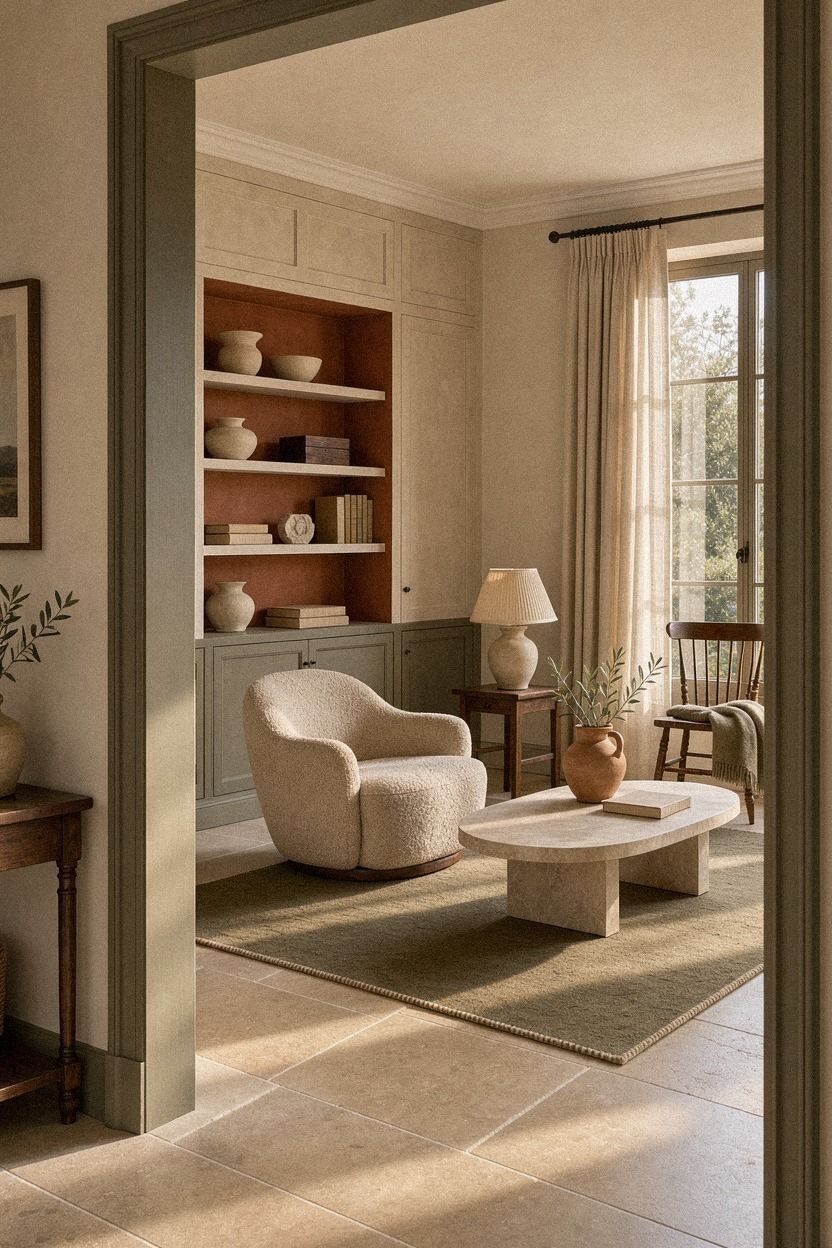
Oat-colored thermal curtains are excellent when your neutral room has built-in shelves or a large media unit. They soften hard edges while staying close enough to the wall colour that the architecture remains visible.
Your curtains won’t compete with books, art, or storage, but they’ll make the whole wall feel less stark. Use organic bouclé on a nearby chair or bench to repeat the tactile quality.
I’d hang the rod wide enough that the panels clear the glass entirely when open. You’ll preserve daylight and make the window look larger. If your room has low ceilings, keep the curtain hem just kissing the floor.
A puddled hem looks romantic in theory, but it’s a nuisance when you’re vacuuming. This shade also works beautifully with the quiet stripe treatment.
12Try warm gray with The Three-Height Light Stack
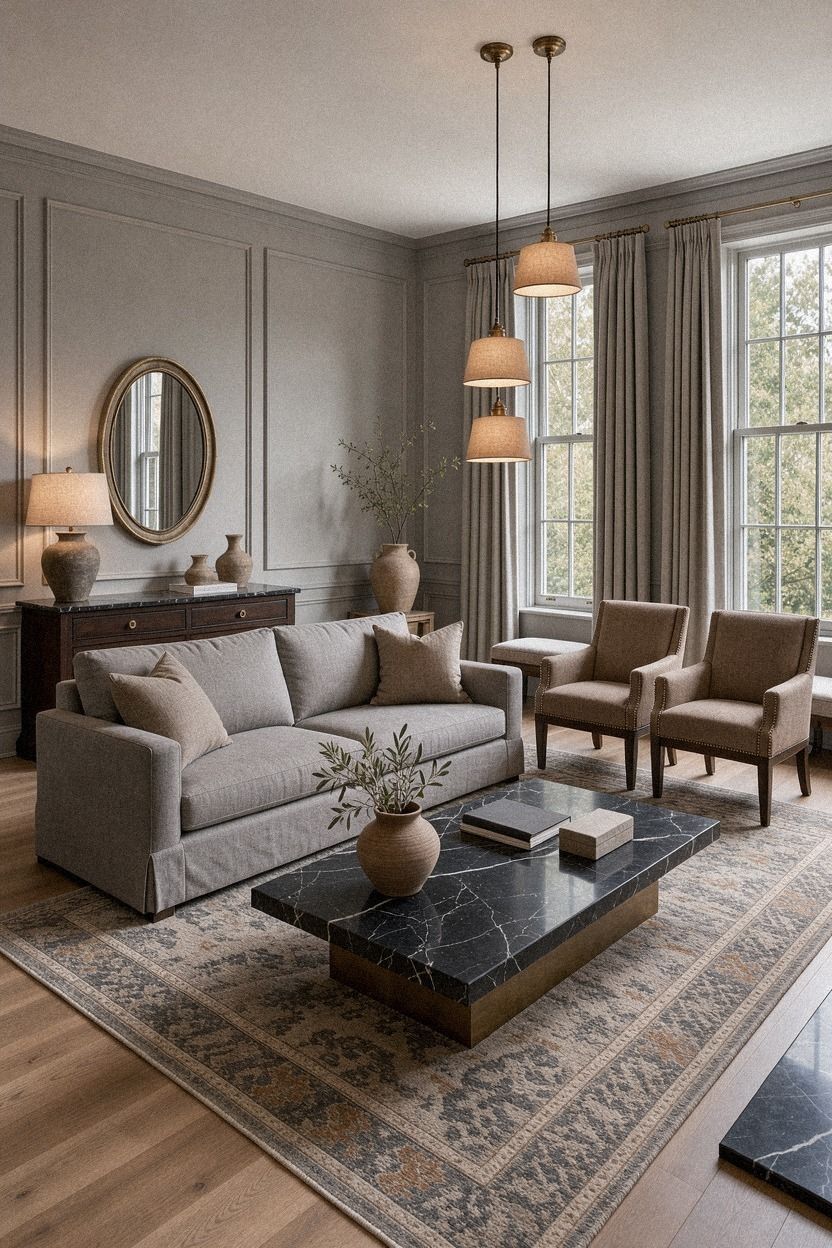
Warm gray thermal curtains are a strong choice when your neutral room needs structure rather than more colour. Add Nero Marquina black marble with white veins, clay-toned linen, or aged brass at different heights to give the palette quiet definition.
13Choose cream over icy white for a small room
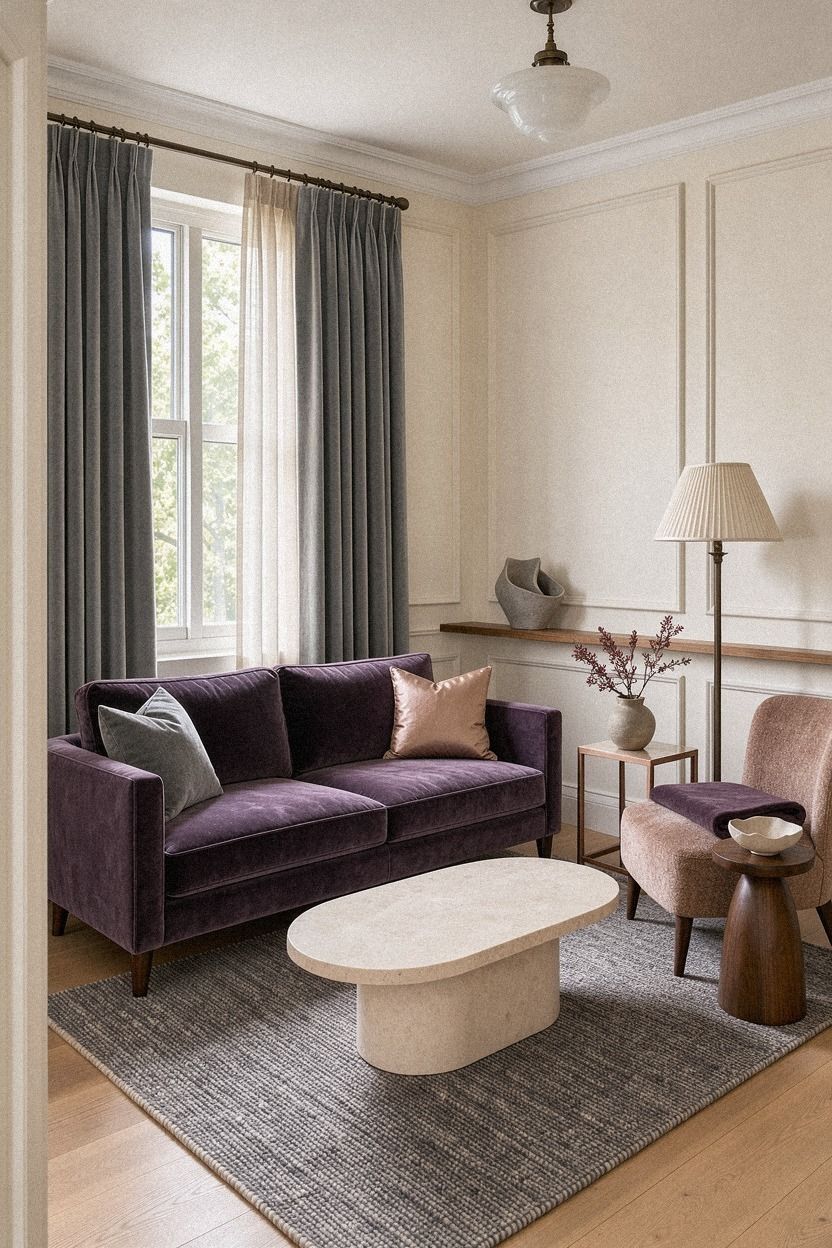
Cream thermal curtains are usually better than icy white in a small neutral room because they soften the boundaries without creating a sharp, cold contrast. Your walls can still look bright, but the fabric will feel more welcoming at night.
Choose a panel with deep-pile mohair velvet for extra depth. A room with plum, grey, and rose-gold accents can still feel light when the curtain colour stays warm.
This will help your room feel connected rather than chopped into separate pieces. Keep storage simple and pale so the fabric remains the softest element.
I’d avoid short curtains here because they visually cut the wall and make your ceiling feel lower. If beige feels too pale, oat-colored panels offer a similar effect with more warmth.
14Paint around deep green and choose flax panels
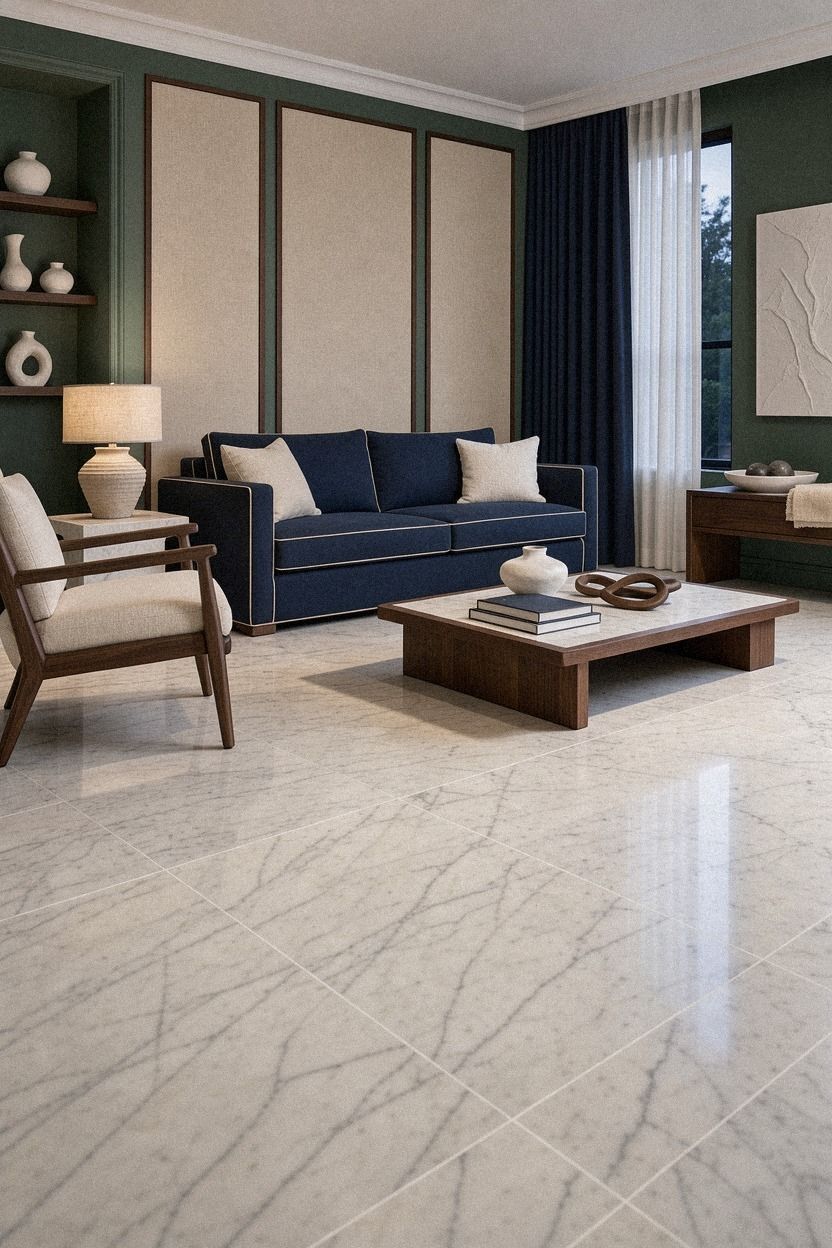
Navy walls, white upholstery, and walnut furniture make flax-colored thermal curtains feel intimate, especially in a north-facing space. A little Carrara marble with subtle grey veining can connect the cool wall colour to the softer fabric.
15Layer warm white over patterned upholstery
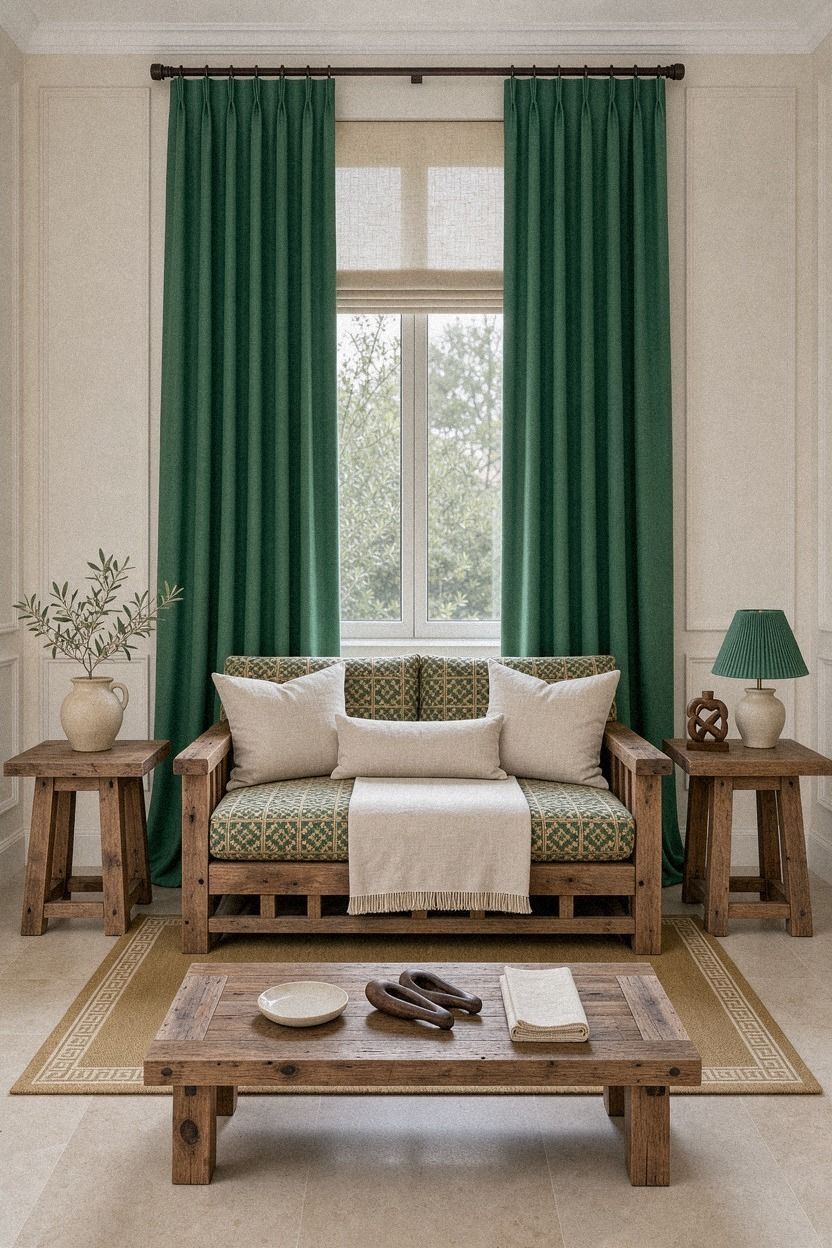
Warm white thermal curtains can calm a room that already has emerald, gold, and cream patterned upholstery, floral cushions, or a busy rug. You’ll still get insulation and privacy, but the window won’t add another competing shape.
Pick a warm white with a visible weave so the panels feel tactile rather than blank. Place them beside reclaimed weathered teak or a small-scale stripe for a relaxed mix.
Your pattern will look more relaxed when the window treatment stays simple. I once layered a bold print with patterned curtains, and the room became noisy before the furniture was even installed.
If you’re unsure, stand several fabric samples beside the window at morning and evening. The changing light will reveal which white is genuinely warm. For a less expected colour, compare this with muted blue-gray.
16Hang muted blue-gray for a peaceful finish
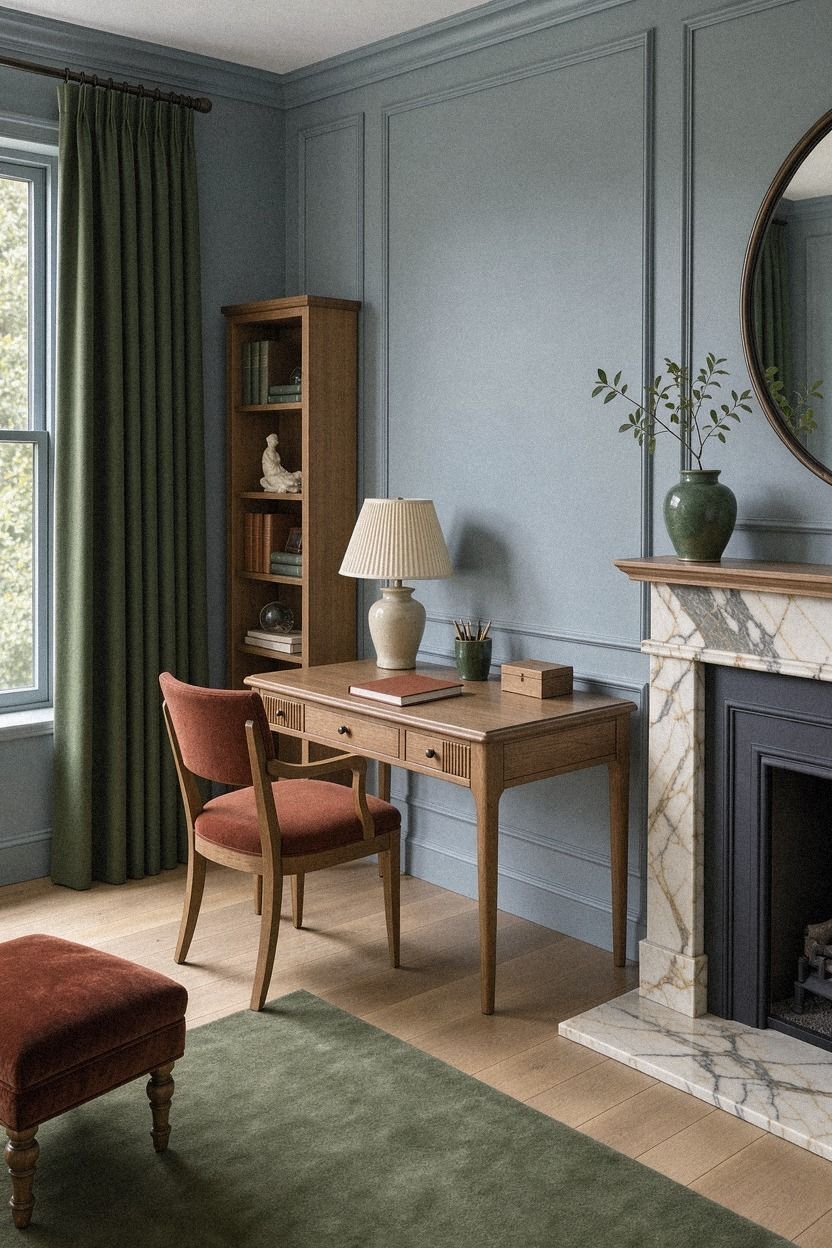
Muted blue-gray thermal curtains are ideal when you want a peaceful room that still has a little colour. They work with forest green, rust, and natural oak, and they’re less expected than beige.
Choose a blue-gray with a warm undertone so the fabric doesn’t make your room feel chilly. Calacatta marble with gold veining can add a quiet connection between the curtain colour and nearby surfaces.
Your furniture doesn’t need to match the curtains; it only needs one related undertone. I’d skip bright navy because it creates too much contrast in a quiet room. Soft blue-gray will give you the same visual definition with a gentler, more inviting edge!
The Honest Curtain Choice I’d Make
I’ve made the neutral-room mistake of treating curtains as an afterthought. I bought the right sofa, chose a warm rug, hung art at roughly 57 to 60 inches from the floor, and then added thin white panels that made the windows look cold.
The room wasn’t wrong, but it didn’t have any softness at the edges. That missing layer mattered more than I expected. Now I choose the curtain colour after checking the wall undertone and the strongest piece of furniture.
If the room has pale oak, I’ll reach for sage, tobacco, or muted blue-gray. If it has walnut or tan leather, cream and flax usually win. Unlacquered brass can warm almost any of these choices, but I wouldn’t use it as an excuse to add more metallic objects everywhere.
I also pay attention to how the fabric behaves at night. A curtain can look lovely in bright daylight and turn dull under one ceiling light. That’s why I like thermal fabric with a woven face rather than a slick coating.
Your room should still feel textured when the sun is gone. A good panel catches the lamp glow, softens the glass, and makes the room feel finished without asking for a renovation. For the biggest visual change, start with cream, tobacco, or deep green with flax.
What These Neutral-Room Updates Typically Cost
The curtain itself doesn’t need to trigger a full-room shopping spree. You can keep the window treatment modest and use the rest of your budget on lighting, a rug, or one strong piece of furniture.
For a smaller refresh, linen drapes may run $120-$400 per pair, while a wool rug can land around $400-$1,500. Paint for a DIY room is typically $200-$600, and a statement light fixture may cost $150-$800.
Your curtains can be the only major purchase if the furniture already works. That’s often the smarter choice. Start with the lower-cost small-room cream approach before changing the whole space.
The Questions I Get Asked Most
What colour thermal curtains are best for a small room?
Cream or oat-colored thermal curtains are usually best for a small room because they add soft insulation without visual heaviness. Try IKEA HILJA with a proper thermal lining, and hang the rod 4 to 6 inches above the opening so your window feels taller.
Where can I buy thermal curtains on a budget?
Look at IKEA, Wayfair, and Target for accessible curtain panels, then check Facebook Marketplace or a local thrift shop for better fabric. Your best value is a full-length pair with a useful lining, not a very cheap short panel that needs replacing.
How much does a thermal-curtain room makeover cost?
A small curtain-focused update can cost about $100 to $300, depending on the fabric and lining. You can keep it lower by reusing your rod, rearranging furniture, and shopping second-hand. A broader room refresh may reach the $200-$800 budget tier.
Can I create a warmer neutral room on a budget?
Yes, and you can start with what you own. Wash and rehang existing panels, move the rod higher, and add one warm lamp before buying anything. A thrifted pair, simple paint sample, and rearranged rug can create a more inviting room for very little.
Are thermal curtains worth it in a small space?
Yes, because the right curtains can make a small room feel taller, softer, and more private. Keep the fabric close to the wall colour, hang it high, and let your furniture overlap the rug. You’ll gain visual height without taking floor space.
Are thermal curtains a good idea for a rental?
Yes. Use a tension rod, removable hooks where suitable, and curtains that reach the floor without drilling into the wall. Cream, flax, and muted sage are flexible rental choices, and you can take the panels with you when your lease ends.
Where I’d Start First
If I had to pick one, I’d start with cream thermal curtains. They soften cold daylight, work with almost every neutral undertone, and won’t fight your rug or furniture. Check your wall colour beside the window before you buy, then compare it with the mushroom option if the room feels too cool.


