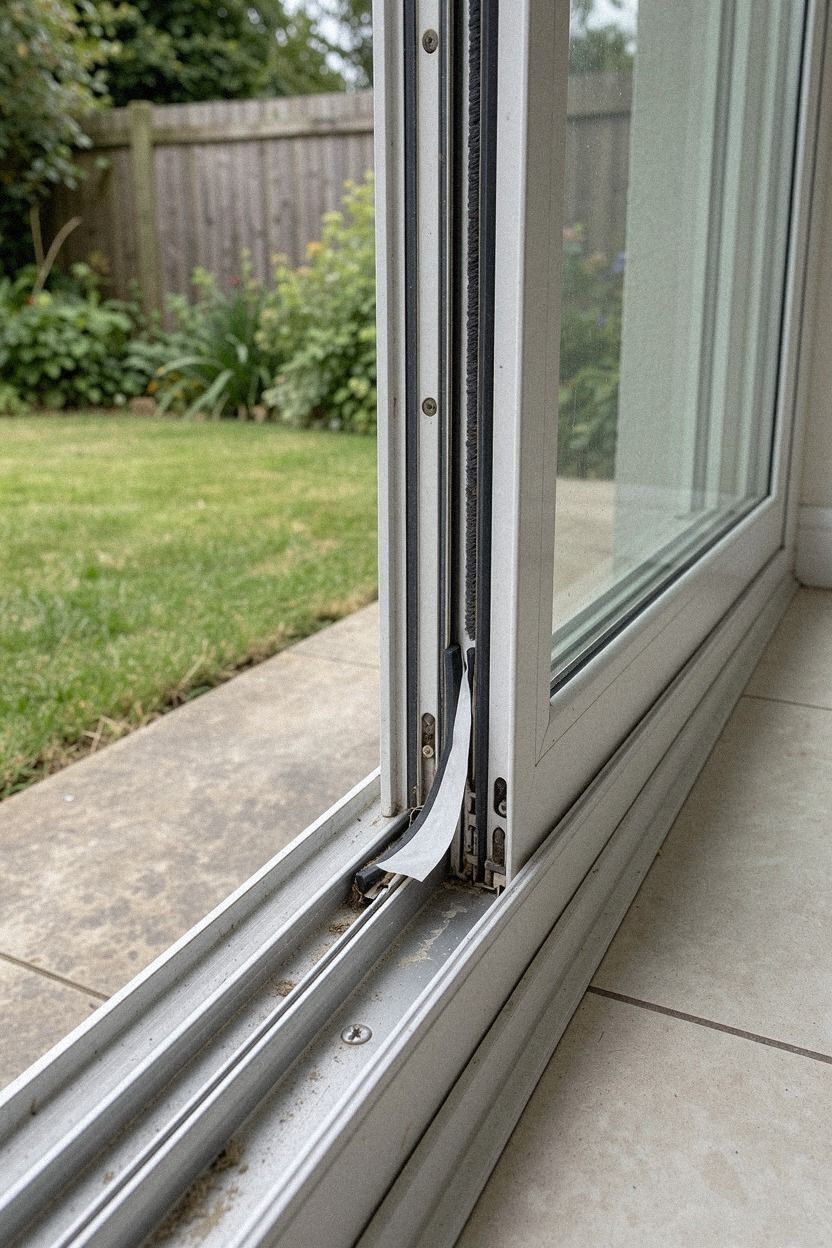
17 Ways to Stop the Draught From a Sliding Patio Door Without Replacing It
18 october 2026The short answer is simple: stop the air at the track, frame, glass, or curtain layer before you replace the door. I learned that after sealing the wrong edge and making the room feel no warmer. Your door may need one small repair, not a new frame. Start with the leak.
- Find the Leak Before You Buy Anything
- Brush the Track With a Soft Door Sweep
- Swap Worn Weatherstripping for Wool Pile
- Press in Closed-Cell Foam at the Meeting Rail
- Hang Thermal Curtains for Sliding Glass Doors
- Layer a Cellular Shade Behind the Glass
- Build the Three-Contact Weather Seal
- Adjust the Rollers Before Blaming the Door
- Clear the Weep Holes and Let Water Escape
- Seal the Fixed Panel, Not the Moving One
- Anchor a Draft Snake With a Dense Cotton Core
- Frame the Glass With an Interior Storm Panel
- Paint the Exterior Frame With a Hardwearing Finish
- Compare the Cost Before You Replace the Door
- Can a Rug and Curtain Stop a Cold Floor?
- Choose Renter-Safe Thermal Curtains for Patio Doors
- Test the Room at Night and Keep the Winning Layer
1Find the Leak Before You Buy Anything
Close your sliding patio door on a calm evening and move your hand slowly around the frame. You’ll feel the cold air near the meeting rail, lower track, or fixed panel long before you see a gap. A strip of tissue works too.
If it flutters, your walnut-trimmed door frame has given you a useful clue.
I’d check the corners first, because that’s where old seals shrink and separate. Don’t buy thermal curtains until you know which edge is failing.
You might need a brush seal, not a heavy fabric layer, and that small distinction can save your money and your Saturday. Your room should feel warm because you fixed the source, not because you’ve hidden it.
2Brush the Track With a Soft Door Sweep

A soft brush sweep can block air moving under the sliding panel while still letting your door travel. Look for a dense nylon pile that sits against the sill without dragging hard. Your sweep shouldn’t buckle when you open the door, and it shouldn’t make the handle feel like it’s fighting you.
I prefer a warm-white nylon pile sweep against a warm travertine sill and camel trim, while black hardware can recede into the background. Clean the track first, then measure the panel rather than guessing. But don’t press the brush so tightly that the door stops rolling.
A little resistance is useful. A stuck door isn’t.
You’ll feel the difference most near your ankles, where cold air pools against the floor. If your seating faces the glass, this one repair can make the whole corner more inviting!
3Swap Worn Weatherstripping for Wool Pile

Old weatherstripping often looks intact while the fibers have flattened into a shiny little line. Replace it with wool pile or a dense woven pile made for sliding doors. Your goal is contact without pressure, so the moving panel can glide and still close against a flexible barrier.
I’ve found that a slim woven pile weatherstrip looks more considered than thick rubber foam, especially beside unlacquered brass hardware that develops a gentle patina. Measure the existing channel before ordering anything. If your replacement is too tall, you’ll feel it immediately in the handle.
If it’s too short, the draught will return at the first cold snap.
And don’t pull the old strip out before photographing how it sits. You’ll want that reference when the channel looks confusing. The best repair is quiet, soft, and boring in the most comforting way.
4Press in Closed-Cell Foam at the Meeting Rail

The meeting rail is where the sliding panel closes against the fixed panel, and it’s a common place for a thin stream of air. If it meets an oversized-chip terrazzo sill, keep the foam narrow so it doesn’t interfere with the door’s movement.
5Hang Thermal Curtains for Sliding Glass Doors

Thermal curtains for sliding glass doors can reduce the cold radiating from the glass, especially after sunset. Hang the rod high and wide enough that your panels can stack beyond the opening. Your curtain should cover the full glass area when closed, not stop at the edge of the moving panel.
I’d choose a lined thermal curtain panel in muted terracotta linen or a tightly woven cotton blend, set against hand-applied Venetian plaster. Thin decorative sheers won’t do much for a draught, although they can soften the room. If your door faces a dark garden, stone, terracotta, or muted olive will feel calmer than bright white.
But keep the bottom clear of the track. A curtain dragging through dust gets grimy fast, and you’ll stop closing it.
Leave enough clearance for cleaning and daily use. The fabric should fall in a quiet vertical line, not puddle into the hardware.
6Layer a Cellular Shade Behind the Glass
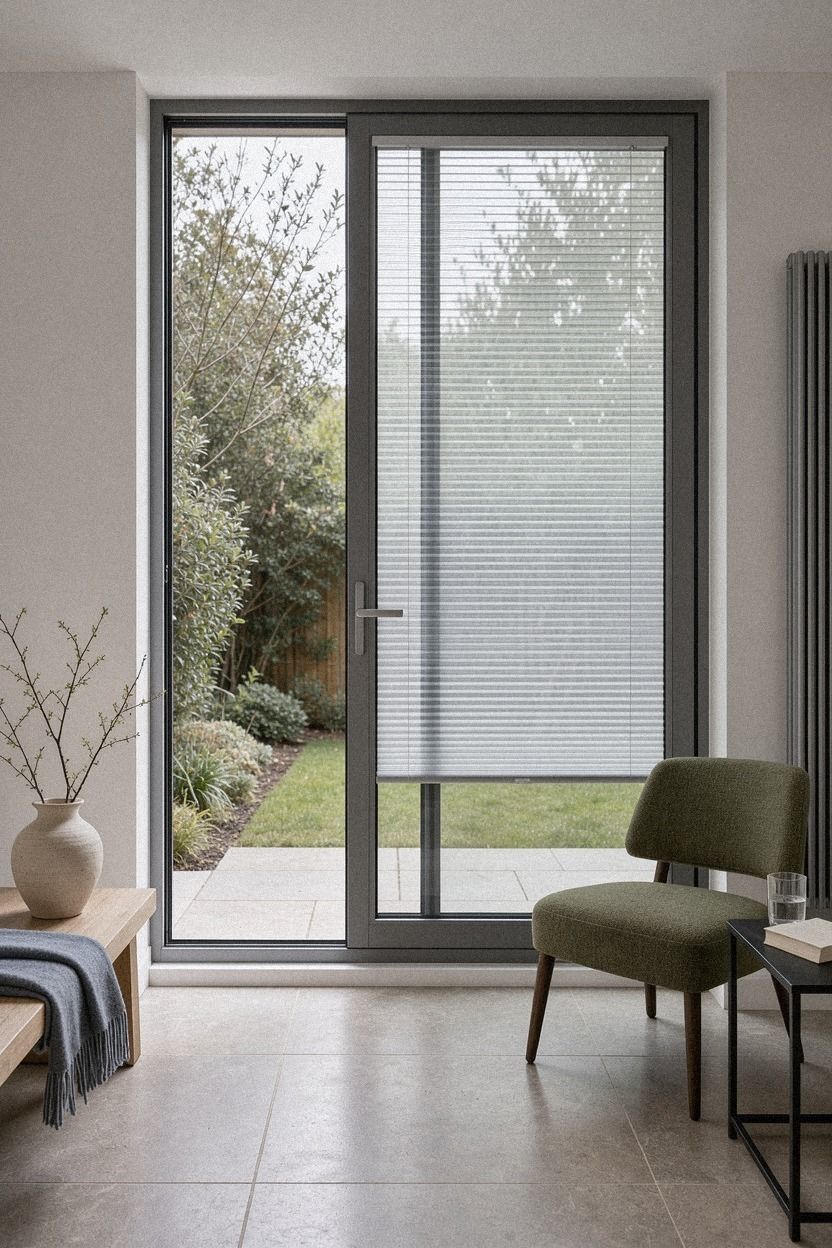
A cellular shade creates small air pockets between the glass and the room, which can help when your patio door feels cold even after the seals are repaired.
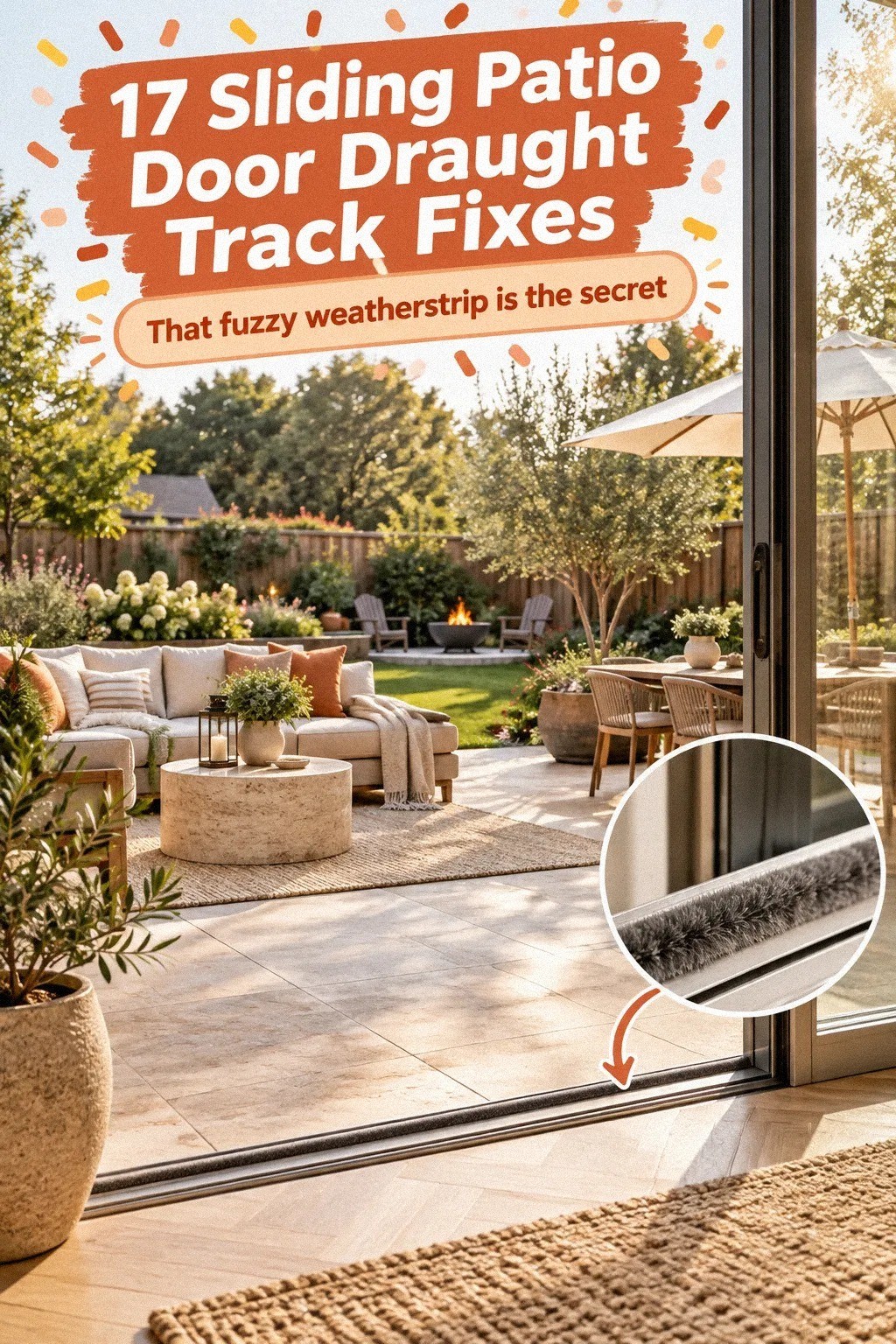
7Build the Three-Contact Weather Seal
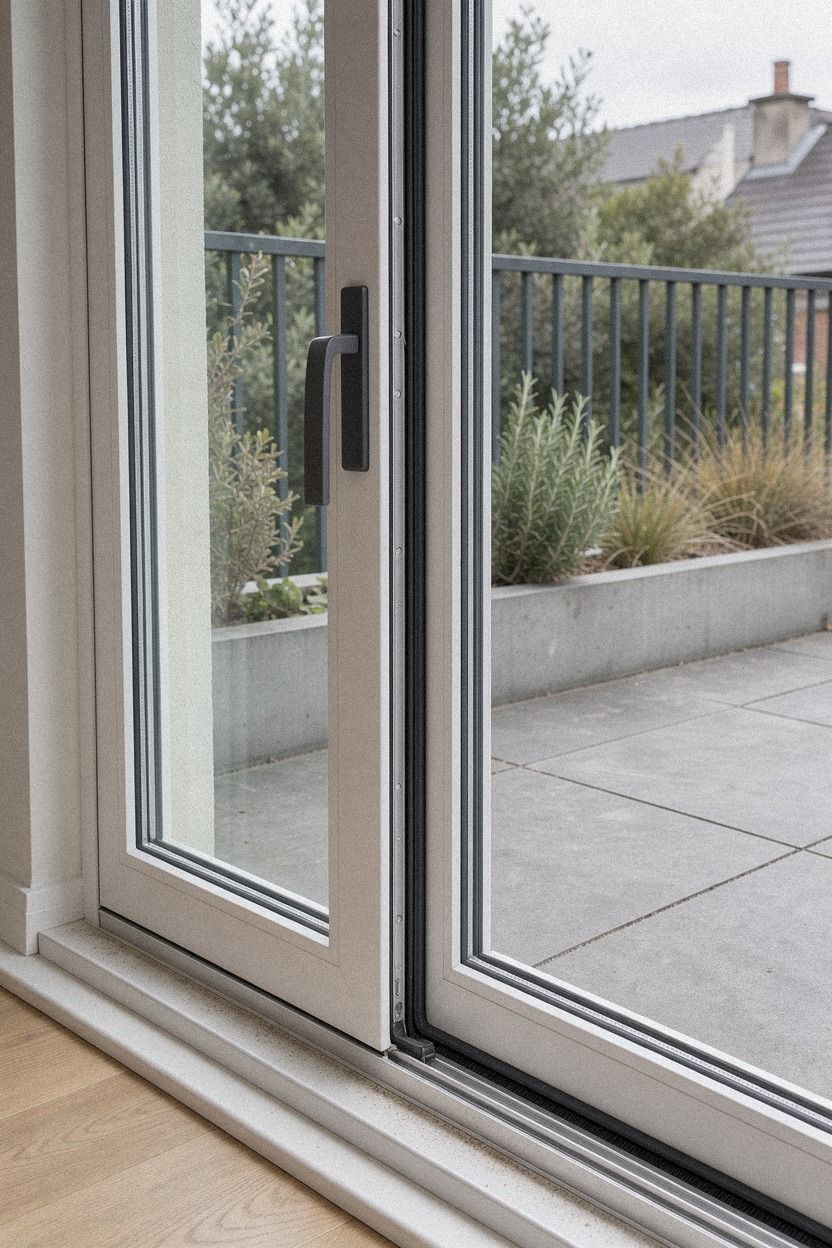
The Three-Contact Weather Seal is my name for checking three separate points: the bottom track, the meeting rail, and the fixed-panel edge. Your door is only as warm as its weakest contact, so repairing one side may not be enough.
Start with a silicone bulb gasket at the fixed panel if the existing rubber has cracked. Then inspect the meeting rail and finish with the lower sweep.
You’ll want each part to touch lightly when the door is closed. Too much compression can bend the seal or make your latch unreliable.
I wouldn’t cover every visible gap with caulk. That approach looks fast, but it can trap water and make later repairs miserable.
Your goal is a flexible seal where the door moves and a permanent seal where it doesn’t. That distinction keeps the repair durable and neat.
8Adjust the Rollers Before Blaming the Door

A sliding door that sits low can leave a gap even when the weatherstrip is fine. Find the adjustment screws near the bottom corners and turn them in small increments. Your panel should sit level enough that the lock aligns without forcing the handle.
Use a small stainless steel roller assembly as your quality reference if one needs replacing. You don’t have to replace both rollers automatically, but you should inspect them for grit, flattening, or wobble. Clean the track before making adjustments, because dirt can mimic a hardware failure.
I’d rather spend time leveling the panel than add another heavy seal. A badly aligned door will wear through new weatherstripping, and you’ll be back at the same cold corner next season.
Test the latch, slide the panel several times, and listen. A smooth, quiet movement is a good sign!
9Clear the Weep Holes and Let Water Escape

Weep holes drain rainwater from the lower frame, and they can clog with dust, leaves, or old paint.
10Seal the Fixed Panel, Not the Moving One

The fixed glass panel can leak along its side or bottom edge, particularly when old glazing seals have shrunk. Inspect the stationary panel from inside and outside, then use a flexible exterior-grade sealant only where the panel meets the frame.
A bead of clear exterior silicone should remain narrow and tidy. Your hand shouldn’t be able to feel a ridge after it cures. I’d avoid bright white caulk against forest-green frames or natural oak trim because the line will draw attention to the repair.
You’ll need patience here. The surface must be clean, dry, and free from loose material.
Don’t seal the moving panel into place, even if the gap looks tempting. Your door needs to slide, latch, and drain.
A fixed-panel repair works because you’ve chosen the edge that shouldn’t move.
11Anchor a Draft Snake With a Dense Cotton Core
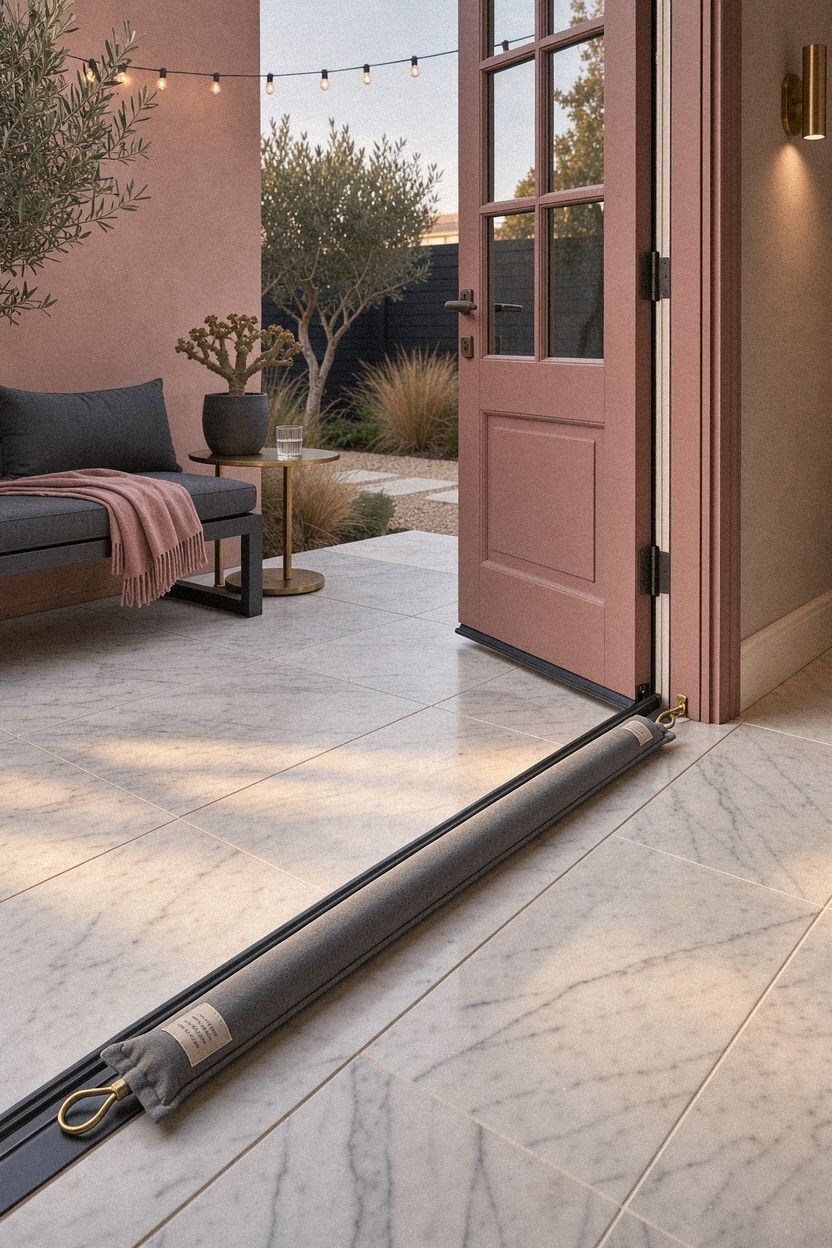
A draft snake won’t repair a damaged seal, but it can reduce cold air at the lower interior edge while you plan the permanent fix.
12Frame the Glass With an Interior Storm Panel
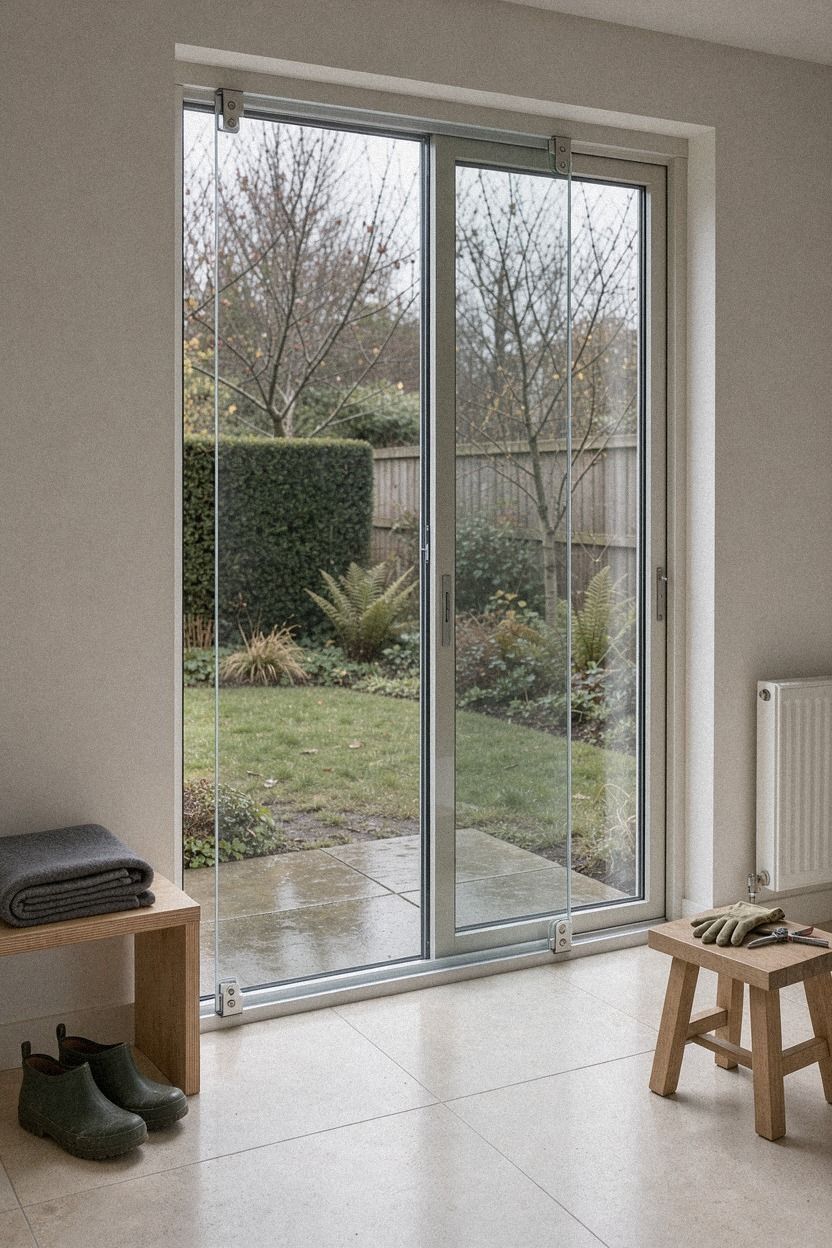
An interior storm panel adds a second air space over the glass and can help in an older home where replacement doors aren’t practical. You’ll need a panel that fits securely without blocking the handle, track, or emergency exit path.
I’d choose a slim acrylic interior storm panel with a clean magnetic or compression edge, especially if the opening is framed by reclaimed weathered teak. Your room will stay brighter than it would with a heavy curtain, and the panel can be removed when the weather changes. It’s a more involved solution, but it can be worthwhile when the glass itself is the cold surface.
Measure carefully before ordering. A panel that bows or leaves open corners won’t give you the calm, warm result you want. And if your door is a required exit, keep the release method obvious.
Comfort matters, but safe access matters more.
13Paint the Exterior Frame With a Hardwearing Finish
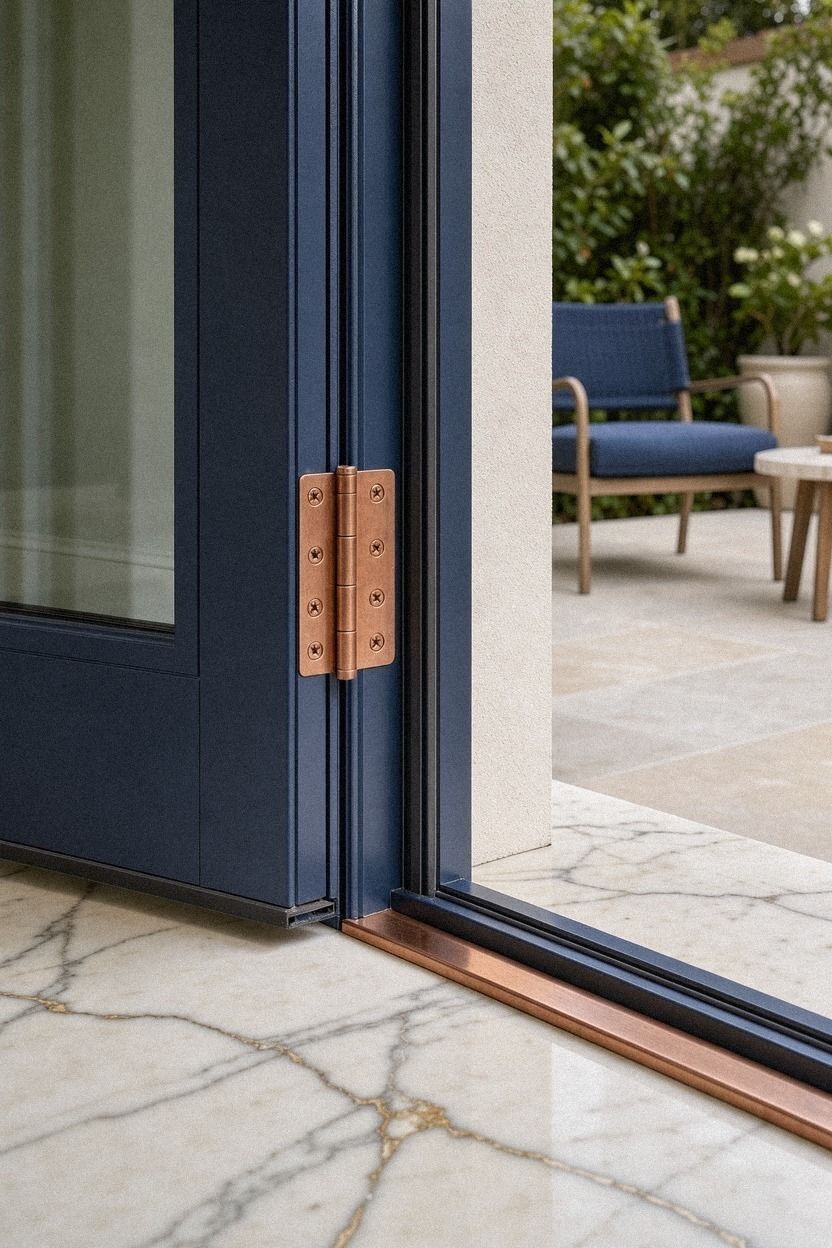
Paint won’t stop a draught by itself, but peeling or chalky exterior finish can expose joints around the frame. Clean and repair those joints first, then use a coating suited to the surface and outdoor conditions.
For a bold midnight-blue frame, Sherwin-Williams Emerald Exterior can create a crisp, sheltered look when the existing substrate is prepared properly. Benjamin Moore Aura Exterior is another named option to compare, while Farrow & Ball Exterior Eggshell suits a softer copper-and-ivory palette. Your color should support the architecture, not make every repair line more obvious.
I’d avoid painting over moving hardware or drainage openings. That shortcut looks finished for one afternoon and causes trouble later. Use a small brush around the frame, keep the track clean, and give the finish proper drying time before you close everything tightly.
14Compare the Cost Before You Replace the Door
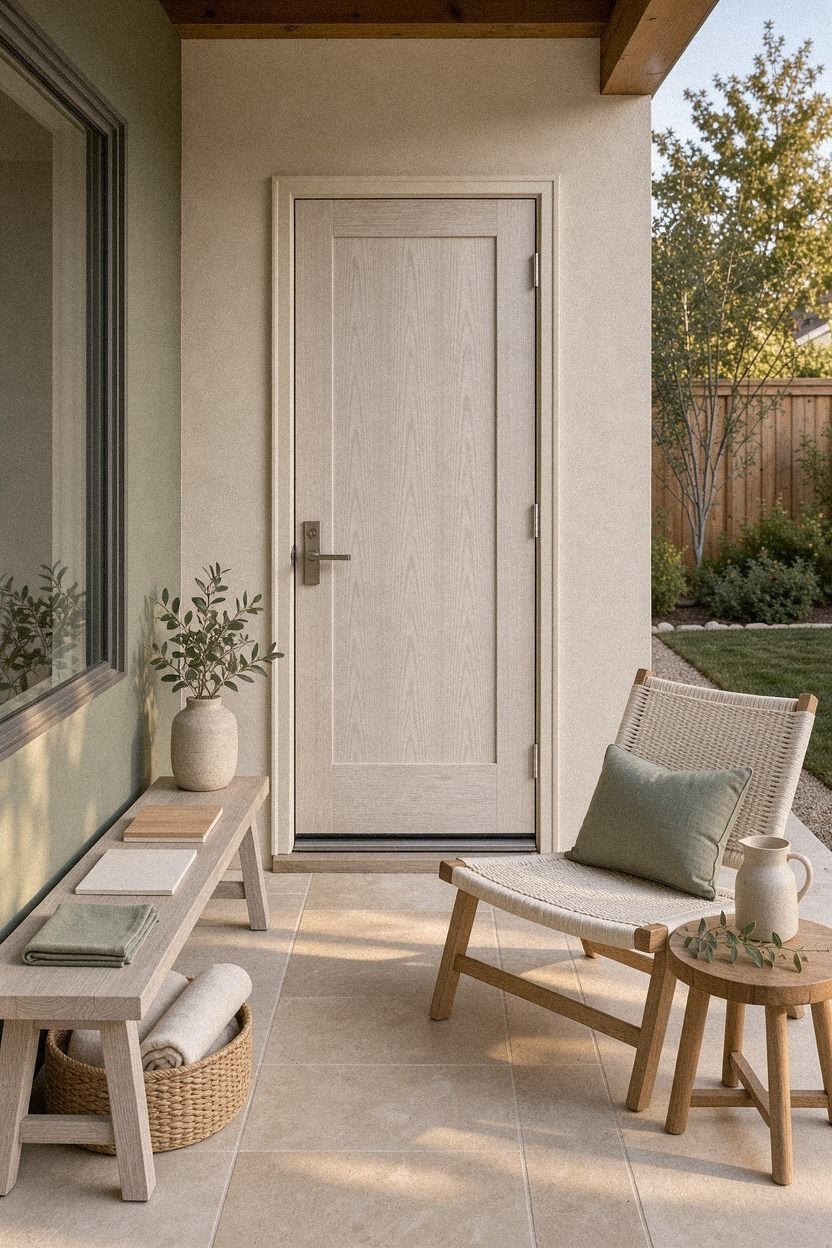
Before you price a new patio door, separate a draught repair from a full outdoor renovation. Your weatherstrip, sweep, caulk, and curtain may cost far less than replacing the whole opening. If you’re also refreshing the patio, these typical US ranges give you a broader planning frame.
A small repair can be warm and practical without becoming a major project. I’d spend first on the part your hand can identify, then add the visual layer you’ll enjoy every day. Your budget should follow the leak, not the trend.
15Can a Rug and Curtain Stop a Cold Floor?

Yes, a rug and curtain can make the area feel warmer, but they won’t replace a failed seal.
16Choose Renter-Safe Thermal Curtains for Patio Doors

Renters can reduce draughts without drilling into the frame. A tension rod, removable curtain brackets, or a freestanding screen can give you a thermal layer while keeping the original door intact. Your first choice should be the option that won’t interfere with the latch or emergency exit.
I’d use removable tension hardware with a lined curtain in clay-colored linen, especially where book-matched walnut already warms the opening. Peel-and-stick weatherstrip can help around a fixed panel, but test a small hidden area before applying it across painted trim. Some adhesives pull paint when you remove them.
And don’t rely on a decorative curtain alone. Your curtain should close fully at night, reach close to the floor, and stack beyond the glass during the day.
A clay linen panel can look elegant and soft without making your rental feel temporary. That’s a win!
17Test the Room at Night and Keep the Winning Layer

Close your door after sunset and test the same areas you checked at the start.
The Draught Fix I’d Trust in My Own House
I’ve gone back and forth on this because the prettiest solution isn’t always the useful one. Thermal curtains look inviting, but they can hide a worn seal that still lets cold air through. A new sweep is less exciting, yet it often changes the room faster because it blocks air at the point where you feel it.
My first choice is diagnosis. I’d close the door, test the tissue around the bottom rail, and inspect the meeting edge before spending anything.
That small ritual tells you whether your problem is air, glass, water, or alignment. You don’t need a dramatic renovation when the real issue is a flattened strip of pile.
I also think the best patio door fixes respect daily life. Your door should still open when you carry food outside.
Your curtains shouldn’t drag through the track. A rug shouldn’t become a trip hazard.
The warmest room is not useful if every simple movement has become awkward.
I learned this after trying to solve a cold glass panel with a seal that was too thick. The latch stopped lining up, and I had to remove the whole strip. Since then, I’ve treated each layer as part of a system: repair the moving edge, seal the fixed edge, then soften the glass with fabric or a shade.
If you’re choosing between a repair and a full replacement, give the small repair one honest evening first. Your hand will tell you where the draught lives, and your budget will thank you for listening.
The Questions Worth Answering First
What is the best way to stop a draught from a sliding patio door in a small backyard?
The best first step is checking the lower track and meeting rail, then replacing worn pile weatherstrip. Add lined thermal curtains if the glass stays cold after sealing. Your small space benefits from a clear walkway and a simple warm layer, not bulky furniture.
Where can I buy sliding patio door draught-control pieces on a budget?
You can check IKEA, Wayfair, Target, Facebook Marketplace, and local thrift shops for curtains, rugs, and tension hardware. Look for dense fabric and clean measurements. There’s no affiliate commission involved here, so choose the item that fits your door and budget.
How much does a sliding patio door draught makeover cost?
A basic repair can use items you already own, such as a rolled blanket or spare curtain. A broader makeover may run about $100 to $300 for seals, a sweep, and fabric layers. Your final cost depends on whether the frame, glass, or track needs work.
Can I stop the draught from a sliding patio door on a budget?
Yes, and you can start with three low-cost moves: clear the track, test the weep holes, and block the lower edge temporarily with a dense cotton draft snake. Then spend your money on the failed seal you can identify, not on unrelated decoration.
Is stopping a patio door draught worth it in a small space?
Yes, because a small room reveals cold air quickly. Start with the lower track, then keep at least 36 inches of walkway clearance so your repair doesn’t create a daily obstacle. Your room will feel more inviting when the door remains easy to use.
Is this a good idea for a rental?
Yes, renter-safe options include a tension rod, removable weatherstrip, a cellular shade, and a freestanding thermal curtain. Your landlord’s rules still matter, so test adhesive on a hidden area and avoid sealing drainage holes or blocking the door’s release.
Where I’d Start First
If I had to pick one, I’d start with the meeting-rail seal. It’s where a narrow stream of cold air often slips through, and a correctly sized pile strip can fix it without changing your room. Test it tonight, then add thermal curtains only if the glass still feels cold.
Pin this for later.


