How to Create 11 DIY Christmas Centerpieces From the Garden for Free
18 october 2026DIY Christmas centerpieces from the garden for free can look warm, gathered, and intentional without a shopping trip. I learned this after cutting too much greenery and leaving it in a bucket overnight, where it turned limp and sad. This guide gives you the order, materials, and styling choices that keep garden clippings fresh. Start outside.
- Gather Garden Cuttings Before You Style
- Choose a Vessel You Already Own
- Build the Three-Height Branch Structure
- Layer Evergreen Over a Loose Base
- Add Berries for a Red Detail
- Mix Garden Greenery Over Store-Bought Garland
- Anchor the Arrangement With Pinecones
- Layer Candlelight Below the Branches
- Frame the Display With a Painted Backdrop
- Protect Freshness With Water and Placement
- Set the Table Around One Focal Point
1Gather Garden Cuttings Before You Style
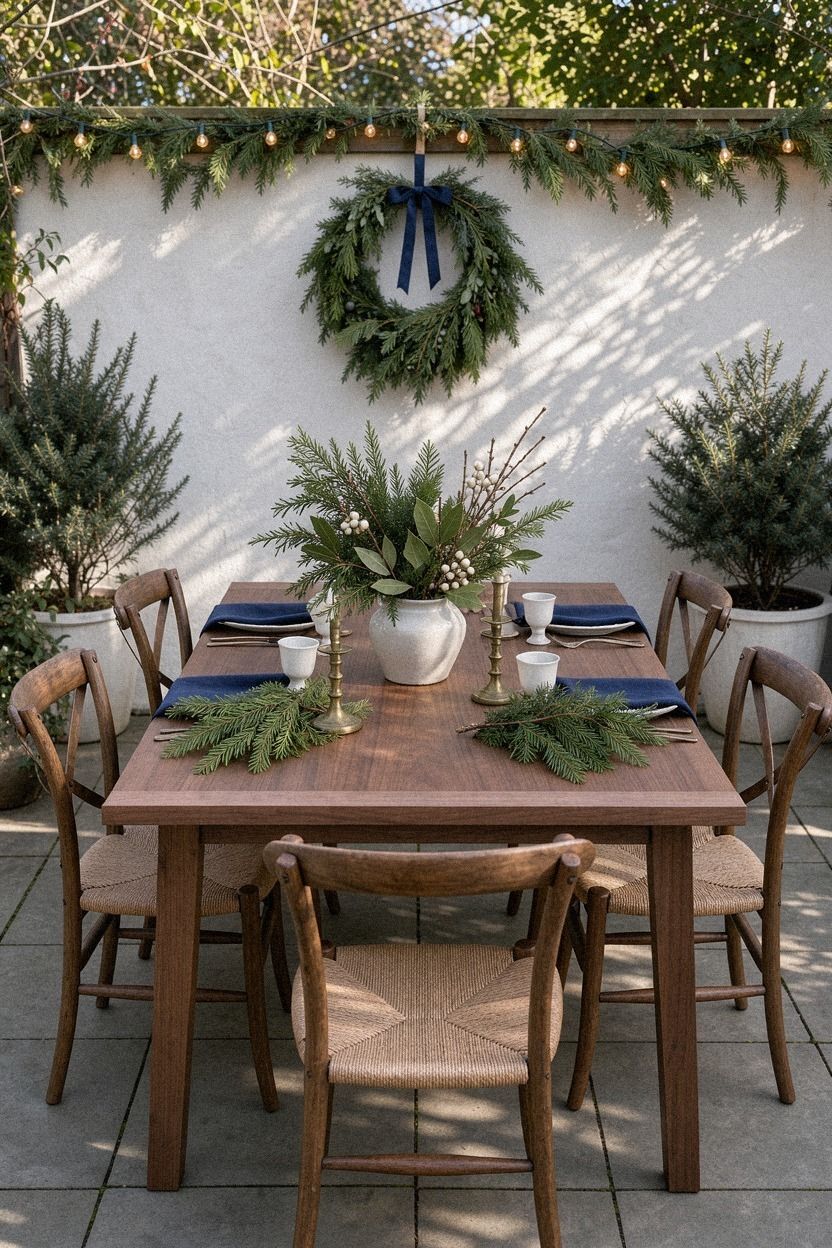
Walk through your garden with a bucket, sharp pruners, and gloves. Look for evergreen branches, bare twigs, rose hips, dried hydrangea heads, rosemary, ivy, pinecones, and branches with interesting bark.
You don't need a huge supply. A small armful from three different textures will give your centerpiece more character than one thick bundle of identical greenery.
I always gather more than I think I'll need because the best pieces aren't obvious until they're on the table. Cut stems at different lengths, and keep the shapes loose. A vessel in unlacquered brass brings a gentle sheen that will develop patina, while bare dogwood or birch adds a dramatic vertical line.
If you're cutting from a living shrub, take older side branches rather than stripping new growth. And don't use anything you can't identify, especially berries that children or pets might reach.
Place the cuttings in cool water while you're working. Your greenery won't stay fresh beside a radiator or sunny window.
This first step is free, earthy, and oddly calming once you stop trying to make every branch behave.
Before You Cut: A Quick Safety Check
Check the weather and the condition of every branch before you bring it indoors. Wet, moldy, or insect-heavy material isn't worth the cleanup. Shake branches outside, inspect the undersides of leaves, and brush loose soil from woody stems.
Keep unknown berries, sap-heavy branches, and sharp thorns away from areas where children or pets can reach them. Rose hips are beautiful, but a centerpiece should never create a safety question during dinner.
Wear gloves when handling yew, holly, thorny stems, or unfamiliar plants. If you're cutting from a shared hedge or a neighbor's garden, ask first. A free centerpiece still needs a clear source.
2Choose a Vessel You Already Own
Before you buy anything, open your kitchen cabinets and look at the objects you usually ignore.
The $0-to-$25 Budget
A completely free centerpiece can use garden cuttings, a cupboard vessel, pinecones, and candles you already own. Its cost is zero if those supplies are on hand. That value is hard to beat, especially when the table still feels layered and festive.
If you need to spend, set a small budget before shopping. A thrifted bowl might cost $4 to $10.
A pack of glass votives can cost $6 to $12. A narrow ribbon or deep-pile mohair velvet scrap may add another few dollars.
The best purchase is usually the vessel because you'll reuse it long after Christmas. A $15 ceramic bowl can be worth it when it works for fruit, flowers, and everyday table styling. You don't need a high price to create a polished result.
3Build the Three-Height Branch Structure
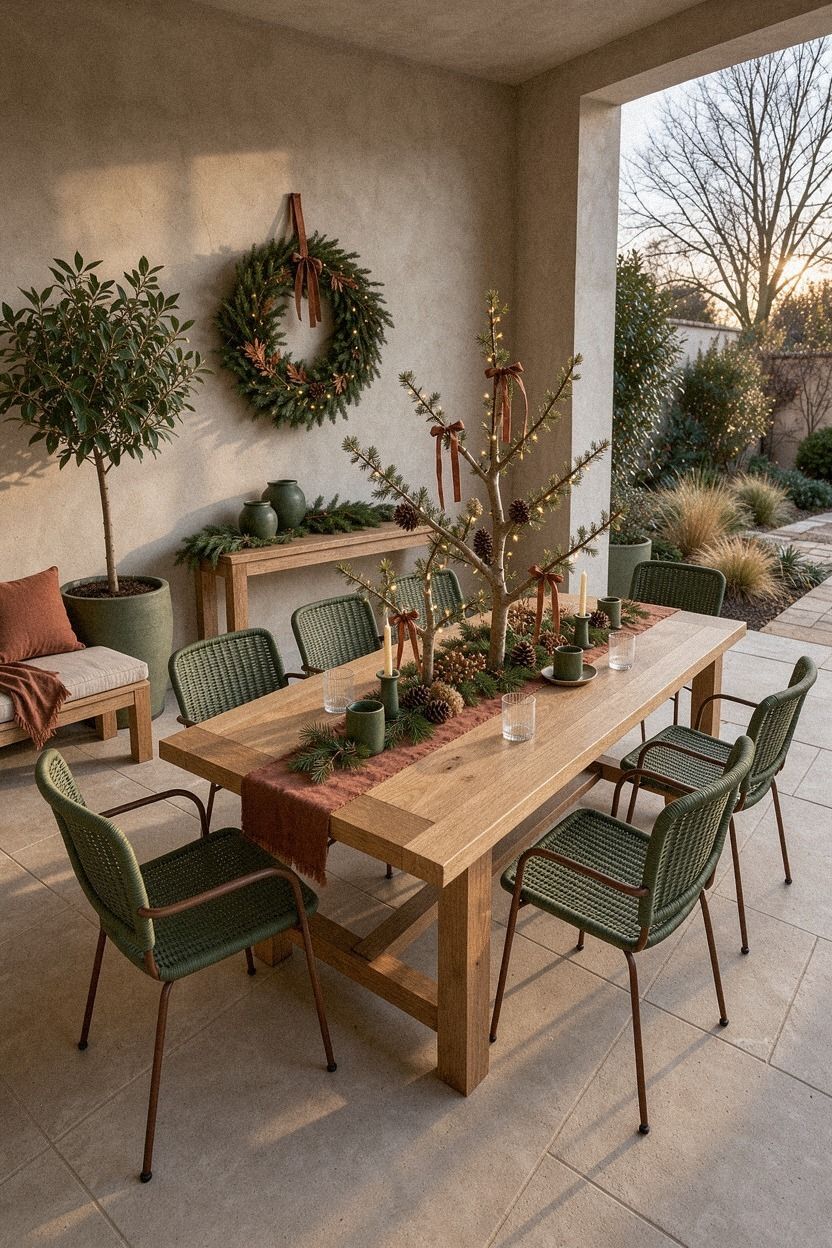
Start with three visual heights: a low spreading branch, a medium cluster, and one taller stem that gives your eye somewhere to travel. This is my Three-Height Branch Rule, and it keeps a free arrangement from looking like a heap of clippings.
Place the widest branch first, letting it reach toward one side of the table. Add two or three medium stems near the center, then slide one taller twig behind them. Your arrangement should have movement from side to side and a little depth from front to back.
If the room has hand-applied Venetian plaster nearby, choose darker evergreen branches for contrast. A soft, bright room can handle deeper greens, while a moody room may need pale berries or dried seed heads.
Don't force the tall piece to stand straight. A slight lean feels organic, and your eye will follow it naturally. I once trimmed a branch until it became too tidy, then regretted it because the arrangement lost all its personality.

4Layer Evergreen Over a Loose Base
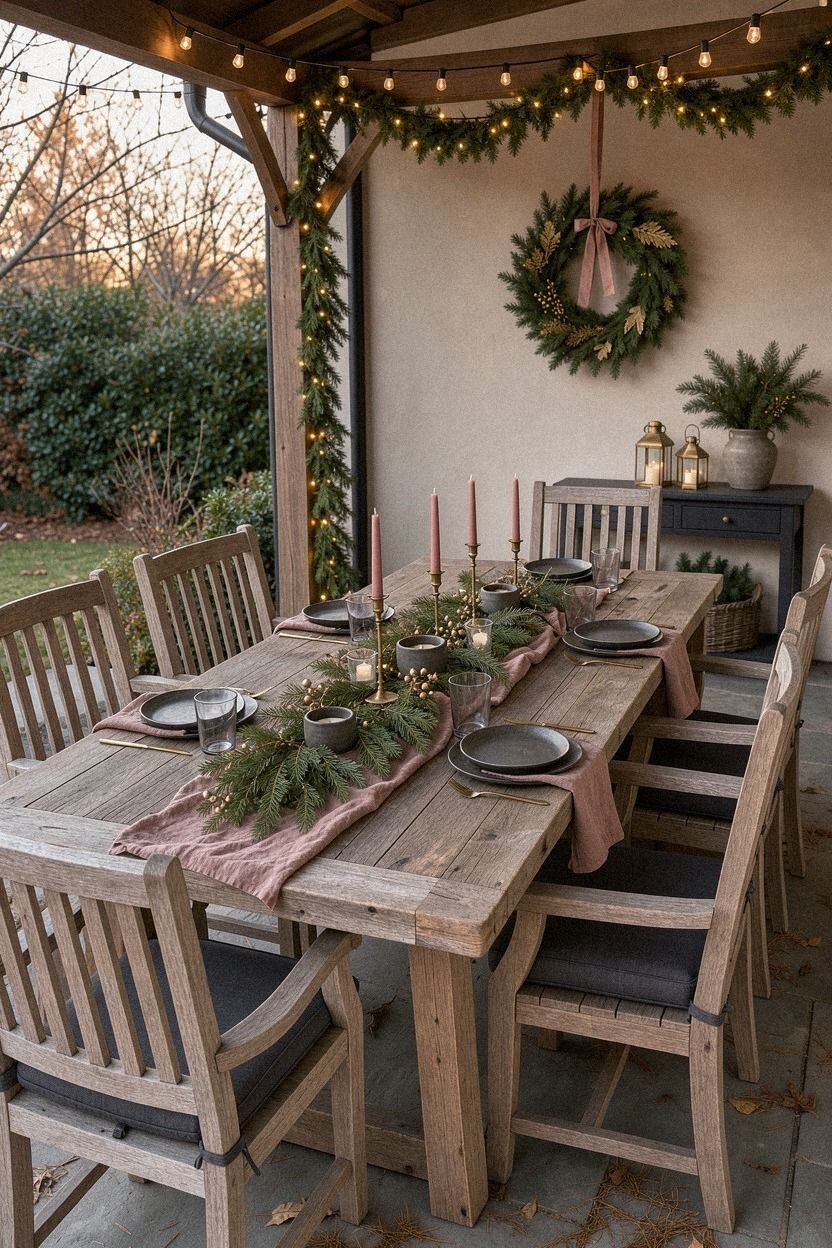
Use one evergreen variety as the foundation, then tuck a second kind through it.
Which Greenery Holds Up Best?
Evergreen branches with firm needles usually hold their shape longest. Cedar, fir, pine, and arborvitae can stay attractive for several days when the stems are freshly cut and kept in water.
Rosemary adds fragrance and a small, silvery leaf. Reclaimed weathered teak contributes a muted, grounded note and works well when you want the centerpiece to feel restrained rather than traditionally red and green.
Bare branches are useful when the arrangement starts looking too soft. Birch, dogwood, and curly willow add height, rhythm, and a sculptural quality. Use only one strong branch shape at a time so the composition stays clear.
5Add Berries for a Red Detail
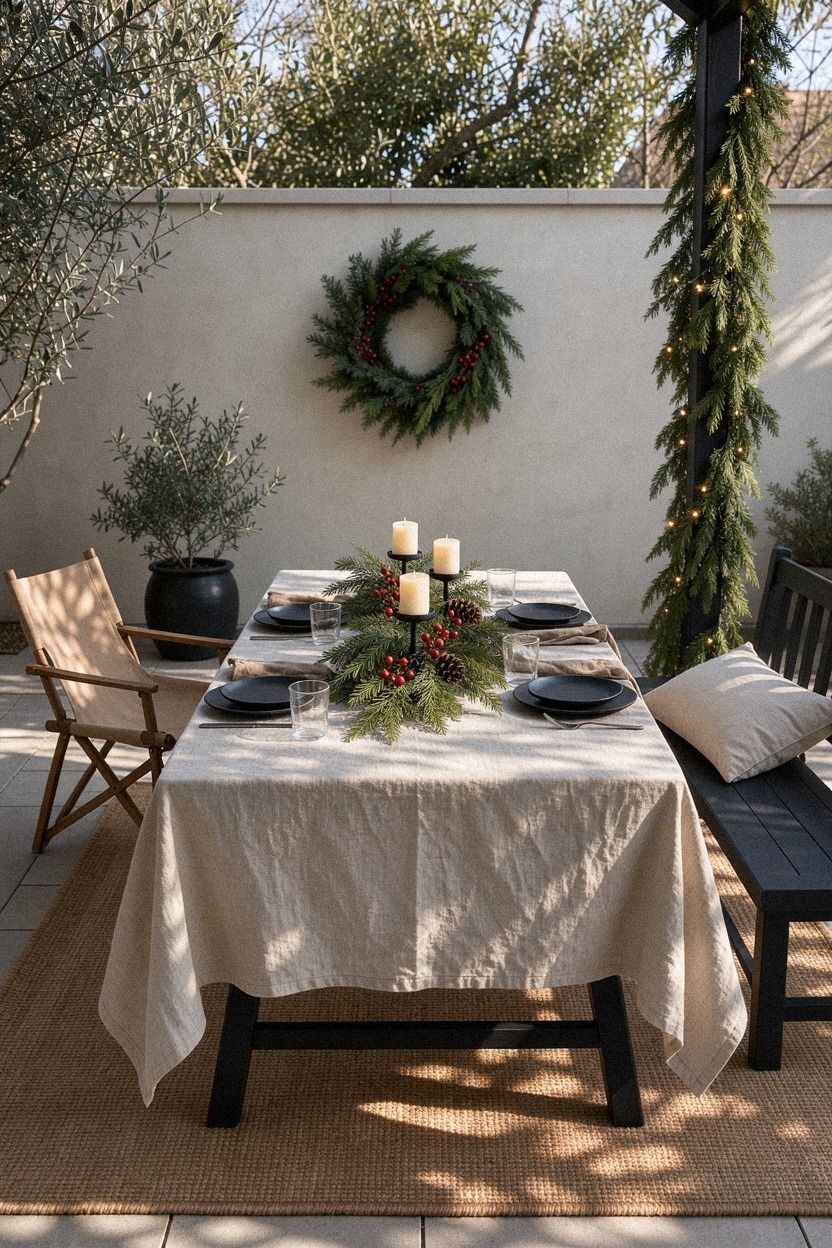
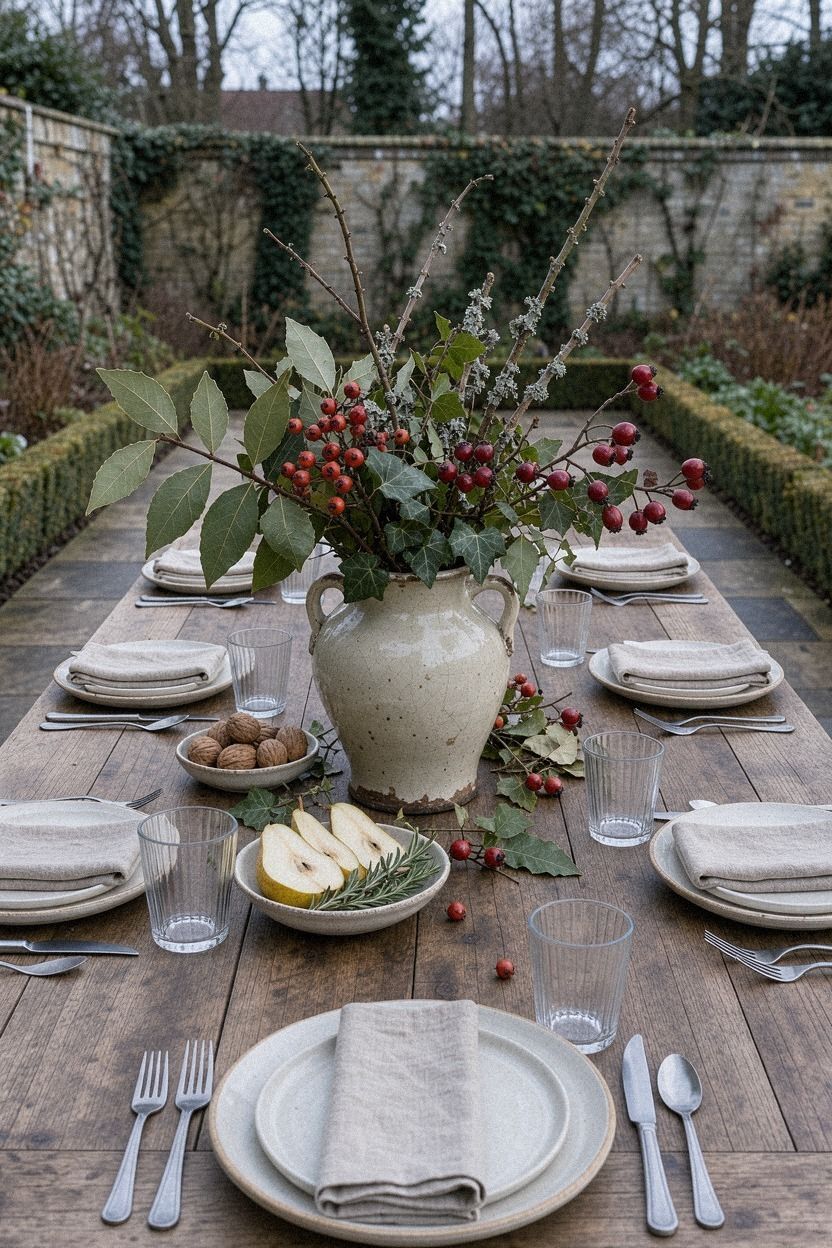
Red berries give a natural Christmas centerpiece its holiday signal, but you don't need a large amount. A few winterberry stems or crabapple branches can carry color through the entire arrangement.
Place the berries where the eye will catch them first, then repeat the red lower down so the color doesn't float awkwardly above the greenery. Use a narrow cluster rather than distributing single berries evenly.
I like to tuck the berries into one side of the branches, then add a smaller echo on the opposite side. Your arrangement will feel balanced without becoming mirror-like.
If you're unsure whether a berry is safe around your family, leave it out. You can use dried hydrangea, red ribbon, or washed Belgian linen instead. Washed Belgian linen adds relaxed texture beside fresh fir, especially after the candles are lit.
Don't add every red object you own. One strong color note is enough. A centerpiece becomes more sophisticated when you edit it.
6Mix Garden Greenery Over Store-Bought Garland
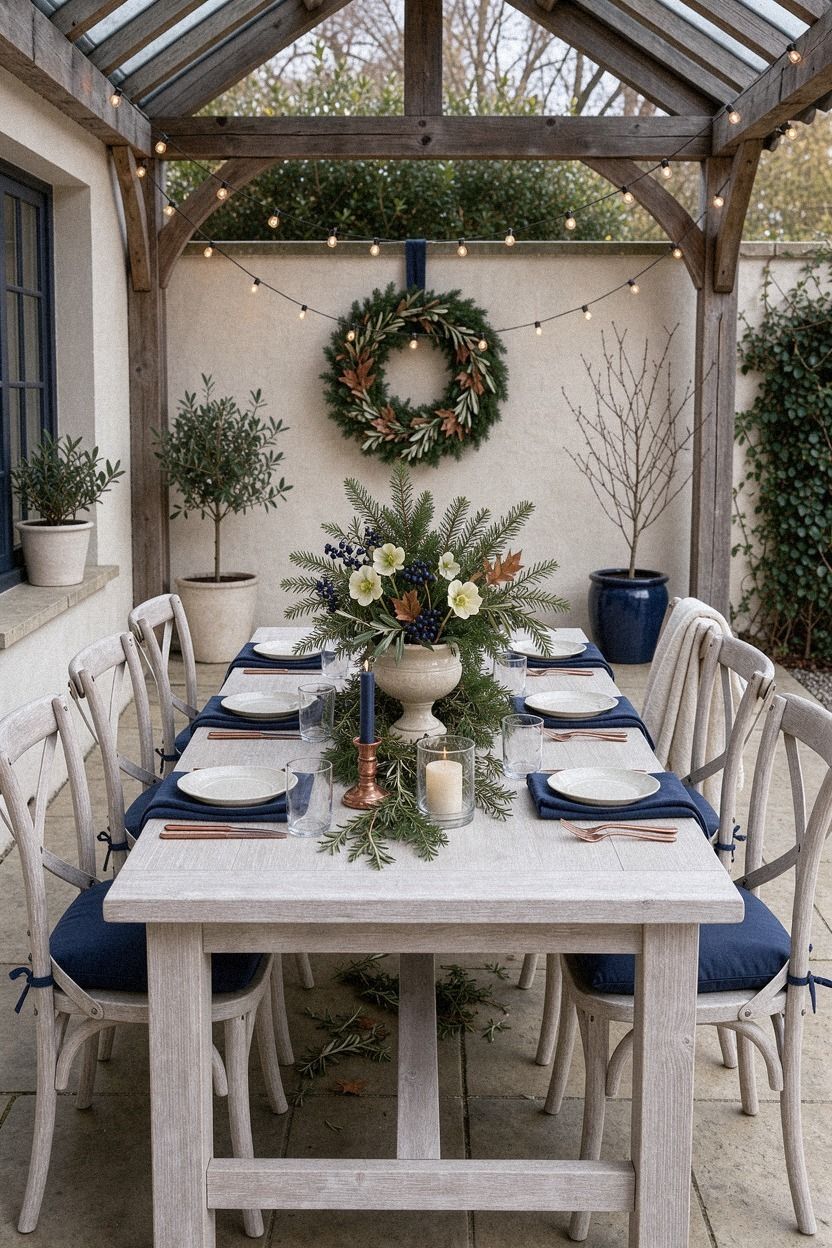
Skip the urge to buy a long strand of artificial garland if your garden already offers usable branches. Combine loose cuttings with one or two preserved pieces you own, then let the natural variation do the decorating.
Lay the greenery along the middle of a long table, or create two smaller clusters at either end of a console. If you're styling a coffee table, keep the arrangement compact enough to leave space for a mug and a book.
I tested store-bought garland against loose cedar last year, and the garden version won because the stems curved differently. The artificial strand looked consistent from end to end, while the natural one caught the light in uneven, charming patches.
If you don't have enough greenery, ask a neighbor after pruning day. Make sure you know where the branches came from before bringing insects indoors.
A Small-Space Version
A small apartment doesn't need a miniature forest. Choose one low vessel, three or four short branches, and a few pinecones. Keep the display within the usable area of the table.
A shallow bowl works well on a coffee table because it leaves room for drinks. A narrow pitcher can sit on a console without blocking a doorway. Compact ceramic bowls also make the arrangement easy to move when guests arrive.
If the room is already busy, remove one type of greenery. The centerpiece will feel calmer, and the remaining textures will have more impact.
7Anchor the Arrangement With Pinecones
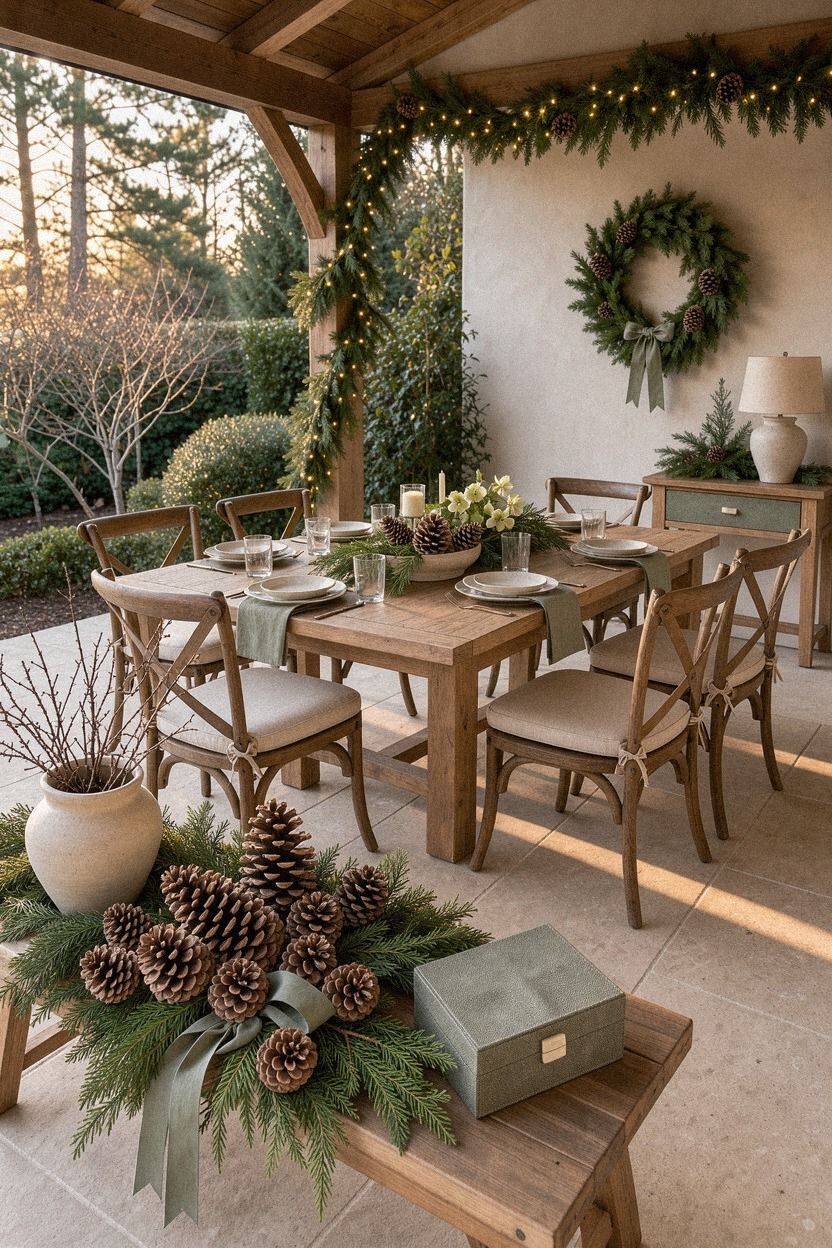
Pinecones give your centerpiece weight, while shagreen accents add texture and a refined rustic edge without introducing another strong color.
8Layer Candlelight Below the Branches
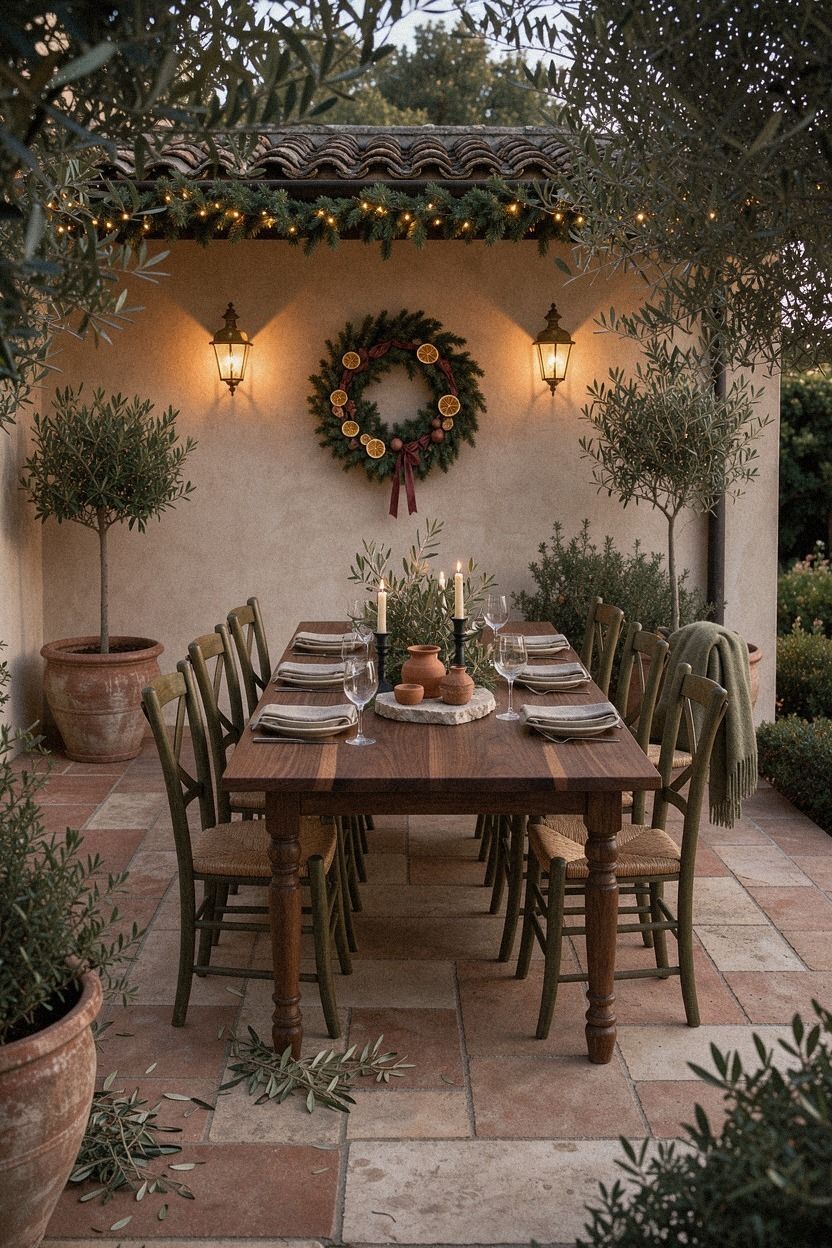
Candlelight makes garden greenery feel intimate after sunset, but place the light below the foliage rather than burying candles inside it. Use glass votives, small jars, or holders you already own.
A book-matched walnut surface or tray keeps the display grounded and lets branch shadows fall across the wood. Set candles in a loose line beside the arrangement instead of a perfect row.
If you're using a wooden table, add a tray beneath the flame and keep every dry stem well away from heat. Battery candles are a practical choice if children, pets, or flowing sleeves will be nearby.
I like to turn off the overhead light and leave only the candles and one lamp on. A lamp with a linen shade creates a soft pool of light, while the greenery throws irregular shadows across the wall.
Your centerpiece will look different at 5 p.m. than it did at noon, so test it in the evening before guests arrive. Two or three gentle points of brightness are enough for a relaxed mood!
What Should Stay Out of Water?
Dry materials such as pinecones, dried hydrangea, ornaments, ribbons, and bare twigs should stay above the waterline. They can become moldy or soften if they're left submerged.
Keep fresh stems together in the vessel, and place dry decorative pieces around the outside. Aged bronze ornaments add depth without competing with the greenery.
If you want to include dried flowers, use a separate small jar or attach them loosely to the arrangement. That makes them easier to remove if the fresh branches need a water change.
Never place a candle inside a vessel filled with loose dried material. The flame needs a clear, stable area around it.
9Frame the Display With a Painted Backdrop
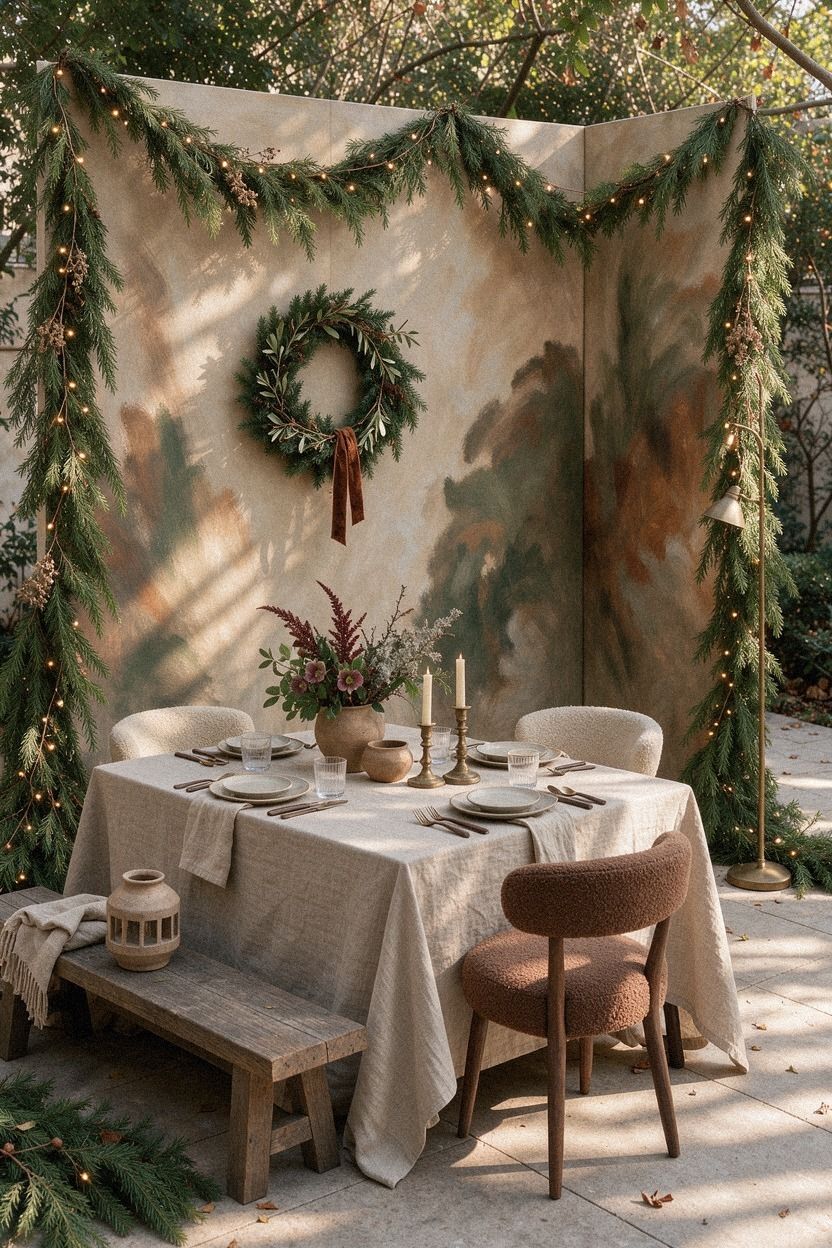
If your table sits against a wall with organic bouclé, use that soft texture to make the greenery stand out.
10Protect Freshness With Water and Placement
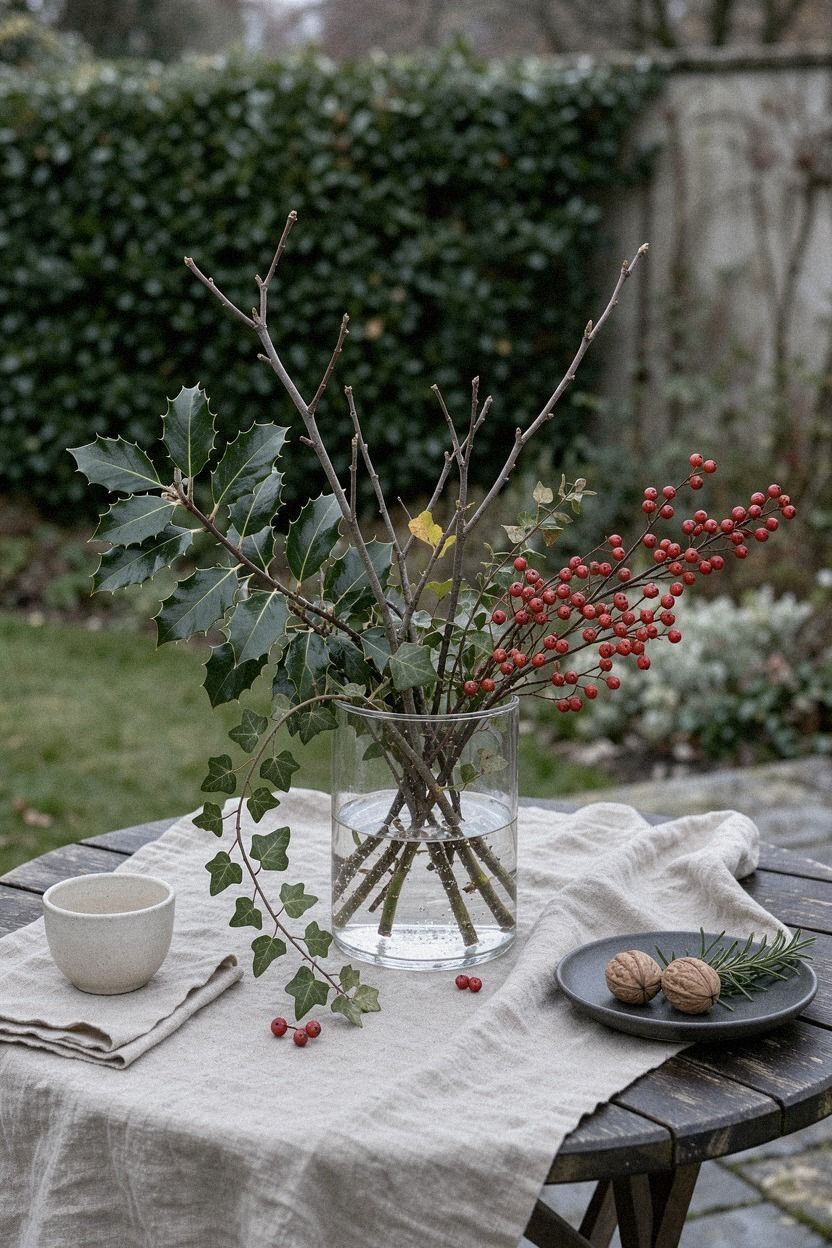
Fresh garden cuttings last longer when you treat them like flowers. Recut the stems before placing them in clean water, remove leaves below the waterline, and check the vessel every day.
If the water turns cloudy, replace it. Your greenery won't stay fresh beside a heat vent, wood stove, or strong afternoon sun. Keep the arrangement away from fruit bowls too, since ripening fruit can affect nearby foliage.
For a longer-lasting display, combine fresh evergreen with dry materials such as pinecones, bare twigs, and dried hydrangea. The dry elements won't wilt, so the arrangement can change gradually.
Unlacquered brass is a useful material reference if you want the greenery to feel warmer and more layered in the room. It pairs well with plum, grey, and rose gold.
I learned this the messy way after leaving cut branches in warm water for four days. The smell arrived before the guests did.
Check the water. It takes less than a minute.
When Fresh Branches Start to Droop
If the tips begin to sag, remove the branches and recut the stems underwater if possible. Place them in fresh, cool water and give them several hours away from heat.
A drooping branch may also be too heavy for the vessel. A narrow-neck pitcher can support tall stems better than a wide bowl, while a low bowl needs shorter, lighter cuttings.
Don't keep a failing branch simply because it was part of the original design. Remove it, shorten it, and let the arrangement adjust. Garden materials are flexible.
11Set the Table Around One Focal Point
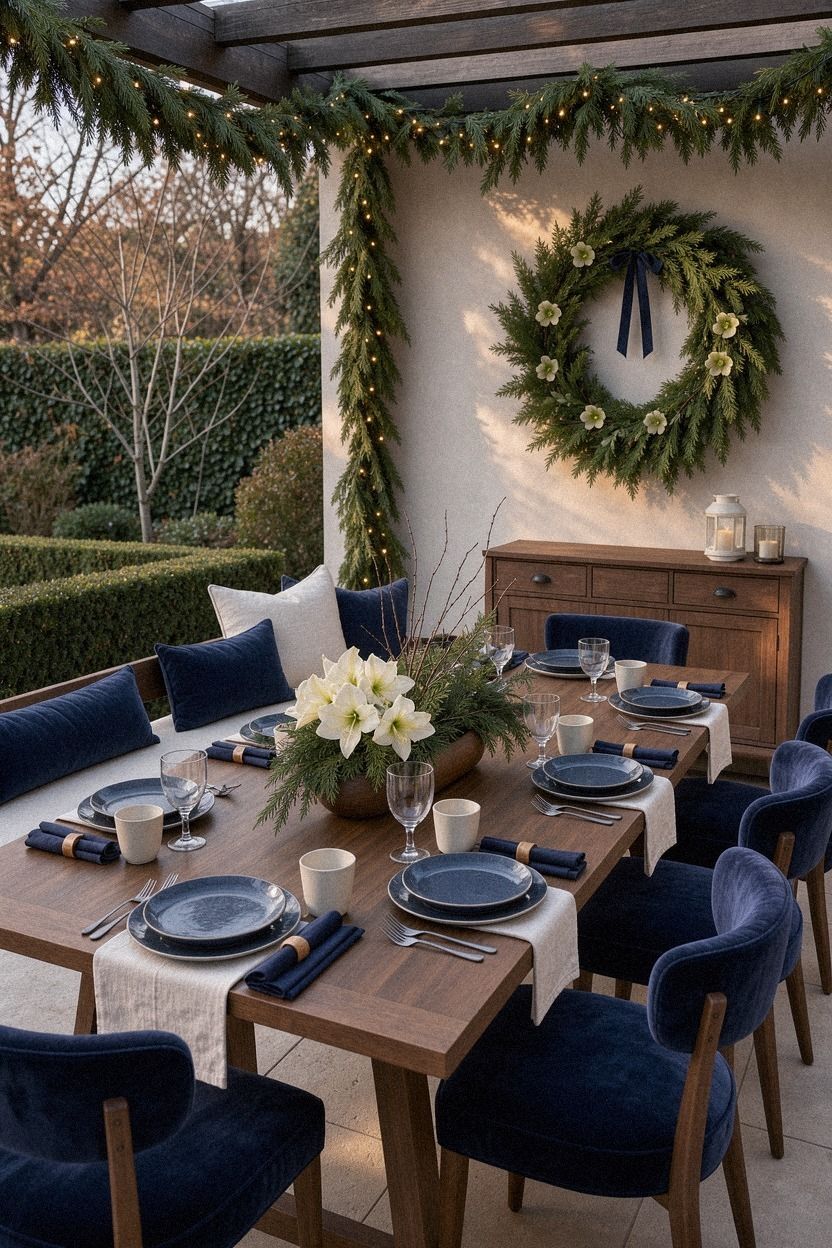
Finish by placing the centerpiece, then style everything else around it. Put the main vessel slightly off-center on a dining table, or center it on a coffee table with enough room for books and drinks.
Linen napkins add softness if you already have them, but ordinary cloth napkins work just as well. Keep plates, glasses, and serving dishes in their real positions while you edit the display.
Your coffee table should still have a clear landing spot, and your dining table should still allow people to see one another. If the room includes a rug, make sure the seating remains grounded on an 8x10 or 9x12 layout.
I often remove one element at the end. A branch, ornament, or pinecone that seemed helpful at first may be the piece making the arrangement feel crowded.
If your seating uses deep-pile mohair velvet, repeat its rich texture in the table linens or dried stems. Small echoes make the room feel gathered without requiring a matching Christmas collection.
The Garden Materials I Would Keep
I prefer garden centerpieces because they carry evidence of real life. One branch may be crooked.
A pinecone may have a chipped scale. The greenery may deepen in color after a few days.
Rosemary sprigs are especially useful because they bring fragrance, fine texture, and a silvery green tone. They can soften a heavier arrangement without requiring another decorative purchase.
I have made the mistake of gathering too many varieties at once. The result was lively, but it had no center. Now I choose one dominant green, one supporting texture, and one color accent.
That restriction makes decisions easier, and it leaves room for the materials to show their own shapes. The free part matters because a holiday table shouldn't depend on a new delivery.
Your garden, cupboard, and a few minutes of attention can create something personal. If you're using a rental or a small apartment, this approach also keeps storage manageable.
After Christmas: Compost and Store
When the season ends, separate the materials before putting anything away. Dry ornaments, vessels, ribbons, and candleholders can return to storage. Fresh greenery can go into the compost if it hasn't been treated with chemicals.
Clean the vessel with warm water and mild soap. Let it dry completely before storing it. Galvanized buckets should be dried carefully so moisture doesn't encourage rust.
Pinecones can return to the garden or wait in a labeled box for another project. Keep them somewhere dry and inspect them again before next winter.
This small cleanup makes the arrangement feel worthwhile beyond one evening. The vessel keeps working, and the garden materials return to their own cycle.
The Questions I Get Asked Most
What is the best DIY Christmas centerpiece from the garden for a small backyard?
A low bowl with cedar, pinecones, and a few rose hips is the best choice because it stays compact and won't block conversation. Your arrangement can sit on an IKEA KALLAX console or small table, with one glass votive for a warm evening glow.
Where can I buy DIY Christmas centerpiece pieces on a budget?
Look at thrift stores, charity shops, and local resale groups for simple glass vessels, ceramic bowls, and candleholders. Check your cupboards first. Your garden should supply the greenery, branches, and pinecones for free.
How much does a DIY Christmas centerpiece makeover cost?
A garden-based centerpiece can cost $0 if you already have a vessel, pruners, and candles. If you need a container and a few votives, a thoughtful budget is usually $10 to $25. The value comes from reusing pieces you'll keep.
Can I create a DIY Christmas centerpiece on a budget?
Yes, and your first three choices can be free: garden cuttings, a cupboard vessel, and gathered pinecones. Add one thrifted bowl or a simple cotton runner only if your table needs more texture. You won't need matching ornaments.
Is a garden centerpiece worth it in a small space?
Yes, because a small space helps you edit. Choose one low vessel, keep the branches within the table's usable area, and leave a clear place for drinks. A compact centerpiece can make your room feel inviting without taking over the surface.
Is a garden centerpiece a good idea for a rental?
Yes. Use a freestanding bowl, a removable runner, and battery candles instead of attaching anything to the wall. You can move the arrangement between the dining table, coffee table, and console whenever your layout changes.
How long will fresh garden greenery last indoors?
Most fresh evergreen cuttings can look good for several days to a couple of weeks when kept in clean water and away from heat. Cedar and fir often hold up well. Check the stems daily and remove anything that turns soft or unpleasant.
Where I'd Start First
If I had to pick one step, I'd start with gathering the greenery. Cedar, pinecones, and one crooked branch give you texture before you spend anything, and you can build the whole centerpiece around their shapes.
Cut what your garden offers, place it in your favorite bowl, and let the room stay lived-in. The best arrangement may be the one that looks as though it grew into the table naturally.


