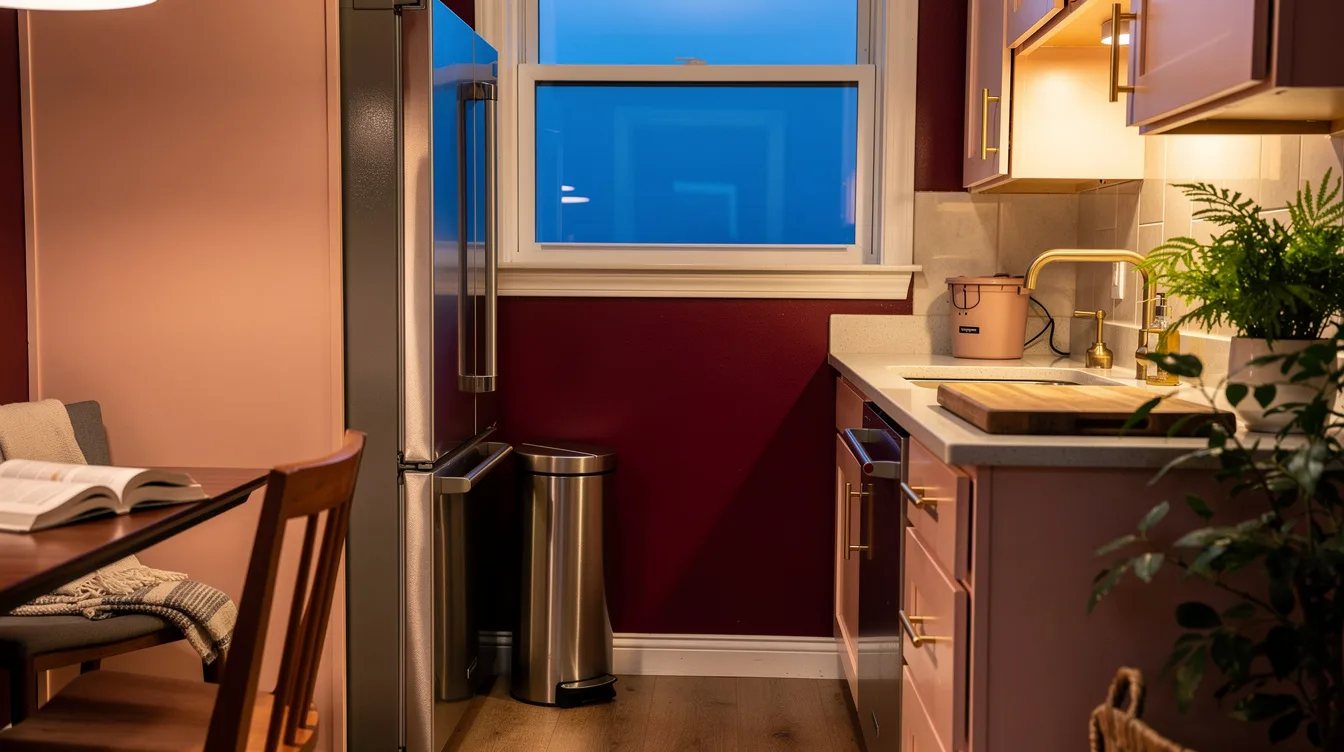
Small Kitchen Feeling Like a Black Hole? 14 simplehuman Cans and Caddies
29 september 2026Our small-kitchen test started with a simple reality: a can that holds about 12 gallons can still fail when its lid hits the counter or its pedal blocks the walkway. The useful simplehuman choices are slimmer and more specific, from a narrow freestanding bin to a cabinet pull-out or a 1-gallon food-scrap caddy.
Measure the space you can spare, then match the container to the job. That approach keeps the kitchen functional without forcing an oversized can into a room that cannot support it.
What you will find inside
- Measure the gap before choosing capacity
- Slide the Slim Step Can beside the fridge
- Protect the pedal clearance
- Pull recycling beneath the counter
- Choose one bucket for a galley
- Use the butterfly lid below low counters
- Fit the semi-round can into a corner
- Give food scraps a dedicated station
- Mount the caddy where prep happens
- Hide light waste inside the cabinet
- Keep the main bin off the work zone
- Match the lid to the counter height
- Plan the two-station setup
- Choose the finish for daily handling
Measure the gap before choosing capacity
Small kitchens punish wishful measuring. Start with the exact wall, cabinet, or appliance gap, then record width, depth, and height before choosing a simplehuman can.
Leave room for a foot pedal, an open lid, and the person standing in front of it. A bin that technically fits can still make a narrow walkway feel blocked.
Slide the Slim Step Can beside the fridge
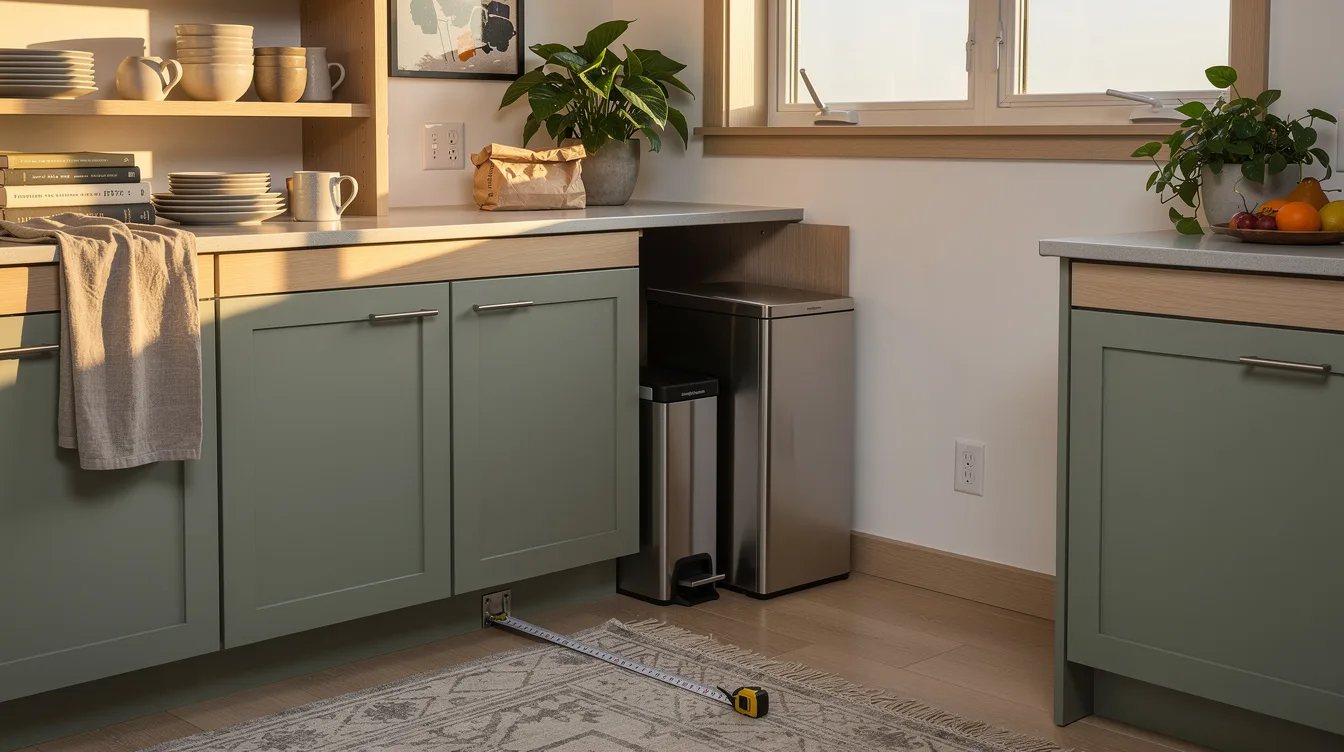
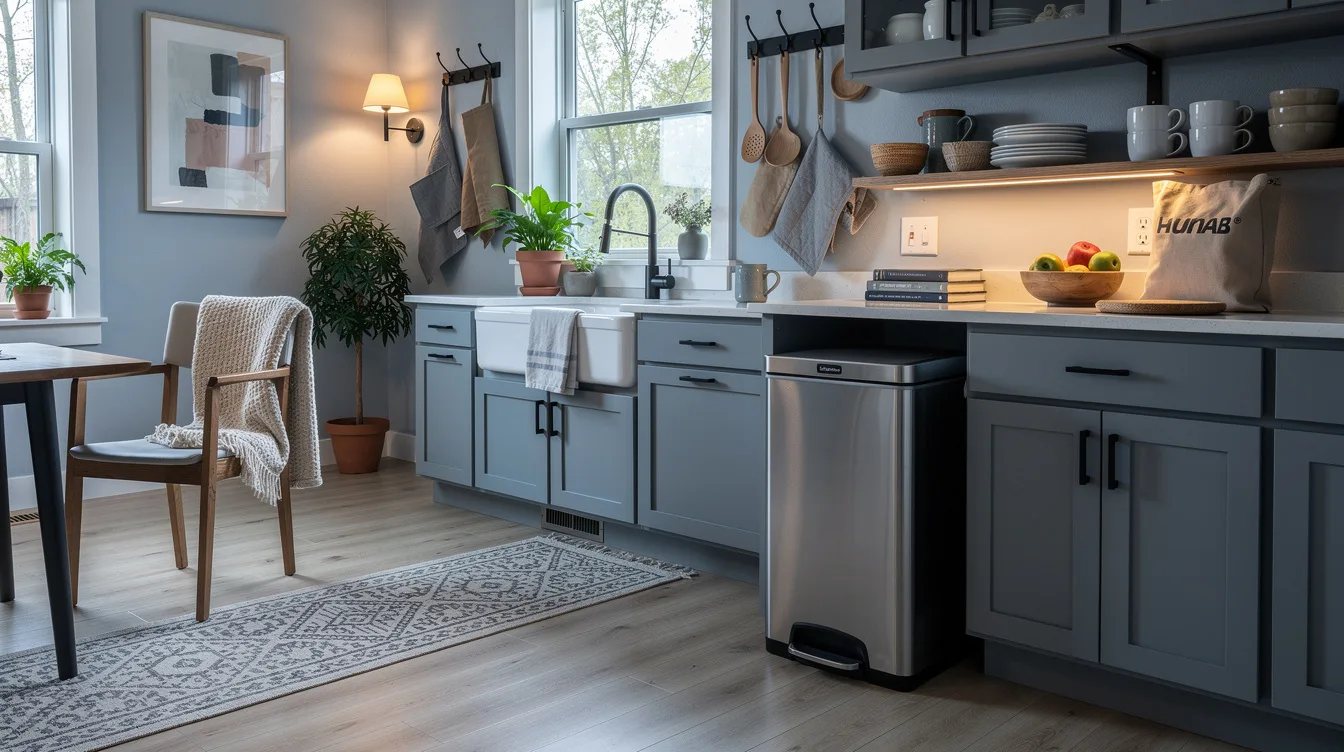
The simplehuman Slim Step Can is the strongest freestanding choice for a narrow strip beside a refrigerator or pantry. It holds about 12 gallons, enough for normal household use without demanding the broad footprint of oversized models.
The brushed stainless steel body, steel pedal, concealed liner rim, soft-close lid, and fingerprint-resistant silver-ion coating give the can a tidy working surface. Its typical 2026 price is about $110 to $120, depending on finish and promotions.
Protect the pedal clearance
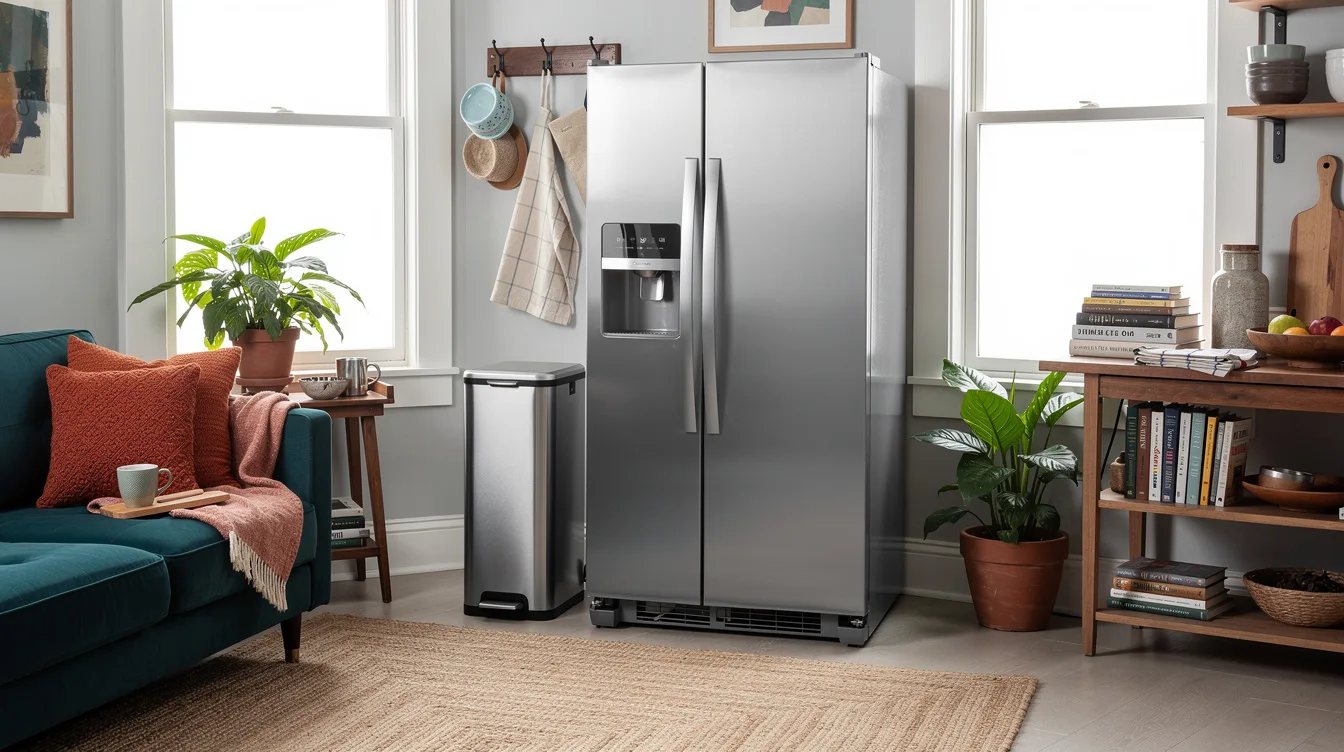
A narrow bin needs forward space as much as side-to-side space. Keep the pedal of the Slim Step Can clear of a drawer pull, dining chair, or cabinet door so opening it does not require an awkward sideways step.
We would tape the proposed footprint on the floor for a day before buying. That quick test reveals whether the can interrupts the route between the sink, refrigerator, and cooking surface.
Pull recycling beneath the counter
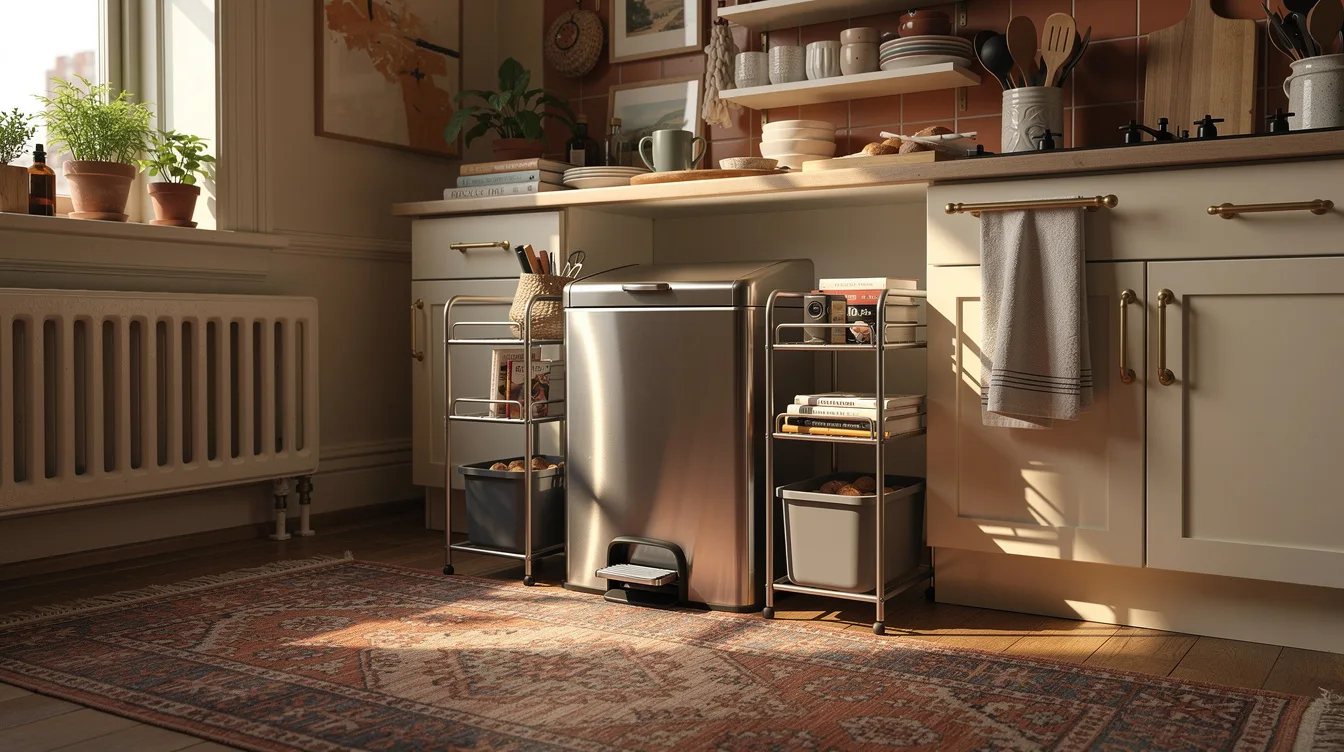
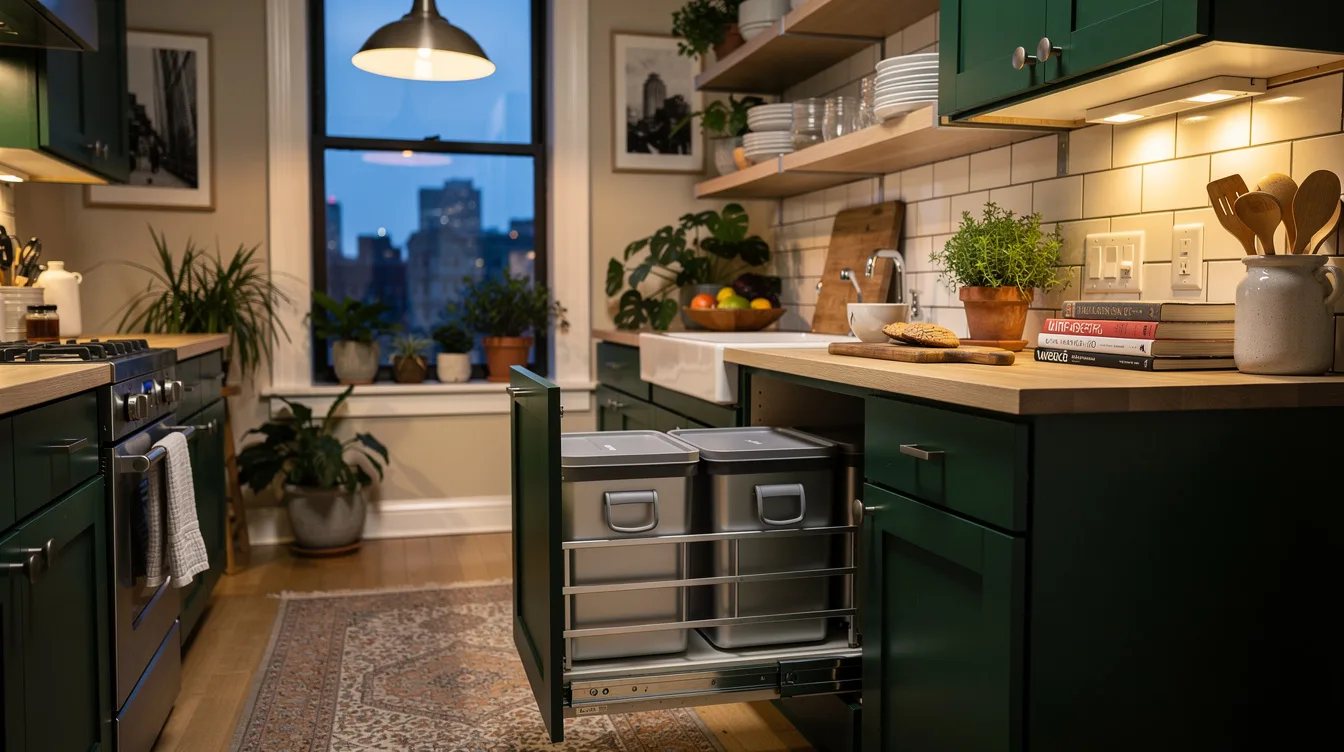
When a base cabinet is available, the 35 L Dual-Compartment Under-Counter Pull-Out is the cleanest small-kitchen layout. Its two buckets hold about 4 gallons and 5 gallons, giving trash and recycling separate places inside one steel frame.
Ball-bearing runners keep the pull-out moving smoothly, while the plastic buckets are easy to lift out for cleaning. The typical price is around $100, and the arrangement keeps both containers off the floor.
Choose one bucket for a galley
The 30 L Under-Counter Pull-Out suits a galley kitchen or studio where recycling already has another home. Its single bucket holds about 8 gallons and uses a steel pull-out frame with a front handle.
This is a better fit than a large floor can when the walkway is narrow. Around $100 is a typical price, so the decision comes down to cabinet space and daily convenience rather than a major price difference.
Use the butterfly lid below low counters
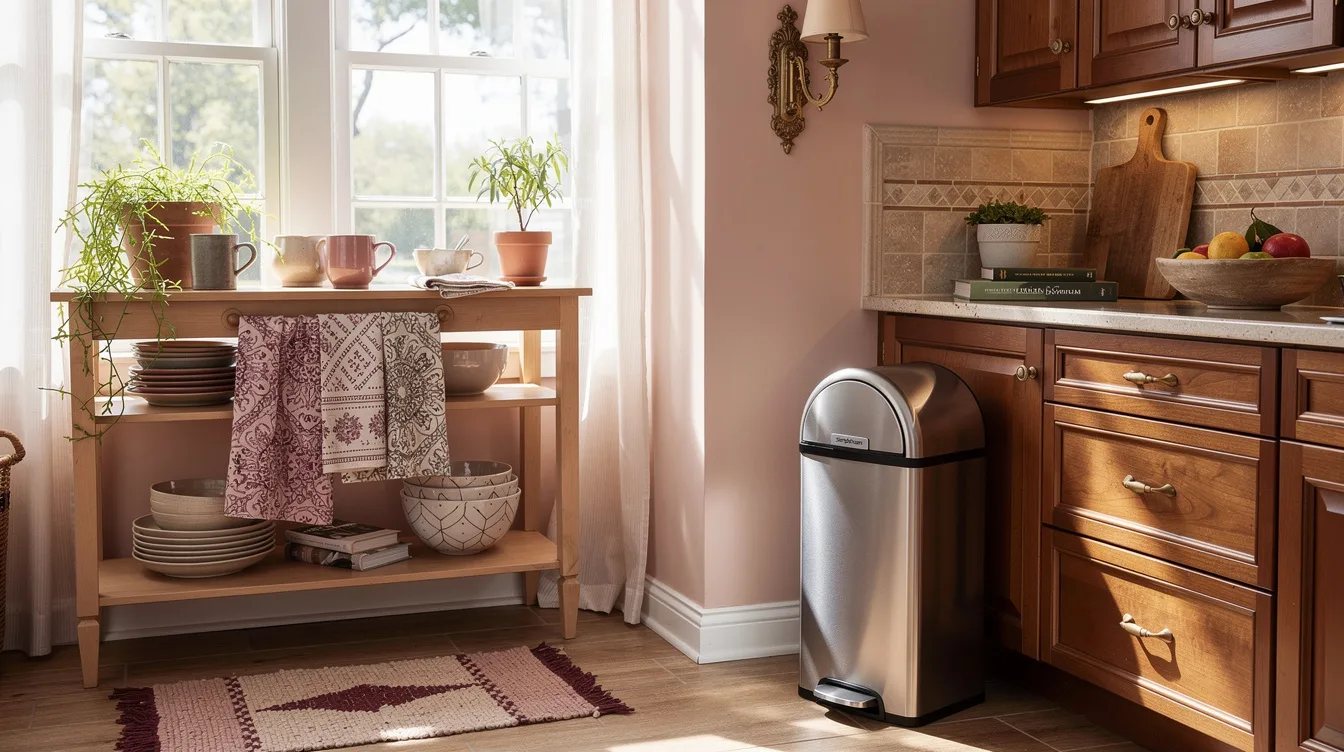
A counter overhang can make a standard lid impossible to open fully. The simplehuman Butterfly Step Can divides its lid into two panels that open upward with less height, making it the practical choice beneath a low countertop.
The brushed stainless steel finish and pedal mechanism keep the footprint familiar while solving the lid problem. Expect a typical price of about $180, which is worth considering only when overhead clearance rules out a regular lid.
Fit the semi-round can into a corner
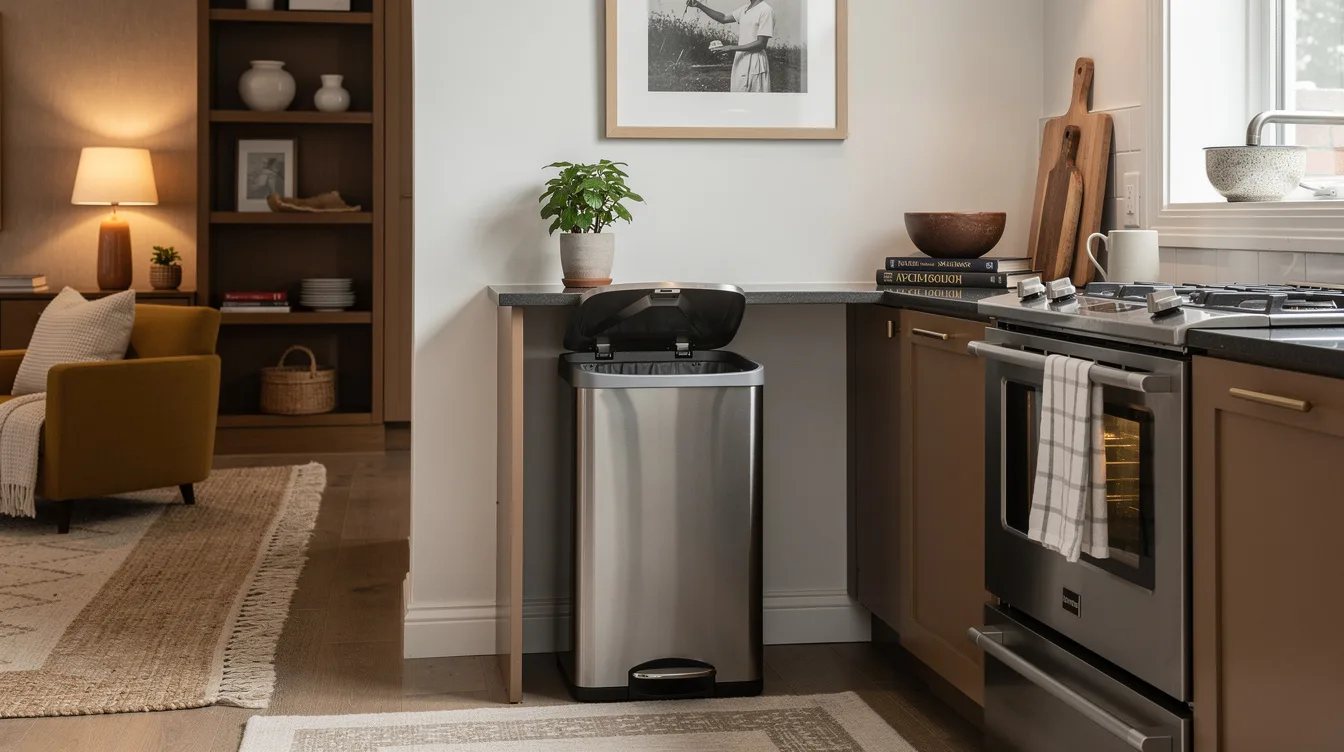
The 45 L Semi-Round Step Can works when a corner needs a conventional floor bin with a little more shape flexibility. Its published footprint is 15.8 inches wide by 14.3 inches deep by 26.5 inches high, or roughly 16 by 14 by 27 inches for planning.
The brushed stainless steel or matte finish, pedal operation, and rounded back can sit neatly against a cabinet run. A typical price is about $110 to $120, but the shape matters more than the small price gap.
Give food scraps a dedicated station
The 4 L Compost Caddy holds about 1 gallon, making it a food-scrap station rather than a primary kitchen bin. Place it on the countertop when scraps need to leave the cooking area quickly.
The brushed or coated steel finish gives the small container enough presence to stay visible without looking improvised. Typical pricing is around $50 for brushed finishes and about $60 for colored finishes.
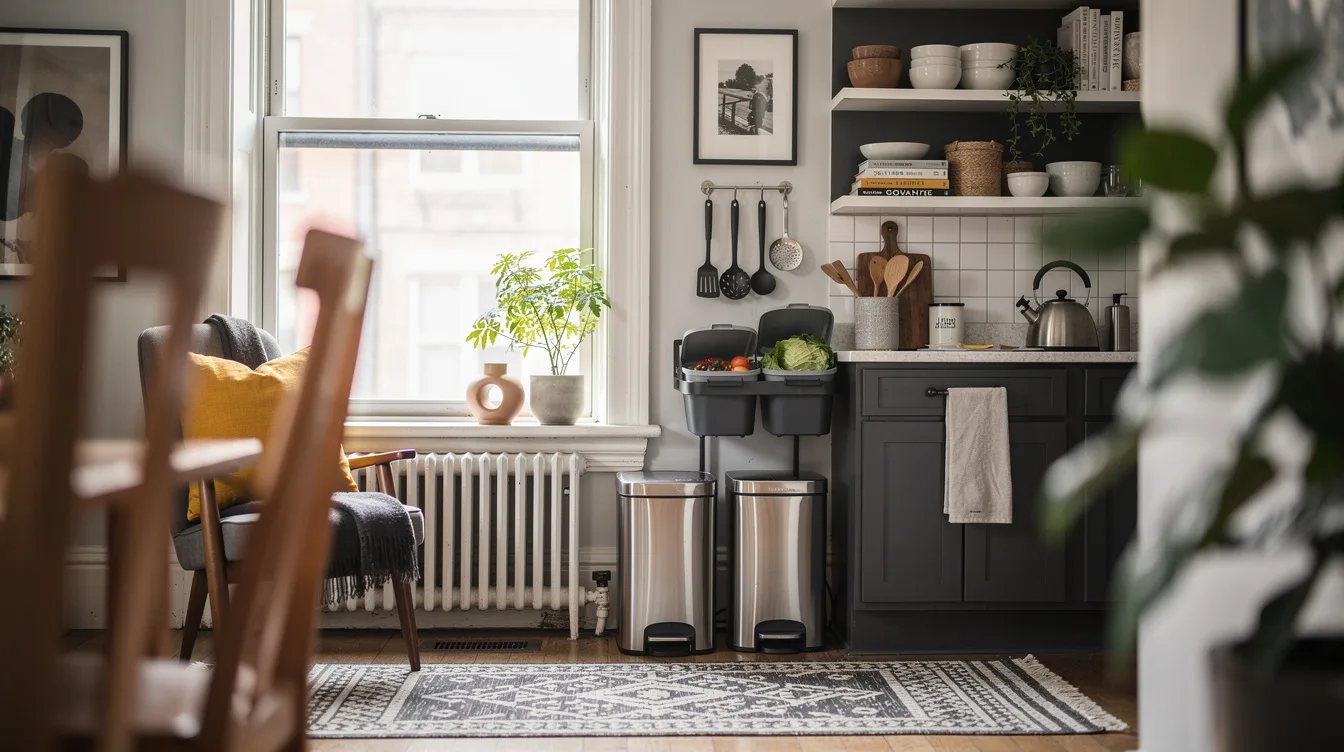
Mount the caddy where prep happens
Wall-mounting the Compost Caddy can free a crowded counter while keeping peelings within reach. Position it near the cutting board, but away from the sink splash zone and the hottest part of the range.
Its small capacity encourages frequent emptying, which is exactly why it works in a compact kitchen. It handles coffee grounds, vegetable peelings, and other light food waste without pretending to replace the main trash container.
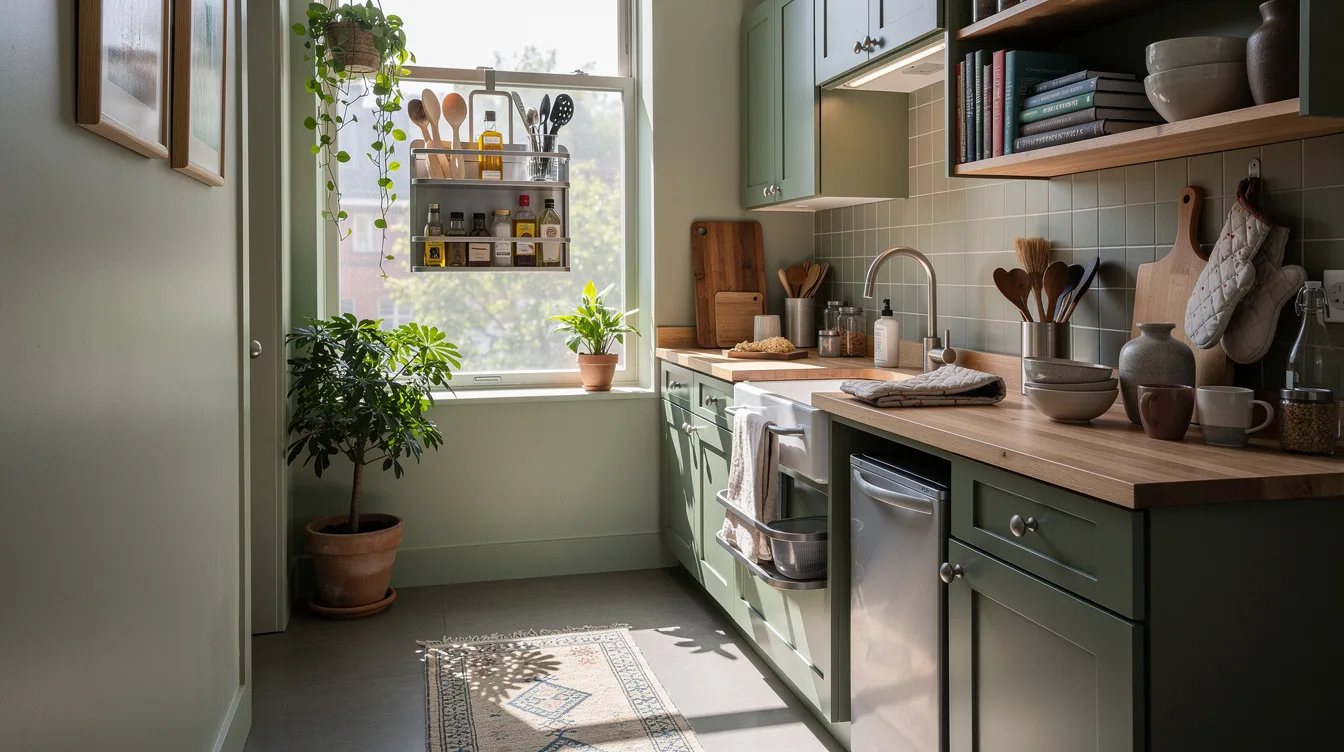
Hide light waste inside the cabinet
The 10 L In-Cabinet Can holds about 2.5 gallons and suits a door-mounted or under-sink location. It is useful for peelings, coffee grounds, and light everyday waste when floor space is already committed.
Its compact plastic construction keeps the cabinet from becoming crowded. Around $40 is a typical price, but the limited capacity makes it a secondary can for most households.
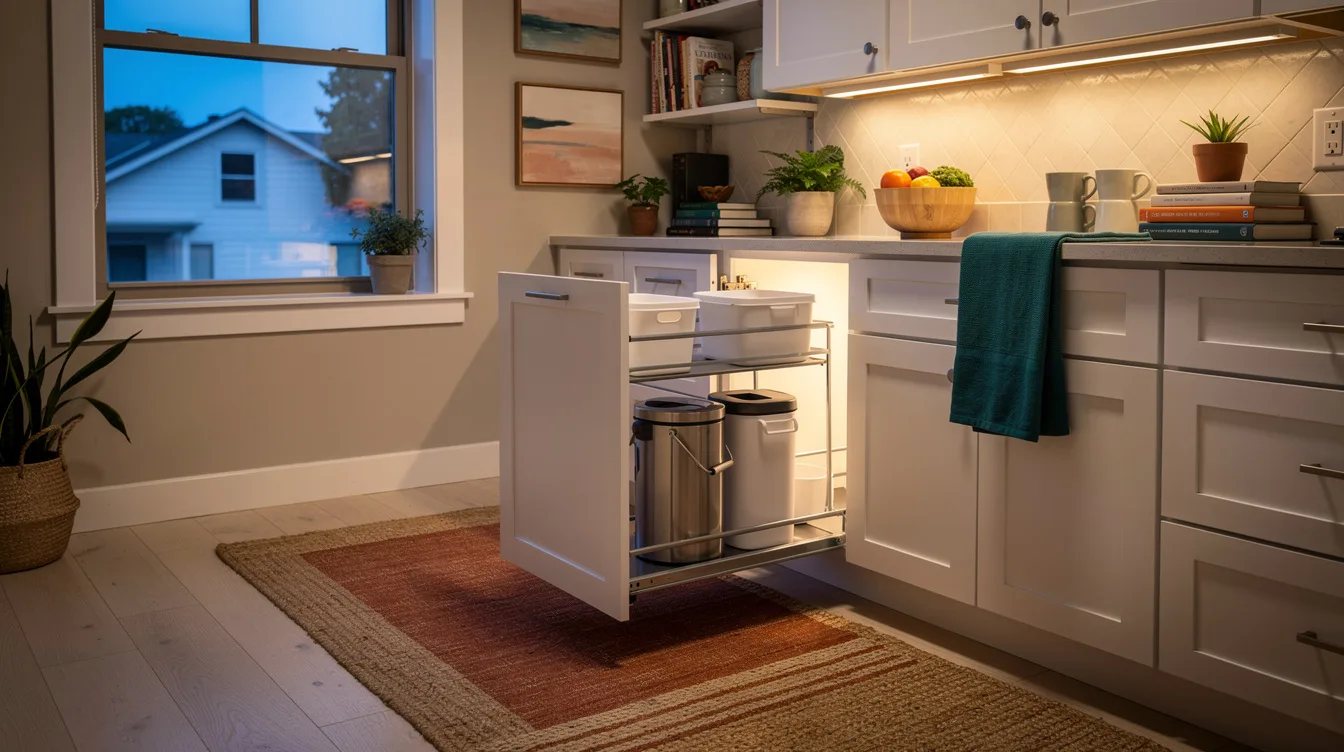
Keep the main bin off the work zone
Small kitchens need a clear prep surface, so the Under-Counter Pull-Out earns its space by disappearing when closed. Use the cabinet base for the main waste stream and keep the countertop available for chopping, drying dishes, or setting down groceries.
Check the cabinet opening before ordering, including hinges, plumbing, and the shelf edge. A pull-out that stops short of the door will be frustrating every day, even when the bucket itself fits.
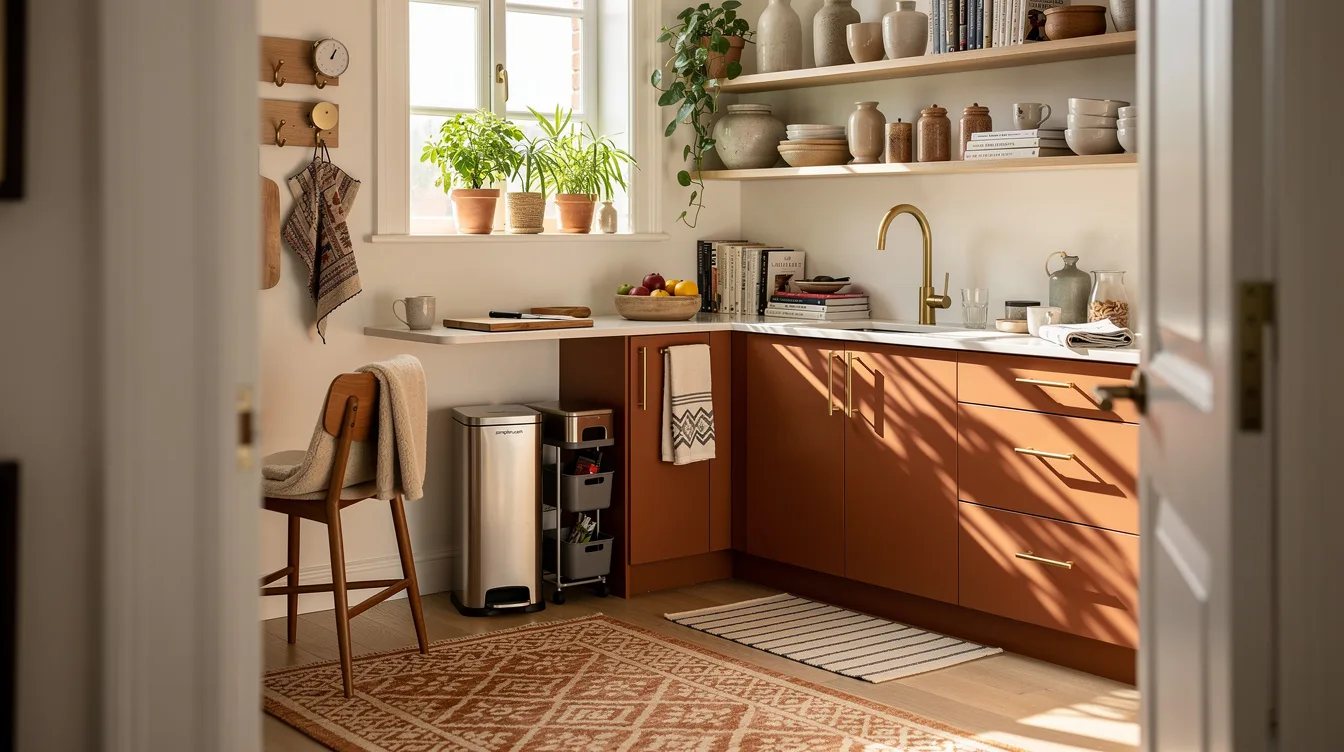
Match the lid to the counter height
Measure from the floor to the lowest obstruction above the can before choosing a Butterfly Step Can or a single-lid model. The lid path matters more than the closed height when the bin sits below a countertop.
Open the cabinet doors and nearby drawers during the measurement. This simple clearance check prevents the common mistake of solving floor space while creating a collision above the bin.
Plan the two-station setup
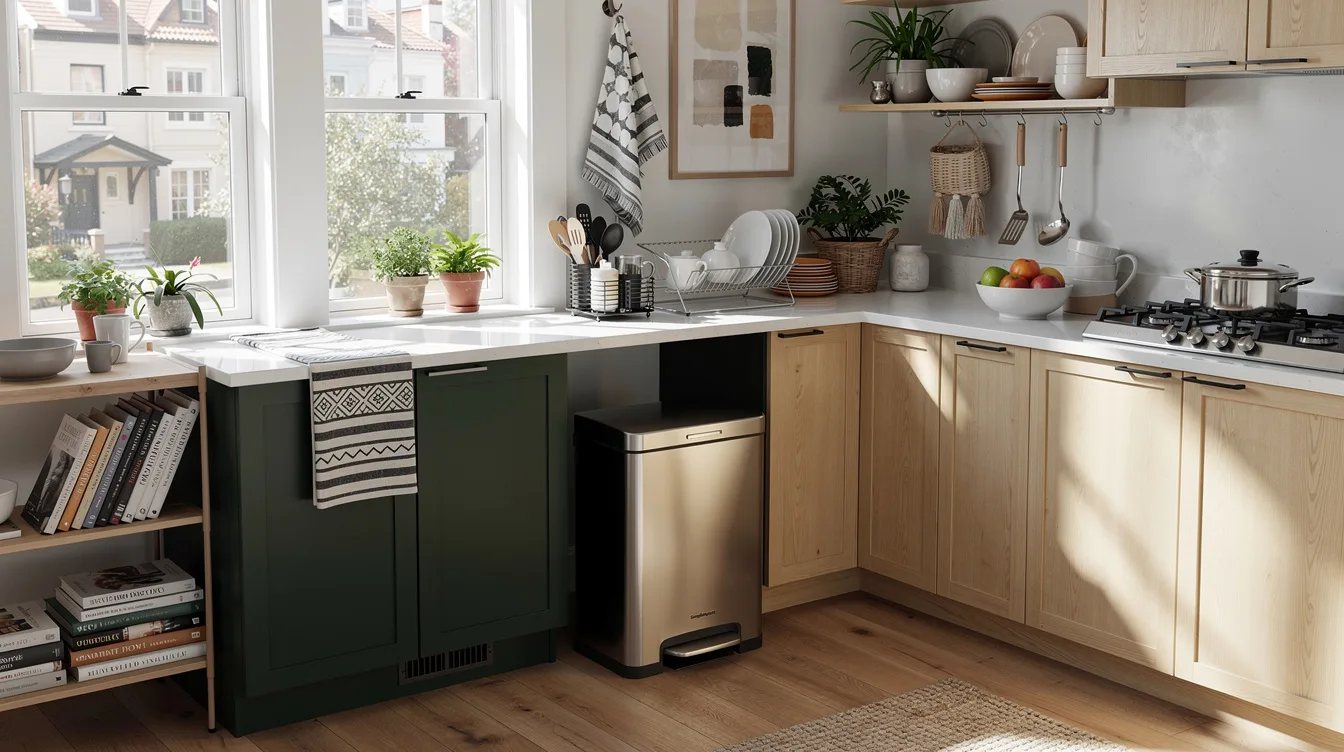
For a compact household, pair a Slim Step Can beside the refrigerator with a small food-scrap caddy near the prep area. The main can handles about 12 gallons, while the caddy keeps wet scraps from traveling across the kitchen.
When recycling volume is high, switch the floor can for the dual-compartment pull-out. The best setup follows the room's available zones, not a one-size-fits-all capacity target.
Choose the finish for daily handling
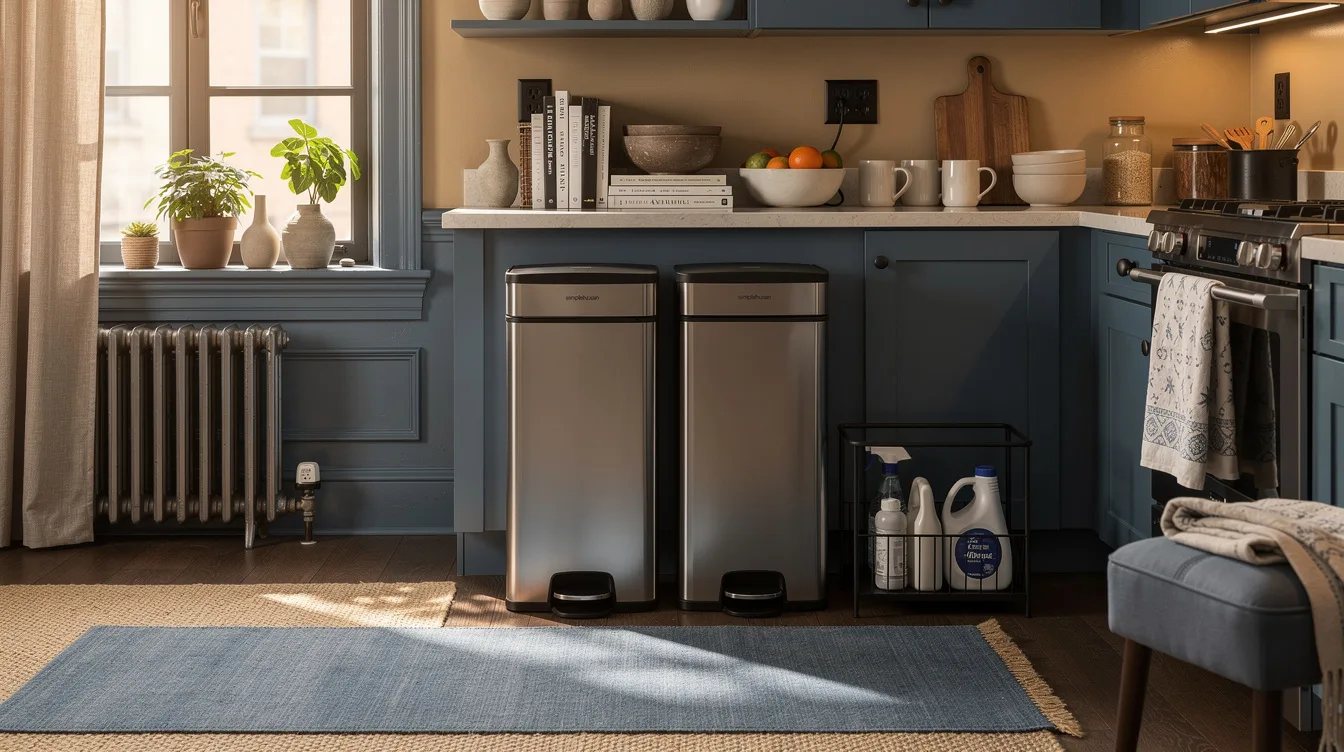
Brushed stainless steel hides ordinary fingerprints better than a highly reflective surface, which makes the simplehuman Brushed Finish a sensible choice for a busy cooking area. It also gives a freestanding can a more settled appearance beside appliances.
Colored finishes can work well for a visible compost station, especially when the caddy stays on the counter. Keep the decision practical: the shape, lid clearance, and cleaning routine matter more than matching every appliance.
Keep reading
- Small Apartment Storage Problem? 14 Seoul Ideas That Actually Work
- Small Living Room Feeling Cramped? 12 At Home Mirrors Under $80
- 14 Wayfair Small-Space Seating Arrangements Designers Actually Use
Start with painter's tape on the floor and mark the full opening path, including your feet and the lid. Once that zone is clear, choose the simplehuman format that keeps the most important work surface available.