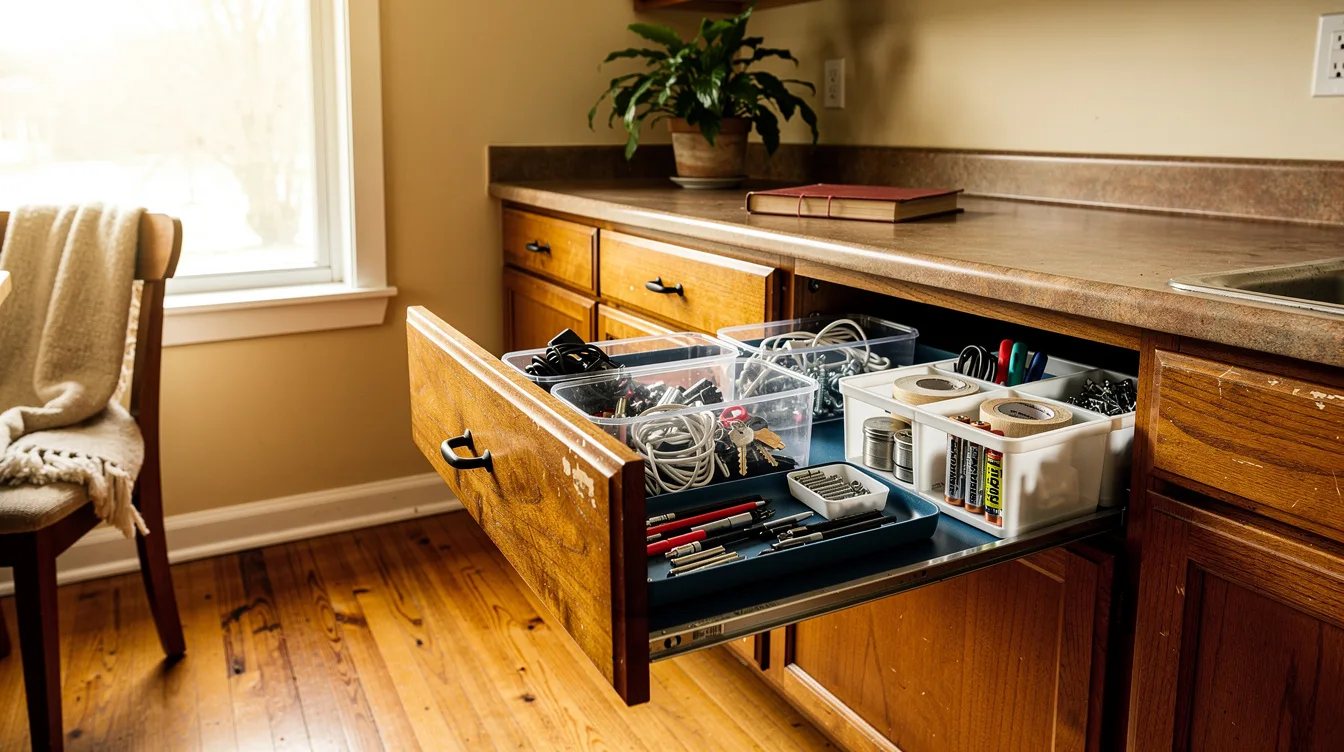
If Your Junk Drawer Has Its Own Ecosystem, These 12 Target Trays Exist
13 september 2026Open a drawer looking for one battery and find a tiny ecosystem instead: pens cross over charging cords, tape clings to spare keys, and loose screws occupy the only clear corner before one object becomes a search project. A drawer that is about 16 inches wide can still need several zones, because the usable solution is usually a set of small trays rather than one oversized insert.
Target carries the building blocks, from clear PETG and white plastic to bamboo and wire mesh. The designer-minded fix is to give each category a footprint, then leave enough open space for the next small object that enters the house.
What you will find inside
- Stop Buying One Giant Organizer
- Measure the Drawer Before Shopping
- Put Long Tools in a Long Tray
- Contain Cables Before They Multiply
- Separate Batteries From Metal Clutter
- Match Tray Depth to Tall Objects
- Use Six Compartments for Predictable Contents
- Expand the Insert for Changing Tools
- Fit Odd Shapes With Adjustable Dividers
- Choose Wipe-Clean Materials Near Water
- Spend More Only on Visible Drawers
- Give Miscellaneous a Hard Boundary
Stop Buying One Giant Organizer
The first mistake is treating chaos as a footprint problem. A fixed organizer fills the drawer with slots you may never use, while the actual mix changes as batteries, receipts, spare keys, and small tools move through the home and every search becomes a shuffle.
Start with several small Brightroom clear plastic trays, typically about $5 to $15 per set, and place them around the contents you already own. A mix-and-match layout gives cables a lane, coins a contained pocket, and the odd item a temporary landing spot, while a little empty space at the edges lets designers edit the setup without lifting the whole drawer or discarding a good tray.
Measure the Drawer Before Shopping
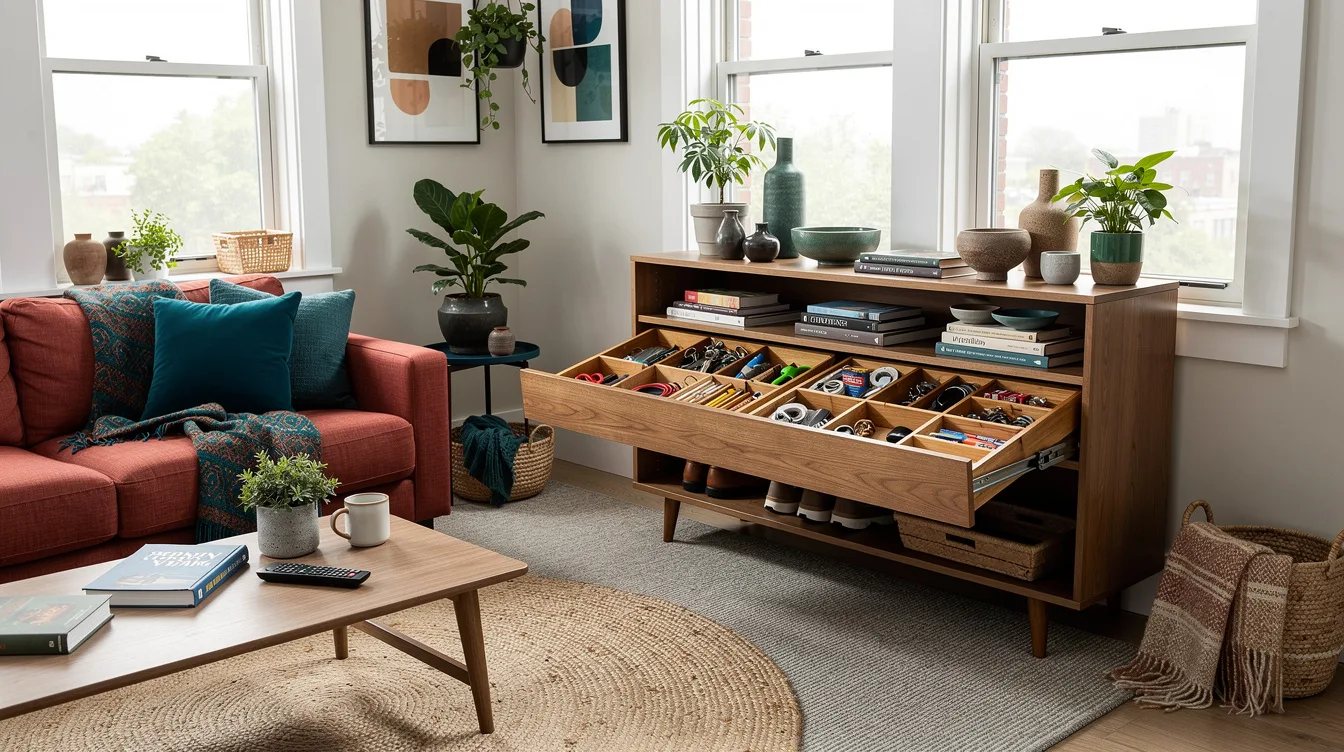
A tray that looks compact online can crowd the drawer once the drawer slides, face frame, and opening angle take their share. Measure the inside width, front-to-back depth, and usable height, then check the corners for hardware, where the drawer face overlaps the cabinet opening, and the lowest point under the frame before choosing a set.
For a broad command-center drawer, a six-compartment white plastic organizer is typically about 16 inches by 13.3 inches and costs around $10 to $20, making it a practical fit. Treat those figures as planning ranges, because Target's exact combinations and online stock vary by location; measure twice before committing, especially when the organizer will sit beside a hinge or divider.
Put Long Tools in a Long Tray
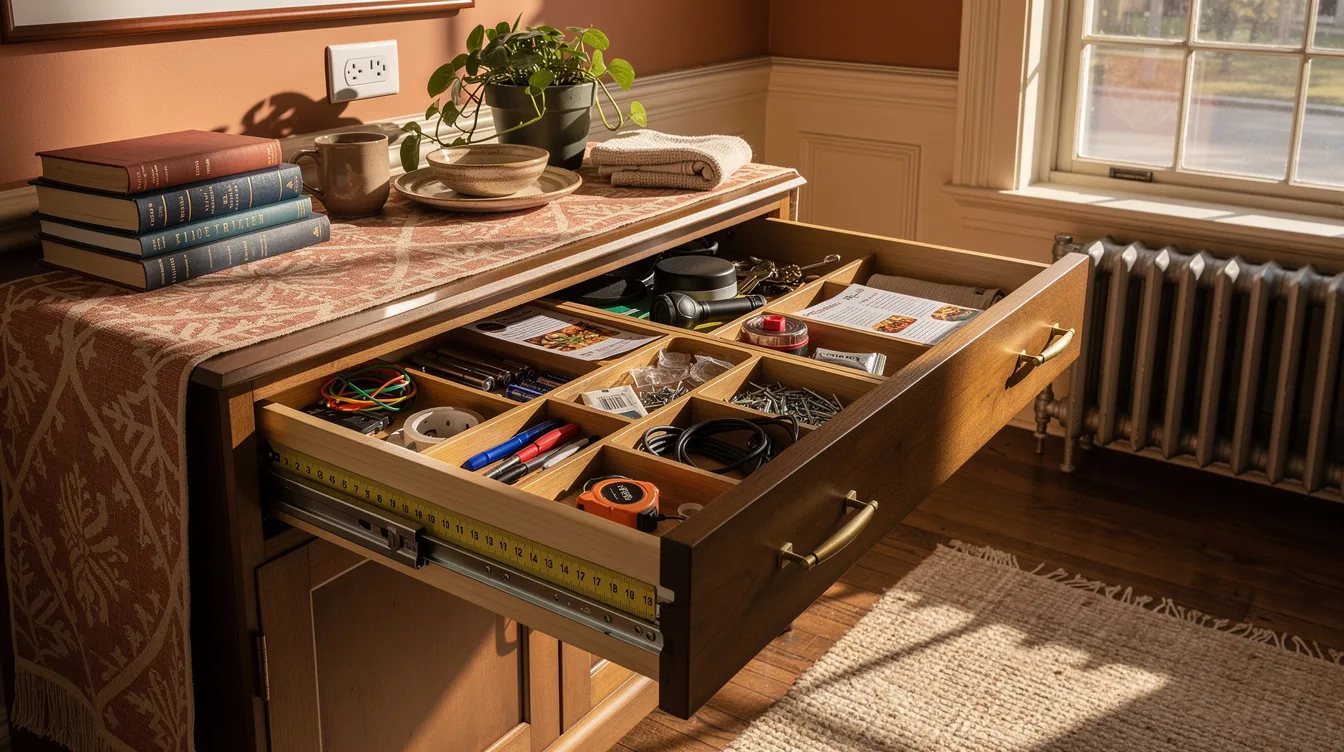
Pens, tape, scissors, and remotes punish a layout built from square bins. Their usable shape is a long narrow tray, so let it run in the same direction as the drawer and keep each item easy to grab without moving its neighbors.
A Brightroom clear PETG drawer tray around 6 inches by 9 inches and roughly $4 to $10 is worth searching for, even when the listing calls it a flatware organizer. Use it for a flashlight, charging cable, tape, or pens, and keep the lid-free top visible in a desk, entry, or utility drawer where hands reach in from one side without first clearing the whole surface.

Contain Cables Before They Multiply
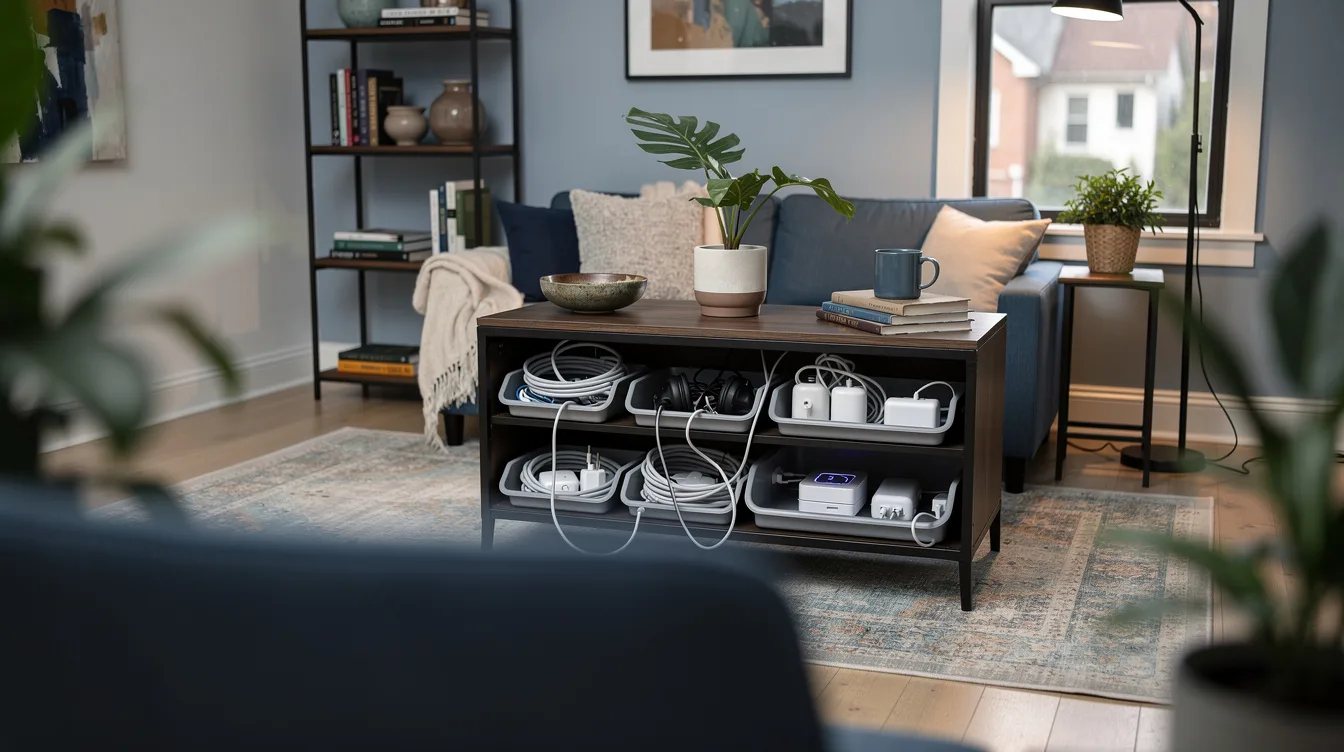
Loose cables create false volume because they bend around every other object. Give tech its own shallow containers, and store each cord with the adapter or device it actually serves instead of burying it under unrelated supplies.
Several clear PETG bins, typically 3 to 6 inches wide, 6 to 9 inches long, and about 2 to 3 inches high, usually run about $5 to $15 per set. One bin can hold charging cords and wall plugs, another can hold USB sticks, adapters, and a compact flashlight; keep the bins shallow enough to see the bottom, because forgotten cables become clutter again.
Separate Batteries From Metal Clutter
The drawer becomes risky when loose batteries share a pocket with coins, keys, screws, or other conductive metal. Make the battery zone shallow and visible so every cell can be checked before the drawer closes during a rushed morning search.
Small clear plastic divider trays, roughly 3 to 4 inches wide and 3 to 6 inches long, typically cost about $5 to $12 per multipack and suit this job. Use another compartment for screws or SIM tools and reserve a separate pocket for stamps or USB sticks; separation does the useful work, while a neat-looking jumble only hides the problem.

Match Tray Depth to Tall Objects
A shallow organizer is a poor match for bottles, card decks, bulky plugs, first-aid supplies, or cleaning accessories. Check the drawer height before choosing a tall container, especially in a vanity or utility drawer where vertical room can vary before bringing home a tall bin.
A large clear tray around 9 inches by 6 inches by 3.25 inches gives these items a contained footprint and room for fingers to reach around the contents. The same height can stop a shallow desk drawer from closing, so reserve this format for deeper storage, keep the top easy to see, and avoid unpacking the whole tray to find one item.

Use Six Compartments for Predictable Contents
A fixed grid earns its place when the drawer performs the same jobs every day without asking the hand to sort on the way in. The Brightroom six-compartment white organizer is typically about 16 inches by 13.3 inches and costs around $10 to $20, making it a practical one-piece reset for a broad kitchen, desk, or utility drawer.
Assign each bay to a repeating category such as paper supplies, keys, tape, or small tools, then keep the categories narrow enough to stay visible over several weeks. Skip the grid when one section will become a catchall, because the structure should make retrieval faster and keep the catchall from becoming permanent on ordinary days.

Expand the Insert for Changing Tools
Kitchen and utility drawers often carry objects with different lengths, so a fixed tray can become obsolete after one change of routine. An expandable insert lets the boundaries move with the drawer, which matters when tools arrive in several shapes and sizes without rebuilding the entire layout.
Look for an expandable plastic organizer that opens to about 12 to 18 inches and typically costs $15 to $30. Use the long sections for spatulas or brushes and the shorter spaces for measuring tools or clips, then adjust the span until the tray sits firmly without squeezing the drawer walls or leaving a gap that collects debris.
Fit Odd Shapes With Adjustable Dividers
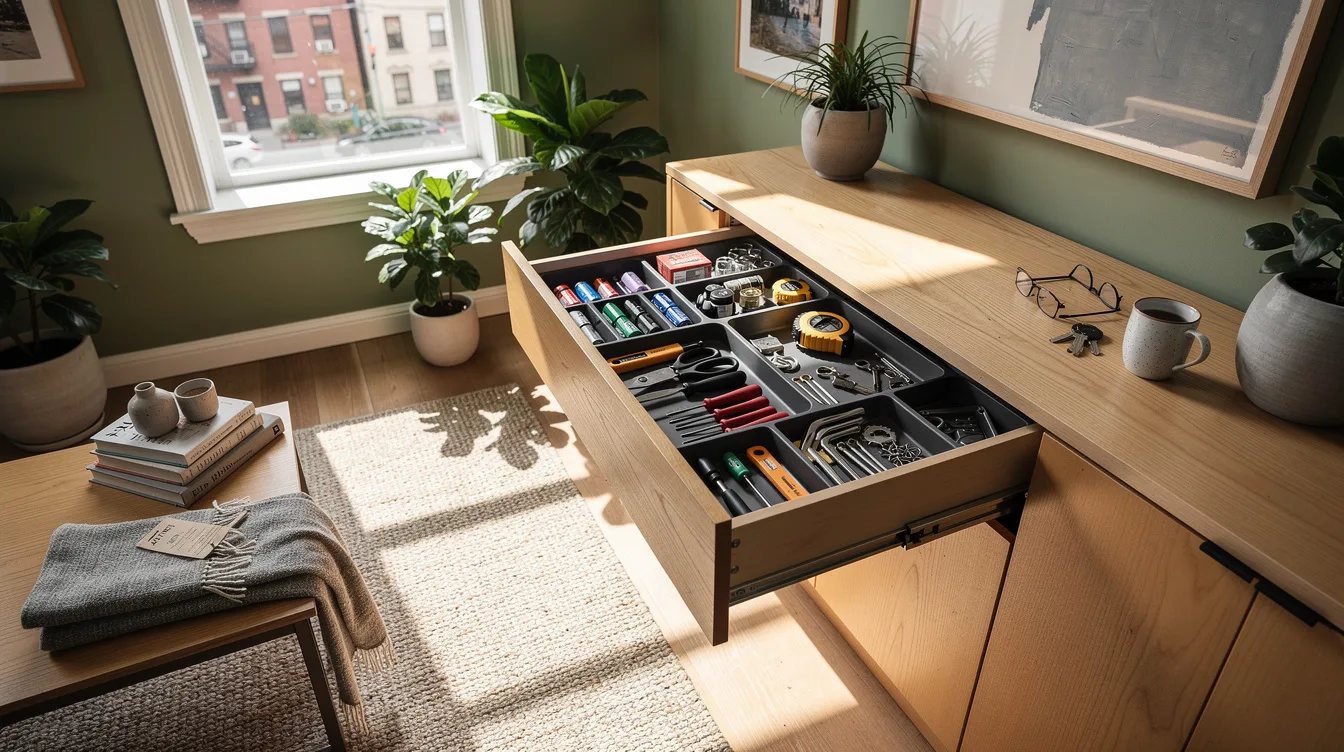
Some objects need a boundary rather than a compartment. Scissors, a small flashlight, a tape measure, and a bulky remote can waste a square bin while still sliding into neighboring zones or forcing the whole drawer to be emptied just to find one item.
A set of adjustable plastic drawer dividers usually adjusts from about 8 to 16 inches, stands roughly 1.5 inches high, and costs around $10 to $15 per set. Grippy ends hold the line in place, letting you build a tool zone that can change when the drawer's contents change and preserve a little breathing room around the tool.
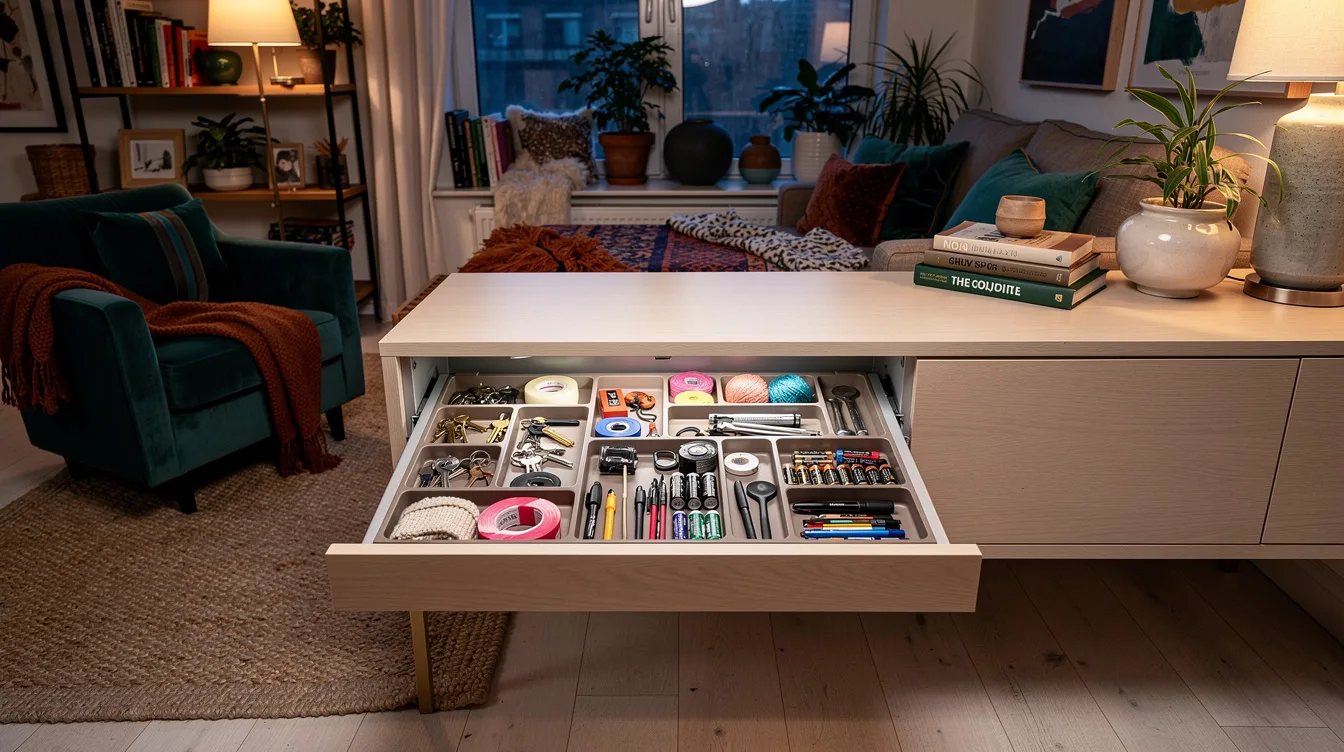
Choose Wipe-Clean Materials Near Water
A bathroom or utility drawer needs a wipe-clean surface that can handle toothpaste residue, damp cleaning cloths, and the occasional spill from a leaky bottle. Choose the material by the drawer's conditions, because an elegant finish that hates moisture after the drawer is opened with wet hands becomes a maintenance problem.
A powder-coated wire mesh insert or wipe-clean plastic organizer around 14 inches by 10 inches by 1.75 inches typically costs $10 to $30 and keeps small items visible in this category. Wire allows airflow, while clear plastic wipes down quickly; bamboo belongs in a dry drawer where its surface can stay cared for, a useful distinction around sinks and utility counters.
Spend More Only on Visible Drawers
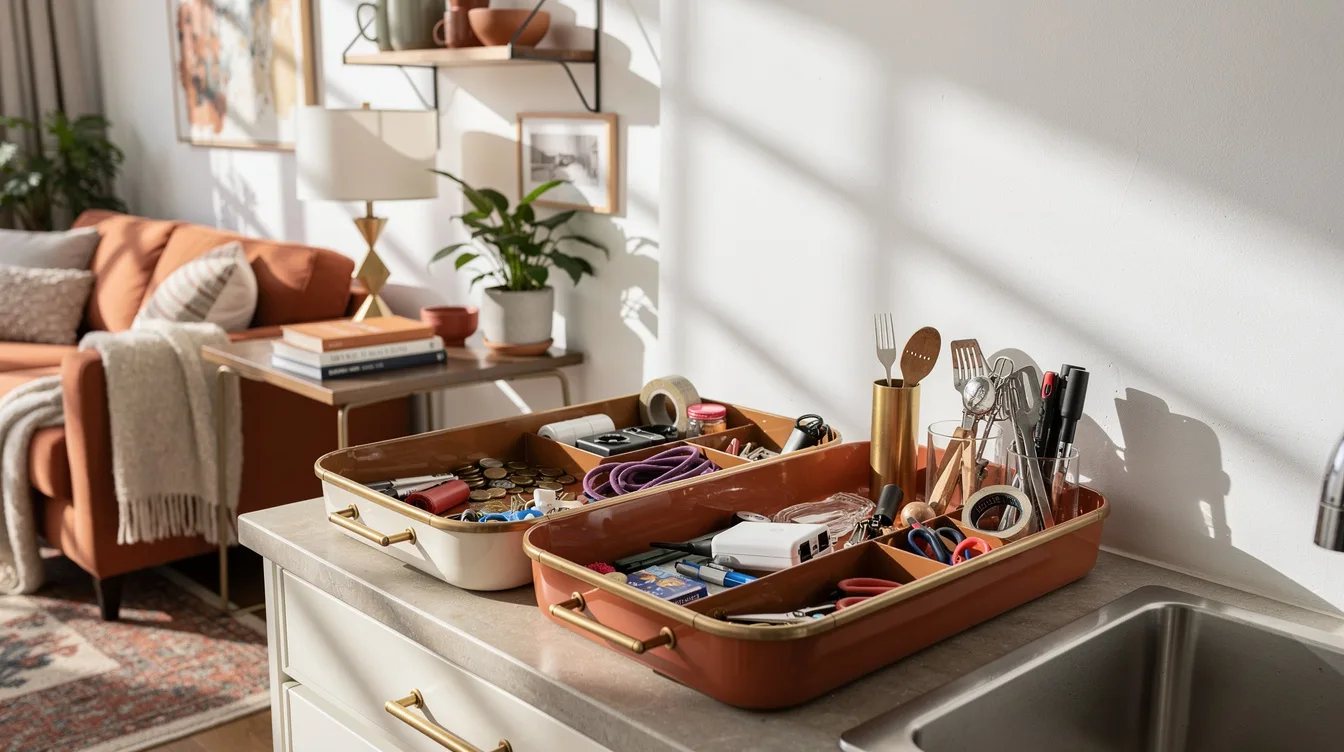
A drawer beside an entry, desk, or bedroom deserves a finish that feels connected to the room around it and is opened in full view. A bamboo compartment tray about 14.75 inches by 10.625 inches, with about six slots, typically runs $20 to $30 and gives a visible drawer a warmer surface without turning it into a visual distraction.
Use the bamboo option for daily essentials that benefit from clear separation, then keep rough utility supplies in clear plastic elsewhere, where they are handled often and the drawer is left open to view. The higher price makes sense when the drawer is part of the room's visual field; for a hidden junk drawer, flexible plastic usually earns the better value.
Give Miscellaneous a Hard Boundary
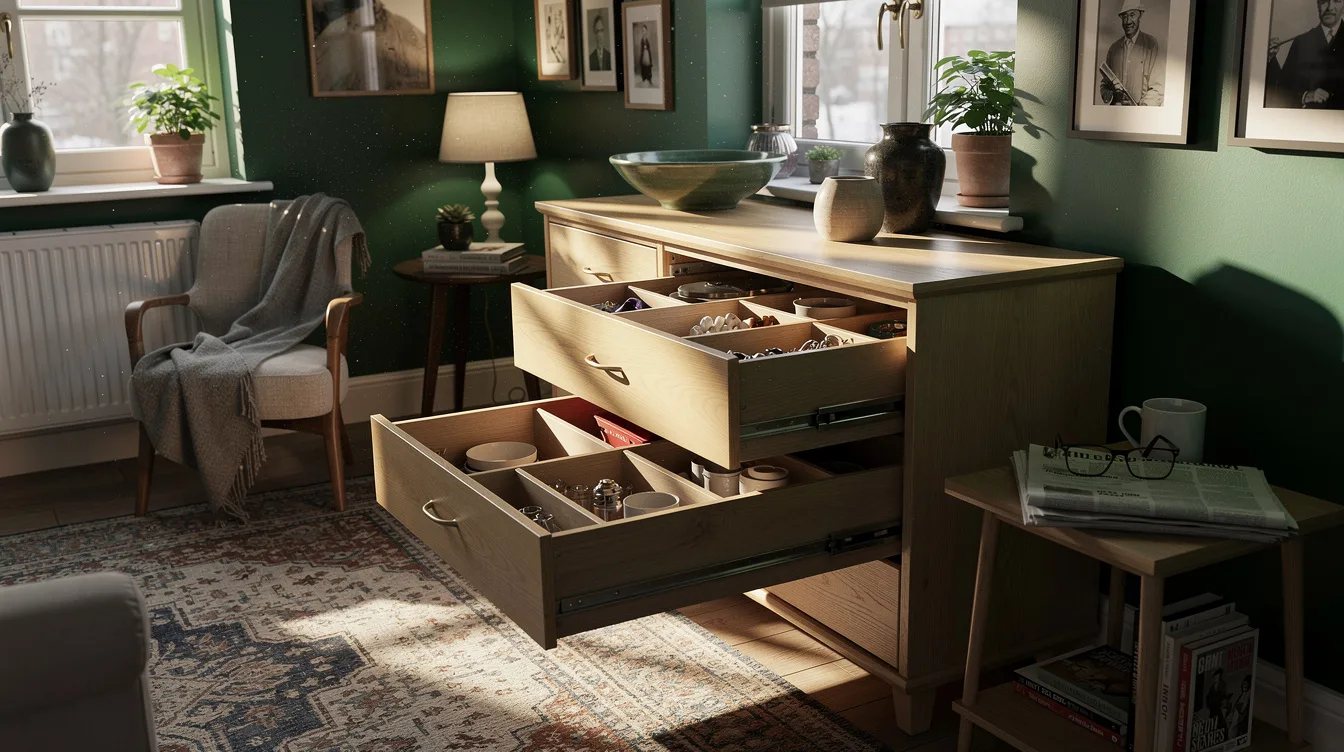
Every functioning junk drawer needs one flex zone, but that zone must have a physical limit because unlimited miscellaneous is simply a second ecosystem. A shallow small square tray about 3 to 4 inches wide and 3 to 6 inches long, typically $5 to $12 per multipack, can hold stamps, SIM tools, USB sticks, or the one object that has no permanent home.
When that tray fills, remove an item or give it a real category before adding another container or changing its home during a quick reset. Target also carries polyester organizers, yet clear plastic remains the easiest material to audit at a glance, which keeps miscellaneous from spreading into every open slot when the drawer opens.

Start by measuring the drawer, then buy one long tray and one small multipack for the category that causes the most friction. Let the rest of the layout grow from actual objects, because a junk drawer stays calm when every new item has a place to land.