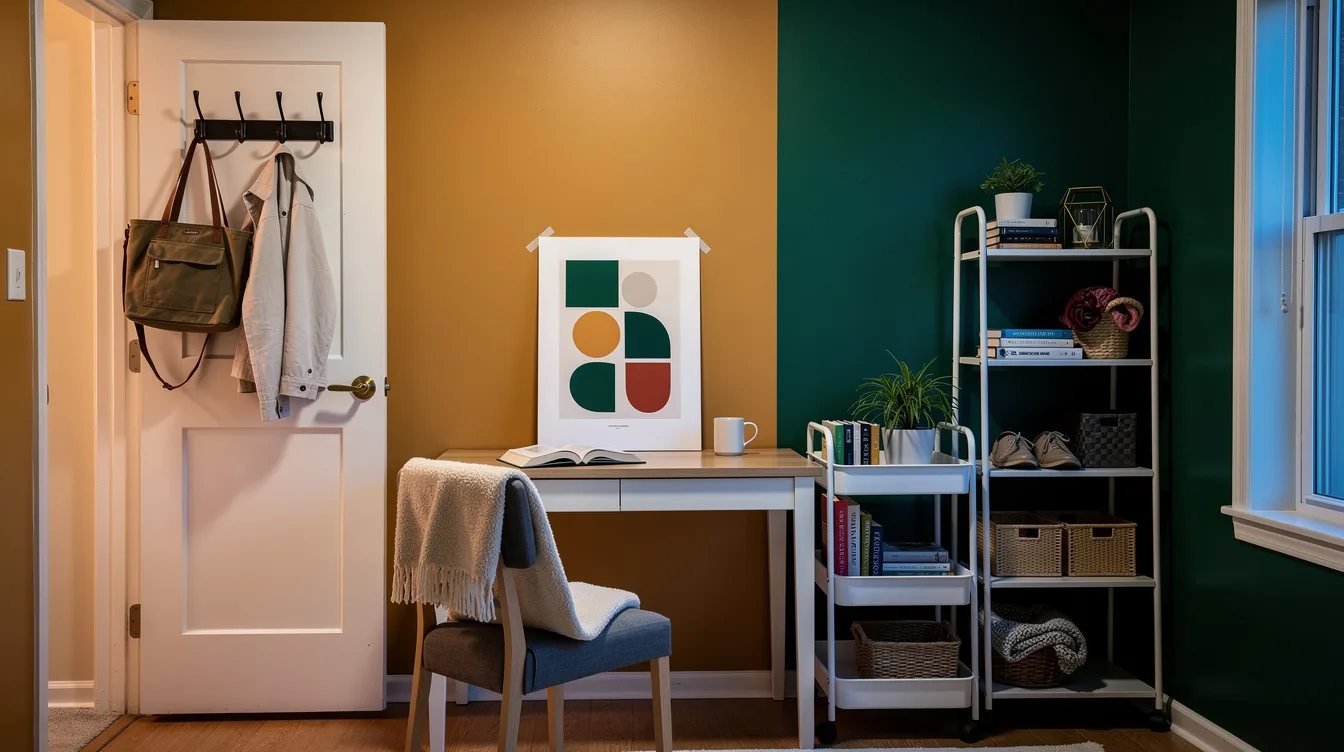
Landlord Said No Holes? These 14 Command Finds Work Anyway
13 september 2026A lease can turn a simple picture into a negotiation: the frame is light, the wall is smooth, and the landlord still says no holes.
That rule still leaves room for a curtain system rated around 10 pounds and a bathroom caddy measuring about 9.5 by 20.75 inches, as long as the support method matches the surface and load.
We favor reversible adhesive, tension, door-overhang, clamp, suction, and freestanding systems. Ignore products marketed as no-drill if they still drive pins into drywall, because a pin is still a hole.
What you will find inside
- Secure Light Frames With Stretch-Release Strips
- Hang Daily Essentials On Adhesive Hooks
- Float Light Curtains With Adhesive Rod Hooks
- Add a Caddy With Suction Cups
- Hang Shower Tools From Suction Hooks
- Divide a Closet With a Tension Rod
- Load Coats Onto An Over-Door Rack
- Add Storage Behind Cabinet Doors
- Clamp A Monitor Arm To The Desk
- Clamp A Task Lamp To The Desk
- Route Cables Through Adhesive Raceways
- Build Vertical Storage With Slim Shelving
- Roll A Cart Into Dead Space
- Hide Overflow Under The Bed
Secure Light Frames With Stretch-Release Strips
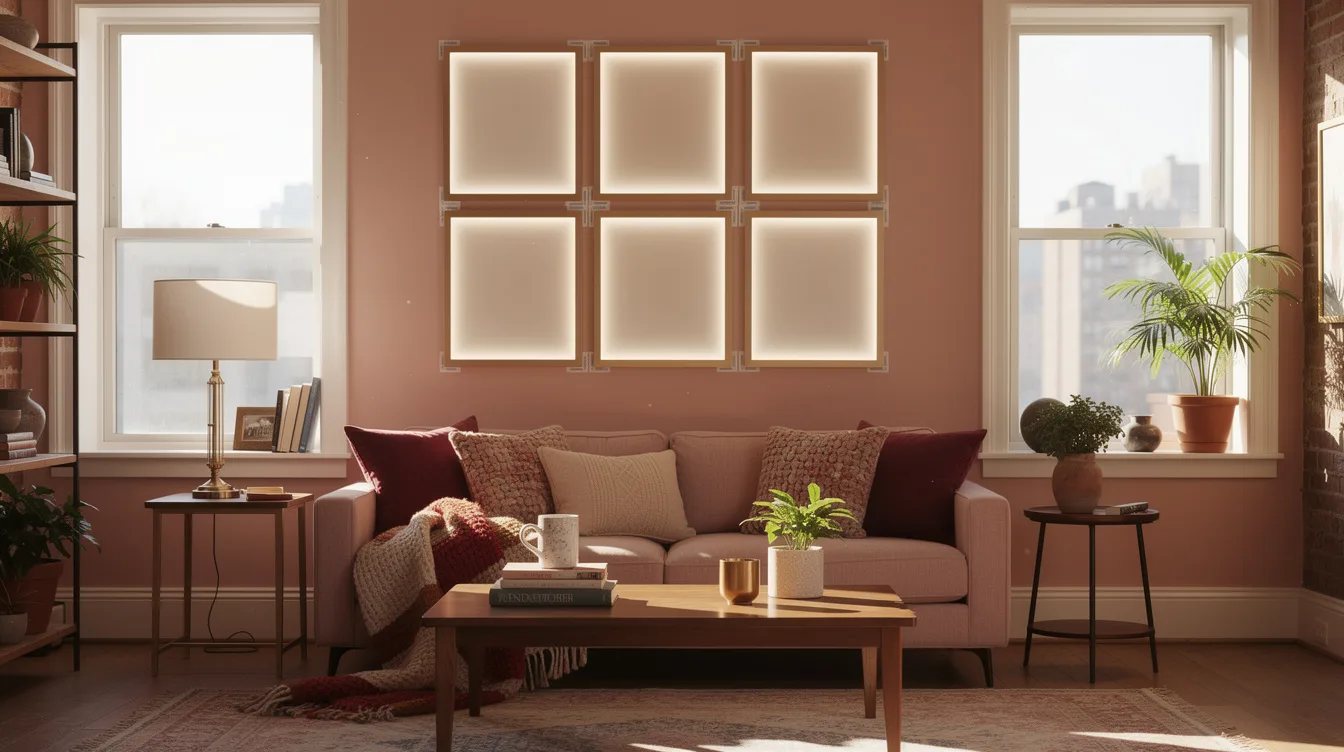
For flat-backed frames, art prints, and light decor, stretch-release picture strips are the first system to test. A typical kit costs about $8 to $20 at Home Depot, Lowe's, or Amazon, and the package rating should determine the number of strips, their placement, and the frame size.
Clean the wall exactly as directed, let the surface dry, and press the strips for the stated bonding time before hanging anything. Use them only on smooth, fully cured painted drywall; skip textured paint, wallpaper, brick, damp bathroom surfaces, and freshly painted walls, where removal can turn a small decorating project into a repair bill.
Hang Daily Essentials On Adhesive Hooks
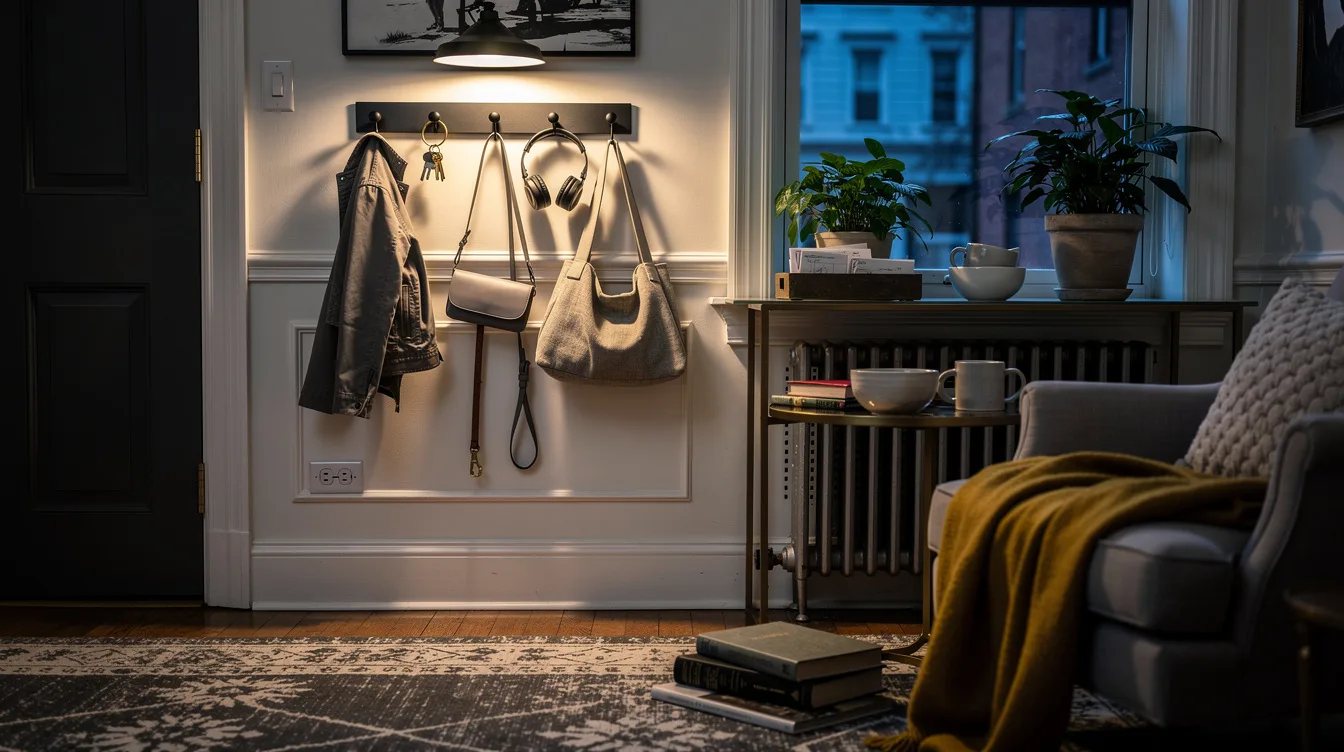
Keys, hand towels, and a lightweight tote need a landing spot, not a full shelf, which is where IKEA SKOGHALL hooks make sense. The 3-pack is sized for everyday light-duty use, while a typical adhesive-hook purchase runs about $6 to $15 depending on load rating and pack size.
Clean with isopropyl alcohol when the instructions permit it, let the wall dry, and wait through the recommended bond time before loading the hook. A wall can look smooth and still have loose paint or residue, so test one hidden location and reserve heavier bags for an over-door rack.
Float Light Curtains With Adhesive Rod Hooks
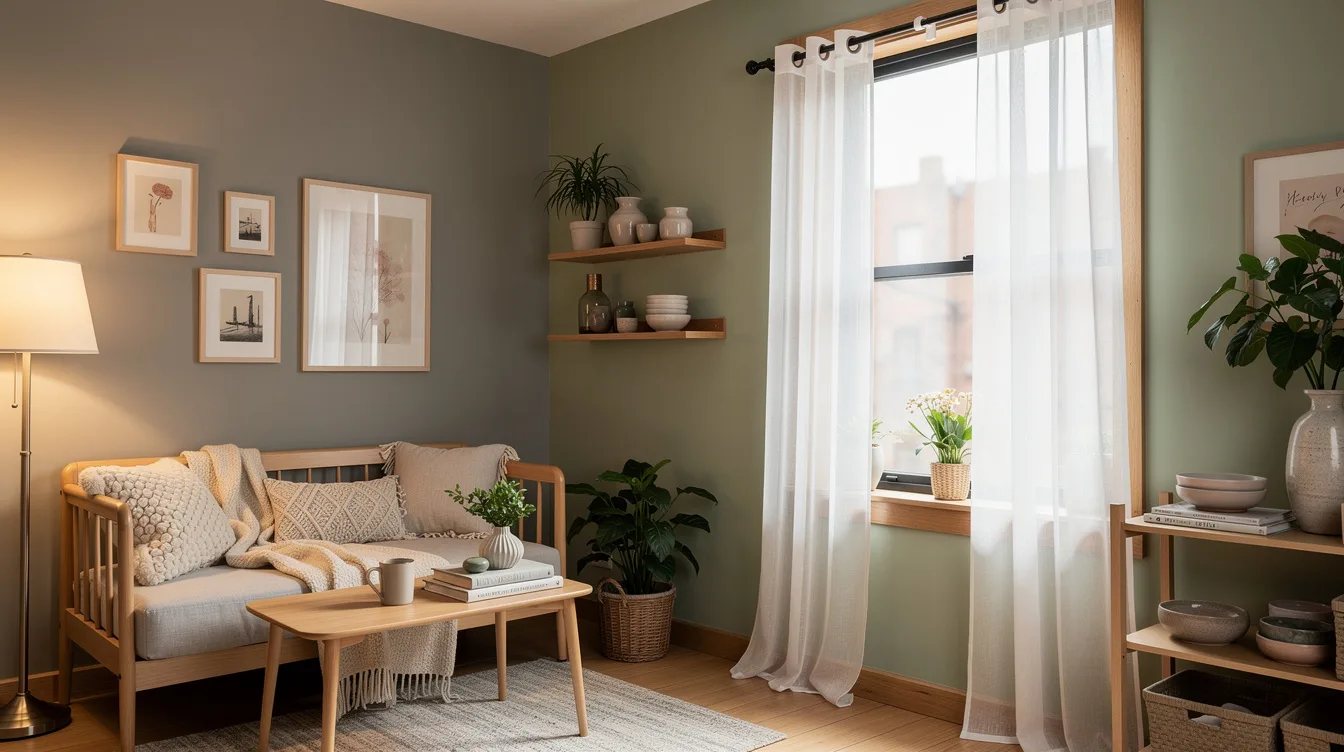
Need a curtain without brackets? Adhesive curtain-rod hooks solve the problem when the rod is short, the fabric is light, and the wall is smooth. A cited model is rated around 10 pounds and costs about $8 to $10, a workable range for a sheer panel or short kitchen curtain.
Keep blackout drapes, layered panels, and any rod within reach of a child or pet off this system, even if the hardware feels firmly attached on day one. A slim steel rod paired with light cotton or linen puts less stress on the adhesive, while a heavy rod and dense fabric create a slow pull that can loosen the paint.
Add a Caddy With Suction Cups
Bathroom storage is where adhesive often meets steam, so IKEA KROKFJORDEN caddy is more convincing because it uses zinc-plated metal and suction cups. The caddy measures about 9.5 by 20.75 inches and typically costs $10 to $20, enough room for bottles without asking drywall to hold a wet load.
Press it onto smooth, nonporous tile, glass, or a mirror only, then check that every cup is fully sealed before adding products. Grout lines, textured tile, painted drywall, and a damp film under the cup are deal-breakers; even a good suction system becomes unreliable when the surface cannot form a continuous seal.
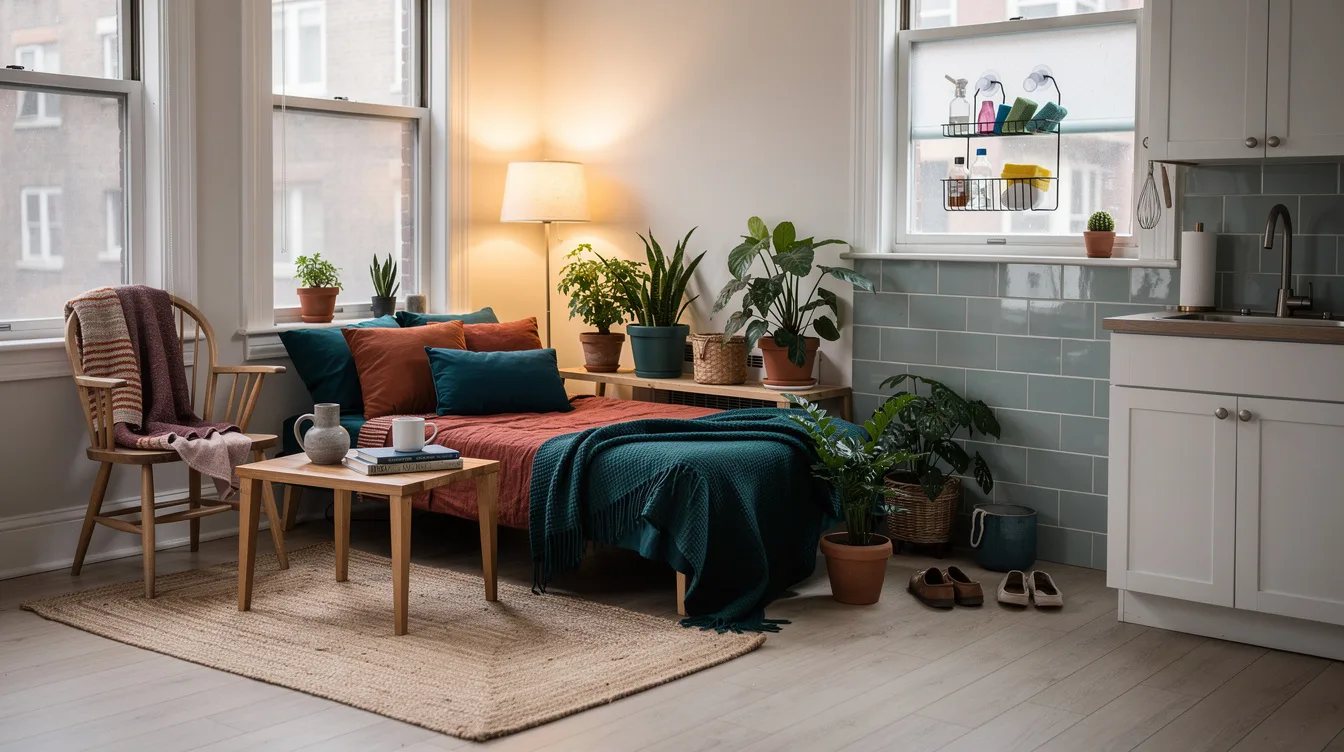
Hang Shower Tools From Suction Hooks
When a full caddy is too wide, IKEA KROKFJORDEN suction hooks handle a loofah, washcloth, or small grooming tool in the same surface-safe way. The two-pack is listed at about $9.99, but the practical limit is the cup's grip plus the item's wet weight, not how much the hook appears to hold in a store.
Dry the tile or glass, seat the suction cup firmly, and check it before each refill or shower if a falling item could damage a sink. Keep every hook off grout lines and textured tile, and do not move it repeatedly between surfaces, because residue and a weakened seal defeat the whole point.
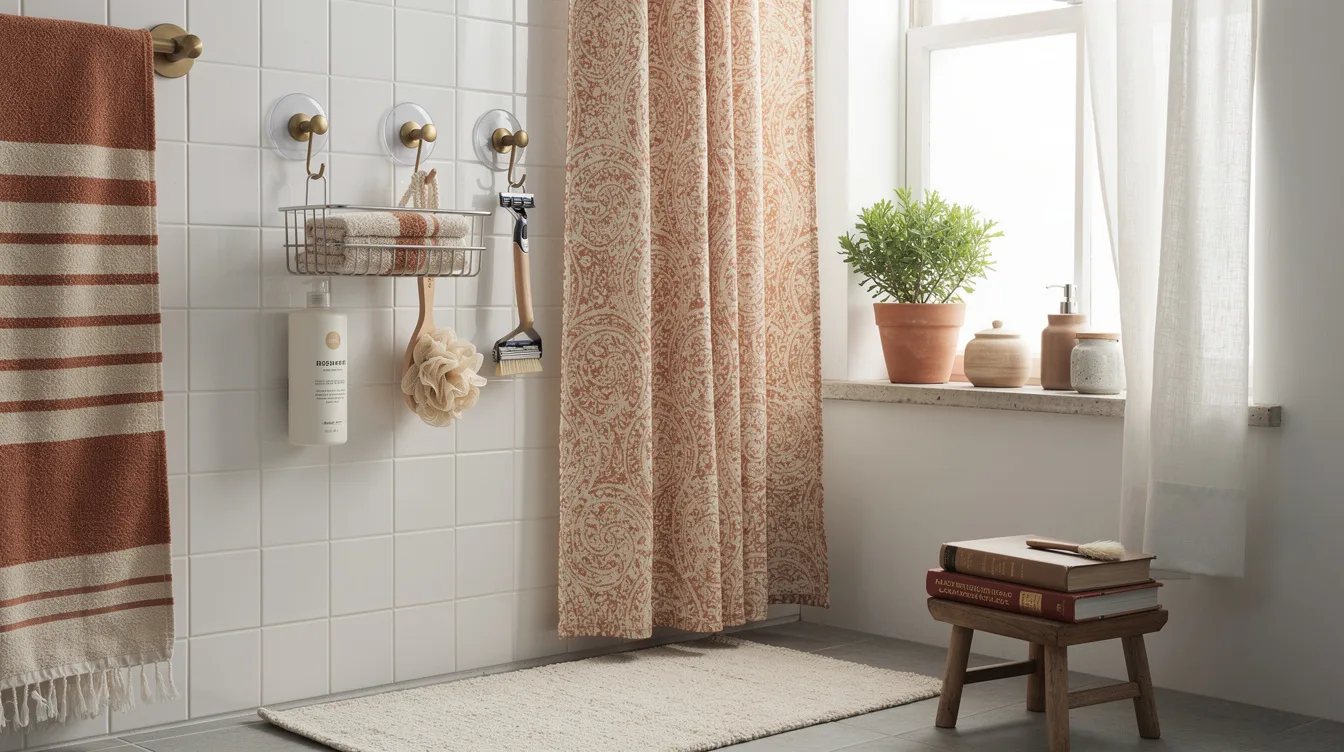
Divide a Closet With a Tension Rod
For a closet opening, shower edge, or narrow gap, steel tension rods create a boundary without touching the wall. Comparable rods sold through Amazon typically cost about $20 to $28, and the right length leaves a small adjustment range instead of being forced against the end of its travel.
Measure the usable span at the top, middle, and bottom, then choose a rod that fits the narrowest reading and press both ends evenly. Use it for a light curtain, a closet divider, or a few light garments; heavy coats, wet towels, and hanging baskets add a downward pull that can mark paint or send the rod sliding.
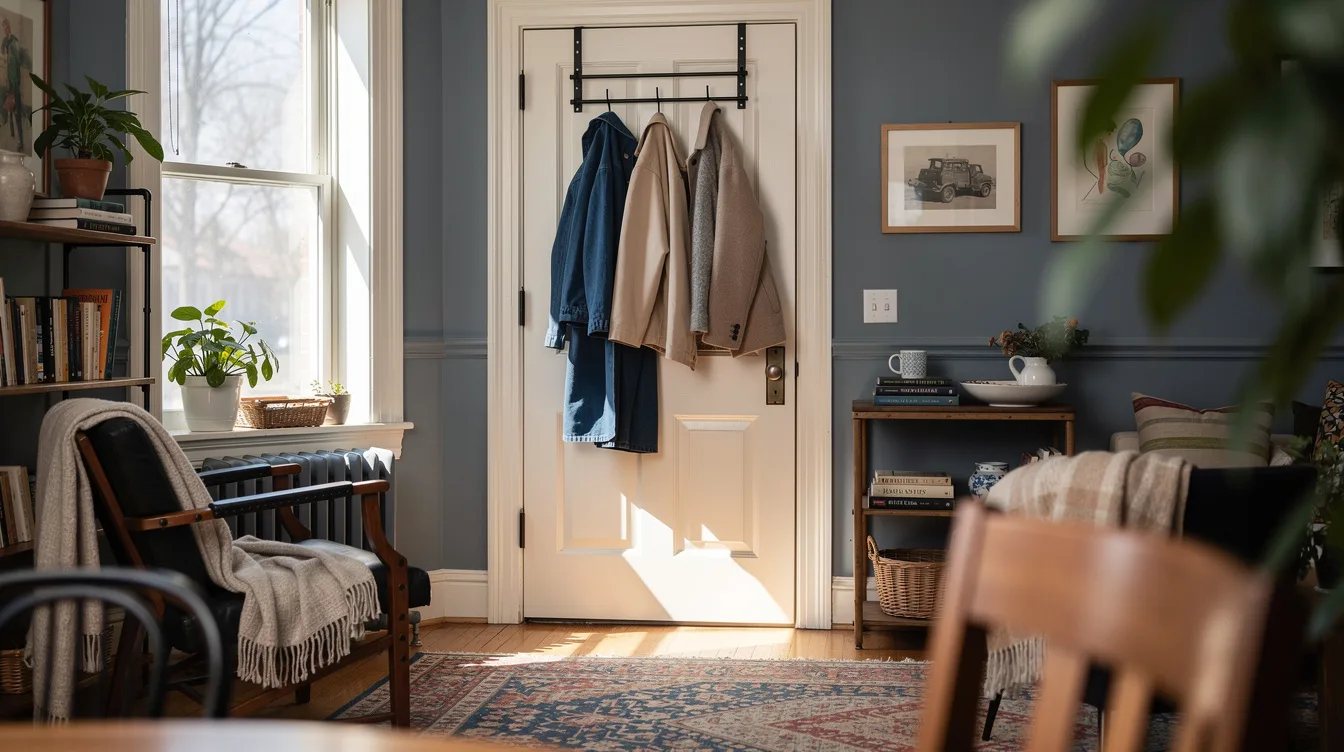
Load Coats Onto An Over-Door Rack
Let the door carry the hardware with a steel over-door rack for coats, bags, hats, and towels. A typical seven-hook organizer costs about $12 to $40, but door thickness, top clearance, and the gap at the hinge side matter more than a low price.
Add felt pads where the rack touches painted or hollow-core doors, keep the heaviest item closest to the hinge, and open the door slowly during the first test. This is a high-value rental move because gravity holds the rack in place, yet it still fails if the door binds, the latch cannot catch, or the hooks collide with trim.
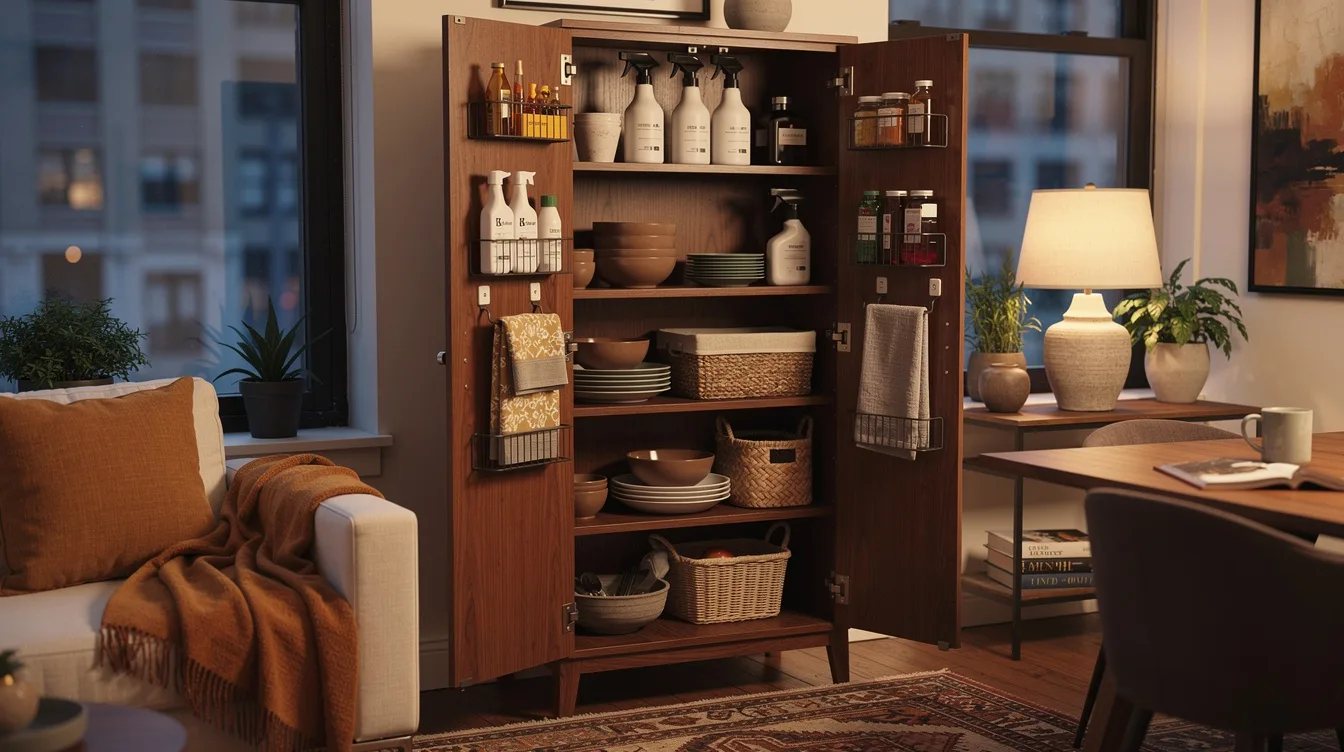
Add Storage Behind Cabinet Doors
Cabinet doors can provide storage too, especially with powder-coated over-cabinet baskets for foil, spray bottles, hair tools, or a small hand towel. A simple steel-wire model typically costs about $10 to $30 at Walmart, Target, or Home Depot, so a quick measurement is cheaper than discovering that the door no longer closes.
Measure the door thickness, the interior clearance, and the space near hinges before buying, then choose silicone-lined contact points to reduce rattling and scratches. Test the full swing with the basket empty, because a basket that blocks a hinge, shelf, or latch turns useful capacity into daily frustration.
Clamp A Monitor Arm To The Desk
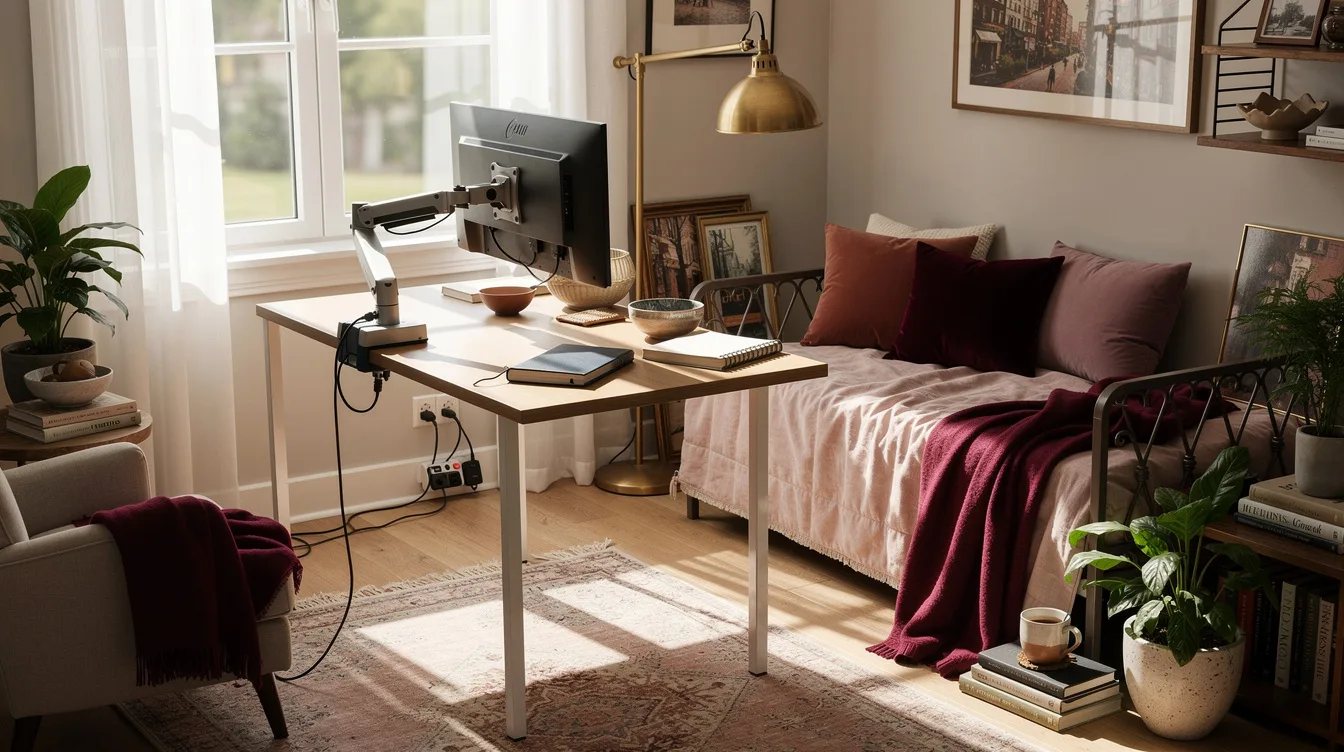
Desks can absorb more equipment than walls when the right edge is available, making clamp-mounted monitor arms a strong alternative to drilling. A basic steel clamp accessory may cost about $25, while a more adjustable setup can reach roughly $200 or more; measure desktop thickness and rear-edge clearance before choosing the arm.
Pick rubber-padded contact points and tighten the clamp evenly without crushing a hollow desktop edge. The desk becomes the support structure, so the load belongs on a solid desktop rather than a thin shelf, folding-table lip, or glass panel, and the screen should stay inside the desk's footprint.
Clamp A Task Lamp To The Desk
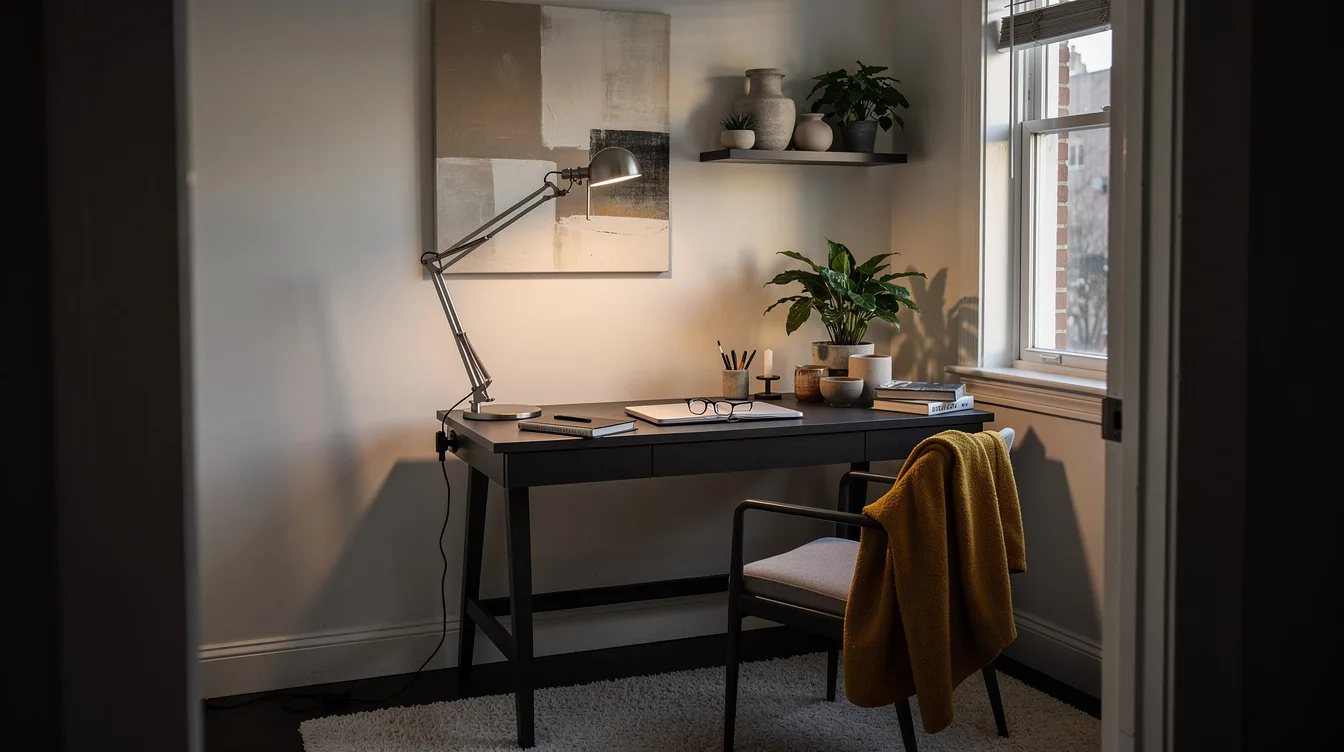
Need task light without a wall sconce? Clamp-mounted task lamps put light over a desk, headboard, or craft surface while keeping the floor and wall clear. IKEA sells clamp-lamp options, and the broader category typically runs about $25 to $200 when the design includes a heavy arm or adjustable hardware.
Put a rubber pad between metal and the finished surface, route the cord away from the clamp, and test the swing before leaving the lamp unattended. A compact lamp is the right brief here, because a tall fixture balanced on a narrow ledge creates the same risk that the no-hole plan was meant to avoid.
Route Cables Through Adhesive Raceways
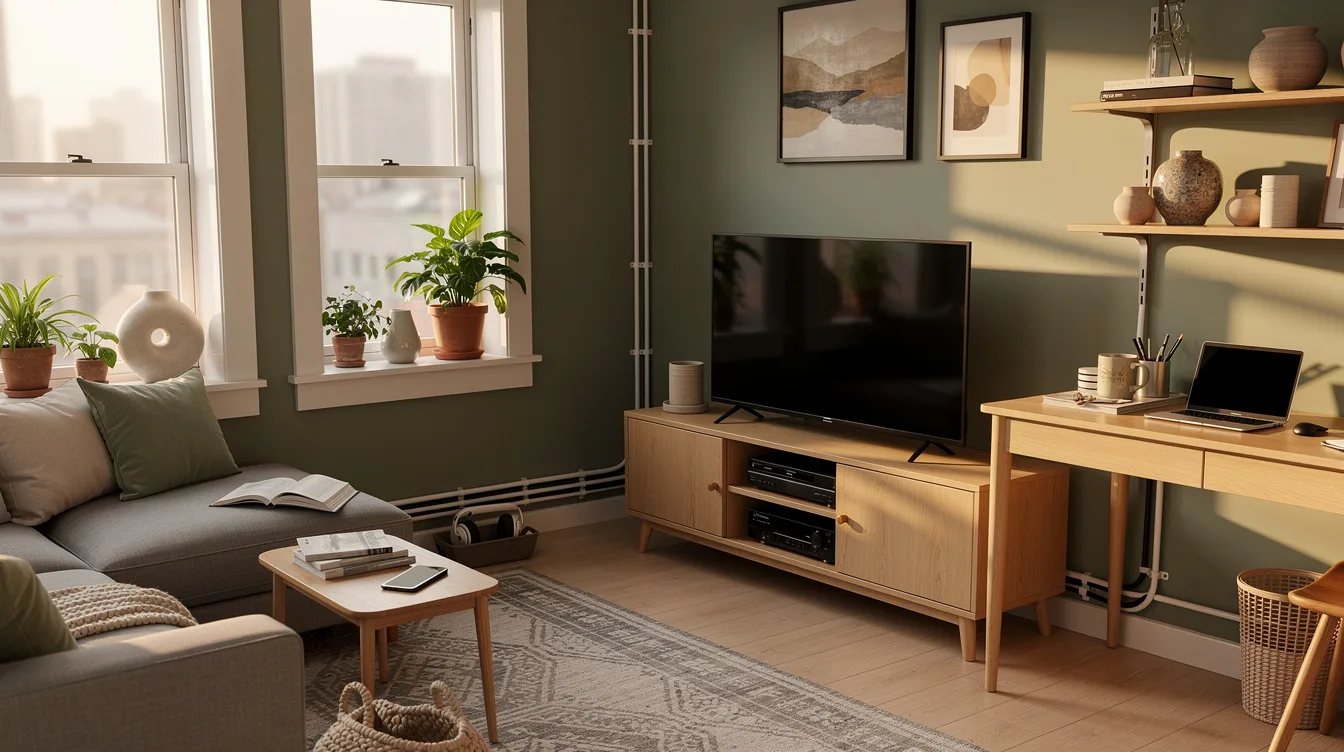
Messy charging cords can make a rental feel unfinished, so adhesive cable clips and raceways are useful for light routing. A typical pack or short raceway set costs about $8 to $25, and sections around 15 to 16 inches make it easier to sketch a route before the backing comes off.
Match the channel to the number and diameter of the cables, reserving it for lightweight cords rather than power bricks or heavy adapters. Install only on clean, cured, smooth paint, leave slack near plugs, and remove each clip with its release tab instead of pulling sideways, which can lift paint.
Build Vertical Storage With Slim Shelving
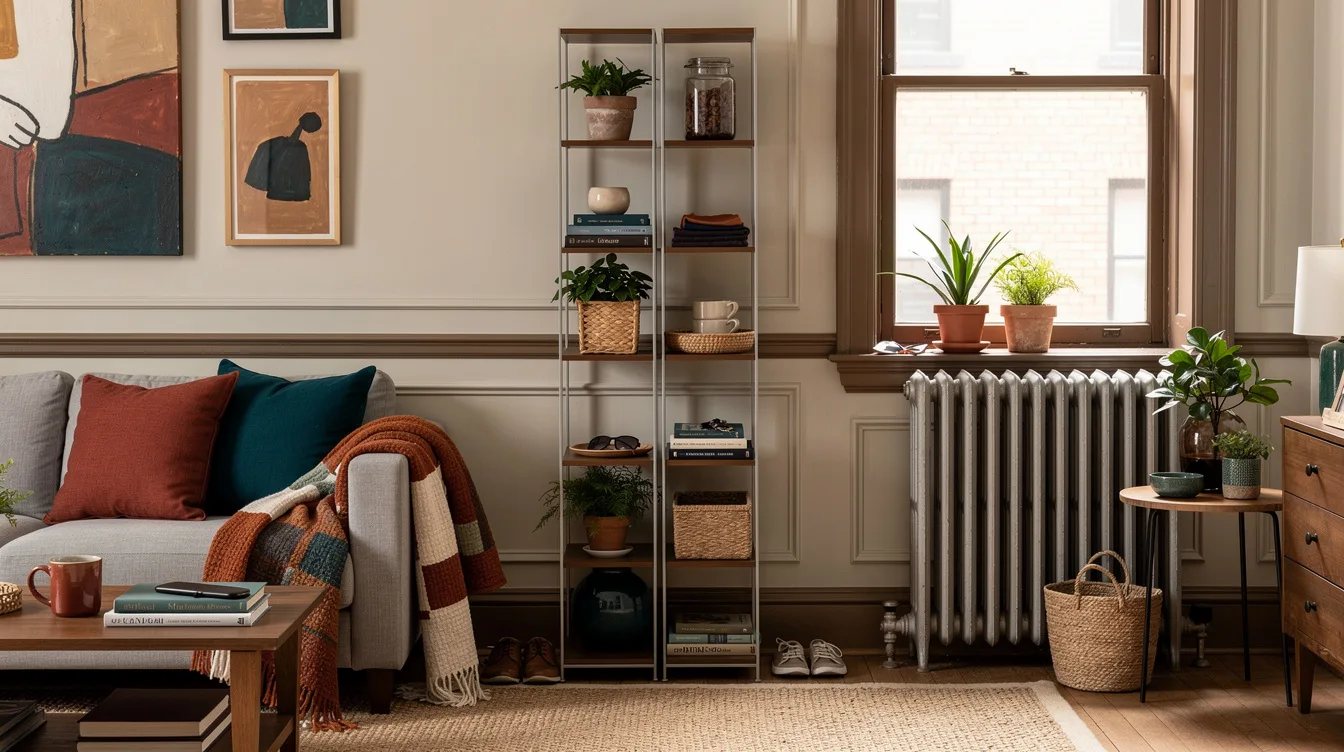
Choose height instead of wall attachment with IKEA HORNAVAN shelving, RÅGRUND, or MUSKAN when a room needs a vertical storage zone. Prices typically run about $30 to $120 depending on material and size, so measure usable width, height, and depth before choosing a frame that can actually pass through the door.
Metal works well near cleaning supplies, bamboo suits a dry bathroom or bedroom, and plastic handles utility zones with less worry about moisture. Keep the unit square on the floor, protect the base with felt where needed, and leave clearance for doors, vents, outlets, and walking paths.
Roll A Cart Into Dead Space
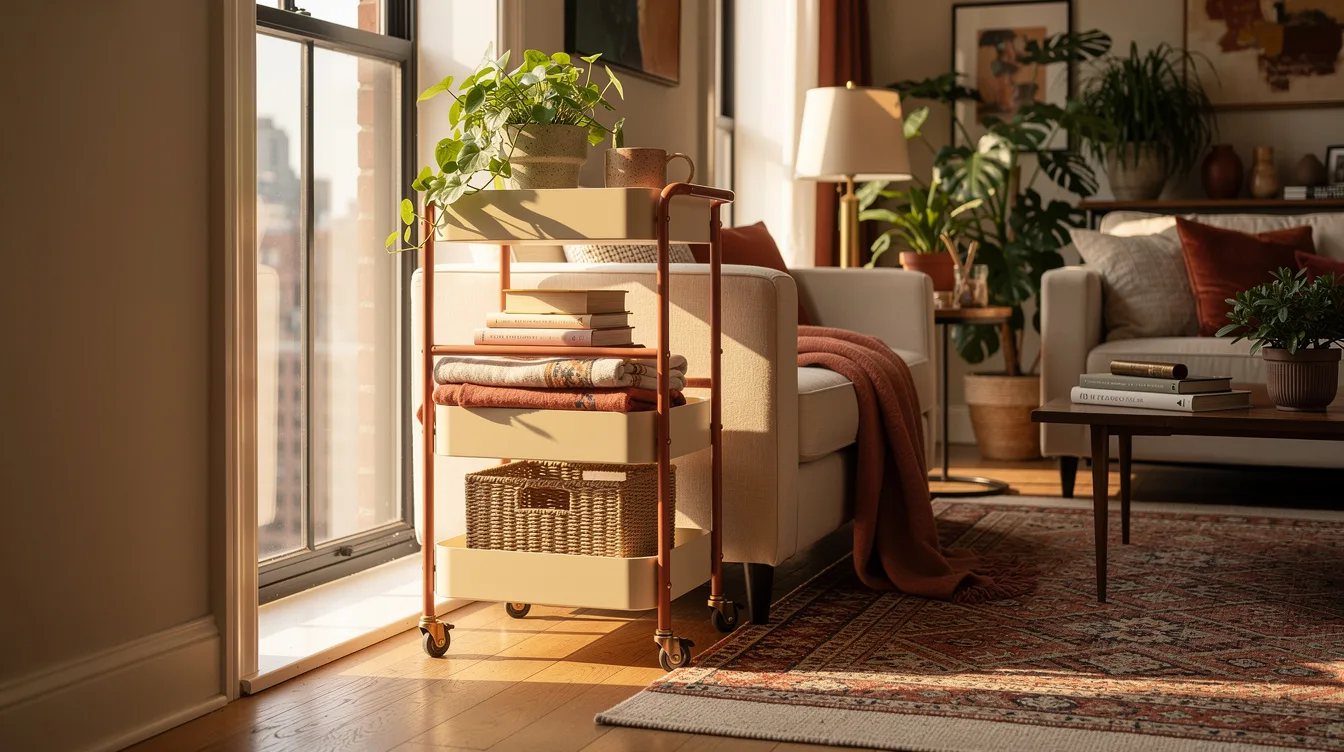
Turn the dead gap beside a washer, desk, or vanity into movable storage with a slim rolling cart. A typical metal, bamboo, or plastic cart falls around $30 to $120, and the useful measurement is the actual floor-level gap, where baseboards, pipes, and wheel housings can steal space.
Measure with the wheels installed, not just the shelf, then check that the handle clears the counter and door. Use the cart for pantry goods, cleaning tools, or toiletries that need to move, and keep the load low enough that the narrow frame does not become top-heavy when pulled out.
Hide Overflow Under The Bed
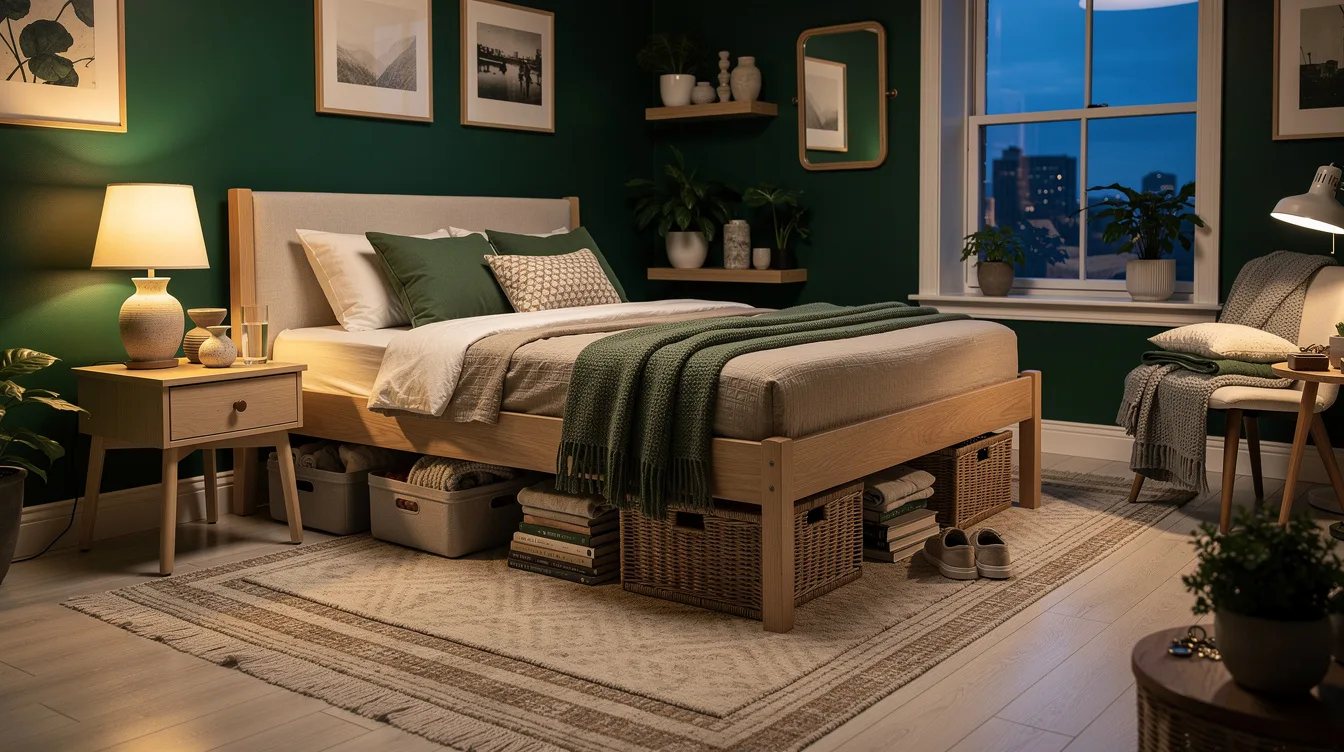
Put bulky overflow where the room already has unused volume: under-bed boxes keep seasonal clothes, spare bedding, and luggage out of sight without a wall attachment. Choose a low plastic box or fabric case after measuring the usable height beneath the bed, including the frame and center support, because a box that fits on paper can still jam halfway.
Clear casters help on hard floors, while a lidded container protects textiles from dust, but neither feature excuses overloading. This is the cleanest place for bulky storage because it uses existing floor space instead of asking an adhesive strip, suction cup, or hook to carry a heavy load.
Start with the surface, then the weight, then the removal path: test one small adhesive item on a hidden patch before buying a full set. For anything heavier than a frame or towel, move the load to a door, desk, tension span, or freestanding unit, and leave the lease with the walls exactly as they were.