Your Bedroom Rug Is Doing What Designers Say Makes It Feel Smaller
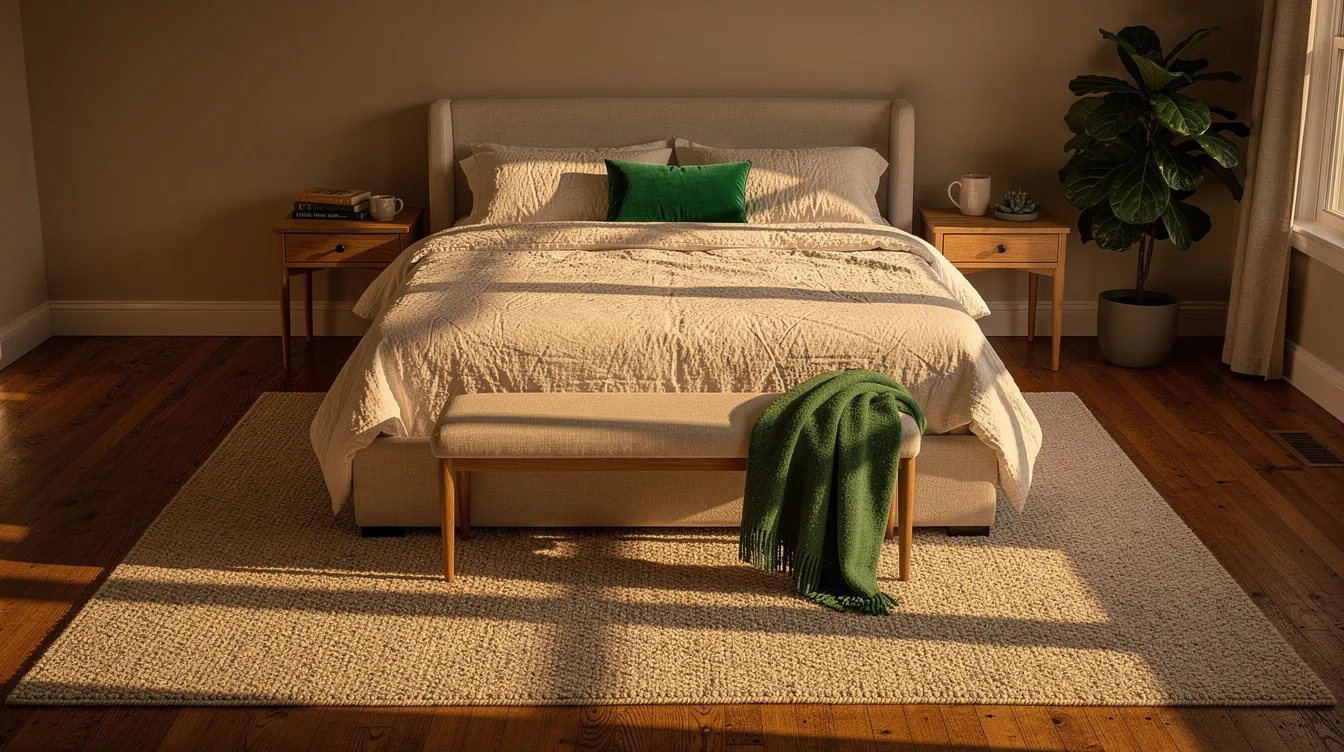
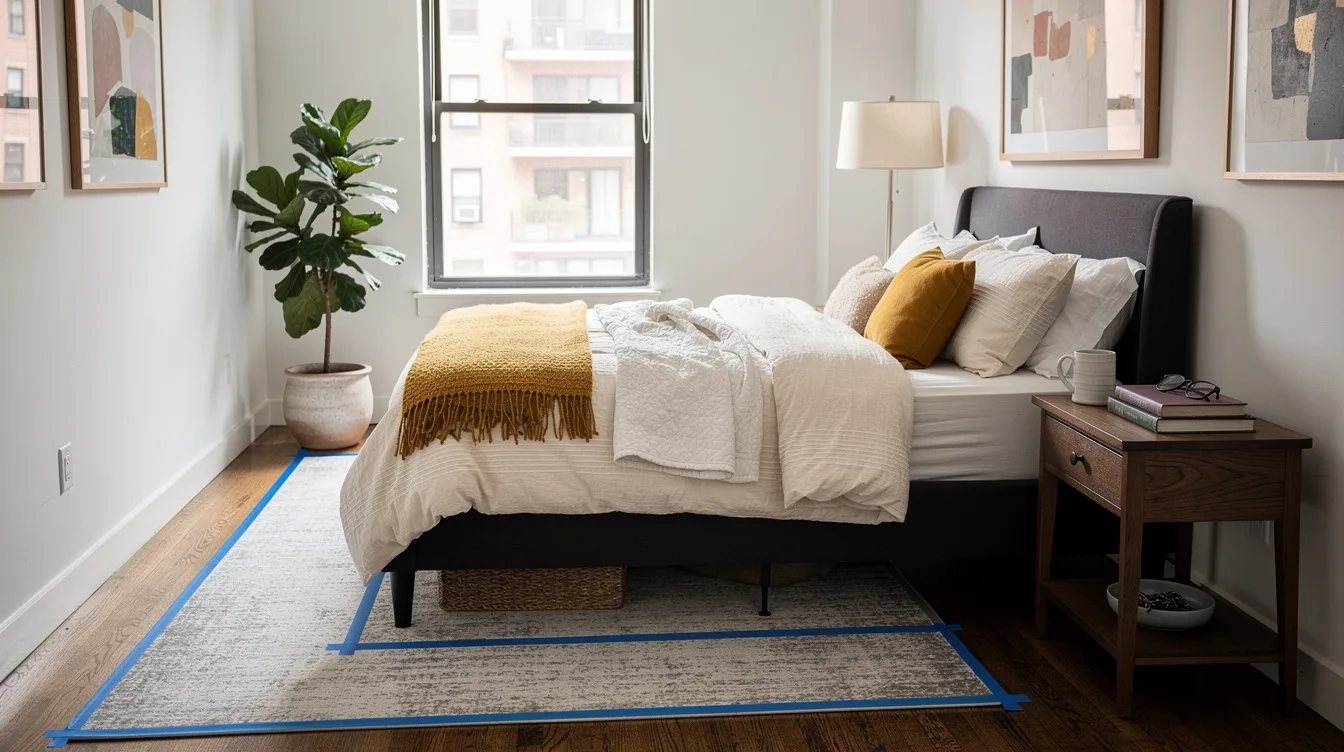
07 september 2026We kept seeing the same problem: a queen bed looked settled, then bare floor hit both feet the moment someone climbed out. Taping an 8-by-10-foot rug outline beneath the lower two-thirds of the bed made the mistake obvious before we bought anything.
The rug had been chosen for the empty patch of floor, not for the bed’s actual footprint. That tiny-island look is the bedroom rug placement mistake designers notice first, and it makes even good furniture feel disconnected.
What you will find inside
- Measure From the Bed Outward
- Give a Queen an 8-by-10-Foot Base
- Scale Up a King Rug Before Styling
- Stop Hiding a 5-by-8 Under a Queen
- Slide the Rug Under the Lower Two-Thirds
- Keep the Nightstands on Solid Flooring
- Choose a Full Anchor Only for a Generous Room
- Leave a Breathing Border at the Walls
- Tape the Outline Before Ordering
- Turn a Twin Rug to Match the Bed
- Use Runners When a Narrow Room Demands Them
- Match the Rug Edge to the Bed, Not the Room
Measure From the Bed Outward
Start with the bed, because it is the room’s largest visual mass. A rug should extend roughly 18 to 24 inches beyond both sides and beyond the foot, giving bare feet a soft, visible landing zone.
Measuring the open floor first nearly always produces the dreaded postage-stamp rug. We’d rather see a room with less rug at the walls than a bed stranded on a small rectangle.
Give a Queen an 8-by-10-Foot Base
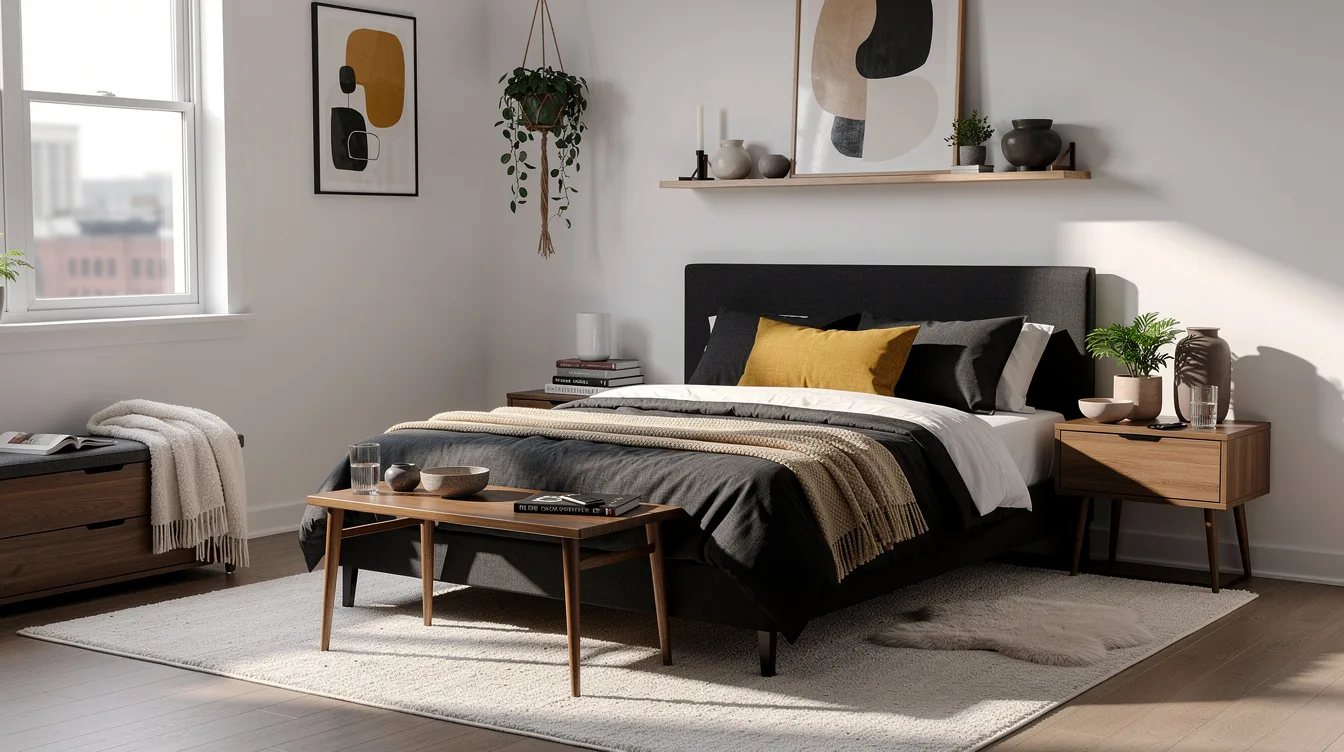
An 8-by-10-foot rug is the dependable starting point beneath most queen beds. Turn its long side from the headboard toward the footboard and slide it under the lower two-thirds of the frame.
That placement gives useful coverage at both sides without forcing the nightstands onto the rug. For an average queen bedroom, it is the proportion that feels finished fastest.
Scale Up a King Rug Before Styling
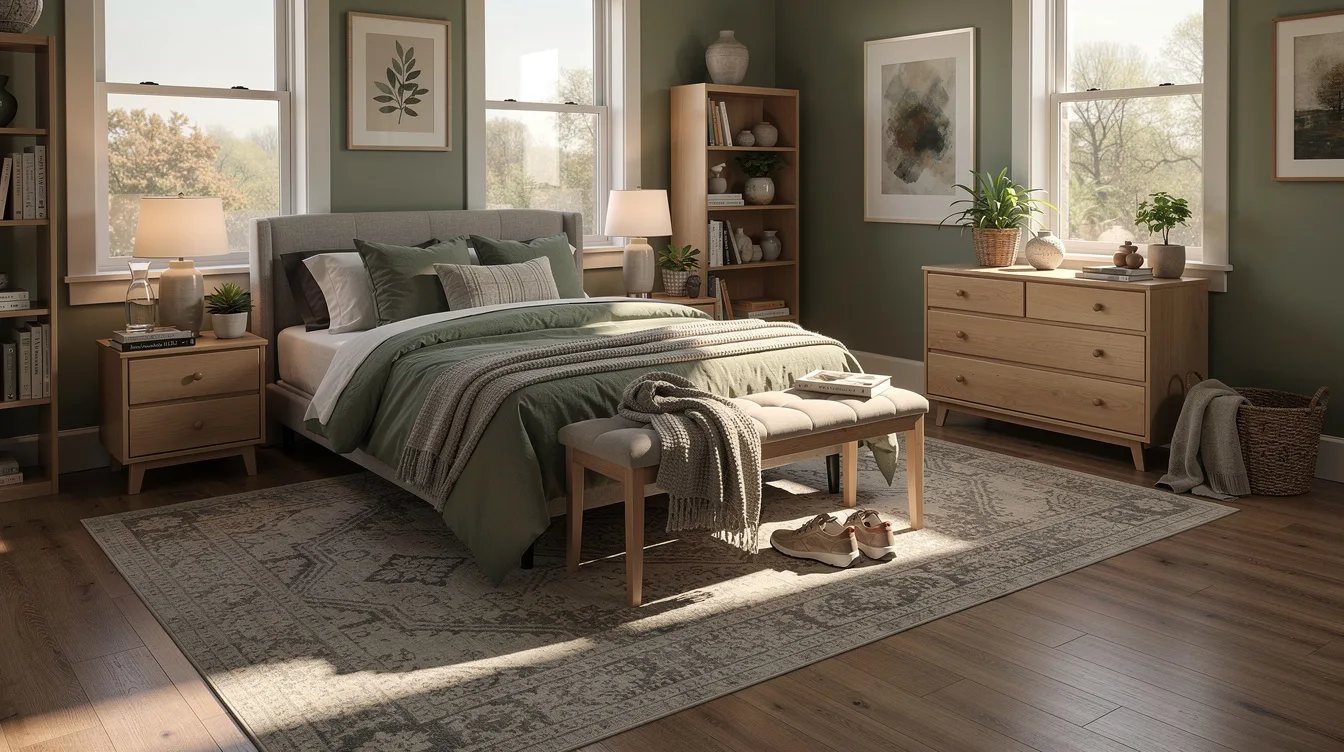
A king bed needs more territory than many shoppers expect. A 9-by-12-foot rug is generally the minimum that keeps the mattress, frame, and side landing zones from overwhelming the textile beneath them.
A 5-by-8 under a king is almost always money spent on something nobody can see. Save that size for an accent zone instead of asking it to anchor a suite-sized bed.
Stop Hiding a 5-by-8 Under a Queen
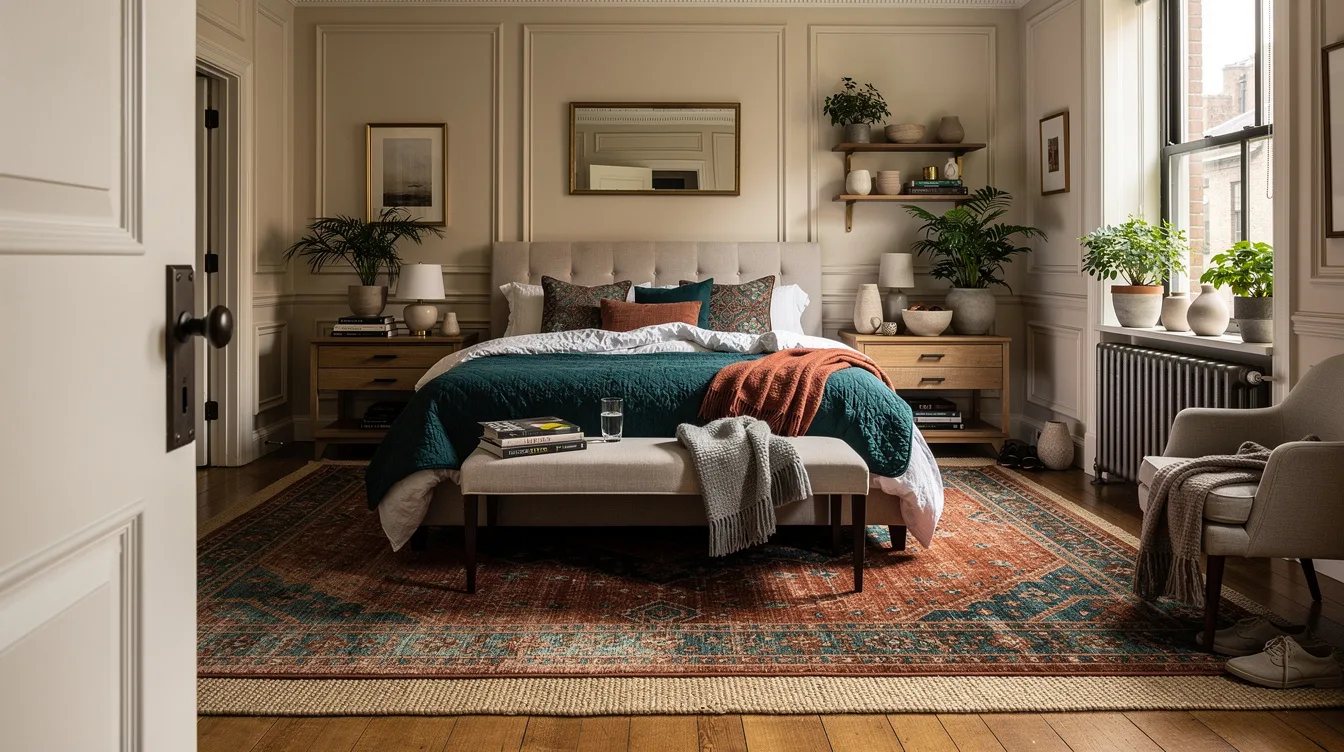
The most common failed arrangement is a 5-by-8-foot rug centered under a queen bed. It disappears under the frame or pokes out only at the foot, where it cannot do the job your feet need.
Use that size under a twin, in front of a dresser, or horizontally at the foot of a compact bed. It is a useful rug, just not a primary queen or king rug.
Slide the Rug Under the Lower Two-Thirds
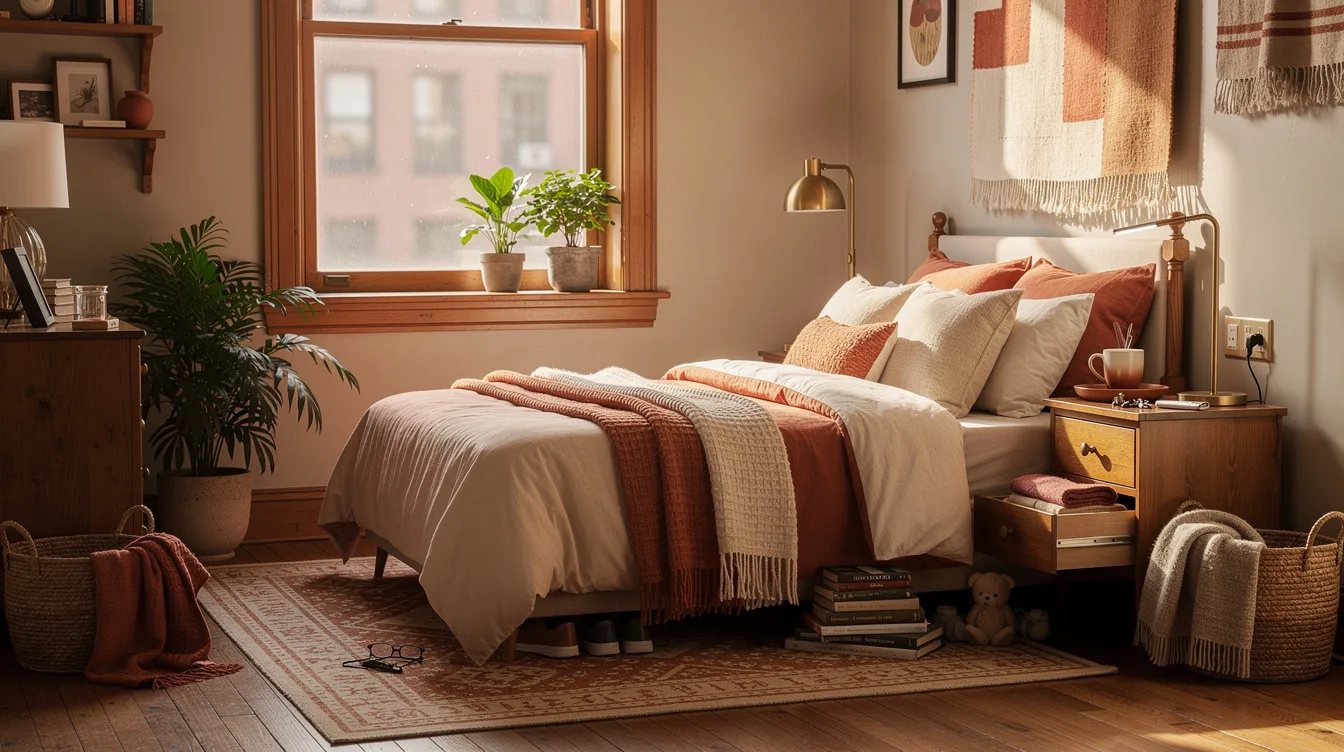
For the safest layout, begin the rug just in front of, or slightly beneath, the nightstands and run it past the footboard. This lower-two-thirds arrangement keeps the focal point on the upholstered bed, not on a bulky field of carpet.
It also avoids paying for hidden rug under a headboard wall. We favor this setup in most real bedrooms because it looks deliberate and leaves hard flooring where furniture needs steady footing.
Keep the Nightstands on Solid Flooring
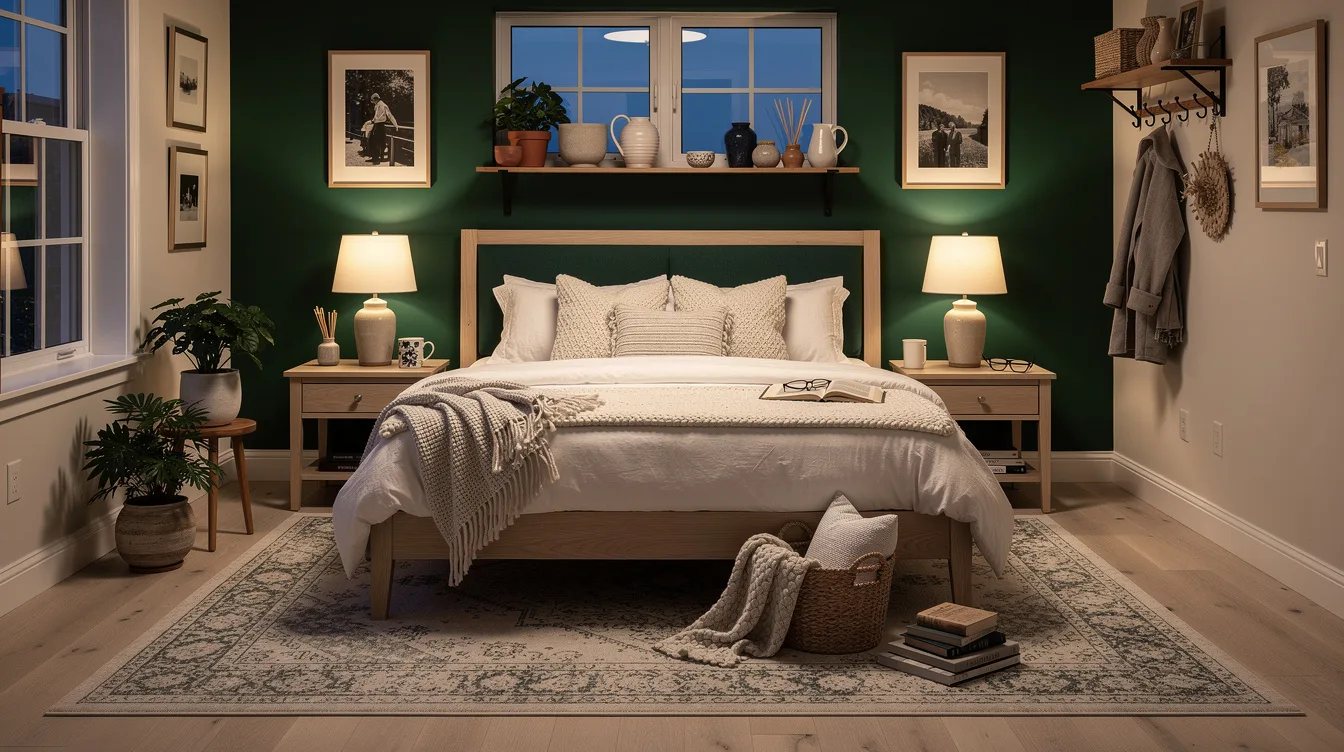
Nightstands do not need to sit on the rug for a bed to look anchored. Letting a pair of wood nightstands remain on the floor creates a clean break near the headboard while the rug supports the usable walking zone.
This choice is especially practical with drawers, because uneven furniture legs are annoying every day. The rug should serve the people getting in and out of bed, not collect unnecessary furniture legs.
Choose a Full Anchor Only for a Generous Room
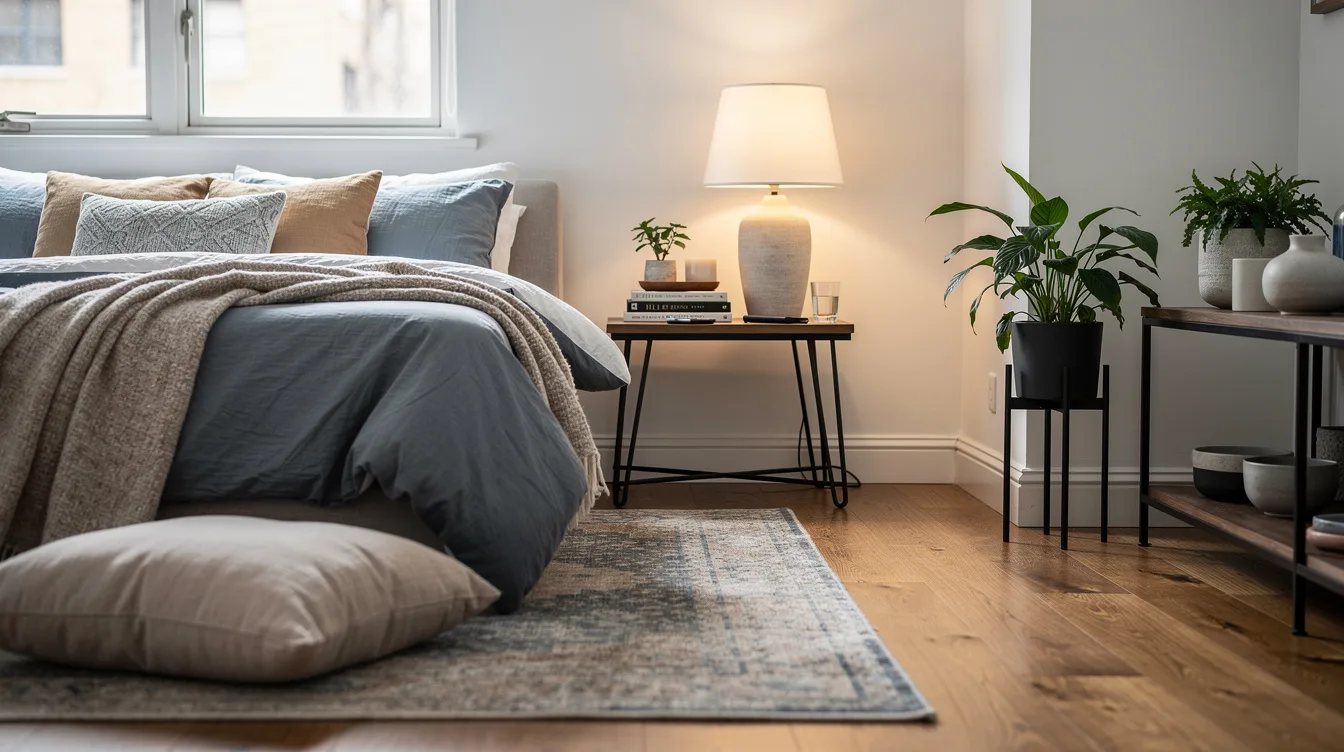
In a larger bedroom, place the whole bed, nightstands, and perhaps a bench on one 9-by-12-foot wool rug for a tailored, hotel-like layout. A king room may need roughly a 10-by-14-foot rug to make that same full-anchor idea work.
Do this only when the room has the floor area to spare. An oversized rug pressed against every wall looks less luxurious than one with a calm margin around it.
Leave a Breathing Border at the Walls
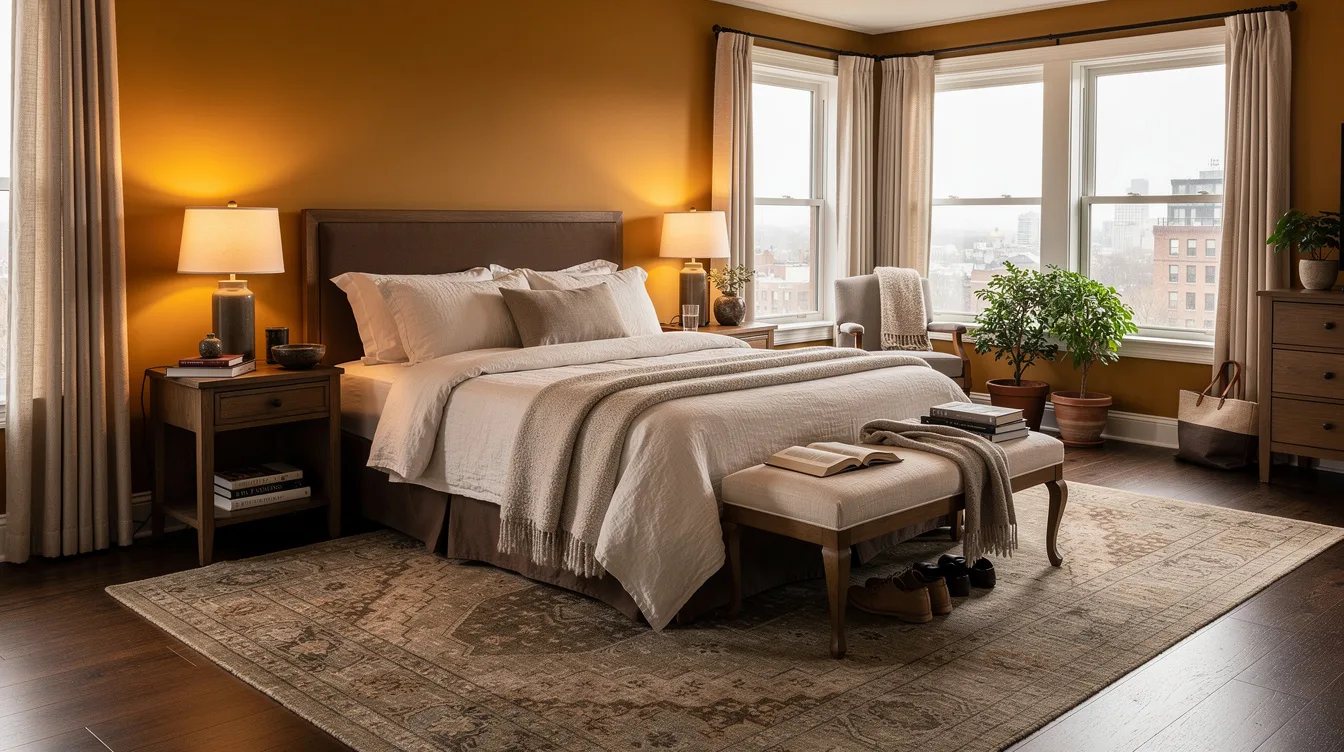
Keep roughly 12 to 18 inches of exposed flooring between the rug edge and the wall when the room allows it. That visible border lets the rug frame the bed rather than impersonate wall-to-wall carpet.
Door swings and built-in closets get the final vote. A tight bedroom does not need a perfect perimeter, but it does need a rug edge that does not catch a door or block a drawer.

Tape the Outline Before Ordering
Painter’s tape is the most useful design tool in this decision. Mark the proposed footprint of a Wayfair area rug or an Amazon rug pad on the floor, then walk the room in socks and bare feet.
Check where both sleepers step down, where the bench lands, and whether the bedroom door clears the corners. A five-minute tape test catches a bad size more reliably than a styled product photo.
Turn a Twin Rug to Match the Bed
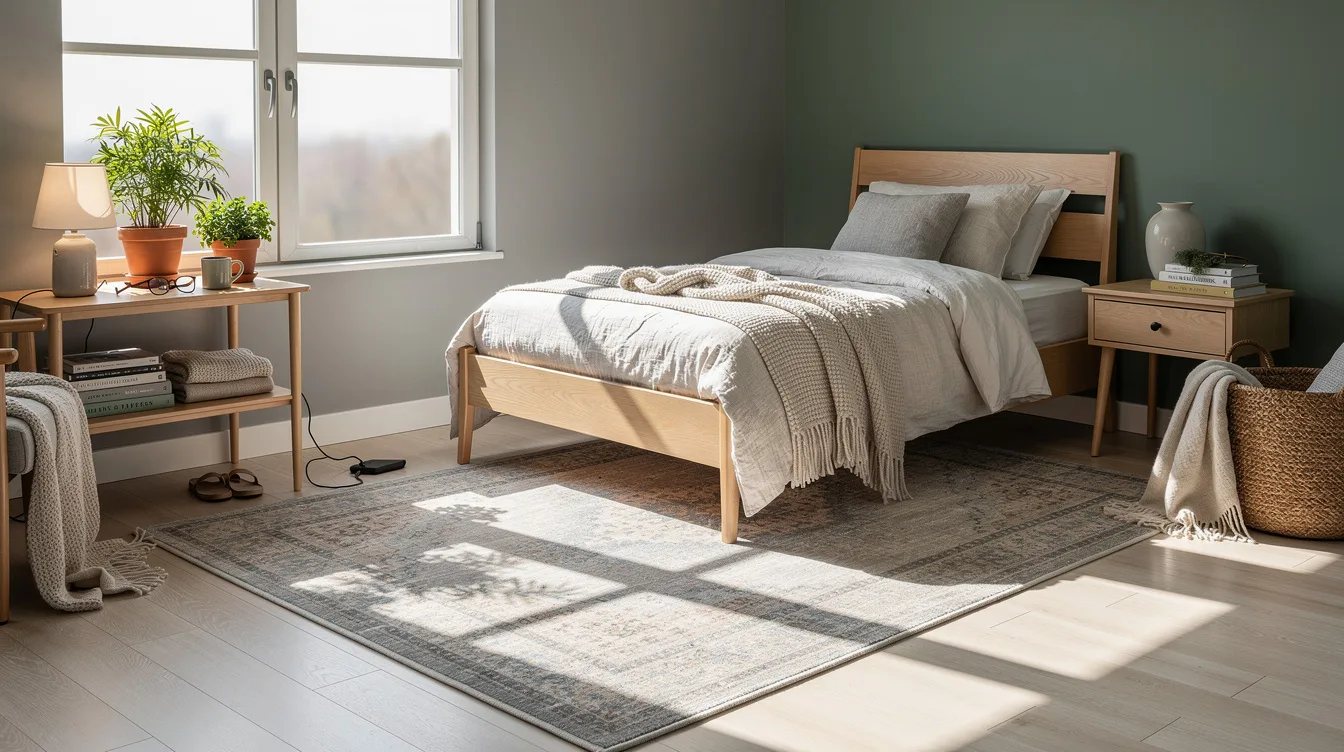
A twin can take a 5-by-8-foot rug under its lower portion, with the long side running from headboard to footboard. In a narrow room, placing that rug horizontally at the foot can also create a useful dressing spot.
Do not oversize a twin room merely to copy a larger-bedroom formula. The right choice is the one that gives a soft step-down zone without swallowing the aisle to the door.
Use Runners When a Narrow Room Demands Them
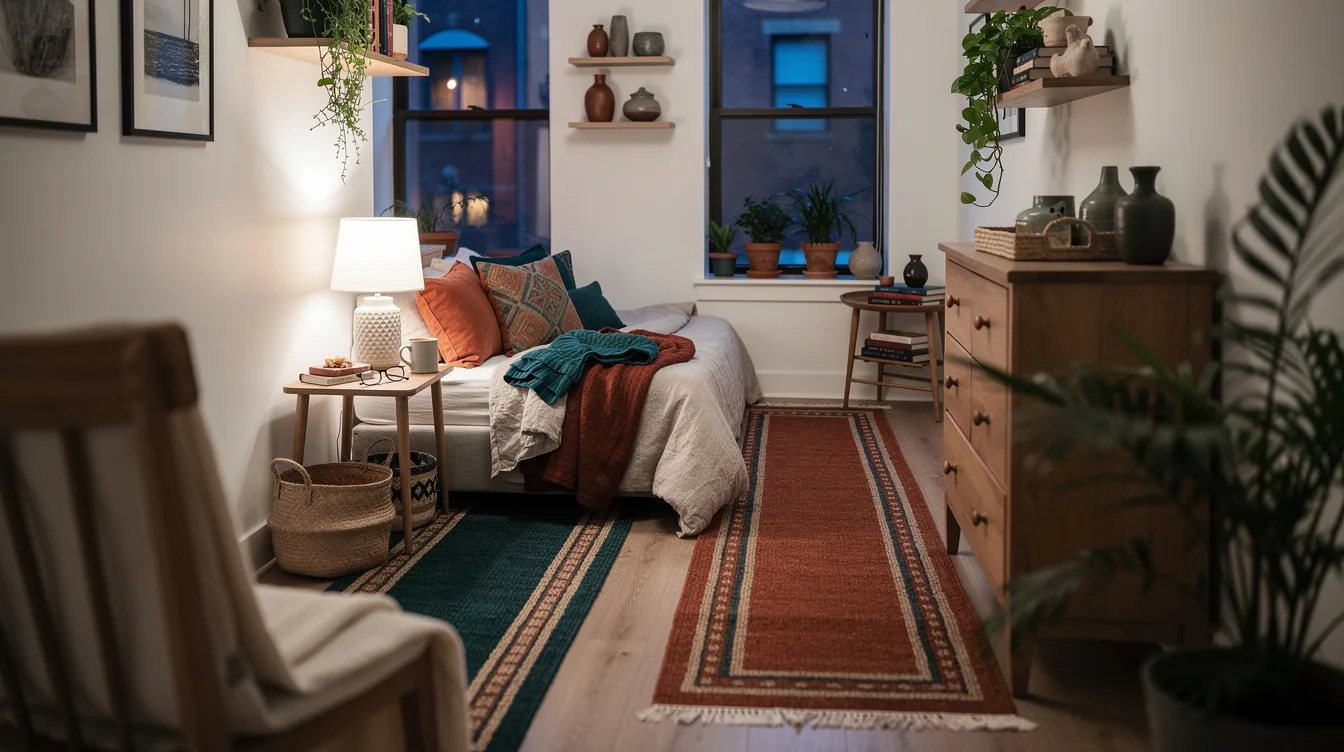
Two runners can beat one centered rug in a long, tight bedroom. Place a flatweave runner on each side of the bed so both people get warmth underfoot while the central floor stays easy to clean.
This is a functional answer for rooms where an 8-by-10 would crowd a closet or radiator. Matching runners from IKEA or Target can look intentional when their edges align near the footboard.
Match the Rug Edge to the Bed, Not the Room
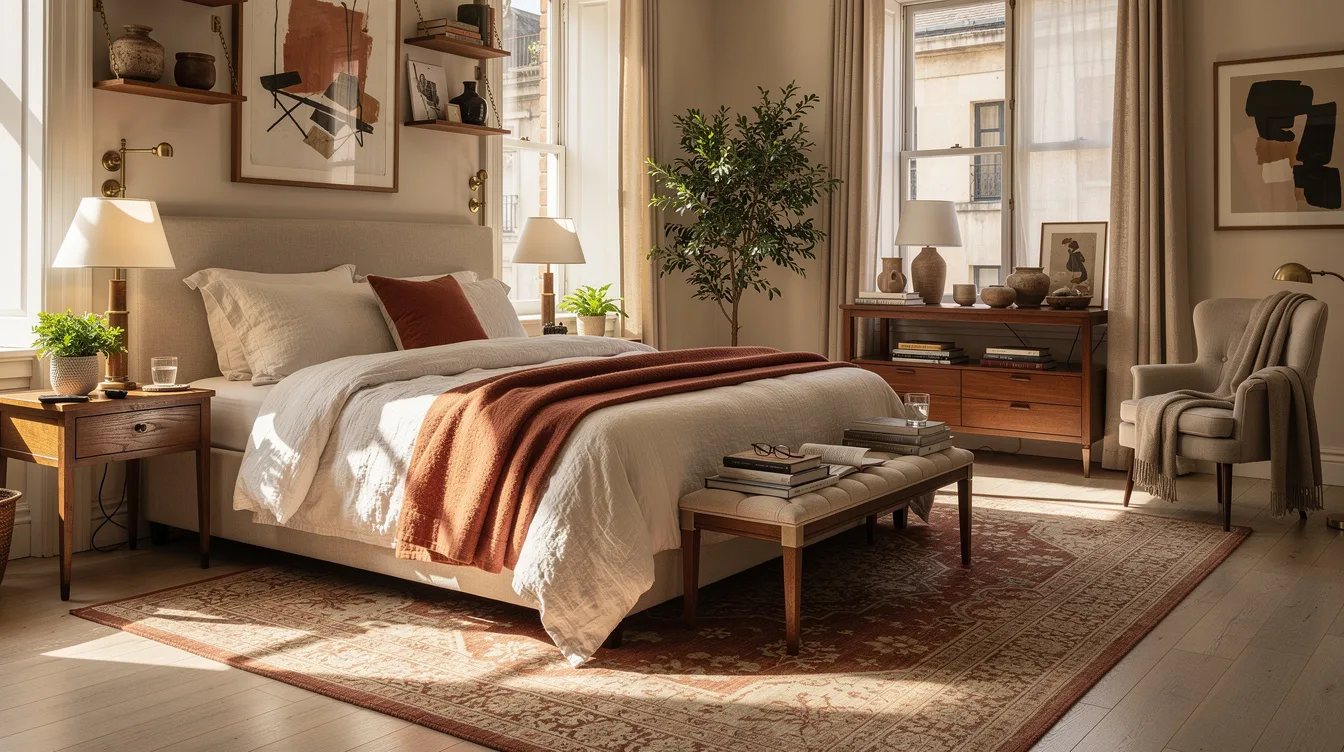
Center the rug on the bed’s centerline, even when windows, a reading chair, or an off-center doorway tempt you to center it on the architecture. The bed frame is what the rug must visually support.
A rug aligned with the room but shifted beneath the bed reads like an afterthought. Pull it into position, stand at the doorway, and make sure the same amount of rug shows at both bedside landing zones.
Keep reading
- The Kitchen Island Mistake That Makes Small Rooms Feel Tighter
- 12 Hotel-Style Nightstand Rules That Make a Bedroom Feel Finished
- Is Your Living Room Rug Too Small? Designers See This Mistake Most
Put painter’s tape down for an 8-by-10-foot outline before browsing patterns for a queen bed. Once the side landing zones feel right, the color and material choices become far easier to trust.