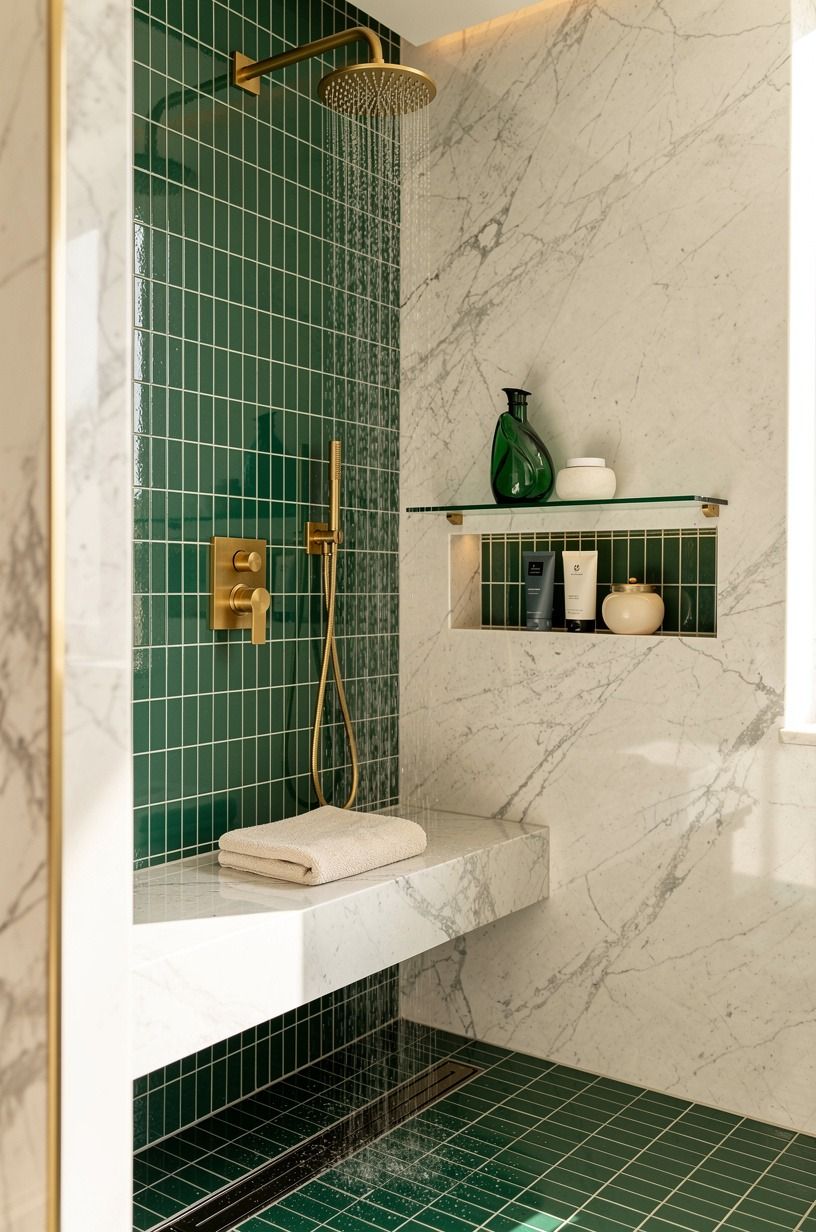
How to Design a Dark Wet Room for a Moody, Dramatic Open Shower - 17 Ideas
30 august 2026Dark wet room ideas work when you treat the whole bathroom as the shower zone, not a dark box with wet walls. I learned that after choosing a nearly black grout that made every water mark shout. Start with drainage, then let the moody finishes earn their place.
- Map the water path before you choose dark shower room finishes
- Start with a deep wall color for dark wet room ideas
- Build the Two-Tone Tile Rule from floor to wall
- Set your drain line before the tile layout gets precious
- Anchor the room with a dark walk in shower glass screen
- Choose brushed brass over shiny chrome
- Layer the Three-Height Light Stack around the mirror
- Frame the vanity with a quiet, solid material
- Use wall tile instead of paint inside the splash field
- Mix zellige with large-format porcelain for a lived-in finish
- Keep the shower niche deep enough to be useful
- Can dark wet room ideas make a small bathroom feel bigger?
- Float the vanity for the Shadow-Line Effect
- Leave toilet clearance before you chase the dramatic layout
- Hang a mirror that gives the darkness somewhere to go
- Spend by zone with the Wet-Room Budget Ladder
- Finish with textiles that warm up the open shower
1Map the water path before you choose dark shower room finishes
Stand where you’ll shower and trace where water will travel across your floor. Your dark wet room needs a clear fall toward the drain, plus a linear shower drain that doesn’t interrupt the Carrara marble pattern.
I’d keep the open shower at least 36x36 in. Smaller can work, but you’ll spend your mornings dodging splash instead of enjoying the calm, dramatic feeling you wanted. And yes, this boring first step saves the expensive part later.
Typical cost by tier (US averages):
2Start with a deep wall color for dark wet room ideas
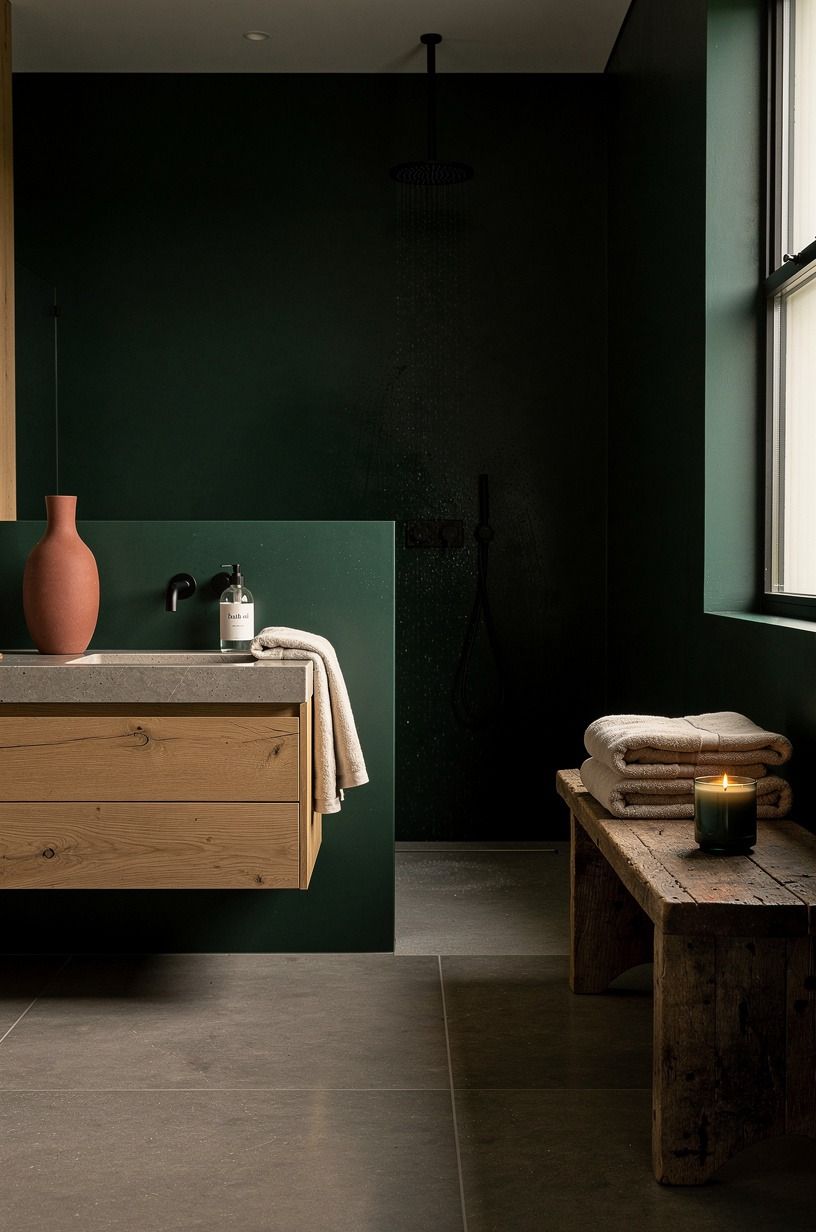
Use darkness on the wall plane first, especially if your existing floor is light or warm. Farrow & Ball Hague Blue No. 30 has enough green beneath the navy that it feels moody in daylight rather than flat and corporate.
You’ll want moisture-rated paint outside the splash zone, then tile where water lands. I’d skip a cold charcoal here. It can read like a locker room once your mirror fogs up, while a forest-green wall with reclaimed teak keeps the room intimate and welcoming.
3Build the Two-Tone Tile Rule from floor to wall
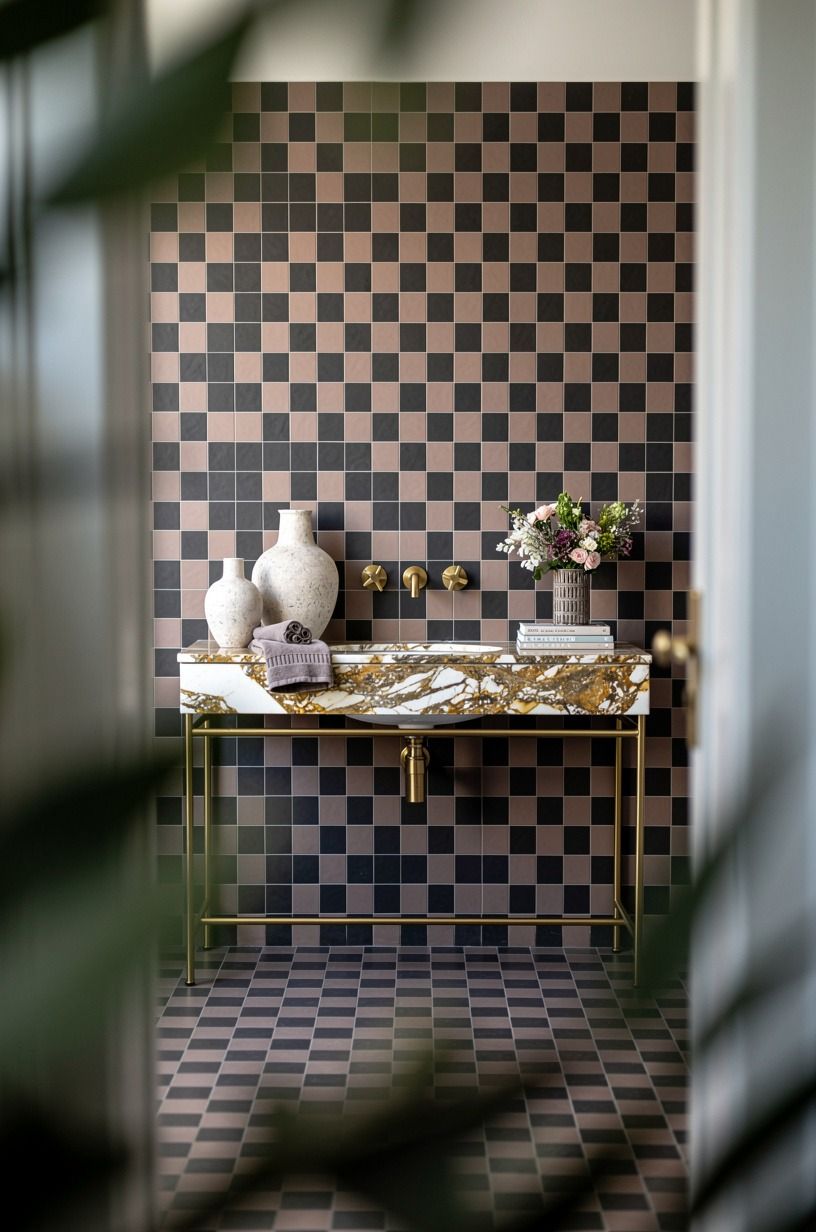
Choose one dark tile for the floor and one related, quieter tile for the walls. A dusty-rose Calacatta marble floor with fine gold veining gives you movement; a larger charcoal wall tile lets your eye rest.
Your floor needs grip, so don’t chase a glossy black finish just because it photographs well. I’ve seen it look dramatic for one afternoon and slippery by dinner. But a honed, textured surface makes your dark walk in shower ideas feel grounded.
4Set your drain line before the tile layout gets precious
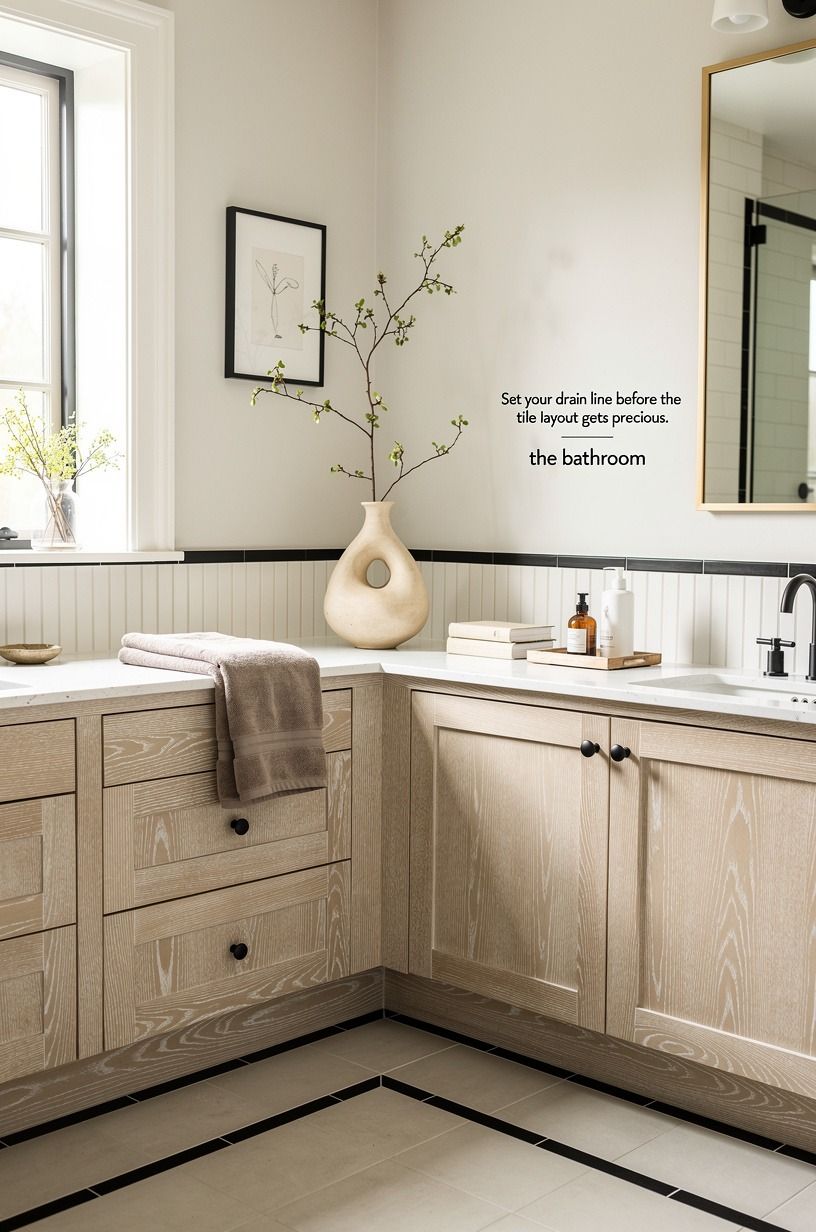
Center the drain only if your layout calls for symmetry. Otherwise, run it along the rear wall so you can keep your tile cuts broad and calm. Schluter KERDI-LINE systems are worth discussing with your installer because they support that uninterrupted open-floor look.
You’re better off seeing a dry layout before adhesive appears. Lay out the field tile, check the cut at your doorway, then decide. Small pieces around a drain can look fussy fast.
Quiet geometry wins every time.
5Anchor the room with a dark walk in shower glass screen
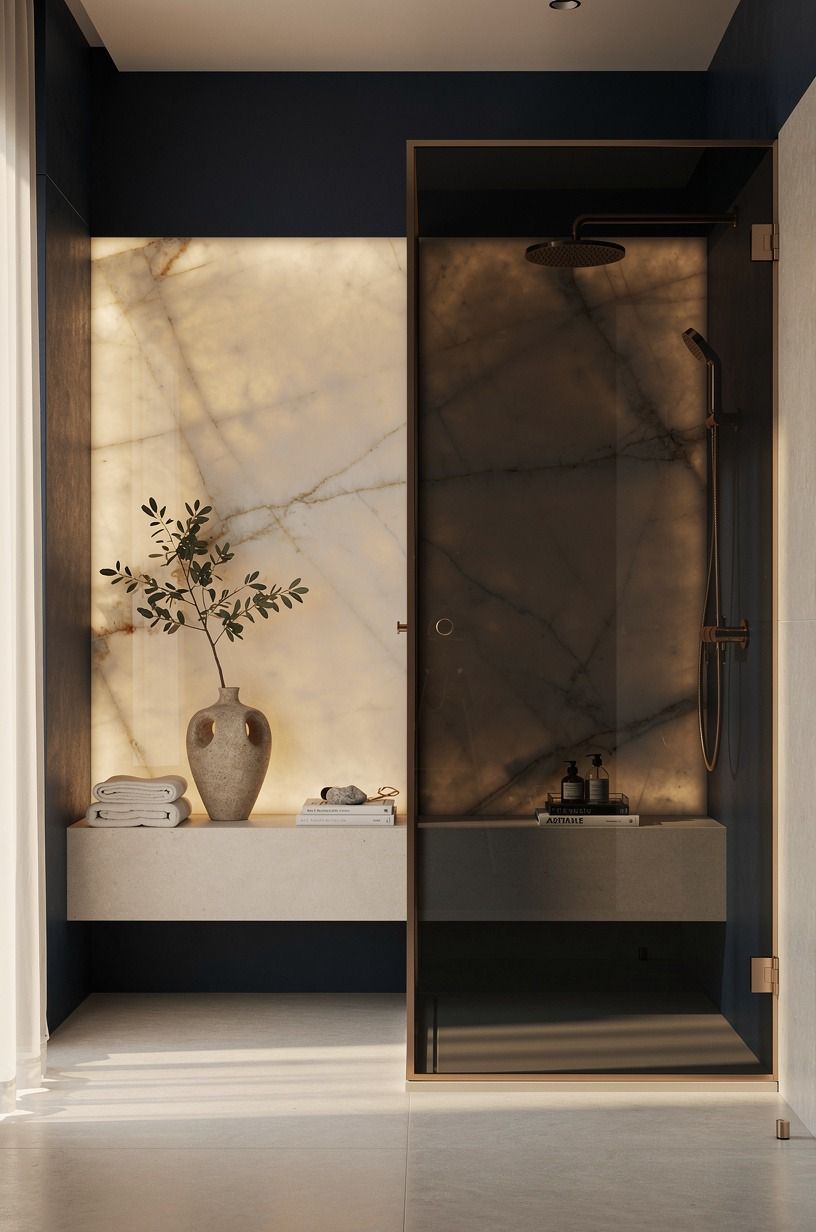
Use one fixed panel of clear glass instead of boxing the shower in. A frameless 3/8-inch tempered glass panel keeps steam contained enough while letting midnight blue, copper, and backlit onyx stay visible from the vanity.
You don’t need black metal grids everywhere. I’d skip them in a compact bathroom because the lines slice up your sightline and make the room feel busier. One clean panel, one nearly invisible edge, and your shower stays airy despite the deep palette.
6Choose brushed brass over shiny chrome
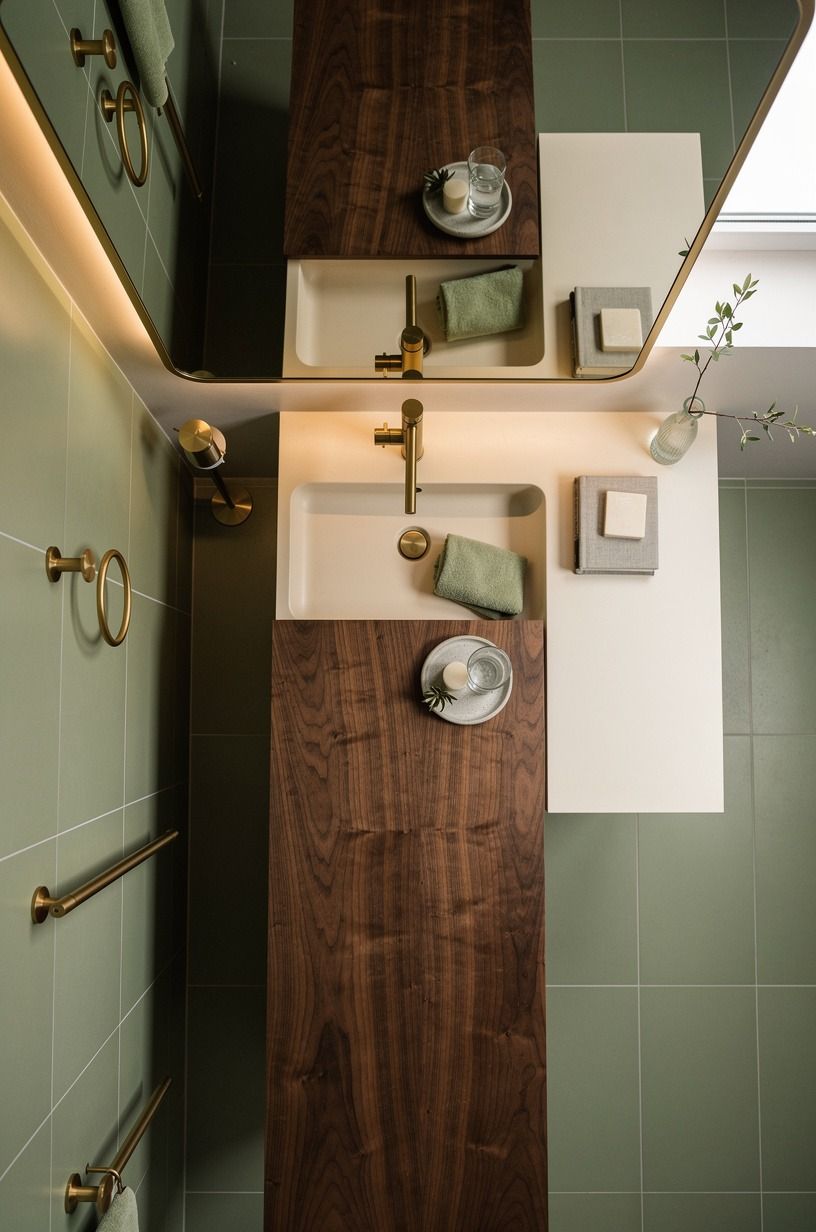
A dark shower bathroom needs a warm metal to stop it feeling severe. Brushed brass shower hardware brings a soft gold note against sage green, warm cream, and book-matched walnut, and it ages more gracefully than mirror-bright chrome.
Typical brushed brass faucets run $120-$450, so you can put the spend where your hands touch it every day. You’ll notice the difference at the handle, not in a matching towel hook nobody sees. That’s the honest priority.
7Layer the Three-Height Light Stack around the mirror
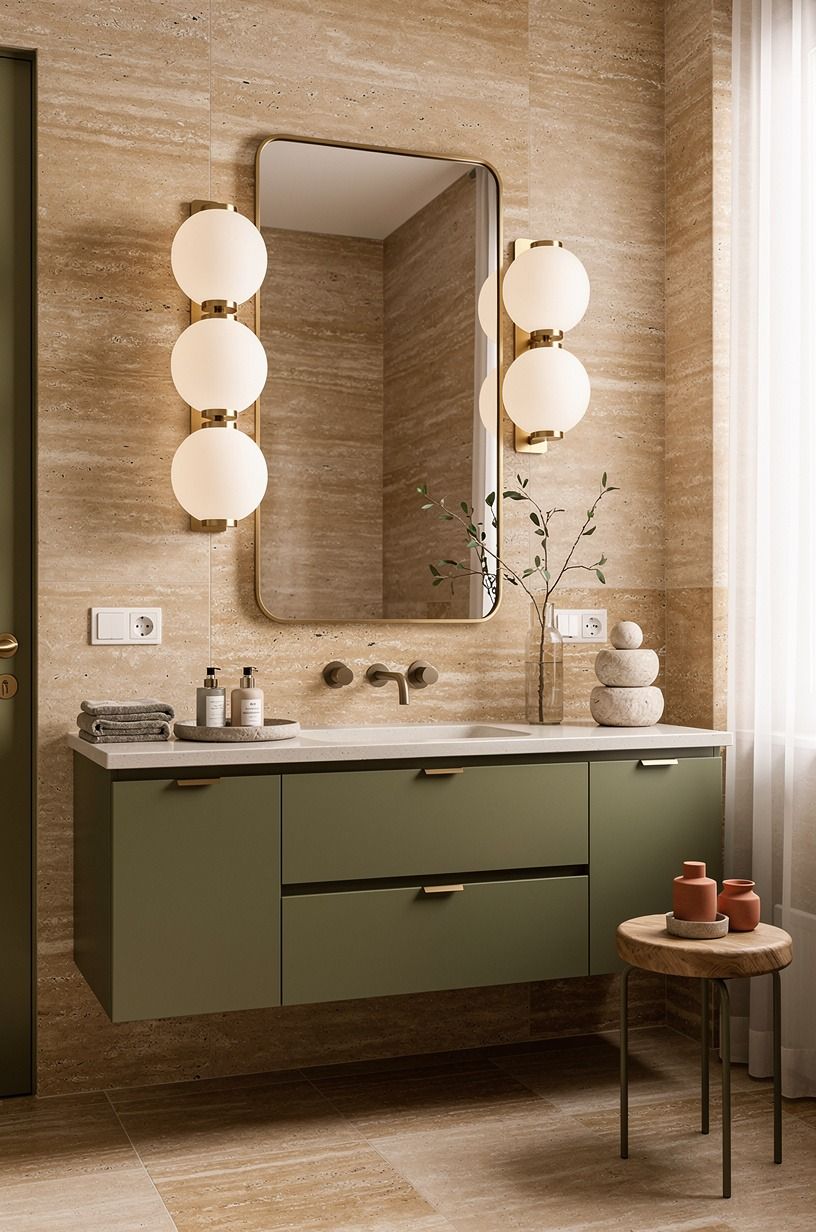
Give yourself light at three levels: ceiling, face height, and low ambient glow. A recessed ceiling fixture handles cleanup, aged-bronze sconces light your face, and a low dimmer gives terracotta, stone, olive, and warm travertine a relaxing nighttime mood.
Your sconces should sit near eye level instead of hovering too high above the mirror. Why spend money on a dramatic bathroom if you’ll still shave under a shadow?
And use warm bulbs, please. Blue-white light kills the whole inviting effect.
8Frame the vanity with a quiet, solid material
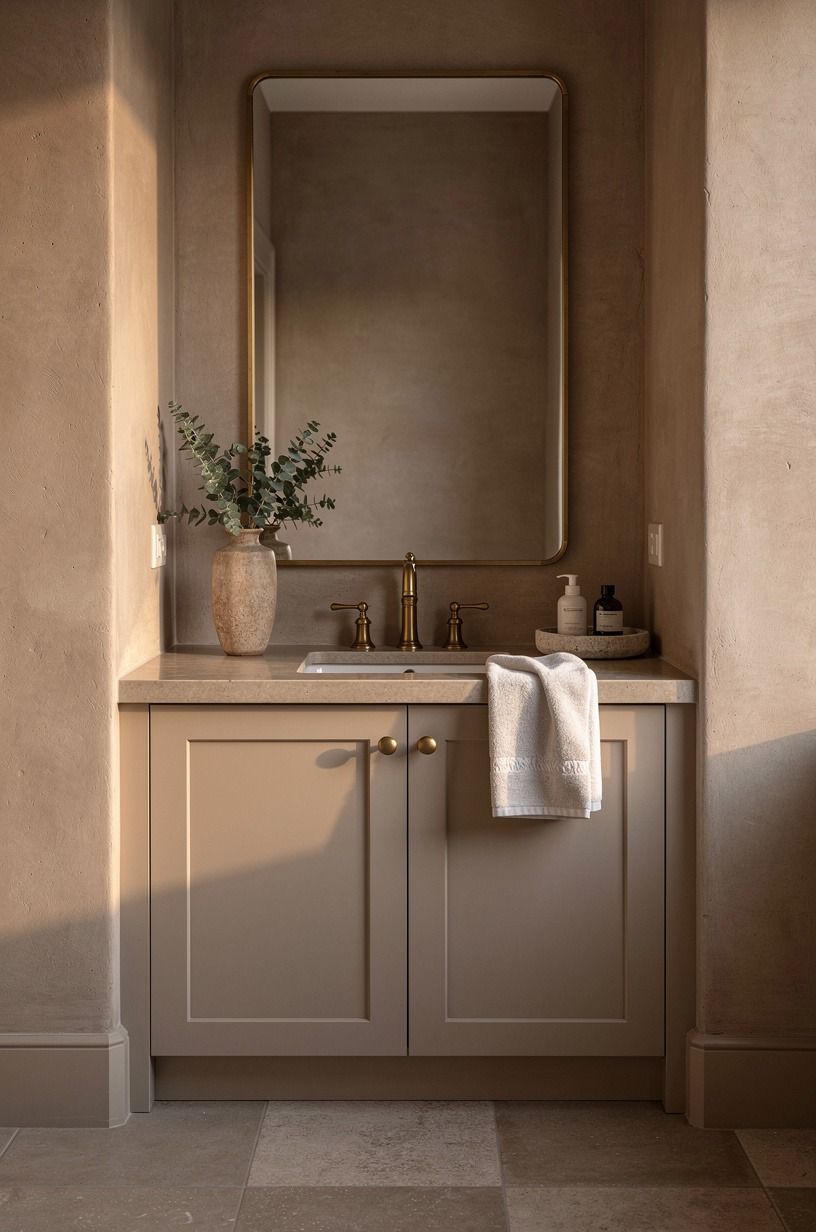
Pick a vanity that can stand beside the tile without competing with it. IKEA HAVBÄCK dark gray-green works for a budget-minded base, while unlacquered brass with a little patina adds a more refined, organic note.
Vanity height usually lands between 32-36 in, so check your household before ordering a floating unit online. I made the mistake of loving a low profile in a showroom.
At home, it felt like brushing teeth at a kid’s desk. Your back won’t forgive that.
9Use wall tile instead of paint inside the splash field
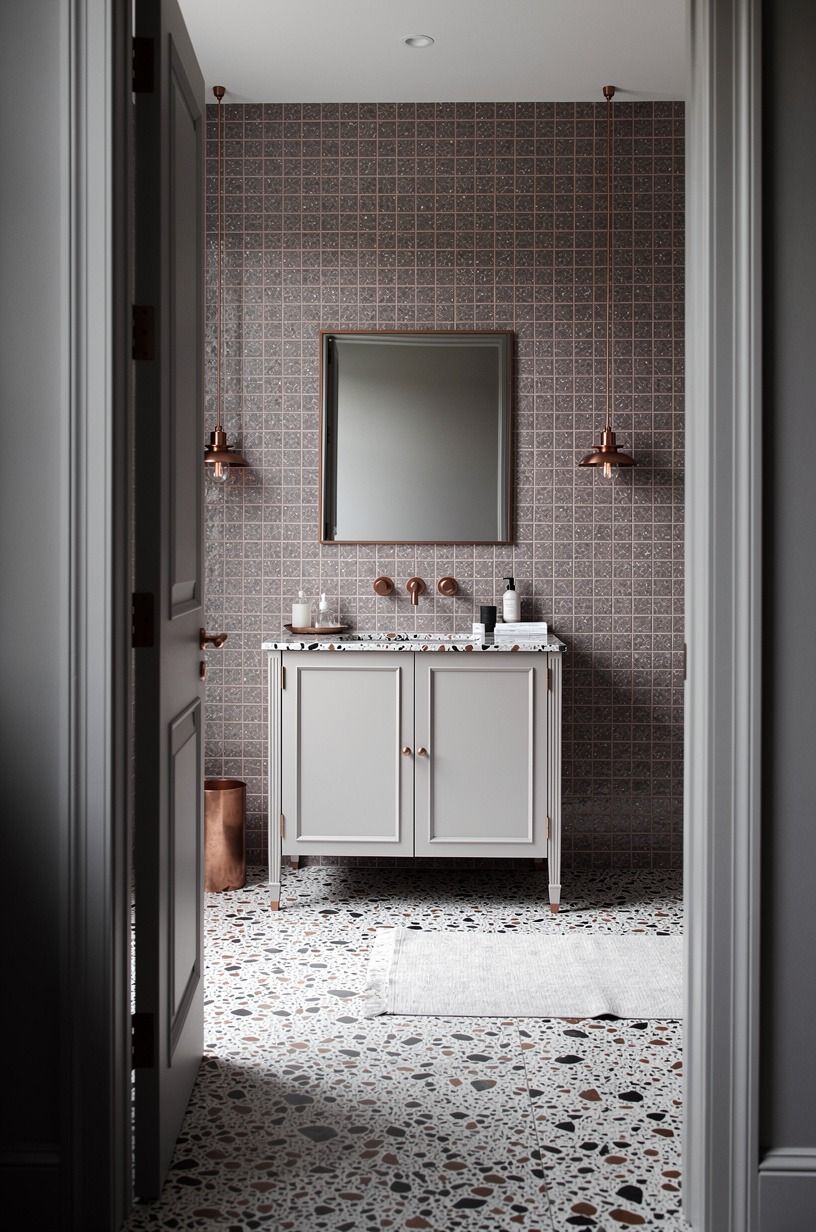
Run oversized-chip terrazzo tile through the full splash area, even if you paint the rest of the room.
10Mix zellige with large-format porcelain for a lived-in finish
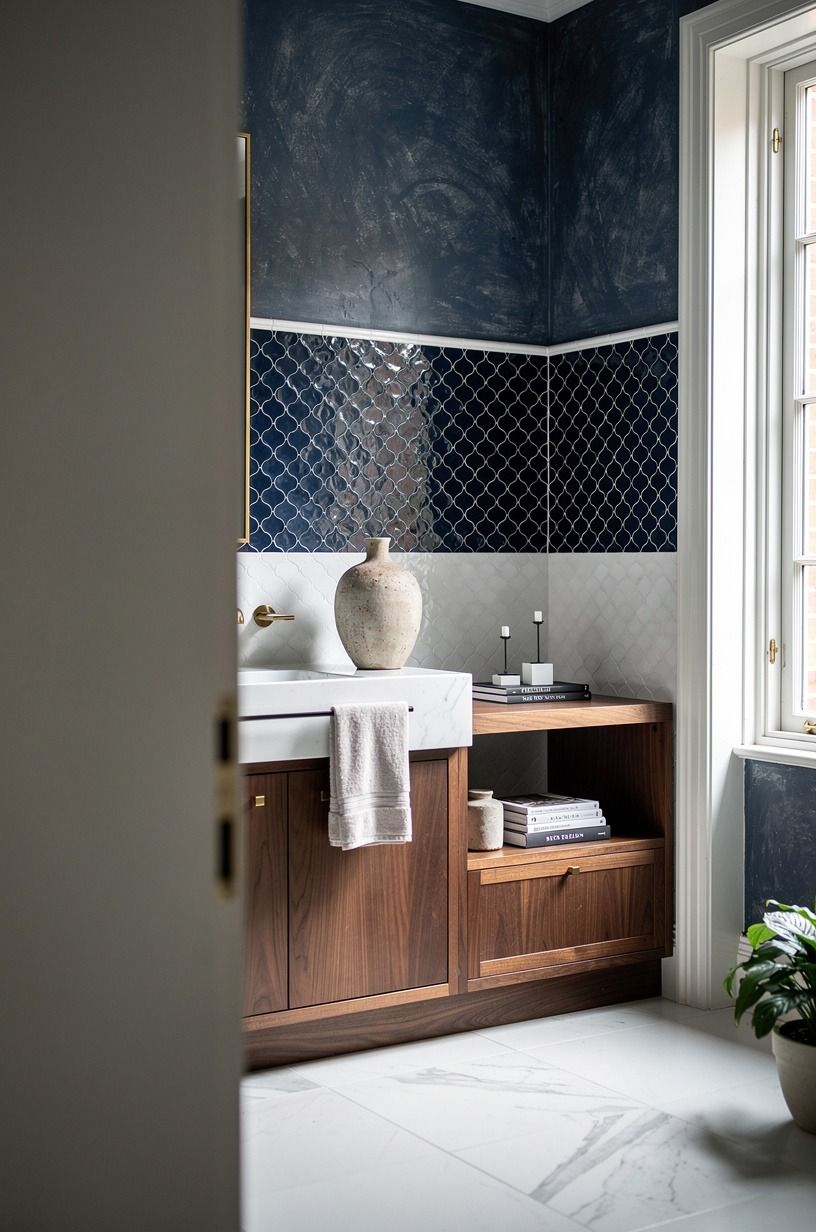
Put handmade-looking tile where you want texture, then use large-format porcelain where you want less grout. Navy-and-white zellige around the niche feels captivating; hand-applied Venetian plaster on a dry wall adds calm beside warm walnut.
Zellige tile commonly costs $15-$35 per sq ft, compared with $2-$10 per sq ft for subway tile. You don’t have to tile every surface in the expensive material.
Save it for the wall your eye catches first. That’s where the money reads.
11Keep the shower niche deep enough to be useful
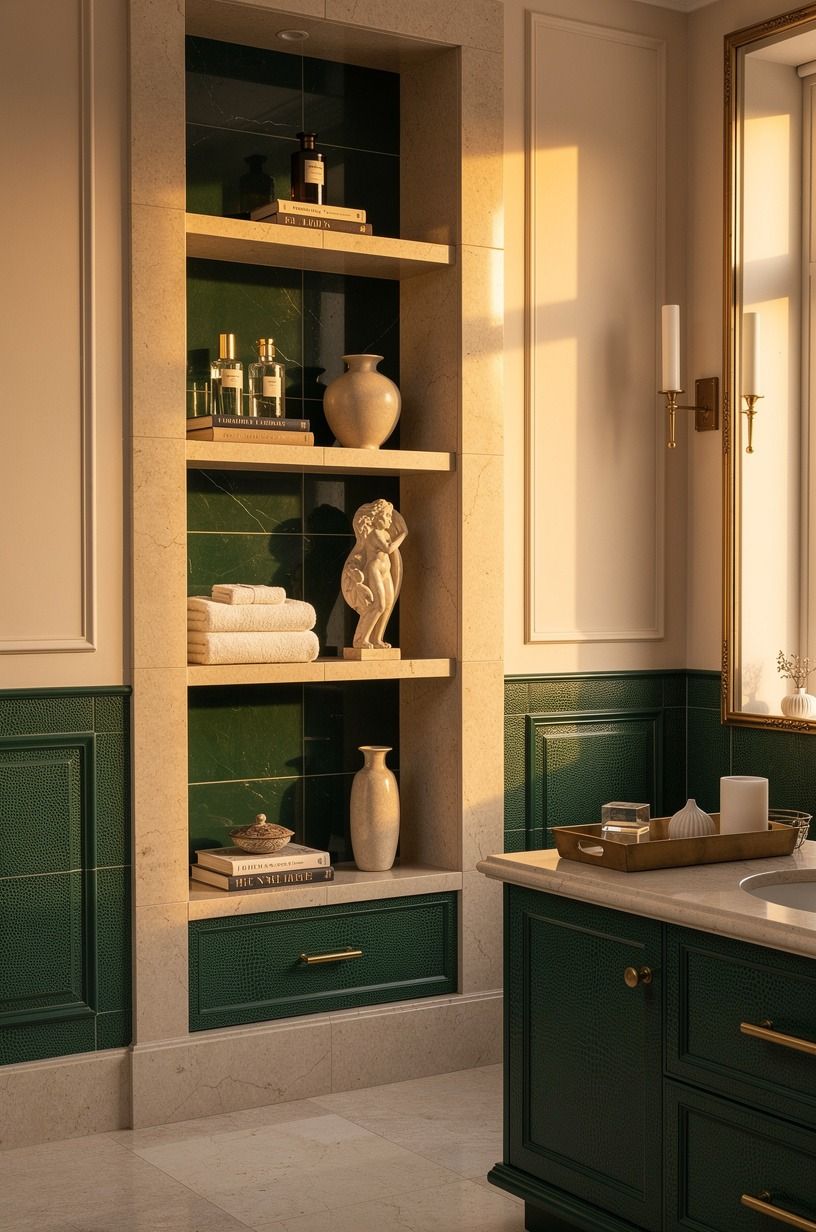
Build your niche around the bottles you already own, not a tiny decorative rectangle. Emerald, gold, and cream finishes with small shagreen accents can make the storage feel considered without making it fussy.
12Can dark wet room ideas make a small bathroom feel bigger?
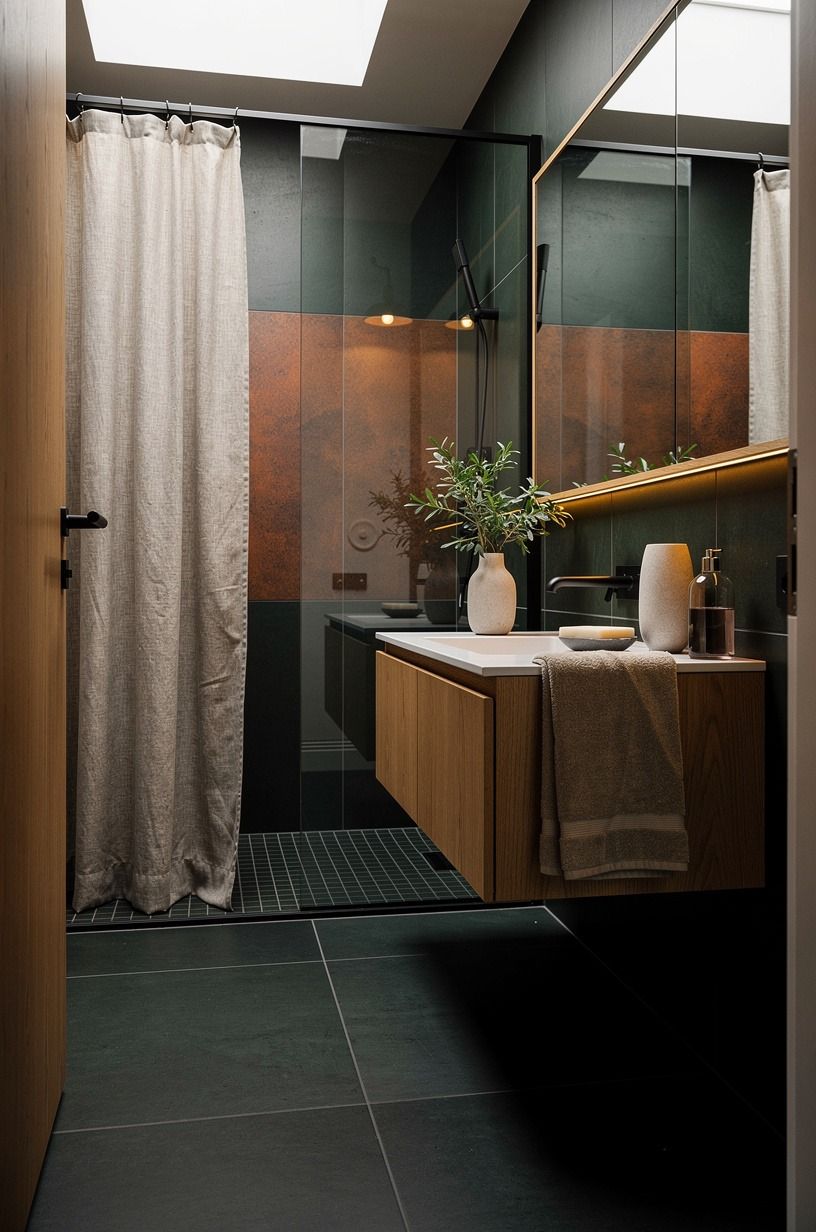
Yes, if you let the dark color continue across several surfaces instead of chopping the room into contrast blocks. Sherwin-Williams Sea Salt SW 6204 on a dry ceiling or adjacent wall can soften forest green, rust, natural oak, and washed Belgian linen without turning the room pastel.
Your small bathroom gets more serene when the floor, shower wall, and doorway read as one visual field. Don’t add a bright white shower pan just because it seems safe. It breaks the spell, and your eye stops right at the threshold.
13Float the vanity for the Shadow-Line Effect
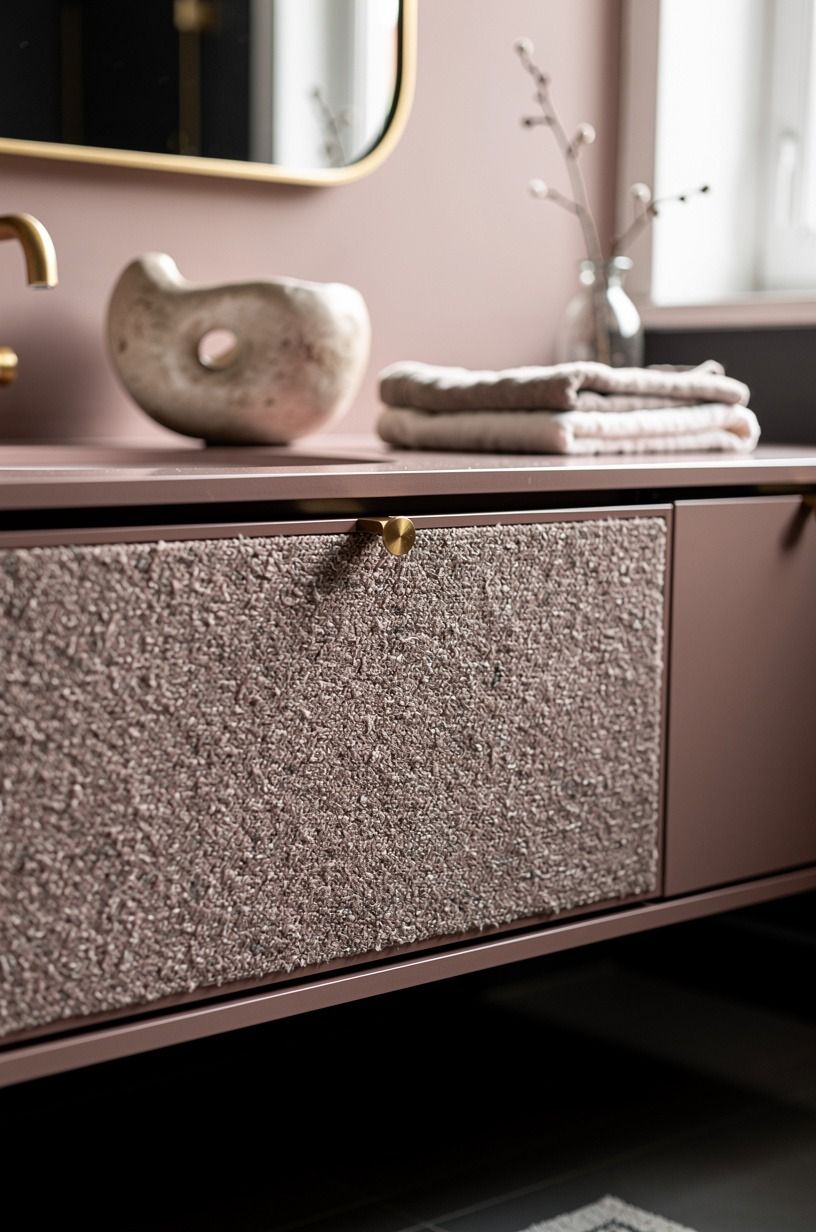
Mount the vanity so a visible gap sits beneath it, then light that gap gently. A floating bouclé-front vanity gives you more floor in view, which makes a dark wet room feel less heavy and more modern.
You’ll need proper blocking in the wall before installation, especially with a stone top. A marble top typically costs $50-$100 per sq ft, and it’s not something you want hanging from hopeful drywall anchors. Short version: plan the support first.
14Leave toilet clearance before you chase the dramatic layout
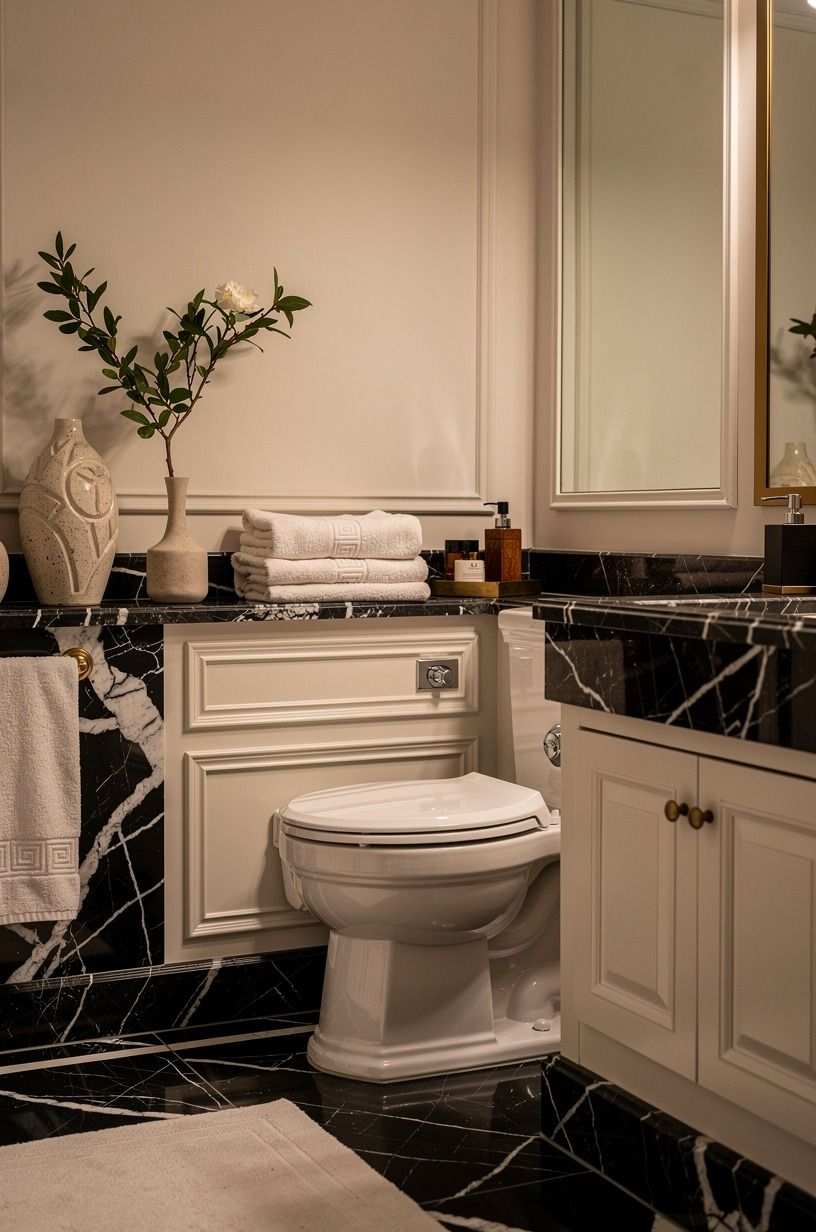
Measure the route from door to toilet before committing to a giant shower panel. Your bathroom needs at least 21 in of clear space in front of the toilet, even when your dark shower room ideas are pulling you toward a hotel-like layout.
I’d rather shrink a vanity than crowd this zone. A wall-hung Duravit-style toilet can help visually beside Nero Marquina marble, but no fixture solves a bad circulation path. You’re designing for wet feet and half-awake mornings, not just a saved pin.
15Hang a mirror that gives the darkness somewhere to go
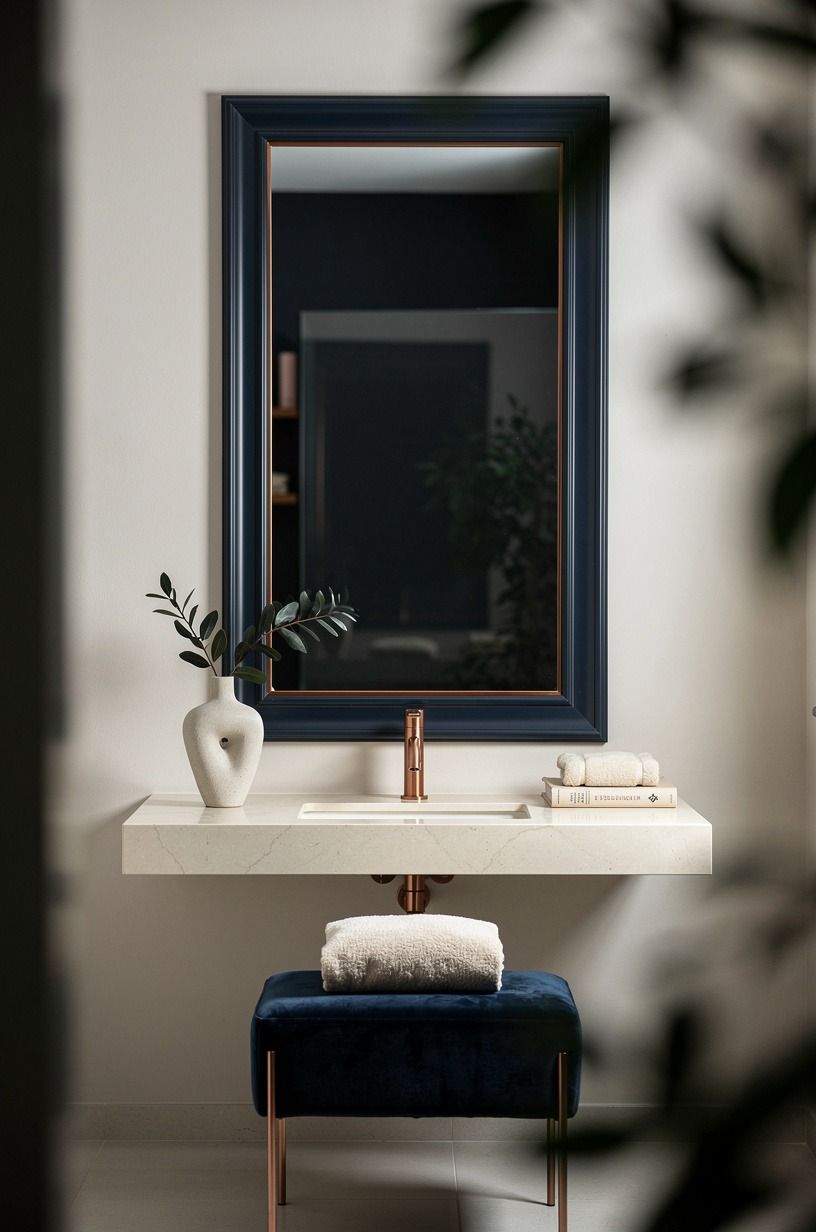
Choose a larger mirror than your first instinct. CB2 Infinity black-framed mirror style pieces bounce light across midnight blue walls without making the room feel overly polished or cold.
Your mirror should relate to the vanity width, not float like a postage stamp above it. And if you’re using copper hardware, don’t force a copper mirror frame too. Black, aged bronze, or warm oak keeps the metal mix more believable (and less showroom-set).
16Spend by zone with the Wet-Room Budget Ladder
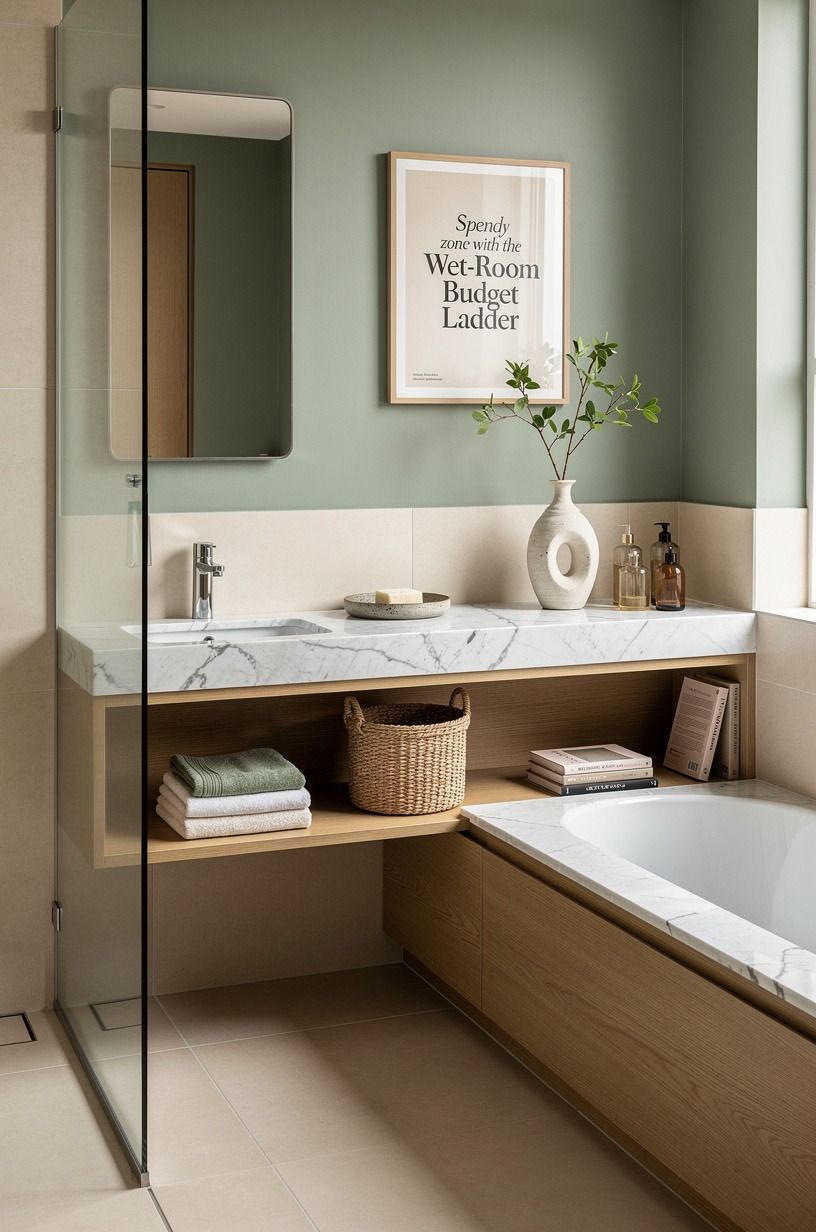
Put your money into waterproofing, drainage, and the Carrara marble shower field before decorative details.
17Finish with textiles that warm up the open shower
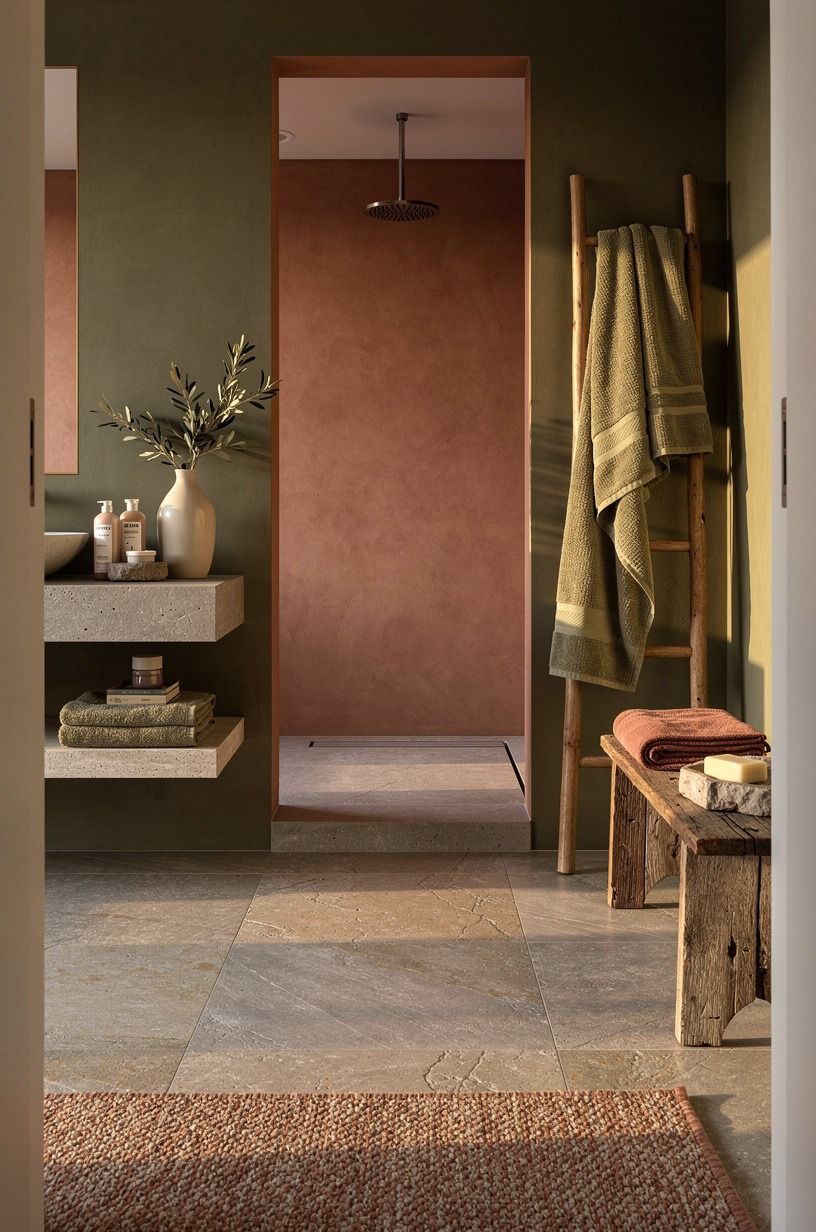
Bring softness to the dry edge of the room with a 600gsm Turkish cotton bath sheet, a washable mat, and one closed reclaimed-teak storage basket for visual clutter. Terracotta, stone, olive, and weathered wood keep all that hard surface from feeling echoey.
You don’t need five decorative towels. Two good ones, folded where you’ll reach them, look more intentional and stay useful.
And leave a little breathing room around the shower entry. The open path is what makes the wet room feel luxurious!
Why I Think Dark Bathrooms Are Having Their Moment
I used to think dark bathrooms were mostly a photo-styling move. Gorgeous for a minute, impractical in a real house, too dependent on perfect lighting.
Then I lived with one. Not a giant primary bath, either, but a compact room with a shower that was always slightly damp and a single window facing a brick wall.
The darker finish made the room calmer because it stopped asking to be bright. It let the water, the brass, the folded towels, and the warm bulb light do the talking.
That doesn’t mean every dark bathroom deserves applause. I’ve seen people copy a black-tile image, choose shiny finishes, use cold LEDs, and end up with a space that feels like a trendy restaurant restroom.
The missing part is softness. You need a warm metal, a pale oak note, a textured towel, or a muted painted ceiling.
Something that catches light without bouncing it harshly.
I also think open showers are changing how people use darkness. With a closed shower, tile can become a separate visual event. In a wet room, the floor and walls belong to one continuous little landscape.
That’s why a single deep color often feels more peaceful than a dozen high-contrast choices. Your eye can wander instead of constantly stopping.
Honestly, I went back and forth on whether dark grout was too much in my own bathroom. It wasn’t.
The real mistake was treating grout as invisible. It’s a design line, and you’ll see it every day.
Pick it like you mean it. A dark wet room shouldn’t feel like a cave.
It should feel gathered, warm, and a little bit private. That’s the appeal.
The Questions I Get Asked Most
What is the best dark wet room idea for a small bathroom?
A continuous dark floor and one clear glass panel are the best starting point for a small bathroom. Frameless glass keeps your sightline open, while dark tile makes separate zones feel joined instead of chopped apart.
- IKEA HAVBÄCK floating vanity - Matte charcoal porcelain floor - One warm brass fixture
Where can I buy dark wet room pieces on a budget?
Start with IKEA, Target, Wayfair, and local tile outlets for practical pieces. Secondhand mirrors are often the best buy, especially on Facebook Marketplace or at architectural salvage shops.
- Target Threshold bath textiles - Wayfair vanity lighting - Marketplace brass-framed mirror
How much does a dark wet room makeover cost?
A cosmetic dark wet room makeover typically costs about $200-$1,200, while a larger rebuild can reach $12,000-$30,000+. Paint and textiles are the low-cost moves; plumbing and waterproofing drive the bigger number.
Can I create a dark wet room on a budget?
Yes, and you don’t need to replace every surface. Paint, lighting, and textiles can shift the mood for far less than a full tile job.
- Deep paint outside splash zones - Removable blackout window film - Warm bulbs on a dimmer
Is a dark wet room worth it in a small space?
Yes, it’s worth it when your finishes stay continuous and your layout stays clear. One visual field makes a compact bathroom feel calmer, especially when you avoid a bulky shower enclosure.
Is a dark wet room a good idea for a rental?
Yes, if you focus on removable layers and leave plumbing alone. Peel-and-stick details can add mood, though they don’t belong inside the direct shower spray.
- Removable wallpaper on dry walls - Tension-rod linen curtain - Portable warm lighting
Where I'd Start First
If I had to pick one step, I’d start with the floor tile. Your feet see it every morning, and a textured dark surface makes the open shower feel intentional before you add a single brass detail. Pin that choice for later, then build upward.