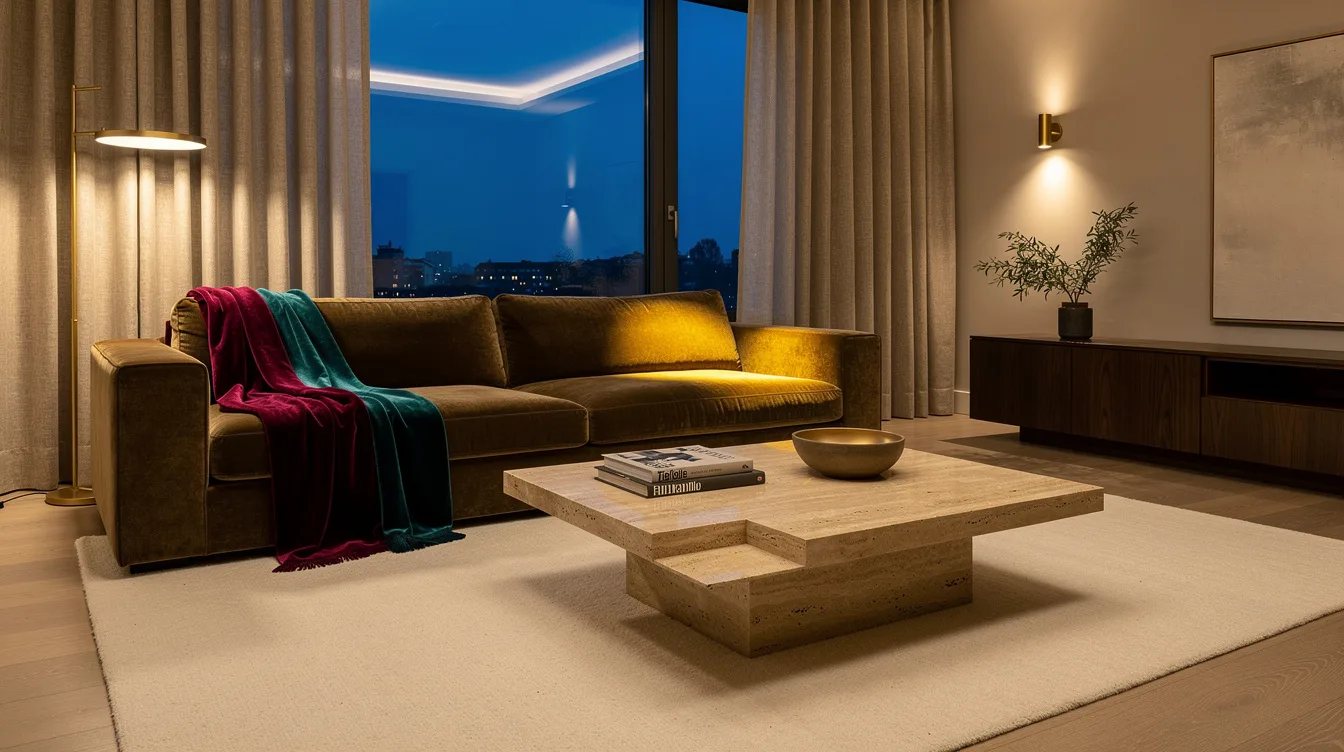
12 Milan Apartment Style Rules That Read Expensive
26 august 2026A convincing Milan apartment starts with restraint, and that is exactly where many rooms lose the plot. A sofa around 100 inches wide can make the room feel calmer than two smaller seats fighting for attention.
The goal is lived-in polish: tactile surfaces, warm pools of light, and enough empty space for every piece to register.
What you will find inside
- Set a Low-Contrast Envelope
- Commit to One Primary Wood
- Ground the Room With a Mineral Surface
- Choose a Long, Low Sofa
- Size the Rug for the Furniture
- Keep the Coffee Table Sculptural
- Hang Curtains From the Ceiling
- Light the Edges at 2700K
- Spend on the Touch Points
- Hide Every Charging Cable
- Edit Shelves Into Larger Gestures
- Use One Authentic Design Anchor
Set a Low-Contrast Envelope
Paint walls, trim, doors, and ceiling in neighboring warm tones, such as putty, mushroom, tobacco, or soft charcoal. Farrow & Ball Skimming Stone is a useful direction when stark white would make the room feel unfinished.
Keep cool gray out of this formula. A quiet envelope lets even a modest apartment read as intentional architecture.
Commit to One Primary Wood
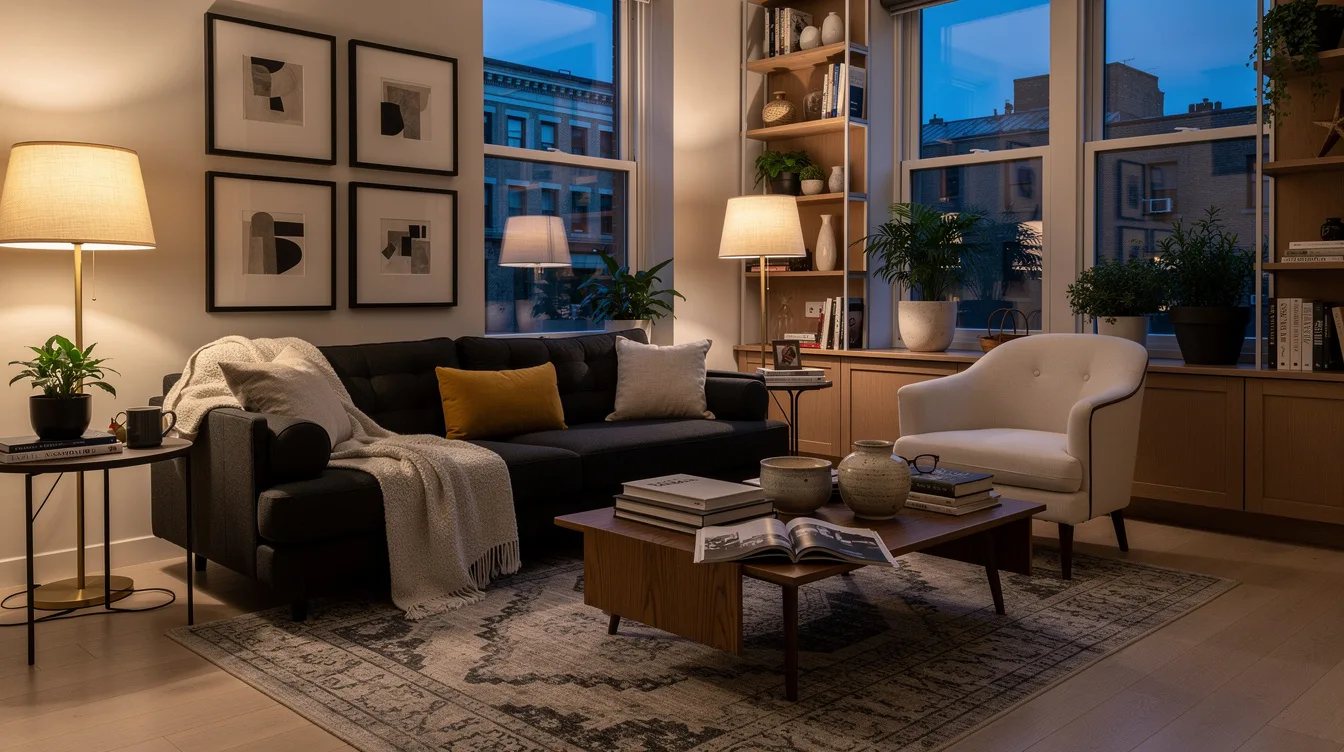
Choose smoked oak, walnut, or ebonized oak, then repeat it in at least two visible places: a table and a cabinet, for example. Walnut has the depth this look needs without demanding ornate furniture.
Mixed wood species create visual chatter. One consistent grain makes the room feel planned from the start.
Ground the Room With a Mineral Surface
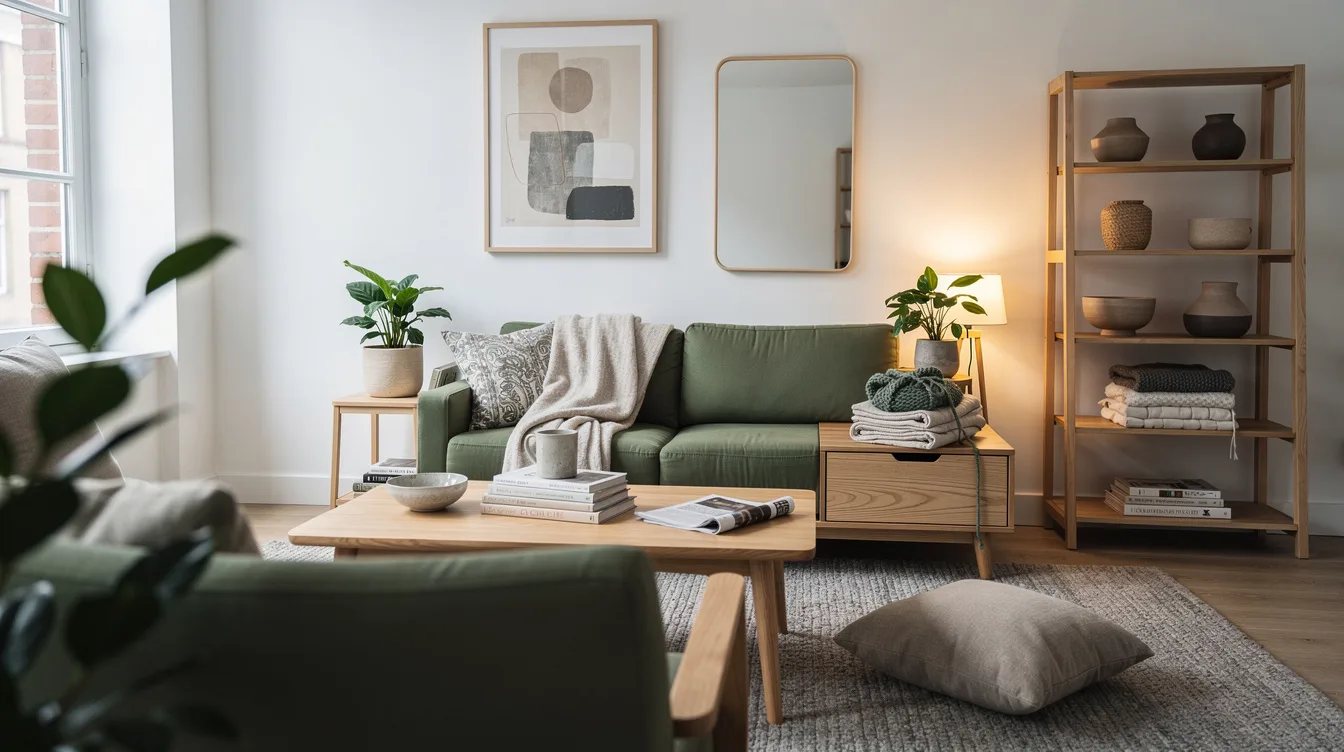
Give the living area one substantial mineral element, preferably travertine, honed limestone, or restrained veined marble. A low stone coffee table has more authority than several small decorative tables.
Skip shiny faux marble with dramatic black veining. Matte, lightly varied surfaces bring the quiet weight associated with Milan interiors.
Choose a Long, Low Sofa
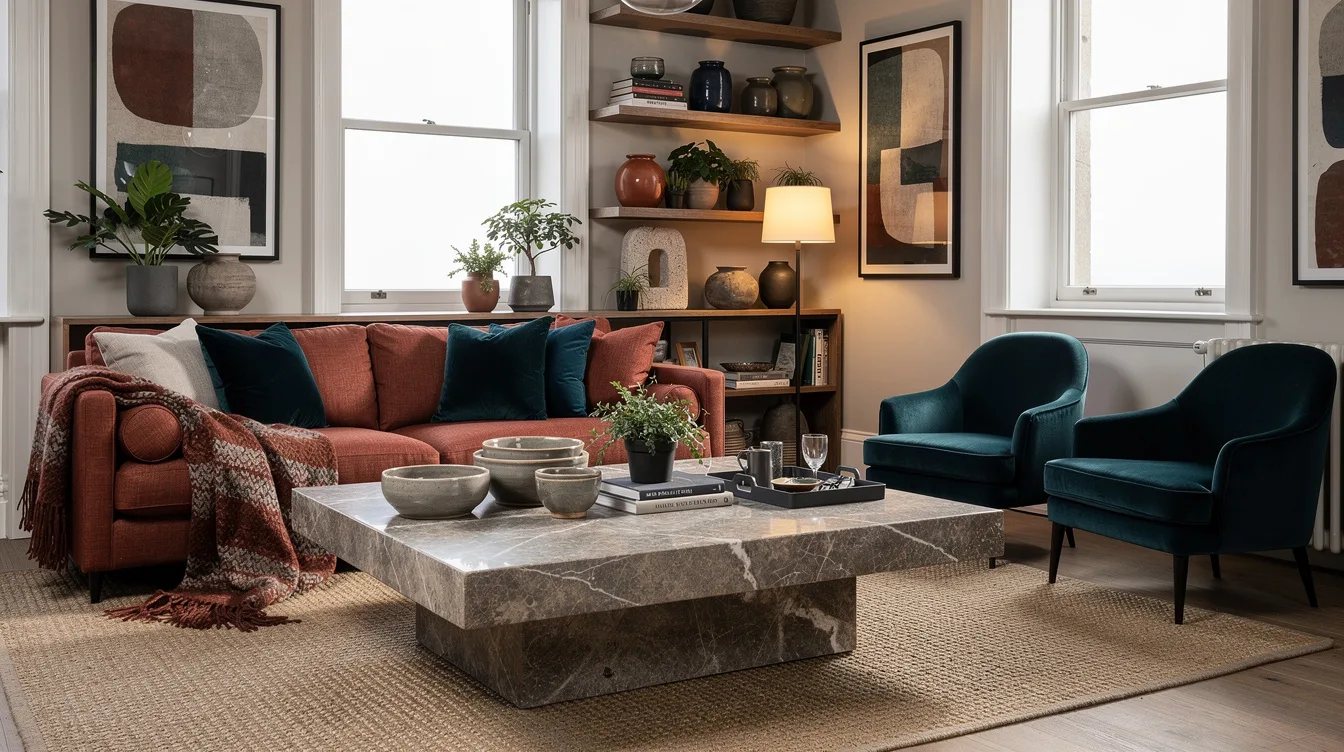
Look for one broad sofa with a low seat, roughly 15 to 17 inches high, in taupe wool, washed linen, tobacco leather, or ecru bouclé. Wayfair and West Elm-style references are not needed here, since a clean low profile matters more than a recognizable label.
Use a single legible volume instead of assembling several compact chairs. The open center of the room is part of the design.
Size the Rug for the Furniture
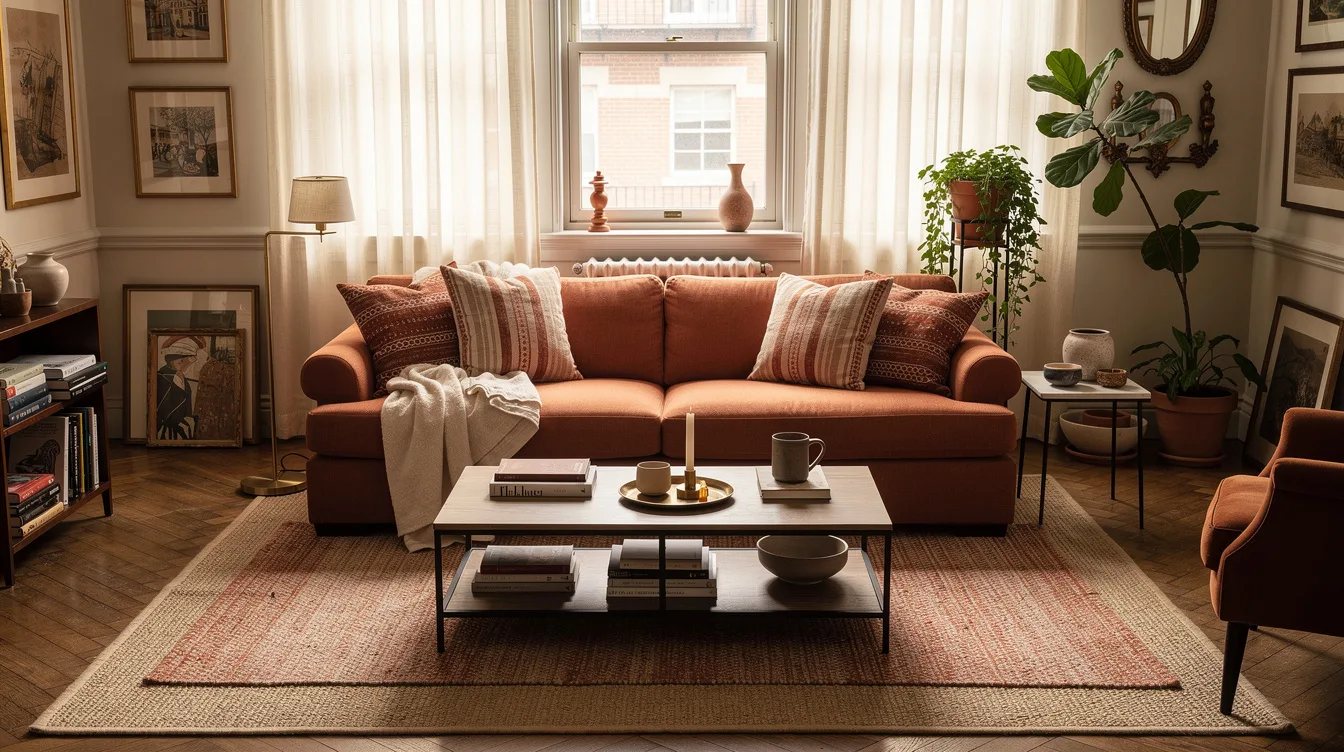
Start with an 8-by-10-foot wool rug for a compact seating zone, then move up to about 9 by 12 feet when the sofa is near 100 inches wide. The front legs of every major seat should land on it.
A tiny rug makes expensive furniture look rented. Flatwoven wool or wool-viscose texture works better than a busy pattern.
Keep the Coffee Table Sculptural
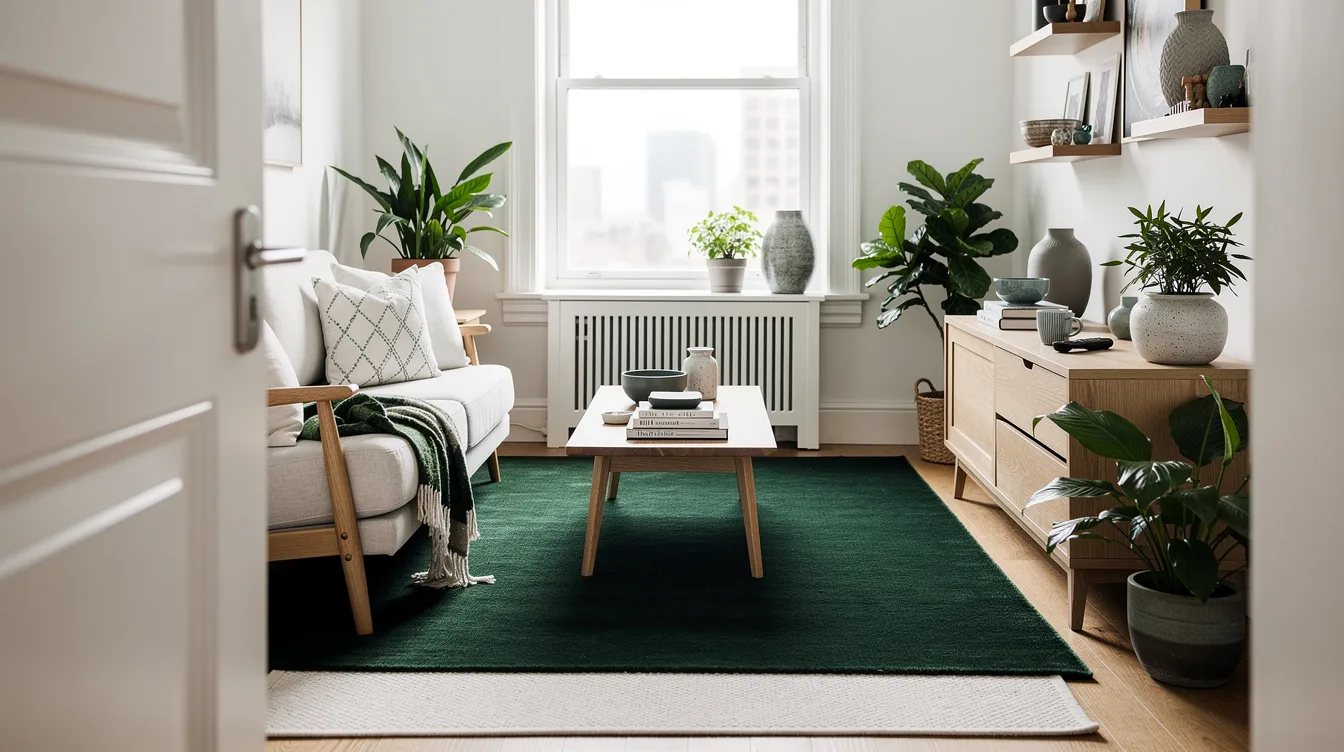
Choose one low table, typically about 40 to 55 inches long, in smoked glass, walnut, travertine, or dark lacquer. Its shape should feel deliberate from every seat in the room.
Leave most of its surface bare. A book, one vessel, and a small tray are plenty when the material itself carries the visual interest.
Hang Curtains From the Ceiling
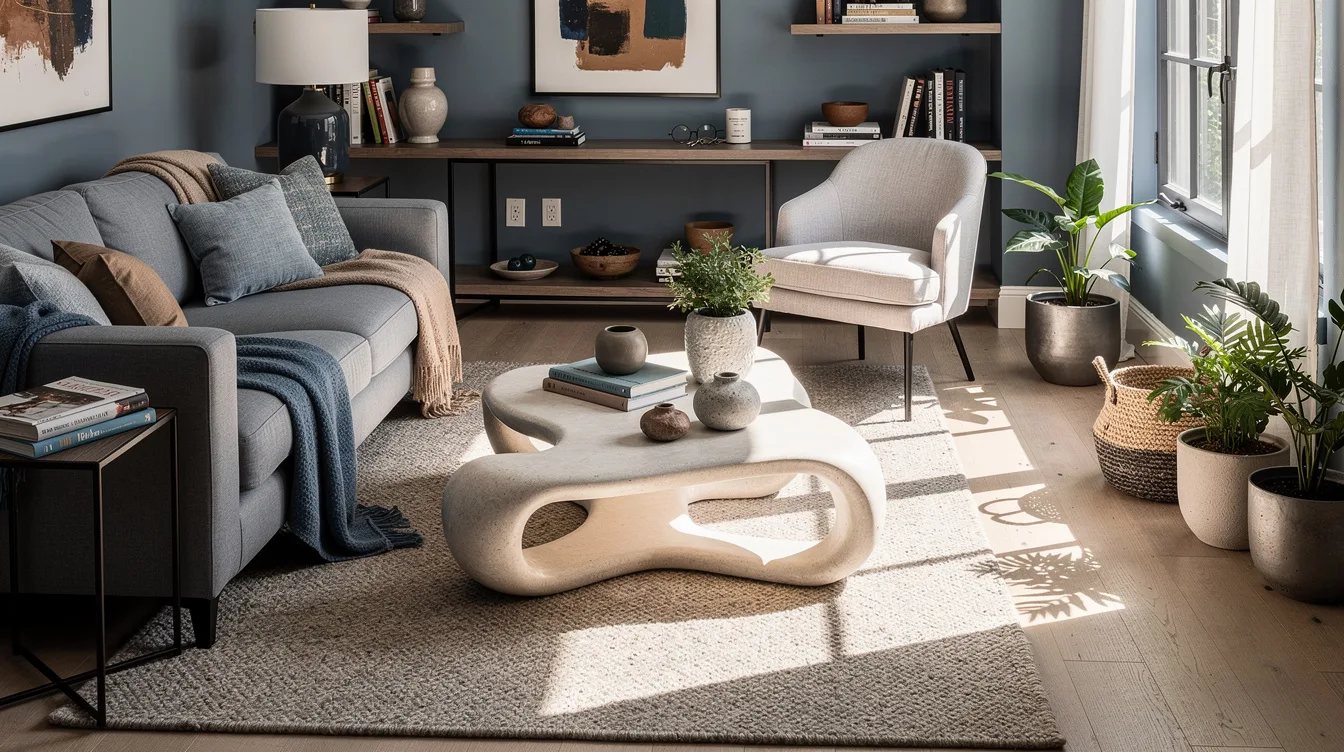
Install a ceiling-mounted track and let linen ripplefold curtains end roughly a half-inch above the floor. Mounting fabric high makes ordinary ceilings feel more architectural.
Choose warm ivory, flax, tobacco, or muted stone. Short panels and visible rod brackets immediately interrupt the tailored effect.
Light the Edges at 2700K
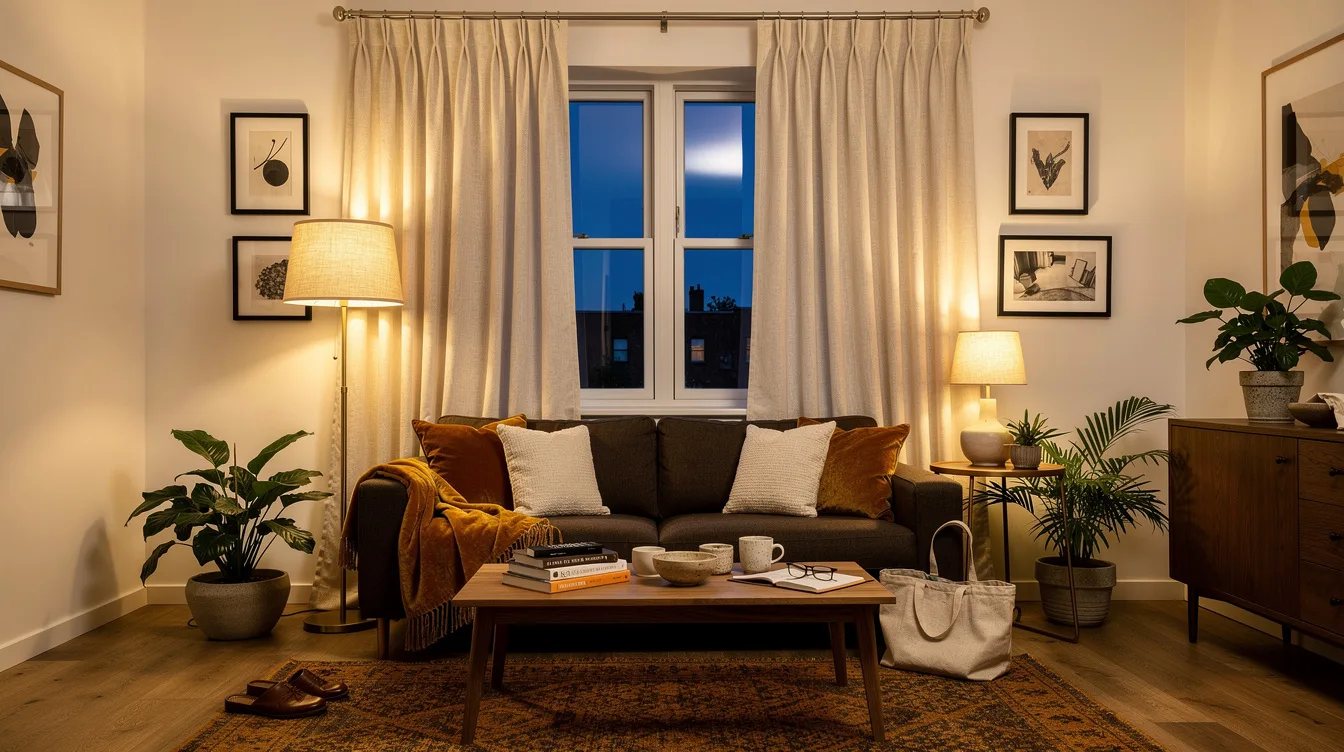
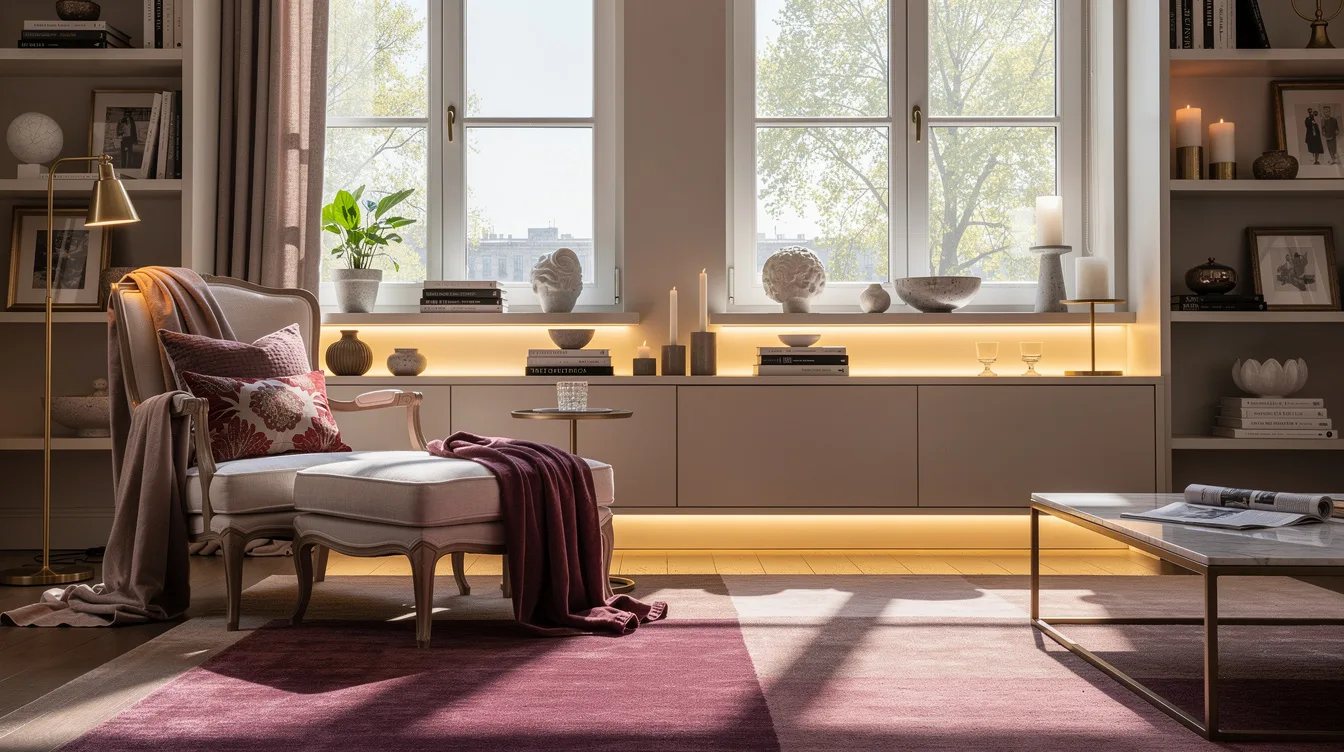
Use 2700K bulbs in living and bedroom areas, with light arriving from table lamps, picture lights, floor lamps, and concealed strips instead of one harsh overhead source. Home Depot and Lowe's both make warm LED replacements easy to find.
Cool 4000K light flattens wood, stone, and skin-toned textiles. Perimeter lighting gives the room depth after sunset.
Spend on the Touch Points
Put more of the budget into surfaces people touch: dining-chair upholstery, cabinet pulls, bedside lamps, curtain fabric, and the coffee-table top. Brushed brass or satin nickel is enough, but select only one warm metal finish.
Small hardware can make a basic cabinet look composed. Mixing brass, bronze, and chrome in the same sightline looks indecisive.
Hide Every Charging Cable
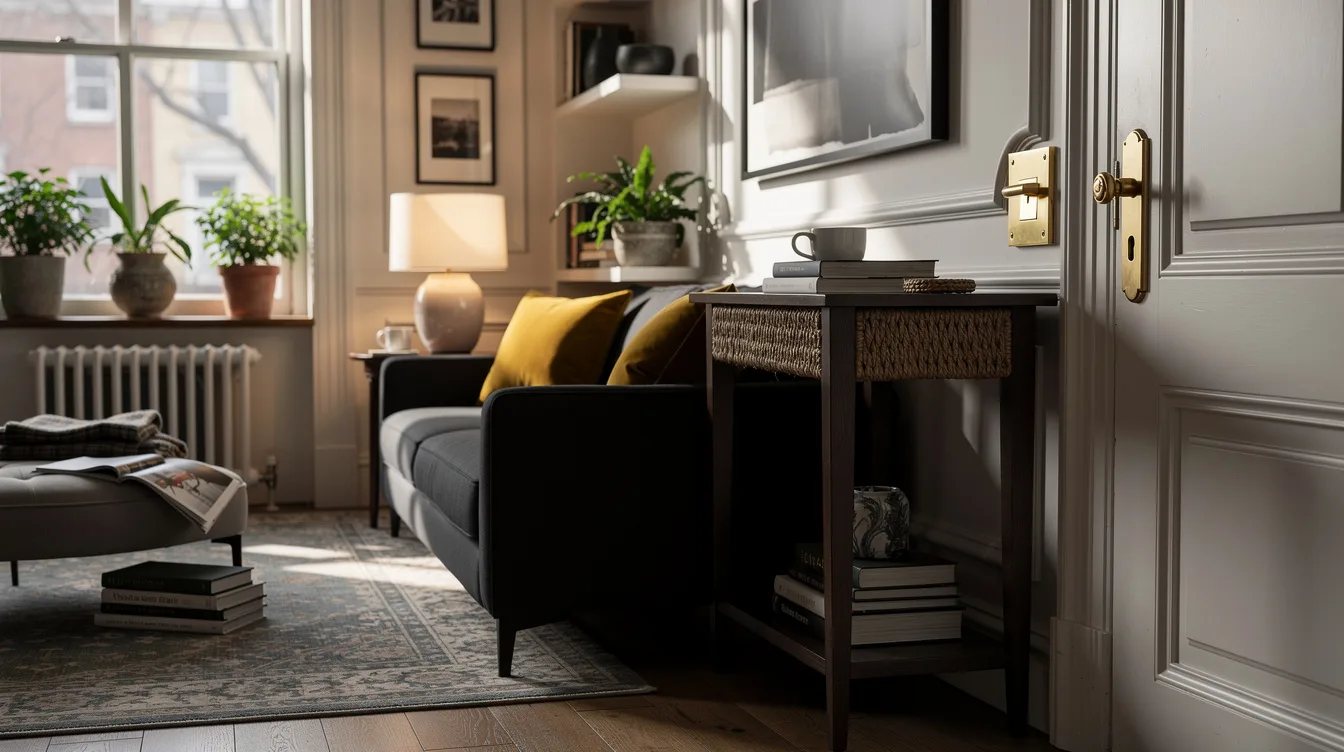
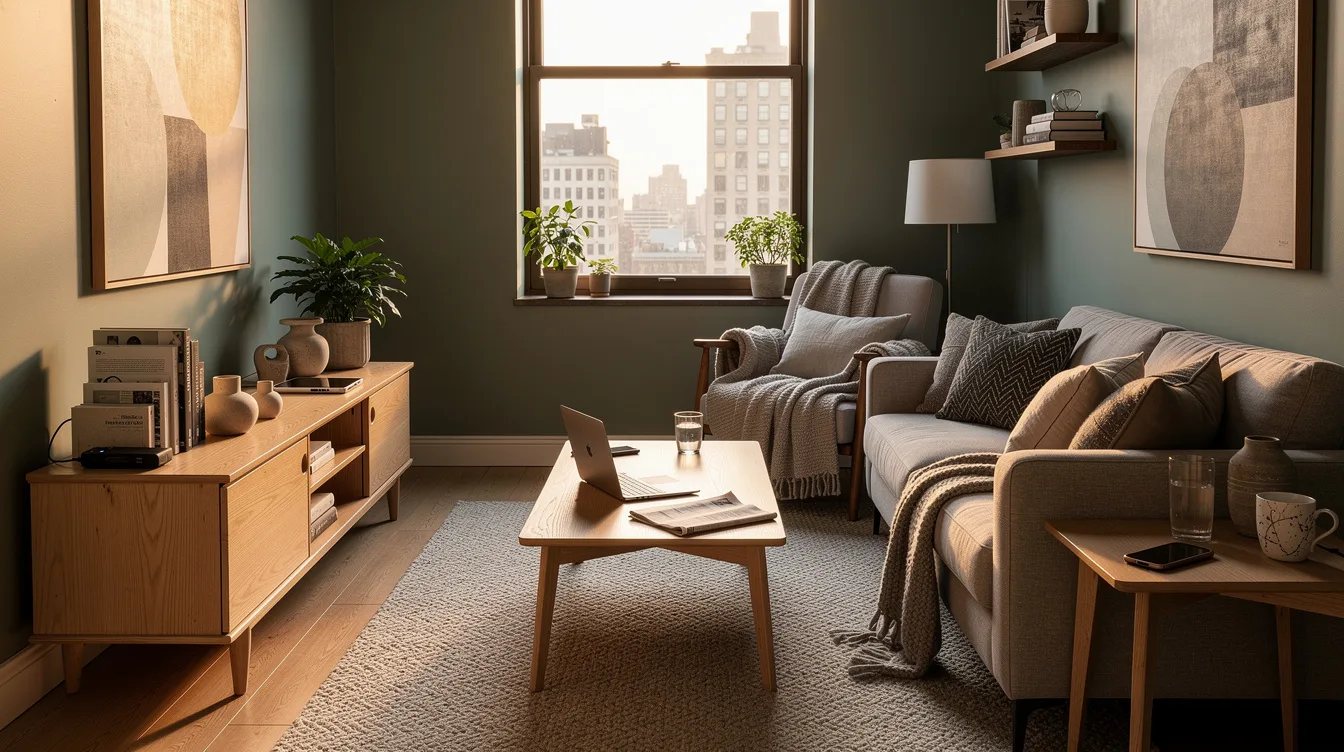
Route cords behind the media unit, use adhesive channels beneath a desk, and reserve a drawer for power strips. Ace Hardware cable covers are less glamorous than a new lamp, yet they deliver a faster visual improvement.
Visible wires announce temporary decisions. Milan-style rooms rely on clean lines, even in the unphotographed corners.
Edit Shelves Into Larger Gestures
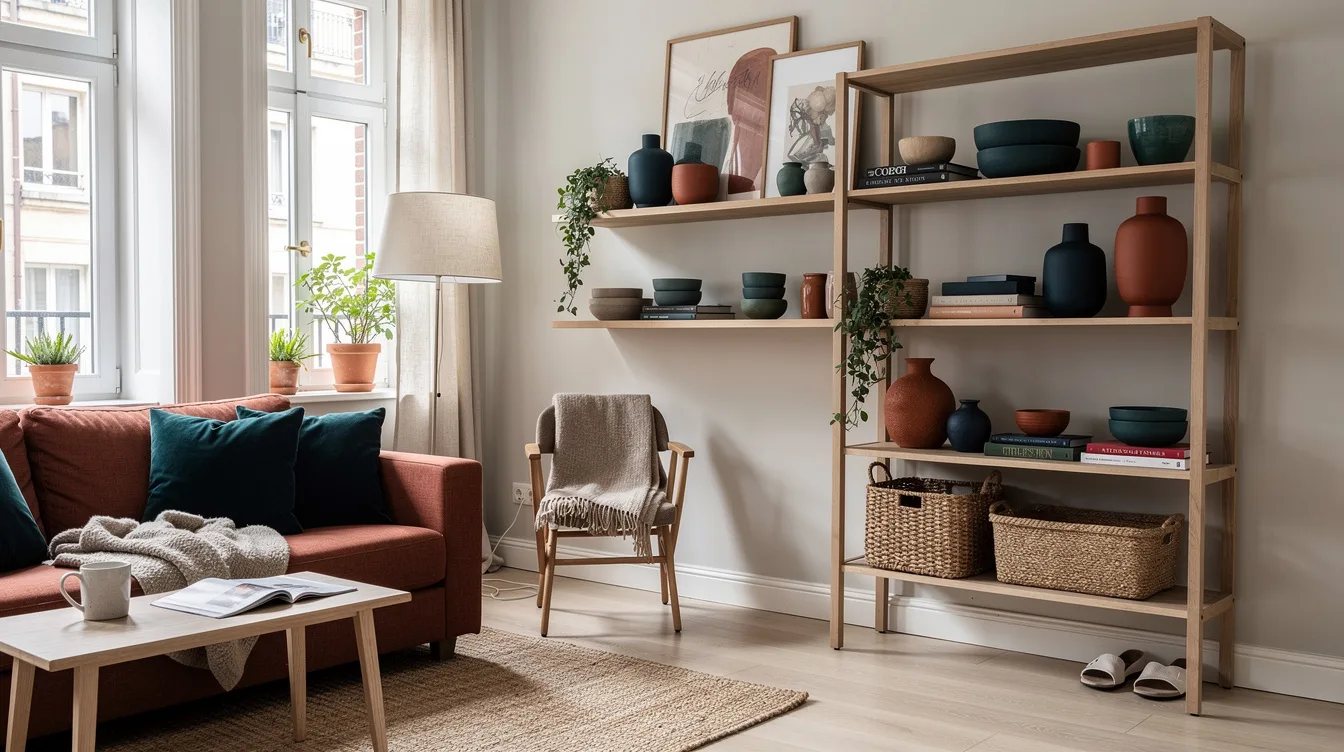
Build shelves around books, one substantial ceramic object, and a few pieces with real material presence. A hand-thrown ceramic bowl and a stack of art books will read stronger than a row of tiny signs and figurines.
Leave clear space between groupings. This look needs air around objects, not constant proof that every shelf was filled.
Use One Authentic Design Anchor
Choose one piece with a clear, enduring silhouette: a well-made lamp, a deeply upholstered chair, or a stone-top table. IKEA, Target, and Amazon can supply supporting storage and textiles once the anchor establishes the room's standard.
Do not buy a matching furniture set. A convincing apartment develops through contrast between a few lasting pieces and quiet supporting basics.
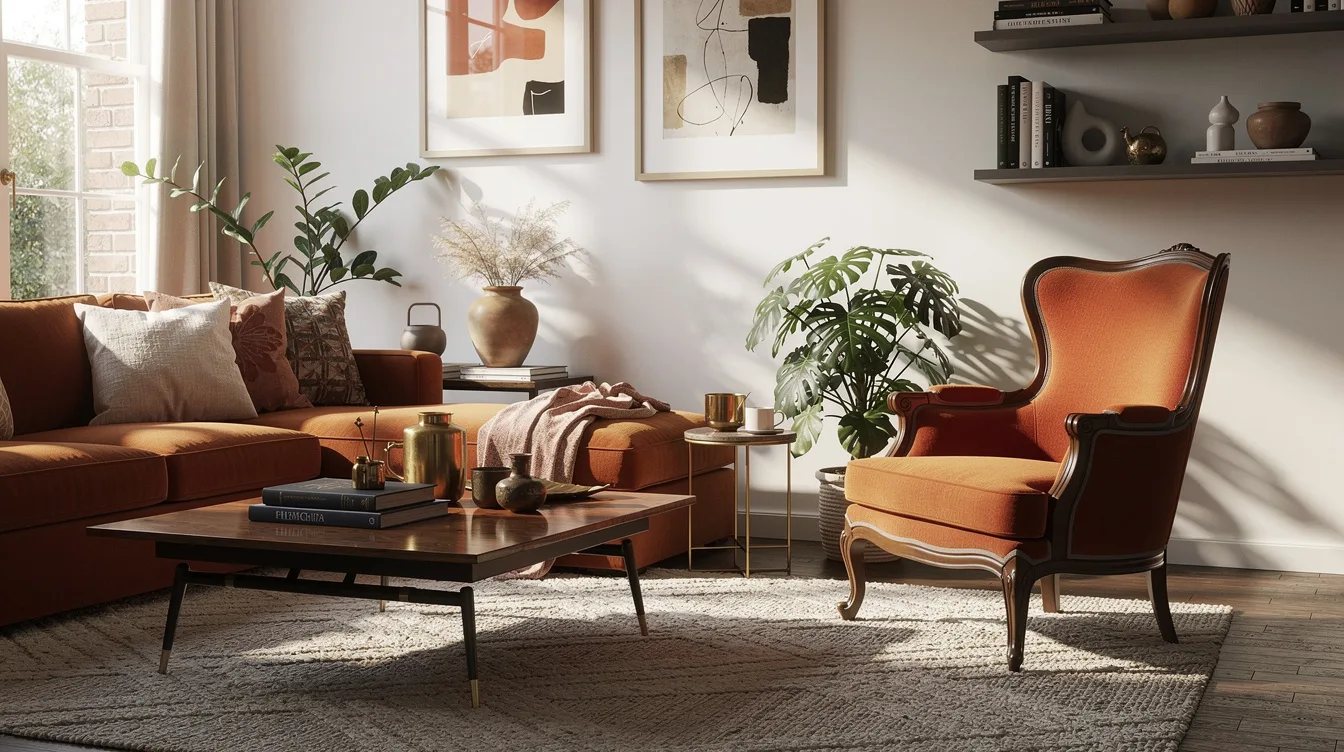
Begin with the light: replace cool bulbs with 2700K lamps, then clear the visible cords before buying another accessory. That small reset reveals exactly which materials and proportions the room still needs.