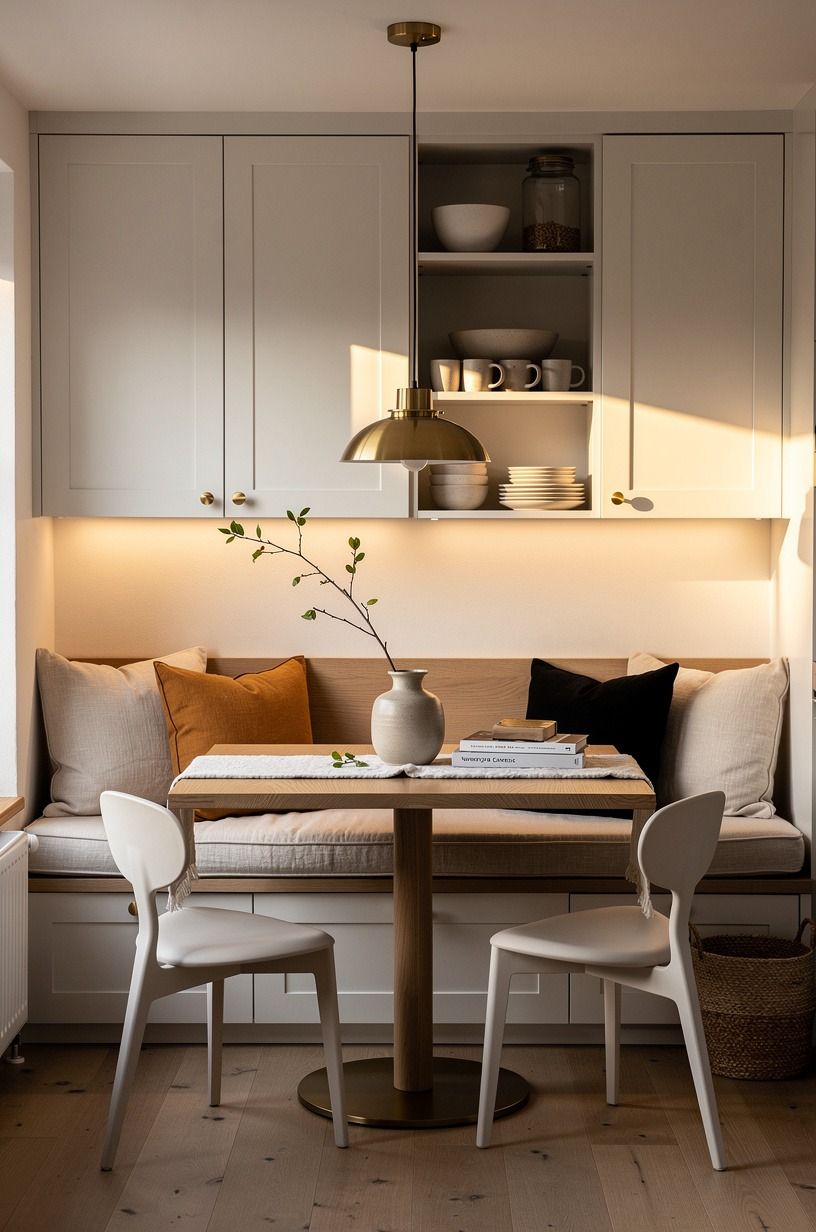
I Created a Charming Cottage Breakfast Nook Worth Copying, Without Renovating
21 august 2026Charming cottage breakfast nook ideas worth copying don’t require new cabinets or a contractor, they need a better use of the corner you already have. Mine began as a neglected patch beside the kitchen, with one chair and a view of the recycling bin. I gave it a weekend. Now it’s where everyone lands first.
Here's what it looked like before
Before, it had the full starter-home package: beige wall paint, a small round table that drifted into the walkway, and a single overhead fixture that made breakfast feel like paperwork. I kept trying to solve it with flowers, which was silly. Flowers can’t fix bad scale.
The window was good, though. Your room usually has one thing worth protecting, even if the rest feels flat. Mine was that morning light hitting the worn oak floor, so I stopped fighting the corner and built the nook around it.
I didn’t tear out a thing. Benjamin Moore White Dove OC-17 went on the walls, the old table moved out, and the room finally had a reason to pause.
- Anchor the cottage core breakfast nook with a real bench
- Paint the window wall with the Soft-Frame Method
- Swap the tiny table for a 36-inch round
- Layer the Two-Wood Rule into a small English cottage interior
- Hang the Three-Height Light Stack
- Build storage below the seat, then hide the plastic
- Choose linen over matching chair cushions
- Frame the view with café curtains, not heavy drapery
- Let the wall carry cottage interior design inspiration
- Skip the runner and use a washable 4-by-6 rug
- Mix practical ceramics with one living thing
- Keep 42 inches clear around the kitchen path
- Add a fall layer without making it seasonal clutter
1Anchor the cottage core breakfast nook with a real bench
I started with a freestanding IKEA HEMNES bench because I wanted your eye to read one solid line beneath the window. A scattered pair of chairs would’ve felt fussy here, and I’d skip a bulky upholstered banquette unless you’re ready to commit floor space to it.
The bench gave me seating without closing off the kitchen. You can pull it forward to clean, shift it when guests arrive, and tuck baskets below it. That flexibility matters more than a built-in look when your kitchen still needs to work on a Tuesday morning.
I added a warm-white cushion with camel and black accents, plus unlacquered brass details that will develop a little patina, then stopped. One soft layer, not a mountain of pillows. The result felt charming and a little more relaxed!
2Paint the window wall with the Soft-Frame Method
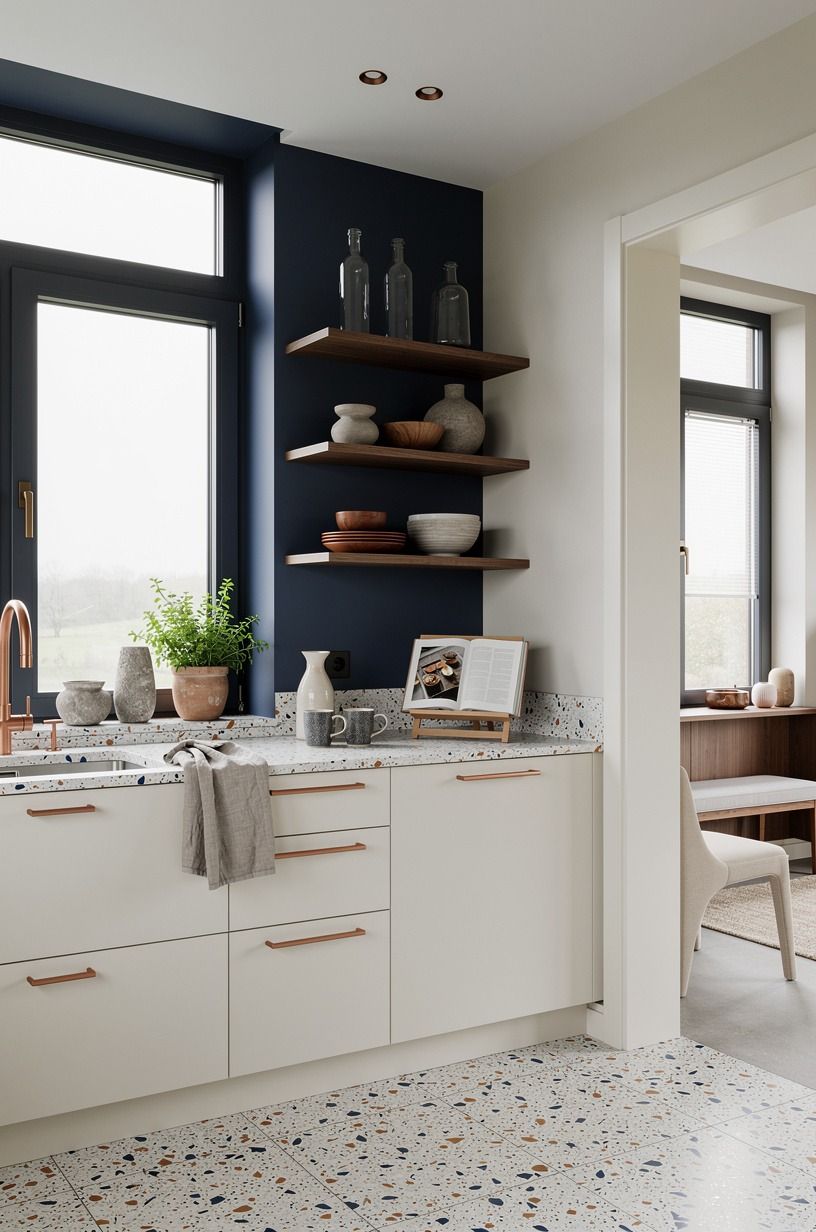
Your breakfast nook doesn’t need an accent wall screaming for attention. I painted only the window wall in a midnight blue, and it made the ivory trim look crisper without turning the small kitchen gloomy.
The Soft-Frame Method is simple: use color where daylight can break it up. If you paint the darkest wall in a windowless corner, you’ll get a cave by 3 p.m. But this blue catches the changing light and stays rich rather than stern.
I tested Farrow & Ball Studio Green No. 93 first. It’s lovely, but it went nearly black in my north-facing kitchen, so the midnight blue won. An oversized-chip terrazzo detail brought in copper and ivory without making the wall feel busy.
3Swap the tiny table for a 36-inch round
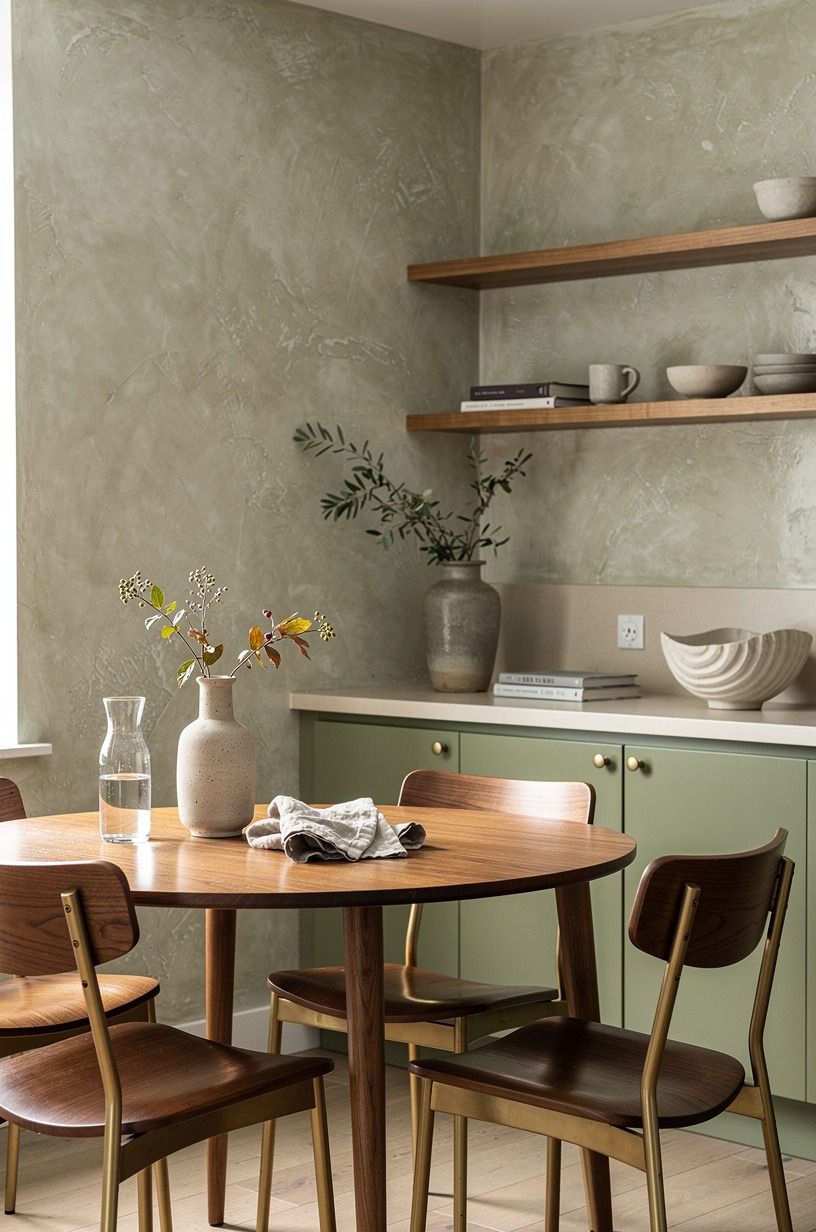
A 36-inch round table changed more than any decorative object I bought. Your knees can slide around it, guests don’t get stuck at corners, and the shape leaves a calmer path through a narrow kitchen.
I chose a secondhand pedestal table in natural wood and let the hand-applied Venetian plaster walls do the softening. A pedestal is the better call than four exposed legs here because your bench seat stays useful from end to end.
The standard counter height is 36 inches, and I kept the tabletop visually lower than that so it didn’t compete with the kitchen. You want a nook that feels intimate, not like an island wearing a tablecloth.
4Layer the Two-Wood Rule into a small English cottage interior
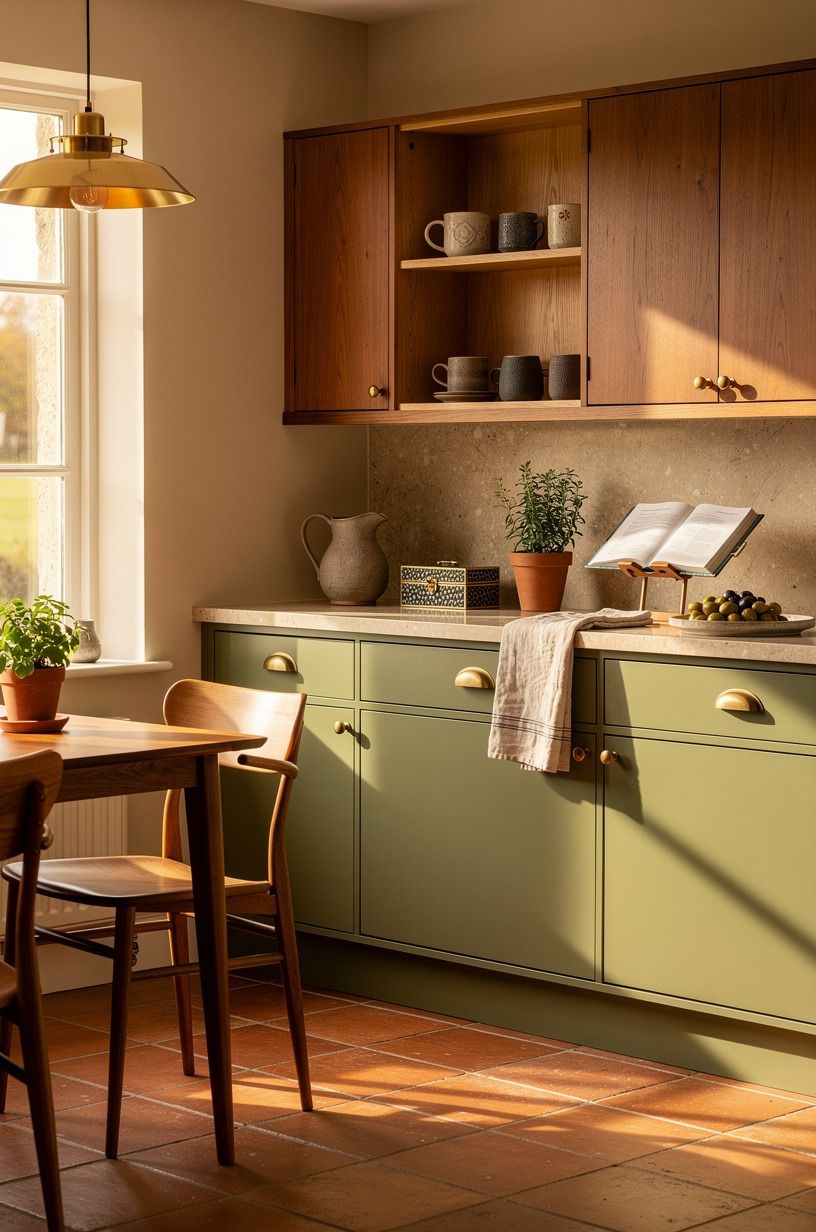
I used two woods only: the existing oak floor and a natural wood table. That’s the Two-Wood Rule, and it saves you from the showroom problem where every surface is a different brown with a different opinion.
Your wood tones don’t need to match, but they should have a shared temperature. Mine sit against terracotta, stone, and olive, which keeps the room grounded. I passed on espresso chairs because the near-black finish made the floor look yellow, which was not the gentle contrast I wanted.
A small shagreen accent above the bench brought in a tactile note. And yes, I worried it would be too much texture.
It wasn’t. The fabric and painted wall gave everything enough air.
5Hang the Three-Height Light Stack
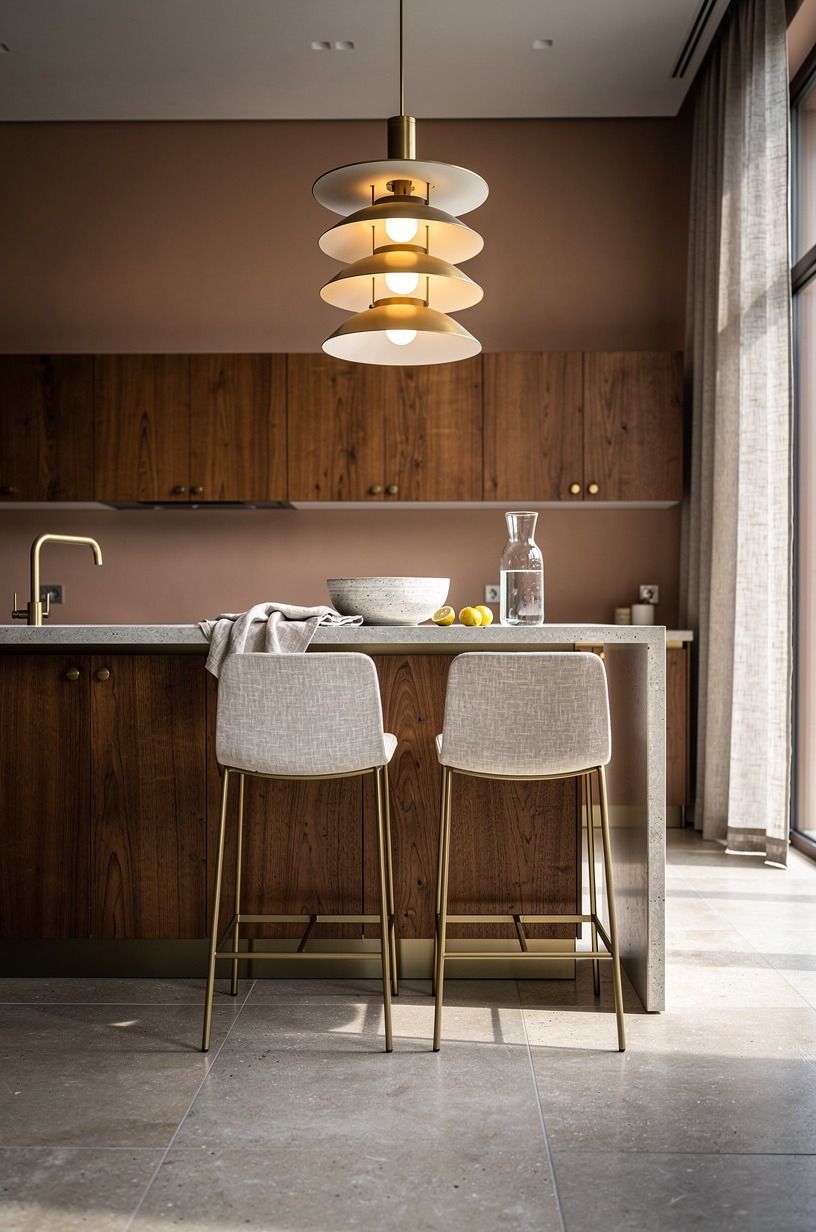
The old flush mount had to go. I replaced it with a small aged bronze schoolhouse pendant, then added a tiny table lamp and one plug-in sconce near the bench. Three heights of light, each doing a different job.
Your overhead fixture should light the table, not bleach everyone’s face. I hung the pendant low enough to make dinner feel gathered, but high enough that the tallest person in the house wouldn’t glare at it.
A soft bulb matters. Cold white light kills this mood every single time!
The lamp was the surprise. It warms the clay, linen, and aged brass palette at night and leaves the cabinets quiet.
A washed Belgian linen shade keeps the glow soft. You don’t need a major renovation to make a kitchen feel inviting.
6Build storage below the seat, then hide the plastic
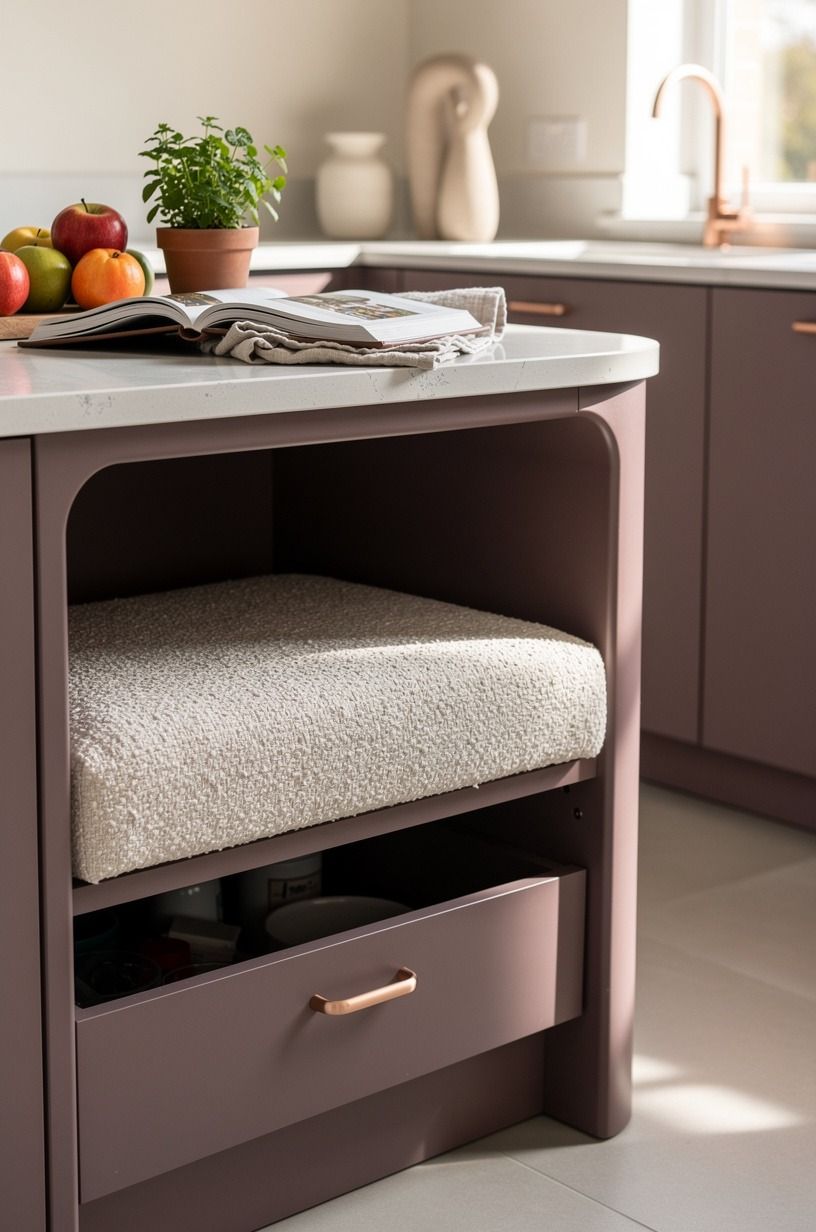
I slid two Target Threshold woven baskets beneath the bench for napkins, candles, and the stack of placemats I somehow own in six patterns. A plum, grey, and rose-gold palette keeps the storage corner from feeling too sweet, while an organic bouclé cushion softens the seat.
7Choose linen over matching chair cushions
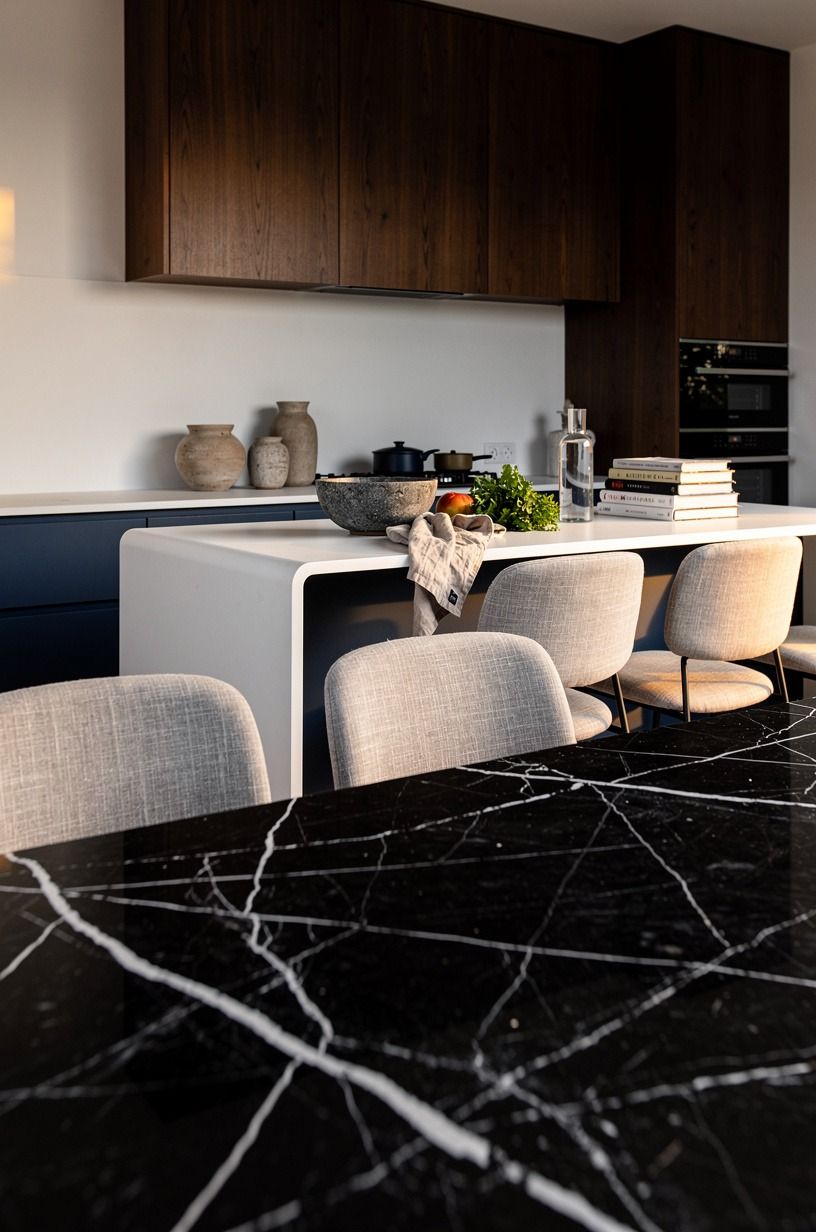
I mixed two painted chairs with the bench instead of buying a matching dining set. Your nook gets more character when the pieces look collected over time, and a perfect matching set can feel oddly formal in a cottage kitchen.
One chair has a simple linen tie cushion; the other stays bare beside navy, white, and walnut finishes. I know, mismatched seating sounds risky. But the colors repeat through the nook, so they read as deliberate.
Don’t use slippery polyester pads here. You’ll spend breakfast pulling them back into place, and your space will start to feel annoying instead of comforting. A Nero Marquina black marble surface with white veining adds contrast without needing another pattern.
8Frame the view with café curtains, not heavy drapery
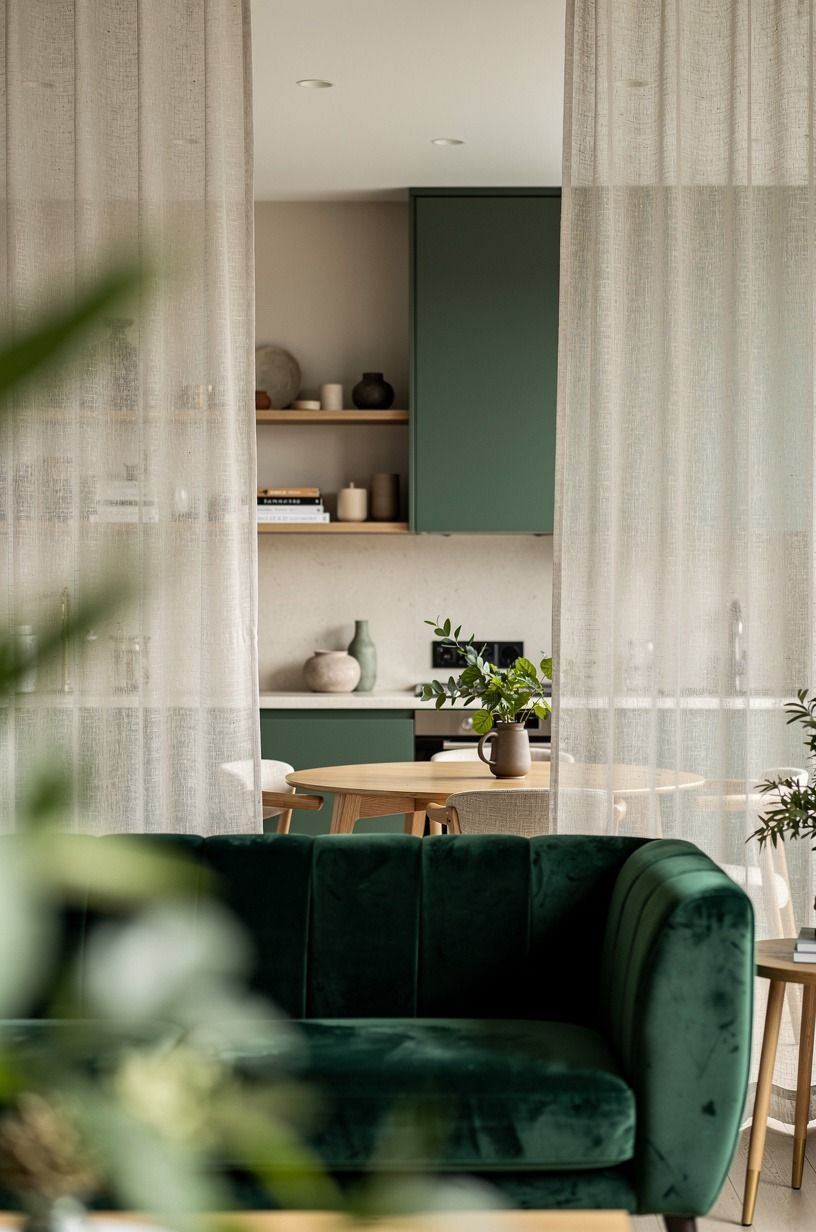
Café curtains gave me privacy without blocking the best thing in the room: the window. Your eye still catches the branches outside, while the lower half softens the view of neighboring houses and bins.
I used cream café curtains with emerald and gold nearby, hemmed just below the sill. Full drapery would’ve swallowed this little wall. A deep-pile mohair velvet accent gave the nook softness without covering the whole window.
But keep the rod close to the glass. If you mount it too far out, you lose precious visual width and the nook starts looking pinched.
A narrow stripe is enough. You don’t need a pattern competing with your plates.
9Let the wall carry cottage interior design inspiration
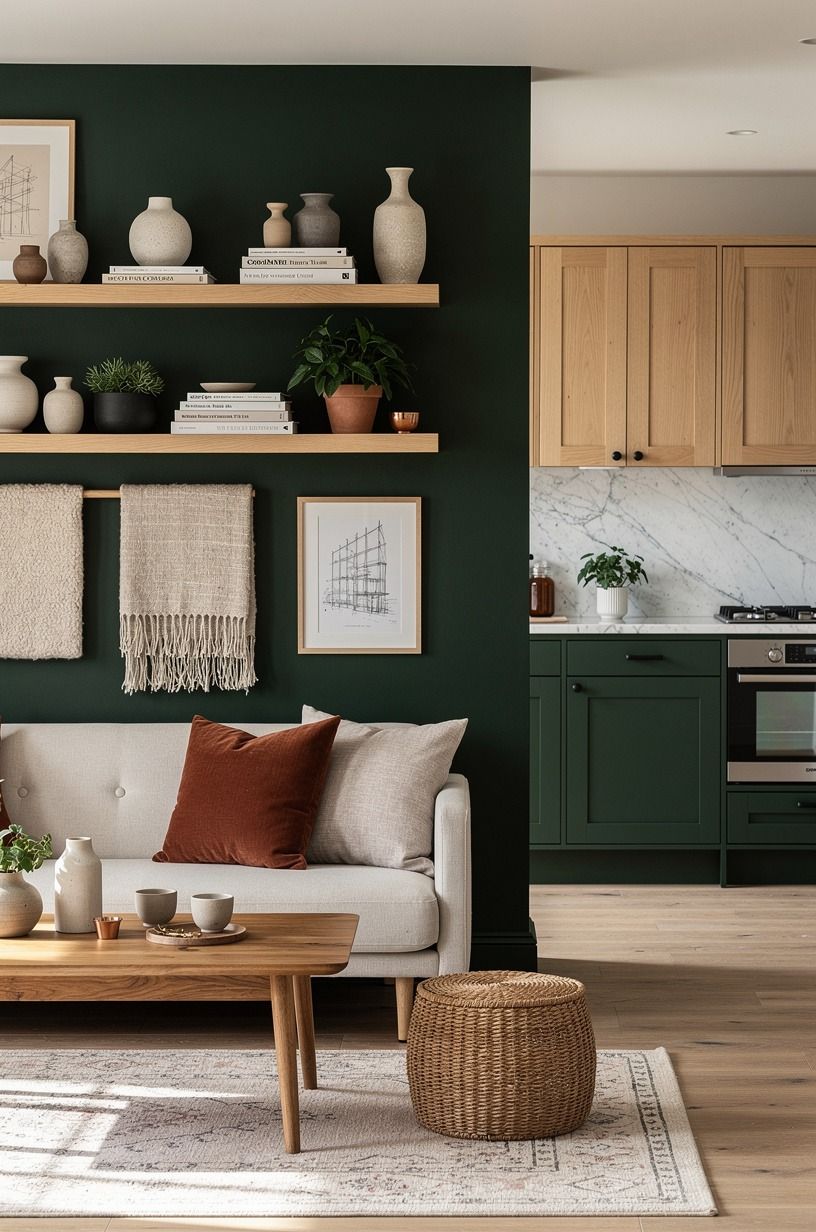
Above the bench, I made a loose cluster of inherited sketches, a grocery-list chalkboard, and one faded botanical print. Forest green, rust, and natural oak keep it earthy, while a Carrara marble accent with subtle grey veining gives the wall a lighter note.
10Skip the runner and use a washable 4-by-6 rug
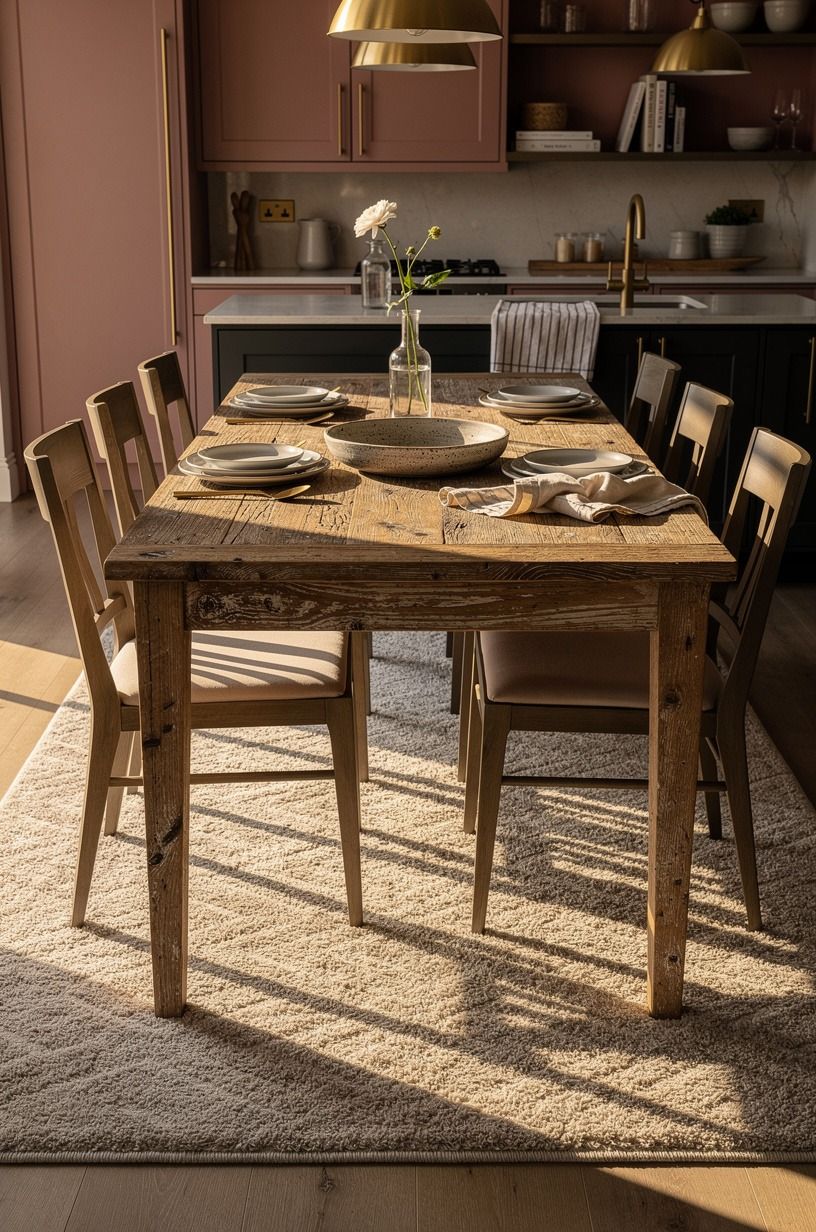
I went back and forth on a rug because kitchen rugs can become a crumb trap fast. Still, the 4-by-6 Ruggable-style washable flatweave made the nook feel separate from the cooking zone without putting a thick edge in the walkway.
Your rug should sit under the table base and reach beyond the bench’s front feet. A skinny runner is the losing option here. It points at the nook instead of holding it together, and it’s too narrow for chairs.
I chose dusty rose, charcoal, and brass accents around reclaimed weathered teak rather than bright red. The colors make the floor feel warmer.
Small change. Big comfort.
11Mix practical ceramics with one living thing
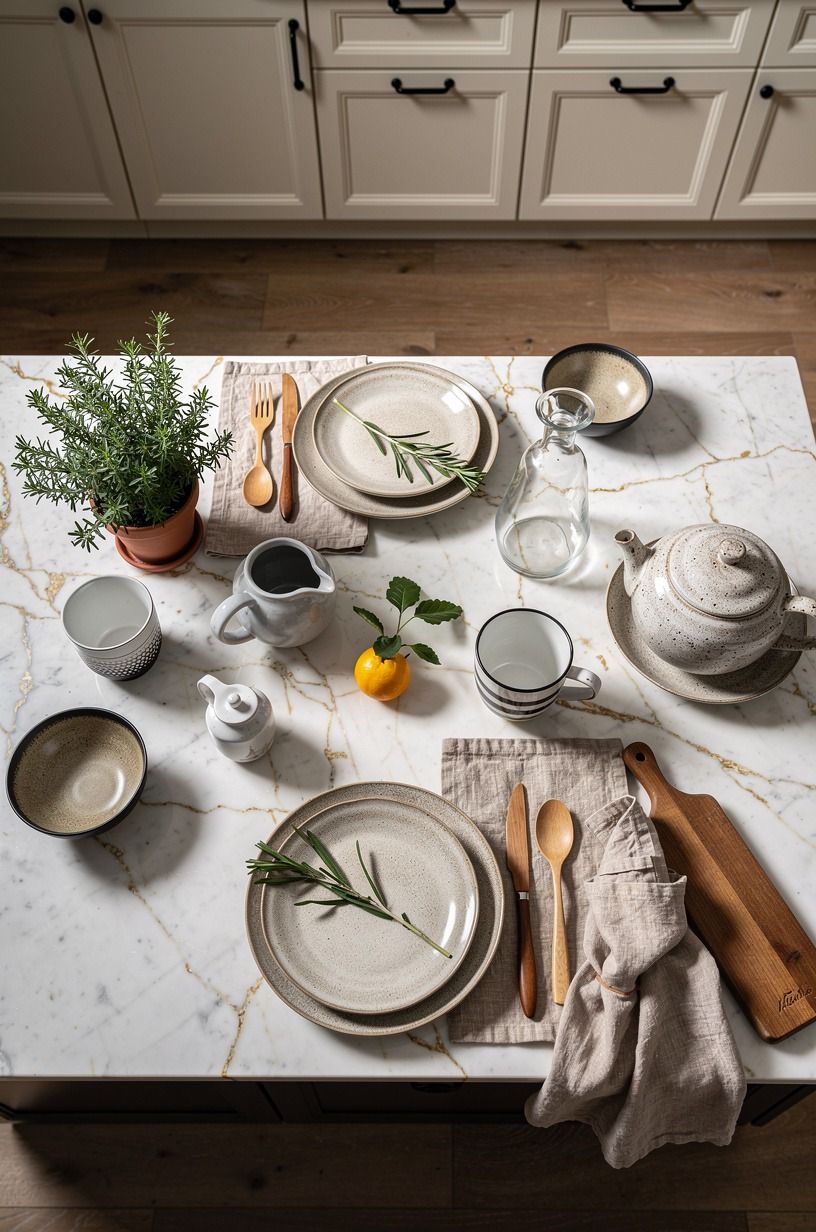
The table styling stays minimal because you need room to eat. A shallow hand-thrown stoneware bowl holds pears, a chipped pitcher holds branches, and that’s it. Warm white, camel, and black keep the arrangement grounded, while Calacatta marble with gold veining adds a little lift.
I learned this after buying a tall vase that blocked everyone’s face across the table. It looked elegant for about six minutes. Then it got moved to the counter, where it blocked the outlet instead.
Use something that changes with the week: rosemary, apple branches, grocery-store tulips, even a clipped fern. You’ll get that fresh, organic note without treating your table like a display shelf.
12Keep 42 inches clear around the kitchen path
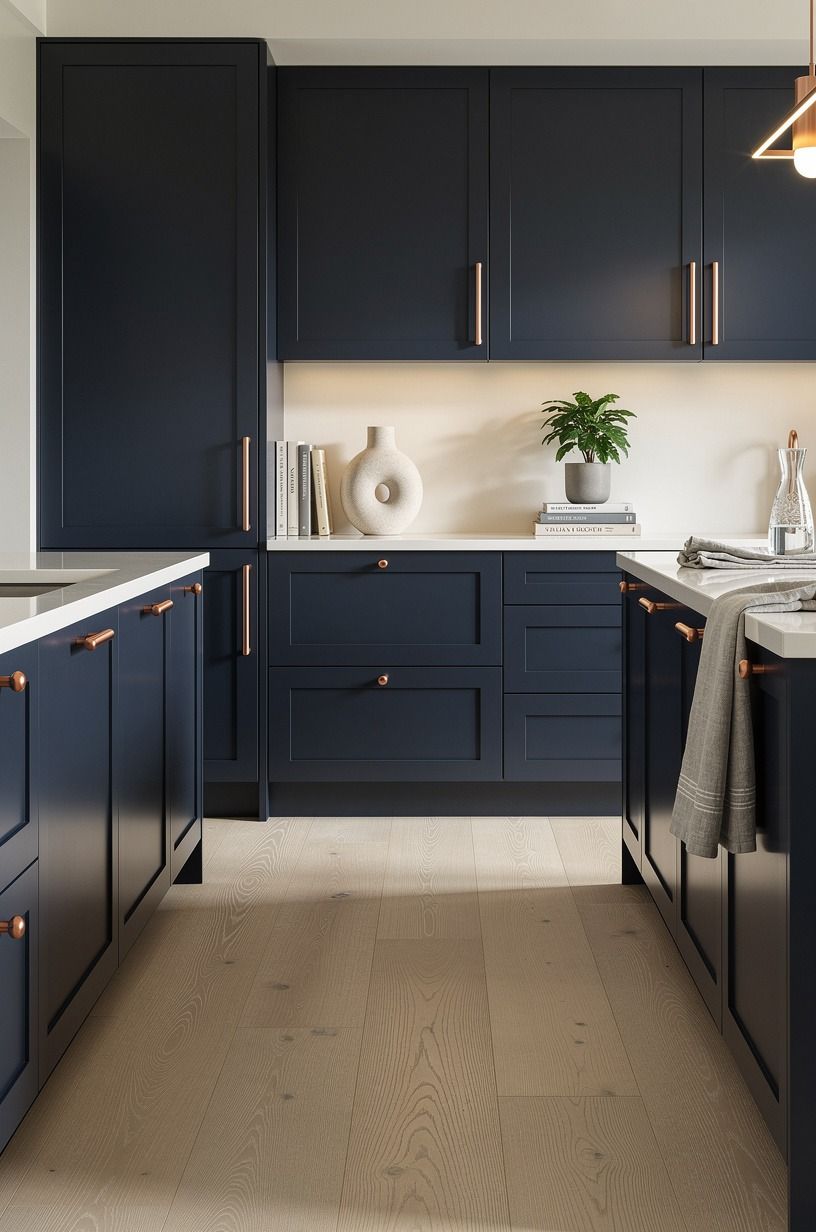
The unglamorous part of a charming breakfast nook is circulation. Your kitchen needs 42 to 48 inches of clearance around an island or busy route, and I measured before moving the bench one inch closer to the wall.
That number saved the layout. My first arrangement looked better on paper, but the refrigerator door clipped the chair and made everyone sidestep around it. No thanks.
A pretty nook that interrupts dinner prep isn’t a win.
I moved the chairs to the open side and kept the bench against the window. Midnight blue, copper, and ivory stay calm beside cerused white oak.
You can still squeeze in an extra person, but your daily path stays easy. That’s what makes a small space feel calm.
13Add a fall layer without making it seasonal clutter
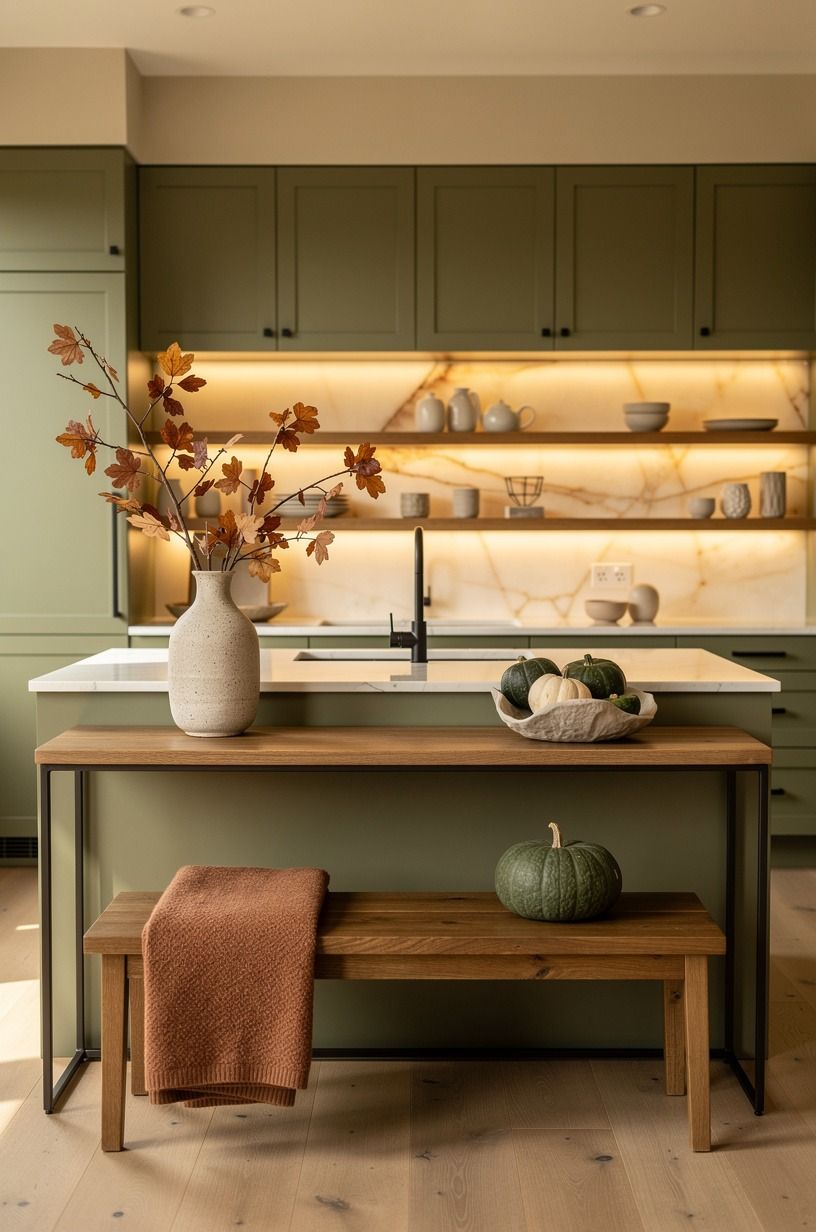
For fall, I added a merino wool throw over one bench corner and traded the pitcher branches for dried oak stems. Sage green, warm cream, and natural wood already make the nook feel warm without filling every surface with pumpkins and signs.
The throw comes off when someone sits down, which is exactly why I like it. It’s a useful layer, not a costume. A backlit translucent onyx accent adds a gentle glow, so I don’t need to announce the season from every shelf.
A small beeswax candle finishes it after dark. The wood holds a little heat from the day, and the whole corner becomes more welcoming. Quietly gorgeous!
How much it cost
I spent about $286 on this makeover, plus a Saturday and one long coffee break. The bench was secondhand, the table came from Facebook Marketplace, and paint made the biggest visual difference for the least money. Your costs can rise fast if you replace cabinets, so I’d keep this project focused on the eating zone.
For comparison, laminate counters typically run $10 to $40 per square foot, while quartz runs $60 to $120 per square foot. You don’t need either for a nook refresh. I’d spend on the light and the seat comfort first, then use what you already own for the rest.
Why I Think Breakfast Nooks Matter Again
I used to think breakfast nooks were mostly nostalgia, the kind of feature people admire in old movies and then ignore in real houses. I was wrong. The reason they’re back isn’t that everyone wants a cottage fantasy.
It’s that kitchens have become command centers, offices, homework stations, snack bars, and the place where someone always asks what’s for dinner. A small, defined table gives that room a softer job.
I’ve watched people spend thousands trying to make an open kitchen feel more polished, then leave the one human-scale corner untouched. That’s backwards.
Your breakfast nook is where a kitchen stops being equipment and starts being a room. It gives you a place to drink coffee without facing the sink.
It gives kids a landing pad that isn’t the island. It gives a guest somewhere to sit while you cook, close enough to talk but not under your elbows.
And I don’t think it needs to be perfect. Mine has a scratched tabletop, one chair with a paint mark, and cushions that never sit exactly straight. Good.
A cottage-style nook should feel lived-in, not staged for a listing photo. If you can make one corner warmer, more useful, and more yours without replacing a cabinet, that’s money well spent.
Why renovate the whole kitchen when the part you need is a place to linger?
The Questions I Get Asked Most
What is the best charming cottage breakfast nook idea for a small kitchen?
A bench and a 36-inch pedestal table are the best starting point for a small kitchen because they keep the walkway open. Your IKEA HEMNES bench can tuck against a wall, while a round table avoids sharp corners and makes seating easier.
Where can I buy charming cottage breakfast nook pieces on a budget?
Start with IKEA, Target, Wayfair, and local thrift shops for Facebook Marketplace furniture that has real wood and decent bones. Your best finds are usually tables, benches, and frames. A coat of paint can handle the rest.
How much does a charming cottage breakfast nook makeover cost?
A simple makeover can cost about $100 to $300 if you paint, buy secondhand, and reuse chairs you own. Your free moves include rearranging furniture, clipping branches, and washing old textiles. Paint and lighting give the strongest return.
Can I create a charming cottage breakfast nook on a budget?
Yes, and you can begin with the wall you already have. Your cheapest moves are a small paint sample, a thrifted table, and a washable cushion. A defined eating zone matters more than expensive furniture.
Is a charming cottage breakfast nook worth it in a small space?
Yes, it’s worth it because a small room benefits from a clear purpose. Put your bench against the wall and keep chairs on the open side. Better traffic flow makes the kitchen feel larger without adding square footage.
Is a charming cottage breakfast nook a good idea for a rental?
Yes, if you use removable pieces. Your rental-friendly choices include tension-rod café curtains, plug-in lighting, and peel-and-stick backsplash behind a table. No-damage layers can make a temporary kitchen feel much more personal.
Where I'd Start First
If I had to pick one, I’d start with the bench. Your table can be ordinary, but a bench turns an unused wall into a place people naturally gather. Pin the bench idea for later and let the kitchen keep its original cabinets.