The 60-30-10 Bedroom Rule That Keeps Warm Neutrals From Looking Bland
07 august 2026A warm-neutral bedroom can go wrong in one expensive afternoon: a cream duvet, beige curtains, and tan furniture all arrive, then the room reads like one long blank note. For a queen bed measuring roughly 63 by 79 inches, the fix starts with contrast in texture, scale, and undertone, not extra color.
Designers are leaving flat cool-gray schemes behind for chalky creams, sand, mushroom, camel, and warm taupe, then giving those quiet shades a darker place to land.
Build the Room Around a 60-30-10 Mix
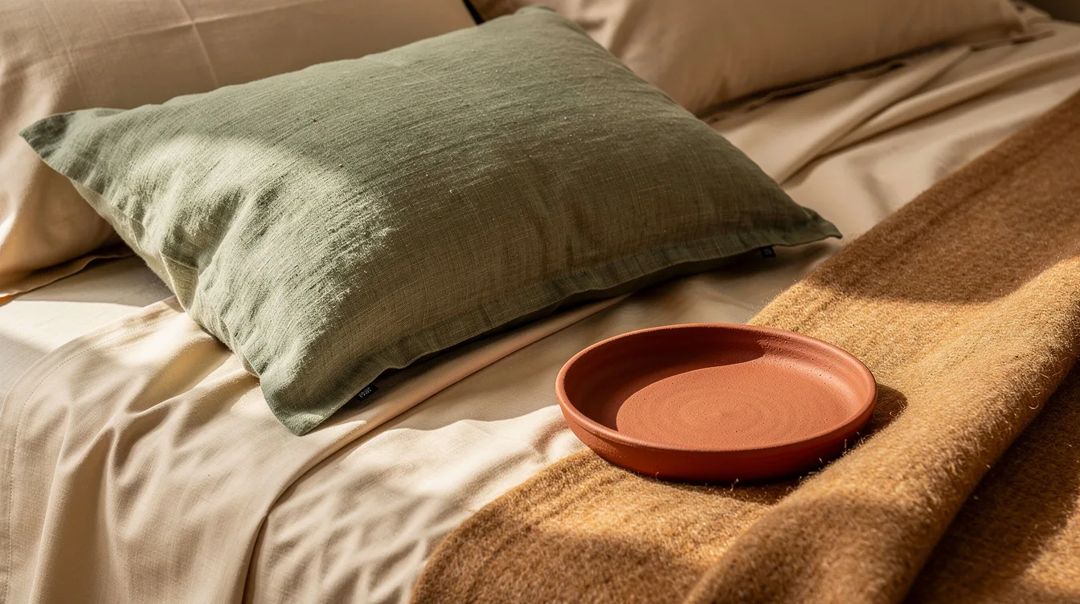
Give about 60% of the room to a light base, such as warm off-white walls and ivory bedding, then let roughly 30% come from mushroom, pale oak, or flax. Reserve the final 10% for shadow: a walnut nightstand, chocolate frame, muted olive pillow, or rust ceramic.
This proportion prevents beige from spreading everywhere with equal force. A cream duvet, oatmeal sheets, camel throw, and dark wood table have more life than a matched bedroom set in one beige finish.
Layer Surfaces That Feel Different by Hand
Warm neutrals need at least three tonal values, plus a mix of smooth and tactile finishes. Pair chalky paint with washed linen, a wool blanket, glazed ceramic, and oak grain so the eye has somewhere to travel.
I skip shiny polyester bedding in this palette because it makes soft shades look flimsy. A crisp cotton percale sheet set beside a nubby boucle lumbar pillow gives the bed the tailored, slightly imperfect feeling that a good hotel room has.
Anchor the Bed With a Darker Headboard Wall
Paint three walls soft warm white, then place mushroom or warm clay behind the bed. That single darker plane gives pale bedding a clear outline and makes the room feel composed before you buy another accessory.
A deep olive headboard also works for renters who cannot paint, especially against cream walls and natural oak. Keep the bed linens pale, then add one deliberate rust cushion rather than a pile of decorative pillows competing for attention.
Choose One Oversized Piece of Art
One large oak-framed print above the bed has more confidence than a crowded gallery wall in a neutral bedroom. Choose artwork with cream, brown, clay, olive, or soft black so it echoes the room without matching every item exactly.
The scale matters more than a perfect color match. A piece roughly two-thirds the width of the headboard usually feels grounded, while several small frames can make a calm scheme look fussy and under-furnished.
Use a Rug That Reaches Beyond the Bed
A rug that barely touches the bed is one of the quickest ways to make a serene room feel accidental. A roughly 67-by-94-inch jute rug suits many queen-bed rooms, placed under the lower two-thirds so it extends beyond both sides.
In a more generous bedroom, a roughly 79-by-118-inch rug gives bare feet a softer landing and connects the furniture. Choose wool, jute, or a low-pile woven texture, because plush gray synthetic rugs can pull this palette back toward the cool look designers are moving away from.
Finish With Brass and Low, Warm Lighting
Bedside lamps do not need to match, but their finish or shade material should relate. Two lamps with aged brass details, linen shades, or ceramic bases give a neutral room warmth after sunset without adding visual clutter.
Set the lowest part of each shade near seated reading height, then keep the bulbs warm rather than stark white. A small IKEA SINNERLIG lantern or a matte ceramic lamp on one side can supply texture, but avoid scattering tiny light sources across every surface.
Start with the largest contrast first: add a mushroom headboard wall or a dark wood bedside table before buying more pillows. Once the room has one strong shadow note, the creams and sands around it stop feeling cautious and start feeling intentional.