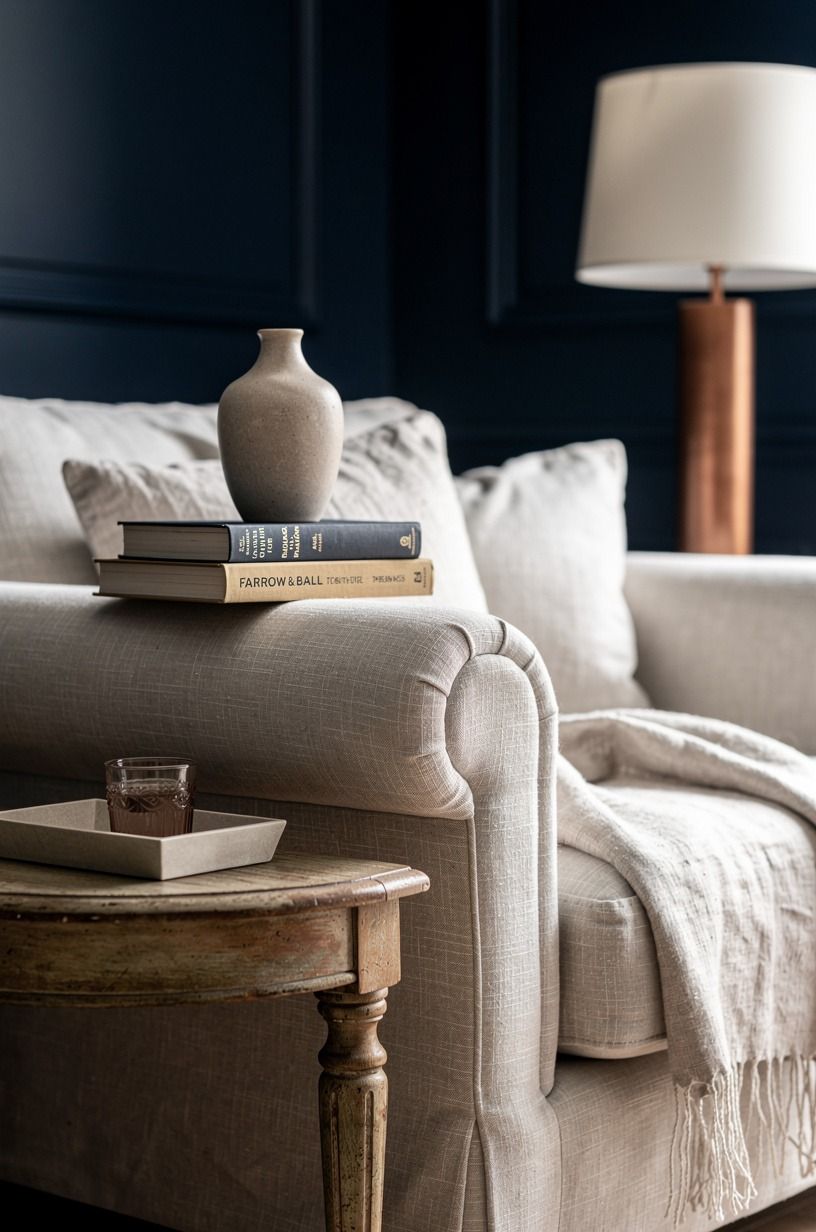
I Built a Speakeasy Lounge for a Cozy, Cocktail-Hour Hangout, No Renovation Needed
23 september 2026Speakeasy lounge ideas for a cozy, cocktail-hour hangout can stay in the $300-$1,200 budget tier when you work with the room you have. I built mine around low light, dark paint, and furniture I could move in one afternoon. The result feels intimate instead of themed. That mattered more than expensive millwork.
Here's what it looked like before
The room already had the bones. The walls were pale, the ceiling light was harsh, and the sofa sat too far from the coffee table for anyone to talk comfortably. I didn't remove anything permanent.
I simply stopped asking the room to act like a bright family space when I wanted it to feel like a late-night lounge.
The room told the real story. Your eye would catch the scattered furniture, the empty corners, and the cold overhead glare faster than I could explain them.
It wasn't ugly. It just wasn't inviting, and I knew I'd need to change the light before I changed the accessories.
- Paint the walls in Farrow & Ball Hague Blue
- Layer the Three-Height Light Stack
- Float the sofa for better conversation
- Choose low seating over a matching set
- Build the Two-Wood Rule
- Frame the room with a 9x12 wool rug
- Swap overhead light for a dimmed glow
- Hang art in a tight salon line
- Anchor the bar cart near the entry
- Style the cocktail table with three useful layers
- Mix brass with aged bronze
- Use curtains instead of wall paneling
- Add a warm wood ceiling detail without construction
- Keep the TV from owning the room
- Place a mirror opposite the lamp
- Bring in one earthy plant
- Finish with a scent and sound layer
- Make the final layer feel collected
1Paint the walls in Farrow & Ball Hague Blue
I started with Farrow & Ball Hague Blue No.30 because the room needed depth without a dramatic construction project. The color swallowed the pale wall glare and made the lamps look warmer within an hour. If you're working with a small living room, you might worry that dark paint will make your space feel tighter.
Mine felt calmer because the edges stopped shouting.
Your finish matters here. I chose a soft low-sheen wall paint, then left the trim slightly lighter so the architecture wouldn't disappear.
You don't need to paint every surface on day one. Paint the main wall first, live with it through one evening, and watch how your furniture changes against it.
I skipped black paint because it looked flat beside the washed Belgian linen. Hague Blue gave me the moody, intimate backdrop I wanted.
2Layer the Three-Height Light Stack
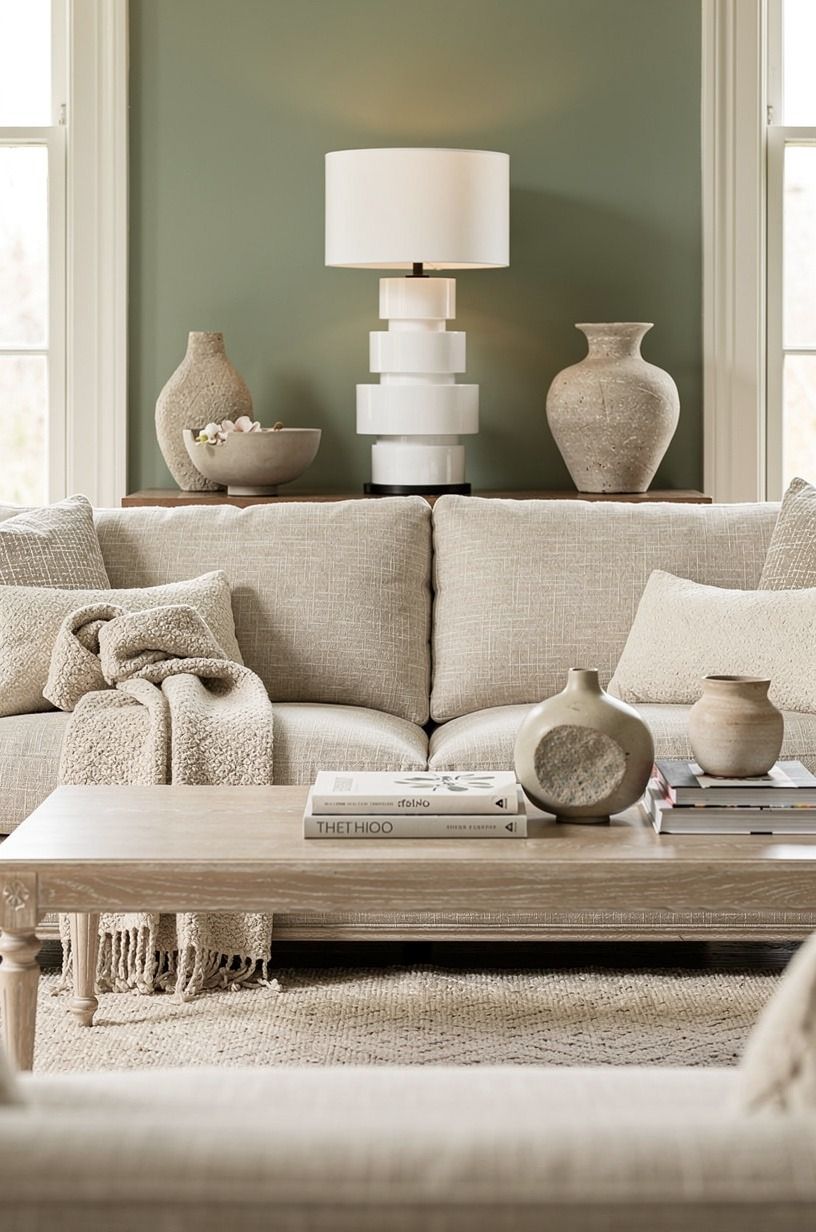
The Three-Height Light Stack became the biggest change in the room.
3Float the sofa for better conversation
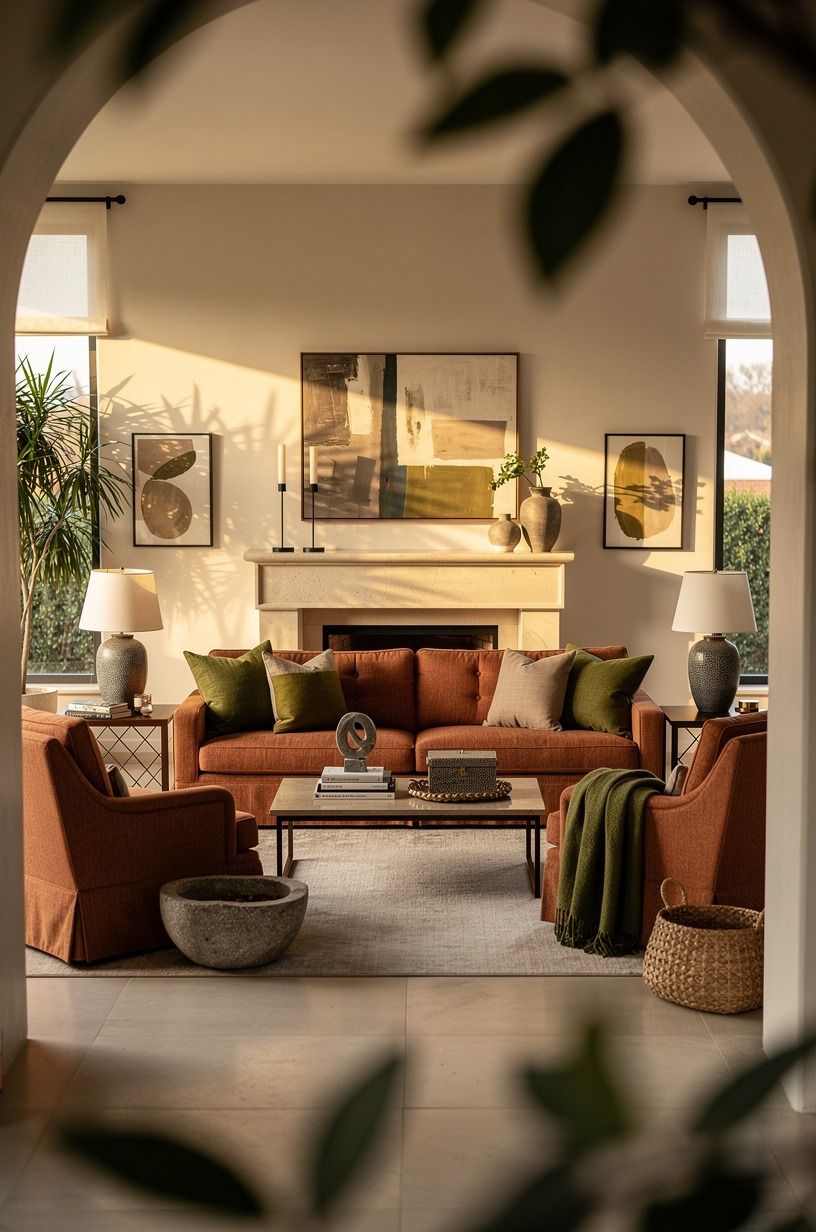
I pulled the sofa away from the wall by roughly 10 inches and angled it toward the chairs. That small move created a conversation zone, and your guests could see one another without twisting around a corner. The sofa depth stayed within the useful 35-40 inch range, so nobody had to perch upright with a drink balanced on one knee.
My sofa has shagreen accents in a warm olive shade. It isn't precious, which matters when you're serving citrus cocktails.
You can float your sofa even if your room is narrow, but leave a clear walking path behind it. I tried pushing it back against the wall again for one night.
The room immediately felt less intimate, so I moved it forward the next morning.
4Choose low seating over a matching set
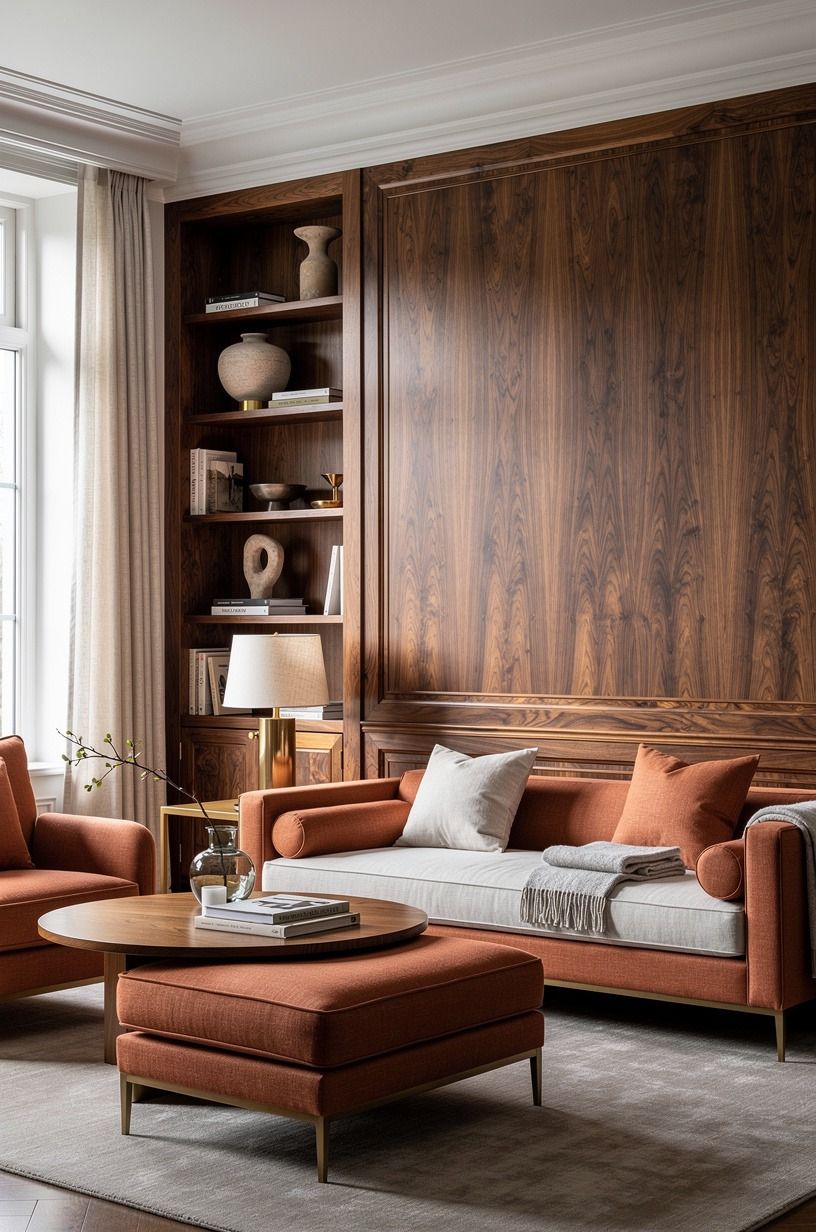
I added two low lounge chairs instead of buying a matching loveseat. The chairs made the room feel more like a hotel bar and less like a furniture showroom. Your seating should let people settle in, but it shouldn't block the sightline from the entry to the drinks table.
The chairs have book-matched walnut frames, which warm the room without looking shiny. I considered polished brass, but it felt too bright beside the clay and linen.
If you're styling a rental, choose movable chairs with exposed wood legs so you can reuse them elsewhere. You'll get more flexibility from two independent pieces than from one oversized set that dictates the entire room.
5Build the Two-Wood Rule
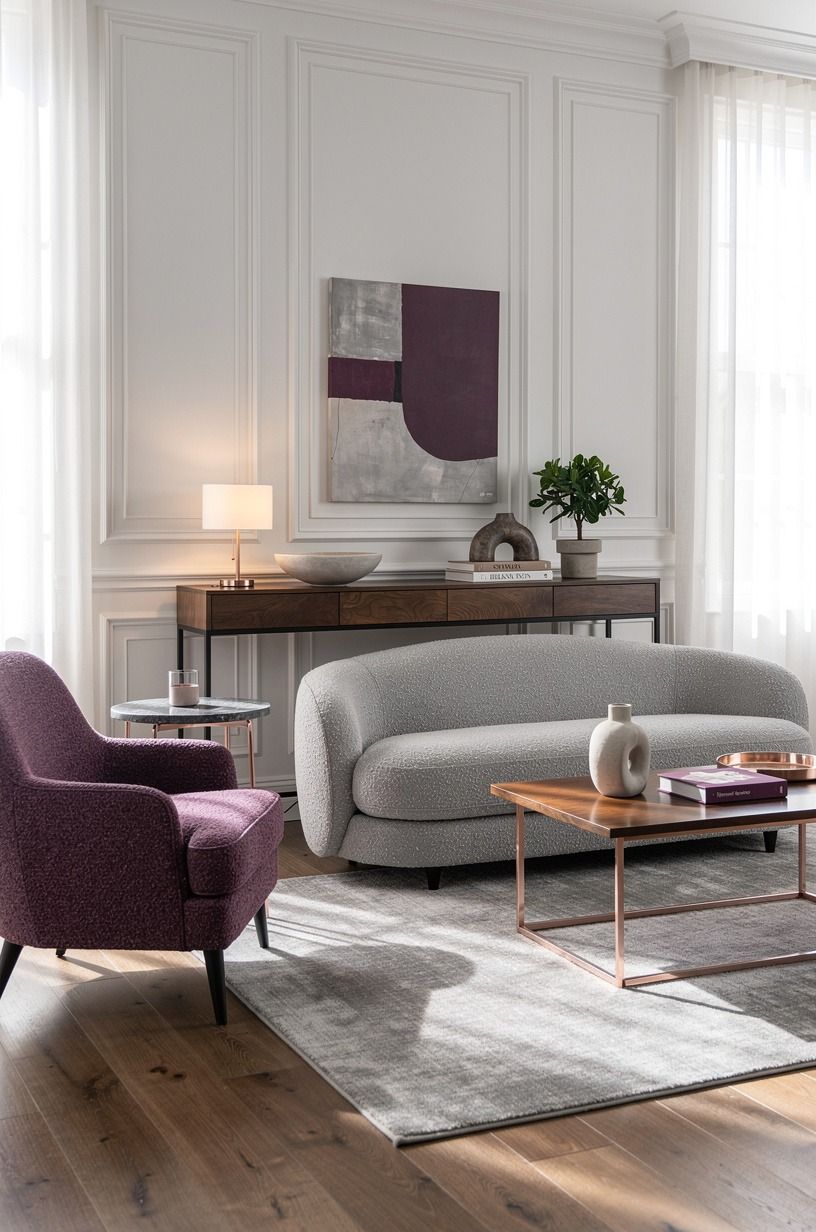
The Two-Wood Rule kept my lounge from looking like a dark pile of furniture.
6Frame the room with a 9x12 wool rug
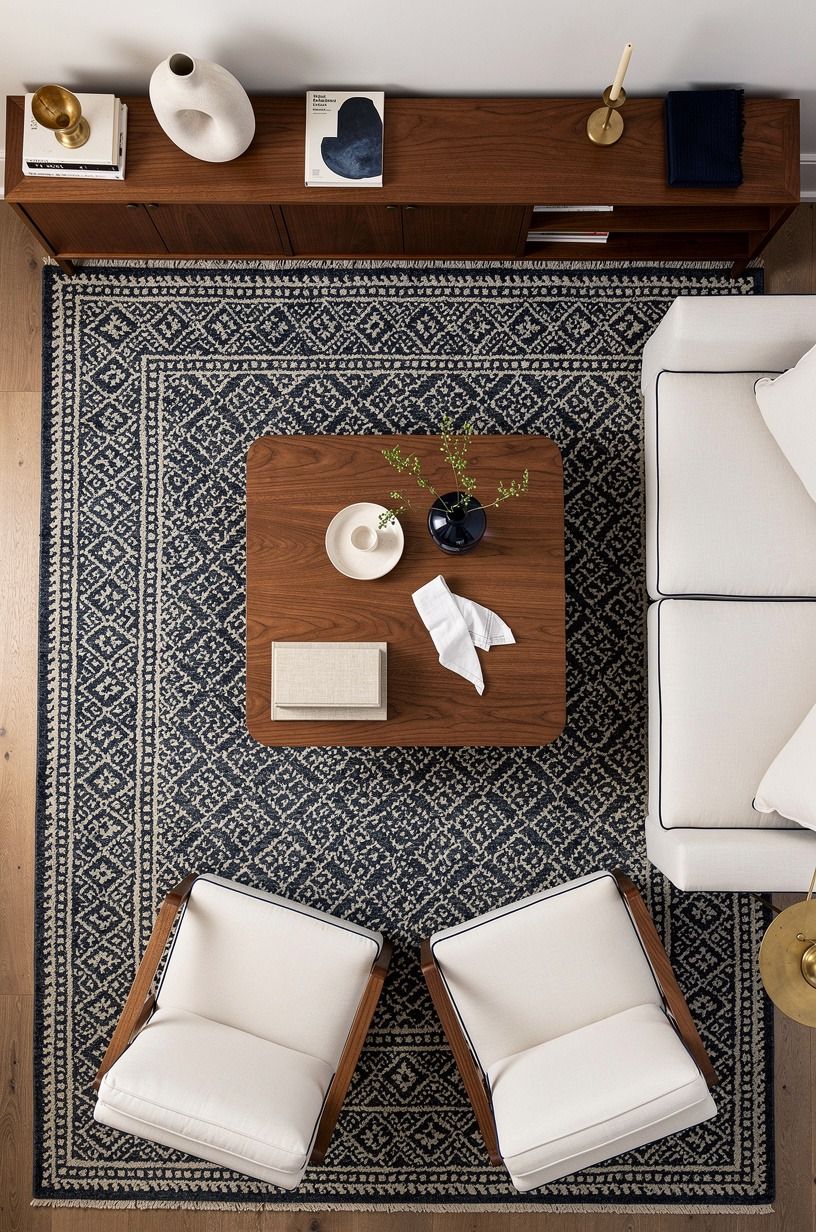
I chose a wool rug large enough for the front legs of every seating piece to rest on it. The available guidance for this room calls for an 8x10 or 9x12 rug, and I went with the larger size because the room could handle it. Your lounge will feel more connected when the chairs and sofa share one visual surface.
The rug has a muted navy and white pattern that keeps the room connected to the walnut. I skipped a tiny cocktail-table rug because it would have made the seating look stranded.
A 9x12 wool rug can cost $600-$2,500 in typical US pricing, so you can start with a secondhand option while you save. Check the backing, smell, and edge wear before bringing one home.
7Swap overhead light for a dimmed glow
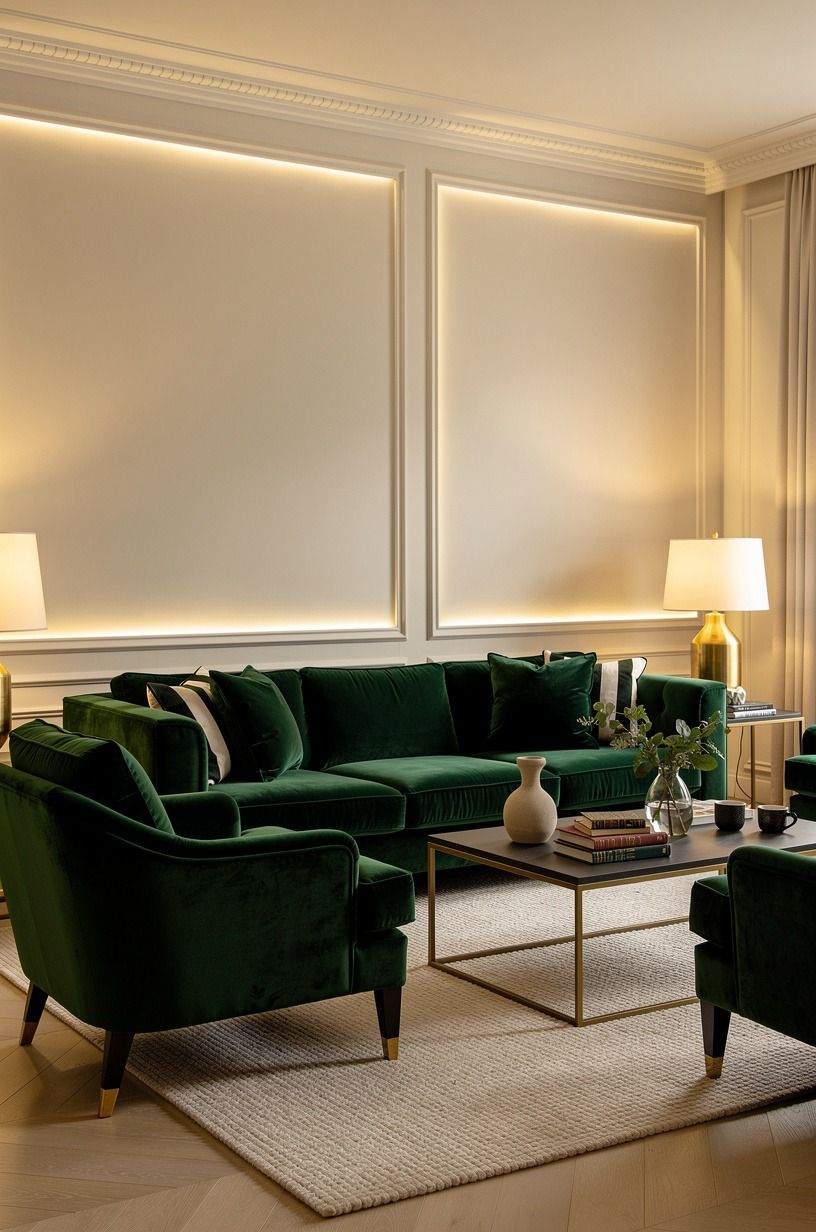
I didn't remove the ceiling fixture. I simply stopped treating it as the room's main light.
A dimmer gave me control, while the lamps handled the warmer work. If you're renting, plug-in sconces and a floor lamp can give you much of the same effect without touching the wiring.
The deep-pile mohair velvet seating catches the warm light, so the room stays dimensional once the fixture is dimmed. Your goal isn't darkness.
You want enough light to see the drink in your hand and the person across from you. I kept one brighter setting for cleaning, then lowered it before guests arrived.
And honestly, the room felt more expensive the moment the overhead glare stopped flattening every texture.
8Hang art in a tight salon line
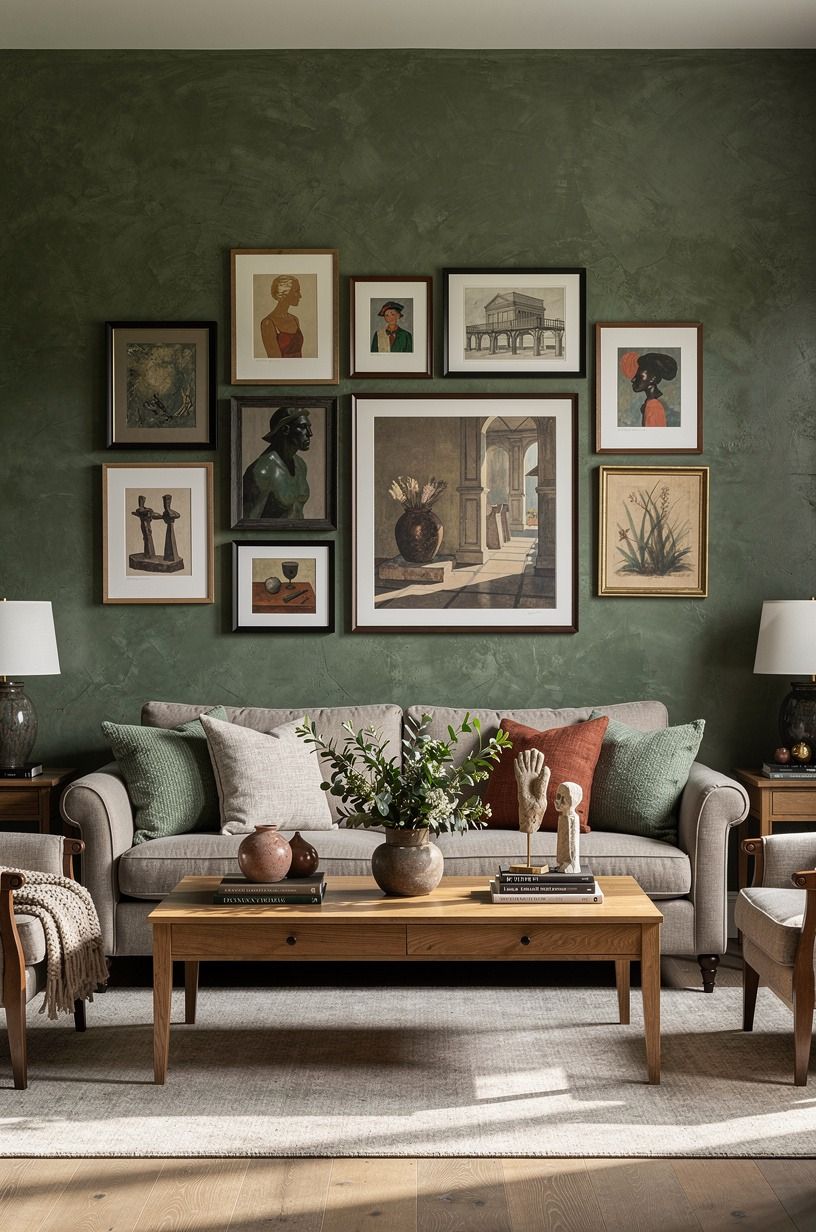
I grouped four small prints instead of hanging one oversized piece above the sofa. The arrangement gave the wall the feeling of a private bar, and your eye had several details to discover from different seats. I used botanical studies, a sepia architectural print, and one abstract in rust.
The frames are natural oak, not black, which repeats the coffee table without making the room too matched. Leave only a few inches between the frames so the group reads as one composition.
You don't need expensive originals. A thrifted frame with a new mat often looks richer than a cheap large canvas. I rejected a neon cocktail sign because it pushed the room toward a restaurant theme.
Your lounge should suggest the mood, not announce it.
9Anchor the bar cart near the entry
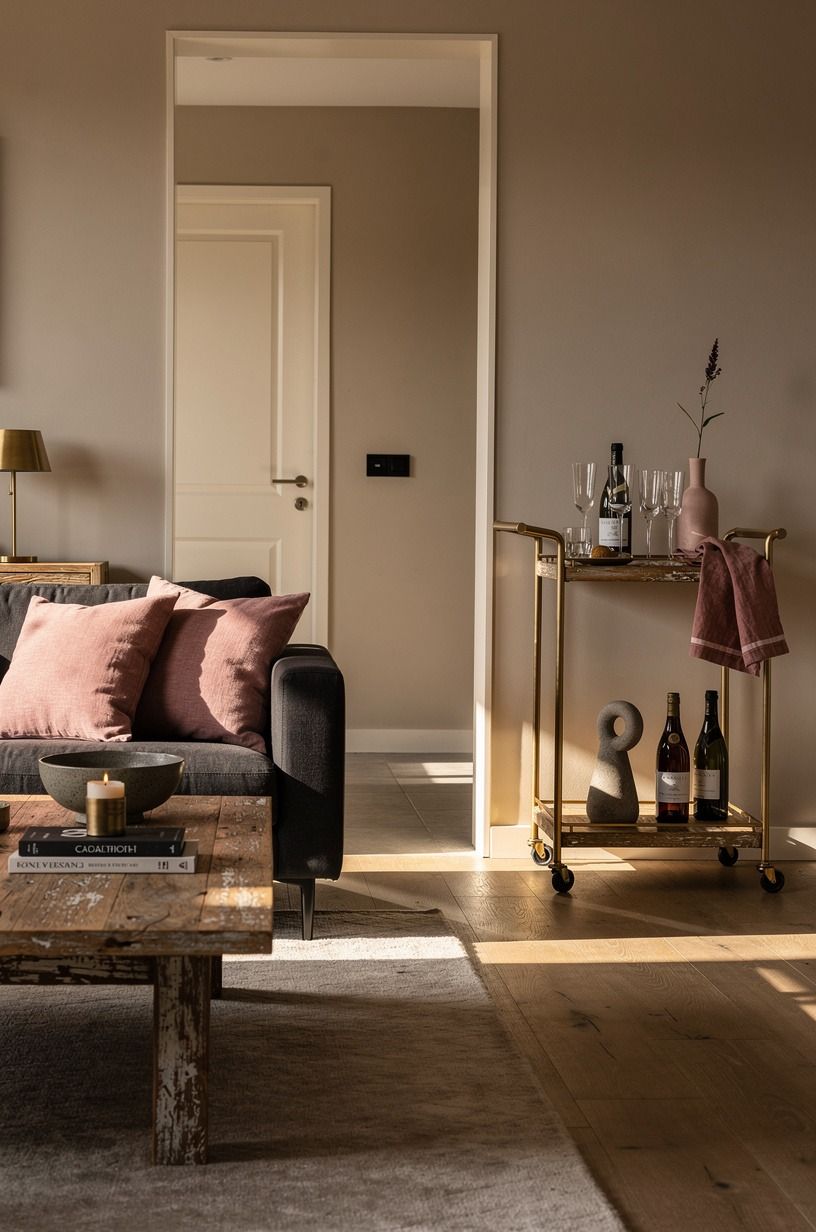
I placed the bar cart near the entry instead of beside the sofa. That decision gave guests a natural landing spot and kept bottles from crowding the conversation area. Your cart should be easy to reach, but it shouldn't become the room's only focal point.
The cart has a reclaimed weathered teak frame with a small brass tray on the top shelf. I kept four bottles visible and stored everything else in the lower basket.
You can create the same effect with a narrow console if you don't have space for wheels. My first version had too many glasses, shakers, and bottles.
It looked busy, so I removed half of them and left one coupe, one rocks glass, and a small bowl of citrus on display.
10Style the cocktail table with three useful layers
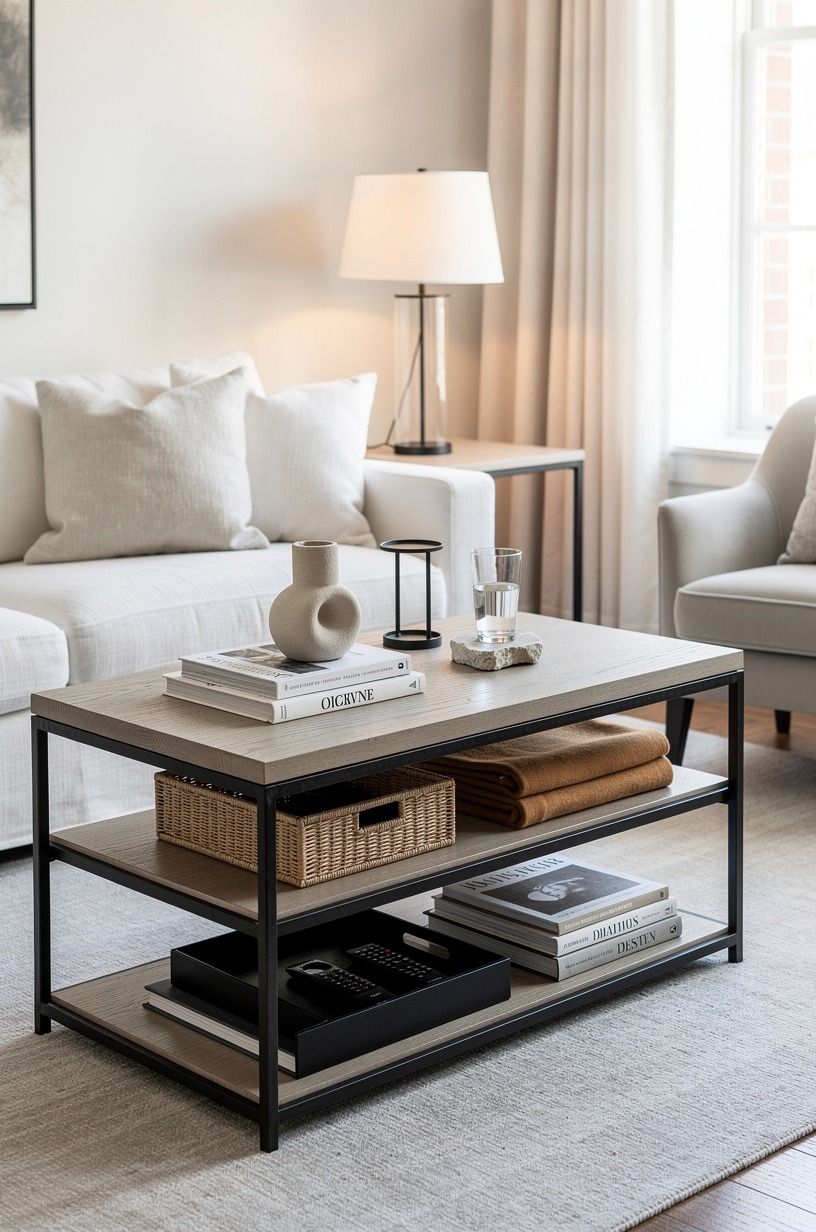
I styled the table with a tray, a low vase, and one candle.
11Mix brass with aged bronze
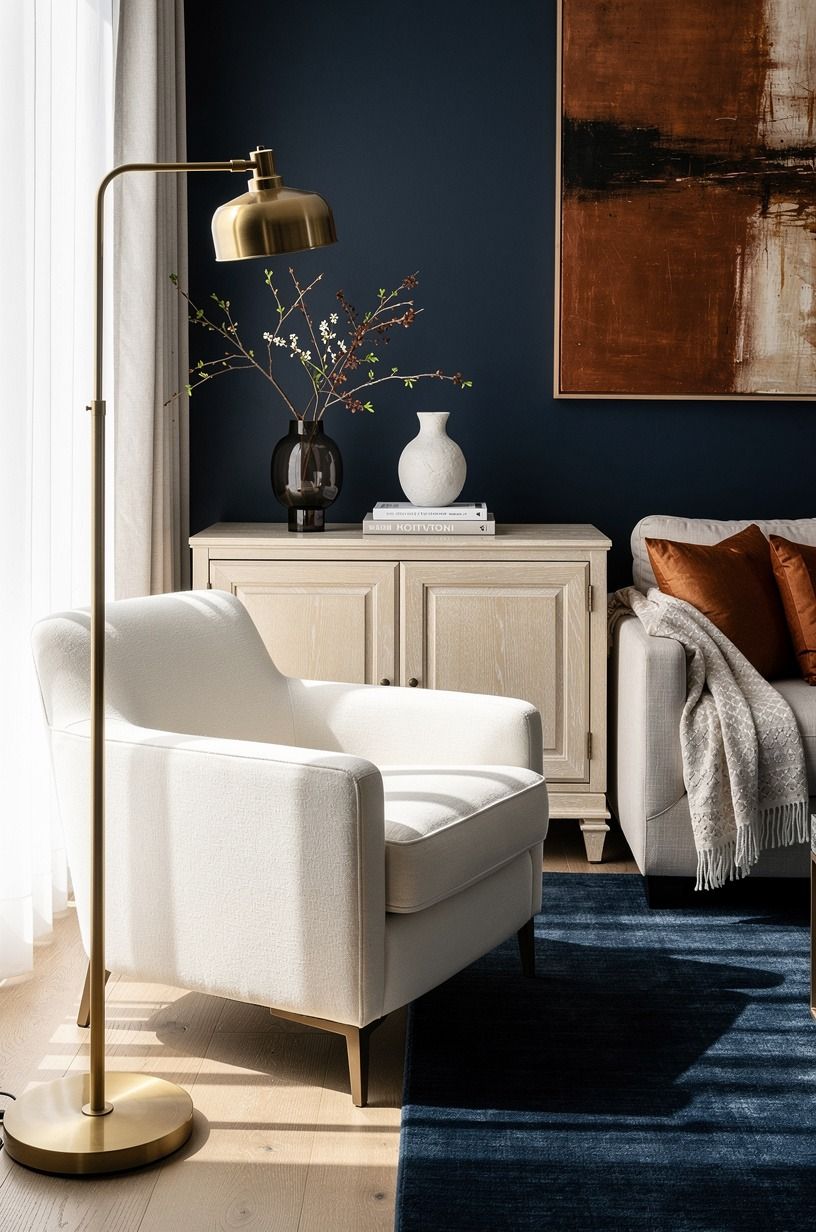
I used copper with aged bronze instead of forcing every finish to match. The copper catches the lamp glow, while cerused white oak grounds the room. Your room can handle mixed metals when one finish is bright and the other is quiet.
The cerused white oak shows a pale, brushed grain, which is part of why I chose it. Polished brass looked too shiny against the midnight blue, and matte black everywhere felt predictable.
You don't need to replace every handle or frame. Start with one visible metal object, then repeat its warmth in a second location.
And if you're choosing between ten small metallic accessories and one substantial piece, take the substantial piece. It will read as a decision instead of clutter.
12Use curtains instead of wall paneling
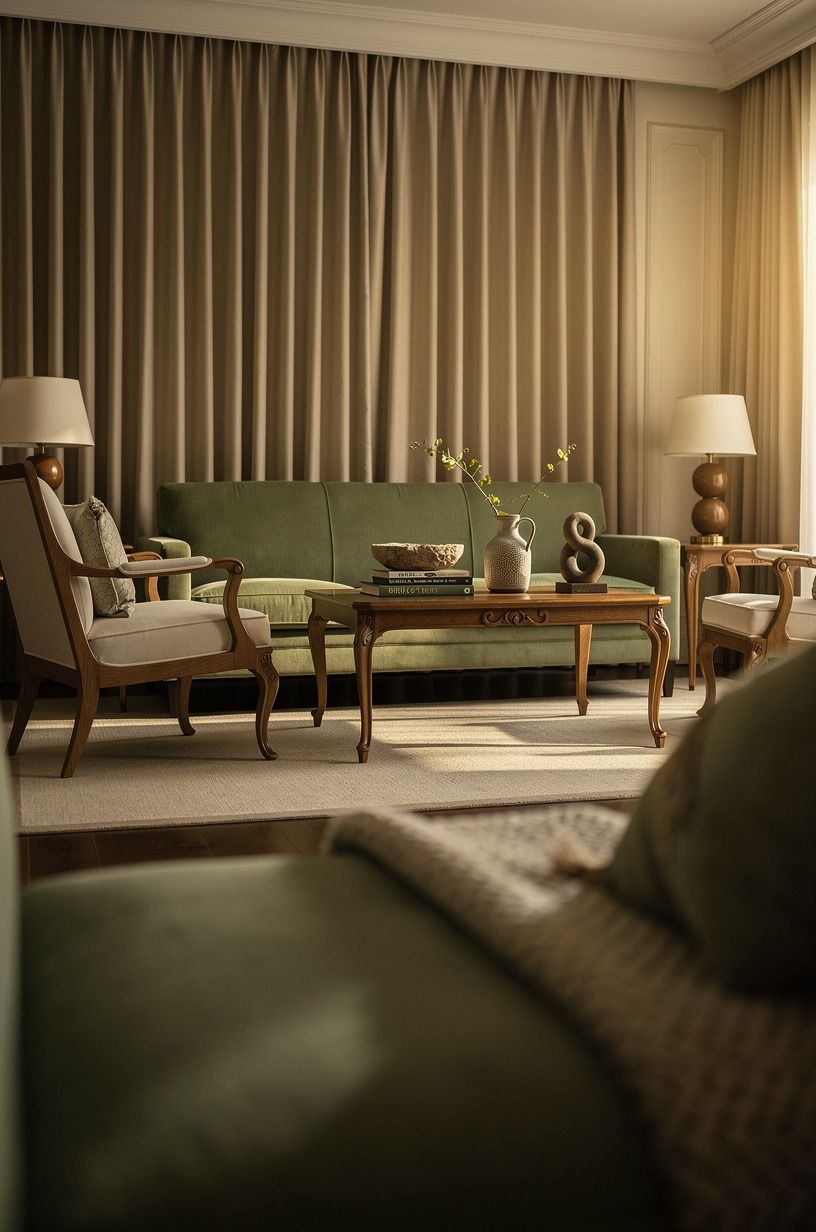
I wanted the room to feel enclosed, but I didn't want to build wall paneling.
13Add a warm wood ceiling detail without construction
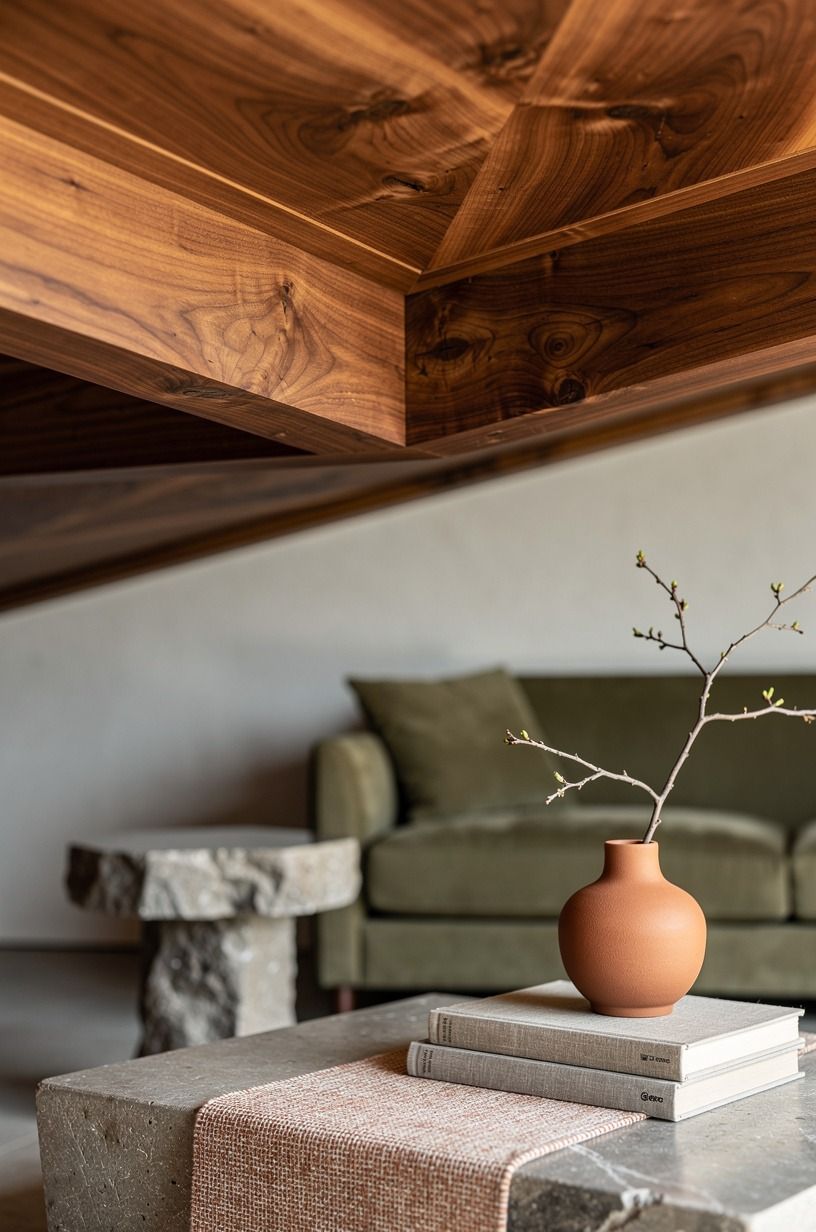
The ceiling stayed white, but I introduced a book-matched walnut beam effect with a lightweight decorative beam across the sitting area. It changed the ceiling line and gave the room a little architectural weight without opening drywall. If you're renting, skip the beam and use a long wooden picture ledge instead.
I tested the color against the floor before installing anything. Your wood should relate to the floor without matching it exactly.
A perfect match can look manufactured, while a close variation feels gathered over time. I wouldn't add this detail to a room with low ceilings if the beam would sit at eye level.
In my space, it helped separate the lounge from the dining area and made the seating zone feel more intentional.
14Keep the TV from owning the room
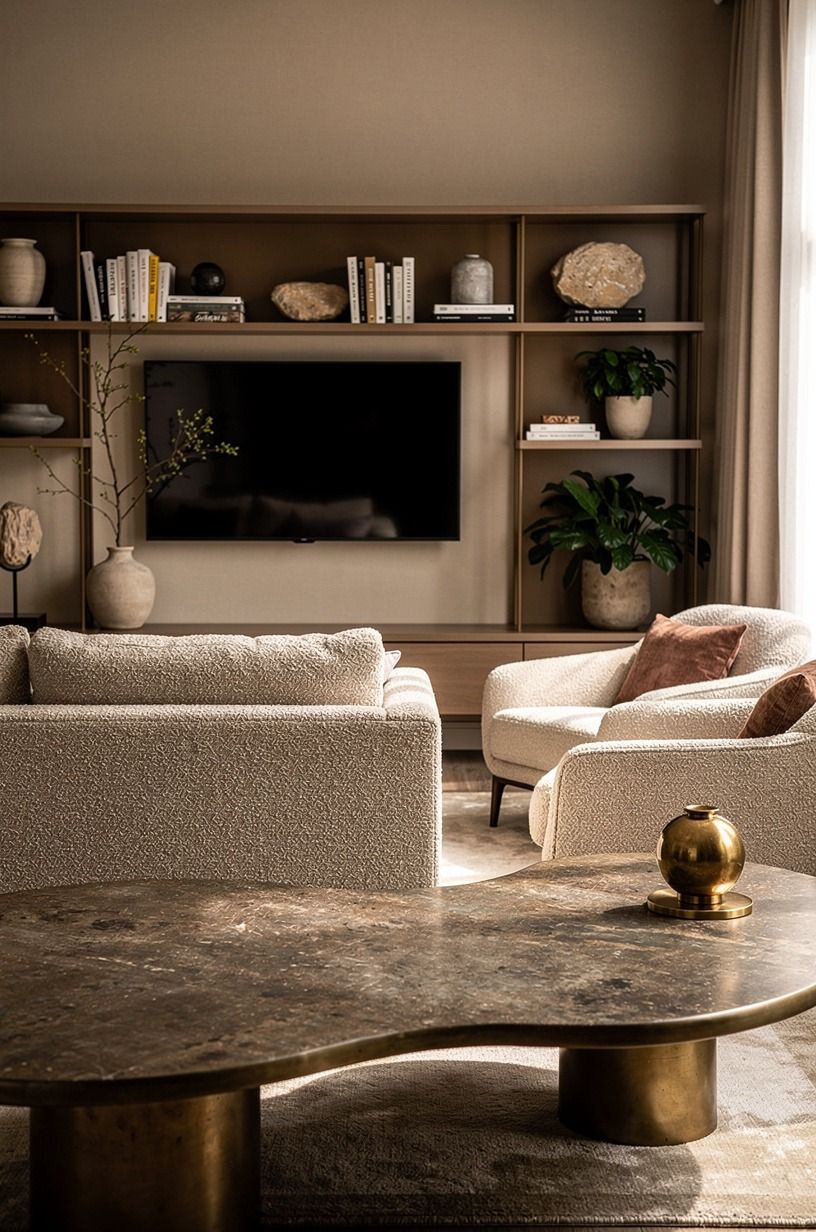
The television was the hardest object to accept in a speakeasy lounge. I didn't hide it behind an expensive built-in. Instead, I placed it on a low console and used dark art around it so the screen wouldn't dominate when it was off.
Your seating still faces the screen, but it doesn't have to worship it.
I paired the console with an organic bouclé bench that adds softness below the television. I kept the screen distance around 1.5-2.5 times the screen diagonal, which preserved comfortable viewing from the sofa. You can use a deep frame TV if you have one, but styling matters more than the device.
I skipped a gallery wall directly around the screen because the competing rectangles looked messy. Leave breathing room and let the console do the grounding.
15Place a mirror opposite the lamp
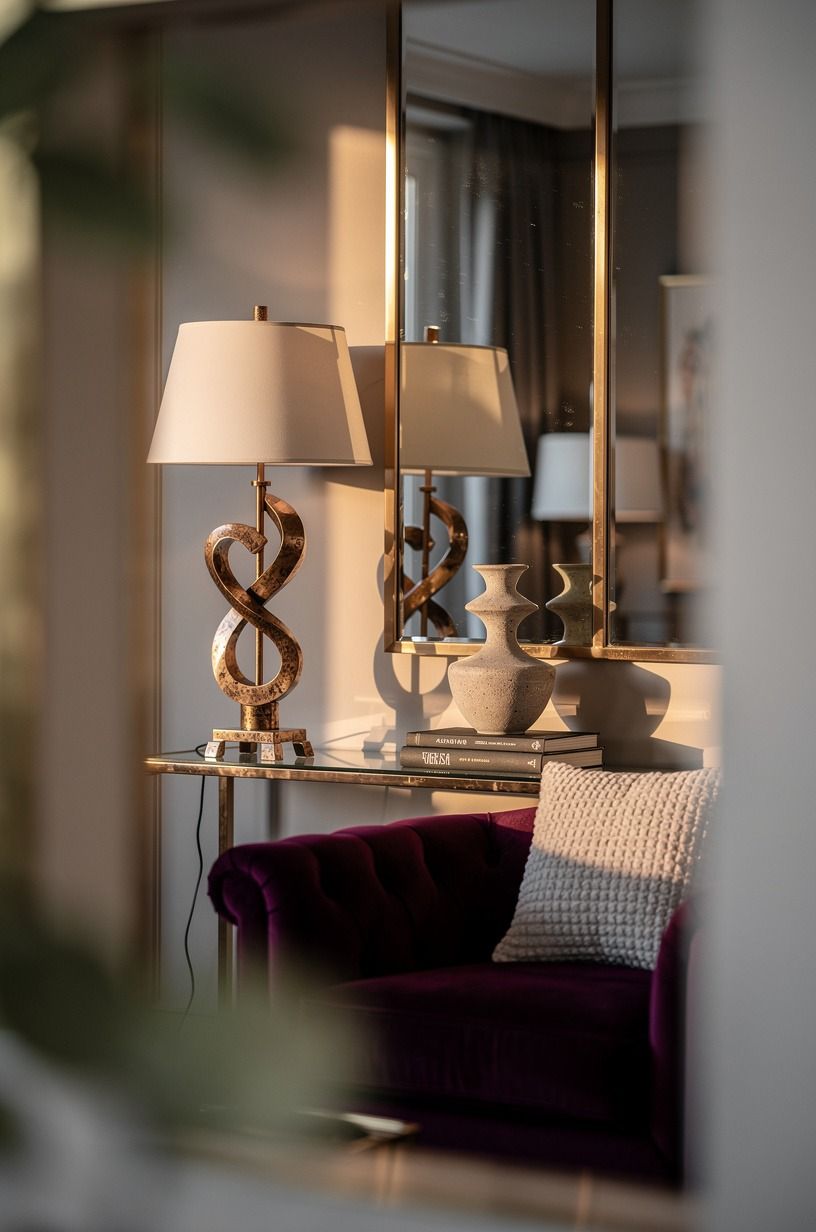
I hung a narrow mirror opposite the floor lamp, not opposite the sofa.
16Bring in one earthy plant
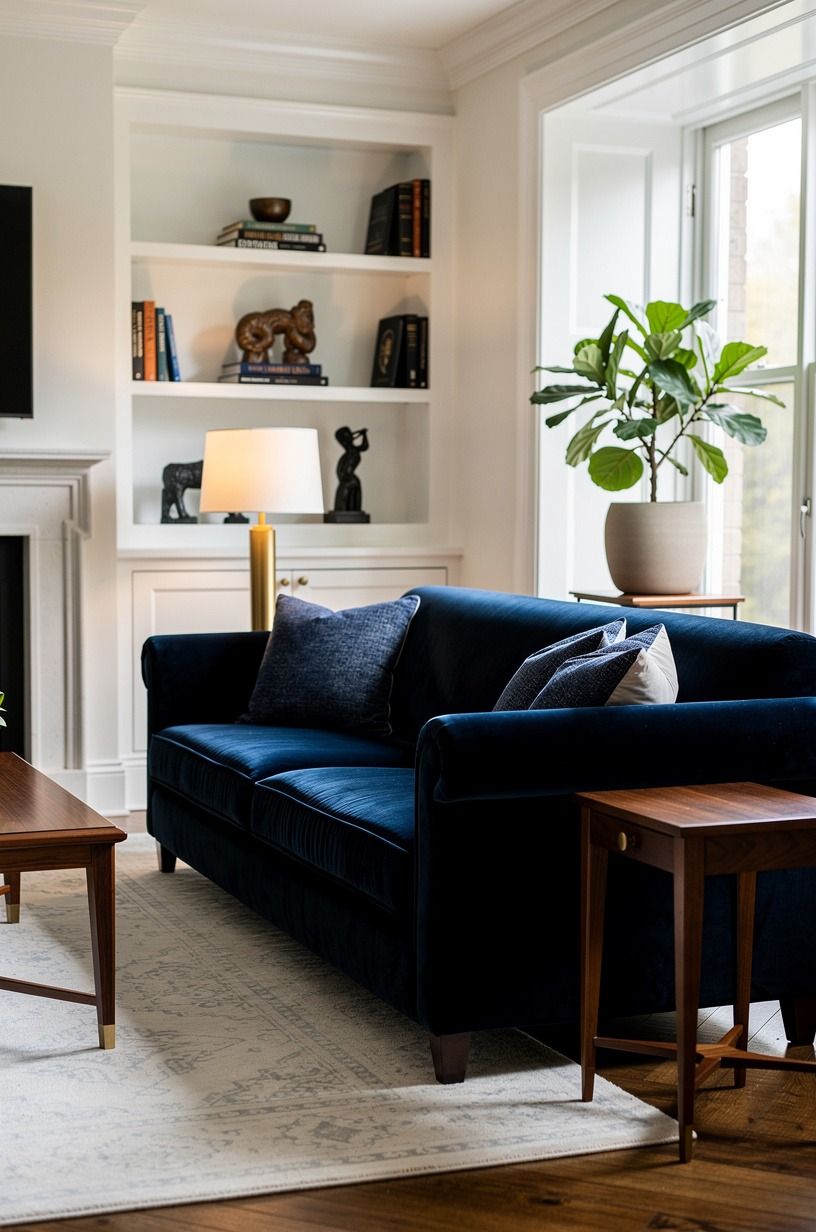
I added one tall plant near the curtain. The leaves softened the straight lines of the sofa, cart, and table, while the earthy shape warmed the darker palette. Your plant should have enough space to grow without blocking a lamp or brushing against guests.
The plant sits beside a deep-pile mohair velvet chair, so the texture holds up in the dim evening light. I chose a plant that can handle indirect light because the room stays dim in the evening. You can use branches in a heavy vase if a living plant won't work for your space.
I wouldn't scatter tiny plants across every surface. One substantial shape gives the room life without making cocktail service feel cramped.
17Finish with a scent and sound layer
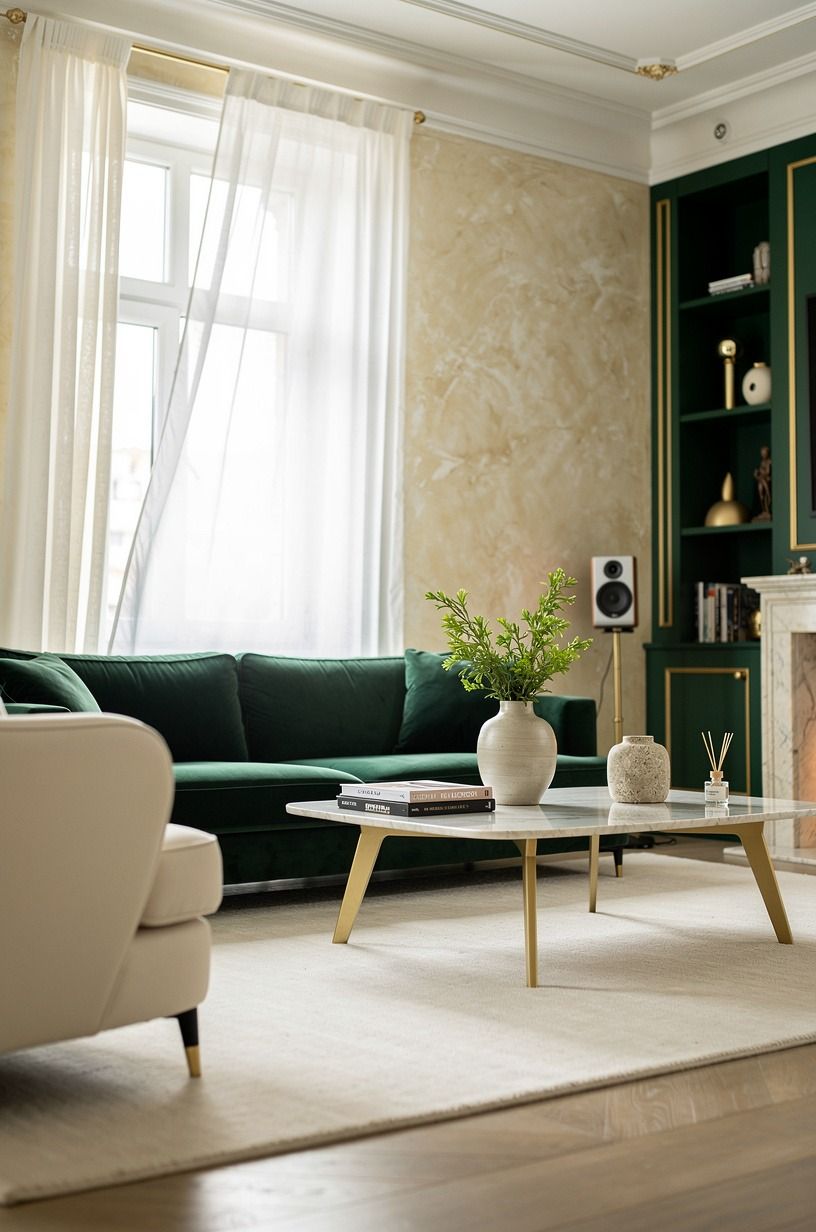
The room didn't feel complete until I considered what guests would hear and smell. I used a low-volume jazz playlist and a cedar candle near the entry, where the scent could move through the room before anyone sat down. Your lounge should welcome more than your eyes.
The candle sits against hand-applied Venetian plaster, and its scent stays woody rather than sweet. I tested it for an hour before inviting anyone over because a strong fragrance can make a small room uncomfortable. You can create the sound layer with a compact speaker tucked on the console.
I skipped a visible record display because it added visual noise. The best atmosphere is present without asking everyone to admire the equipment.
18Make the final layer feel collected
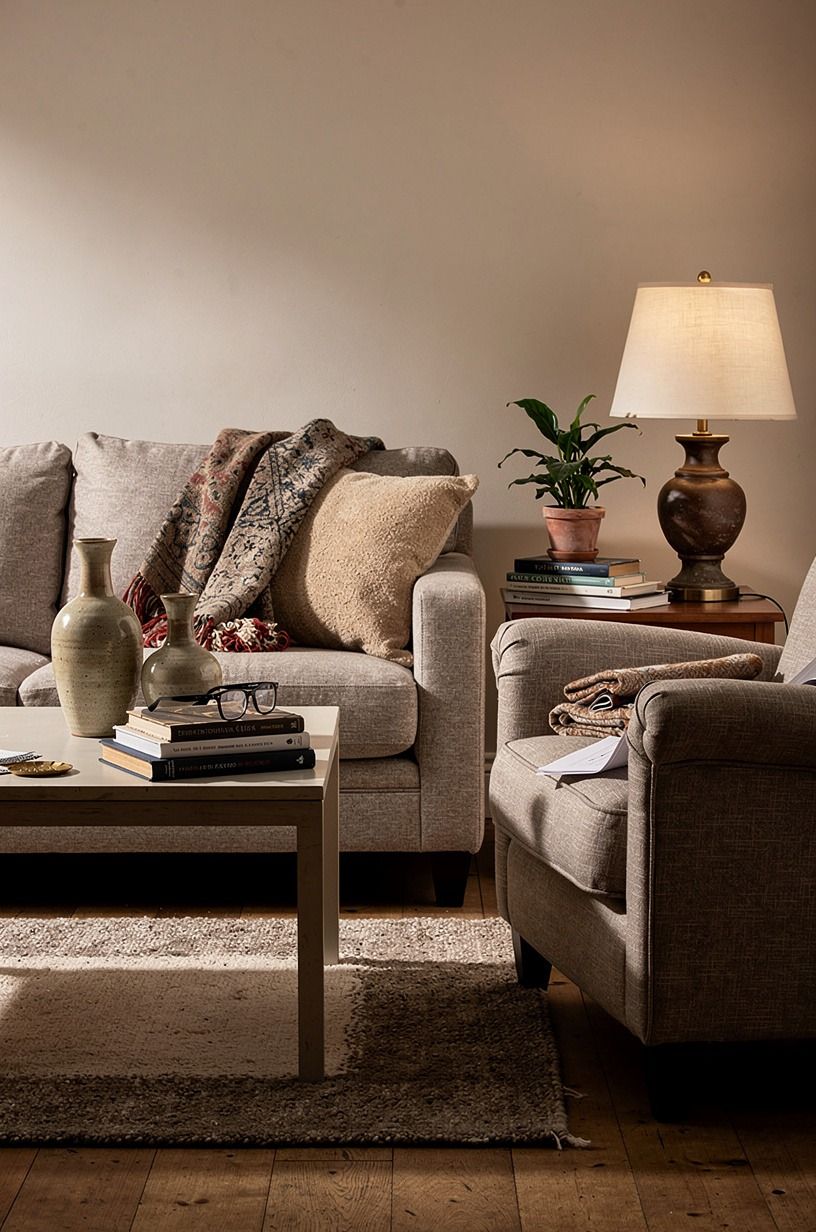
The last step was removing things. I kept one bowl of citrus, two cocktail books, a small ceramic ashtray for matches, and a tray in reclaimed weathered teak. Your room needs evidence that people use it, but every surface shouldn't be full.
I walked through the lounge with a drink in one hand and sat in every chair. That showed me which objects were too tall, too sharp, or too easy to knock over.
I removed a tall vase from the coffee table and moved it to the console. The room became more comfortable immediately.
And when you think you're finished, try using the space for one full evening. Your body will notice problems your styling eye missed.
How much it cost
The makeover stayed within a typical budget refresh because I reused the sofa, kept the existing ceiling fixture, and painted instead of adding millwork. I won't invent a receipt total where the brief only provides market ranges. These are the honest typical US tiers I used to make decisions:
The larger cost jumps come from furniture and built-ins, not from the mood itself. A performance-fabric sofa can run $1,200-$4,000, while a wool 9x12 rug commonly lands between $600-$2,500. You can keep your project in the lower tier by painting one room, buying secondhand seating, and letting your existing furniture carry the first version.
Why this speakeasy lounge works for me
I used to think a speakeasy room needed more objects: more glass, more brass, more velvet, more evidence that the room had a theme. I was wrong.
The room started working when I reduced the visual noise and gave the light somewhere to land. Dark paint helped, but it wasn't the whole answer.
The distance between the sofa and the chairs mattered more.
My favorite choice was also the least dramatic one. I moved the sofa, then lived with it for several nights before buying anything else. That taught me to solve movement before shopping.
If your layout is awkward, a new lamp won't rescue it. You need to know where your guests will sit, where they will set a glass, and how they will walk through the room.
I also learned that "speakeasy" can become costume quickly. I skipped fake prohibition signs, oversized neon, and too many vintage labels because they made the room feel like a restaurant set.
Your version can feel intimate without copying a bar. Use the language of a lounge, such as low seating, warm pools of light, dark color, and tactile fabric, then keep the pieces that suit your actual life.
The imperfect details are what stayed. The brass is developing marks.
The velvet catches lint. The linen wrinkles near the floor.
I like that. A room for cocktail hour shouldn't look untouched, and your guests shouldn't feel nervous about setting down a glass.
The best result is a warm, collected room that gets better after people use it.
A Few Things Worth Answering
What is the best speakeasy lounge idea for a small living room?
Start with low lighting and a movable seating plan. An IKEA NISSAFORS cart and two compact lounge chairs can create a useful cocktail zone without filling the room. Keep your sofa 35-40 inches deep when possible, and choose a rug that holds the front legs of your seating.
Where can I buy speakeasy lounge pieces on a budget?
Look at IKEA, Wayfair, and Target first, then check Facebook Marketplace or a local thrift store for wood tables and framed art. Your best secondhand finds will usually be smaller furniture pieces. Clean the surfaces, inspect the joints, and skip anything with a strong smoke smell.
How much does a speakeasy lounge makeover cost?
A typical budget refresh runs $300-$1,200 for pillows, throws, a rug, art, and paint. You can spend less by reusing your sofa and lamps. The free changes are moving furniture, lowering the overhead light, editing accessories, and grouping what you already own.
Can I create a speakeasy lounge on a budget?
Yes, and your first three moves can cost almost nothing: rearrange the sofa, turn off the harsh ceiling light, and gather your warmest textiles in one seating zone. Add paint or secondhand art next. You don't need a new sofa to make the room feel more intimate.
Is a speakeasy lounge worth it in a small space?
Yes, because a small room already gives you the close, intimate feeling that larger spaces have to work harder to create. Keep your coffee table 16-18 inches tall, preserve a clear walking path, and choose one strong focal point. Your room will feel more comfortable when fewer pieces do more work.
Is a speakeasy lounge a good idea for a rental?
Yes. Use removable wallpaper or peel-and-stick panels, a tension rod for linen curtains, plug-in sconces, and freestanding furniture. You can create a warm, moody room without drilling into the walls.
Keep your paint and hardware reversible so you can take the atmosphere with you.
Where I'd Start First
If I had to pick one, I'd start with the lighting. A sofa can be ordinary and still feel inviting, but cold overhead glare will flatten every texture you own.
Lower the ceiling fixture, add one warm lamp, and sit there tonight. Pin this room for later, then change the light before you buy anything else.