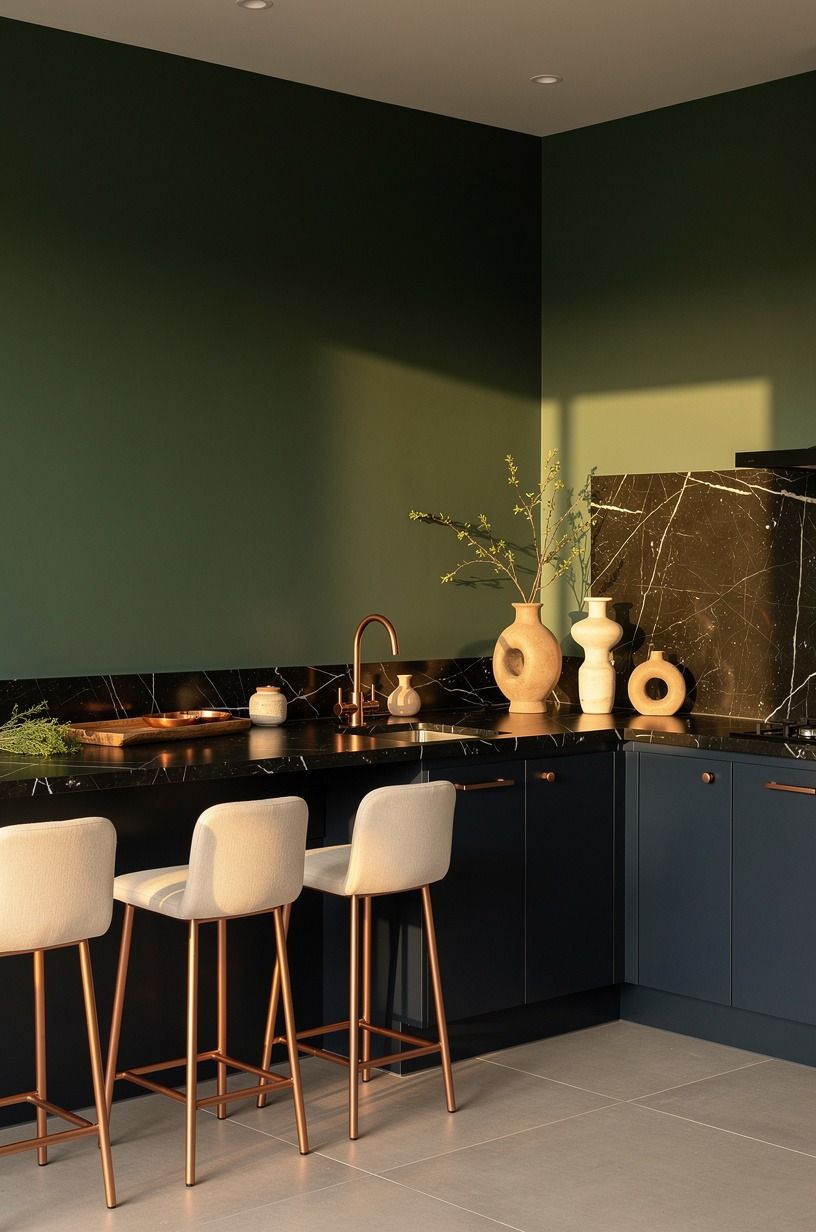
How to Style a Dark & Moody Cottage Kitchen for Dramatic Cozy Vibes - 15 Ideas
27 july 2026Dark & moody cottage kitchen ideas for dramatic cozy vibes work when you build the room in layers, starting with the walls and ending with the light. I’ve watched white kitchens feel chilly at 7pm, while a midnight-blue one held everyone near the table. The difference isn’t just paint. It’s contrast, texture, and a little nerve.
- Start with Farrow & Ball Studio Green No. 93 on the walls
- Map the 36-Inch Working Line before changing cabinets
- Anchor the room with a dark lower-cabinet base
- Choose warm wood over gray wood for the Two-Wood Rule
- Layer a backsplash with uneven shine
- Hang the Three-Height Light Stack
- Can dark cabinets work in a small kitchen?
- Mix old brass with plain black hardware
- Build a collected shelf wall with the Open-Edge Method
- Add a table that can take a real dinner
- Frame the sink with a quiet window treatment
- Let one painted pantry door steal the scene
- Use laminate over quartz when the budget needs breathing room
- Finish with objects that earn their place
- Check the room after dark before you call it finished
1Start with Farrow & Ball Studio Green No. 93 on the walls
Paint the walls before you buy a single decorative object. You’ll see every later choice more clearly against a dark ground, especially your wood tones and metal finishes.
For a north-facing kitchen, I’d choose a midnight blue with copper and ivory around it over a near-black navy. The blue stays rich by late afternoon, while ivory keeps its darker edges from swallowing the room.
Use the color on walls, pantry doors, or lower cabinetry if your uppers need to stay light. Your ceiling can remain Benjamin Moore White Dove OC-17, which gives the dark paint a clean stopping point.
Bring in a little Nero Marquina black marble with white veining if the room needs a sharper, dressier contrast. It makes copper and ivory feel intentional instead of overly sweet.
But don’t paint every surface dark if your kitchen has no natural light. One moody wall is enough. You want drama, not a cave.
2Map the 36-Inch Working Line before changing cabinets
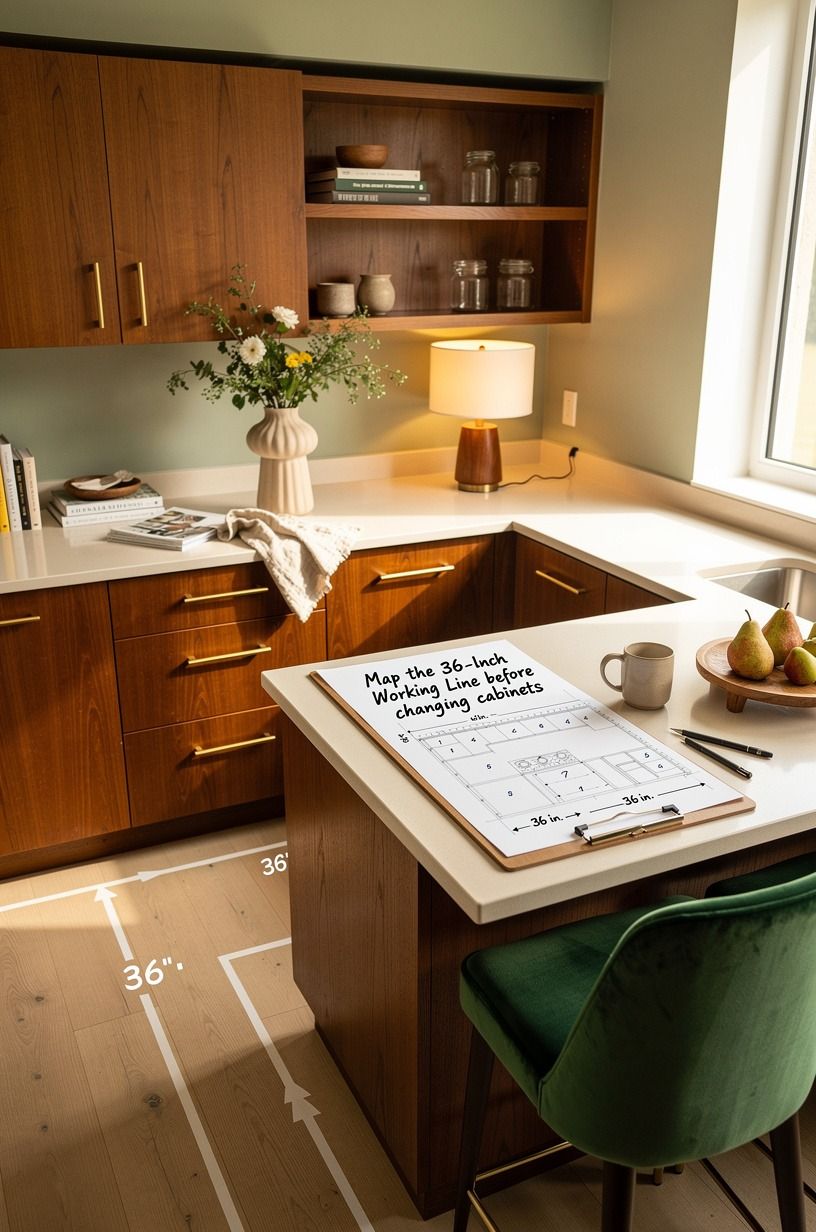
Keep the practical parts of your kitchen practical.
A sage green, warm cream, and natural-wood palette can make that working stretch feel calmer before you change a single cabinet. Save soft deep-pile mohair velvet for a nearby banquette or stool cushion, where it adds comfort without getting in the way.
3Anchor the room with a dark lower-cabinet base
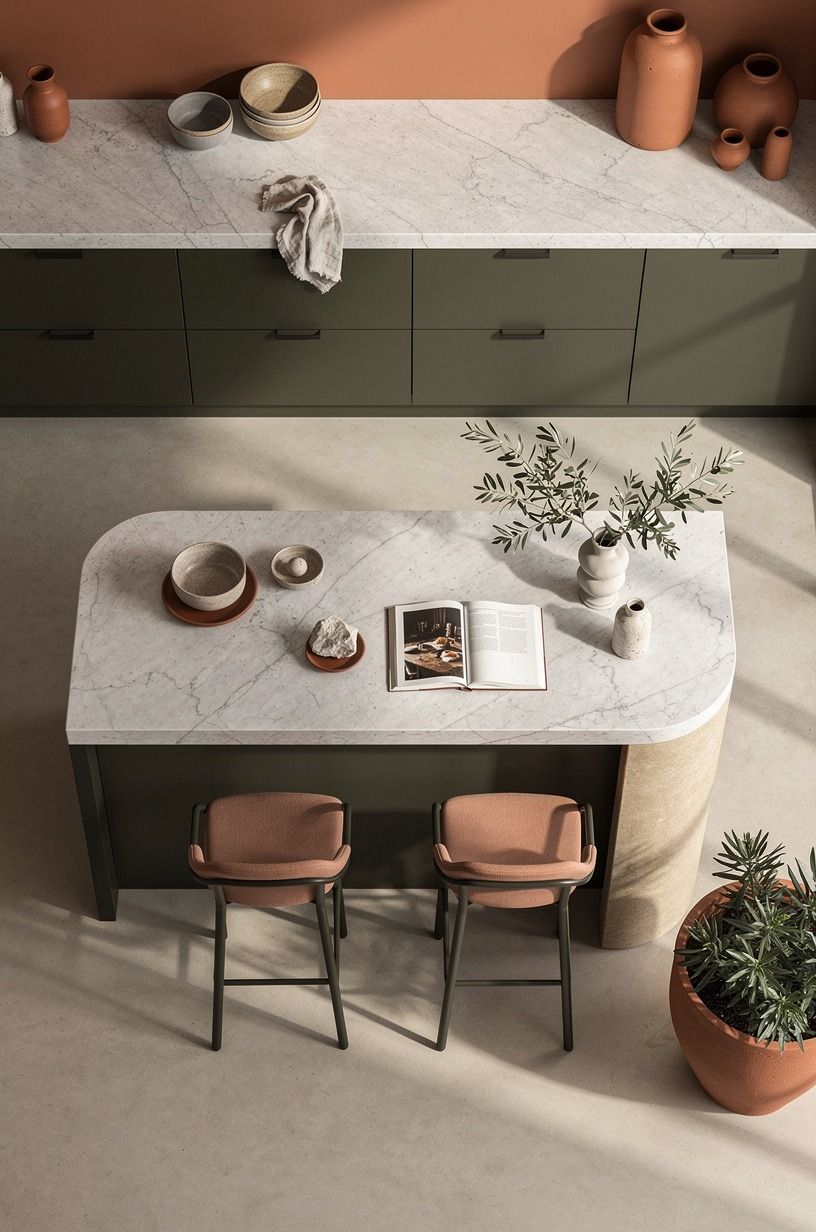
Paint lower cabinets first if you’re nervous about committing. Your eye reads the darker weight at floor level as grounding, while lighter uppers keep the kitchen from feeling boxed in.
A terracotta, stone, and olive palette is the warmer call for a kitchen that already has natural wood or cream tile. It feels moody without turning cold, and olive cabinetry is forgiving around fingerprints, which matters more than people admit.
For a bolder version, pair olive Shaker fronts with a Carrara marble counter that has subtle grey veining. I’d skip pure black unless your room gets strong daylight, because black cabinets show flour dust, pet hair, and every tiny streak.
Your existing cabinet boxes don’t need replacing to make this work. Repainted Shaker fronts typically run about $150-$400 per door, while a careful paint refresh costs far less than a full cabinet order.
4Choose warm wood over gray wood for the Two-Wood Rule
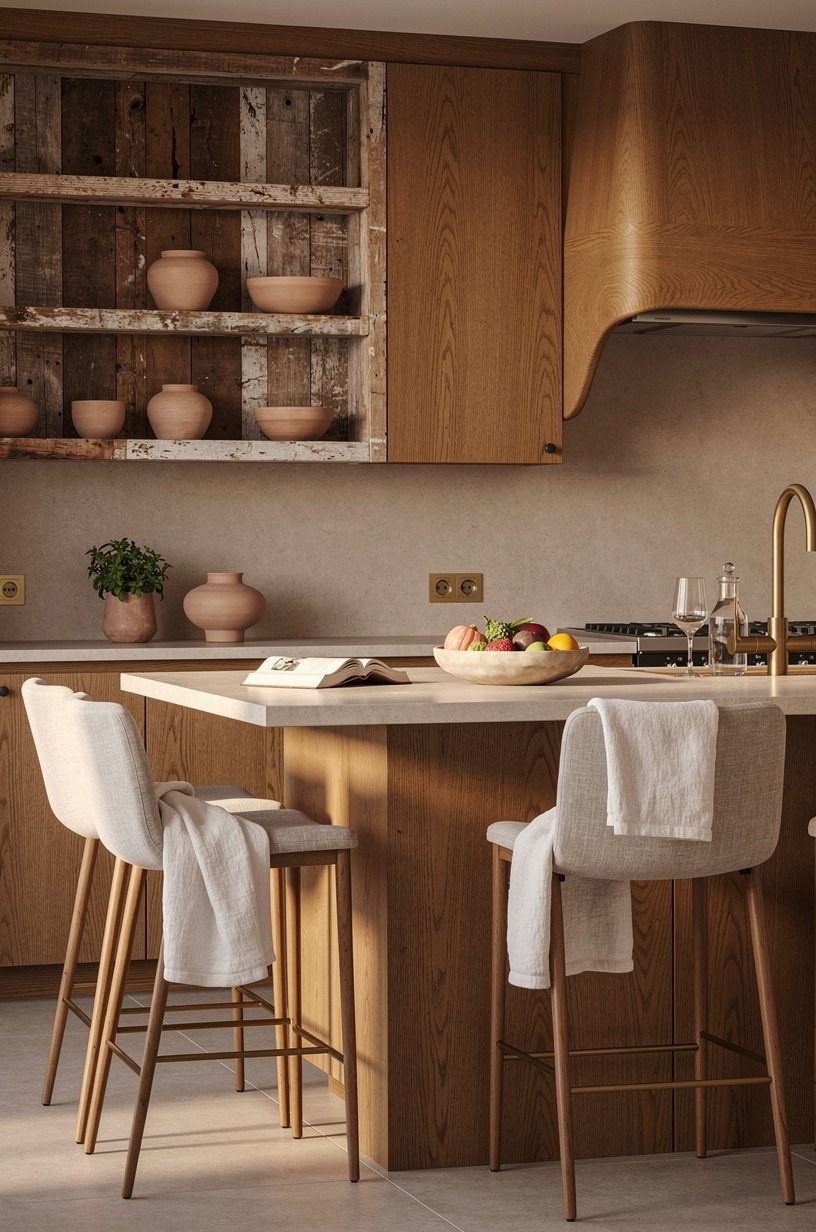
Use no more than two visible wood tones in your kitchen. That’s the Two-Wood Rule, and it keeps your vintage cozy kitchen from looking like a salvage yard with plumbing.
Start with your floor or existing table as the dominant wood. Then add one contrast, such as reclaimed weathered teak shelves against a walnut table, or a worn pine stool beneath darker cabinets.
You’ll want undertones that agree. Honey oak and orange pine can live together, but cool gray laminate beside either one usually looks accidental.
I’d skip gray-washed floating shelves completely. They flatten the room’s warmth and make dark paint feel like a trend board instead of a home.
A reclaimed teak shelf has enough visual weight to settle the wall without making it feel precious. That weathered grain is what makes the room feel lived in.
5Layer a backsplash with uneven shine
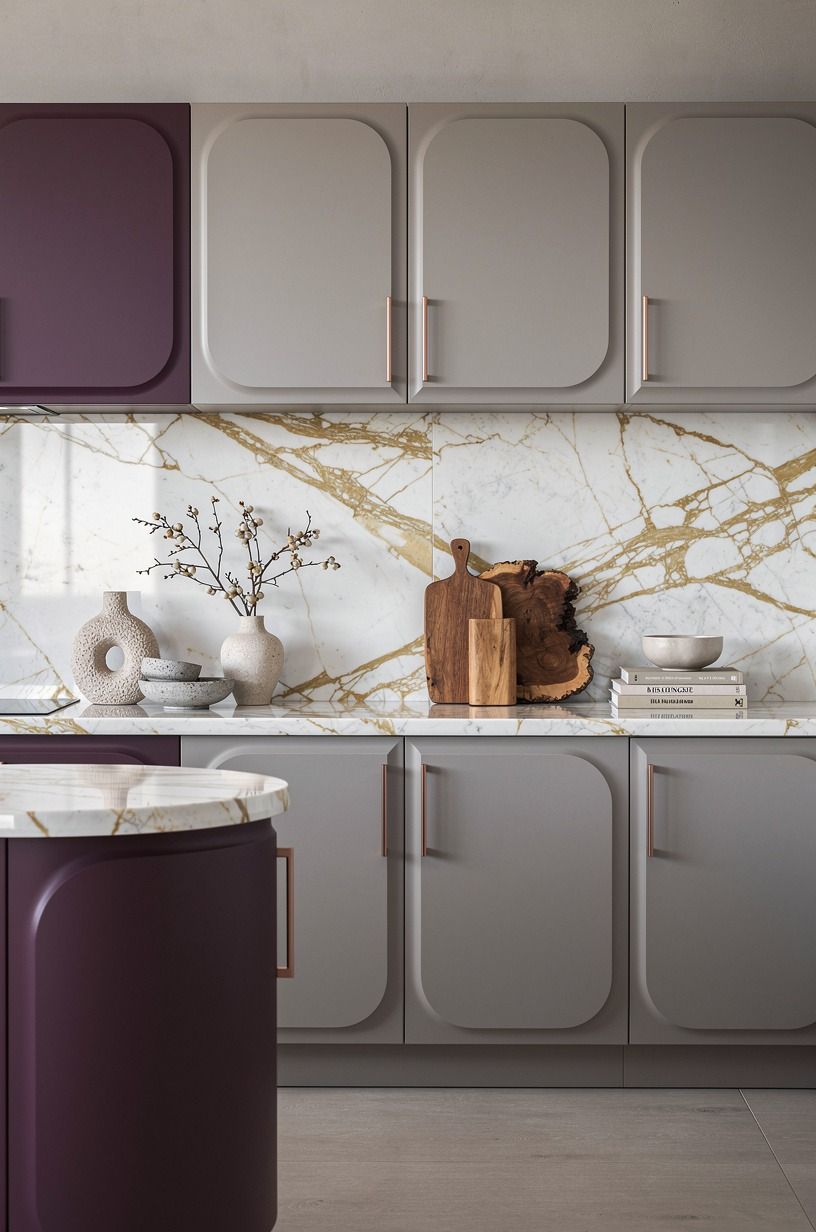
Choose a backsplash surface that catches light differently from one area to the next. Flat subway tile is tidy, but it doesn’t give you the flicker that makes a moody kitchen feel alive at night.
A Calacatta marble surface with gold veining can pull plum, grey, and rose-gold accents into one believable scheme. You don’t need it across every wall; use it behind the range or sink, where your eye naturally lands.
Mix soft grey grout with muted plum tile if you want a softened cottage look. Bright white grout can make each tile feel outlined, and that’s too crisp for this room.
And yes, uneven shine is the point. Tiny shifts in finish. A surface that looks better after the lamps come on.
If your rental rules are strict, try peel-and-stick backsplash panels in a muted plum or warm grey. You’ll get some depth without touching the wall behind it.
6Hang the Three-Height Light Stack
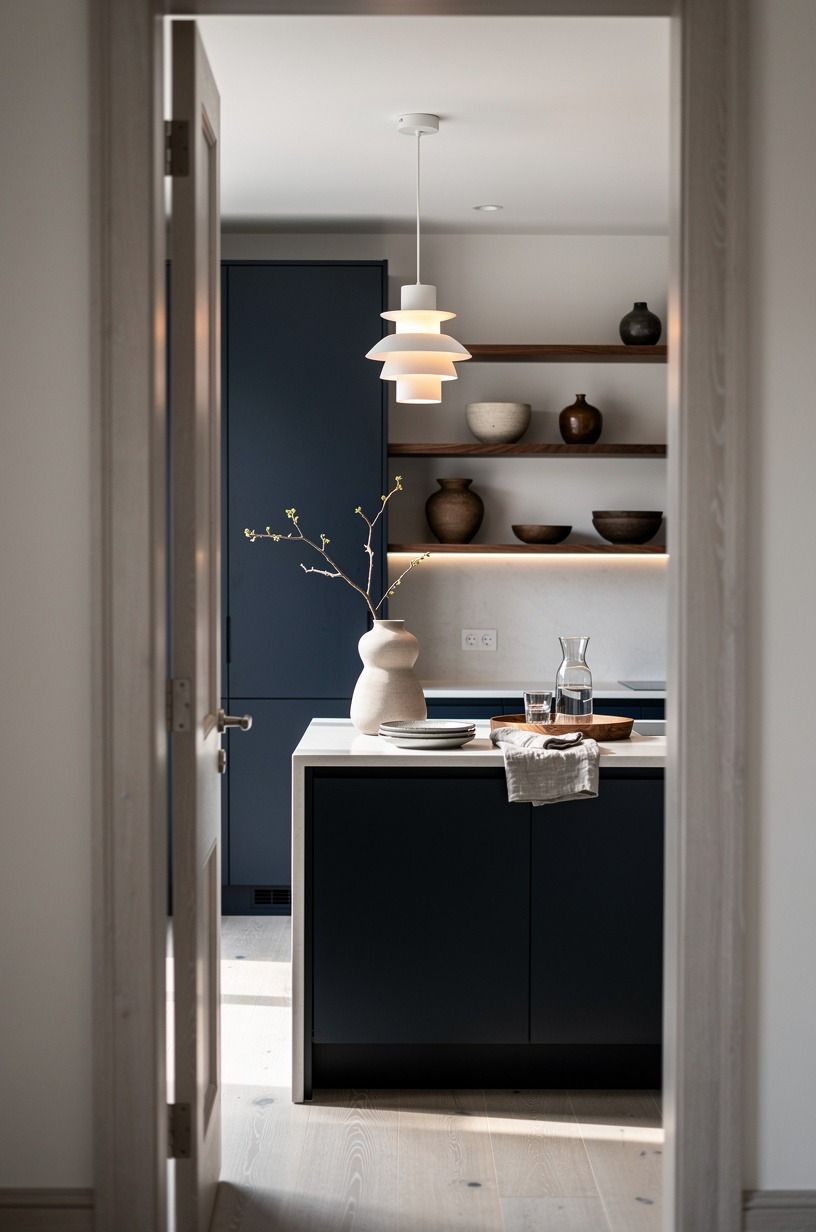
Build lighting at three heights: ceiling, eye level, and counter level.
Navy, white, and walnut already give you a clean foundation, so let the light warm the wood rather than compete with it. Cerused white oak shelving or trim can keep that darker palette from feeling too heavy.
7Can dark cabinets work in a small kitchen?
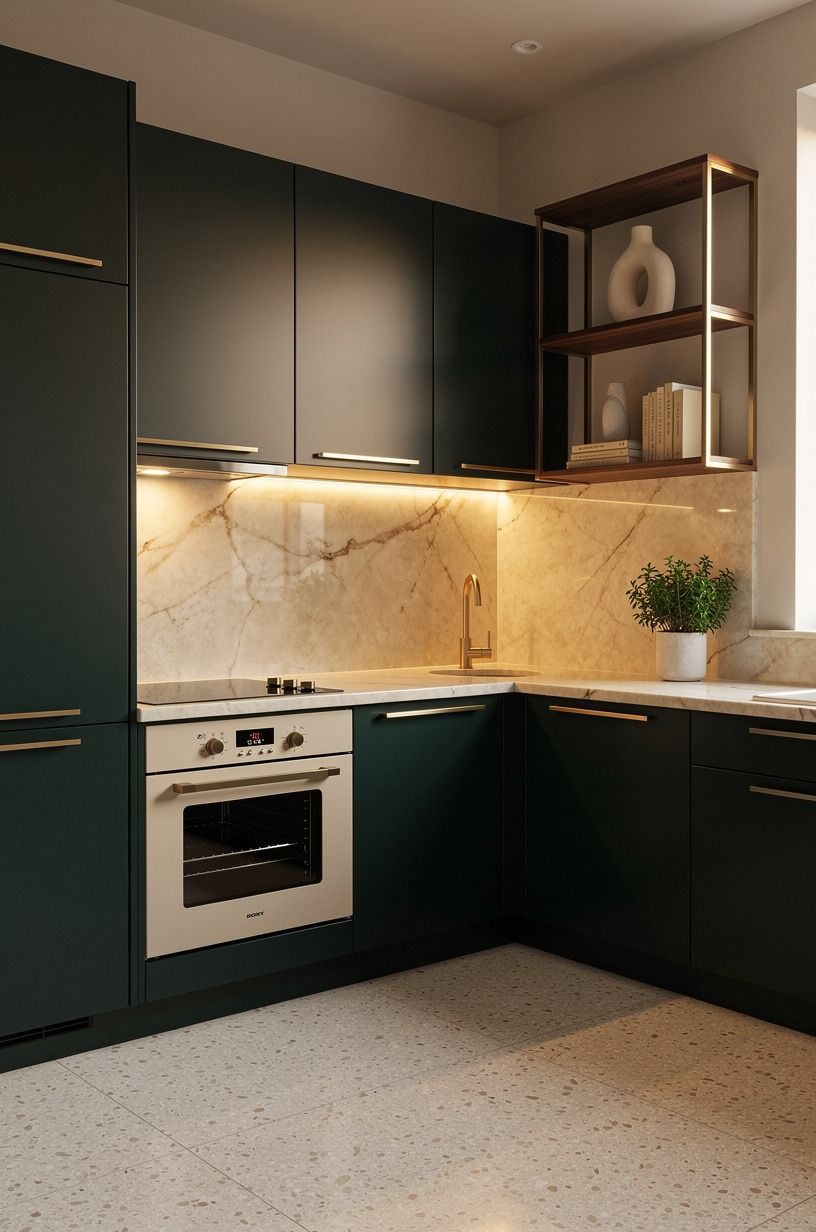
Yes, dark cabinets can work in a small kitchen if you protect the sightlines and keep the upper half lighter. Your small footprint can even make emerald cabinetry feel more intentional, like a tucked-away pub kitchen.
Use dark lower cabinets, a pale ceiling, and one reflective surface. Backlit translucent onyx can give your eye somewhere to rest while bringing gold and cream notes into the room.
Keep island clearance at 42-48 inches all around when possible. If your kitchen is tighter than that, don’t force an island just because the room looks bare online.
I’d rather see a slim IKEA TONSTAD table and two stools than a crowded island blocking every cabinet. You need to move through your kitchen, not pose in it.
A dark kitchen succeeds when you can still see its shape. Leave one wall quieter and let your strongest finish carry the mood.
8Mix old brass with plain black hardware
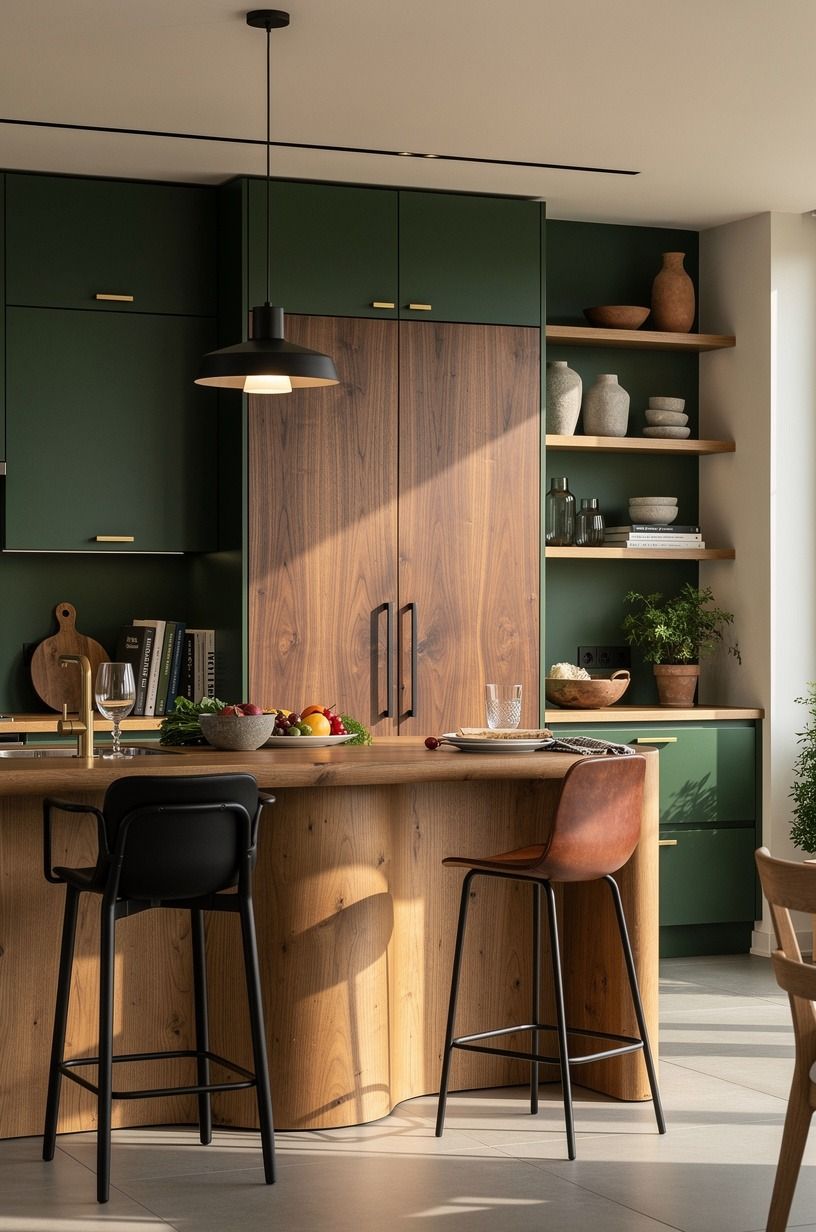
Choose one metal as your lead, then let one quieter finish support it.
Forest green, rust, and natural oak give old brass somewhere to feel earned rather than flashy. A book-matched walnut panel can carry enough pattern on its own, so keep the black hardware plain and useful.
9Build a collected shelf wall with the Open-Edge Method
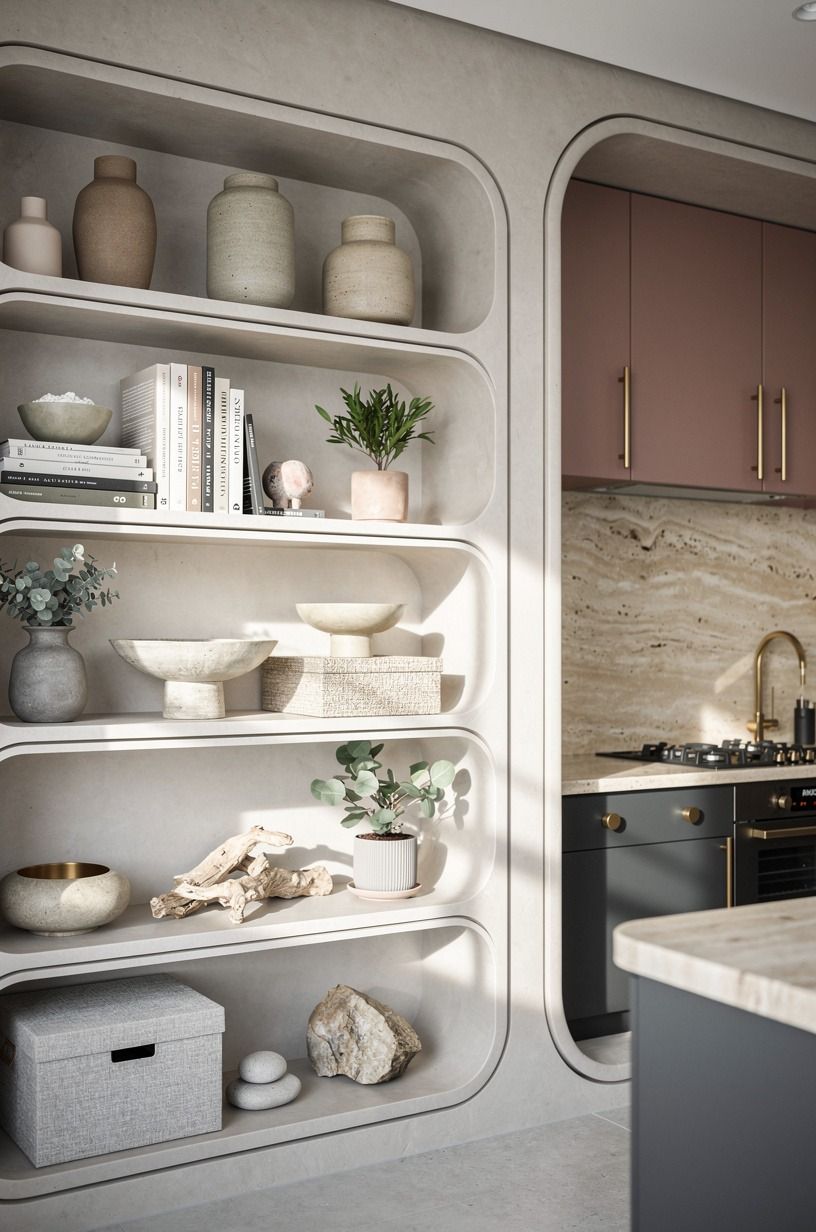
Use open shelving only where you can keep it edited. The Open-Edge Method means leaving at least one edge of each shelf visually clear, so your stacks don’t become a solid block of stuff.
Start with dusty-rose linens, two charcoal stoneware mugs, a dark cutting board, and one brass-framed landscape. A warm travertine accent can add softness without making the shelf feel staged for an estate sale.
Keep everyday items on the lowest shelf. You’ll reach for plates without climbing, and your prettier pieces can sit higher where they won’t collect greasy fingerprints.
A West Elm Industrial Modular shelf works if you need a cleaner frame, but I prefer simple oak boards on black brackets for a cottage room. The metal brackets disappear once the wood starts doing the visual work.
One odd bowl. A jam jar of wooden spoons. Enough.
10Add a table that can take a real dinner
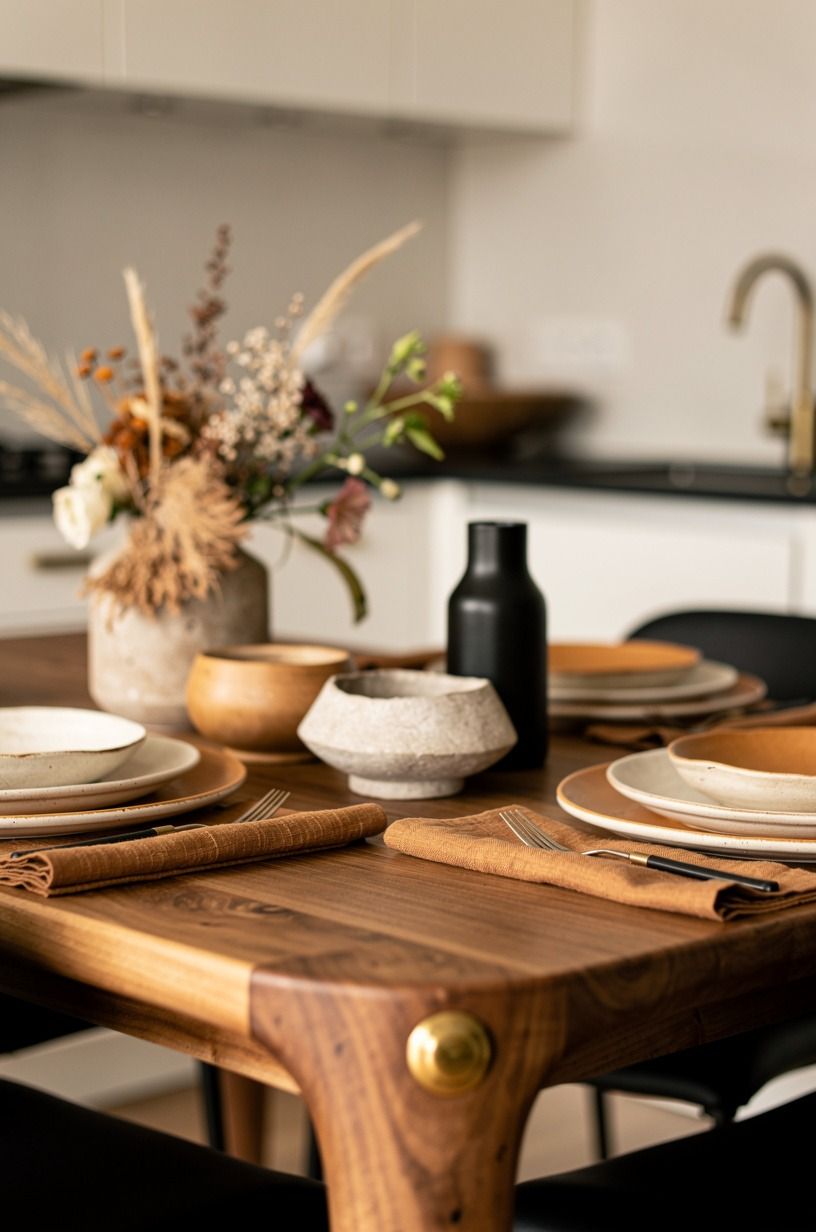
Bring in a table with scratches, grain, and enough surface for a bowl of pasta. A cottage kitchen isn’t helped by a glossy pedestal table that makes everyone afraid to set down a glass.
Look for a Pottery Barn Benchwright-style trestle silhouette, or a secondhand table with a waxed top. Camel seating, black accents, and a little unlacquered brass patina will keep the room warm without making it too matchy.
You’ll get a more relaxing room if the table is slightly imperfect. The little dents make the dark paint around it feel honest rather than theatrical.
If your kitchen is narrow, use a wall bench and two movable chairs. That gives your family more flexibility than four bulky matching chairs.
And put a washable runner underfoot. Not a giant rug that catches cabinet doors every morning.
11Frame the sink with a quiet window treatment
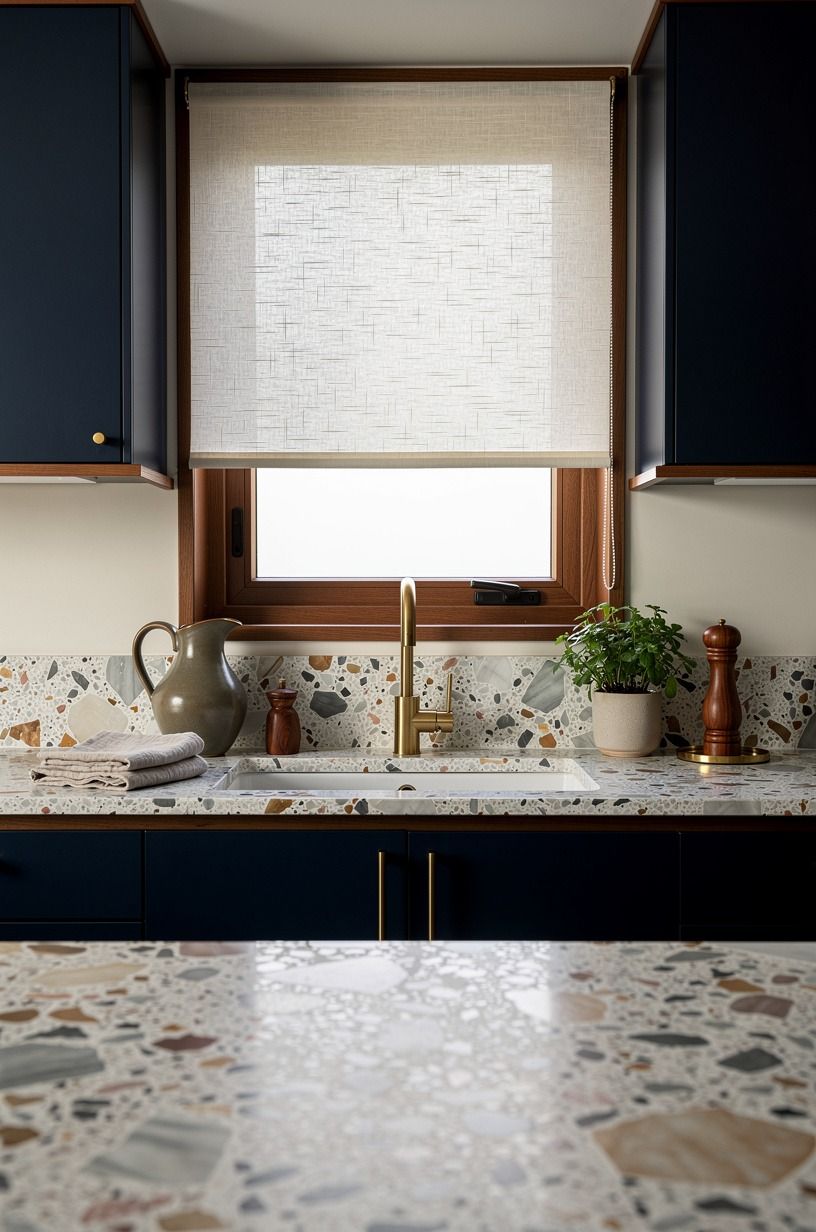
Hang a café curtain, linen roman shade, or simple tension-rod panel at the sink. Your window should soften the glass without blocking the daylight you need.
Choose ivory linen with a muted copper detail if you want the treatment to sit easily with midnight blue walls. I’d skip white synthetic café curtains because they can make a dark kitchen look like a themed restaurant.
Mount the rod high enough that the fabric covers only the lower half of the window. You’ll keep privacy while sunlight still lands on an oversized-chip terrazzo counter.
A Target Threshold brass tension rod is an easy rental option. No drill holes, no landlord conversation, no drama!
Add one small plant on the sill if it gets light. Your dark walls need a little living green against them, even if it’s only rosemary in a chipped pot.
12Let one painted pantry door steal the scene
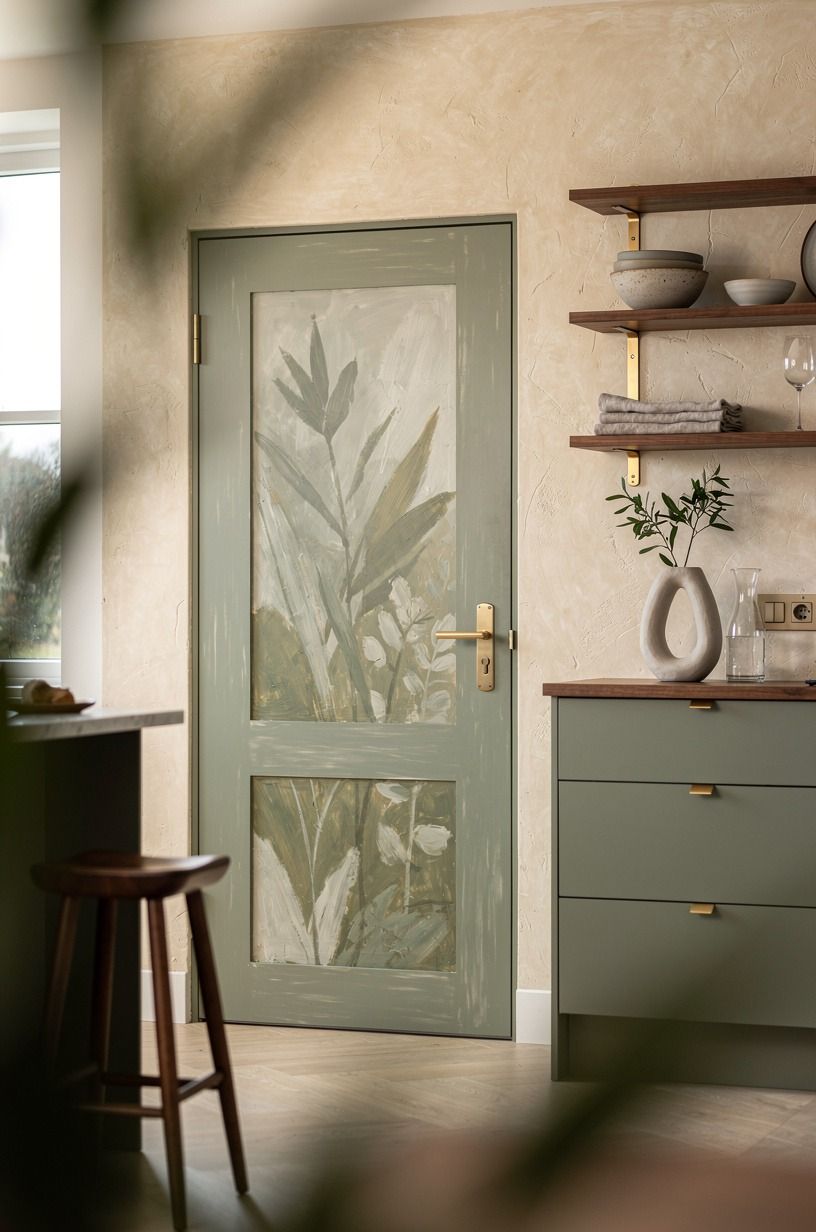
Paint a pantry door a different deep tone from your cabinets.
Sage green works especially well beside warm cream and natural wood, while hand-applied Venetian plaster gives the surrounding wall a softer, more collected finish. Let the door carry the stronger color and keep everything around it calm.
13Use laminate over quartz when the budget needs breathing room
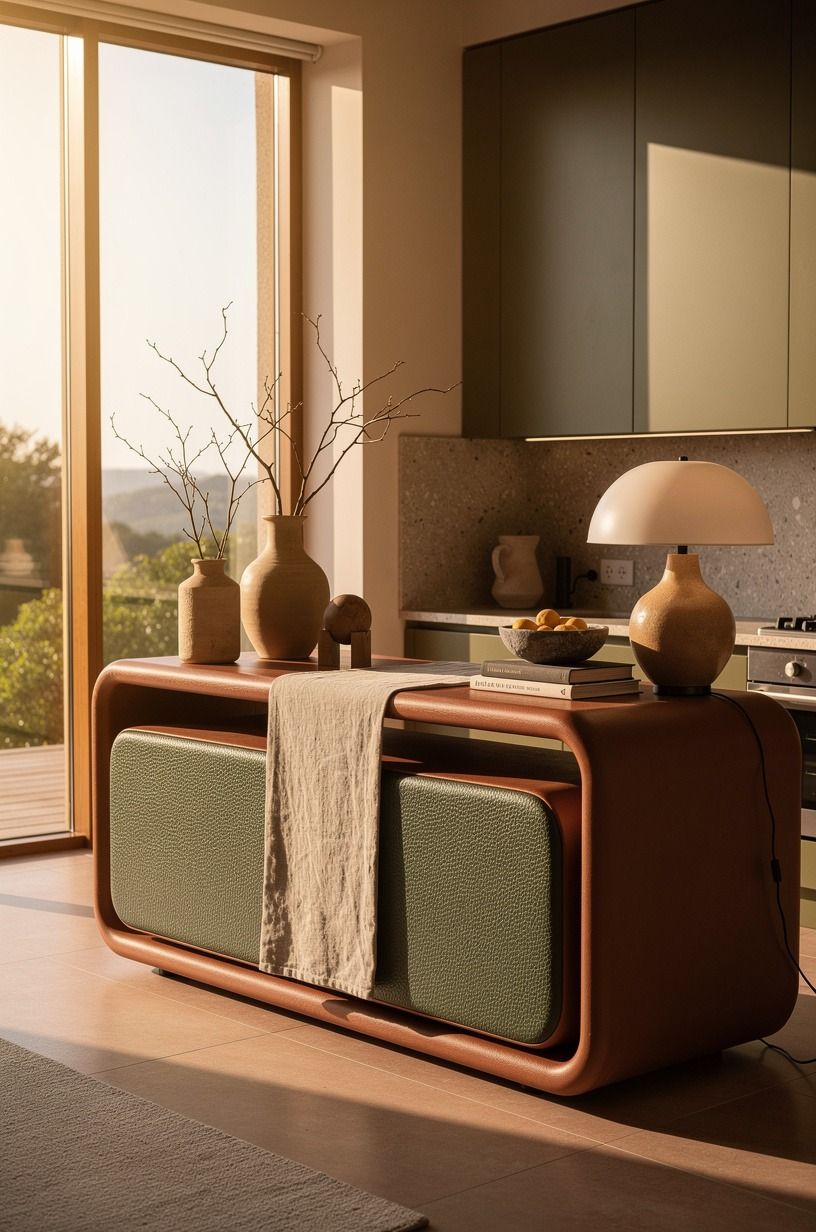
Spend on the things your hands touch first, then choose a sensible counter material. Quartz is durable and polished, but it can eat the budget before you’ve fixed lighting, paint, or cabinet fronts.
A laminate countertop typically costs $10-$40 per square foot, while quartz countertop pricing usually lands around $60-$120 per square foot. Your money may go further on a warm laminate with a matte finish and a few shagreen accents for texture.
I’d choose laminate over bargain quartz every time. Cheap quartz often looks too glossy and cold; a convincing laminate lets the cabinet color, wood, and olive-toned details do the emotional work.
14Finish with objects that earn their place
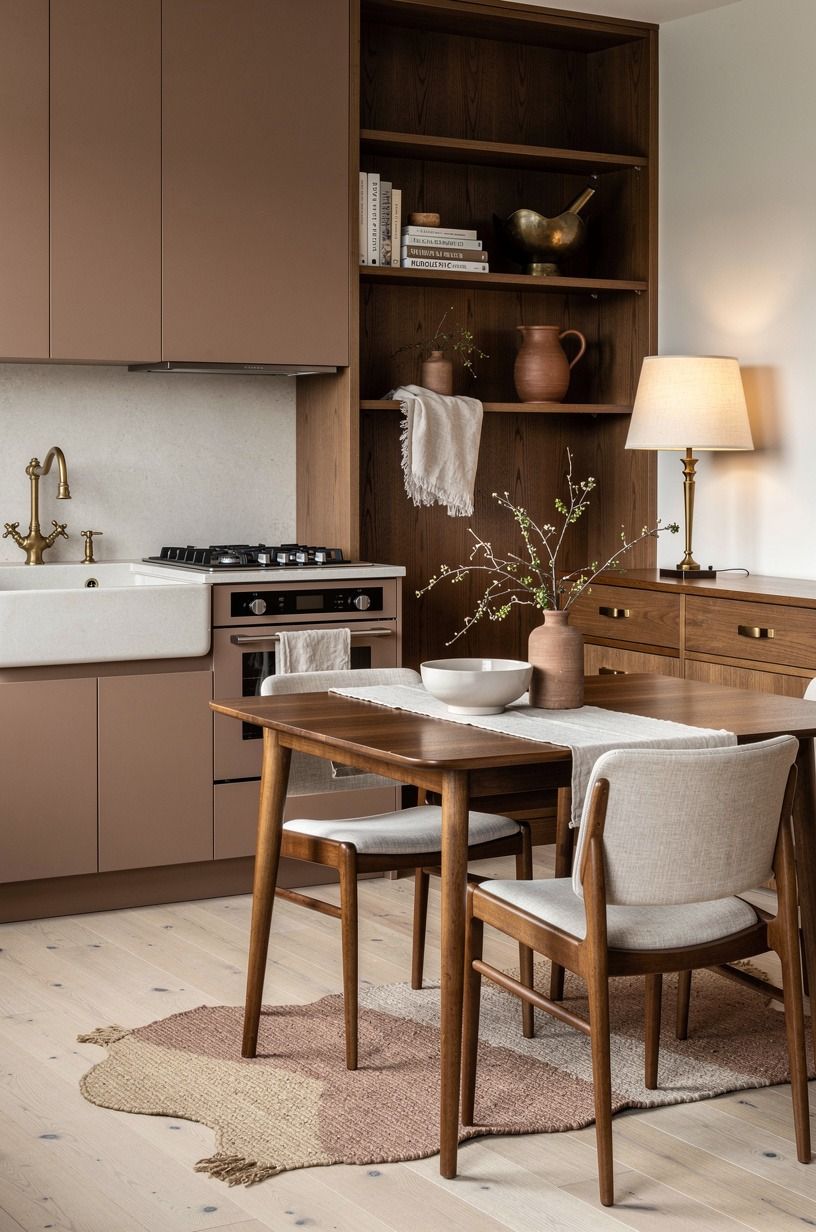
Put useful things in view, but make them feel chosen.
Clay, linen, and aged brass are enough of a palette to guide you. A washed Belgian linen runner, one useful brass utensil, and a bowl you actually reach for will feel more convincing than a counter full of decorative filler.
15Check the room after dark before you call it finished
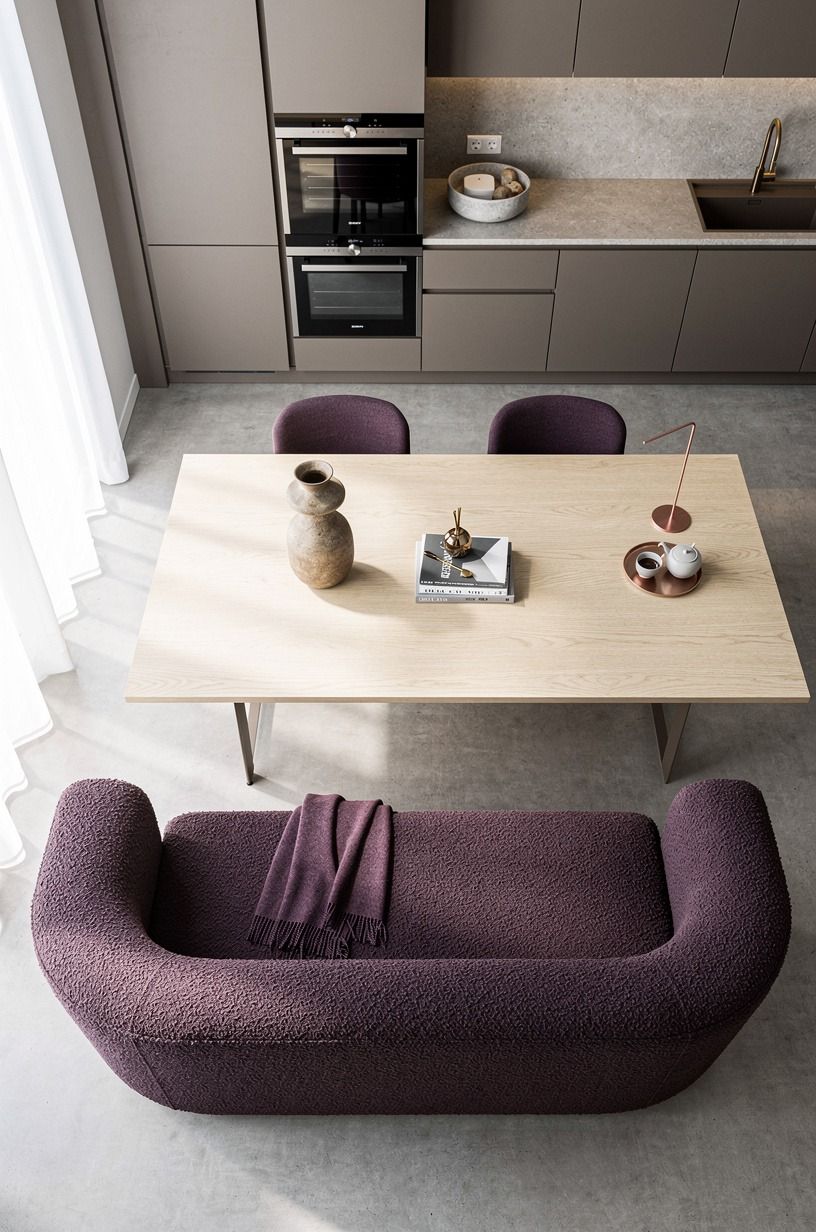
Turn off the overhead light and walk back into the kitchen at night. This is the test most people skip, and it’s where you’ll see whether your choices feel comforting or merely dark.
Your counters should still be readable. Your path to the sink should still be safe. And your strongest surface, whether it’s plum-toned cabinetry, grey stone, or organic bouclé seating, should catch a little gentle light.
If the room feels heavy, add a pale runner or lower the bulb warmth. If it feels bland, deepen one element, such as the pantry door or shelving brackets.
I don’t think a dark kitchen has to be serious. It should feel like the room where someone stays talking after the dishes are done.
That’s the finish line. Not perfection, just a kitchen you’ll keep finding reasons to stand in.
My Honest Rule for Dark Kitchen Spending
I’ve made the expensive mistake of treating a dark kitchen as a shopping list. New faucet, new tile, new stools, new art, new everything. The room looked polished, but it didn’t feel like ours because none of the choices had time to talk to each other.
Here’s what I’d do now: spend first on the surface you see most, then on the light that lets you see it after sunset. For most kitchens, that means paint and lighting before counters.
Your walls take up more visual territory than a faucet ever will, and a good lamp can make an ordinary laminate counter feel warm at 8pm. A costly counter can’t rescue harsh bulbs.
I’d also resist the urge to make every finish “vintage.” One old-looking element is charming. Six faux-aged items can feel like a movie set. Let the room have one honest modern note, maybe a clean faucet or simple appliance, so the old wood and patinated brass have something to push against.
And don’t buy dark accessories just because the walls are dark. Your room needs pale interruptions: cream bowls, a linen shade, the chalky edge of a cutting board.
Darkness works because light has somewhere to land. That contrast is the whole point.
The best dark cottage kitchens aren’t museum-perfect. They’re a little worn, a little moody, and useful enough that you’ll make toast in them wearing socks at midnight.
The Questions Worth Answering First
What is the best dark and moody cottage kitchen idea for a small kitchen?
Start with dark lower cabinets and a pale upper half. Emerald cabinetry gives your small kitchen depth without closing in the ceiling, while a slim IKEA TONSTAD table keeps your walking path open.
Where can I buy dark cottage kitchen pieces on a budget?
Look at IKEA, Target Threshold, and Wayfair for basic lighting, stools, and storage. Your best finds may be secondhand: Facebook Marketplace, thrift stores, and architectural salvage yards often have solid wood pieces with more character than new ones.
How much does a dark and moody cottage kitchen makeover cost?
A cosmetic update usually costs about $300-$1,500 in the US. Paint, hardware, and removable backsplash do most of the visible work; cleaning, rearranging shelves, and using what you own are free.
Can I create this look on a budget?
Yes, and you don’t need new cabinets. Paint, warmer bulbs, and secondhand wood can change the room fast. Start with cabinet paint, swap a few visible pulls, and use one linen curtain on a tension rod.
Is a dark cottage kitchen worth it in a small space?
Yes, it’s worth it if you preserve light and circulation. A darker lower half makes a compact room feel grounded, while pale uppers and a clear 42-inch path keep your kitchen from feeling cramped.
Is this look a good idea for a rental?
Yes, if you choose removable layers. Peel-and-stick tile, tension rods, and plug-in lighting create the mood without permanent changes. Use removable hooks for art and save your paint plan for furniture or a pantry cart.
Where I’d Start First
If I had to pick one step, I’d start with Farrow & Ball Studio Green No. 93 on the walls. You can’t layer warmth over a cold backdrop; every wood board and brass pull will fight it.
Paint first. The rest suddenly knows where to go.