Small Craft Room Eating Your Workspace? 12 Michaels Pegboard Finds
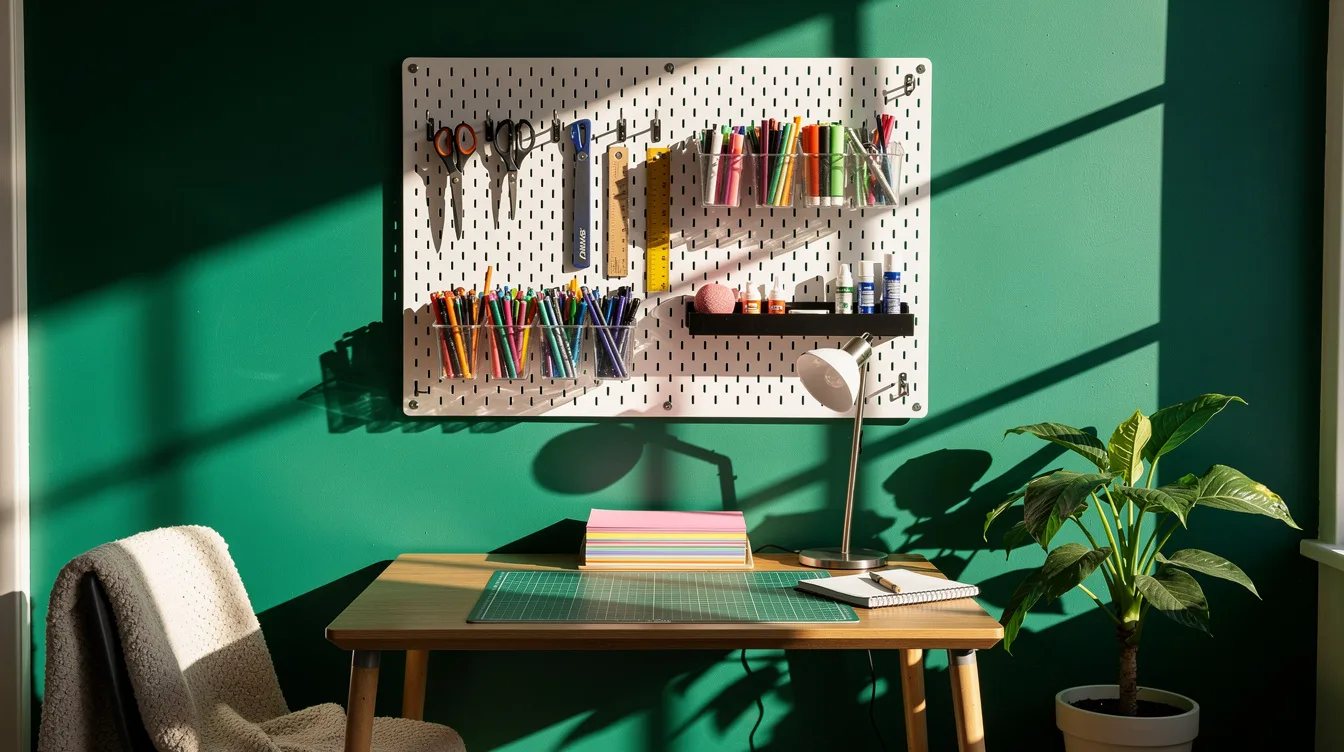
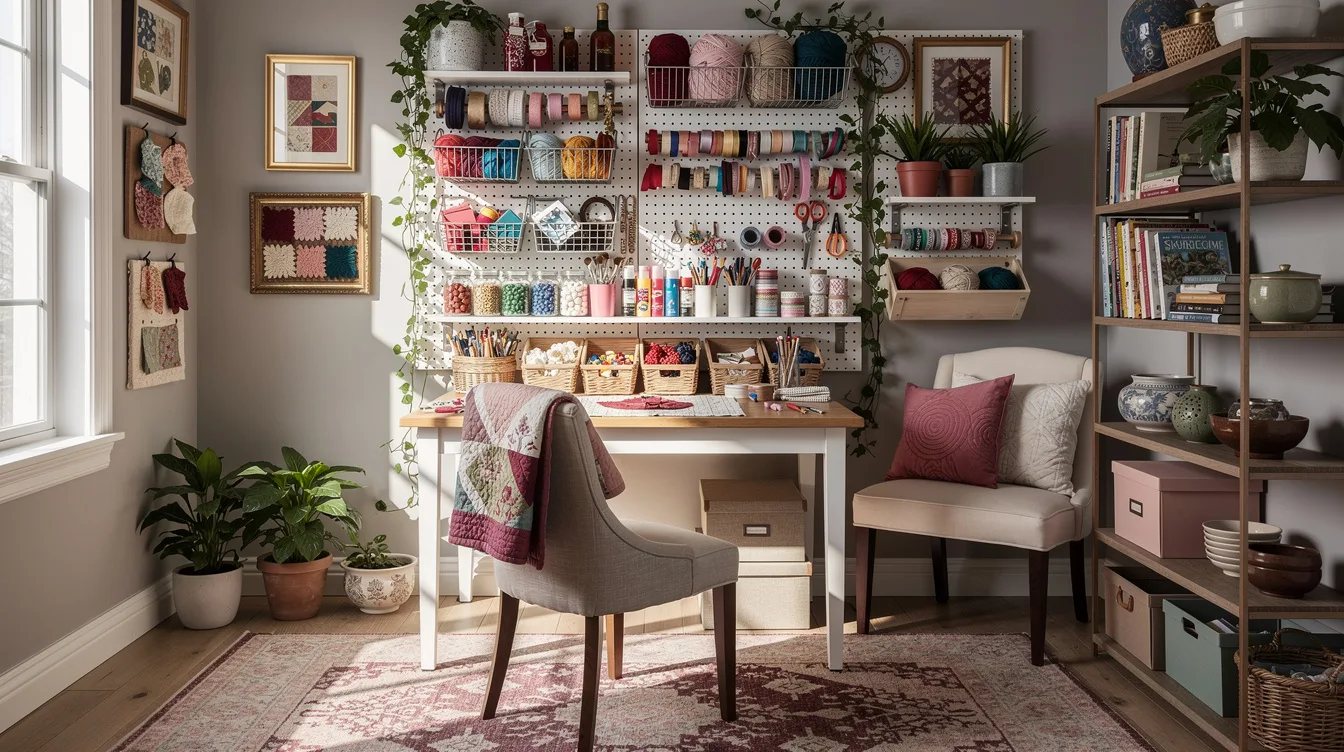
16 november 2026In a craft room under 80 square feet, every inch has to earn its place. A 22 × 30-inch metal pegboard above the worktable can hold scissors, rulers, bins, and a shallow shelf without adding another piece of furniture.
The strongest Michaels setup starts small: one wall-mounted panel, a few hooks, two clear bins, and room for the project currently in progress. These designer-minded rules show how to make that footprint work harder.
What you will find inside
- Mount the 22 × 30-Inch Panel Above the Desk
- Center Storage on the Worktable Width
- Choose the Square Panel for Narrow Stations
- Hang Hooks Around Your Daily Tools
- Add Two Clear Bins for Small Supplies
- Reserve the Shallow Shelf for Active Supplies
- Leave One Open Zone for the Current Project
- Use the Medium Bin for Bottles and Glue
- Add Cart-Side Panels Before More Furniture
- Keep the Desk Edge Clear of Hardware
- Build the Starter Budget Around Allowances
- Refill Categories Before Expanding Storage
Mount the 22 × 30-Inch Panel Above the Desk
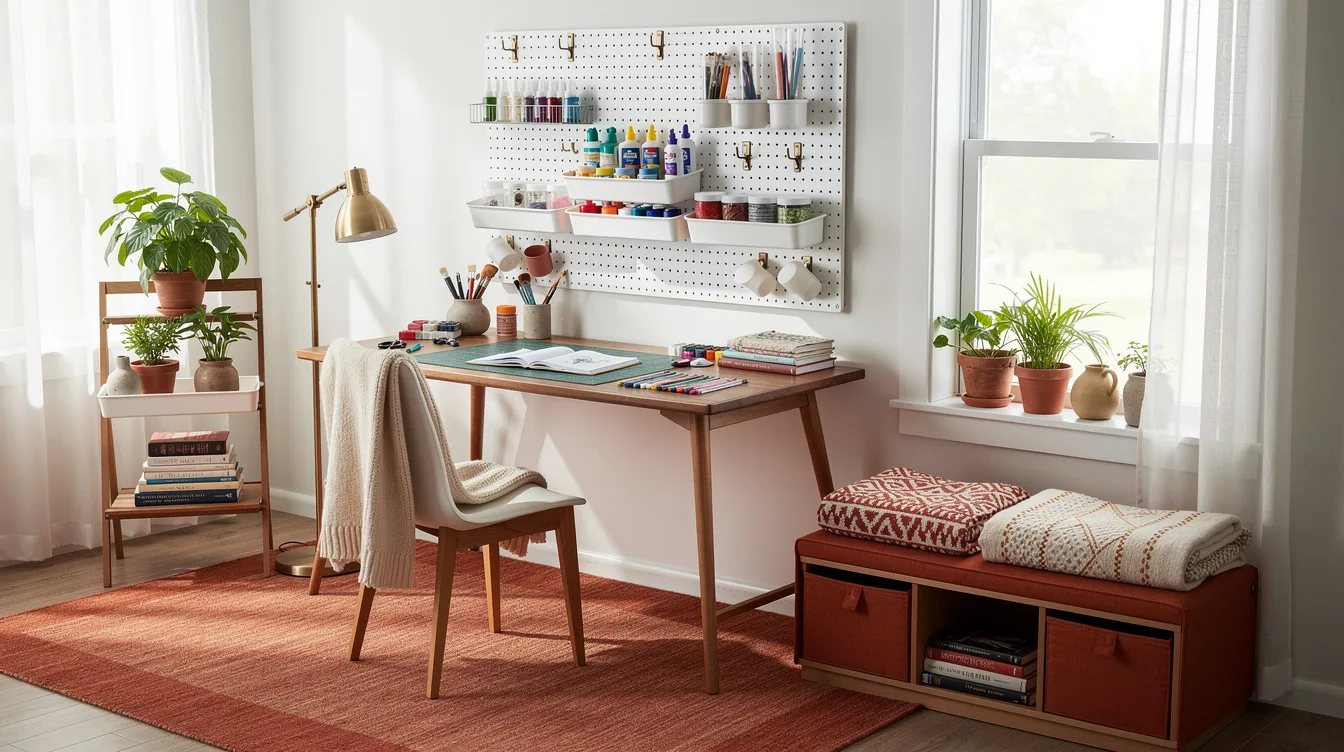
Start with the Simply Tidy 22 × 30-inch metal pegboard above the worktable, where scissors, rulers, cutting tools, and small bins remain visible. Michaels lists the rectangular panel for craft supplies and tools, with mounting hardware included.
For a room under 80 square feet, wall storage earns its footprint every day. A floor-standing organizer steals valuable movement space, while the panel keeps the work surface available for cutting, painting, or assembling a current project.
Center Storage on the Worktable Width
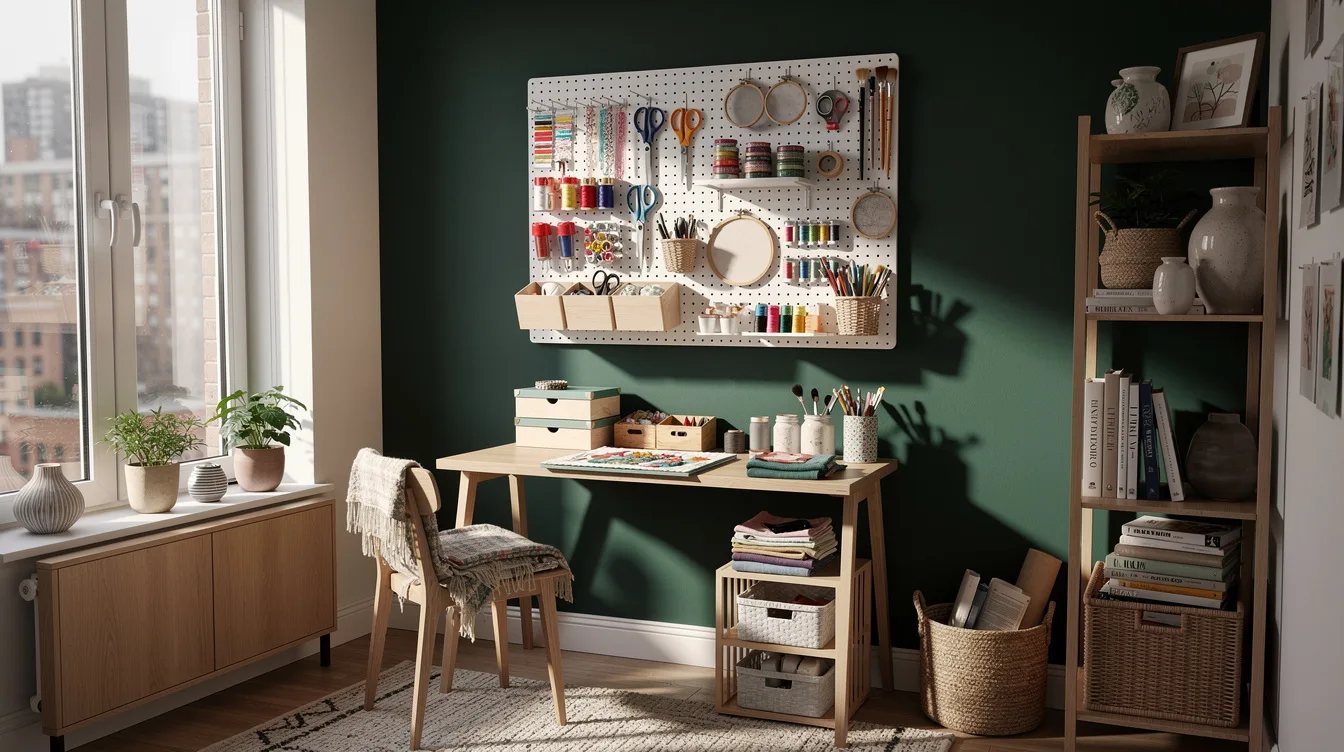
Use the desk as the sizing reference before drilling into the wall. A typical 36- to 48-inch worktable pairs comfortably with a 30-inch-wide pegboard, leaving useful wall space on both sides for a lamp, inspiration board, or a narrow supply rail.
Keep the black metal pegboard frame centered over the busiest part of the table rather than centered on the entire wall. That small shift makes the station feel intentional and keeps frequently used tools within an easy reach.
Choose the Square Panel for Narrow Stations
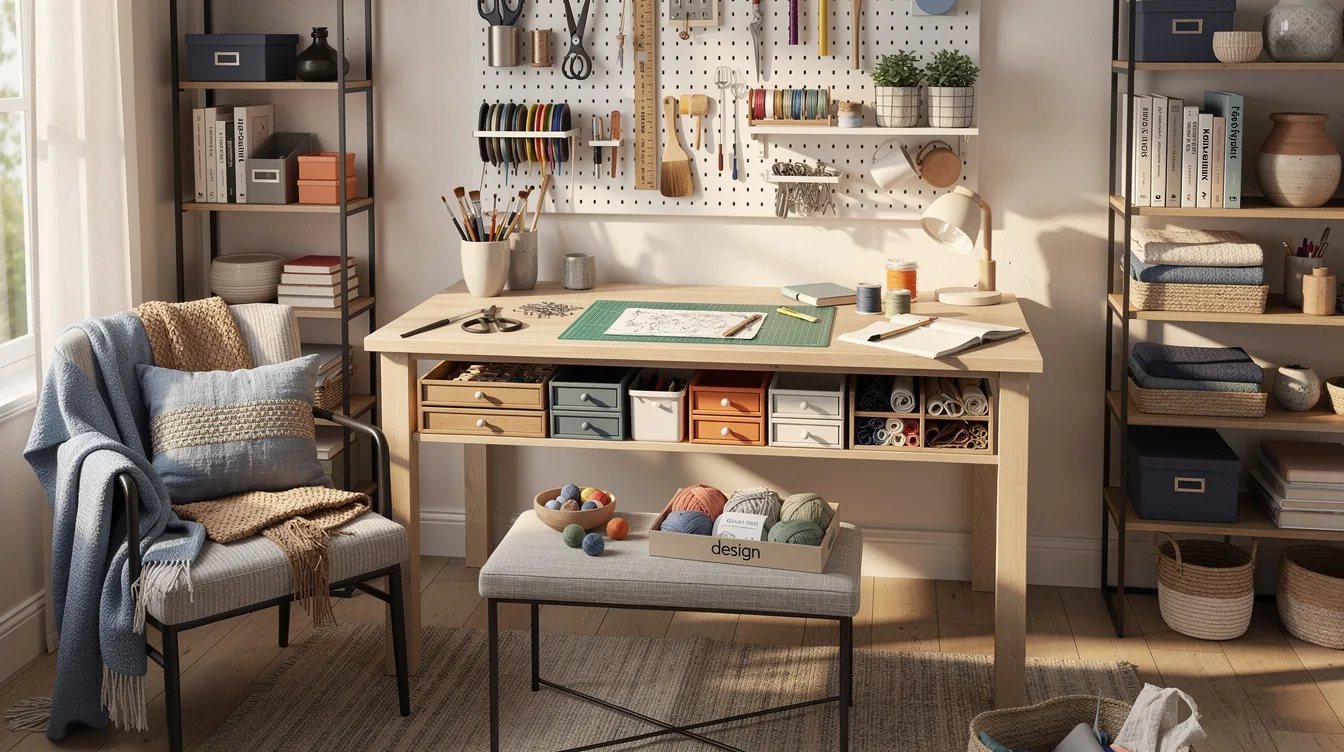
A compact sewing table or side station can use the Simply Tidy 22 × 22-inch metal pegboard. The square format works when a door swing, window trim, or shelving leaves less horizontal wall space above the surface.
White, gray, and black listings have surfaced for this panel, so select the finish that supports the room instead of competing with the supplies. A white panel keeps a tight corner visually light, while black gives colorful tools a sharper outline.
Hang Hooks Around Your Daily Tools
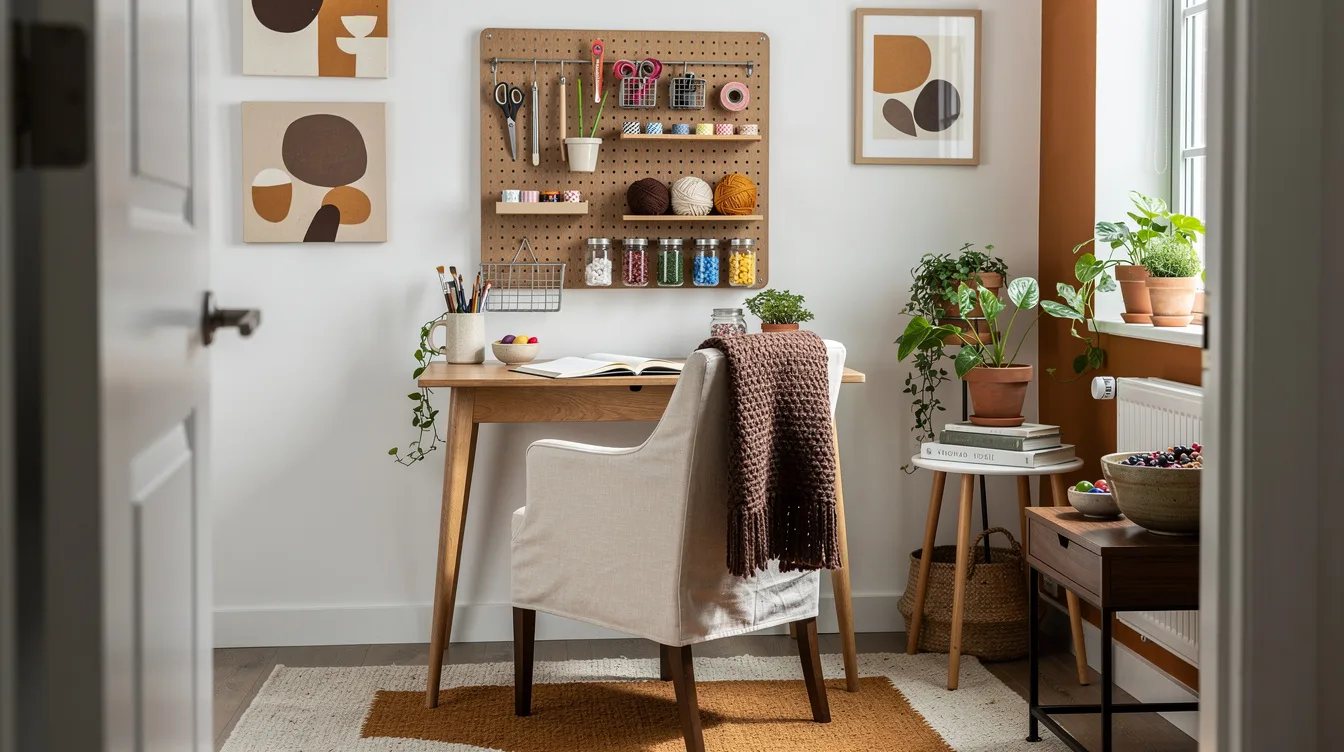
Place hooks along one side of the Simply Tidy metal panel for scissors, rulers, hole punches, and tools with hanging openings. Group the items by hand motion, keeping cutting tools together and measuring tools close to the front edge of the table.
Leave a little breathing room between handles. A crowded hook row slows every project because the right tool disappears behind the one placed in front of it.
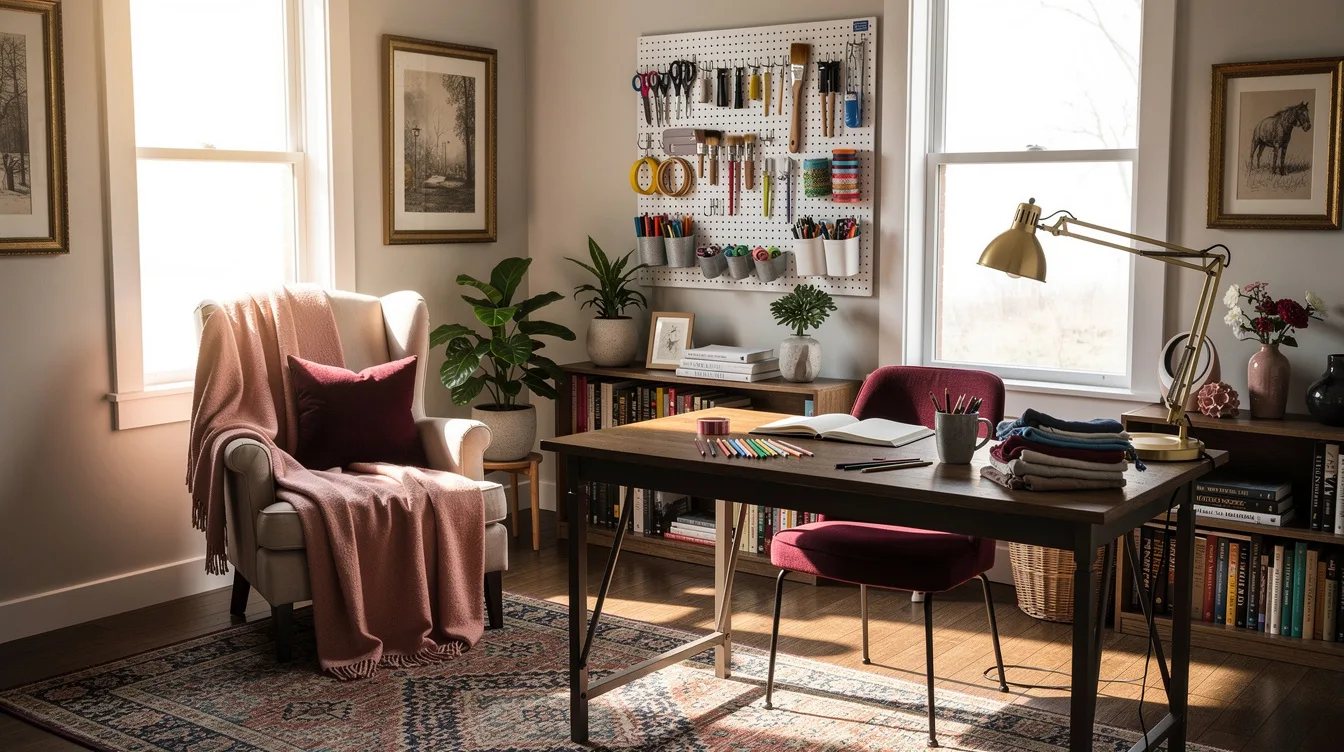
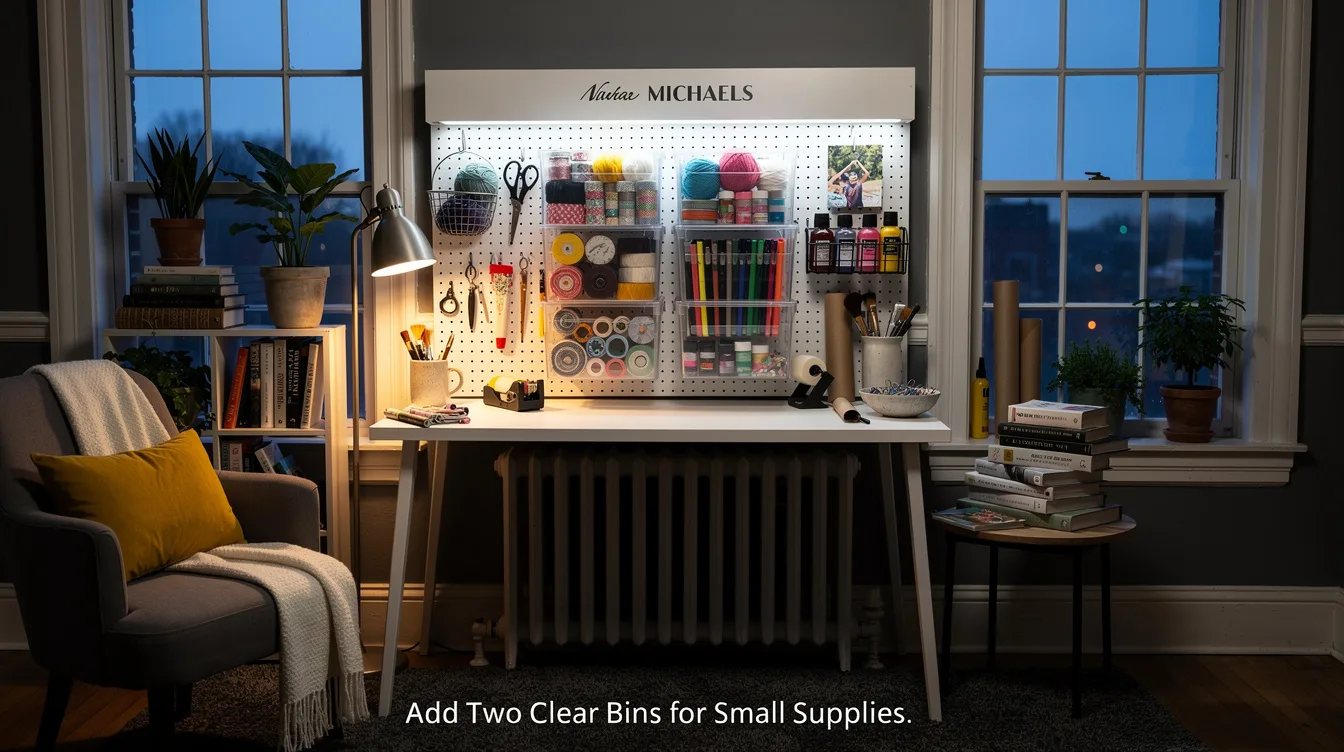
Add Two Clear Bins for Small Supplies
Use Simply Tidy small clear pegboard bins for pens, short rulers, scissors, clips, and other compact tools. The listed small bin measures about 3.75 × 3.5 × 4 inches and attaches with a hook, making it useful for visible categories that would vanish inside a drawer.
Two bins are enough for a starter wall: one for writing and marking tools, one for hand tools or fasteners. Plan around $4 to $7 per bin as a budgeting allowance, since the retrieved listing does not verify a current Michaels checkout price.
Reserve the Shallow Shelf for Active Supplies
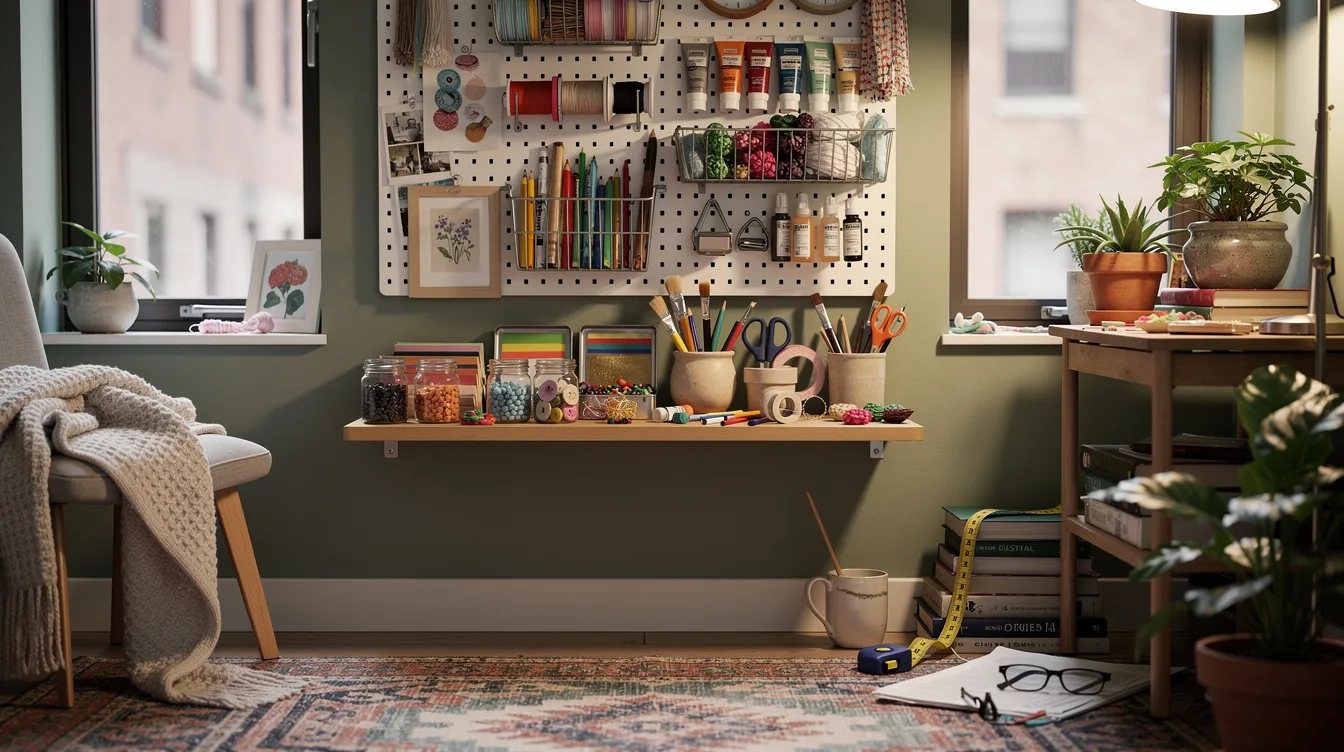
Install the Simply Tidy 11 × 4 × 1-inch pegboard shelf where your hands naturally land during a project. Its shallow 4-inch depth gives small containers a landing spot without pushing storage too far into the room.
Use it for the supplies currently in rotation, such as a small paint cup, a thread container, or a few adhesive bottles. The listed black version carries an $8 to $12 planning allowance, with live pricing still subject to change.
Leave One Open Zone for the Current Project
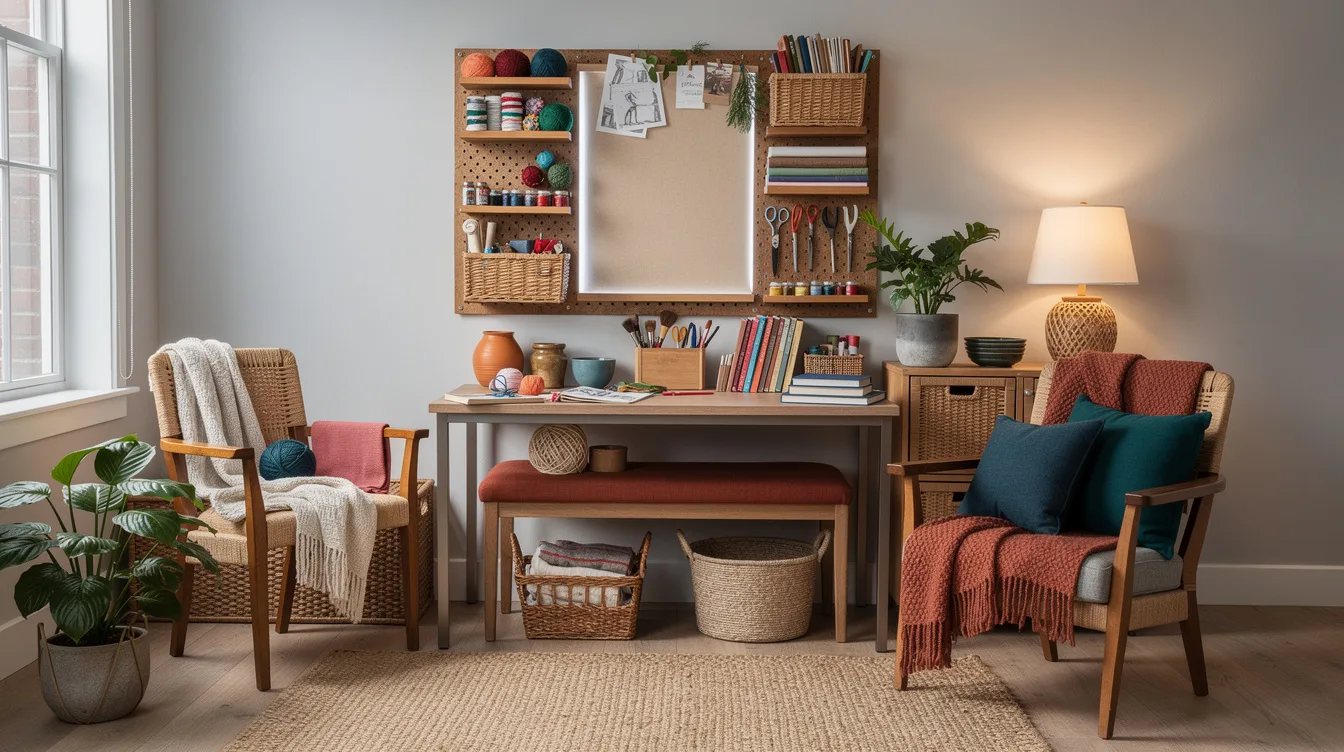
Keep a section of the white metal pegboard empty instead of filling every hole. That open area can hold the tools for the project on the table, which prevents temporary supplies from spreading across the floor.
This is the rule that makes a tiny craft room feel usable. Permanent categories belong on the edges, while the center remains flexible enough for a seasonal card project, a sewing repair, or a small painting session.
Use the Medium Bin for Bottles and Glue
Choose a Simply Tidy medium clear pegboard bin for glue sticks, small paint bottles, thread spools, or loose craft materials that need more height. Michaels item 10738099 is identified as a clear bin, while a separate multipack listing describes an 8-inch plastic organizer.
Confirm the full dimensions before ordering because the retrieved sources do not establish one complete measurement set. A planning allowance of about $6 to $10 per bin is reasonable for budgeting, not a verified current retail quote.
Add Cart-Side Panels Before More Furniture
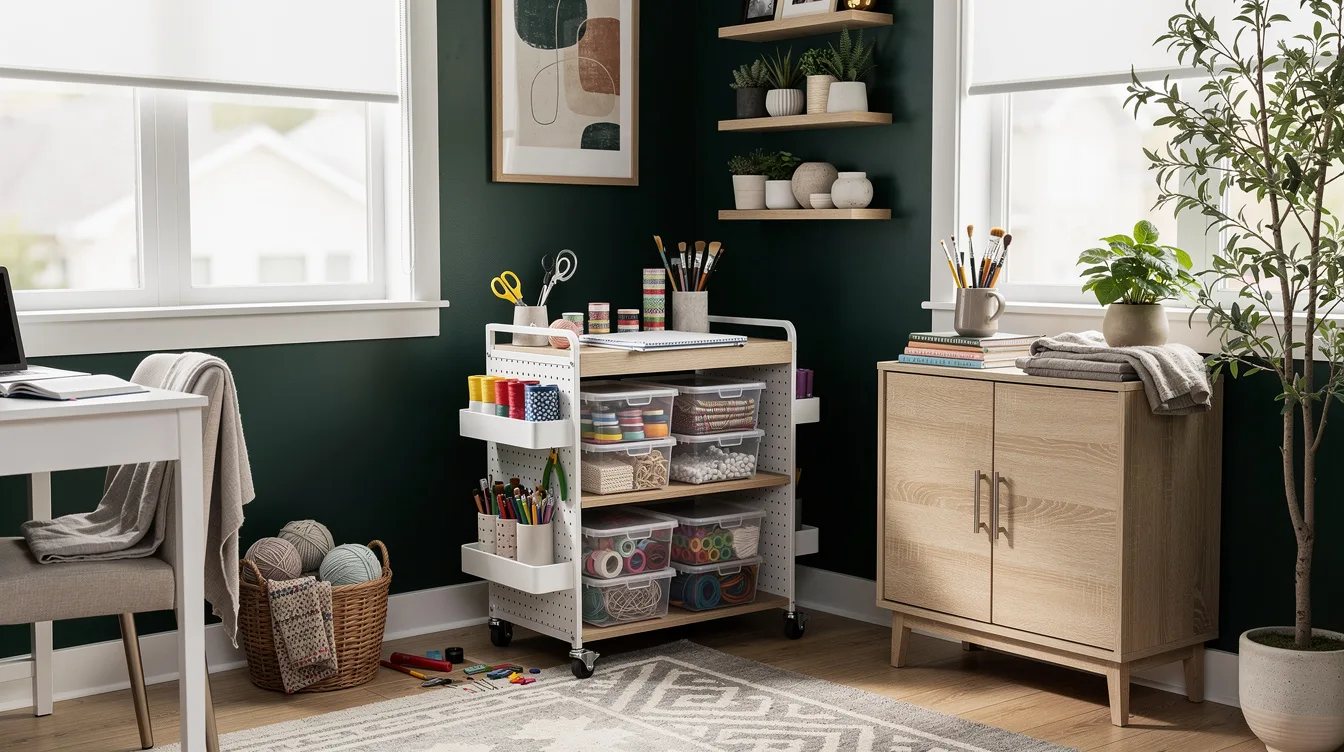
If you already own a Simply Tidy Lexington cart with metal side pegboards, use those panels for vertical storage before adding another cabinet. The panels come with hooks and turn the cart sides into locations for tools that would otherwise occupy the work surface.
This approach keeps the room flexible because the cart can move between the worktable and a sewing station. A resale listing showed about $19.99 plus delivery for an open-box two-panel, five-hook set, but that figure is not Michaels retail pricing.
Keep the Desk Edge Clear of Hardware
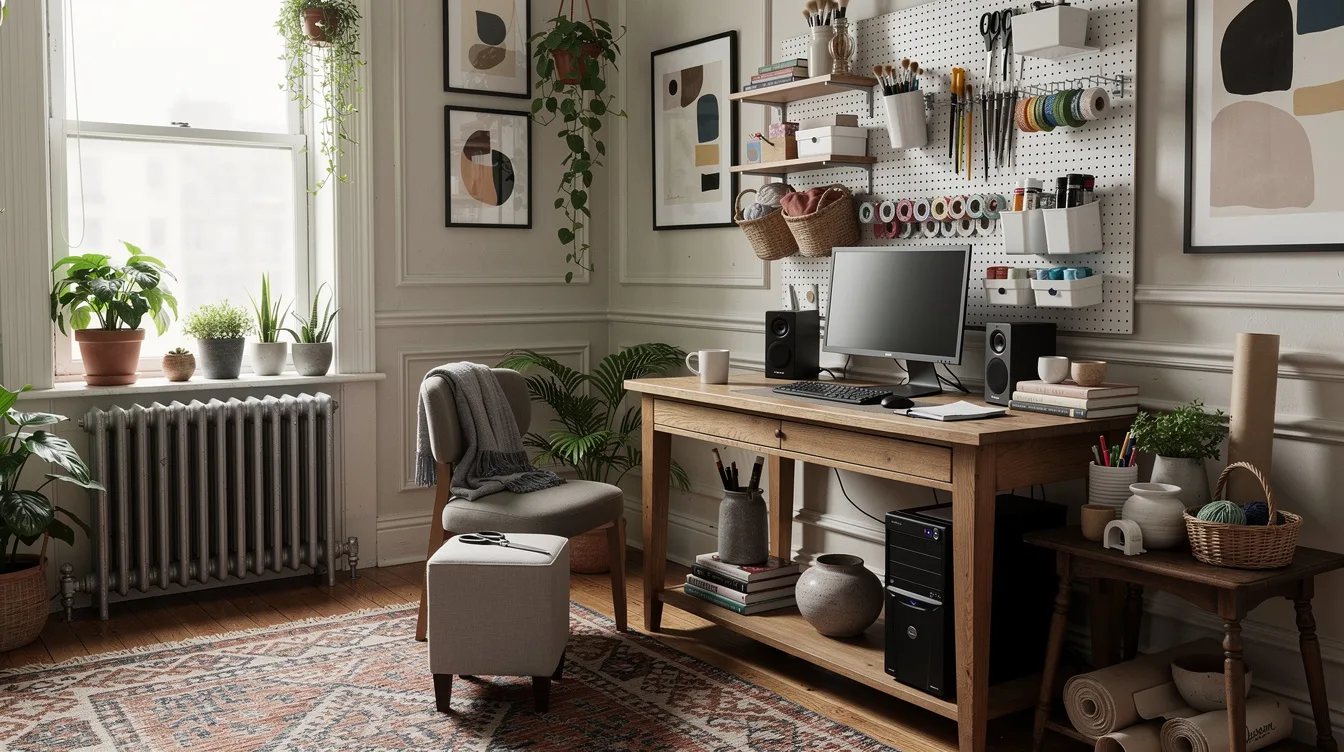
Mount the Simply Tidy rectangular pegboard high enough for comfortable use while keeping its lower edge clear of desk clutter. The exact height depends on the wall, table, and user, so test the placement with painter’s tape before installing the included hardware.
Place the most-used hooks in the middle zone and less frequent supplies toward the top. This arrangement keeps daily tools visible without forcing you to reach over a lamp, cutting mat, or laptop.
Build the Starter Budget Around Allowances
A practical starter setup can include one 22 × 30-inch Simply Tidy metal panel, several hooks, two small bins, and one shallow shelf. Plan roughly $25 to $35 for the main panel, about $8 to $12 for the shelf, and around $4 to $7 per small bin.
That combination suggests a typical planning range of about $50 to $75 before tax and unverified hook pricing. Michaels listings may change, and several accessible pages hide live prices, so treat the figure as a project allowance rather than a checkout promise.
Refill Categories Before Expanding Storage
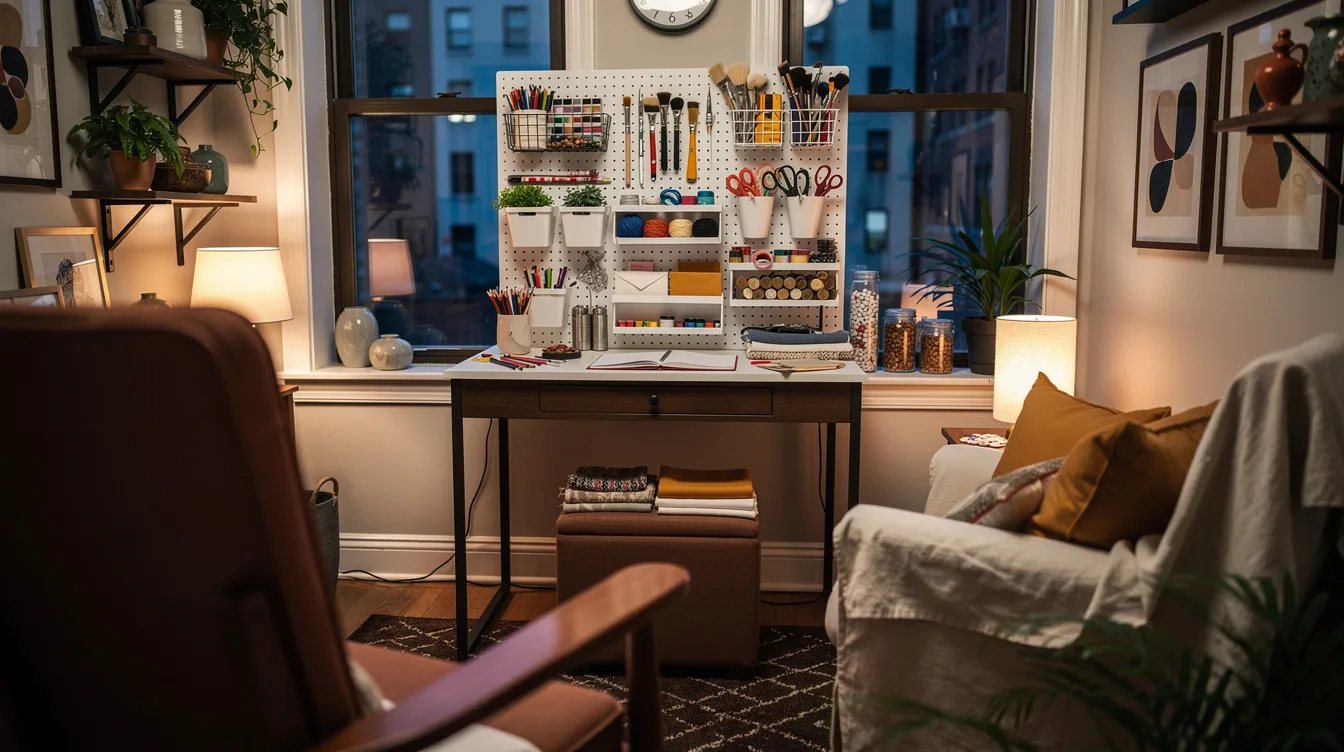
When the clear pegboard bins fill up, edit the categories before buying another panel. Combine duplicate markers, move rarely used tools into a closed container, and keep the wall focused on supplies that support the worktable.
A small craft room gains more from disciplined placement than from maximum capacity. The best setup leaves enough open wall and table space to begin a project without clearing a pile first.
Keep reading
- Small Powder Room Clutter? These 12 IKEA Finds Hide It in Plain Sight
- Small Living Room Too Tight? 12 Rooms To Go Sets Under $1200
- Small Apartment Thanksgiving Table Eating Your Space? 12 Walmart Finds
Install the main panel first, then place only the tools used every week. Once the worktable stays clear through a full project, add one shelf or bin at a time and let the room prove what it actually needs.


