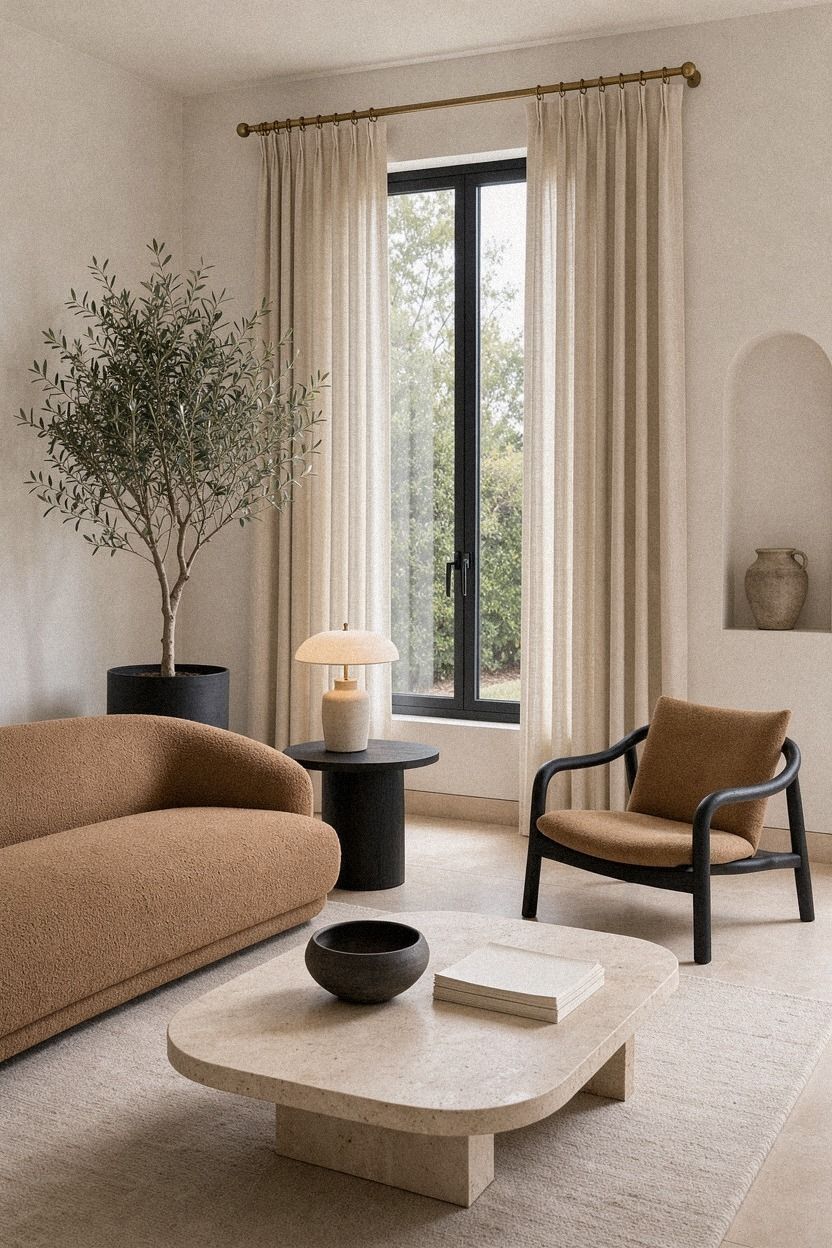
Easy Curtain Rod Placement, How Far Past the Window Should a Curtain Rod Go?
06 november 2026A curtain rod should usually extend 4 to 6 inches past each side of the window frame. I learned that after hanging one barely beyond the glass, where it stole daylight and made the room look pinched. The fix took one wider rod and a Saturday afternoon. Small measurement, big difference.
Editor's note: Start with the wall, not the window. A generous rod, a graceful hem, and the right fabric can make an ordinary room feel brighter, calmer, and far more finished.
- Measure the Six-Inch Breathing Rule
- How High Should You Hang the Rod?
- Float the Panels Wide for a Bigger Window
- Rod Width or Fabric First?
- Why Two Panels Usually Work Better
- Let Floor-Length Curtains Touch Softly
- Skip the Sill and Frame the Whole Wall
- Can Light Change the Right Rod Height?
- Real Hardware or a Tension Rod?
- Frame Small Windows Instead of Covering Them
- Choose Placement Around the Furniture
- Which Wall Color Makes the Rod Look Intentional?
- High Curtains, Honest Scale
- Sheers or Blackout Panels?
- Choose Fullness Over a Barely Covered Window
1Measure the Six-Inch Breathing Rule
Start with the window frame, not the glass. For most rooms, extend your rod 4 to 6 inches past both sides so the panels can clear the window when open. That gives your unlacquered brass curtain rod enough room to create a wider, calmer view without making the wall feel crowded.
If your window is narrow, you don't have to use the full 6 inches. Four inches can work when a bookcase or wall corner limits you. If you're styling a wide picture window, 6 inches is usually the better call because the fabric won't stack across the glass.
I prefer the wider measurement because uncovered glass lets in more morning light.
Before drilling, mark both ends with painter's tape. Stand across the room and check the visual balance.
You'd be surprised how 1 inch changes the whole wall. For a more detailed process, use this guide to measure curtains and windows before you shop.
A narrow wall may need a practical compromise. Leave at least 2 inches from the nearest corner, door casing, or built-in shelf.
When the rod has room to breathe, the whole treatment feels more deliberate, polished, and intentional. It won't look like an afterthought squeezed around the glass.
2How High Should You Hang the Rod?
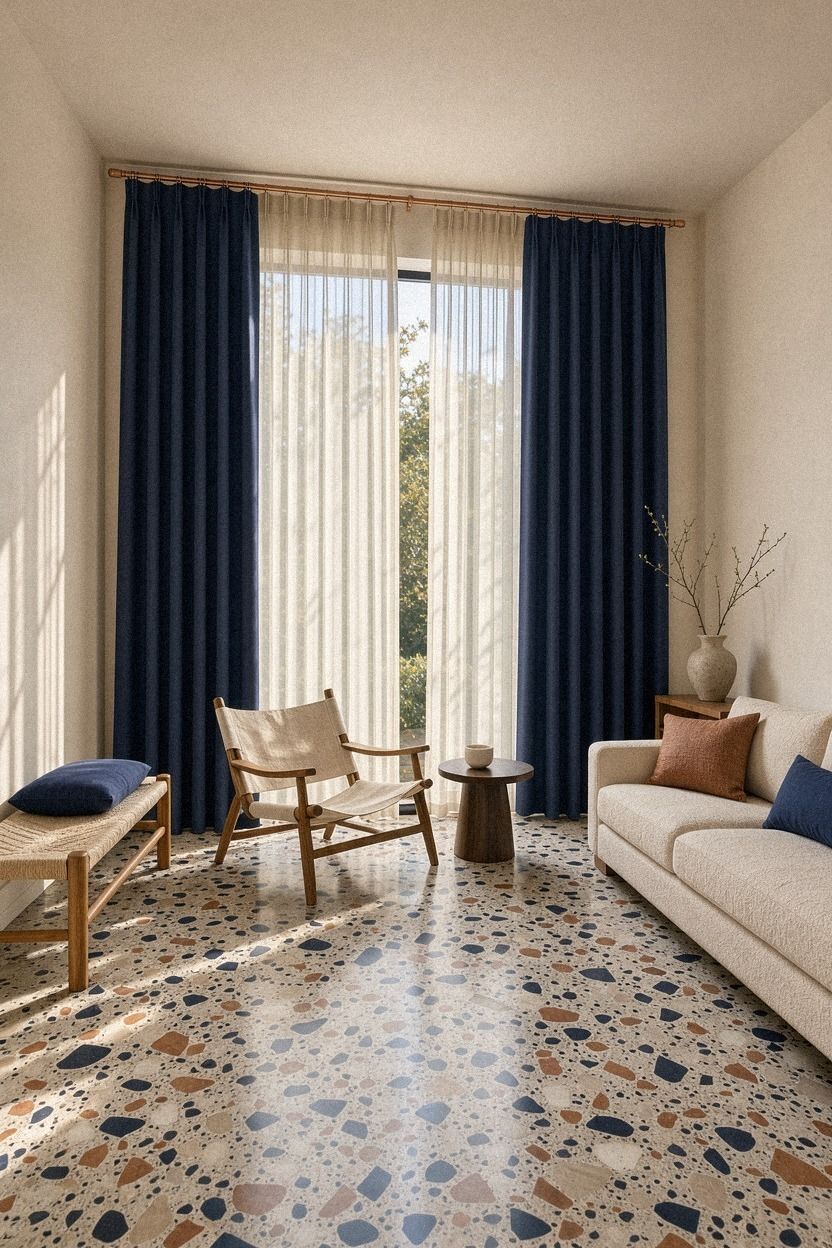
The standard height is 4 to 6 inches above the top of the window frame.
3Float the Panels Wide for a Bigger Window
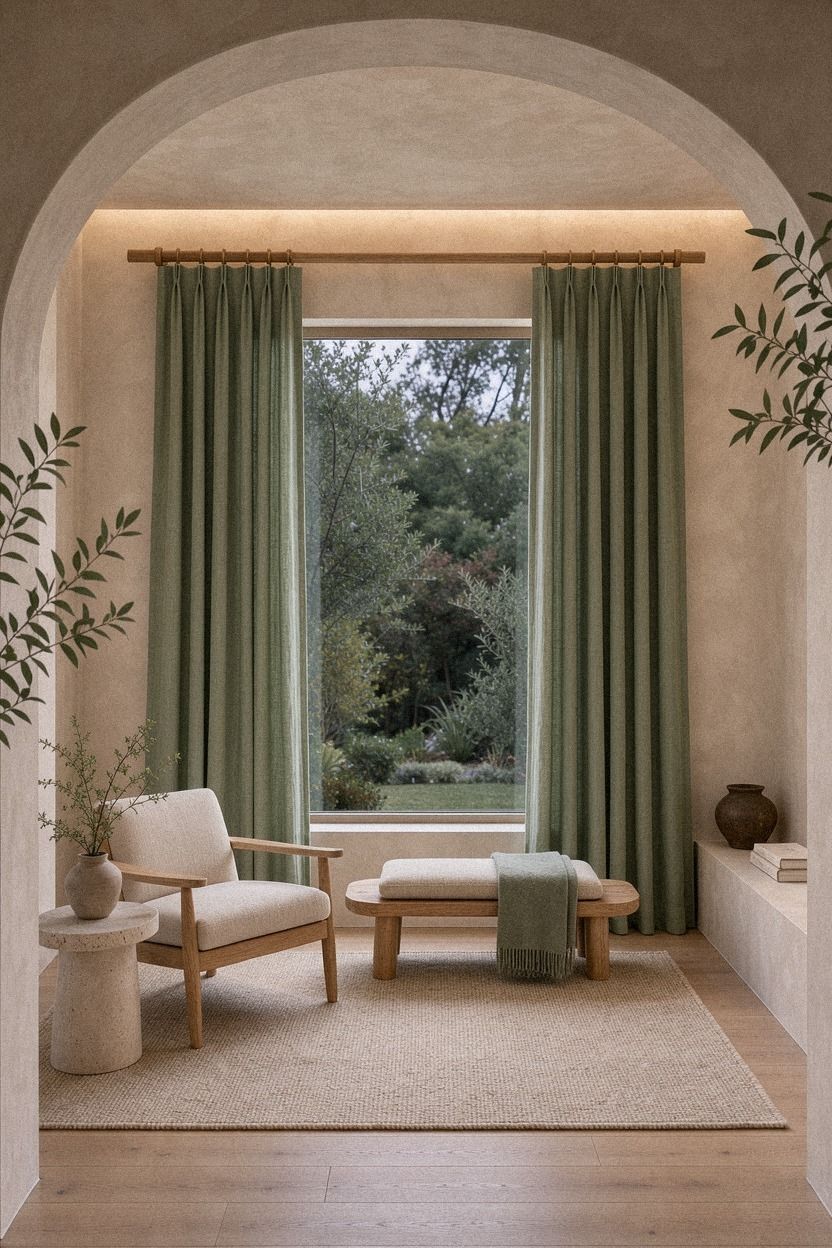
The high-and-wide illusion is simple: place the rod above the frame and extend it wider than the window. Your eye reads the curtain line as part of the wall, so the window feels broader and the room feels more open. It’s one of the easiest ways to make a small room feel inviting.
For this look, choose panels that stack mostly outside the glass. A 48-inch window might need a rod that reaches 60 inches or more, depending on the side clearance. Don't buy a rod based only on the window width.
Measure the full span you want, then add enough panel width for natural folds.
I made the mistake of pairing thin polyester panels with a flat painted wall once. The room looked lifeless in afternoon light.
Hand-applied Venetian plaster did better because its uneven surface catches the sun without looking glossy. If you like that warm, tactile effect, browse these linen curtain ideas for fabric weight and color direction.
The wider placement works beautifully in living rooms, dining areas, and bedrooms. It can also make a short wall feel more generous.
You won't need an oversized pattern or elaborate hardware. Good proportion does most of the work, creating a relaxed and quietly elegant result.
4Rod Width or Fabric First?
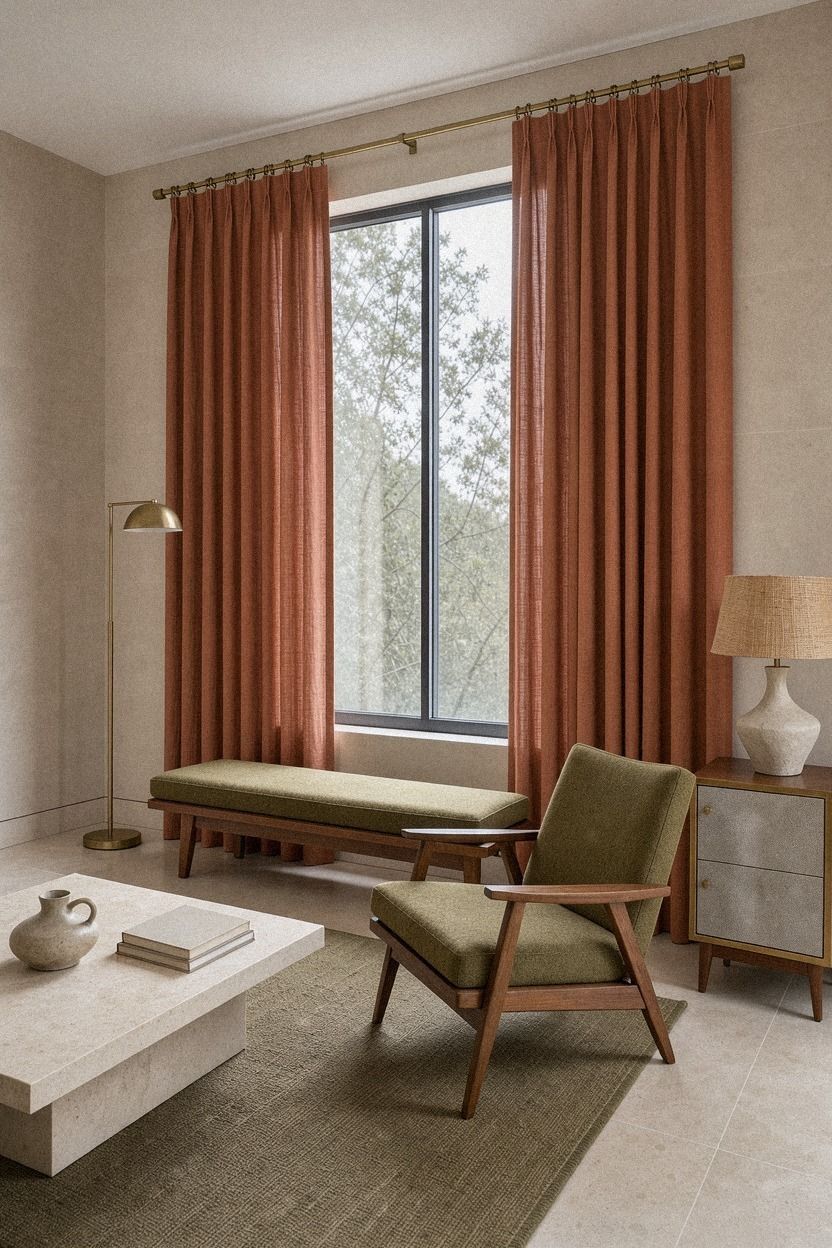
Your rod width controls how much glass stays visible, while your fabric width controls how full the curtains look when closed.
5Why Two Panels Usually Work Better
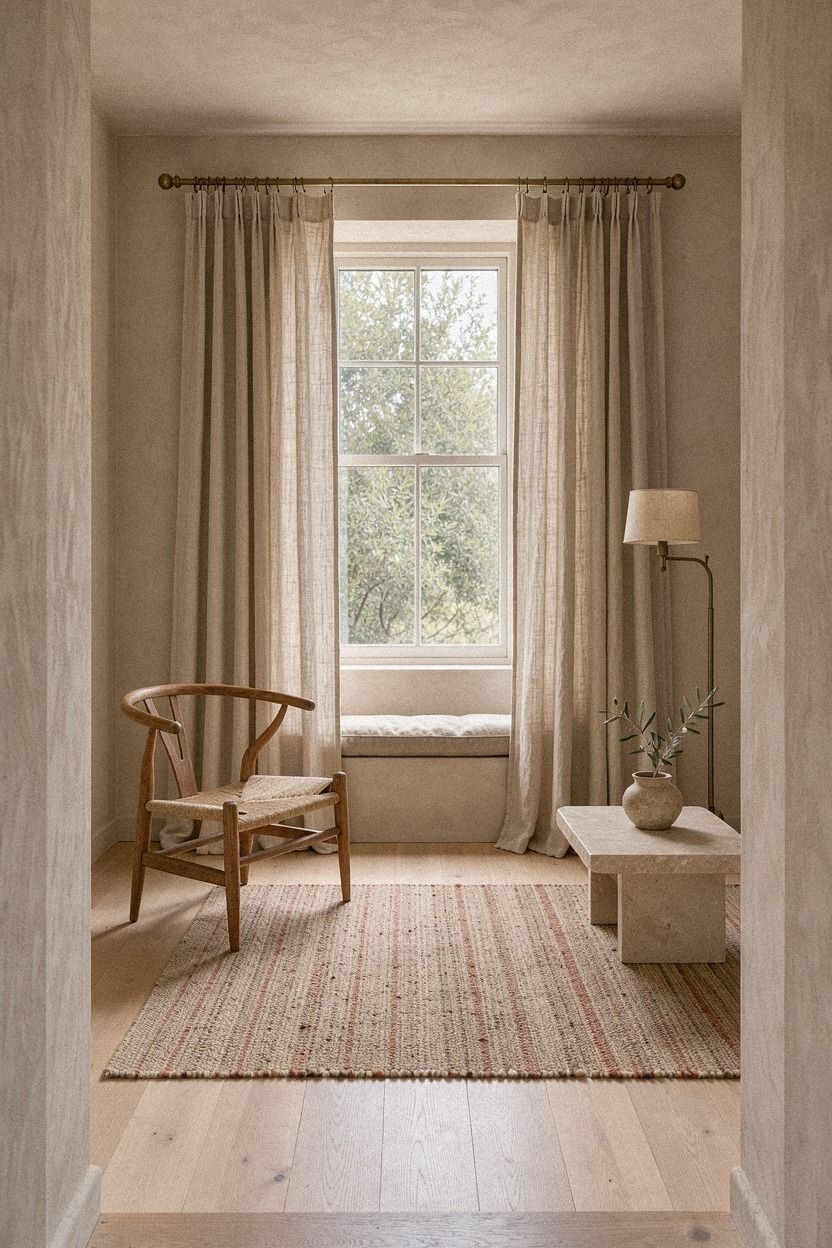
The two-panel rule keeps the window balanced: one panel on each side, even when you usually leave them open. Your clay-toned washed Belgian linen curtain panels will frame the view and soften hard trim without swallowing the room.
This arrangement works best when each panel has enough width to look substantial while open. For a narrow window, two 24-inch panels can be enough. For a wider opening, you may want 48-inch panels or more per side.
Check the package width before buying because the listed measurement may be flat width, not gathered width.
I’d skip a single center panel unless the window is unusually narrow or the wall layout forces it. One panel often looks accidental, and it pulls the eye sideways. If you're trying to create a gentle, calming bedroom, this symmetry will help more than another pillow.
A pair also gives you flexibility. You can open both panels for a bright morning, close one side for privacy, or pull them fully across at night. For more ideas, see these living room window treatments and notice how often the best rooms use balanced framing.
Two panels also make maintenance easier. You can remove one at a time, adjust the stack-back, and keep the window usable while cleaning. That small bit of flexibility feels surprisingly luxurious in daily life.
6Let Floor-Length Curtains Touch Softly
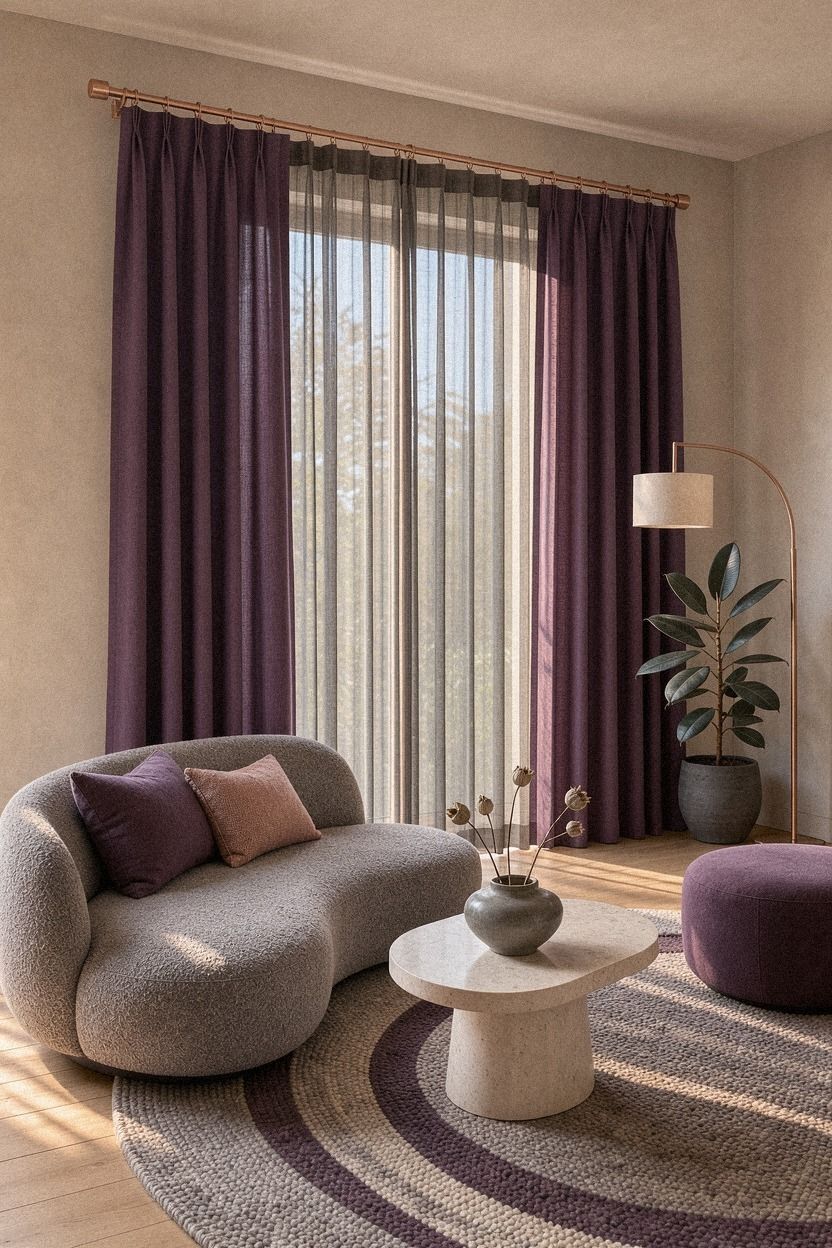
Curtains should generally reach the floor, with the hem touching or hovering just above it.
7Skip the Sill and Frame the Whole Wall
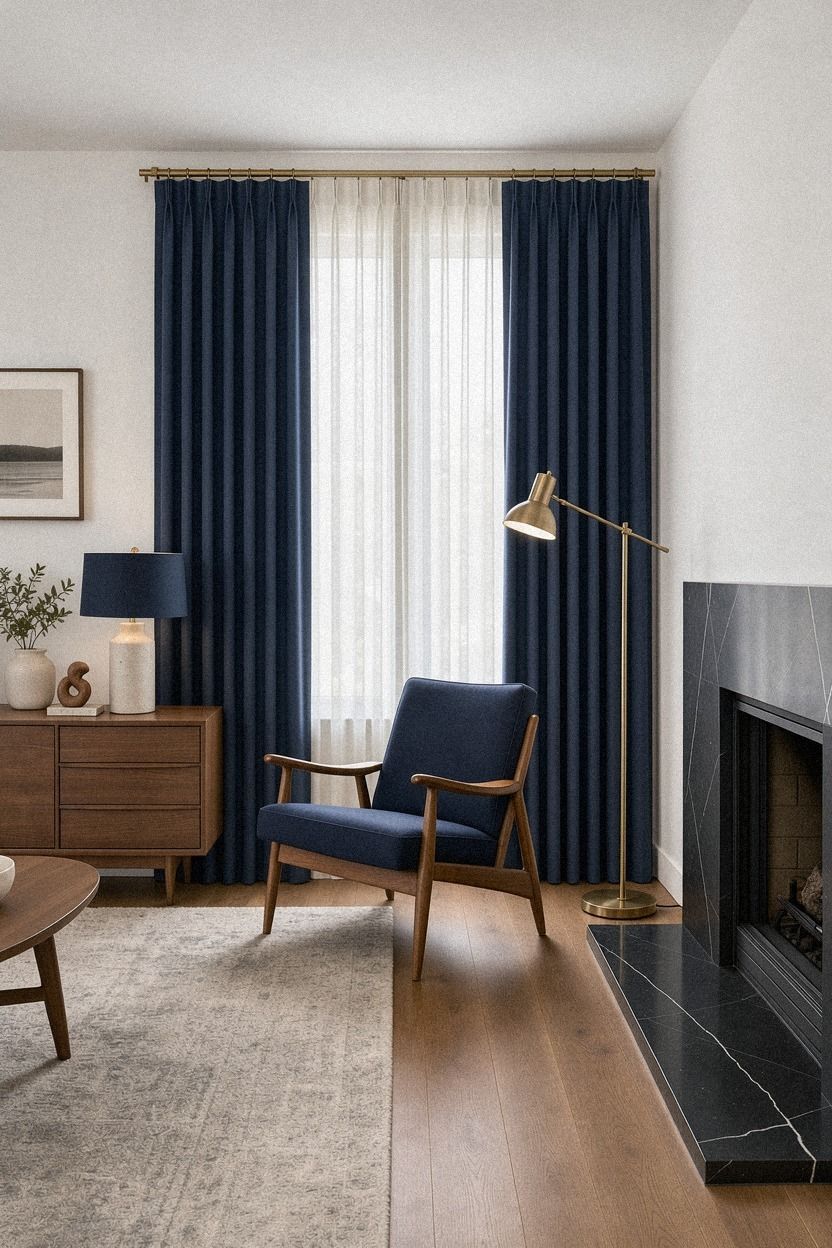
When your window has a deep sill, it’s tempting to mount the rod just above it. That can work, but it often leaves the top half of the wall empty and makes the curtains look too short. Instead, a deep navy wall can become a full backdrop for the window treatment.
Raise the rod 4 to 6 inches above the frame and let the fabric travel to the floor. The sill will still be useful for plants or books, but the curtain line will feel connected to the entire wall. This is especially effective in bedrooms where you want an intimate, quiet mood after sunset.
Be careful around radiators. You don't want heavy fabric blocking heat or resting against a hot surface. A shorter panel may be safer there, but use a tailored hem and mount the rod high enough to preserve the vertical line.
If your sill is deep enough to decorate, keep the objects low and restrained. A Nero Marquina marble sill, one trailing plant, or a stack of art books can look lovely.
Too many objects will compete with the soft, vertical movement of the fabric. For more inspiration, explore these window seat decorating ideas.
The whole-wall approach is particularly effective when the trim is plain. It adds height, softness, and a more considered rhythm without requiring dramatic furniture or expensive construction.
8Can Light Change the Right Rod Height?
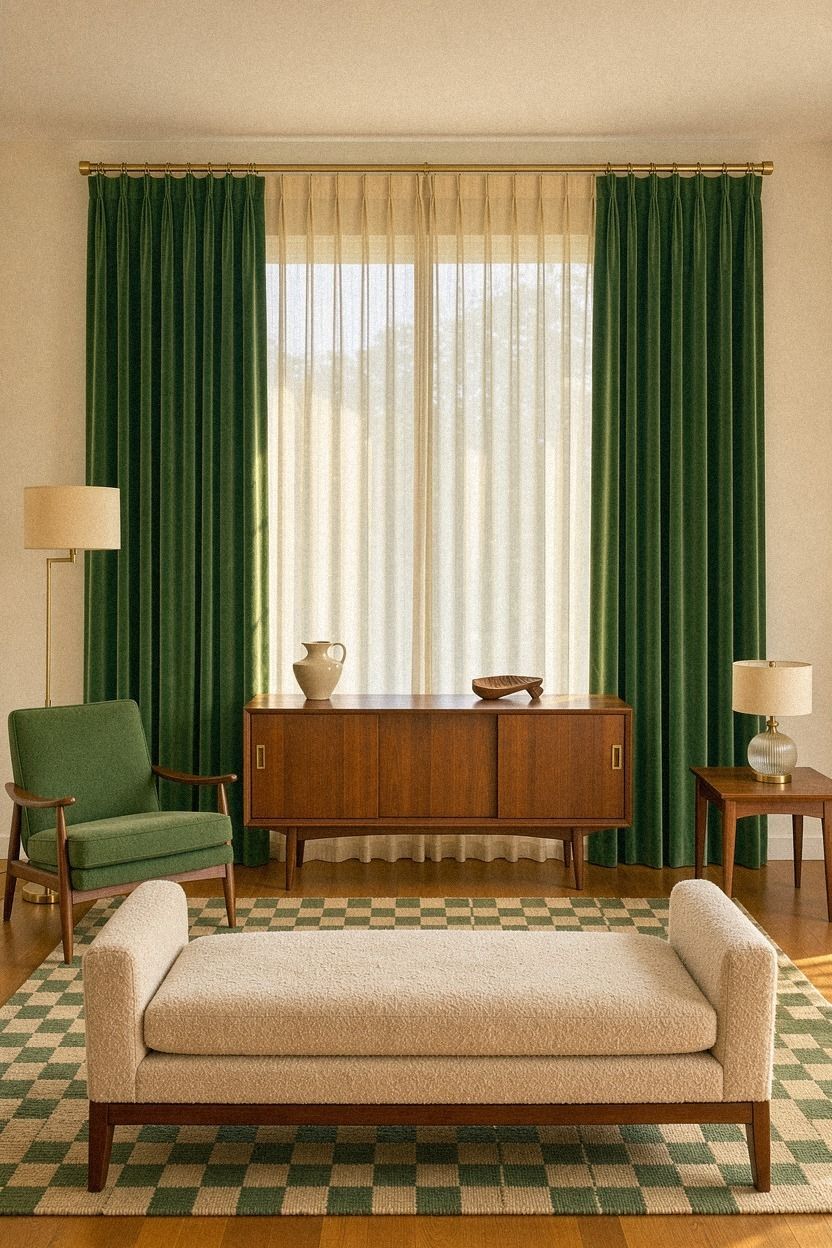
The curtain rod is part of the room’s lighting plan.
9Real Hardware or a Tension Rod?
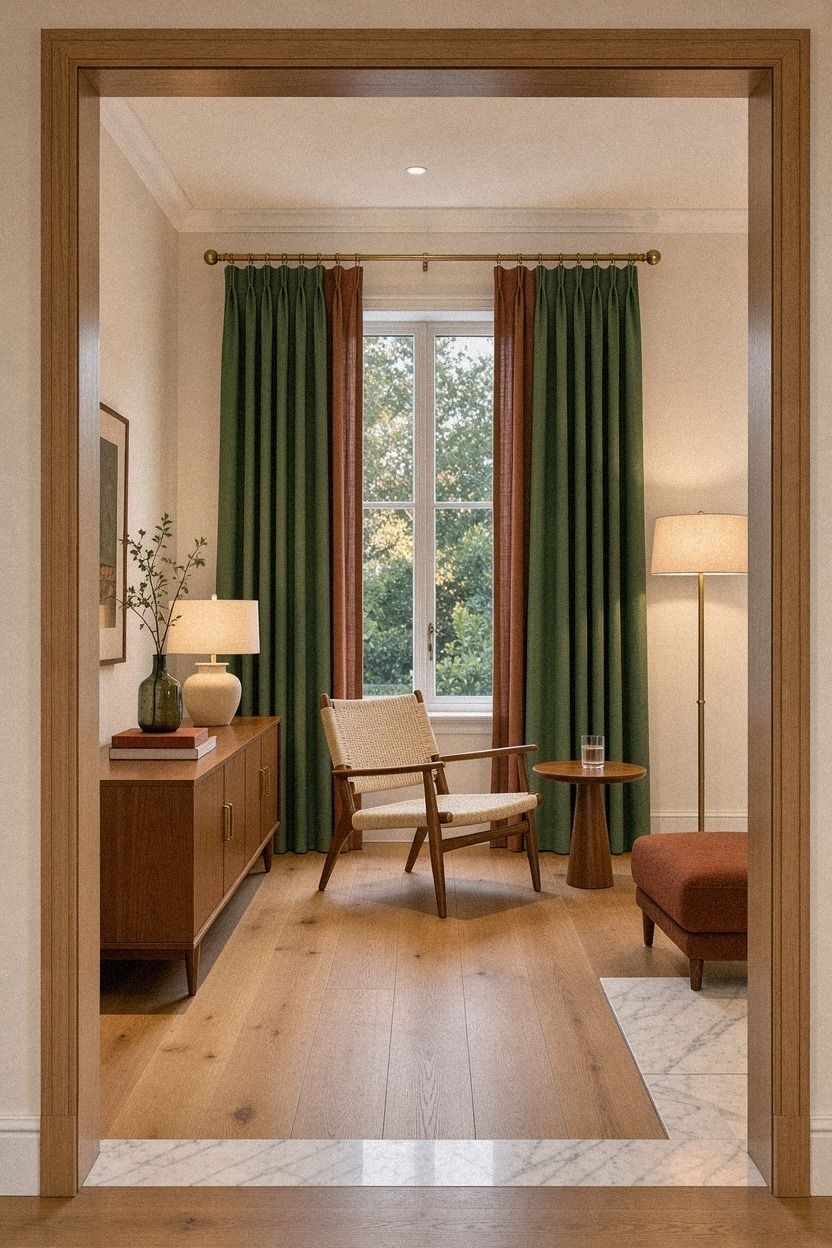
Tension rods are useful when you can't drill, but they aren't always the best long-term answer. Your natural oak trim and Carrara marble sill deserve hardware that can carry the fabric without sagging or slipping.
For a rental, use a tension rod inside the frame when you want a clean café-curtain effect. For full-length panels outside the frame, removable brackets or adhesive hardware may work if the fabric is light.
Read the weight limit carefully. A lined linen panel can pull harder than it looks, especially when you open it every morning.
I wouldn't trust a tension rod for a wide window with thick drapes. It can bow in the center, and the ends may leave marks after repeated adjustment.
If you’re unsure, test the rod with a folded blanket for a few minutes before hanging your finished panels. That small test can save you from a late-night crash.
When drilling is possible, choose solid brackets and anchors suited to the wall. Brushed brass, aged bronze, and matte black hardware each create a different mood. For a rental-specific approach, see these rental-friendly decorating ideas.
A basic hardware budget often looks like this:
10Frame Small Windows Instead of Covering Them
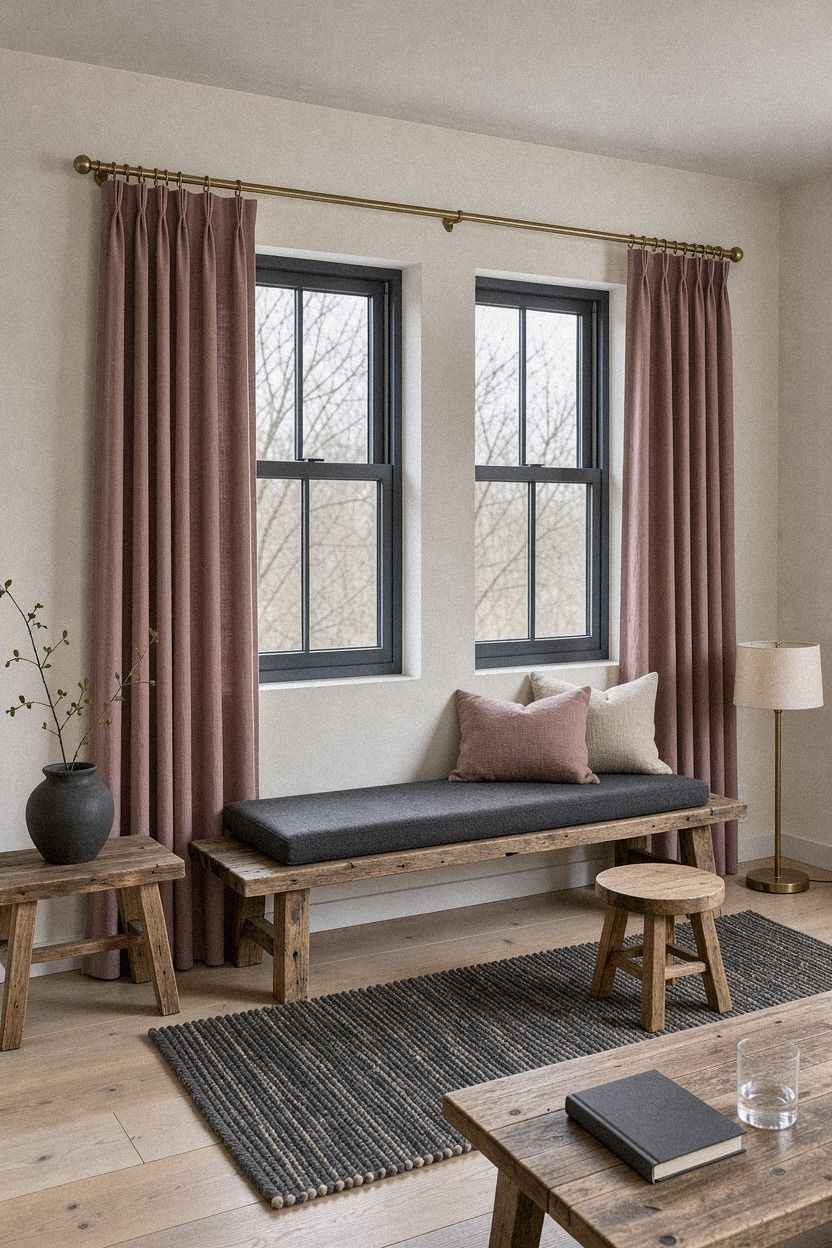
Small windows need breathing room. Hang the rod 4 to 6 inches beyond each side, then keep the panels open during the day so the glass remains visible. Your dusty rose linen blend will soften the edges without making the opening look smaller.
If the wall is narrow, reduce the side extension to 3 or 4 inches. You can still create width, but the rod shouldn't collide with a corner or neighboring door.
For a small bedroom, mount the rod high and use floor-length fabric. The long lines will make the ceiling feel a little taller and the room more peaceful.
Don't use an oversized pattern on a tiny window unless the rest of the room is quiet. A large repeat can look busy when gathered. I prefer a small stripe, a solid flax tone, or a narrow check.
If the window sits beside a bed or desk, keep the stack-back compact. You may need one slim panel on each side rather than extra-wide fabric. The treatment should feel calm and functional, not like it’s fighting the furniture.
For a deep sill, use an inside-mounted shade with exterior side panels only if you need privacy control. These window seat decorating ideas can help you see how to preserve the sill without crowding the window.
11Choose Placement Around the Furniture
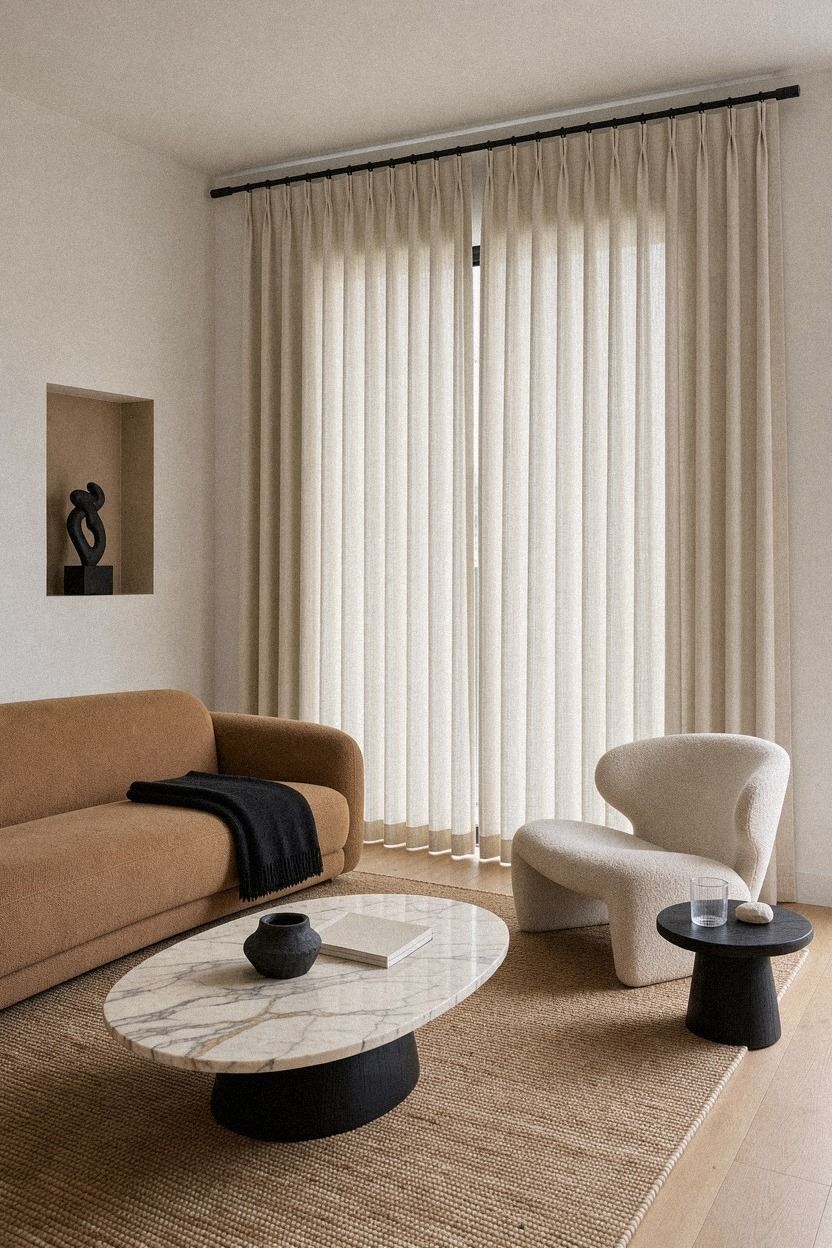
Furniture changes the right rod placement. If your sofa, bed, or desk sits close to the window, you need enough clearance for the fabric to hang without bunching against it. Your camel leather sofa needs a curtain line that feels deliberate, not squeezed behind the back cushions.
Leave enough room for the panels to move freely. If the sofa is directly below the window, consider a narrower side extension and a lighter fabric. If the furniture sits several inches away, full-length drapes can create a soft vertical layer behind it.
I’d avoid placing a rod so close to a headboard that the curtain catches every time you turn in bed. It sounds minor, but you’ll notice it nightly. Ask yourself, “Will I still like touching this fabric when I'm half asleep?” If the answer is no, move the rod or choose a smoother weave.
The same rule applies in living rooms. A curtain should frame the seating area, not disappear behind it. These living room layout ideas can help you judge the distance between the window, sofa, and walking path before you commit.
In a dining room, leave enough clearance for chairs to slide back. In a nursery, keep cords and loose fabric away from the crib. Practical details are part of good design, not an interruption to it.
12Which Wall Color Makes the Rod Look Intentional?
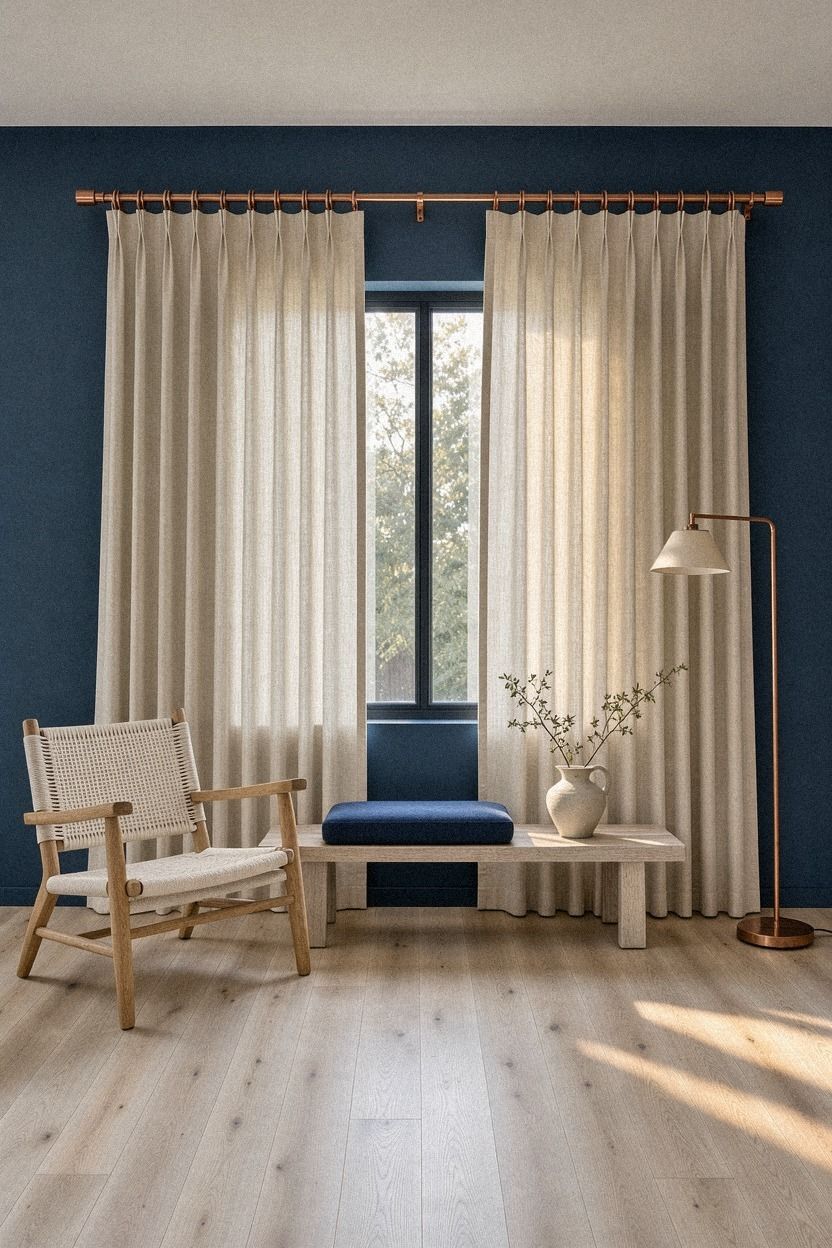
Paint can change how far the rod should appear to extend. On a dark, moody wall, a matching rod can visually disappear and let the fabric lead. On pale walls, contrasting hardware can make the window feel more defined.
Your midnight blue wall will read differently beside copper hardware than beside brushed nickel.
Paint before installing the brackets. You’ll get cleaner edges, and you won't need to work around freshly mounted hardware. If the room is narrow, matching the rod to the wall can reduce visual clutter.
If the room feels flat, choose a finish with enough contrast to create a crisp outline.
I prefer a quiet wall color with one strong material. Farrow & Ball Pigeon creates a soft, earthy backdrop, while Benjamin Moore White Dove keeps the room bright and flexible.
Don't use both in the same small room without testing samples first. The afternoon light may make one feel much cooler than you expected.
For more color direction, compare these warm neutral paint colors before buying fabric. A creamy wall with natural linen feels serene, while a cool gray wall may suit brushed steel or blackened iron better.
A matching rod creates a subtle, enveloping effect. A contrasting rod feels sharper and more graphic. Neither is universally correct.
The better choice depends on whether you want the hardware to recede or become a deliberate accent.
13High Curtains, Honest Scale
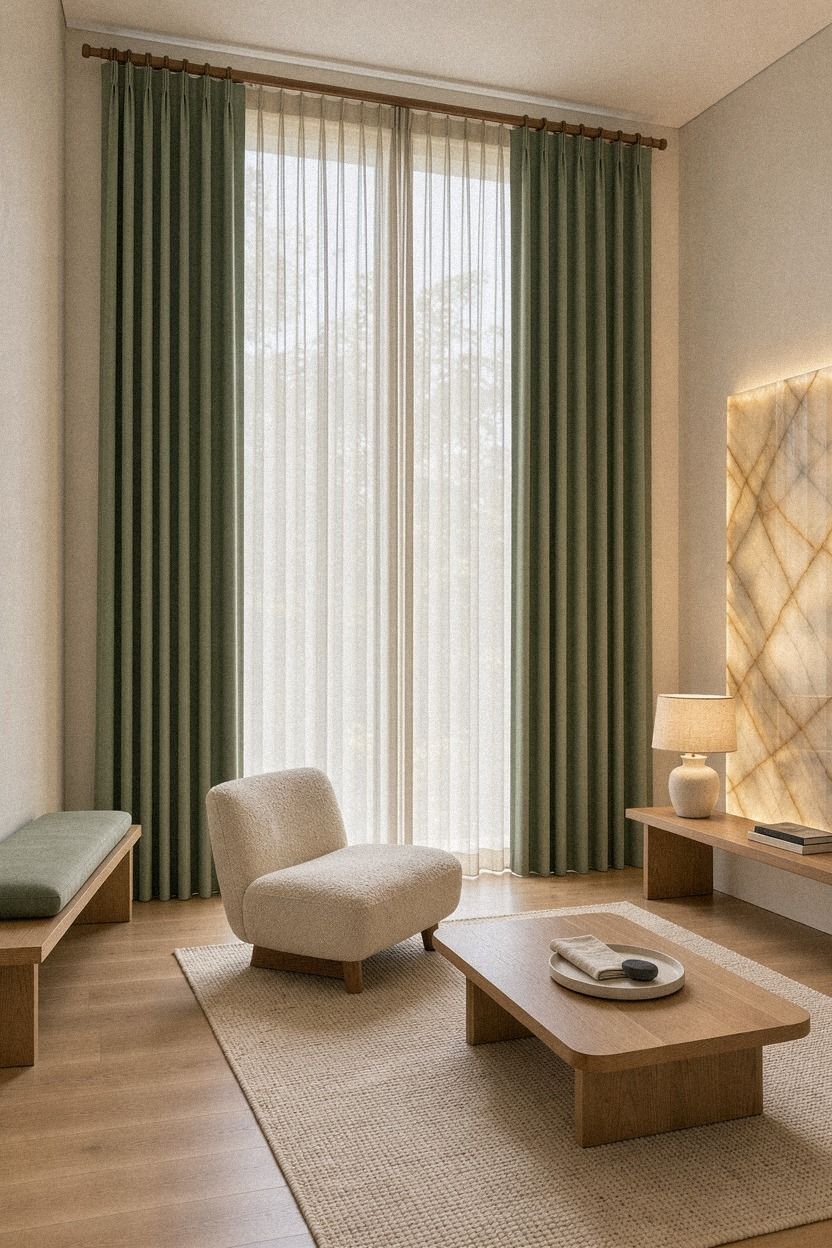
High curtain placement works because it lengthens the wall, but higher isn't always better. Your ¾-inch natural oak curtain pole should relate to the ceiling, trim, and panel length rather than float near the top for drama alone.
If you have standard ceilings, 4 to 6 inches above the frame is usually enough. For tall ceilings, you can move toward the upper third of the wall, but only if the curtains are long enough to reach the floor. A rod mounted too high with short panels creates a strange gap that makes the window look unfinished.
The best rooms feel tall without looking stretched. I’d rather see a well-proportioned rod at 5 inches above the frame than a dramatic placement that leaves your fabric short.
Check the full wall from across the room before drilling. Measurements taken right beside the window can deceive you.
A strong vertical line can feel elegant, but the surrounding materials should support it. White oak, warm plaster, and washed cotton create a relaxed effect. Polished nickel and crisp white fabric feel brighter and more tailored.
For more ways to use timber tones, see these white oak home decor ideas.
If the ceiling has crown molding, leave enough visual separation for the rod to read clearly. If there is no molding, the upper third of the wall can offer a handsome, architectural line.
14Sheers or Blackout Panels?
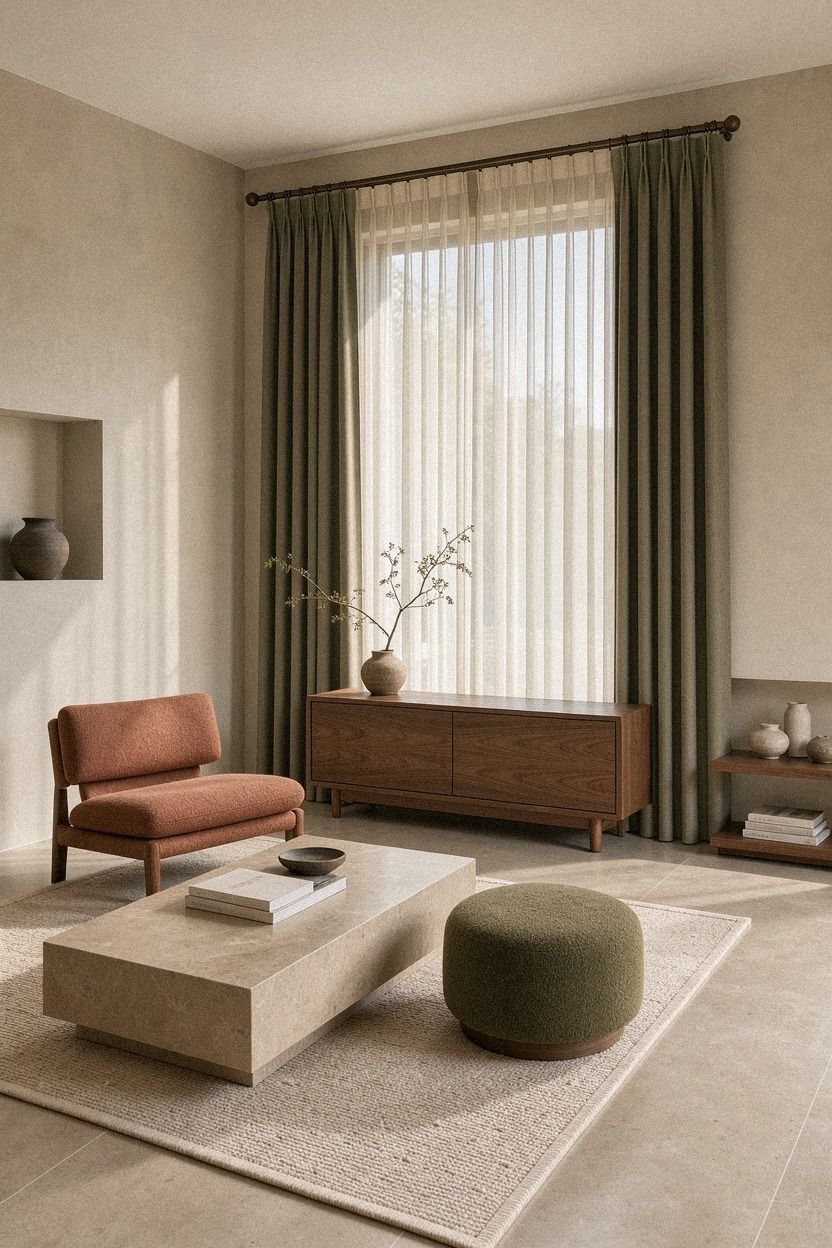
Layered curtains give you control over morning light, privacy, and evening softness.
15Choose Fullness Over a Barely Covered Window
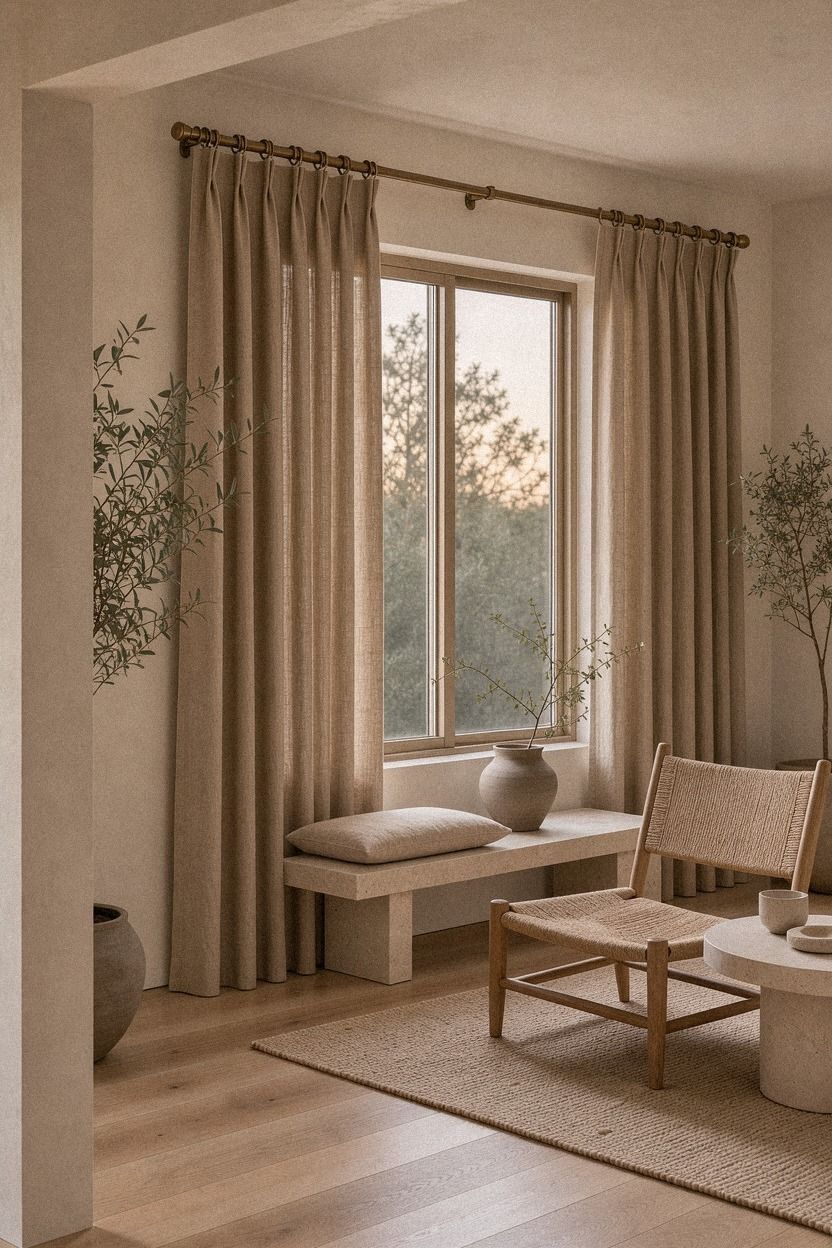
A curtain panel shouldn't look stretched tight across the rod. Fullness gives the fabric its folds, and those folds make the window feel finished. Your clay-toned linen panels may need less visual decoration when paired with a warm travertine sill because the natural materials already create texture.
For a lighter panel, buy enough width to create generous gathers. Check the finished width rather than assuming one standard panel will cover everything. If your window is wide, four panels may look better than two oversized ones because the folds stay manageable.
The cost doesn't have to be dramatic. A simple rod, ready-made panels, anchors, and basic tools can create a fresh treatment for about $100 to $300. These budget room makeover ideas can help you decide where fabric matters most.
I’d invest in length and fullness before decorative finials. The fabric does more for the room than a fancy end cap.
If you're working with inexpensive panels, steam them thoroughly, hang them for a few days, and adjust the hem after the fabric settles. That final bit of care can make the whole room feel polished.
A useful fullness target is 1½ to 2 times the rod width for ordinary cotton or linen. Sheers often look better closer to 2 to 2½ times fullness. Heavy velvet can appear rich at a lower ratio because its folds are deeper and more substantial.
Why I’d Measure Twice Before Buying Anything
Curtain rod placement seems like a small design decision, but it changes the proportions of the entire wall. I've seen expensive fabric fail because the rod stopped at the edge of the glass. I've also seen basic cotton panels look calm and tailored because the hardware extended wide enough and the hem reached the floor.
My first mistake was measuring only the window. I ignored the trim, the nearby bookcase, and the way the panels would stack when open.
The rod fit on paper, but the fabric blocked a surprising amount of daylight. I moved it 4 inches wider on each side, and the room immediately felt more inviting.
You should also consider how you use the window. If you open it daily, leave room for the handle.
If you have a radiator, protect airflow. If you rent, choose hardware you can remove cleanly.
There isn't one universal number, but 4 to 6 inches above and beside the frame is a strong starting point.
Before installation, review a complete guide to hanging curtains, then mark the brackets with tape. Use a level.
Check the view from the doorway. Take your time.
A careful 10-minute check can save you a frustrating afternoon.
And I don't think every window needs the same treatment. A kitchen window may want a simple inside-mounted shade. A bedroom may deserve full-length panels.
Your best choice is the one that respects the architecture, the light, and the daily habits of the people living there.
What is the best curtain rod placement for a small window?
The best placement is usually 4 inches above the frame and 4 inches past each side. Keep the panels open during the day so your light-filtering cotton doesn't cover the glass. A narrow black steel rod works well when the wall has limited clearance.
Where can I buy curtain rods on a budget?
Look at local home stores, resale shops, and online retailers, then compare the bracket quality and weight rating before you buy. Your brushed steel rod doesn't need a designer label. The important details are a sturdy center support, suitable anchors, and a finish that works with the room.
How much does a curtain placement makeover cost?
A curtain placement update can cost about $100 to $300 when you need a rod, panels, anchors, and basic tools. The free part is measuring, raising the hardware, and reusing fabric you already own. Your biggest cost will usually be the panels, not the tape measure.
Can I create better curtain placement on a budget?
Yes, and you can start with three low-cost moves: extend the rod 4 inches past each side, raise it 4 inches above the frame, and hem existing panels to the floor. IKEA linen-look panels can give you a soft finish without a full room refresh. These budget room makeover ideas can help you prioritize the changes.
Is curtain rod placement worth it in a small space?
Yes, because a small room benefits from every bit of visible glass and vertical height. Mount your rod slightly wider and higher, then keep the panels outside the window when open. Your warm white panels will soften the wall without making the room feel crowded.
Is this a good idea for a rental?
Yes, especially when you use a tension rod, removable brackets, or lightweight panels. Your peel-and-stick curtain hardware should match the fabric weight and the wall condition. Test one bracket first, and don't hang lined velvet from adhesive strips without checking the load rating.
Where I’d Start First
If I had to pick one, I'd start with extending the rod 4 to 6 inches past each side. It keeps fabric off the glass, adds daylight, and makes a small window look wider without buying new furniture. Pin this guide for later and measure your wall before shopping.


