Low-Maintenance Rug Placement Under a Bed That Finally Looks Intentional
03 november 2026To make a rug under the bed look intentional, center it on the bed and let enough of it extend beyond both sides. I learned that after buying one that vanished under the frame. The fix isn’t more decor. It’s better proportion, warmer texture, and a clear edge.
Editor’s note: Start with the floor plan, then test the placement with what you already own. The right centered layout can make a bedroom feel calmer before you buy a single new thing.
- Center the Rug With the Two-Thirds Rule
- Layer a Runner at the Foot for a Smaller Footprint
- Should the Rug Start Under the Nightstands?
- Build the Three-Height Light Stack Around the Rug
- Float the Bed on a Quiet Border
- Layer a Rug Under the Bed Instead of Beside It
- Swap Perfect Symmetry for a Soft Offset
- Paint the Walls Before You Pick the Pattern
- Use the Investment Ladder Before You Buy
- Frame the Bed With Warm Wood and Soft Textiles
- Choose Low-Maintenance Texture Over Fussy Detail
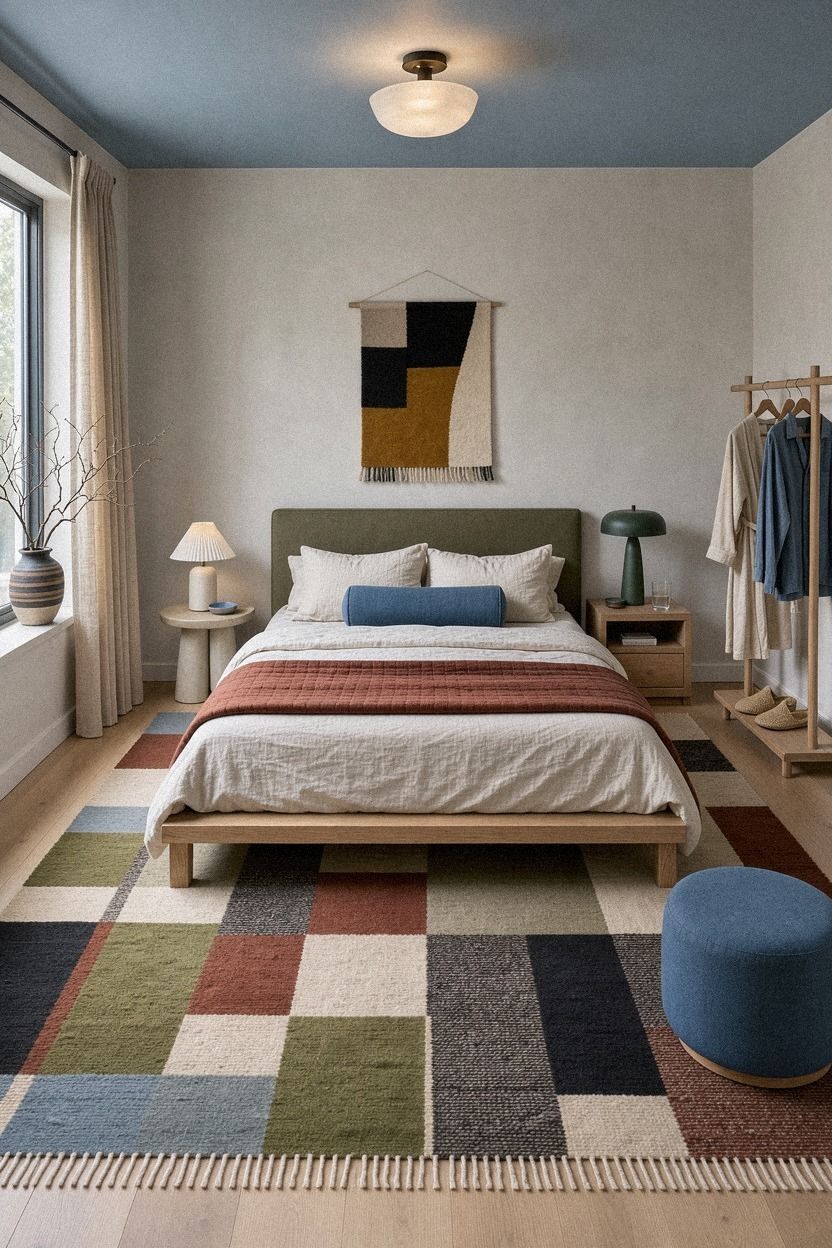
1Center the Rug With the Two-Thirds Rule
Start by lining the rug up with the center of your bed, not the nearest wall. You’ll want roughly two-thirds of the rug visible beyond the footboard or bed frame, while the upper portion disappears beneath the bed. That overlap makes the rug feel anchored instead of dropped onto the floor.
A low, dense pile rug works beautifully here because the bed can sit firmly on it without wobbling. If you’re working with a platform bed, the rug can begin farther toward the headboard. With a taller frame, let more of the rug show at the foot so your eye can read its shape.
I’ve tried centering a rug by the room instead of the bed, and it looked wrong every time. You’ll notice the mistake when the exposed sides don’t match. A slightly imperfect wall can disappear, but uneven rug edges beside your bed will keep calling attention to themselves.
Keep the visible border calm. A forest green field with rust accents and natural oak nearby will give your room an inviting base without competing with the bedding.
A bench or low chest in reclaimed weathered teak can reinforce that grounded feeling. It’s a small adjustment, but the whole arrangement can feel instantly more polished.
2Layer a Runner at the Foot for a Smaller Footprint
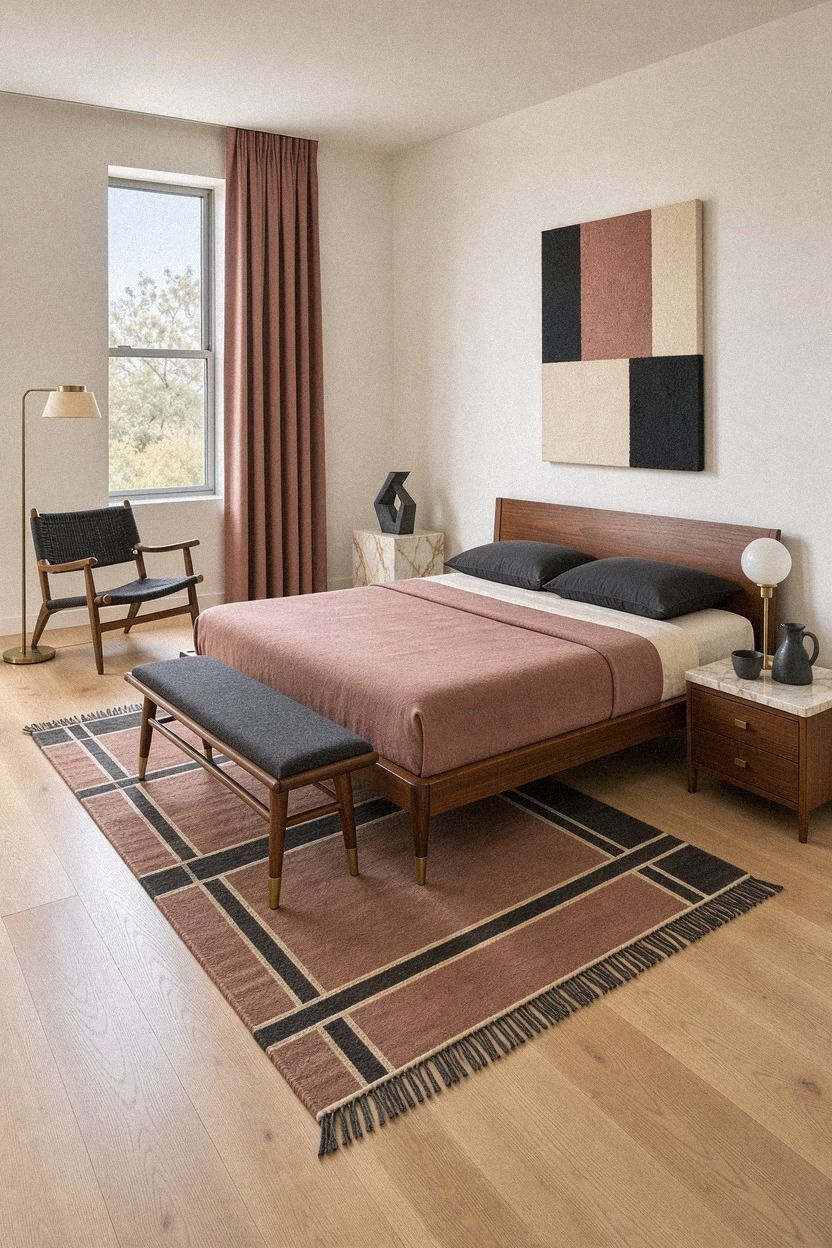
If a full rug under the bed feels too expensive or too large, place a runner across the lower third of the bed. You’ll still get softness underfoot when you get up, and your room won’t lose the open floor that makes a small bedroom feel airy.
Choose a flatweave runner with enough weight to stay put. A narrow cotton design can work, but I’d skip anything silky or slippery because you’ll be stepping onto it half-awake. A runner in dusty rose and charcoal gives you a lively little moment, while small brass details nearby keep the palette from feeling flat.
You don’t need to make the runner symmetrical with every object in the room. Let it align with the bed’s center, then allow the nightstands to sit outside its edges. A Calacatta marble top with delicate gold veining can add polish without making the arrangement feel formal.
For the bedding, pair the runner with dusty rose linen and a charcoal accent cushion. The loose weave will soften the pattern, while the exposed floor keeps the overall look light and low-maintenance. Simple can still feel warm, useful, and quietly beautiful.
3Should the Rug Start Under the Nightstands?
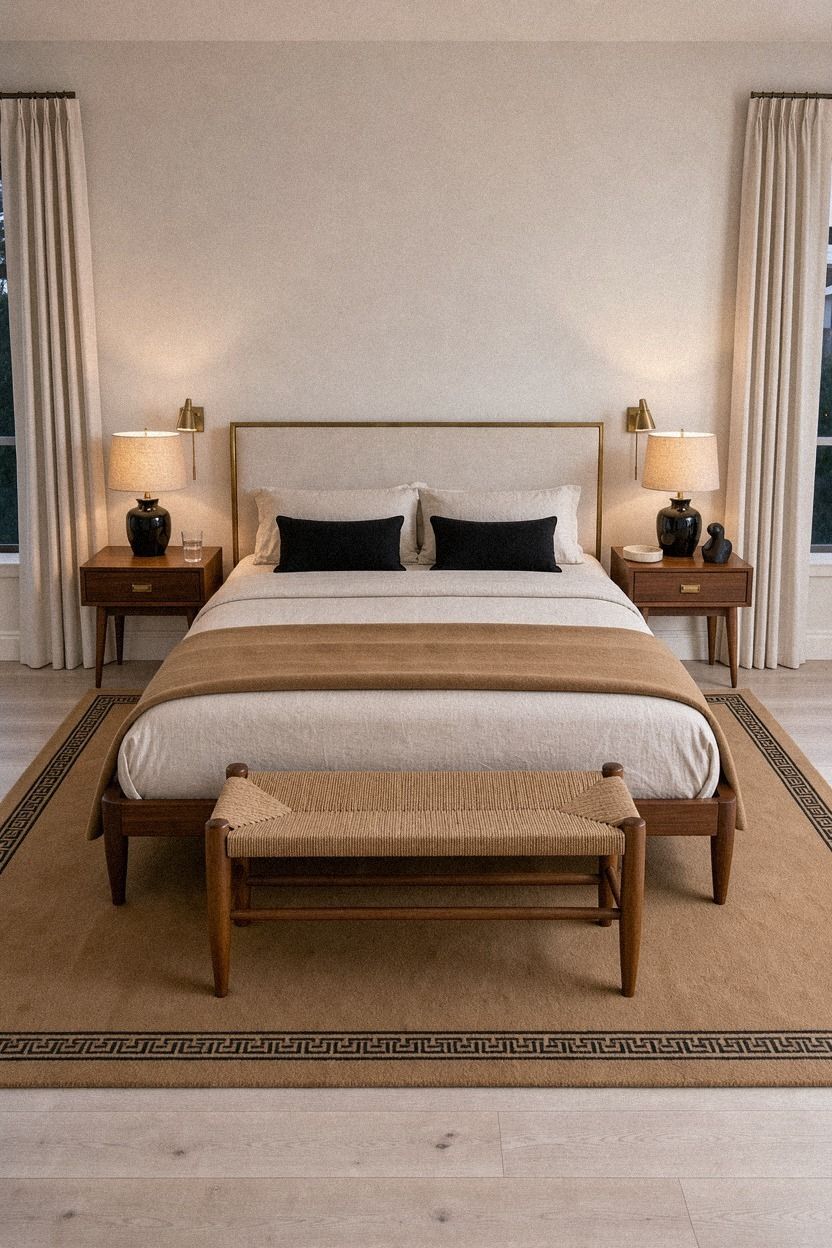
Yes, if you want the bed and nightstands to read as one furniture group. Slide the rug far enough beneath the bed that its side edges continue under both nightstands. You’ll create a calm visual platform, and bedroom rugs under beds will look more deliberate from the doorway.
A tightly woven rug can give you that grounded shape, especially when it sits beside cerused white oak furniture. You’ll feel the difference when your feet land beside the bed. If you’re sensitive to texture, place a soft cotton runner on top only where you walk.
Why leave the nightstands floating on bare floor when the rug could connect them? The answer is usually fear of covering too much flooring, but that concern fades when the rug has a defined border. Your eye sees one composed zone instead of three unrelated pieces.
I’d skip a tiny rug that stops before the nightstands. It makes your bed look larger and your room look chopped up. A wider rug costs more material, but the proportion is worth protecting when your furniture is substantial and the room should feel generous.
Use warm white as the quiet base, then add camel bedding and one or two black accents. That combination keeps the cerused oak feeling clean without turning the bedroom pale or predictable.
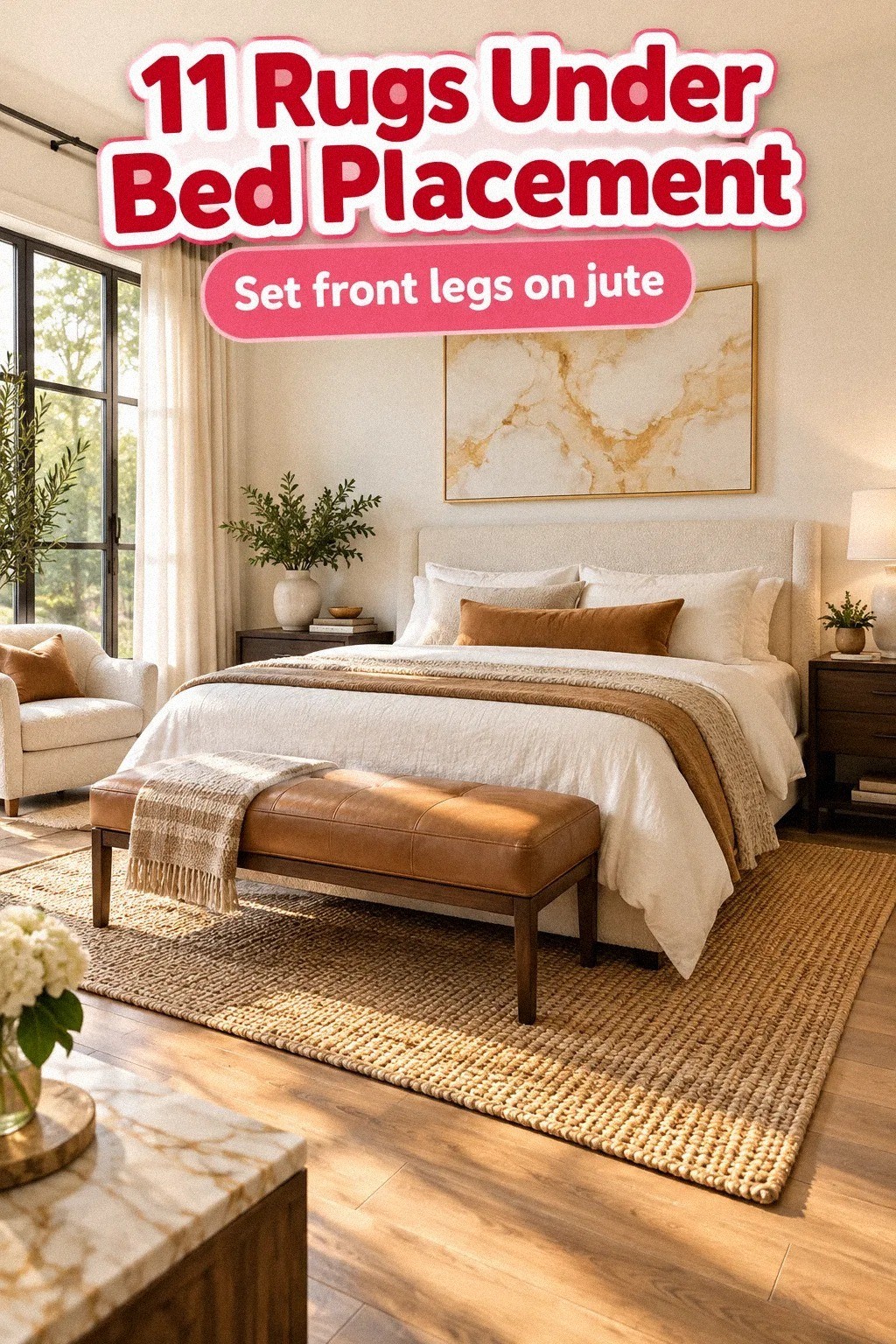
4Build the Three-Height Light Stack Around the Rug

Your rug doesn’t work alone. It needs a visual relationship with the bed, the nightstands, and the light above them. I call this the Three-Height Light Stack: low texture at the floor, medium-height lamps at the bedside, and a higher point such as art or a pendant.
Use a backlit translucent onyx lamp or wall detail to echo the room’s softer surfaces. Then place a lamp with an ivory shade at mattress height. The repeated horizontal lines will make your room feel serene, while the rug keeps the hard floor from looking bare.
You’ll want three light sources per room: overhead, task, and ambient. Your rug can become the ambient partner when its color absorbs the soft glow instead of reflecting a harsh sheen. I’d avoid a shiny synthetic pile here.
It can catch every lamp reflection and make your floor look busy.
If you’re hanging art above the bed, keep its center around 57 to 60 inches from the floor. That measurement gives your eye a steady vertical path from rug to artwork, and your room will feel balanced without extra decoration.
Midnight blue, copper, and ivory make the lighting feel layered rather than cold. The result can be wonderfully restful!
5Float the Bed on a Quiet Border
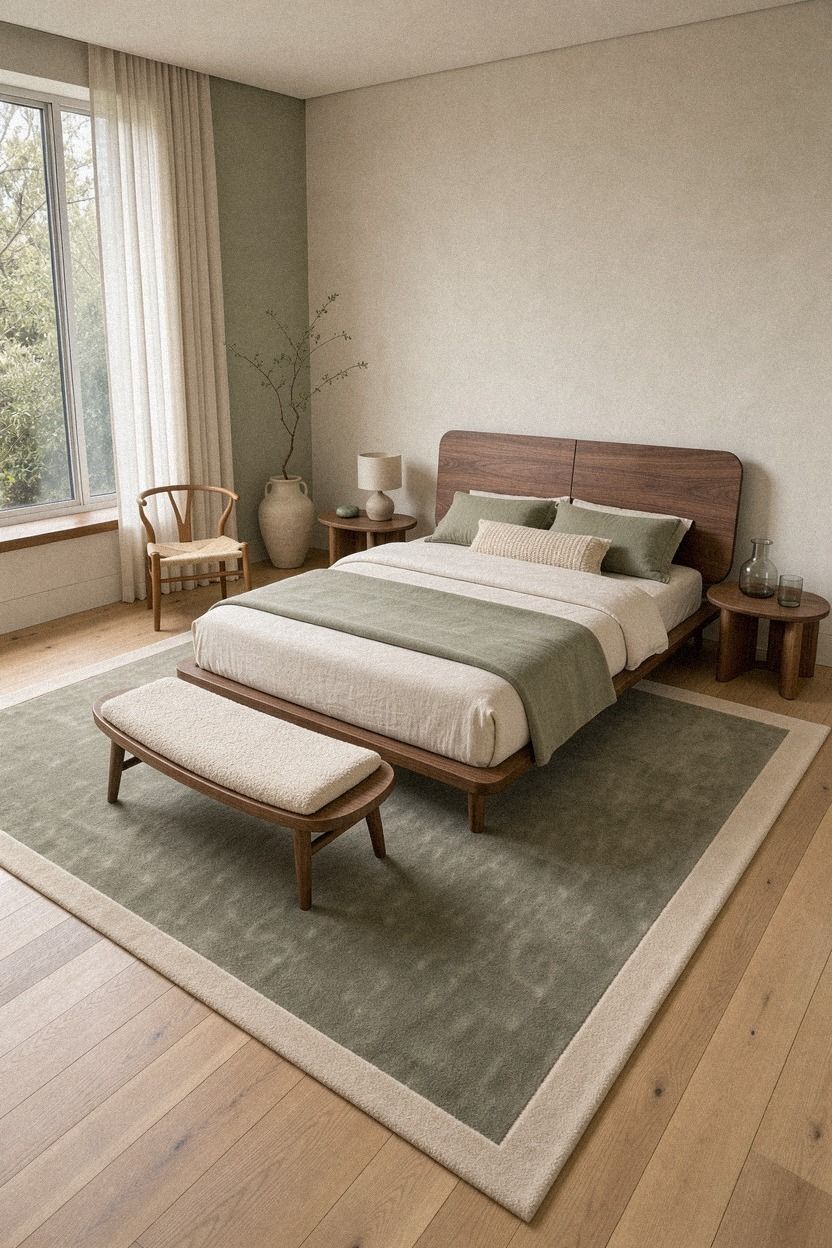
A rug with a visible border can make the bed feel intentionally placed, especially when the room has plain walls.
Let sage green, warm cream, and natural wood carry the palette. A low walnut piece with a clean edge can give the rug a stronger anchor without adding visual weight. The border should remain visible around the bed, but it doesn’t need to be dramatic.
6Layer a Rug Under the Bed Instead of Beside It
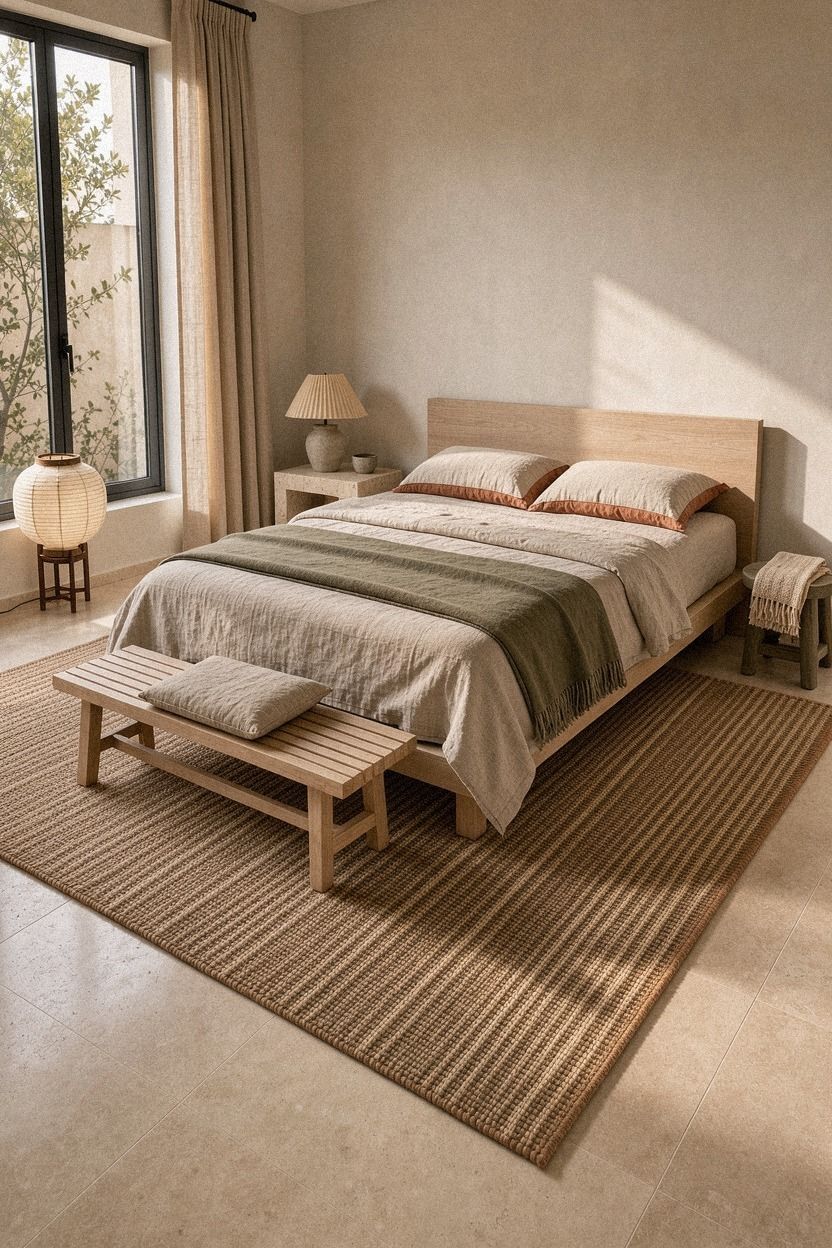
A rug beside the bed can work, but it often looks like an afterthought. If your room is narrow, you’ll get a stronger result by sliding one larger rug under the bed and letting it extend toward the walking path.
Choose a low-pile cotton rug if you need a surface that’s easy to vacuum and simple to move. You’ll want the exposed portion at the foot of the bed to feel soft, but you won’t need a deep pile that catches every crumb or blanket thread.
Instead of placing matching mats on each side, use one continuous rug to connect your walking areas. That makes your room feel more spacious and less visually interrupted. I’d skip two small rectangles beside the bed unless you’re renting and can’t move the frame easily.
Your color choice matters here. A stone base with terracotta and olive accents will feel inviting without becoming heavy. A warm travertine table or bench can repeat the natural texture, while a quieter wall color keeps the walking path visually clear.
7Swap Perfect Symmetry for a Soft Offset
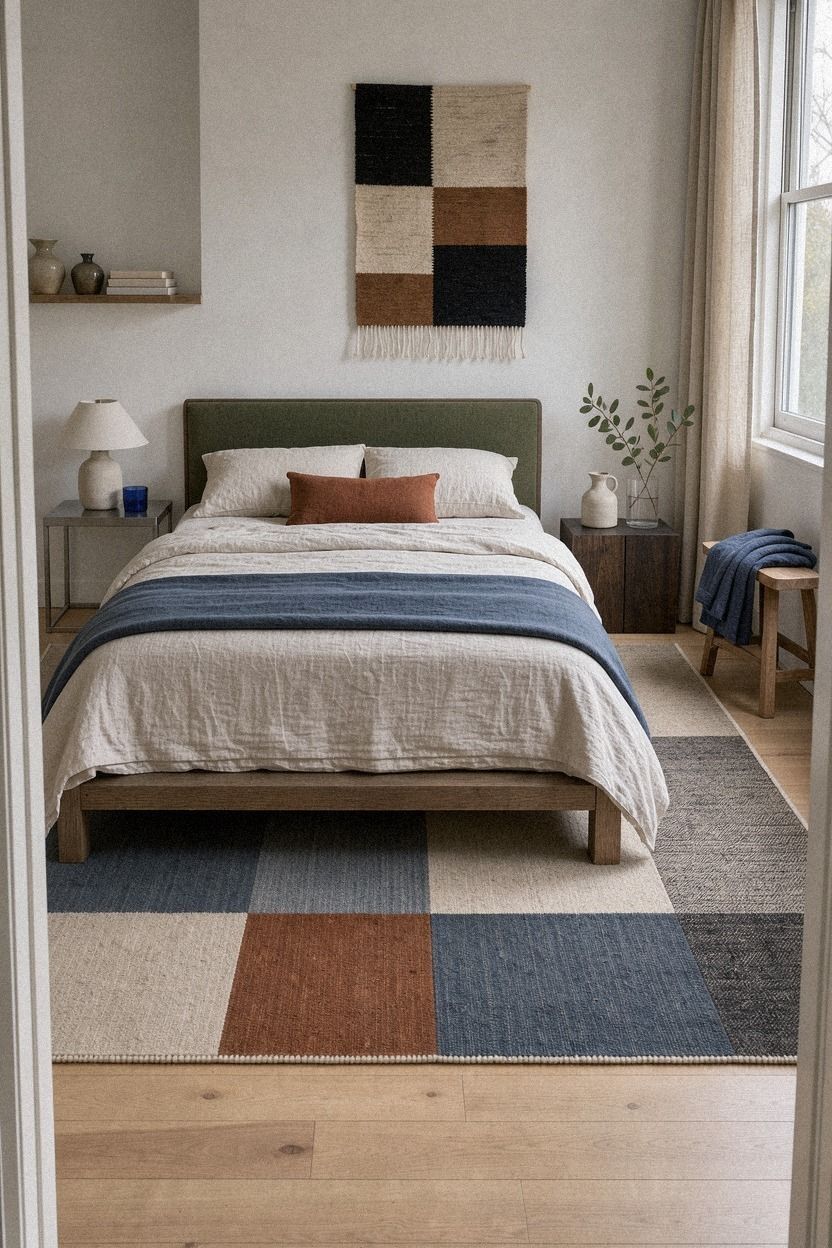
Your rug doesn’t have to sit perfectly square with every wall. A slight offset can make the room feel lived-in, especially when the bed is centered on a window or architectural feature rather than the entire floor plan.
Try a handwoven wool rug with irregular lines or a washed medallion. A clay-and-linen palette will disguise a small shift, and your room will feel more relaxed than it would with a rigid grid. You’ll still want the bed itself centered on the rug, even if the rug isn’t centered on the room.
If your bed sits near a wall, don’t force equal rug exposure on both sides. Give the walking side more visible surface, then let the tucked side disappear beneath the frame. That choice respects how you use the space and makes the layout more practical.
I’d avoid pairing an offset rug with highly matched nightstands, lamps, and artwork. Too much order will make the rug look like the one messy element. Your best result will come from repeating one material, such as unlacquered brass developing a soft patina, elsewhere in a small and controlled way.
8Paint the Walls Before You Pick the Pattern
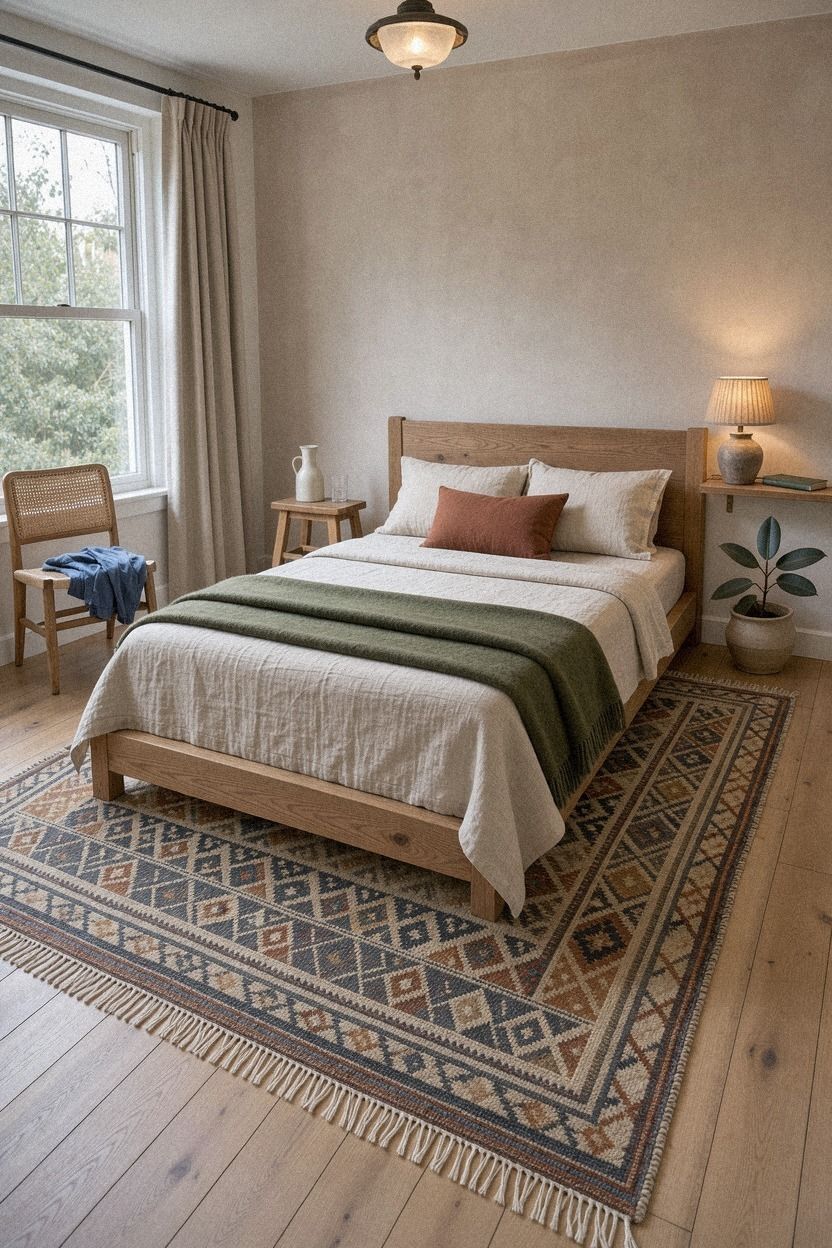
Your rug should respond to the wall color, so test paint before committing to a bold pattern.
Plum, grey, and rose gold can make a bedroom feel atmospheric without becoming overly sweet. If you already have an oversized-chip terrazzo surface nearby, choose a rug that repeats one quiet tone from it rather than competing with every color.
A restrained pattern will give the terrazzo room to breathe. Keep the bedding simpler, then use one rose gold detail to connect the wall, rug, and furniture.
9Use the Investment Ladder Before You Buy
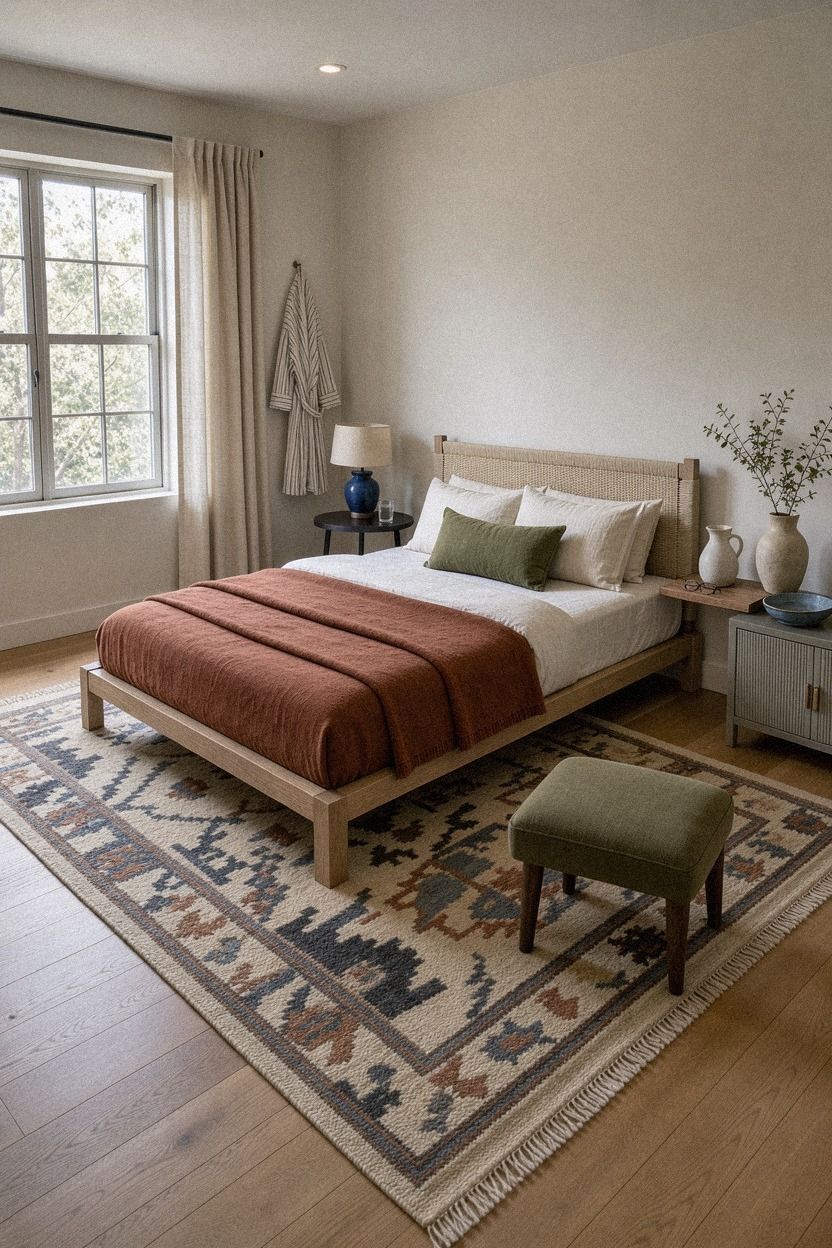
Before you shop, decide whether the rug is the foundation of your room or one layer among many. A vintage-style wool rug may deserve more of your budget if it sets the color direction for the bed, curtains, and art. If you’re still testing the layout, start with a simpler textile.
These are typical US room costs from the brief, not a promise about one specific bedroom. You’ll notice that the rug itself can sit inside a much larger room budget, so your decision should account for the rest of the space.
A rug under the bed can be your biggest visible textile, but it doesn’t need to carry every design decision. If you’re working within the budget tier, let the rug provide pattern while your paint and bedding stay simple. A navy, white, and walnut palette can feel composed without requiring an expensive collection of pieces.
If you’re investing in the walls, hand-applied Venetian plaster can become the quiet background rather than another competing pattern. You’ll still want restraint because a costly rug can look unsettled when surrounded by too many competing pieces.
I’d set aside money for a proper rug pad, delivery, and cleaning. Those practical costs can shape how comfortable and durable the final room feels. A thoughtful budget makes the project feel calm instead of rushed.
10Frame the Bed With Warm Wood and Soft Textiles
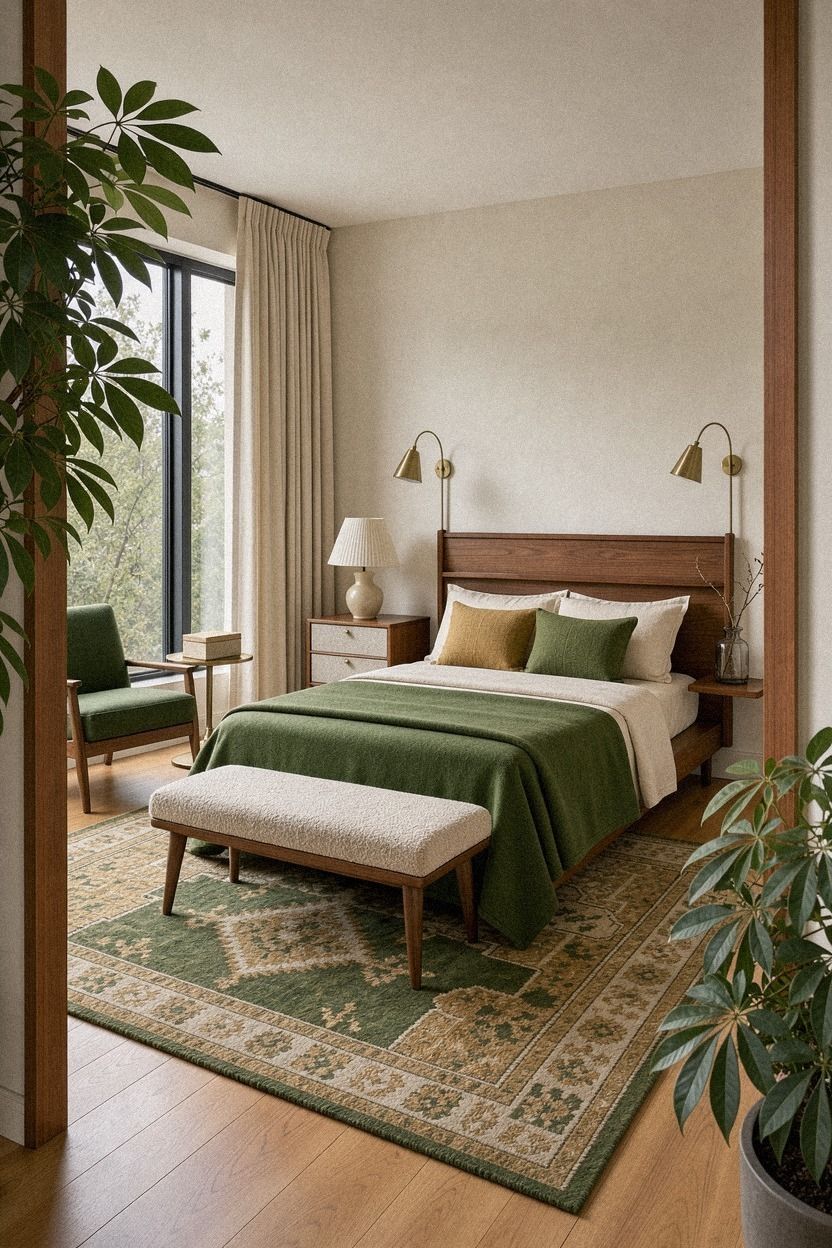
Your rug placement will feel more intentional when the materials around it share a temperature. Pair a cool patterned rug with warm wood, or pair a warm rug with pale painted furniture. The contrast should feel considered and inviting.
A warm wood bed can support a rug with emerald, gold, and cream notes. If that scale is too large for your room, an IKEA KALLAX birch-effect piece can provide a lighter visual counterpoint. You’ll want to repeat the wood tone once or twice, but you don’t need a matching bedroom set.
Add a shagreen accent on one cushion, tray, or small bedside piece. Its subtle texture will make the rug feel connected to the bed rather than isolated on the floor. You can keep the rest of the bedding in washed cotton so the room remains easy to live with.
I’d skip a full set of matching textures. Your room will look flatter when every surface has the same finish. Let the rug be tactile, the bedding be breathable, and the wood carry a little visual weight.
For a more relaxed finish, add a washed wool throw or a cream linen duvet in a nearby tone. You’ll get depth without creating visual noise, and the bedroom will feel settled rather than staged.
11Choose Low-Maintenance Texture Over Fussy Detail
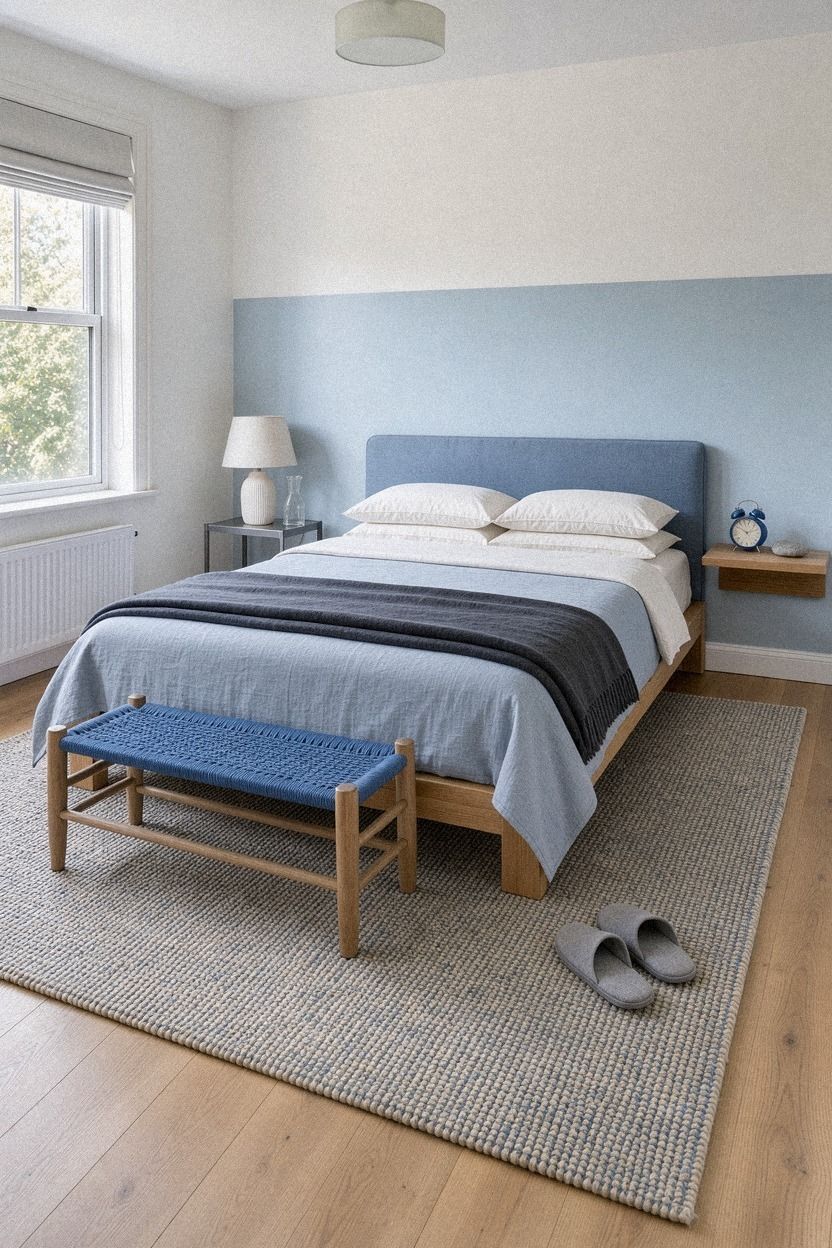
The best rug under the bed is one you’ll keep clean without resenting it. Look for a flat weave, a short pile, or a pattern that can tolerate ordinary life. You’ll want enough texture to make the room feel comforting, but not so much that every step leaves a visible mark.
A machine-washable cotton rug can be a practical choice for a rental, a child’s bedroom, or anyone who doesn’t want a large cleaning project. It may not have the depth of wool, but your room can still feel refined when the scale and color are right.
For a more polished look, choose a forest green and rust pattern with natural oak nearby. Washed Belgian linen can soften the bedding and repeat the relaxed texture without adding fussy detail.
I’d avoid a stark white rug under the bed unless you’re willing to clean it often. Dust and foot traffic will show quickly.
Check the care label before buying, especially if the rug sits under a heavy bed frame. You’ll want to know whether it can be spot-cleaned, shaken outdoors, or professionally washed. Those details matter more than a fussy surface that looks impressive for one week.
Your final test is simple: stand in the doorway and look at the bed, rug, and floor as one arrangement. If the rug has a clear edge, a useful walking surface, and one color connection to the room, you’re done. No extra layer is required!
Why I Stopped Treating the Rug as an Accessory
I used to buy bedroom rugs last, after the paint, bedding, lamps, and art were already chosen. That sounds sensible until you realize the rug is one of the largest color fields in the room.
Mine would arrive, I’d slide it under the bed, and then I’d wonder why the whole space felt slightly disconnected. The problem wasn’t the rug. I had asked it to agree with decisions it never helped shape.
Now I start with the floor plan and the way I walk through the room. If the bed is the visual center, the rug needs to support that center. If the room is narrow, I care more about a clean path than a perfectly centered rectangle.
If the bed is already heavy and dark, I’ll choose a lighter textile with a border that gives the eye somewhere to rest.
I’ve also stopped chasing the idea that a rug must look untouched. Bedrooms are used spaces. A little variation in the weave, a soft fold at the edge, or a faded section can make the room feel more honest.
That doesn’t mean buying something damaged beyond repair. It means choosing texture that can handle your life.
My strongest preference is a warm, low-pile rug with enough visible surface at the foot and sides of the bed. I’d choose that over a smaller luxurious rug every time.
The expensive option can still look lost if its proportions are wrong, while a modest rug with a clear border can make the entire room feel settled. That’s the detail I’d protect first.
For a quick sequence, I’d begin with the two-thirds rule, test a runner, check the nightstand overlap, then adjust the lighting relationship. Those four choices will tell you more than another hour of shopping.
What People Always Want to Know
What is the best rug under a bed for a small bedroom?
A low-pile runner or compact flatweave rug is usually best because it gives you soft footing without covering the whole floor. IKEA and Article have useful neutral styles, but measure your walking path first.
You’ll want the rug centered on the bed, not squeezed against one wall. The smaller-footprint approach is often the most forgiving.
Where can I buy bedroom rugs on a budget?
You can look at IKEA, Wayfair, Target, Facebook Marketplace, and local thrift shops. A washed cotton rug is often easier to move and clean than a heavy wool design.
You don’t need special ordering, and you can compare texture in person before buying. Start with the investment ladder so the rug fits the entire room budget.
How much does a rug under the bed makeover cost?
A full room update can fall within the typical $200-$800 budget tier, depending on what you already own. Moving the bed, changing the layout, and reusing bedding are free. Your largest new cost may be the rug, paint, or lighting.
A useful rug pad should also be included in your estimate.
Can I create an intentional rug placement on a budget?
Yes, and you can begin without buying anything. Center your existing rug, remove visual clutter around the bed, and shift the nightstands so the arrangement reads as one group.
A secondhand flatweave can add texture, while leftover paint can refresh the wall behind the bed. The soft offset can also help an imperfect room feel graceful.
Is rug placement under the bed worth it in a small space?
Yes, because one continuous rug can make a small bedroom feel calmer and less fragmented. You’ll want the rug to extend beyond the sides of the bed while preserving a clear walking path.
A runner at the foot may work better than two small bedside mats. Compare it with the continuous-rug layout before deciding.
Is a rug under the bed a good idea for a rental?
Yes. Choose a removable rug, avoid adhesives, and use furniture placement to hold it steady.
A flatweave cotton rug is easier to take with you than a fixed floor treatment. You can also use removable art and a tension rod for curtains without changing the rental permanently.
The low-maintenance texture guide is a useful final check.
Where I’d Start First
If I had to pick one, I’d start with centering the rug on the bed. A clear border keeps the frame from disappearing, while the right texture softens the first step of the morning. Move what you own before buying anything new, then pin the layout that feels calmest for later.