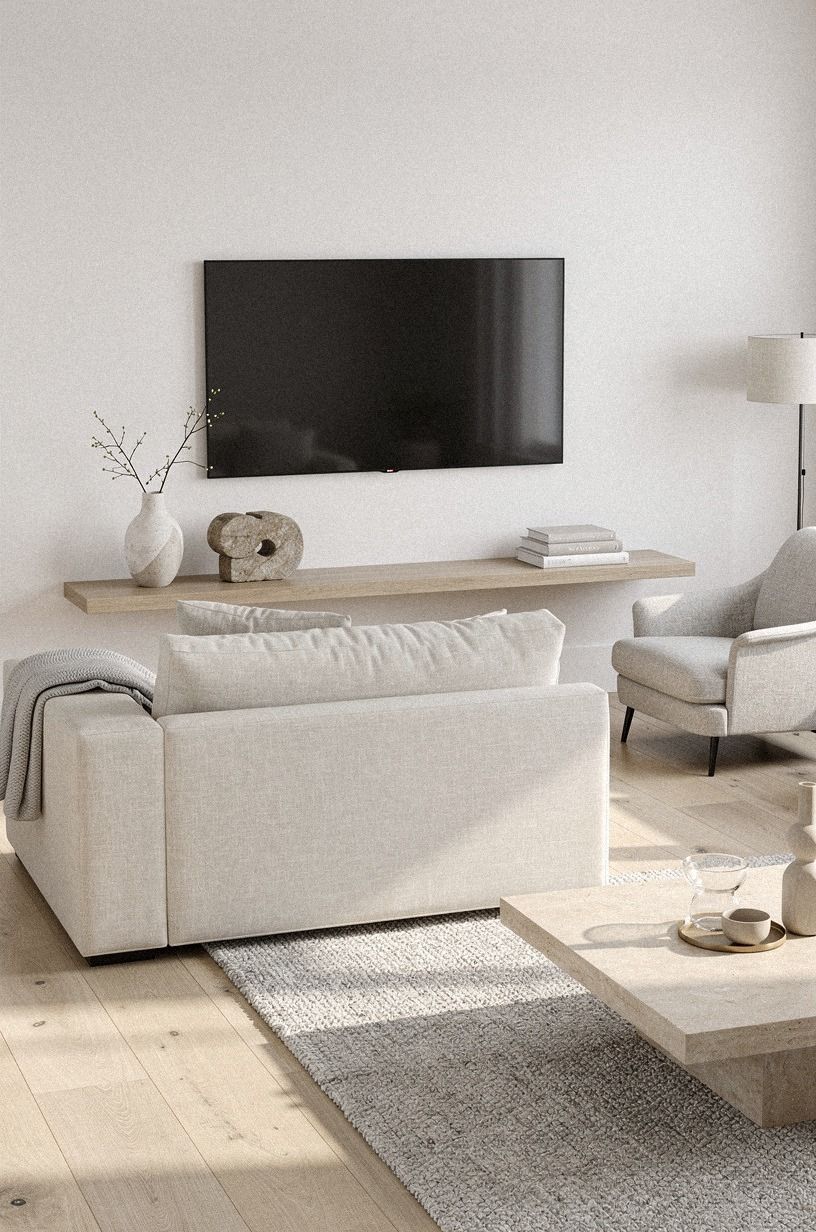
I Added a Floating Media Wall for a Light, Modern Look, Without Renovating
30 october 2026A floating media wall can give a living room a light, modern look for about $300-$1,200 at the budget tier, and I built mine without opening a wall or hiring a crew. I was tired of the black TV swallowing the room. Then I raised it, hid the wires, and changed everything!
- Float the console for a lighter living room
- Use The Two-Wood Rule around the screen
- Hide the wires inside a shallow cable chase
Here's what it looked like before
The old setup had a low black console, a television sitting too close to the floor, and cables falling behind it in a dusty knot. The wall was painted a tired beige, and the furniture stopped several inches short of the rug.
I won't pretend it was a disaster. It worked.
It just didn't feel like my room.
I lived with that arrangement for months because I thought a media wall meant demolition, drywall dust, and a contractor's calendar. Then I measured the wall, marked the studs, and realized the lighter look could come from proportion instead.
Your wall doesn't need built-ins to feel finished. It needs breathing room, a clear visual center, and a place for your things to disappear.
- Float the console for a lighter living room
- Use The Two-Wood Rule around the screen
- Hide the wires inside a shallow cable chase
- Choose Benjamin Moore Revere Pewter behind the cabinet
- Anchor the wall with a wool rug
- Build The Three-Height Light Stack
- Swap the bulky stand for a wall-mounted media cabinet
- Frame the screen with open shelving
- Paint the niche in Farrow and Ball Hague Blue
- Ask how high your floating TV stand should sit
- Mix oak over matching white
- Hang art beside the screen
- Choose a modular TV console for small spaces
- Layer warm textures for a fall-ready wall
- Finish with the Screen-to-Rug Ratio
1Float the console for a lighter living room
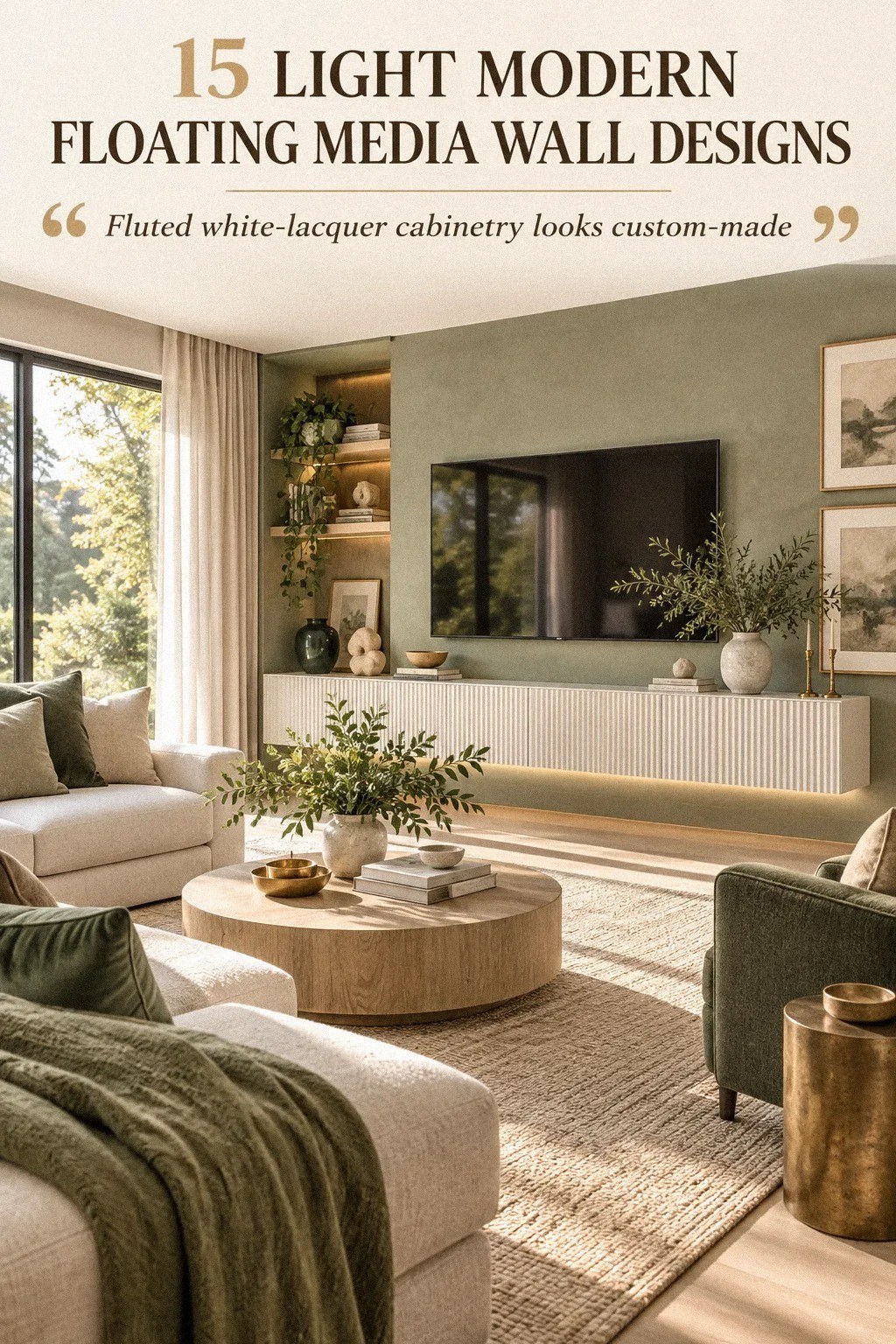
I started with a floating cabinet because lifting the storage off the floor gave the whole wall more air. My IKEA BESTÅ cabinet became the base, mounted low enough to feel practical but high enough for the rug to continue visually beneath it. The open floor made the room feel larger within one afternoon.
Your console should sit level, with the screen centered above it rather than pushed toward one side. I measured twice because a crooked cabinet will bother you every evening.
A 35-40 inch sofa depth left enough room for the cabinet doors to open without crowding the walkway. And yes, the first time I held the cabinet against the wall, it looked too high.
Trust the tape line.
I skipped a deep freestanding entertainment center. It would've stored more, but it also would've eaten the clear space that made the wall feel modern.
2Use The Two-Wood Rule around the screen
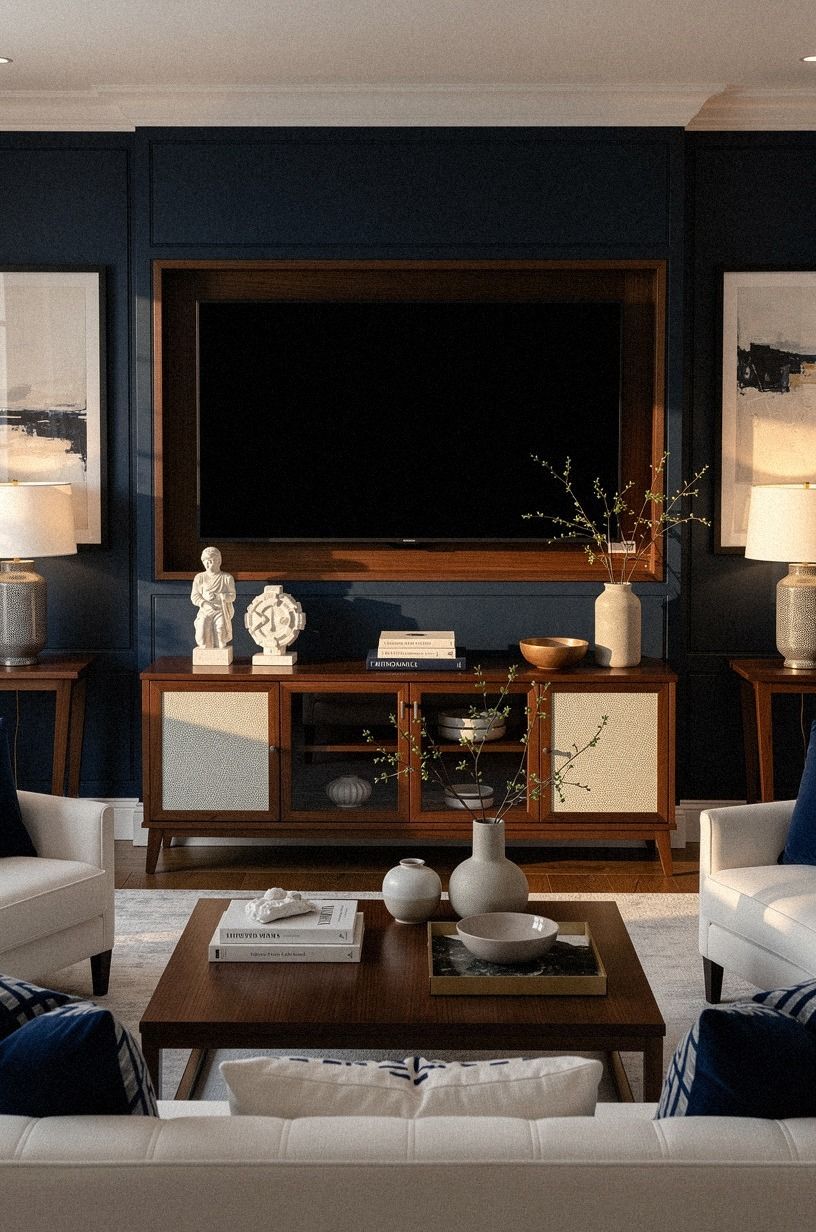
The Two-Wood Rule kept my wall from looking like a showroom display. I used a white finish for the floating cabinet and a slightly deeper walnut tone in one small frame nearby.
Two wood tones felt collected. Three would've looked fussy, especially beside the navy and white accents.
Your eye needs somewhere to rest, so don't scatter wood finishes across every shelf. I chose book-matched walnut for one focal detail, then added a small shagreen accent to bring in texture without another wood species.
The grain catches afternoon light in a way flat laminate never will. I went back and forth between walnut and ash, but walnut won because its depth balanced the black screen.
And if you're styling a rental, a removable wood-look panel can give you the same warmth without permanent construction. Keep your sample beside the paint in morning and evening light before you commit.
3Hide the wires inside a shallow cable chase
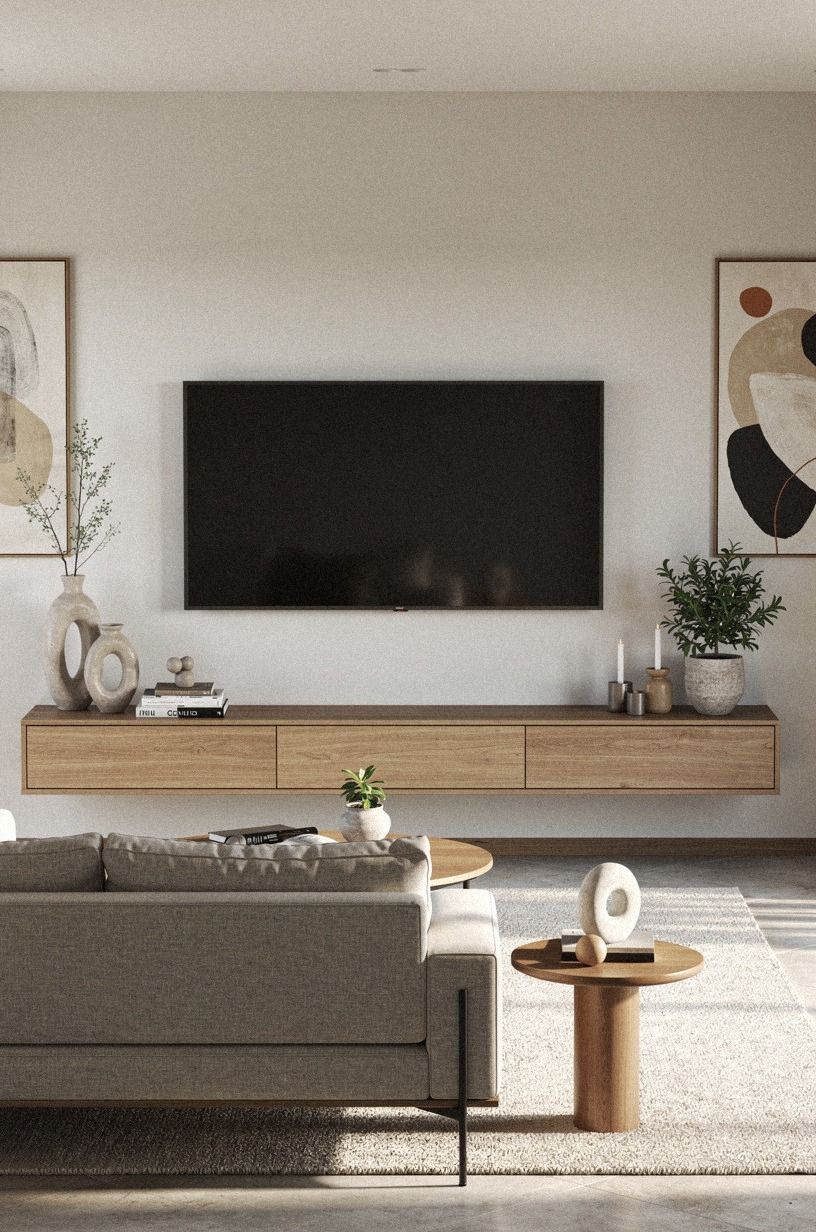
The wall looked lighter once the cables disappeared. I used a paintable Legrand cable raceway instead of opening the drywall, running it straight down behind the cabinet and covering it with the same cream wall color. The result isn't magic.
It's simply a clean line where a messy one used to be.
Your television needs power, streaming access, and a little slack for future changes. I left enough room to reach the outlets, because hiding a cable so well that you can't replace it is poor planning. The chase took one evening, and I painted it after the second coat dried.
Would I cut into the wall next time? Only if the room were mine permanently.
For this makeover, the removable route was calmer, cheaper, and easier to repair. But don't bend the cable sharply behind the screen.
That small shortcut can create a frustrating setup later.
4Choose Benjamin Moore Revere Pewter behind the cabinet
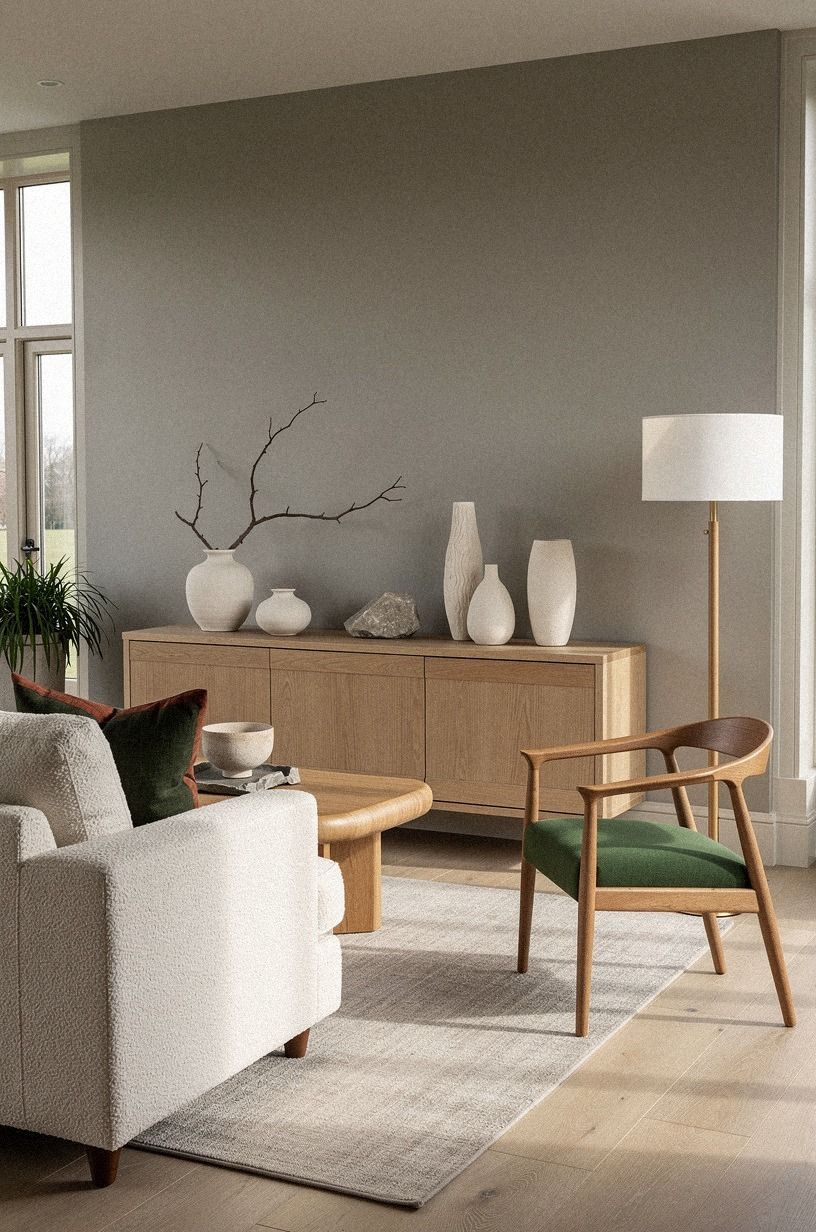
I tested three paint cards before choosing a forest-green finish with enough warmth to sit beside rust-colored accents and natural oak. I kept the cabinet front restrained, then brought in organic bouclé so the wall felt layered rather than flat.
5Anchor the wall with a wool rug
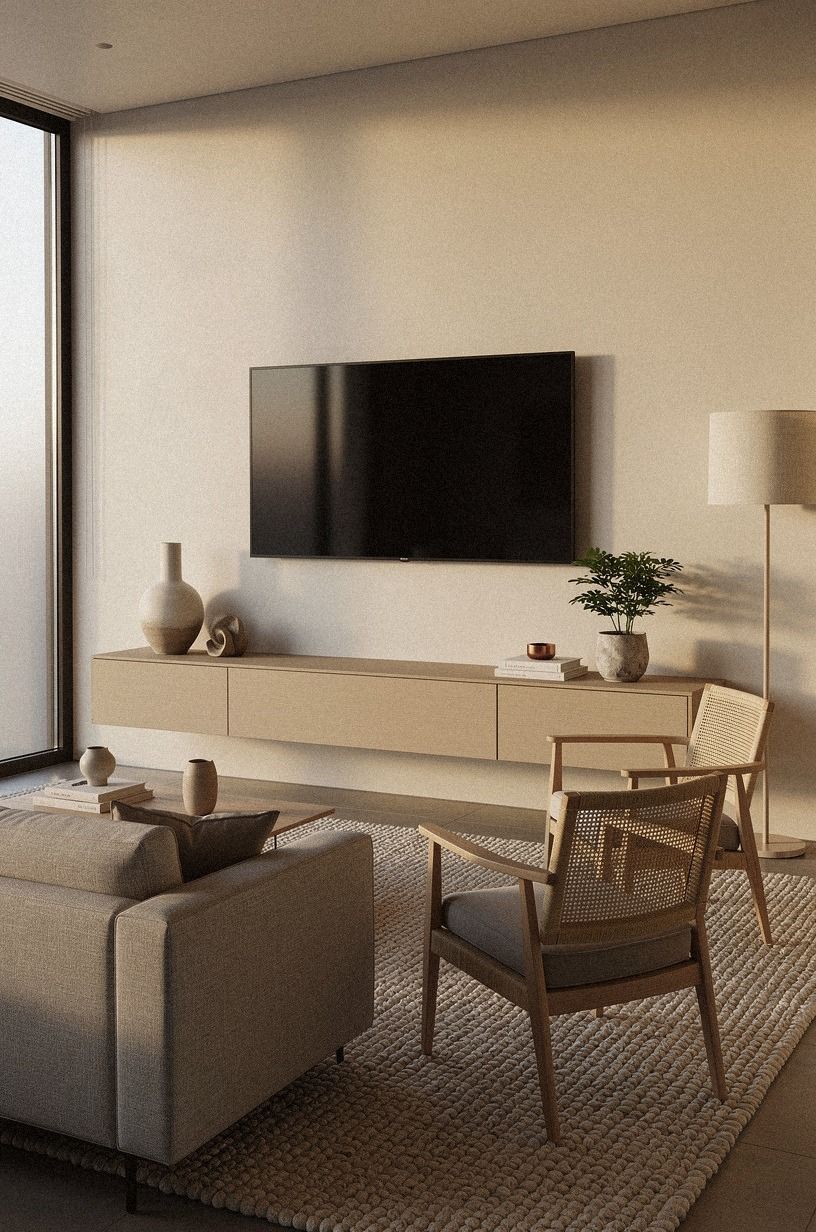
The floating cabinet needed something substantial beneath it, so I moved my wool rug forward until the front legs of the sofa rested on it. An 8x10 works for many living rooms, while a 9x12 gives a larger seating area a more settled shape. My old rug had been too small, and every piece looked stranded.
Your rug doesn't need a loud pattern to carry the room. I chose a low-contrast dusty rose and charcoal design with enough texture to catch the light.
An unlacquered brass accent nearby added a warm note as its surface developed a soft patina. The wool feels springy underfoot, and it softened the sound of the television area without making the space feel busy.
I nearly chose a small rectangular mat under the coffee table. That would've saved money, but it would have divided the room into little islands.
And when you place the rug, keep the front legs of your main seating on it. The room will feel calmer immediately!
6Build The Three-Height Light Stack
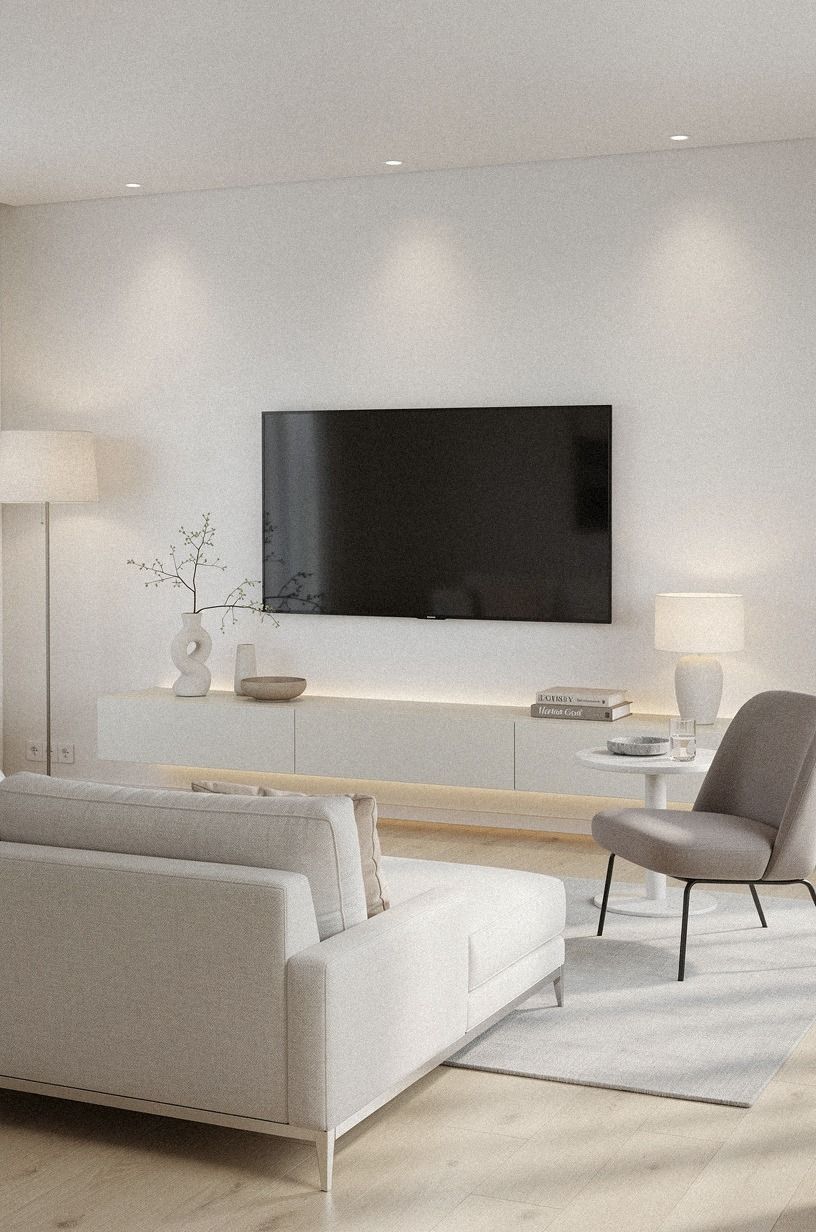
The Three-Height Light Stack became the part I noticed most at night. I used a low lamp on the cabinet, a medium framed piece beside the screen, and one taller floor lamp near the sofa. Each light sits at a different level, so your eye moves around the wall instead of stopping at the television.
My Schoolhouse Luna lamp throws a warm pool across the cabinet while the floor lamp reaches above the sofa arm. I used warm bulbs and kept the overhead fixture off whenever I could. A deep-pile mohair velvet cushion on the sofa brought in the camel tone, while the black accents kept the warm white palette from becoming washed out.
Your wall doesn't need matching lamps. It needs layers.
And if you're working with a narrow room, use one wall sconce or a slim floor lamp rather than filling the cabinet with objects. I tested blue-white bulbs once.
They made the room feel like a waiting area, so they left the house.
7Swap the bulky stand for a wall-mounted media cabinet
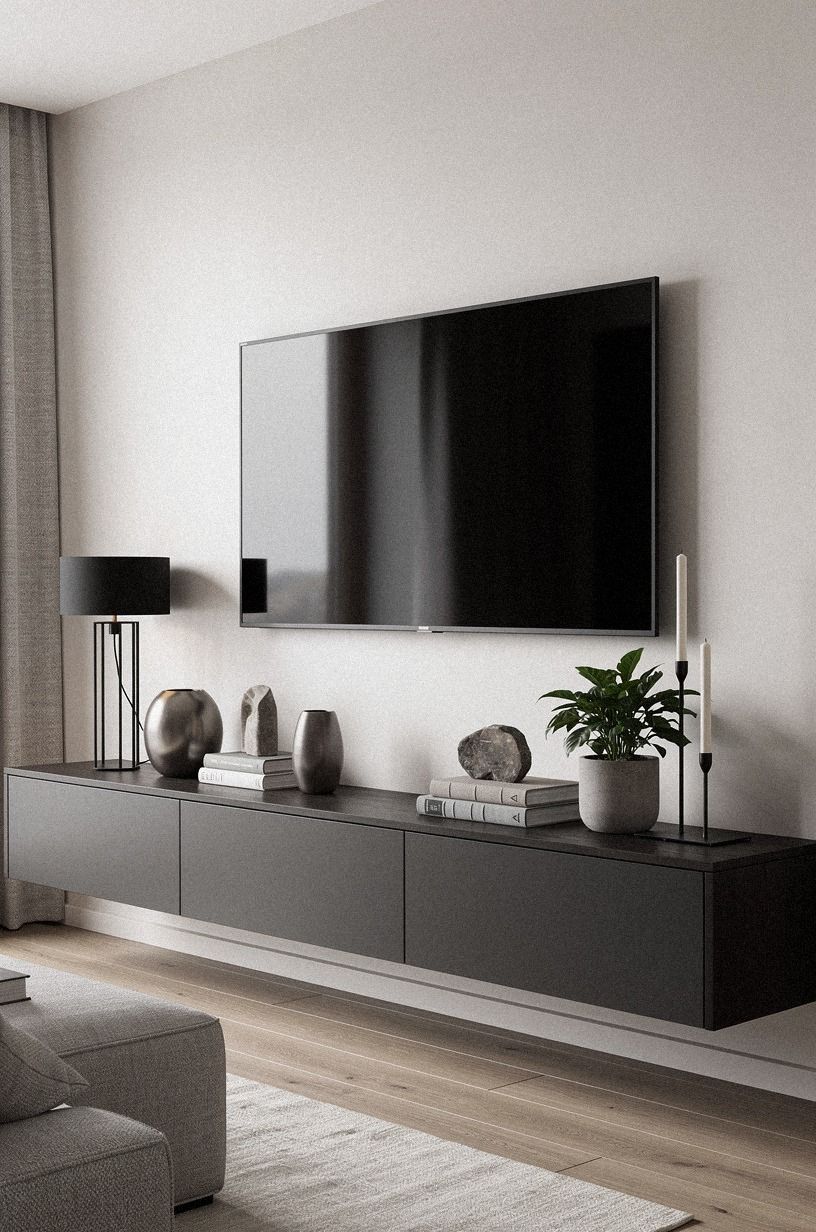
A modern wall-mounted media cabinet gave me storage without the visual weight of four legs and a thick top. I chose a midnight-blue finish with small copper details against an ivory wall treatment, so the cabinet felt substantial without becoming another black rectangle.
8Frame the screen with open shelving
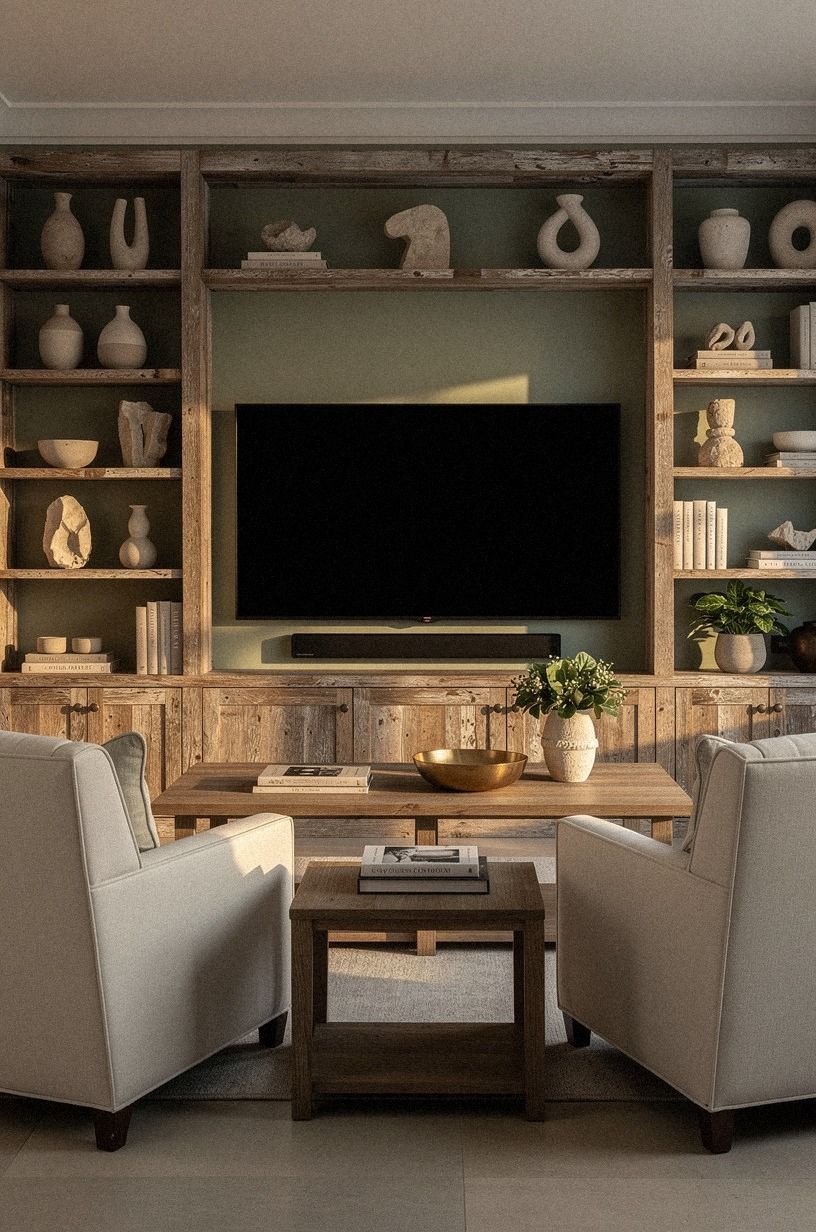
I added two narrow shelves beside the television, not above it. The shelves frame the screen while leaving the upper wall open, which made the arrangement feel airy instead of boxed in. Reclaimed weathered teak worked because its natural grain brought warmth to the sage green and warm cream palette.
Your shelves should carry only a few things. I used a small art book, a stoneware vase, and one trailing plant. The plant's leaves broke up the straight lines, while the vase added a muted earthy note.
I didn't repeat the same object on both sides because perfect symmetry felt stiff.
And leave empty space around every item. A shelf filled edge to edge will make your media wall look crowded, especially if the cabinet already has closed storage.
I prefer one quiet gap to another decorative object. Your eye needs that pause when the screen is on.
9Paint the niche in Farrow and Ball Hague Blue
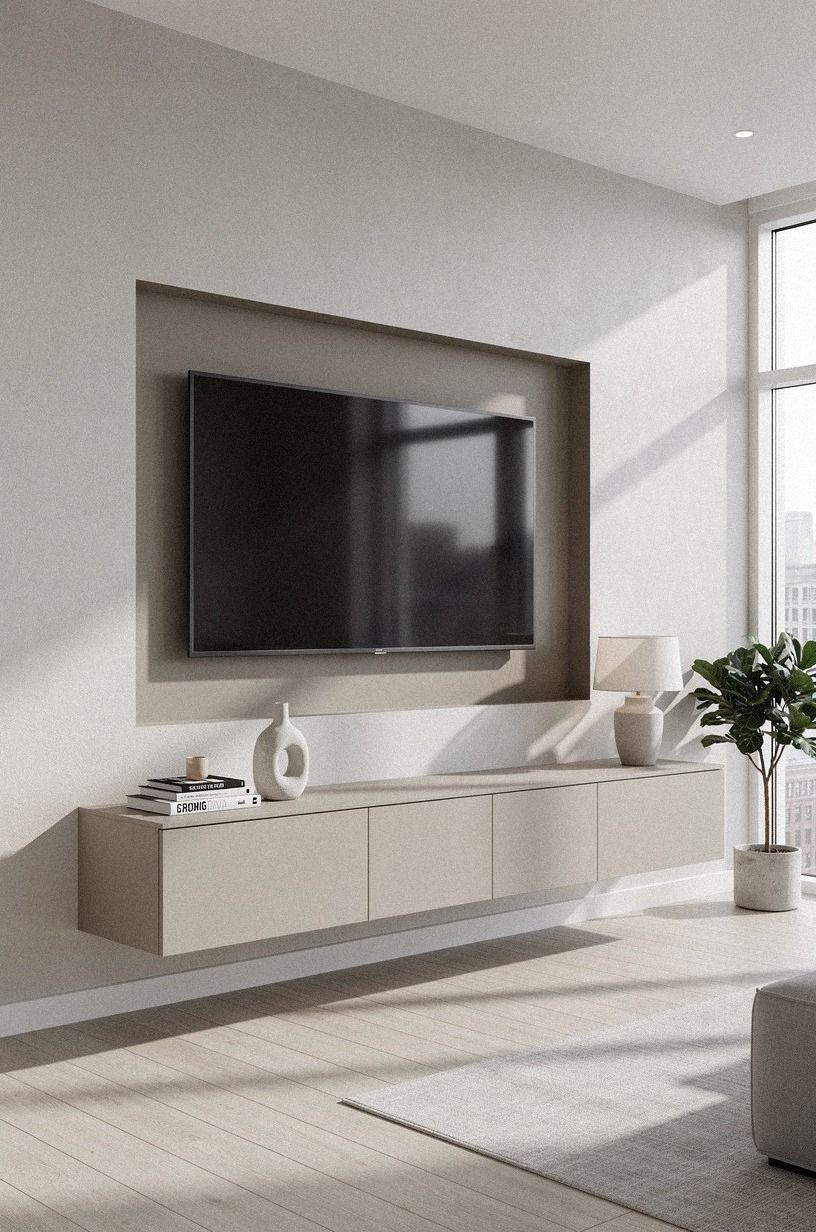
I wanted one deeper color somewhere, so I painted the shallow recess behind the screen in a warm terracotta shade with stone and olive accents. Washed Belgian linen softened the contrast and kept the niche from feeling too dark.
10Ask how high your floating TV stand should sit
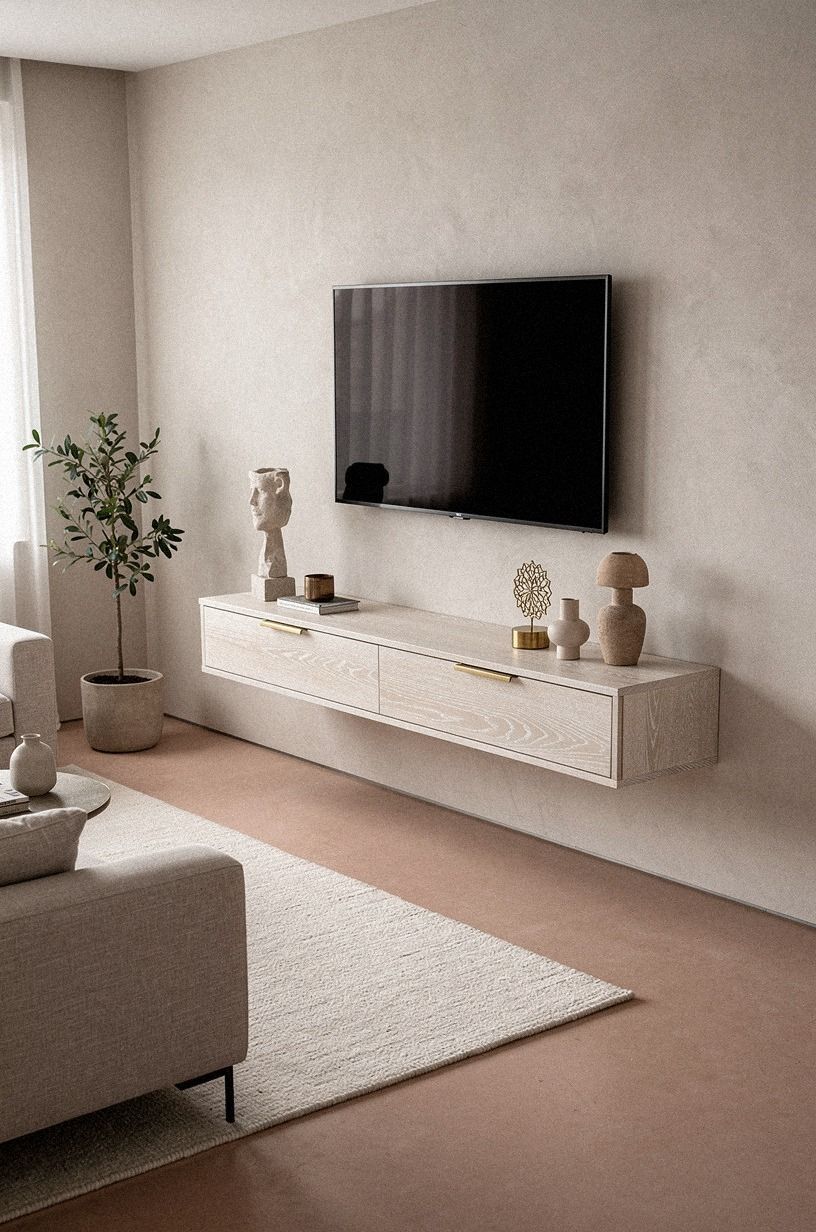
The right height depends on your sofa, your screen, and your sightline, but I started with the center of the television near seated eye level. Your neck shouldn't tilt upward for the entire movie. I held a cardboard screen template against the wall before drilling, and that simple step saved me from a second set of holes.
My cerused white oak cabinet sits low enough to keep the wall open, while the television has a small amount of breathing room above it. The coffee table is 16-18 inches tall, roughly aligned with the sofa seat, so the furniture doesn't form a staircase of awkward heights. Clay, linen, and aged brass kept the arrangement warm without adding visual weight.
Why mount a screen high just because there is empty wall above it? I skipped that common mistake.
Your media wall should support how you watch television, not imitate a showroom fireplace. And if your sofa is unusually low, lower the screen before you worry about symmetry.
11Mix oak over matching white
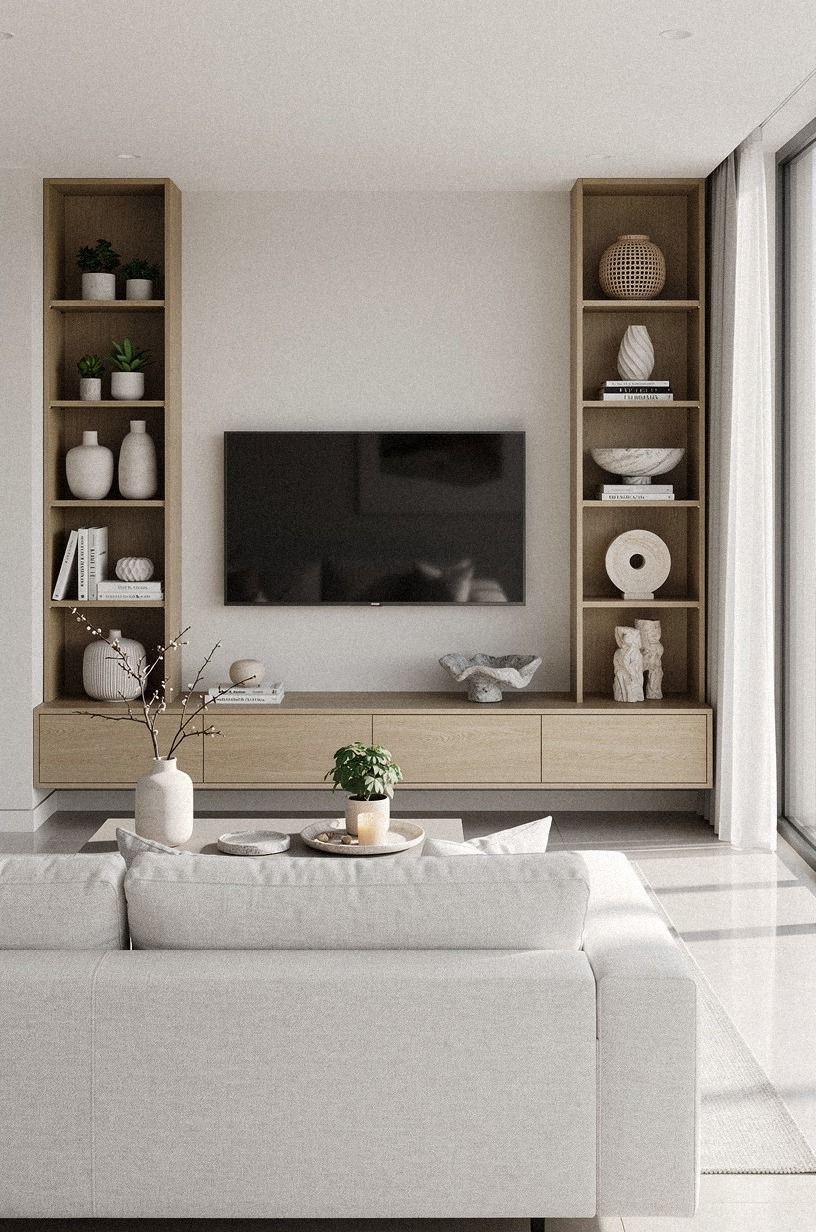
I chose a plum and gray palette with rose-gold accents instead of an all-white media wall because the room already had pale walls and strong daylight. A small shagreen detail added texture without competing with the screen.
12Hang art beside the screen
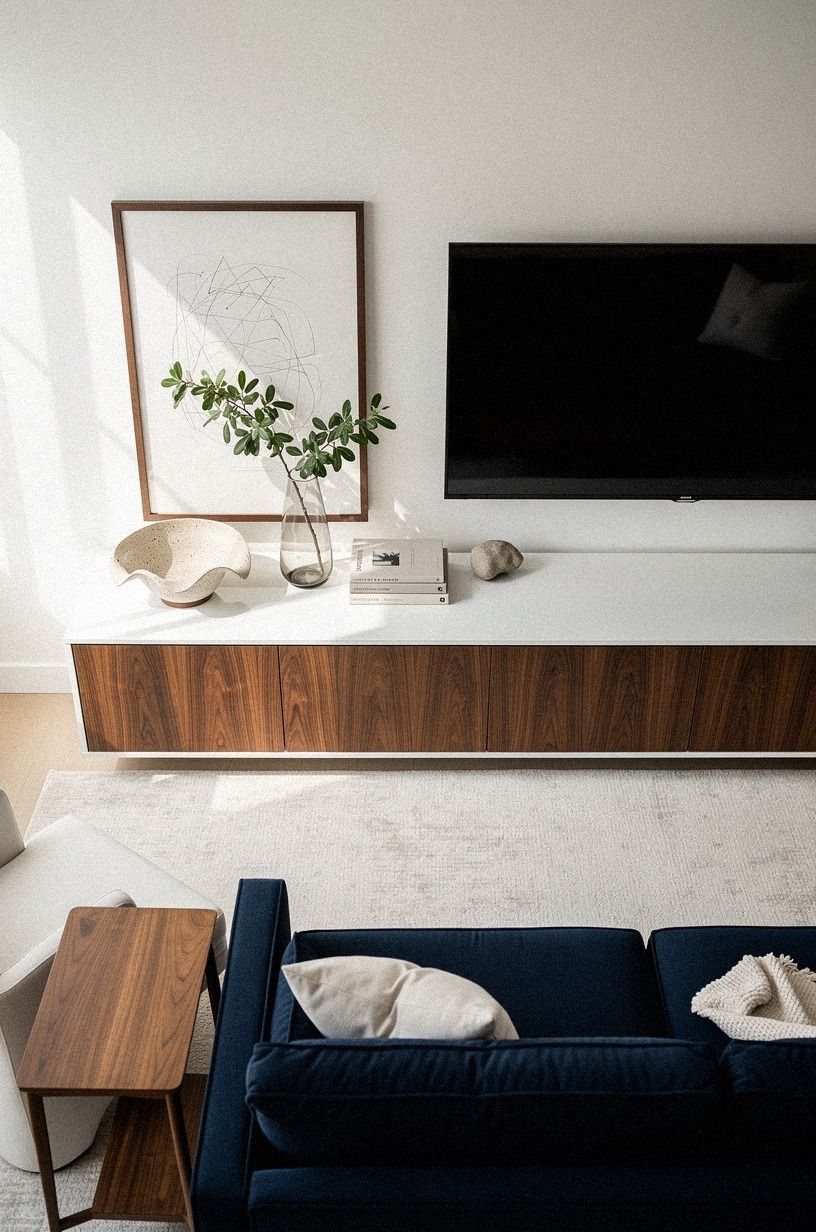
The television became less dominant once I hung one tall piece of art beside it. I chose a navy-and-white canvas with a walnut frame, so it connected the screen to the rest of the room without pretending the screen wasn't there. A book-matched walnut detail echoed the frame's grain.
Your art should relate to the wall's scale. A tiny frame will look nervous beside a large television, while one oversized piece can hold the same visual weight. I left a modest gap between the art and the screen, then aligned the lower edge with the cabinet rather than the television.
I rejected a gallery wall because the room already had many horizontal lines. It would've added energy, but not the calm I wanted. And if you rent, lean the art on the cabinet or use removable hanging strips rated for its weight.
Your wall can still feel finished without permanent holes.
13Choose a modular TV console for small spaces
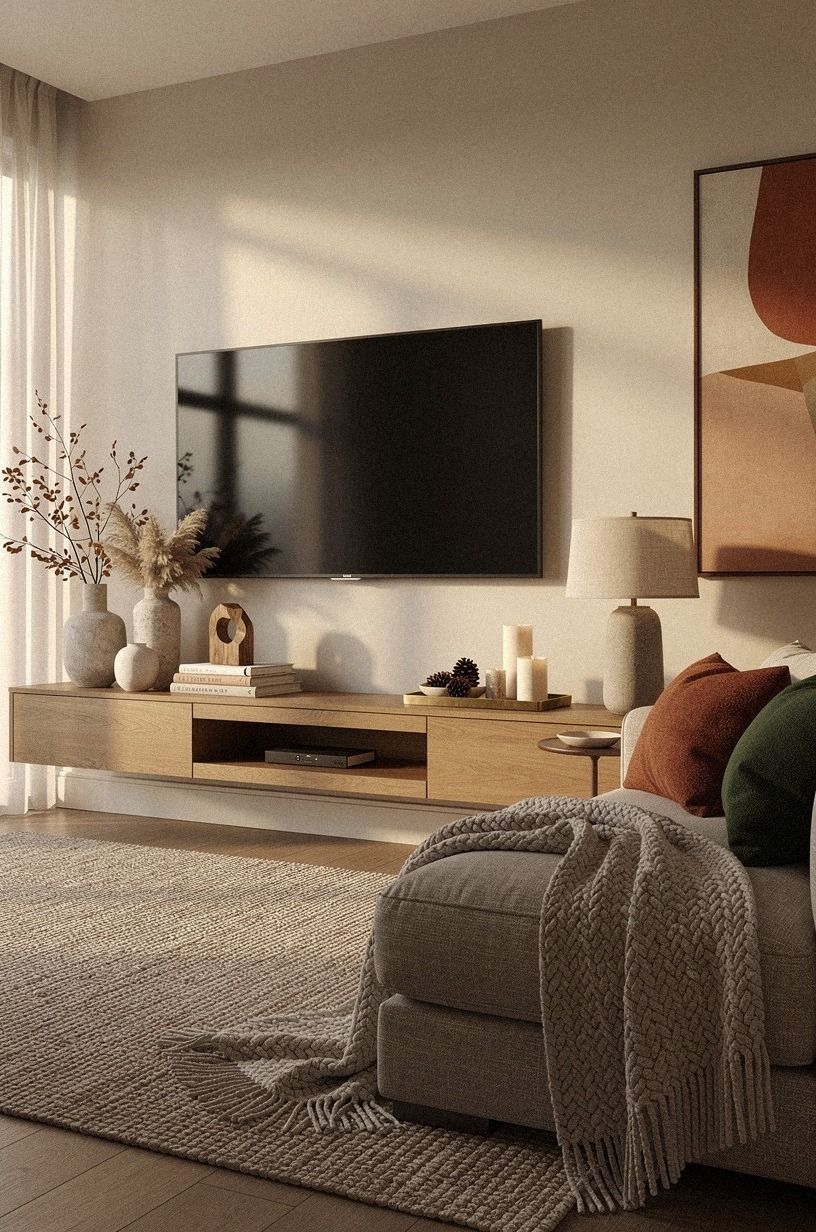
A modular TV console gave me flexibility when I tested the layout. I looked at the IKEA BESTÅ modular system because its cabinets can be rearranged if your room changes. That matters in a small living room, where one new chair can alter the whole walking path.
Your floating TV stand living room layout should leave a clear route from the sofa to the door. I used painter's tape on the floor to mark the cabinet depth before mounting anything. The tape looked silly, but it showed me that a deeper unit would pinch the room.
The modular approach also let me keep one cabinet closed and one open for quick access. Emerald, gold, and cream gave the arrangement life, while an organic bouclé cushion softened the harder cabinet lines. And if you're furnishing slowly, begin with the width you need now, not the largest arrangement you might want someday.
14Layer warm textures for a fall-ready wall
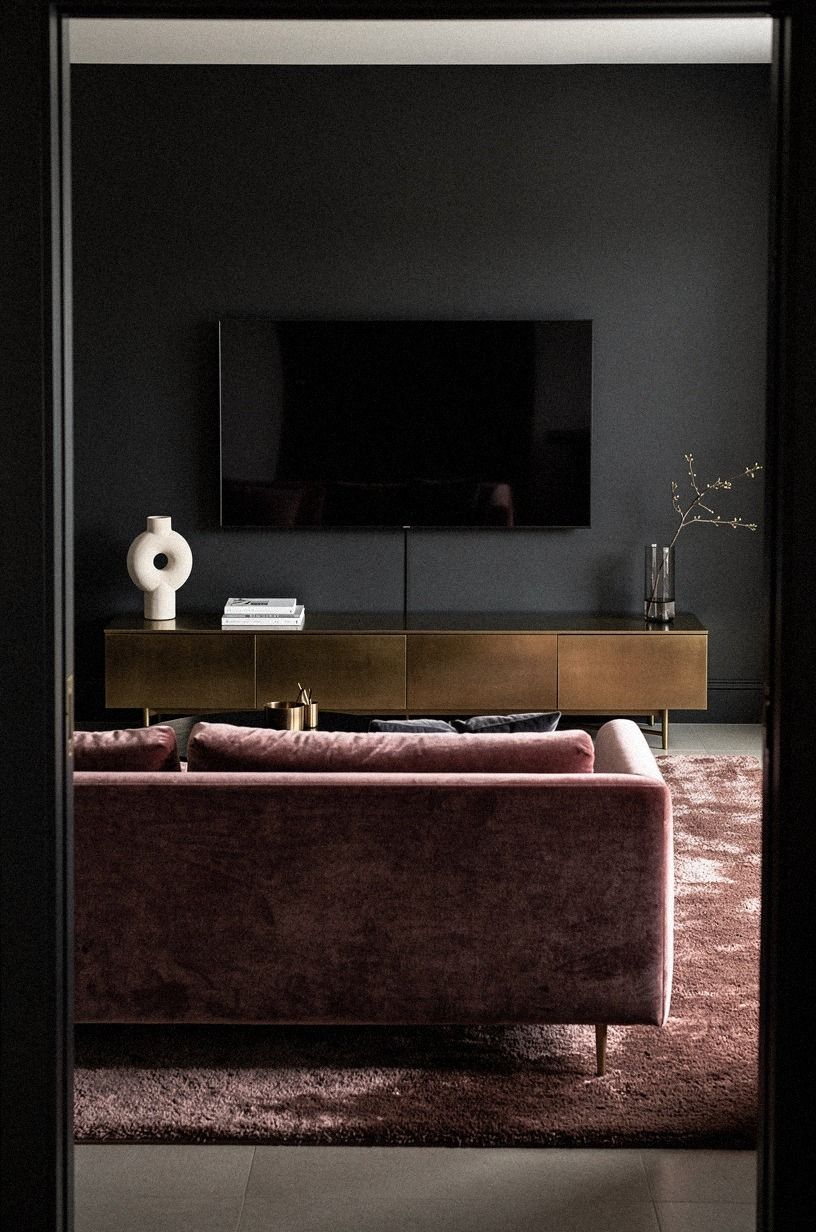
Because I was finishing the room in early fall, I brought in texture instead of adding more decoration. A natural oak tray, a folded throw in forest green, and a small rust-colored vessel made the wall feel warm without turning it into a seasonal display. An unlacquered brass accent added a finish that could develop character over time.
Your materials should invite touch. The oak has visible grain, the throw catches on the cabinet edge, and the brass has a dry, changing surface that looks better beside smooth paint. I kept the palette restrained because too many autumn colors would've made the television wall feel themed.
And I didn't add a faux garland or a crowded row of pumpkins. They would've distracted from the clean lines I worked to create.
One soft throw is enough to make a room inviting. If you want a brighter look in spring, swap the rust pillow for cream and sage.
15Finish with the Screen-to-Rug Ratio
The Screen-to-Rug Ratio was my last check before I called the wall finished. The television, cabinet, coffee table, and rug all needed to feel connected without lining up like a grid. I kept the screen centered over the cabinet and let the 9x12 rug extend beyond the seating area in dusty rose, charcoal, and brass tones.
Your viewing distance matters, too. A comfortable starting point is about 1.5-2.5 times the screen diagonal, depending on the screen and your eyesight. I sat in the usual sofa spot before tightening the mount, because the room should work from the place you actually watch.
The final adjustment was removing three objects. The wall looked better with less on it, and the open floor became part of the design.
A deep-pile mohair velvet cushion added softness without clutter. I was tempted to keep styling, but that would've weakened the light, modern feeling.
The calm came from proportion, not from one more purchase!
How much it cost
I set a hard ceiling of $1,200 because that was the top of the budget tier for this kind of living-room refresh. The floating cabinet, paint, rug, art, and lighting all had to earn their space. I reused the sofa and coffee table, which kept the project focused on the wall rather than turning it into a full-room replacement.
These are the typical US ranges I used to judge the scale of the project:
For your plan, start with the cabinet, cable solution, and paint. Then decide whether the rug or lighting needs attention first. A performance-fabric sofa can run $1,200-$4,000, while a wool rug sized 9x12 can cost $600-$2,500.
I didn't buy both because my existing pieces were still doing their job.
The design choice I still stand behind
I used to think a media wall had to look built-in to feel considered. That idea cost me time because I kept searching for a renovation-sized answer to a styling-sized problem. Once I separated the functions, the plan became clearer: the cabinet stores the clutter, the wall holds the screen, and the lighting keeps the room from becoming a dark rectangle after sunset.
The biggest lesson was resisting visual drama for its own sake. A black slat wall would've photographed well, but it would have made my small room feel narrower.
A pale oak cabinet, warm gray paint, and one deep blue accent gave me contrast without closing in the walls. If you're choosing between a dramatic finish and a flexible one, ask what you'll want to live with on an ordinary Tuesday.
I also learned that the floor matters as much as the wall. The rug pulled the seating forward, and that changed the screen's relationship to the room. Before, the television looked stranded.
After, it felt like one part of a comfortable arrangement. I didn't need more shelves, more art, or a bigger cabinet.
I needed fewer disconnected pieces.
Would I renovate the wall in a permanent home? Maybe.
But I wouldn't start there. I'd first test the height, viewing distance, paint color, and cabinet width with removable materials.
Your room will tell you what it needs once you stop asking it to imitate a photograph. Mine needed air, warmth, and a place for the cables to quit shouting.
A Few Things Worth Answering
What is the best Floating Media Wall Ideas for a Light, Modern Look for a small living room?
A floating IKEA BESTÅ cabinet is a strong small-room choice because it keeps the floor visible and offers closed storage. An Article Sven sofa pairs well with pale oak and warm gray paint. Keep the cabinet shallow, center the screen, and leave a clear walking path beside it.
Where can I buy Floating Media Wall Ideas for a Light, Modern Look pieces on a budget?
IKEA, Wayfair, and Target are useful starting points for cabinets, lighting, and rugs. You can also check Facebook Marketplace or a local thrift shop for solid wood pieces. Your best secondhand find may need only new hardware and a coat of paint.
How much does a Floating Media Wall Ideas for a Light, Modern Look makeover cost?
A budget makeover typically falls within $300-$1,200 in the US, depending on the rug, art, paint, and cabinet. Reusing your sofa and table can keep the cost down. Free changes include rearranging furniture, hiding loose cables, and removing clutter.
Can I create a Floating Media Wall Ideas for a Light, Modern Look on a budget?
Yes, and you can start with three low-cost changes: raise the television, paint behind it, and reuse storage you already own. Add a secondhand rug or frame, then spend more only where your room has a real gap.
Is a Floating Media Wall Ideas for a Light, Modern Look worth it in a small space?
Yes, especially when the cabinet floats and the rug connects the seating area. The open floor helps your room feel less crowded. Keep the sofa depth near 35-40 inches, choose a shallow cabinet, and avoid filling every shelf.
Is a Floating Media Wall Ideas for a Light, Modern Look a good idea for a rental?
Yes. Use a removable cable raceway, a tension-mounted shelf, peel-and-stick paint effects, or a freestanding cabinet with a wall-mounted screen if your lease allows it. You can create a warm, modern arrangement without committing to built-in millwork.
Where I'd Start First
If I had to pick one, I'd start with floating the cabinet. It clears the floor, gives the rug room to connect the seating, and makes cable cleanup possible without renovation. Pin this idea for later, then test the height with painter's tape before you drill.