I Made My Black Romantic Bedroom Feel Dramatic, Not Dark
25 october 2026Black romantic bedroom ideas can look dramatic, not dark, when warm fabric, useful lighting, and breathing room carry the color. I learned that after painting too much too soon, then correcting it with softer layers and pale wood. The room became intimate and inviting, not gloomy. Here’s what changed.
Here's what it looked like before
Before the changes, the bedroom had flat beige walls, a tired metal bed frame, one ceiling fixture, and curtains that let in plenty of daylight but none of the softness I wanted at night. I’d collected pieces over time, yet your eye had nowhere to rest.
The room had hard edges, empty corners, and a cold cast from the overhead bulb. And yes, it looked smaller than it was. The queen bed still measured 60x80 inches, but everything around it felt visually heavy.
I started by identifying the problems in order: wall color, bedding, wood, scale, and lighting. That sequence made the later decisions easier. If you’re planning a similar room, begin with the paint decision, not the accessories.
- Paint the Walls With a Warm Black Romantic Bedroom Base
- Layer Black Linen Over Glossy Black
- Build the Two-Wood Rule for a Romantic Black Bedroom
- Why Did the Room Feel Smaller Than It Was?
- Anchor the Bed With a Soft Upholstered Headboard
- Swap Overhead Glare for the Three-Height Light Stack
- Frame the Window With Washed Linen Instead of Heavy Velvet
- Mix Soft Black With Benjamin Moore Pale Oak
- Float the Nightstands for More Air
- Choose Brass That Can Age Beside Black
- Hang Art Low Enough to Meet the Bed
- Layer the Rug Beyond the Bed
- Add Romance With Texture Over Pattern
- Balance Black With Sherwin-Williams Accessible Beige
1Paint the Walls With a Warm Black Romantic Bedroom Base
I started with one wall instead of attacking the whole room. That decision saved me.
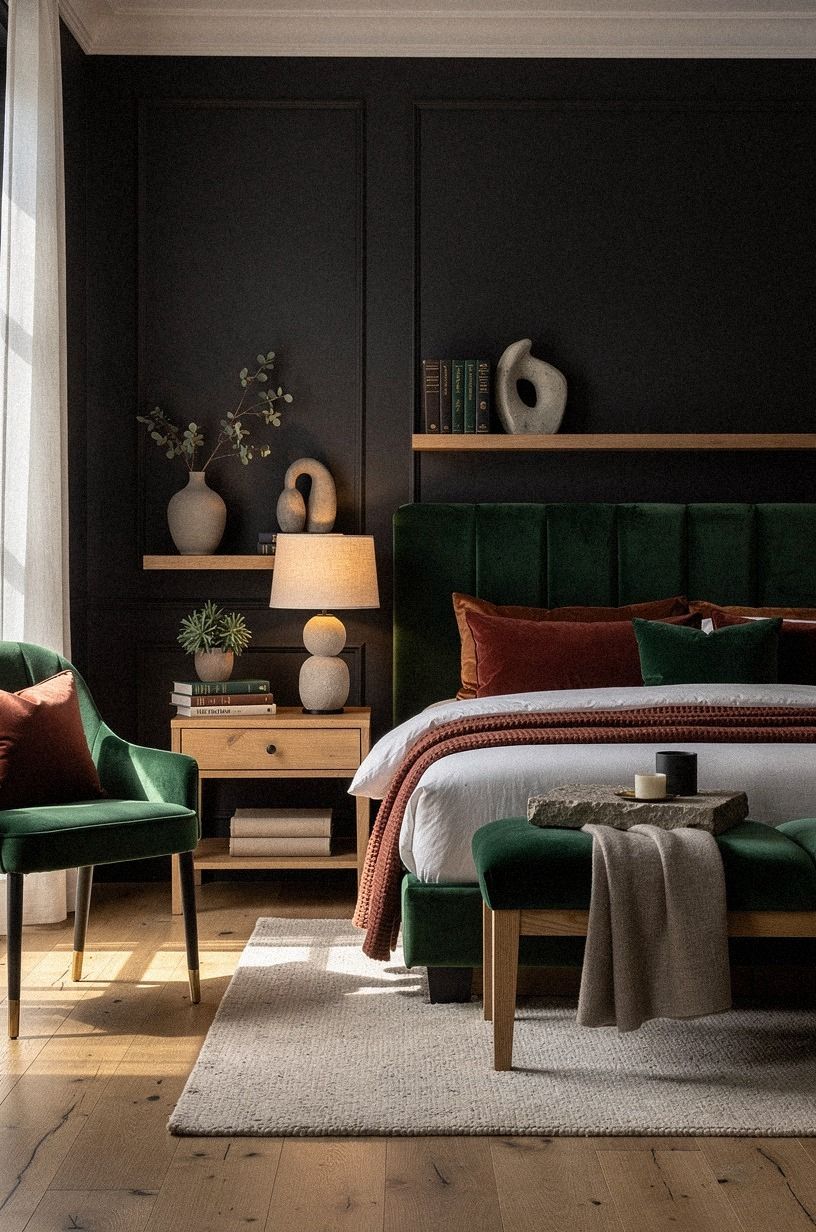
A near-black wall behind your bed gives the room a dramatic anchor, while the remaining walls can hold forest green with rust and natural oak nearby. Those warmer notes keep black from looking blue or flat.
You’ll want to test the paint in morning light, afternoon light, and lamplight. I brushed large samples beside the window and behind the nightstand, because your wall color will change more than the little card suggests. Black paint looks calm in daylight and much moodier after sunset.
And I didn’t paint the ceiling. That was the right call.
Leaving it pale gave your eye a place to breathe, and the room felt taller instead of boxed in. If you’re nervous, paint the wall behind the headboard first, live with it for a few nights, and then decide whether the romantic dark bedroom needs more drama.
A small deep-pile mohair velvet sample is worth considering beside the paint. Move it around the room instead of judging the wall from one fixed corner. The color should still feel warm near the window and grounded beside the bed.
That’s the test that matters.
For a rental, I’d borrow the same contrast with removable wall covering or a large textile panel. You can still create the effect described in the rental-friendly balance section without committing to permanent paint.
2Layer Black Linen Over Glossy Black
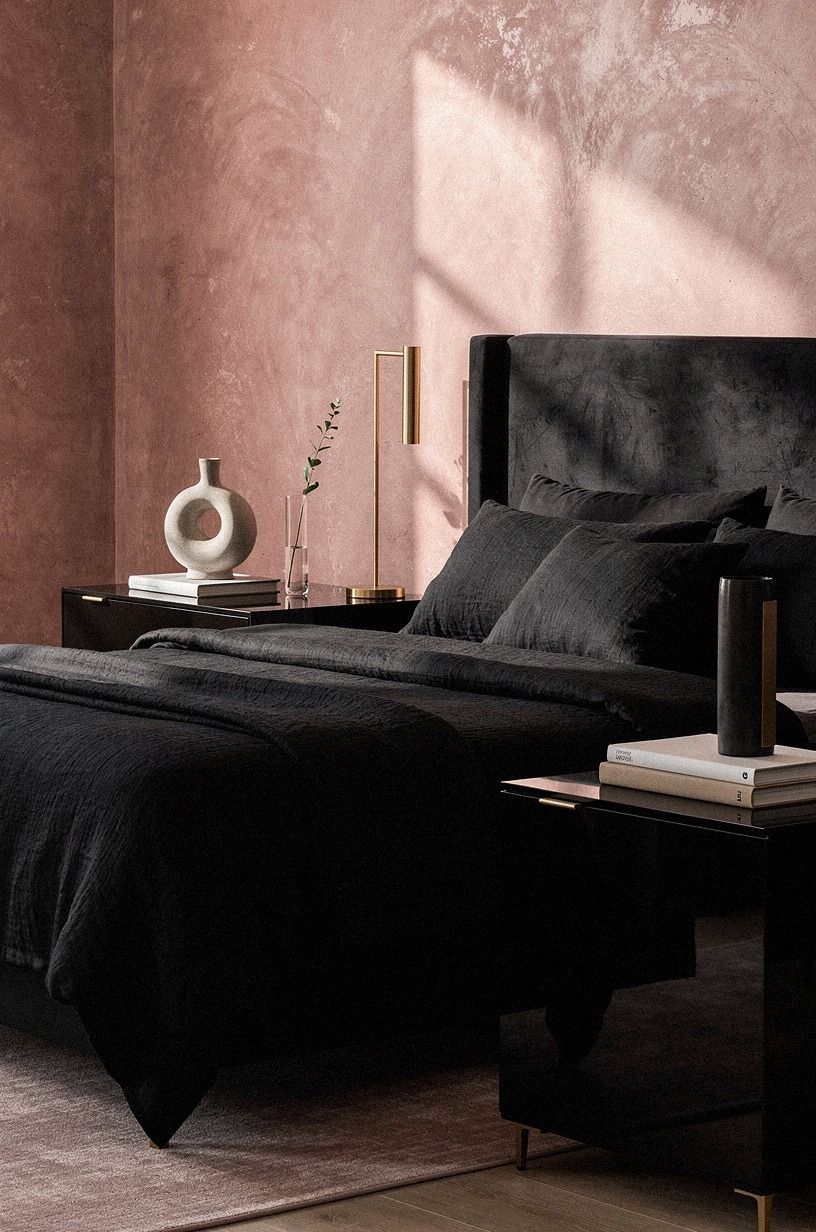
My first black bedding looked expensive online and cheap in person. The fix was dusty rose linen over charcoal, with a small brass accent and hand-applied Venetian plaster adding variation nearby.
3Build the Two-Wood Rule for a Romantic Black Bedroom
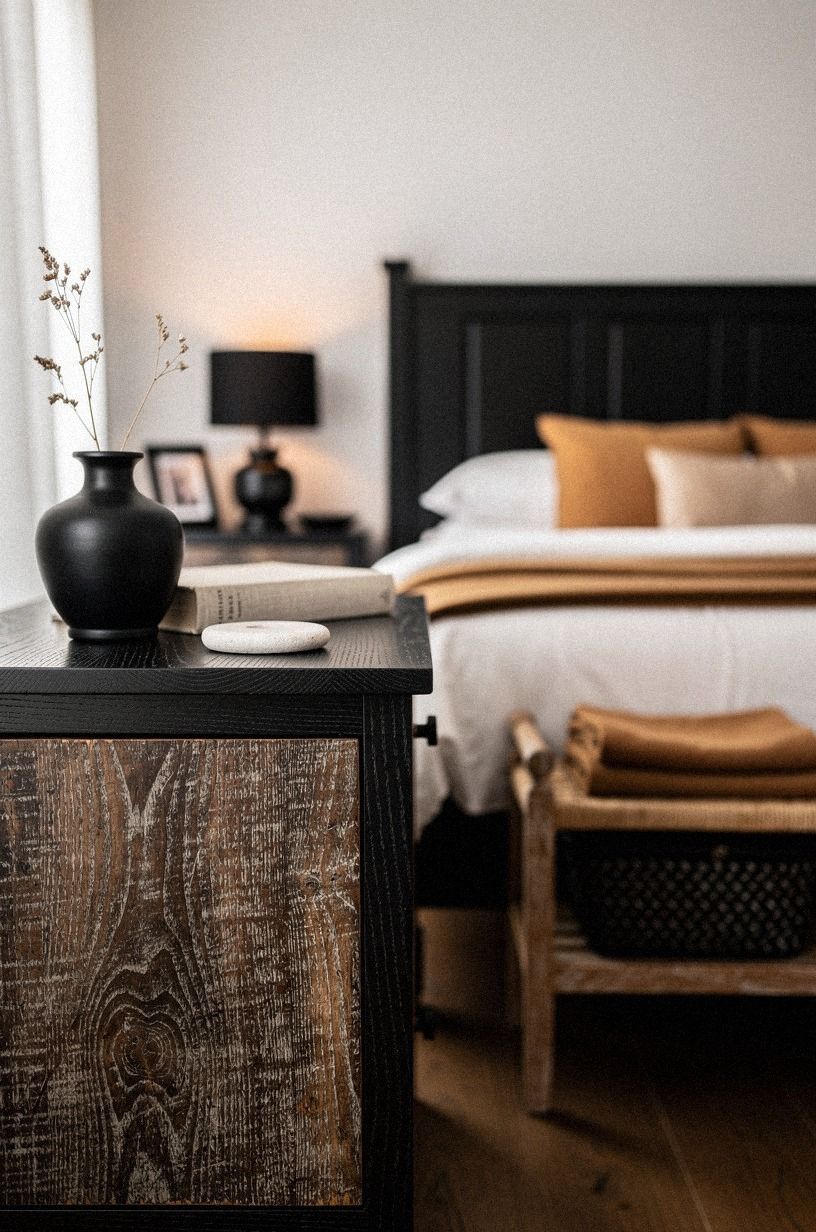
I used two wood tones and stopped there. The darker piece was a reclaimed weathered teak bench, and the lighter piece was a small warm-white nightstand. That simple rule kept the room earthy without turning it into a furniture showroom.
Your eye needs warmth beside black, but too many wood finishes create noise. Choose one pale or washed wood and one deeper tone. You’ll get the glow of timber without losing the moody feeling that made you choose black in the first place.
The moment it worked was unexpectedly physical. I switched off the ceiling fixture, turned on the bedside lamp, and watched the teak catch a small pool of amber light.
Suddenly the black wall looked soft. And I knew I didn’t need more decoration, just better contrast!
A reclaimed weathered teak surface is especially useful when the room has dark textiles. It adds variation without introducing another strong color. If your existing furniture is mismatched, repeat the teak through a tray, bench, or small stool so the pieces feel related.
4Why Did the Room Feel Smaller Than It Was?
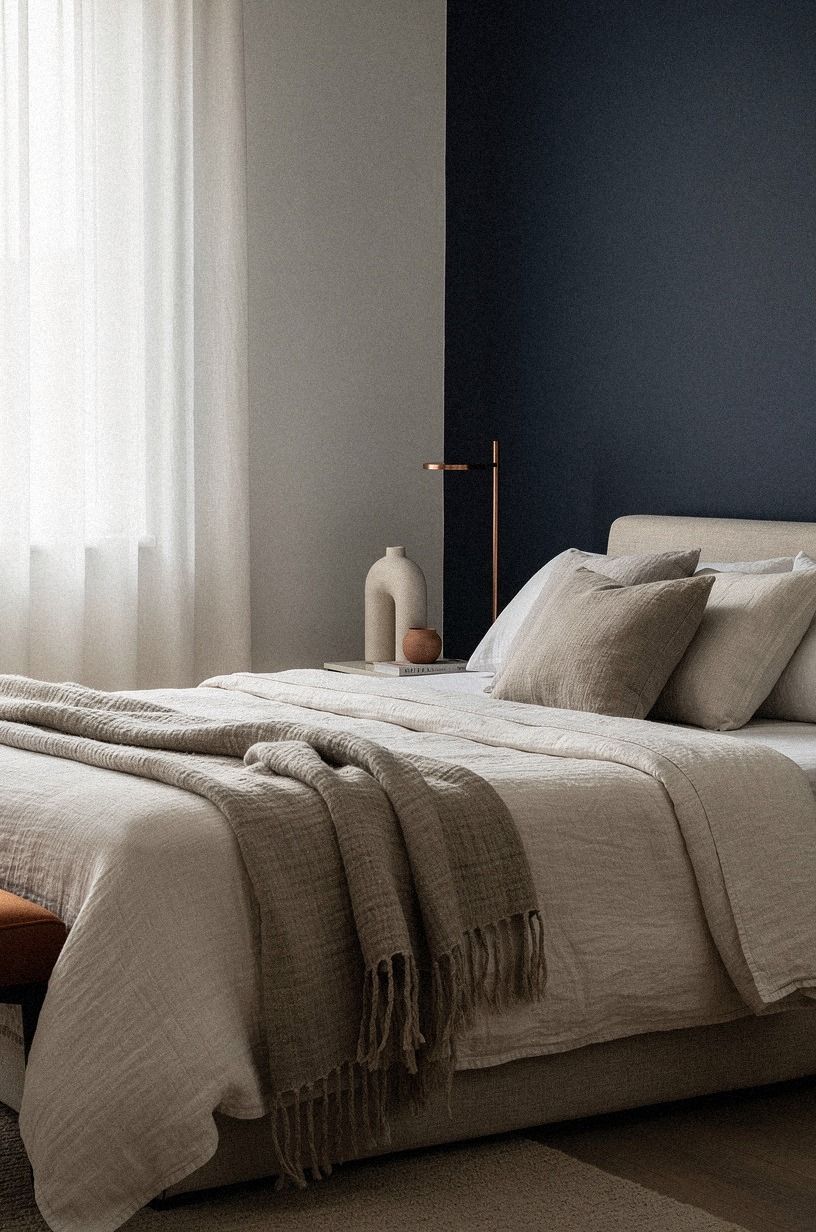
The problem wasn’t black paint alone. It was the pileup of dark objects at mattress height, including midnight-blue bedding, curtains, rug, and two bulky nightstands. Your room can handle a bold wall, but it needs an ivory break below and beside it.
I replaced one heavy nightstand with an ivory unit, then left the lower cubbies partly open. You can see the light surface from the doorway now, and that little flash keeps the wall from swallowing the furniture. I’d skip matching dark tables because they repeat the same weight.
Your rug helped, too. I placed an 8x10 rug with a washed Belgian linen feel so it extended 18 to 24 inches past the bed, using the standard range as my guide. What’s the point of a dramatic wall if your feet land on a cold floor every morning?
The rug made the answer obvious!
I also kept the path from the door to the bed clear. A clear walking path matters more than another accent chair, especially when the room is narrow. You notice openness through movement before you notice it as a decorating principle.
That is why I’d solve scale before buying accessories. The room felt better once the floor could be seen again. The same principle appears in the floating nightstand adjustment.
5Anchor the Bed With a Soft Upholstered Headboard
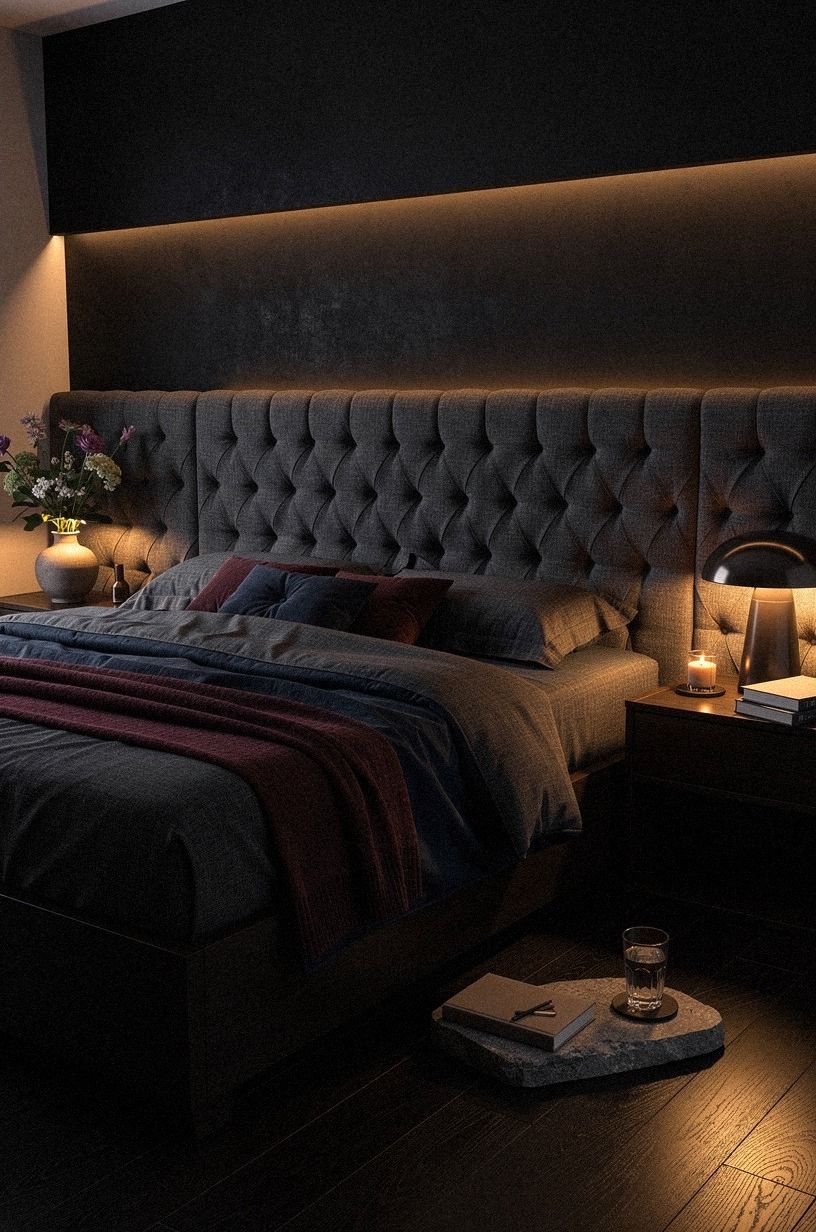
The black wall needed something with shape, so I added an upholstered headboard in warm cream with sage green and natural wood nearby. It softened the room instantly and gave your eyes a pale horizontal line against the paint. The fabric had enough texture to feel romantic without looking fussy.
You don’t need a tall hotel-style headboard if your bedroom is small. A lower profile keeps the ceiling visible, while a gently curved top brings in a quieter, more intimate mood. I’d avoid shiny white upholstery because it reads cold beside black.
The change happened when I leaned back with a book. Your body notices comfort before your decorating brain does. The headboard stopped the wall from feeling like a backdrop and made the bed feel anchored, calm, and welcoming.
It was the most practical decision in the whole makeover.
Look for a cerused white oak detail on the nearby furniture if you read in bed or share the room with pets. It gives you softness without demanding precious maintenance. The goal is a headboard you’ll actually use, not one that only looks good from the doorway.
6Swap Overhead Glare for the Three-Height Light Stack

The ceiling light was the biggest offender. It threw a hard white circle across the black wall and made every corner look unfinished. I replaced that single source with three levels: a bedside lamp, a low floor lamp, and a small warm fixture above the bed with a shagreen accent.
Your lighting should work from the mattress, not just from the doorway. Keep the bedside lamp near nightstand height, then add a lower glow where your eye can catch it while you’re lying down. A dimmer matters more than a fancy shade.
And use warm bulbs. The room should shift from bright and functional in the morning to soft and intimate at night.
I’d skip blue-toned light completely. It makes black paint look harsher, and you’ll lose the calming feeling you wanted from the romantic bedroom.
The most useful upgrade was a 2700K LED bulb with dimming control. It changed the room after sunset without requiring another large object. For more detail, compare this approach with the aged-metal lighting layer.
7Frame the Window With Washed Linen Instead of Heavy Velvet
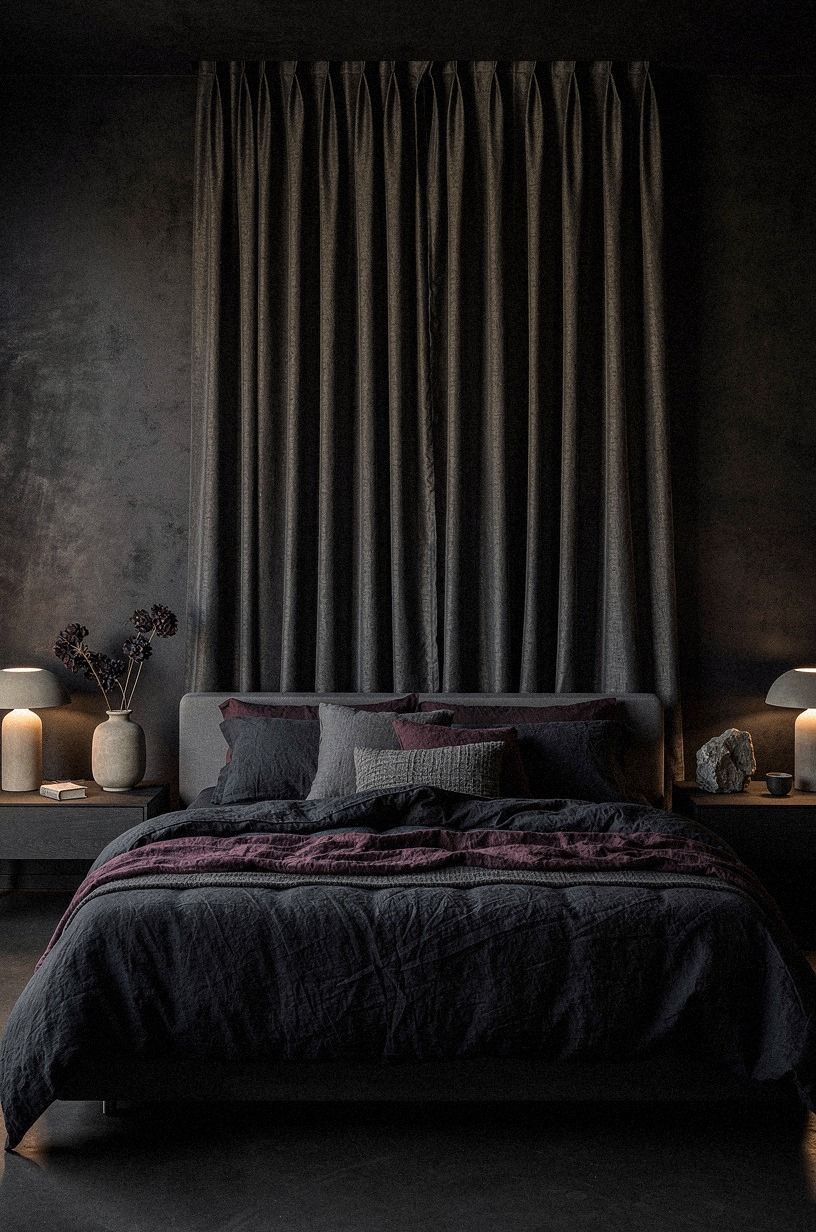
I tried dark velvet curtains first. They looked luxurious in the package, but they swallowed the window and made the room feel closed. Washed-linen drapes were the better choice because their loose weave let daylight filter through the edges.
You can still use black curtains, but keep them outside the window opening and let them fall all the way to the floor. Your goal is height, not a dark rectangle. I chose clay-toned linen because it connected the pale ceiling, the rug, and the upholstered headboard.
The practical cost range for linen drapes is typically $120 to $400 for a pair. That’s a broad range, so you can start with a simple panel and upgrade later. But don’t hang short curtains.
They’ll cut the wall in half and make your black romantic bedroom feel squat.
A ceiling-mounted aged-brass curtain rod makes the window feel taller and keeps the fabric away from the bed. I also left a little space between the curtain edge and the wall so the daylight could remain visible. The result felt softer without becoming precious.

8Mix Soft Black With Benjamin Moore Pale Oak
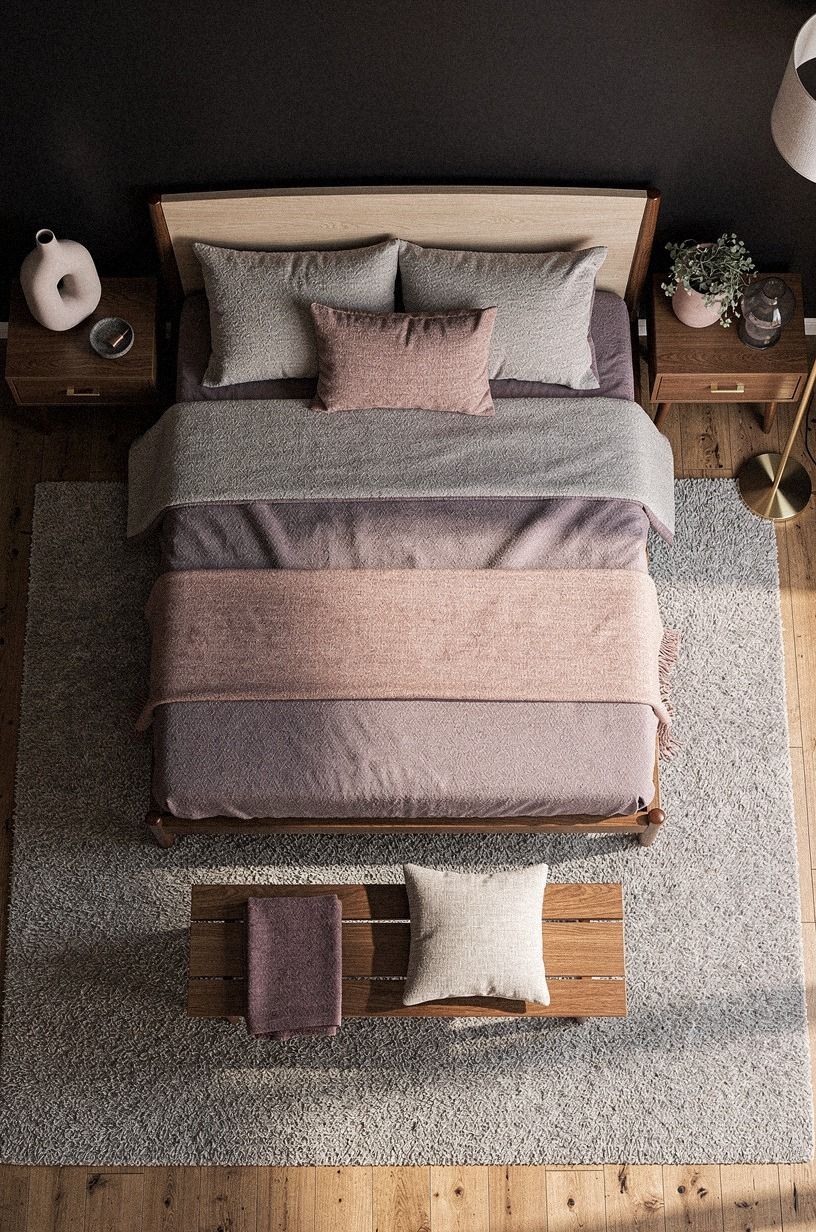
I wanted another paint color, but I didn’t want the bedroom to become a patchwork of competing shades. Benjamin Moore Pale Oak OC-20 became the quiet supporting color on the trim and one narrow wall near the door, while plum, grey, and rose-gold accents kept the room from feeling bland.
You’ll notice that Pale Oak doesn’t read as plain white. It has enough warmth to sit beside black, while the light value keeps your room from closing in. I tested it beside the bedding, including an organic bouclé layer, because a color that works on trim can still look wrong beside dark linen.
But don’t use pale paint everywhere just because the room is small. One warm light surface can be enough. Your black wall should still have authority, and the contrast is what makes the space feel sophisticated rather than merely neutral.
The transition worked because the warm greige trim repeated the soft undertone in the bedding. A rose-gold accent added a quieter glint without becoming another focal point. It simply gave the eye a place to move when leaving the dark wall.
If you’re comparing paint samples, start with the original warm-black base before choosing the supporting shade. The second color needs to respond to the first, not compete with it.
9Float the Nightstands for More Air
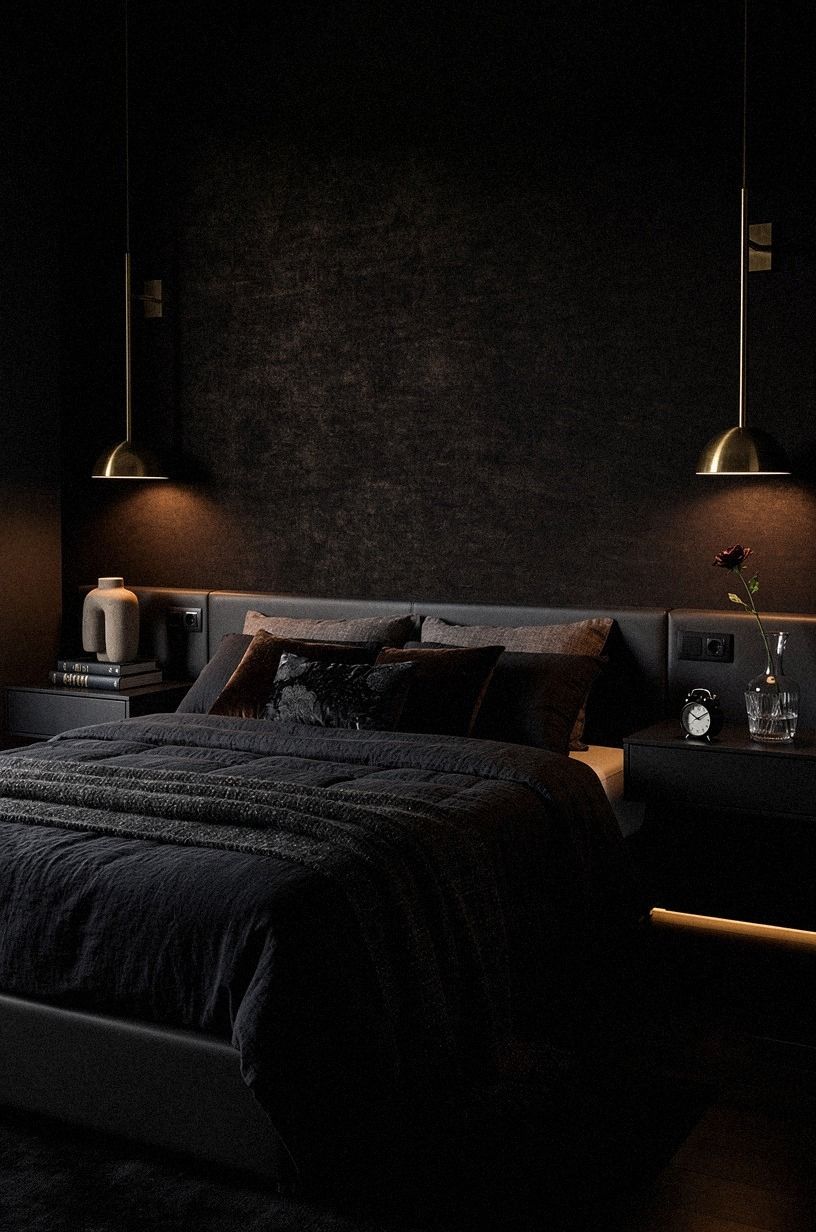
The bed felt crowded until I lifted the storage off the floor and paired the navy, white, and walnut palette with unlacquered brass. The room immediately had more breathing space.
10Choose Brass That Can Age Beside Black
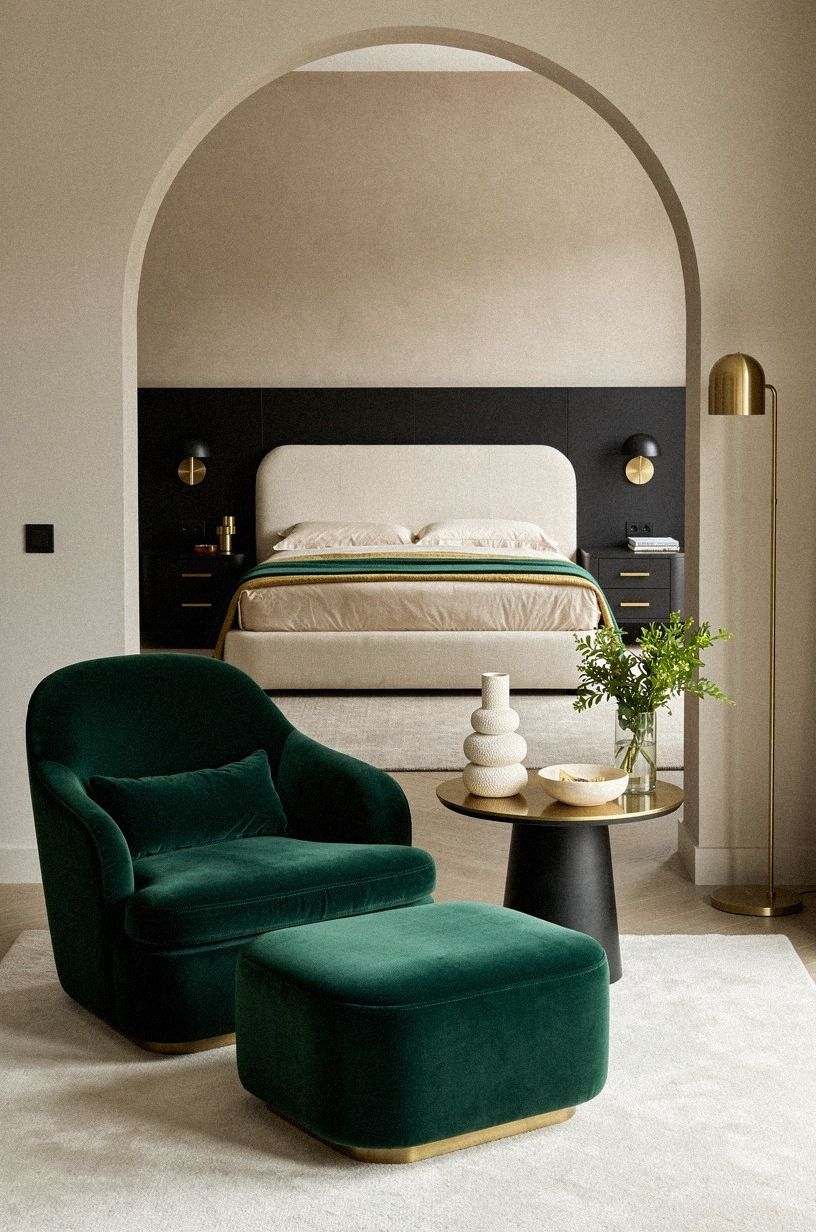
The room needed a small flash of light, so I added unlacquered brass at the lamp base, drawer pulls, and art hardware. It looked bright at first, then began developing a softer patina that worked with the emerald, gold, and cream palette.
You don’t need brass everywhere. Pick two or three repeat points so your eye can travel around the room. Your lamp, mirror, and curtain rod can share the finish without becoming a matched set.
I’d avoid polished chrome here. It’s crisp, but it makes the bedroom feel more modern than romantic, especially beside black paint.
Aged brass has more quiet warmth, and it catches the bedside glow without demanding attention. That was the metal choice that made the room feel gathered instead of decorated.
A satin brass pull is enough to establish the finish. I’d choose one with a little variation rather than a flawless, mirror-like surface. The deep-pile mohair velvet already provides softness, so the hardware can stay mellow.
11Hang Art Low Enough to Meet the Bed
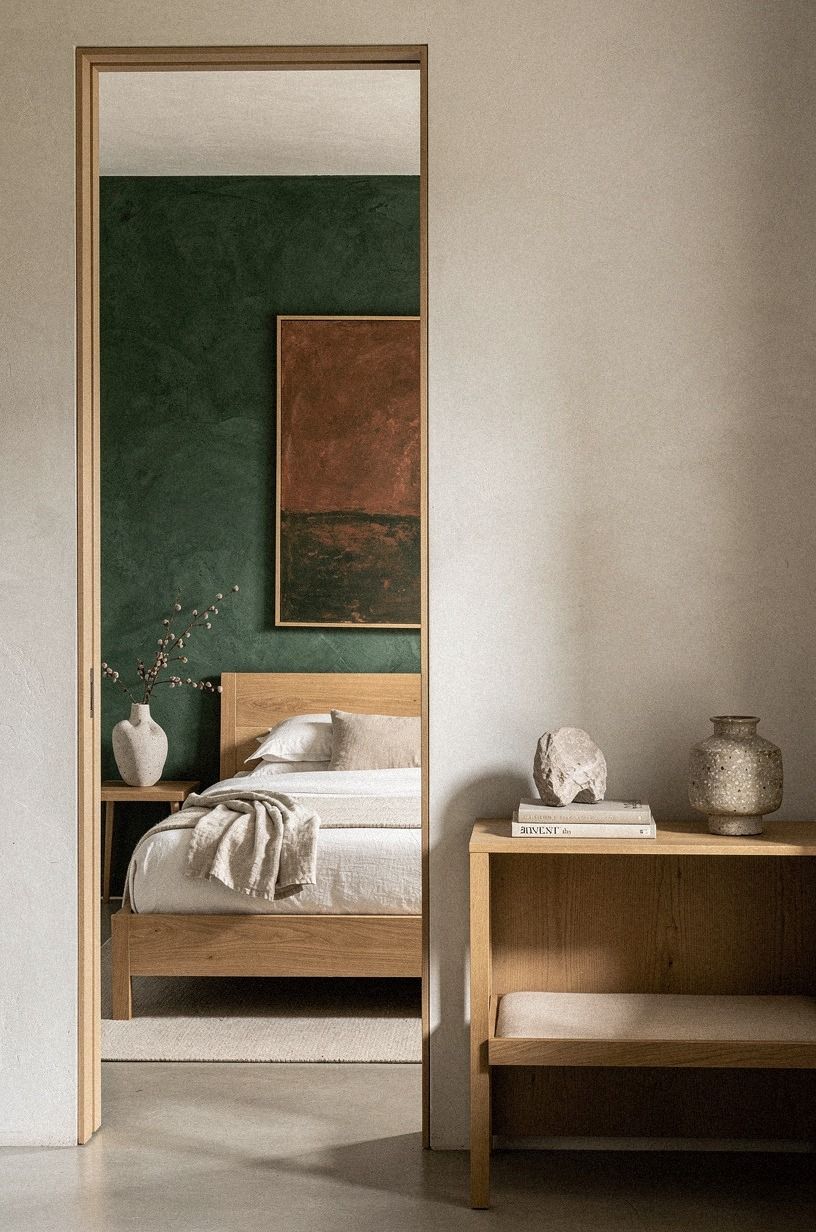
The wall above the headboard looked empty, but one oversized piece would have made the forest green, rust, and natural oak palette busier against the hand-applied Venetian plaster.
12Layer the Rug Beyond the Bed

The floor needed softness, but I didn’t want a tiny rug trapped under the bed. I used an 8x10 rug and followed the 18 to 24 inch extension range beyond the mattress. That gave your feet a generous landing zone on both sides.
A wool rug can bring warmth to a black bedroom, especially when its dusty rose and charcoal tones sit beside brass and reclaimed weathered teak. I chose a faded design with enough variation to hide everyday dust. You’ll want to see a sample beside the wall before committing.
The typical US cost for an 8x10 wool rug is $400 to $1,500. That’s an investment, so you can begin with a smaller washable layer at the foot of the bed. I’d rather see one useful rug than three little mats that interrupt the room.
A low-pile wool weave worked better than a thick shag because the bed remained easy to move and the room stayed visually clean. The floor now has warmth without adding another bulky shape.
13Add Romance With Texture Over Pattern
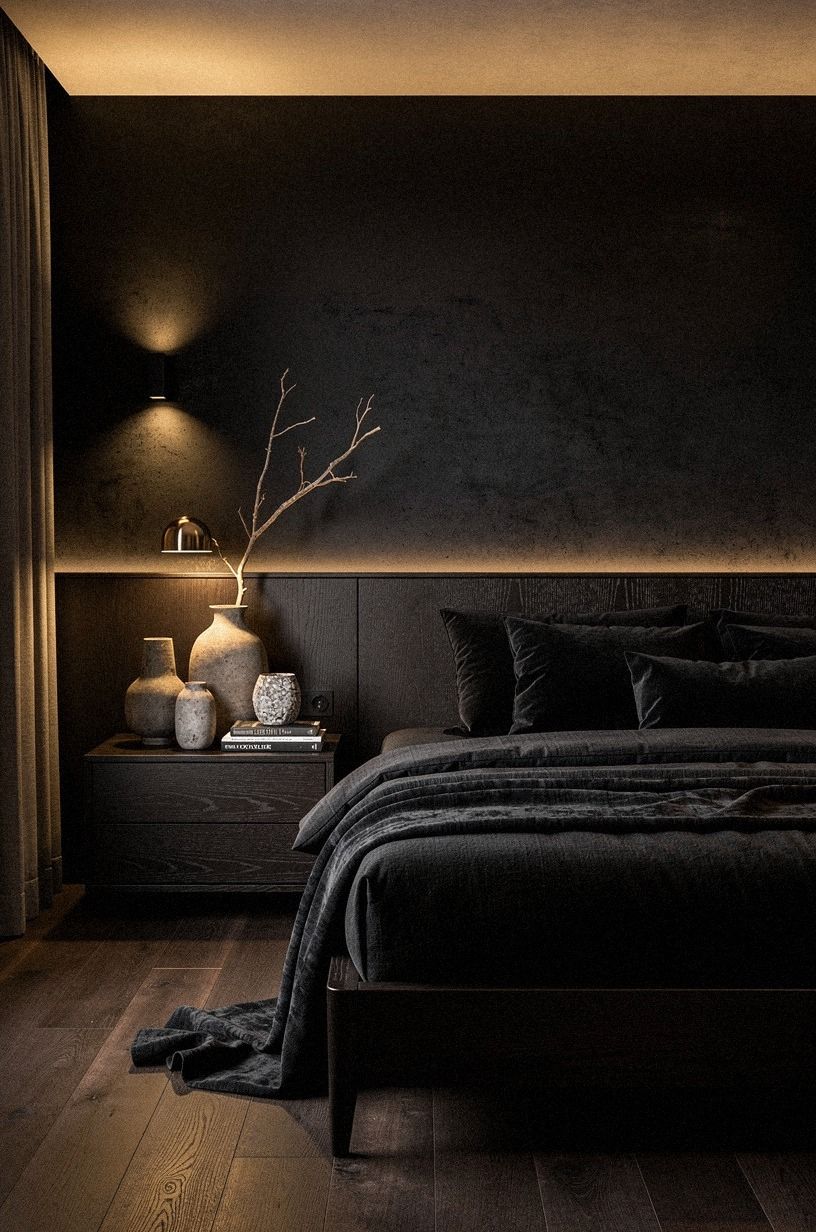
I nearly used floral wallpaper, then stopped. The pattern was charming, but it pulled attention away from the black wall and made the room feel themed. Instead, I built romance through touch: washed Belgian linen, camel bouclé, a nubby throw, and a soft cotton quilt.
You can make a bedroom feel romantic without roses, hearts, or overly delicate colors. Your hand should find several surfaces that feel different when the light drops. That contrast creates depth even when your palette stays restrained.
The bed became warmer after I added one camel-colored cushion and a folded blanket. I’d skip a full matching pillow arrangement because it looks staged. A little asymmetry feels more relaxed, and your room will look better after you’ve actually lived in it.
The strongest layer was a washed Belgian linen coverlet because it added pattern through relaxed texture rather than a printed motif. That kept the bed interesting in daylight and calm at night.
The same rule works across the room: use texture to make the dark palette feel dimensional. It’s more flexible than committing to one romantic theme.
14Balance Black With Sherwin-Williams Accessible Beige
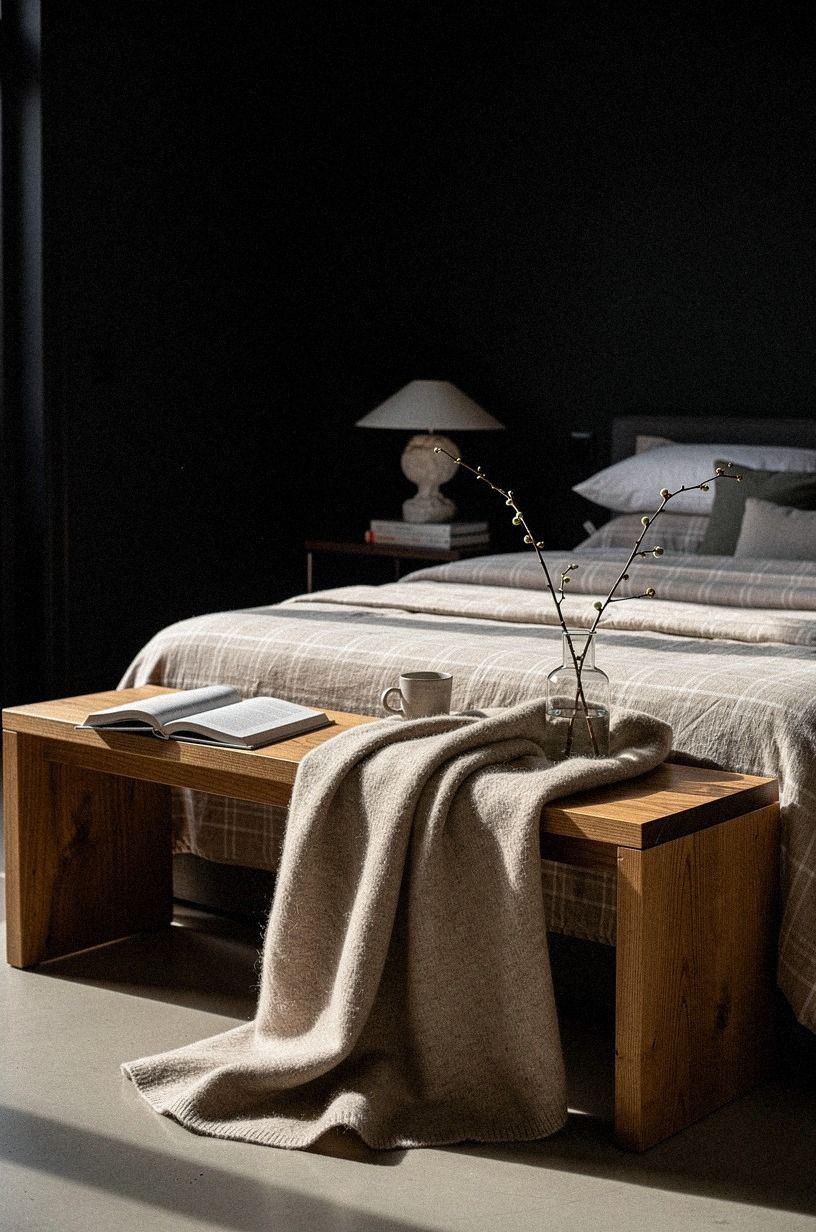
The final wall decision was Sherwin-Williams Accessible Beige SW 7036 near the closet and doorway. I used it where the room needed a lighter transition, then carried midnight blue, copper, and ivory through the textiles. Cerused white oak connected those colors to the furniture.
You can use this approach in a rental with removable art, a tension rod, and textile layers instead of paint. Your bedroom will still get the contrast between dark and light, even if the walls have to stay plain. That’s useful when you’re working around a lease.
But don’t scatter beige randomly. Give it a job.
I used it to soften the entry, while black stayed behind the bed and the cerused white oak connected both sides. The room felt serene because every color had somewhere to go.
A cerused white oak bench near the closet helped carry that transition across the floor. It wasn’t another statement piece. It made the lighter wall feel connected to the rest of the room.
If you’re working with a small budget, start with the wall relationship described in the Pale Oak section, then add textiles before buying new furniture. Color and texture can do more than a crowded shopping list.
How Much It Cost
I tracked the makeover by category instead of pretending every bedroom needs the same budget. Your final number will depend on whether you already own a bed, rug, lamps, and window coverings. The typical US ranges below gave me a useful reality check before I bought anything.
My own priority was the wall color, lighting, and floor layer. Those three changes carried the mood, while the smaller accessories could wait. You don’t need the high tier to get a dramatic bedroom, and you shouldn’t spend on a full furniture set if your existing bed is sturdy.
For reference, the common material ranges looked like this:
I kept the project inside the budget tier by reusing the bed, painting one wall first, and choosing pieces that solved more than one problem. You can do the same. Start with what your room lacks, not what a shopping list tells you to buy.
The lighting upgrade delivered more atmosphere than the most expensive accessory. If your budget is tight, follow that order: paint, light, rug, then bedding. The rest can happen slowly.
For a second pass, I’d compare the numbers with the three-height lighting plan before spending on decorative pieces.
What I Learned From Making the Room Dark First
I thought black paint would create the romance by itself. It didn’t.
The first evening looked dramatic in a theatrical way, but not in the intimate way I wanted. The wall was strong, the ceiling light was cold, and the bedding had no texture. I had created contrast without comfort.
That mistake taught me to treat darkness as a background, not a mood. Your eye needs a warm surface, a pale break, and somewhere soft to land. The Farrow & Ball Setting Plaster beside the black wall mattered more than another decorative object because it changed how every shadow behaved.
I also learned that scale is emotional. A queen bed still takes up 60x80 inches, whether the room feels generous or cramped.
When I floated the nightstand and extended the rug 18 to 24 inches past the bed, the floor became visible again. That little line of air made the room feel calmer.
And I went back and forth on the brass. Polished brass was too sharp, while aged brass disappeared.
Unlacquered brass landed in the middle, catching the lamp glow without making the room shiny. Your finish should support the light you already have, not compete with it.
If you’re making a black romantic bedroom for couples, talk about function before styling. Can both people reach a lamp? Is there a clear path around the bed?
Does the bedding feel good at midnight? The most sophisticated room still fails if you can’t use it comfortably.
My strongest opinion is simple: don’t buy more decor until you’ve fixed the light. A new vase can’t soften a blue ceiling fixture, and another pillow won’t make a dark room feel warm.
Give your bedroom better layers first. The romance will follow.
The warm light source was the true turning point. Once the glare disappeared, the wall color, wood, and fabric started working together. That is the order I’d remember when making your own plan.
A Few Things Worth Answering
What is the best Black Romantic Bedroom Ideas That Look Dramatic, Not Dark for a small bedroom?
A warm black accent wall and pale wood are the strongest combination for a small bedroom. Choose a slim IKEA KALLAX unit, soft bedding, and one mirror that catches daylight. Your room will feel dramatic without losing floor space or making the bed look oversized.
Where can I buy Black Romantic Bedroom Ideas That Look Dramatic, Not Dark pieces on a budget?
Look at IKEA, Wayfair, and Target for bedding, lamps, and small storage. You can also check Facebook Marketplace or a thrift store for wood nightstands and art hardware. Your best savings usually come from secondhand furniture, not cheap decorative duplicates.
How much does a Black Romantic Bedroom Ideas That Look Dramatic, Not Dark makeover cost?
A budget makeover typically runs about $200 to $800 for bedding, paint, shades, and art. Your cost can stay lower if you reuse the bed, shop your home, and repaint one wall instead of the whole room.
Can I create a Black Romantic Bedroom Ideas That Look Dramatic, Not Dark on a budget?
Yes, and you can start without buying anything. Move the bed, switch off the overhead light, and group your warmest textiles together. Then add low-cost paint, secondhand wood, and one soft lamp when your budget allows.
Is a Black Romantic Bedroom Ideas That Look Dramatic, Not Dark worth it in a small space?
Yes, because a small room can make the dark color feel intentional instead of scattered. Keep the bed visually simple, float one nightstand, and extend your rug 18 to 24 inches beyond the bed. Your layout will feel more open.
Is a Black Romantic Bedroom Ideas That Look Dramatic, Not Dark a good idea for a rental?
Yes. Use removable wall coverings, a tension rod, peel-and-stick lighting solutions, and art that leans rather than screws into the wall. Your rental can still feel warm and moody without permanent paint or built-in changes.
For a quick recap, start with the two-wood rule, then solve the light and floor before adding decorative accents. Those changes give the room its atmosphere.
Where I'd Start First
If I had to pick one, I'd start with the wall color. Farrow & Ball Setting Plaster keeps black from turning flat because its pink warmth catches lamplight instead of swallowing it.
Then I’d add warm lighting, a pale wood element, and one rug that gives your feet somewhere comfortable to land. That sequence creates drama with comfort, which was the part I nearly missed.


