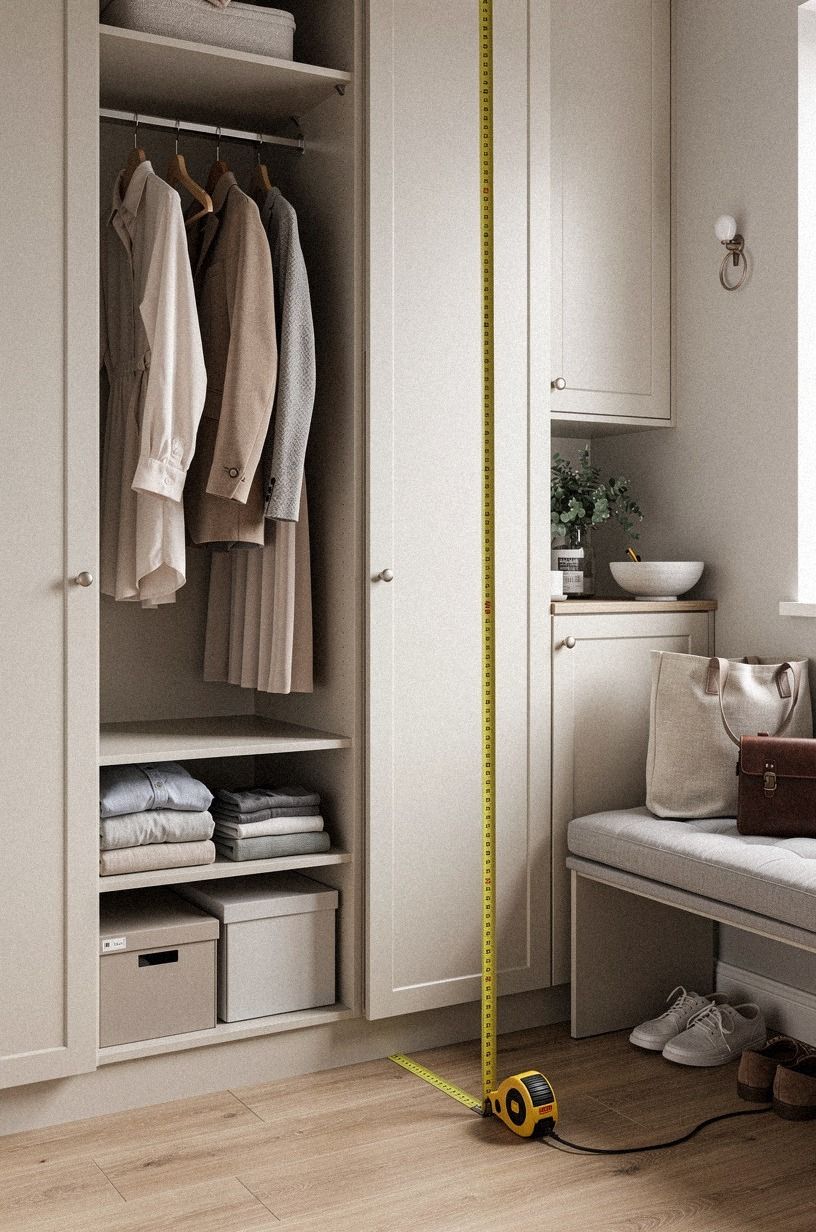
How to Turn a Spare Bedroom Into a Dressing Room That Feels Custom
17 october 2026You can turn a spare bedroom into a dressing room with a measured layout, a closet system, and a budget that starts around $200. I learned this after trying to squeeze storage into every wall at once. The room felt cramped until circulation came first. Now the plan feels warm, refined, and surprisingly easy to follow!
- Measure the Room Before You Buy Anything
- Draw a Circulation Plan for Your Bedroom to Closet Layout
- Choose a Closet System That Fits Your Real Wardrobe
- Measure the Room Before You Buy Anything
- Draw a Circulation Plan for Your Bedroom to Closet Layout
- Choose a Closet System That Fits Your Real Wardrobe
- Anchor the Room With the Two-Wood Rule
- Farrow & Ball Setting Plaster: Paint Before Storage
- Build the Three-Height Light Stack
- Hang the Main Storage at a Useful Height
- Where Should the Mirror Go?
- Add a Small Island Only If the Walkway Works
- Closed Storage or Airy Open Shelves?
- Frame the Dressing Zone With Soft Fabric
- Style the Getting-Ready Surface With Restraint
- Test the Bedroom to Closet Routine for One Week
- Finish With a Cohesive, Lived-In Layer
1Measure the Room Before You Buy Anything
Start with the room's length, width, door swing, window placement, and ceiling height. Write everything down before you shop, because a queen bed footprint is 60x80 inches and a wardrobe that blocks the door can ruin the whole plan.
You don't need a contractor's drawing. A pencil sketch on graph paper will show you where your clothing, mirror, and dressing stool can fit.
Measure each wall twice, then mark outlets and vents. If you're converting a room into a closet walk in, leave a clear walking lane through the center instead of filling every inch with cabinets. I once planned a tall wardrobe beneath a low window, and the proportion looked heavy from the doorway.
Your eye needs some breathing room, especially in a small bedroom.
And don't forget the door clearance. A calming room can still be frustrating if you can't open a drawer fully.
I like to place the largest storage run on the longest uninterrupted wall, then keep the window side lighter with a bench, mirror, or slim dresser. Begin with measuring the room, then let every later decision follow that plan.
2Draw a Circulation Plan for Your Bedroom to Closet Layout
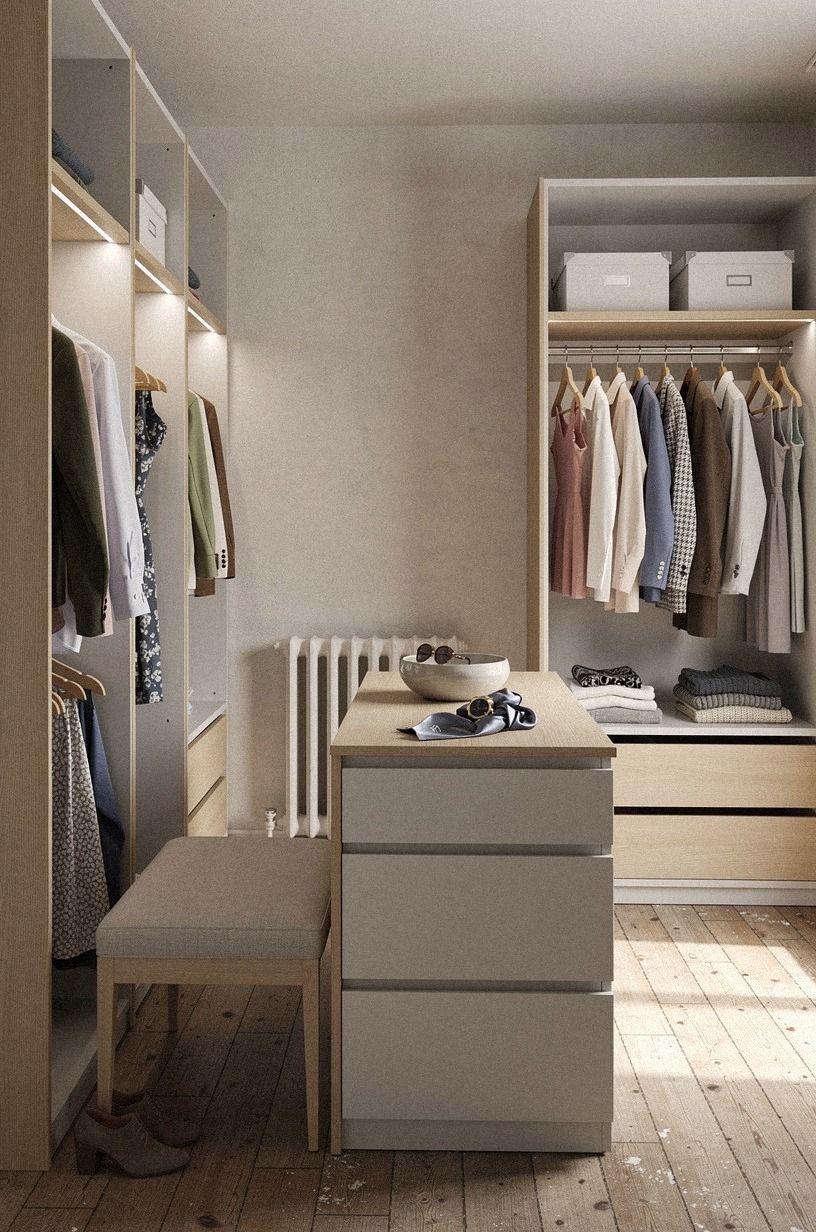
Sketch three zones before choosing finishes: hanging clothes, folded pieces, and the getting-ready area. Your hanging zone might take one wall, while a low dresser handles knitwear and accessories. The third zone needs a mirror, seating, and enough floor space to turn around without bumping a basket.
A comfortable path matters more than squeezing in another cabinet. Keep your most-used clothes within easy reach, and save high shelves for luggage or seasonal pieces. If your room is narrow, a shallow open system can make the space feel airy, while a full-depth wardrobe may make it moody and crowded.
But don't copy a showroom arrangement without testing it. Tape the proposed cabinet edges on the floor with painter's tape, then walk through the room carrying a laundry basket.
Does your shoulder clear the corner? Can you reach the window?
These simple checks will tell you more than a polished floor plan. That ten-minute test is worth it!
Use this circulation plan before ordering a closet system.
3Choose a Closet System That Fits Your Real Wardrobe
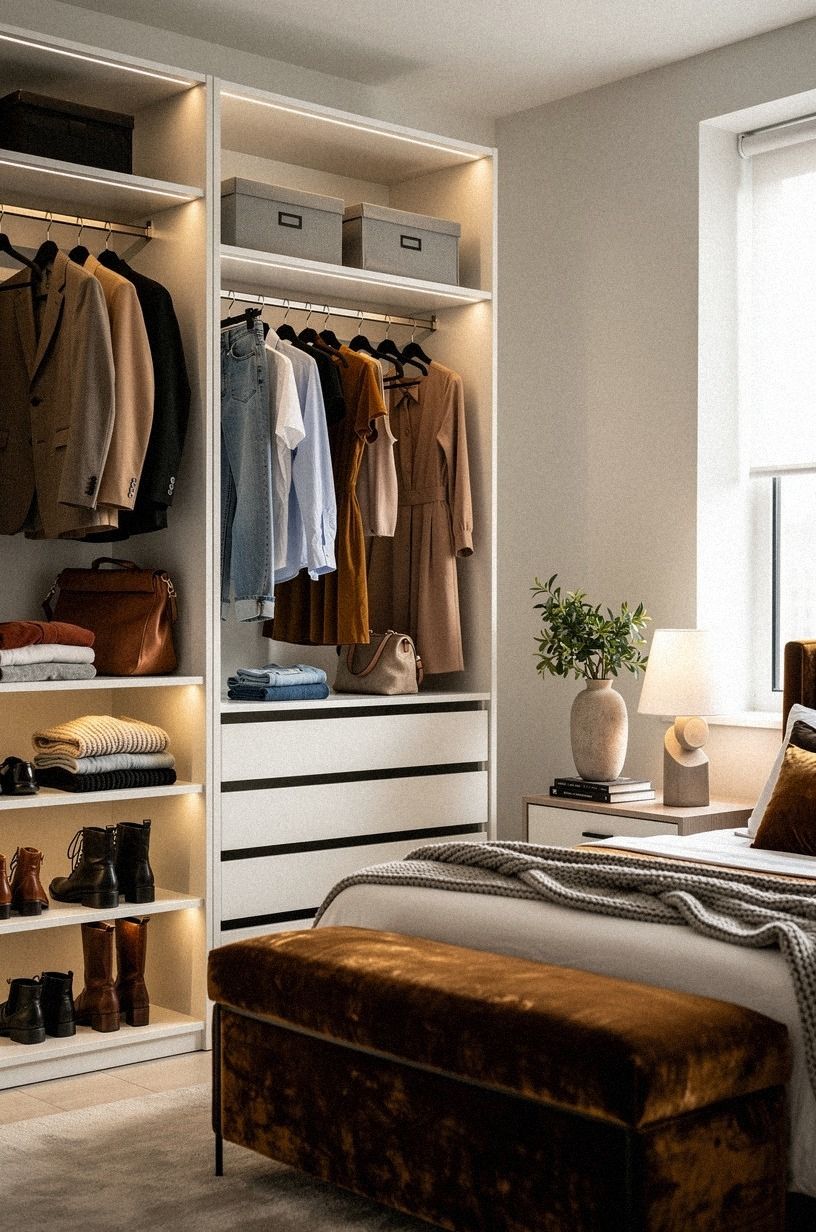
Choose storage by garment type, not by the picture on the box.
4Anchor the Room With the Two-Wood Rule
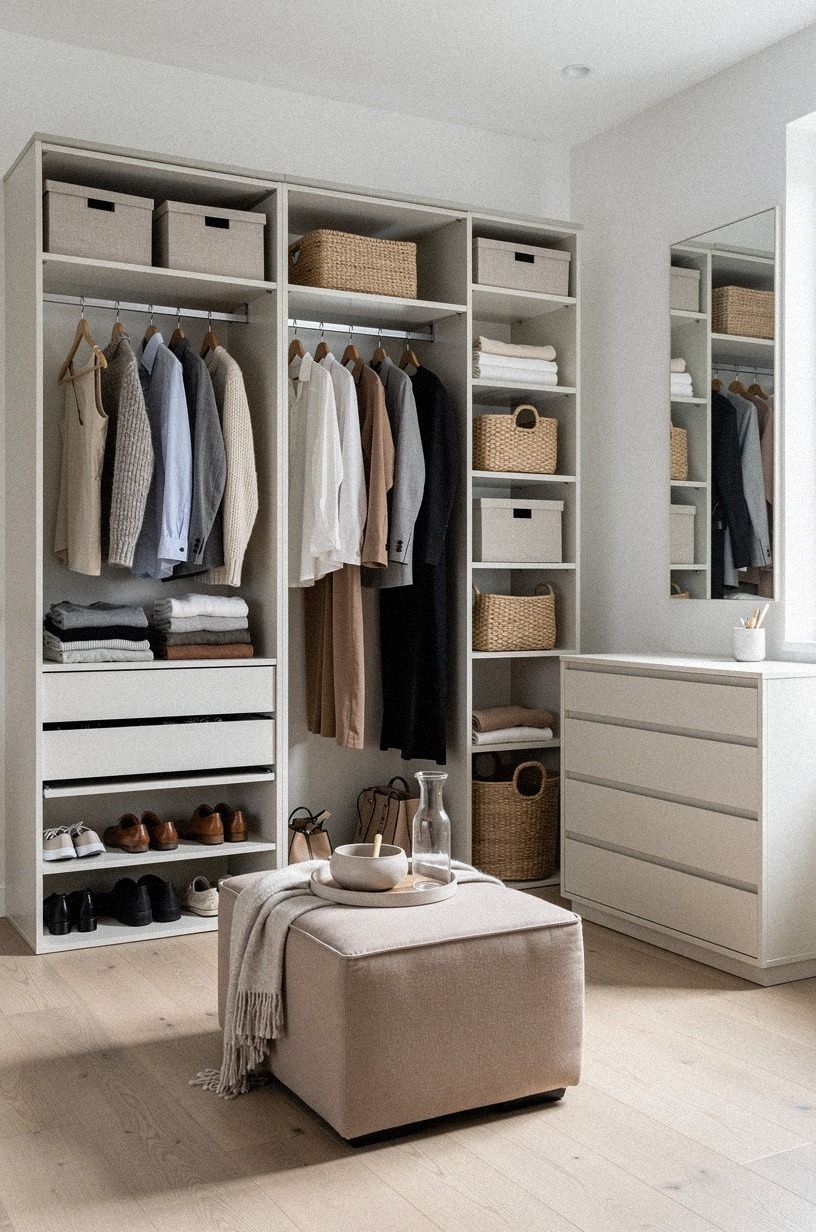
Use one main finish and one supporting finish. My favorite pairing is midnight blue cabinetry with a copper accent, because the deep color keeps the room grounded while the warmer note adds a quiet glow against hand-applied Venetian plaster. You could use blue shelving with a copper stool, or a copper-framed mirror beside ivory storage.
The Two-Wood Rule keeps your room from looking like a furniture warehouse. Pick the dominant finish for cabinets and repeat it at least twice.
Let the second finish appear in smaller pieces, such as a bench, tray, or mirror frame. You don't need every surface to match, but you do need a visual rhythm.
But skip a shiny mix of unrelated finishes beside midnight blue cabinetry. That combination can feel restless under artificial light. If you already own mismatched furniture, finish the largest piece in warm ivory and let the copper become an intentional accent.
The Two-Wood Rule is especially useful when you're combining secondhand furniture with new storage.
5Farrow & Ball Setting Plaster: Paint Before Storage
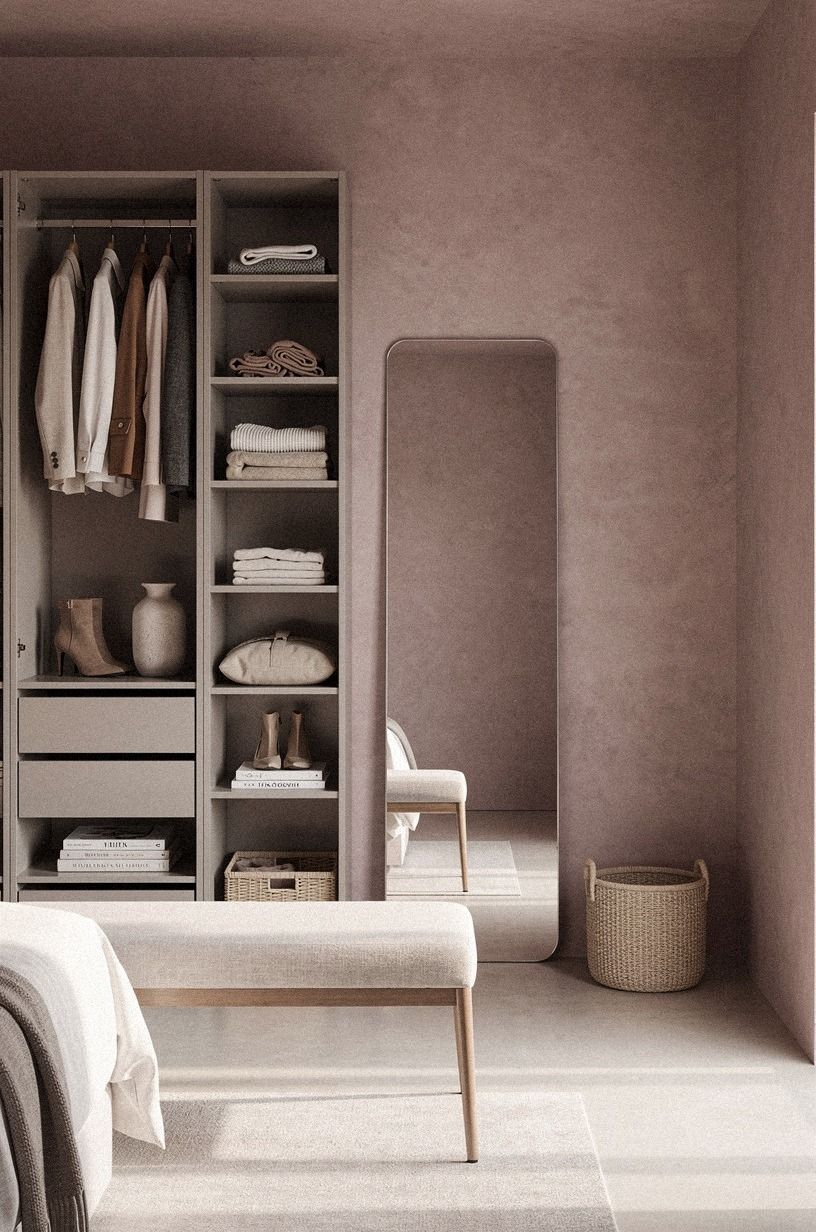
Paint before installing cabinets, rails, or a headboard. Farrow & Ball Lichen No. 19 gives a spare bedroom a gentle sage warmth without making the clothing colors look strange. If you prefer a quieter neutral, Benjamin Moore Saybrook Sage HC-114 or Sherwin-Williams Creamy SW 7012 can keep the backdrop soft and flexible.
Test your color beside white shirts, denim, black trousers, and skin tones. A color that looks calm on a sample card may look yellow beside bright LEDs. Your room needs to flatter the clothes you wear, not just look calm at noon.
A bold color can work on one wall, especially behind open rails or a dressing table. I wouldn't paint every surface deep sage green unless the room has generous daylight. In a small bedroom, warm cream paint on the ceiling and trim can keep the result bright while reclaimed weathered teak supplies the grounding.
Choose from these paint colors after you understand the room's natural light.
6Build the Three-Height Light Stack
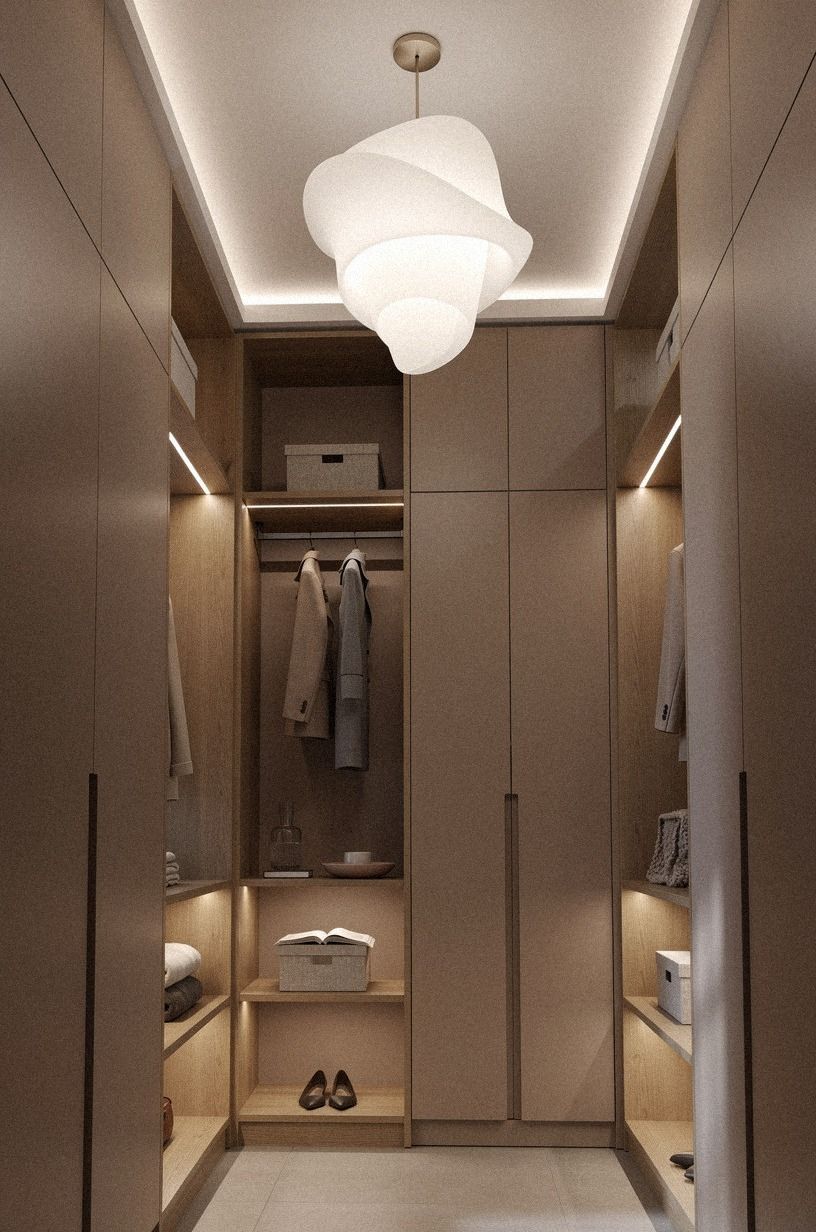
Layer lighting at three heights: ceiling, eye level, and low level. A flush fixture handles general visibility, wall sconces illuminate your face, and a small lamp or LED strip adds a soft glow near the floor. The effect is calming because you won't rely on one harsh bulb for every task.
Use a warm dimmable LED bulb at the ceiling and place sconces beside the mirror rather than above it. Light from both sides reduces shadows when you're dressing. If your room has only one ceiling box, plug-in sconces or a rechargeable lamp can give you the same layered feeling without opening the wall.
And don't choose blue-white light for a dressing room. It can make warm fabrics look dull and skin look washed out.
I tested a cool bulb once, and every cream blouse suddenly looked gray. The room wasn't wrong, but the light was. Your clothes deserve a more gentle, welcoming glow.
Good lighting changes the whole routine!
Plan layered lighting before you place the mirror.
7Hang the Main Storage at a Useful Height
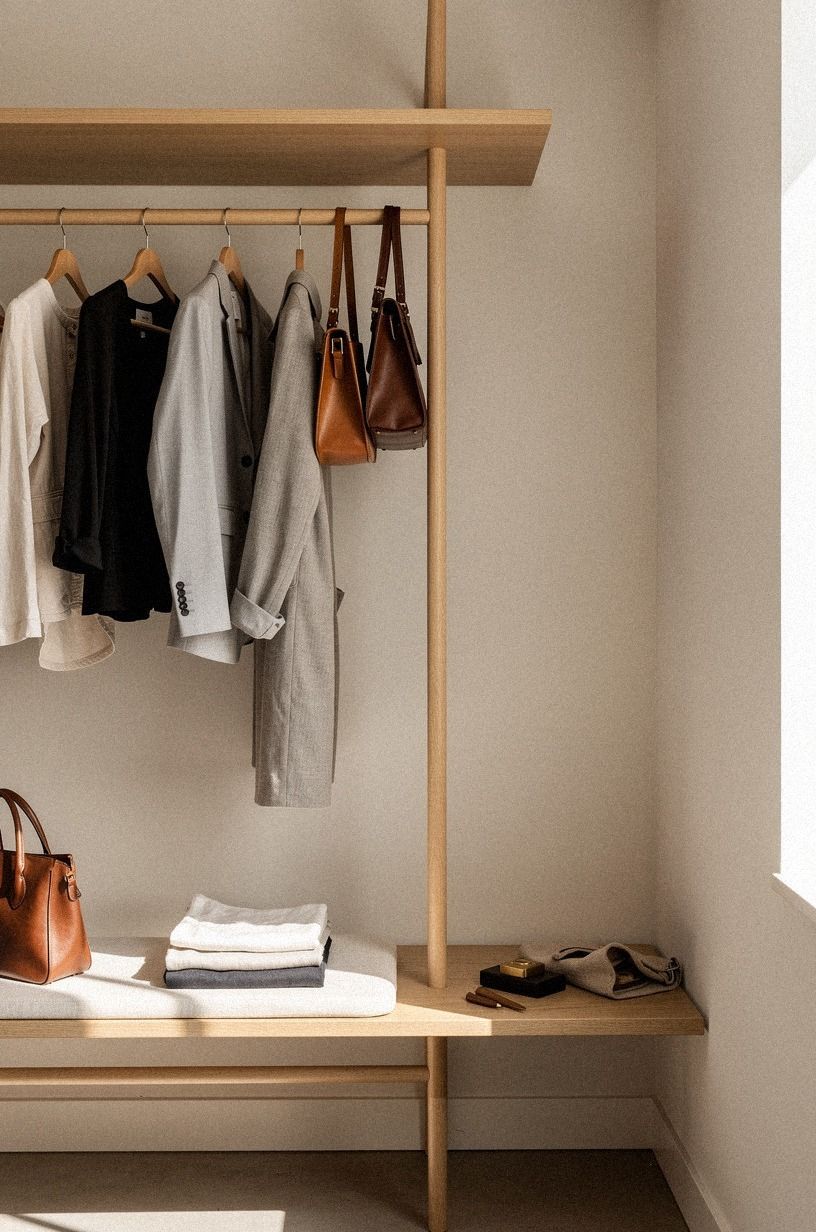
Hang your most-used rails where you can reach them without stretching. Long dresses need a full-height section, while shirts and trousers can share shorter levels. A three-quarter-inch solid cerused white oak rail adds a substantial feel and won't look flimsy beside built-in cabinetry.
Keep heavy coats low enough that you won't strain your shoulder, and use the highest shelves for luggage or spare bedding. If you're converting a room into a closet walk in, label baskets by category rather than by season. Your morning routine will move faster when you can see the answer immediately.
Don't pack the rail until every hanger is in place. Leave small gaps between categories so you can slide pieces aside. A hanging section that's too full feels stressful, even when it holds more.
I would rather have one open rail and a smaller wardrobe than a packed wall I avoid using.
Check the final rail height while standing naturally, without reaching or bending.
8Where Should the Mirror Go?
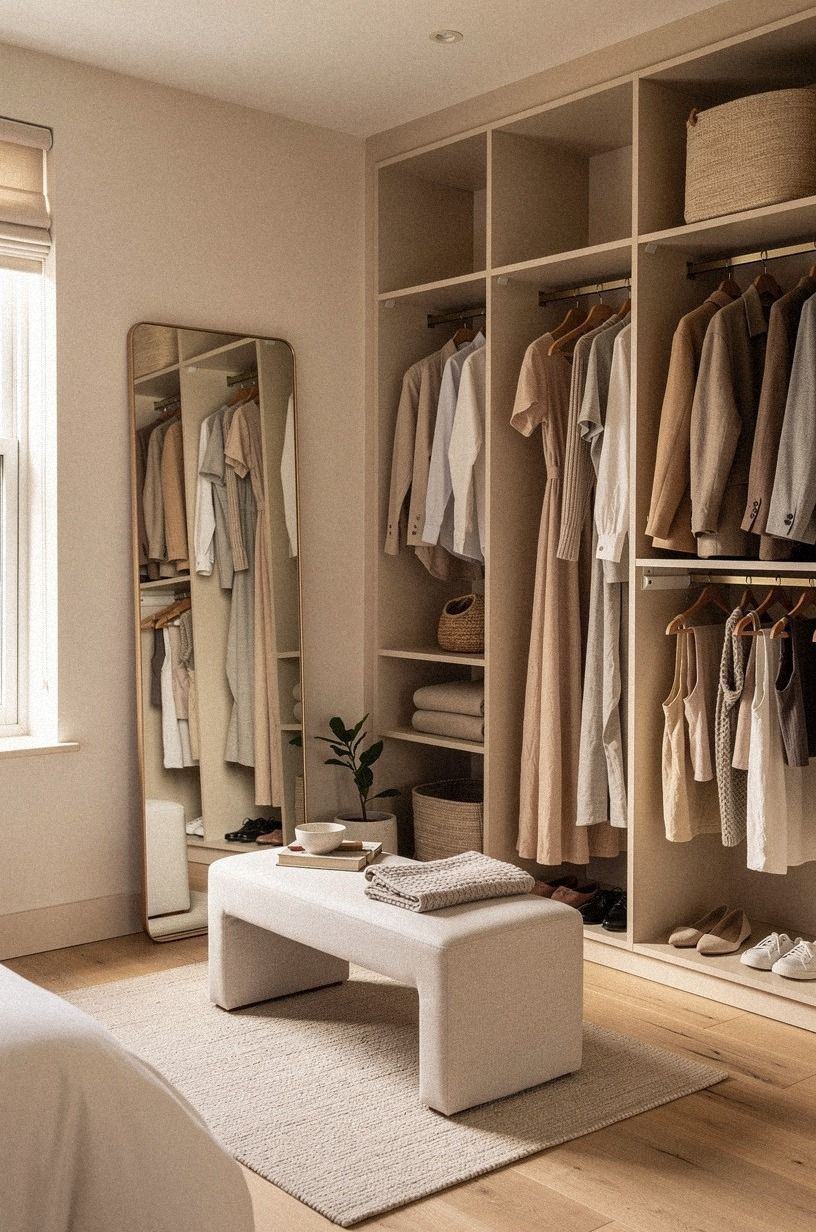
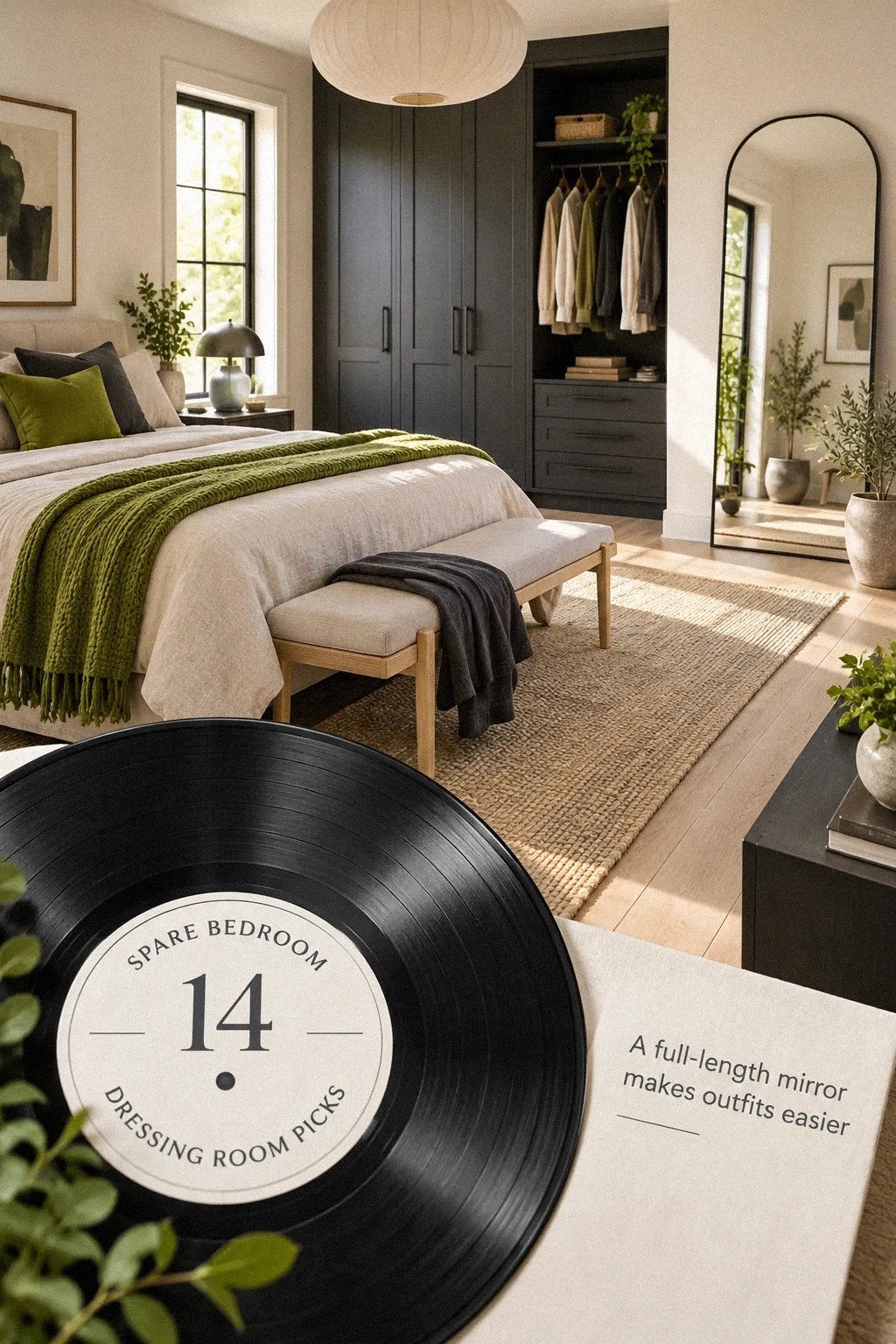
Place a full-length mirror where you can step back at least a little, ideally opposite a light source rather than directly in front of a bright window.
9Add a Small Island Only If the Walkway Works
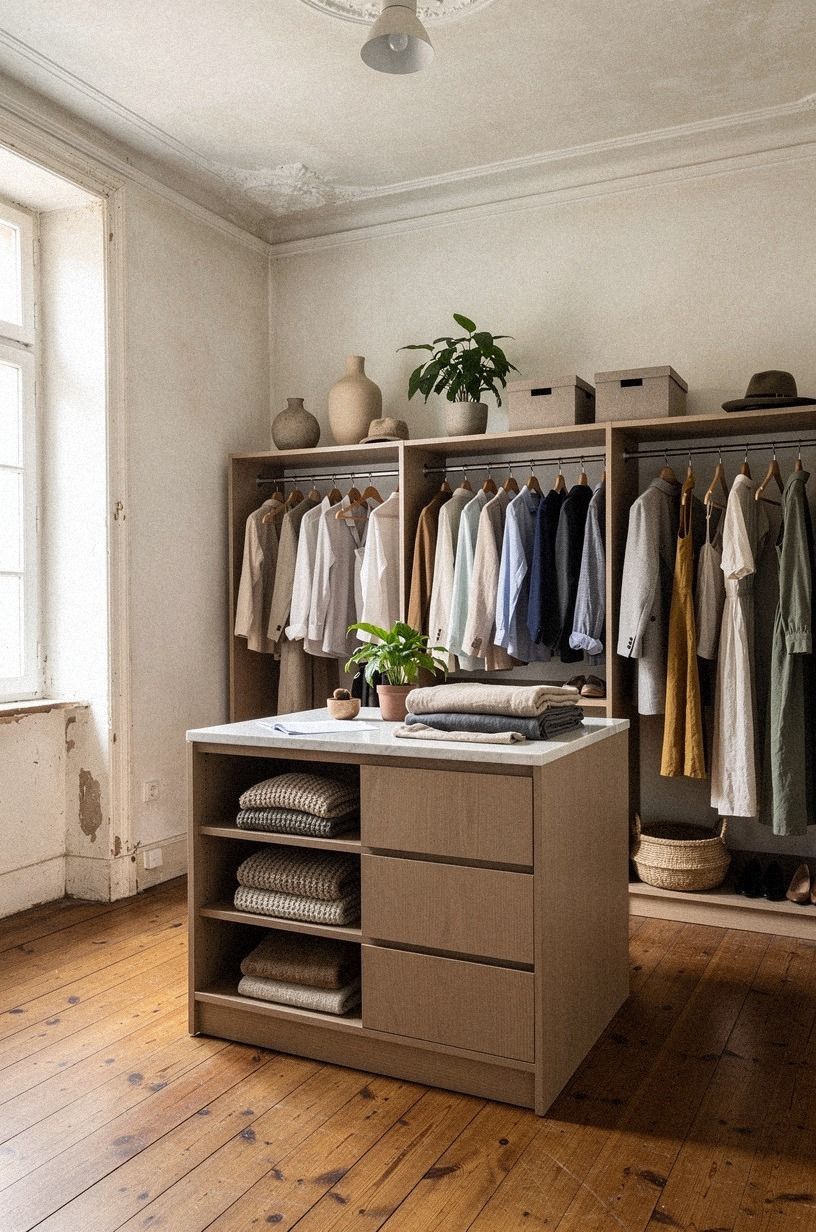
Add a center island only after the perimeter storage is working. A narrow dresser can hold jewelry, belts, and folded accessories, while a wider piece may become a useful place to lay out clothes. Your central furniture should support the routine, not create an obstacle.
Leave enough space to open drawers and walk around them. If the room feels tight with a taped outline on the floor, it will feel worse once the island is filled. A compact book-matched walnut six-drawer dresser can give you a grounded, luxurious focal point without demanding a full built-in installation.
But don't add an island because every inspiration photo has one. In a small room, a slim console or wall-mounted shelf may serve you better. The room should feel peaceful when you enter, not like you're navigating a furniture maze before coffee.
Use the island test before buying a large center piece.
10Closed Storage or Airy Open Shelves?
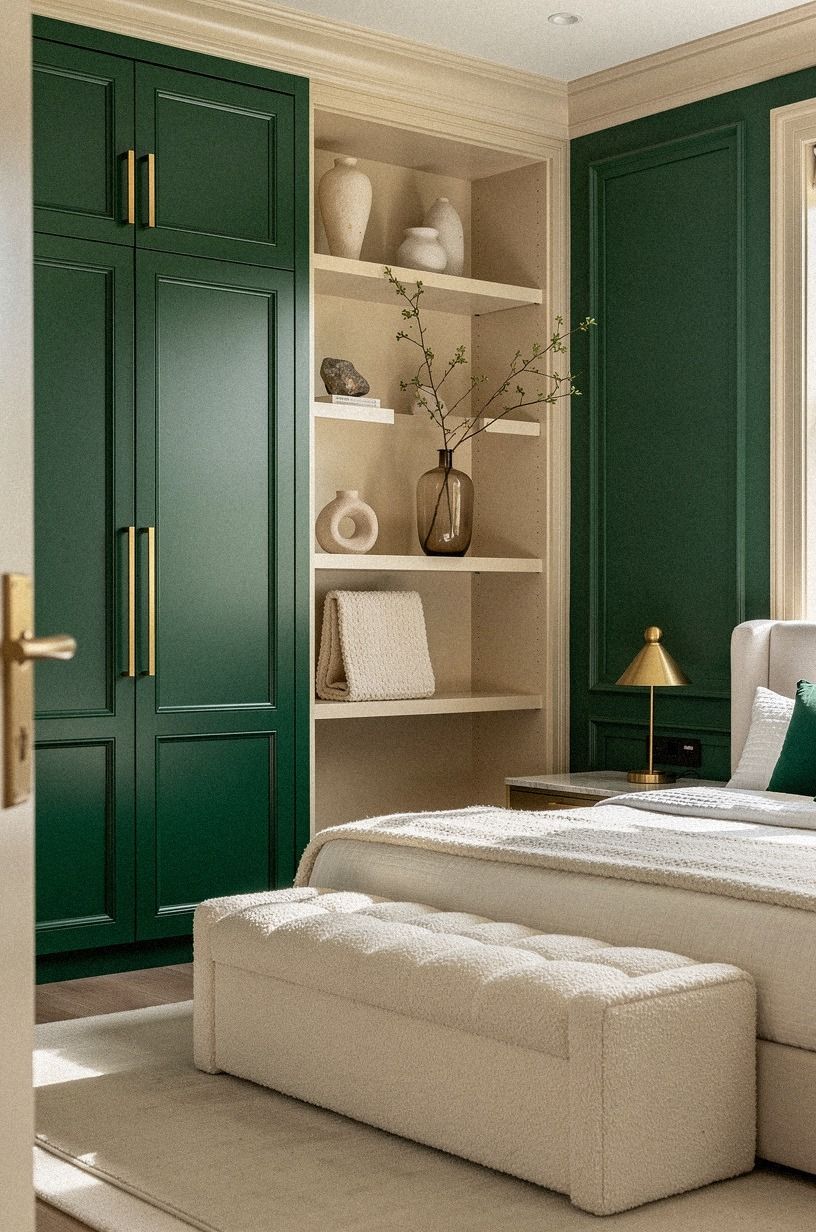
Mix doors, drawers, baskets, and open shelves so the storage doesn't read as one solid block. Closed cabinets can hide less attractive essentials, while organic bouclé-lined baskets soften shelves that would otherwise look too sharp. You want a balance between visibility and calm.
Place folded sweaters and handbags at eye level, then reserve the upper shelves for items you use less often. Your shoes can sit on lower shelves, but keep the pairs you wear most near the entrance. A warm, organic arrangement makes the room easier to maintain because every category has a visible home.
I wouldn't use open shelving for everything. Dust gathers quickly on exposed surfaces, and visual clutter can make a small room feel smaller. Use open sections for attractive, frequently used pieces and doors for the items that don't need to be seen every morning.
Compare the options in this guide to closed storage and open shelves before finalizing the doors.
11Frame the Dressing Zone With Soft Fabric
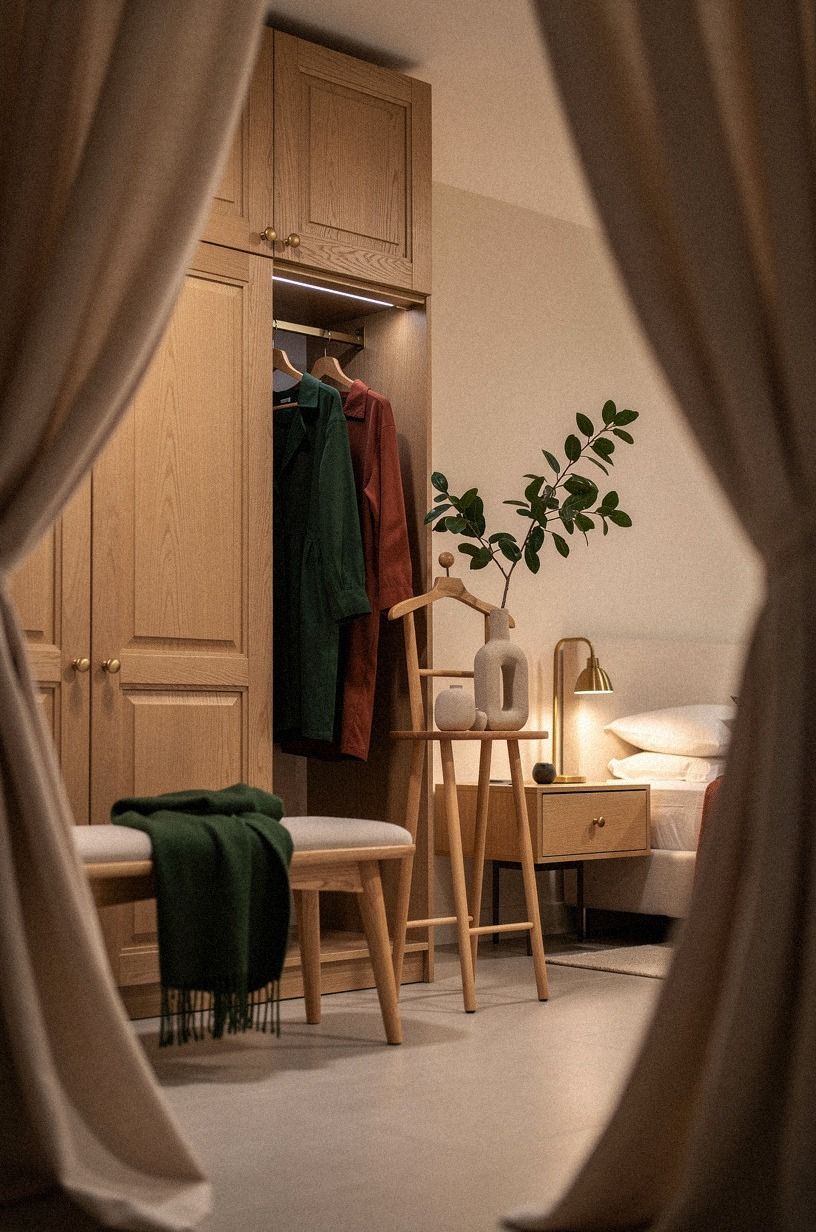
Add fabric around the mirror or window to introduce texture without building another cabinet.
12Style the Getting-Ready Surface With Restraint
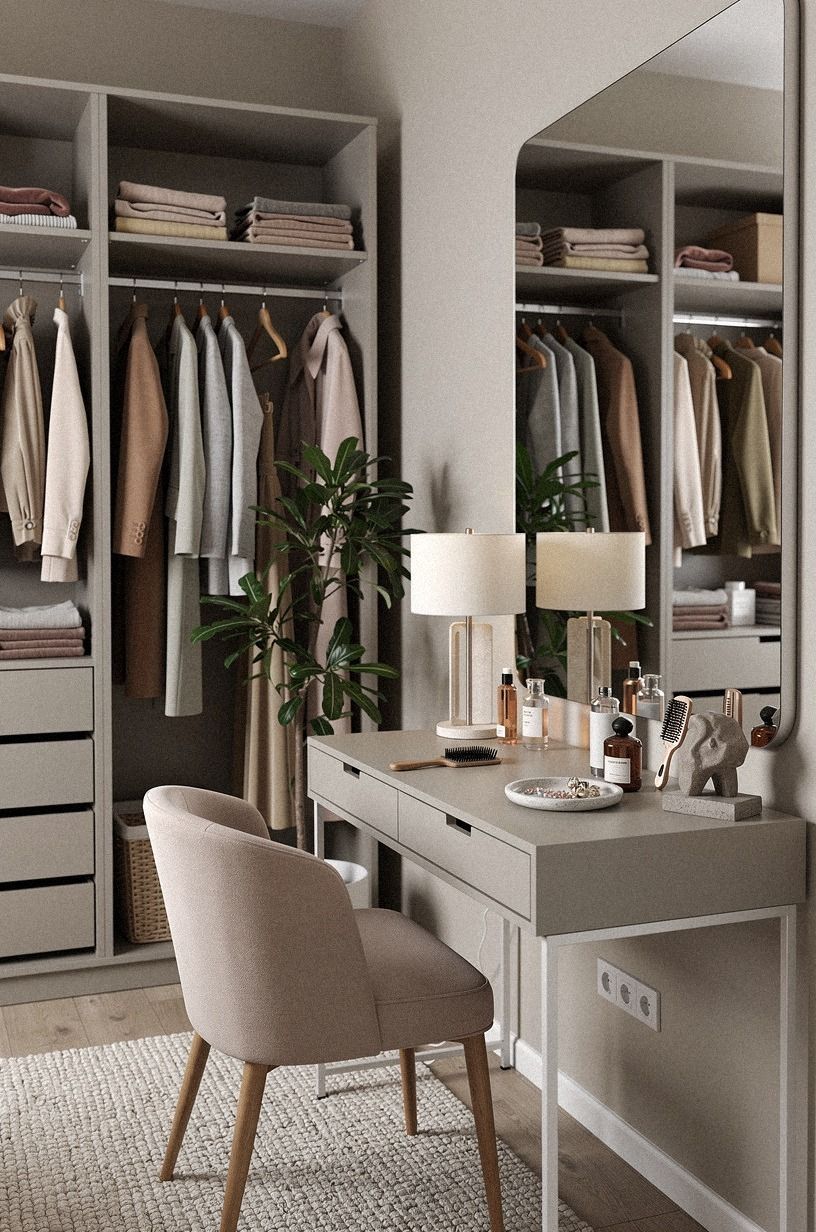
Give yourself one reliable surface for perfume, jewelry, hair tools, and the small objects that collect during the week. A deep-pile mohair velvet-lined tray can hold daily pieces while protecting a wood dresser from spills. Keep the arrangement useful, not decorative for its own sake.
Use nominal groupings when you style it: ceramic dish, oval mirror, one glass bottle, folded hand towel. Your eye needs a few distinct shapes, but it doesn't need twelve objects. A single vase of branches can add an organic note without taking away your working space.
But leave part of the surface empty. Empty space isn't wasted when it gives you somewhere to place tomorrow's outfit.
I made the mistake of filling every inch with candles and boxes, then had nowhere to set down a steaming iron. The room looked charming and worked badly.
Keep this dressing surface practical enough for rushed mornings.
13Test the Bedroom to Closet Routine for One Week
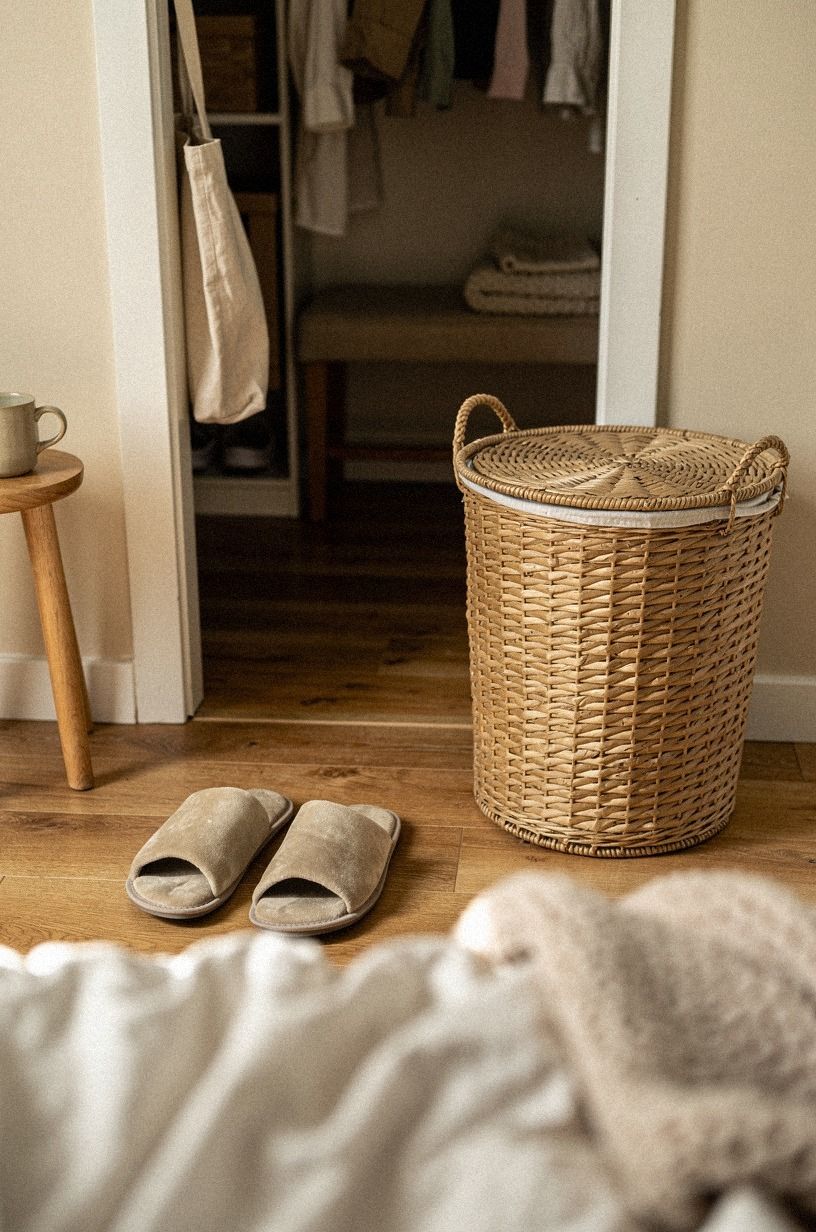
Test the room as if you're already living in it. Hang the clothes you wear most, place shoes where you naturally remove them, and keep a laundry basket near the point where clothes actually come off. Your first arrangement is a draft, not a permanent verdict.
Notice what you reach for and what you ignore. If the top shelf stays untouched, move a daily category lower.
If the mirror is always blocked by a chair, relocate the chair. A 600gsm Turkish cotton robe can be a useful test item because it needs enough hanging room and shows whether the system handles heavier fabric comfortably.
And give yourself one week before buying more storage. You may discover that the problem is category confusion, not a shortage of furniture. A peaceful, sophisticated room comes from small corrections repeated over time, not from filling every wall on day one.
Follow this one-week test before adding another storage unit.
14Finish With a Cohesive, Lived-In Layer
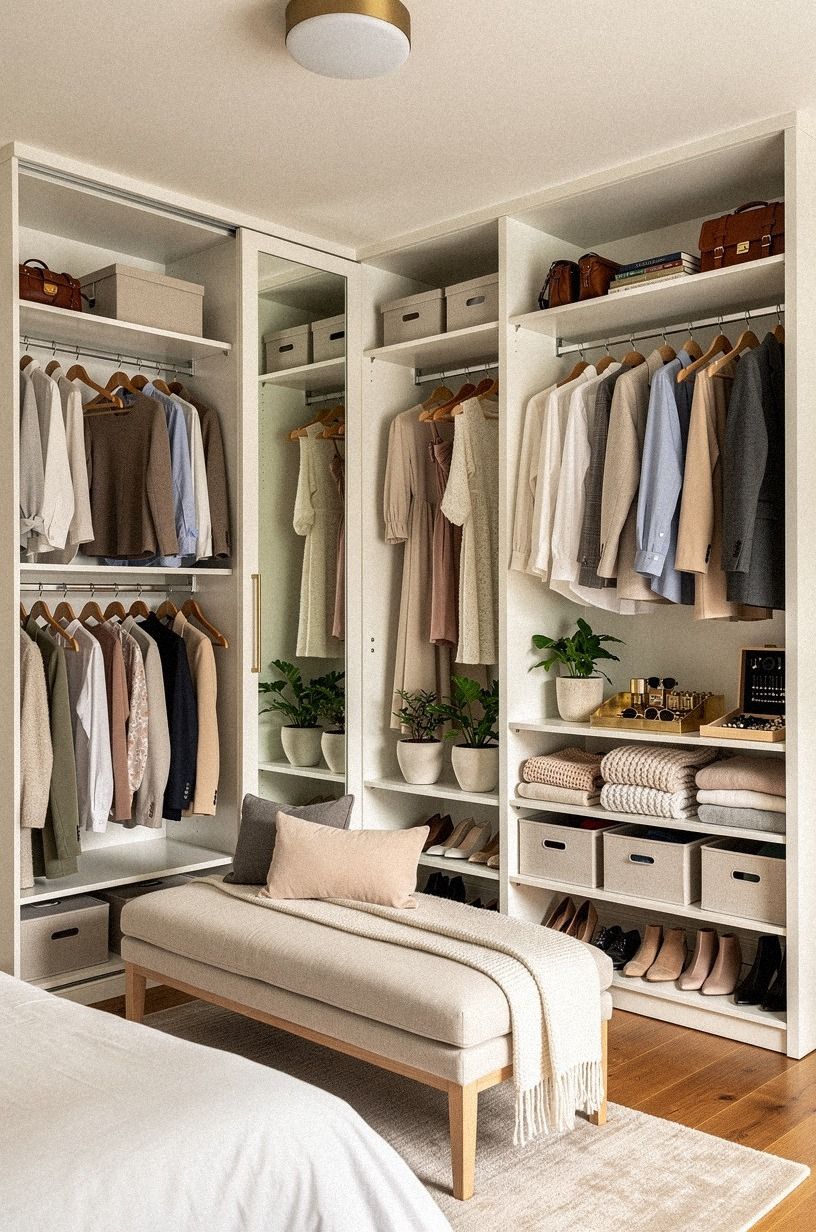
Finish with only the pieces that support the dressing routine: a rug, a seat, a basket, and one or two personal objects. A wool rug sized 8x10 can cost $400-$1,500 in typical US pricing, so measure carefully before you commit. The rug should feel soft beneath your feet without swallowing the room.
If you're placing a bed in the room as well, remember that a queen bed is 60x80 inches and a king bed is 76x80 inches. A rug should extend 18-24 inches past the bed. Your nightstand should sit near mattress height, usually 24-28 inches tall, so the proportions don't feel awkward.
I would skip a pile of decorative pillows in a dressing room. They steal useful seating and become one more thing to move.
Choose a calming bench, one framed photograph, and a warm throw instead. Less visual noise will let the clothing, wood, and soft light carry the room. The room should make mornings easier!
Finish with this lived-in layer only after the storage and circulation work.
What the Dressing Room Costs in the United States
Your total depends on whether you're refreshing the room or building permanent storage. The typical US ranges below are useful planning markers, not promises. A budget refresh may cover bedding, paint, shades, and art, while a high-end project can include built-in closet work and trim.
For individual pieces, a wool rug 8x10 typically runs $400-$1,500, an upholstered headboard $250-$900, linen drapes $120-$400, and washed-linen bedding $150-$450. You don't need to buy every category. Start with the storage and lighting that solve your daily frustration, then add texture when the room works.
Review the budget tiers before committing to permanent cabinetry.
The Room I Would Keep, Even After Trying Everything
I've converted enough awkward rooms to know that a dressing room isn't improved by stuffing in more furniture. My first attempt had two tall wardrobes, a heavy dresser, and almost no clear floor. It looked productive, but getting dressed felt like moving through a narrow hallway.
I kept blaming the room until I admitted the layout was the problem.
Now I start with the path from the door to the mirror. That line tells me where the room needs air, where the storage can become quiet, and where a soft detail will matter. I like Farrow & Ball Setting Plaster No. 231 because it warms the walls without competing with clothing colors, but the paint is never the first decision.
The first decision is what you need to reach every morning. If that answer is shirts and trousers, give them the best rail. If it's jewelry and makeup, make the dressing surface comfortable.
If you mostly need seasonal storage, don't sacrifice the center of the room for a large island that sits empty.
And I don't think a custom feeling requires fully custom cabinetry. A measured IKEA PAX arrangement, a walnut dresser, warm sconces, and Belgian flax linen can feel more personal than an expensive wall of identical doors. The difference is the editing.
You choose what stays visible, what gets hidden, and where your own habits shape the room.
The most valuable part is the week after the makeover. That's when you notice whether the mirror catches good light, whether the basket is in the right place, and whether the rail height makes sense.
Make those small adjustments. A dressing room becomes inviting when it supports your real life, not when it performs for a staged moment.
Use this layout-first approach when the room starts to feel crowded.
The Questions I Get Asked Most
What is the best way to turn a spare bedroom into a dressing room for a small bedroom?
Start with a shallow IKEA PAX wardrobe or an IKEA KALLAX birch-effect unit, then keep the center open for movement. Clear circulation matters more than extra shelves. Place a full-length mirror near the door and reserve high storage for seasonal pieces.
Where can I buy dressing-room pieces on a budget?
Look at IKEA, Wayfair, and Target, then check Facebook Marketplace or a local thrift shop for dressers and mirrors. Secondhand wood furniture can add more warmth than a matching set, especially after a light sanding and a coat of Benjamin Moore Pale Oak.
How much does a dressing-room makeover cost?
A small refresh typically falls within the $200-$800 budget range when it includes paint, bedding, shades, and art. Free improvements include editing clothes, rearranging storage, and using what you already own before purchasing a rug or new lighting.
Can I create a dressing room on a budget?
Yes, and you can begin with three low-cost moves: measure the room, edit unused clothing, and group accessories by daily use. A careful layout costs nothing. Add one storage piece at a time instead of buying a complete furniture set.
Is a dressing room worth it in a small space?
Yes, if the layout gives you a clear path and uses vertical storage. A smaller room can feel more efficient because everything stays within reach. Keep the mirror near natural or layered light, and avoid a center island if it interrupts the walkway.
Is a dressing room a good idea for a rental?
Yes. Use a tension rod, removable hooks, peel-and-stick wallpaper, and freestanding IKEA storage. No-damage flexibility lets you create a warm, personalized room without permanent construction.
Keep heavier pieces stable and follow your lease rules before attaching anything to the wall.
Where I'd Start First
If I had to pick one step, I'd start with measuring the room. A precise layout prevents the wardrobe, mirror, and door from competing for the same inches, so every later purchase has a job. Tape the plan on the floor tonight, then build from what your routine shows you.


