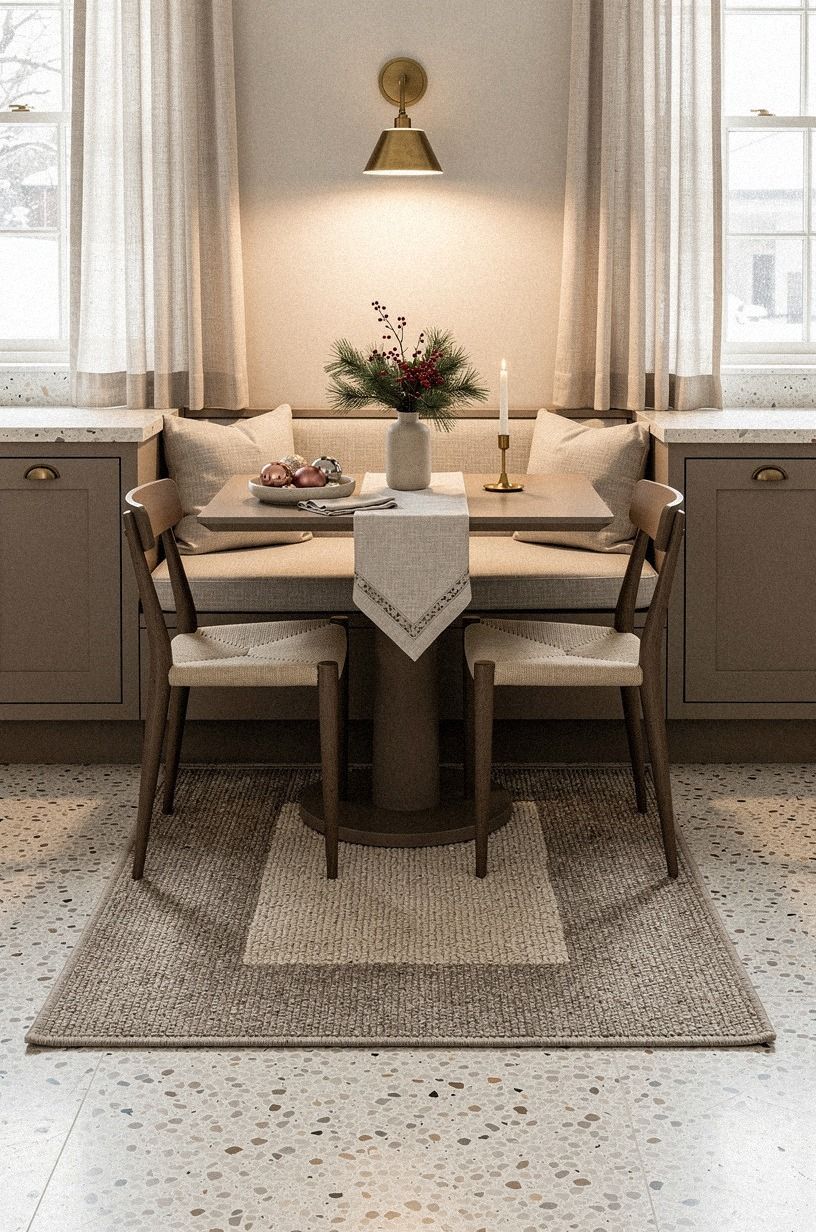
12 Holiday Tablescape Ideas for a Breakfast Nook That Steal the Show in Small Spaces
06 october 2026Holiday tablescape for the breakfast nook works best when your centerpiece stays low, your light rises, and your table still serves breakfast. I learned that after one crowded December setup left no room for a cereal bowl. Your nook can feel warm, festive, and inviting without losing its everyday job. Keep the middle useful, and the whole room works harder.
- Layer a Low Runner for Breakfast Nook Christmas
- Try the Two-Wood Rule for a Small Christmas Centerpiece
- Build the Three-Height Light Stack
- Why Does a Shallow Bowl Beat a Tall Vase?
- Swap Shiny Red for Farrow & Ball Studio Green
- Frame the Nook Table Decor with a Window Ribbon
- Choose Linen Over a Plastic Holiday Cloth
- Mix Food Into the Centerpiece
- Anchor Place Settings with Unlacquered Brass
- Price the Backdrop Before You Buy Anything
- Use Removable Height for a Rental
- Set an Asymmetrical Holiday Tablescape
1Layer a Low Runner for Breakfast Nook Christmas
Start with a narrow runner in clay-toned linen, then let your table show at both ends. You’ll get a soft, earthy base without swallowing the small surface, and your chairs won’t catch on excess fabric when you pull them out. I’d skip a wide formal cloth here.
It makes your nook feel smaller and hides the grain that gives the room character.
Your runner should sit under the centerpiece, not stretch across every inch. A folded edge, a few loose evergreen stems, and one oversized-chip terrazzo board create a relaxed, collected holiday tablescape.
If your table is round, use the runner as a short cross shape instead of forcing a long strip across it. For a coordinated setup, compare this with the Two-Wood Rule and the Three-Height Light Stack.
But don’t pile every holiday color into the center. Choose one clay note, one linen tone, and one aged-brass accent. That palette feels welcoming in daylight, and it won’t fight your breakfast dishes the next morning.
A linen napkin beside each chair adds tactile weight without adding clutter. You’ll still have space for toast, coffee, and a laptop, which is the real test of a breakfast nook Christmas arrangement. It’s a small investment with strong everyday value!
2Try the Two-Wood Rule for a Small Christmas Centerpiece
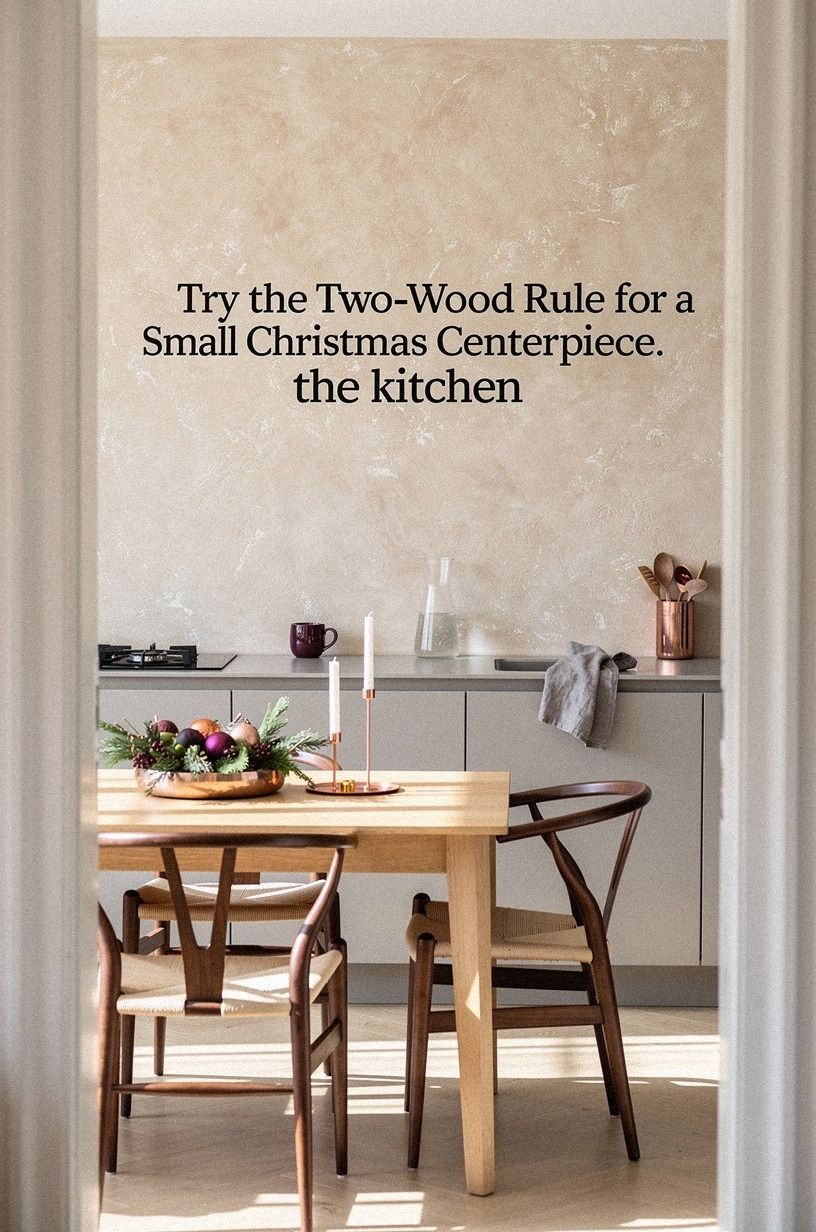
The Two-Wood Rule keeps your small Christmas centerpiece from looking like a craft aisle exploded. Choose one pale wood and one deeper wood, then repeat each only twice. I like grey-washed oak with walnut against a tray finished in hand-applied Venetian plaster because the contrast feels organic and handsome, while three unrelated wood tones can make your table look busy before you’ve added a single ornament.
Use a low grey-wood bowl for pinecones and a small plum tray with a hand-applied Venetian plaster finish for candles. You’ll create two grounded zones, and your eye will understand the arrangement quickly. I made the mistake of mixing plum lacquer, grey paint, and rose-gold metal once.
It wasn’t festive. It was visual static.
And you don’t need matching pieces. A matte grey tray beside a vintage walnut bowl can feel gathered if the finishes share a quiet quality. Your table should look used, with a warm, sophisticated character, rather than staged for a showroom.
Keep the taller object toward the wall side so your sightline across the nook stays open. If you’re sitting opposite someone, you’ll want the center below eye level. That small decision makes conversation easier, and it keeps the arrangement from becoming a daily obstacle.
Read the low-runner approach before you shop, so you can judge the total cost of the arrangement.
For a more dramatic evening setting, borrow the gentle contrast from Swap Shiny Red for Farrow & Ball Studio Green. The darker note keeps the natural wood from feeling too pale.
3Build the Three-Height Light Stack
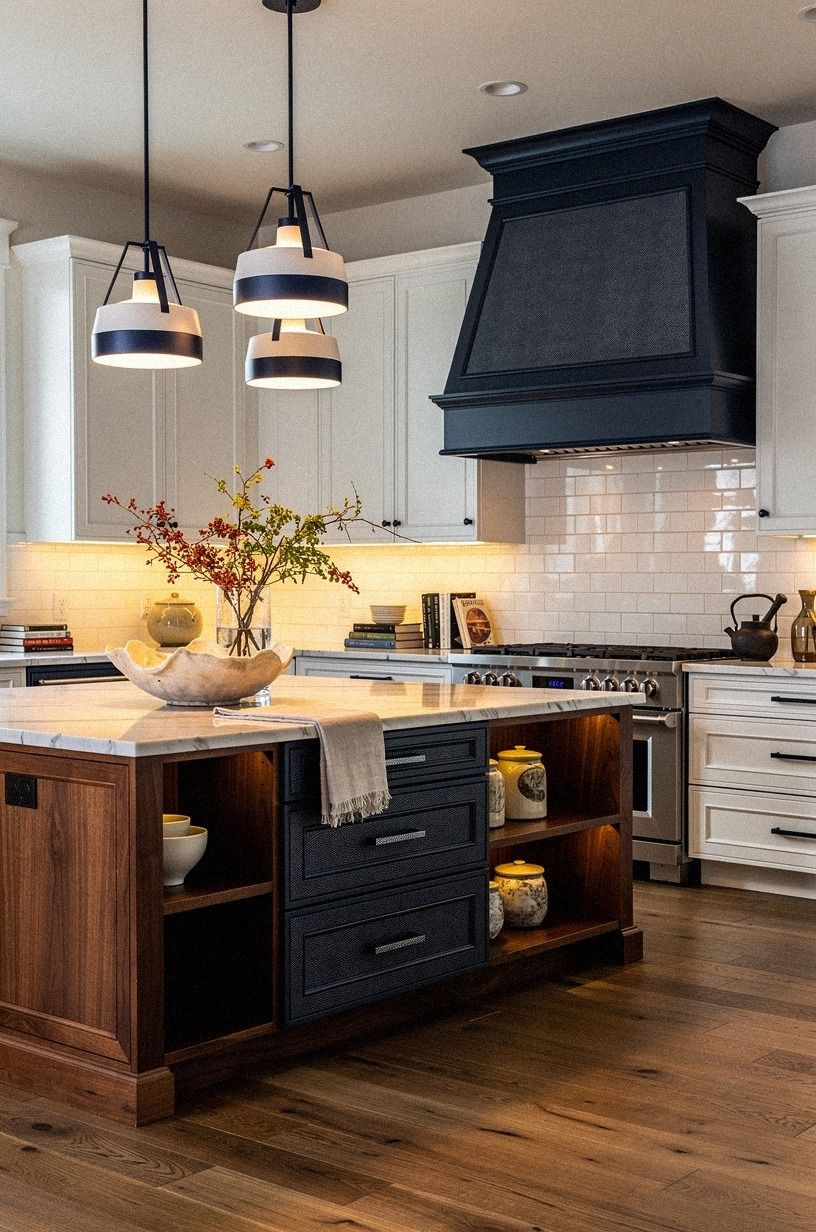
The Three-Height Light Stack gives your nook a little vertical drama without demanding a giant centerpiece. Begin with a low dish, add a middle candle, and finish with one slim branch in a white ceramic bud vase with a shagreen accent. You’re building from table height upward, so the arrangement feels airy rather than top-heavy.
I’d avoid three tall taper holders in a row. They’re handsome in a dining room, but your small table needs a softer rhythm. One navy candle beside a white ceramic vessel on a walnut base creates movement without blocking your view.
That combination delivers a surprisingly polished look on a modest budget.
Your lighting matters more after sunset. Warm bulbs, candlelight, and a nearby pendant can make the breakfast nook feel calm instead of brightly exposed. If you’ve got a dimmer, lower the overhead light until the table becomes the brightest useful spot in the room.
But leave one section of the table visually quiet. A bare patch of wood gives your eye somewhere to rest, and you’ll appreciate it when the holiday plates arrive.
A centerpiece needs breathing room more than it needs another decoration. That’s the whole win!
For a lower-cost variation, pair this idea with the shallow bowl option and the washable textiles in Linen Over Plastic.
4Why Does a Shallow Bowl Beat a Tall Vase?
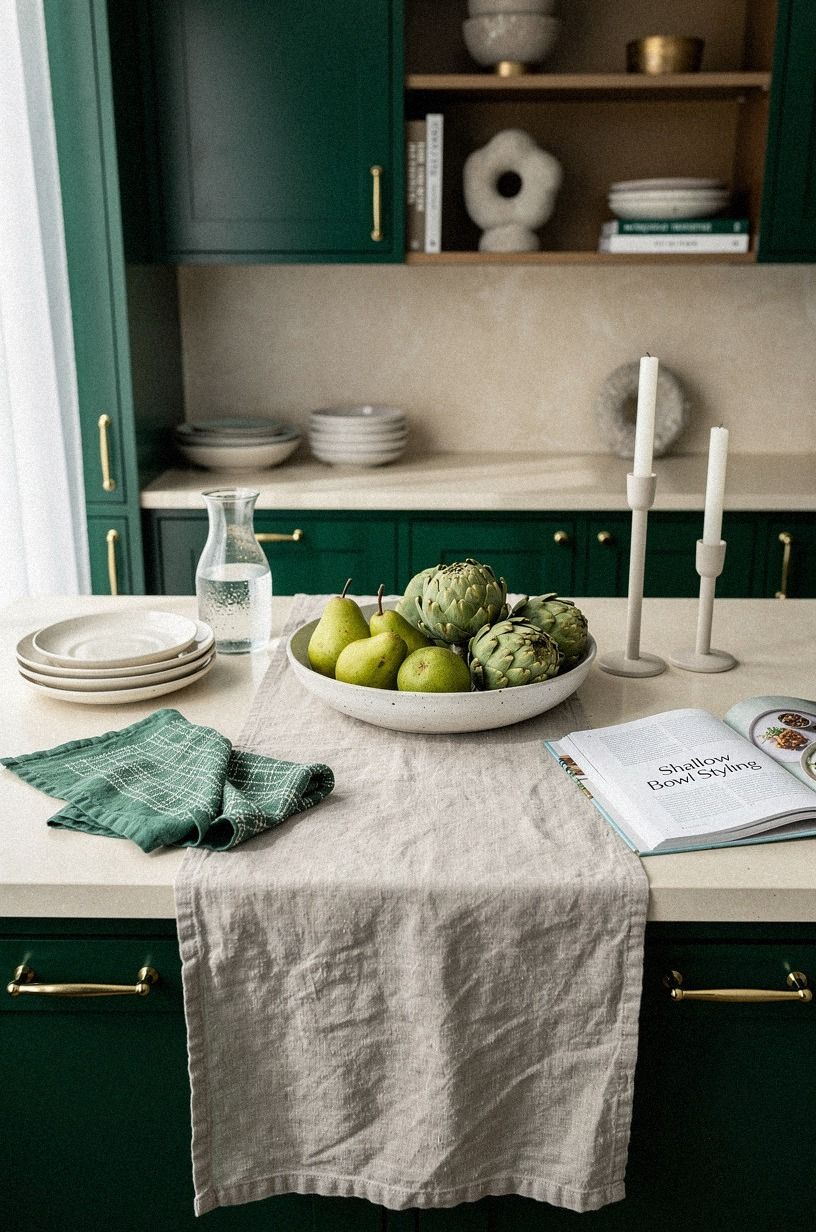
A shallow bowl wins when your breakfast nook has limited depth, because it spreads color across the table without creating a wall between you and your family.
5Swap Shiny Red for Farrow & Ball Studio Green
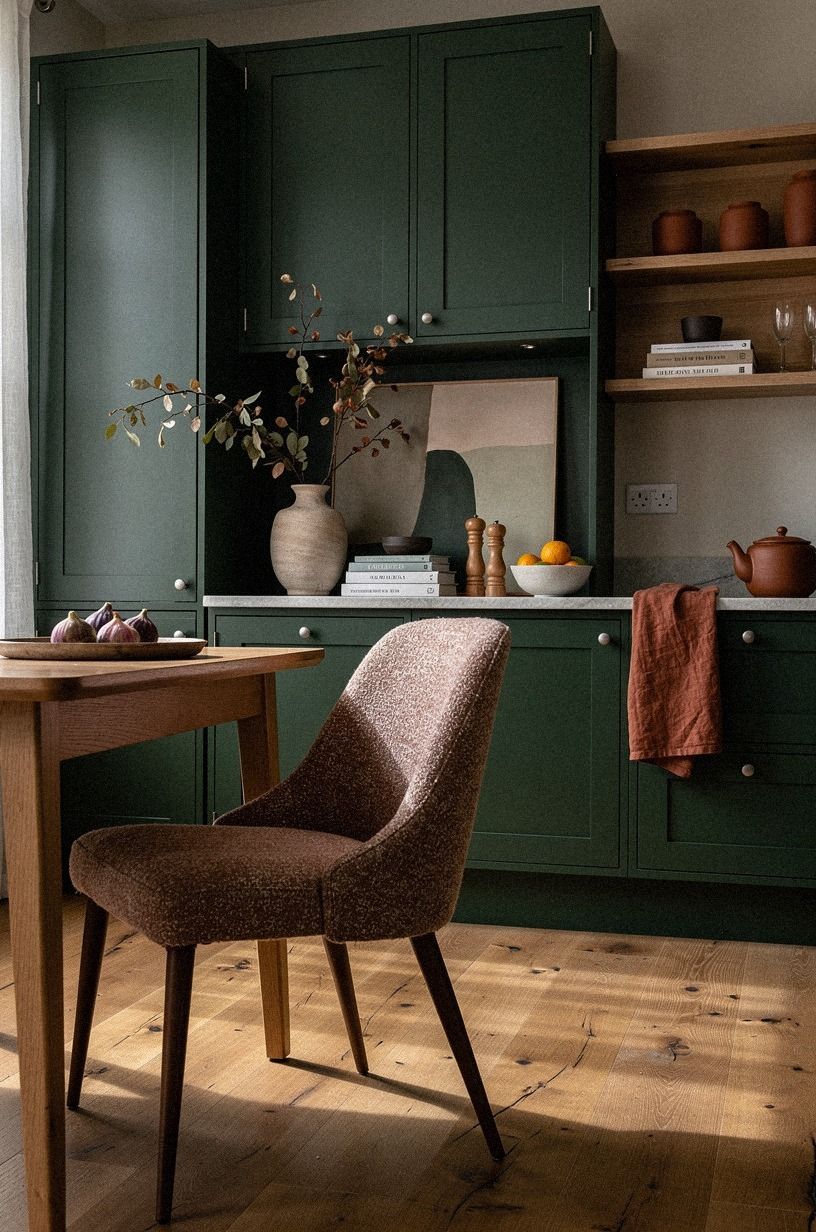
Swap bright red for Farrow & Ball Studio Green No.93 if your nook already has natural oak, brass, or cream walls. The deep color feels moody and sophisticated, and it gives holiday greenery a richer backdrop. I’d skip glossy red ornaments in a tiny room because they bounce light in too many directions.
You can bring the color in through one runner, a few glass ornaments, or a painted serving tray. Your table doesn’t need a complete seasonal wardrobe. One strong forest-green note will carry farther than a pile of red-and-green accessories, giving you more visual value for each dollar spent.
Benjamin Moore White Dove OC-17 works beautifully nearby because it keeps the palette soft. If your walls are already white, you’ll see the darker green register as depth rather than visual weight. Add rust organic bouclé on one bench cushion, and the nook becomes warmer without looking themed.
But test the color beside your evening lighting before you commit to anything permanent. Studio Green can become nearly black in a dim corner, which may be beautiful for drama but wrong if you want a bright breakfast spot. A sample is a smart budget decision, especially when the full cost of repainting adds up.
This palette also supports the linen runner plan and the long-term thinking in The Small-Table Principle. Together, they make the holiday styling feel memorable beyond December!
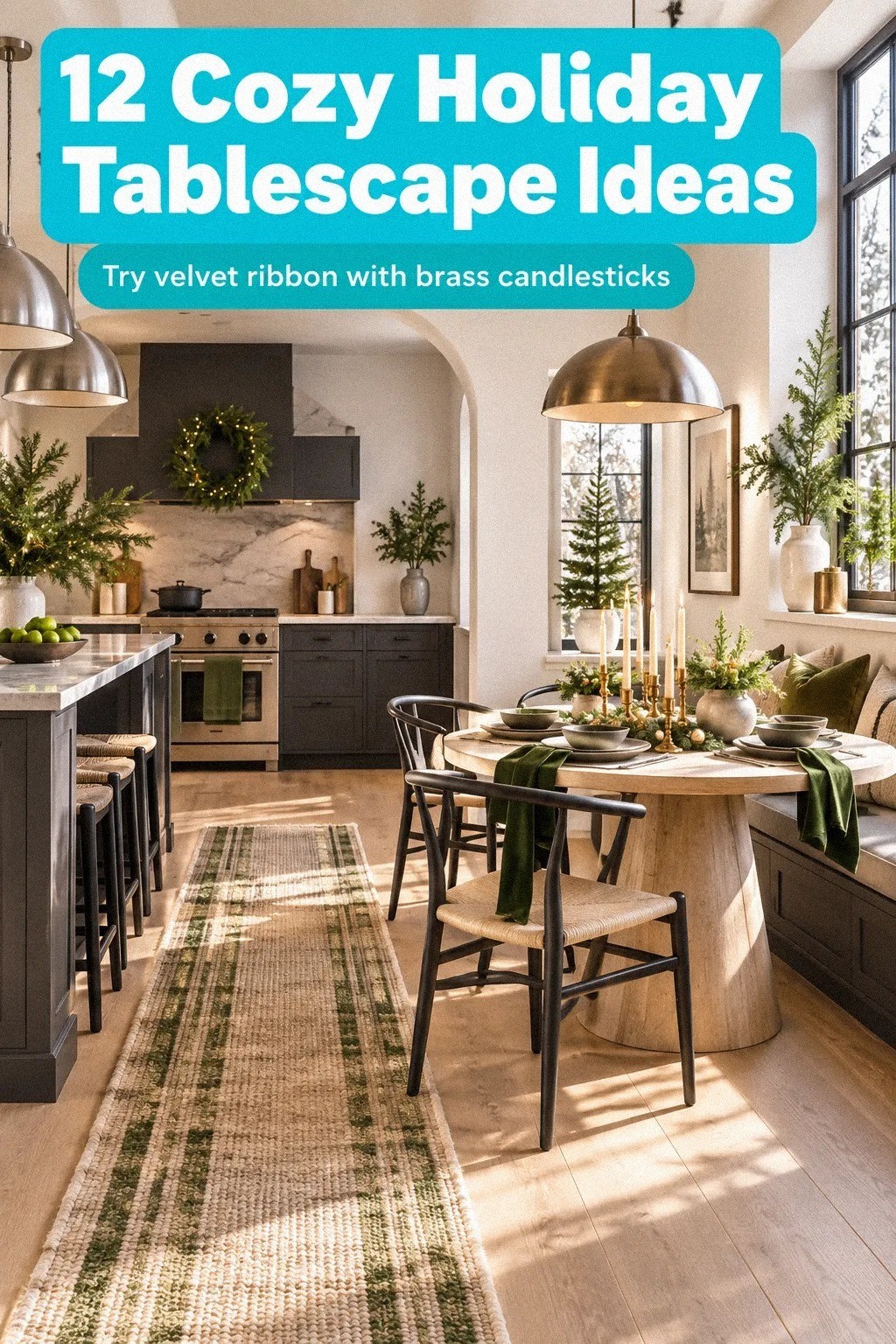
6Frame the Nook Table Decor with a Window Ribbon
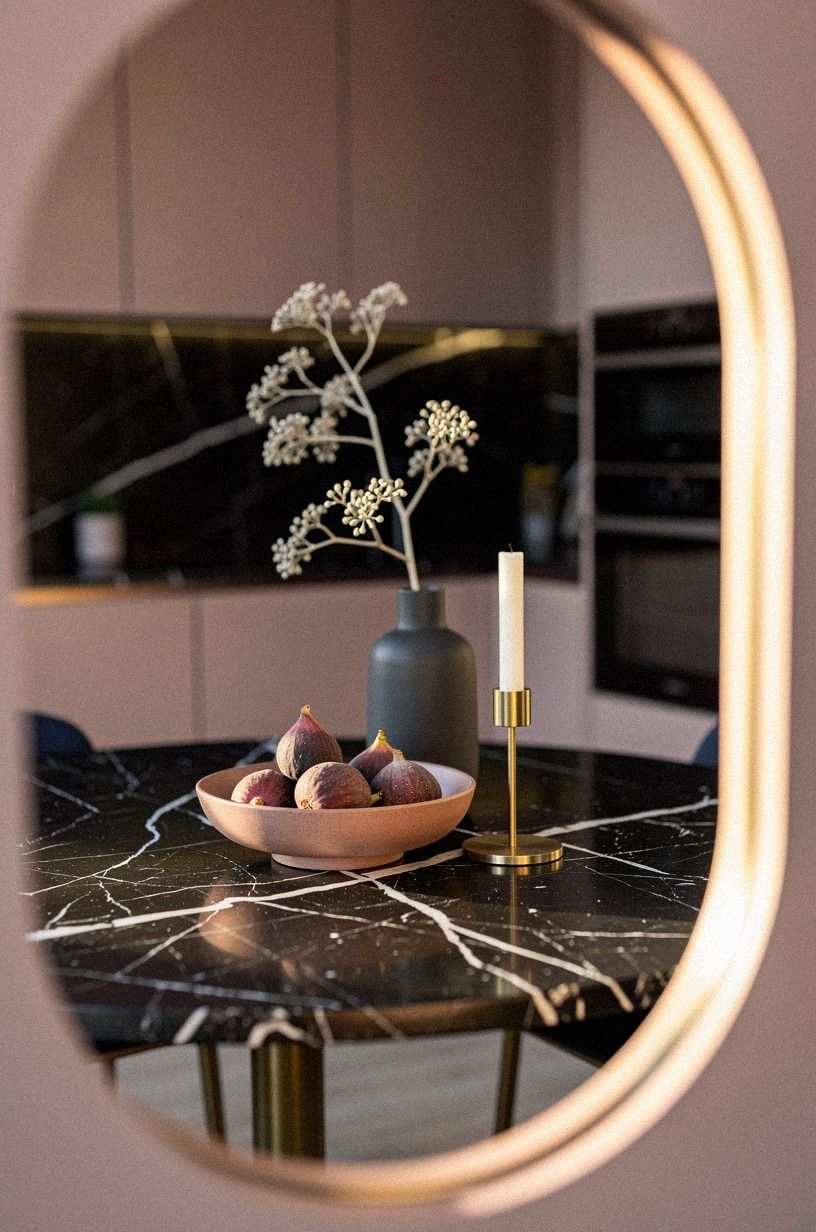
Use a dusty-rose ribbon at the window, then echo it with one charcoal accent and an aged-brass detail on the table. A small Nero Marquina black marble tray with white veins can anchor the arrangement without pushing more pieces into the center.
7Choose Linen Over a Plastic Holiday Cloth
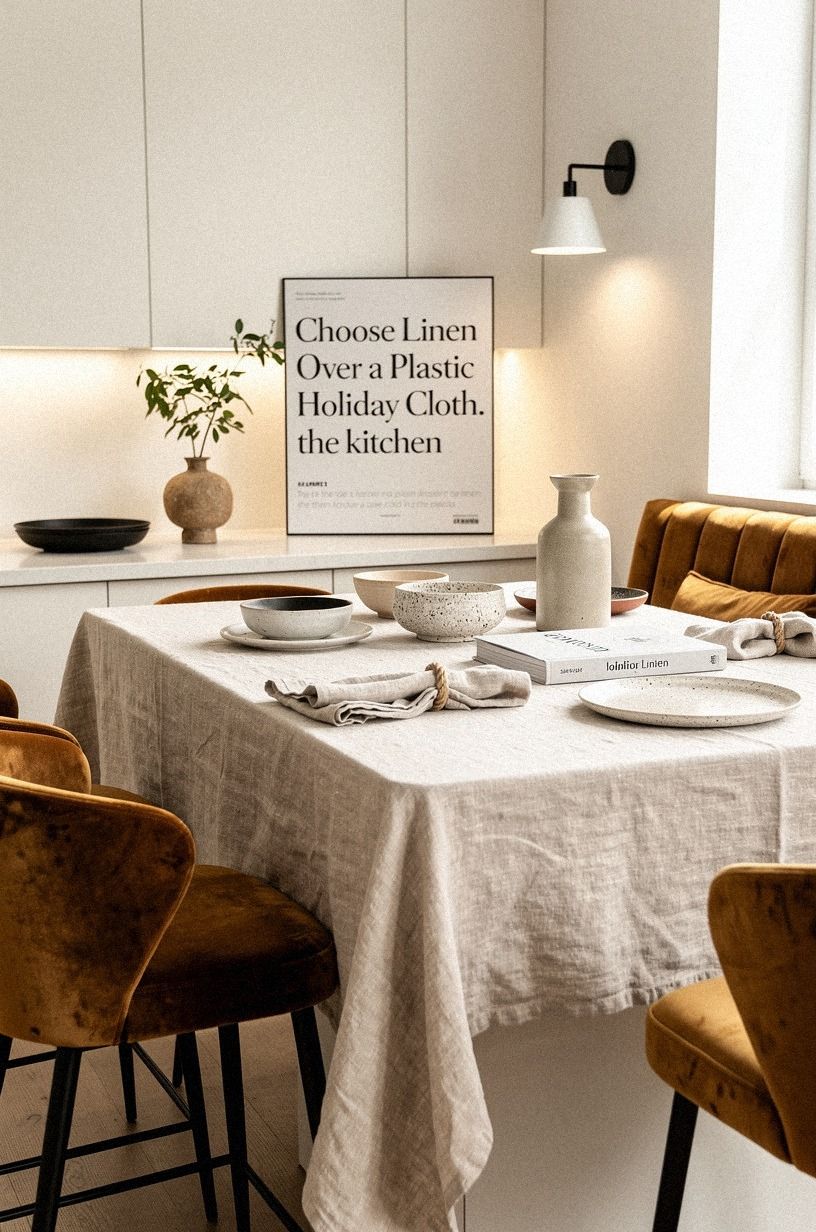
Choose linen over a plastic holiday cloth if you want the table to feel lived-in instead of themed. Warm-white linen wrinkles beautifully, absorbs the sharpness of shiny dishes, and gives your small Christmas centerpiece a quiet background. You’ll notice the difference as soon as candlelight hits the weave.
A full cloth can still work if your table is used mostly for meals, but I’d choose a short runner for a working nook. It’s easier to wash, and your chairs won’t snag the corners as you move around. One warm-white napkin, one camel placemat, and one black-handled spoon can be enough.
If your table has a strong finish, let it show through. A deep-pile mohair velvet cushion or a small brass candle cup will warm the setting, while too much polished metal can make a compact room feel sharp.
But don’t iron every wrinkle flat. A little texture keeps the table relaxed, and you won’t spend the afternoon treating fabric like a museum piece. Your holiday table should welcome people quickly, rather than ask them to admire it from a distance.
Before buying new textiles, compare the price with the backdrop refresh costs. A runner can deliver an impressive change for a fraction of a renovation budget. It’s a practical, beautiful place to start.
8Mix Food Into the Centerpiece
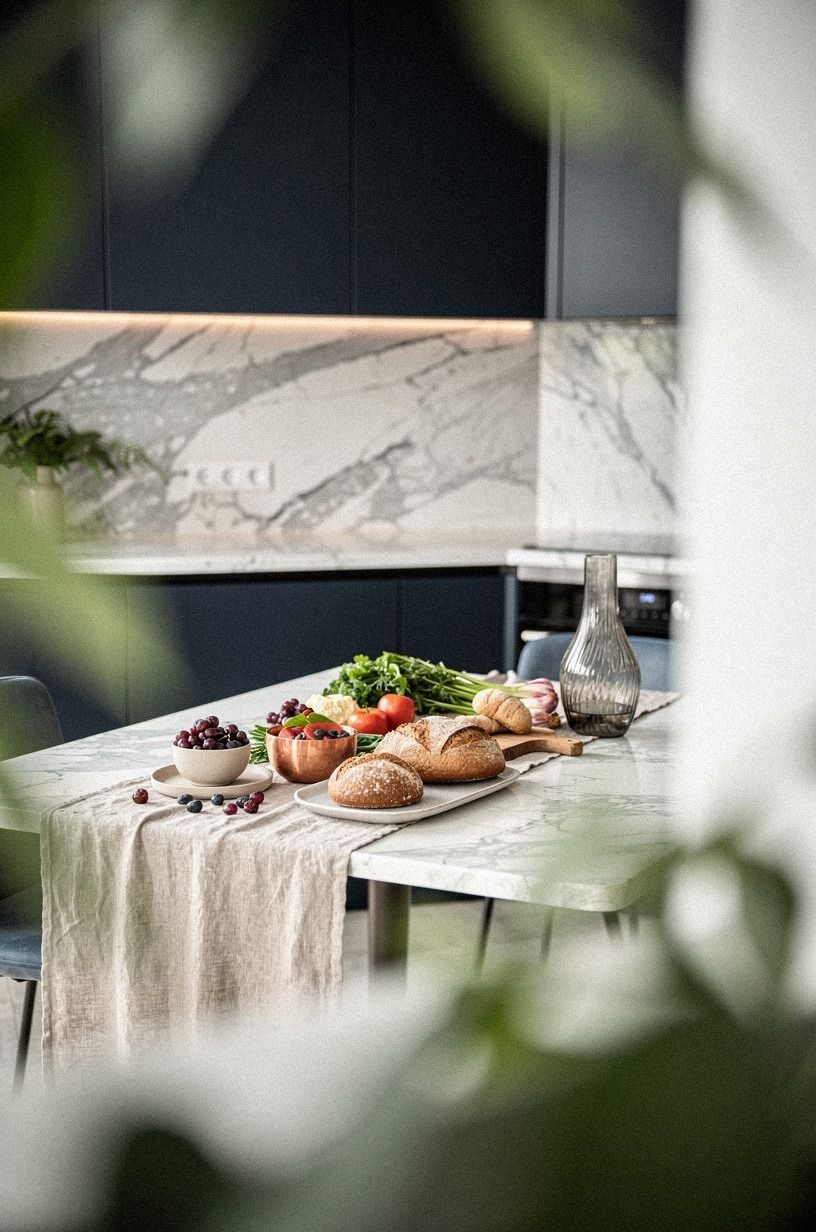
Mix food into your centerpiece so the decoration earns its space. A bowl of pears, a plate of sugared citrus, or a loaf on a wooden board gives your table a practical reason to stay dressed. You’ll also create the kind of organic color that plastic ornaments rarely manage.
Use a Carrara marble serving board with subtle grey veining and a midnight-blue bowl for fruit. I like the contrast between smooth skin, pale stone, and a matte glaze. Your eye gets several textures, but the arrangement still has one clear purpose.
An IKEA KALLAX birch-effect unit nearby can hold extra napkins, serving pieces, and a small basket of snacks. That keeps the table clear when you need it, and you won’t have to walk across the kitchen for every refill.
And choose food that can survive the room. Soft fruit near a sunny window may ripen quickly, while pears and oranges usually hold their shape longer. You’re decorating for real life, so let the centerpiece be edible, useful, and easy to replace.
That makes the idea especially strong when your holiday budget is tight.
For additional savings, use the practical storage approach in Use Removable Height and price any surrounding updates with Price the Backdrop. A bowl that feeds people feels more meaningful than another decorative object.
9Anchor Place Settings with Unlacquered Brass
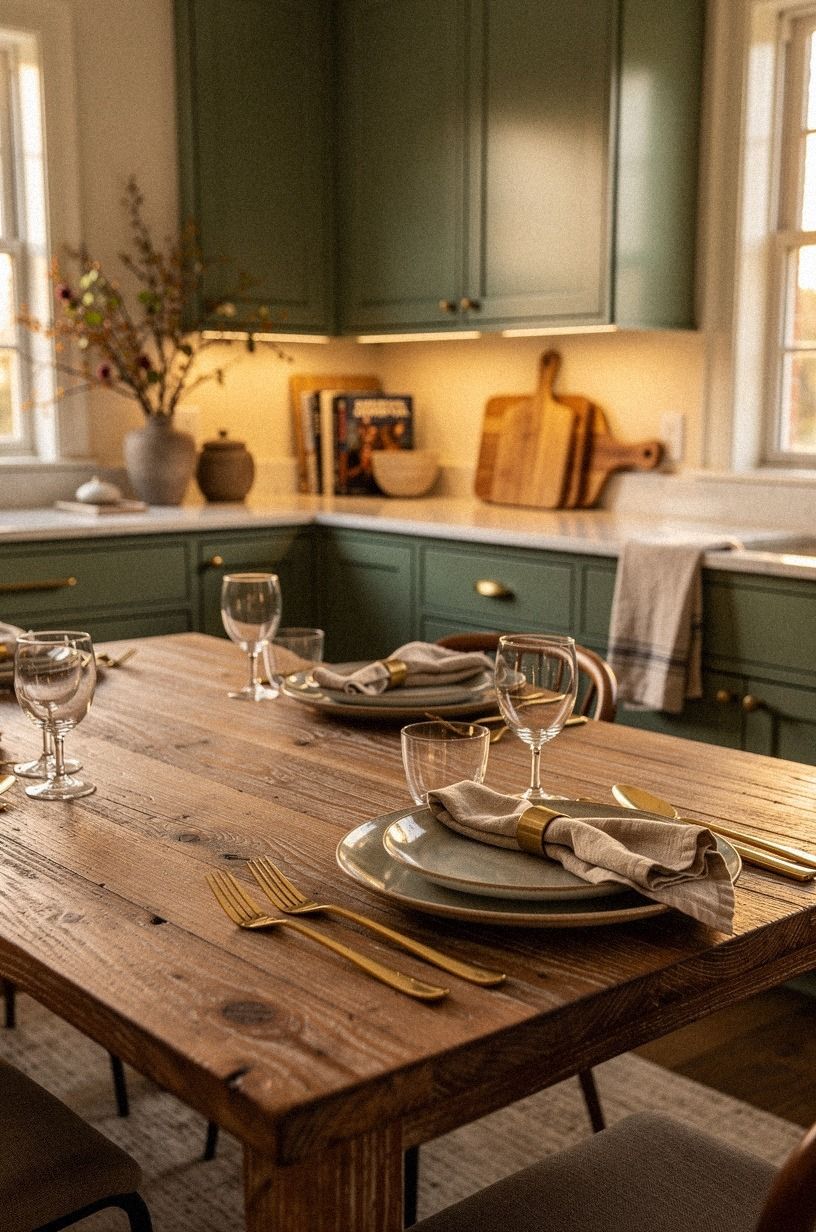
Anchor each place setting with one metal detail instead of scattering metallic objects everywhere. Unlacquered brass works especially well with sage green, warm cream, and reclaimed weathered teak because its surface develops a softer patina over time. You’ll get glow without the hard shine of mirrored gold.
Try a brass napkin ring, a tiny bell, or a candle cup at each setting. Your table will feel festive, but the arrangement won’t demand a separate decoration for every inch. I’d choose one brass family and stop there.
Mixing silver, chrome, copper, and gold is too much for a small nook.
If your chairs are black, add aged bronze instead of bright brass. The darker finish will connect with the chair frames, and you’ll create a more grounded, rustic mood. Your table can still feel elegant without turning into a formal dining room.
But protect the surface beneath candles and metal pieces. A small reclaimed weathered teak coaster gives you a safe landing zone, and you won’t discover a ring mark after the guests leave. Tiny practical choices are what keep holiday styling enjoyable and make the upgrade worth the cost.
Pair this restrained metal plan with the Two-Wood Rule and the advice in The Small-Table Principle for a polished, welcoming result.
10Price the Backdrop Before You Buy Anything
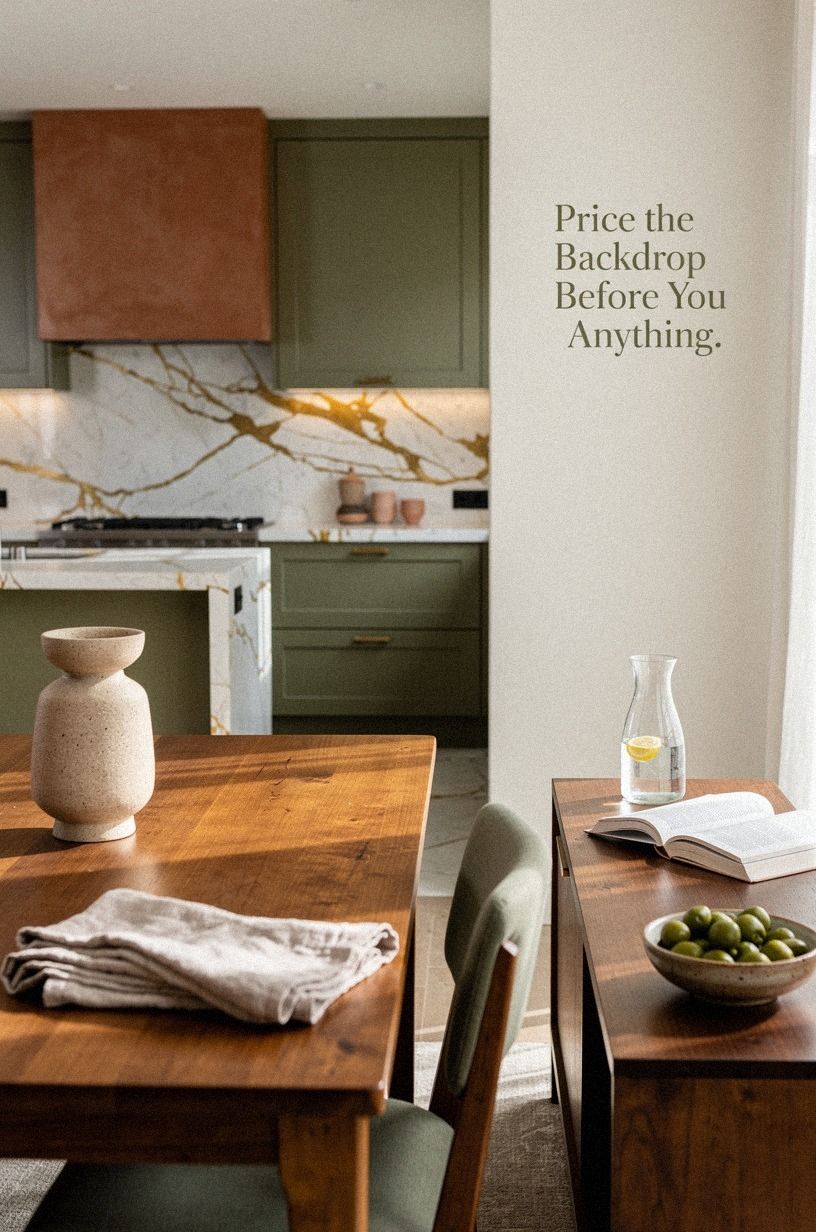
Price the kitchen backdrop before you buy new tablescape pieces. Your breakfast nook may sit beside a wall, backsplash, or cabinet finish that determines whether the centerpiece feels warm or disconnected. If the surrounding kitchen needs a refresh, these typical US figures give you a useful scale.
You don’t need a remodel to support a holiday tablescape. A sample of muted olive paint on the wall can shift the whole mood, while a small centerpiece costs far less and changes with the season. That is often the better value.
The materials themselves also vary widely. Calacatta marble with gold veining runs $60-$120 per sq ft, laminate countertop runs $10-$40 per sq ft, and zellige backsplash runs $15-$35 per sq ft. If you’re updating only the nook wall, keep the rest simple so your table remains the focal point.
Before you commit, compare the refresh with the removable-height approach and the window-ribbon frame. Both can change the mood without a dramatic renovation bill. A sample can save you from an expensive mismatch!
11Use Removable Height for a Rental
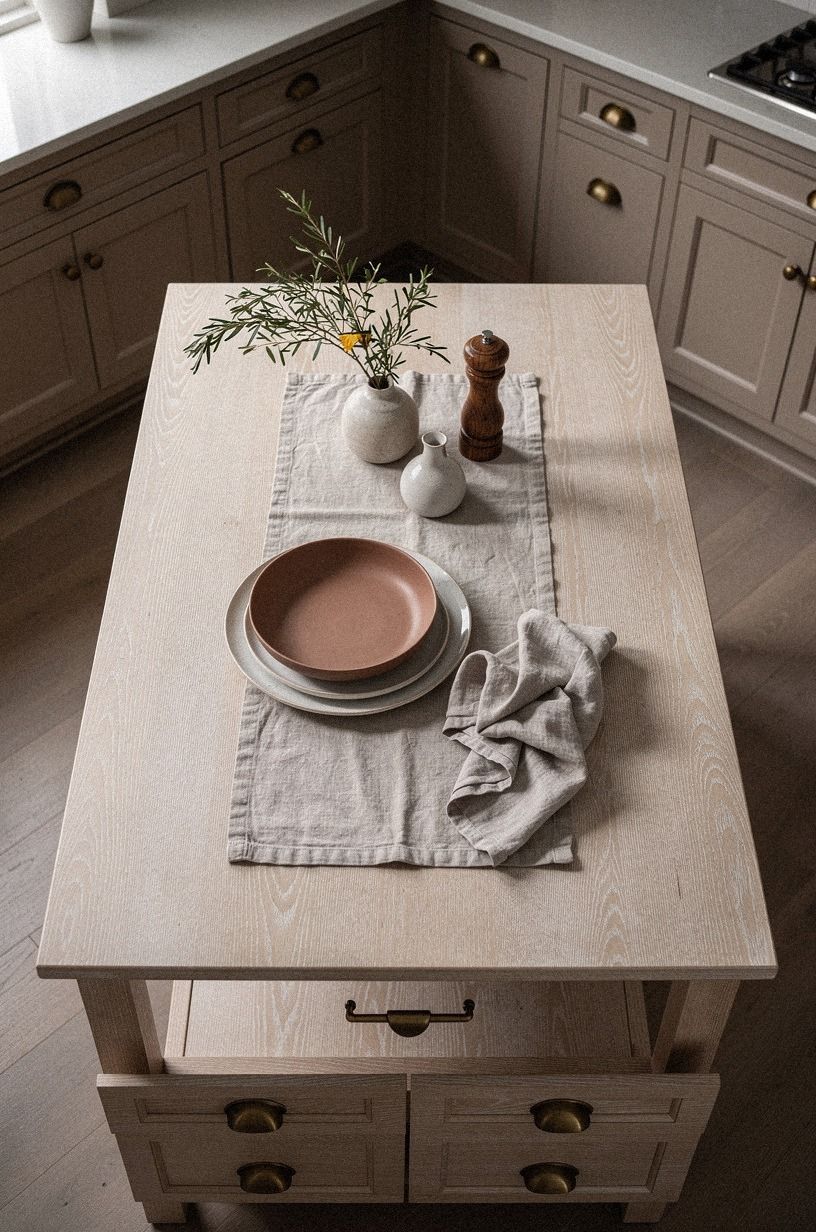
Use removable height when your rental lacks architectural interest. A tension rod across the window, a removable hook, and one clay-toned linen panel can give your nook a vertical holiday frame without holes or permanent changes. You’ll make the corner feel finished, and your security deposit stays safer.
Choose a cerused white oak board behind a serving cart only if the surface is approved and removable. I’d test a hidden patch first because rental paint and adhesive don’t always get along. If you’re unsure, use a freestanding board with one aged-brass hook instead.
A Target Threshold woven basket can hold extra throws or napkins beneath the table. Your storage works as texture, and you won’t need another shelf. Keep the basket low enough that your knees and chairs still have clearance.
But don’t crowd the walkway. Standard counter height is 36 in, and your table may sit close to that visual line, so open floor matters. You’ll enjoy the nook more if people can pass through without turning sideways.
If you’re deciding where to spend, this approach has strong rental value. Use the saved money on one tactile material, such as linen, aged brass, or a beautiful ceramic vessel. For the full composition, revisit Frame the Nook Table Decor and Price the Backdrop.
12Set an Asymmetrical Holiday Tablescape
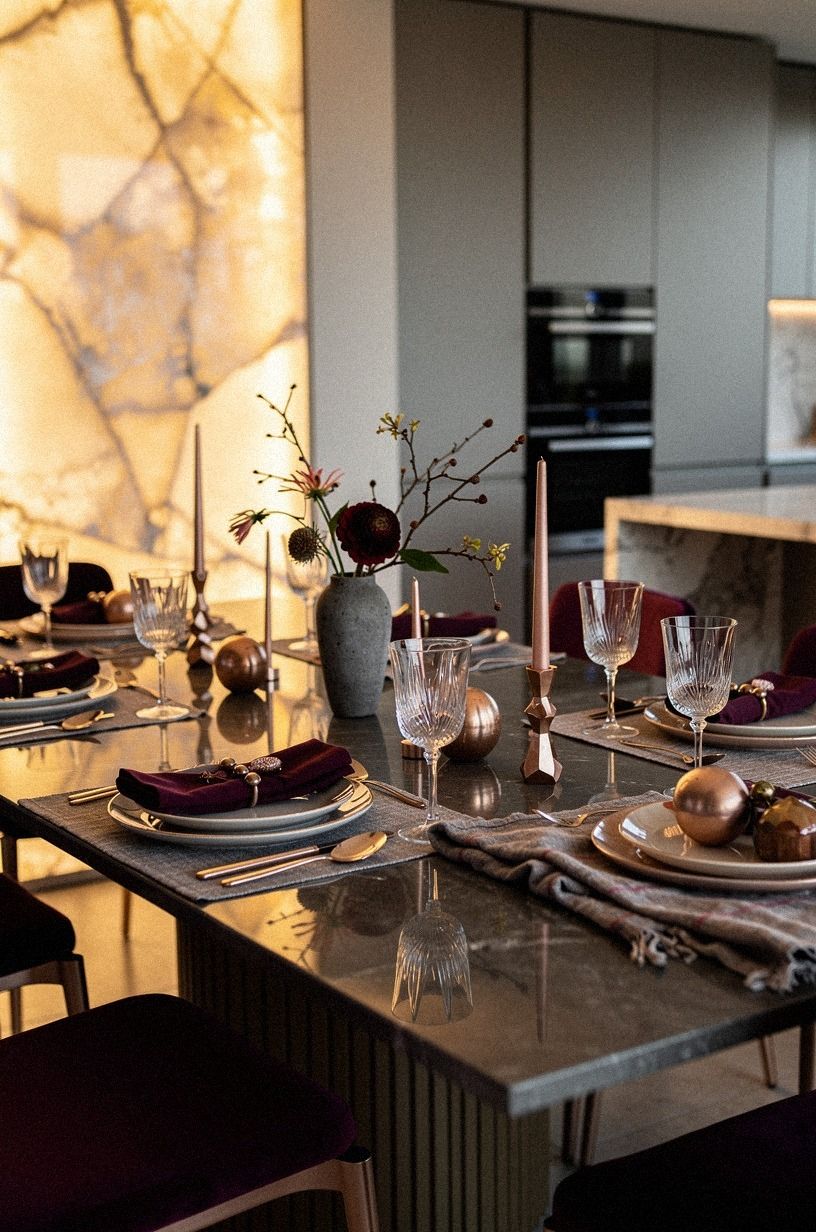
Set an asymmetrical holiday tablescape when your table is narrow or pushed against a wall. Place the main bowl slightly off center, then balance it with two smaller objects on the opposite side. Your eye will move across the surface, and the arrangement won’t look like a centerpiece placed with a ruler.
I like a small piece of backlit translucent onyx beneath a candle or serving bowl because its pale glow adds depth without taking up much room. Pair it with a plum napkin and one rose-gold detail for a collected, softly dramatic effect.
If your nook includes a charcoal chair or bench, repeat its grey in the napkins. Your room will feel connected, but you won’t have to match every object. I’d rather see one confident contrast than six polite accessories.
And leave the side nearest the kitchen open. That gap becomes your landing area for coffee, plates, and serving dishes, which means your beautiful setup can keep working through an ordinary morning. A table that serves you will always look better than one you’re afraid to touch.
For the most efficient layout, compare this arrangement with Why a Shallow Bowl Works and the Three-Height Light Stack. Both help you judge height before you spend money on extra pieces. That restraint is what keeps the final arrangement graceful!
The Small-Table Principle I’d Keep {#the-small-table-principle-id-keep}
I’ve styled enough holiday tables to know that small spaces punish indecision. Every object has a footprint, every tall piece changes the sightline, and every extra color asks your eye to do more work. My first mistake was treating the breakfast nook like a formal dining room.
I used a tall arrangement, layered plates, and a wide cloth. It looked festive for ten minutes, then nobody could see across the table.
Now I start with the table’s daily job. If you eat there, the center stays low.
If you work there, one side stays open. If the nook is a passage between the kitchen and living room, I keep the decoration narrow enough that a chair can slide out without a negotiation.
That sounds obvious, but holiday styling makes people forget how rooms are used.
I also believe your holiday color should have a relationship with the room that remains after December. Farrow & Ball Studio Green works because it can feel seasonal beside evergreen, then moody and grown-up beside cream in January. A bright novelty red may give you a quick photograph, but you’ll tire of it sooner when it has nowhere else to go.
The best centerpiece isn’t the one with the most pieces. It’s the one you’ll leave in place because it doesn’t interrupt breakfast, homework, or conversation.
That’s why I keep returning to a low bowl, one branch, warm metal, and a little empty table. You get atmosphere without surrendering the room’s usefulness, and that balance is what makes a small nook feel generous.
If you’re weighing the overall value, begin with the low runner, add the food centerpiece, and stop when the table still feels easy to use. The restraint makes the result feel quietly luxurious.
A Few Things Worth Answering
What is the best holiday tablescape for a small kitchen nook?
A low wood bowl with evergreen, citrus, and one candle is my strongest pick. IKEA KALLAX storage nearby can hold extra napkins while your table stays clear.
You’ll get warm color, useful texture, and an open sightline across the nook. It’s the best value when space and budget are limited.
Where can I buy holiday tablescape pieces on a budget?
Look at IKEA, Wayfair, and Target first, then check Facebook Marketplace or a thrift shop for bowls and trays. Target Threshold baskets and linens are practical starting points. I’d spend first on one material you’ll reuse, such as linen or brass, rather than buying a complete seasonal set.
How much does a holiday tablescape makeover cost?
A small refresh can stay around $100 to $300 if you reuse dishes and buy only greenery, candles, or linens. Belgian flax linen costs more than paper, but you’ll use it beyond December. Free branches, existing bowls, and borrowed serving pieces can reduce the total, so the final price may be surprisingly manageable.
Can I create a holiday tablescape on a budget?
Yes, and you can start with three free moves: rearrange your existing dishes, gather greenery from your yard where permitted, and use fruit as color. Unlacquered brass is a useful single upgrade, but you don’t need a full matching set. Those small choices can save enough for one memorable centerpiece.
Is a holiday tablescape worth it in a small space?
Yes, because a small table needs fewer pieces to feel finished. Keep your centerpiece below eye level and reserve one open side for plates.
Honed travertine or a wood bowl adds texture without taking over, so you’ll gain atmosphere without losing function. For me, that makes the project worth it.
Is a holiday tablescape a good idea for a rental?
Yes. Use removable hooks, a tension rod, and a framed board instead of drilling or painting.
Peel-and-stick tile can work on approved surfaces, but test first. You’ll create height and seasonal color while keeping the changes reversible, which protects both your budget and your deposit.
Where I’d Start First
If I had to pick one, I’d start with the low evergreen runner. It gives your table color, texture, and a clear center without blocking conversation or breakfast.
Pin the idea for later, then build around what you already own. The empty space will do more work than another ornament.